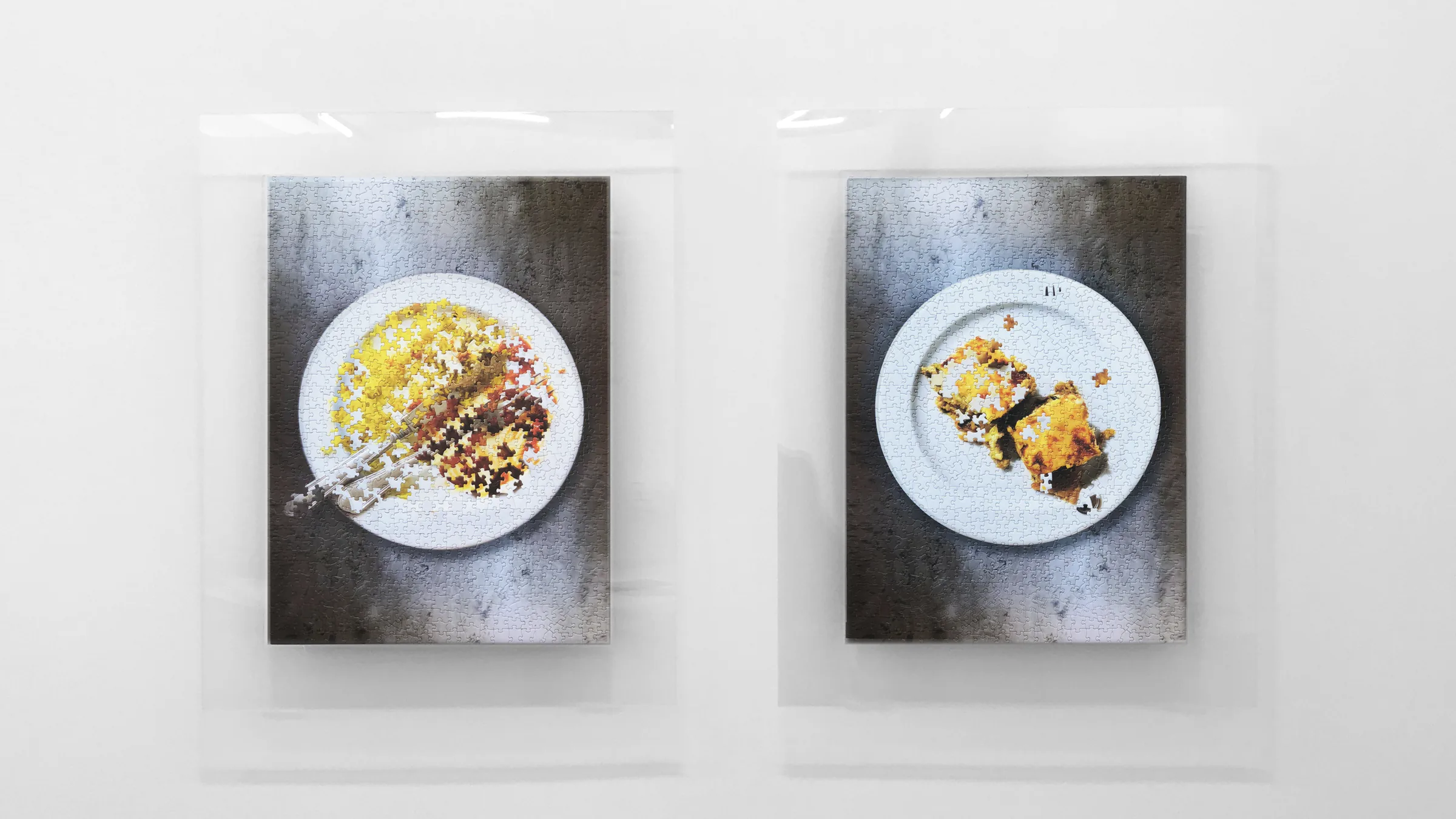
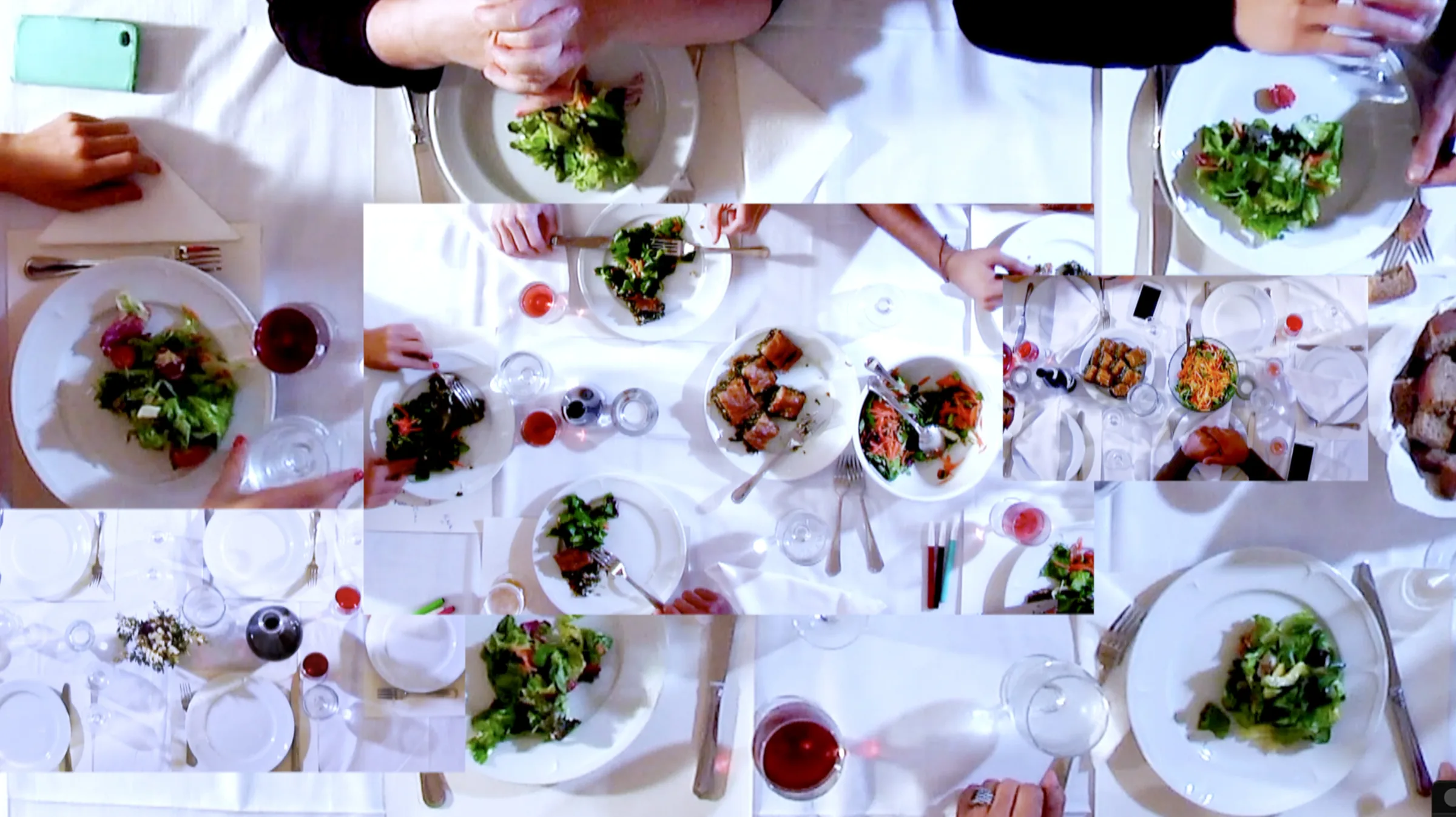
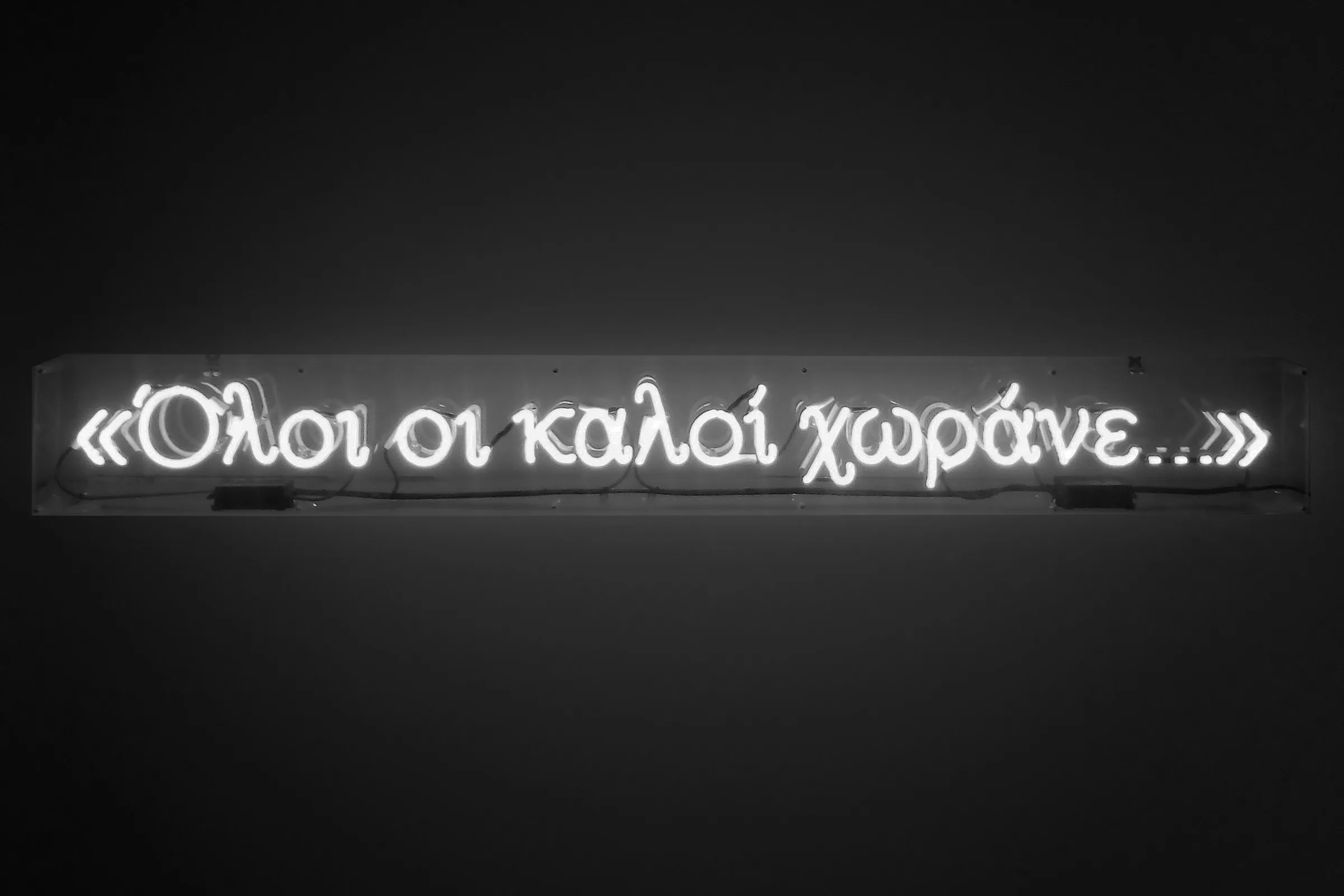
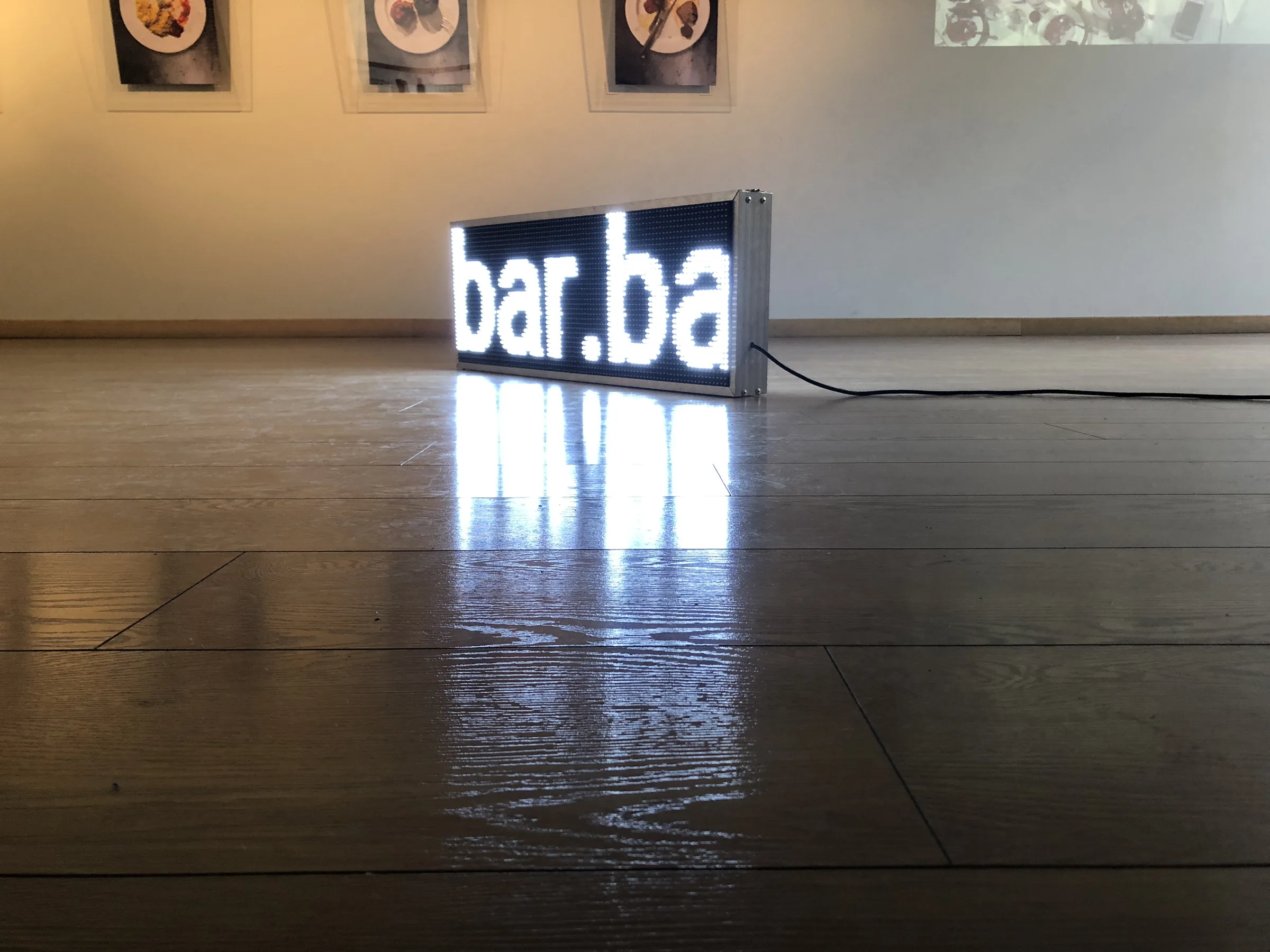
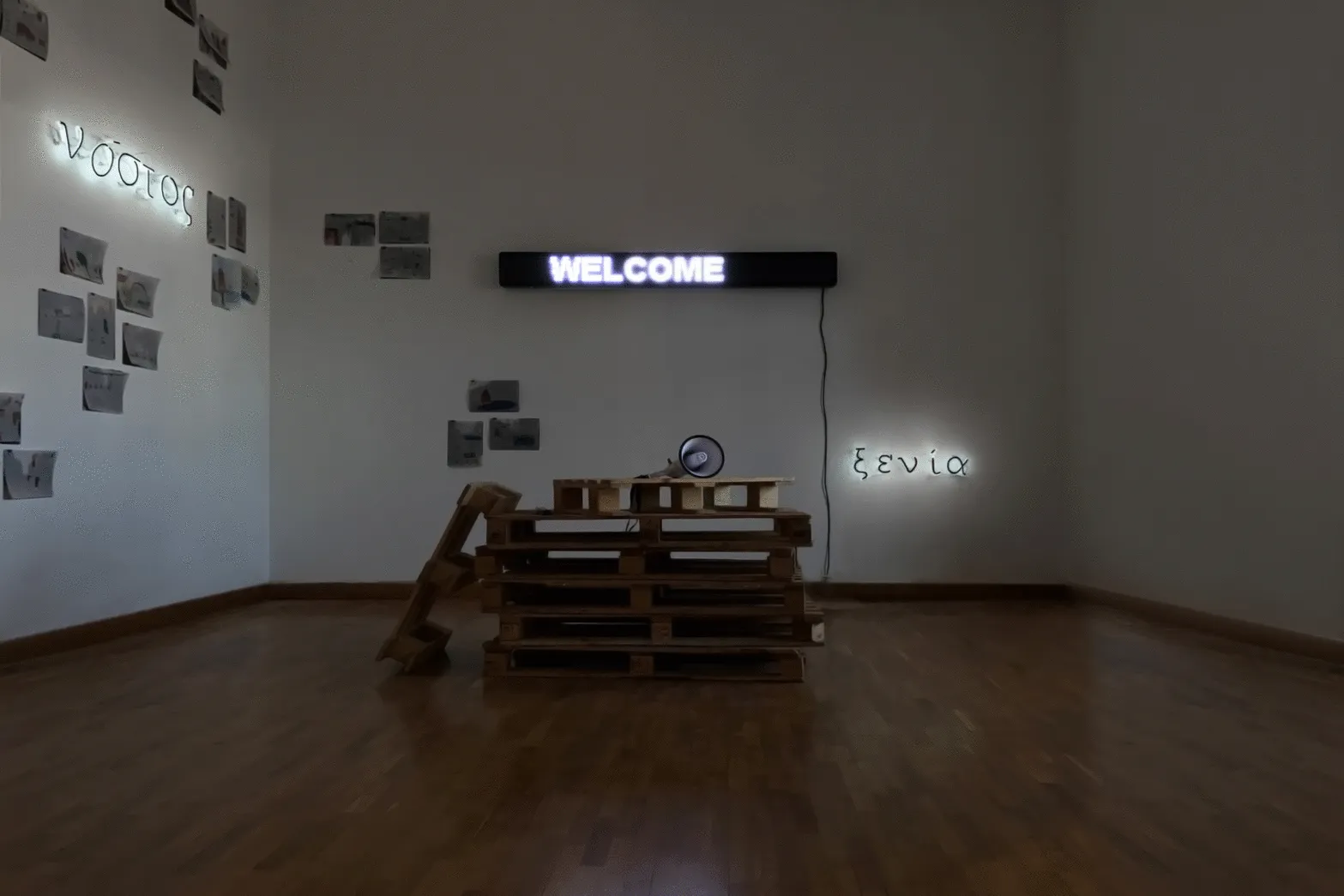
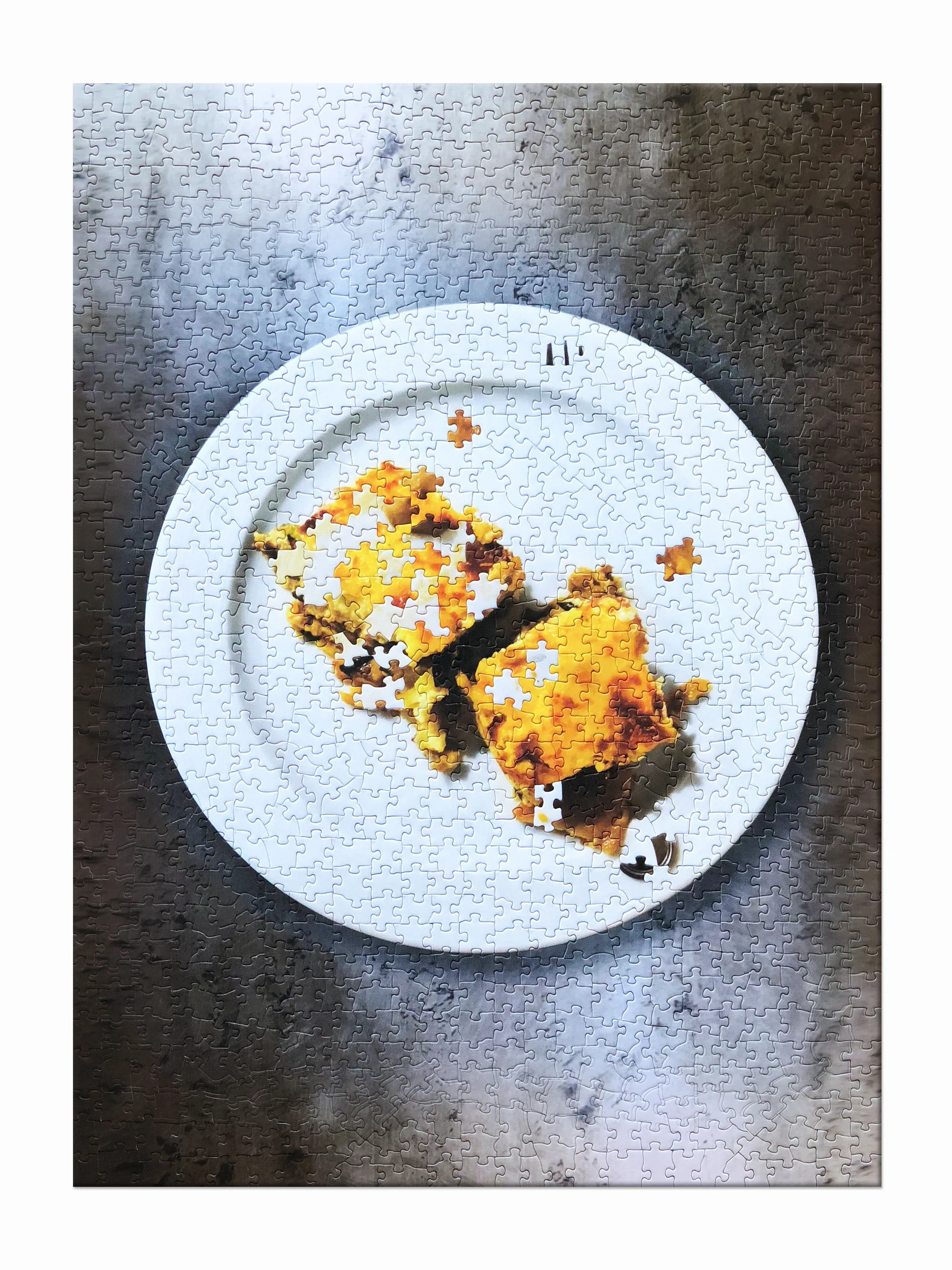
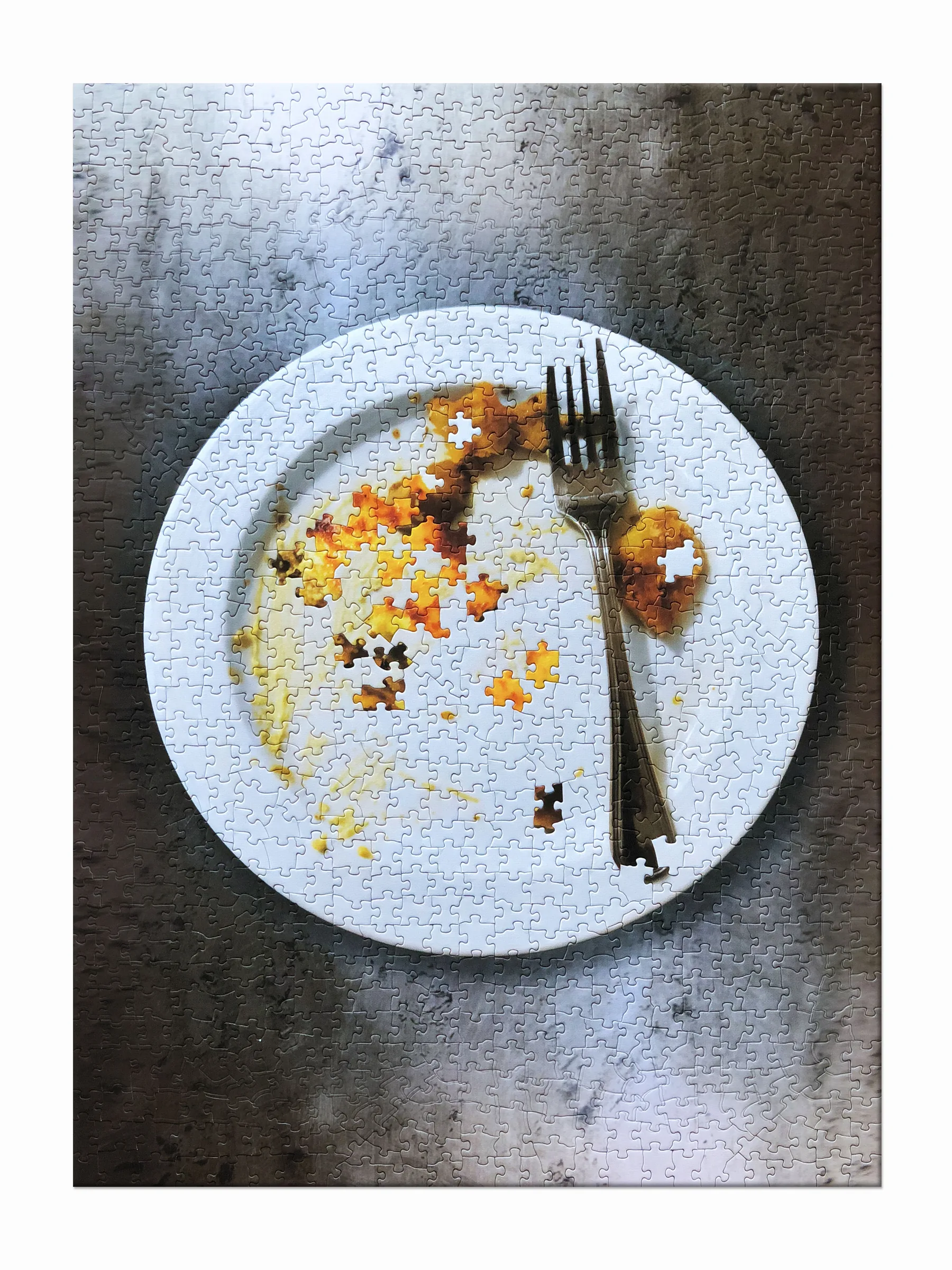
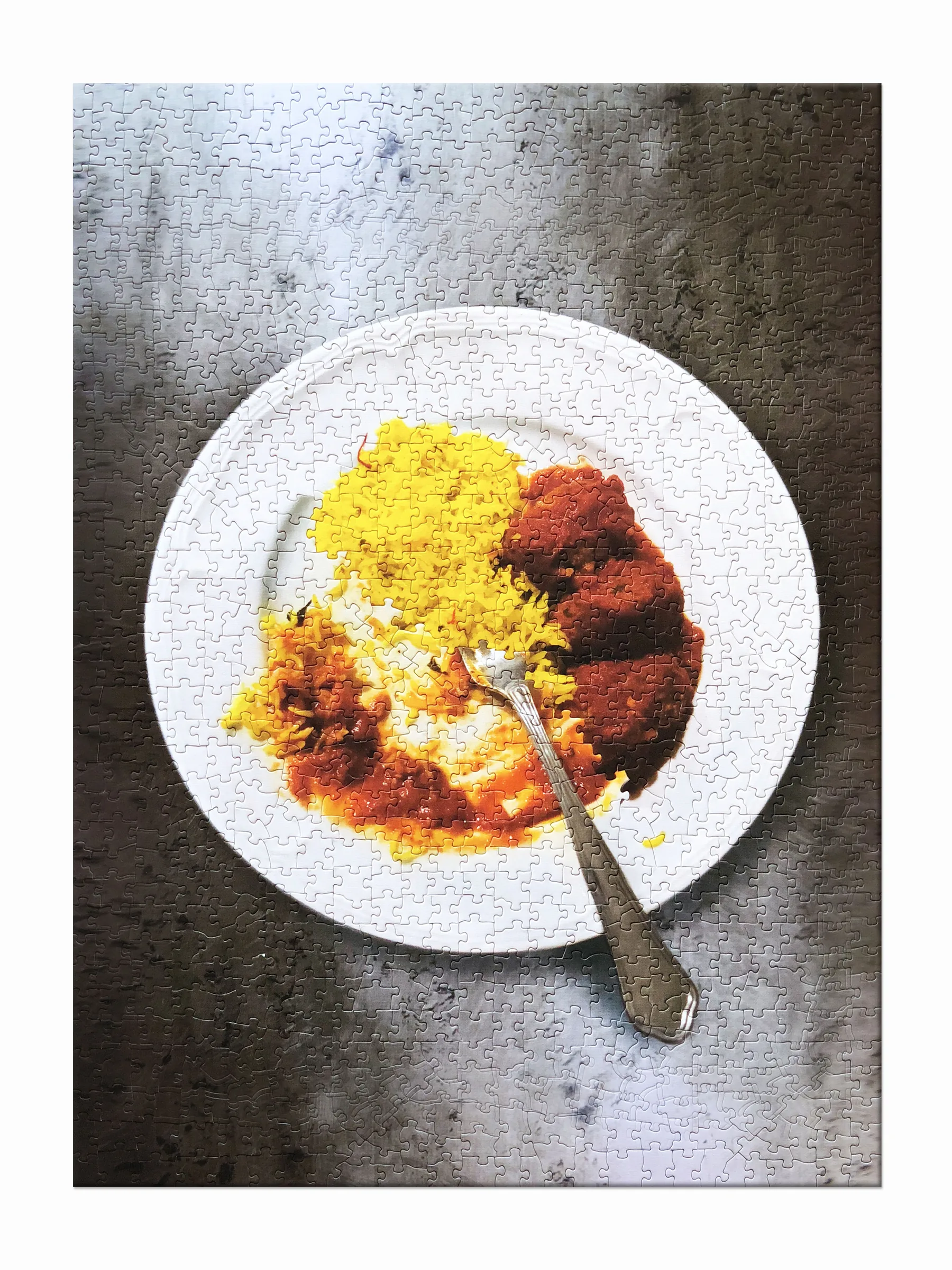
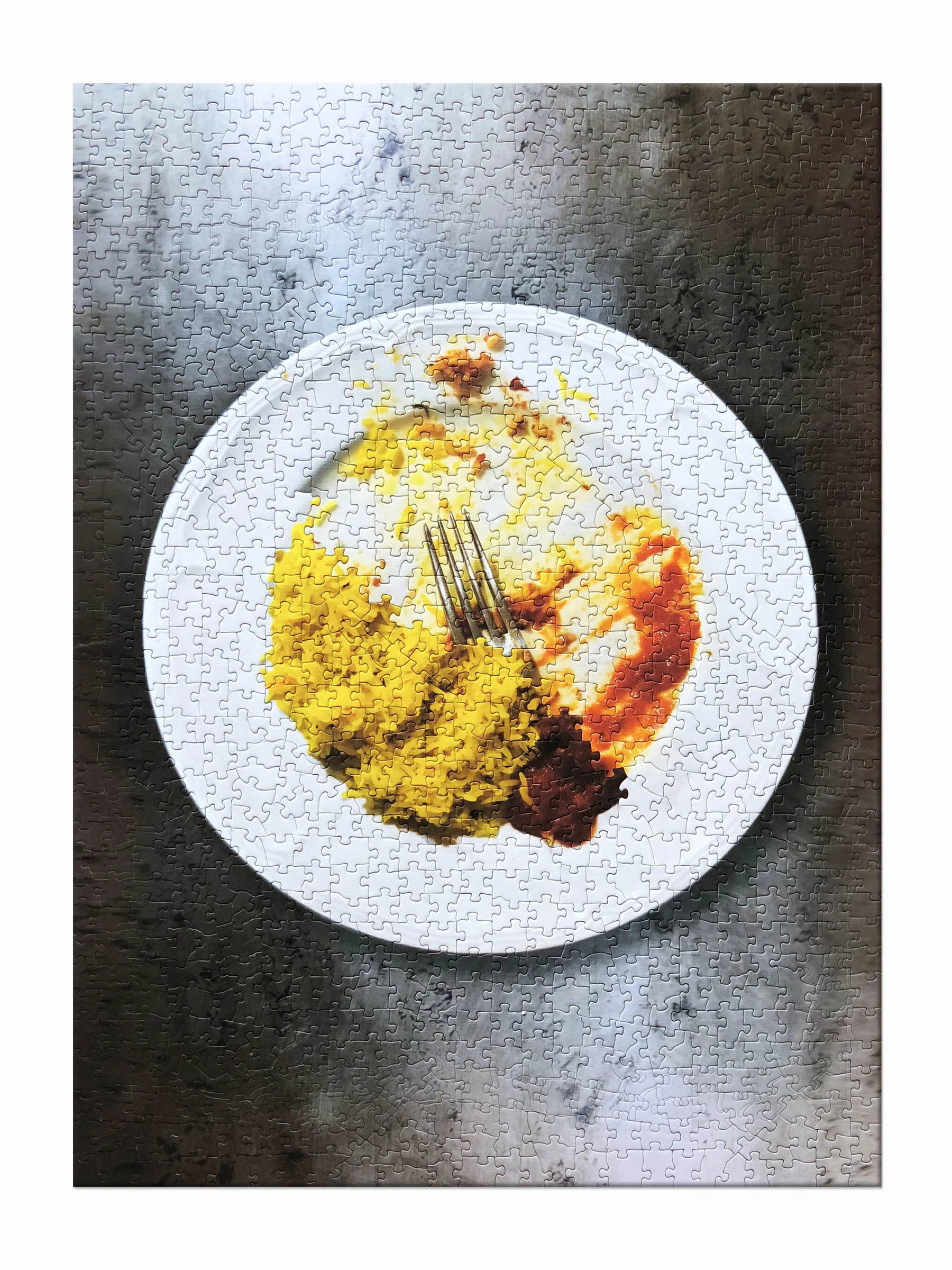
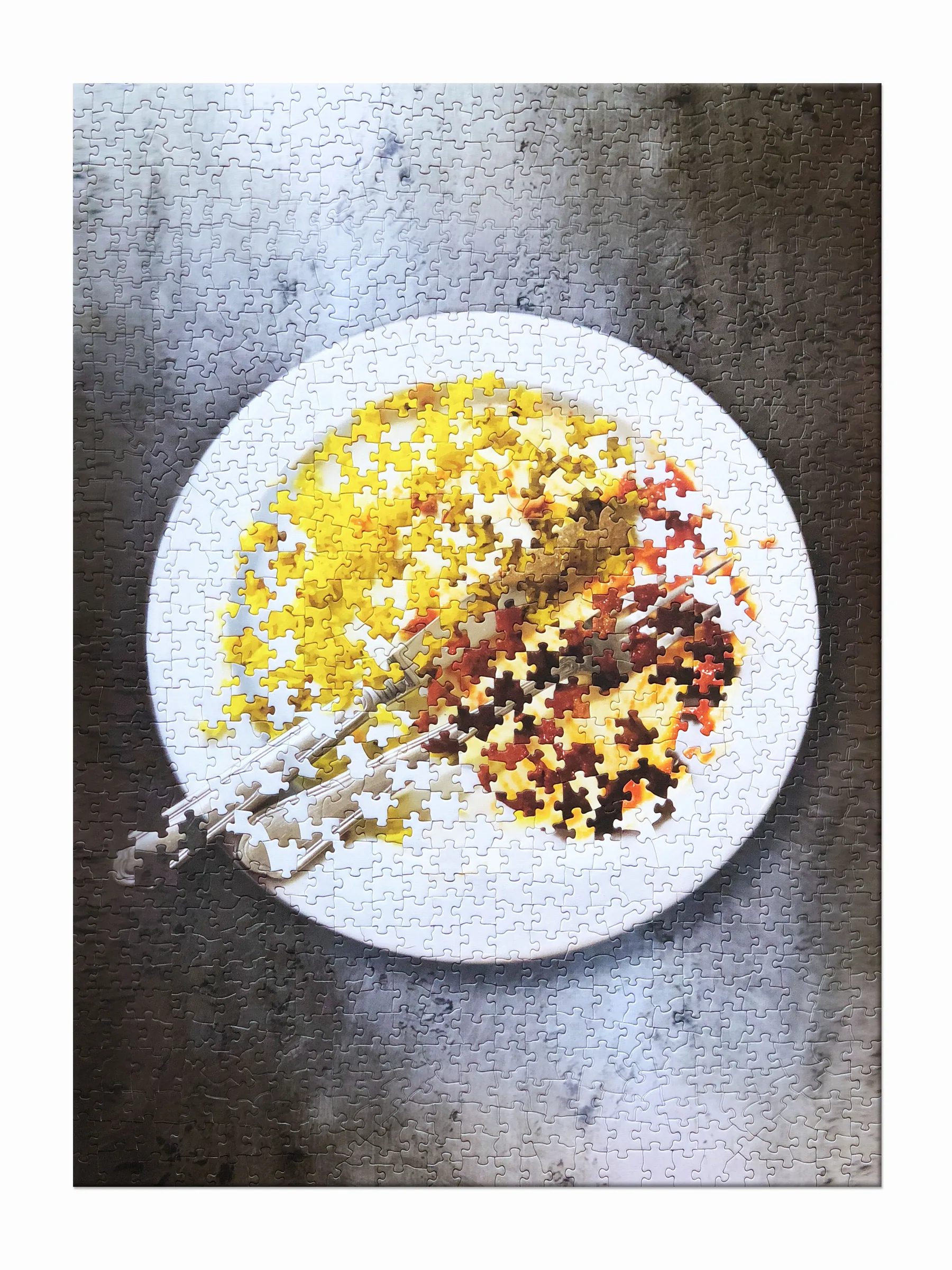
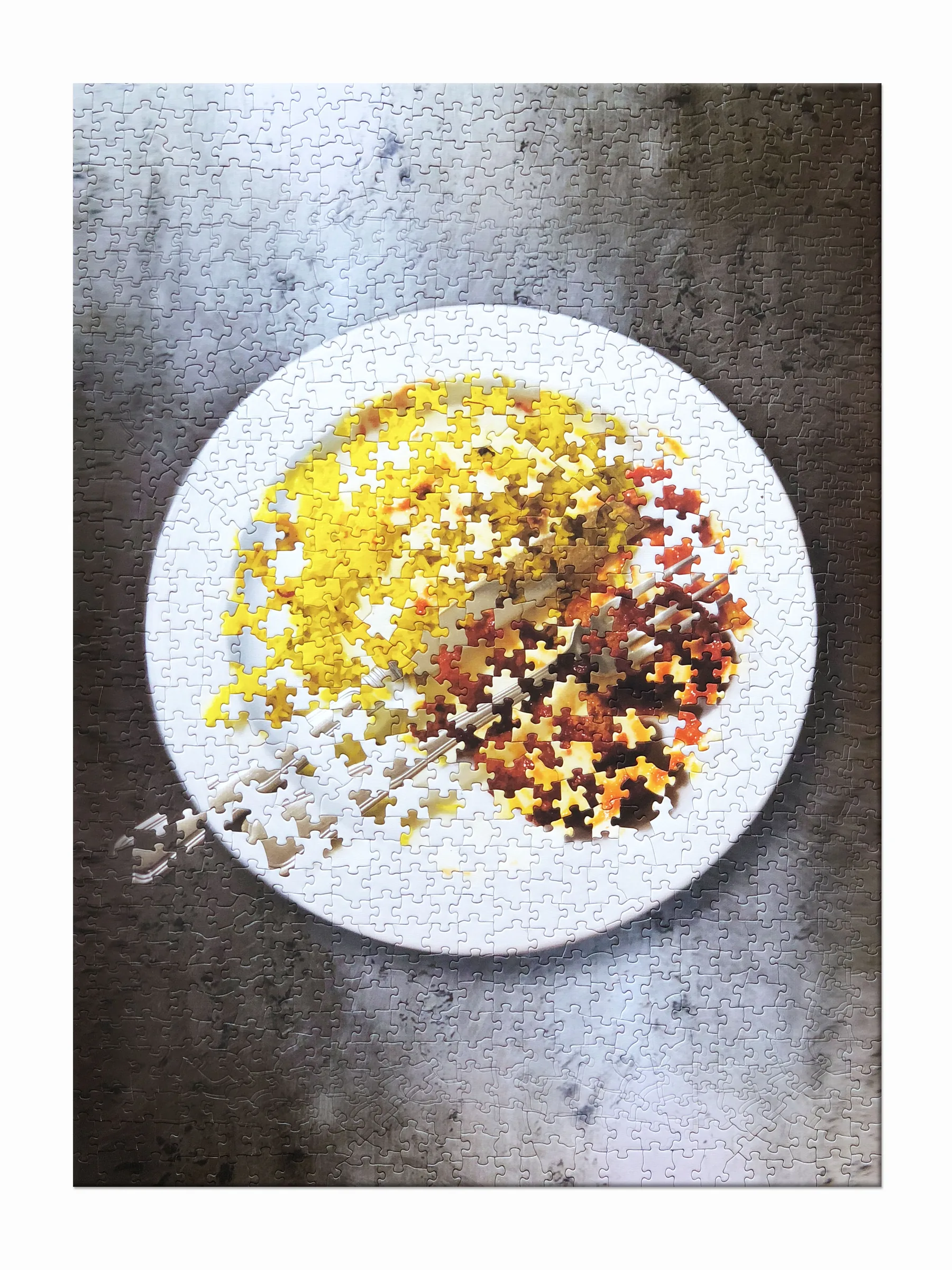
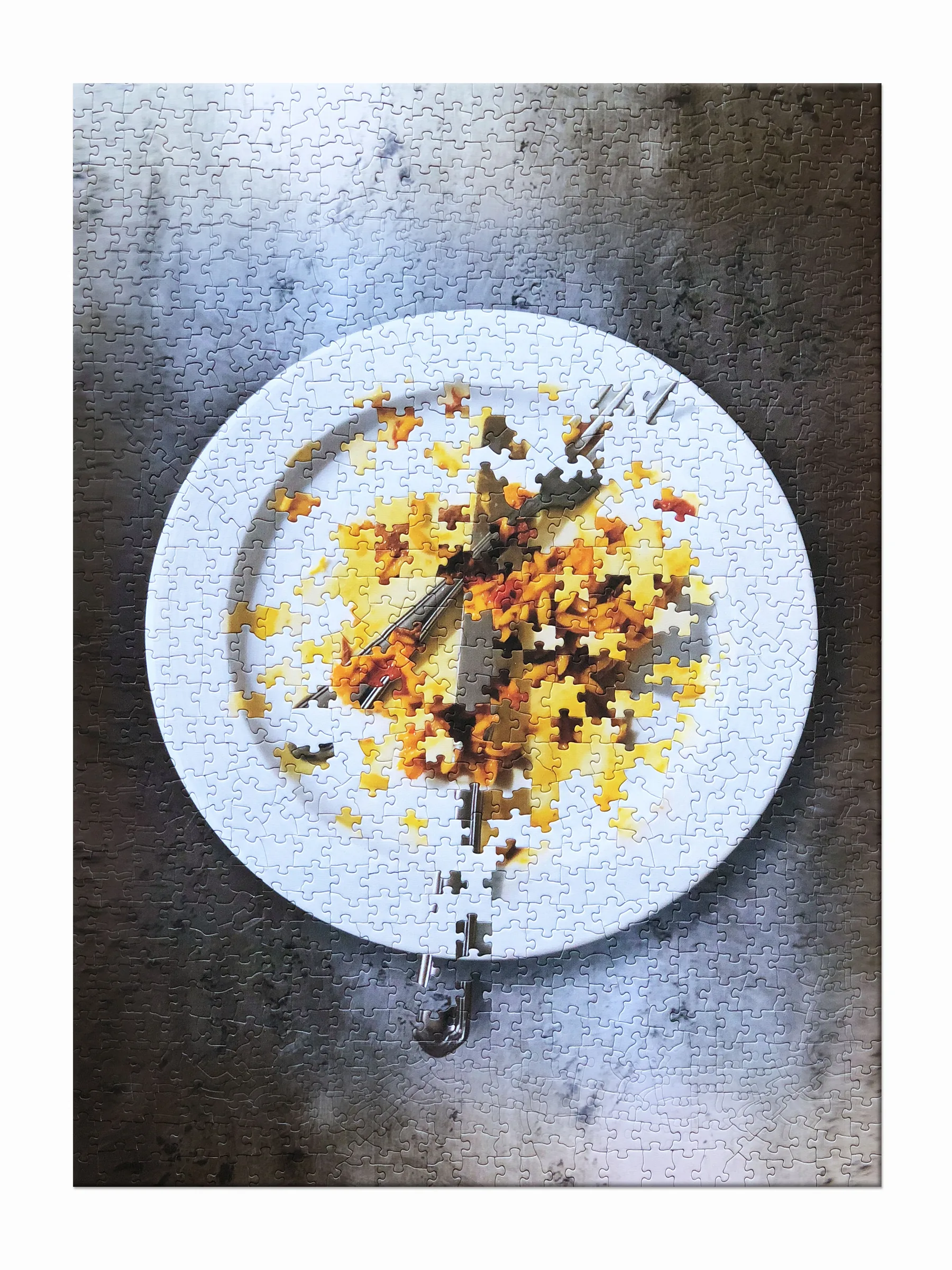
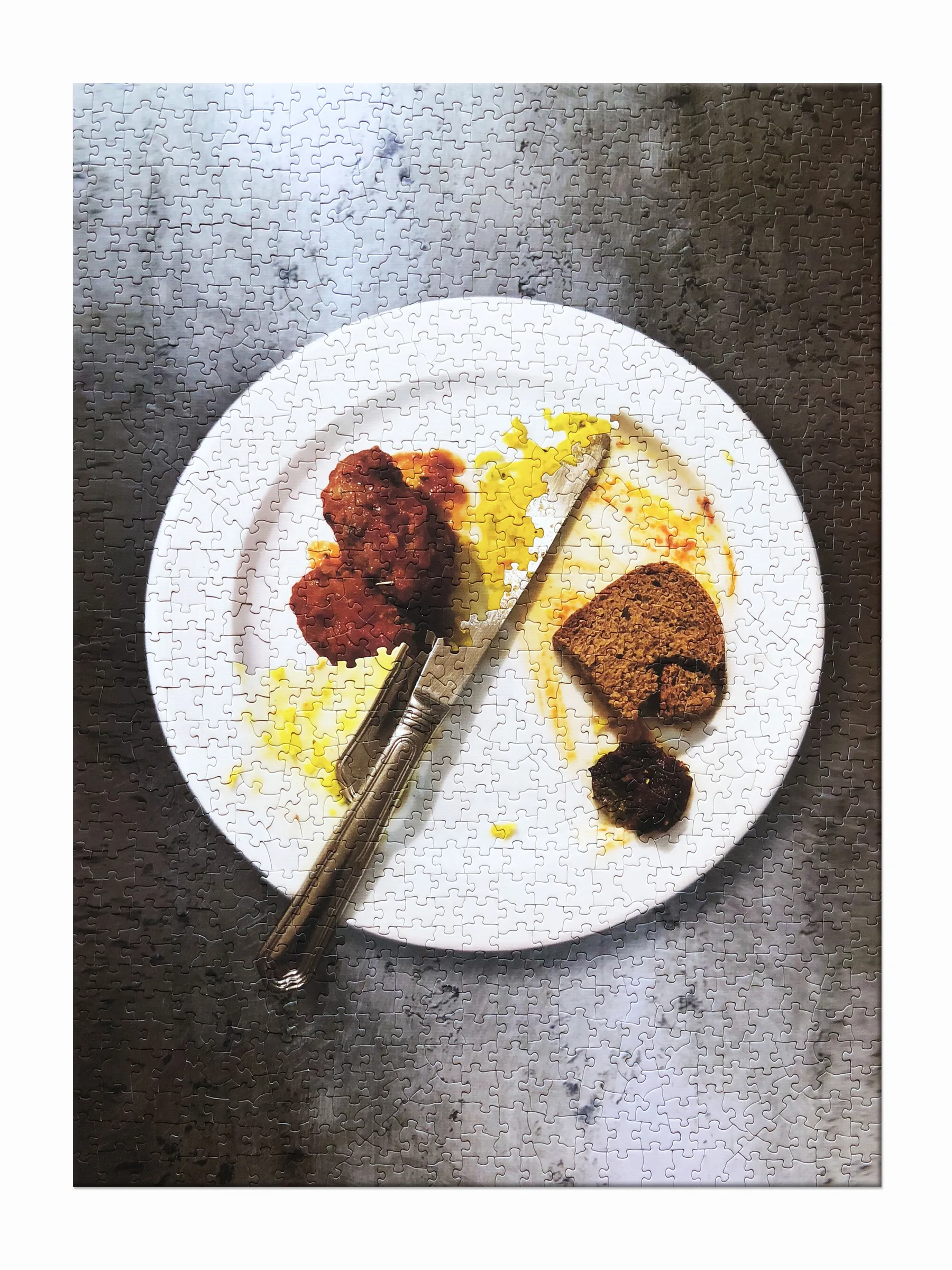
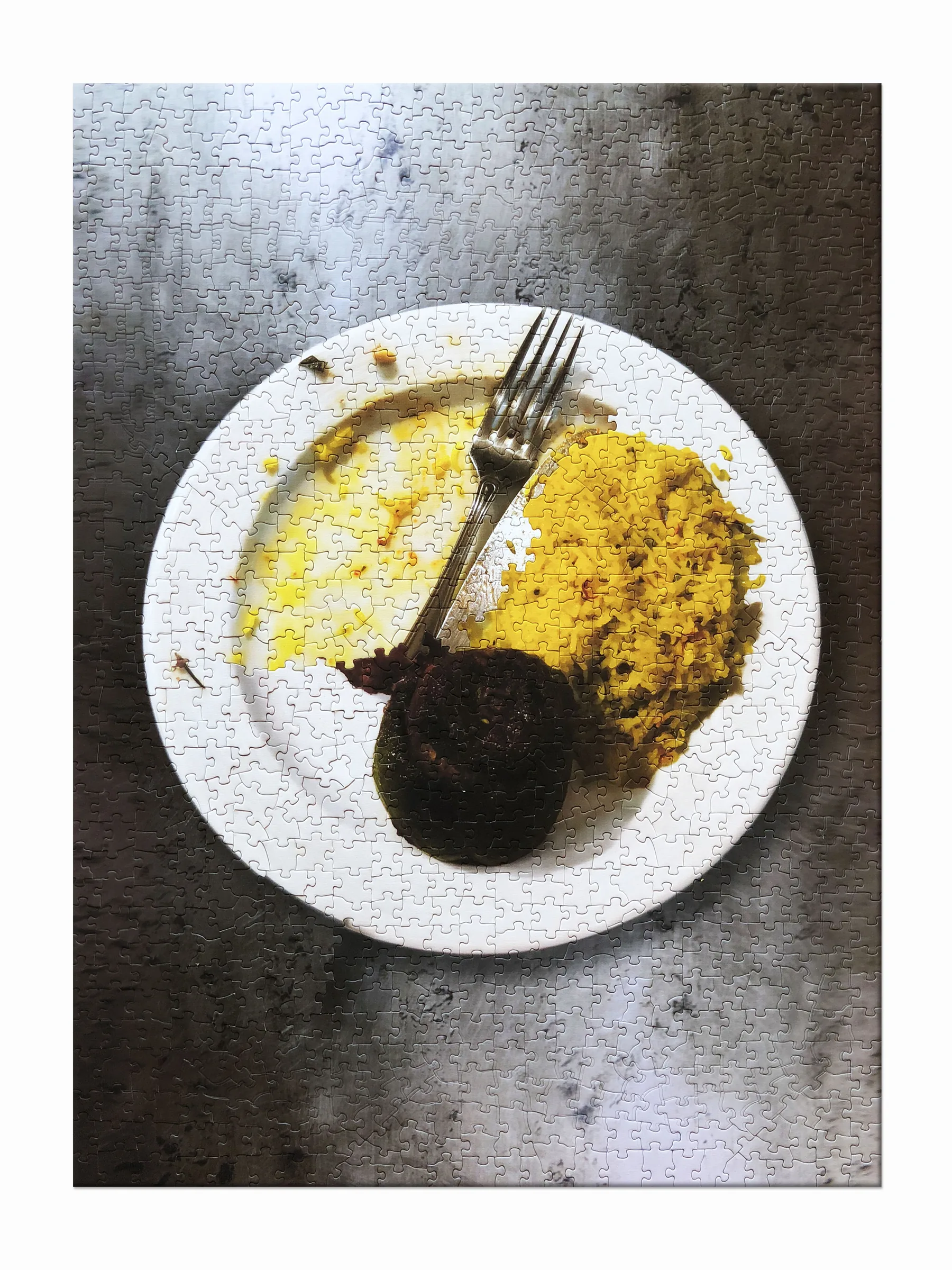
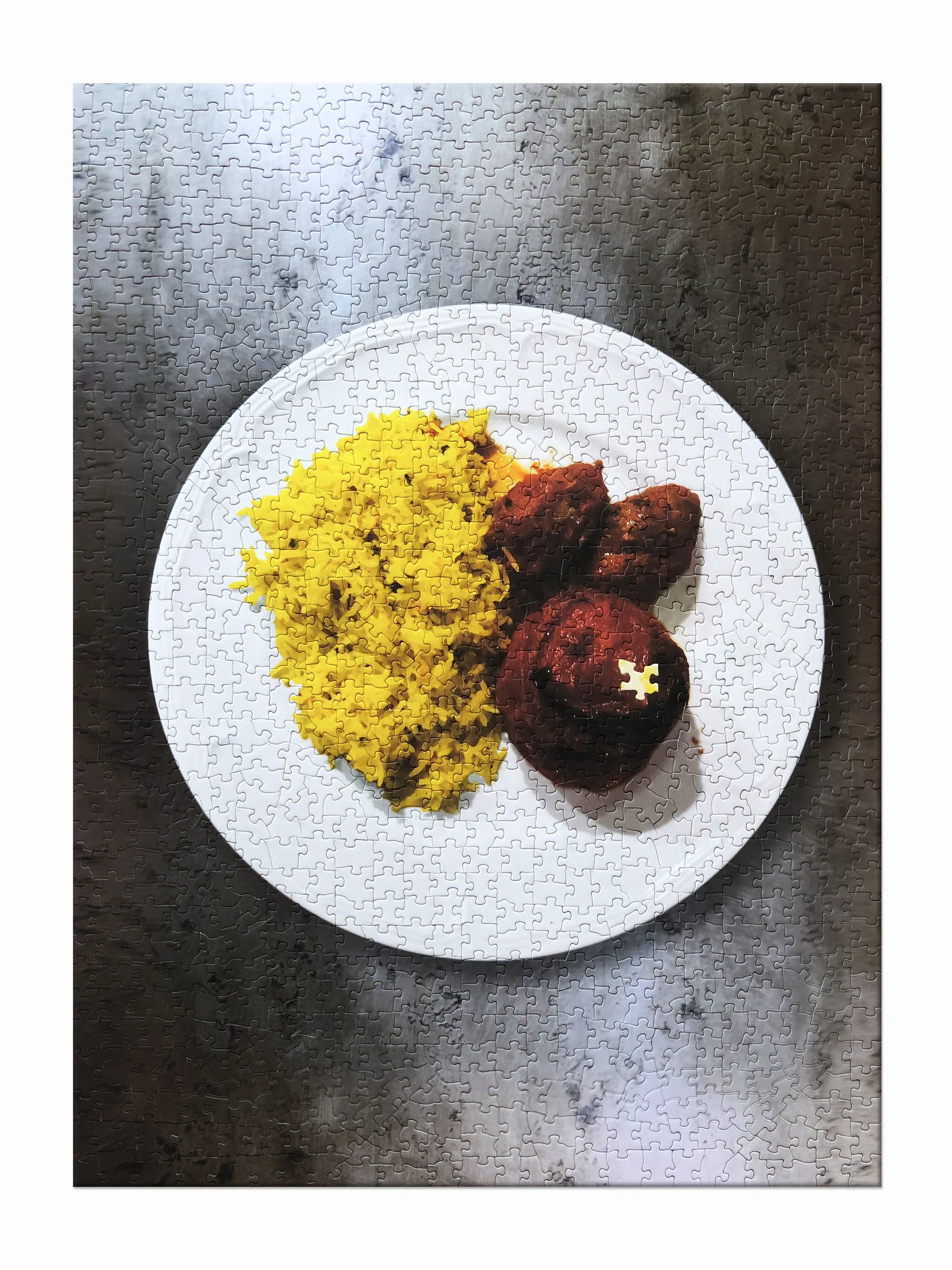
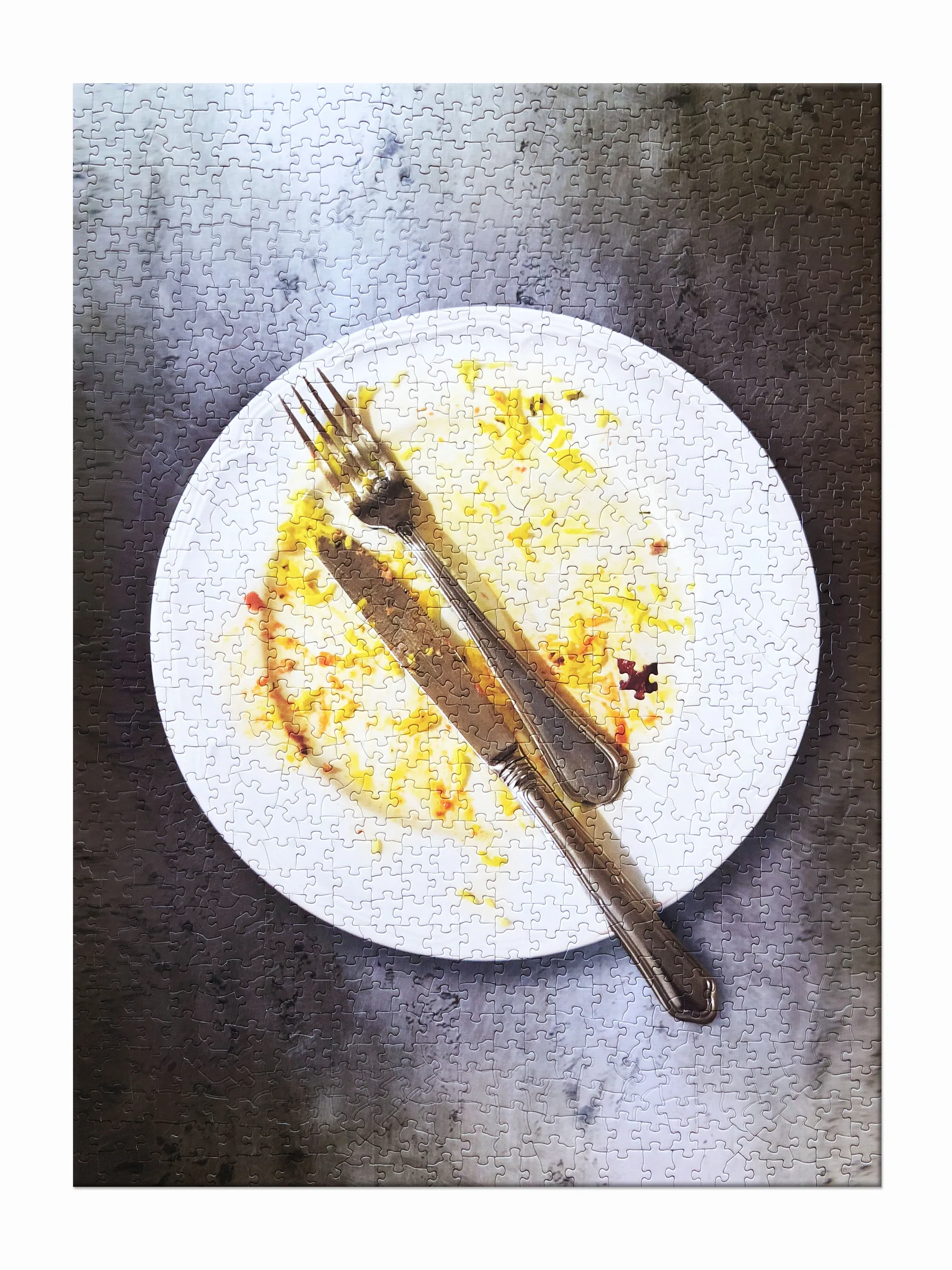
The plate is always half… belongs to Chez Nausicaa, a project in which Esmeralda Kosmatopoulos hosted four anonymous dinners in a traditional Athenian home for locals, refugees and travellers, reviving the ancient Greek law of hospitality, xenia. Following the Homeric order of things, food came before names. Each guest was served before anyone asked who they were, and the plate was the first thing to pass between host and stranger, the first object to carry the relationship before words did.
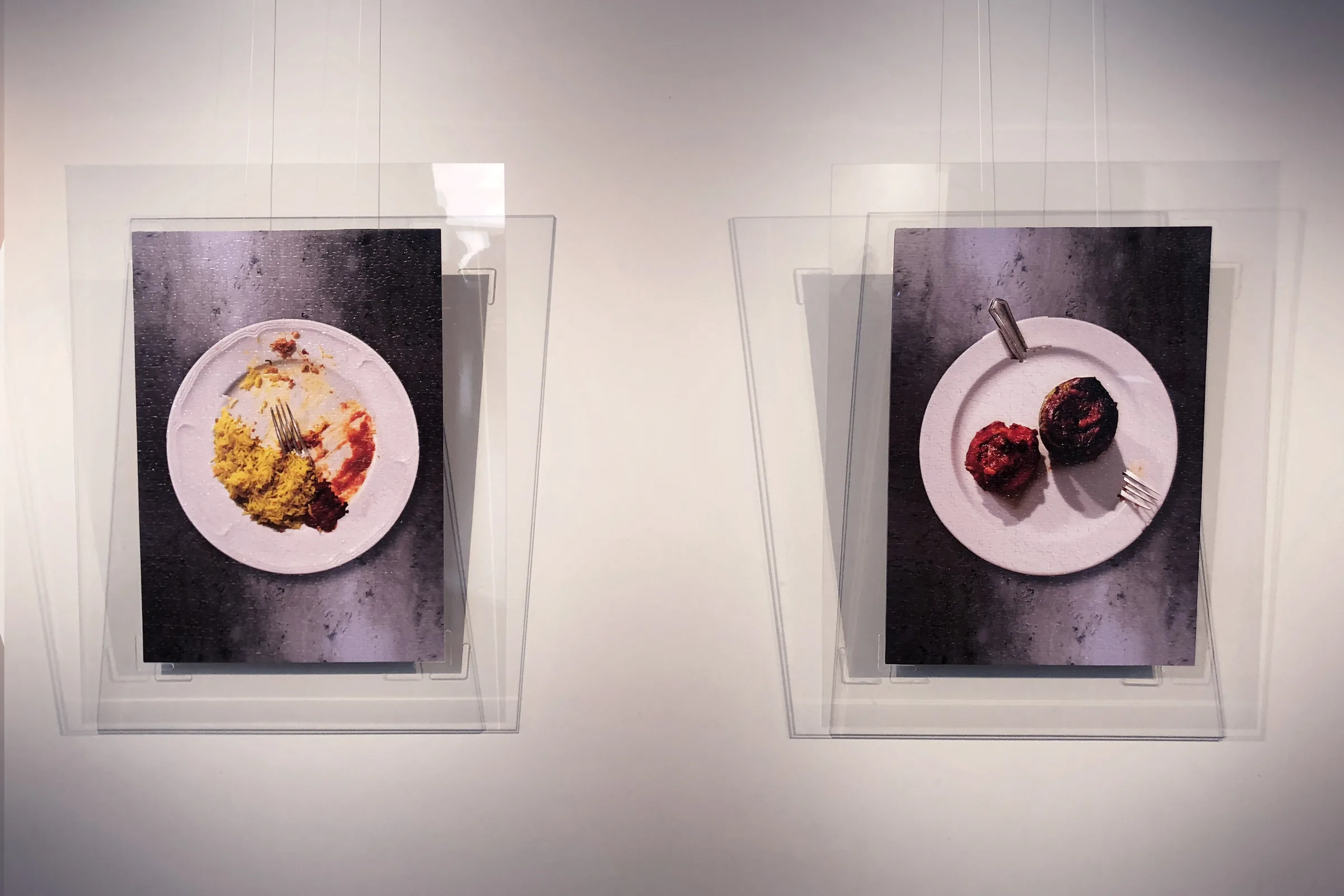
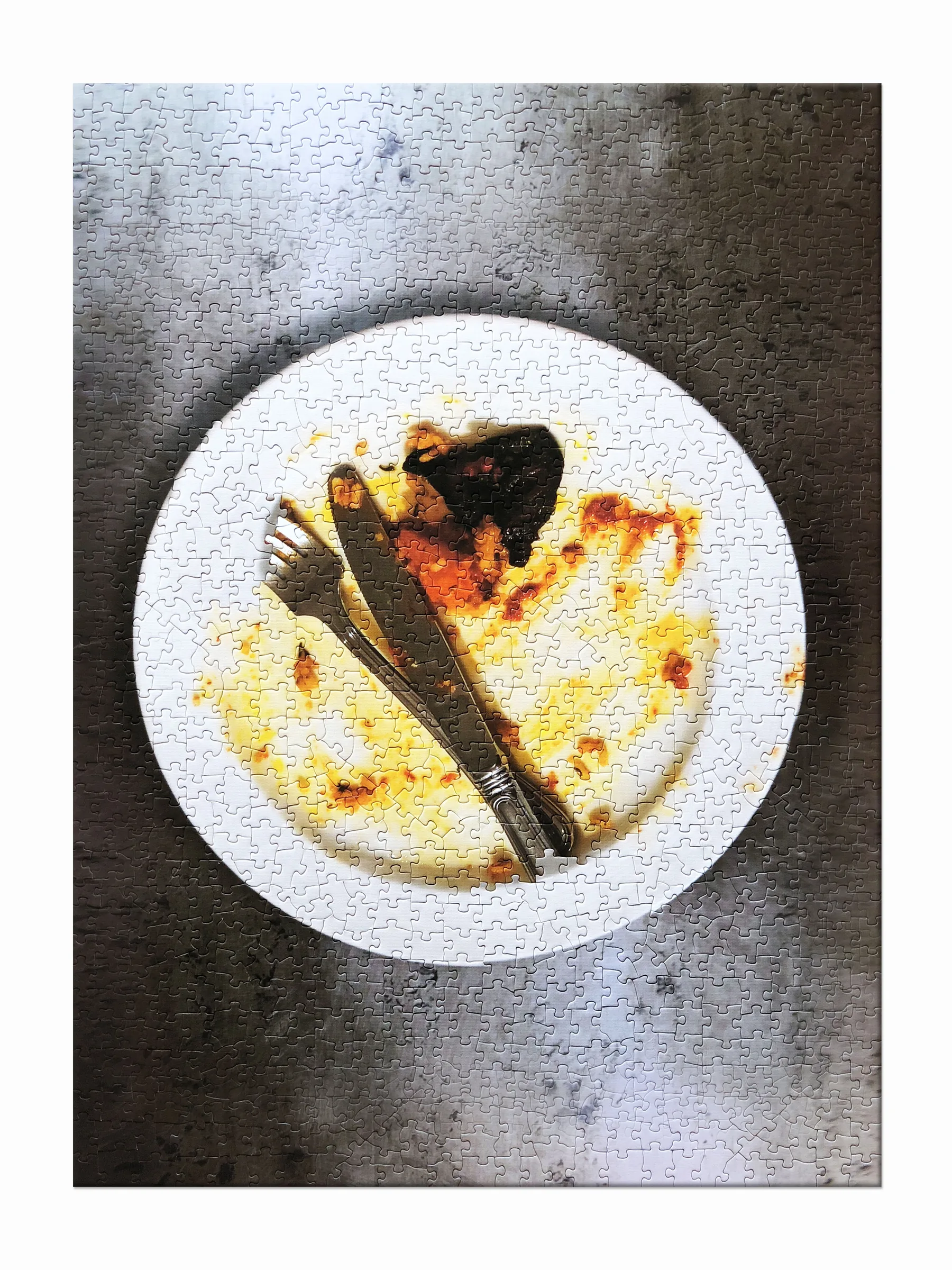
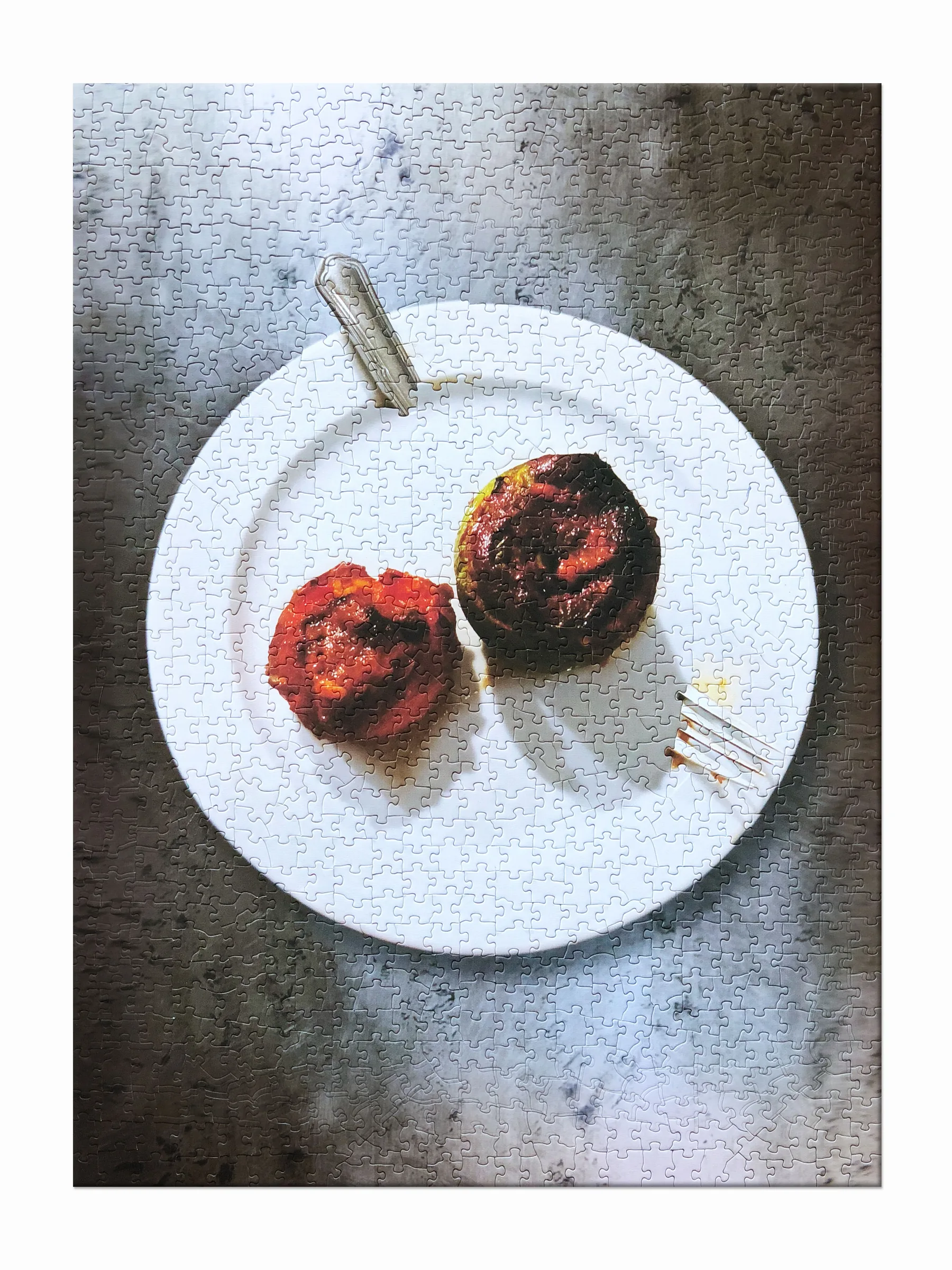
Before each dinner, she photographed every plate from above as it was about to be served, and again when it came back from the table. The first image belongs to the host: a composed meal, offered without knowing to whom. The second belongs to the guest: what was eaten and what was left, a fork laid across rice, a piece of meat pushed aside, sauce drying at the rim, the cutlery set down at a particular angle. Between the two lies a whole evening, and the traces of someone who was never named. The work shows no faces. Anonymity, which was the condition of the dinners, is kept intact; the only portrait allowed is the one the guest left without knowing it.
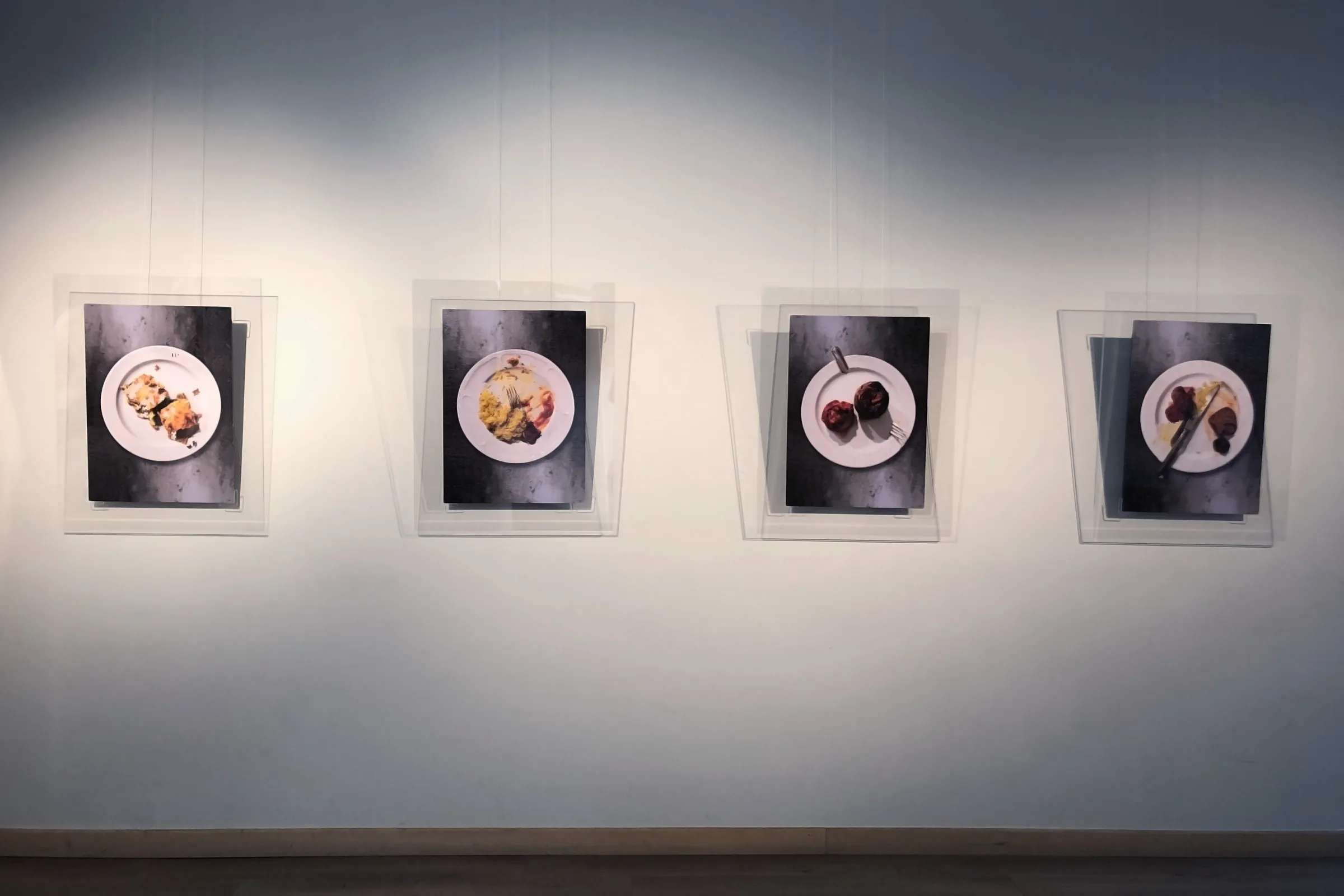
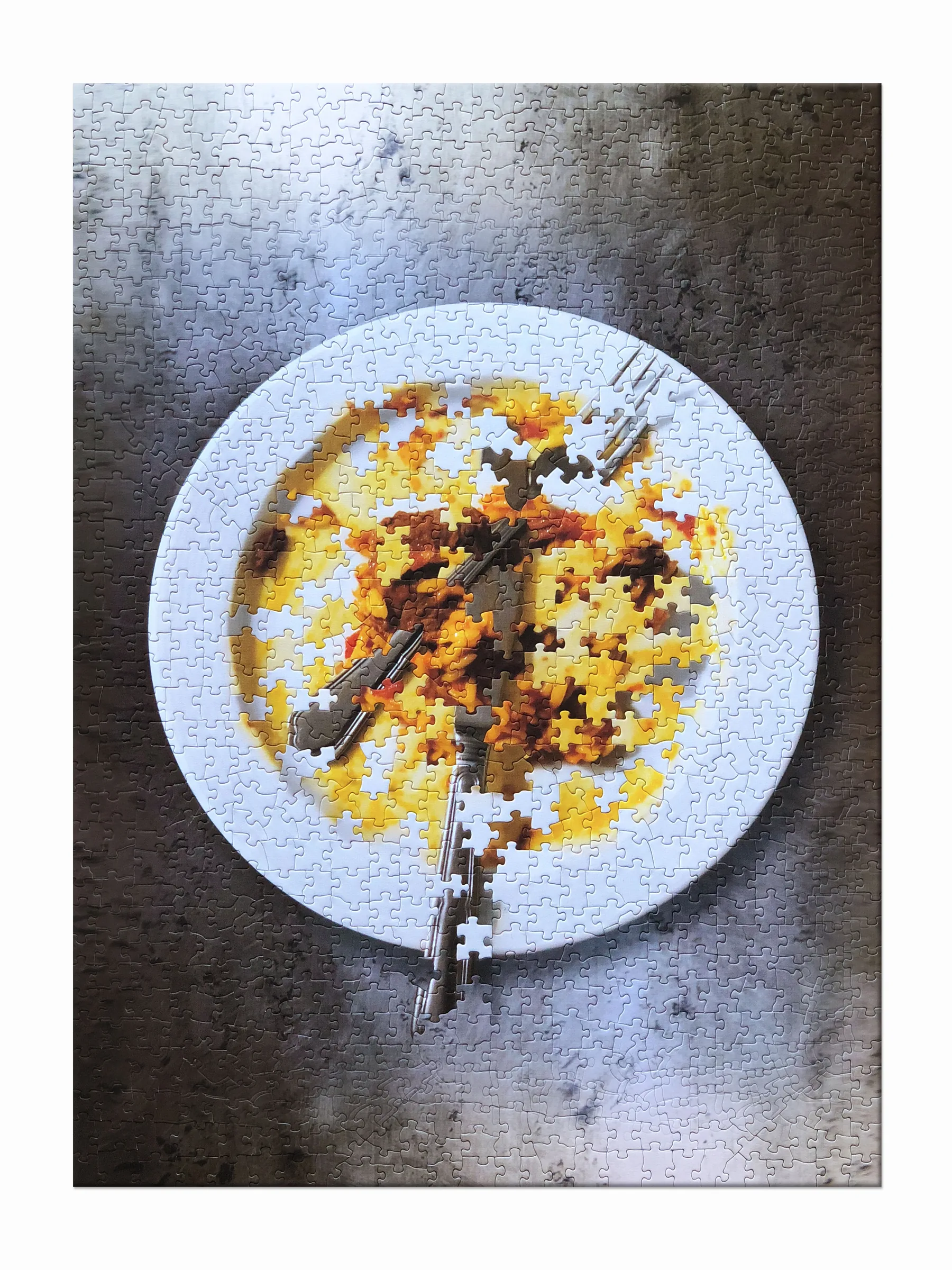
Both images were printed as jigsaw puzzles cut in exactly the same pattern, and their pieces were exchanged. Each plate now exists as a pair of puzzles in which the offered meal and the finished one interlock: fragments of intact rice appear among the remains, a knife breaks into pieces, a stain spreads into a full portion. Mounted under plexiglass, these hybrid images are neither before nor after. They hold the moment of the gift and the moment of its return on the same surface, as if the whole duration of the meal had been folded into a single picture.
The choice of the puzzle matters. It is a domestic object, a game played slowly at a table, often with others, and it rests on a promise: that every piece has its place and that patience will restore the complete image. Here the promise is broken from within. Every piece fits, the edges lock perfectly, and yet the image they form never existed. The coherence is real, the picture is not. What looks like a finished whole is in fact a careful assembly of two incompatible moments.
This is where the work meets hospitality as a question. The plate does not reveal the guest; it carries marks that we read as clues, and that difference between revelation and interpretation sits at the centre of the series. Jacques Derrida, writing with Anne Dufourmantelle, described hospitality as torn between welcoming the stranger without conditions and needing to know who has entered the house. The puzzles answer the desire to know with a portrait that refuses to settle. Each time an identity seems to take shape on the plate, the exchanged pieces redistribute it, and the guest slips back into the anonymity in which they were received.
The title keeps the old question of the glass half full or half empty without choosing a side. The plate is always half: half offered and half consumed, half the host’s gesture and half the guest’s. Neither of them can claim the image alone. Like any encounter with a stranger around a table, it shows something, never everything, and leaves the rest to be imagined by whoever sits down to look.