For exhibition enquiries, available works and collaborations, please contact the studio.
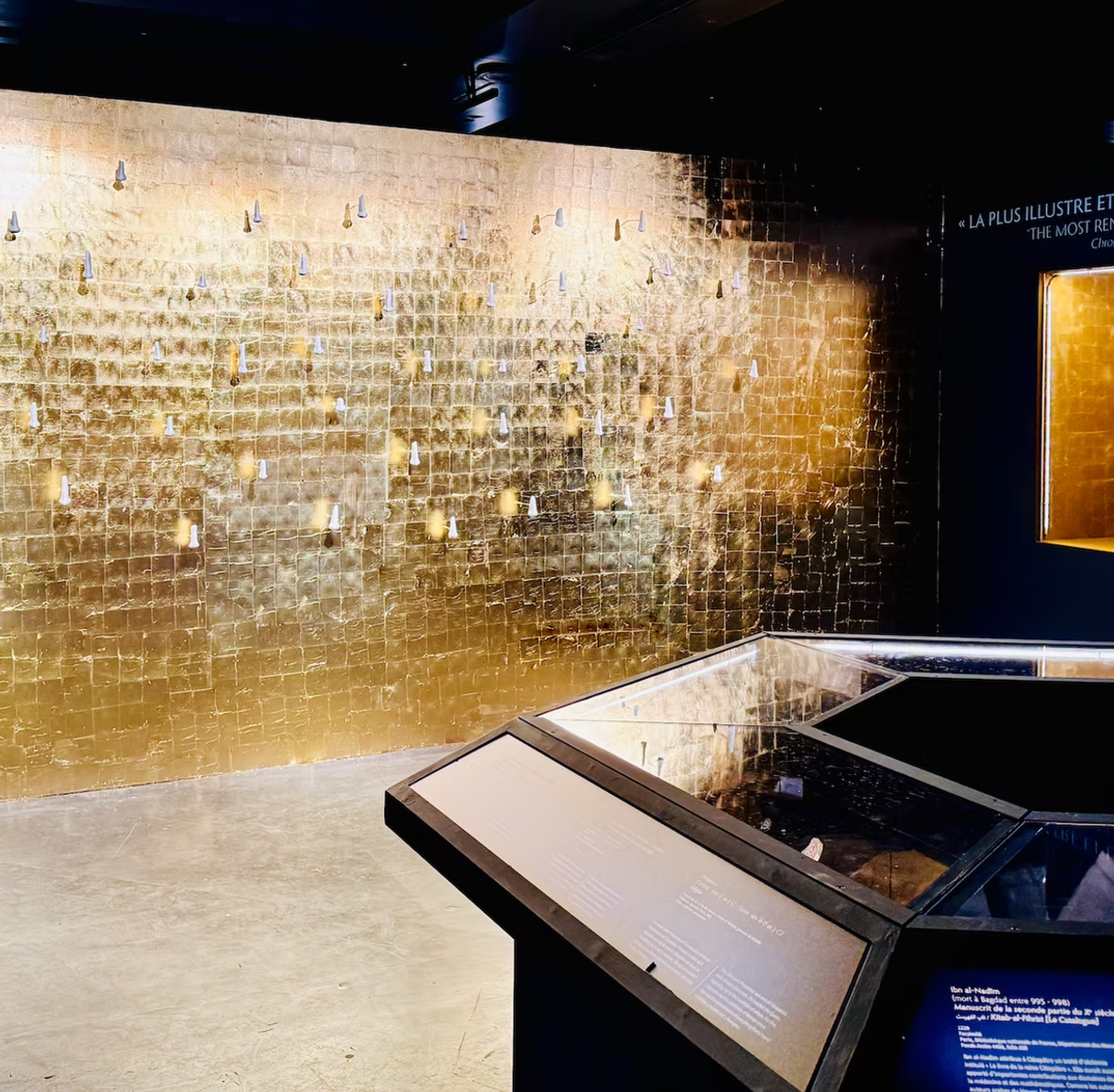
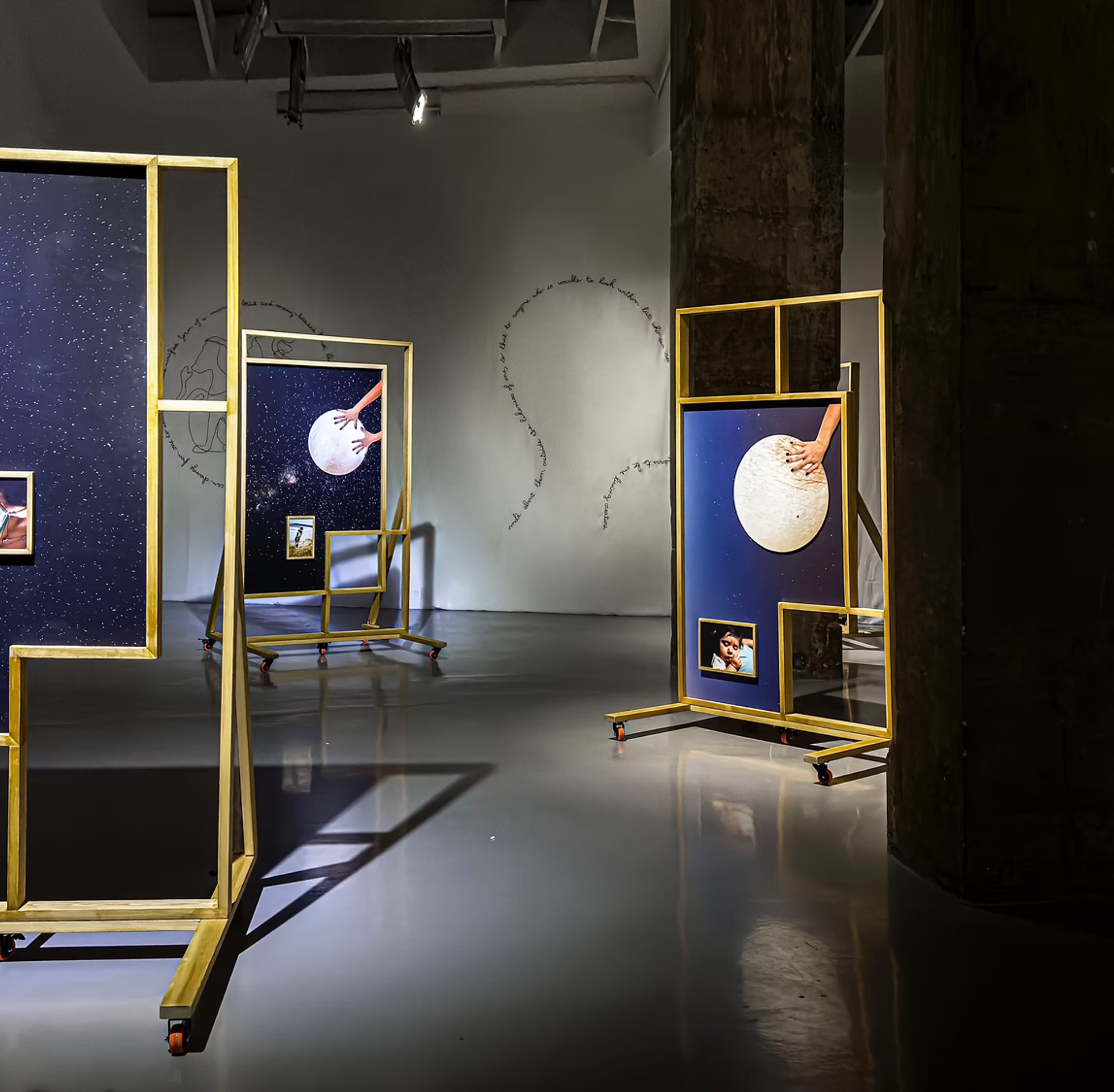
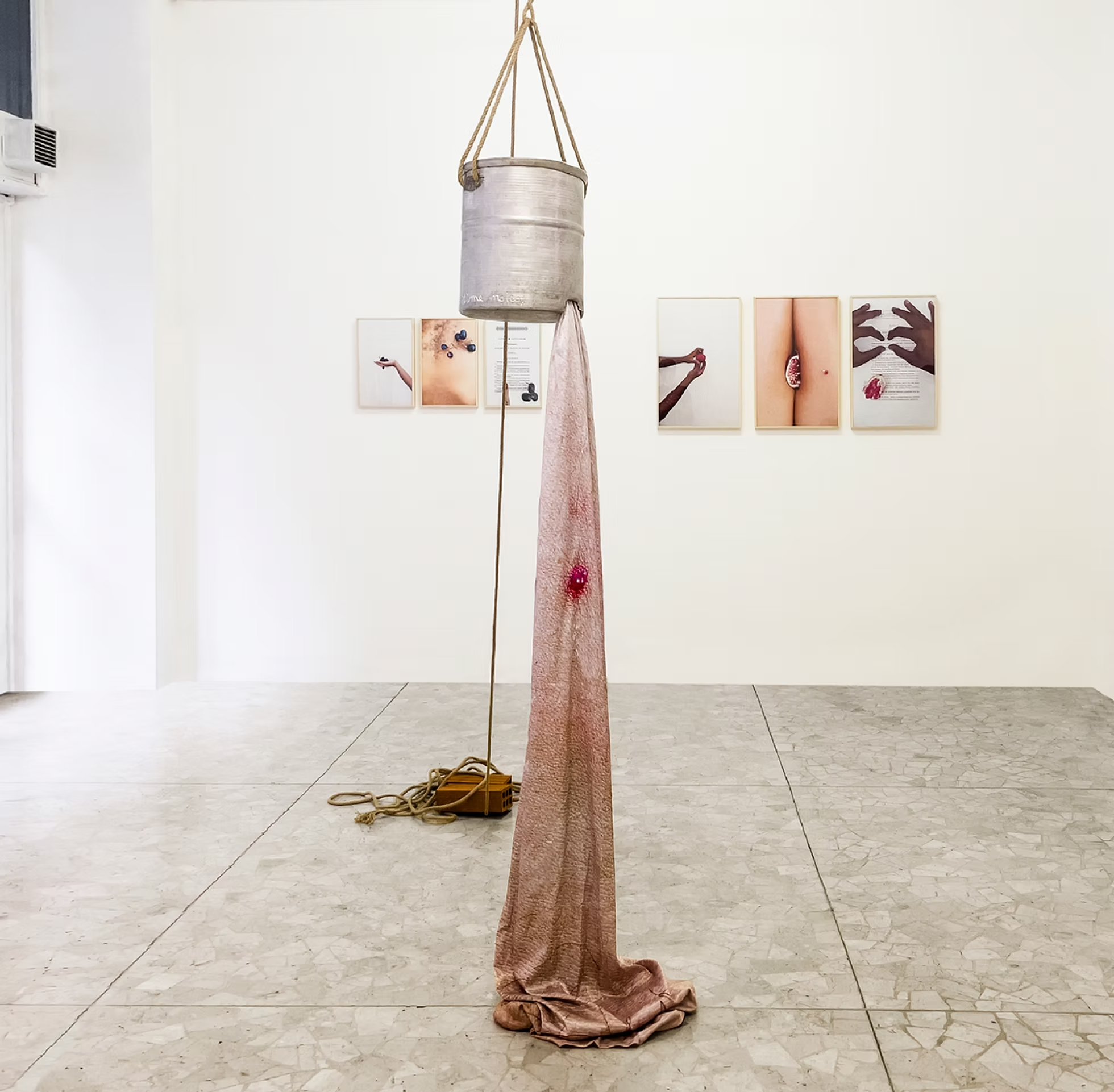
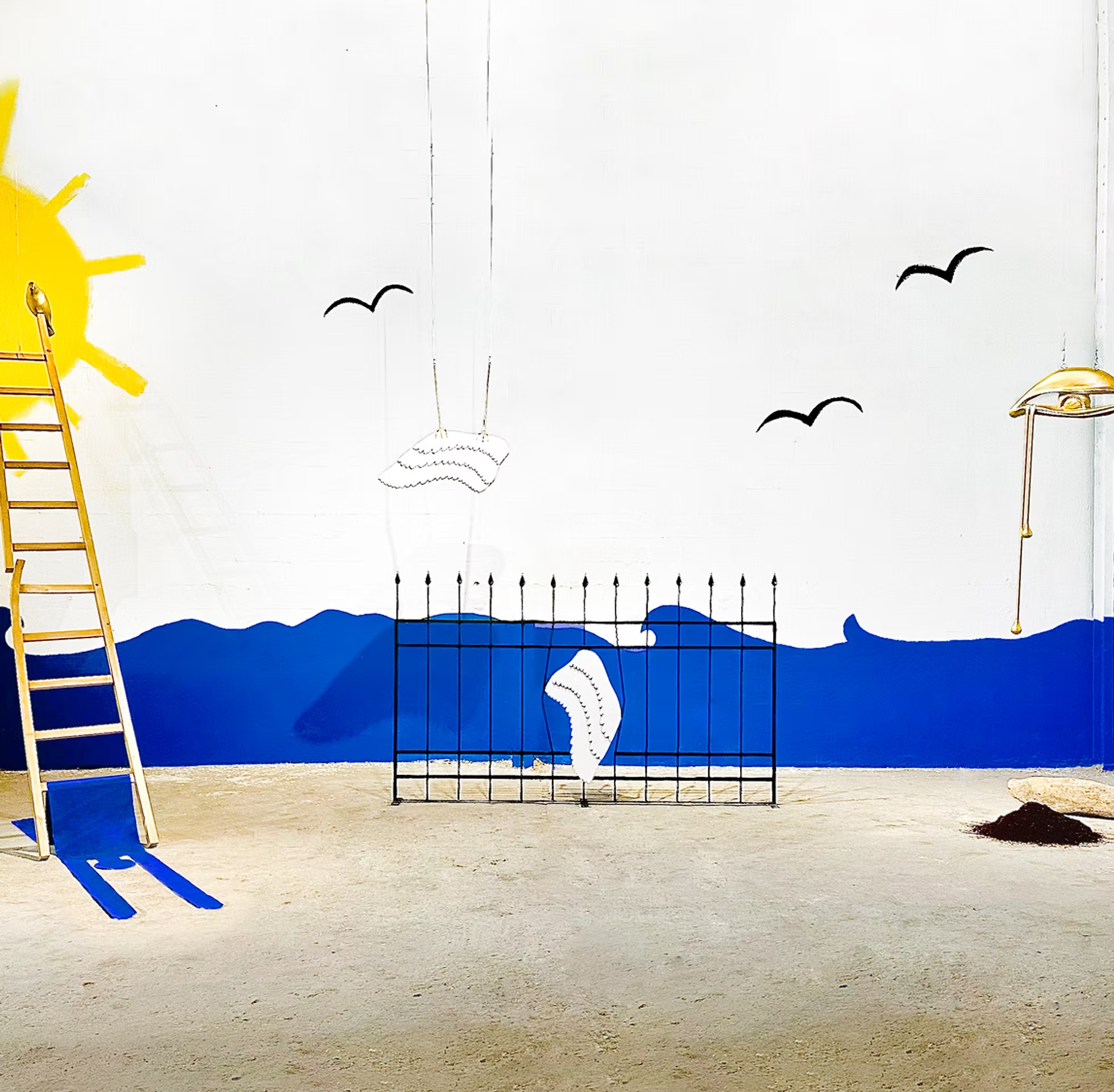
A Greek-French-American artist living between Cairo and Paris. Working in sculpture, textile, installation and photography, she explores hybrid identity, mythology and transformation across Mediterranean and Middle Eastern imaginaries.
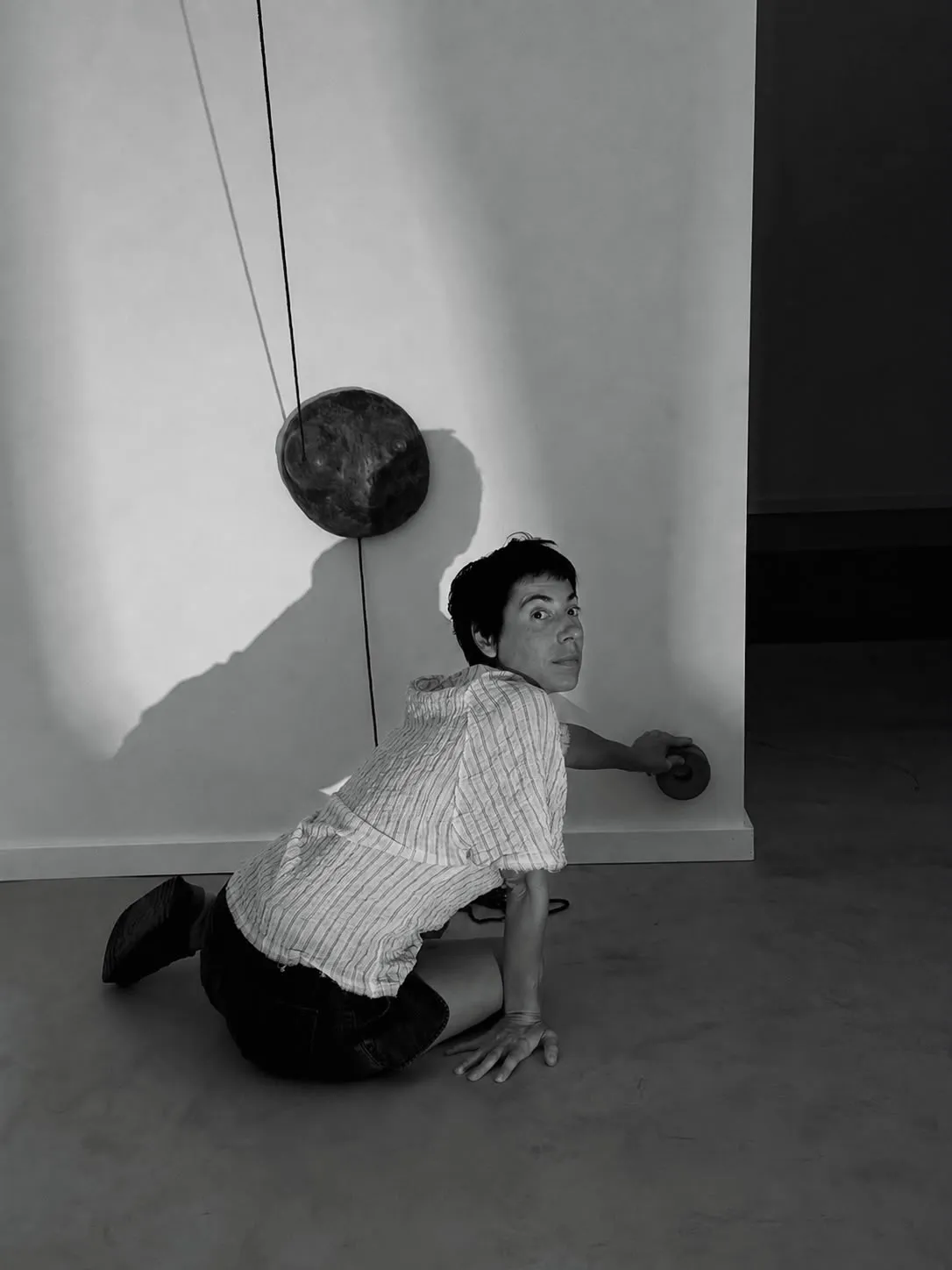
Esmeralda Kosmatopoulos (b. 1981, Greece) is a Greek-French-American multidisciplinary artist living and working between Cairo and Paris. Born in Greece and raised in France, she works across sculpture, installation, textile, photography, video and text. Self-taught, she developed her practice through direct engagement with materials and a series of international residencies. Her work explores hybrid identity, mythology and the body in continual transformation, bringing personal experience into relation with collective memory, historical narratives and the cultural imaginaries of the Mediterranean and the Middle East.
Her work has been presented internationally at institutions including the Institut du Monde Arabe in Paris, Times Art Museum in Beijing, Somerset House in London, La Panacée in Montpellier, Musée Zadkine in Paris, Kunsthal Charlottenborg in Copenhagen, Künstlerhaus Wien, Kunsthal Aarhus, Palazzo delle Arti Napoli and the Art Museum of the Americas in Washington, D.C.
Kosmatopoulos has undertaken residencies at the Boghossian Foundation in Brussels, Townhouse in Cairo and Le 18 in Marrakech. She has received support from organisations including Warehouse421, the Foundation for Contemporary Arts in New York and the European Cultural Foundation.
As a multicultural artist, I am driven by a desire to locate myself. Through my work, I trace the physical, cultural and spiritual contours of my identity, seeking to understand where I begin, where I end and where I belong. Formed between Eastern and Western Mediterranean imaginaries, my sense of self resists a single origin or stable definition. Rather than reconciling these positions into a coherent whole, I work from the tensions, overlaps and contradictions they produce. This in-between is not a temporary condition to overcome, but the place from which my practice begins.
My projects may begin with lived experience, a historical figure, a political reality, a landscape or an inherited story. I turn to myth because it allows these singular points of departure to move beyond autobiography or documentation without being reduced to a single explanation. Rather than illustrating existing narratives, I fragment, displace and reactivate their symbols within contemporary contexts. I assemble them into spatial fables in which the story is distributed across objects, images, materials, bodies and architecture. The viewer enters the narrative, moves among its fragments and establishes connections between them. Myth is therefore not simply a subject, but a method for giving form to what cannot be fully explained.
My visual language draws on sources ranging from ancient Greek imagery and medieval bestiaries to Persian and Ottoman miniatures. I am drawn to the way these traditions compress bodies, landscapes and actions into symbolic forms, allowing scale and perspective to follow meaning rather than realism. Their frontal and simplified visual languages inform the hybrid figures, incomplete metamorphoses, fragmented bodies and suspended gestures that recur throughout my work. These forms can hold several states at once without settling completely into any of them.
Material is an active participant rather than a neutral support. I work across sculpture, installation, textile and photography, choosing bread, stone, Khayamiya fabric, glass and found objects for the histories, symbolic associations and physical behaviours they carry. Through assemblage, layering and transformation, matter moves from one state to another. Tears become bread; bread becomes a mask; a lament becomes an architecture; a thread becomes the sea; a myth acquires a body. Meaning emerges through these material passages.
Throughout my practice, the feminine functions less as a subject than as a lens. Rather than attempting to define womanhood, I investigate the myths, projections, rituals and symbolic constructions that continue to shape how bodies are imagined and represented. Mourning women, serpent women, hybrid beings and contemporary Venuses are not offered as fixed archetypes, but as figures through which inherited roles can be inhabited, resisted and rewritten.
Across these different forms, I am less interested in resolving a narrative than in keeping it active. A body, a material or an inherited symbol can acquire another meaning without losing the traces of what it was. Transformation is not an exceptional event in my practice, but the condition through which stories and forms remain alive.