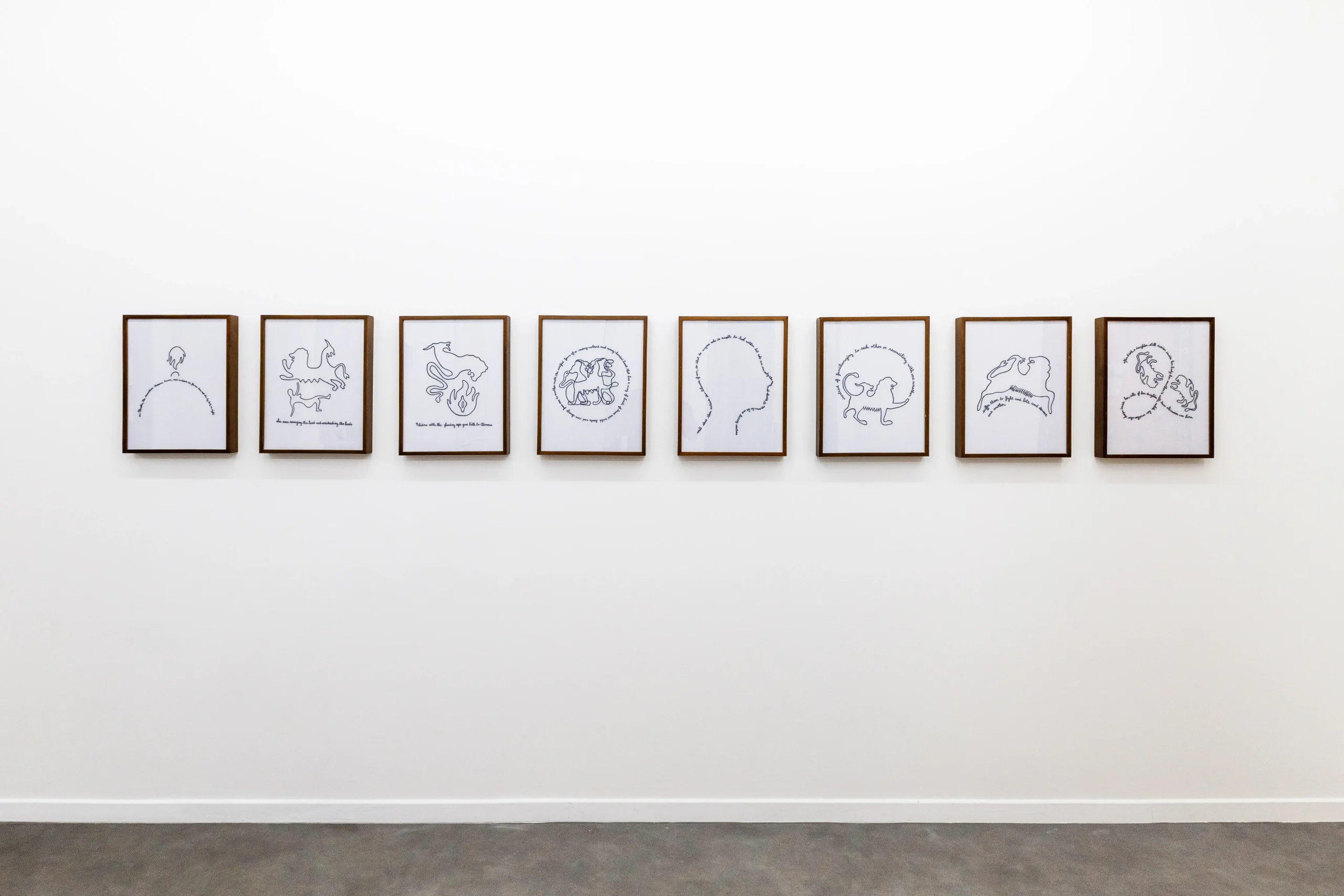
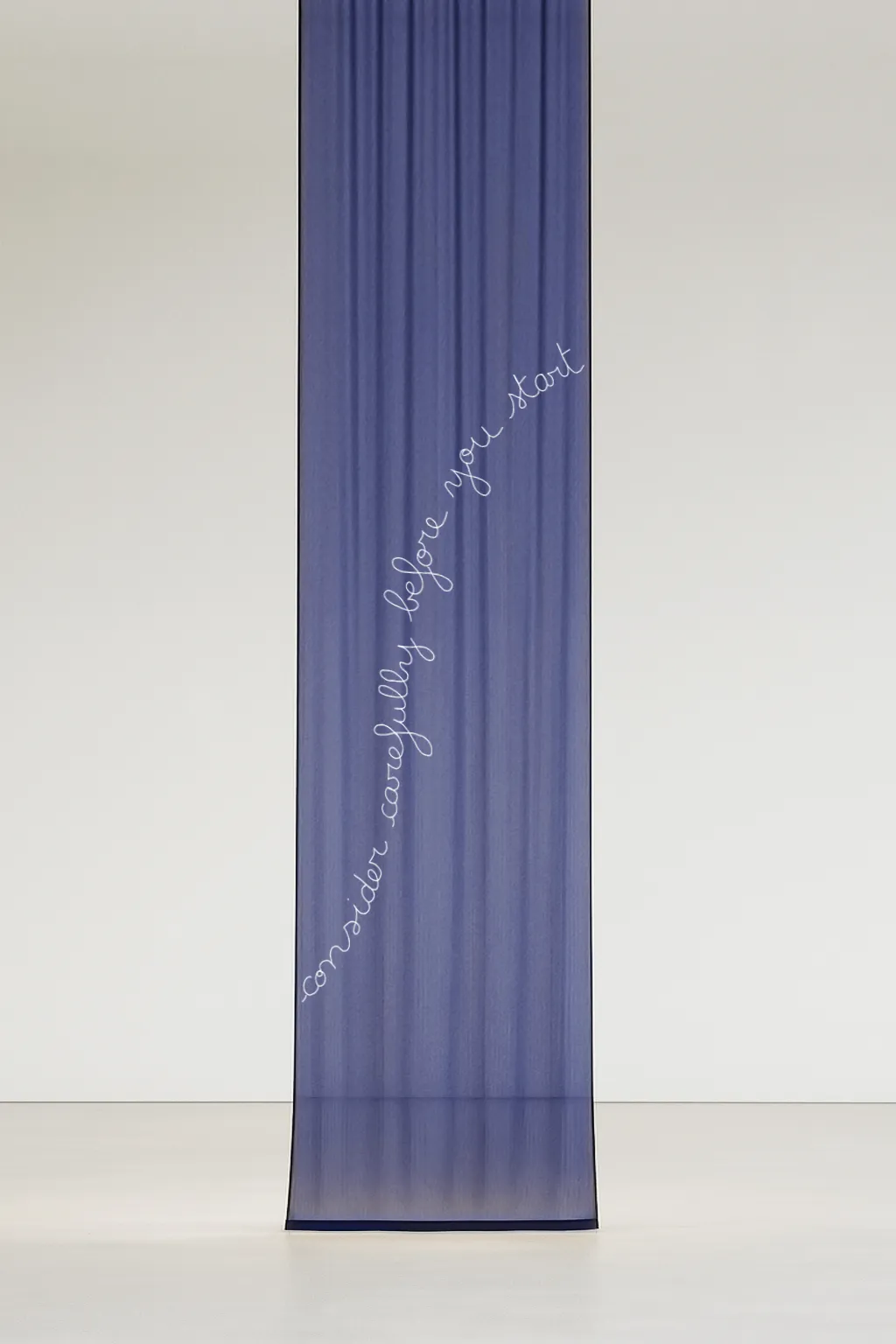
ik-HO-rus brings Icarus and Horus into collision within an art installation that constructs a contemporary mythology of human ambition and ecological destruction in the age of the Anthropocene. Through sculpture and a spatial narrative in three acts, the project traces how the desire to exceed natural limits transforms ascent into extraction, and invention into the architecture of collapse.
START YEAR
2023
END YEAR
2023
About
ik-HO-rus stages the encounter between two mythological figures who could never have met within their inherited narratives. Icarus is a figure from Greek mythology who attempts to transcend the limits of the human condition. Horus is the falcon-headed figure from Egyptian mythology, for whom flight is neither invention nor conquest, but a state of being.
Their names fuse into a single hybrid title, producing a mythology that belongs fully to neither Greek nor Egyptian tradition. Rather than illustrating two ancient stories, Esmeralda Kosmatopoulos displaces their protagonists and brings them into a new encounter shaped by contemporary anxieties surrounding progress, extraction and ecological collapse.
The installation unfolds as a spatial play in three acts.
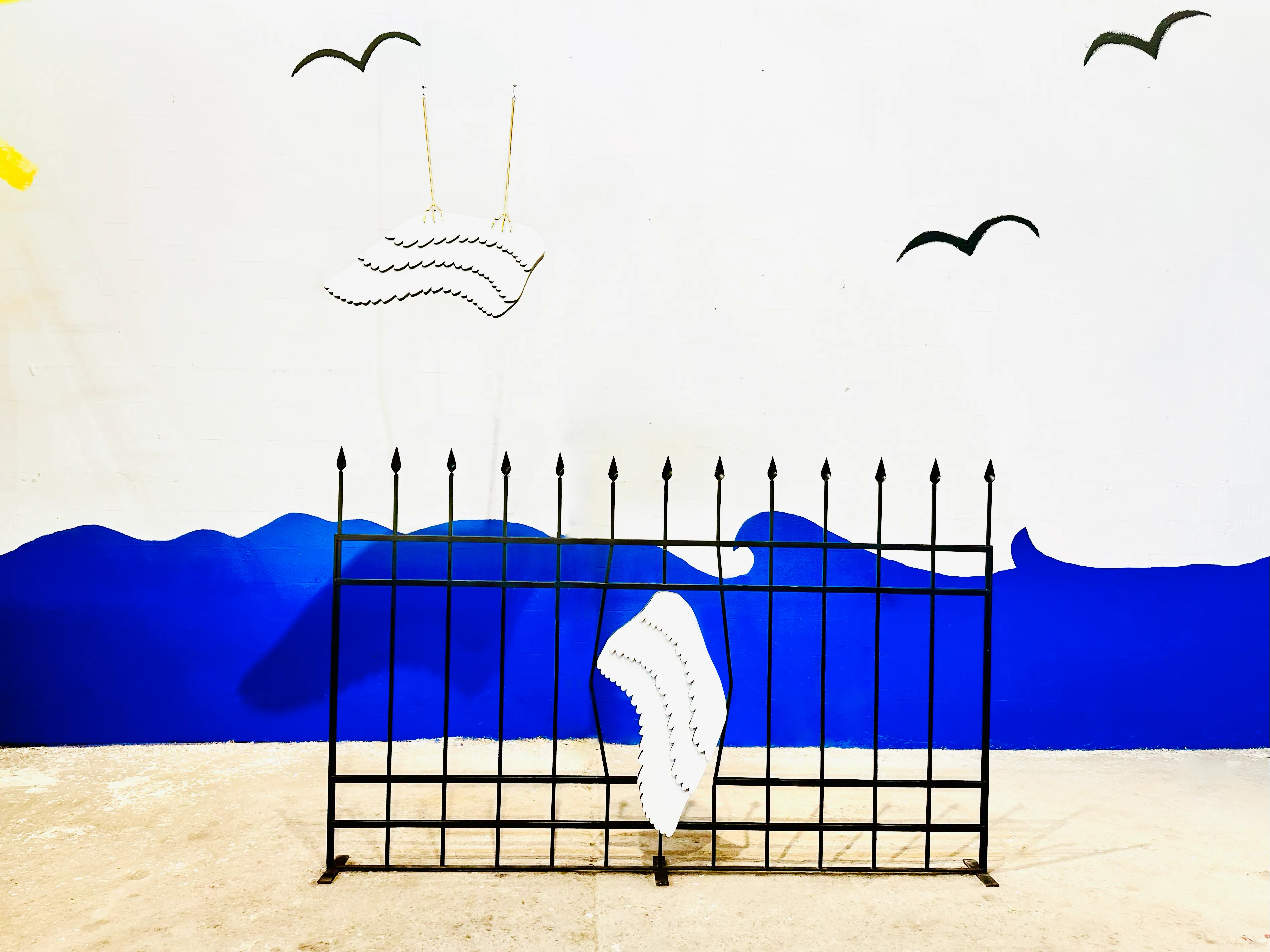
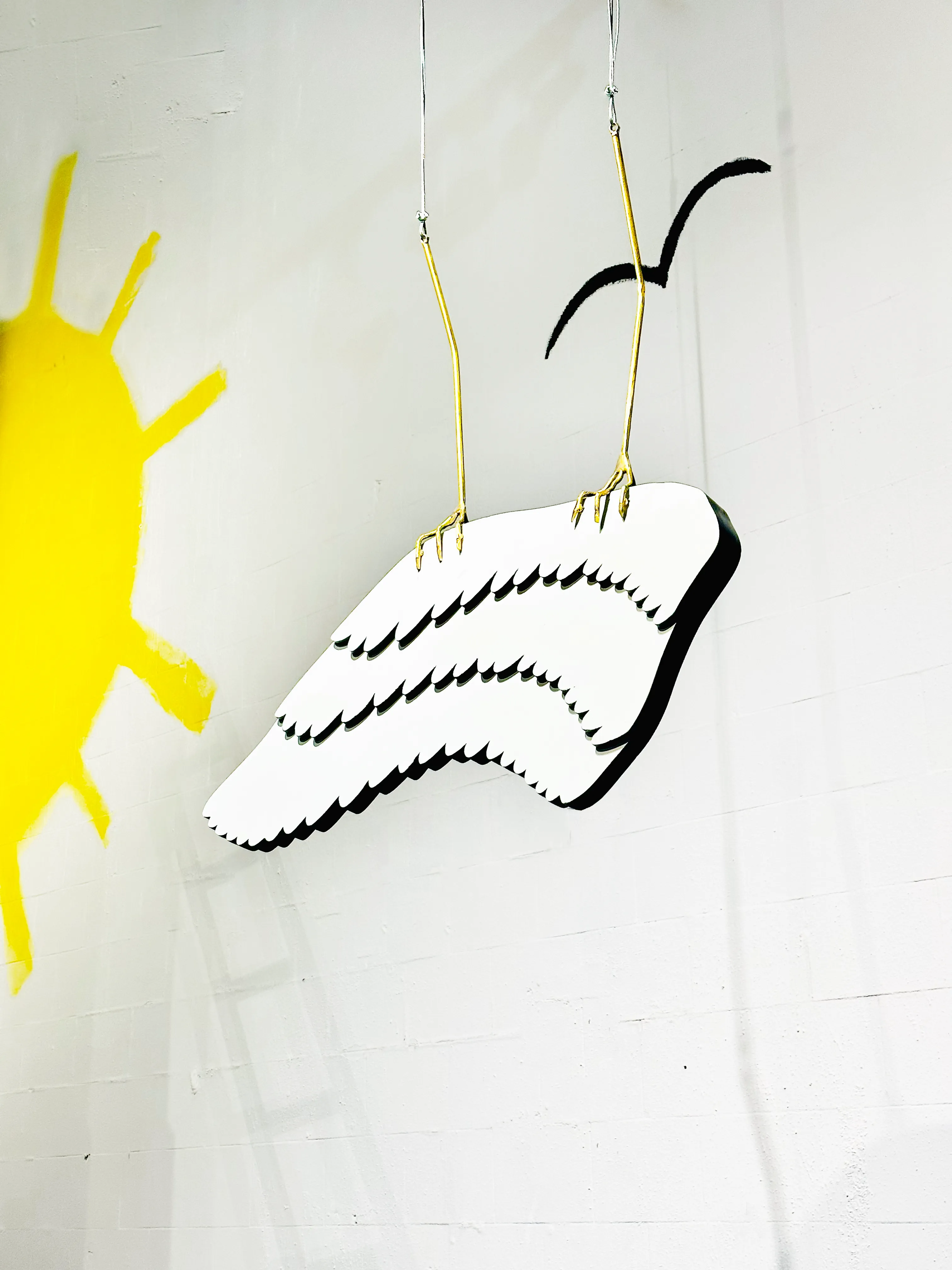
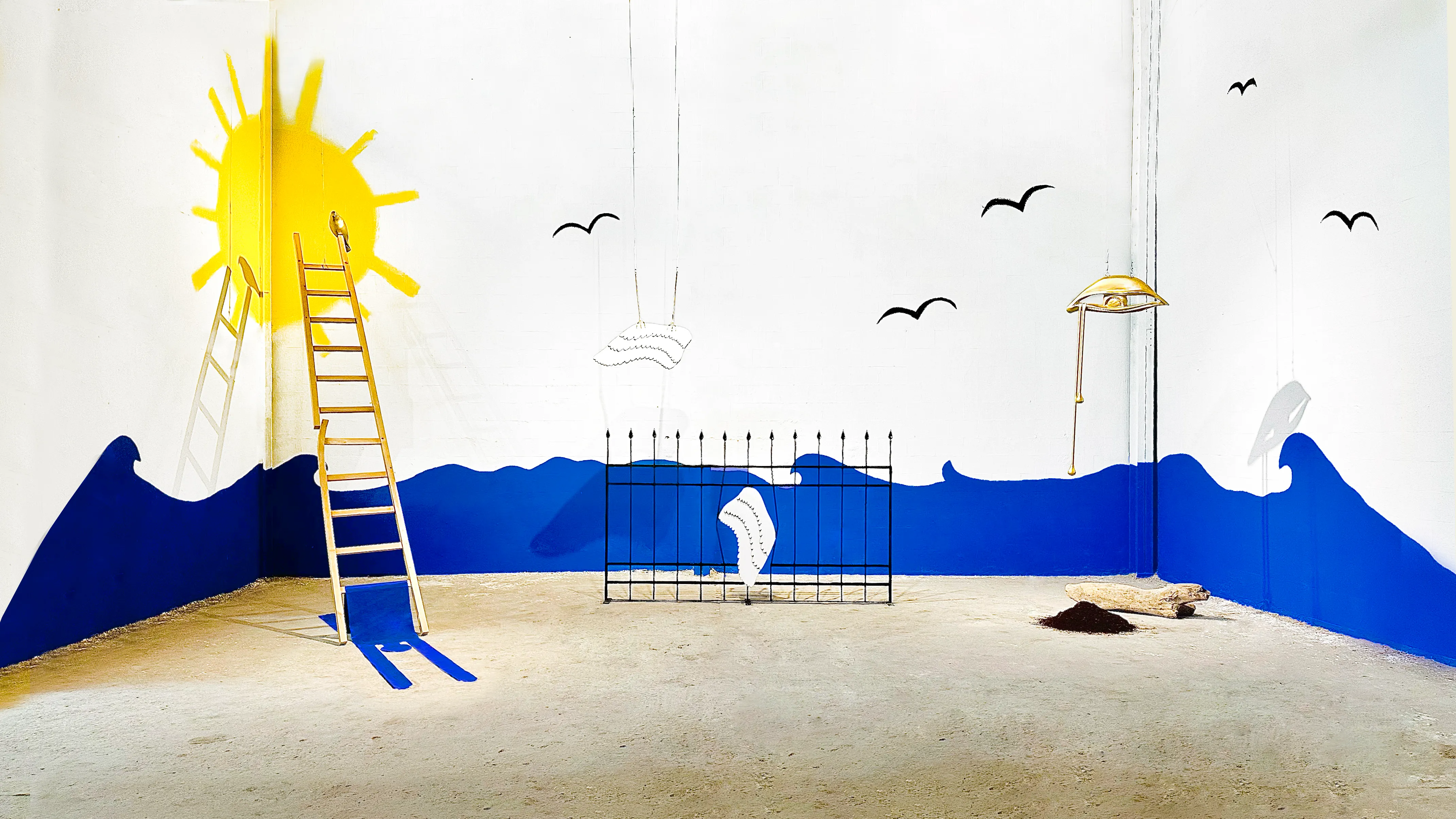
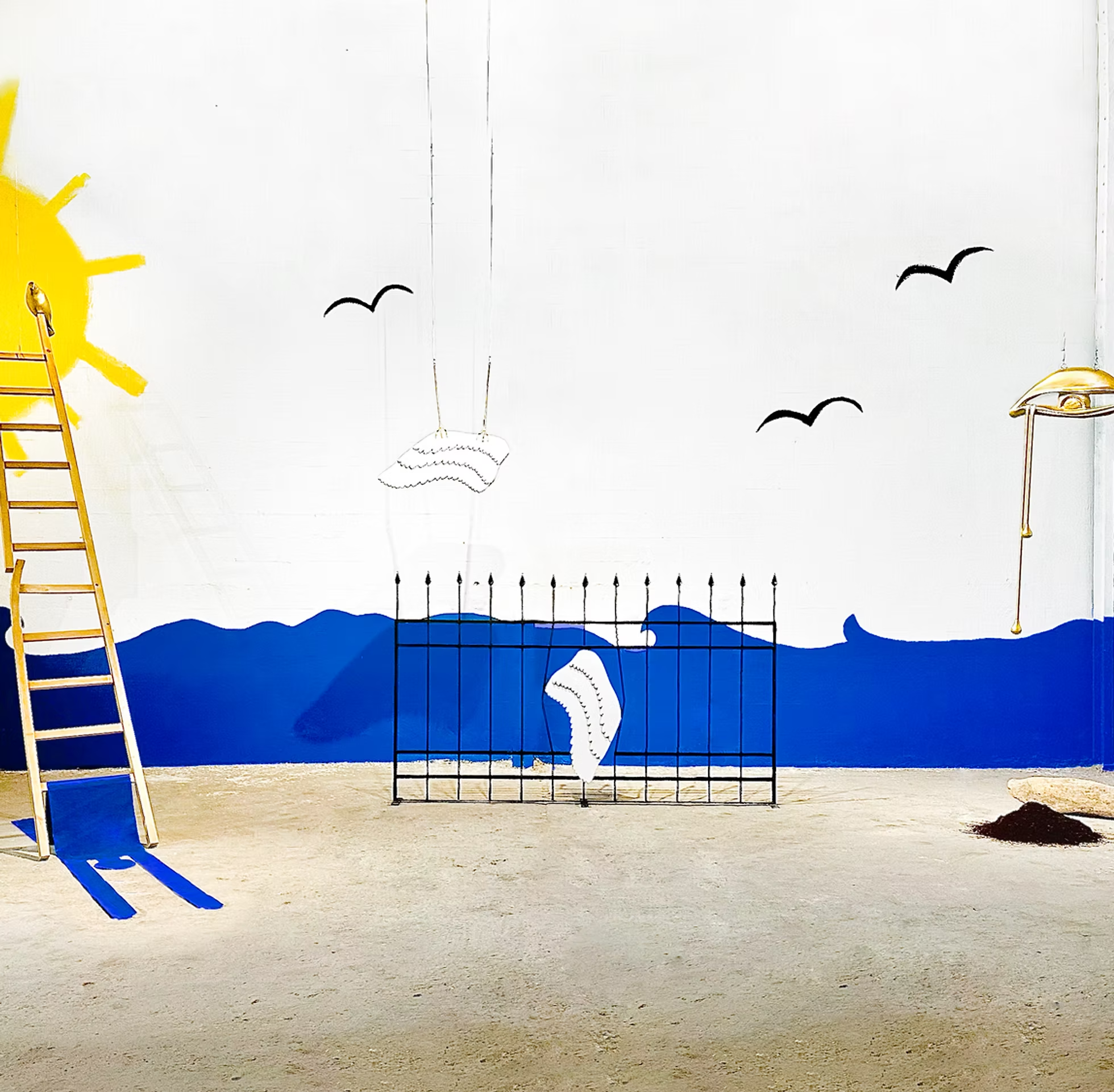
In Act I, Icarus cuts down the forest to construct wings and enter the celestial kingdom of Horus. Trees become timber, timber becomes technology, and technology becomes the instrument through which the mortal attempts to escape his condition. For Horus, flight belongs to being. For Icarus, it must be manufactured, possessed and conquered.
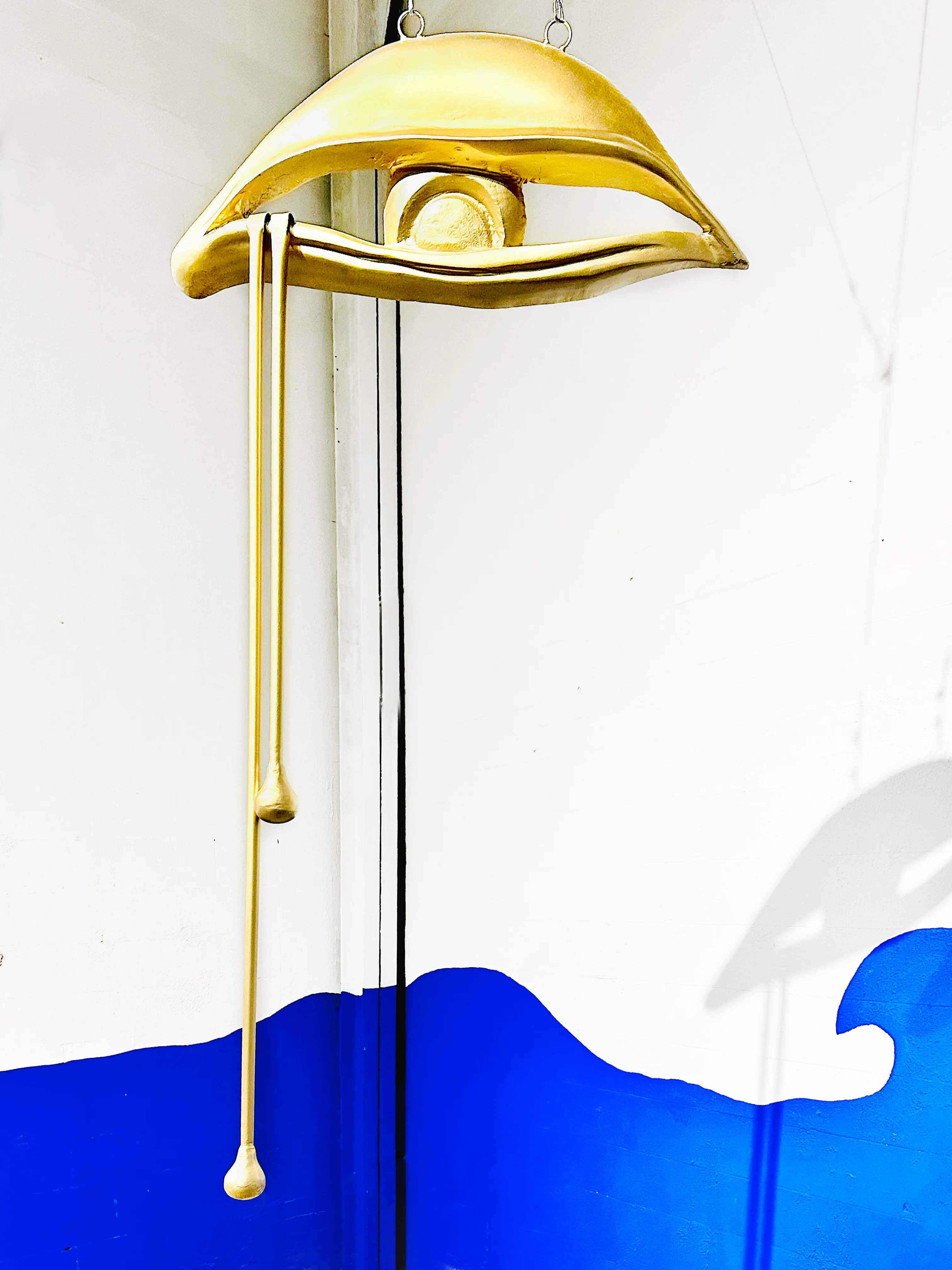
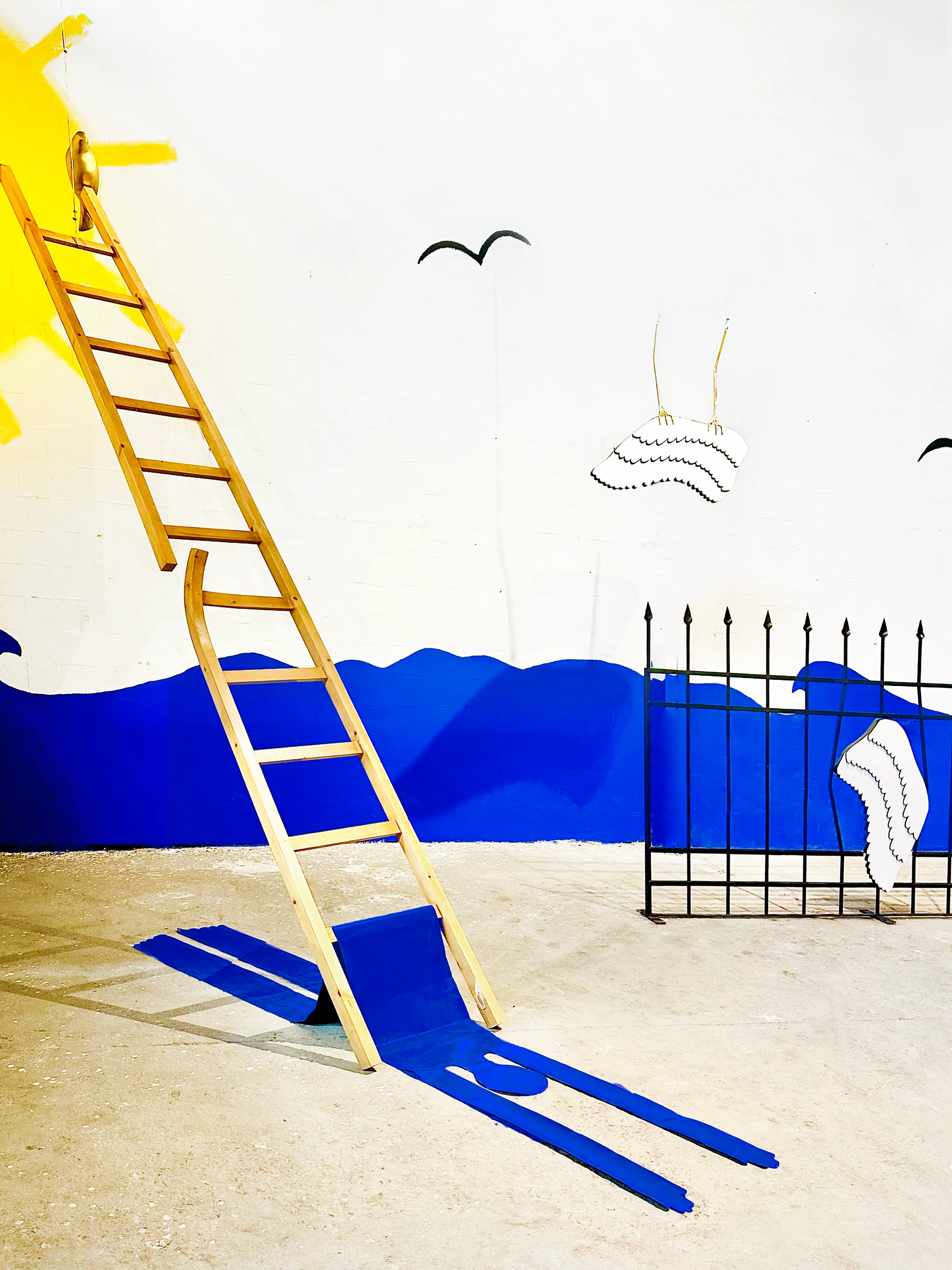
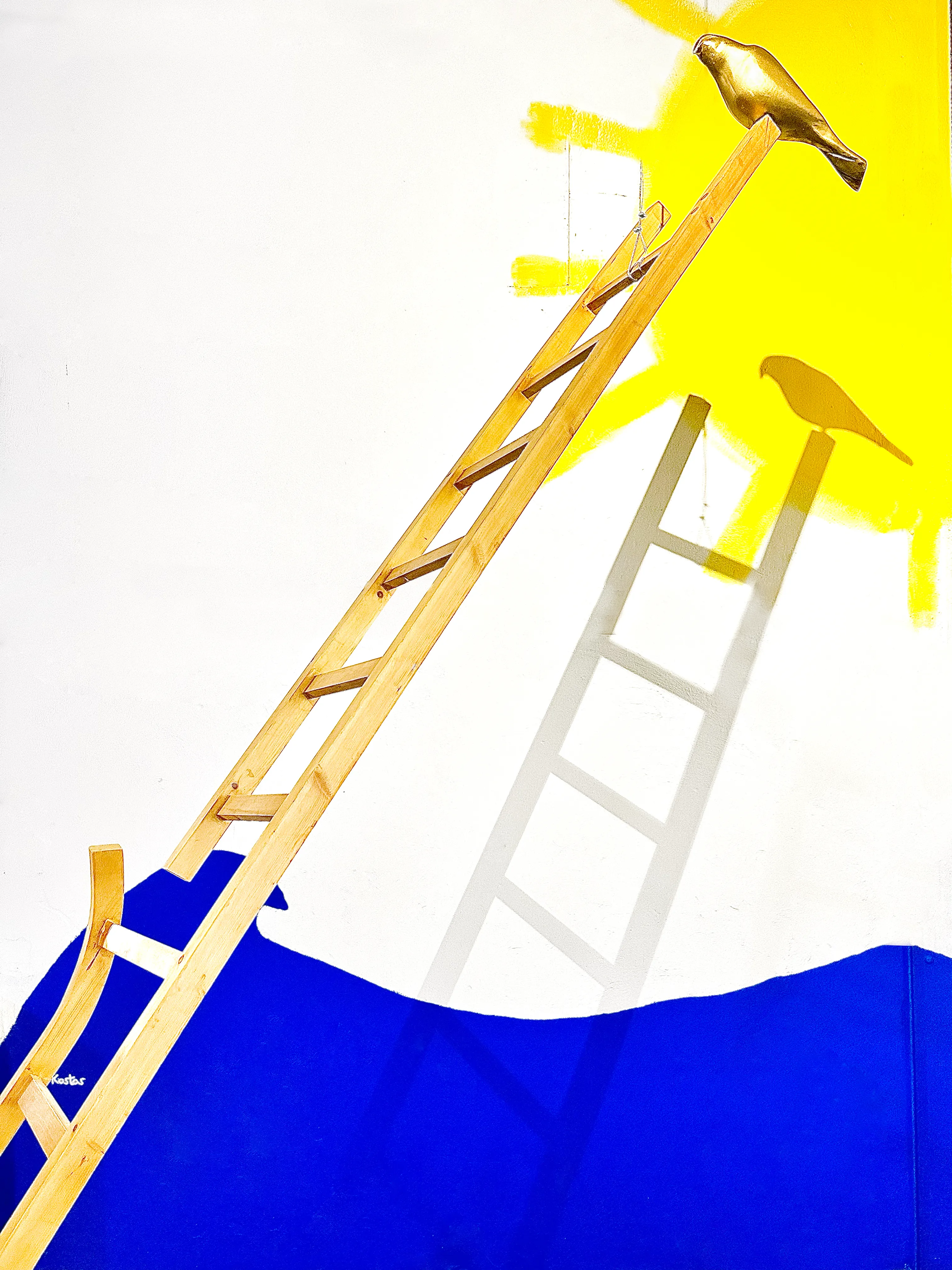
In Act II, Horus descends and removes the wings to interrupt the destruction. Icarus does not understand the gesture as a warning. He returns to the remaining forest, cuts down the trees and uses them to build a ladder. Deprived of one instrument of ascent, he invents another.
In Act III, Horus directs the force of the sun towards the ladder. A rung breaks beneath Icarus, and the structure intended to elevate him becomes the architecture of his fall.
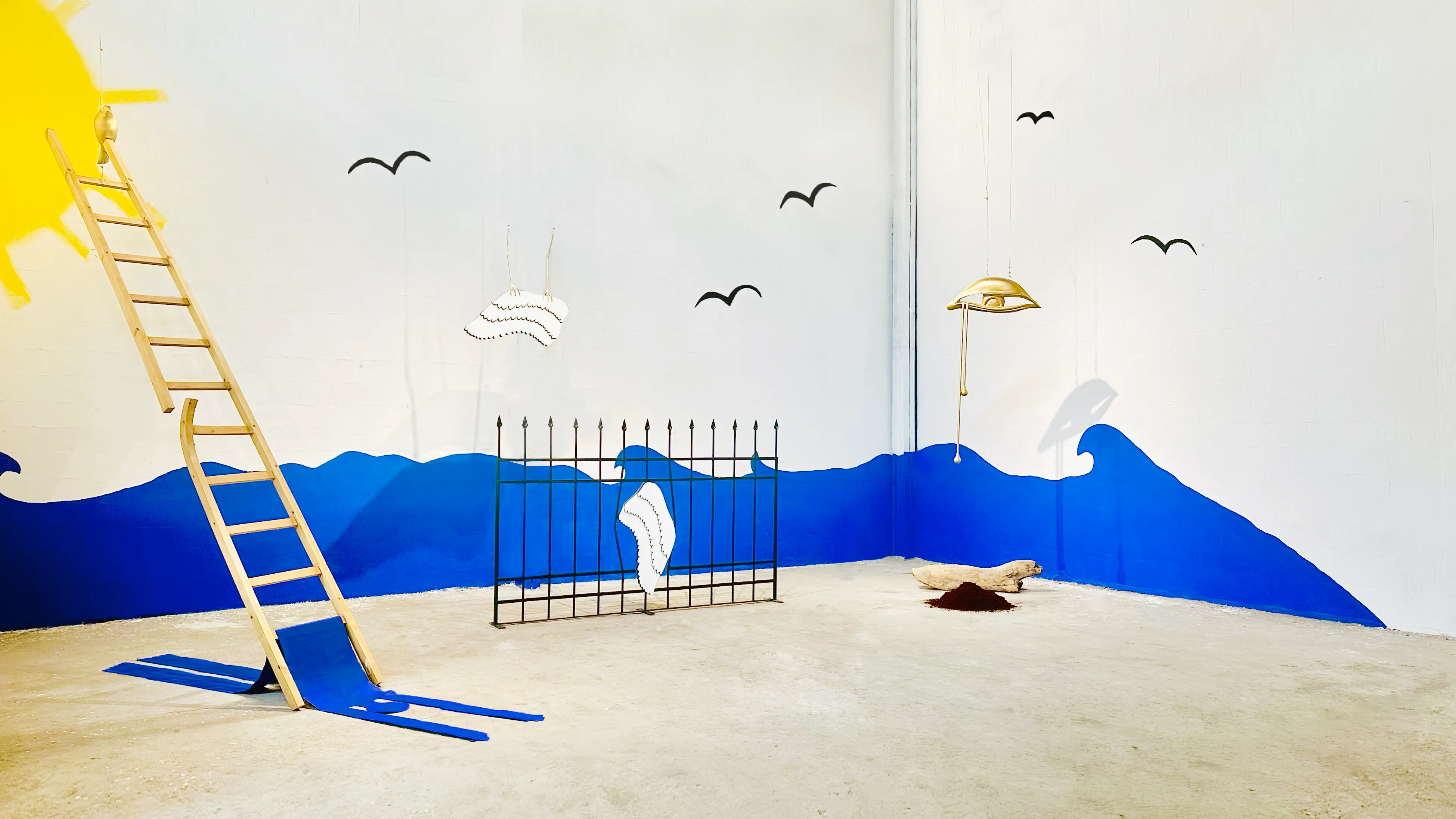
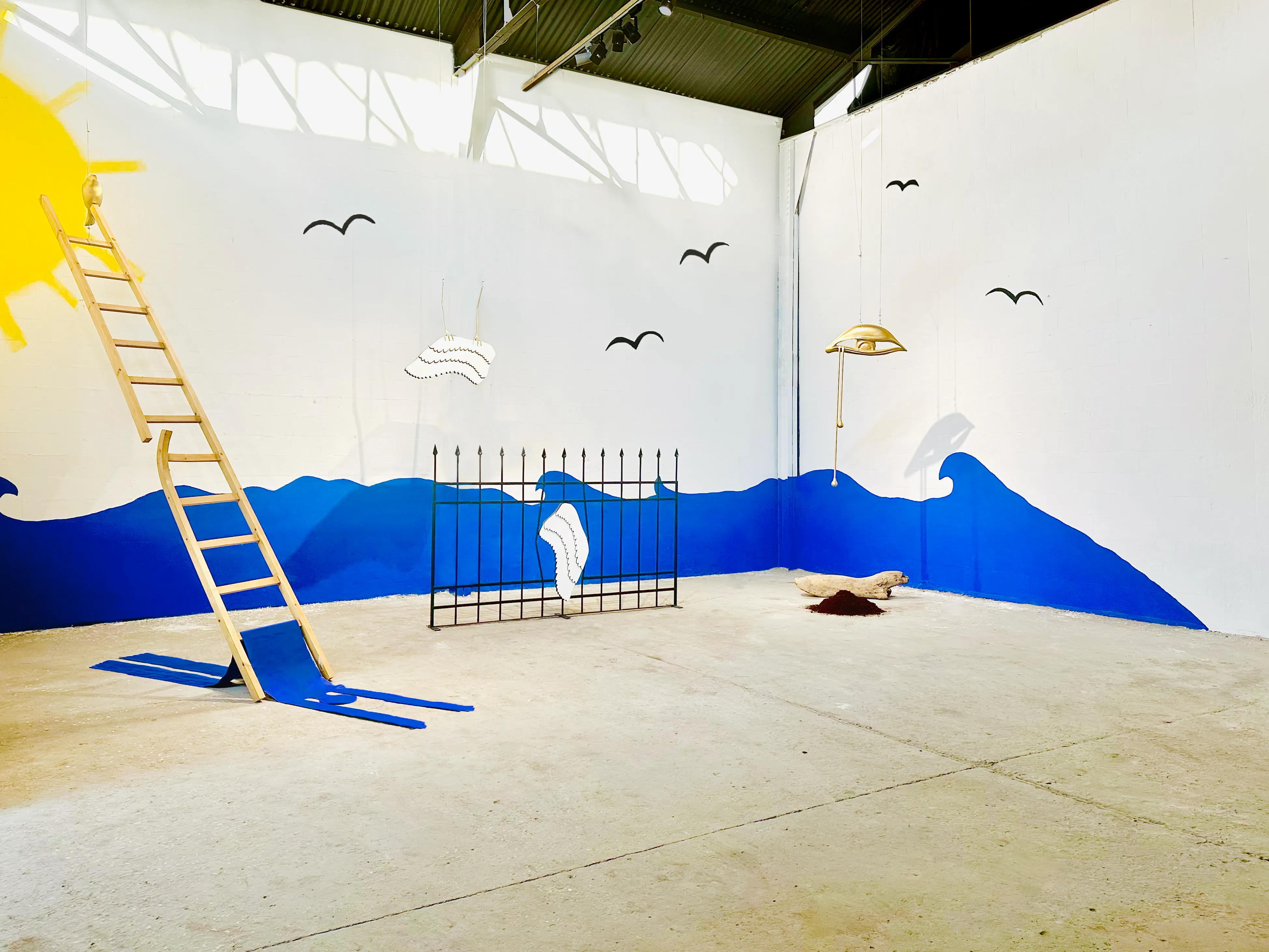
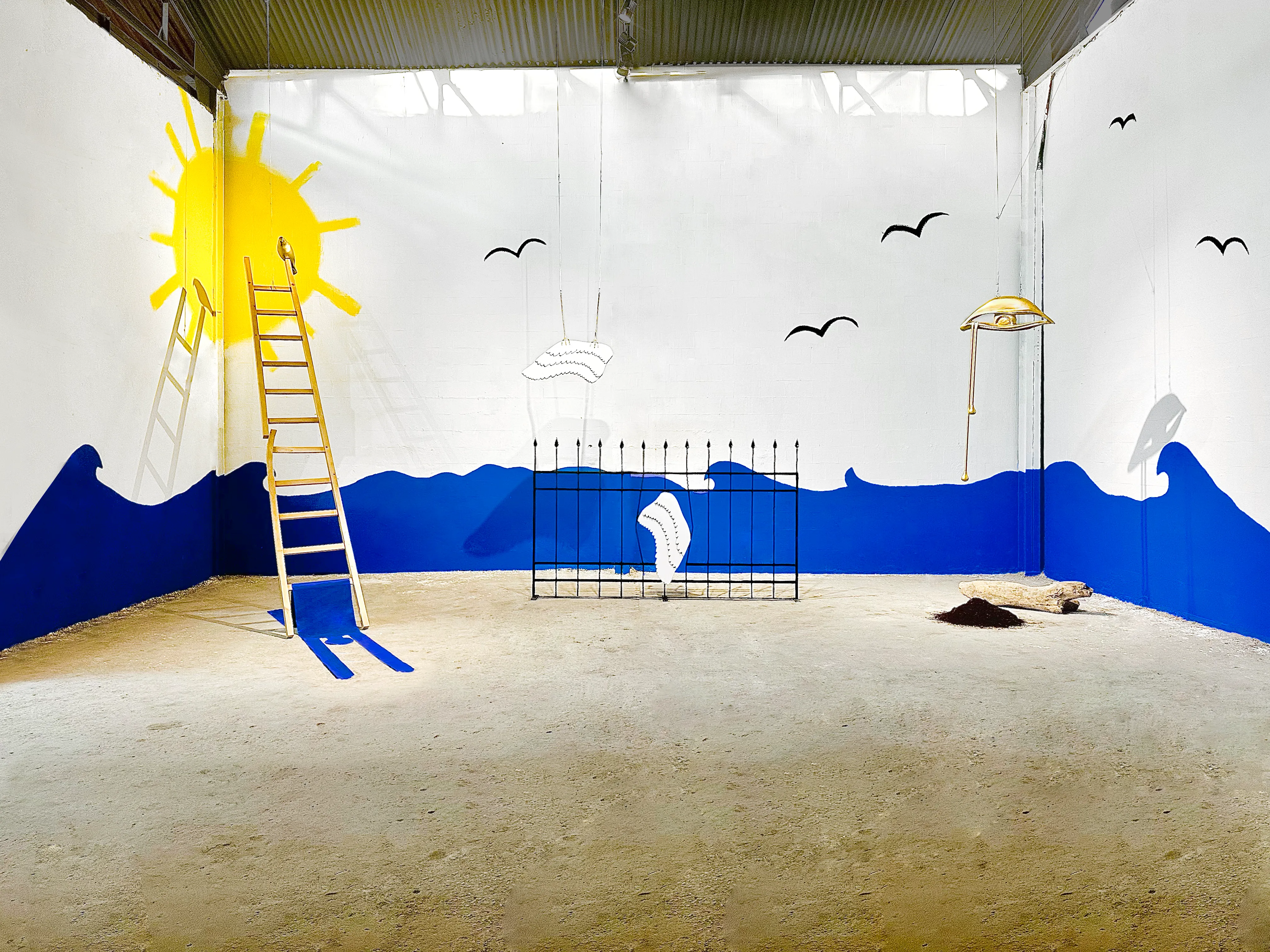
The three acts do not appear consecutively within the exhibition. Forest, wings, ladder, sun and sea coexist as simultaneous scenes. The warning remains visible beside the refusal to understand it; the landscape is being destroyed while the fall has already occurred.
In this retelling, Icarus does not fall simply because he flies too close to the sun. His fall begins much earlier, when everything surrounding him becomes a resource for his ascent. Each limit becomes a problem to solve, each obstacle produces a new technology, and every apparent solution intensifies the destruction from which it emerged.
A reduced, almost childlike visual vocabulary gives the fable its immediate legibility. A blue sea, a golden sun, wooden wings, a ladder, felled trees and the watchful figure of Horus construct an artificial theatrical landscape. Its simplicity does not soften the violence of the narrative; it makes its logic more direct.
The visitor moves freely between these moments, entering the story through its beginning, its conclusion or a partial view. Walking becomes a form of reading, while narrative ceases to be a sequence and becomes a landscape.
Humour and absurdity allow ik-HO-rus to approach the Anthropocene without reducing the work to an ecological lesson. Icarus is capable of inventing endlessly, but incapable of questioning the desire that drives invention itself.
The work does not suggest that Icarus falls because he reaches too high. He falls because his ascent depends upon the repeated destruction of everything beneath him.
The forest becomes wings.
The remaining trees become a ladder.
The ladder becomes the instrument of the fall.
By the time Icarus approaches the sun, the tragedy has already taken place.