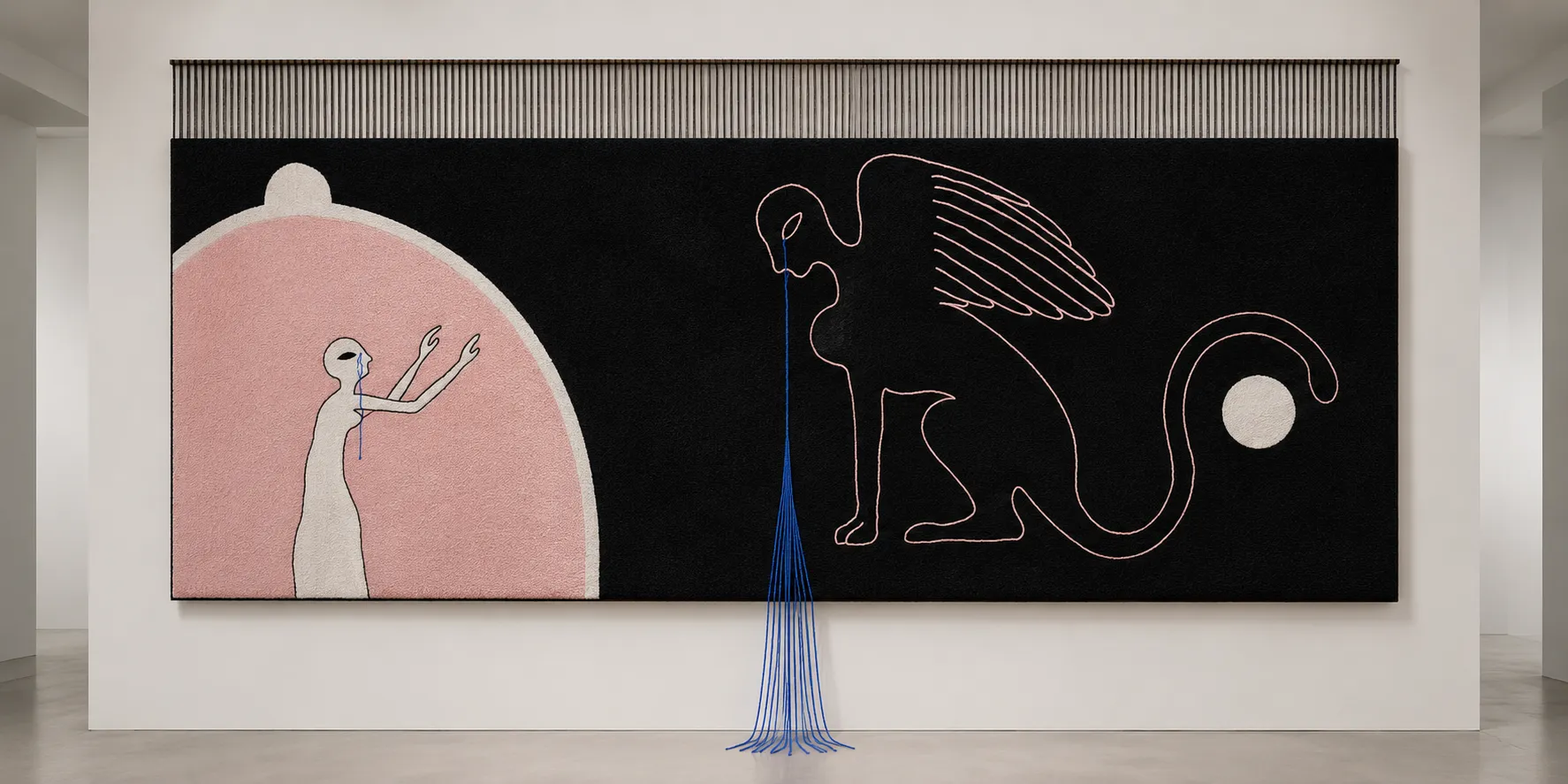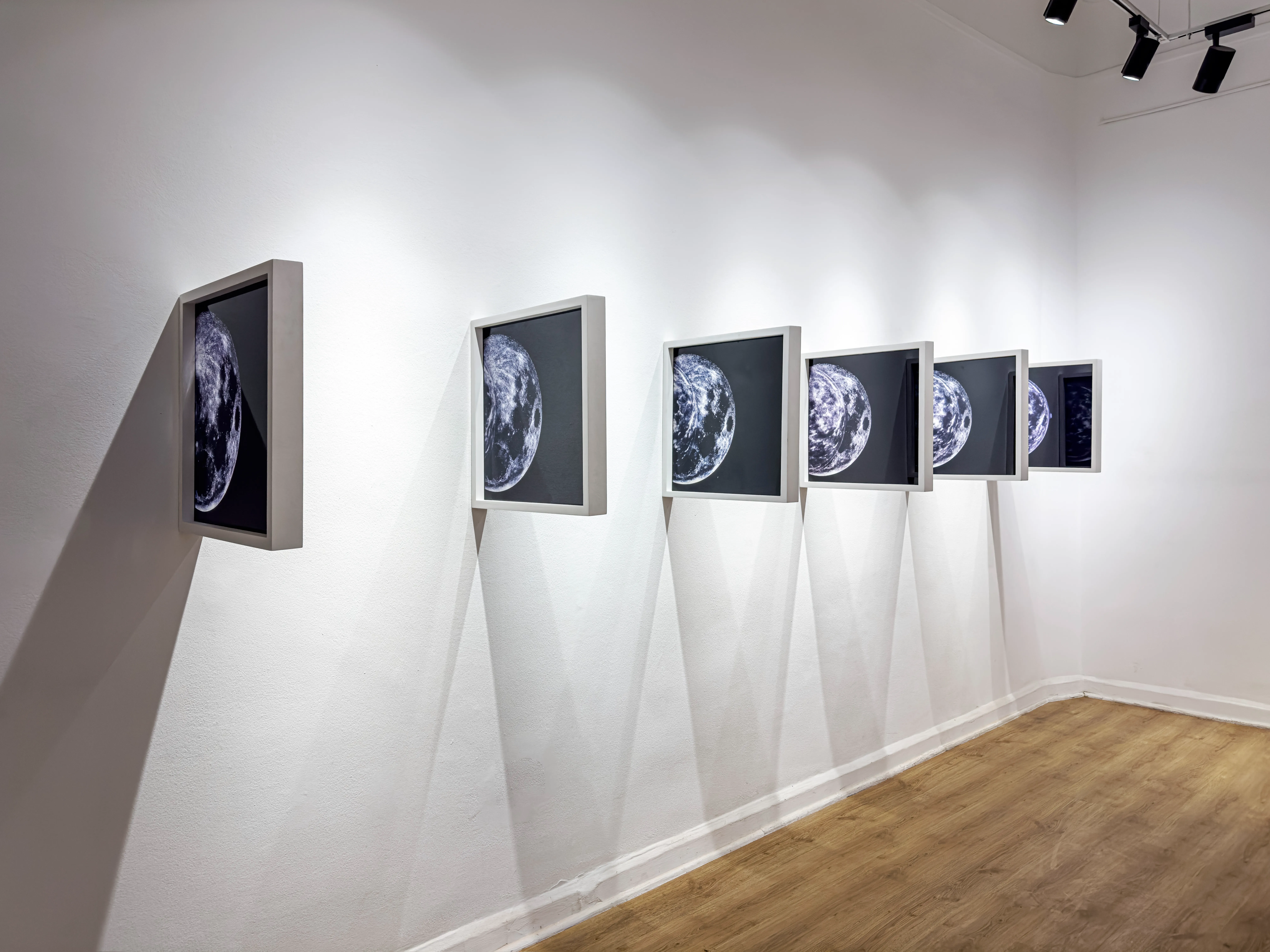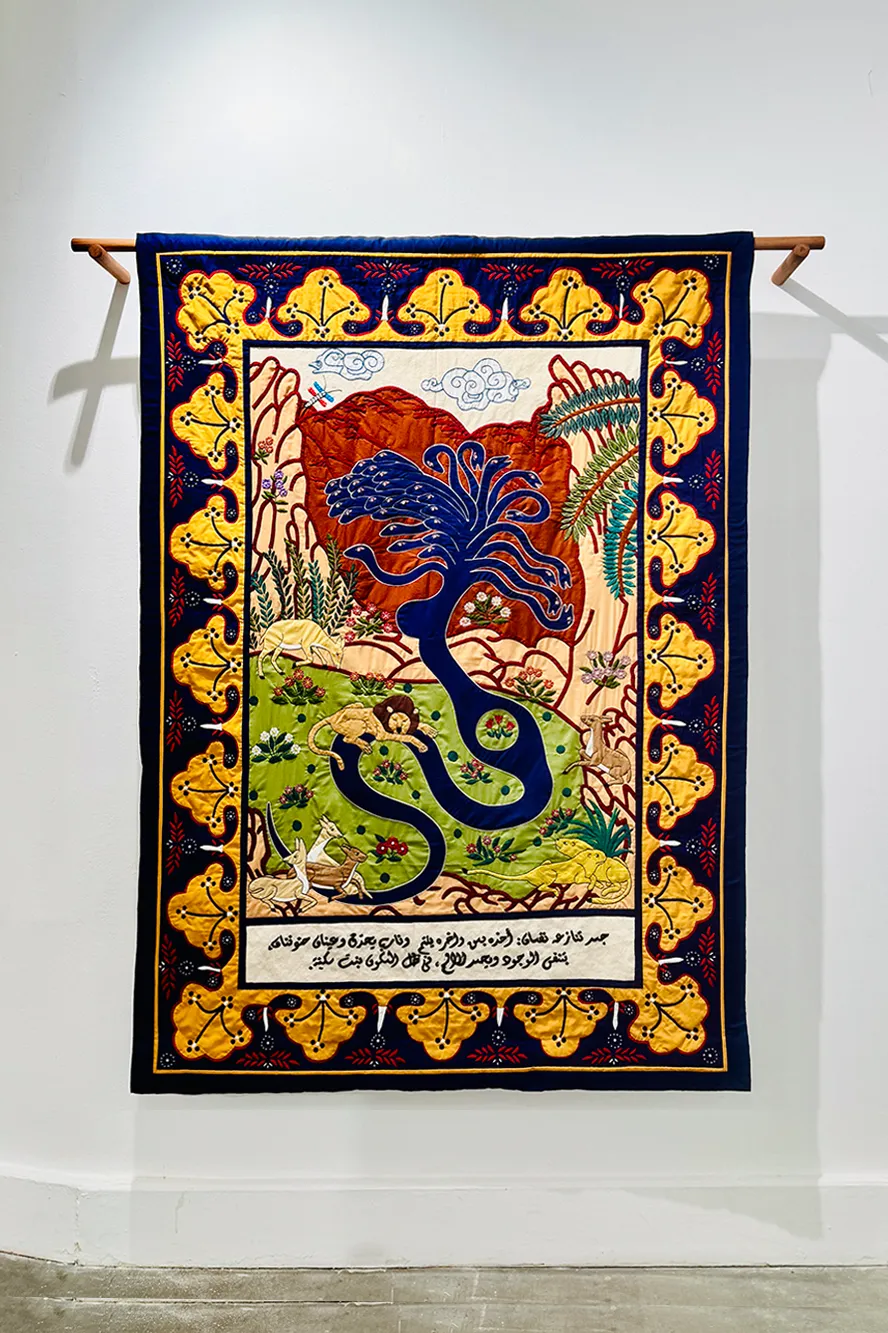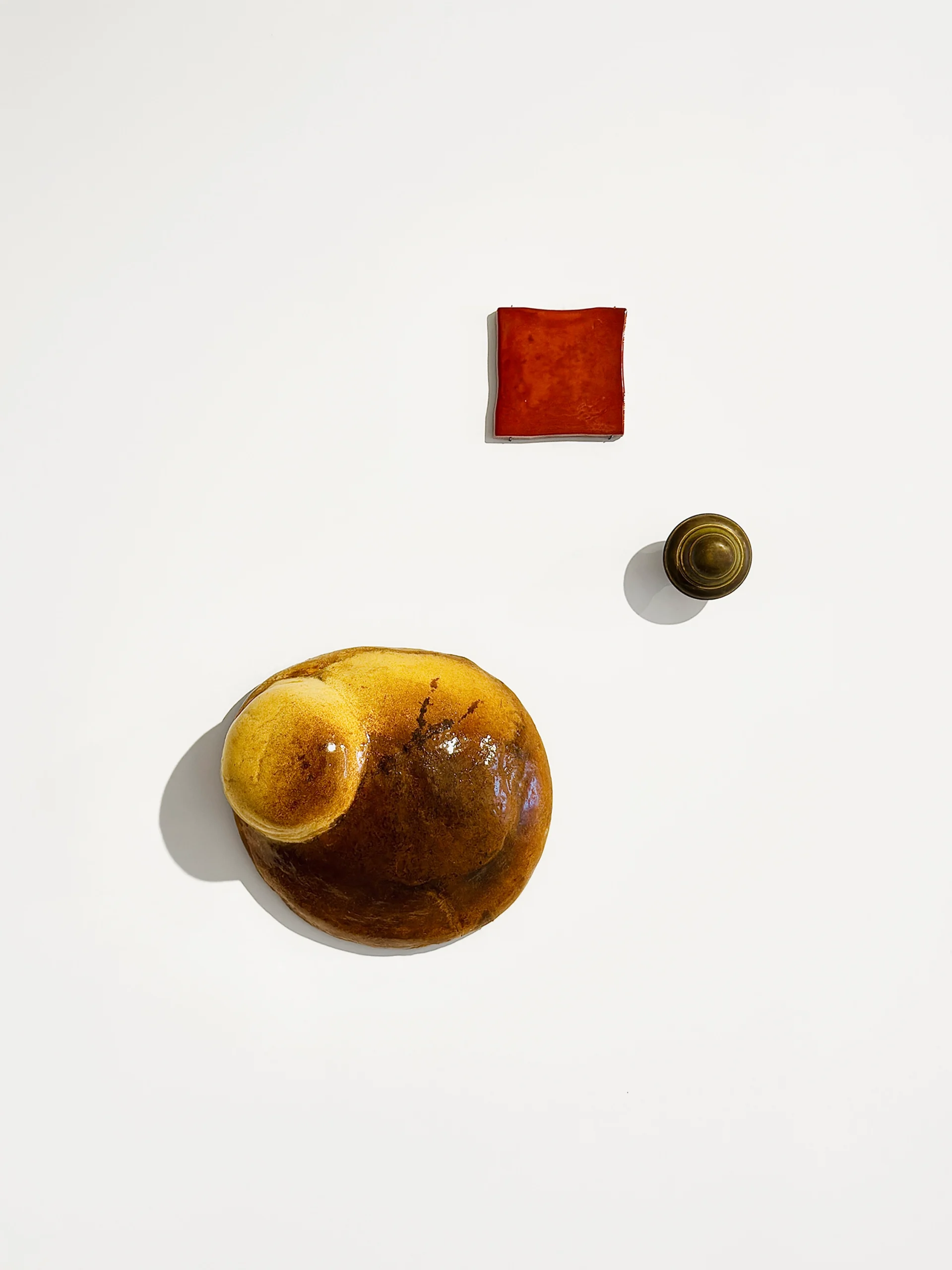
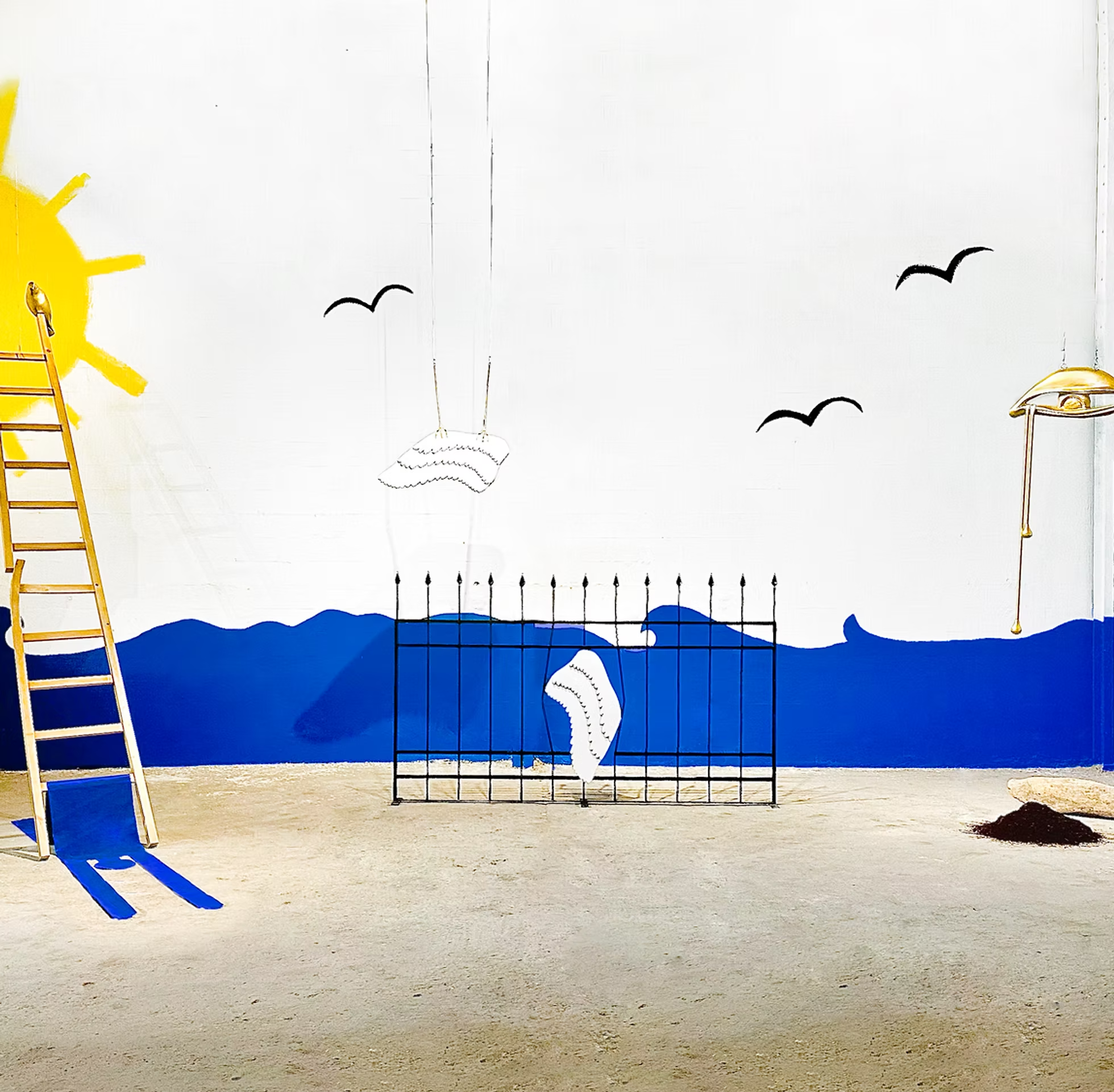
Why are there fewer and fewer entirely human figures in my work? As my practice became more figurative, women became serpents, jinn and chimeras, while birds and other animals moved towards the centre of my textiles and installations. The human figure did not disappear, but it no longer seemed sufficient on its own to speak about the living world.
This shift wasn’t something I decided in advance. I didn’t enter the studio one day intending to replace human figures with animals or mythological beings — it happened gradually, through drawing and making. One body acquired the tail of a serpent. Another became impossible to identify as entirely woman, animal or spirit. Birds began moving through my textiles, suspended between landscape, migration and presence. Jinn and chimeras entered the work without belonging to a single story or tradition. Only later did I notice that the world forming inside the work had changed.
My practice had become more figurative, but the figures themselves were becoming less literal. They had bodies, faces, limbs, feathers or scales, yet they couldn’t be reduced to portraits — recognisable without being completely identifiable, existing somewhere between body and metaphor.
For a long time, much of my work began with systems, repetitions, existing images or rules — a work could unfold through a protocol, through the accumulation of gestures, or through an image transformed as it moved from one context to another. The human presence remained central, but it often appeared through traces and structures rather than through invented beings. Drawing changed that. When I began drawing more continuously, figures started appearing before I fully understood them. I was no longer only organising an idea or transforming an existing image — I was giving form to bodies that hadn’t existed before. A line became a spine, a body extended into a tail, a face acquired an animal quality, or several forms joined together without resolving into one coherent species.
These figures didn’t begin as symbols. I didn’t decide that a serpent would represent transformation, that a bird would mean migration, or that a jinn would stand for the invisible — the form usually came first, and its possible meanings emerged later, through repetition and through its relationship to the rest of the work. This distinction matters to me, because a symbol points toward a meaning that has already been established, while the creatures in my work behave less obediently. A bird may carry ideas of movement, passage, exile or freedom, but it also remains a physical presence. A serpent may evoke danger, knowledge, desire, renewal or death without settling into any one of them. A jinn may move between the visible and the invisible without simply illustrating that division. The creature stays more expansive than any single interpretation of it.
Why Leave the Human Figure Behind?
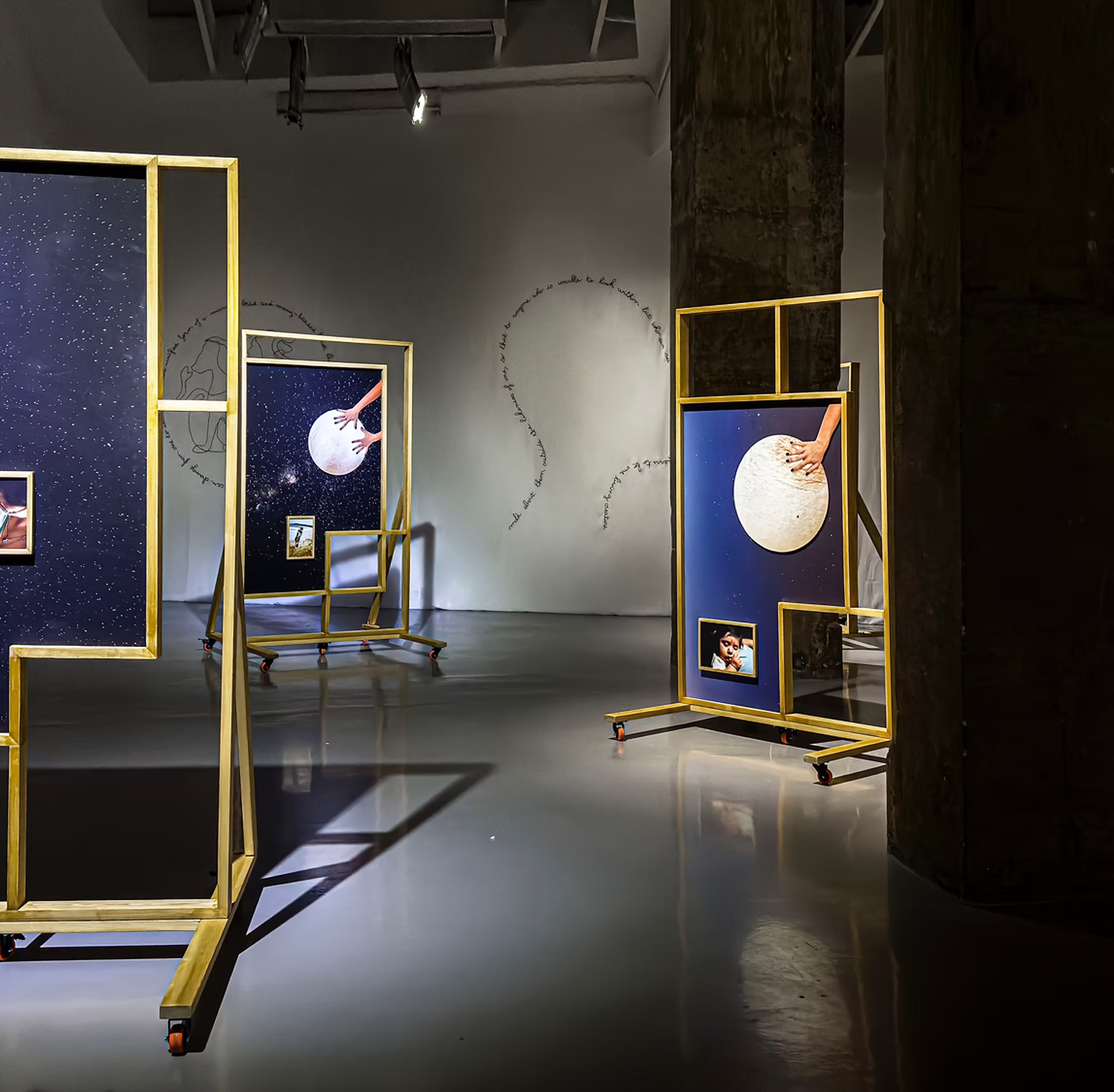
Perhaps this is why the entirely human figure began to feel insufficient. A recognisable person immediately produces a particular kind of reading: we look for identity, psychology, biography — who this is, what happened to them, what they’re feeling — even before the work has had time to unfold. An animal or hybrid figure opens a different kind of space. A woman who becomes a serpent is no longer only a woman, but she doesn’t cease to be one either. The animal body doesn’t erase the human body; it complicates it, letting femininity become unstable, multiple, difficult to contain within a single anatomy. This is exactly what happens in Chimera, where the mother-daughter bond takes the form of a creature holding contradictory bodies together without deciding which one is dominant. A jinn can be both presence and absence, body and apparition.
This is close to what has always attracted me to fables. In the work of La Fontaine, and in the older Arabic tradition of Kalila wa Dimna, animals become a language through which human relationships — power, fear, intelligence, desire, cruelty, survival — can be displaced and examined through lions, foxes, crows or jackals. The animal doesn’t merely disguise the human; it changes the conditions through which the human can be understood. A king and a lion don’t produce exactly the same image of power. A traveller and a migratory bird don’t carry departure in the same way. Once an experience passes through the animal, it becomes less individual and more open — able to belong simultaneously to a person, a collective memory, a myth and a broader condition of the living world.
This displacement is essential to how I think through images now. The figures in my work rarely belong to a complete narrative with a clear beginning and end. They appear more like presences within a visual fable whose story remains incomplete, suggesting relationships and tensions without explaining them. The viewer may recognise something, but recognition doesn’t resolve the image.
My interest in medieval bestiaries is connected to this openness. I’m drawn to how they bring observation, belief and invention into the same space — real animals coexisting with creatures that have never been seen, physical description inseparable from narrative, morality, fear and imagination. I don’t approach these bestiaries as catalogues to extract symbols from. What interests me is their way of imagining the living world, where an animal can be a body, a story, a warning and a form of knowledge all at once. Nothing needs to remain only one thing.
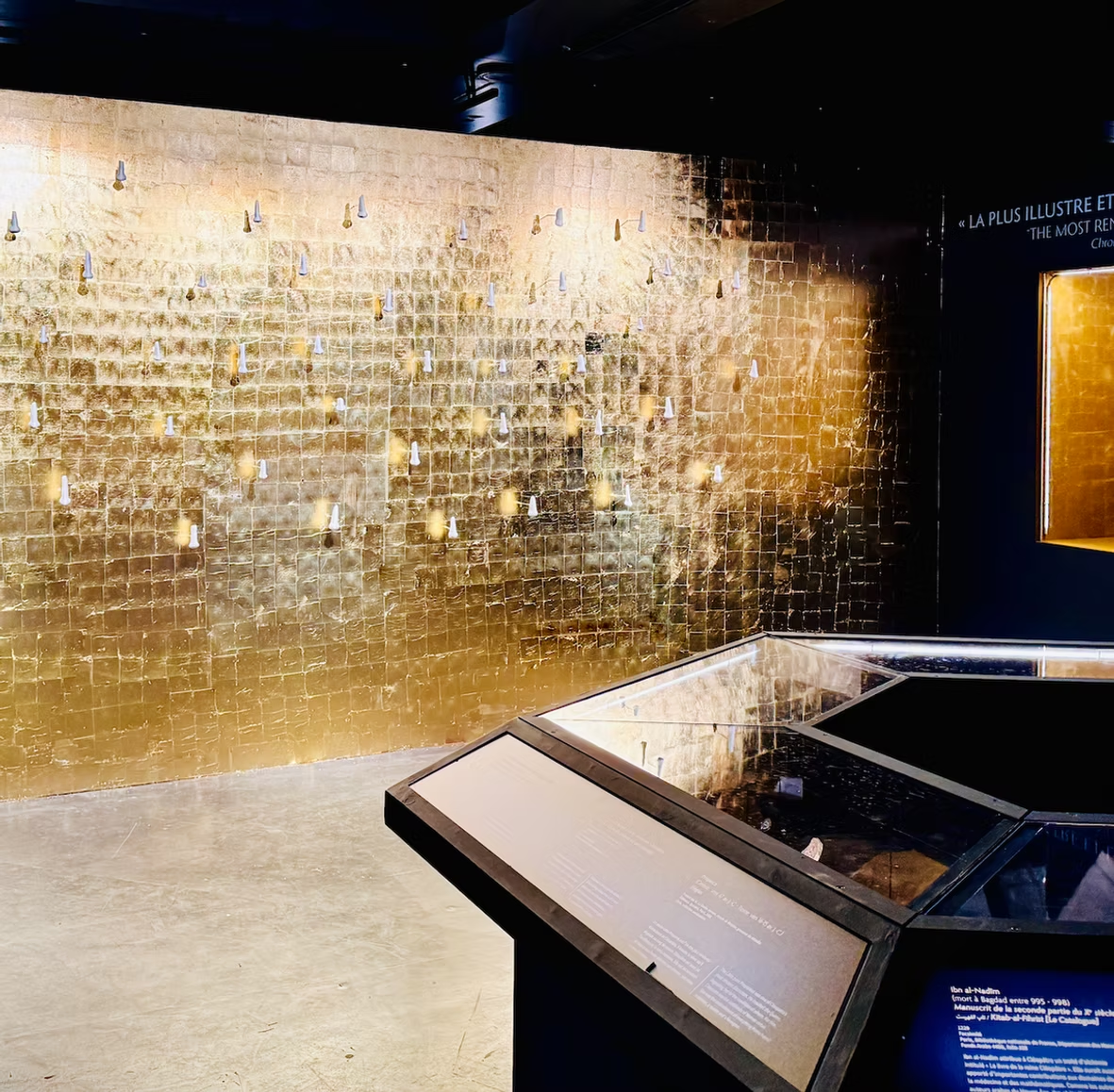
This multiplicity also runs through the traditions and geographies that have shaped my visual language. Greek mythology is full of bodies undergoing radical transformations — women become animals, trees or constellations, and gods repeatedly cross the boundary between human and non-human forms. Egyptian cosmology lets human and animal anatomies coexist within the same divine figure. In Arabic storytelling, jinn inhabit a world that touches the human one without becoming fully visible to it, as they do in The Jinn from the West. None of these traditions treat hybridity as an exception to be corrected — the hybrid is often the form through which another kind of truth becomes possible. I recognise my own questions in that space.
Transformation has always occupied my practice, but I don’t understand it as a simple passage from one stable identity to another. I’m more interested in the moment when the previous form hasn’t entirely disappeared and the next one hasn’t fully emerged — when several identities remain present at once, and the body carries the trace of what it was while already becoming something else. The hybrid creature makes that condition visible.
Does the Body Have to Stay One Thing?
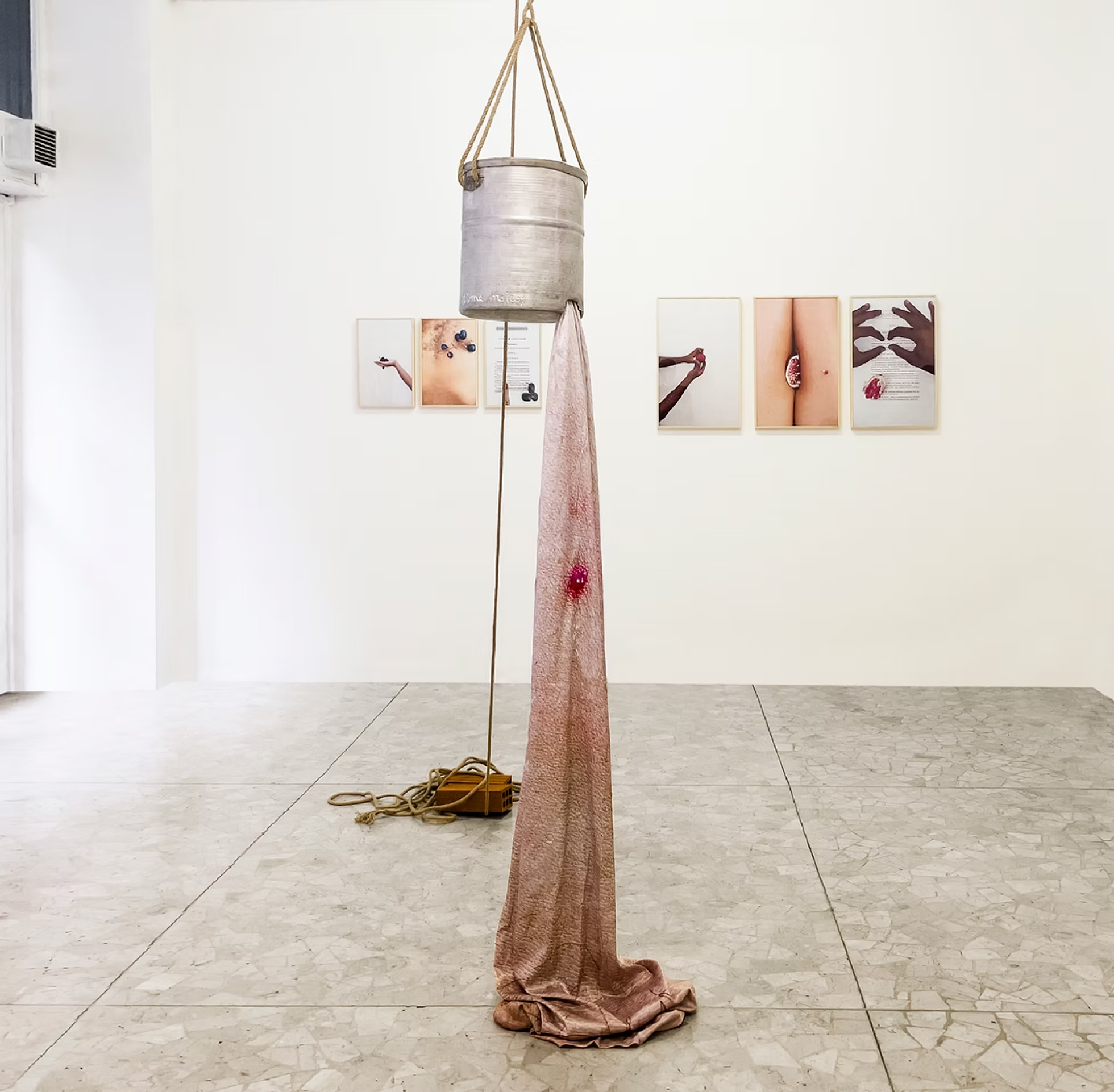
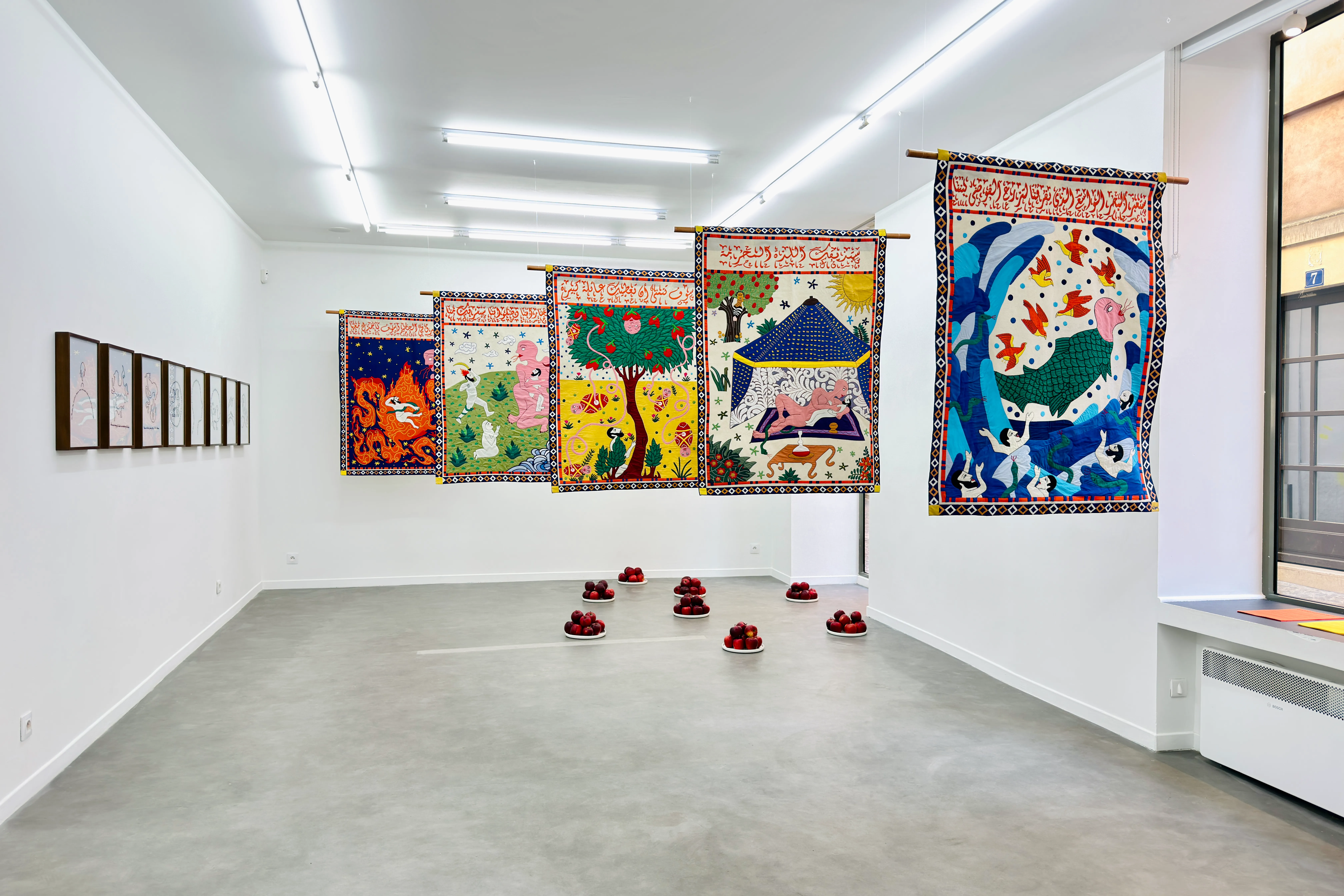
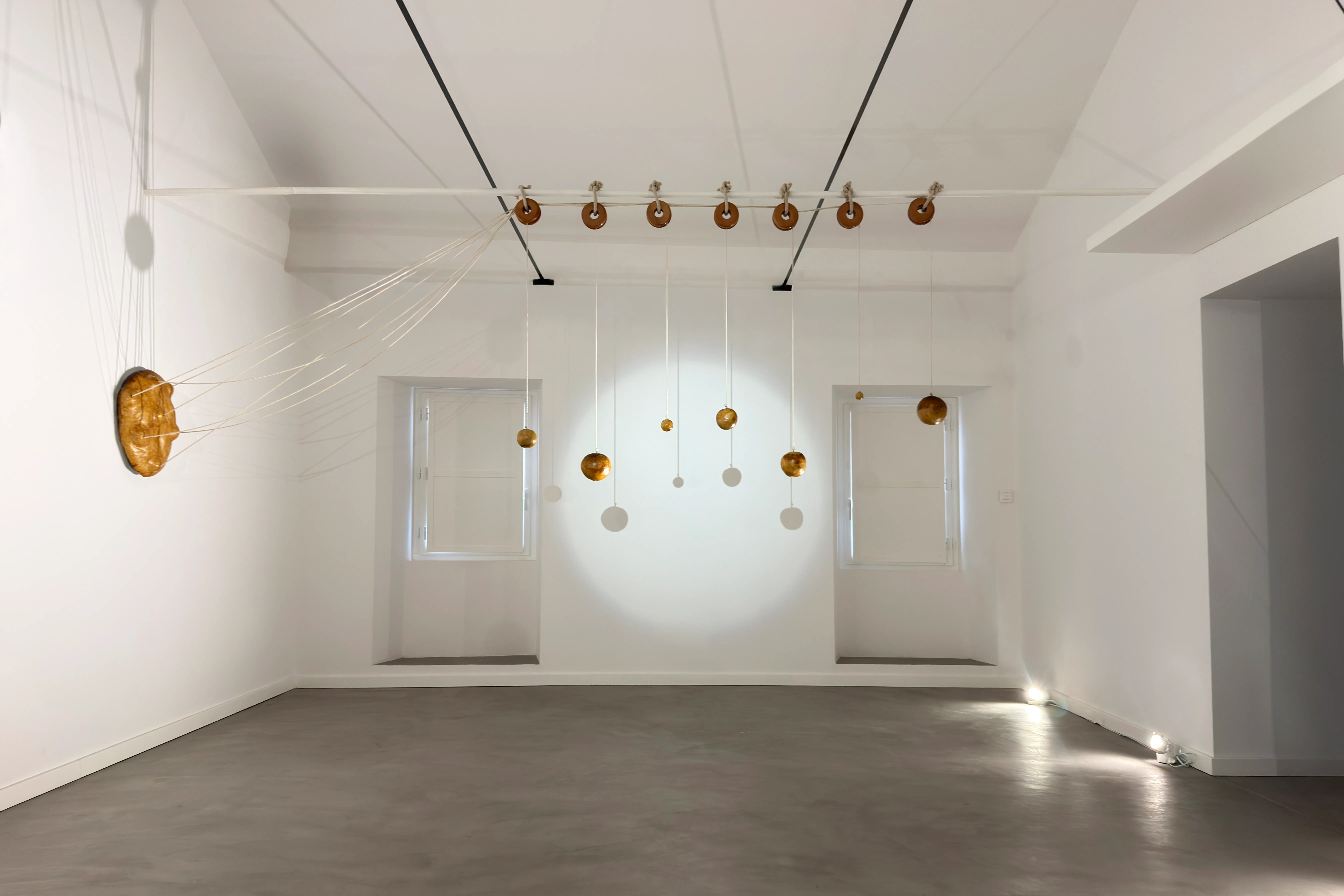
This is also why hybridity in my work isn’t limited to mythological figures — it appears within the materials and the anatomy of the works themselves. In the bread masks, the face doesn’t remain entirely a face: the eyes swell and begin resembling breasts, wounds or unfamiliar growths, and the dough keeps changing as it dries, cracking and deforming the features I first shaped. The work moves between portrait, body fragment, mask and object. In my textiles, a figure can become a landscape, a flower, a breast or an animal body — the outlines stay sharp, but the identity of the form doesn’t, as with the serpent-woman of Hayāt al-Hayāt, whose pierced belly isn’t a lack awaiting completion but an opening through which another language can emerge. I’m drawn to that contradiction: visual clarity without conceptual stability, a precise edge on a form that remains impossible to define completely.
This is perhaps the deepest change these creatures have brought to my practice. They’ve let me separate figuration from fixed identity — a work can contain recognisable bodies without telling us exactly what those bodies are, becoming more figurative while resisting the demand that every figure represent a stable person, species or meaning. The more these beings appeared, the more I understood that metaphor wasn’t something added to the work afterwards. It had become part of its construction. I don’t begin with a human experience and then cover it with an animal image — the animal changes the experience itself, giving it another body, another scale, another relationship to time, letting the image move beyond autobiography without becoming impersonal. Through these figures, the intimate can connect to mythology, and mythology can return to the physical body.
The animal, the hybrid and the mythical haven’t replaced the human in my work. They’ve expanded what a human experience can look like — letting vulnerability appear without a suffering face, femininity without a fixed female body, migration without a traveller, transformation without a clear before and after, in a language where the living world isn’t organised around one stable human centre. I still don’t know whether there will continue to be fewer entirely human figures in my work; I don’t experience their disappearance as a programme or a final position, only as something I keep observing as the practice develops. But I know that once these beings entered the work, the human figure could no longer return unchanged. Perhaps the world of my work is becoming less human. But it may also be becoming more attentive to everything the human contains that has never been exclusively human.
Related Series
Related Studio Notes