Does an artwork need to arrive at a finished, stable meaning? My work repeatedly returns to forms, bodies and stories caught between several states, where what came before has not disappeared and what comes next has not fully settled. I have come to understand this in-between not as incompletion, but as the place where meaning remains most alive.
I have spent most of my life between places. I was born in Greece, grew up in France and now live between Cairo and Paris. For a long time, I thought of these places as successive chapters: Greece came first, France followed, and Egypt entered my life later. One identity would gradually give way to another, and perhaps, eventually, they would settle into something coherent.
But this is not how it feels from the inside. Greece did not end when France began. France did not disappear when Egypt became part of my life. Each place remains present within the next. They overlap, contradict one another, recede and return. A language I have not spoken for years can reappear through a single word. A gesture can carry a history I was not conscious of inheriting. A place can remain physically present in the body long after the geography has changed.
I have never felt entirely on one side of things. This does not feel like a lack to me, nor like a problem waiting to be resolved. It is simply the position from which I have learned to understand the world.
Perhaps this is why I have never believed completely in finished transformations. I do not experience becoming as the clean replacement of one state by another. Something always remains. A person carries earlier versions of themselves even after their life has changed. A story retains the traces of its previous tellings. A body remembers what it has endured. A material can enter an artwork without ceasing to carry its history, its symbolism and its physical behaviour. Nothing simply becomes something else. What came before continues to inhabit what appears afterwards. I only understood much later that my work had been doing the same thing.
The Same Unstable Instant
When I began looking across projects that seemed, on the surface, to have very little in common, I noticed that many of them occupied the same unstable instant: the moment when something has begun to change but has not yet ceased to be what it was. A face begins to become a body. A poem enters space and starts becoming a landscape. A private experience moves towards collective memory. A woman becomes a serpent without ceasing entirely to remain a woman. A representation is repeated until it begins to acquire the authority of history. The sea becomes a border while remaining physically unchanged.
I am drawn to this instant because it cannot be contained easily. The in-between is not simply a position located between two established categories — it is a moment in which those categories have not yet settled, where several conditions coexist before language has decided how to separate them.
A face can remain a face while its swollen eyes begin resembling breasts, wounds or unfamiliar organs. A thread can remain a thread while becoming a voice, a route, a line of tension or an open sea. An animal can be a physical creature, a warning, an idea, a memory and an invisible presence without having to choose only one of those states. At that moment, a thing can be more than one thing at once.
I do not mean that everything can be exchanged for everything else, or that an artwork can mean absolutely anything. The work has a material reality, a history and a precise point of departure. Bread behaves differently from stone. A photograph does not carry time in the same way as a textile. A personal experience does not enter a myth in the same way that an image enters history. But I do believe that things exceed the boxes into which we place them.
Modern language often asks us to separate the world clearly. Human or animal. Body or object. History or fiction. Intimate or political. Living or inert. Sacred or ordinary. We classify things because categories help us understand them, yet my experience of the world has rarely felt so neatly organised. The body is never only biological — it carries memory, desire, projection, fear and inherited gestures. A landscape is never simply a landscape; it can be home, border, threat or exile depending on who stands before it. A material is never neutral: it already contains histories of use, labour and value before the artist begins working with it.
Perhaps this is one reason I feel so close to medieval images and ways of imagining the world. I am not interested in the medieval period only as an aesthetic reference. What draws me to medieval images is the sense that the visible world was never expected to contain the whole of reality.
In medieval bestiaries, a creature is never only an animal. It is a physical body, but it can also be a warning, a moral question, a spiritual presence or a sign of something invisible. A lion, serpent or bird belongs to the material world while opening towards another order of meaning. These interpretations may appear strange or contradictory to us now, but contradiction was not necessarily something that needed to be resolved. Several meanings could inhabit the same form. The world was filled with signs and correspondences. The visible did not contain the whole of reality.
I recognise something in that way of looking — not because every form hides a fixed symbolic message to be decoded, but because a form can remain physically present while pointing towards something that exceeds explanation.
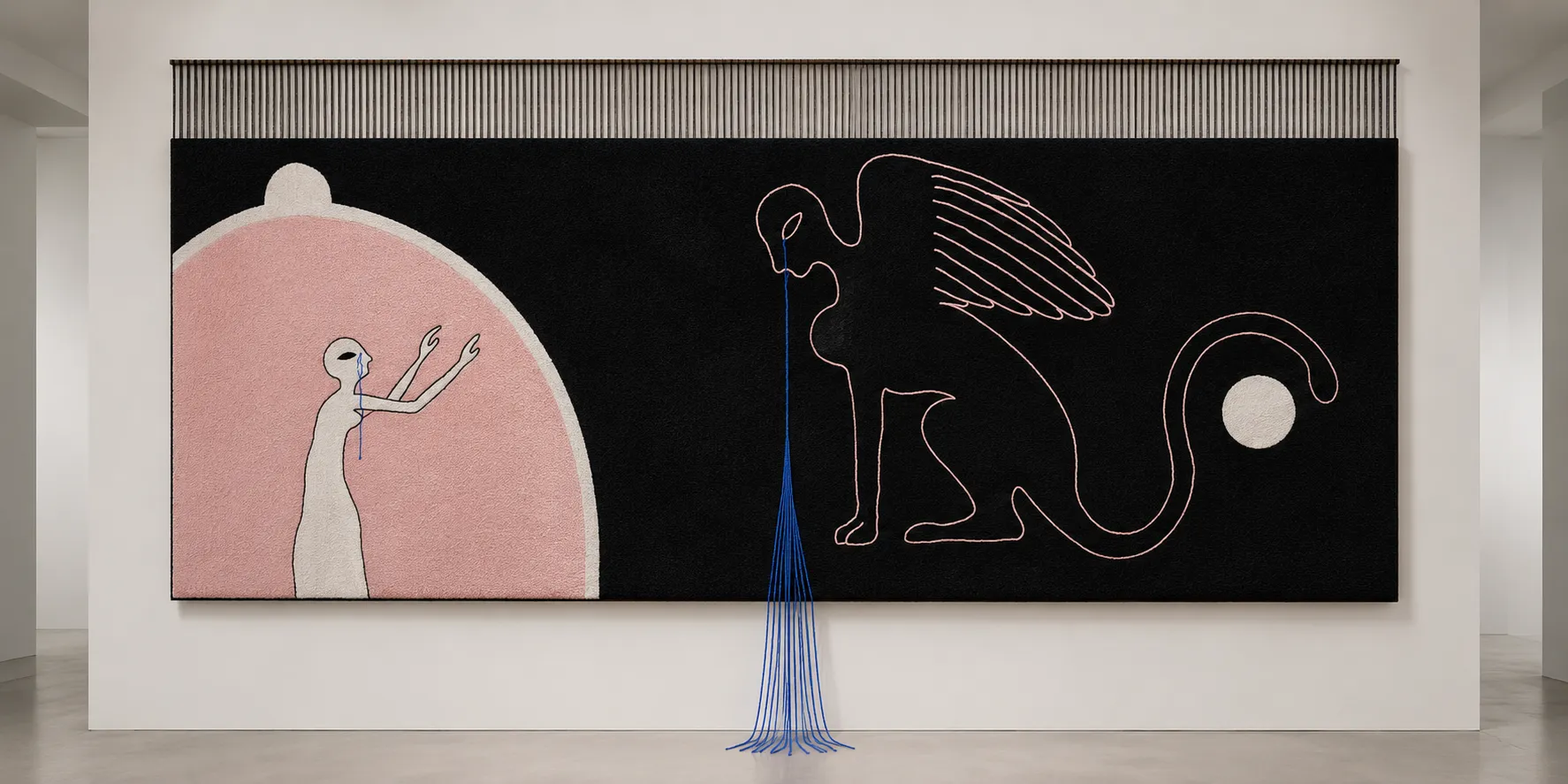
A hybrid creature can hold several bodies together without reconciling them into a coherent species. A serpent woman can belong to biology, fiction, feminine experience and myth at the same time. She does not need to decide whether she is a woman or an animal before she is allowed to exist. She inhabits both.
This coexistence is central to the way I think about the unsayable. I do not make work in order to explain what I cannot say. Explanation often requires things to become clearer and more stable than they truly are. It asks an experience to settle into a meaning, a body to become legible, a story to reach a conclusion. But many of the experiences from which my work begins have never felt that clear to me.
What the Work Cannot Explain
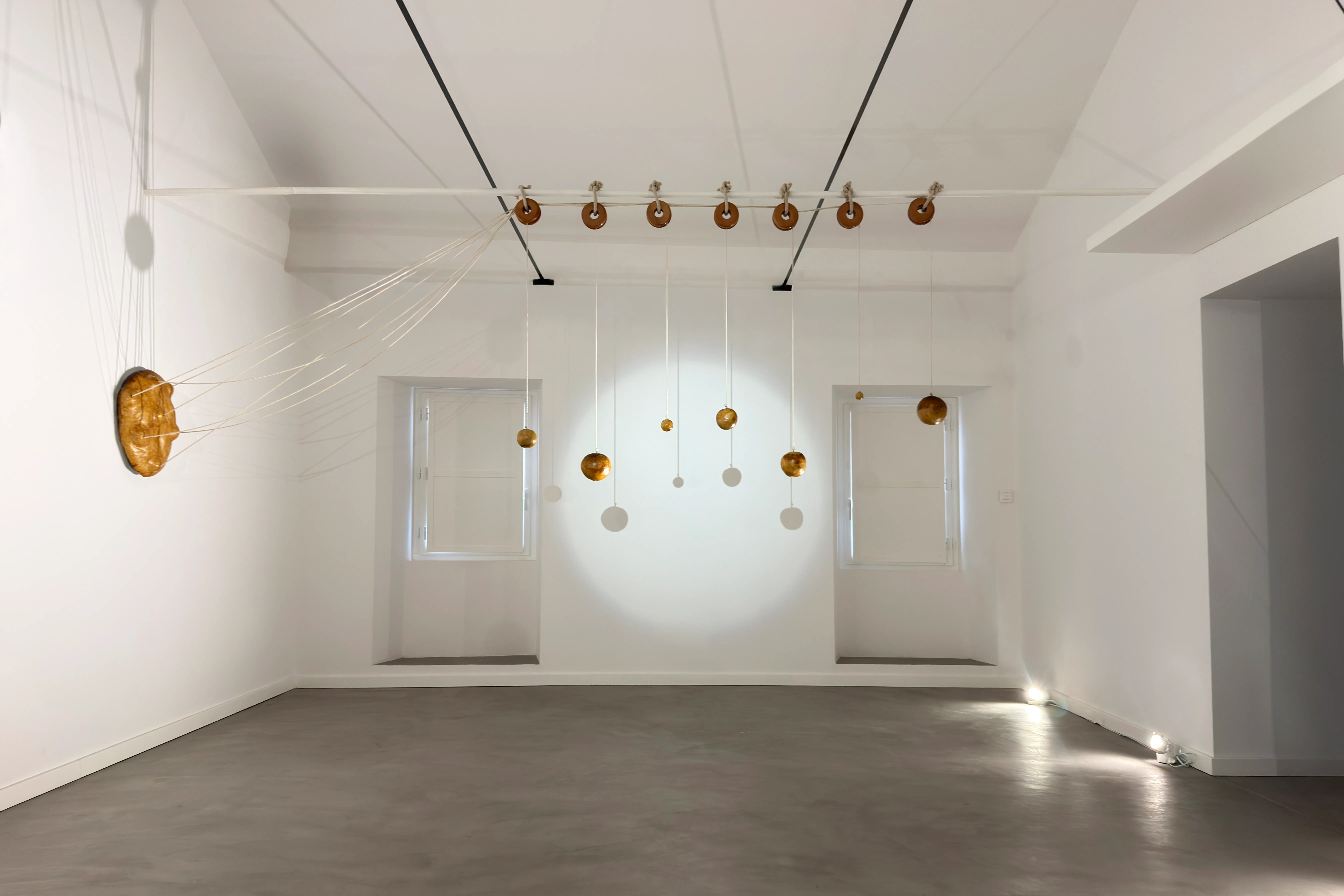
Grief does not become understandable when it becomes a bread mask. The mask gives it somewhere else to exist. It allows something fleeting — tears, a physical state, a moment of sorrow — to acquire a form without claiming that the form contains or resolves the experience. The pain becomes matter, but it continues changing.
In Bake Your Pain, a mask may begin with a face shaped after an intense phase of crying. Yet as the dough moves, rises, cracks and hardens, the features drift. Swollen eyes begin to resemble breasts, udders, wounds or tumours. The face moves towards the body without completely disappearing. The mask remains between portrait and flesh. That uncertainty is not something I try to correct. It is precisely where the work begins to speak. A work can make the unsayable present, but it should not make it smaller.
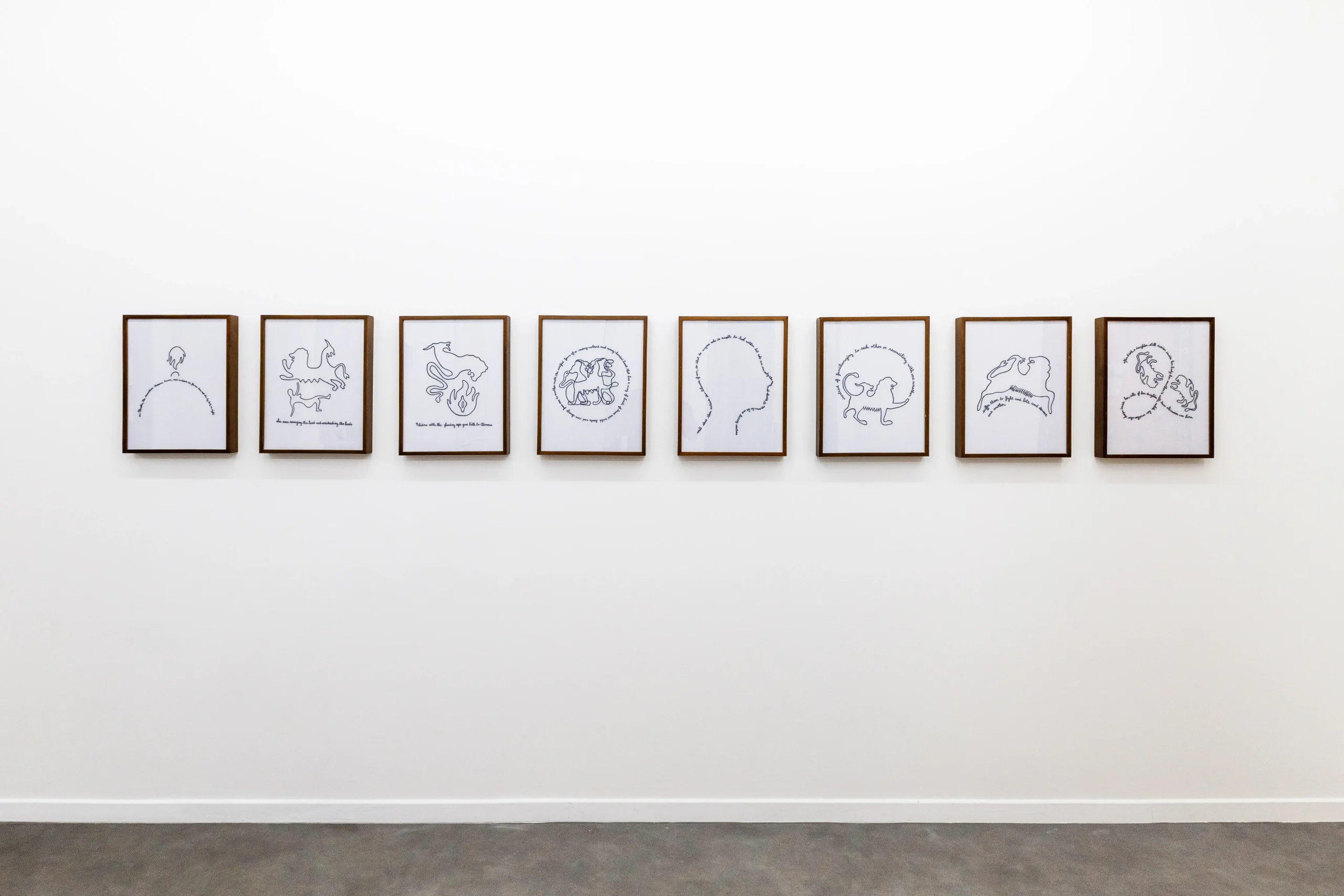
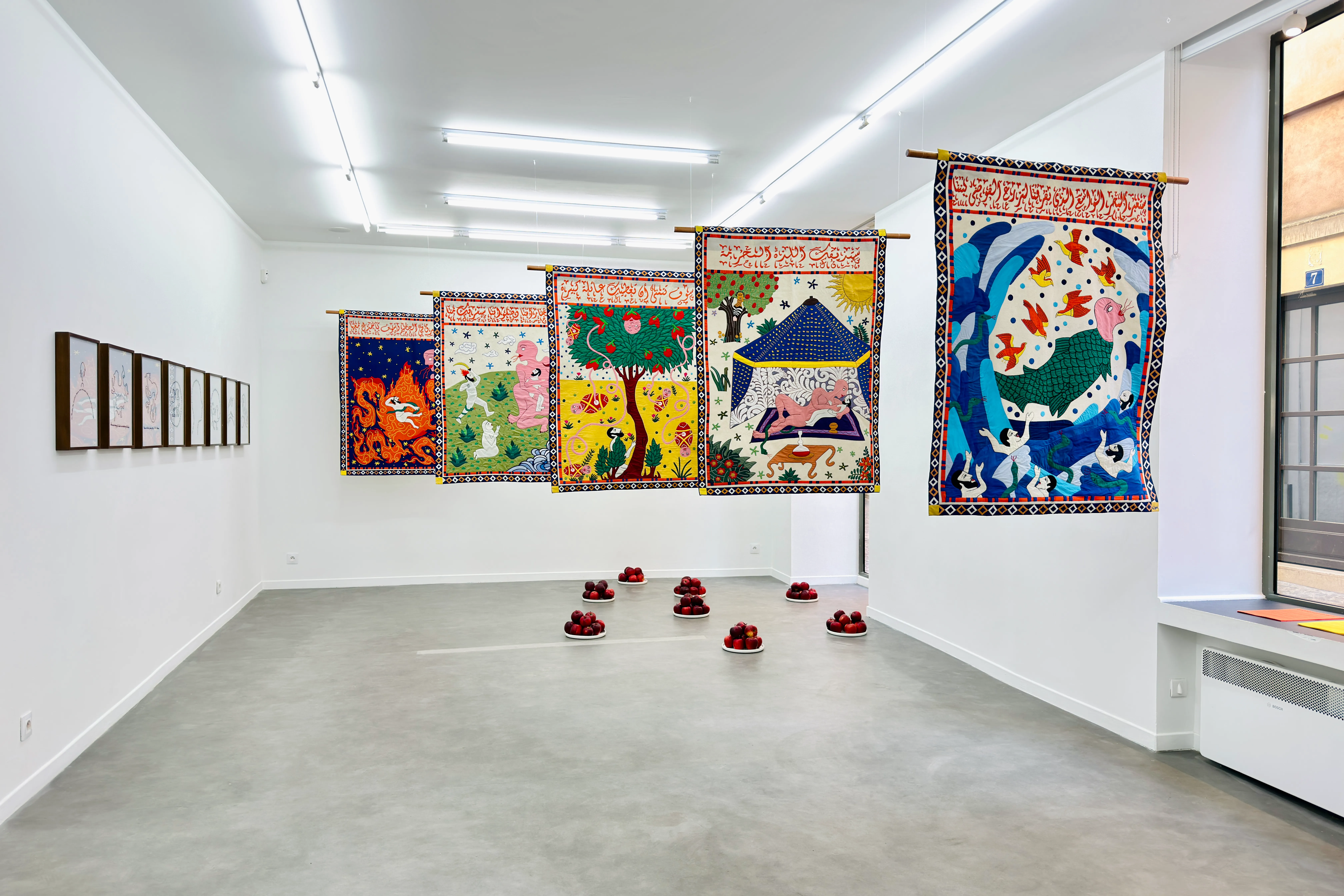
In Serpents, Genies, Chimeras and Other Wonders, intimate experiences pass into imaginary bodies. Fiction does not erase the experience that preceded it — it creates enough distance for that experience to be transformed without losing its emotional truth. A woman becomes a serpent woman. A role becomes a creature. These figures are not allegories with a meaning that can be translated back into one sentence; they hold together different worlds — the human and the animal, biology and myth, the visible and the invisible. They are not incomplete because they refuse to choose. Their refusal is their form.
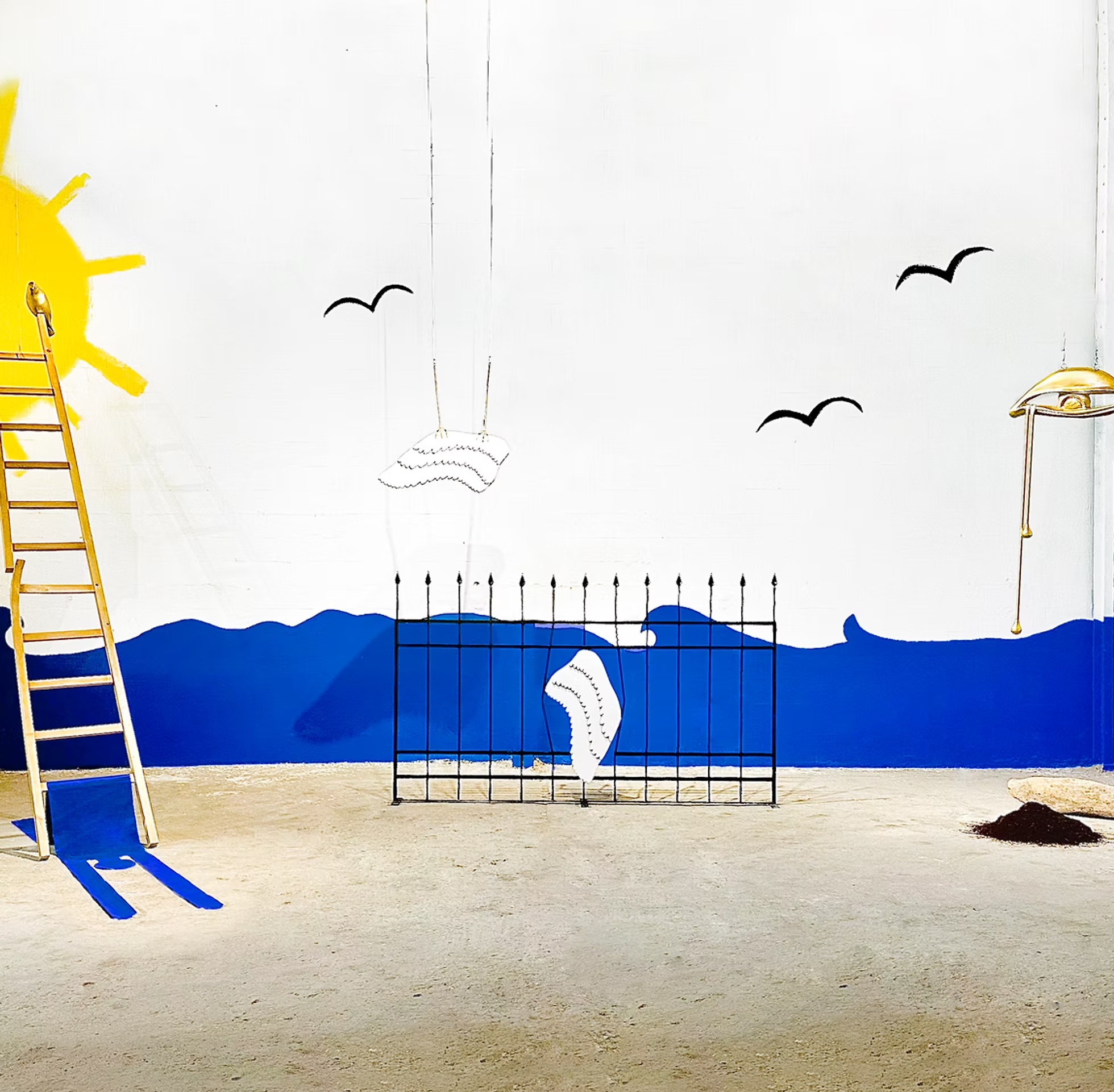
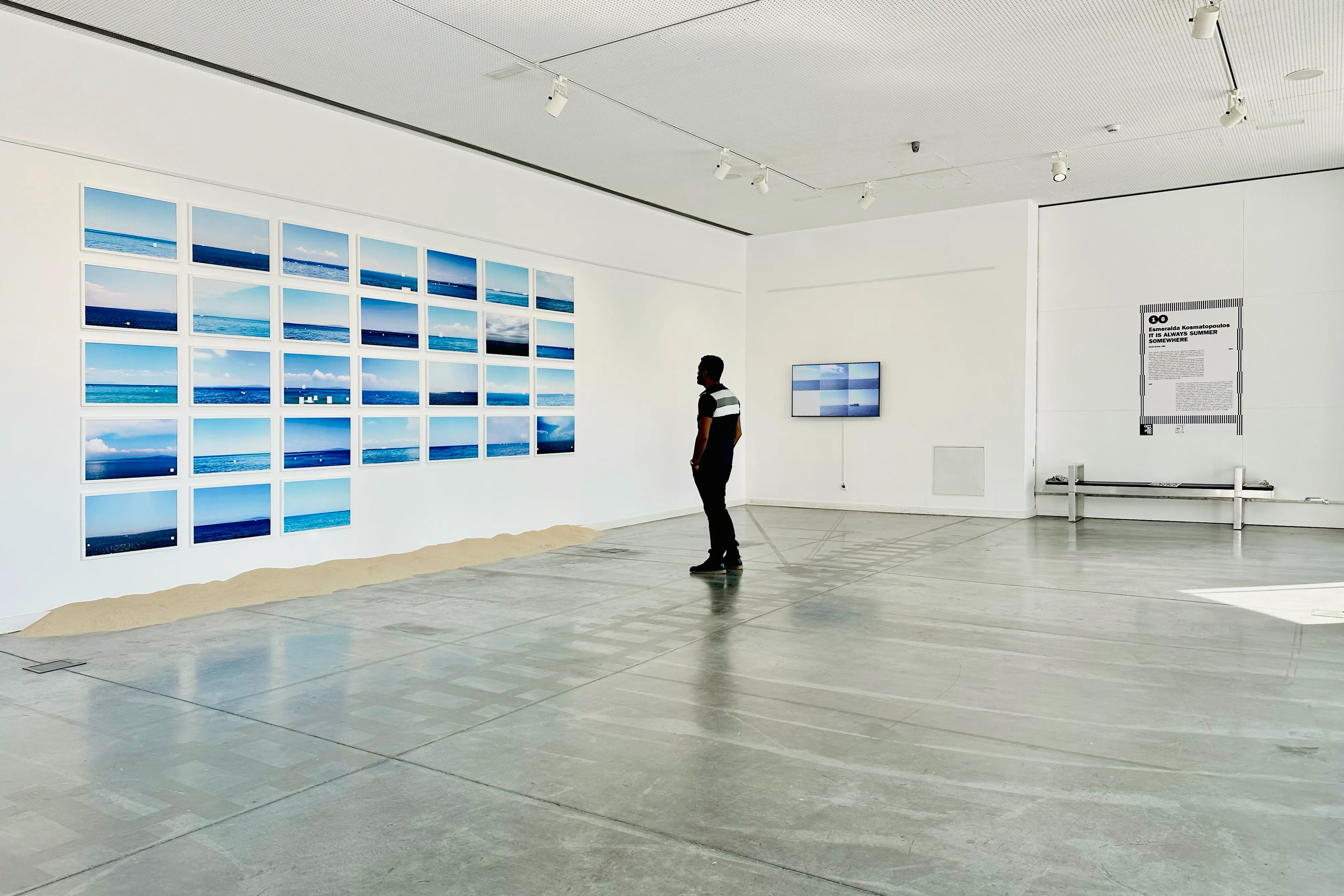
Even the Mediterranean in It Is Always Summer Somewhere occupies several realities without changing physically. There is only one sea. But the meaning of crossing it changes completely according to who is looking and who is moving. For one person, it can represent leisure, pleasure and escape. For another, it is a border, a danger or the uncertain possibility of survival. The landscape remains. The meanings, bodies and histories that cross it do not.
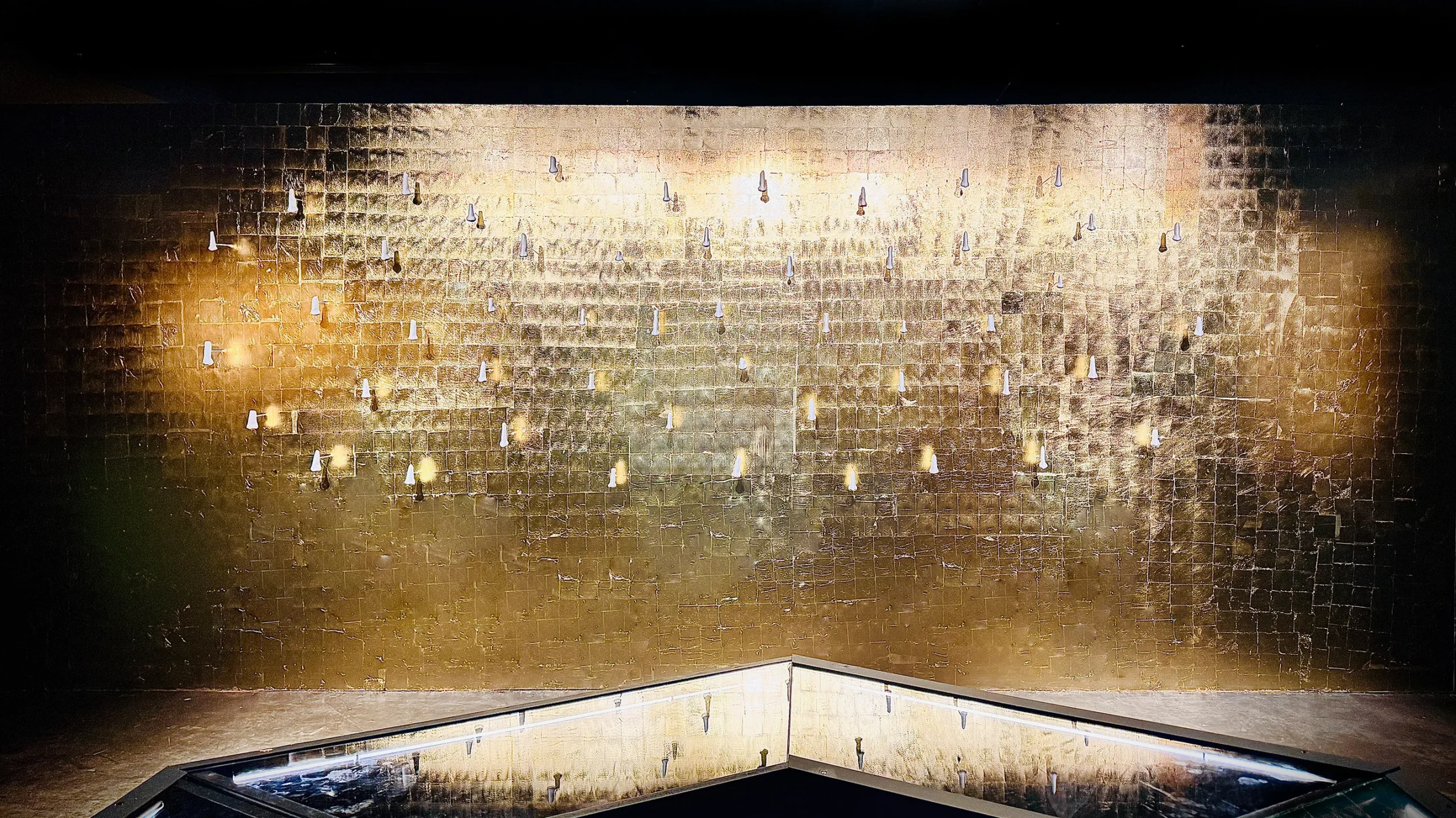
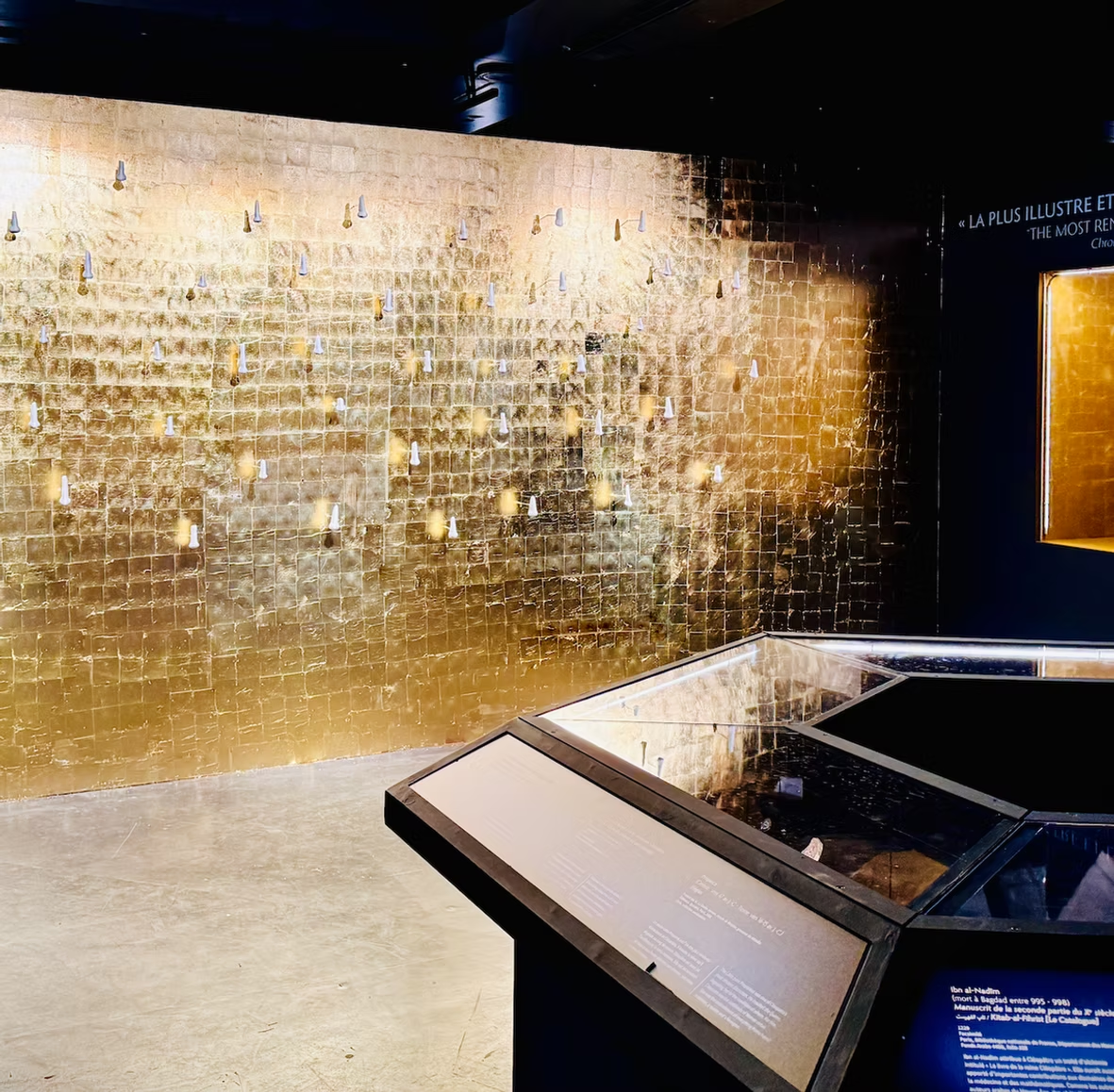
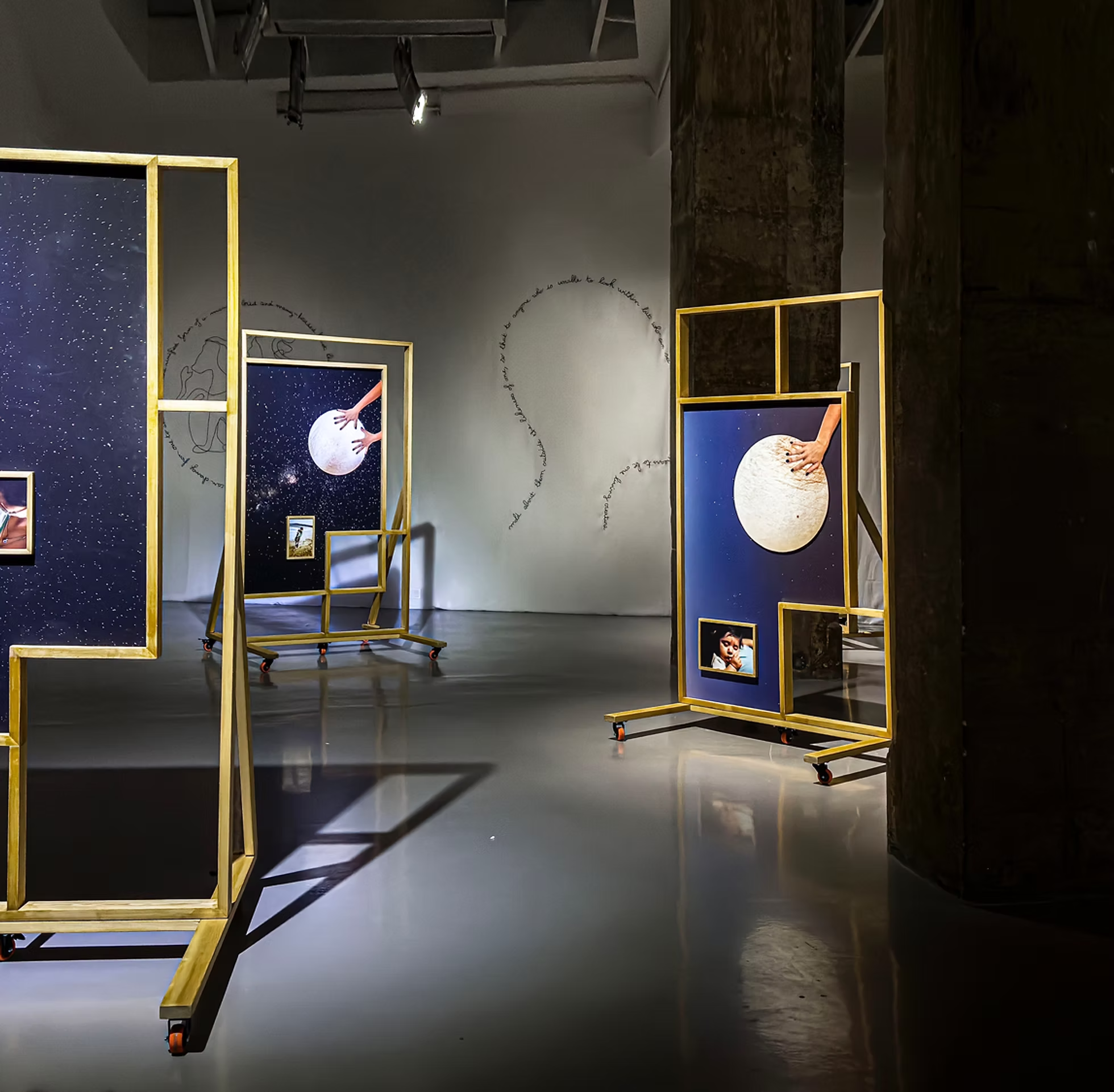
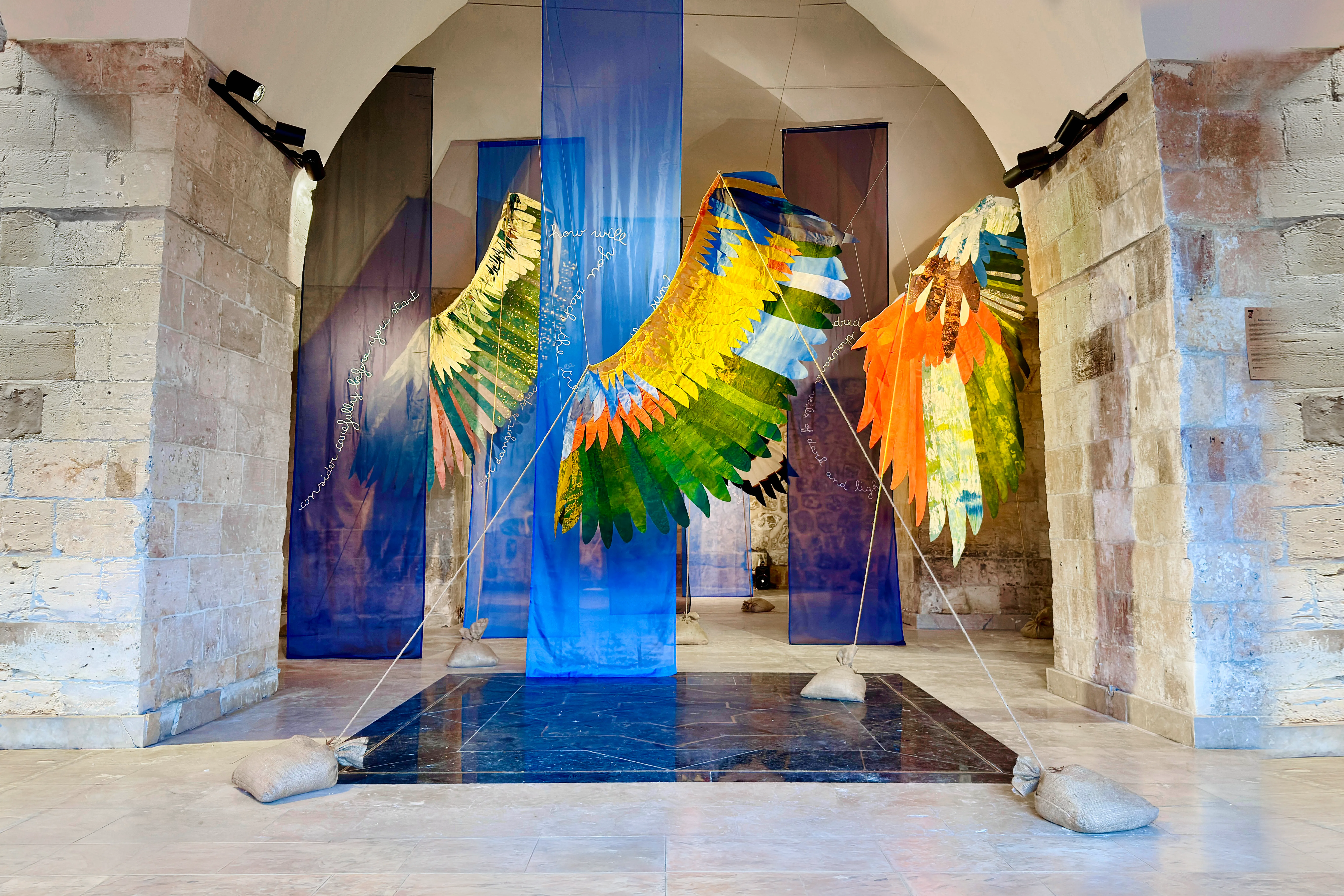
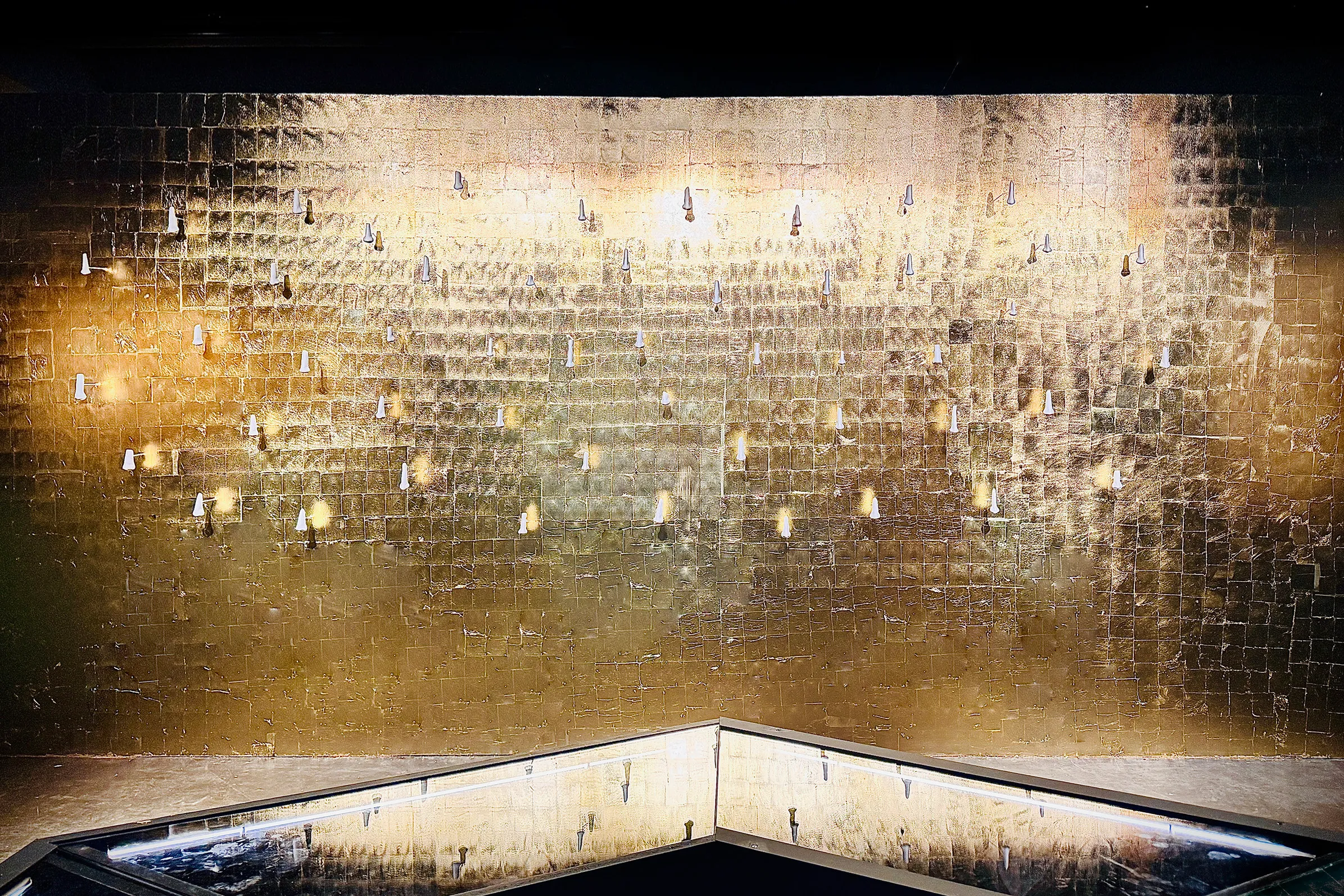
The same principle runs quietly through other projects. In The Bird, the Thread, and the Open Sea, a poem passes into wings, thread and space without ceasing to be a poem, and the journey exists as tension and orientation before any movement begins. In If the Nose of Cleopatra…, the movement is repetition rather than metamorphosis: centuries of images give a woman the authority of history while making the woman herself increasingly difficult to find.
This is why the in-between should not be confused with vagueness. It is often the place where contradictions become most concrete. The same sea cannot be understood in the same way by a tourist and a person fleeing danger. The opposition does not disappear merely because both experiences occupy the same landscape. The work keeps those realities together without pretending to reconcile them.
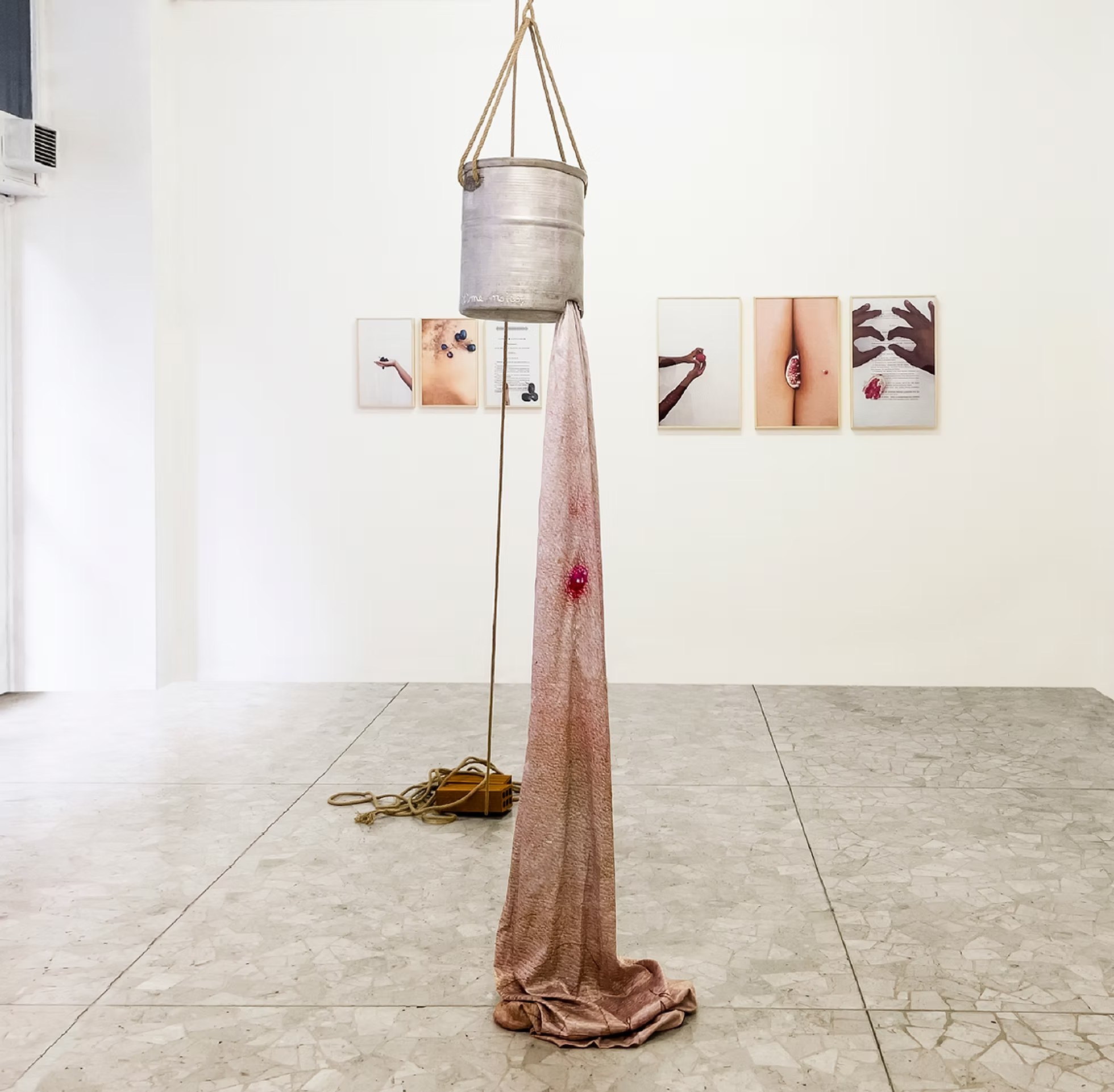
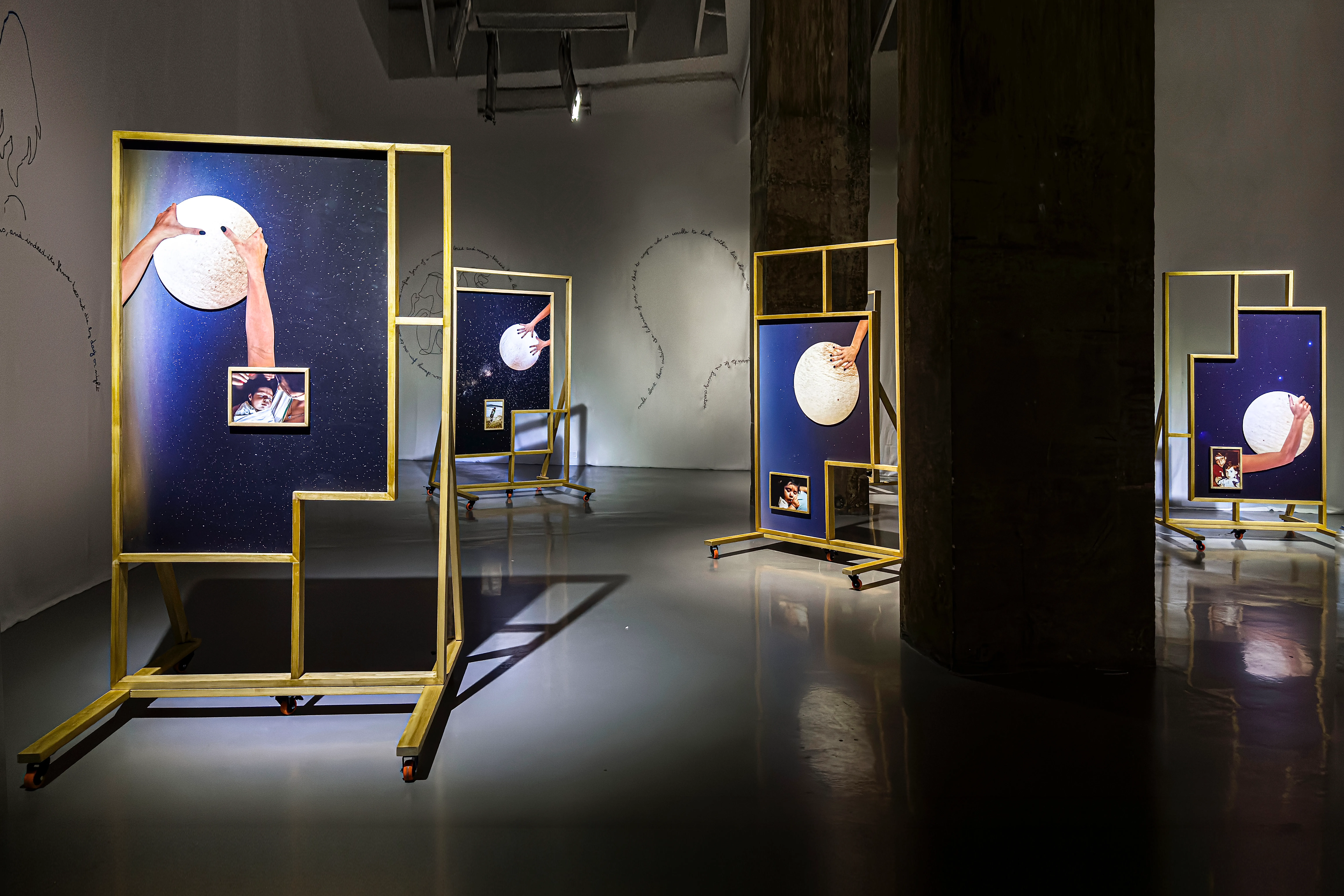
In MOTHER!, the same principle governs transmission: a daughter becomes herself without leaving her mother entirely behind, carrying phrases, gestures, cells and expectations that are only ever partly her own. Transformation, again, is not replacement.
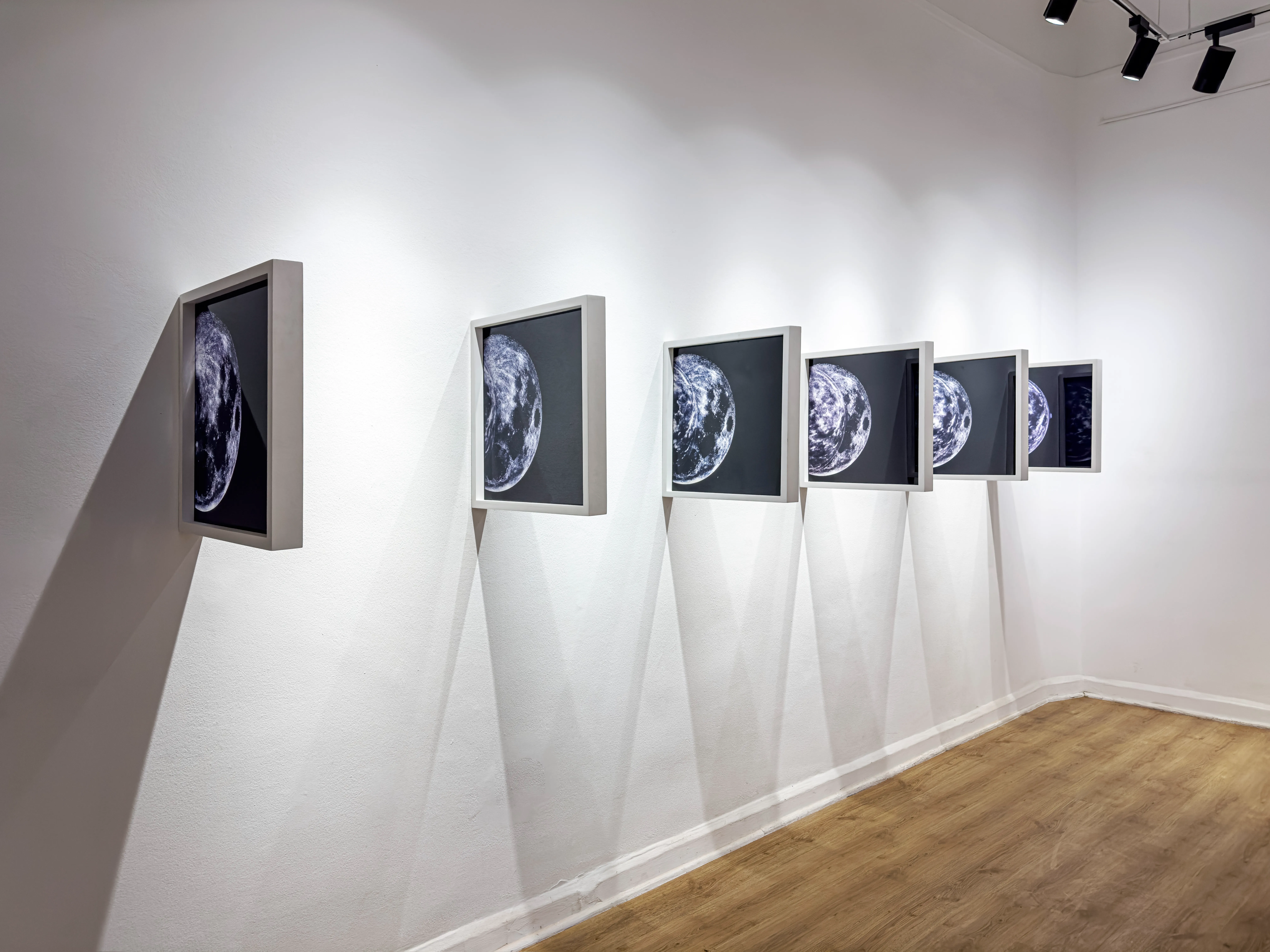
I think this is also why the breast returns so often in my work: a form that refuses a single, stable meaning, becoming an eye, a mountain or a wound without ever settling into just one of them.
Over time, I have also understood that one artwork rarely contains an entire question. A gesture in one work generates another; a material reveals something that another material cannot. A face becomes a body, then a mask becomes an architecture. A breast becomes an eye, then the eye opens onto grief, surveillance or illness. The works gather into constellations — not a collection of objects that happen to share a subject, but a way of allowing meaning to emerge through relationships. A single form remains partial. Beside another, it begins to reveal a movement that neither could contain alone.
This is why questions continue across materials and series, not because every project must repeat the same message, but because no answer feels final enough to close the question. Bread does not think like stone. Thread does not carry time like photography. A myth does not transform an experience in the same way that repetition transforms an image into history. Each material and each project creates a different passage.
Why I Refuse to Resolve
What remains consistent is my attraction to the moment in which something can no longer remain where it was, but has not yet settled into what it might become. This is what I mean when I say that my work refuses resolution. I do not deliberately leave things unfinished — the works are materially finished, with dimensions, structures and precise forms. What they refuse is the idea that completion should produce one stable interpretation: that the face is only a face, the animal only an animal, the sea only a landscape.
The world seems to me to be in constant becoming. Bodies change. Stories travel. Images acquire authority. Materials remember. Nothing exists entirely inside one box, and perhaps art matters precisely because it can hold what language separates — allowing several states to coexist long enough for us to feel their tension, without pretending to master what exceeds understanding.
Perhaps the in-between is not a passage we are expected to complete. Perhaps it is the place where life has always been happening.
Related Series
Related Studio Notes