For exhibition enquiries, available works and collaborations, please contact the studio.
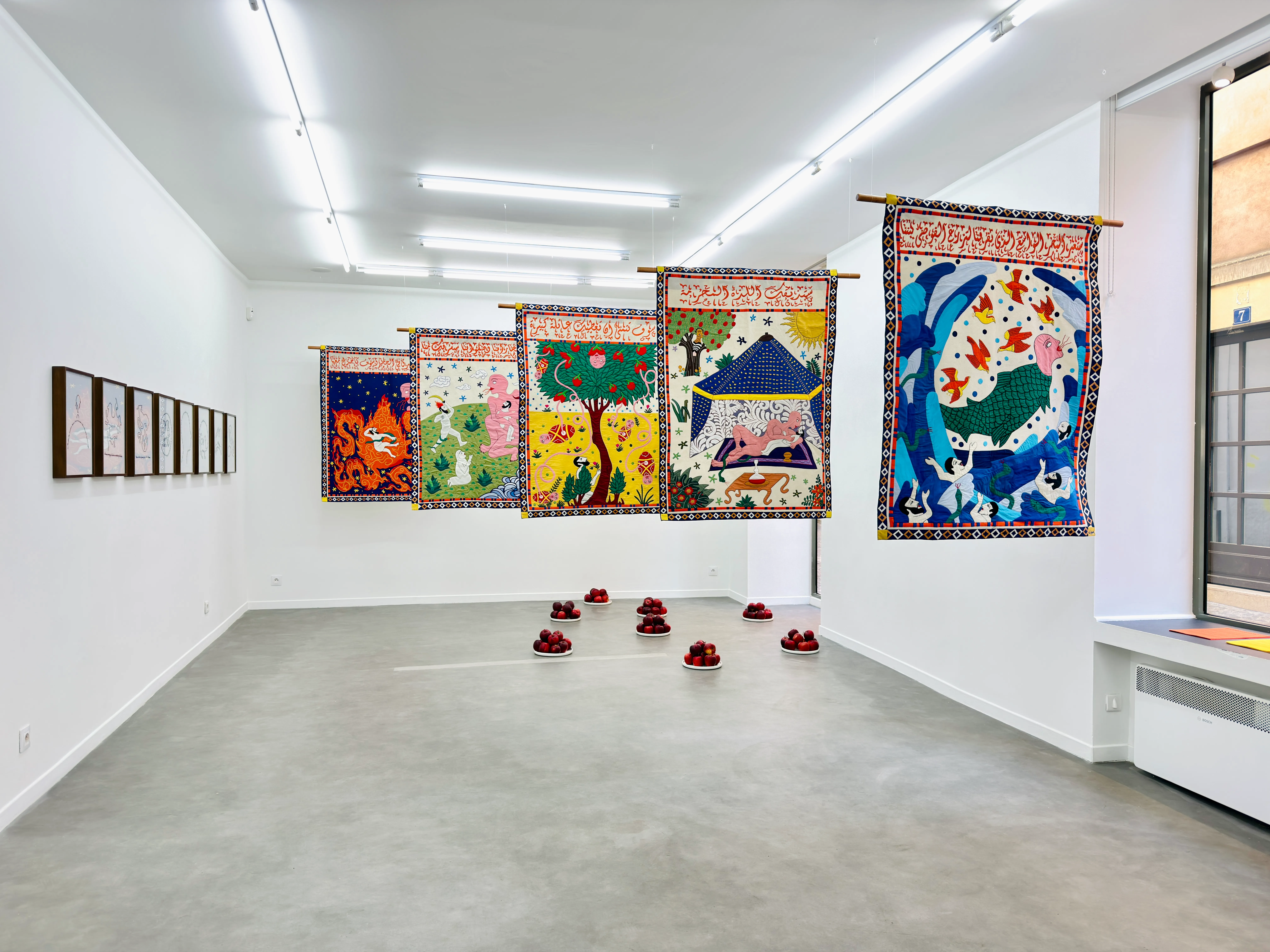
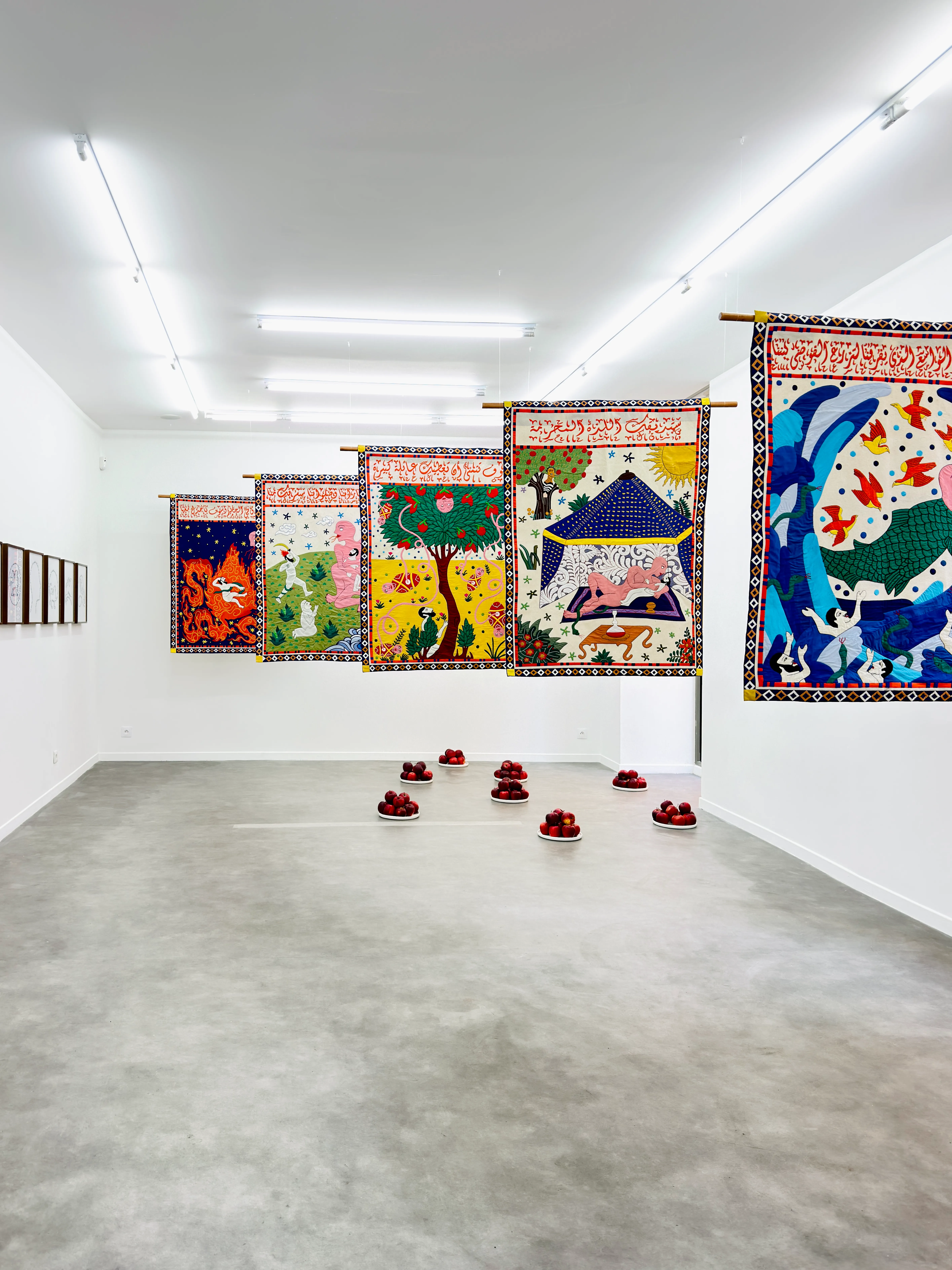
Serpents, Genies, Chimeras and Other Wonders explores the social construction of femininity through three functions traditionally assigned to women: being a daughter, a wife and a mother. The project unfolds through three spatial fables composed of tapestries made in Egyptian khayamiya and hand embroidery, transforming intimate experience into a contemporary mythology inhabited by serpents, jinn and chimeras.
MEDIUM
Textile
MATERIALS
Cotton
START YEAR
2023
END YEAR
2026
Serpents, Genies, Chimeras and Other Wonders unfolds as a world inhabited by hybrid female creatures suspended between myth and memory, inheritance and invention, the human and the more-than-human. Drawing from ancient Greek texts, Islamic and pre-Islamic cosmologies, as well as original stories and poems written by the artist, the project approaches mythology as a living language through which intimate experiences can move beyond autobiography without losing their emotional truth.
The cycle is structured around three spatial fables, each revisiting one of the roles through which womanhood has traditionally been imagined and socially constructed: daughter, wife and mother. Rather than treating these roles as stable identities, the works allow them to become porous, contradictory and continually transformed by inheritance, projection and personal experience.
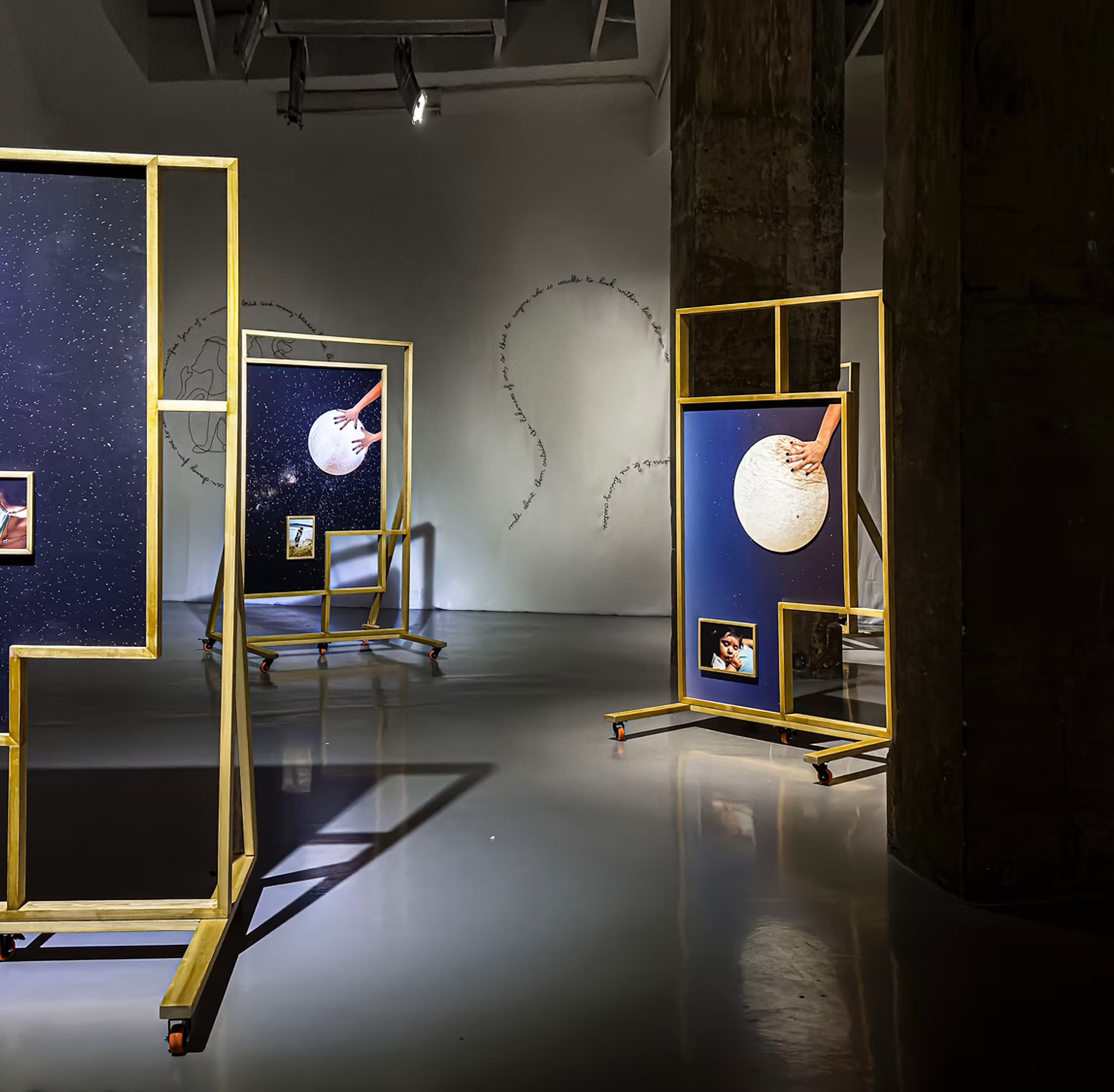
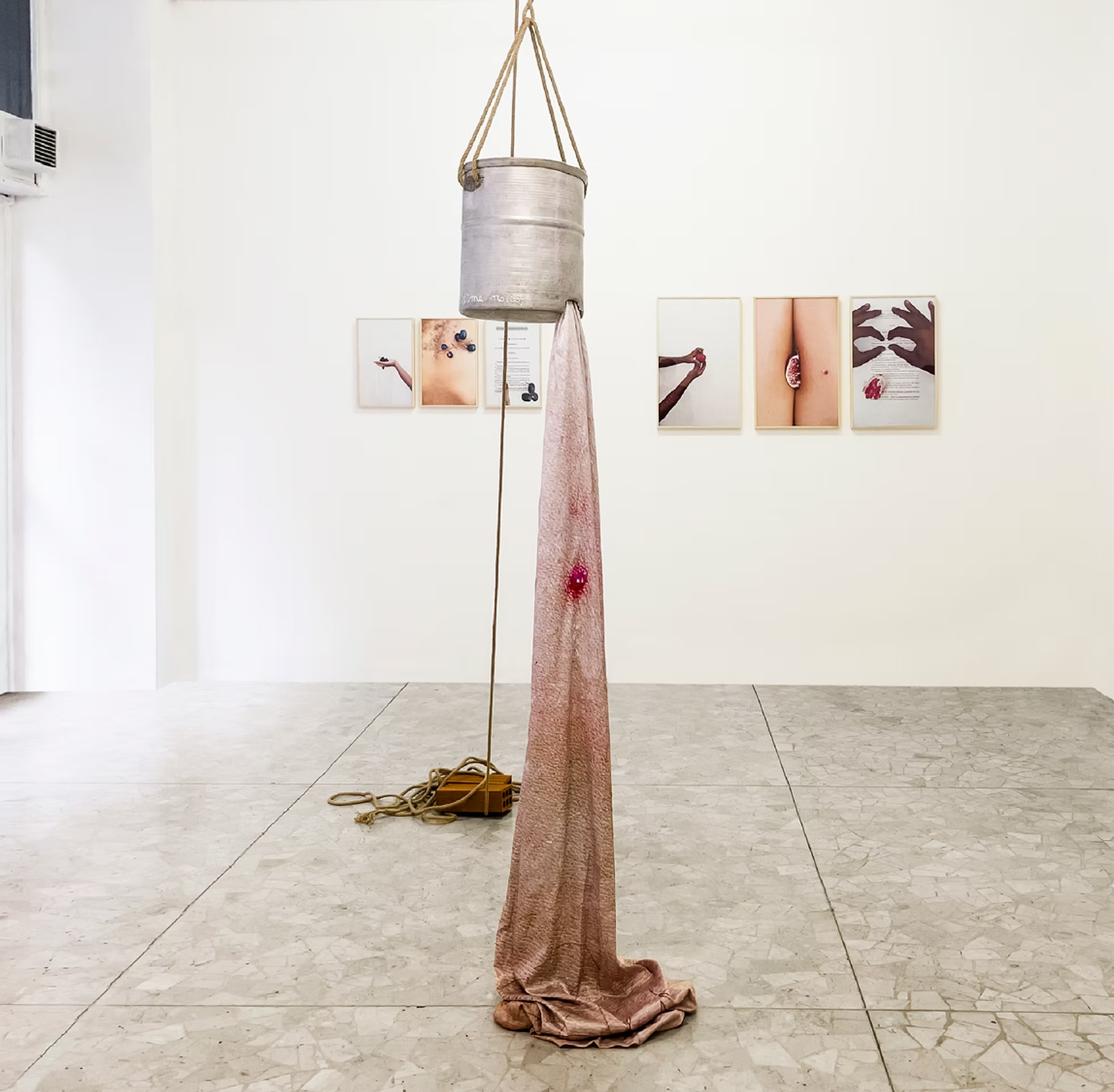
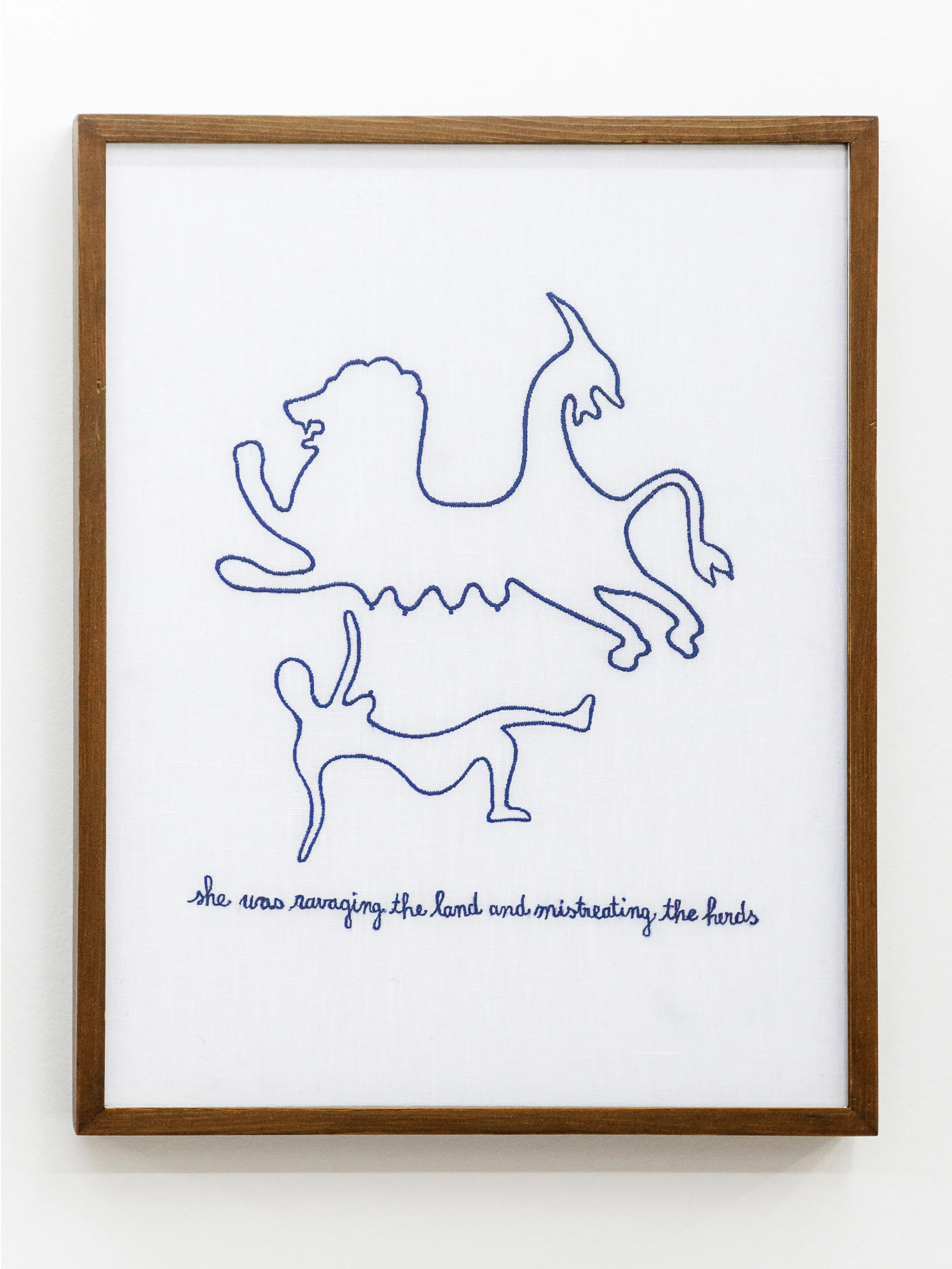
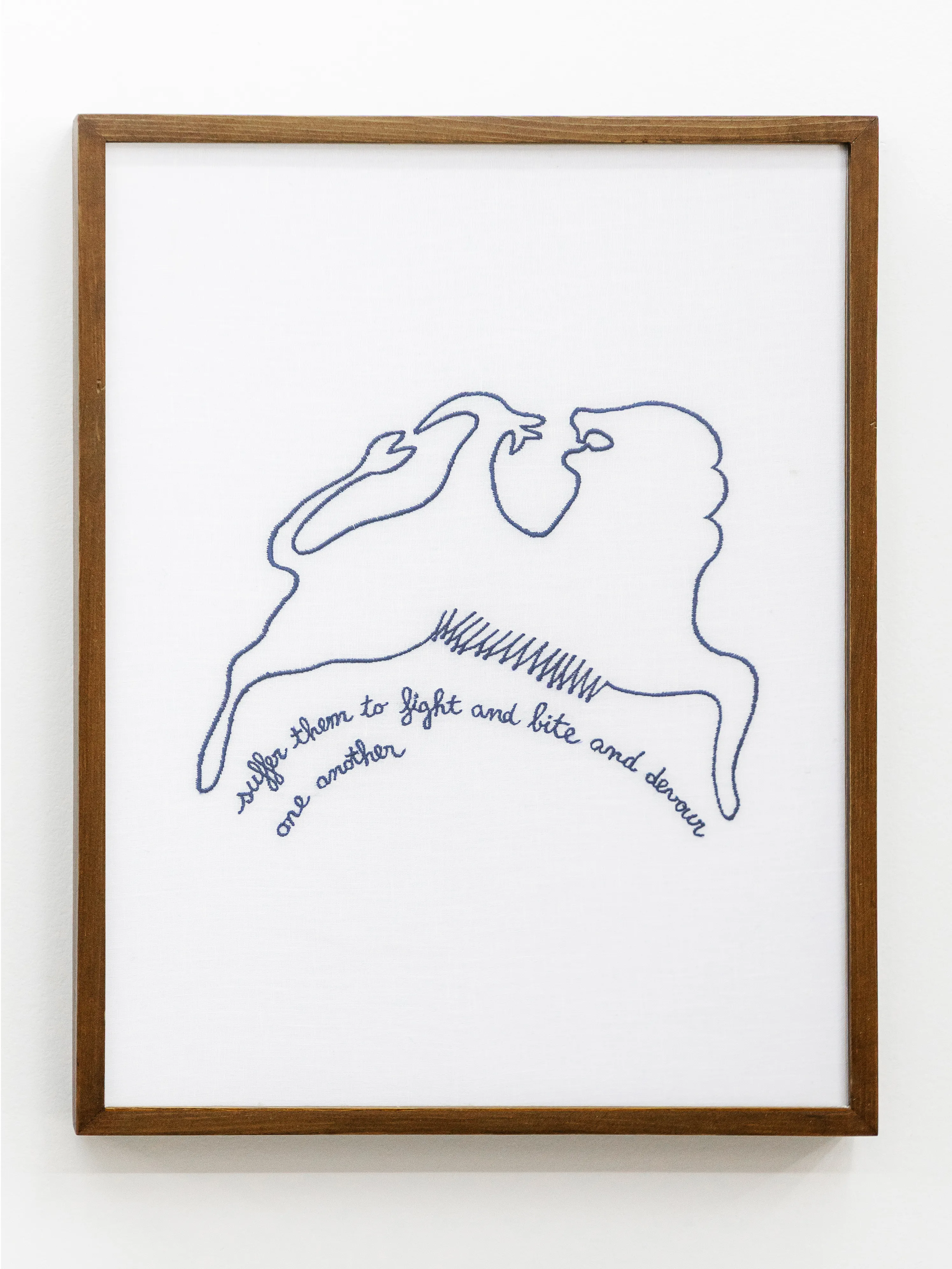
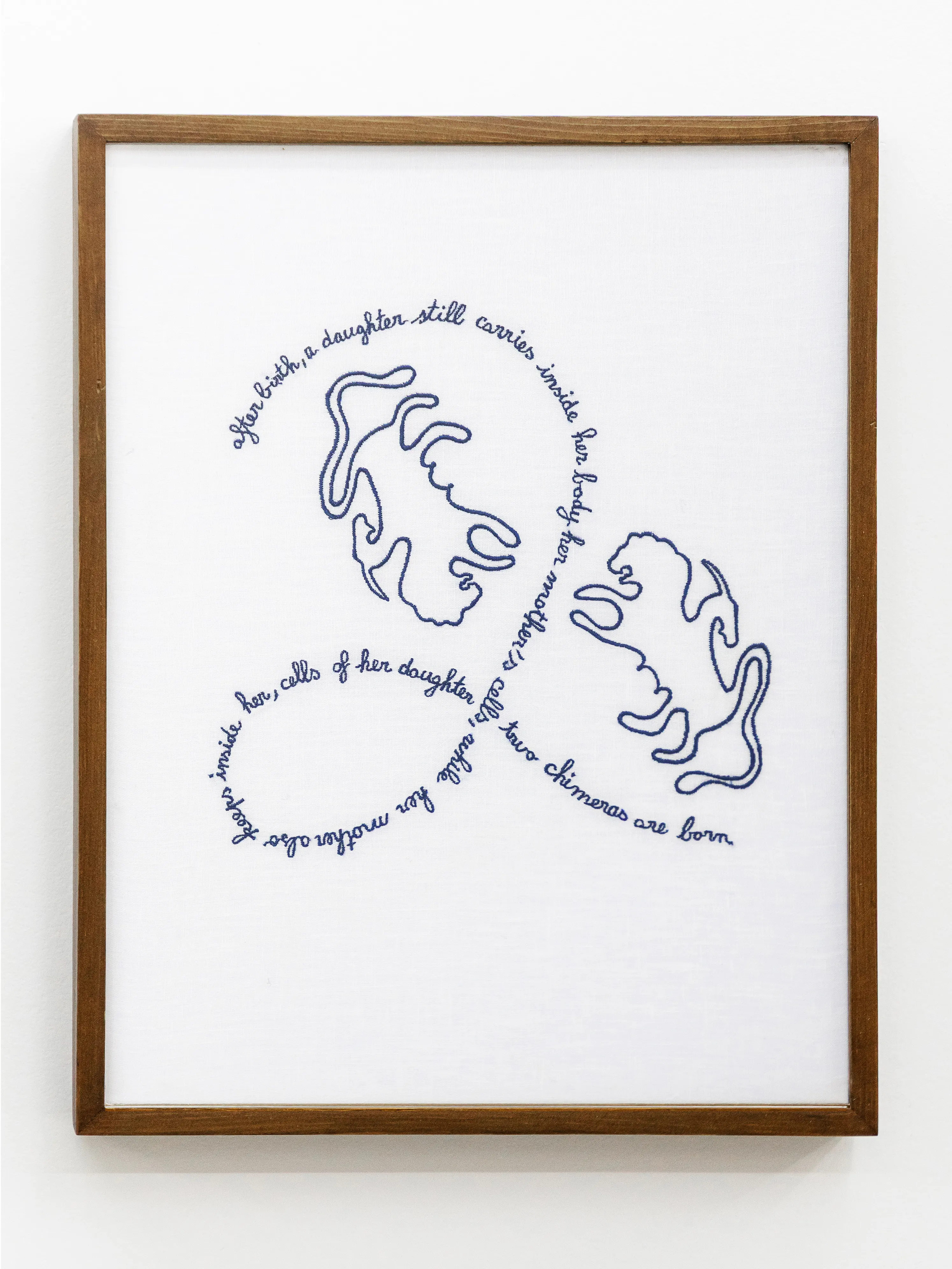
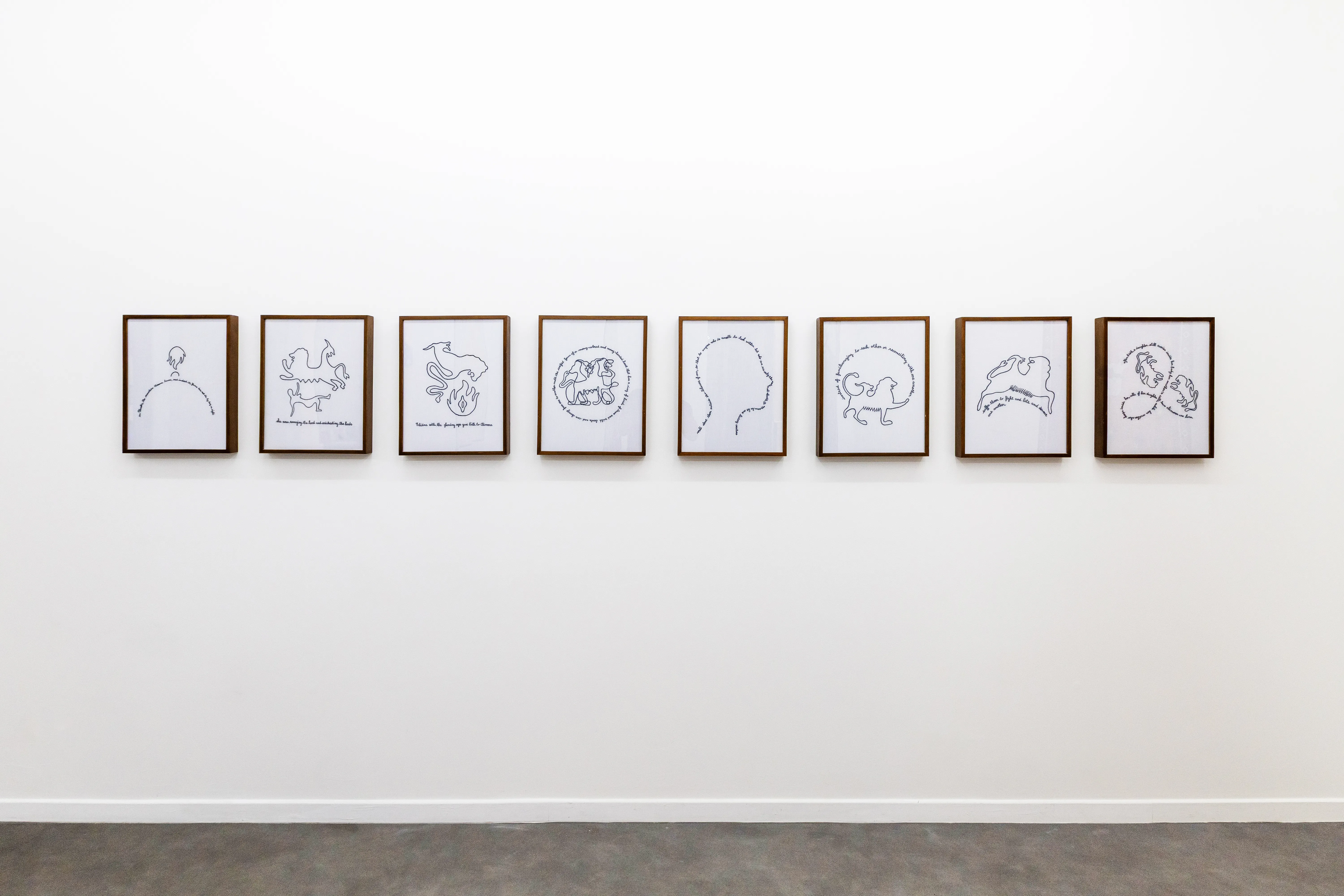
In Chimera, the mythological creature becomes a way of thinking about the relationship between mother and daughter. The work brings the ancient figure of the Chimera into dialogue with microchimerism, the biological phenomenon through which cells pass between mother and child and can remain in both bodies long after birth. Embroidered panels inspired by Greek metopes combine mythology, science and fragments of classical literature, presenting feminine identity as a composite condition shaped by what is inherited and what is lived. Here, the hybrid is not monstrous; it is the ordinary form of transmission.
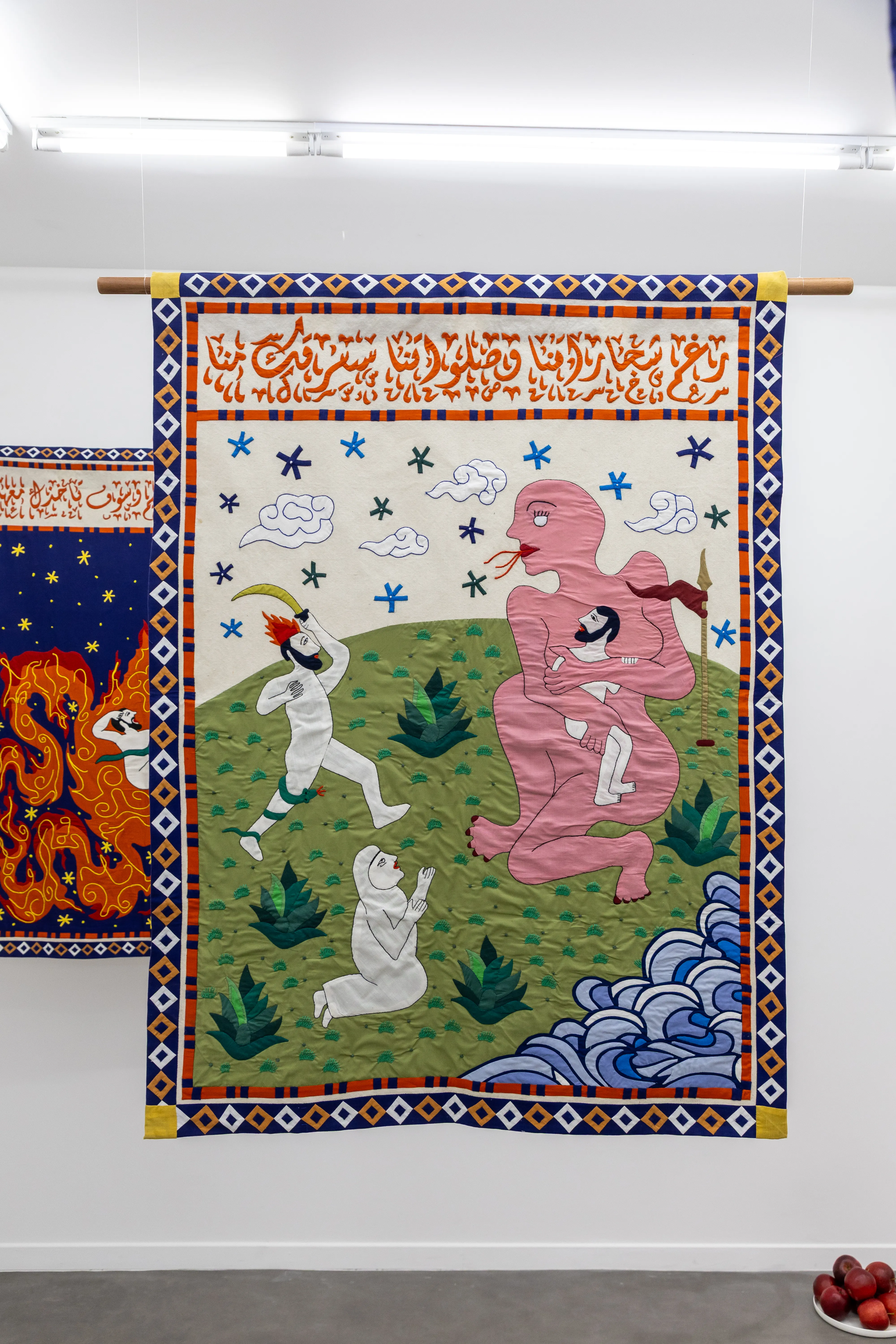
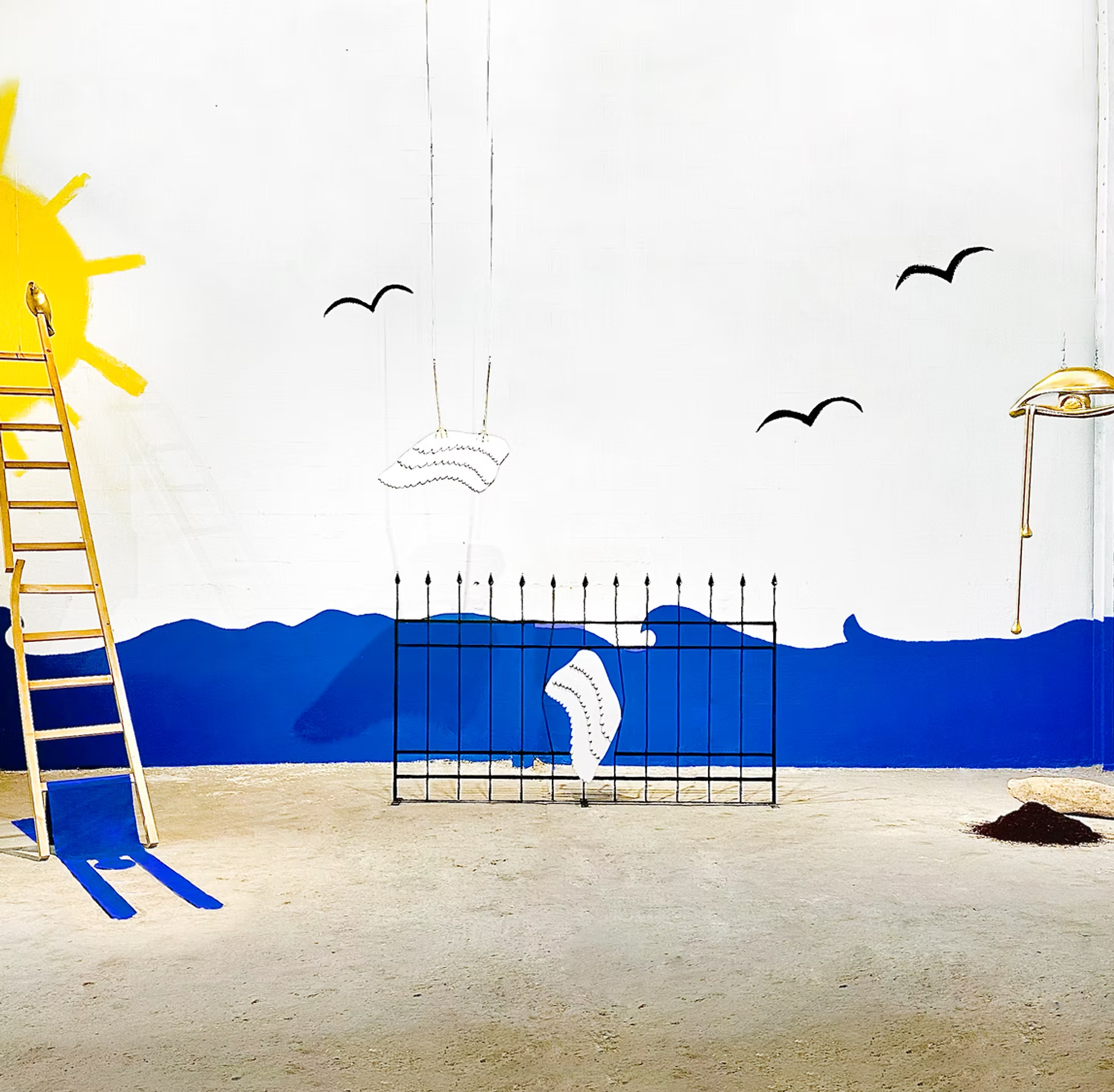
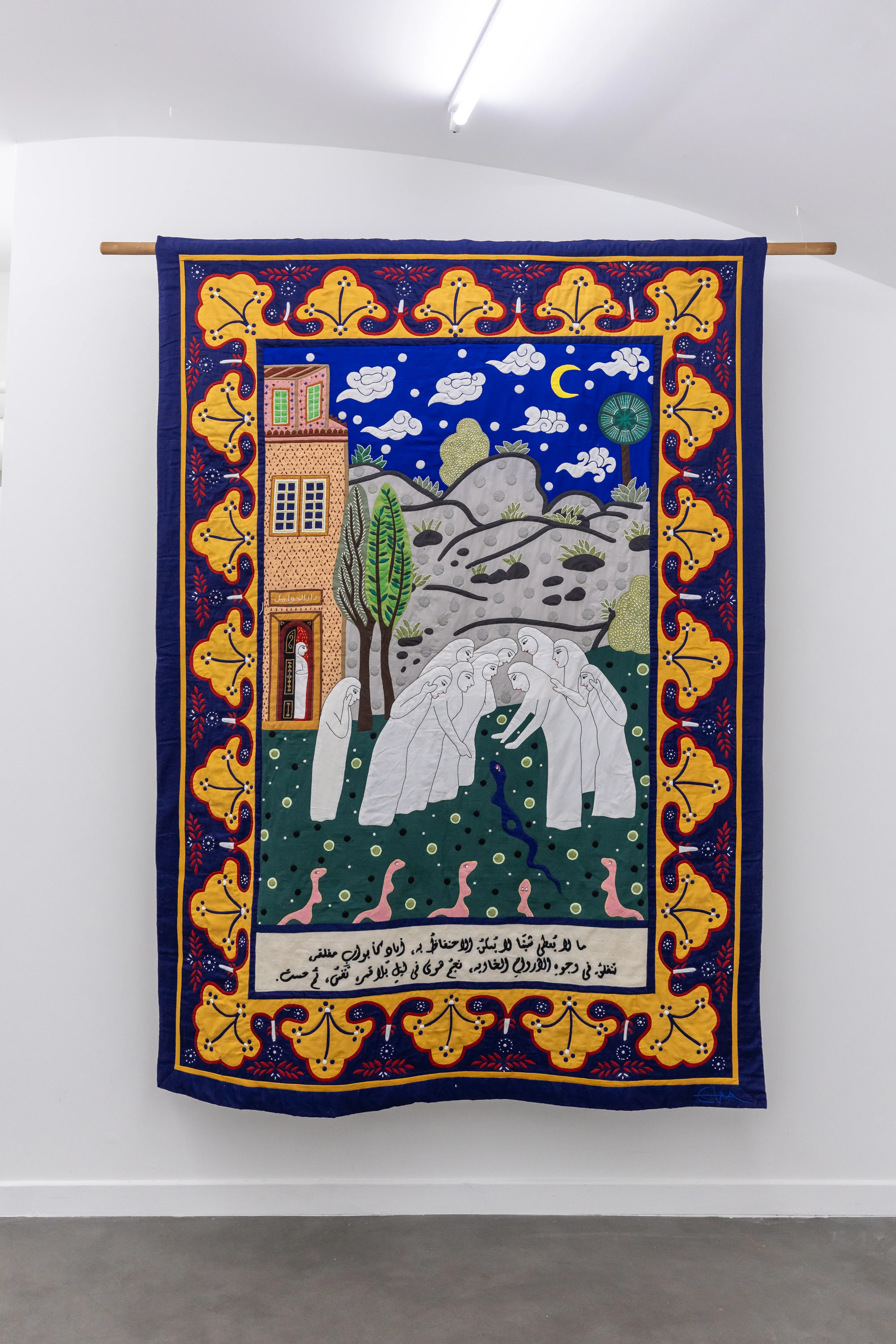
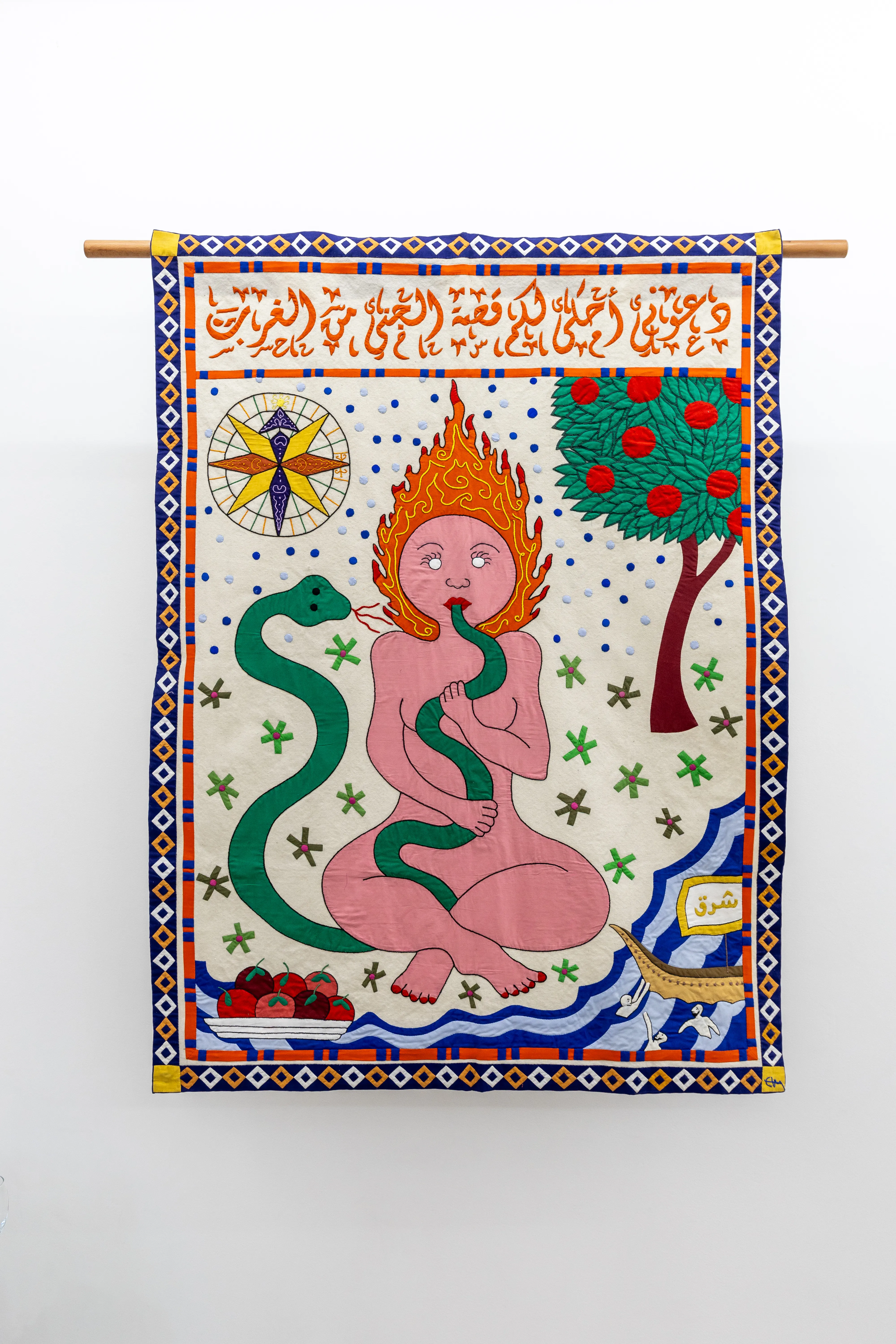
The Jinn from the West moves from inheritance to projection. Rooted in Kosmatopoulos's experience as a Western woman living in Egypt and married to an Egyptian man, the work gathers the unsolicited comments, warnings and fantasies repeatedly addressed to her husband. These everyday projections are transformed into the adventures of a supernatural being: the agnabeya becomes a jinn, suspended between fascination and distrust, modernity and tradition, visibility and otherness. The fable gives another body to social tensions that would remain narrower if told only as autobiography.
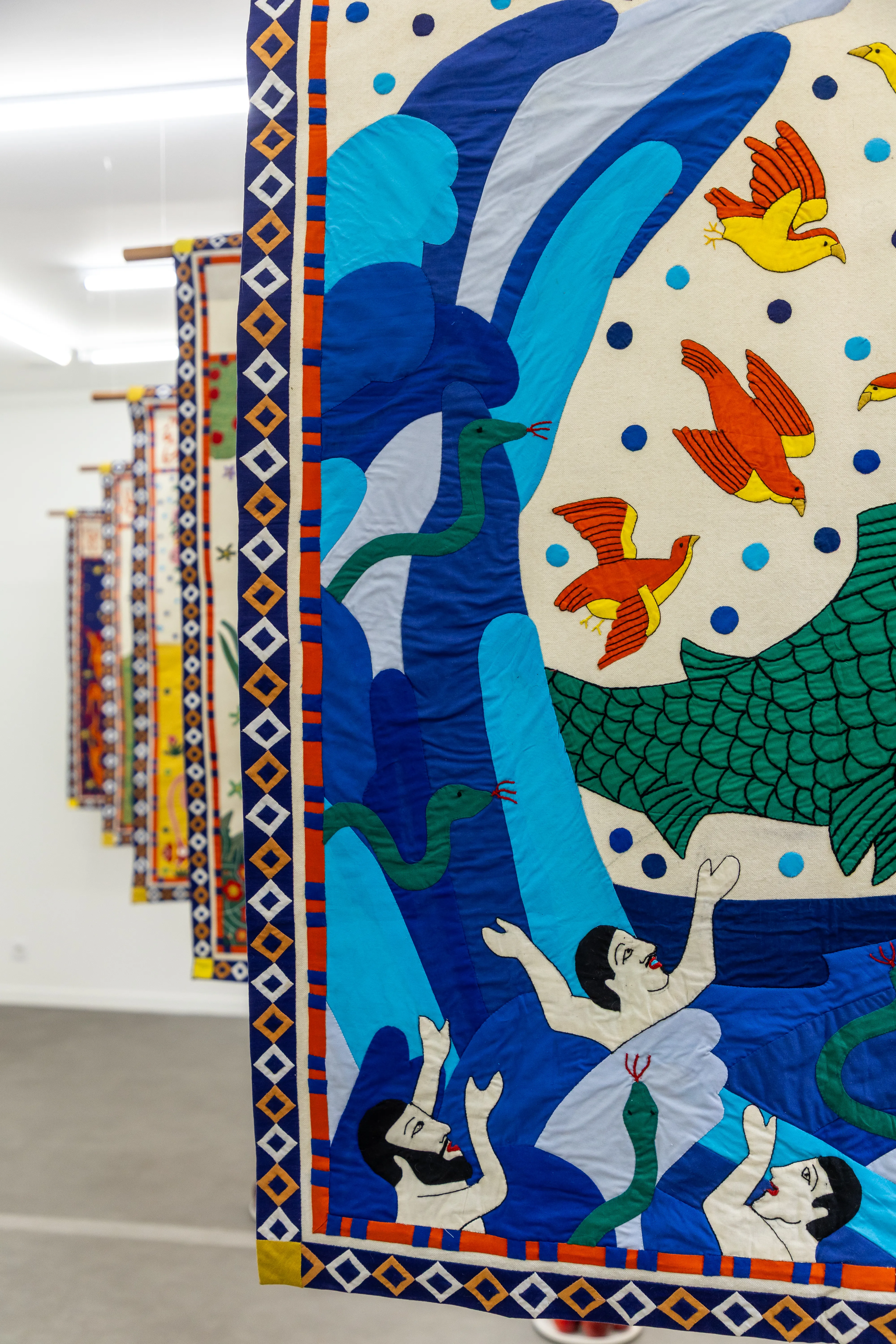
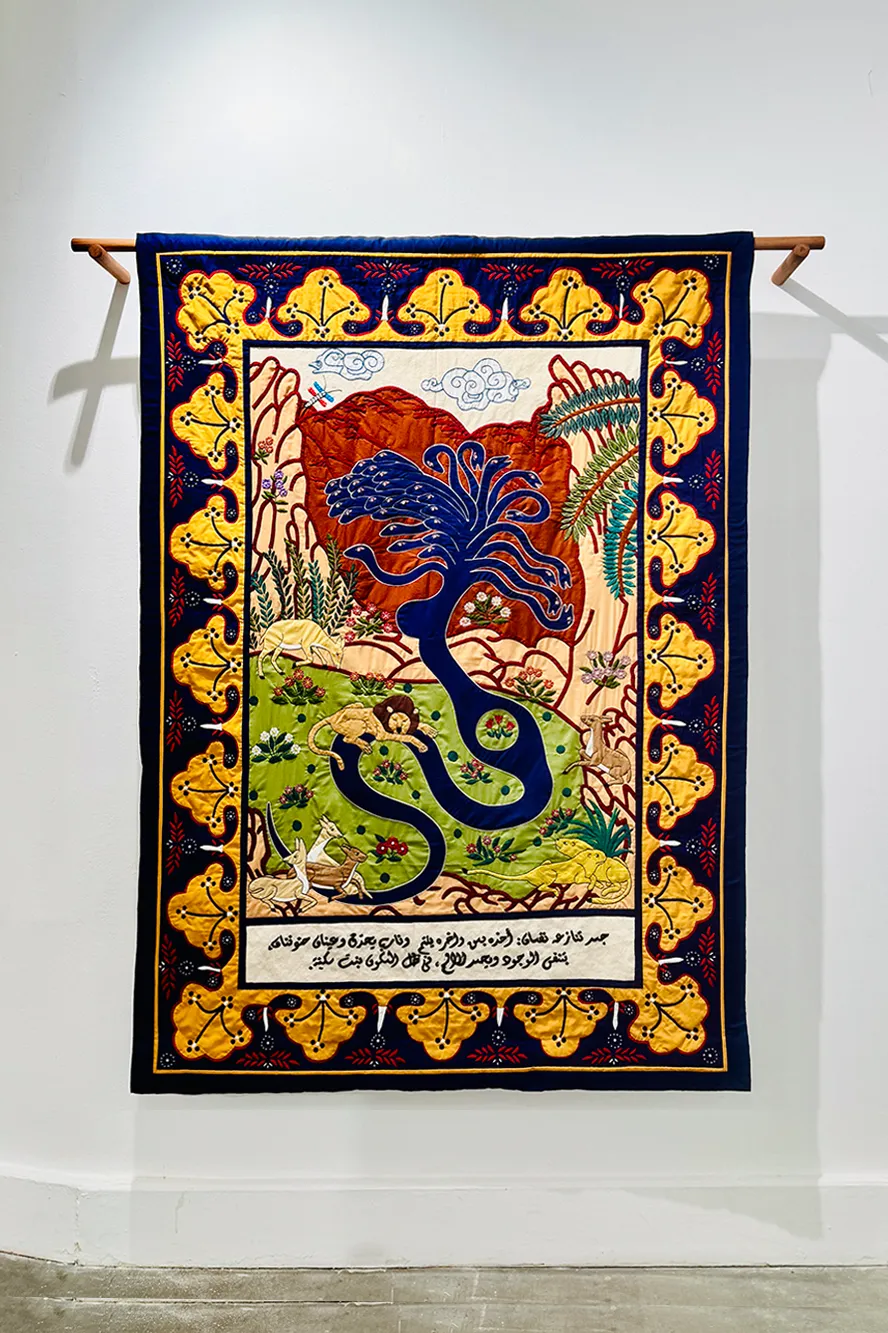
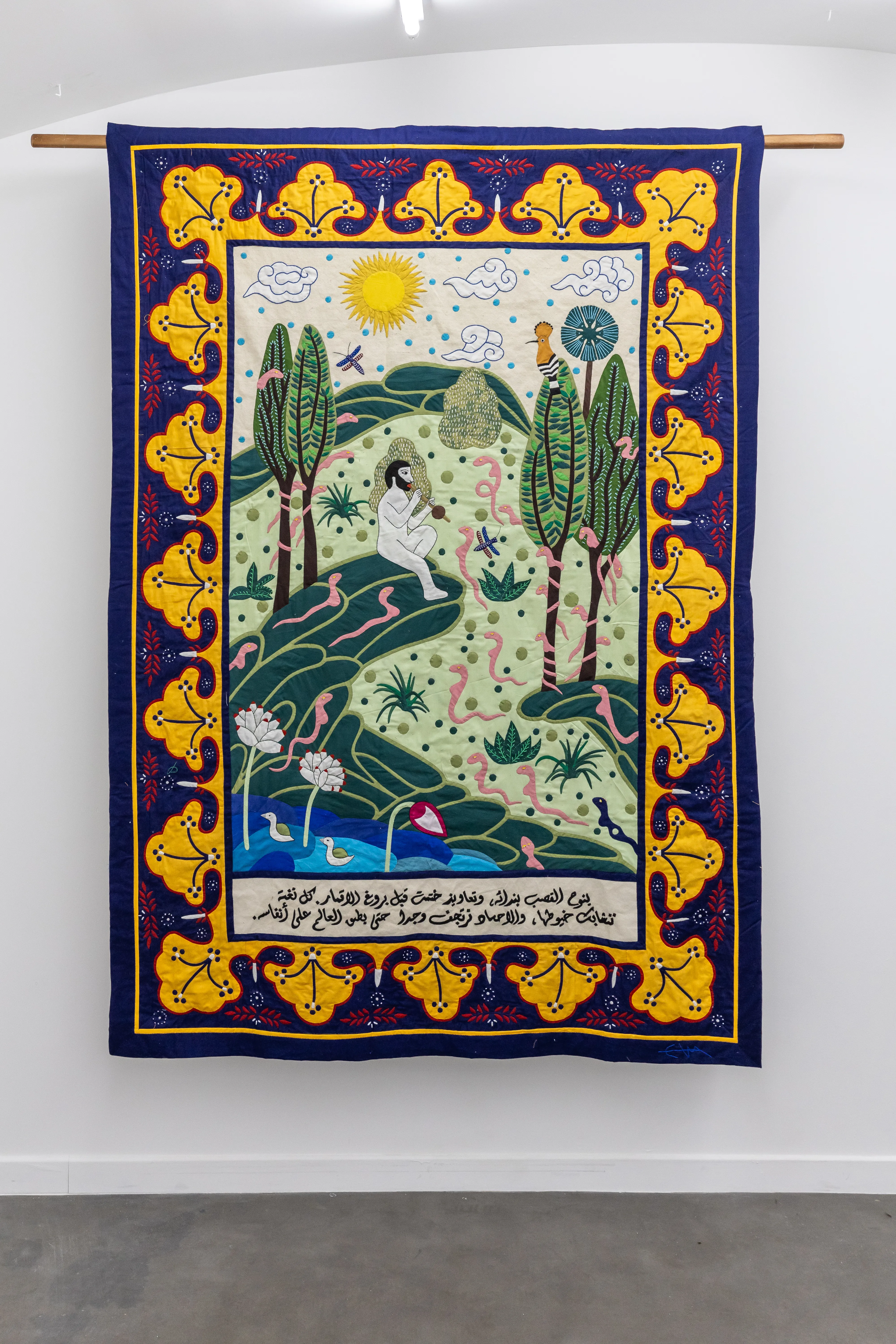
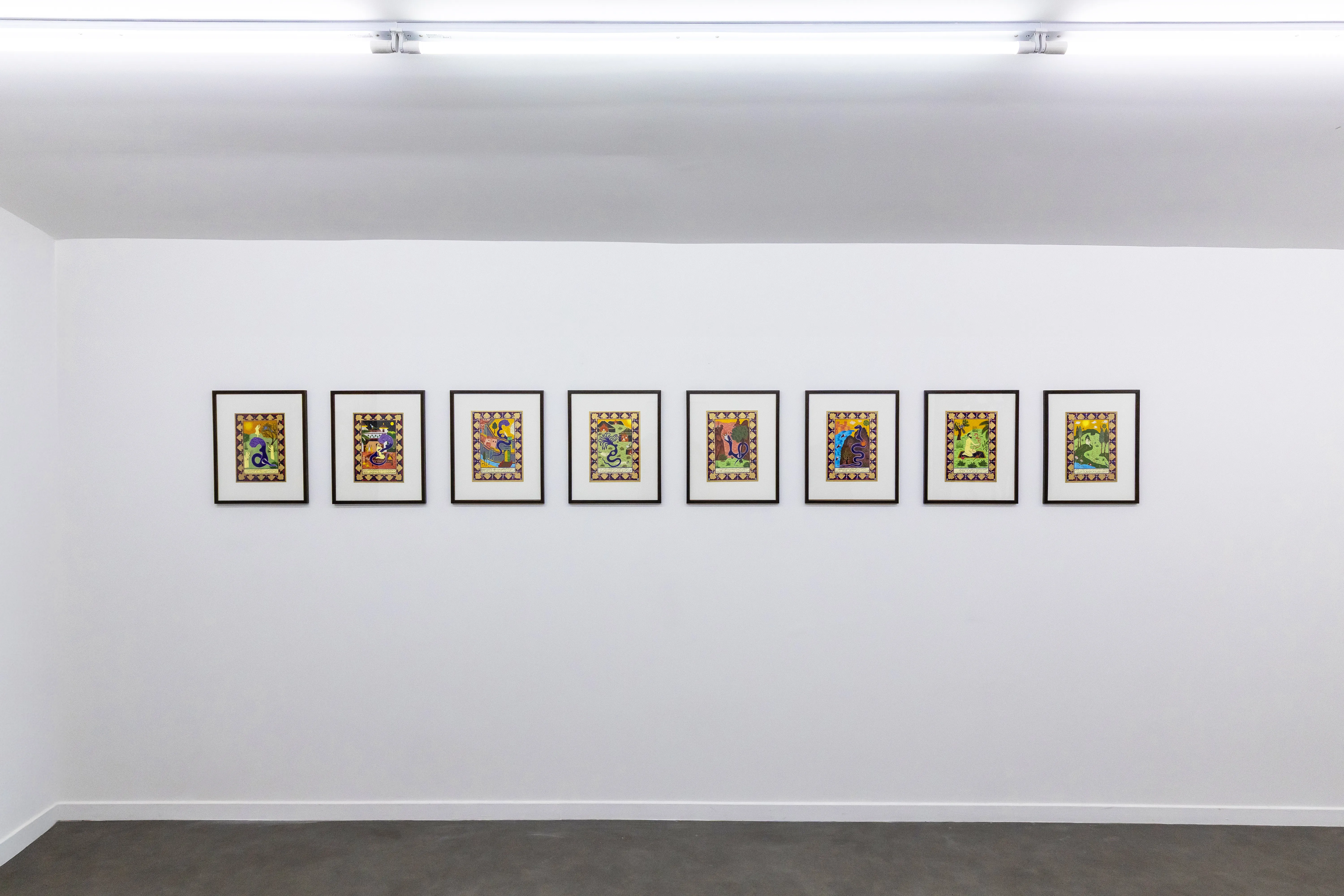
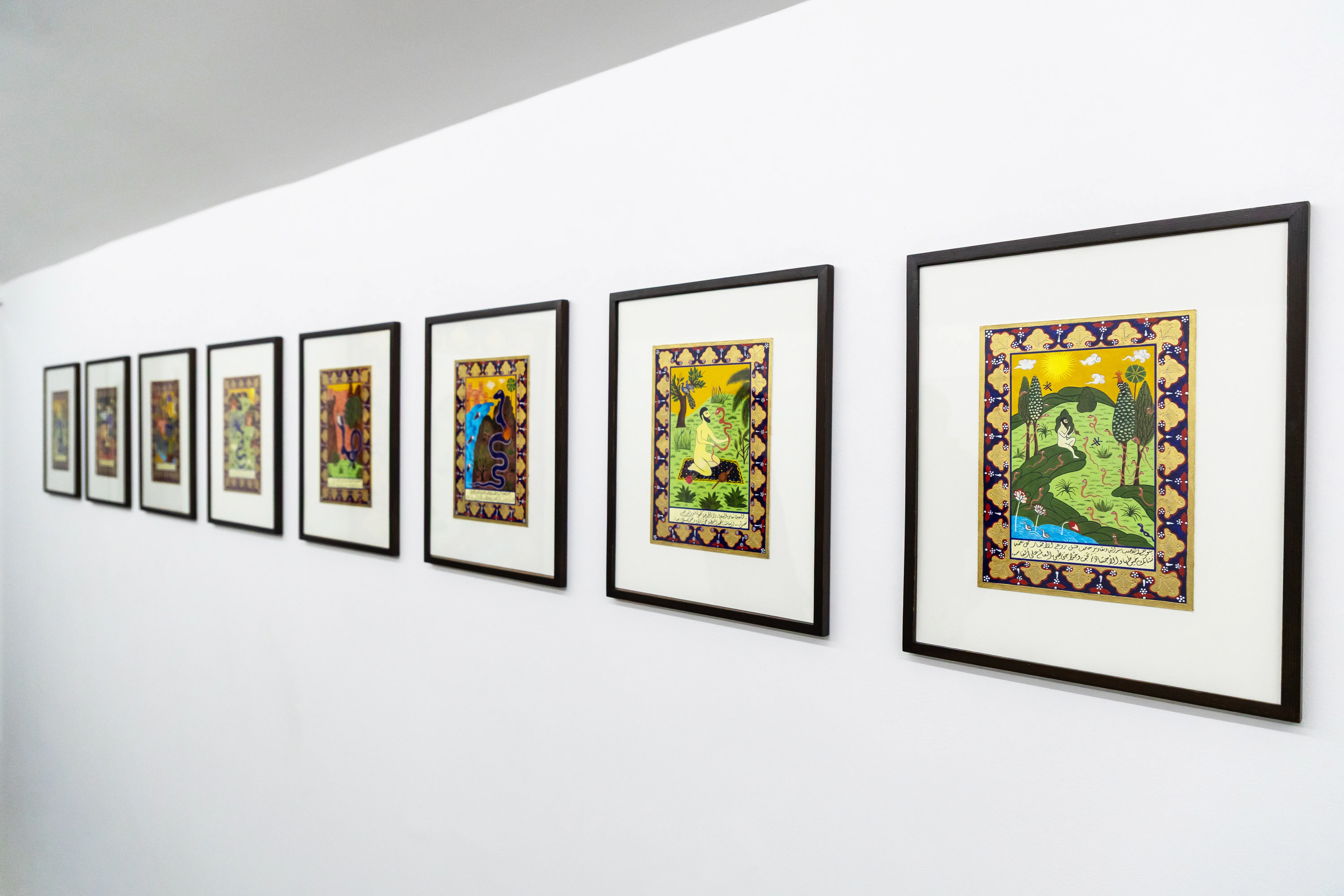
Ḥayāt al-Ḥayāt turns towards motherhood and the cultural expectation that femininity should culminate in reproduction. Its protagonist is a serpent-woman with a pierced belly who moves from rejection and revolt towards another understanding of creation. Inspired by Islamic miniatures and Sufi imagery, the work imagines a feminine identity in which absence is not treated as failure and the void is not something that must be repaired. What cannot become biological life becomes story, image and form.
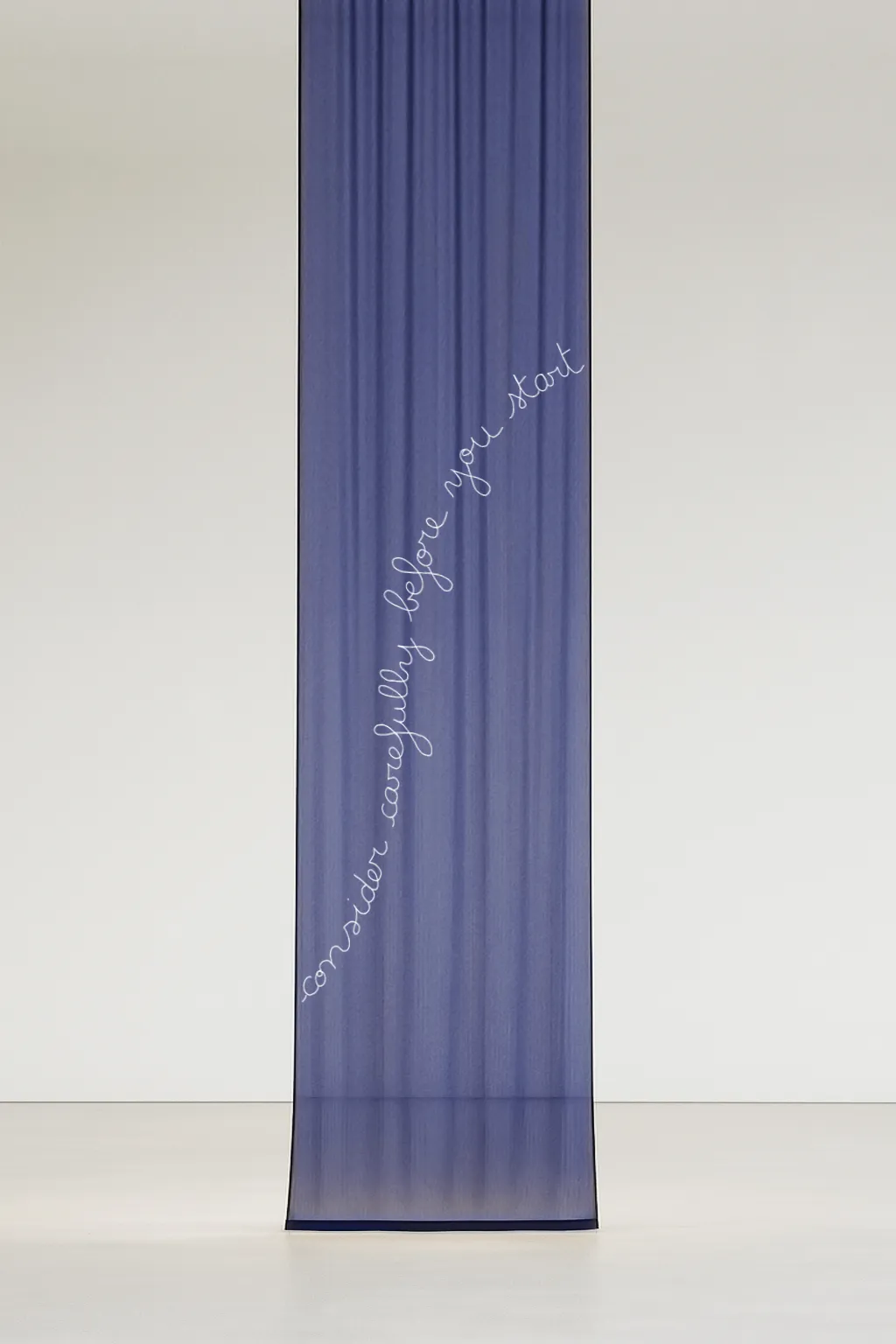
Across the three fables, text and textile remain inseparable. Kosmatopoulos does not illustrate stories already completed in writing. Words enter the image, while the image participates in the narrative. Executed through hand embroidery and Egyptian khayamiya appliqué, the works use simplified figures, flat fields of colour and precise outlines to privilege storytelling over illusion. Each textile functions like a page, but the exhibition becomes a book without a fixed order: the viewer reads by moving through space.
The creatures themselves are neither symbols with one stable meaning nor decorative references to the past. Serpents, jinn and chimeras allow several identities and histories to occupy the same body. None of these figures completes its transformation: the woman remains present within the serpent, the daughter within the chimera and the foreign wife within the jinn, allowing several identities to coexist without resolving into one. The breast also recurs as an insistent sign of femininity. Even as the rest of the body becomes hybrid, it remains visible within the transformed figure, making the feminine immediately legible without returning the creature to a stable human anatomy. These figures create enough distance for intimate experience to be transformed, while remaining close enough to preserve its tensions.
Serpents, Genies, Chimeras and Other Wonders treats mythology not as a closed archive, but as a language that continues to generate new stories. Between biology and imagination, inherited narratives and newly written stories, text and textile, the project proposes mythology not as a memory of the past, but as a contemporary language through which stories continue to be written.
Fiction creates room where inherited identities no longer suffice.
The creature remains unfinished — and therefore free to become otherwise.
Hayat El Hayat The Book — Installation View — Lalalande Paris
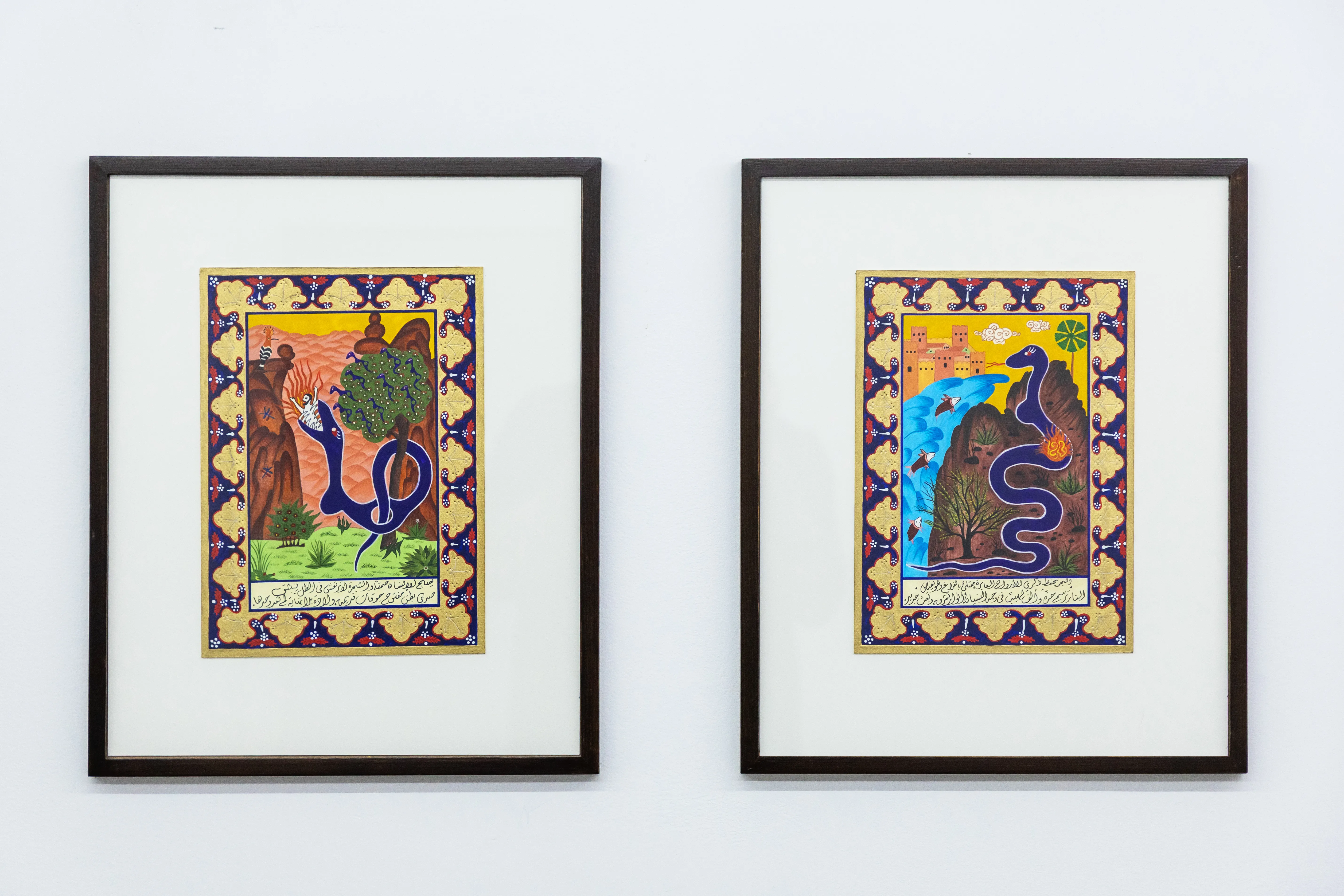
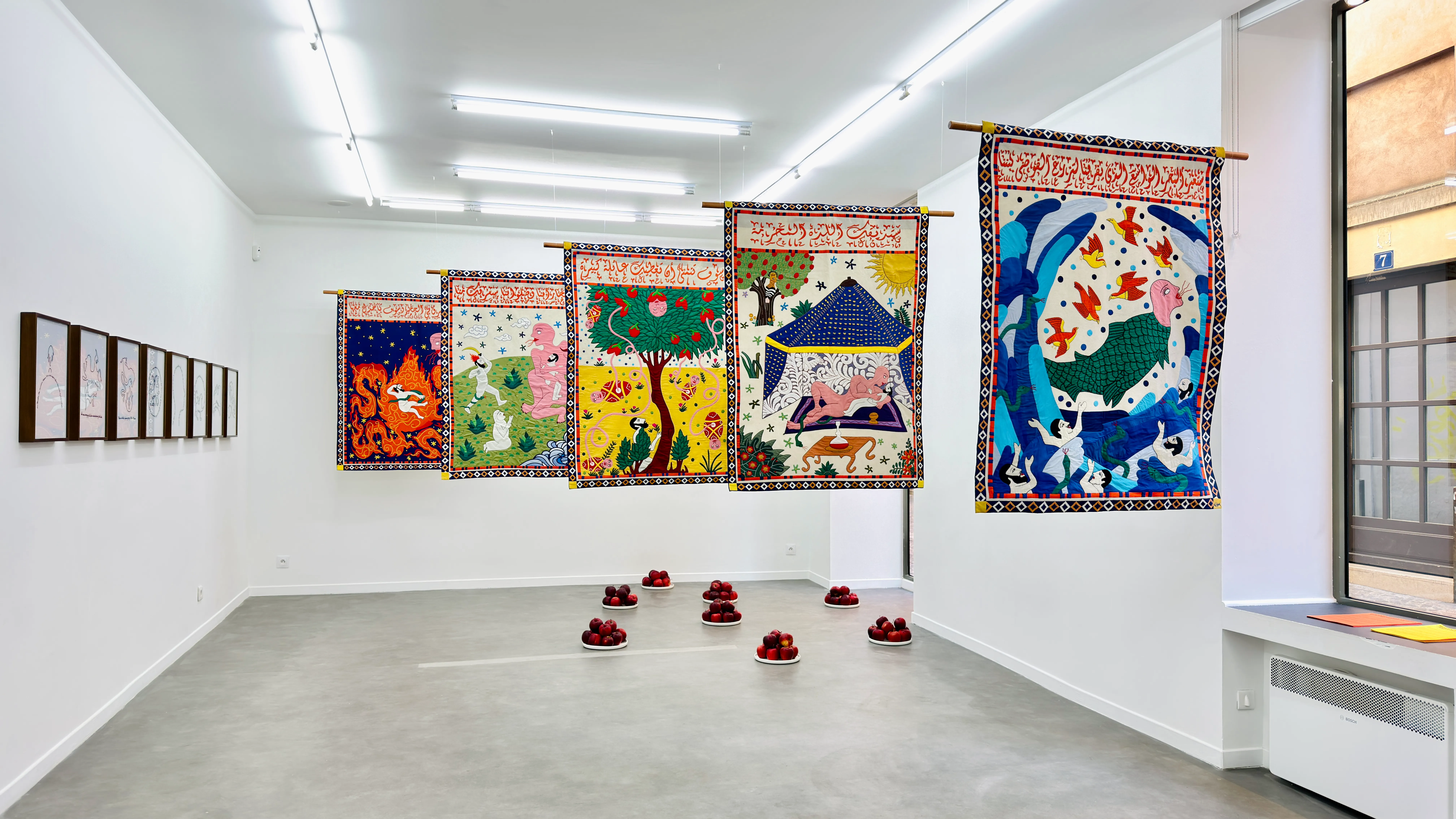
The Jinny From The West — Installation Detail — Lalalande Paris
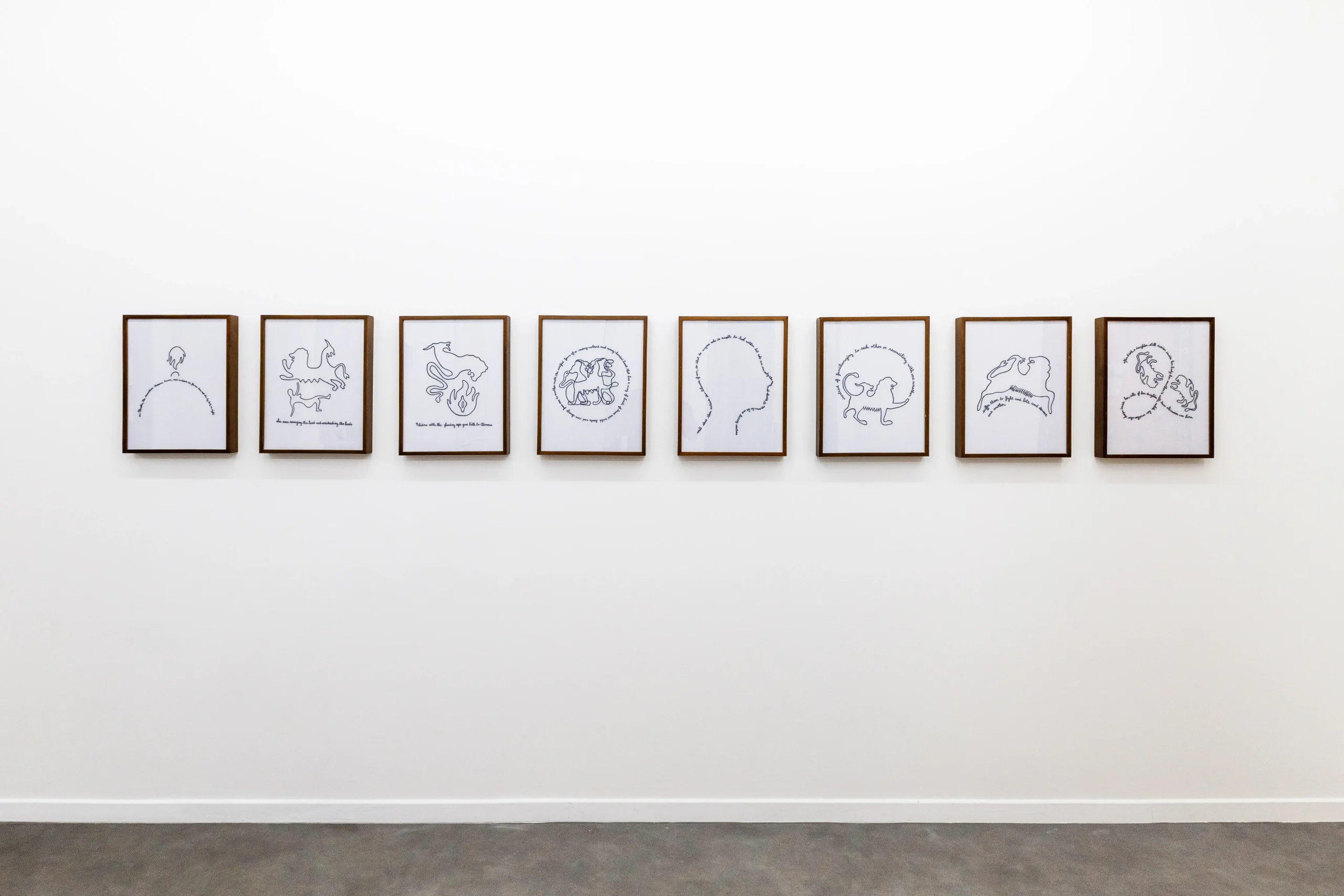
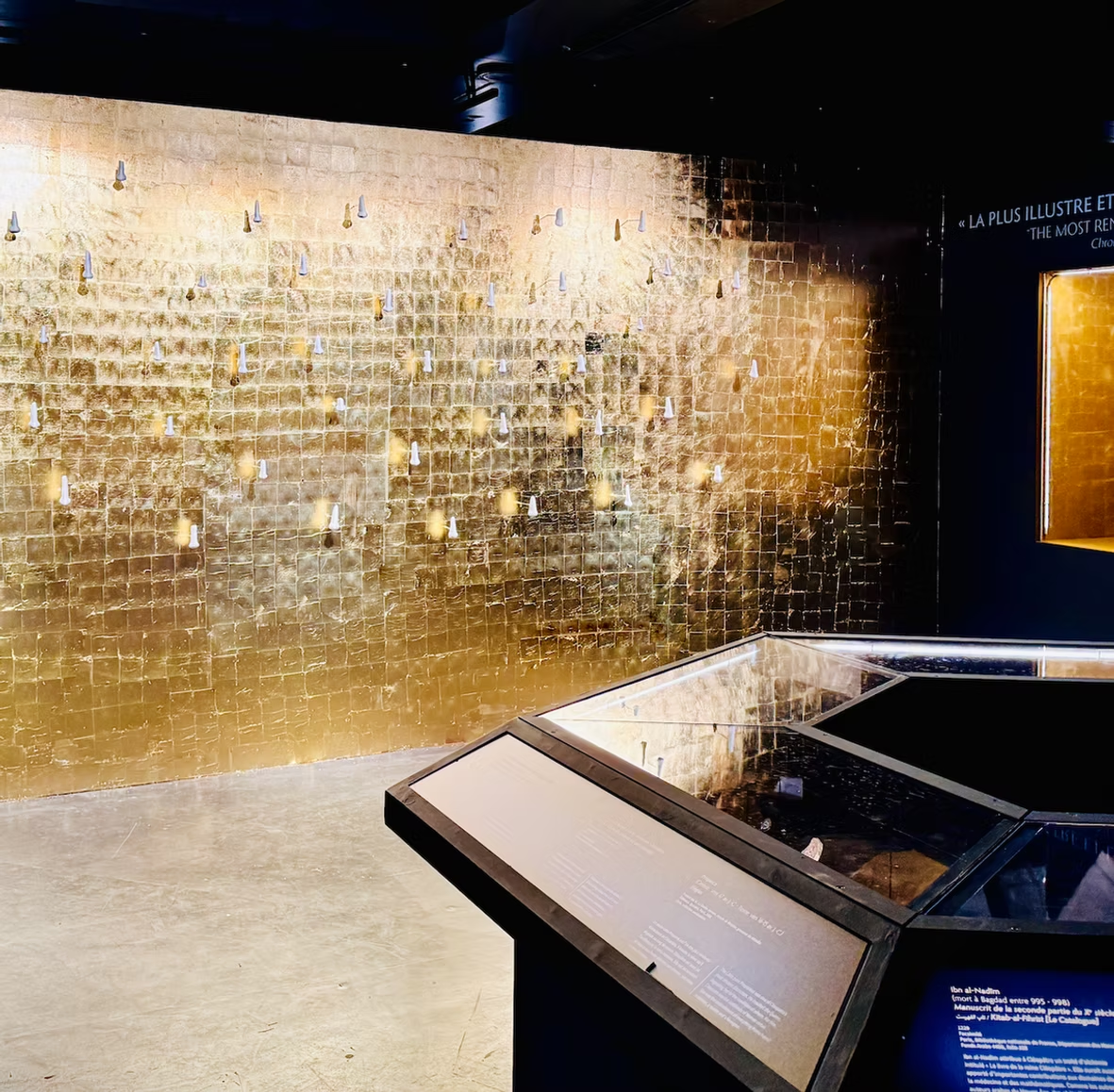
Serpents, Genies, Chimeras and Other Wonders, Galerie LaLaLande, Paris, FR
Imagetexte 8, Topographie de l'art, Paris, FR