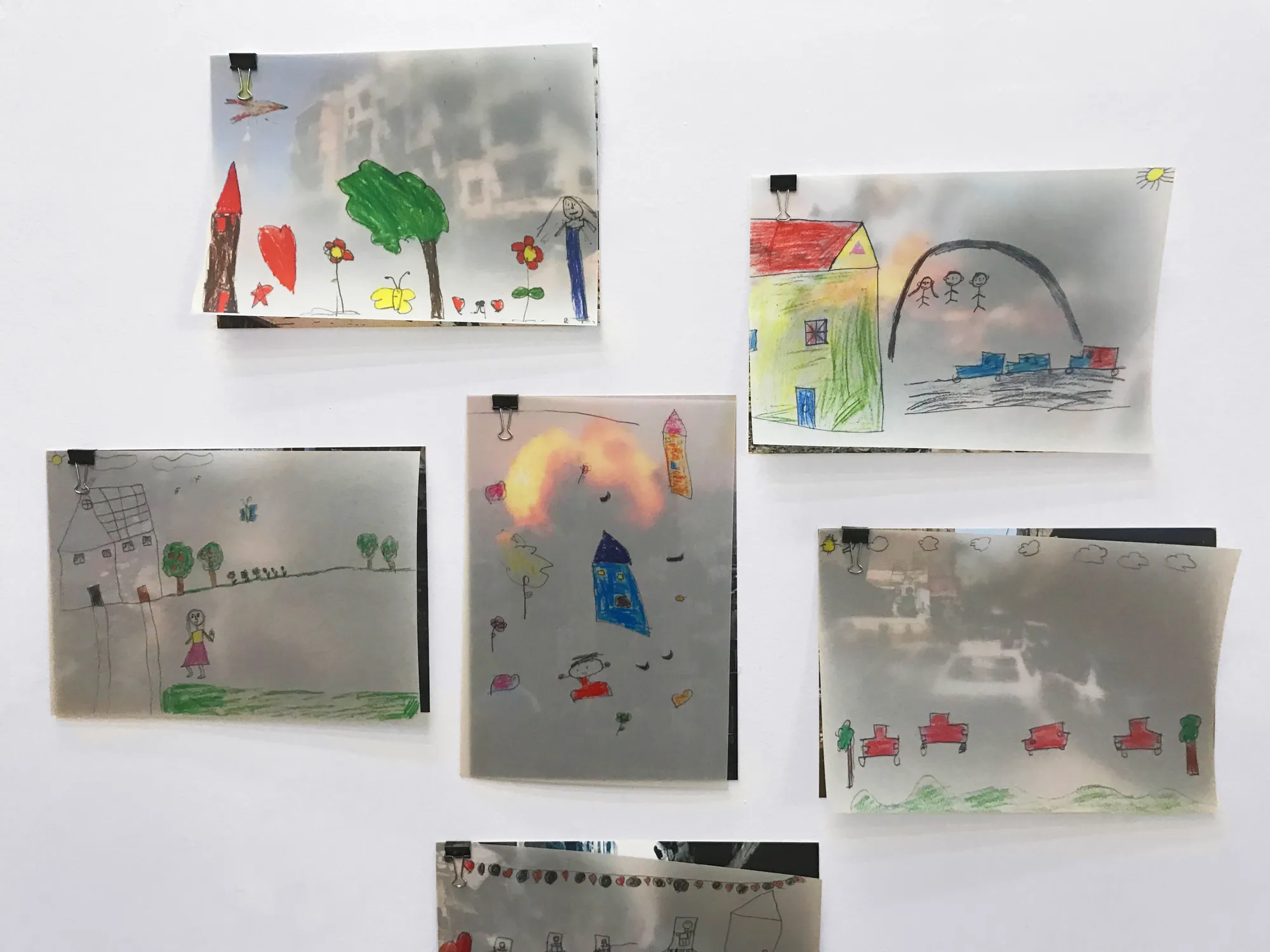
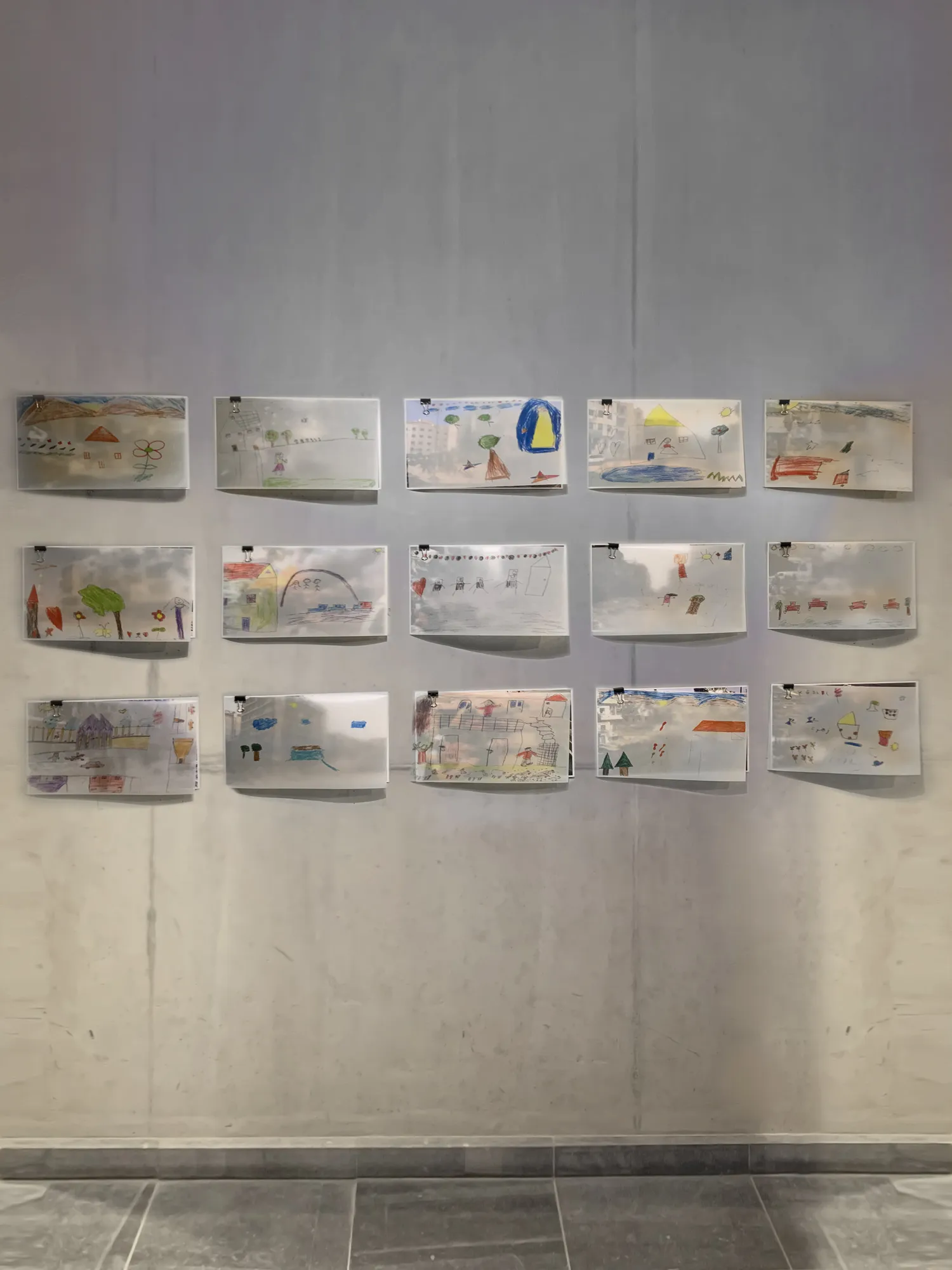
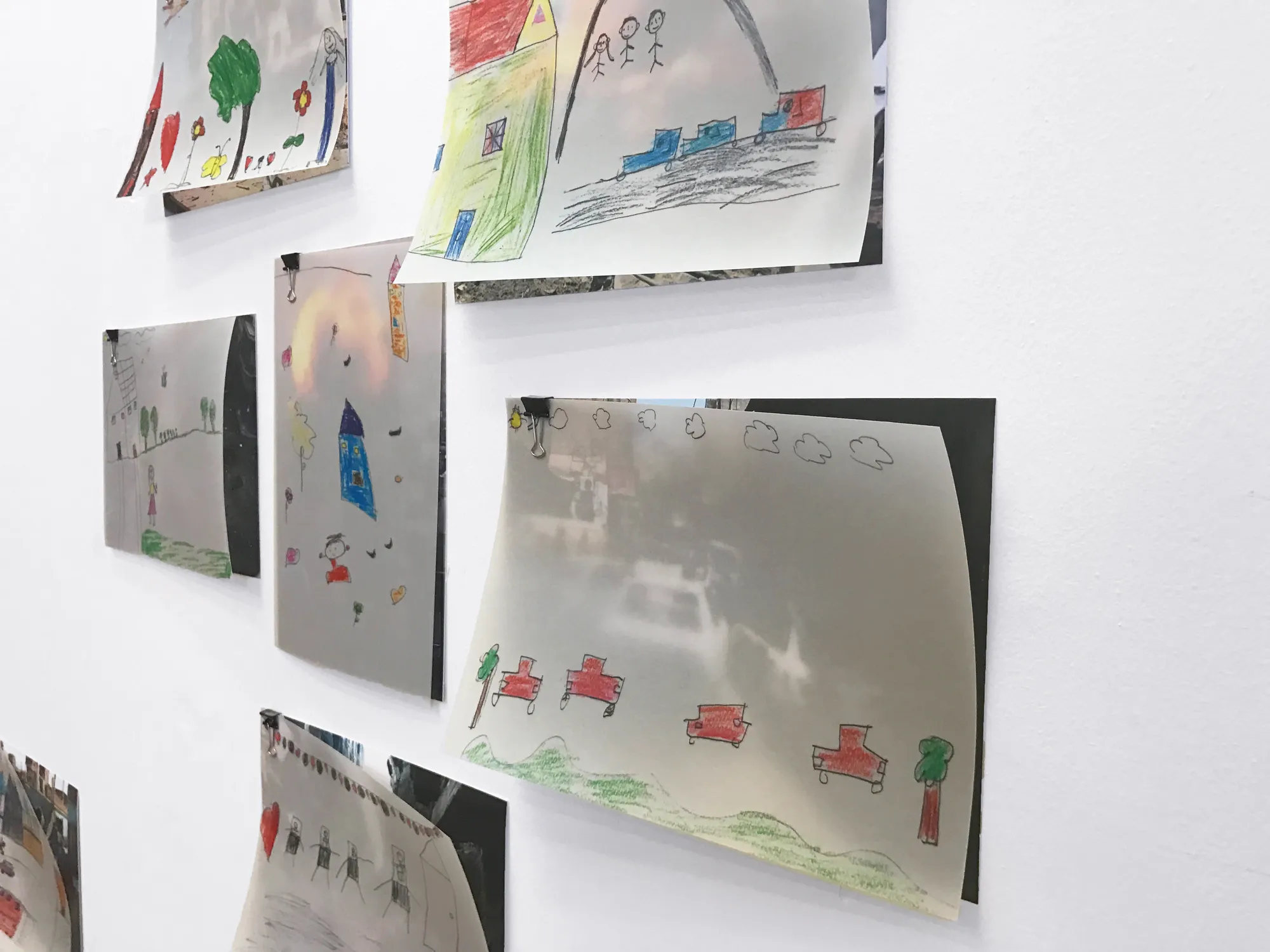
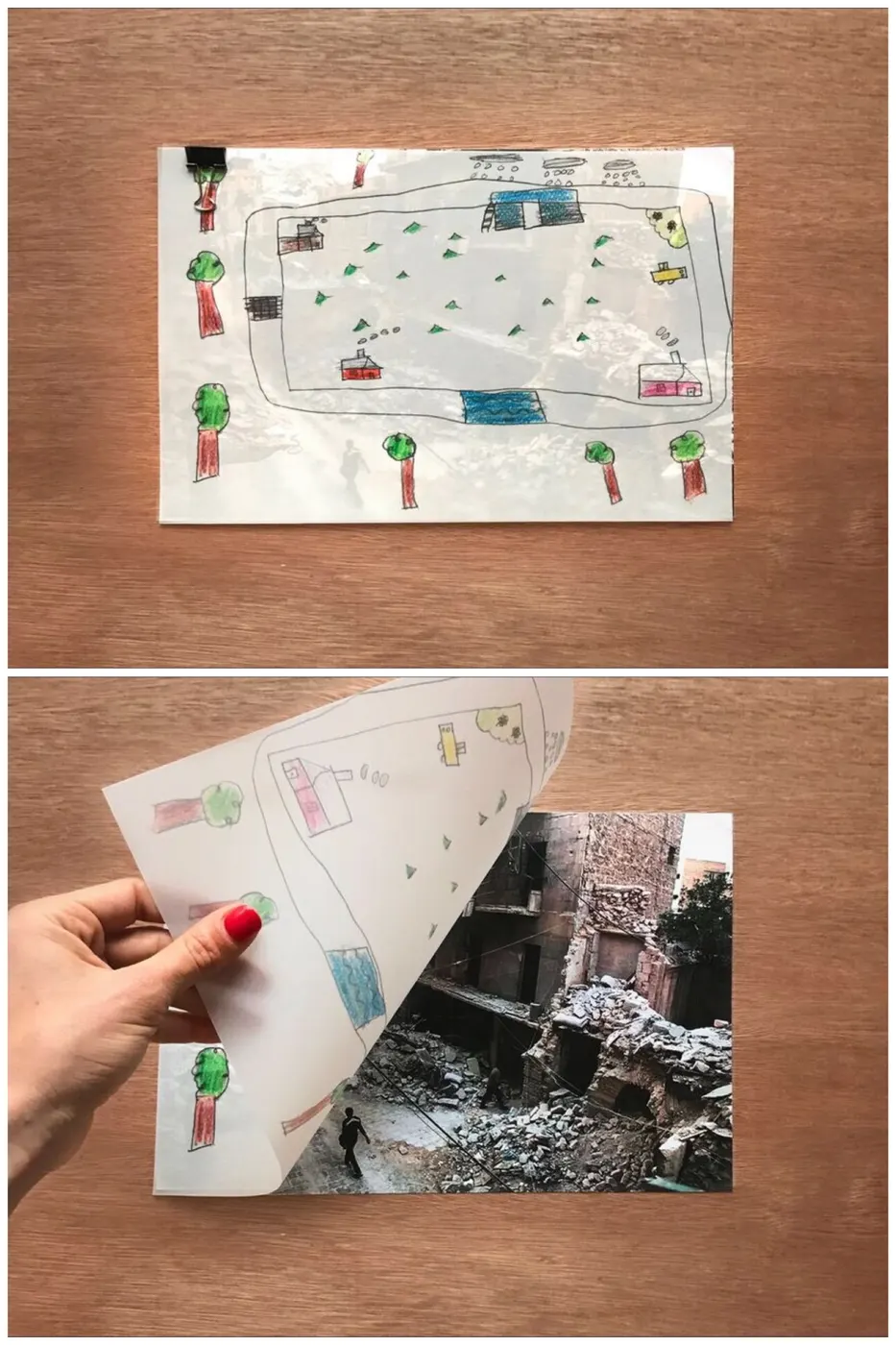
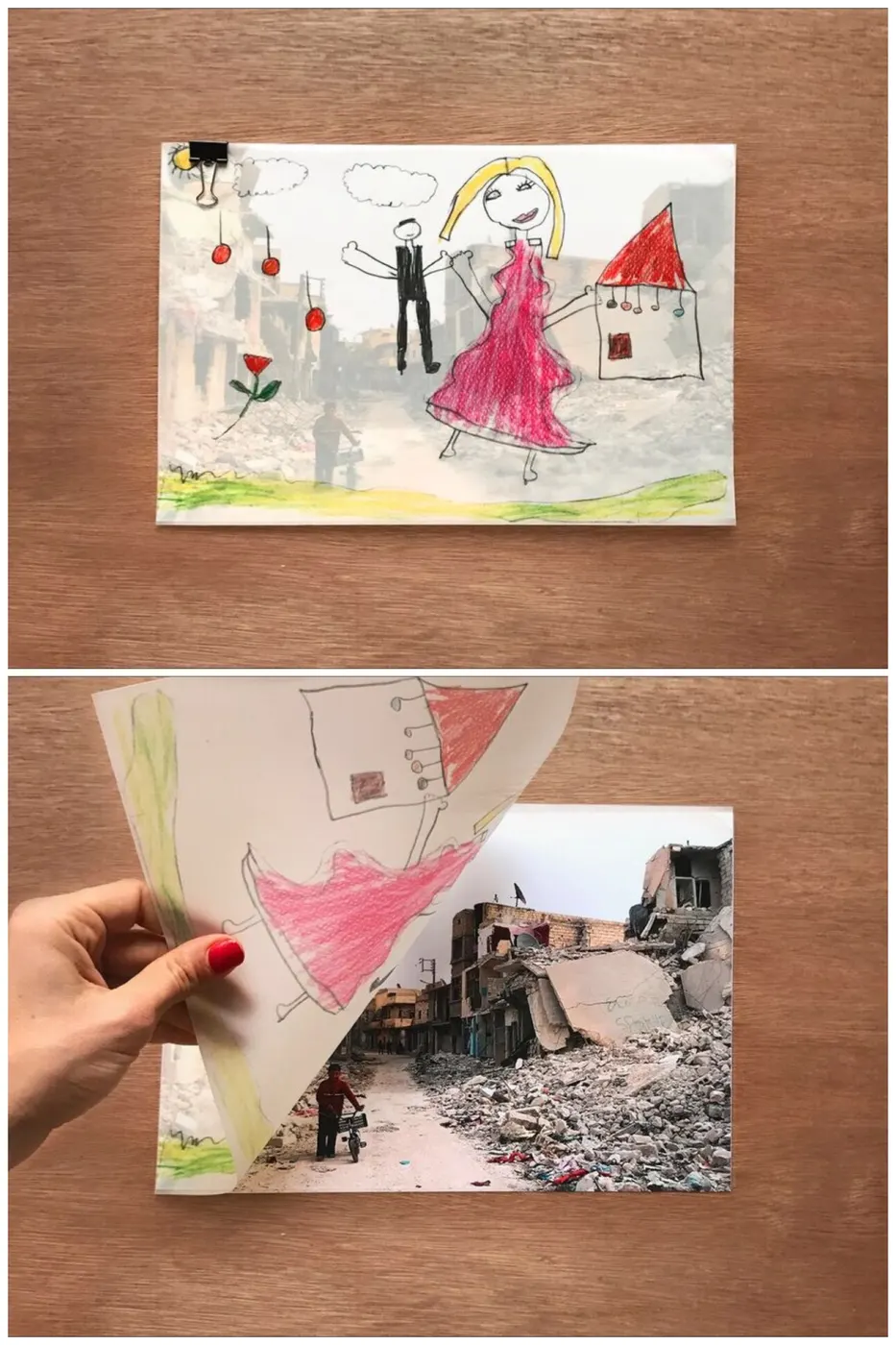
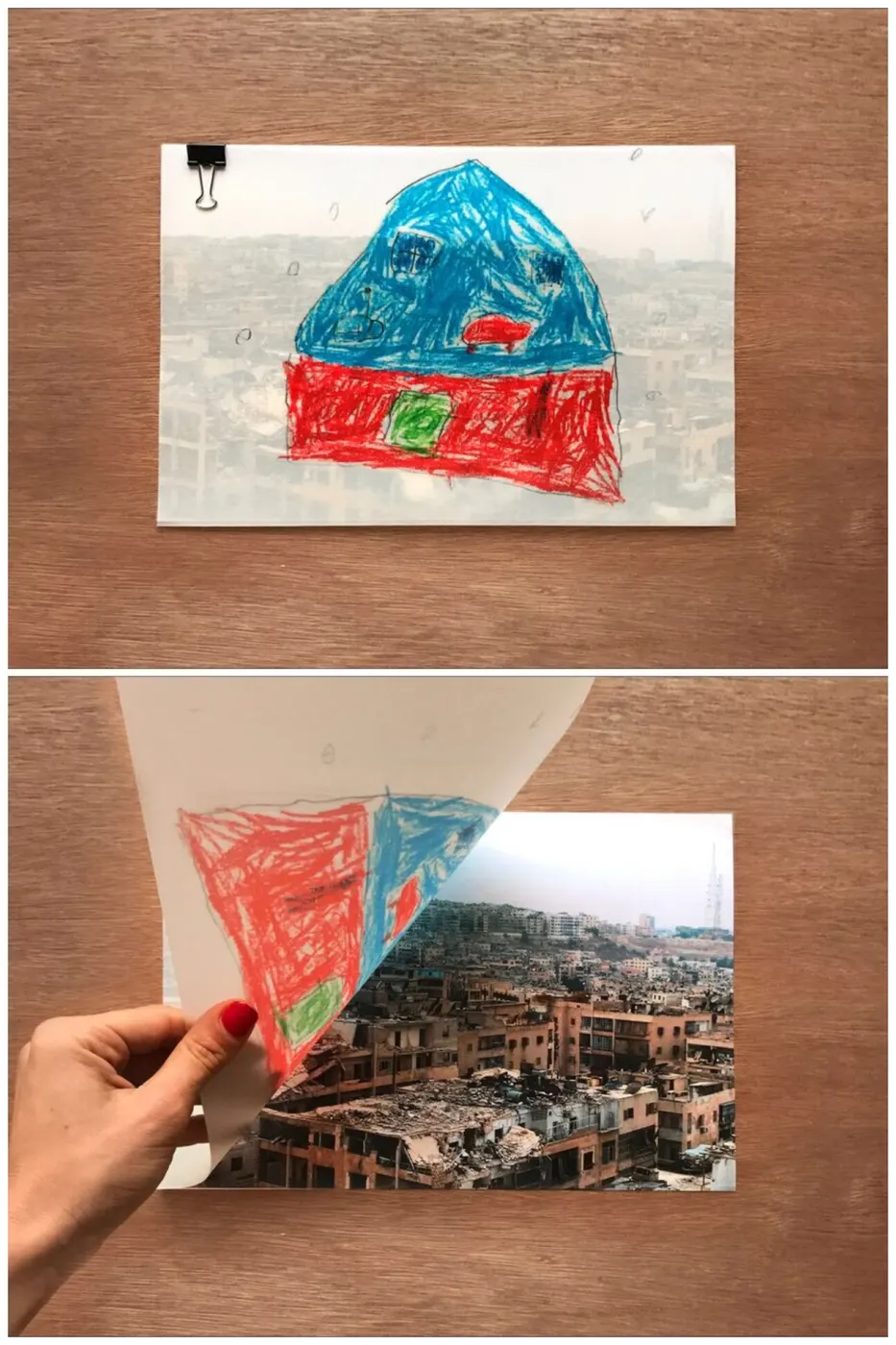
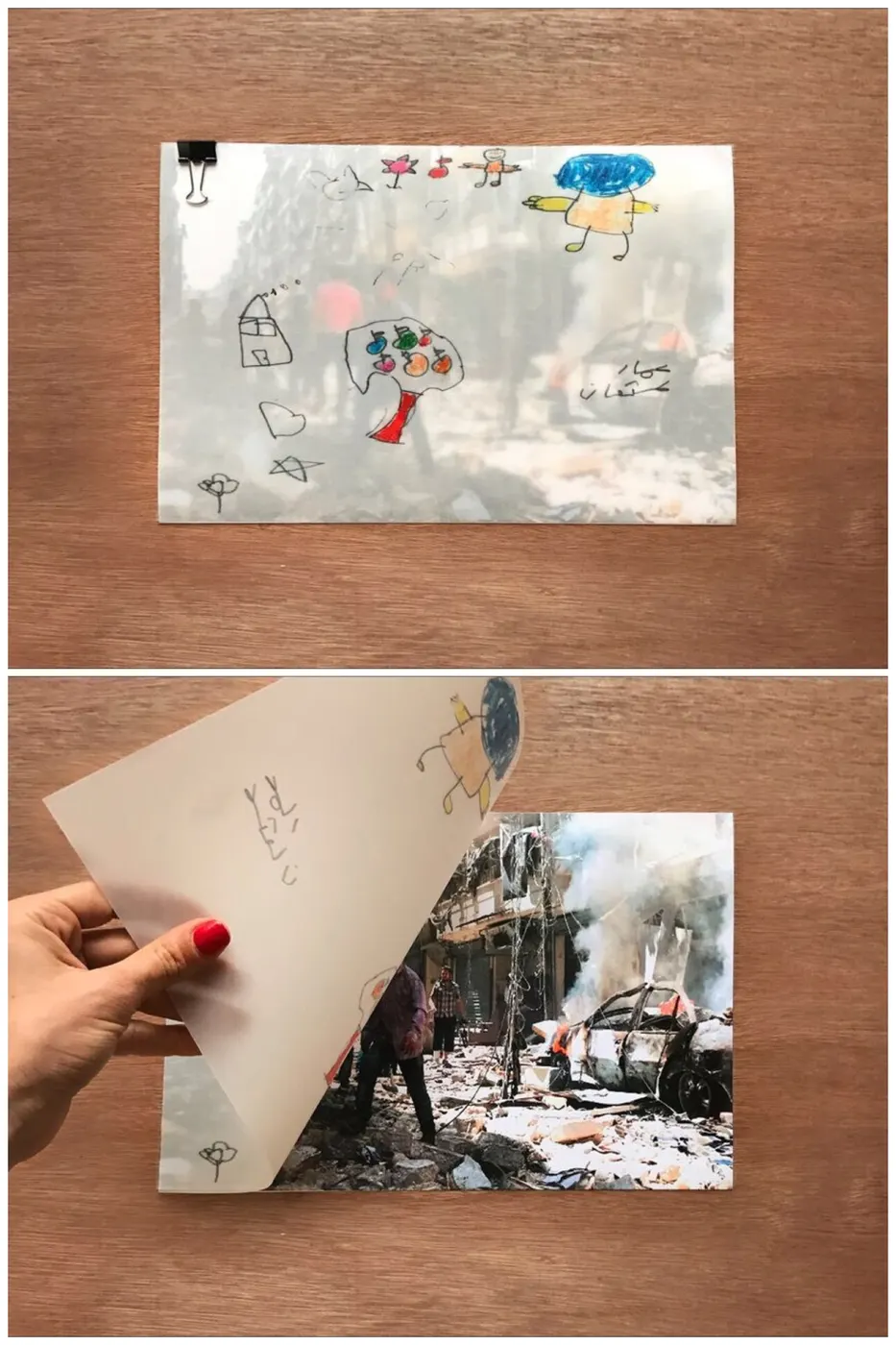
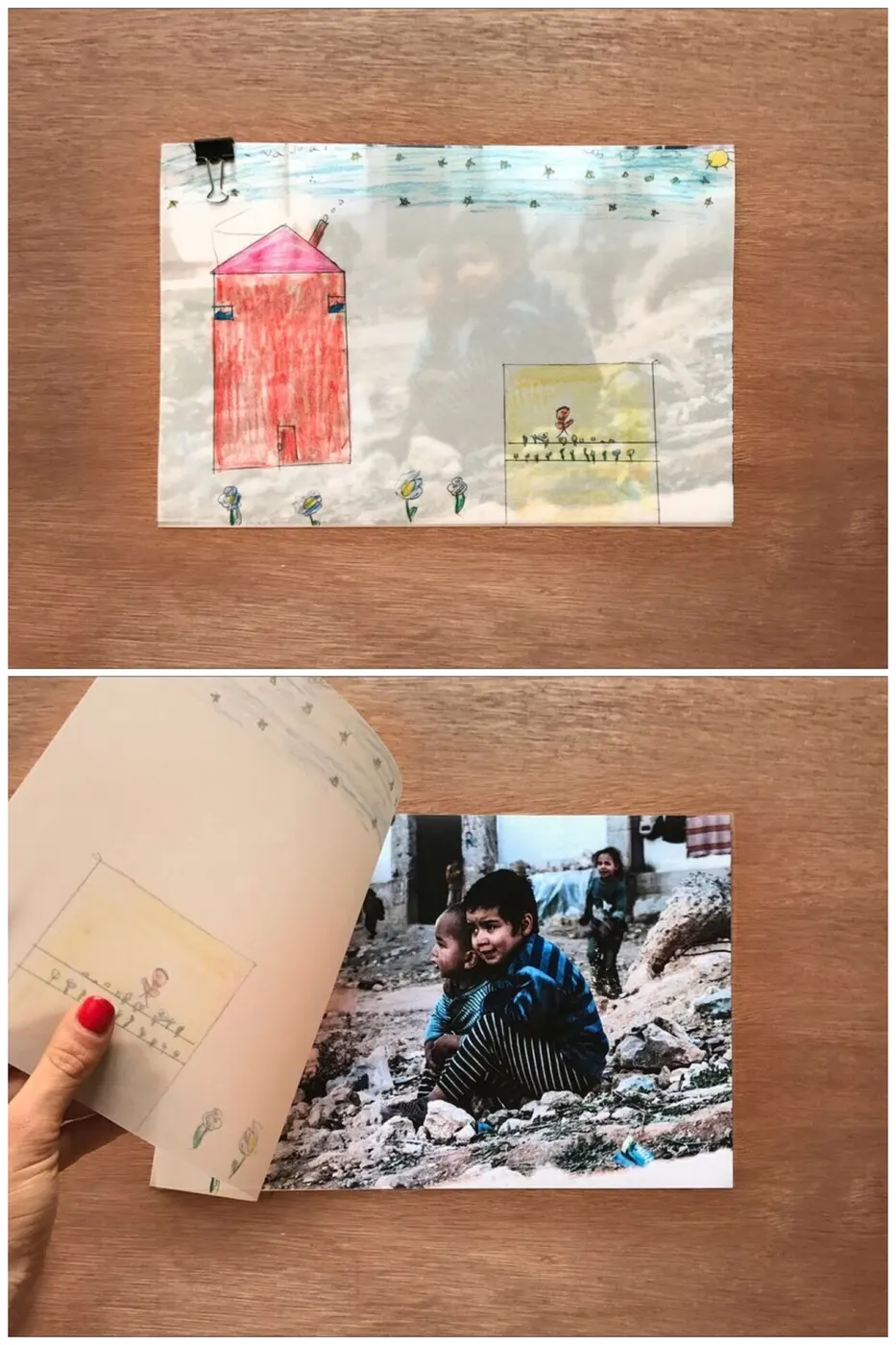
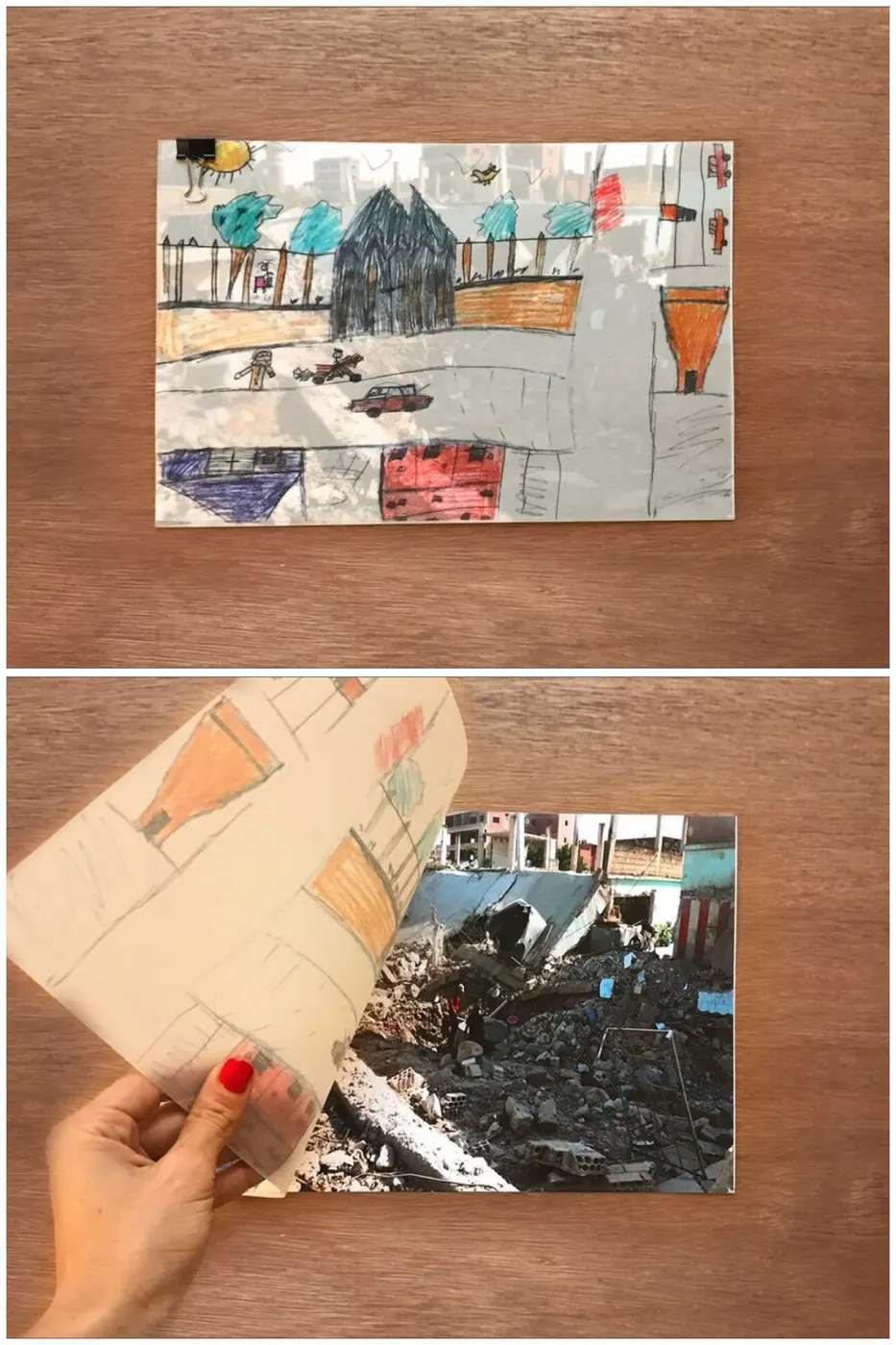
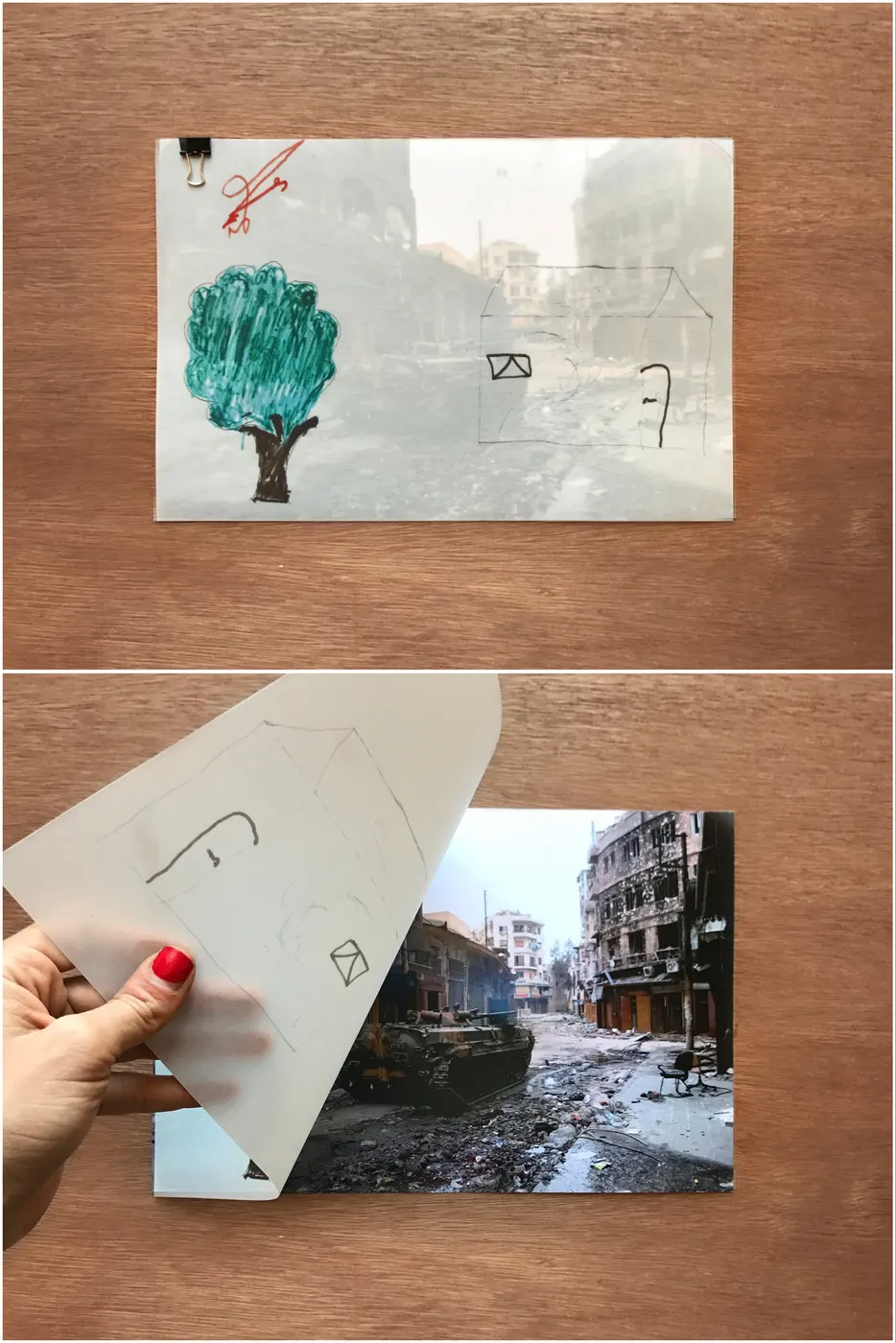
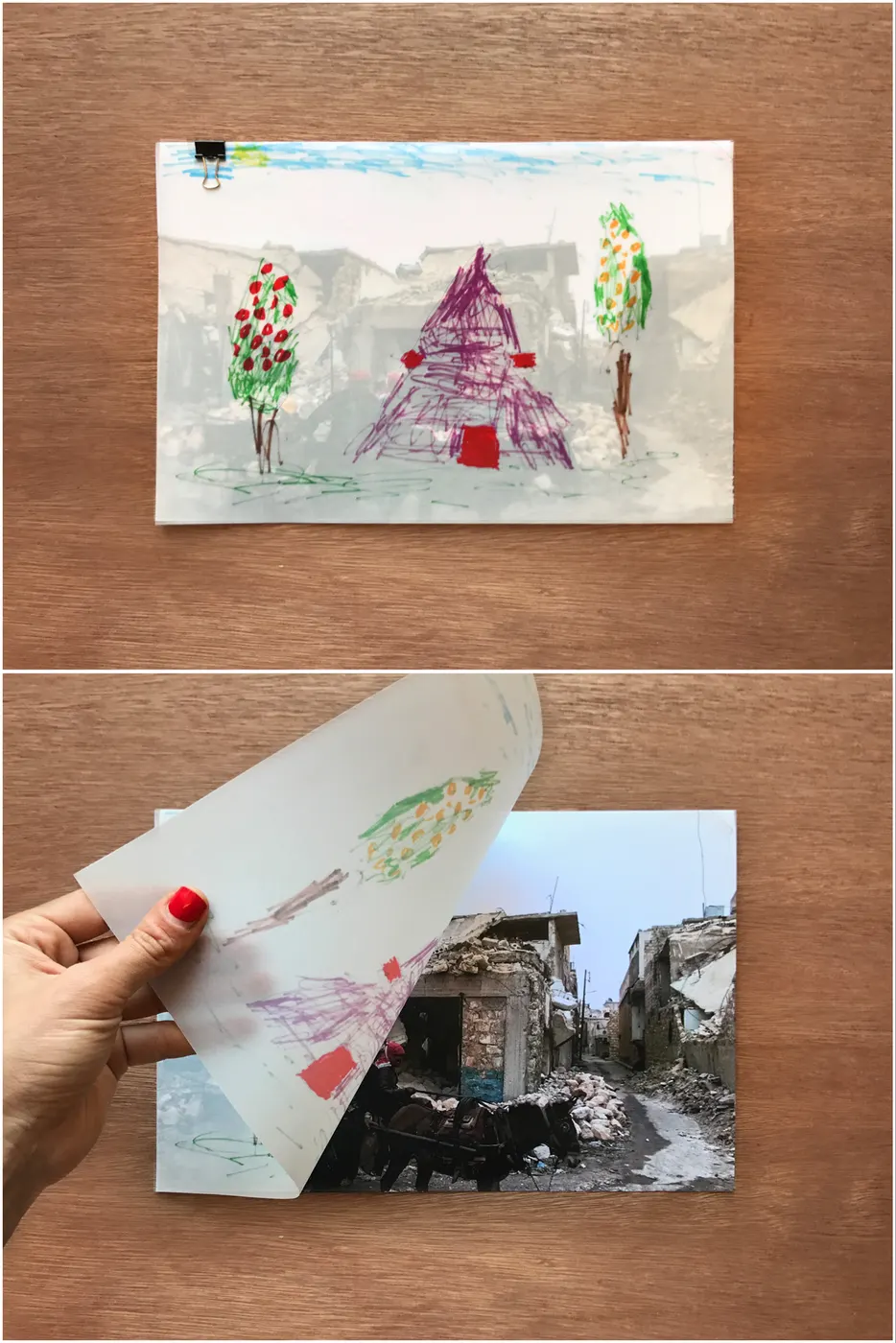
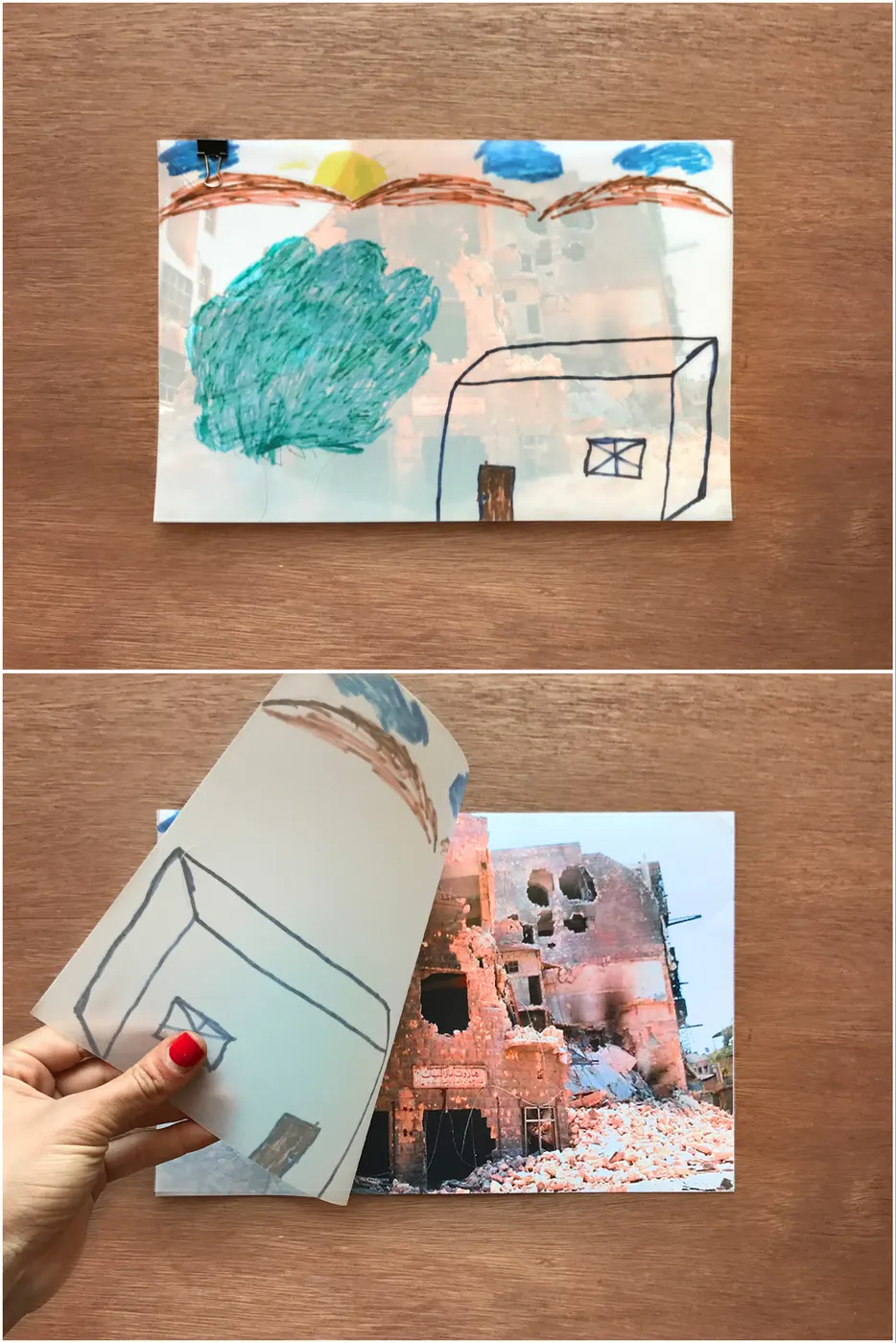
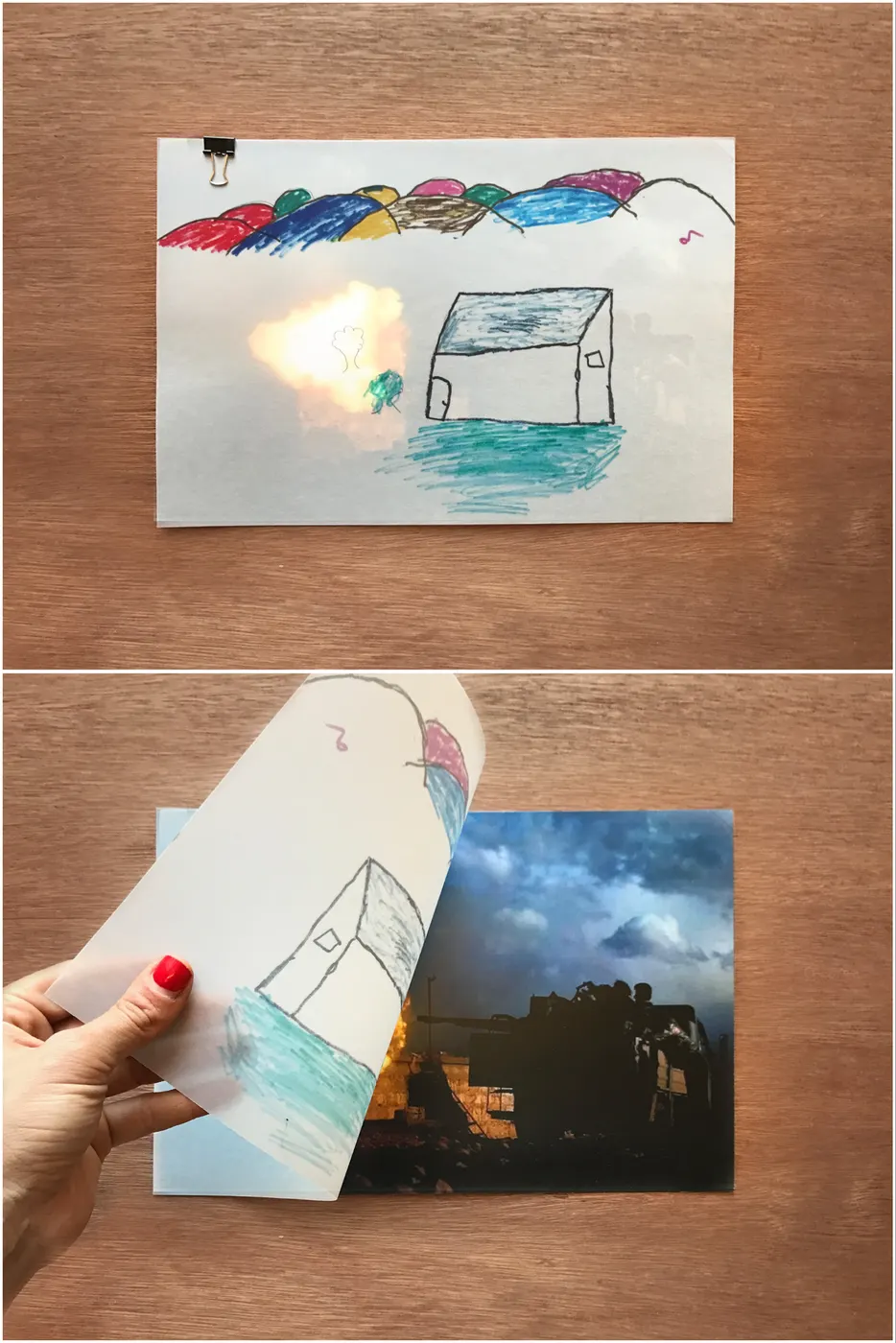
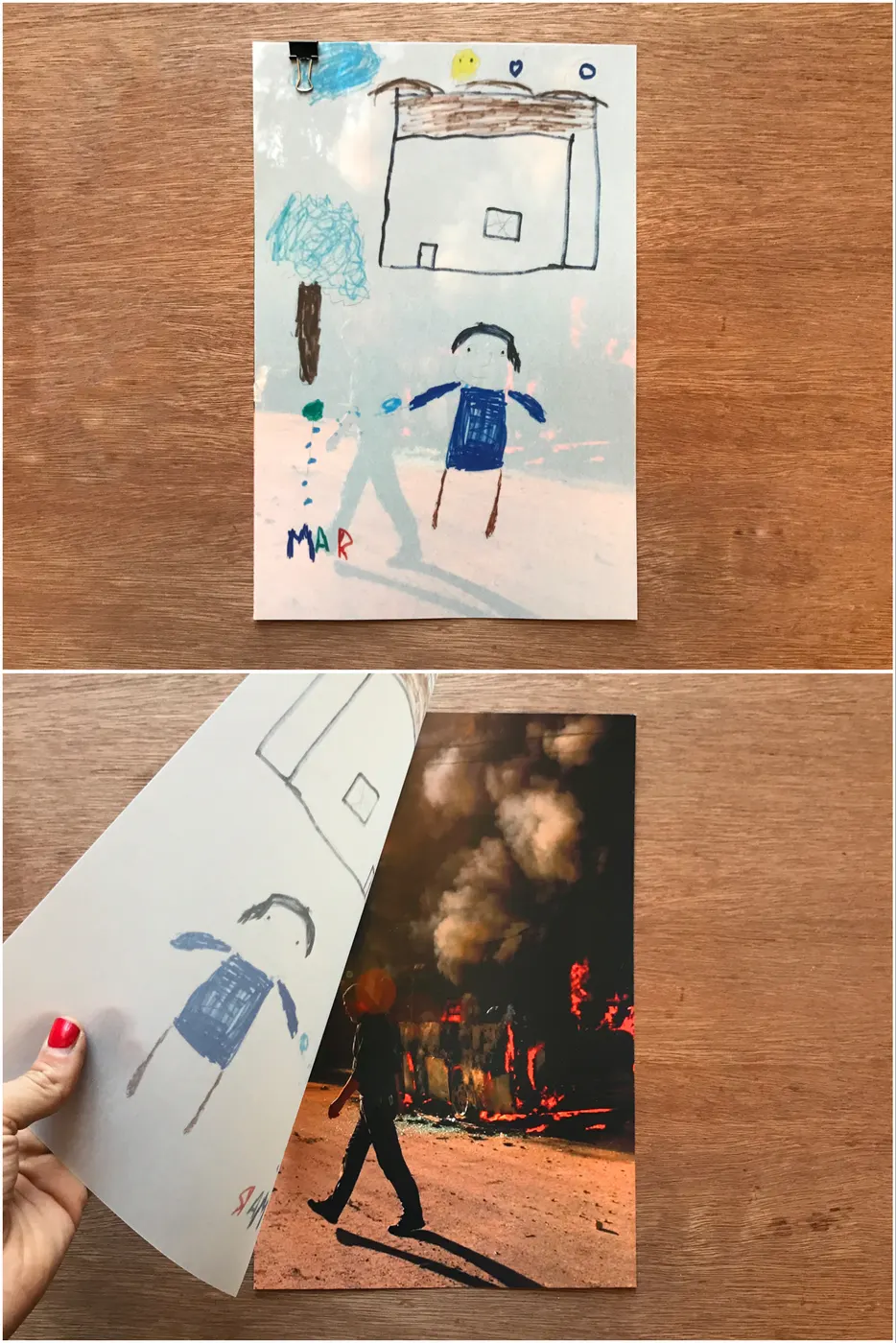
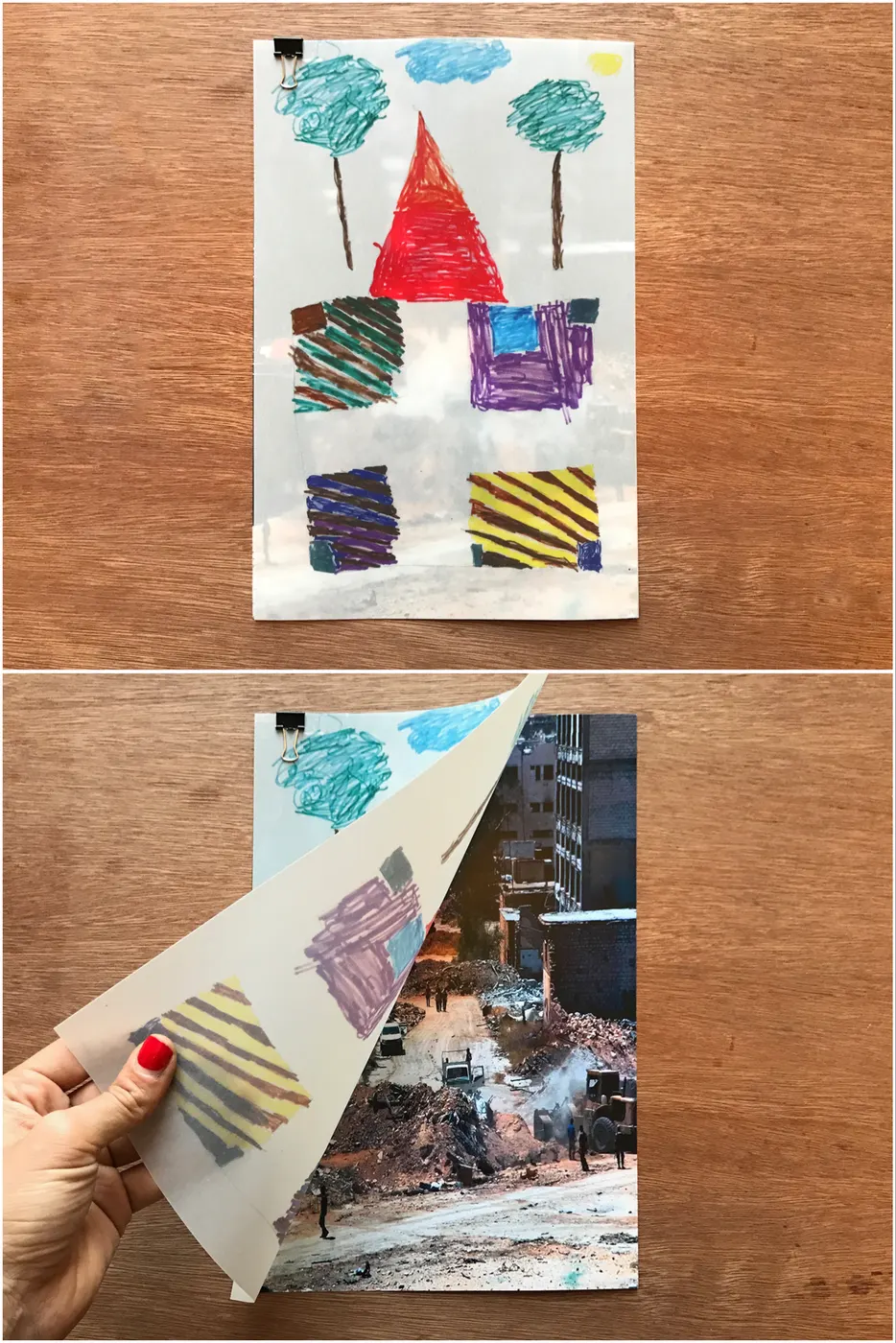
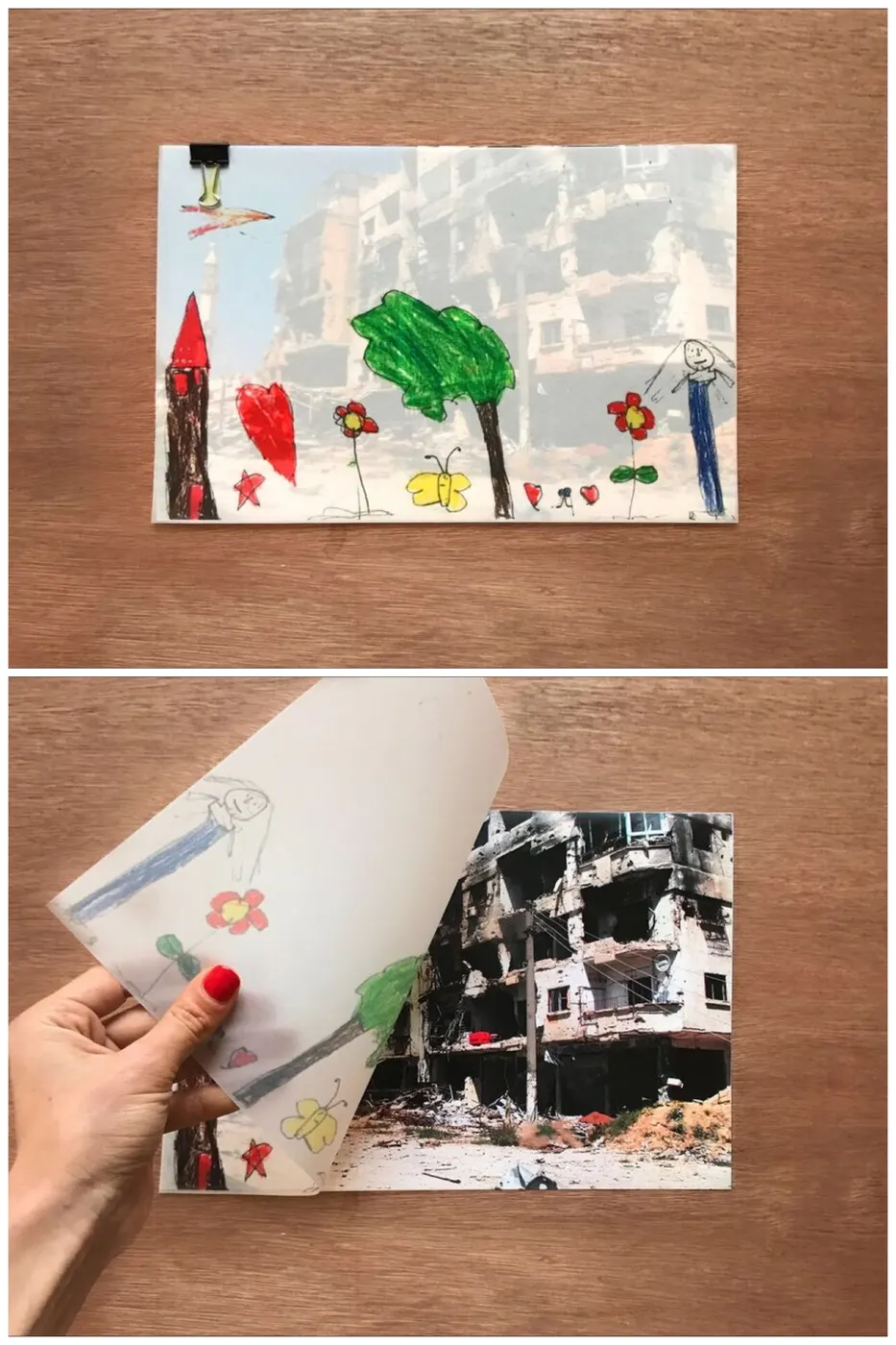
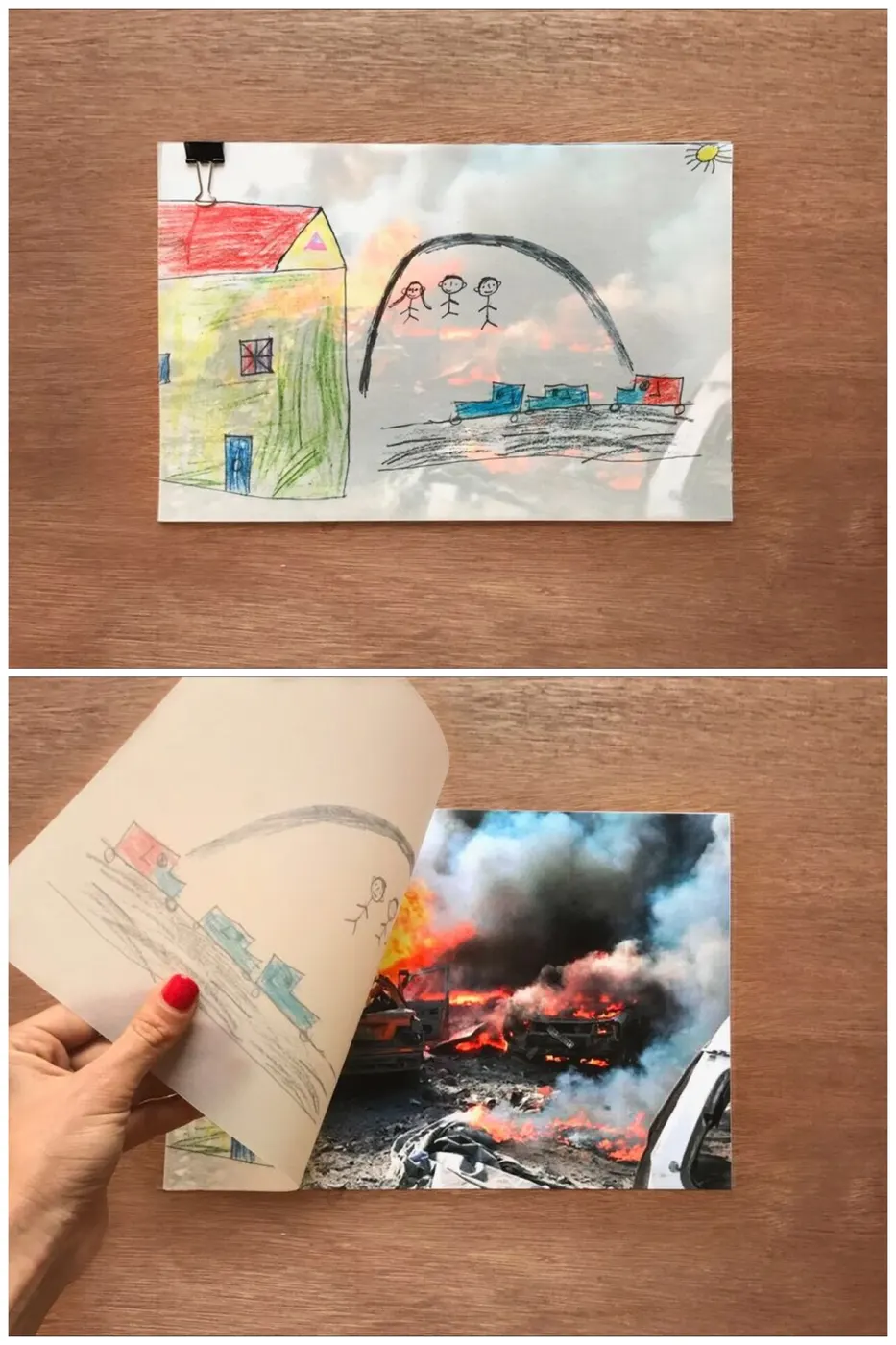
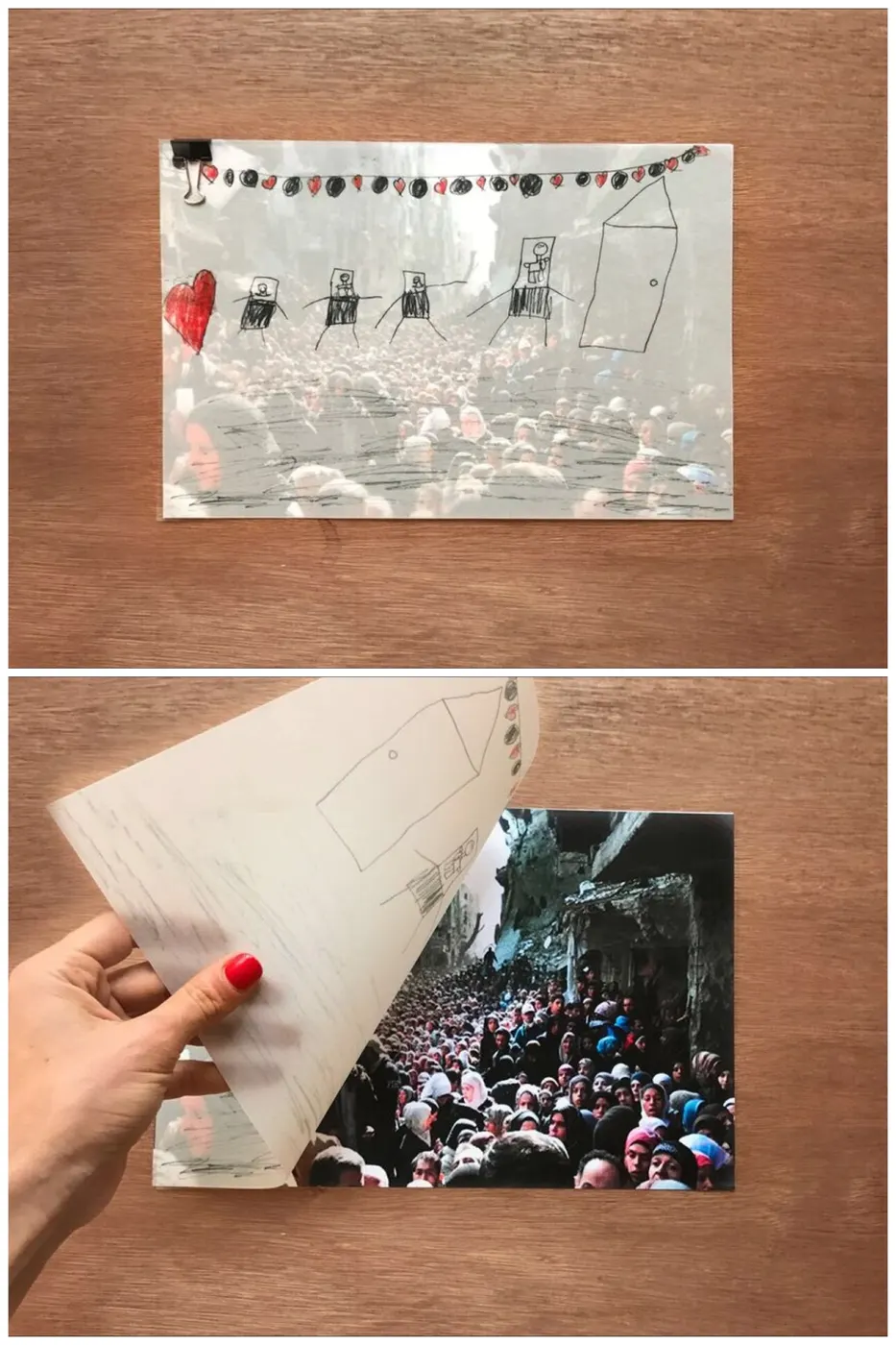
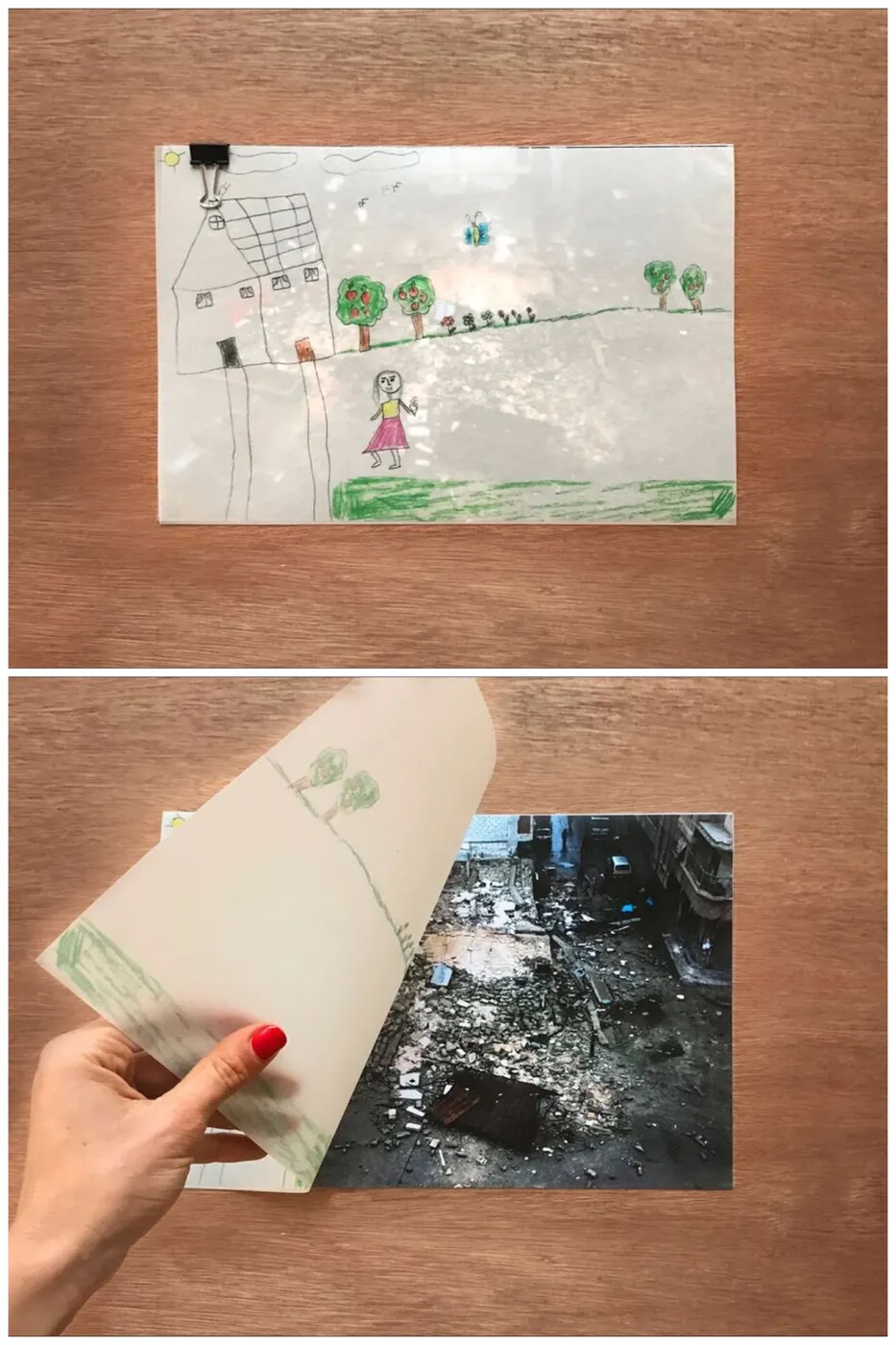
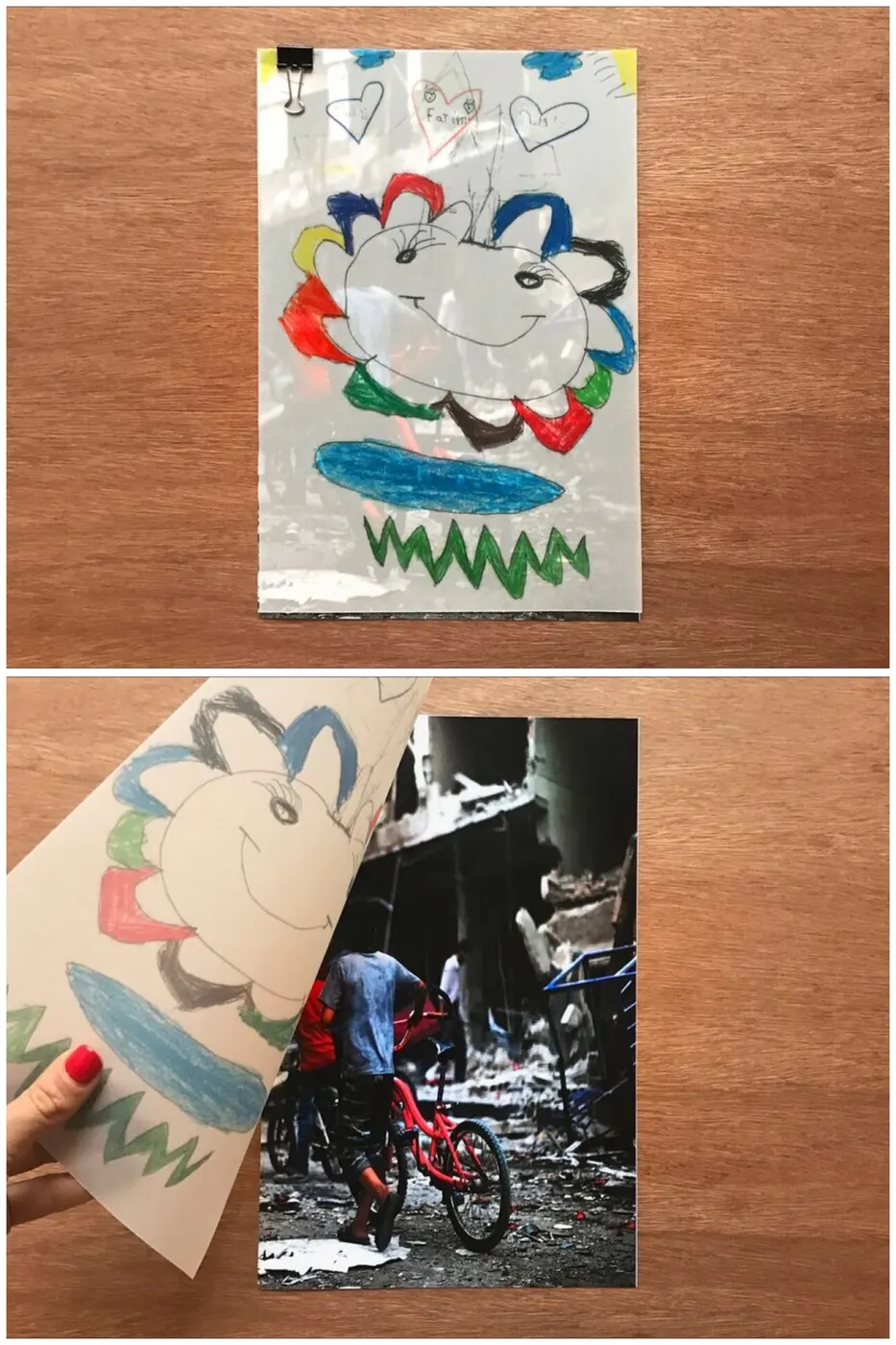
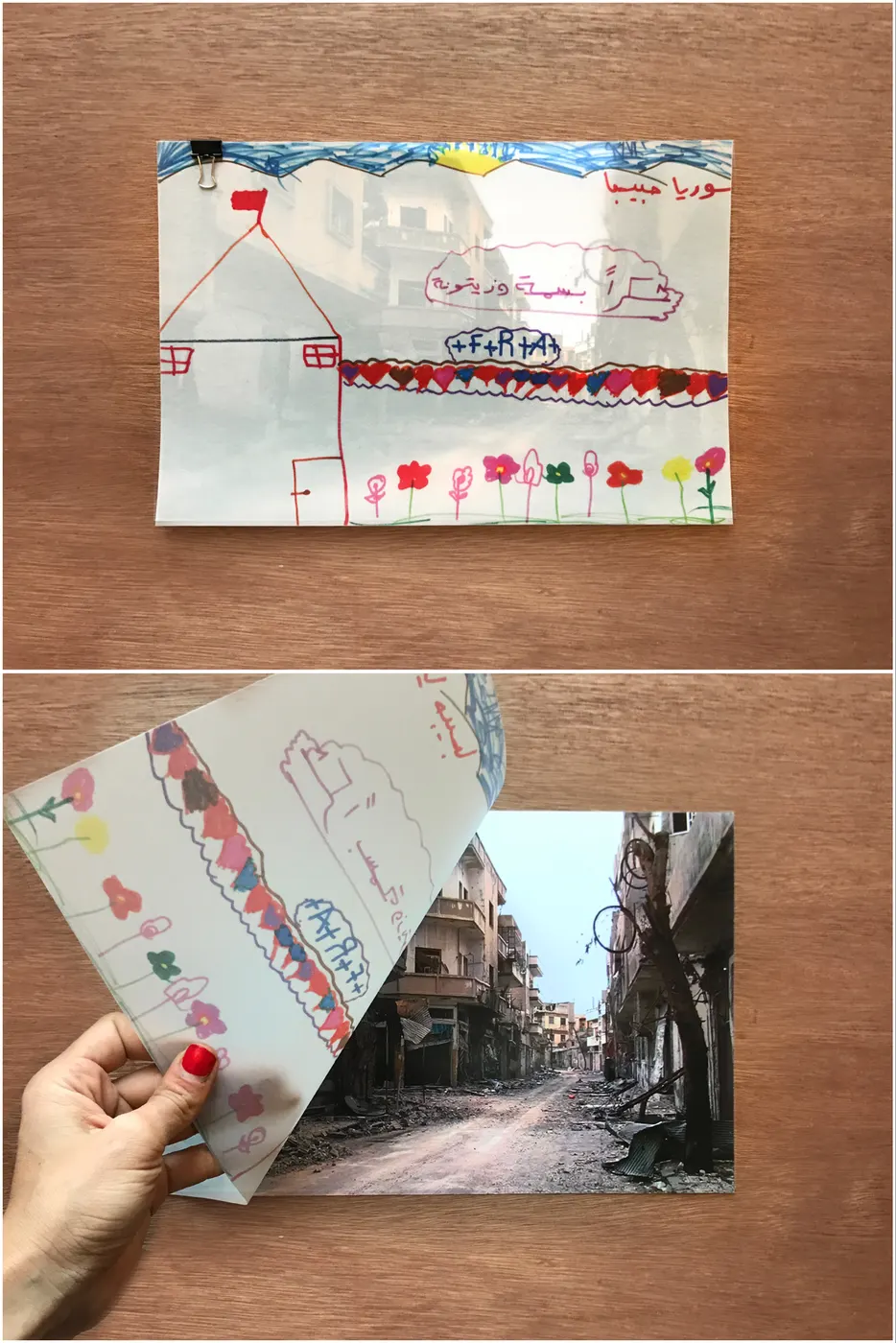
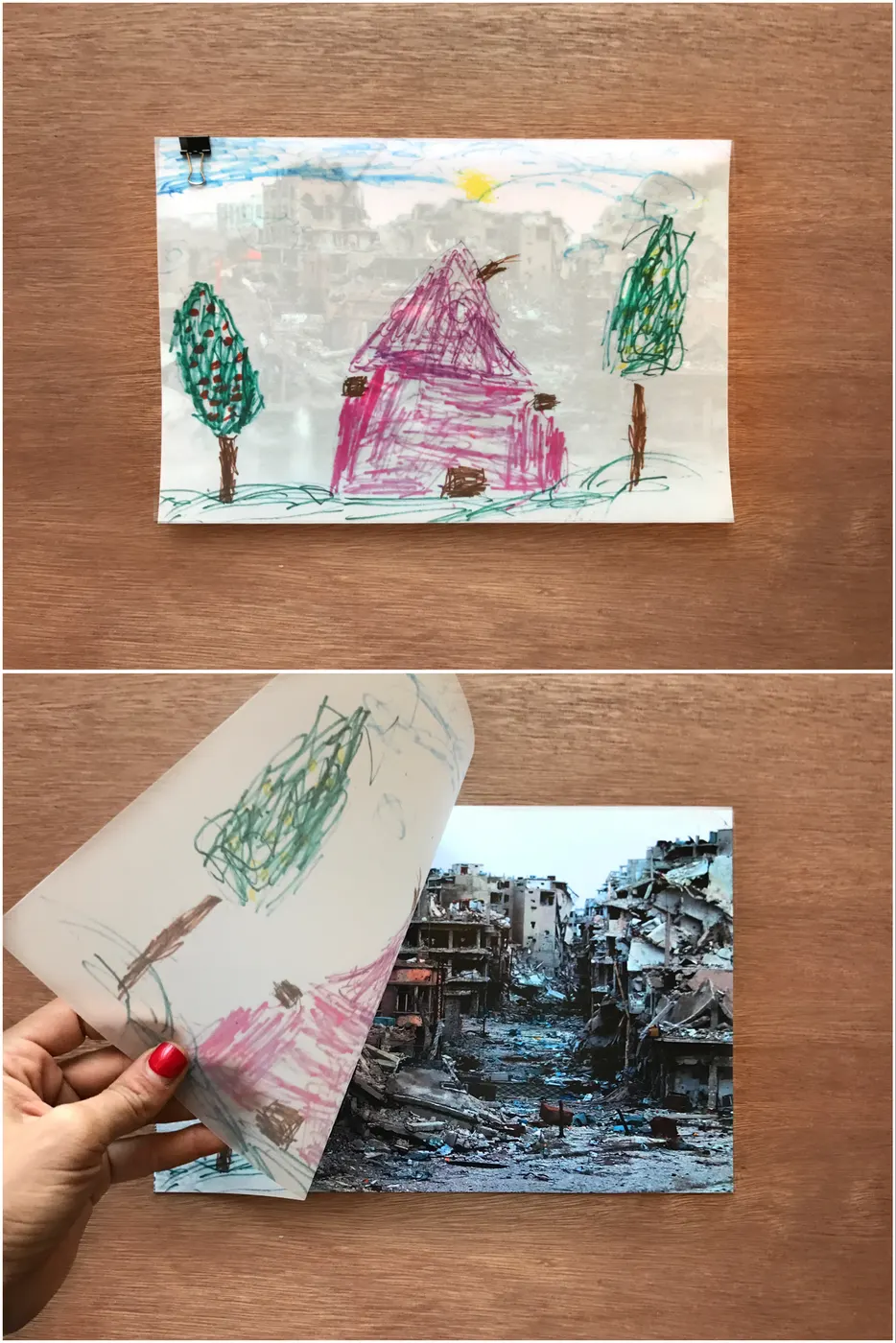
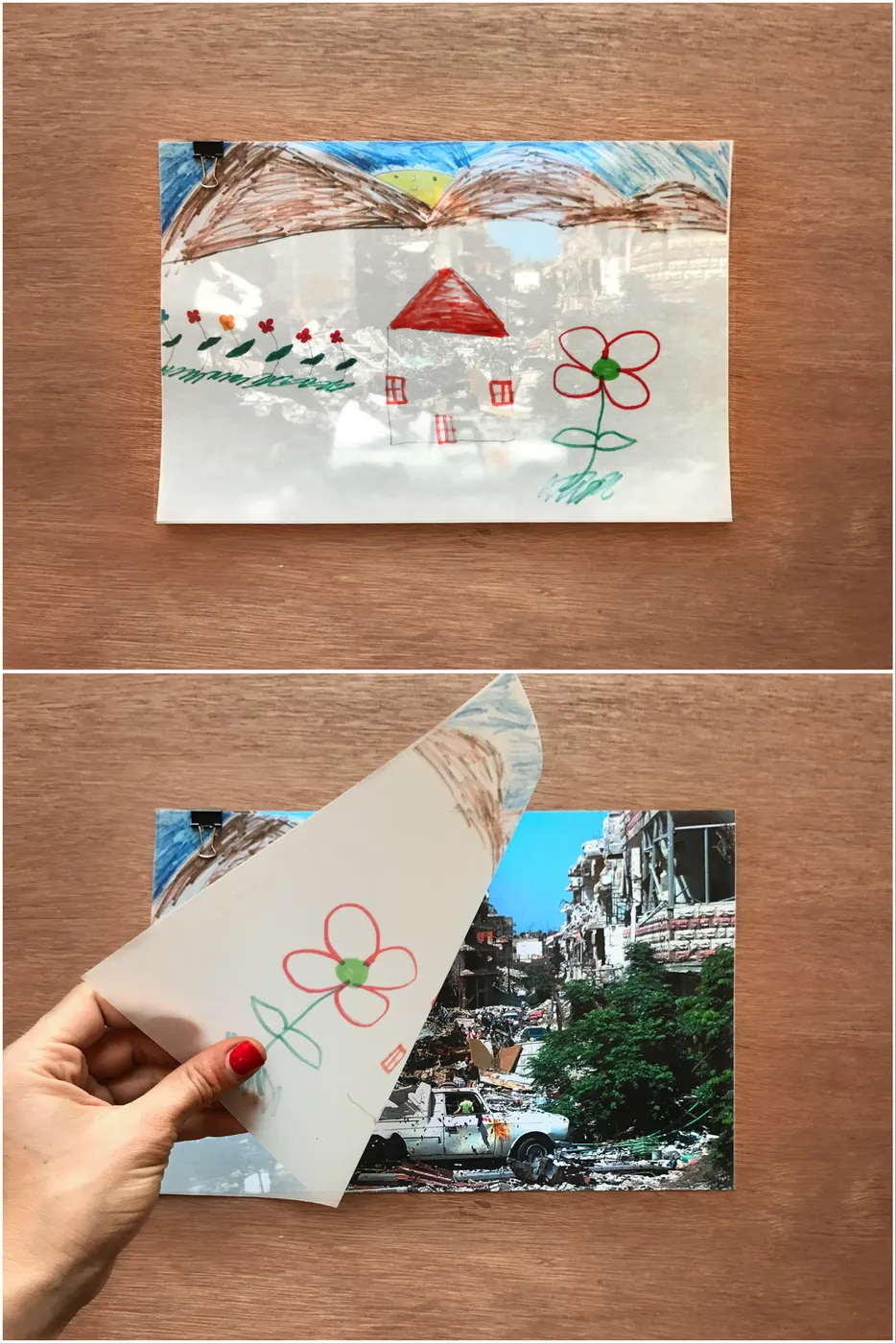
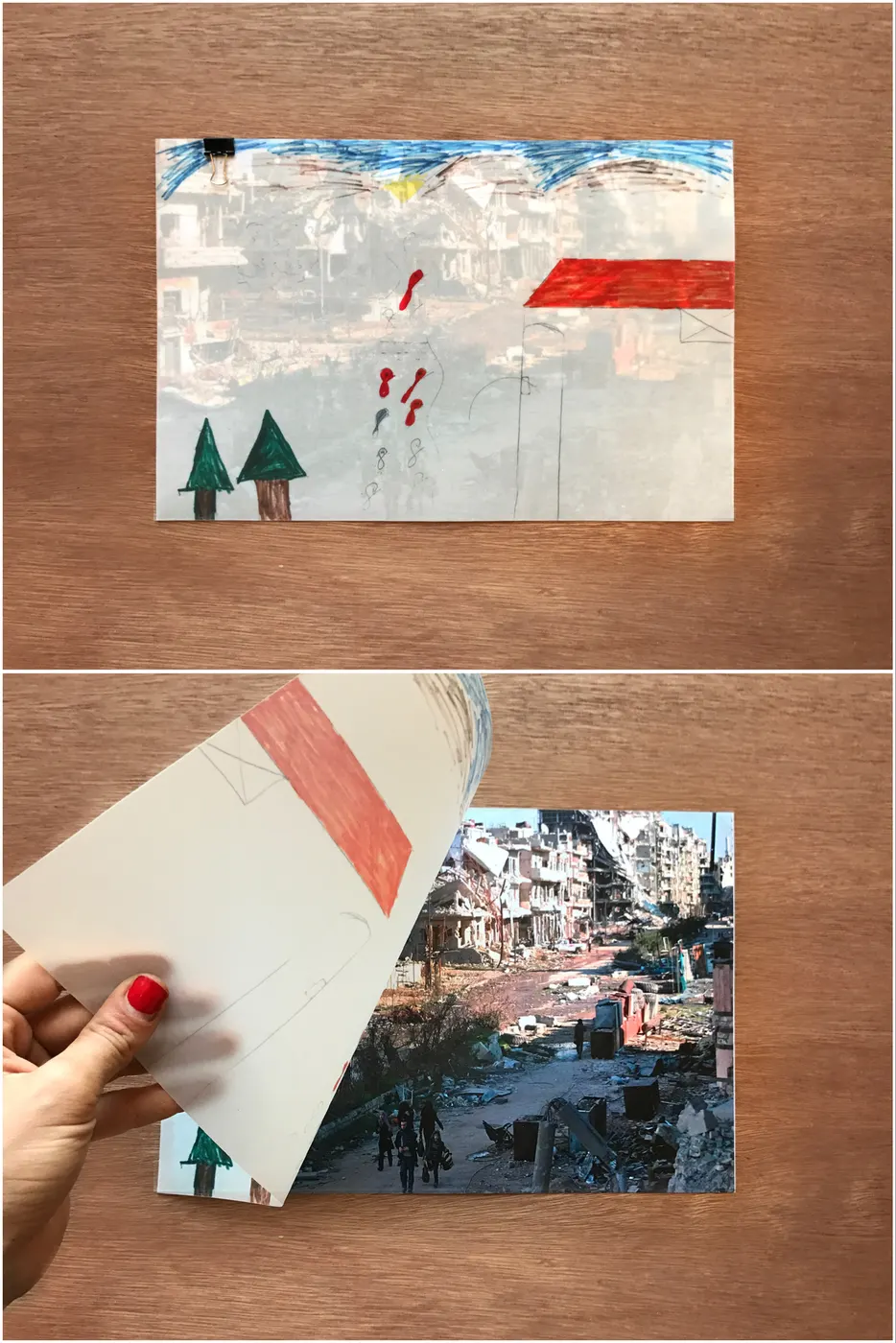
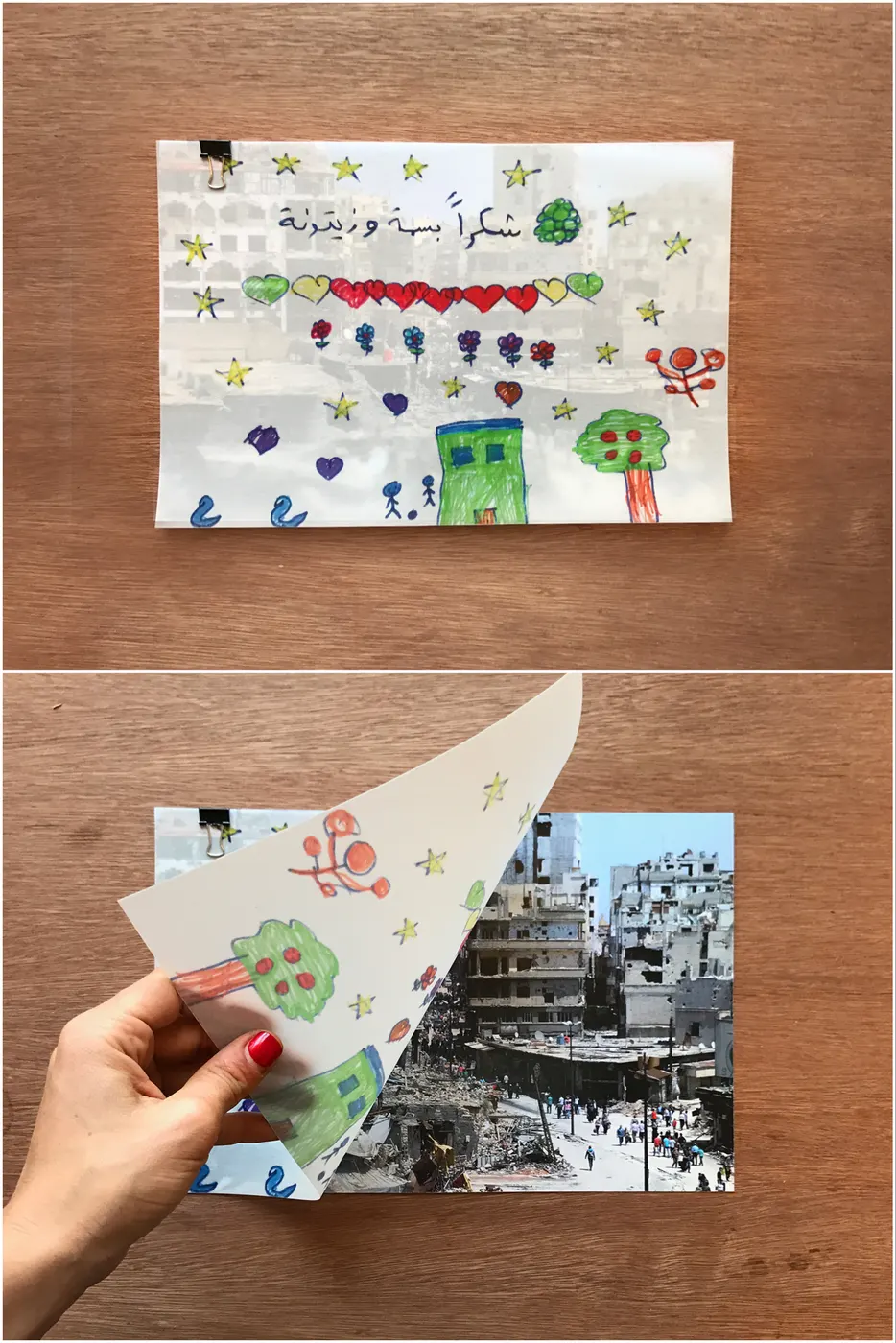
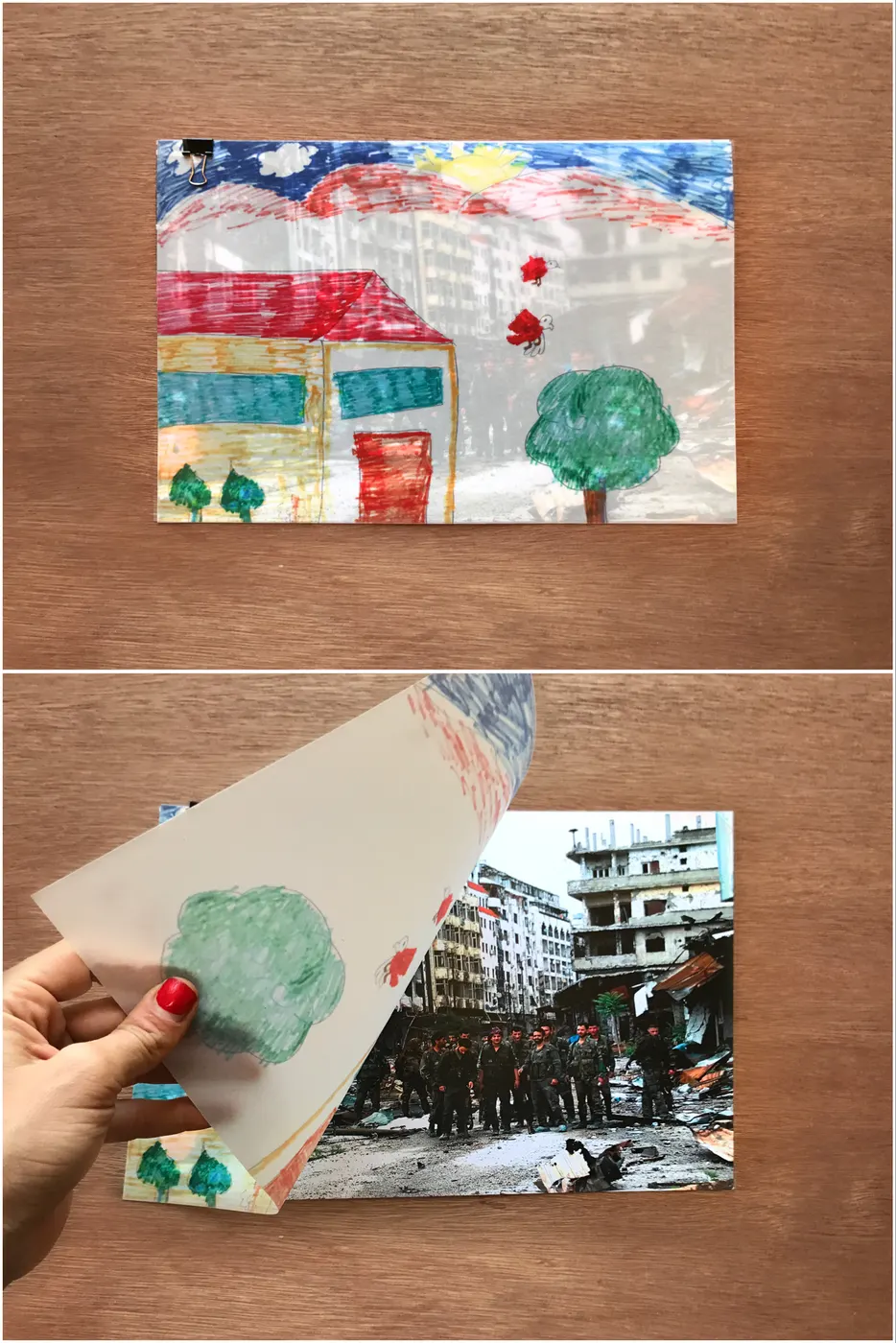
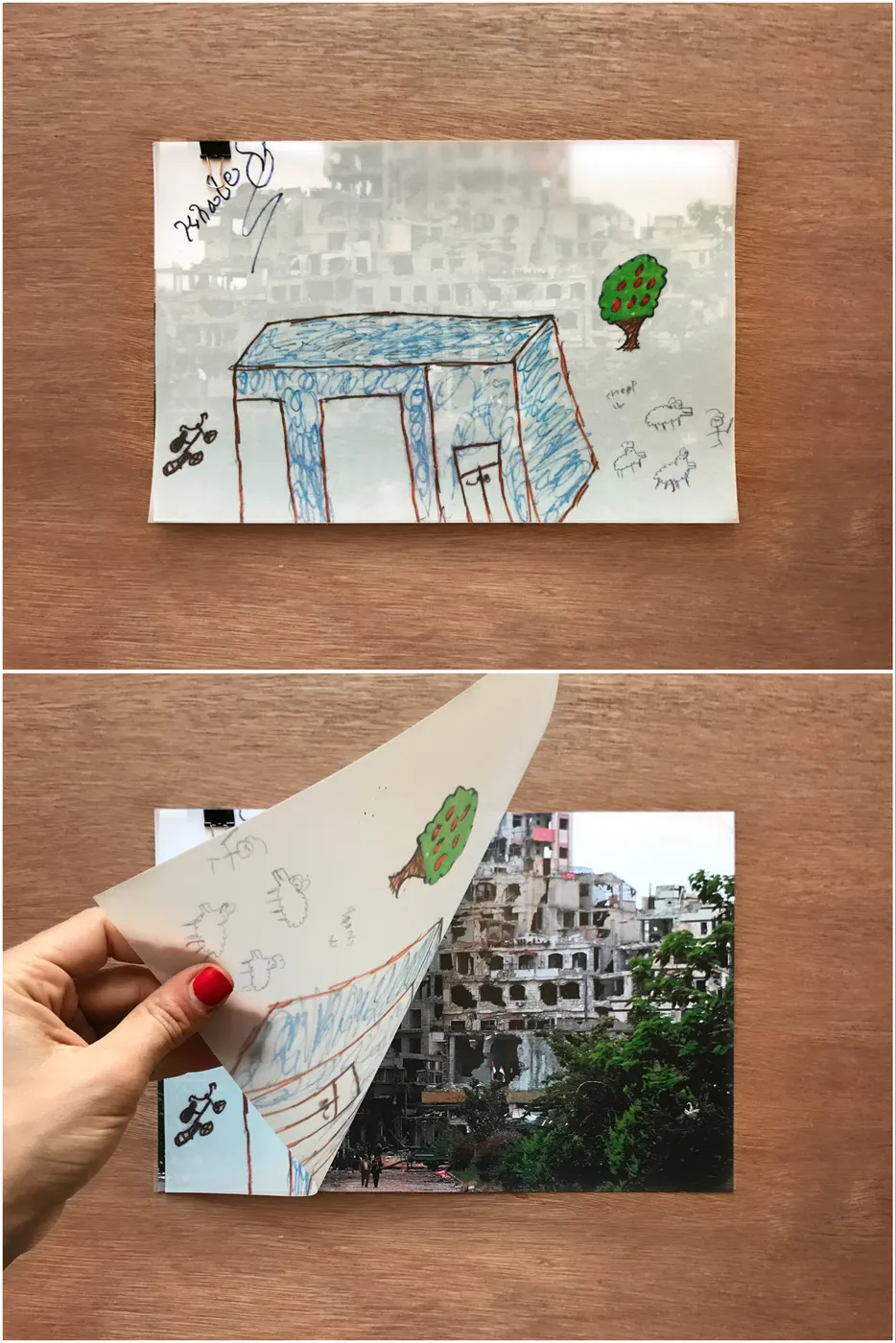
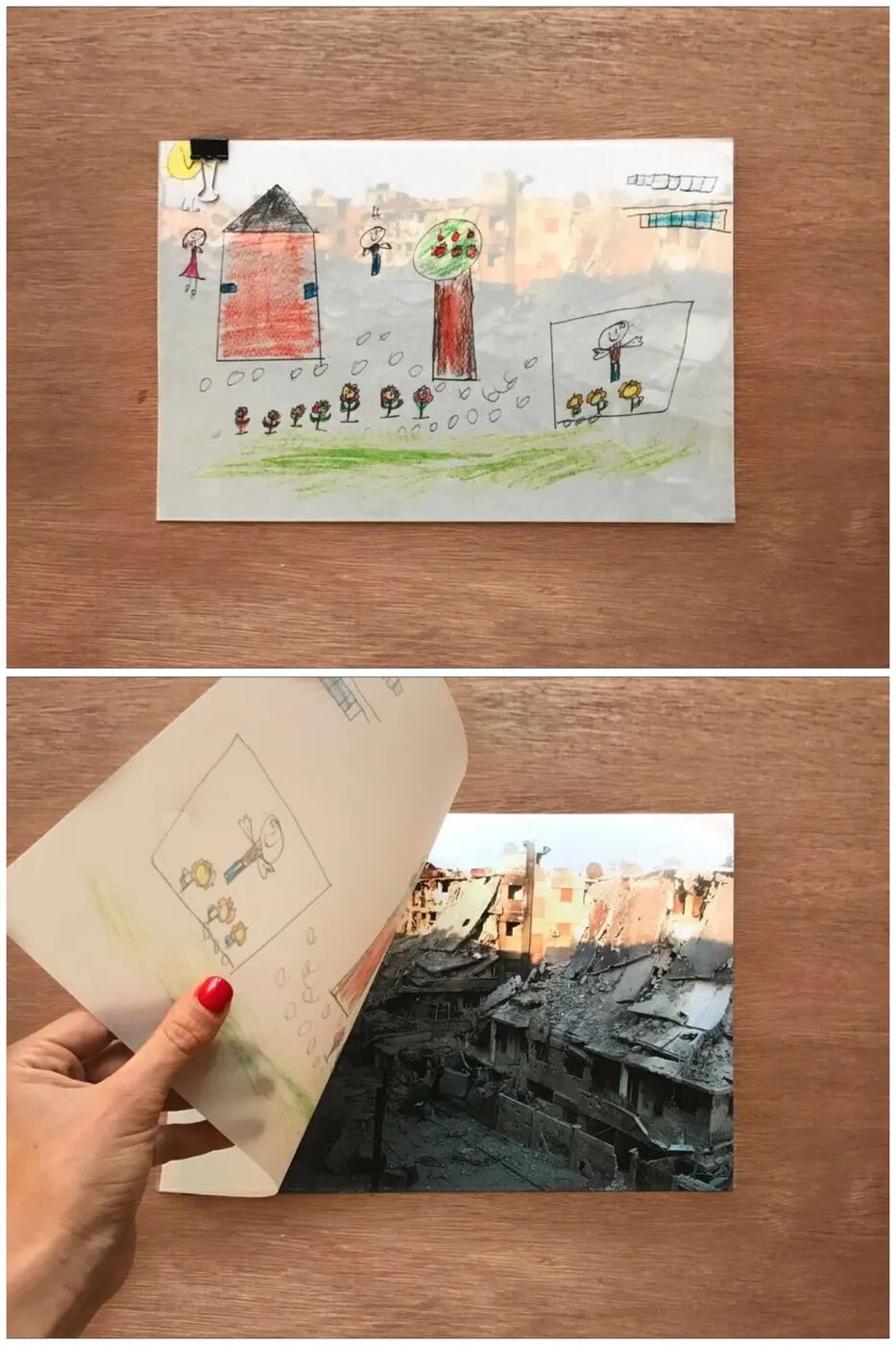
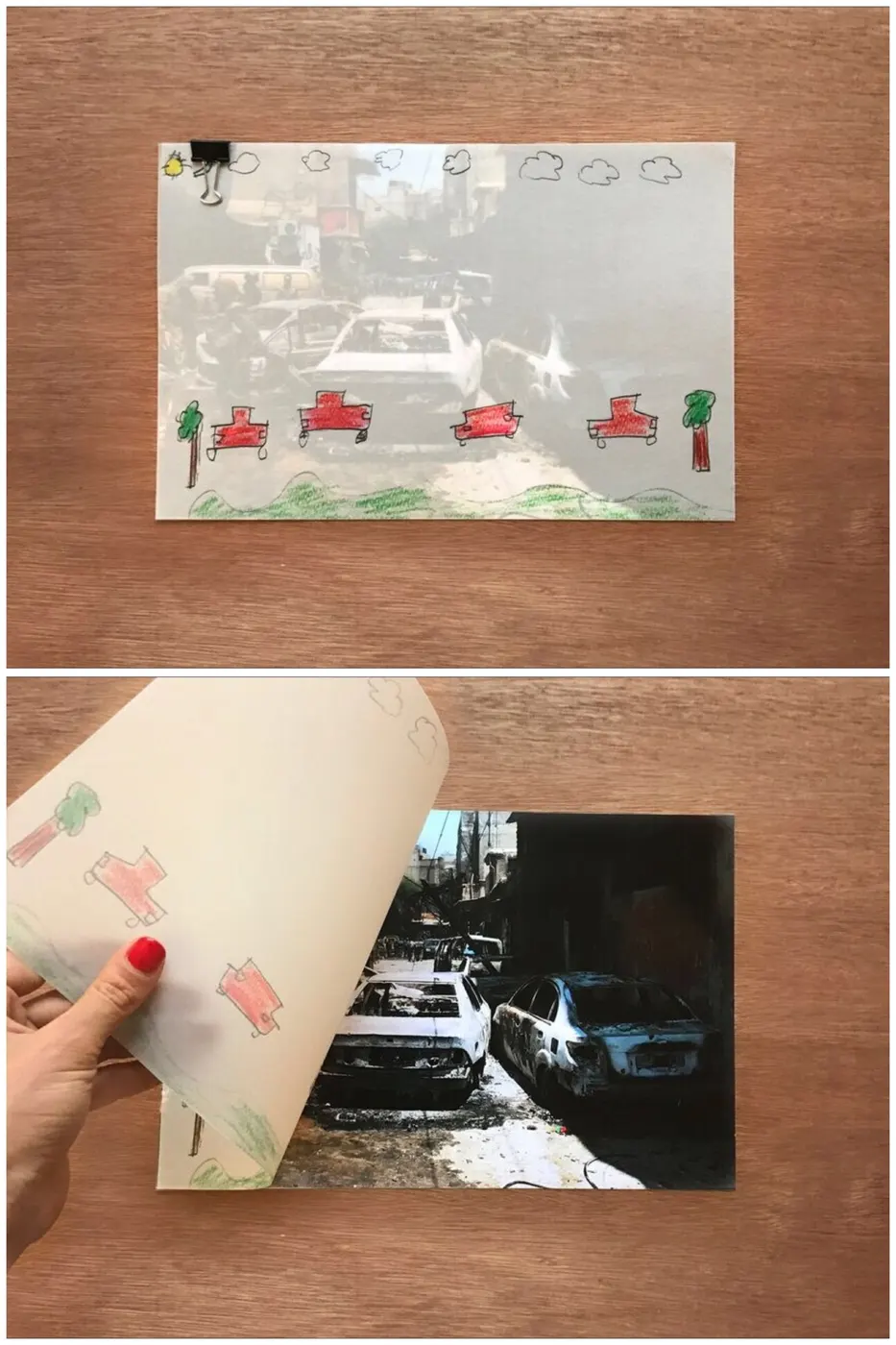
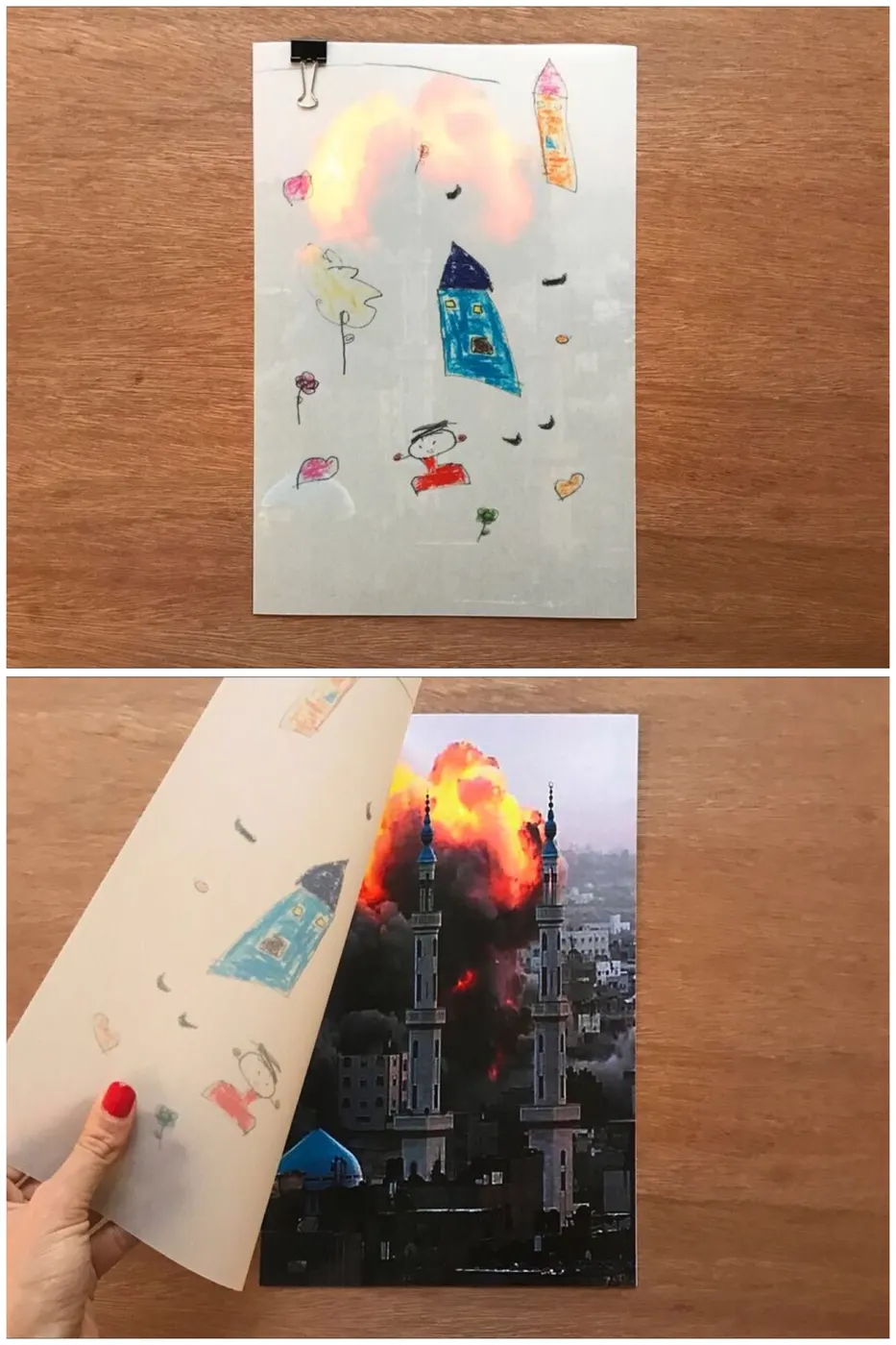
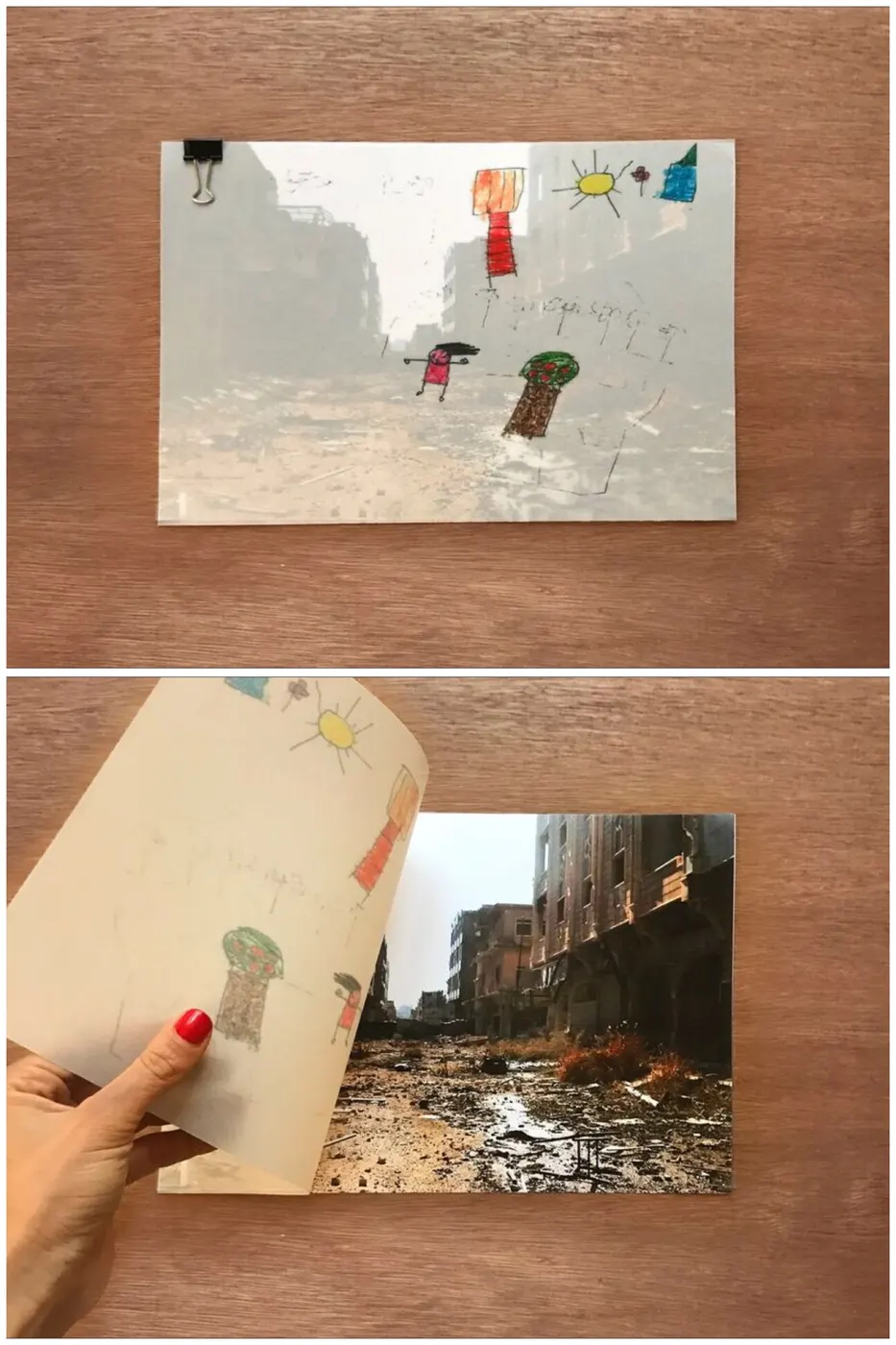
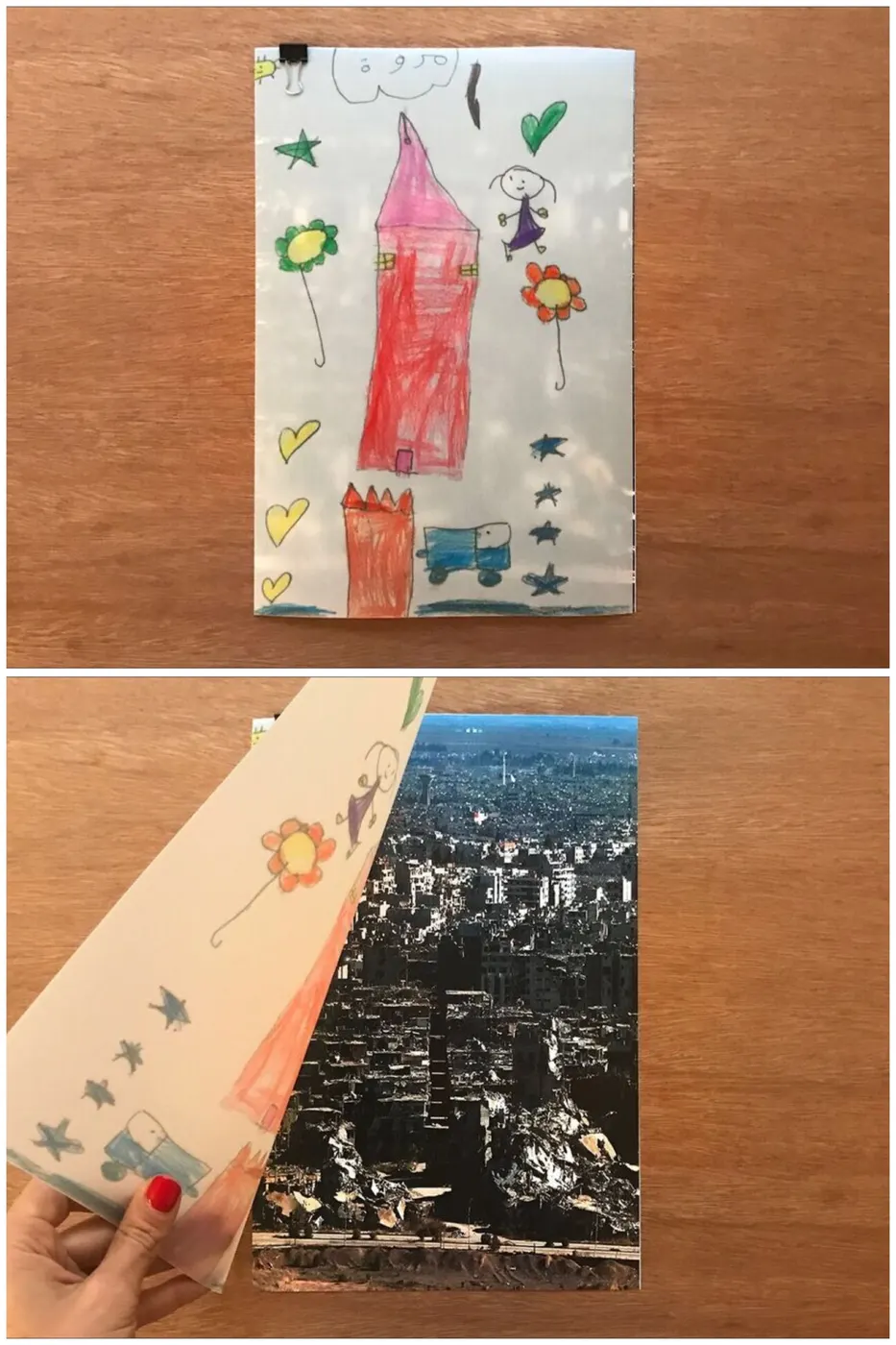
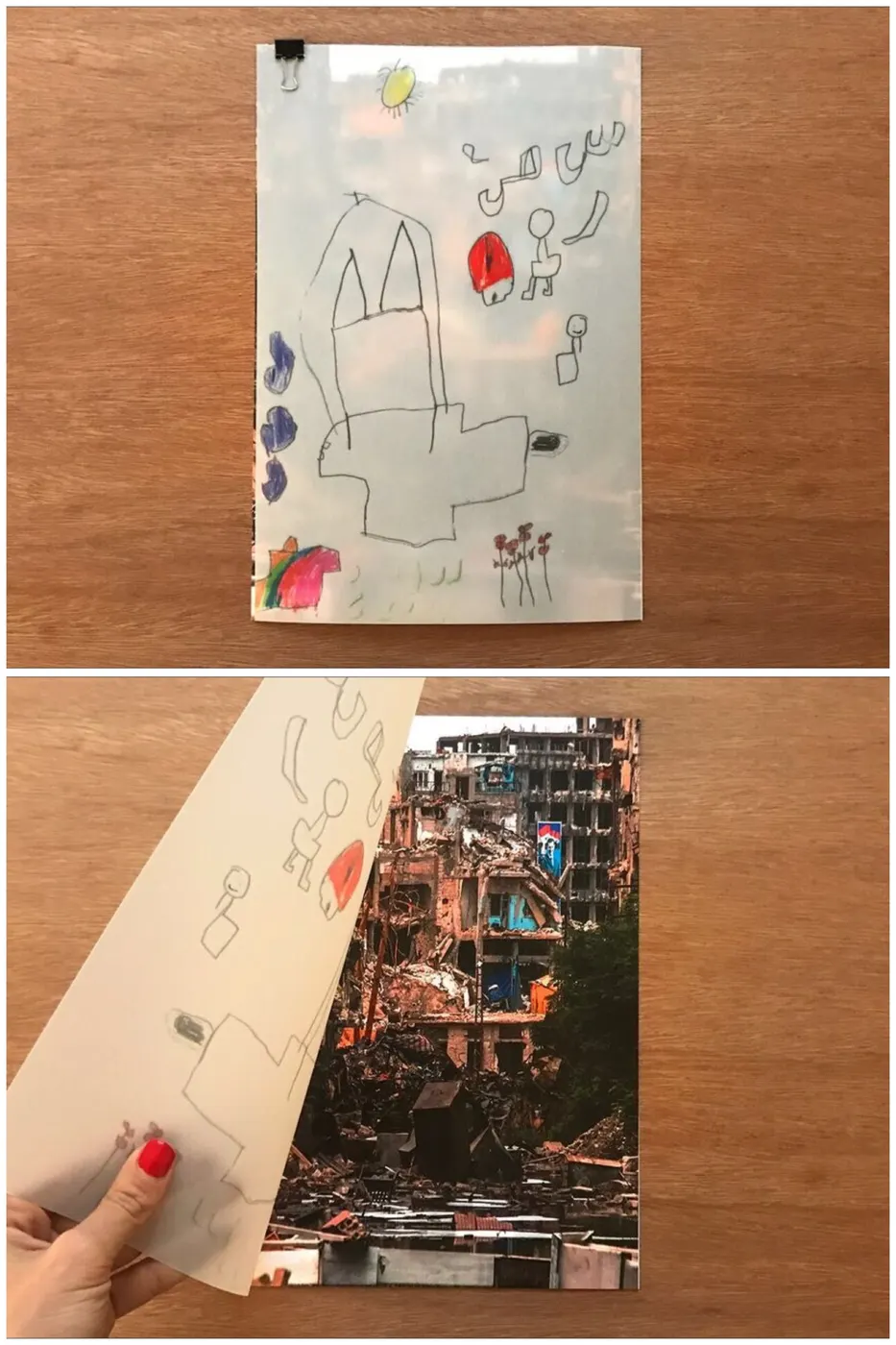
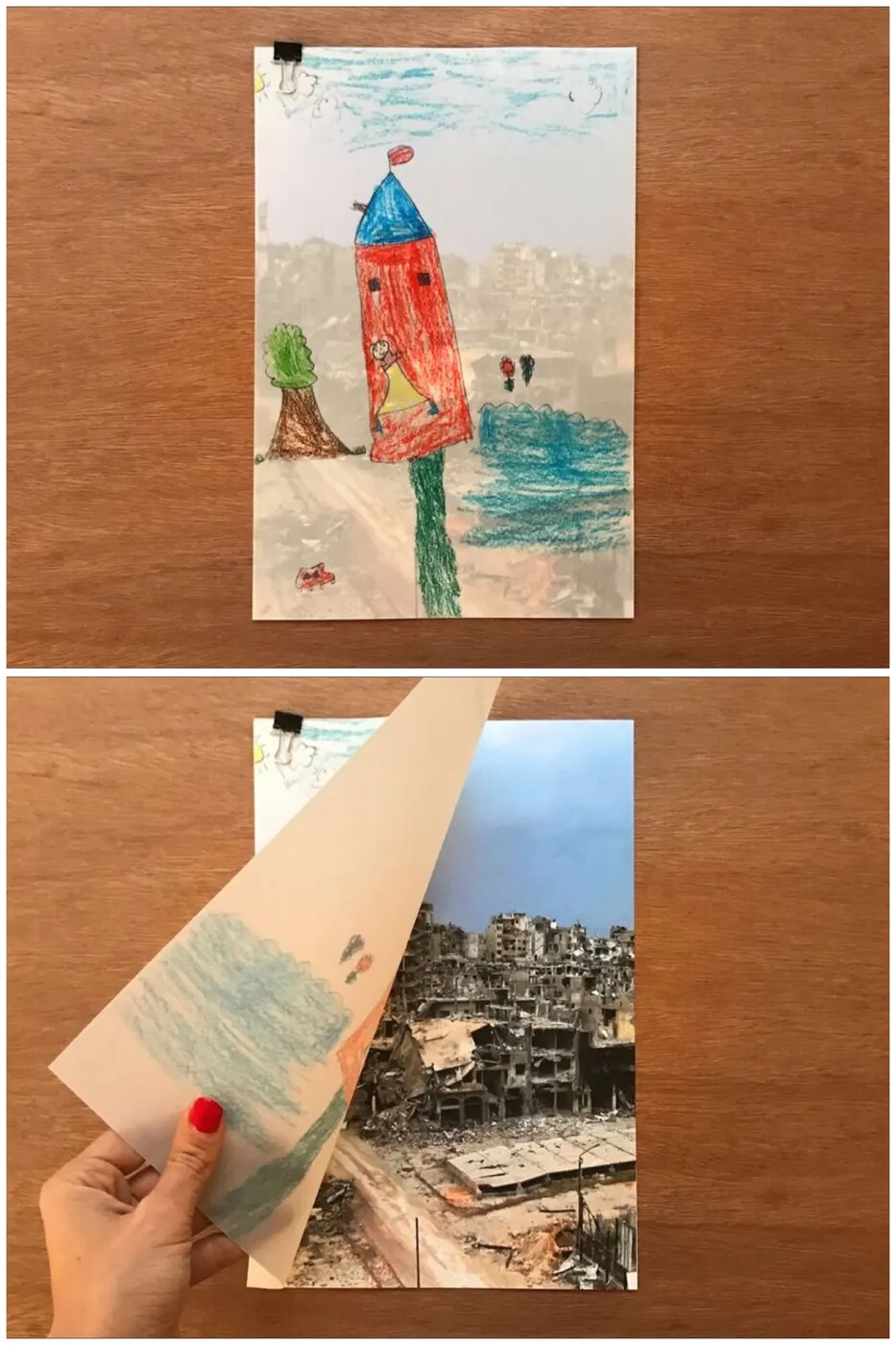
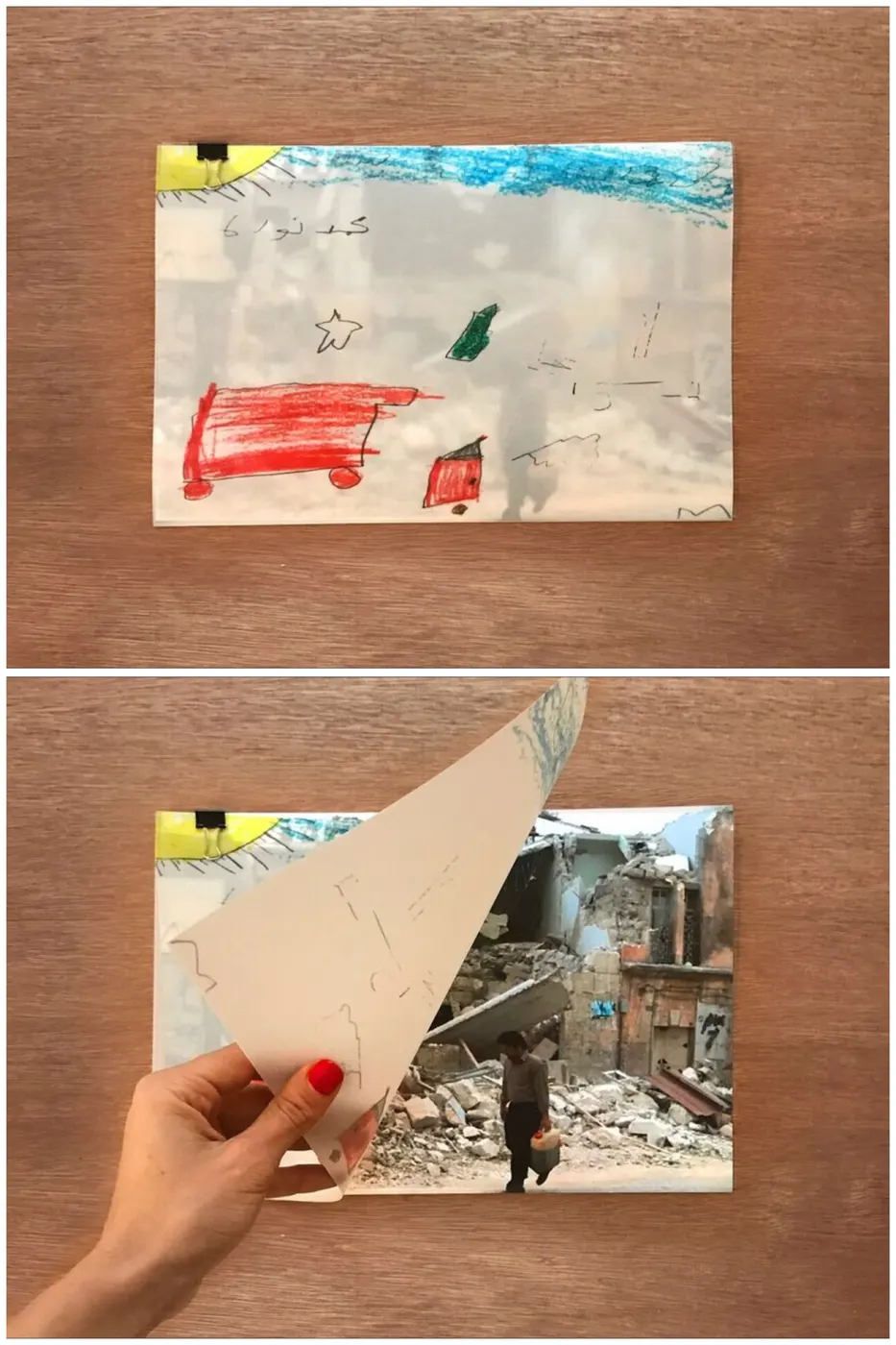
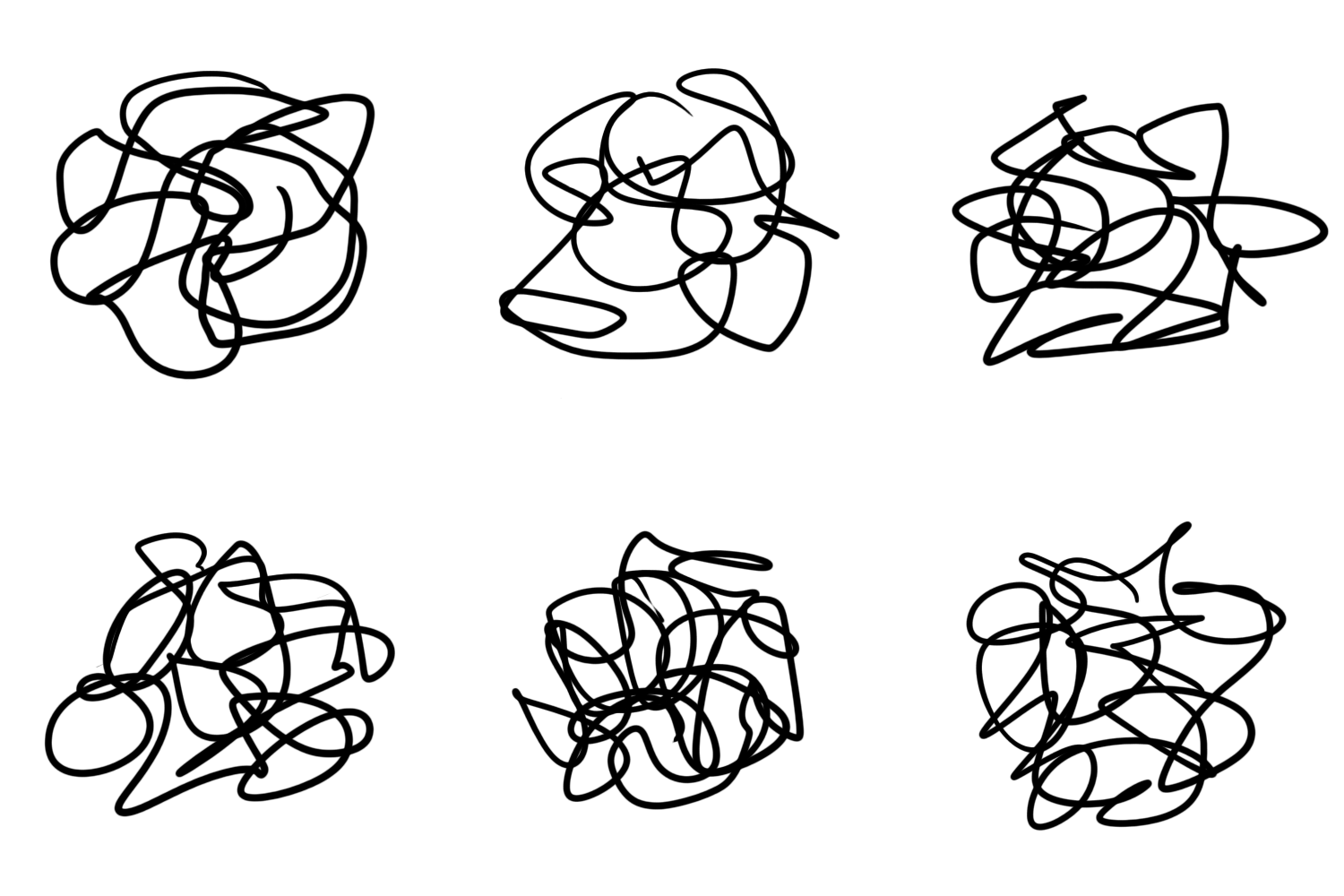
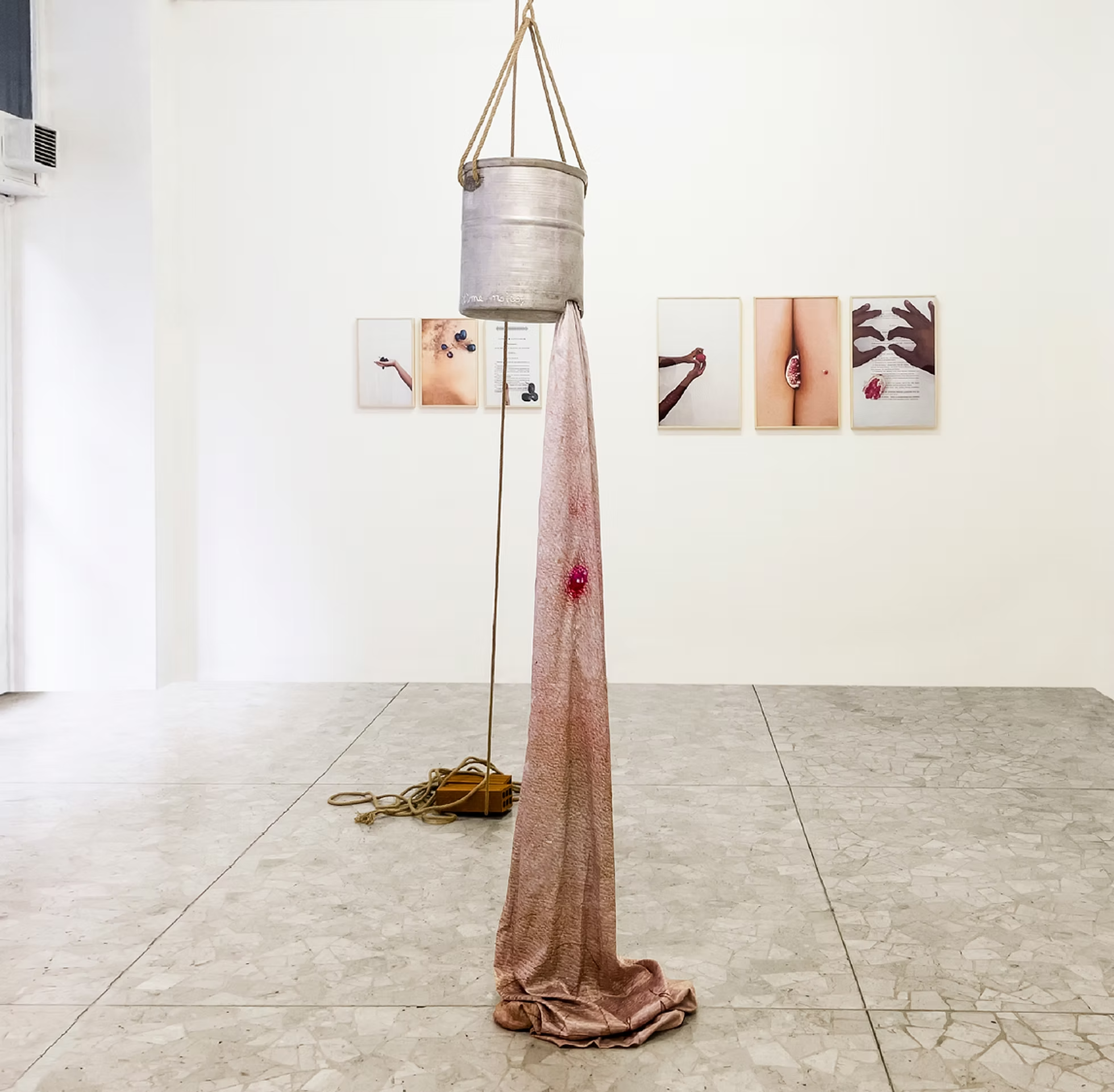
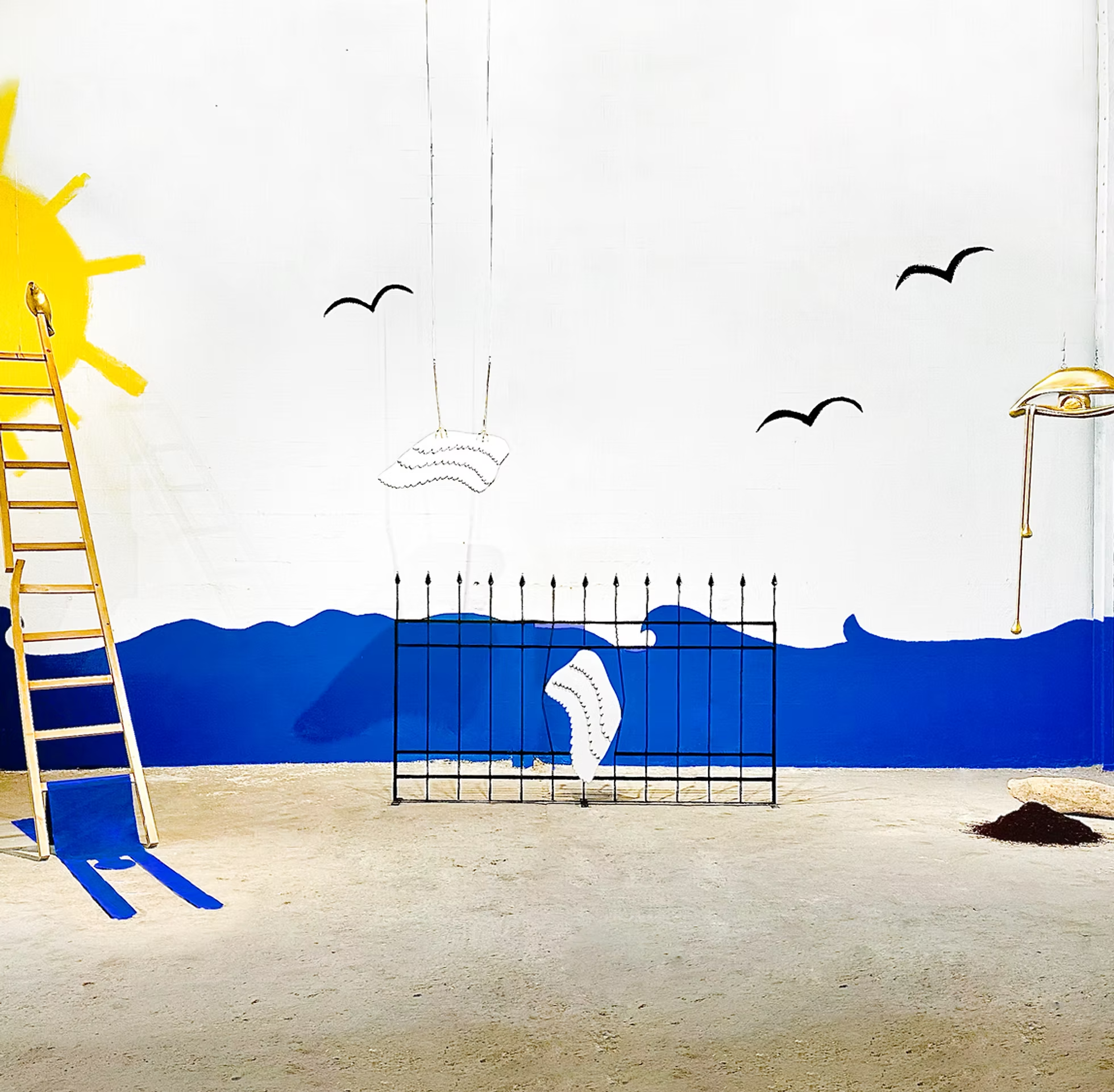
What happens when the place we remember no longer resembles the place that exists? Mémoire voilée began in 2017, during a three-month residency at Beirut Art Residency (BAR), when Esmeralda Kosmatopoulos worked with NGOs, including the Kayany Foundation, in refugee camps in Lebanon’s Bekaa Valley near the Syrian border. Through drawing activities, Kosmatopoulos invited the children to share their memories of the homes, streets and cities they had left behind. Rather than working from photographs, they drew the places as they remembered them, choosing the details, colours and familiar landmarks that mattered to them. Houses, gardens, trees and coloured skies emerged as familiar places reconstructed through remembrance, where fragments of ordinary life survived despite distance and displacement.
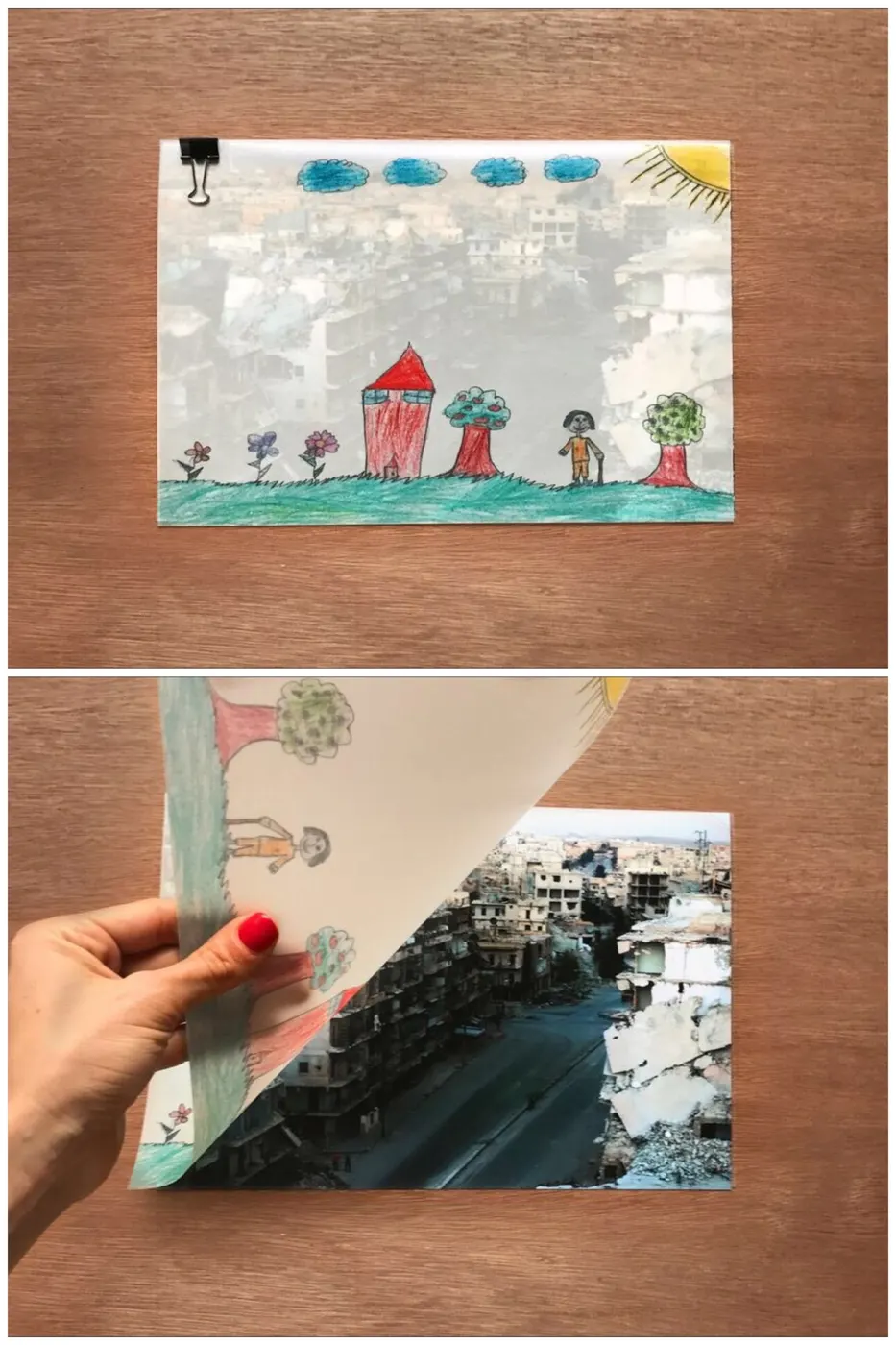
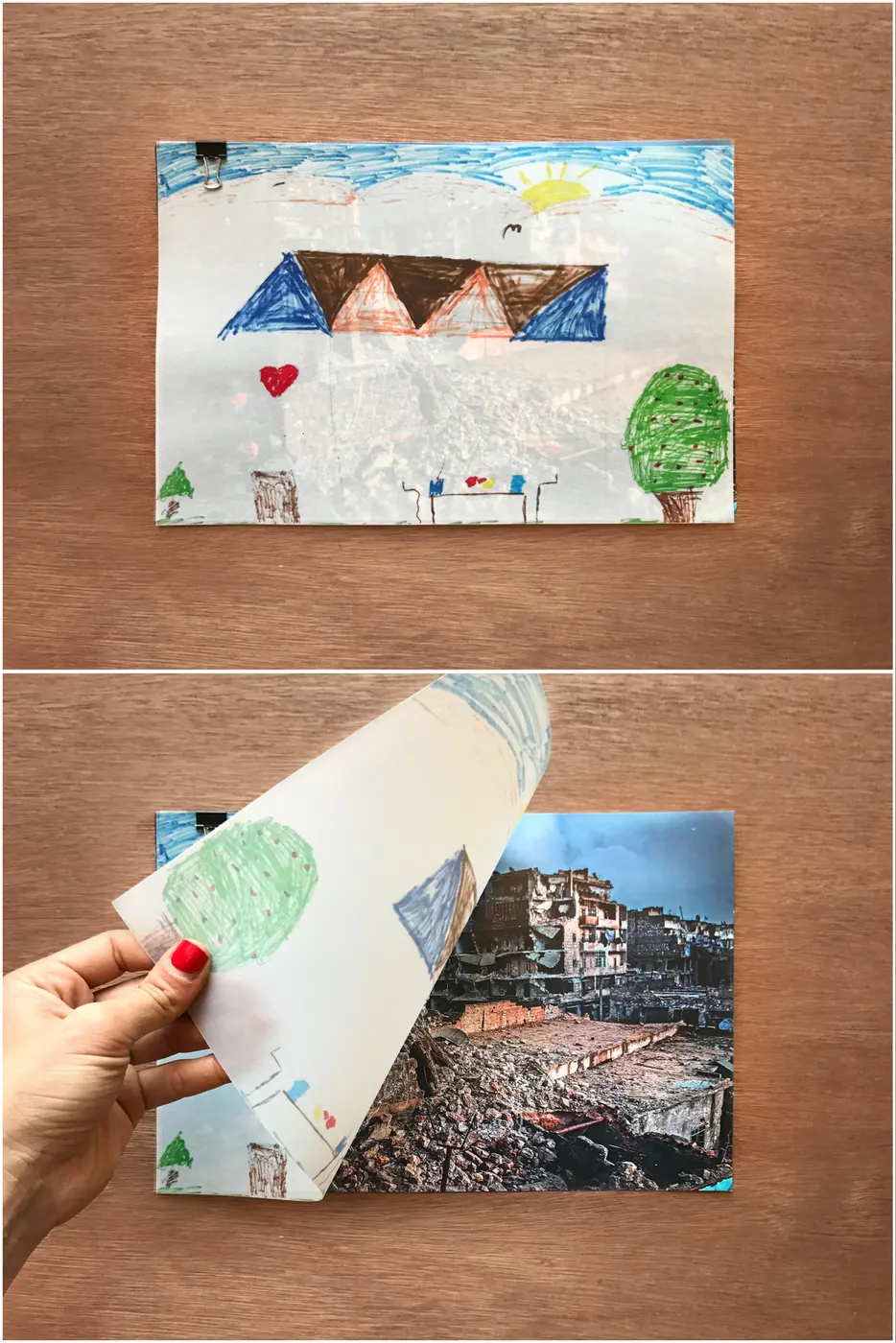
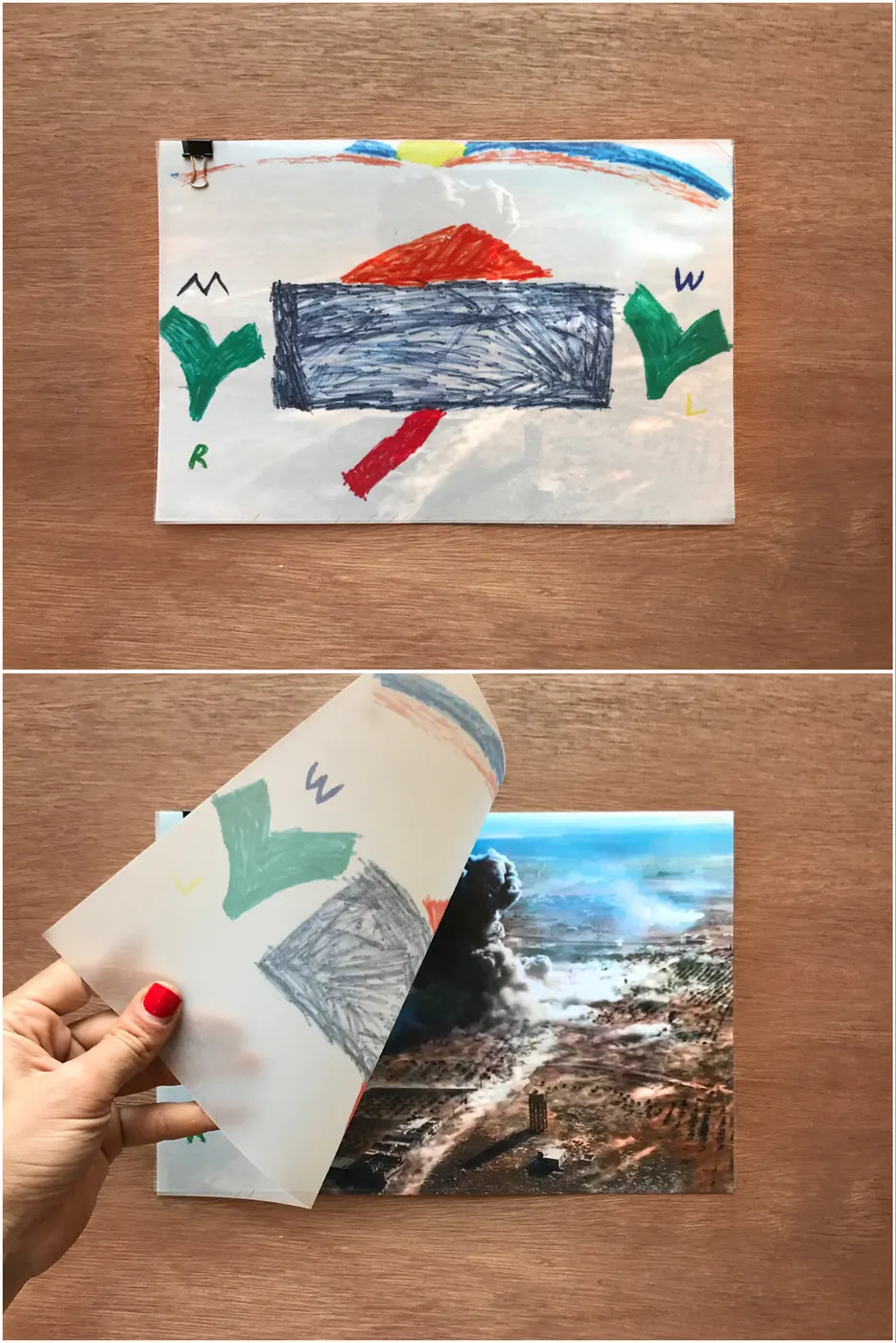
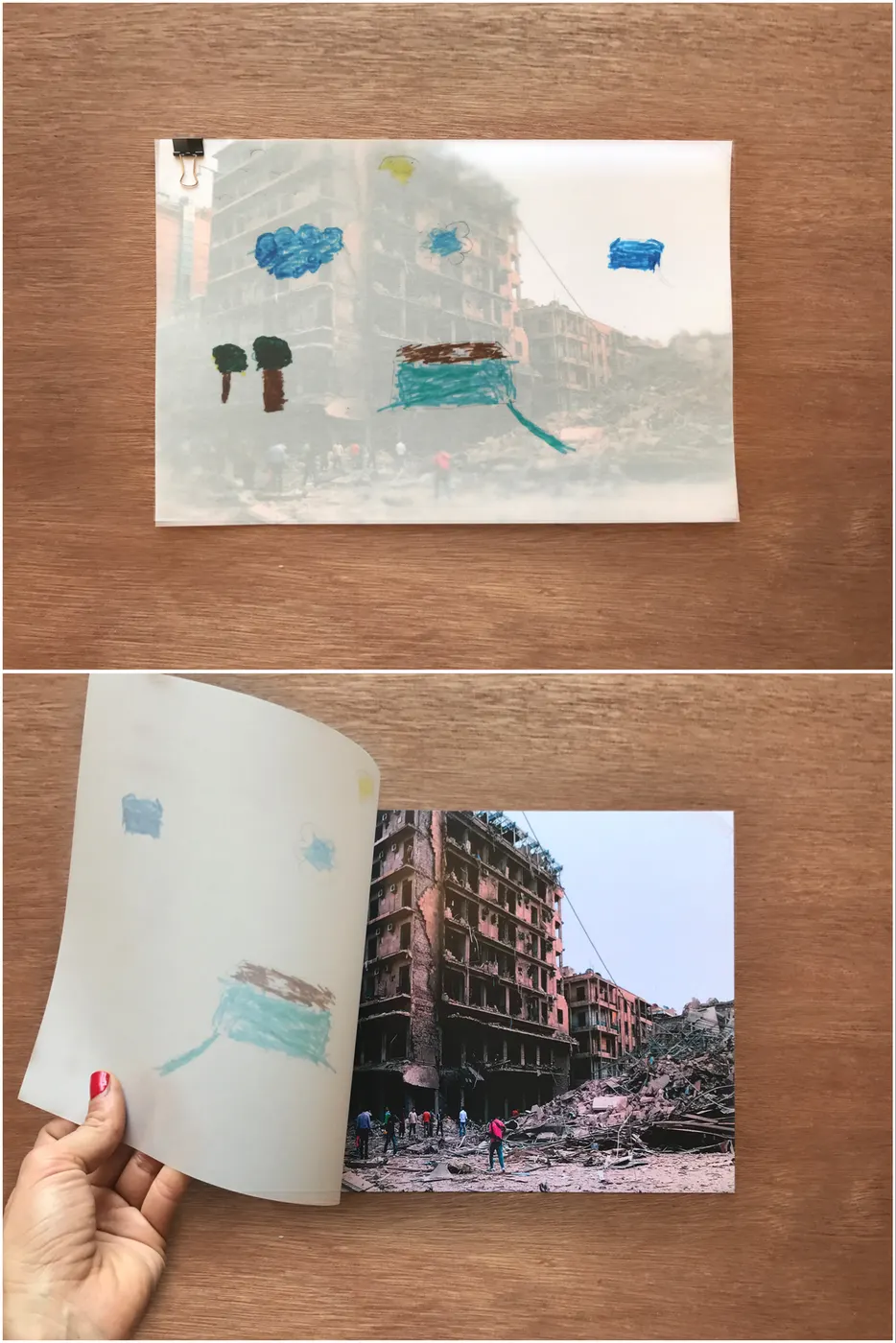
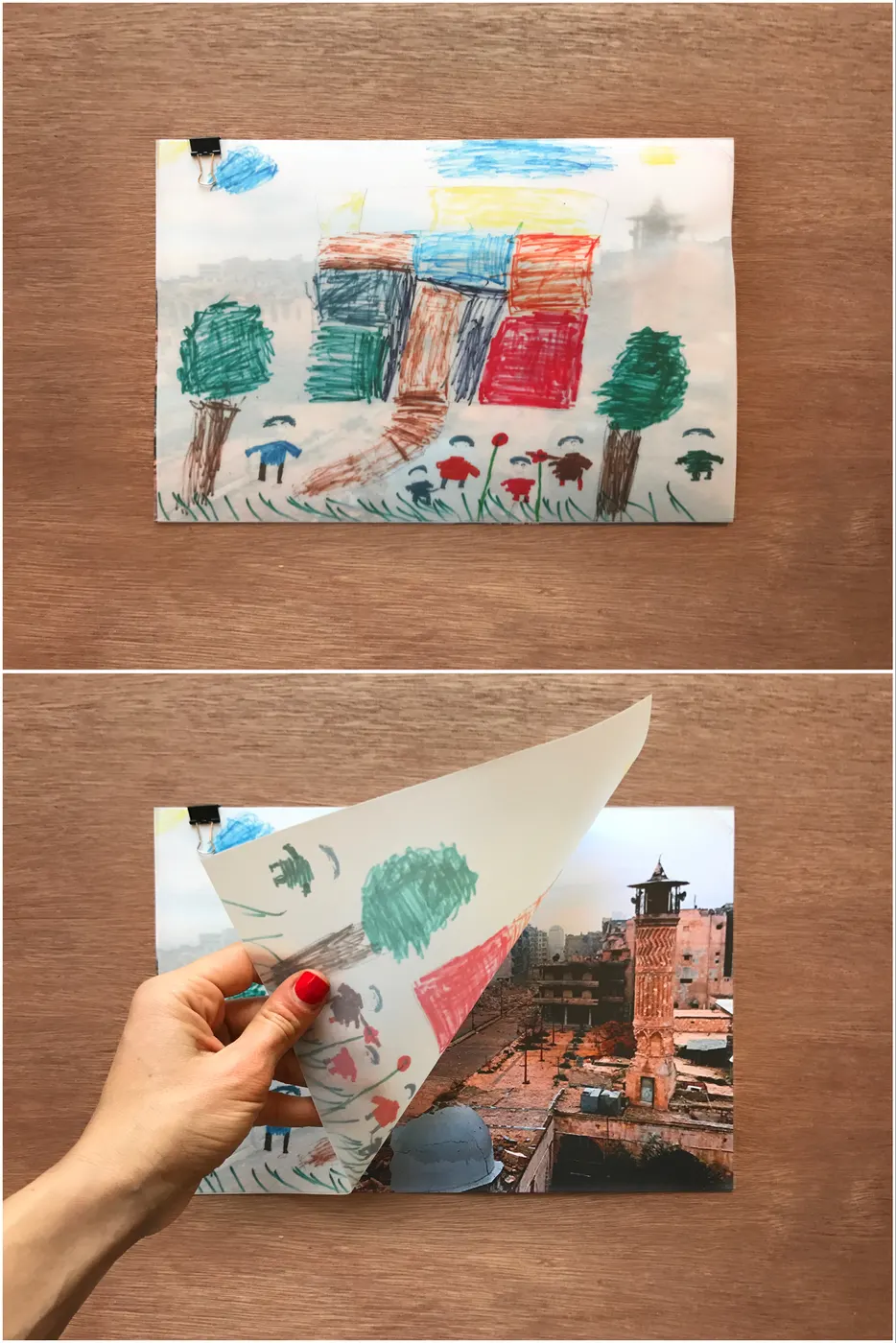
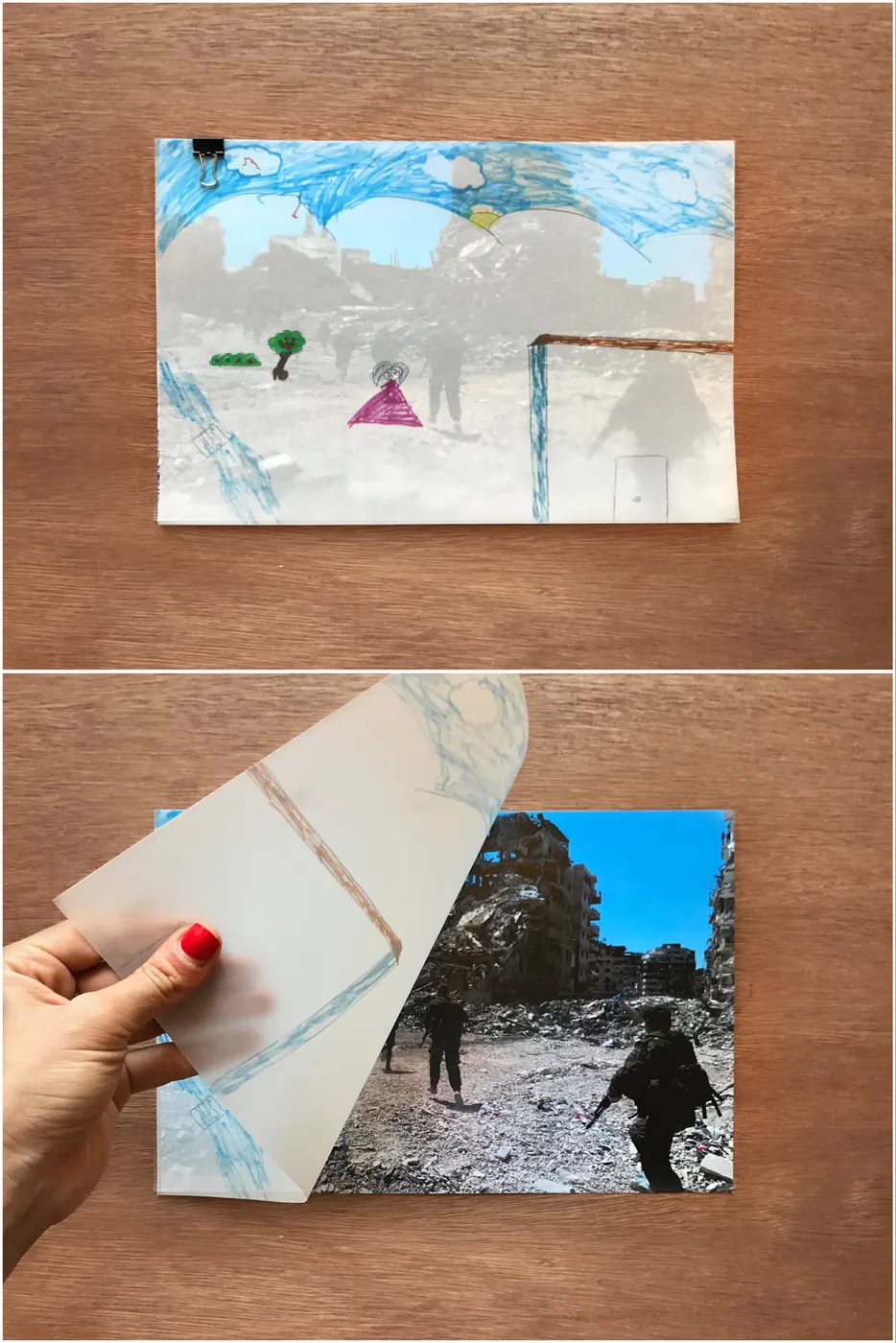
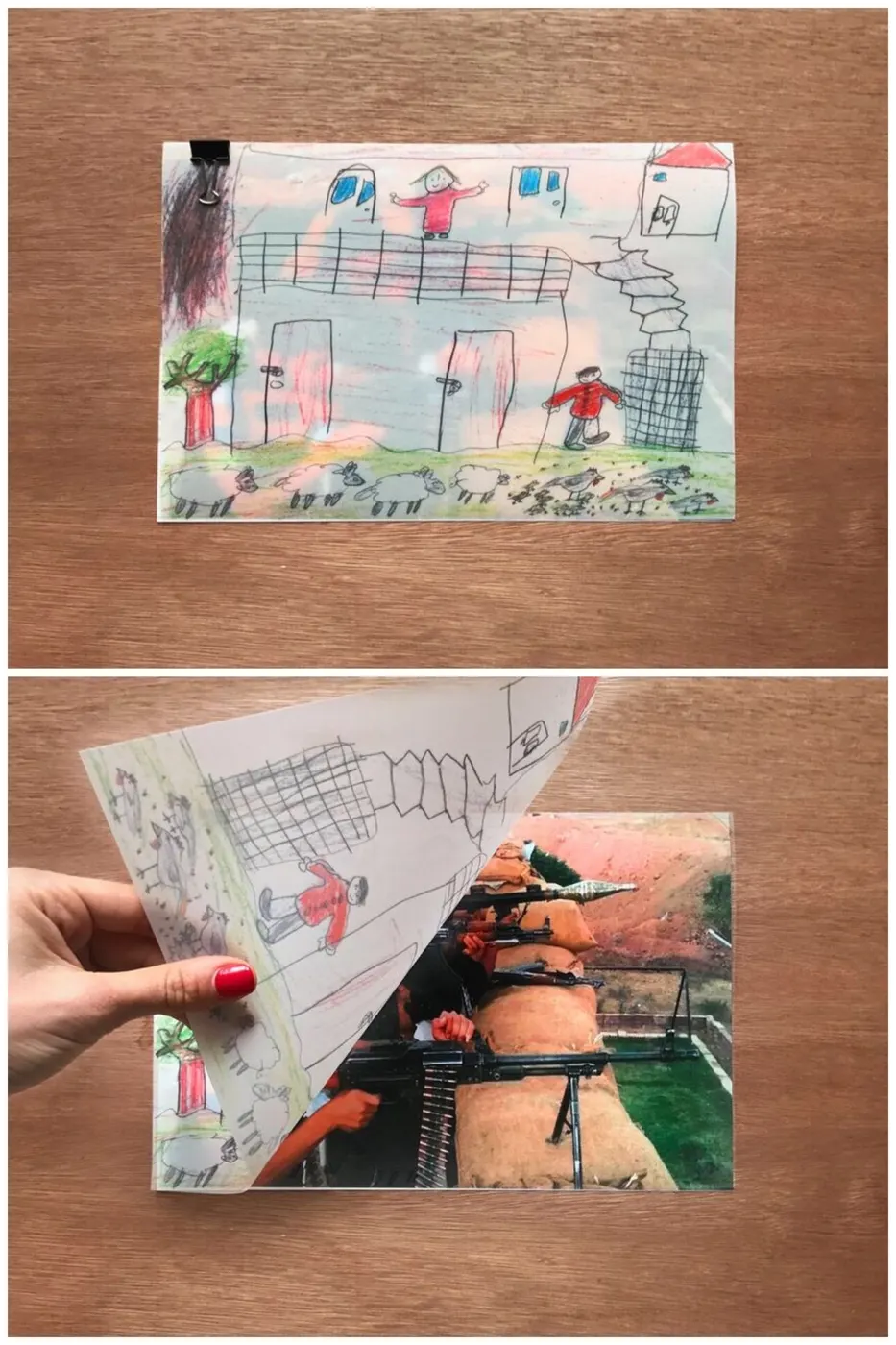
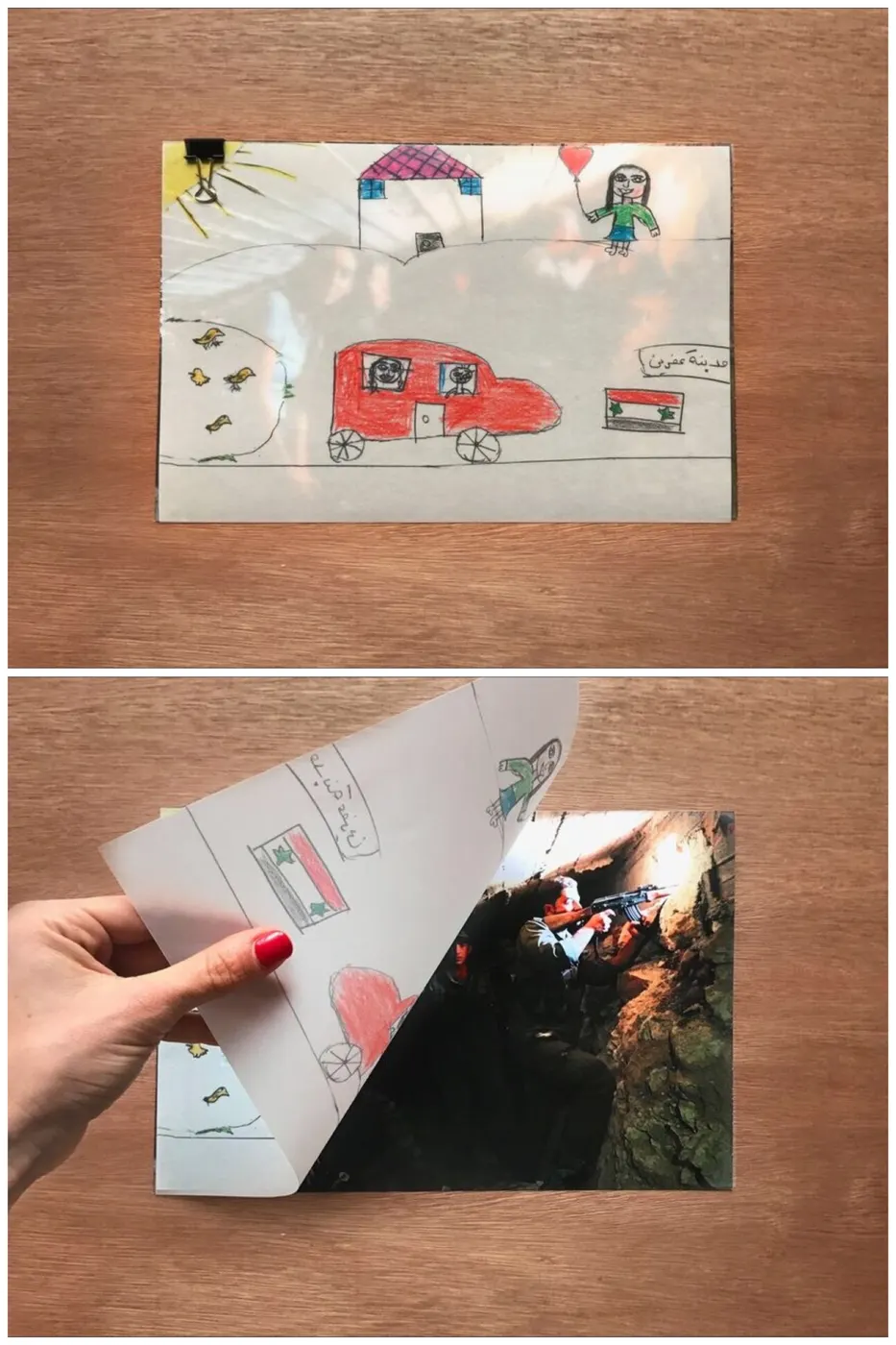
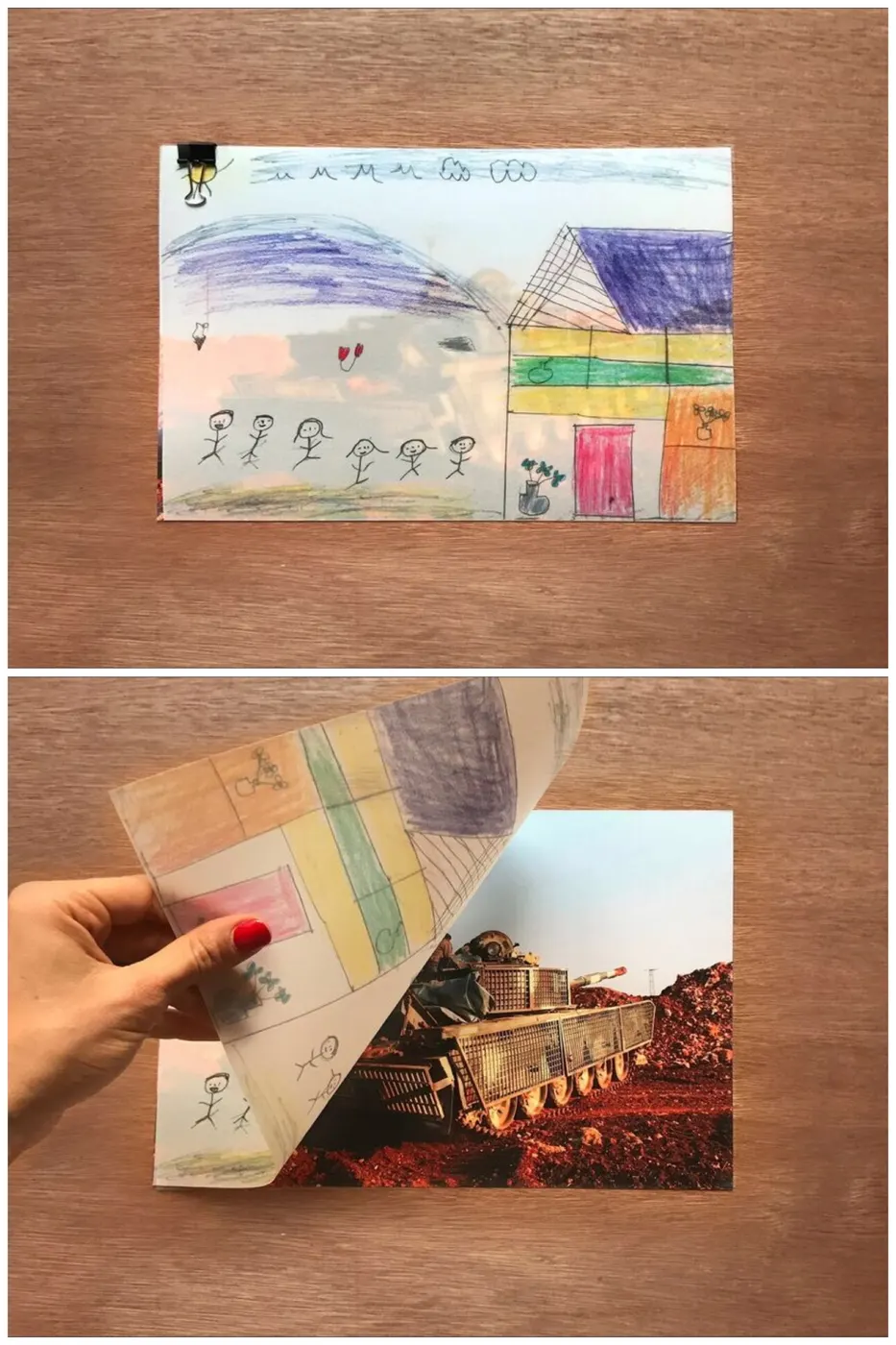
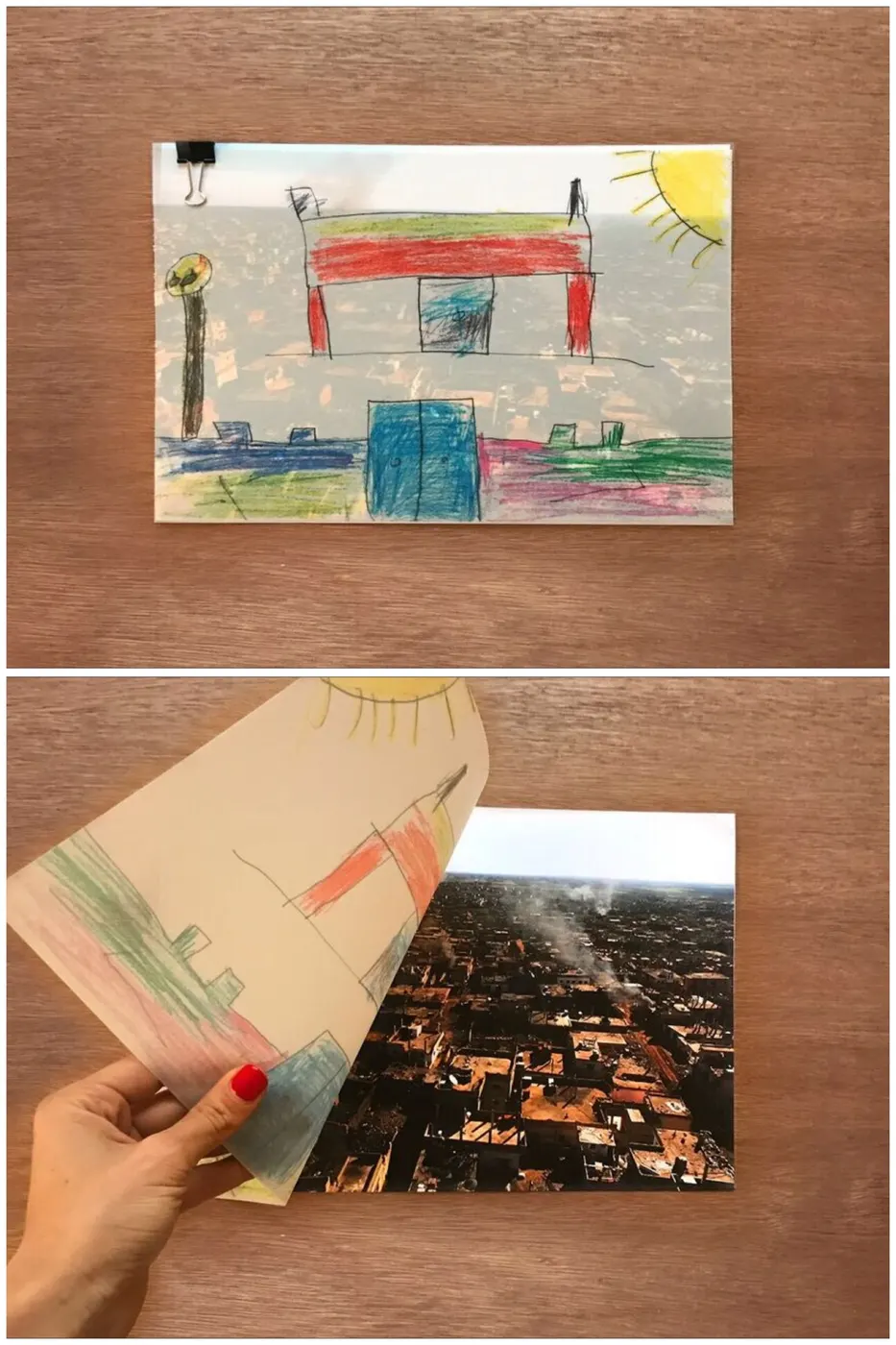
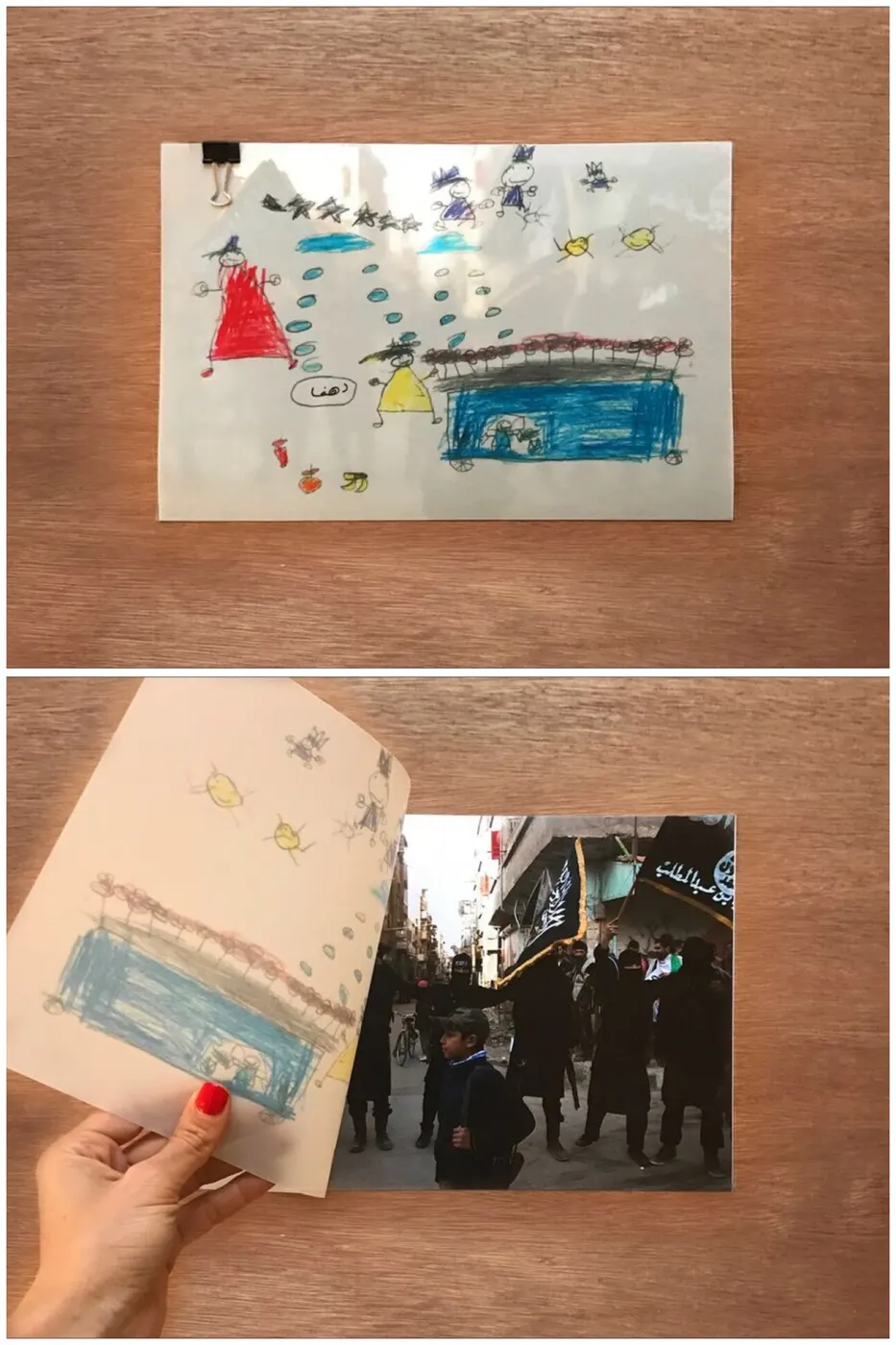
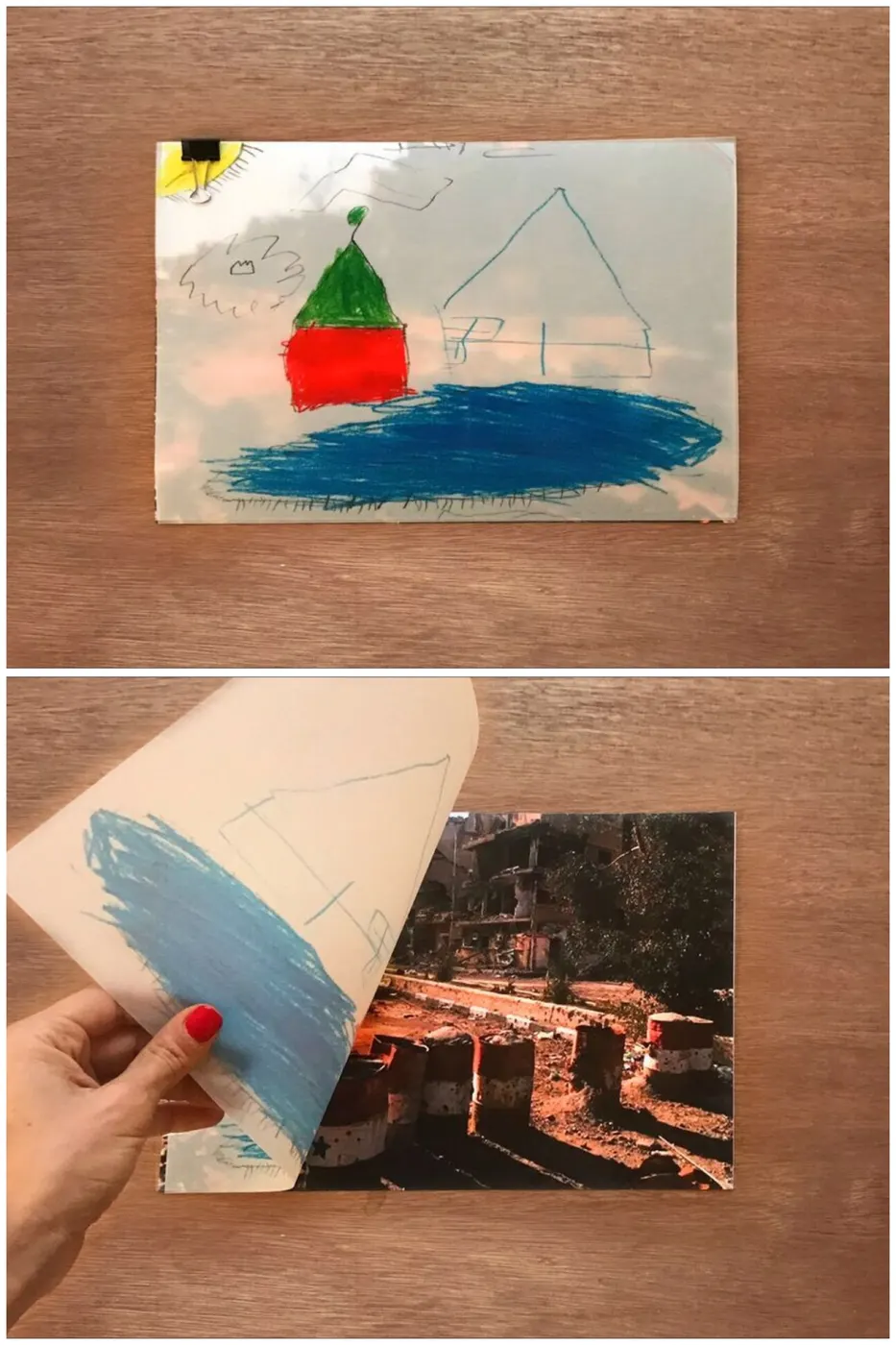
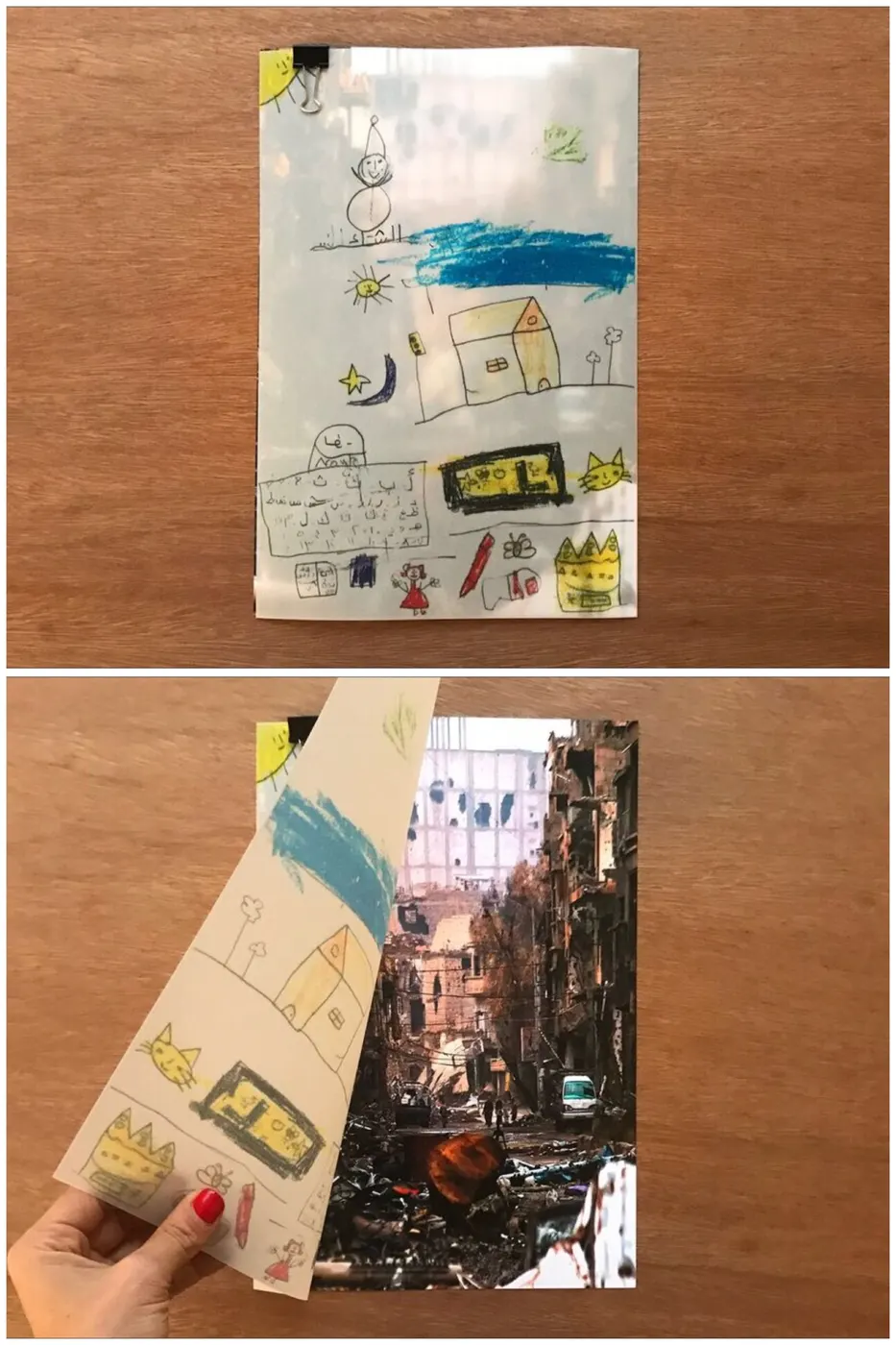
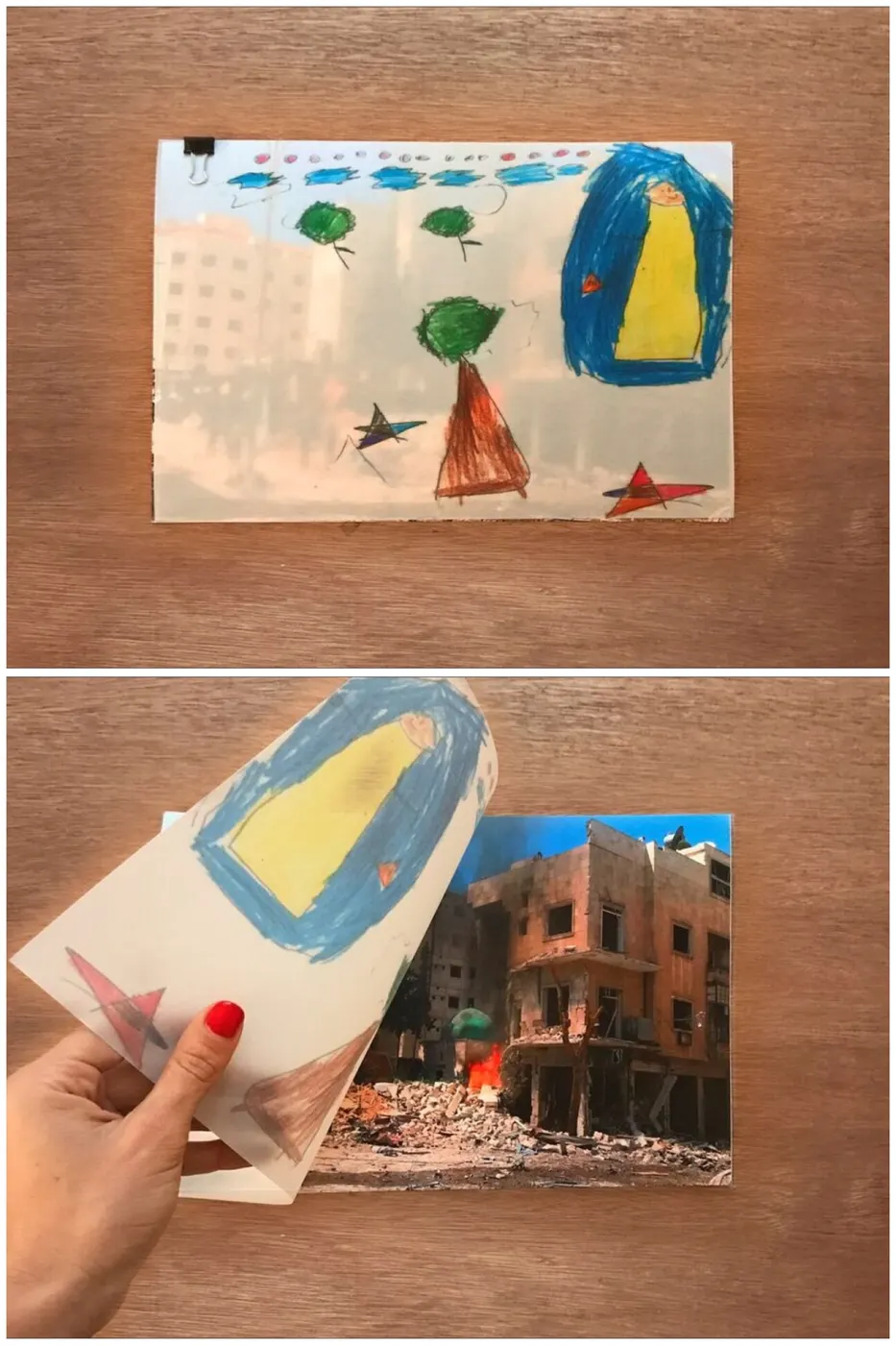
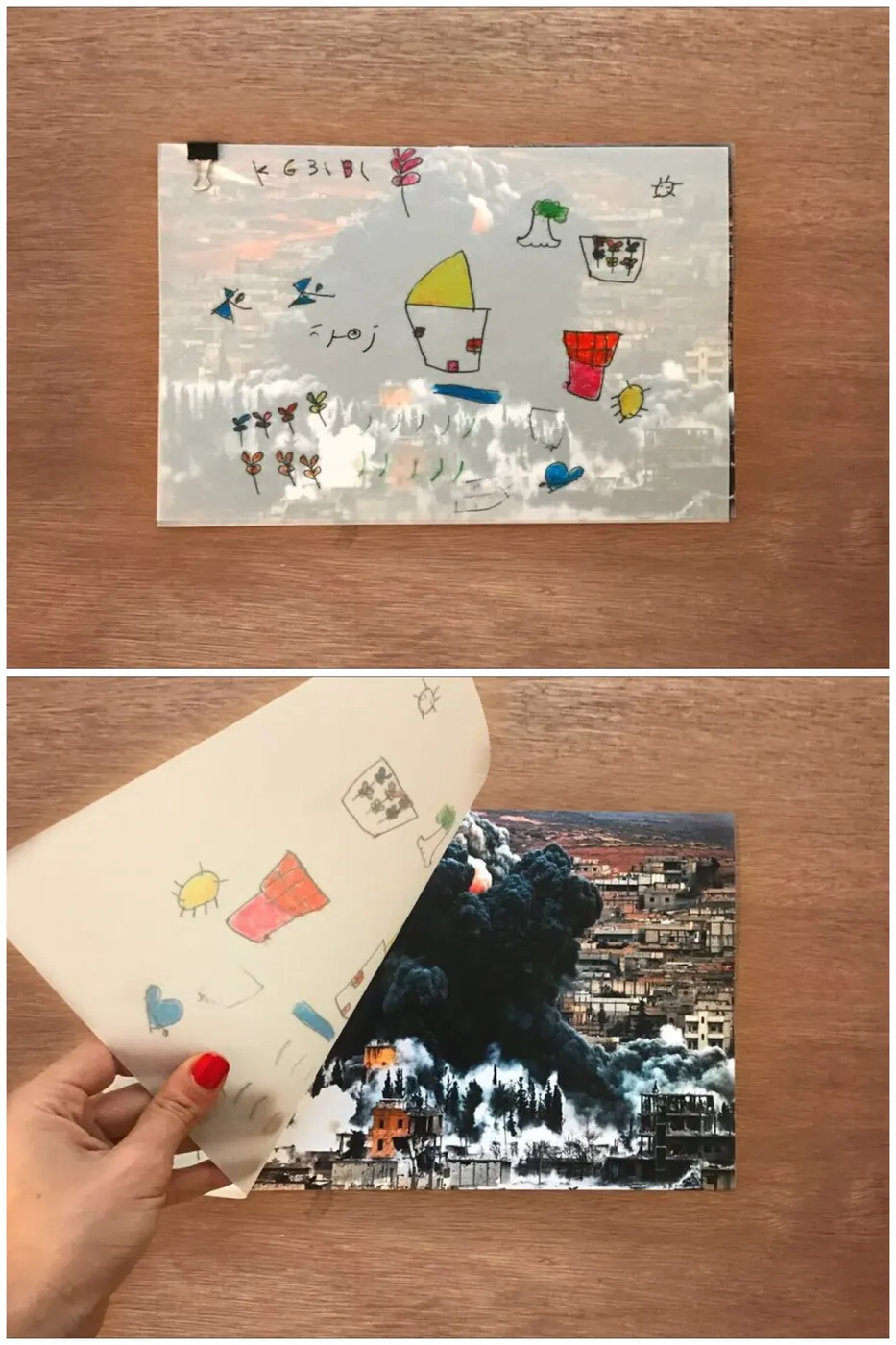
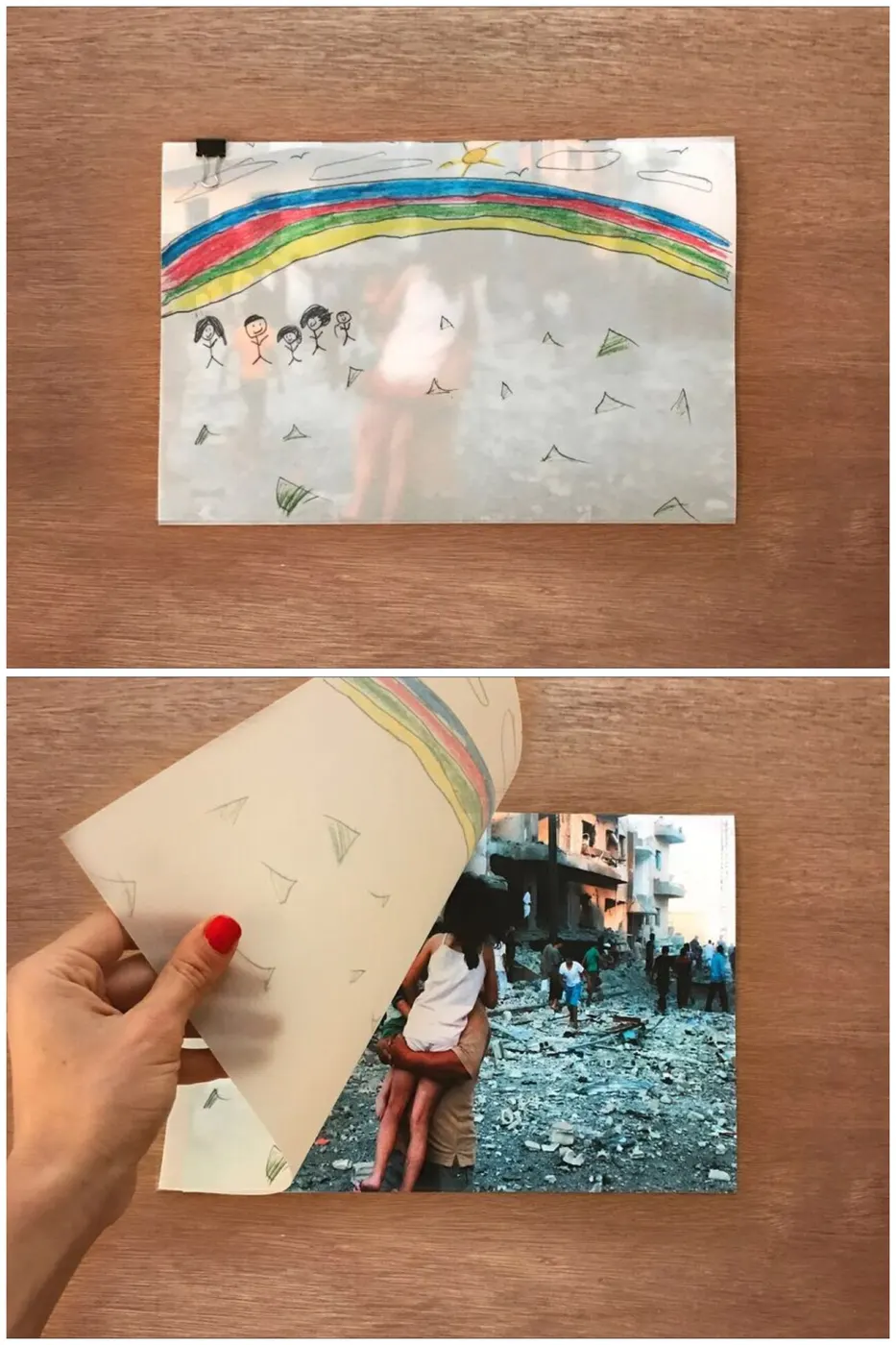
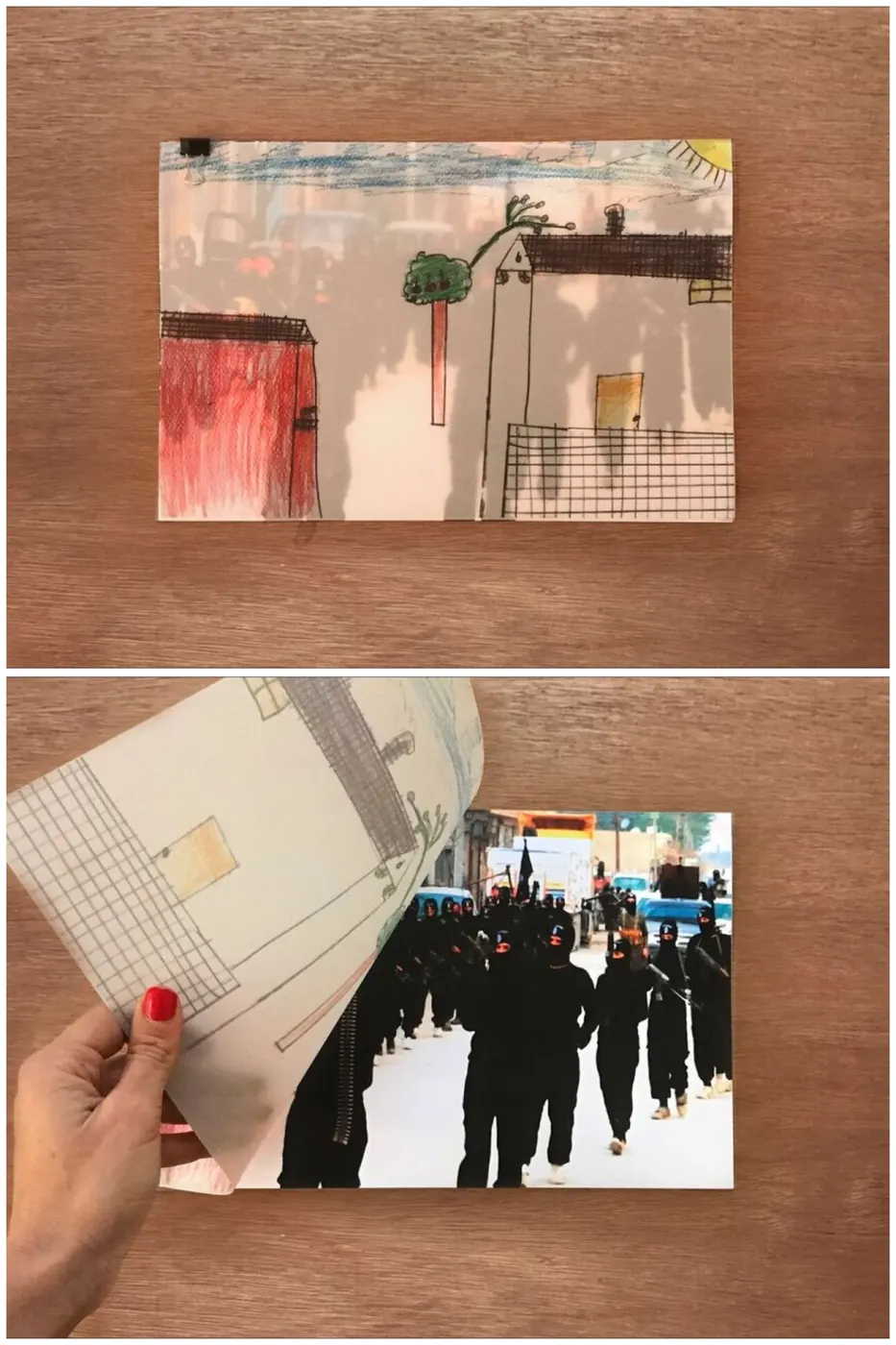
For each drawing, Kosmatopoulos searched Google Images for the corresponding city and selected the first results. Where the children depicted familiar, often brightly coloured places, the search engine returned photographs marked by war: damaged buildings, collapsed roofs and deserted streets. The same city appeared in two seemingly irreconcilable landscapes: one drawn from personal memory, the other circulating through the public imagery of conflict.
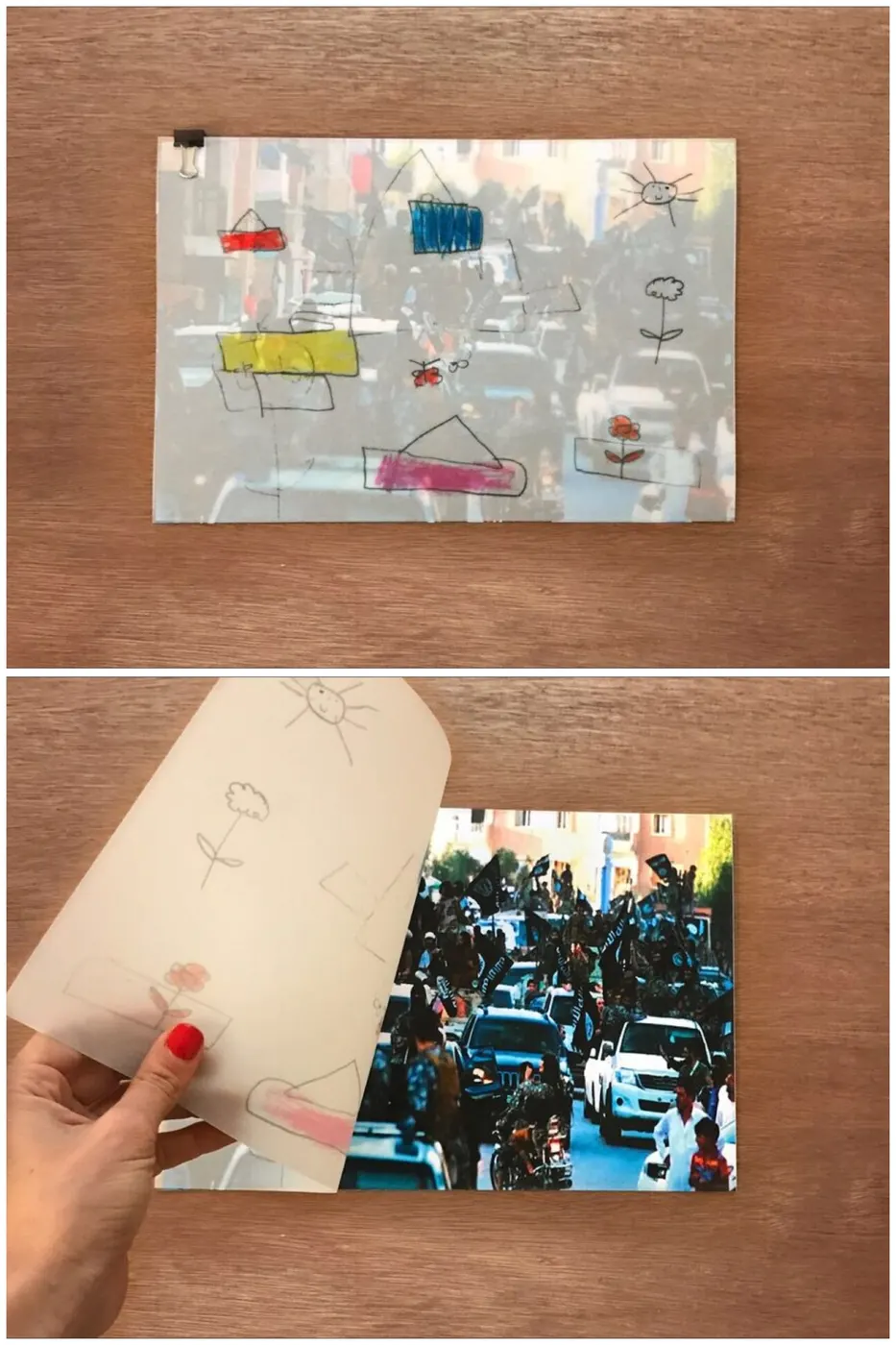
The children’s drawings were printed on translucent tracing paper and laid over C-prints of the photographs. The paper becomes a literal veil, partially concealing and simultaneously revealing the image beneath. Lines drawn from memory intersect with the photographic traces of destruction, creating a third image suspended between past and present, private memory and public history. Neither image completely obscures the other, and neither remains unchanged by their encounter.
Between the two sheets lies the central tension of the work. On one side are the places the children chose to remember, represented through their own visual language, where a house may be larger than a street and familiar details matter more than geographical accuracy. On the other are the images returned by a search engine, photographs that document the destruction but reveal little of the ordinary lives once lived there. Neither offers a complete account of the place. Their encounter brings into view what each image, on its own, cannot show: what appears to the outside world as a landscape of destruction may continue to exist in someone’s memory as a garden, a schoolyard or a familiar street.
This tension raises a broader question about the relationship between memory and identity in exile. How does one preserve a sense of belonging when the images of home that circulate publicly no longer resemble the place one remembers? The remembered city must coexist with its contemporary representation, and identity itself is shaped in the distance between these different versions of home.
Presented anonymously, the drawings preserve the children’s privacy while allowing their individual perspectives to remain at the heart of the work. Each drawing carries a personal memory of home, a place remembered not through the images of war that circulate publicly, but through the familiar details of a life once lived there. By bringing these memories into dialogue with photographs of the same cities, Kosmatopoulos creates a space in which the children’s own representations of home can be seen alongside, rather than overshadowed by, the images of conflict.
As part of L’amour de loin, Mémoire voilée returns to the central question of how distance transforms our relationship with home. Exile creates a rupture not only between an individual and a geographical place, but also between the place as it was lived, as it is remembered and as it exists in the present. Home may exist precisely in that thin layer of tracing paper, in the space between what was lived, what is remembered and what remains.