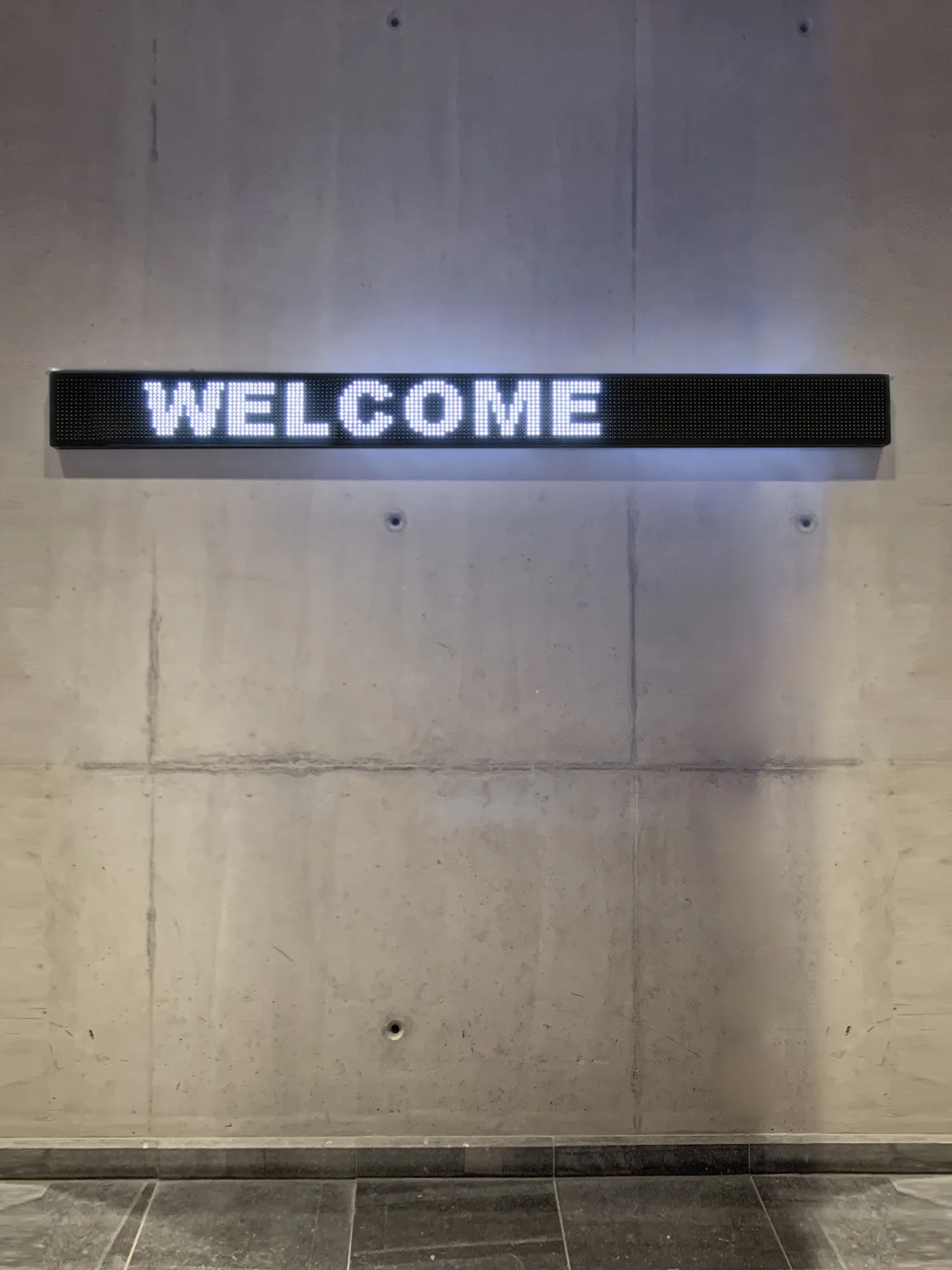
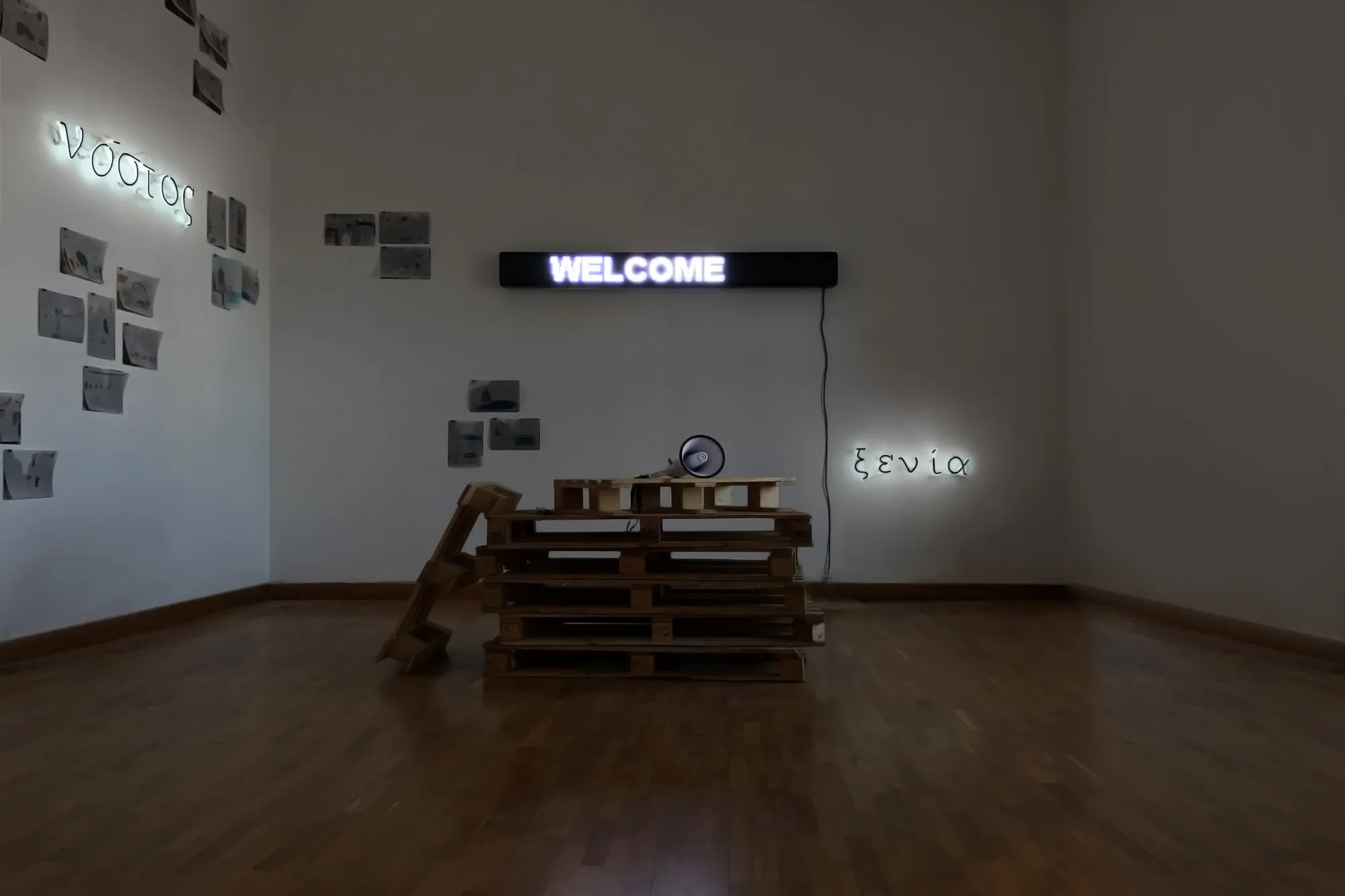
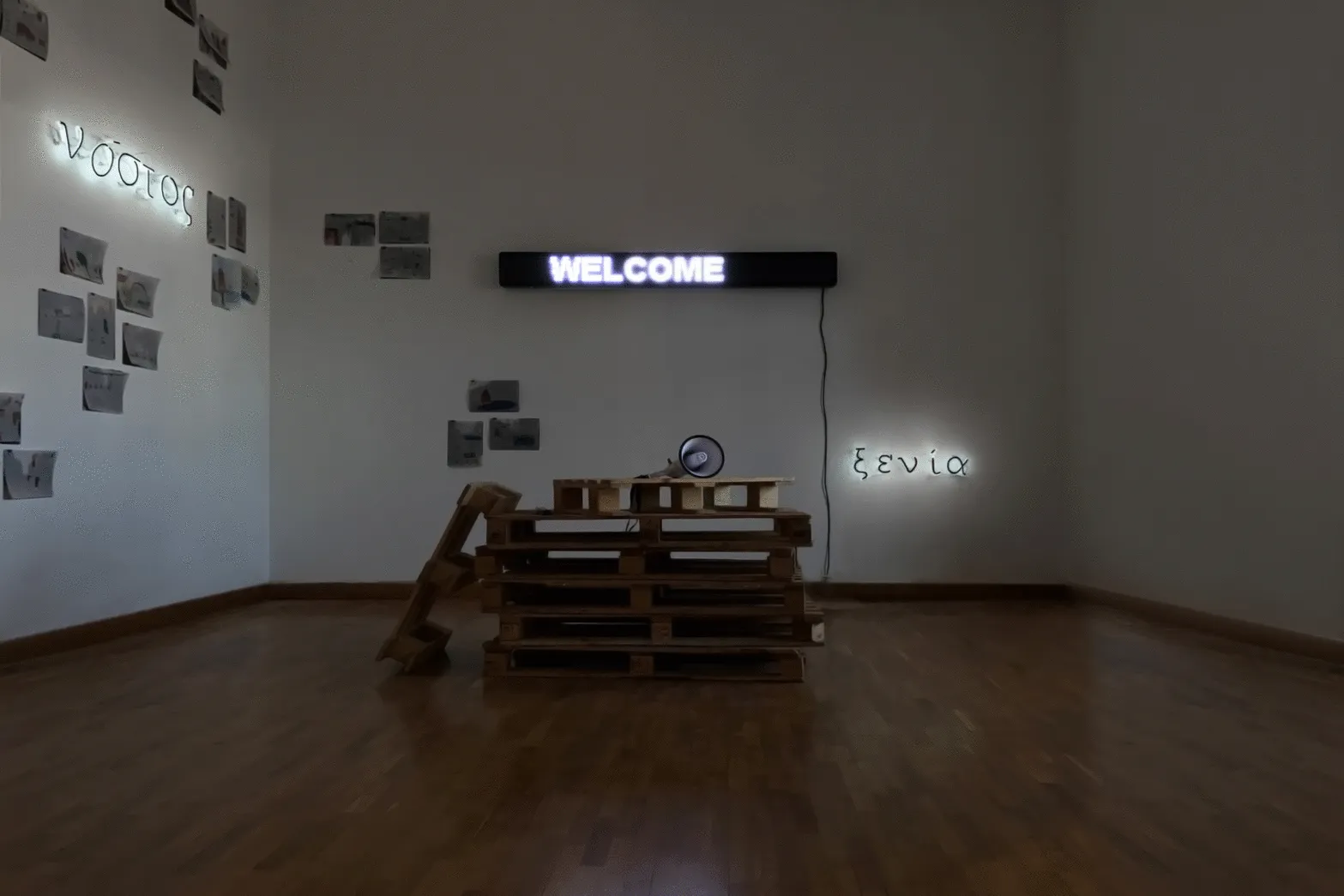
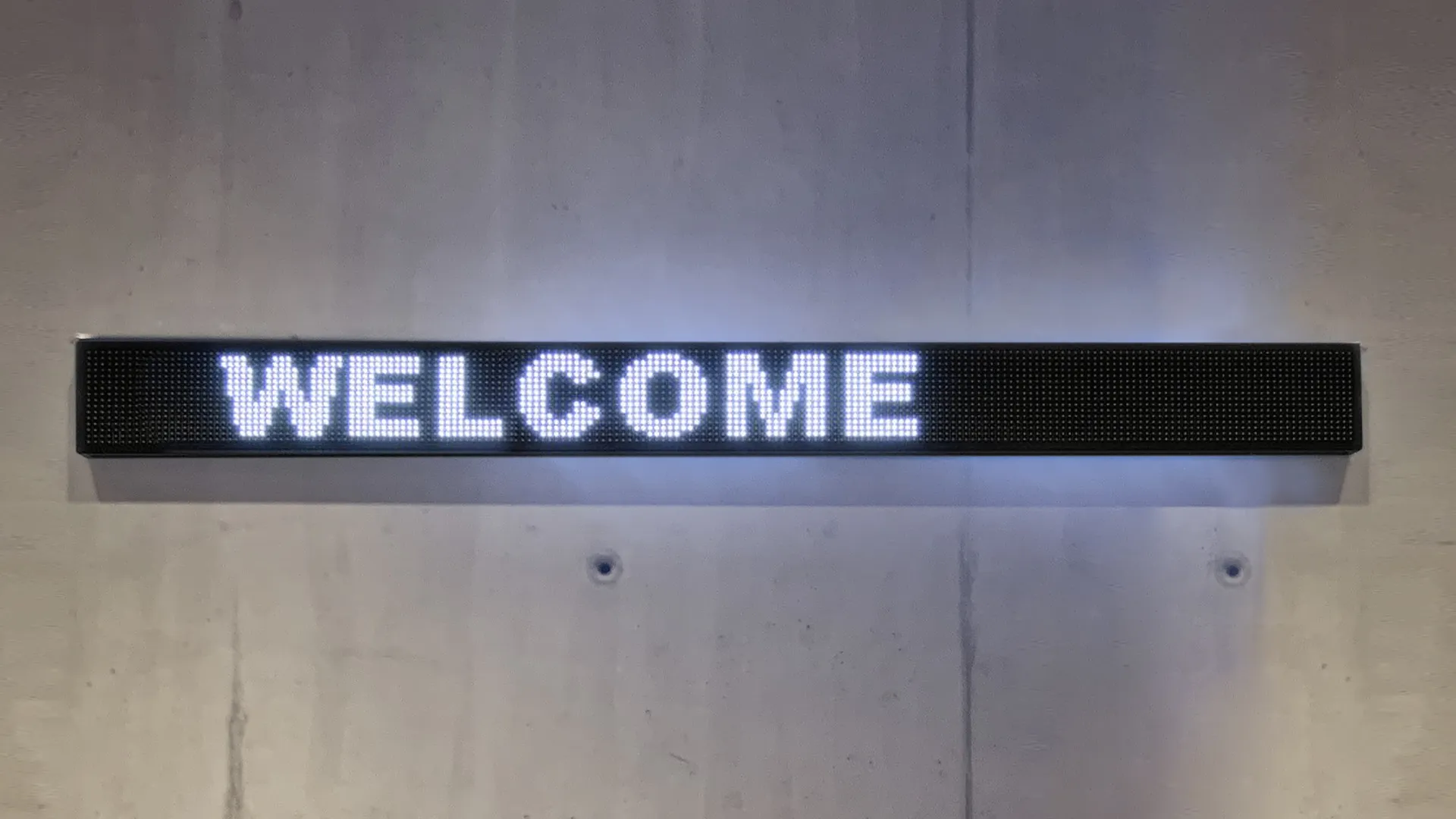
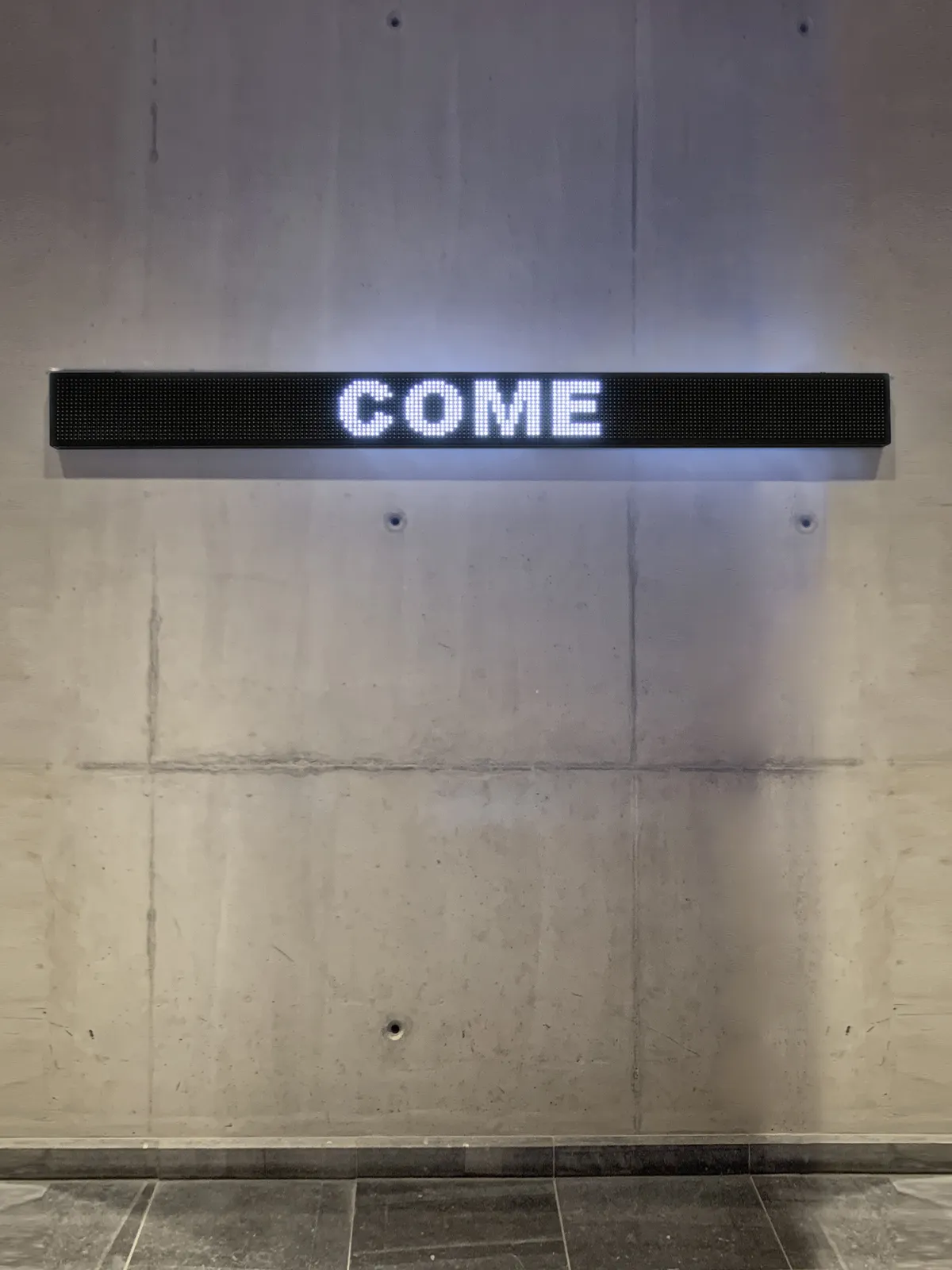
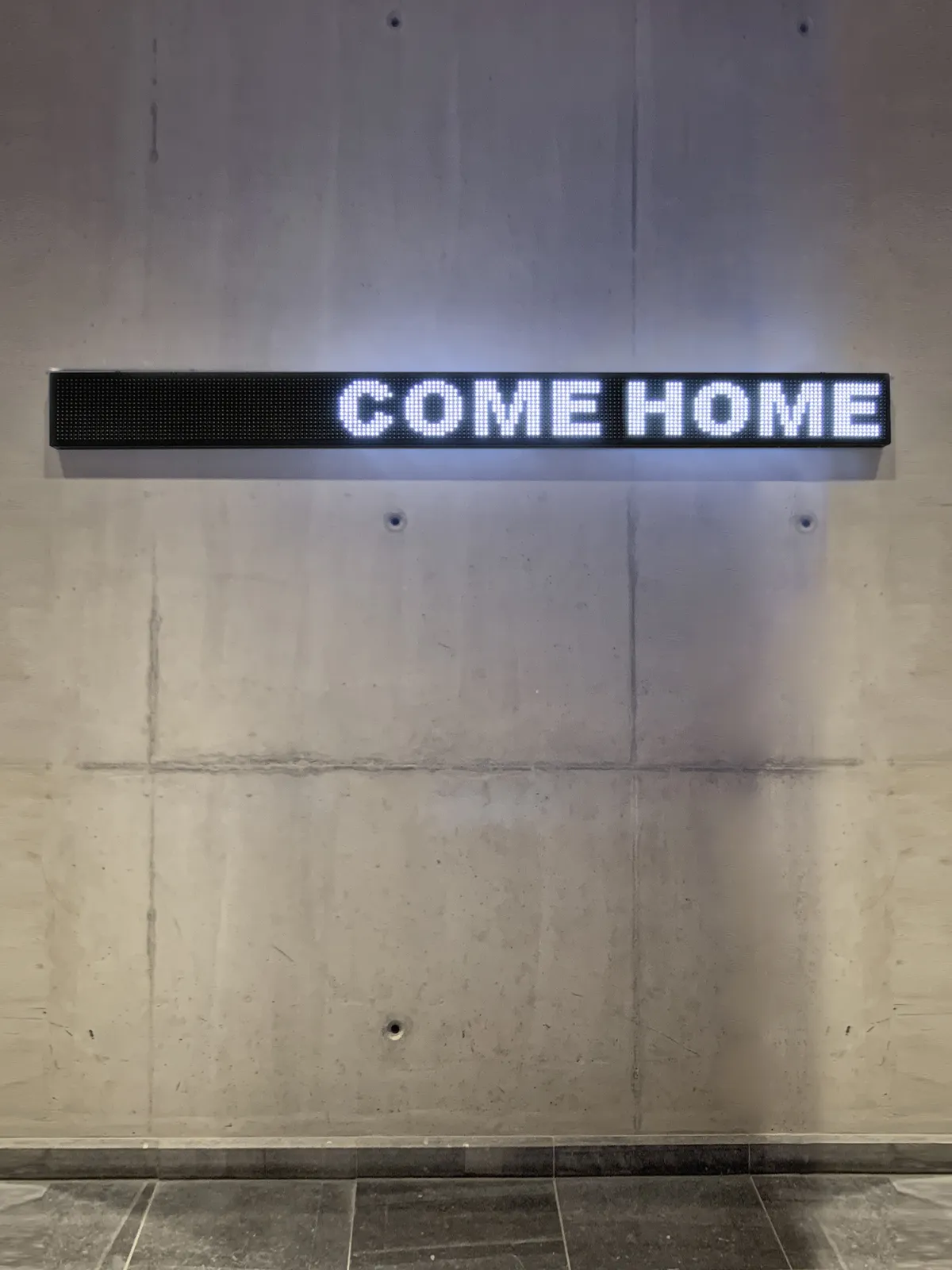
A two-metre LED screen hangs on the wall. White letters appear: WELCOME. Then the first three letters go out, and only COME remains, in exactly the same place. A moment later, HOME lights up beside it: COME HOME. The sequence begins again. Nothing moves except what disappears and what is added; the word at the centre never shifts.
That stillness is the whole dilemma. Welcome already contains come. Take away its beginning and the greeting becomes an invitation, an appeal or an order; add one word and it becomes a call back. The same four letters belong to three different situations: the threshold where a newcomer is received, the plain imperative that draws someone closer, and the voice that summons them to the place they came from. The screen does not choose between them. It shows how little separates them.
WELCOME is the language of doors, borders and arrival halls, the word that greets a stranger and, in greeting, reminds them that someone else was already at home. COME HOME turns the direction around. It assumes a home elsewhere, a place where the person is expected or longs to be, and it can be heard as a promise, a reproach or an impossibility.
In the context of exile, these two messages can coexist rather than oppose one another. One may live where one has been received and still be claimed by the place one left. dilemma gives that double belonging a single word to stand on. Come can mean stay here, and it can mean go back. The word holds its place between the two, suspended between arrival and return.
The display borrows the impersonal authority of public information, the boards that direct movement through stations, airports and offices. Yet no destination is given. There is no address after HOME, no indication of who is speaking, who is welcoming or who is calling someone back, nor of where home actually lies. The message might come from a host country, a family on the other side of a border, a loved one, or an inner voice, the quiet insistence of nostalgia. The word COME stays fixed, while its direction, its addressee and its intention keep changing.
Within L’amour de loin, dilemma places the in-between in language itself, in one word shared by welcome and return. The sequence never ends. WELCOME returns after COME HOME, and the cycle starts over, as if neither arrival nor return could ever be final, and the person caught between them were asked, again and again, to answer.