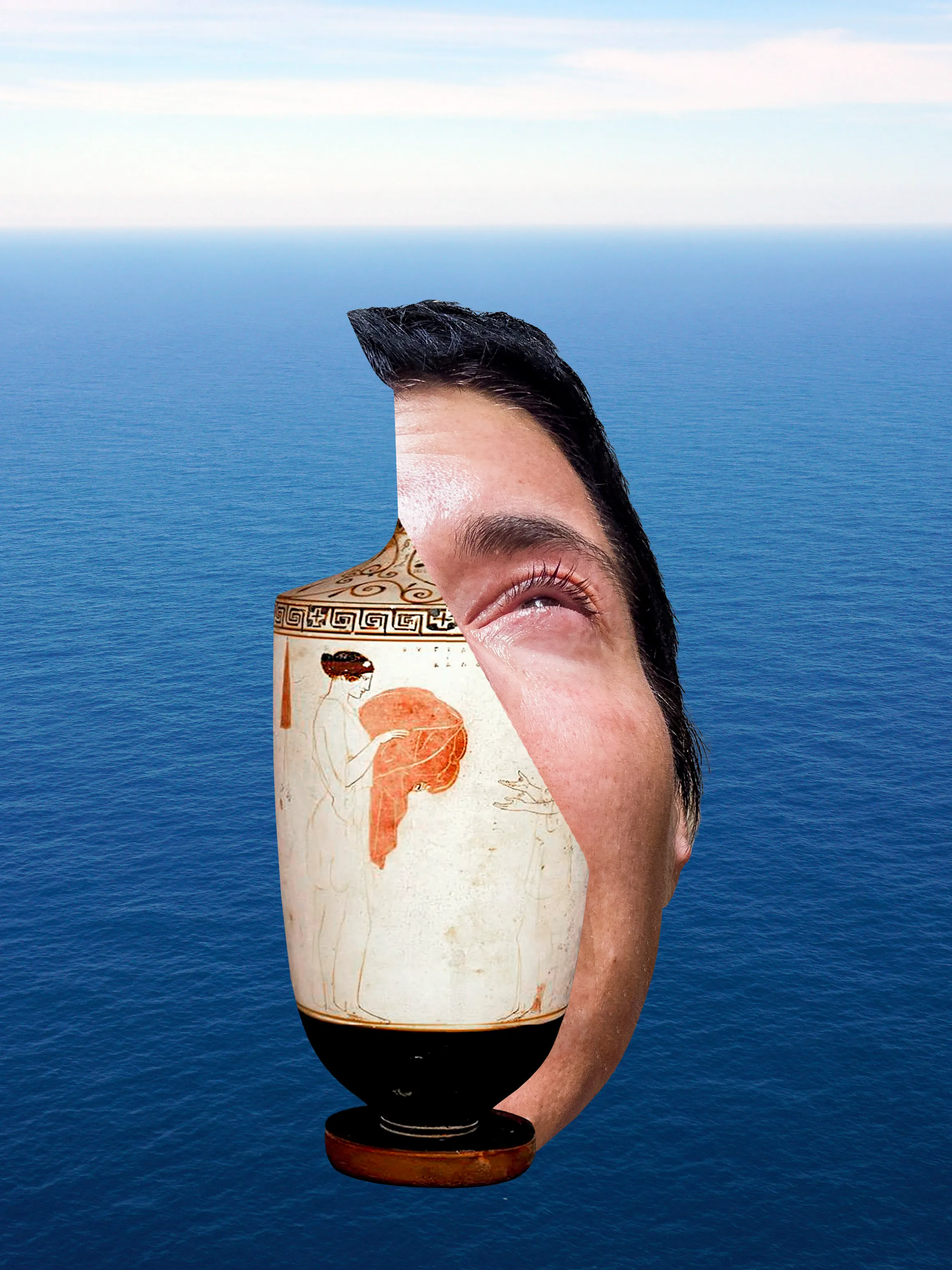
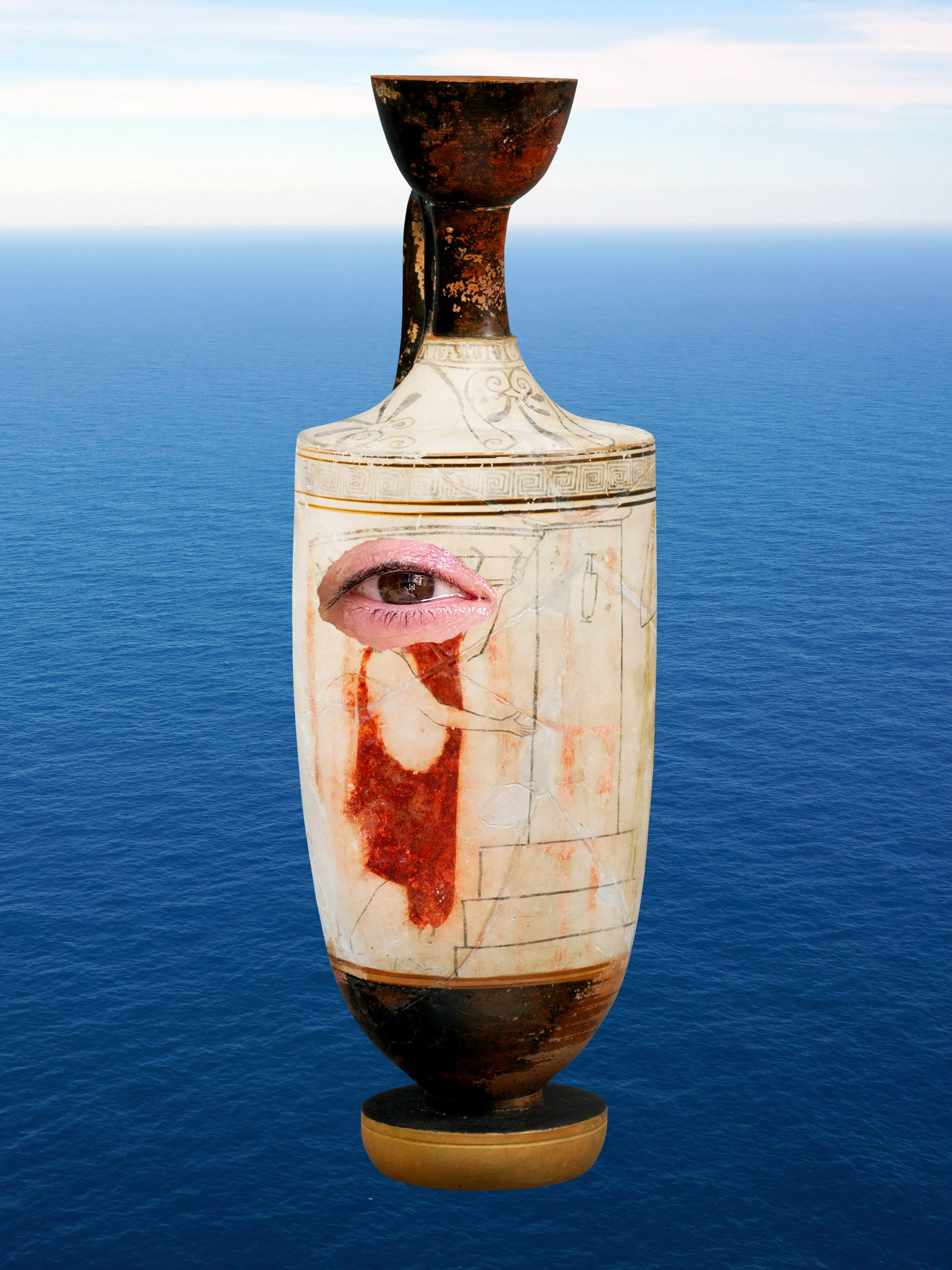
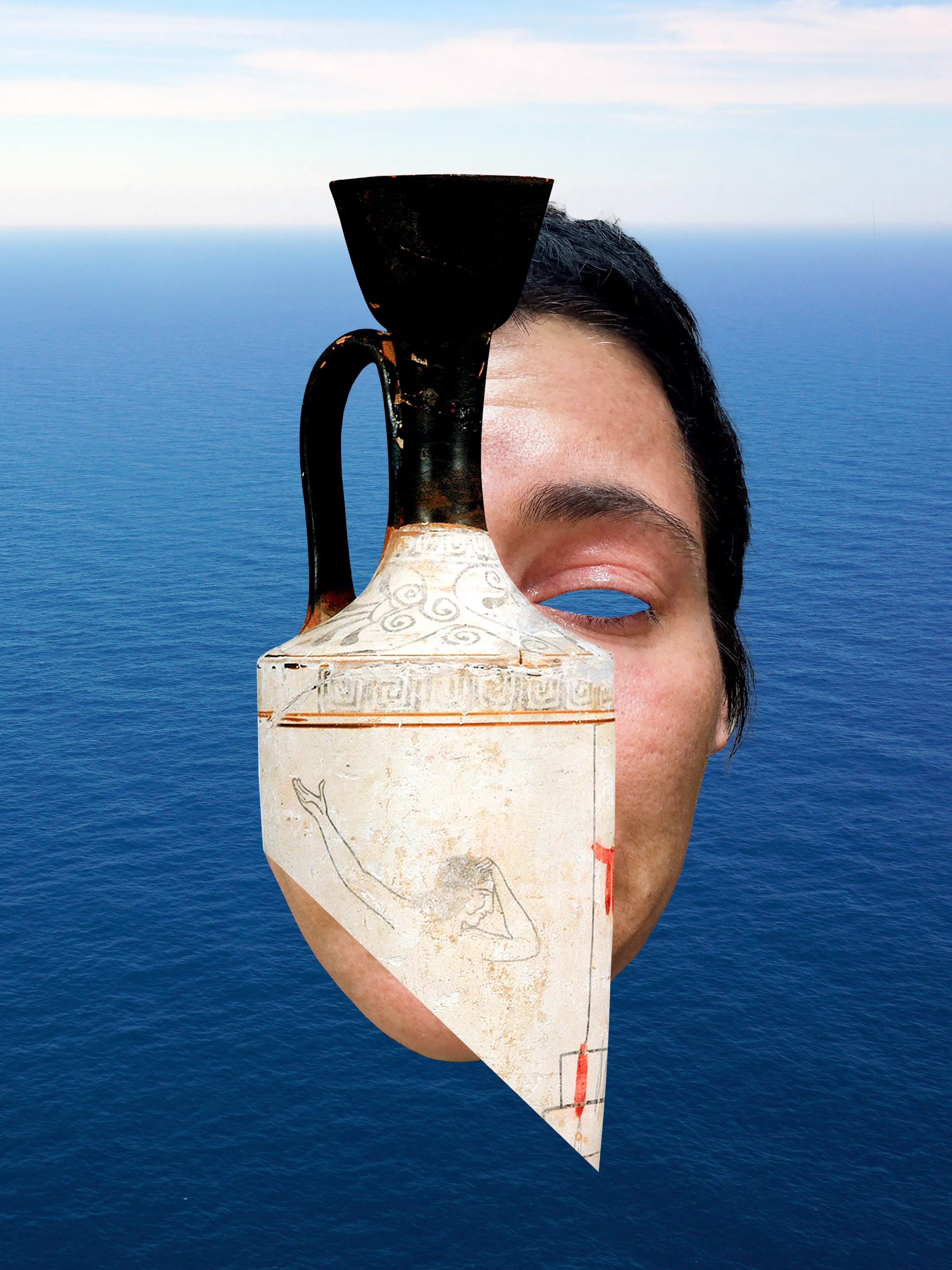
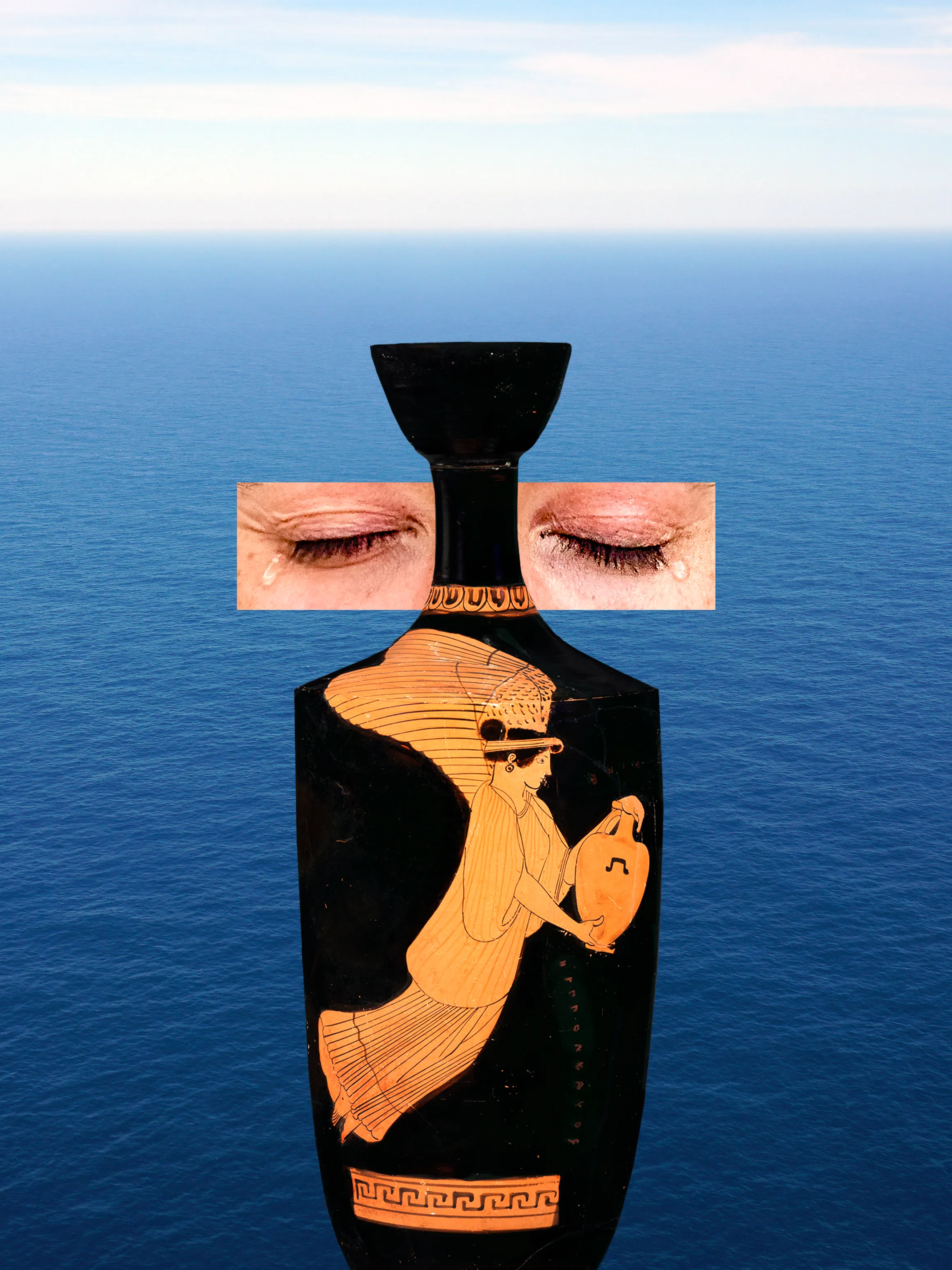
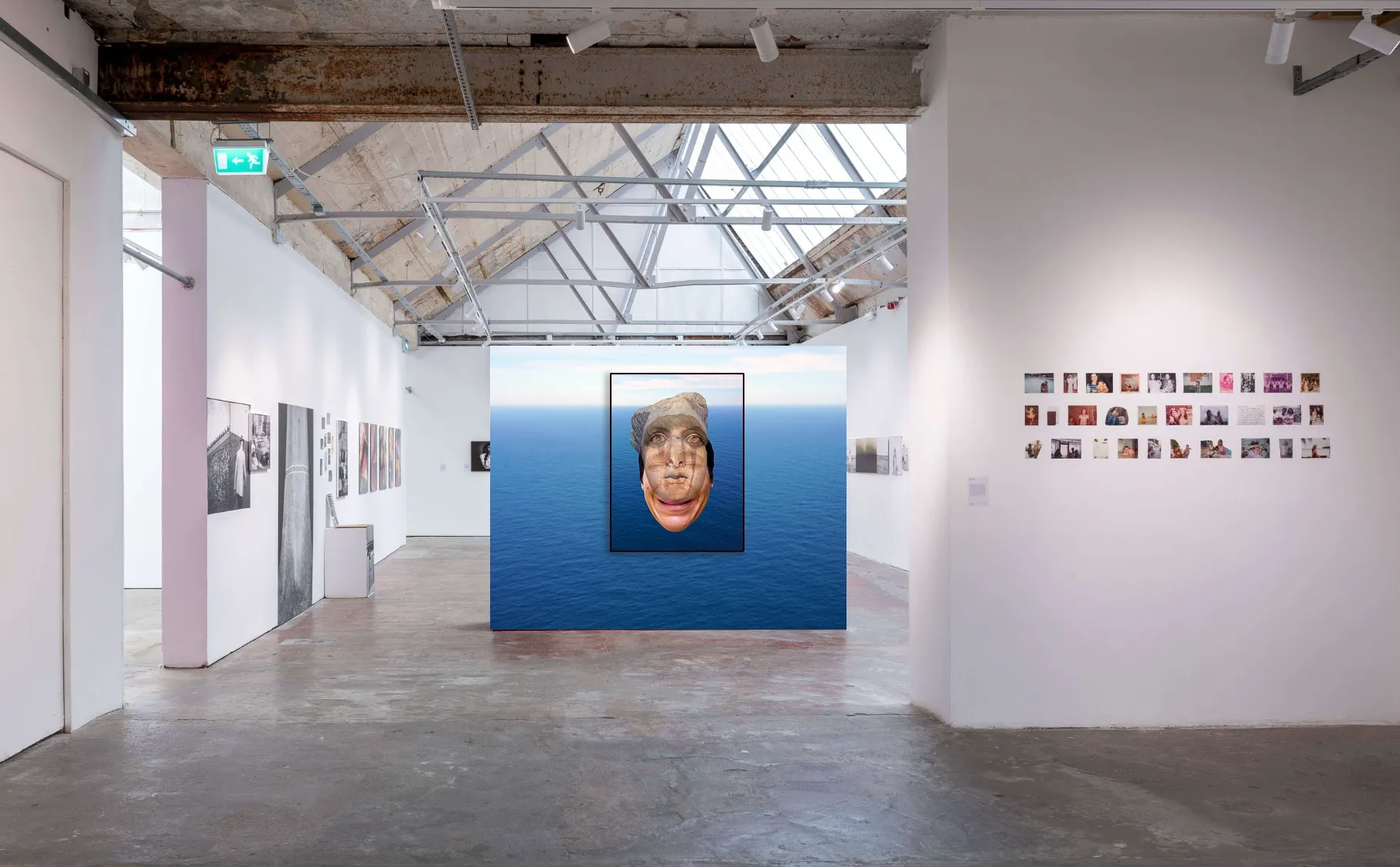
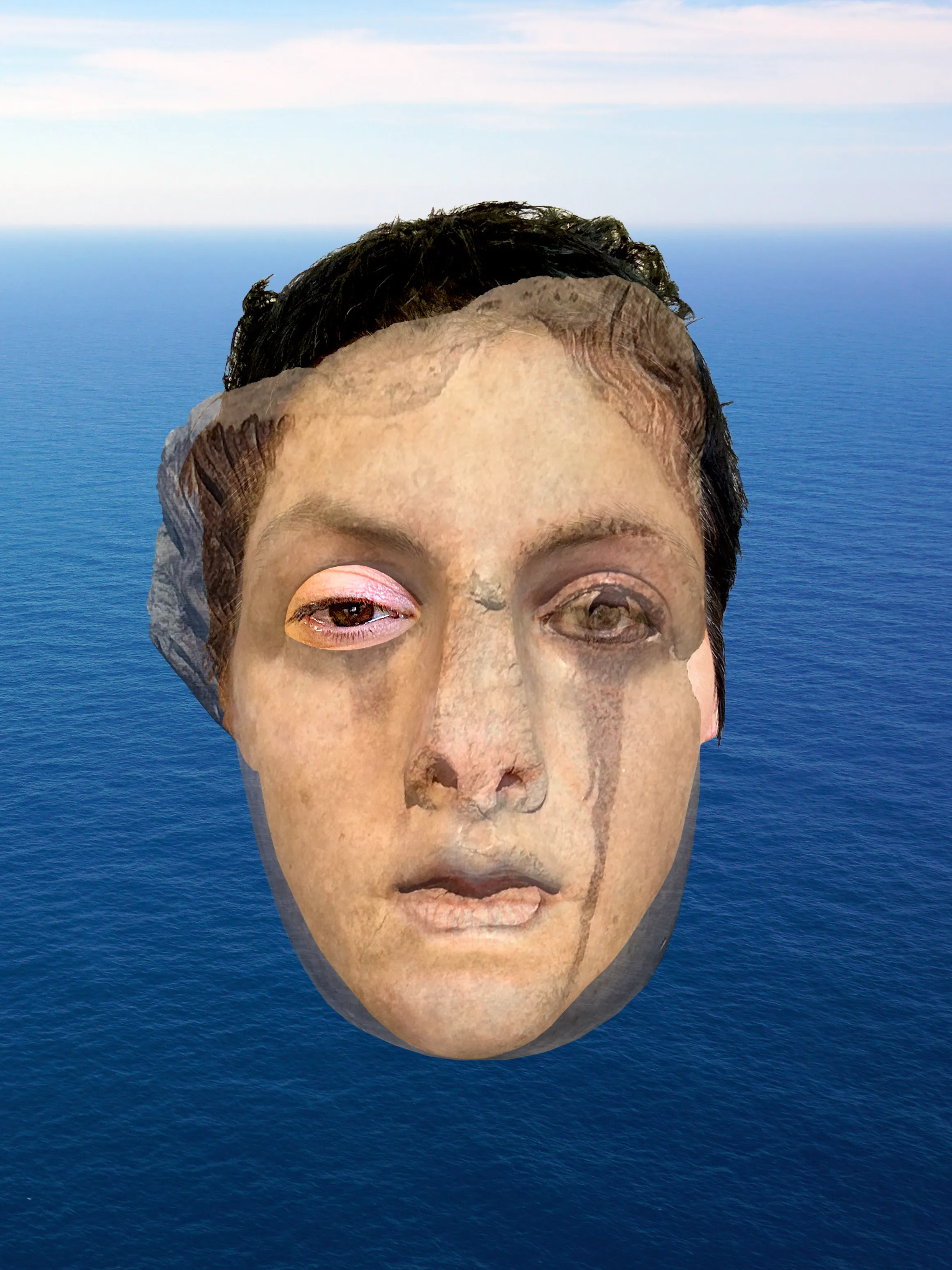
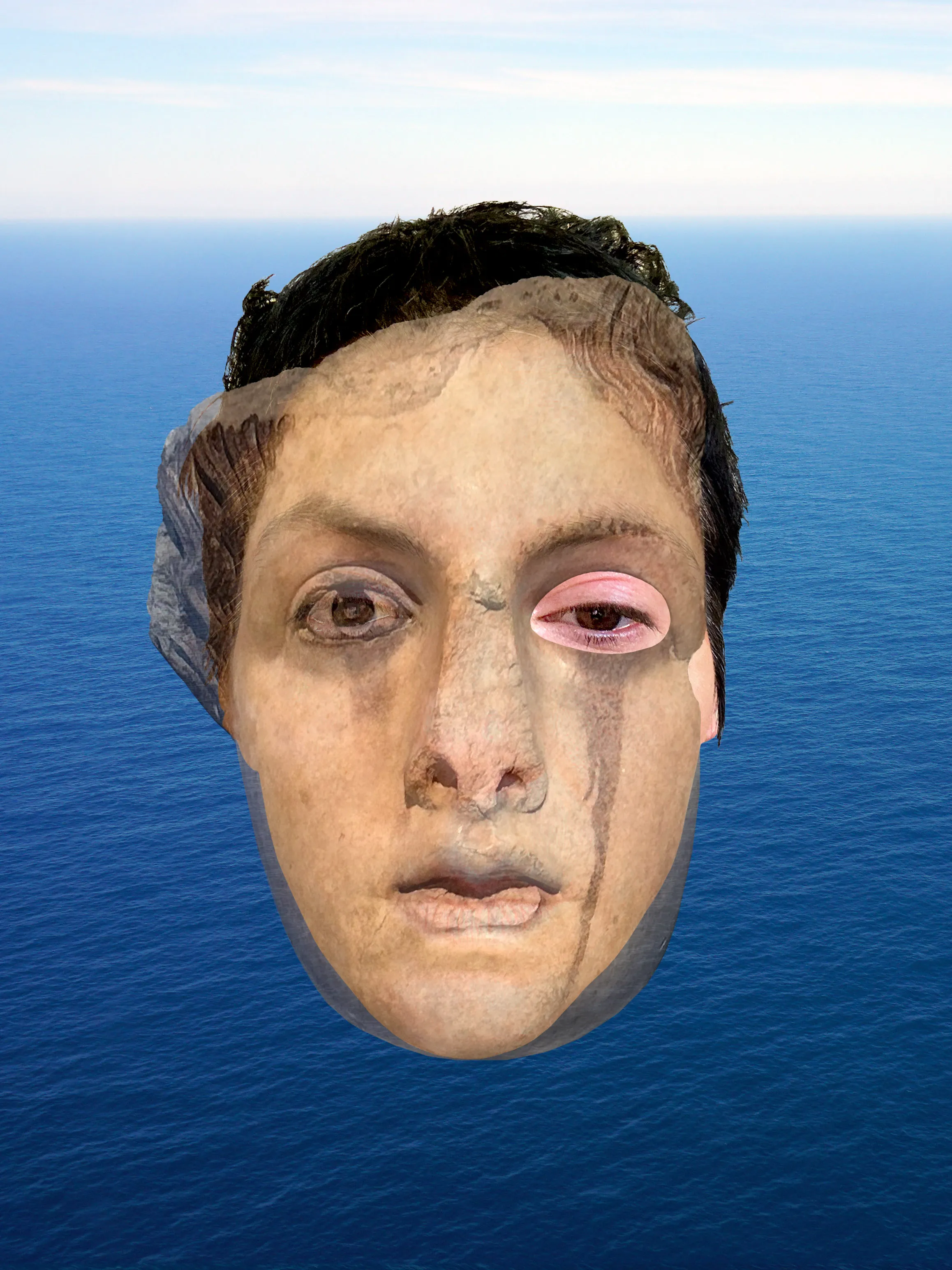
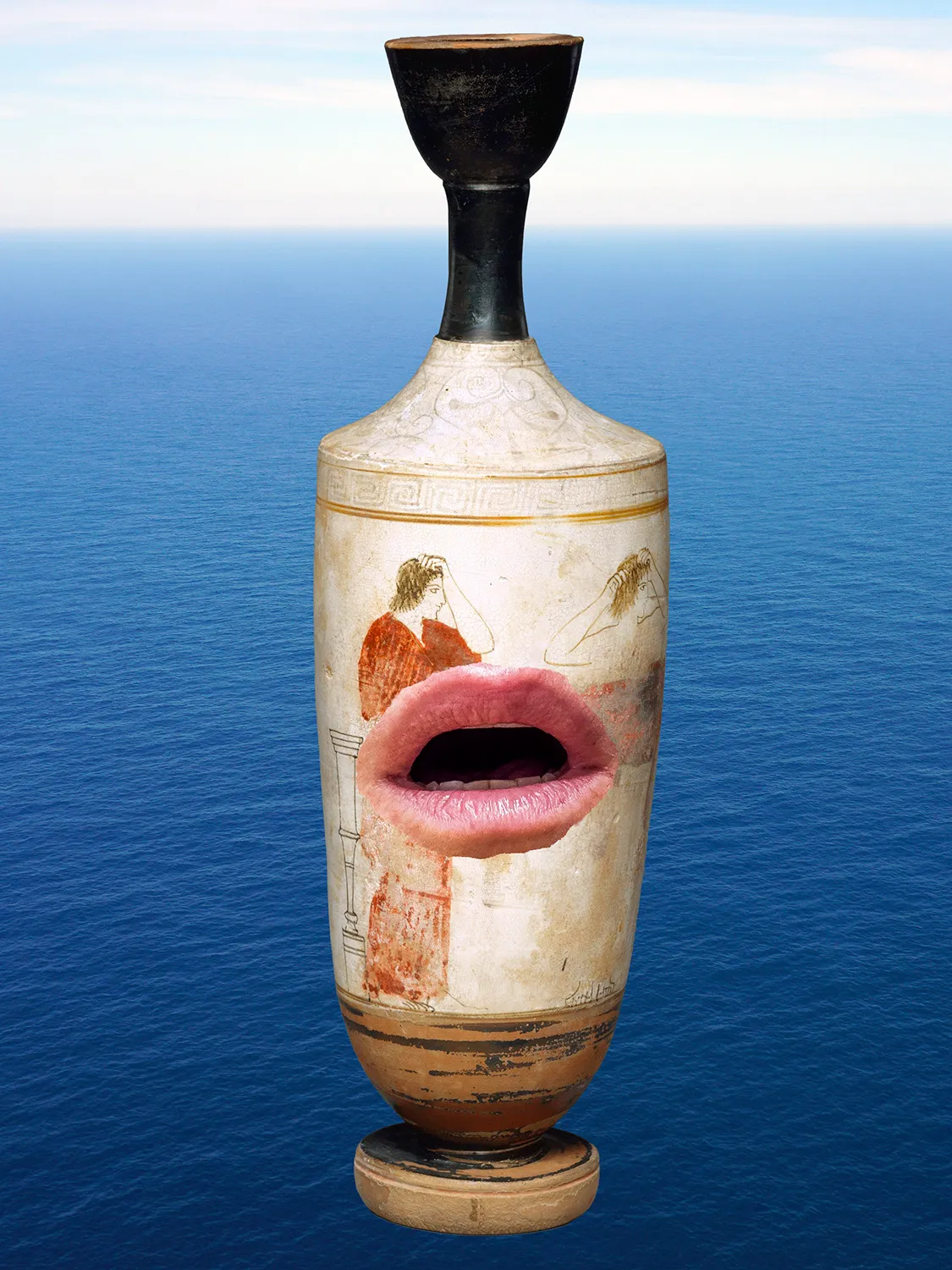
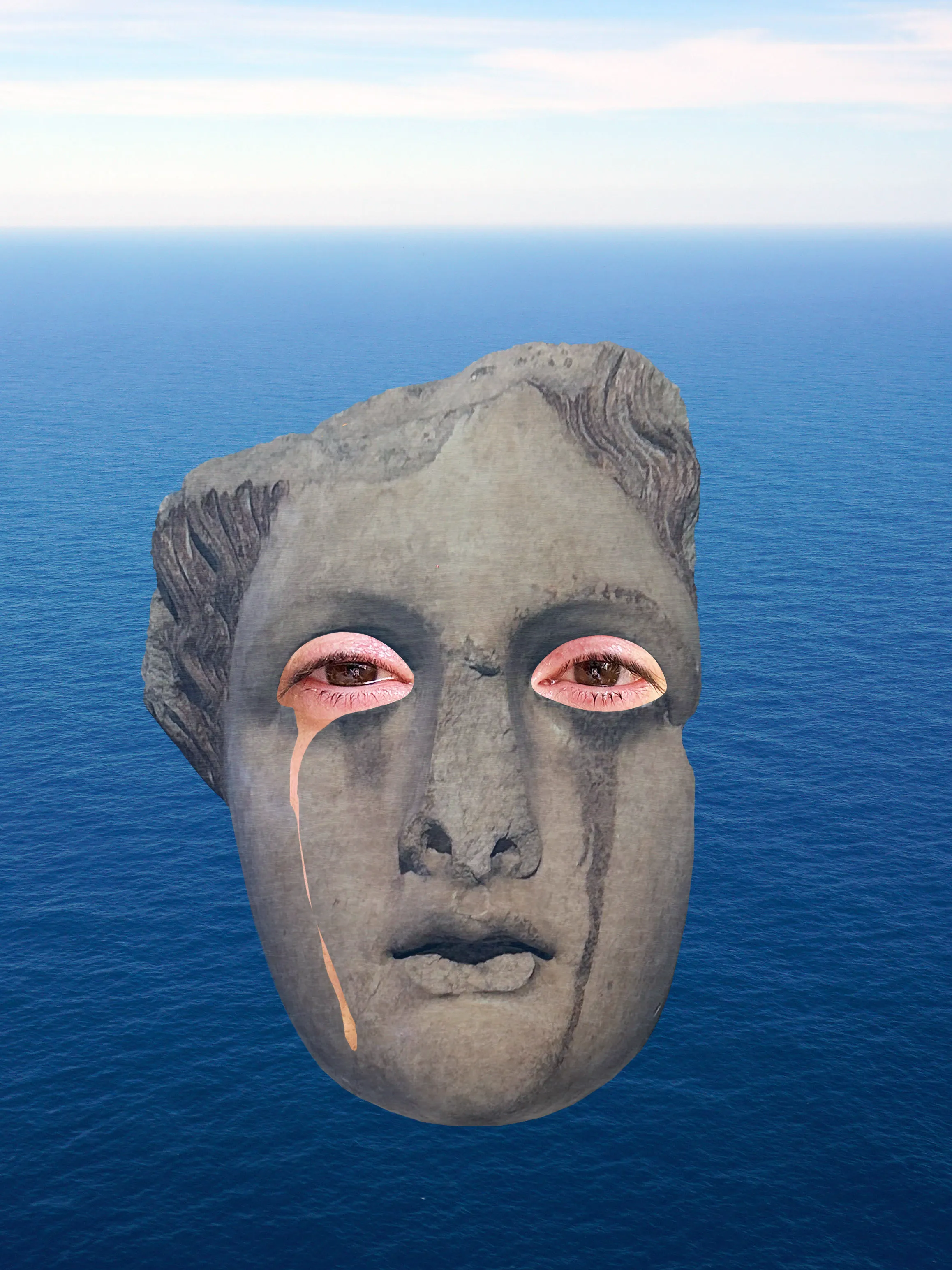
Autoportrait de moi en larmes belongs to Γόον μοι ἔννεπε, Μοῦσα, and begins with a direct encounter between mourning and the self-portrait: a genre traditionally built on the possibility of observing and recognising oneself.
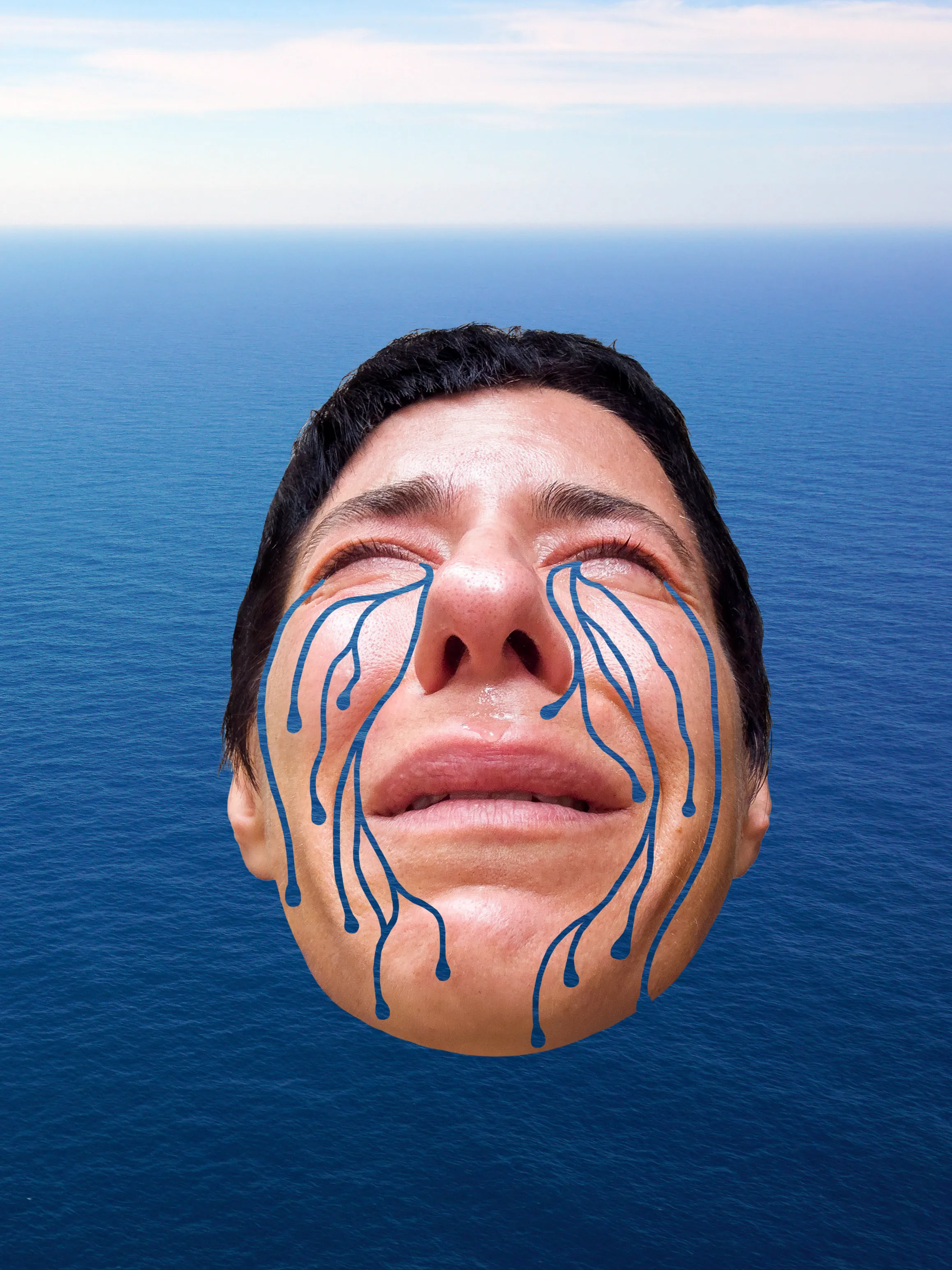
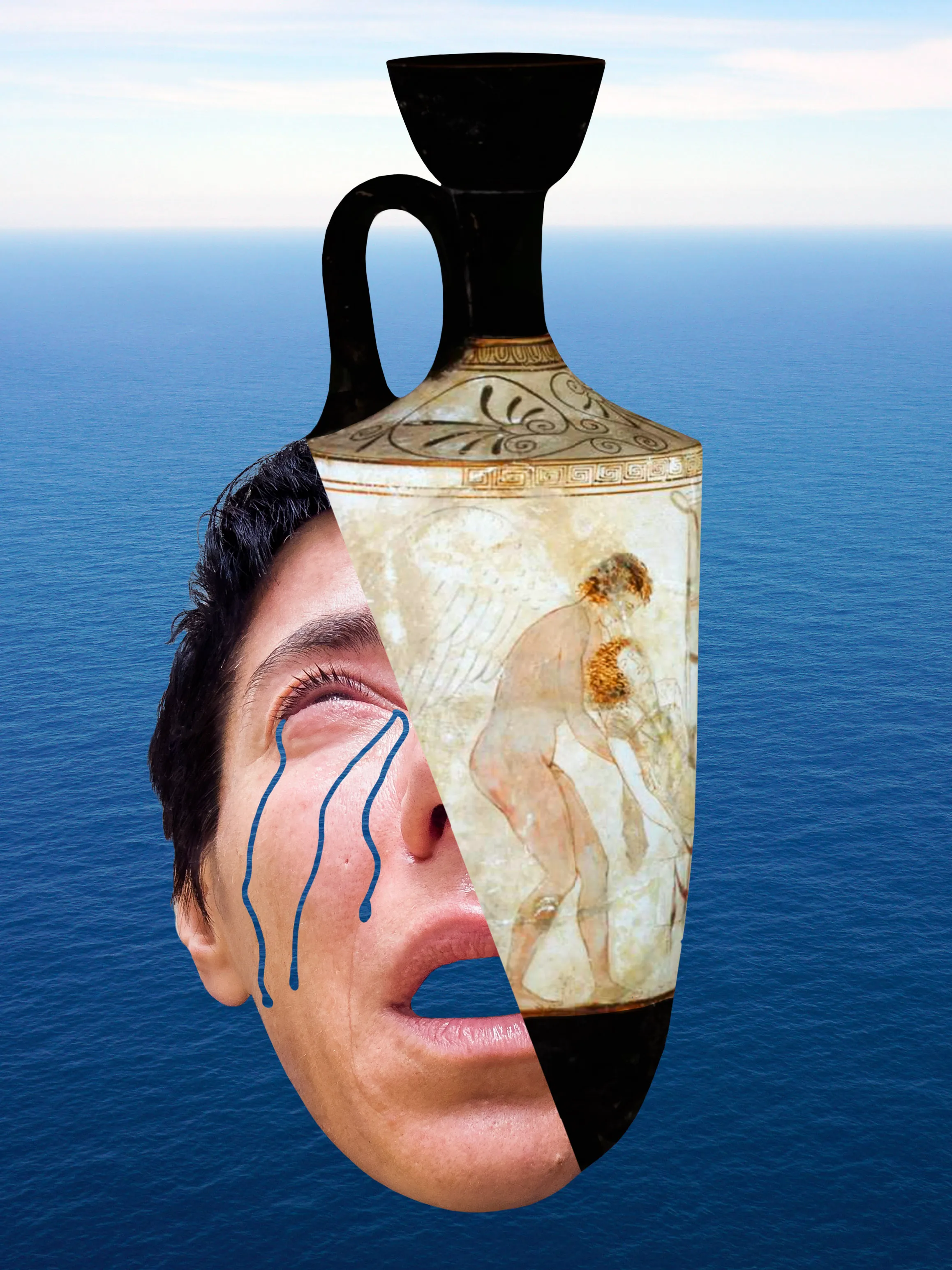
Following the death of her father, Kosmatopoulos photographed herself crying during repeated visits to his grave. The self-portraits were not made in a single sitting: they accumulated across more than a year of returns, each one recording a different state of the same recurring grief rather than a single, conclusive image of mourning. The gesture began as an attempt to confront a face she could feel changing but could not see. Tears cloud vision, distort features and interrupt the reciprocal gaze on which self-portraiture depends. The camera records what the artist's own eyes can no longer hold steadily.
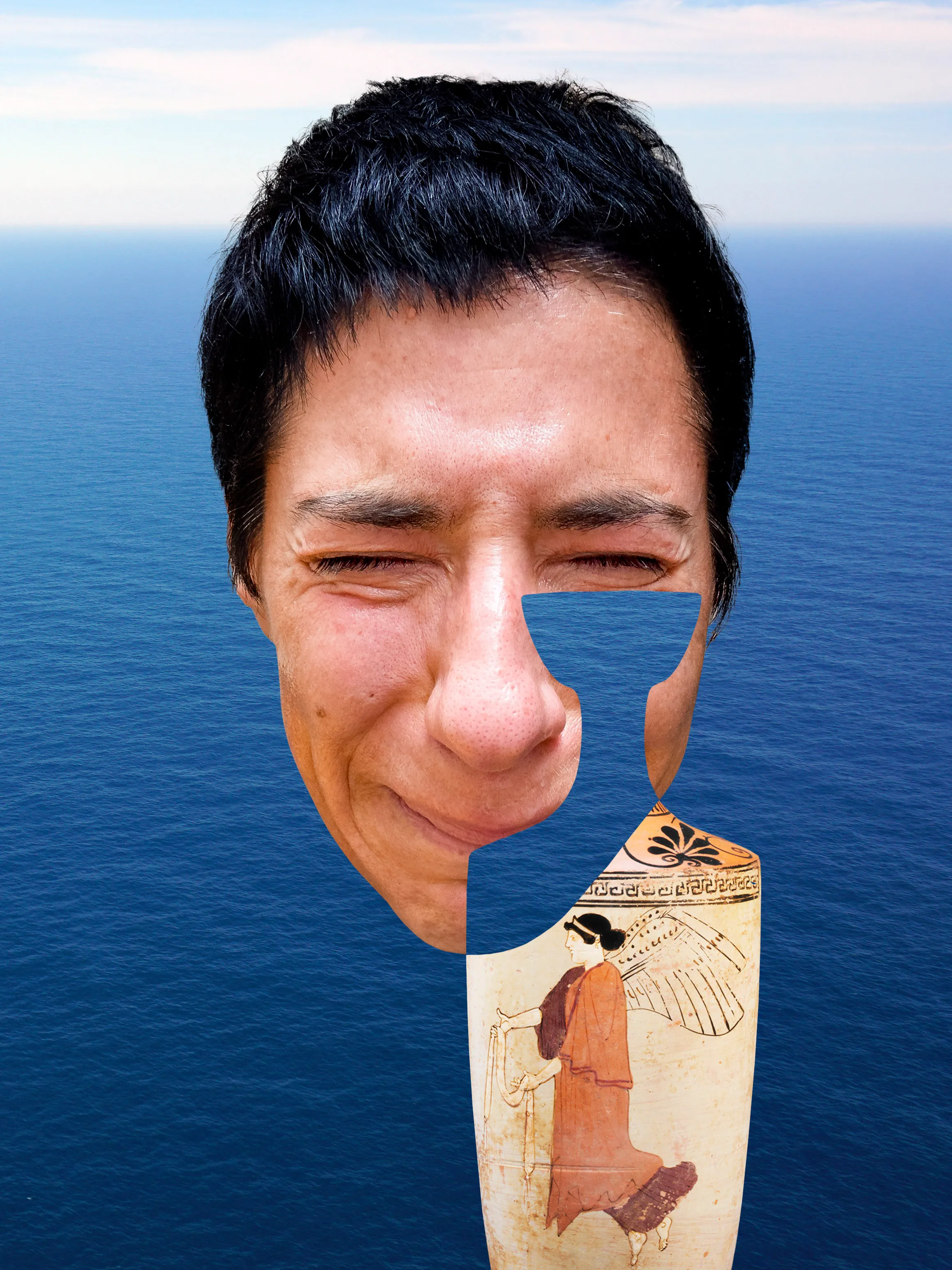
These images are not staged reconstructions of sorrow. They preserve brief episodes in which the body has already exceeded verbal control: the mouth opens, the skin contracts, the eyes swell and the face ceases to coincide with its familiar image. The self-portrait becomes less an affirmation of identity than evidence of its temporary disorganisation.
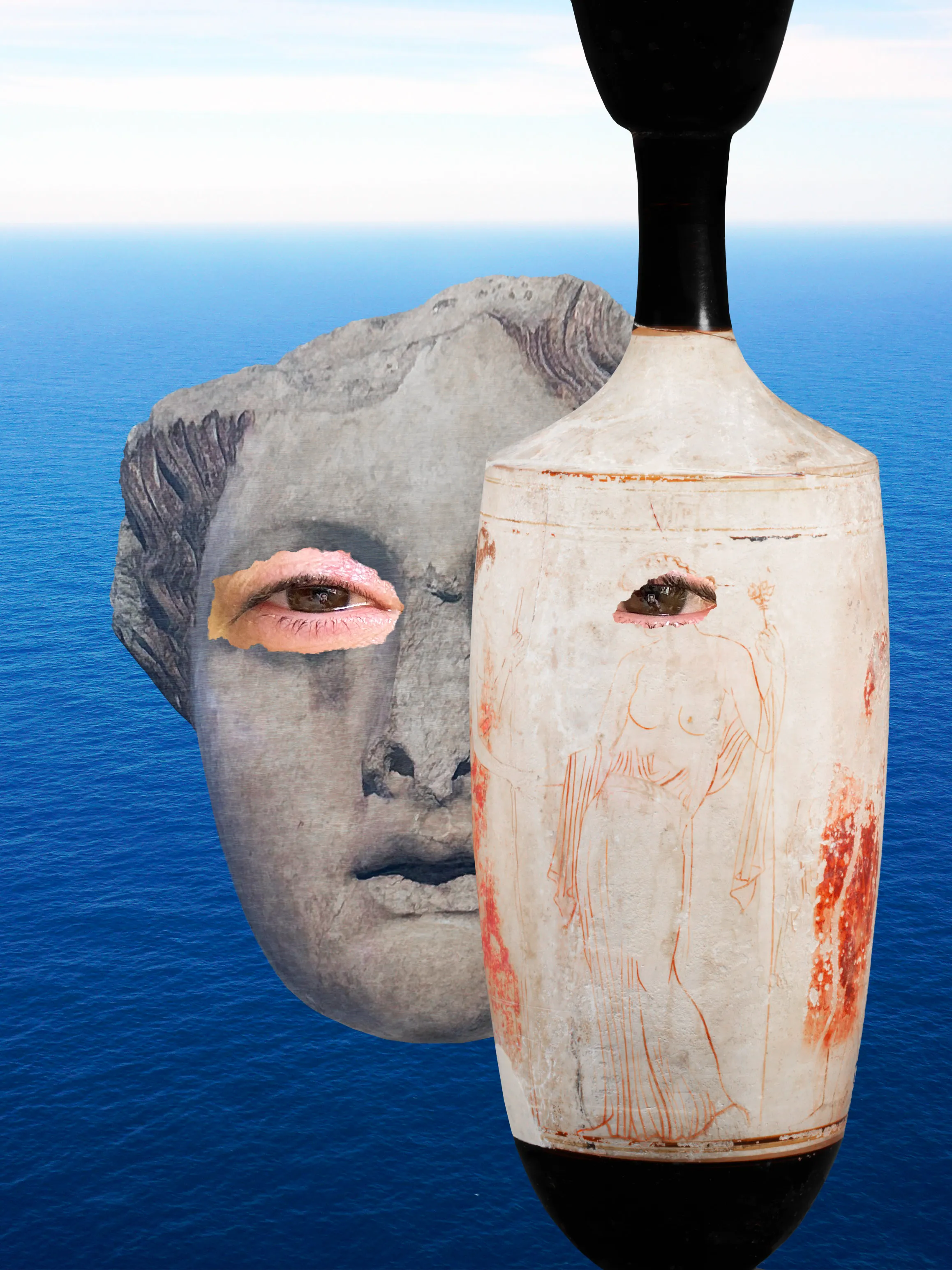
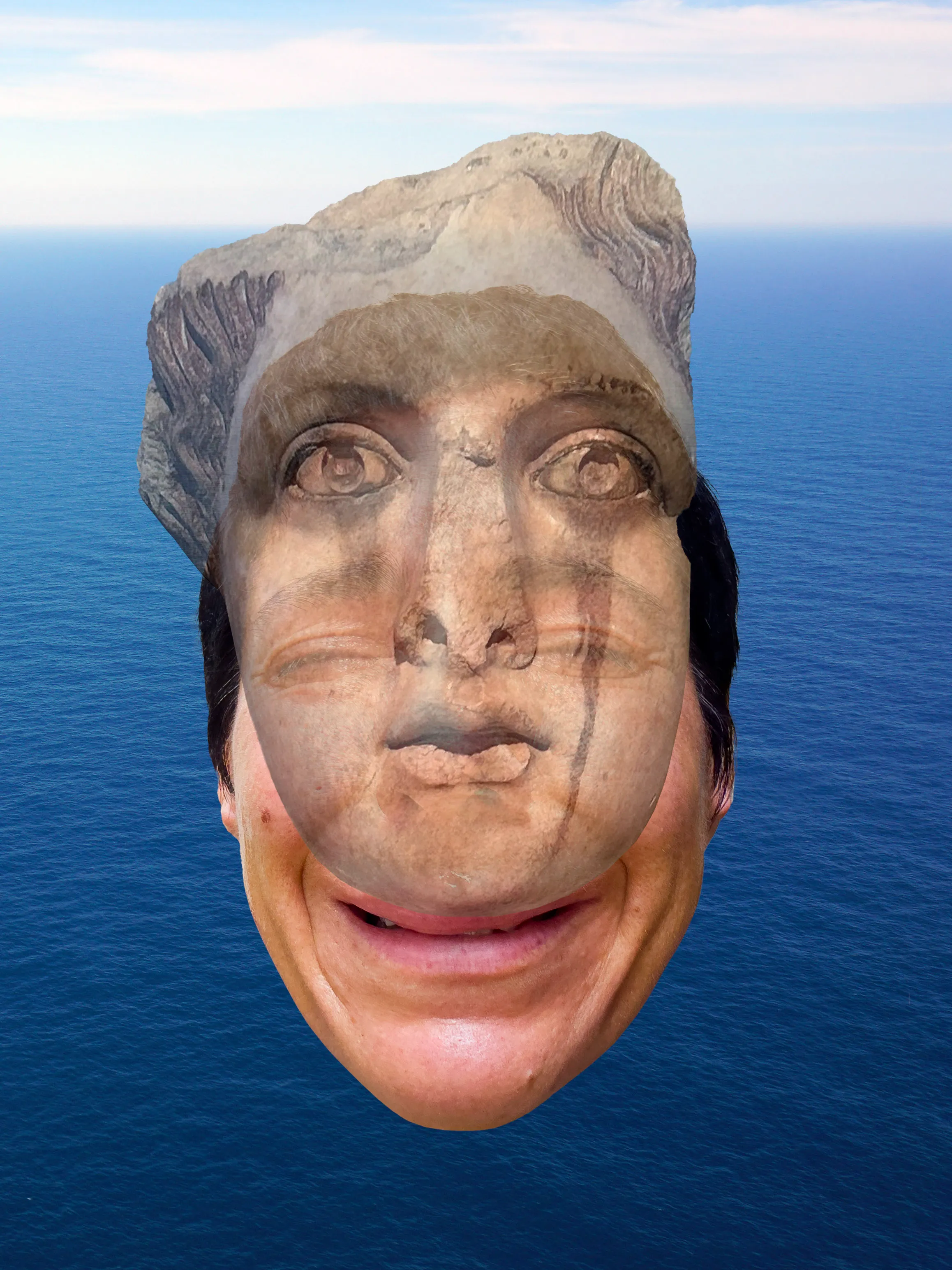
Kosmatopoulos then fragments and recomposes the photographs with details drawn from ancient Greek funerary vessels, mourning figures, and an acrolithic statue head of Aphrodite held in the Acropolis Museum. Its bronze eyelashes have oxidised over time, leaving stains that run down the marble cheeks like tears. The historical images do not explain the contemporary face. They enter it. A cheek, an eye or a fold of drapery interrupts the photographic surface, allowing a solitary act of crying to pass into an inherited visual language.
The photographs are printed, cut and layered by hand rather than composited digitally, so that each historical fragment sits physically on top of the contemporary face rather than dissolving into it — a drapery fold or a chipped stone edge remains legible as something added, not blended away.
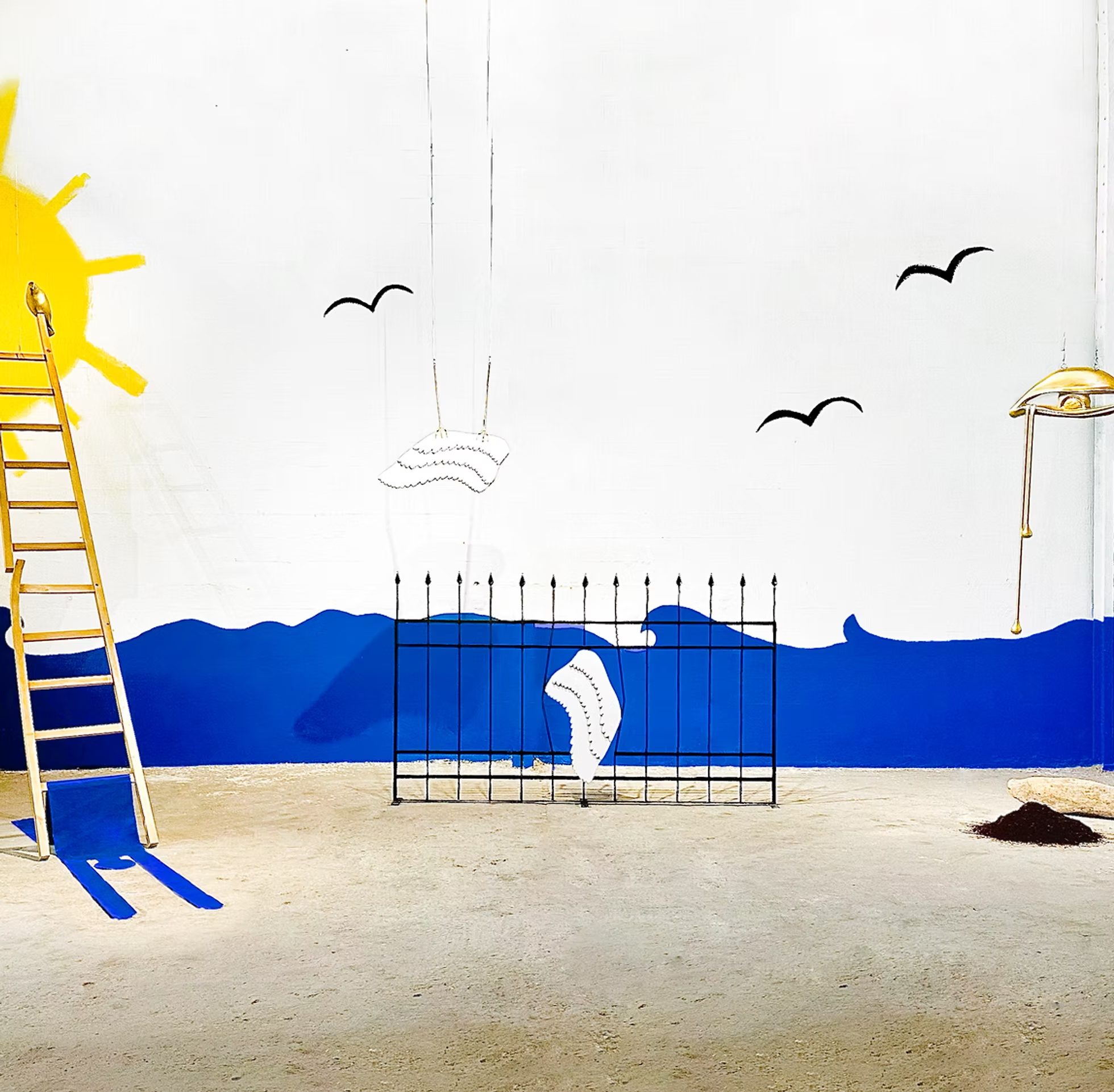
The sea extends this movement. It appears as the immeasurable scale of tears, but also as a surface in which a face can dissolve into landscape. What begins as moisture held by the eye expands beyond the limits of the portrait. The body seems at once submerged in grief and enlarged by it, suspended between a recognisable individual and an image without a fixed time.
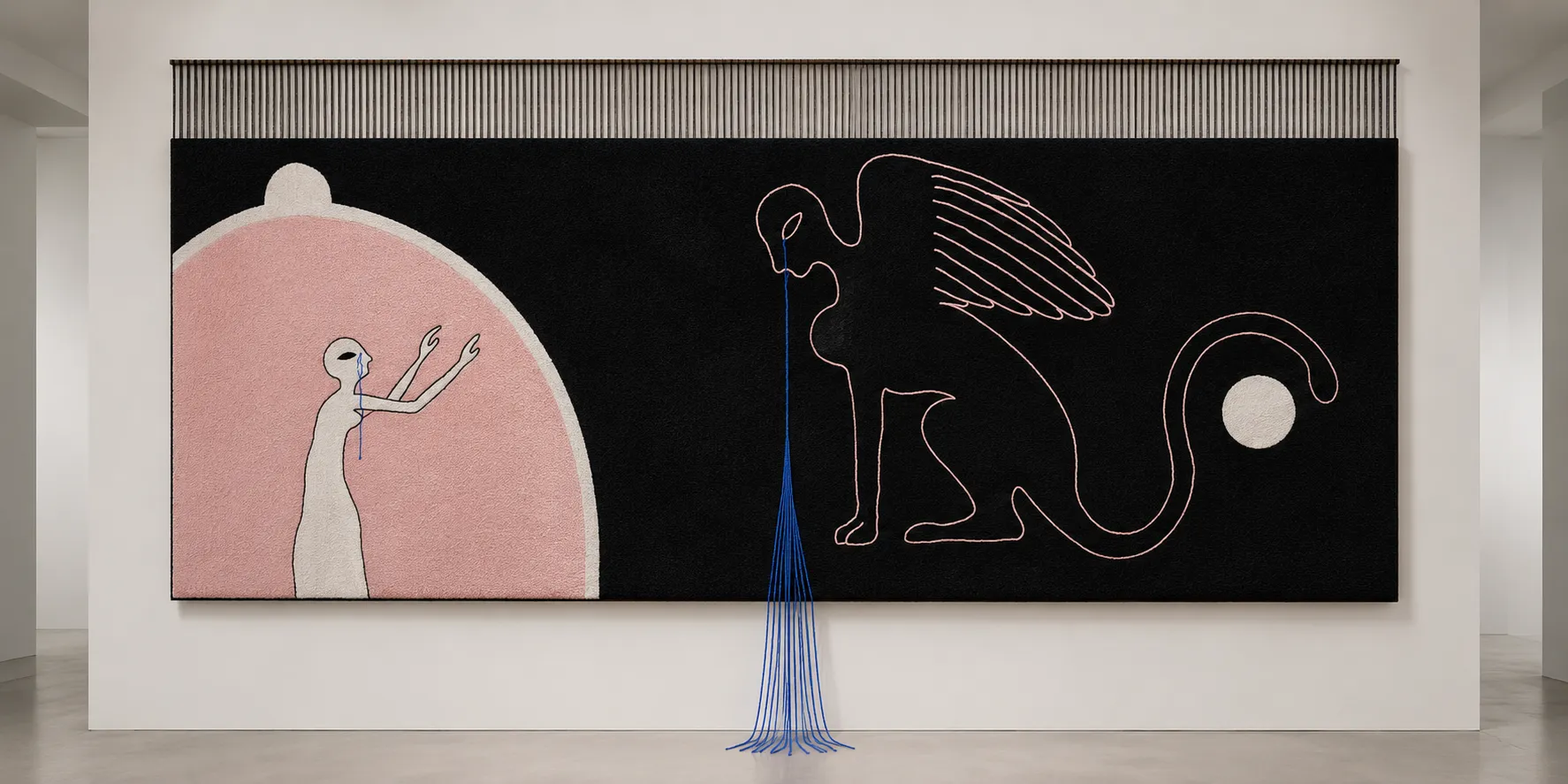
By enlarging and exposing these photographs to the gaze of others, Kosmatopoulos changes the status of the experience. The tears remain her own, rooted in a specific loss, yet the image no longer belongs solely to the private moment in which it was made. The artist takes her place among the mourners whose gestures have carried sorrow across centuries.
The work does not use tears to reveal an autobiographical story in full. It shows what happens when language withdraws and the face becomes the site where loss writes itself. The tear has a shape. Grief does not. The sea gives scale to what the face can no longer contain.