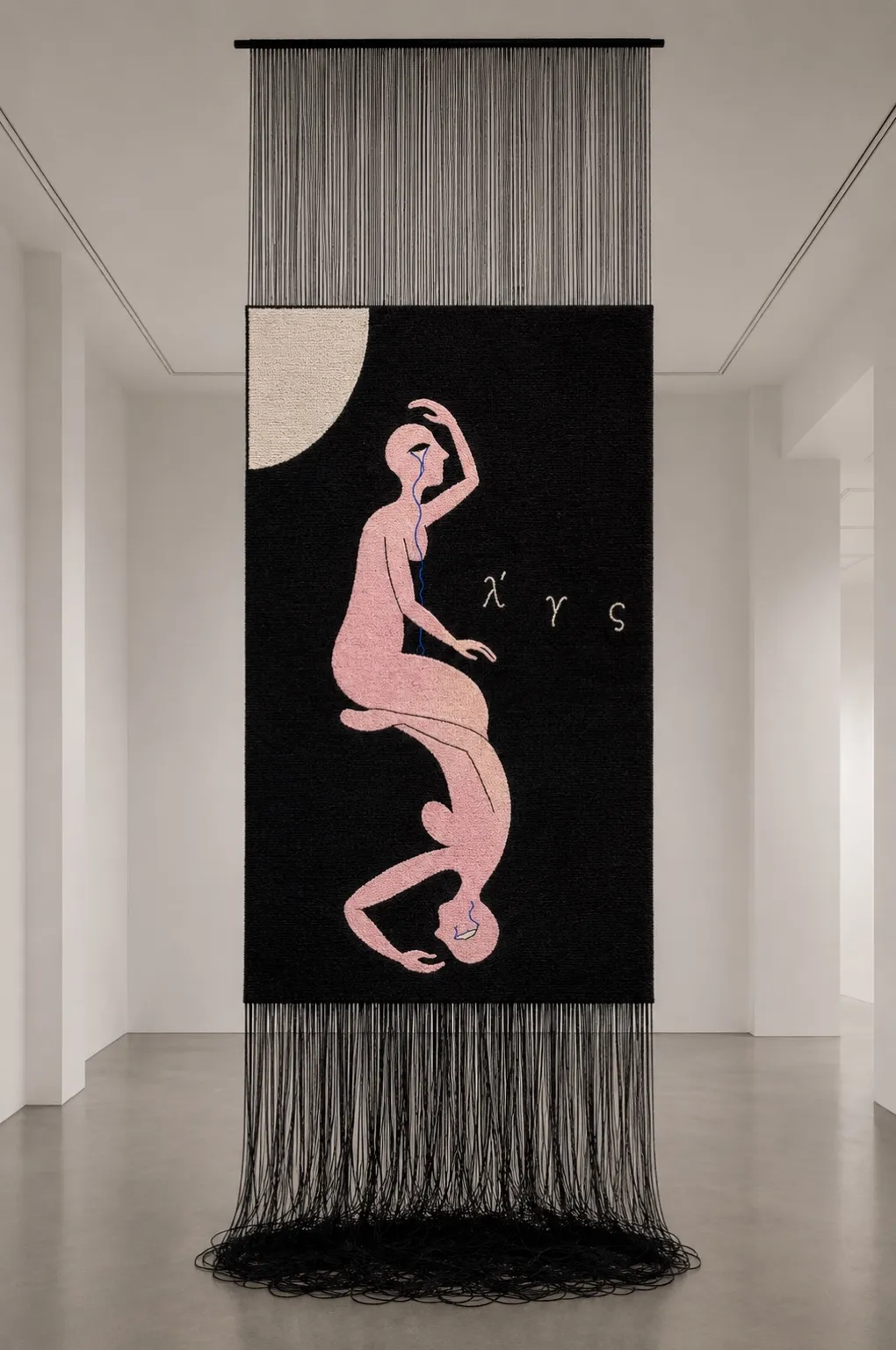
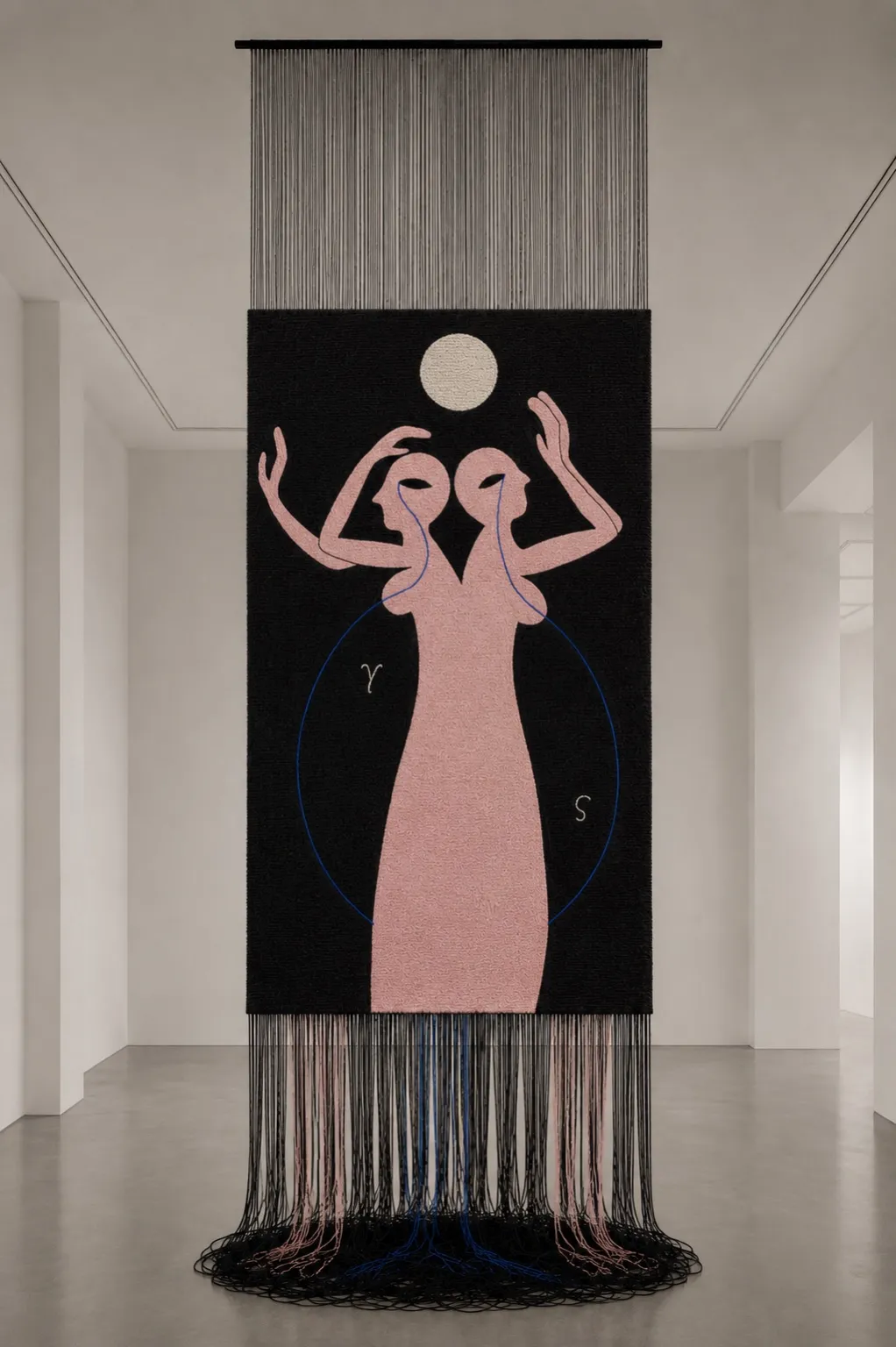
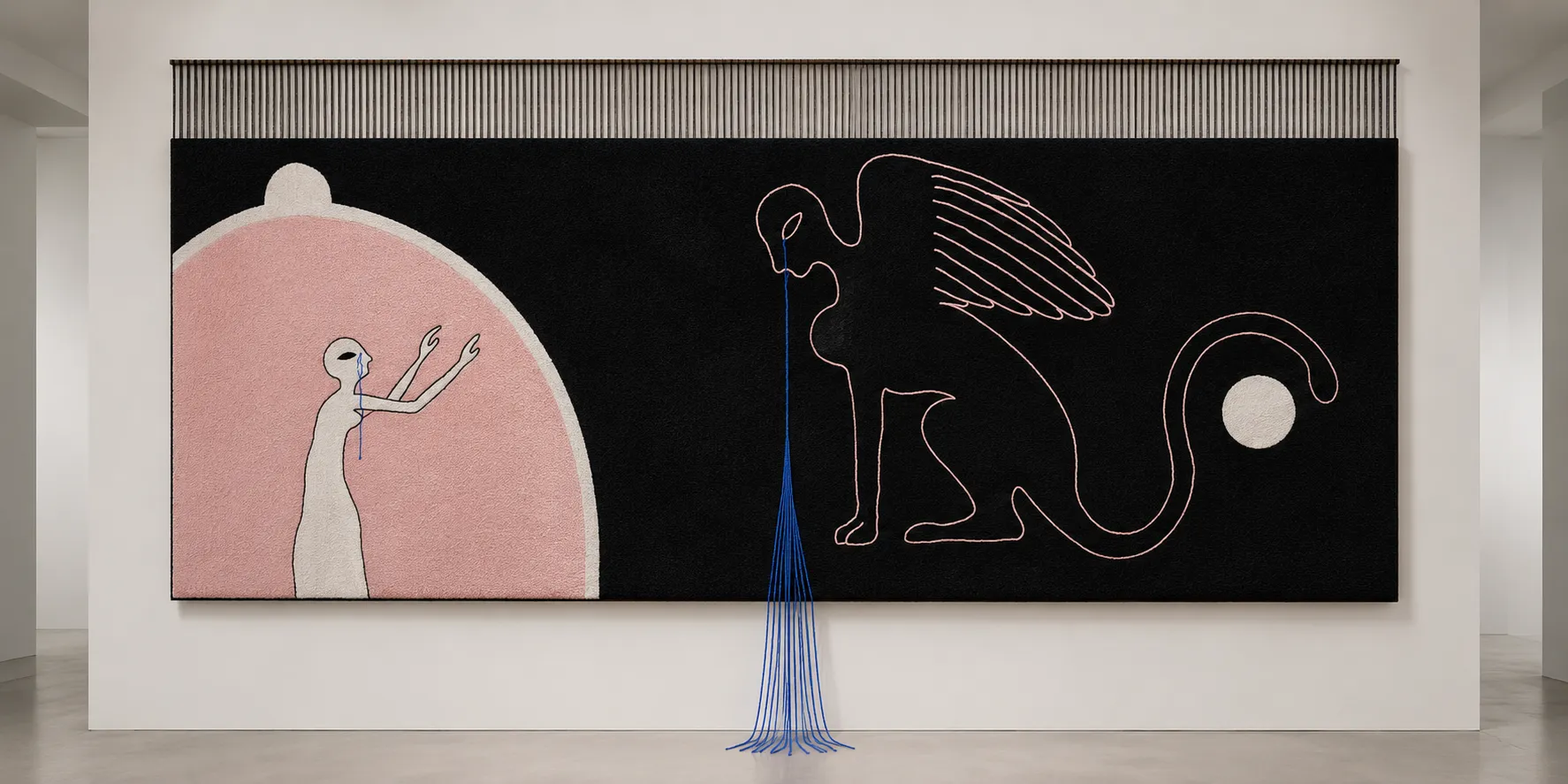
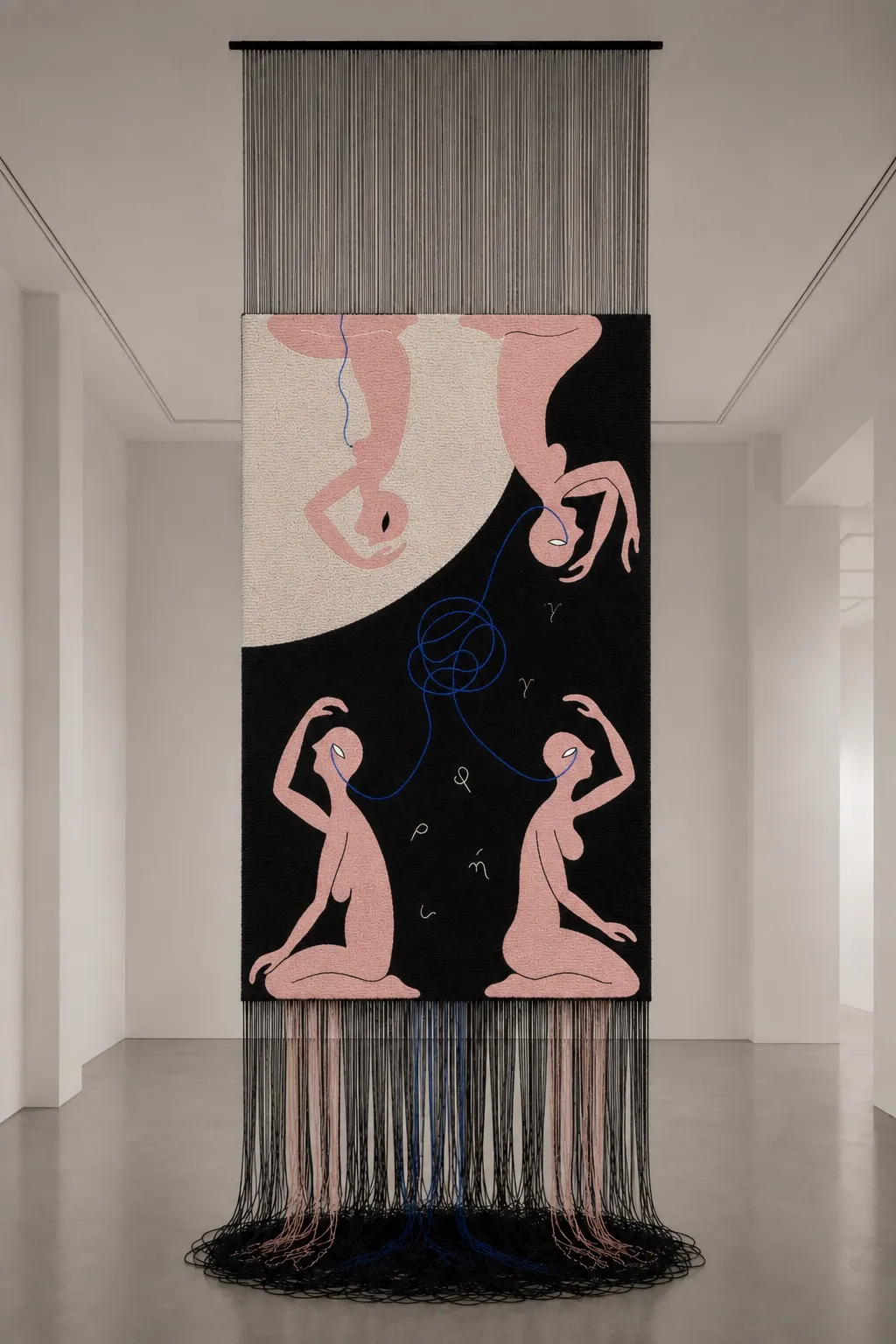
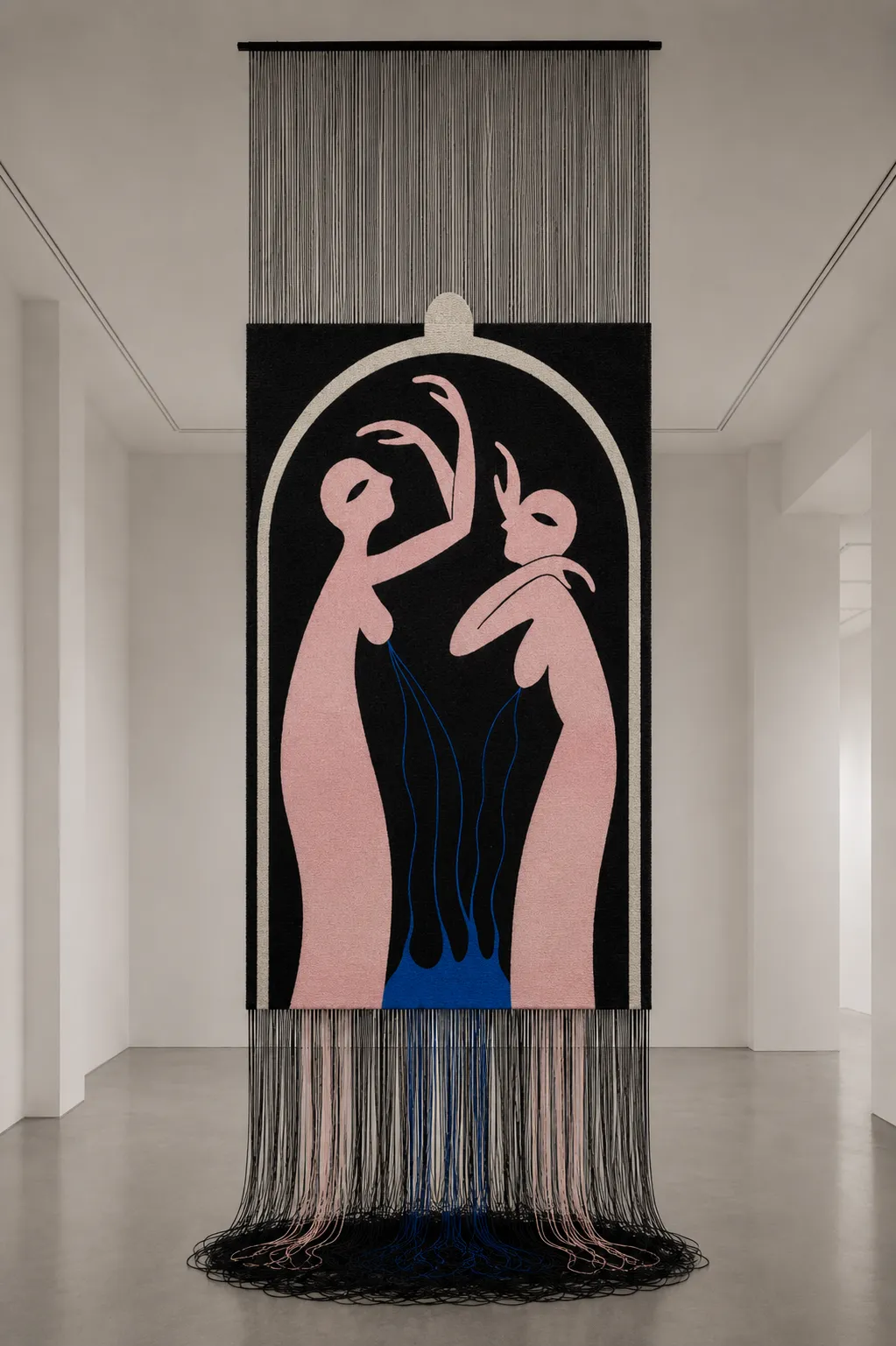
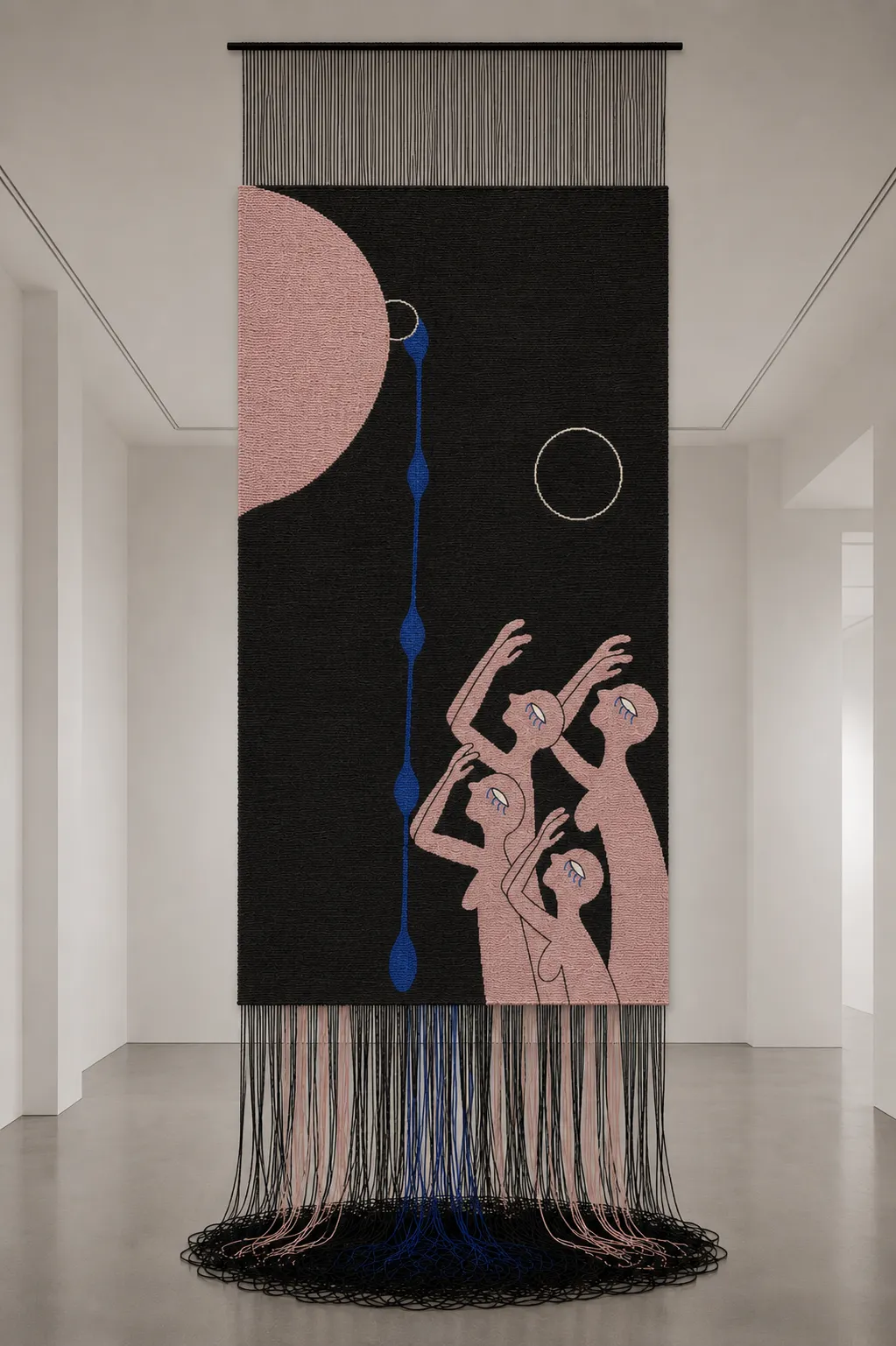
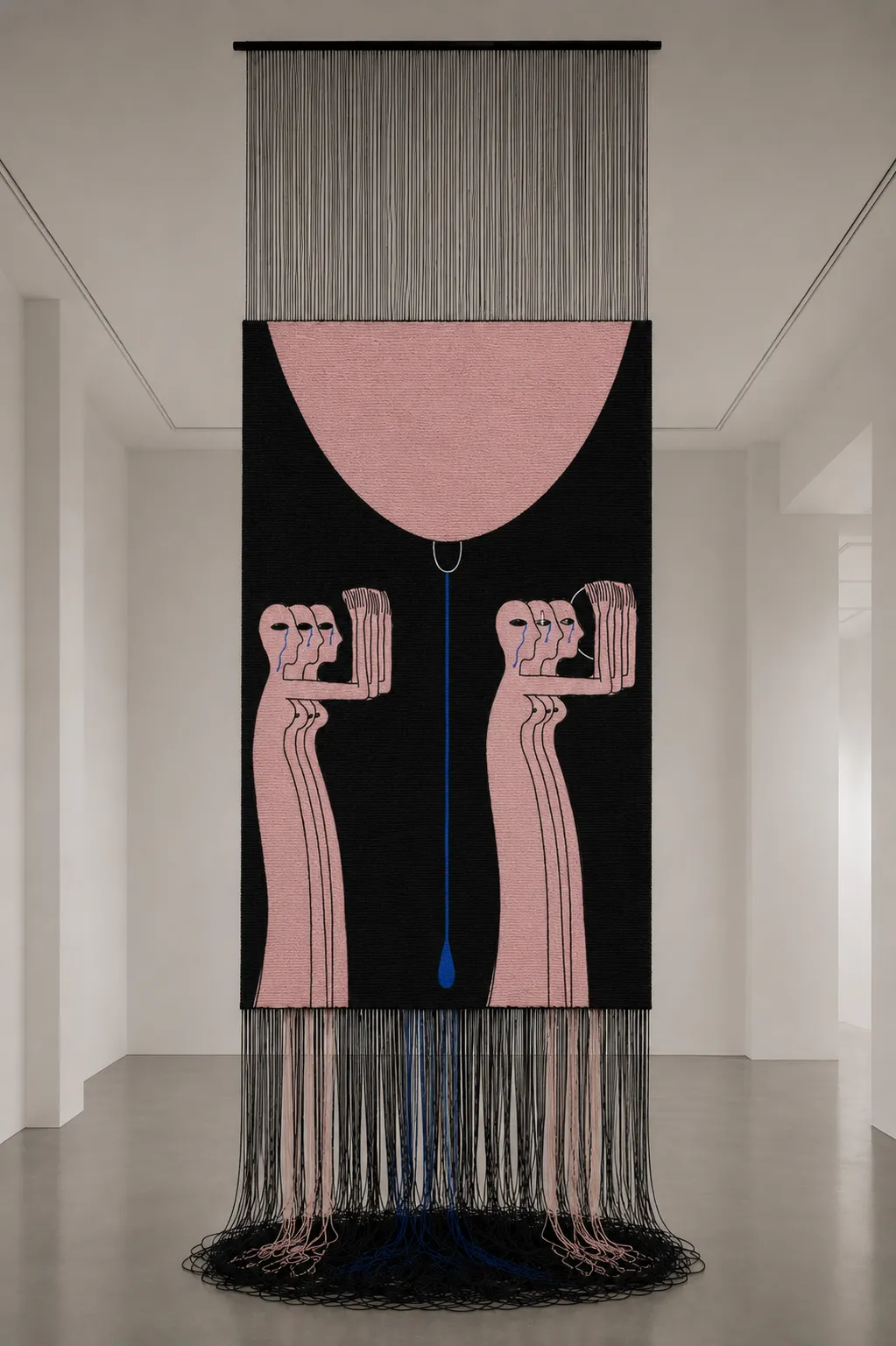
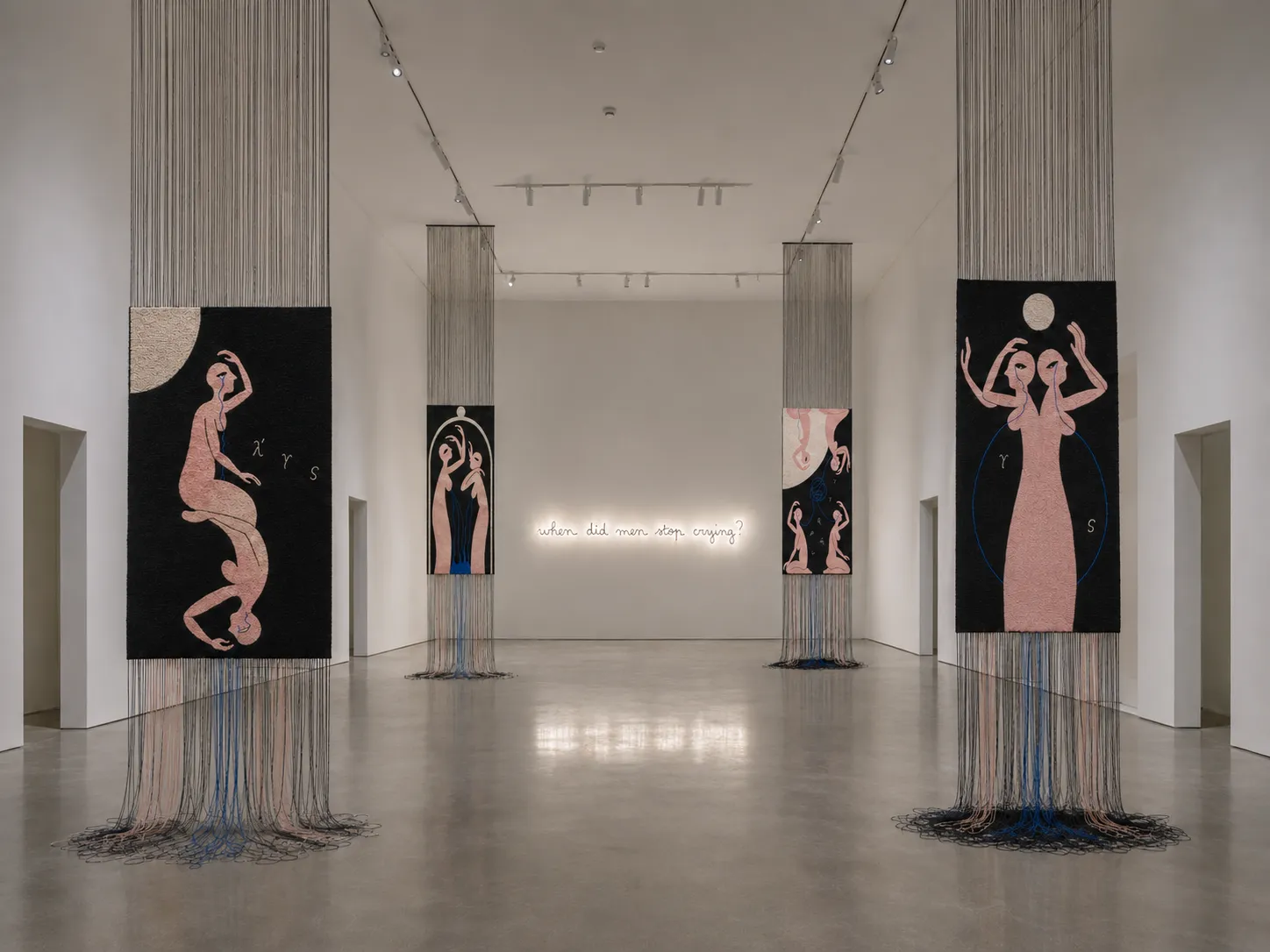
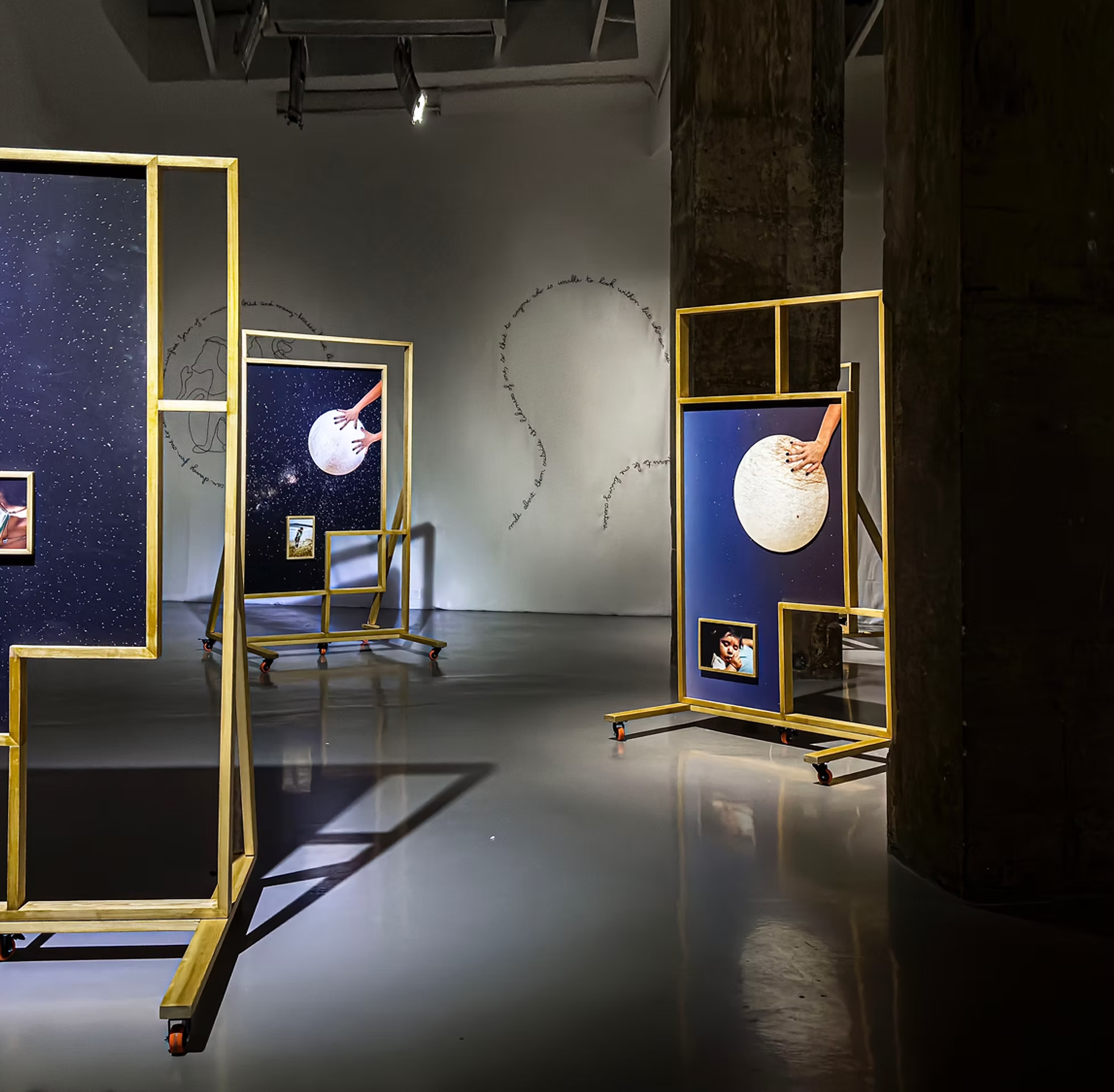
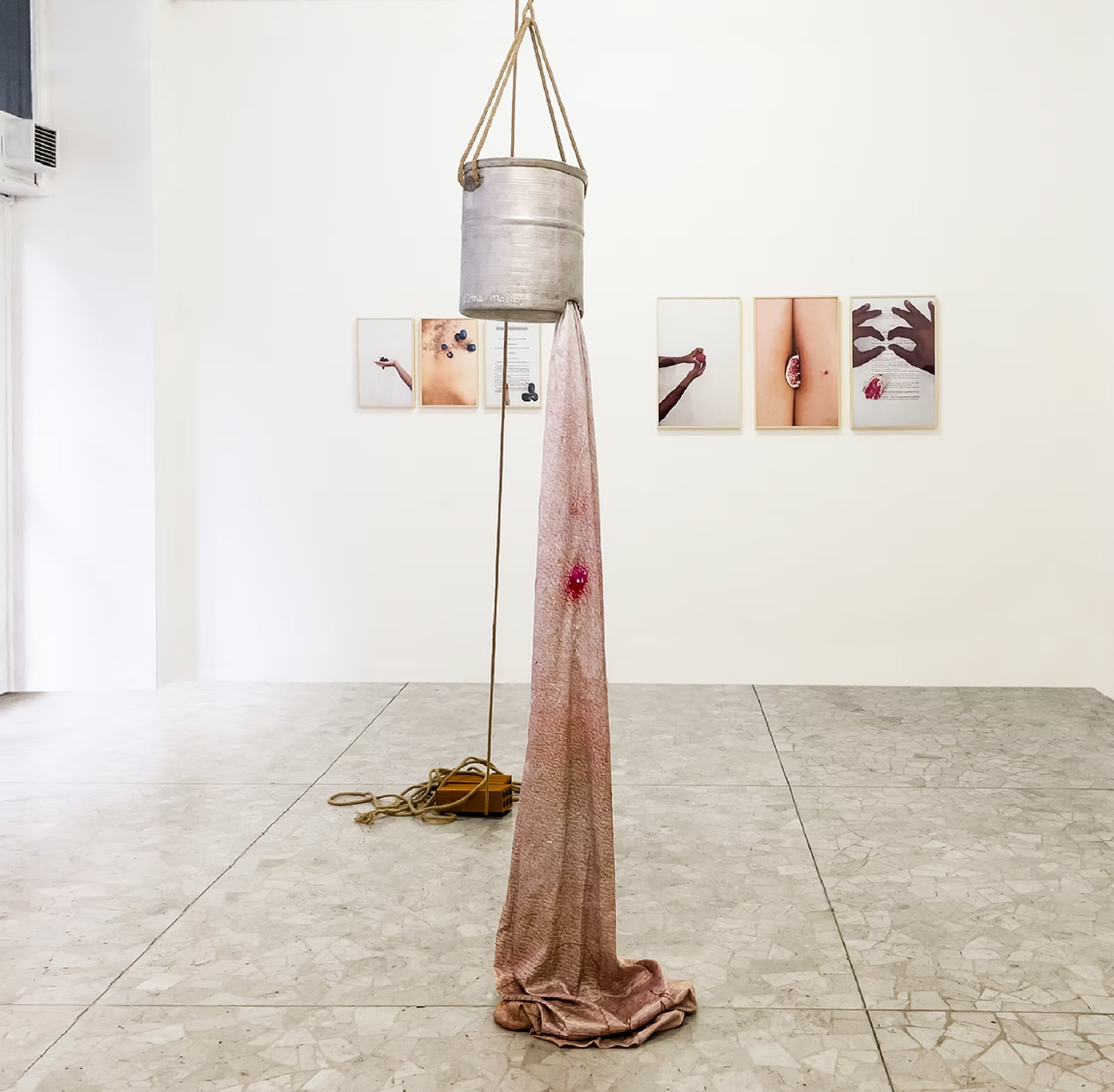
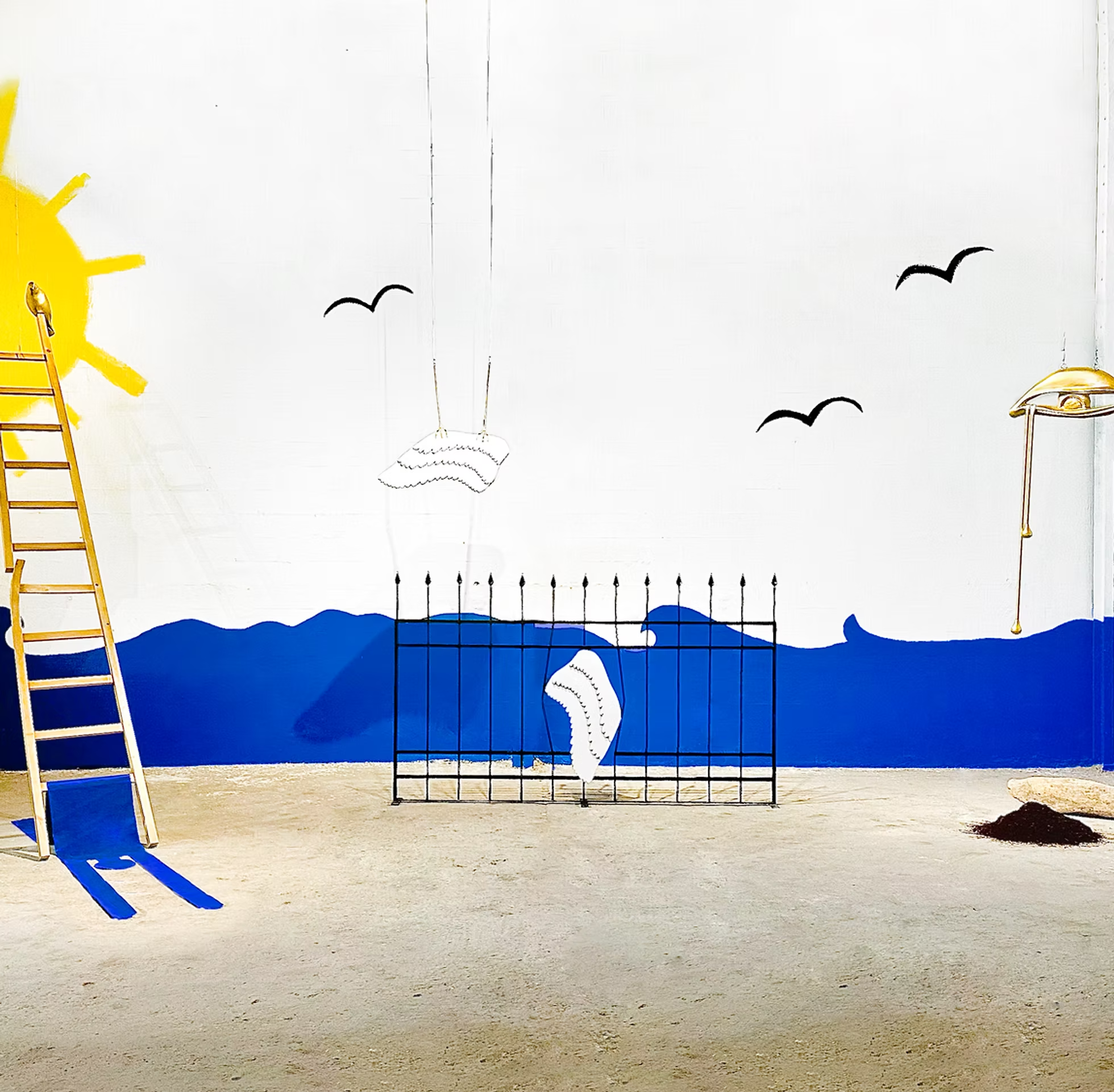
Toutes les larmes de mon corps belongs to Γόον μοι ἔννεπε, Μοῦσα, a body of work through which Kosmatopoulos examines how private sorrow becomes visible, ritualised and collectively carried. Grief, here, is treated as something the body registers before it can be put into words.
The title derives from the French expression pleurer toutes les larmes de son corps — to cry all the tears of one's body. Rather than locating grief solely in the eyes, the works consider the entire body as the place where sorrow is received and expressed. The throat closes, the chest contracts, posture collapses and the face convulses. Loss is registered physically before consciousness can fully comprehend it.
This corporeal language led Kosmatopoulos towards the professional mourners of ancient Greece and Egypt. Their lament was never confined to tears. Through cries, prayers, repeated gestures, exposed breasts, hair pulled loose and hands striking the chest, women carried individual loss into public space. Their bodies became instruments through which grief could be witnessed and shared by a community.
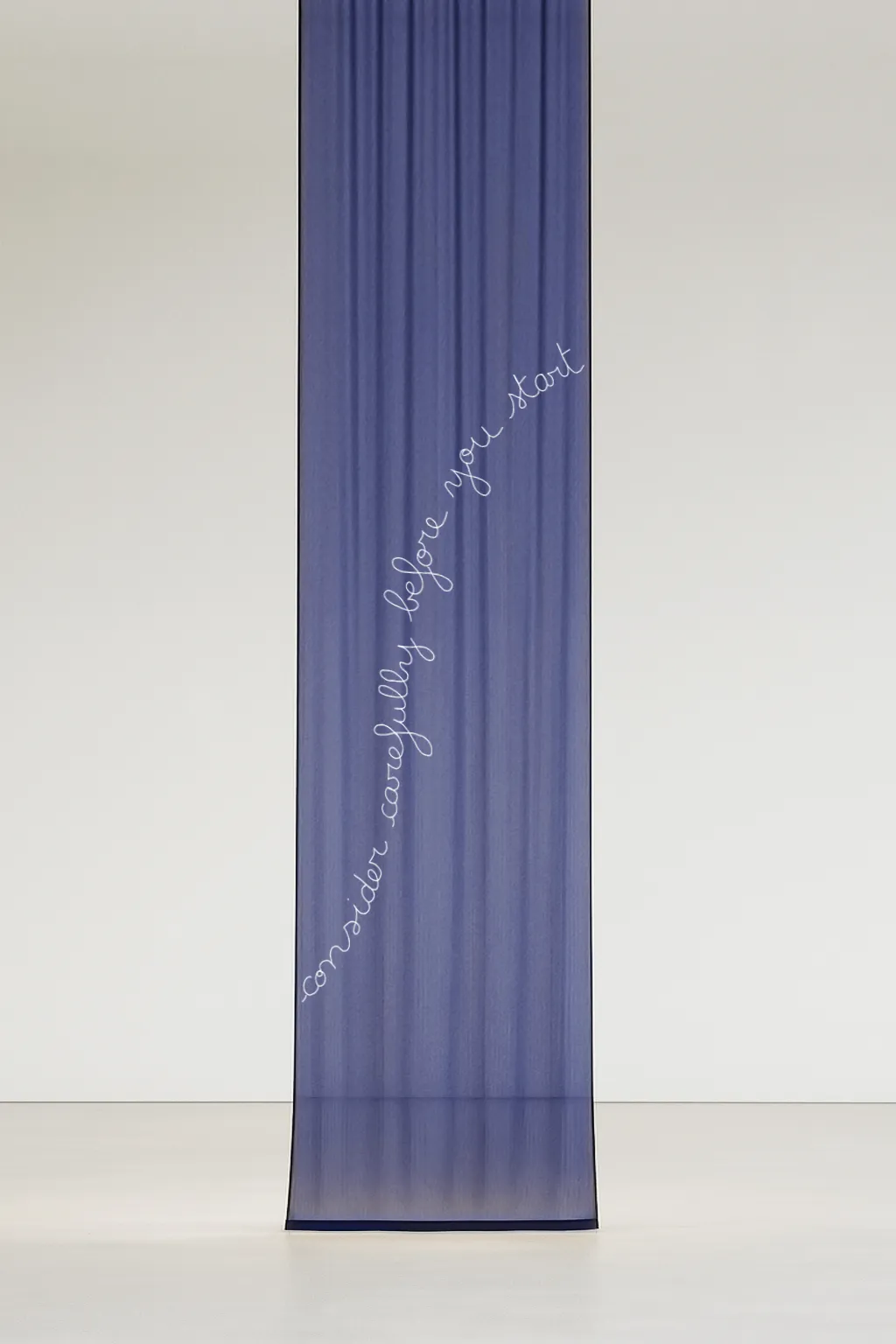
The textile works return to this iconography without reconstructing an archaeological scene. Female figures, breasts, knotted threads and fragmented Greek words are distributed across embroidered cotton surfaces. Each panel is worked in cotton thread directly into Egyptian cotton, line by line, so that a body's contour or a lock of pulled hair accumulates through the same repetitive labour by which lament itself was once passed down, gesture after gesture, from one mourner to the next.
Threads descend from the eyes and continue beyond the image, allowing tears to become lines, roots or bodily extensions. The knot does not simply illustrate pain: it gives resistance and duration to something otherwise fluid and fleeting.
Across the panels, no single figure is asked to carry the whole of grief. Different pleureuses occupy different states — one doubled over, another mid-cry, another caught in the instant before a cry begins — so that the series reads less as a portrait of a single mourner than as a chorus distributed across several surfaces. Eyes echo breasts; tears travel across the chest; writing breaks into fragments and becomes part of the figure. Grief no longer belongs to a single organ or a single person. It circulates through the textile, passing from image to material and from solitary emotion to a shared physical vocabulary.
The works do not romanticise the historical role assigned to women as guardians of mourning. They ask what it means that women have so often been expected to perform grief for everyone: to make visible what others are taught to restrain. The pleureuse therefore appears both as a cultural inheritance and as an active contemporary figure — a body through which private pain acquires public presence.
In Toutes les larmes de mon corps, tears do not fall from the body and disappear. They remain attached to it, accumulating as thread, knot and image. Grief becomes visible because the body carries it beyond itself.