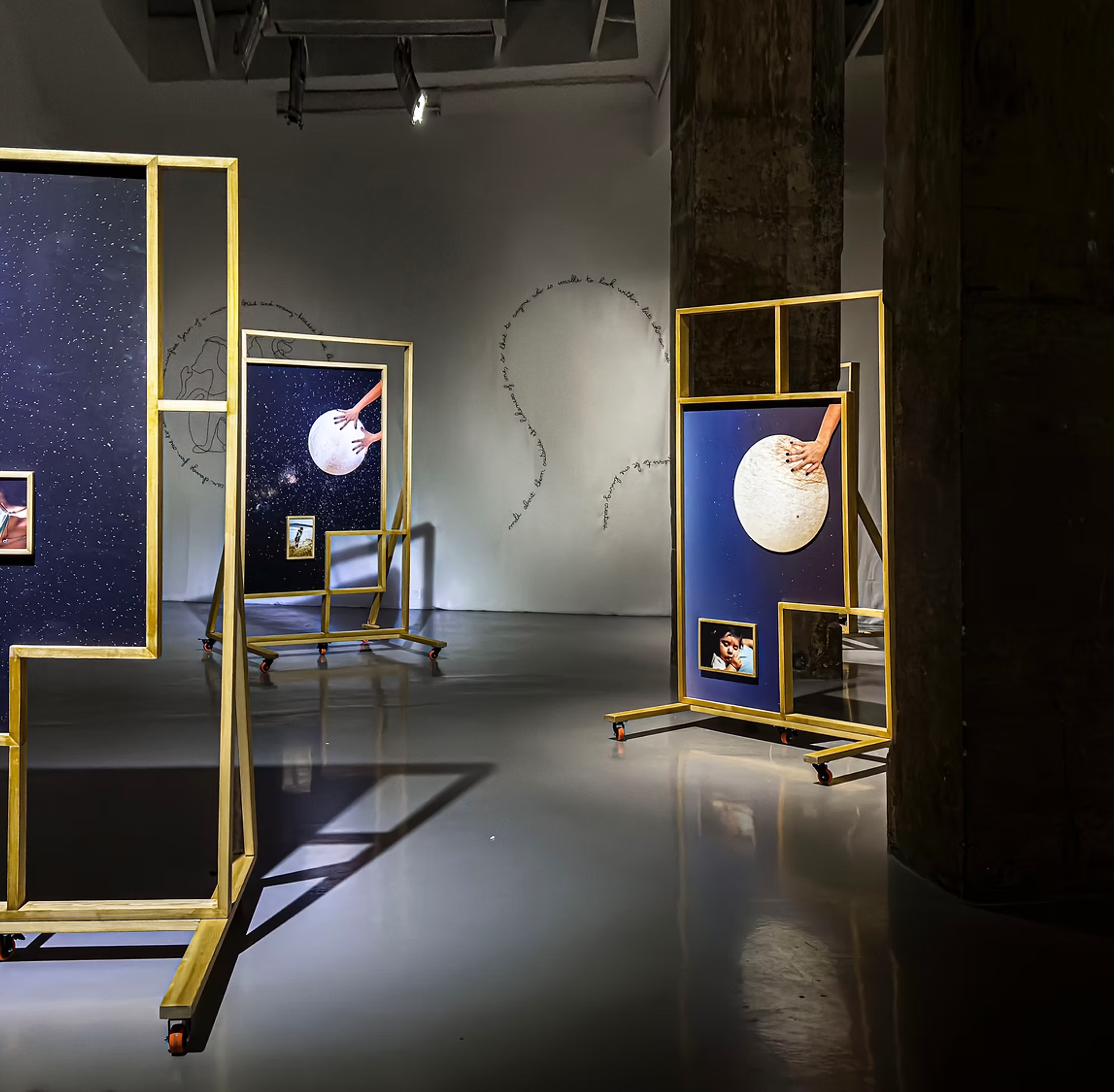
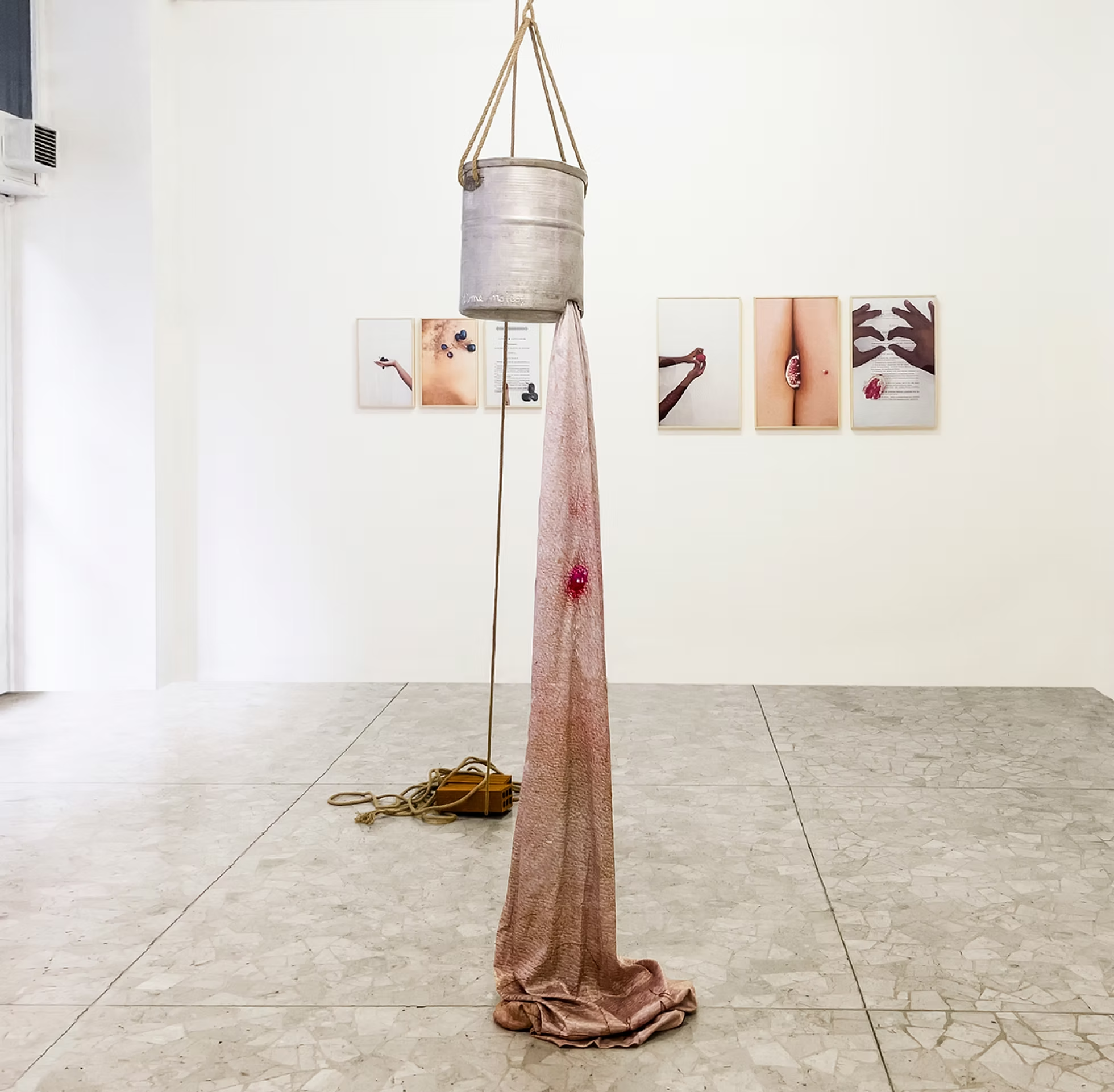
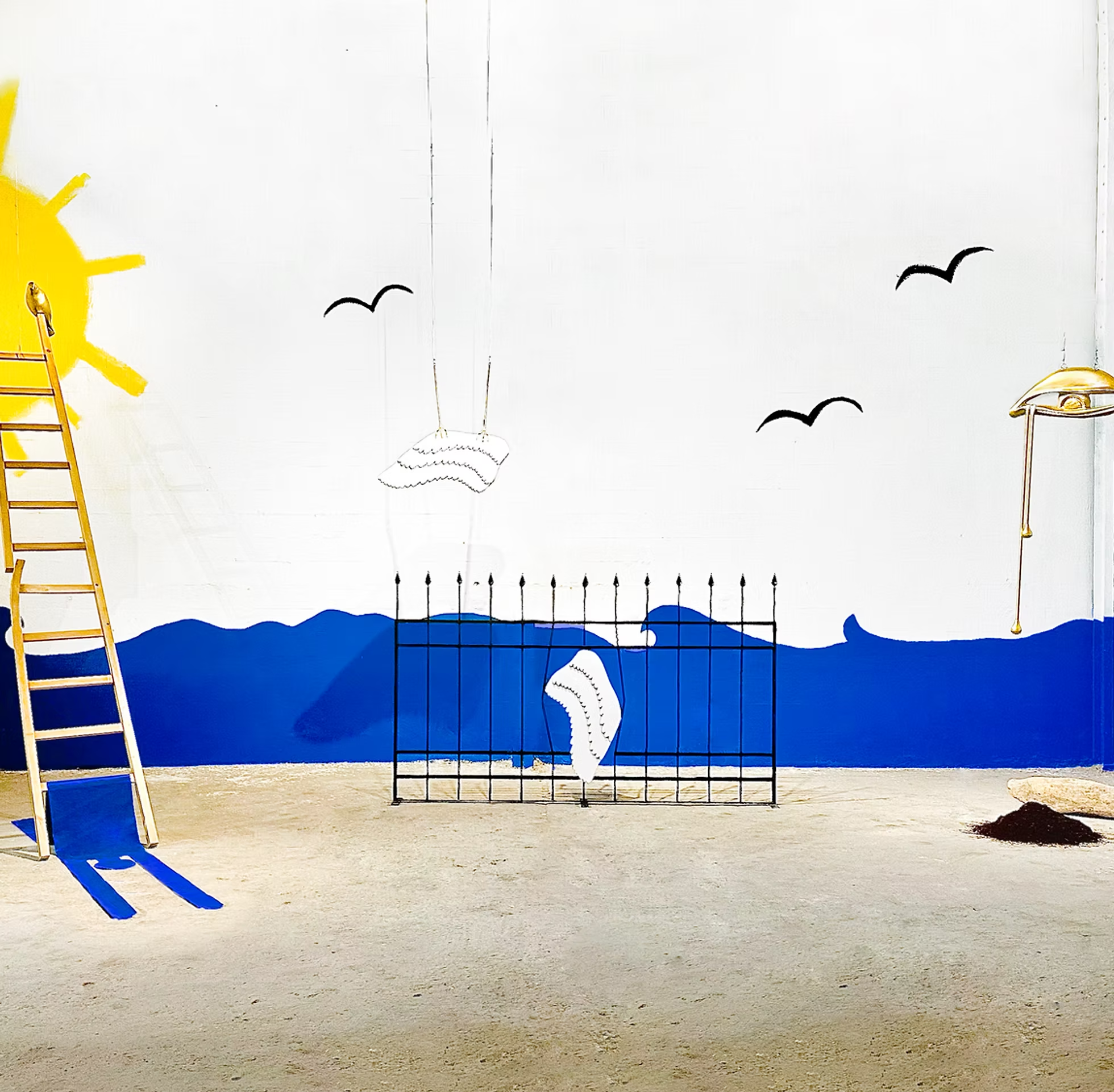
Why did men stop crying? belongs to Γόον μοι ἔννεπε, Μοῦσα, a project examining how mourning passes from private experience into collective visibility and how that passage has been culturally divided along gendered lines.
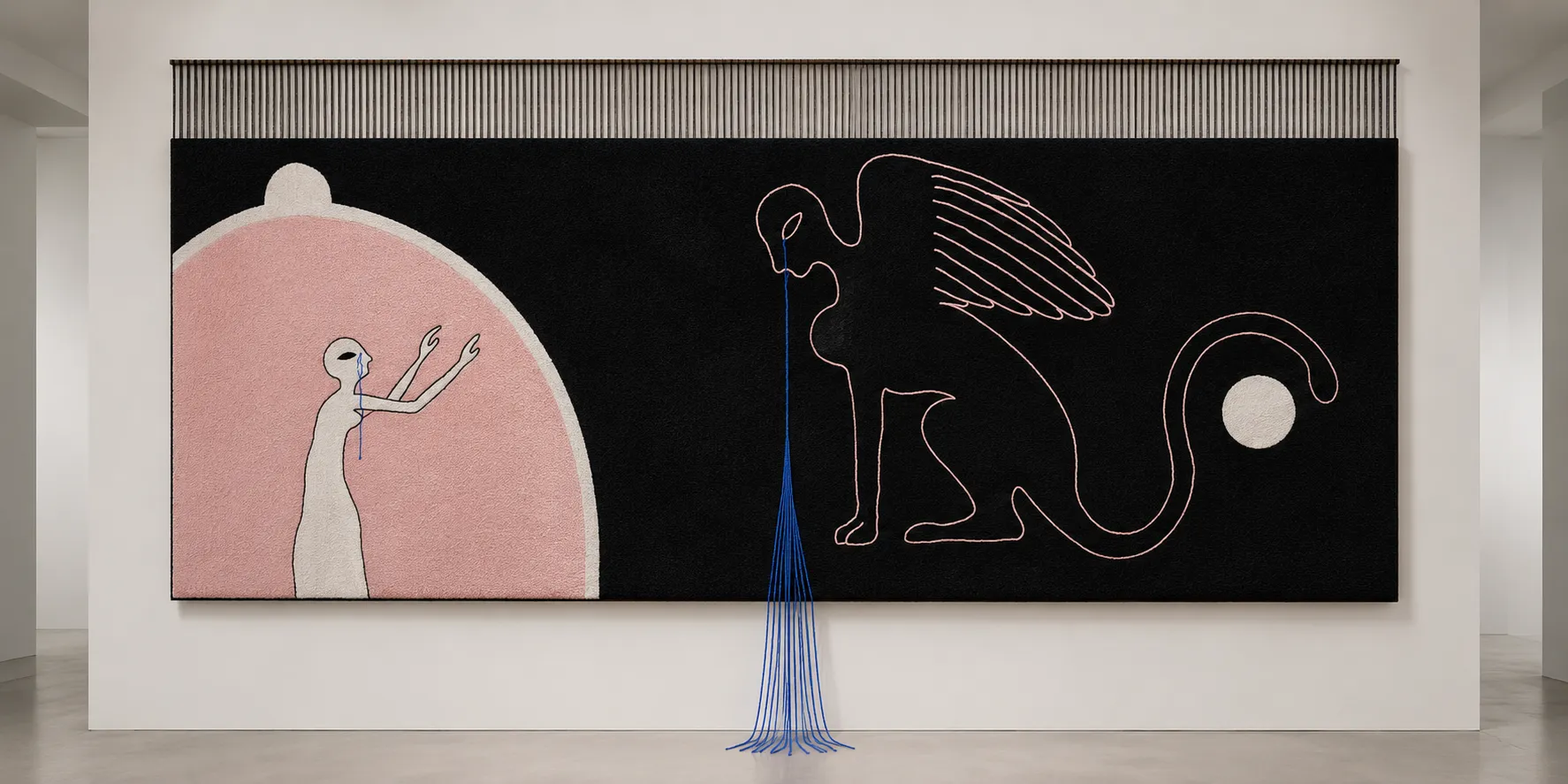
The question emerges from the figure of the pleureuse. Across ancient Mediterranean funerary traditions, women were entrusted with giving grief a body and a voice. Their tears, cries and repeated gestures made loss visible for an entire community. This public role assigned to women reveals its inverse: the restraint imposed on those expected to remain controlled, silent and unreadable in the face of pain.
Here, “men” is deliberately double. It refers first to men, whose tears have increasingly been associated with weakness or a failure of masculinity. It also refers to humankind. The work therefore asks not only when men were discouraged from crying, but when visible grief itself began to lose its recognised place within collective life.
The sentence is formed in front-dipped black neon. Each tube is bent by hand into the shape of the sentence's letterforms, then coated on its front face with an opaque paint before being fixed to the wall — a reversal of the usual sign-making process, where the visible face is the one built to shine. Unlike conventional neon, which announces itself through an exposed luminous line, the front of each tube is opaque. Light escapes only from behind, appearing around the words as a halo reflected on the wall. The phrase is readable through the illumination it withholds.
Installed at eye level rather than raised above the viewer as commercial neon typically is, the sentence confronts whoever reads it directly, at the height of an ordinary conversation rather than the height of an announcement.
This physical structure is central to the work. Emotion has not disappeared; it has been turned inward. The light remains active but cannot present itself directly, just as grief can remain present in the body while its visible signs are suppressed. The installation does not represent a man crying. It constructs the condition of a feeling that survives behind the surface through which it would ordinarily be seen.
Written as a question rather than a statement, the work refuses to assign a single historical cause or a simple moral answer. It places the viewer inside the problem. The past tense — did stop — suggests that crying was once understood differently and that its disappearance from certain bodies is neither natural nor inevitable.
Placed in dialogue with the female mourners and Kosmatopoulos's own self-portraits in tears, the neon completes a movement across the series: from grief carried publicly by women, to private sorrow made visible by the artist, to an emotion whose visibility has been culturally withdrawn. The light is present. What has changed is whether it is permitted to appear.