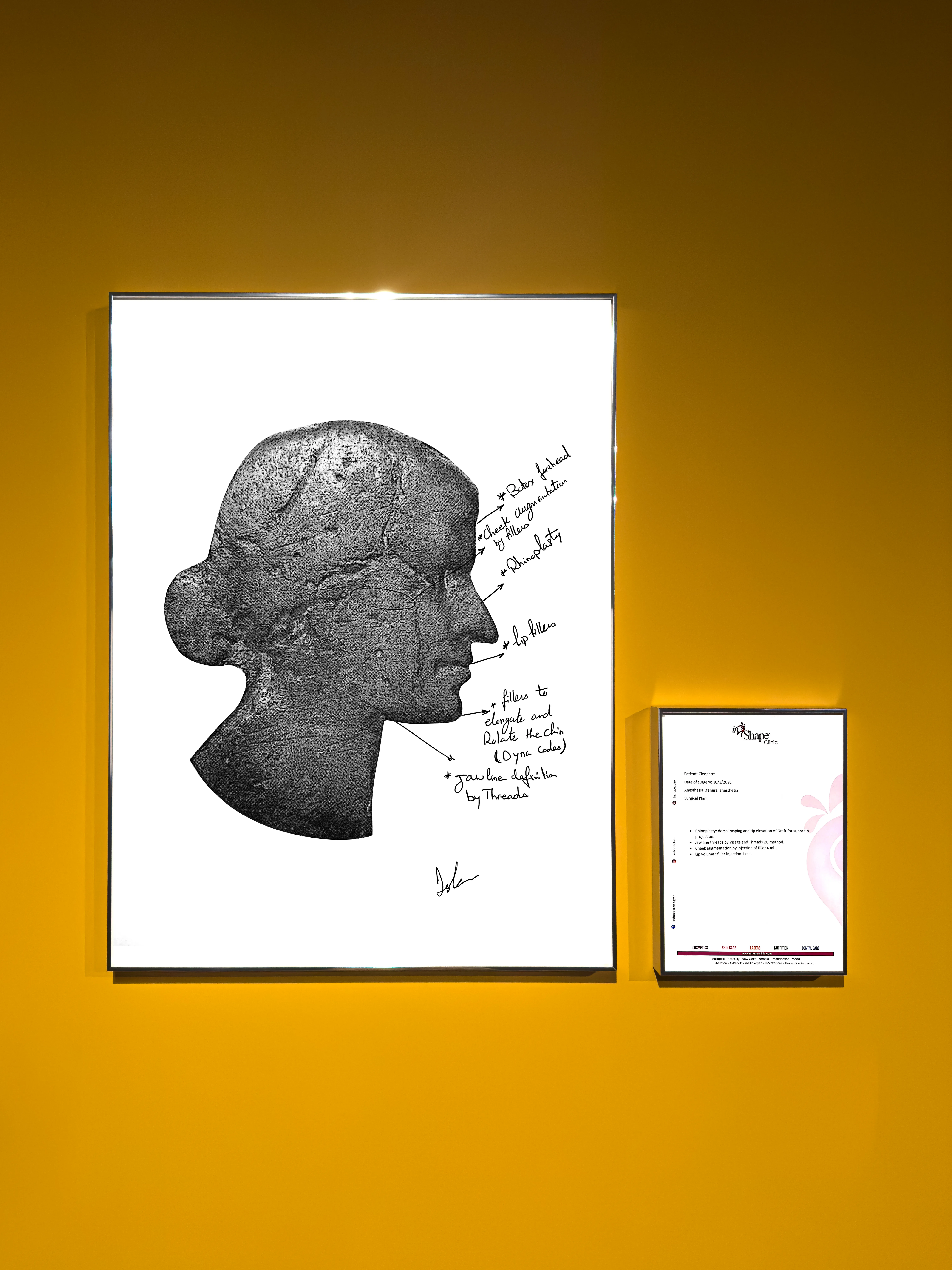
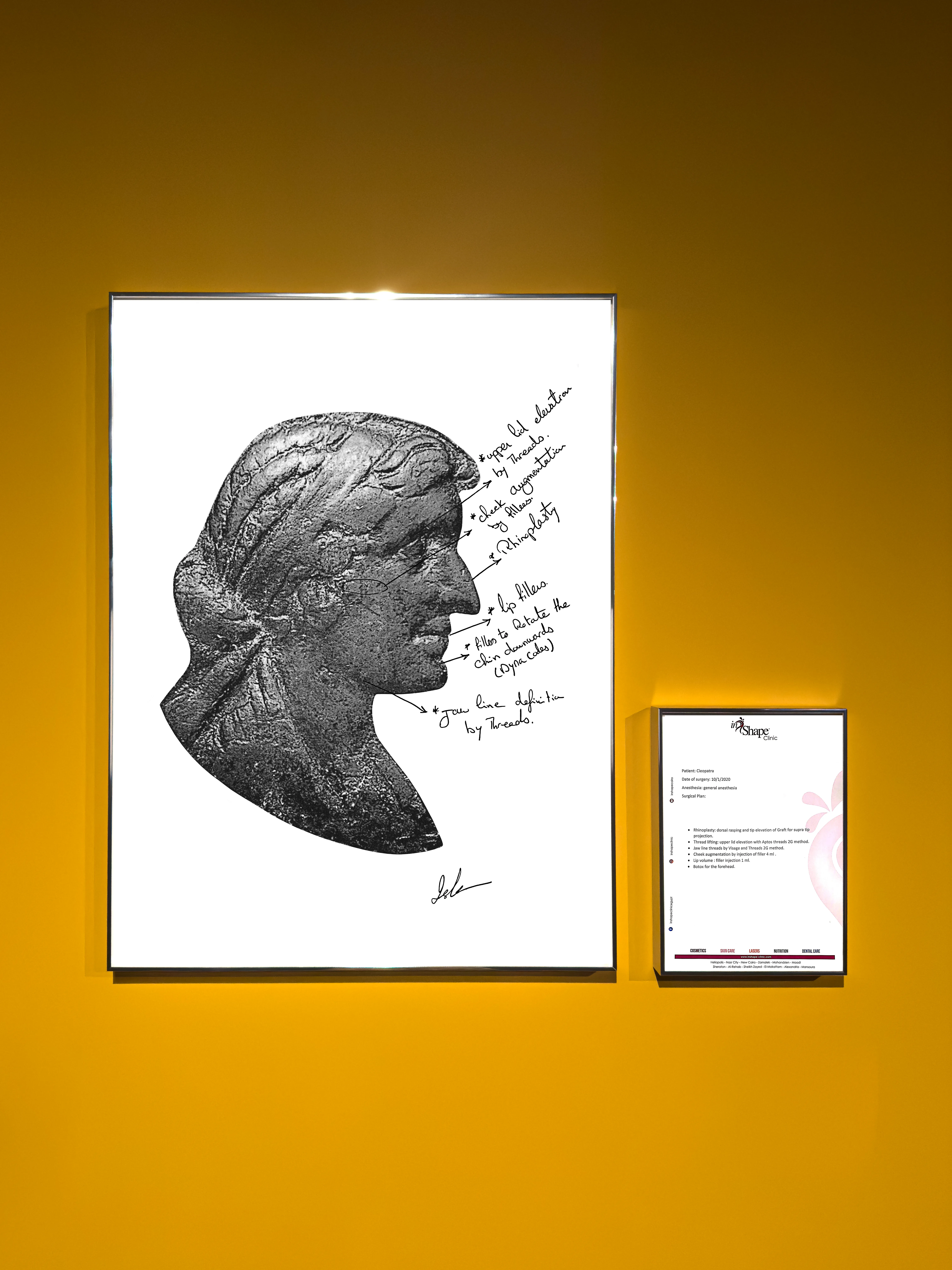
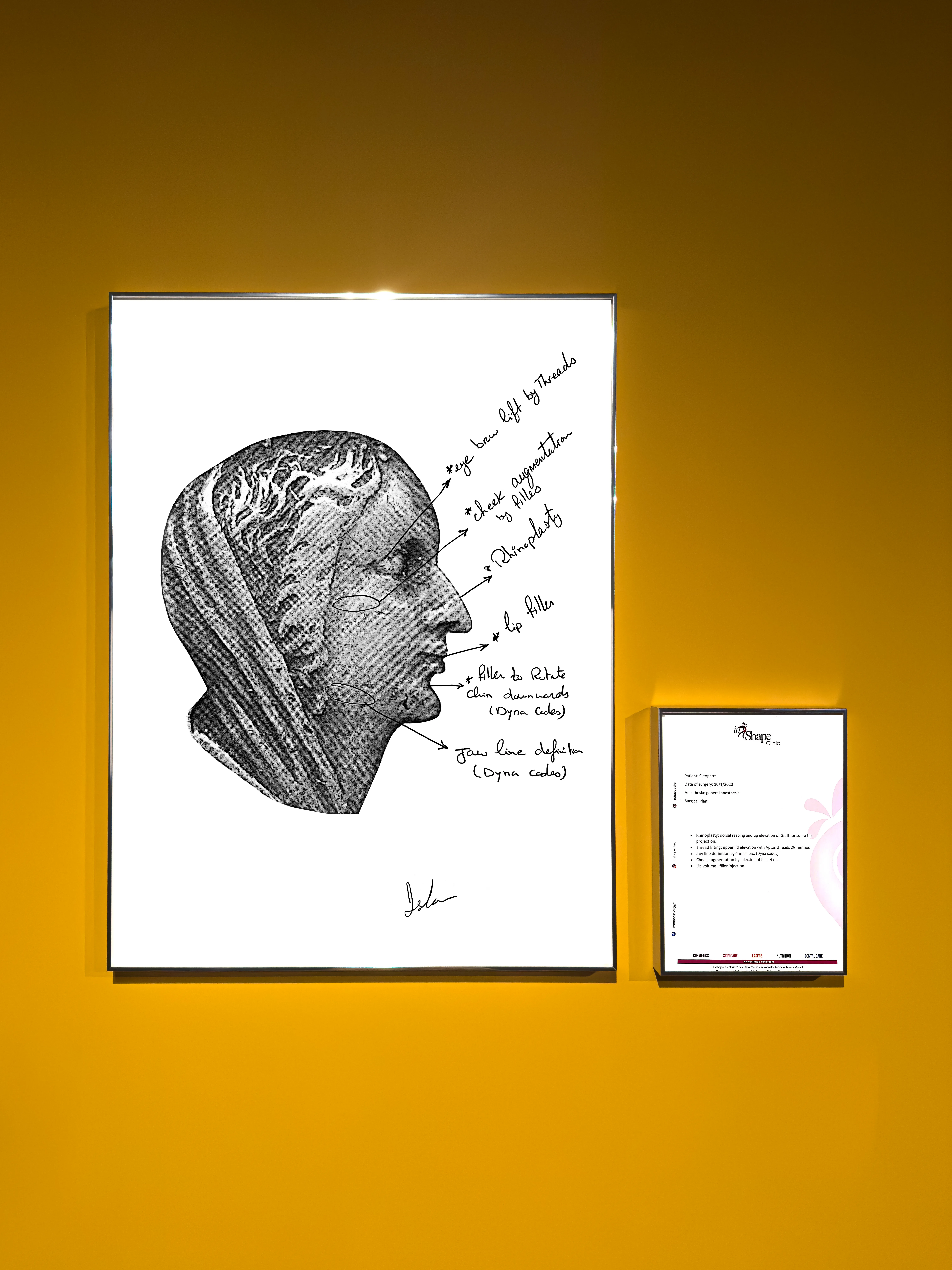
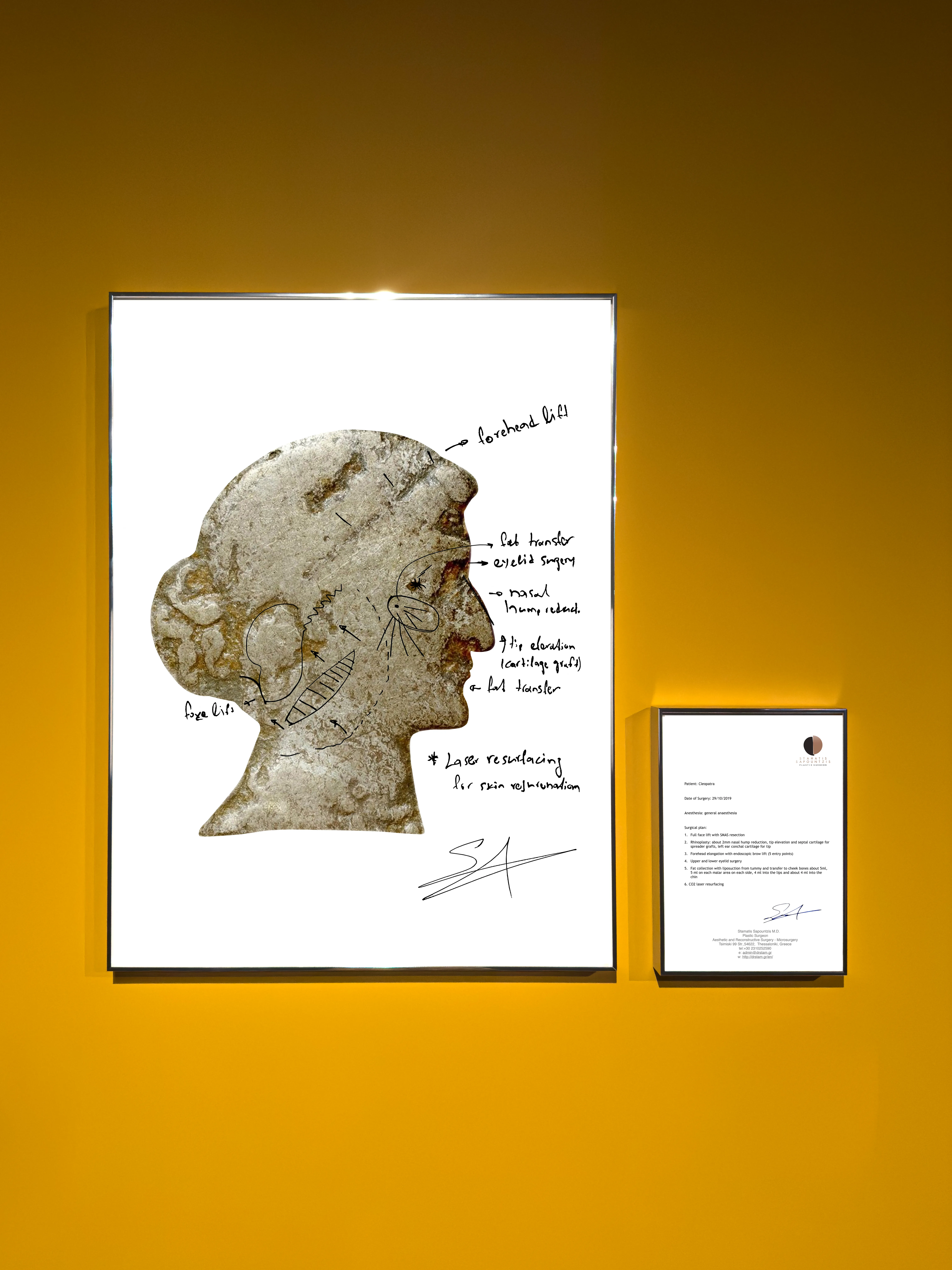
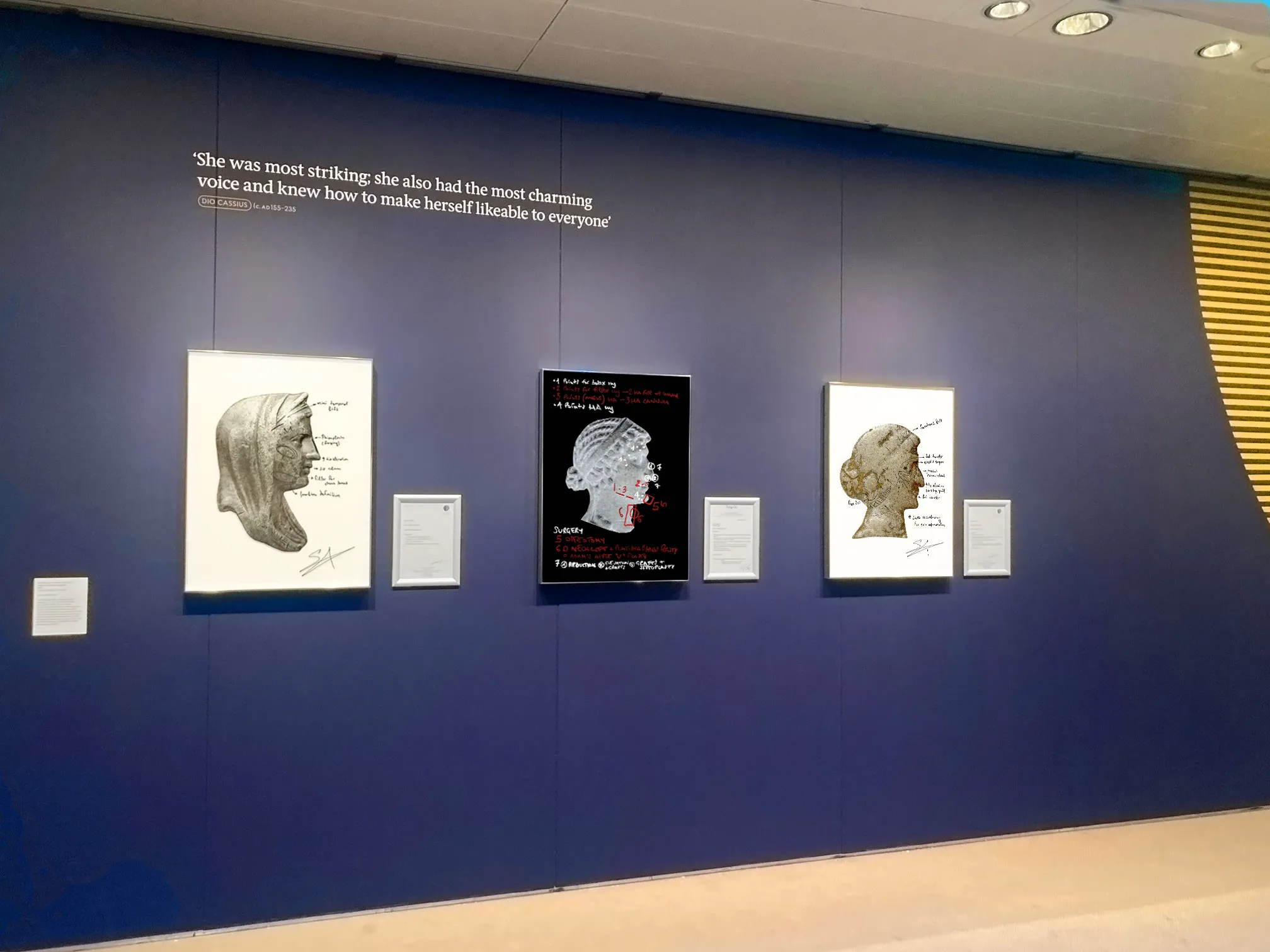
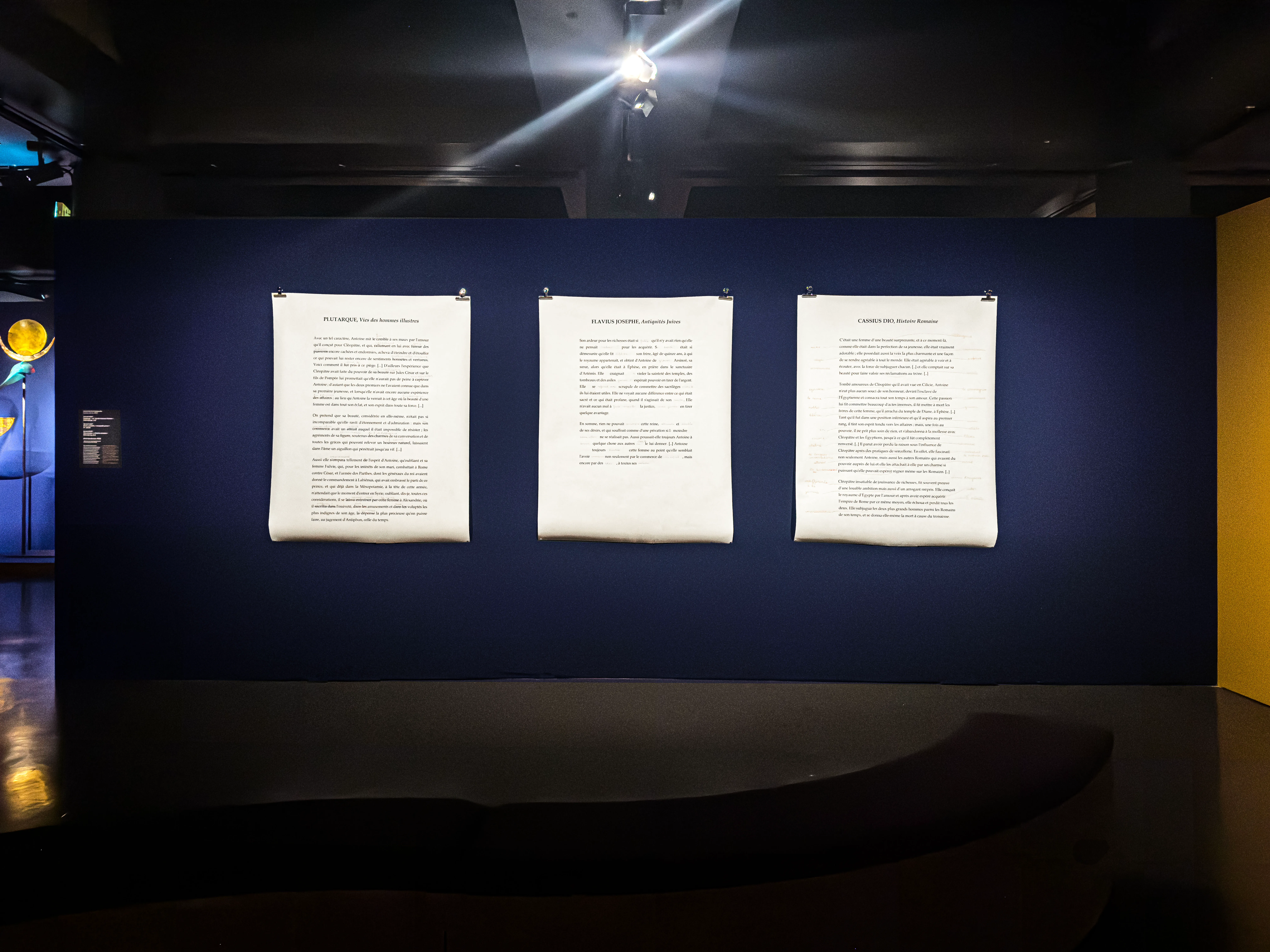
I Want to Look Like Cleopatra belongs to If the Nose of Cleopatra…, in which Esmeralda Kosmatopoulos examines Cleopatra's changing face as evidence of how history is rewritten by those authorised to represent it. Few images of Cleopatra survive from her lifetime. The face recognised today has been reconstructed repeatedly by historians, painters, filmmakers and popular culture, with each period producing a Cleopatra shaped by its own political narratives, beauty standards and fantasies.
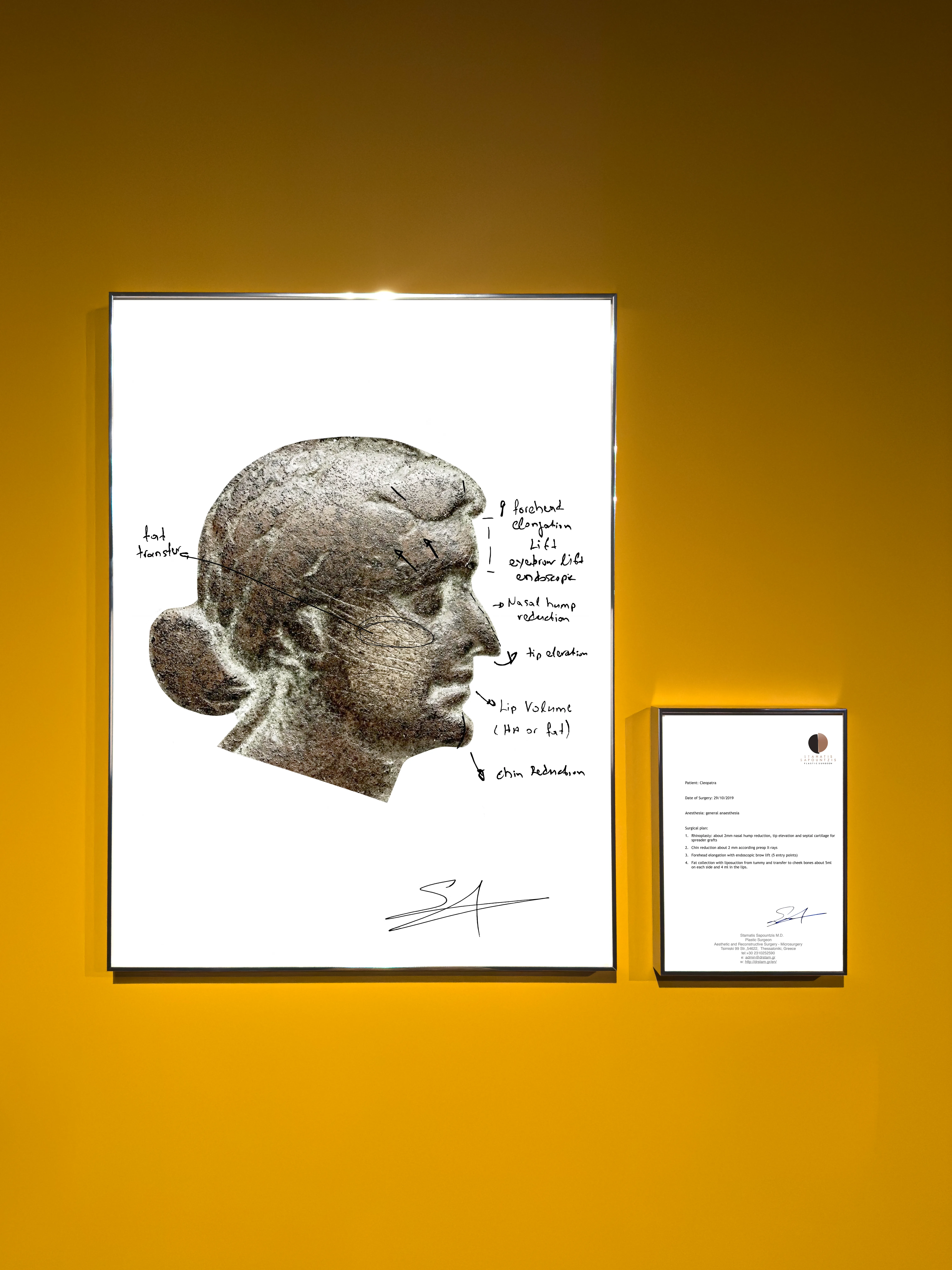
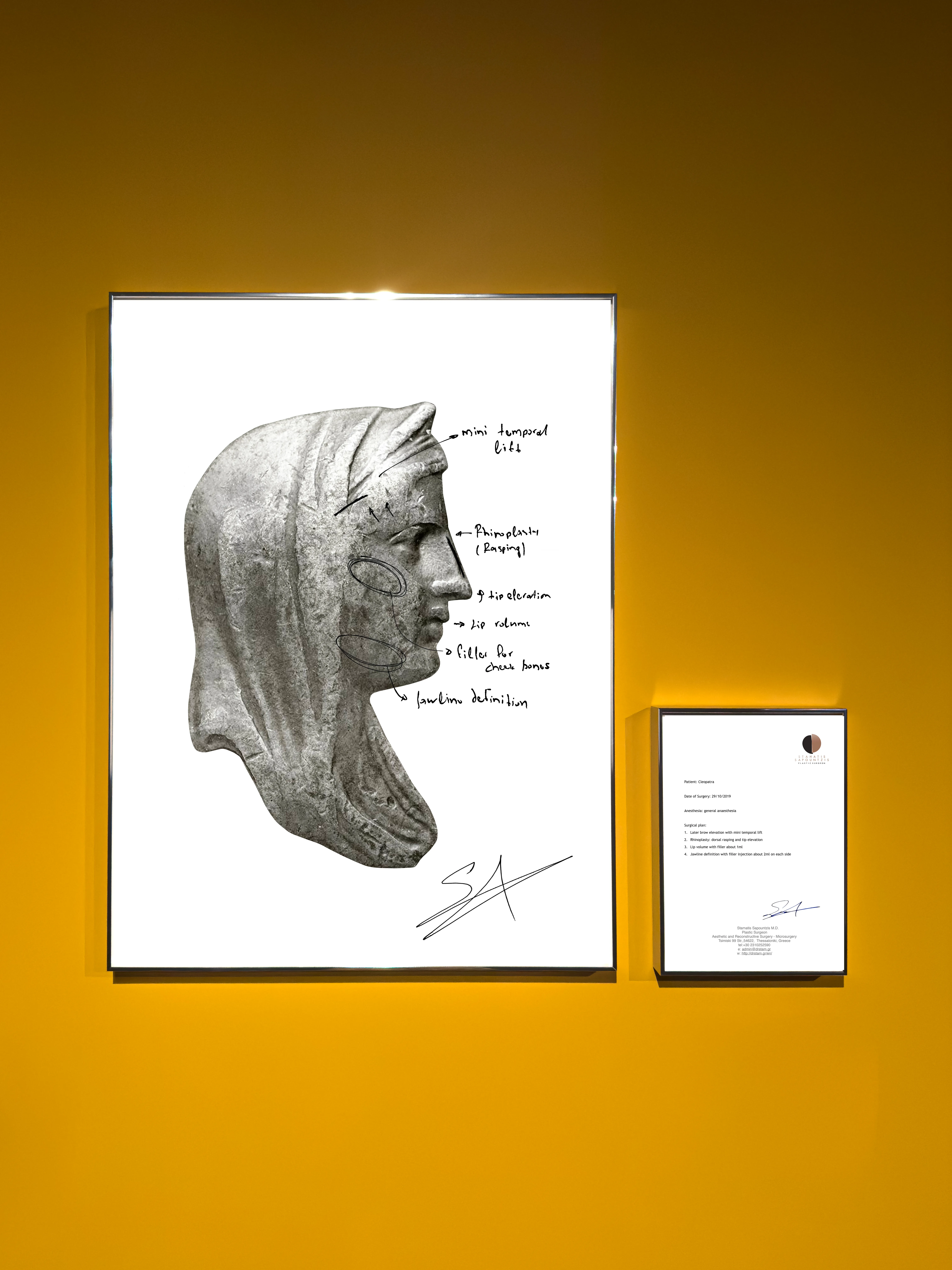
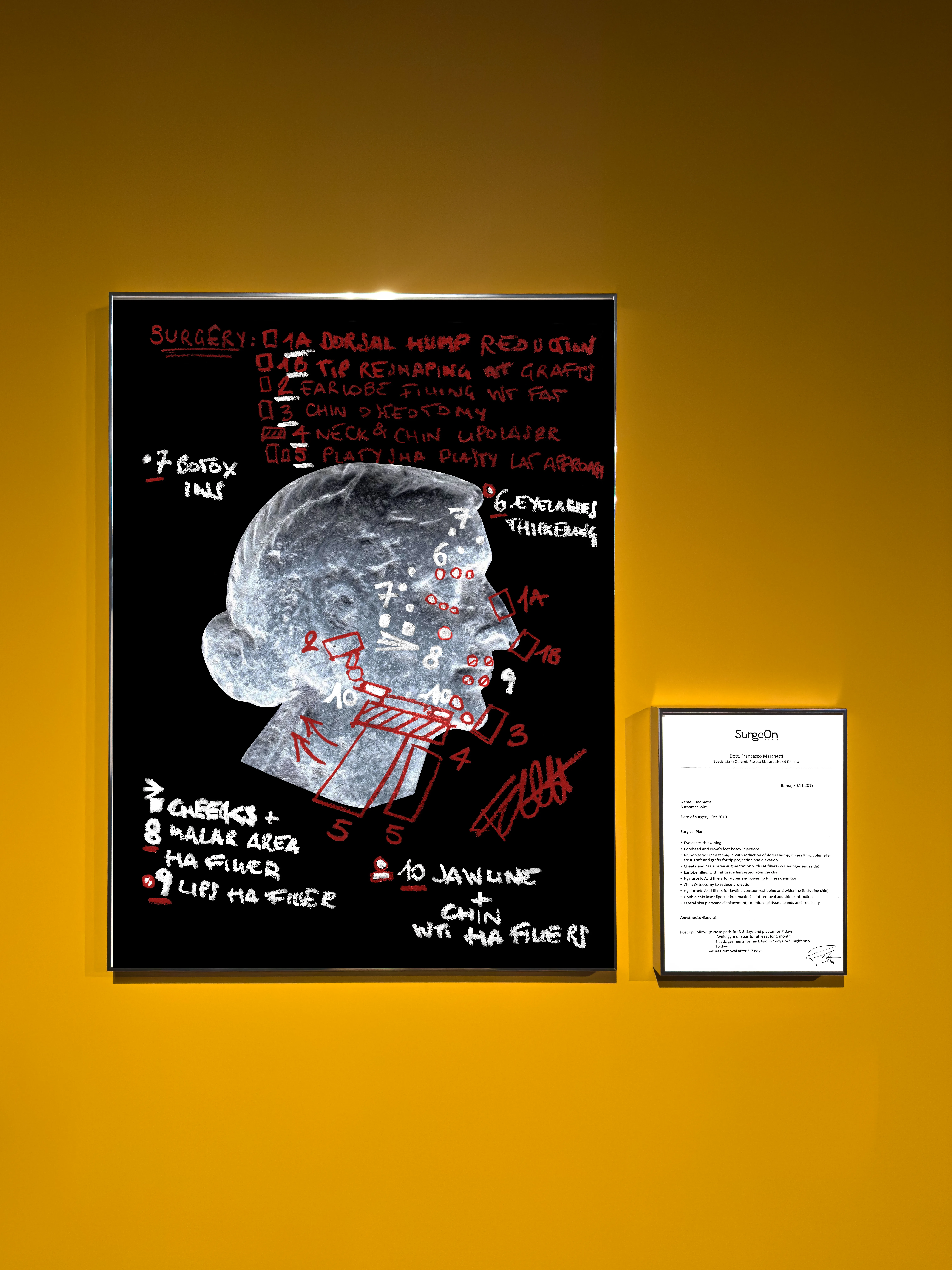
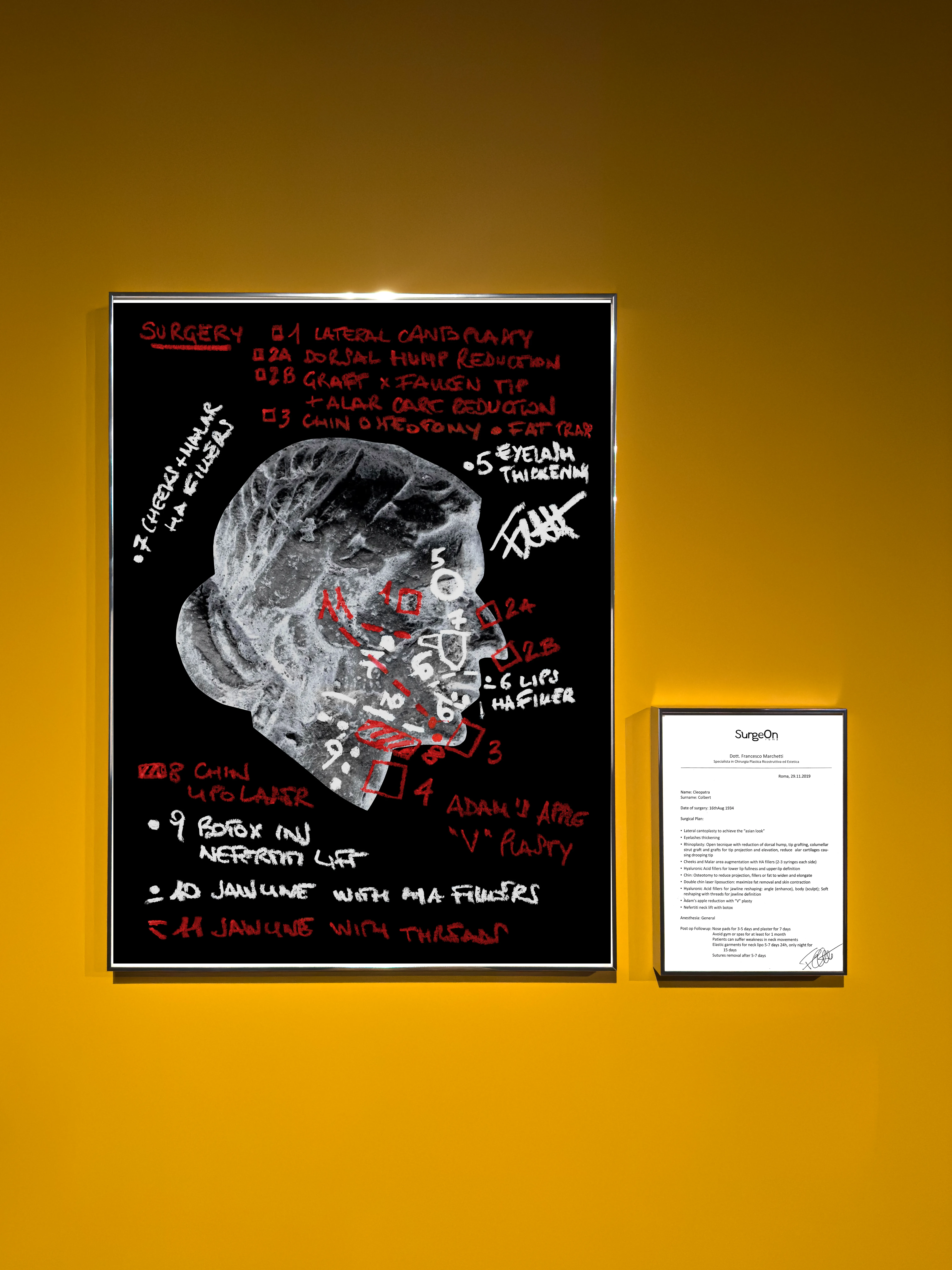
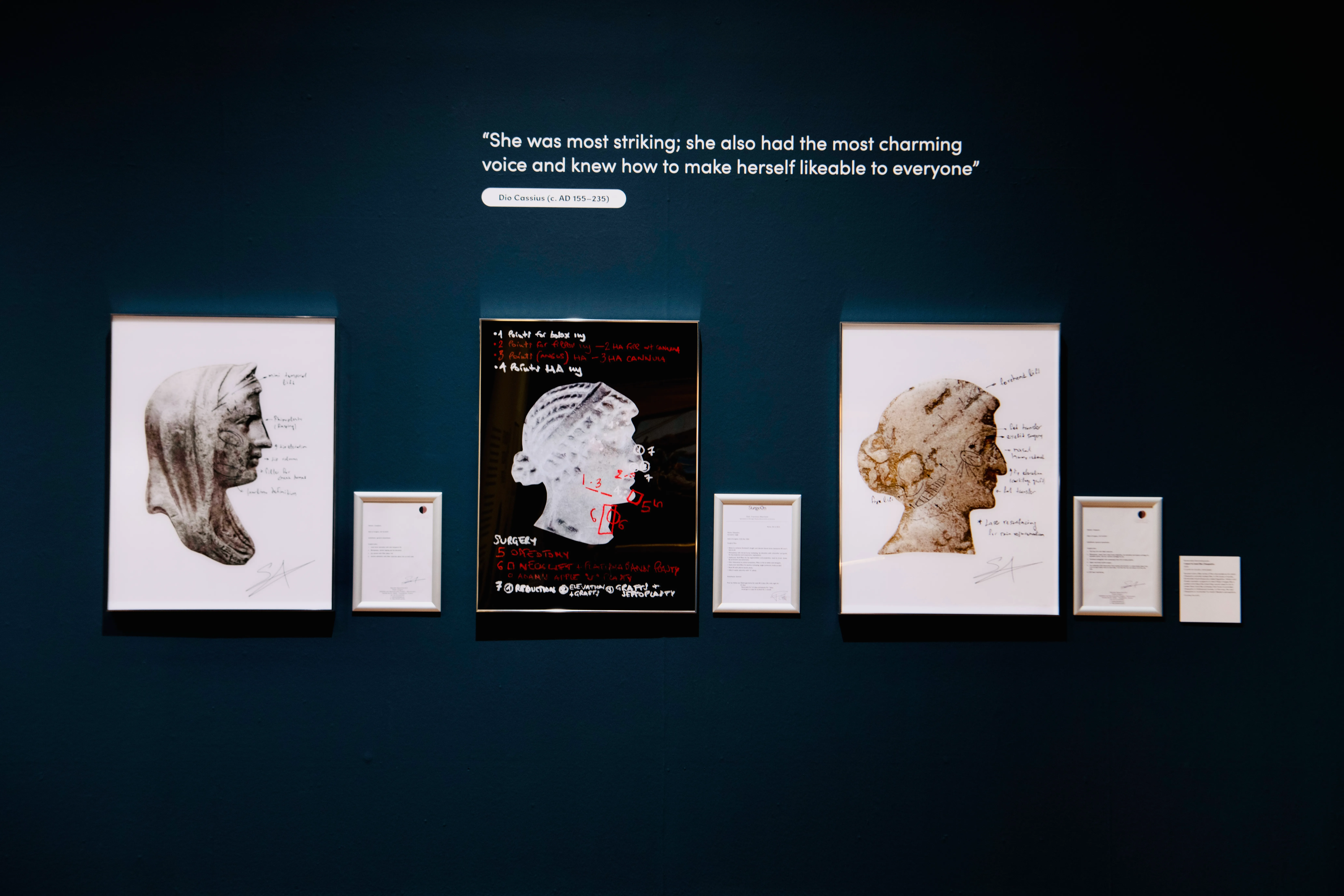
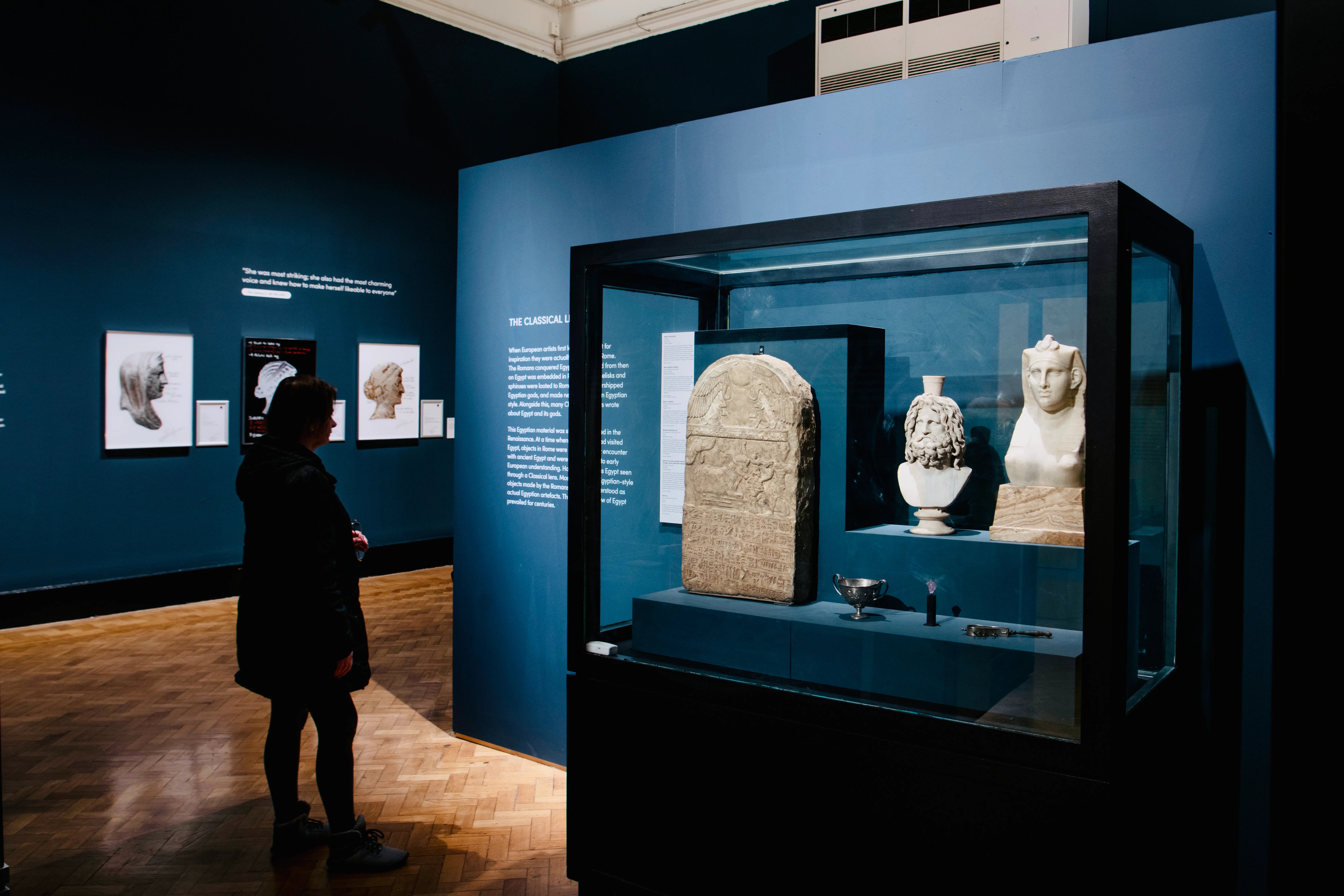
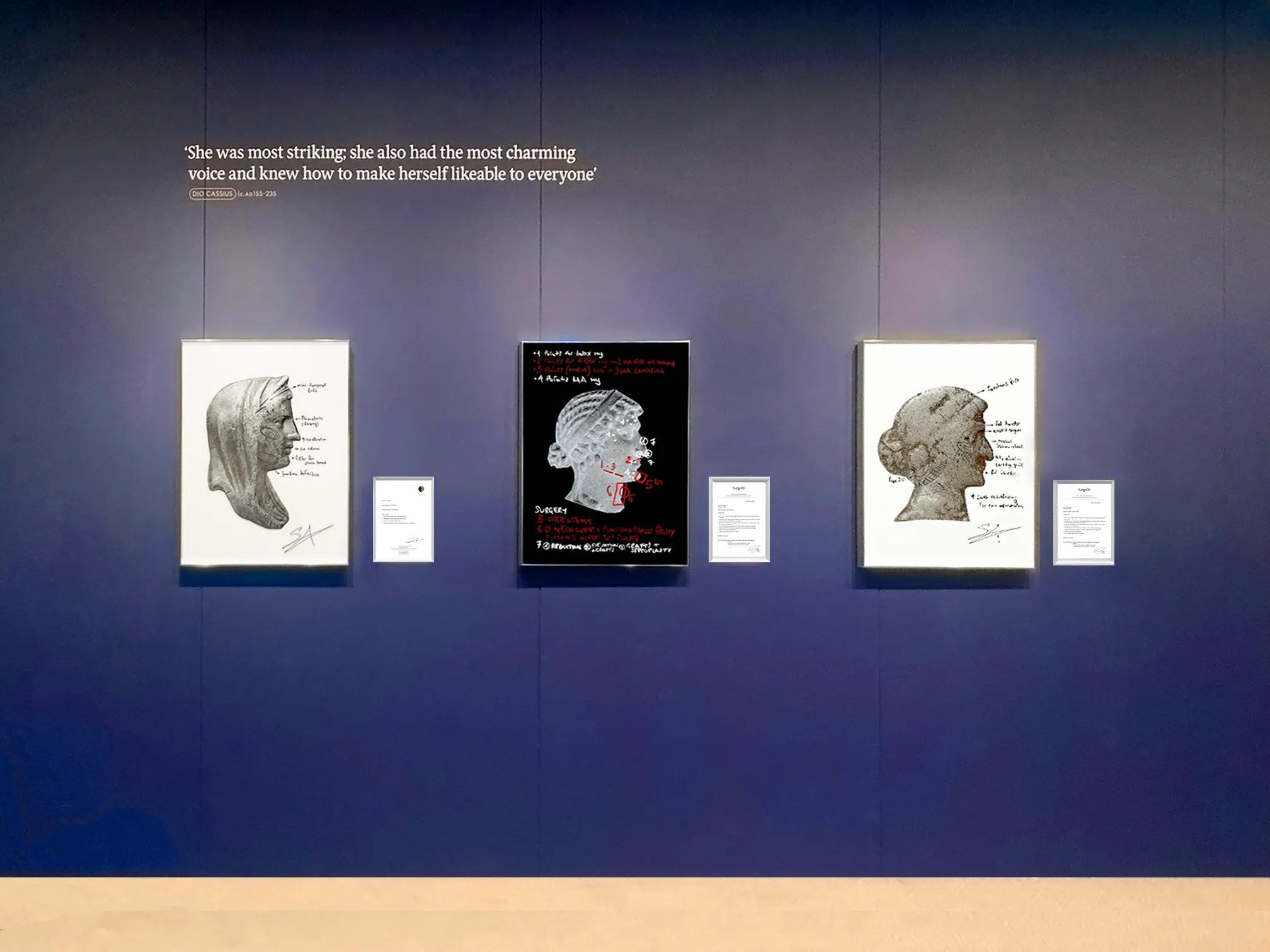
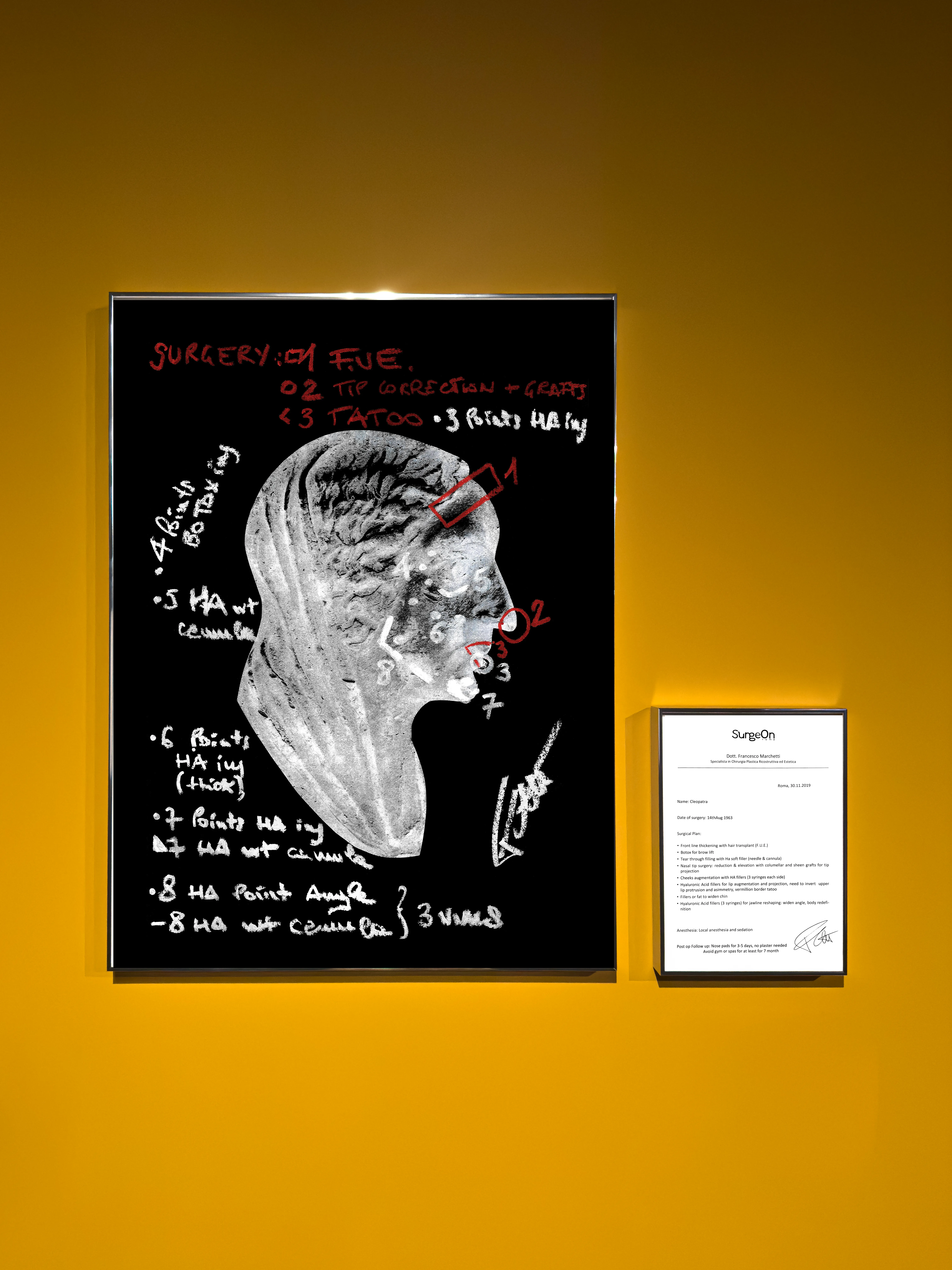
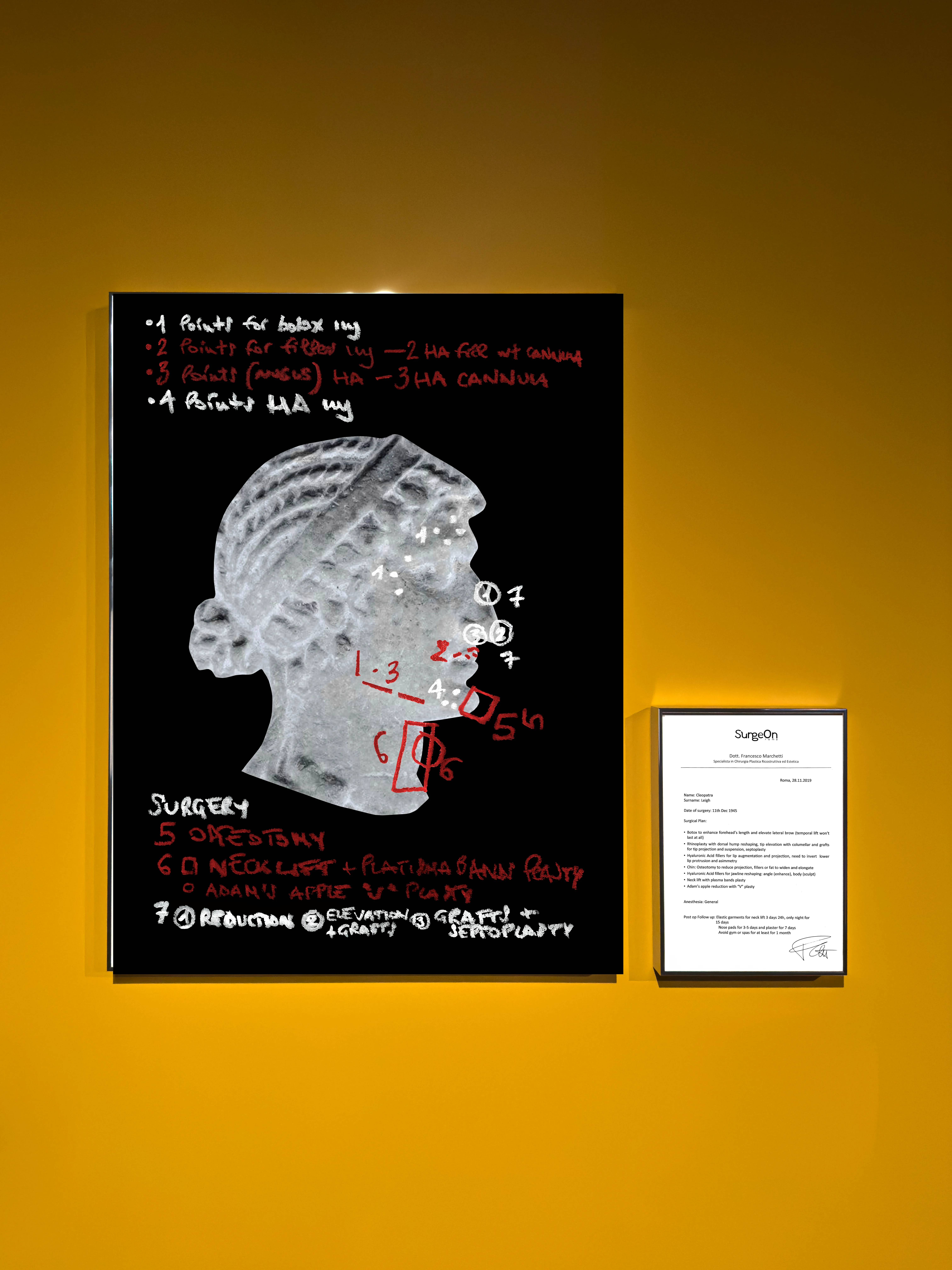
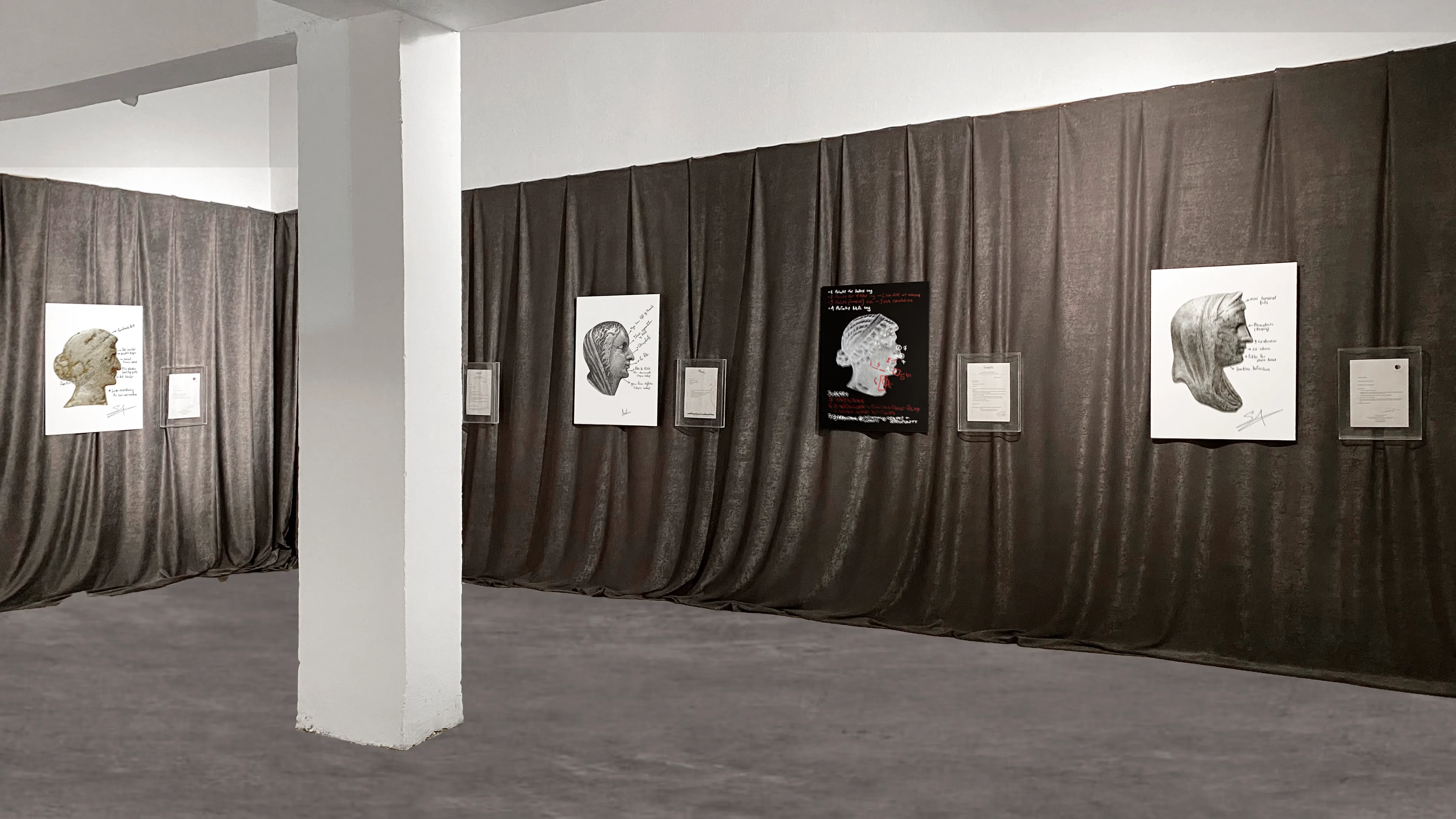
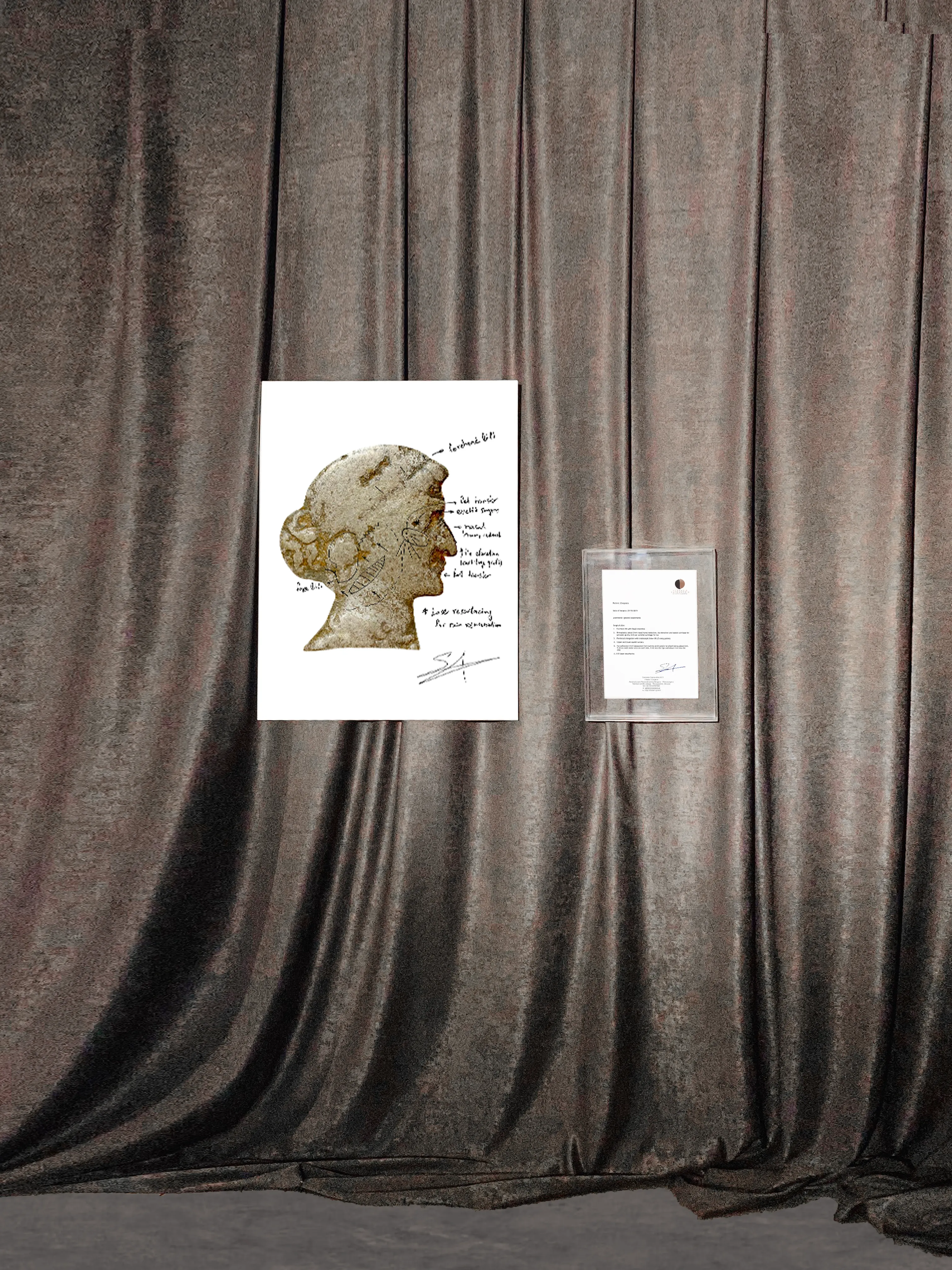
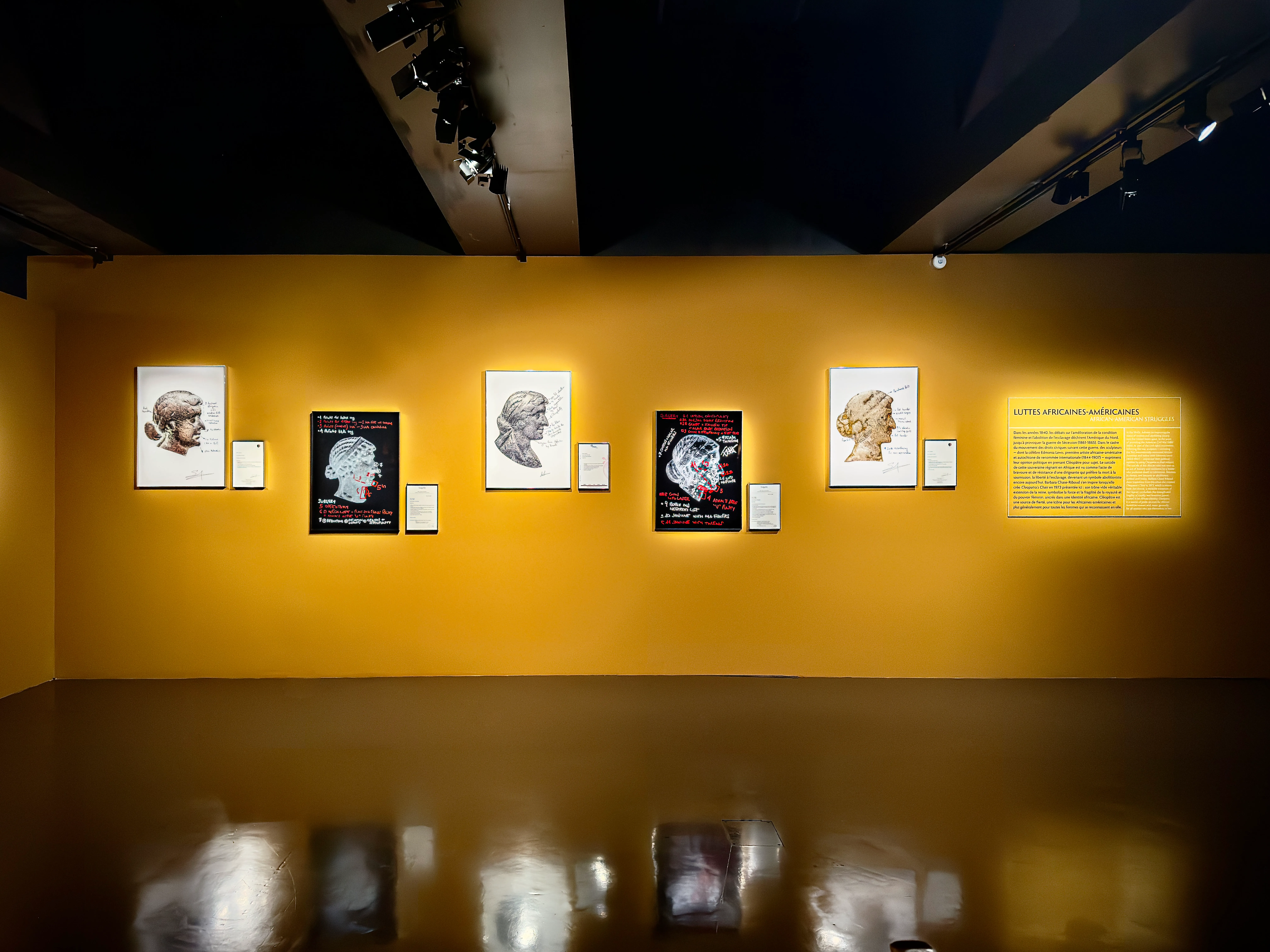
The work stages this process as an absurd cosmetic consultation. Kosmatopoulos invited four plastic surgeons to examine a portrait based on Cleopatra's image on a Ptolemaic coin. Each surgeon was asked to identify the procedures necessary to transform that face into the face of a twenty-first-century actress who had played Cleopatra on screen.
The conventional relationship between historical figure and performer is reversed. The actress is no longer expected to resemble Cleopatra. Cleopatra becomes the patient, and her surviving historical likeness is evaluated against a fictional image produced centuries after her death. Her features are measured, assessed and treated as imperfections to be corrected.
Through this reversal, the work reveals the authority acquired by images through repetition. A fictional representation, circulated often enough, can become more familiar and therefore more credible than the uncertain historical traces it has replaced. Eventually, the historical woman appears incorrect because she no longer resembles the image constructed in her name.
The proposed surgical transformations also expose the racial and gendered standards embedded in this reconstruction. Cleopatra's face is adjusted to conform to a predominantly white cinematic ideal through which contemporary mass culture has learned to recognise her. Historical difference is translated into physical deficiency, then corrected through the clinical language of cosmetic surgery.
Because Cleopatra is a woman, the rewriting of her political identity repeatedly passes through her body. Her authority as a ruler is displaced by questions about her beauty, desirability and power over men. Her face becomes the surface on which history negotiates its discomfort with a woman whose political influence cannot be explained through appearance alone.
The twelve diptychs do not attempt to establish which representation of Cleopatra is true. They expose the process through which one image becomes convincing enough to displace another.
History is not simply inherited. It is continually remade in the image of those given the power to represent it.