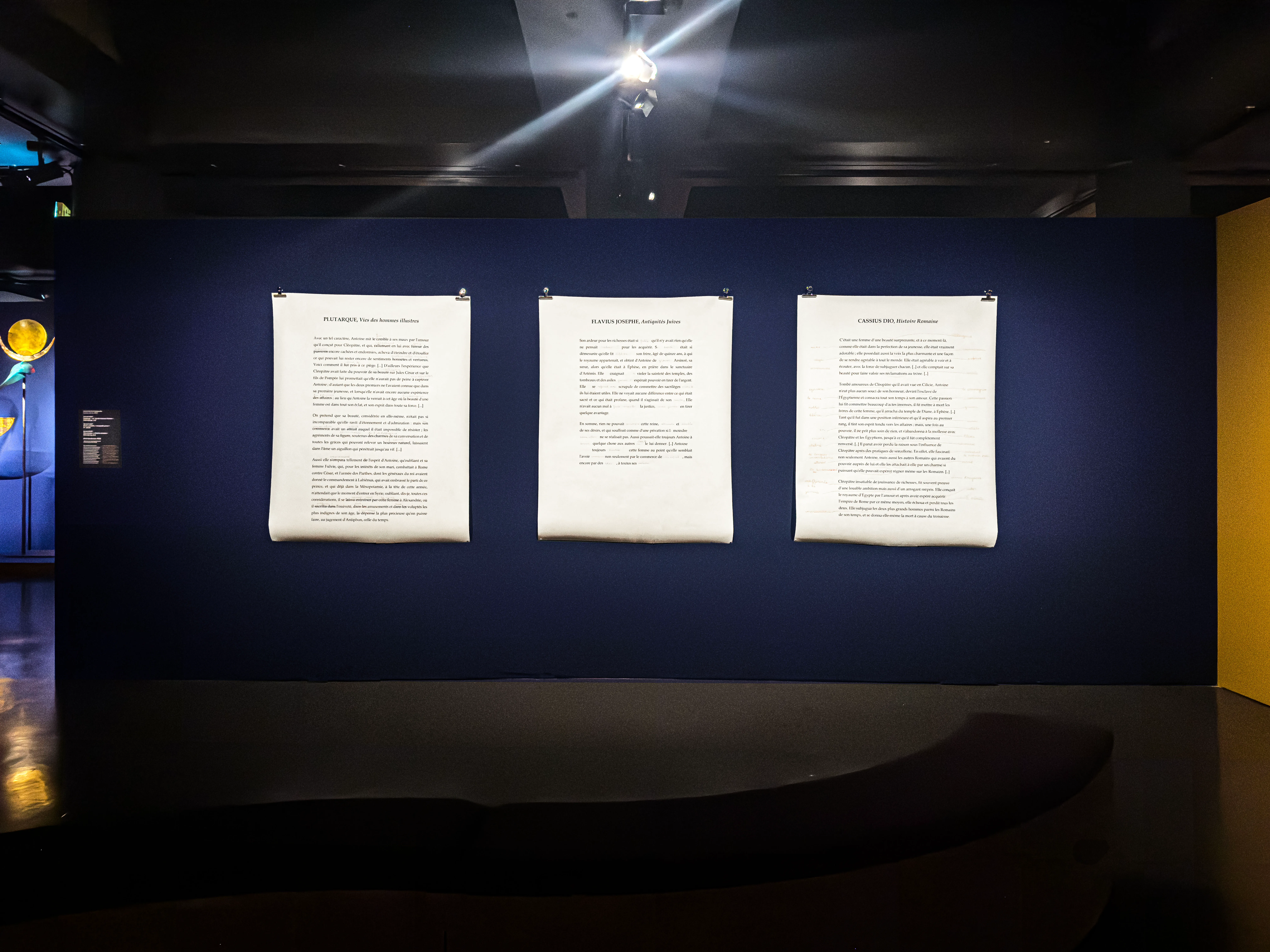
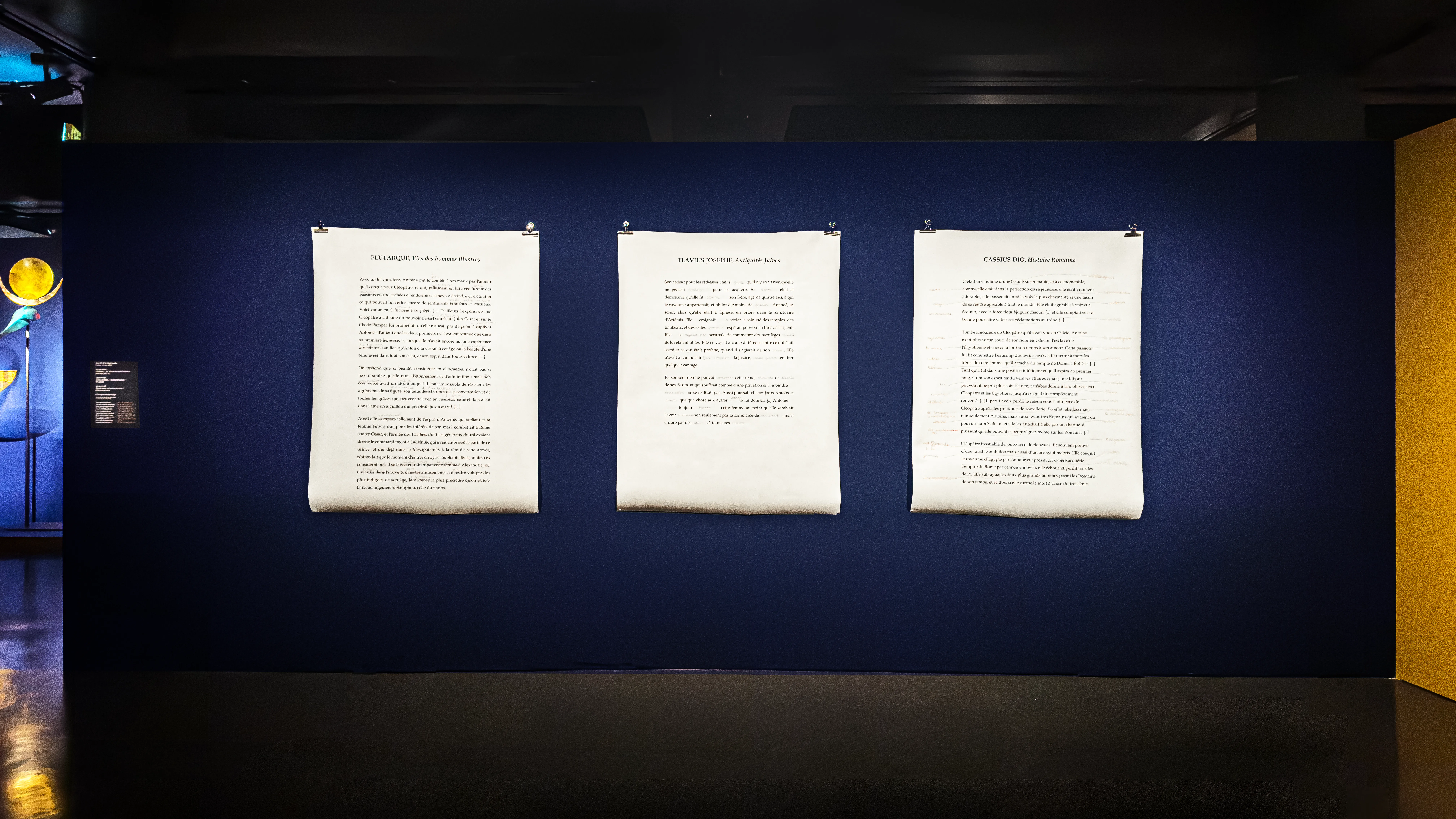
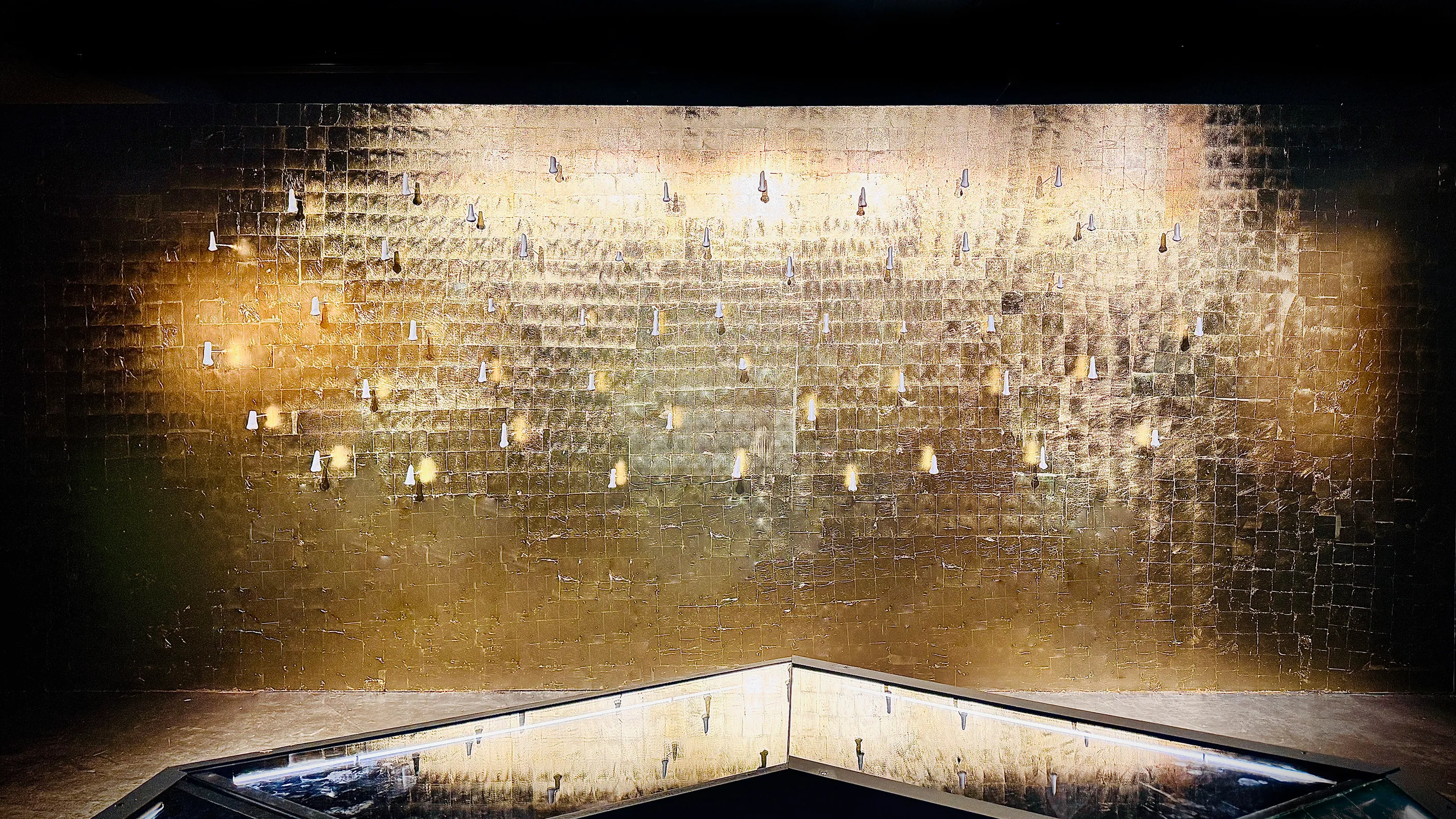
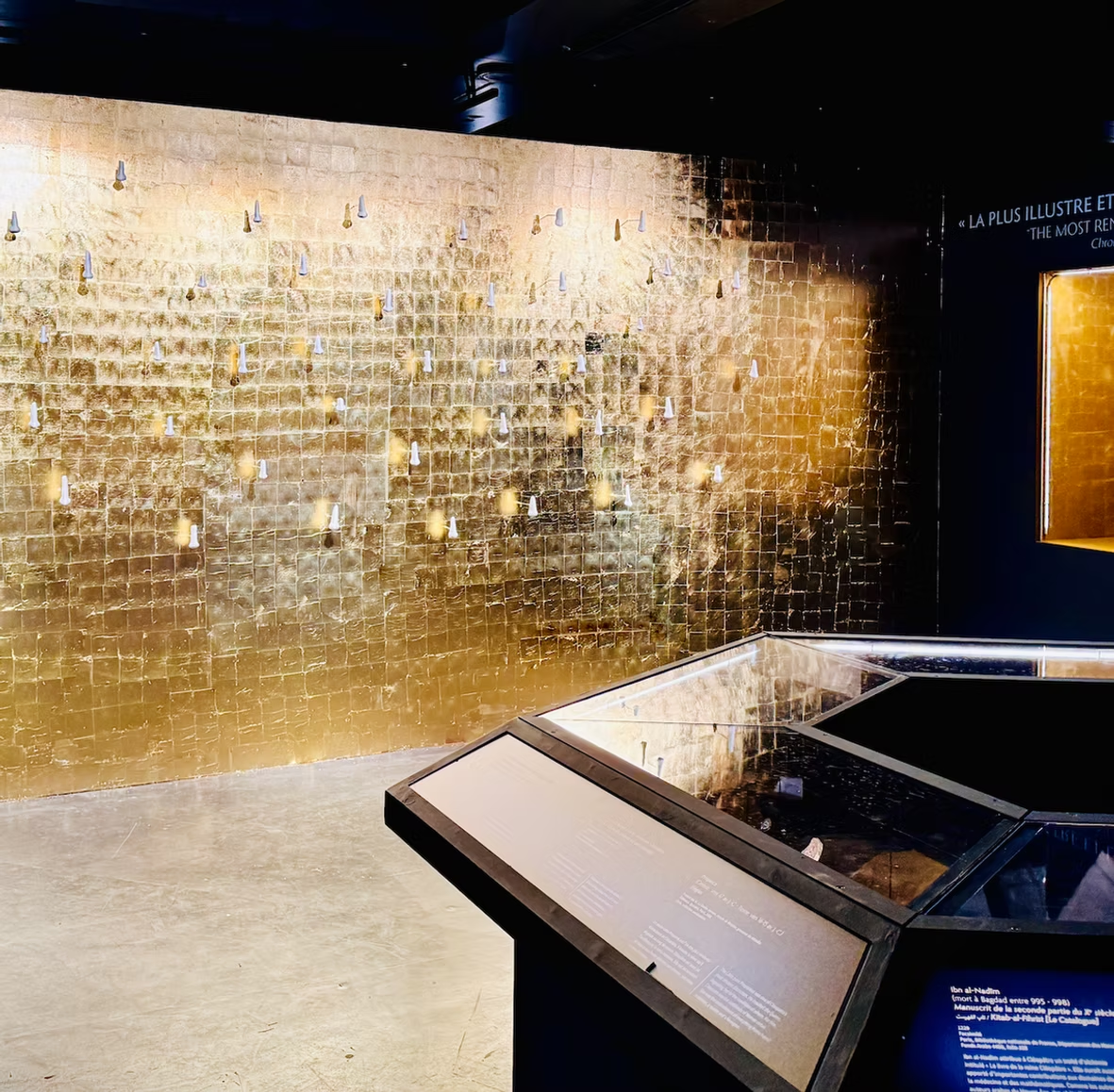
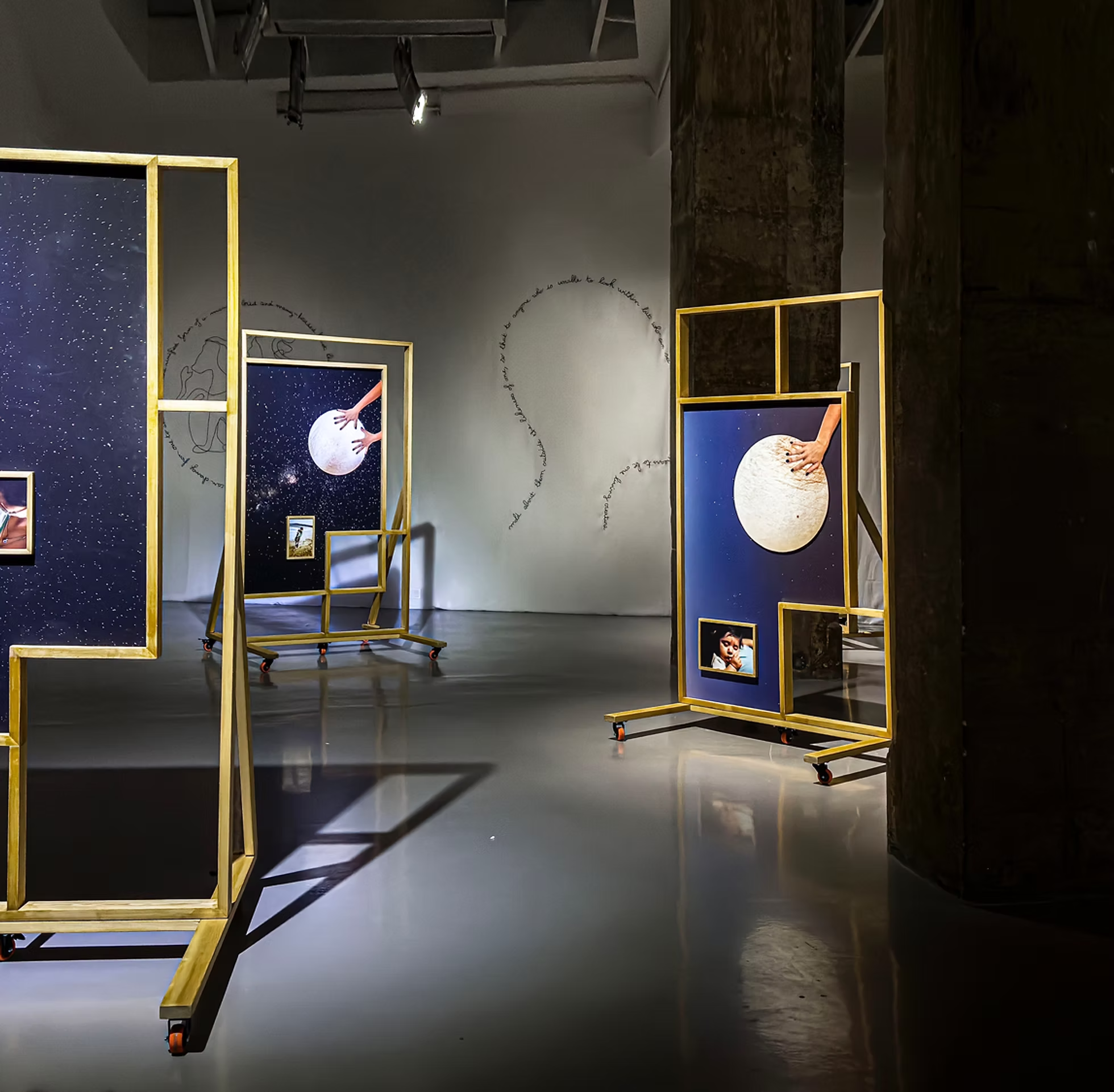
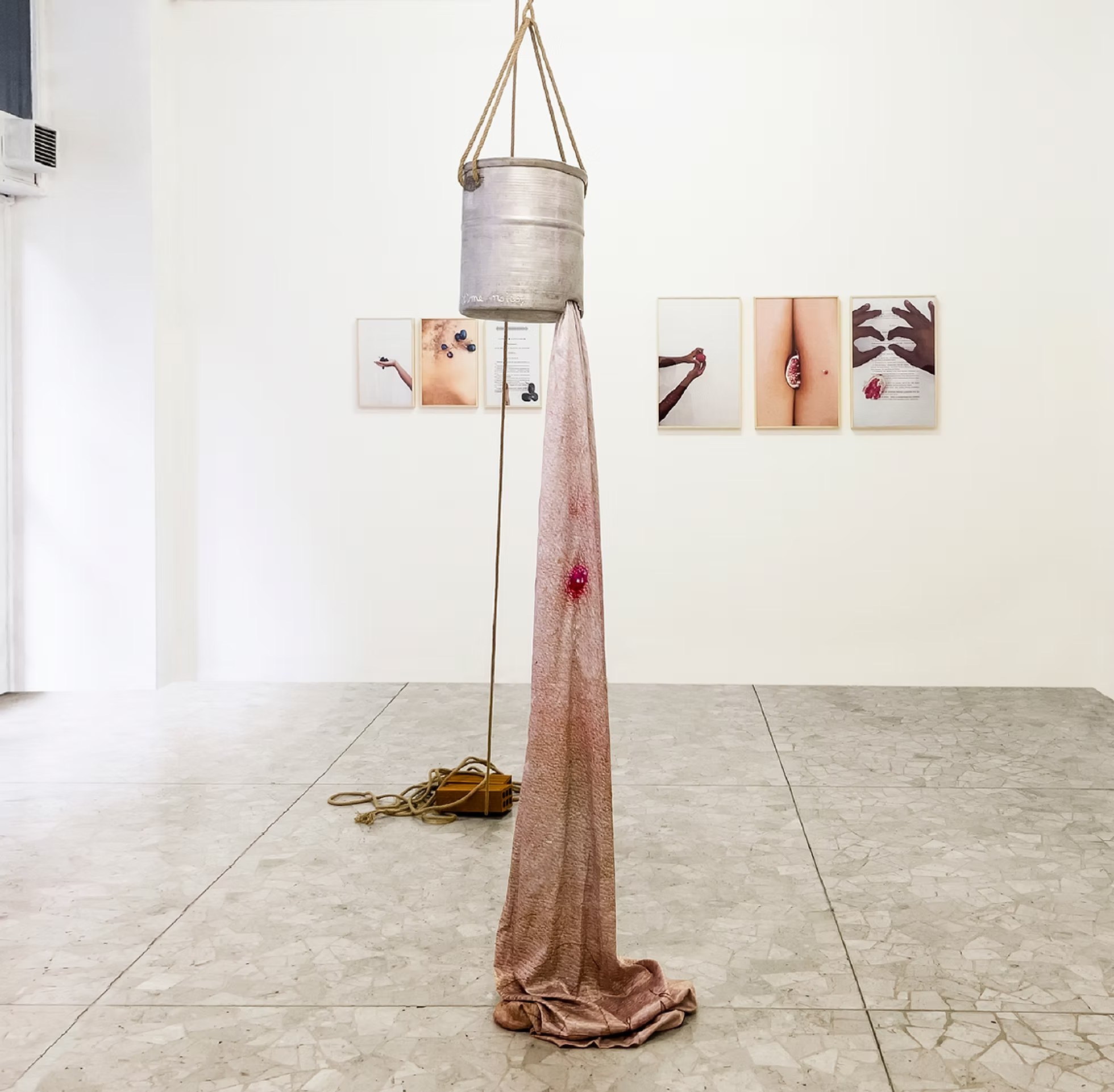
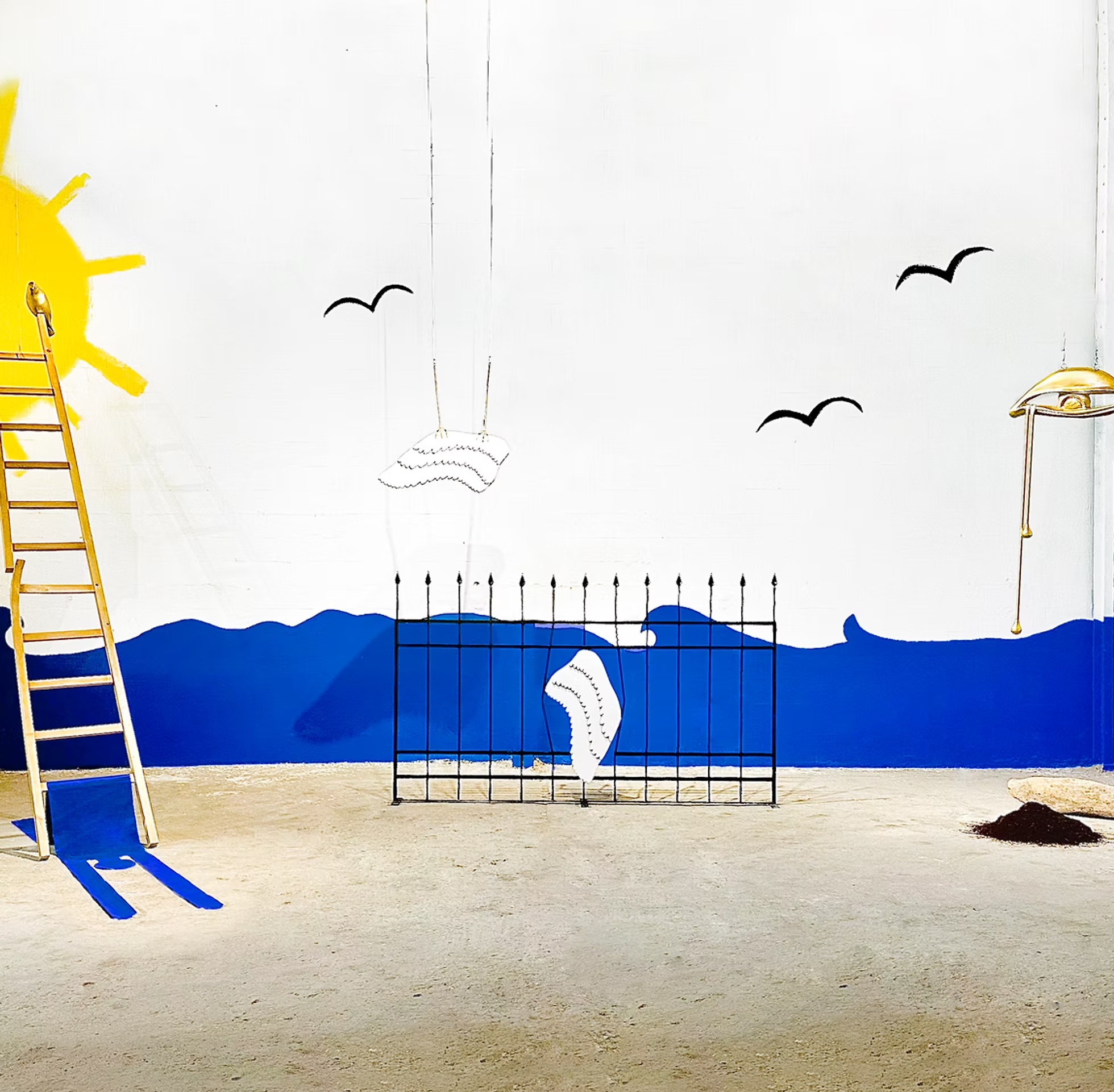
SECOND DRAFT belongs to If the Nose of Cleopatra… and intervenes in the language that helped construct Cleopatra's historical reputation. Rather than examining the transformation of her face, the work returns to three ancient texts through which her political identity was interpreted and transmitted.
Written after the deaths of their protagonists, the accounts of Plutarch, Flavius Josephus and Cassius Dio contributed to one of the most persistent representations of Cleopatra: the dangerous foreign woman whose beauty and powers of seduction supposedly deprived influential Roman men of reason and led them towards ruin.
In these narratives, political agency is repeatedly translated into temptation. Cleopatra's intelligence, ambition and authority are recast as feminine manipulation. Complex political relationships involving an Egyptian queen, Julius Caesar and Mark Antony are reduced to stories of masculine downfall attributed to the influence of a dangerous woman.
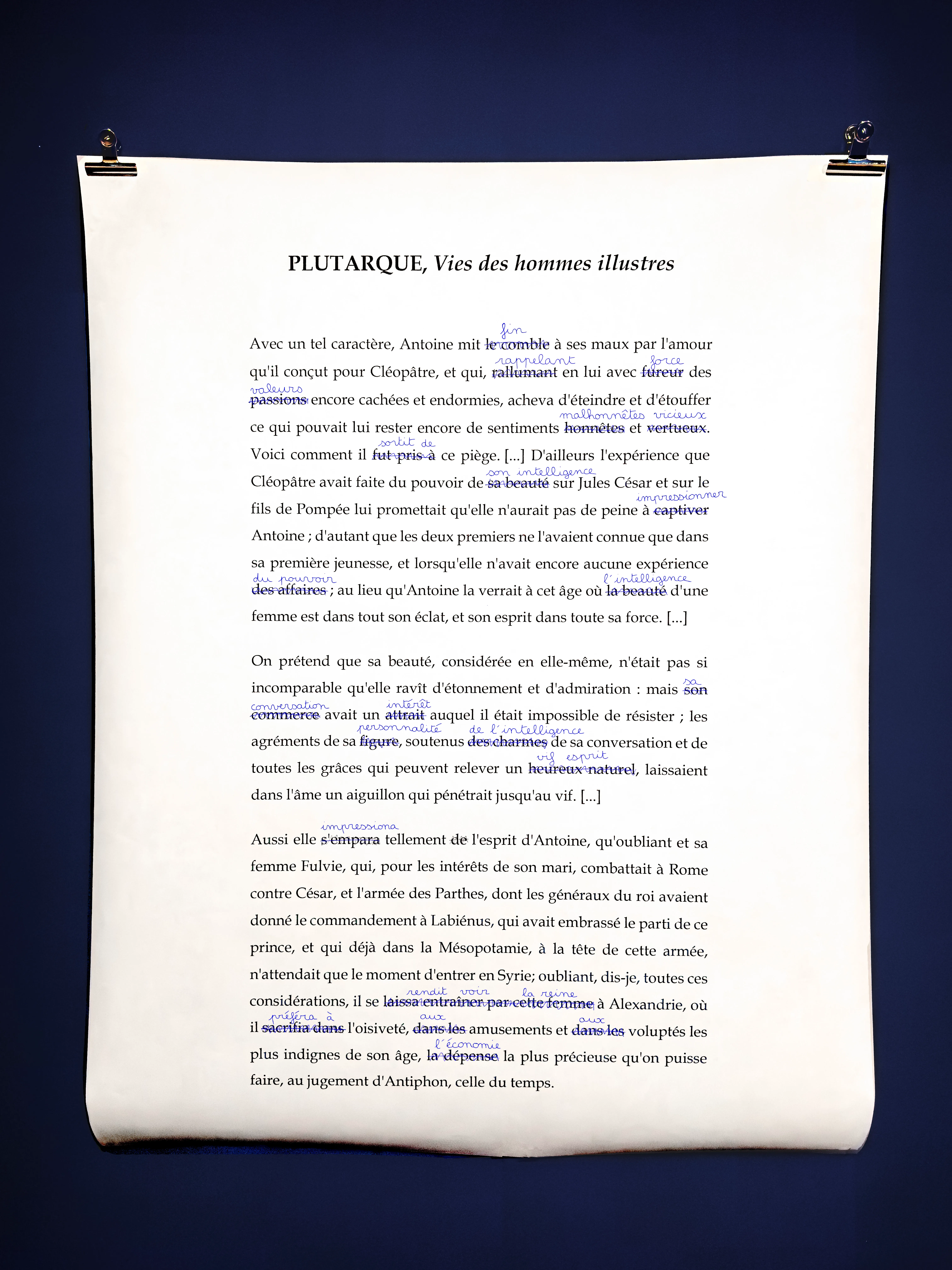
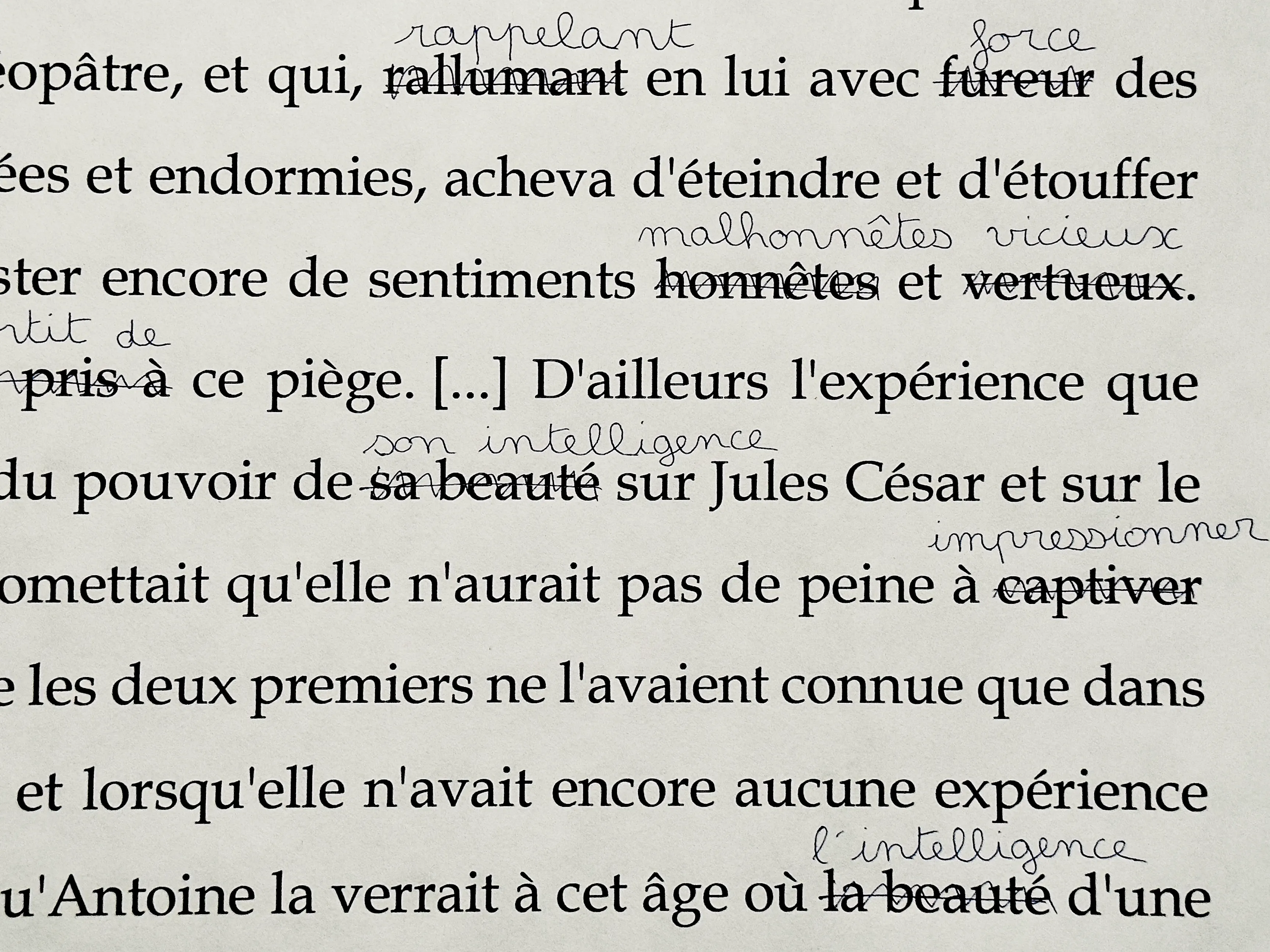
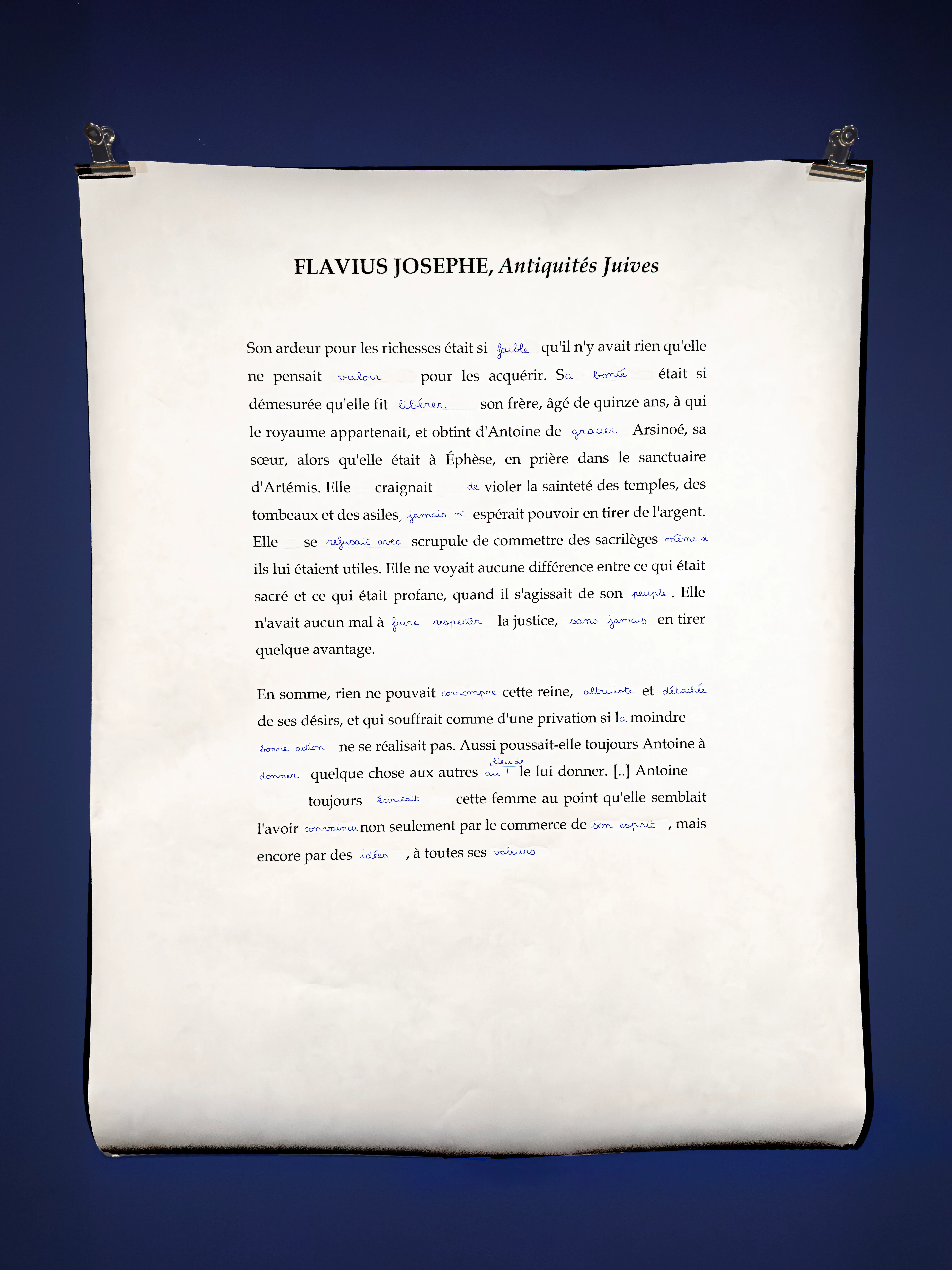
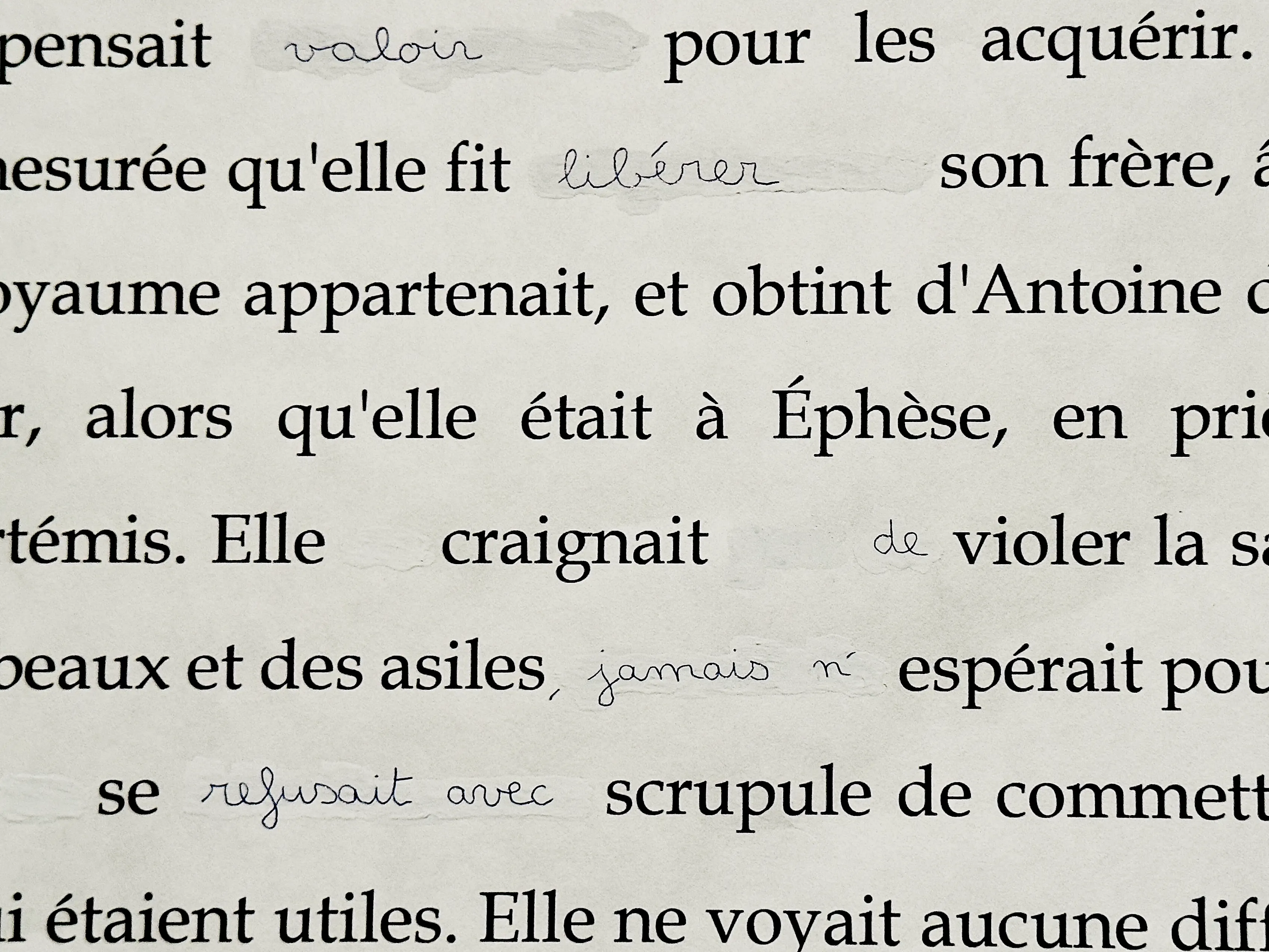
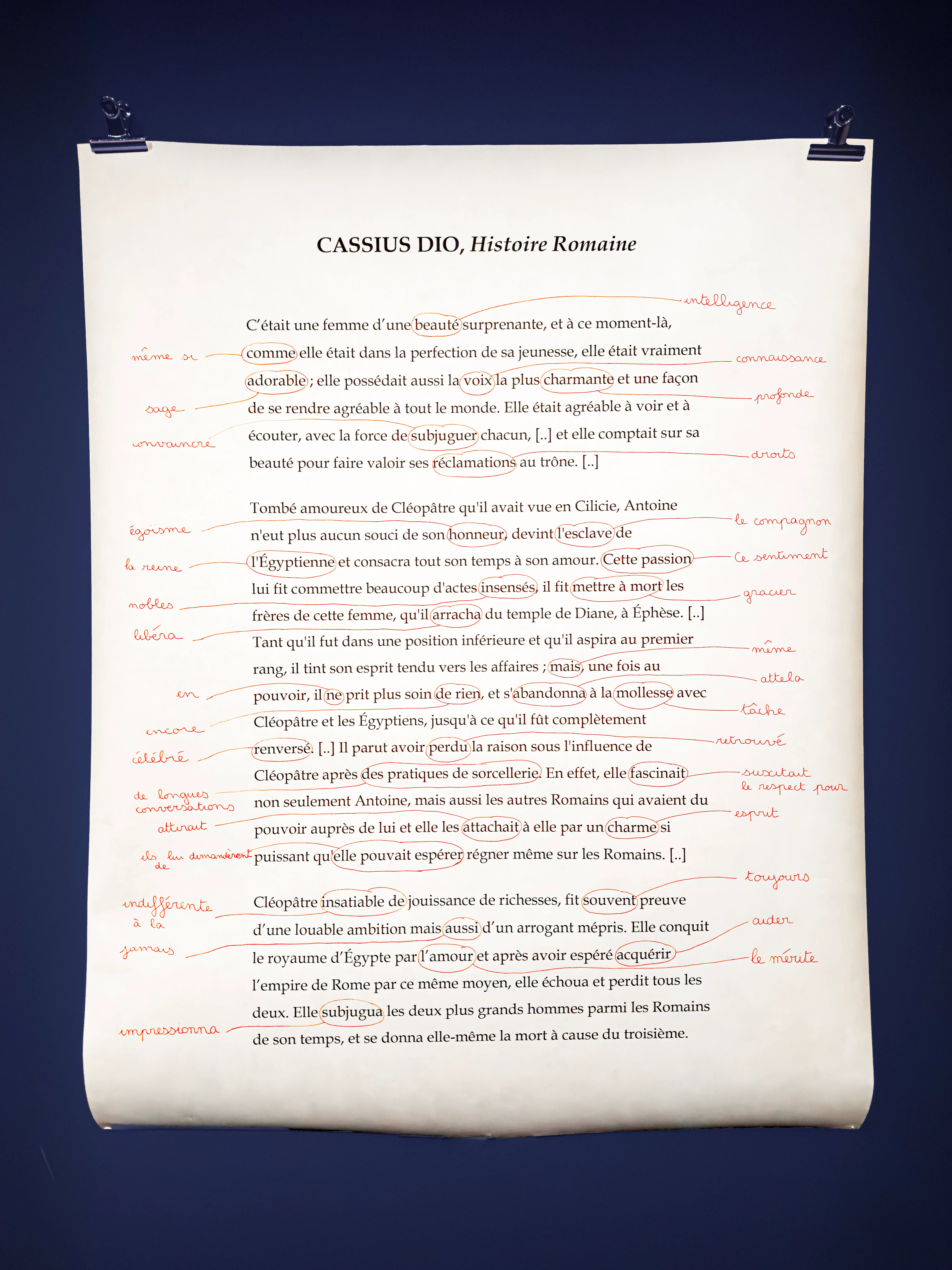
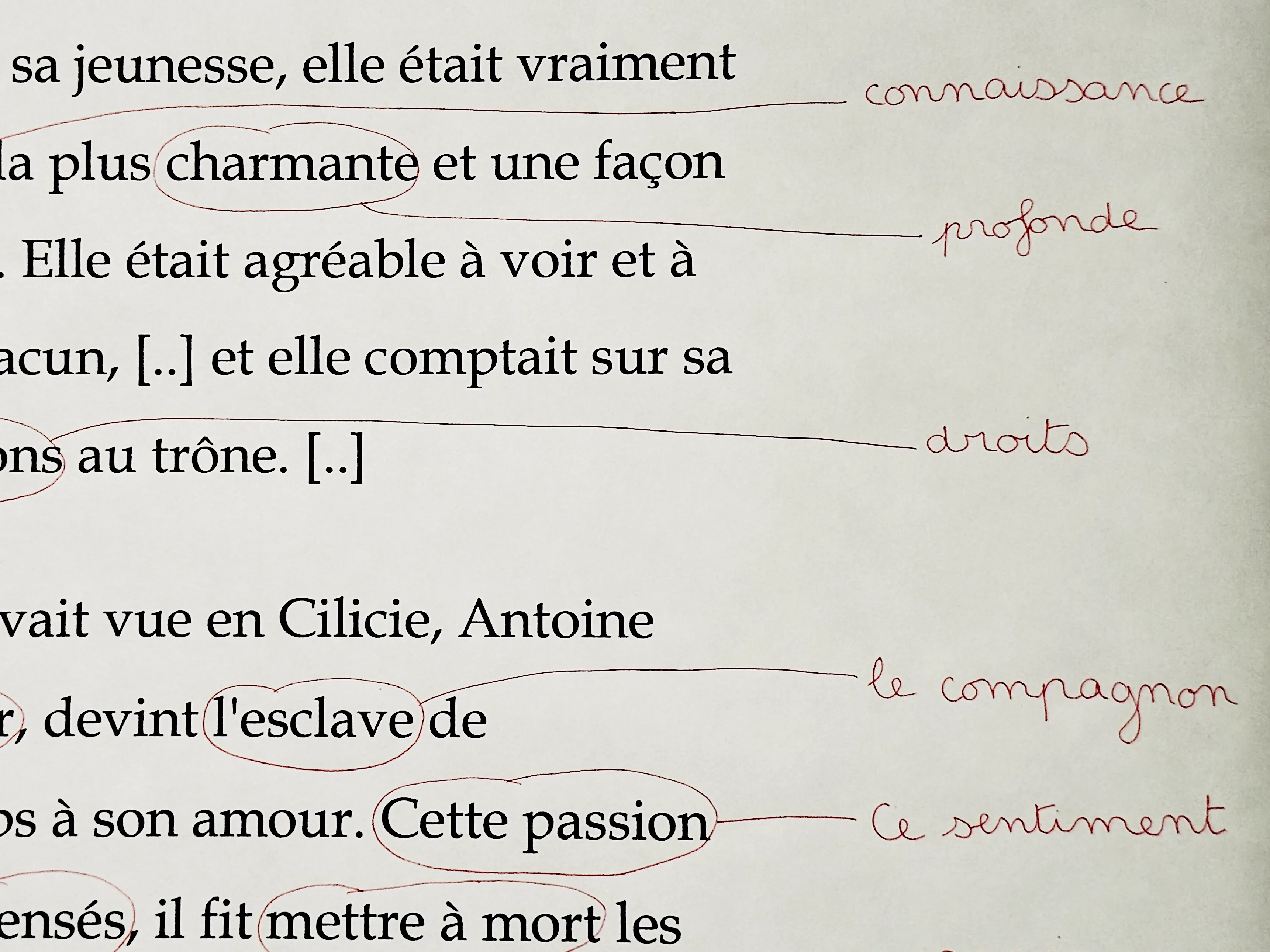
Kosmatopoulos treats these historical texts not as fixed evidence, but as drafts that remain open to correction. She crosses out adjectives, alters descriptions and inserts new words directly onto the printed pages. The interventions are deliberately elementary, recalling the correction of a school exercise: an error is struck through, another word is written above it, and the meaning of the sentence changes.
This simple action gives the work its performative force. Rather than merely describing or criticising the rewriting of history, the artist assumes the authority to perform it. Her hand enters the historical document, interrupts the voices of its authors and produces another possible Cleopatra before the viewer's eyes.
The apparent ease of the gesture is central to the work. History presents itself as distant, stable and complete, yet its meaning can depend on a single adjective, a subjective judgement or a line drawn through a word. Once repeated, translated and preserved, interpretation begins to appear as fact. A small linguistic decision can determine every narrative built upon it.
Printed on Japanese paper, the texts retain a physical vulnerability that contrasts with the authority traditionally attributed to the historical document. The corrections remain visible. Nothing is erased without leaving a trace: the original wording, the act of rejection and the proposed replacement occupy the page simultaneously.
The revised passages construct a Cleopatra closer to the figure the present may wish to recover: politically intelligent, autonomous and powerful. But SECOND DRAFT does not claim that this new portrait is objective or definitive. By leaving every deletion and substitution exposed, the work acknowledges that its own version participates in the same continuing process of historical construction it seeks to question.
The work therefore does not replace a false history with a final truth. It makes the act of revision visible and asks who has the authority to describe a historical figure, which words are preserved as evidence, and when interpretation begins to function as collective belief.
Rewriting history does not always require destroying the archive.
Sometimes, it takes only a line through a word.