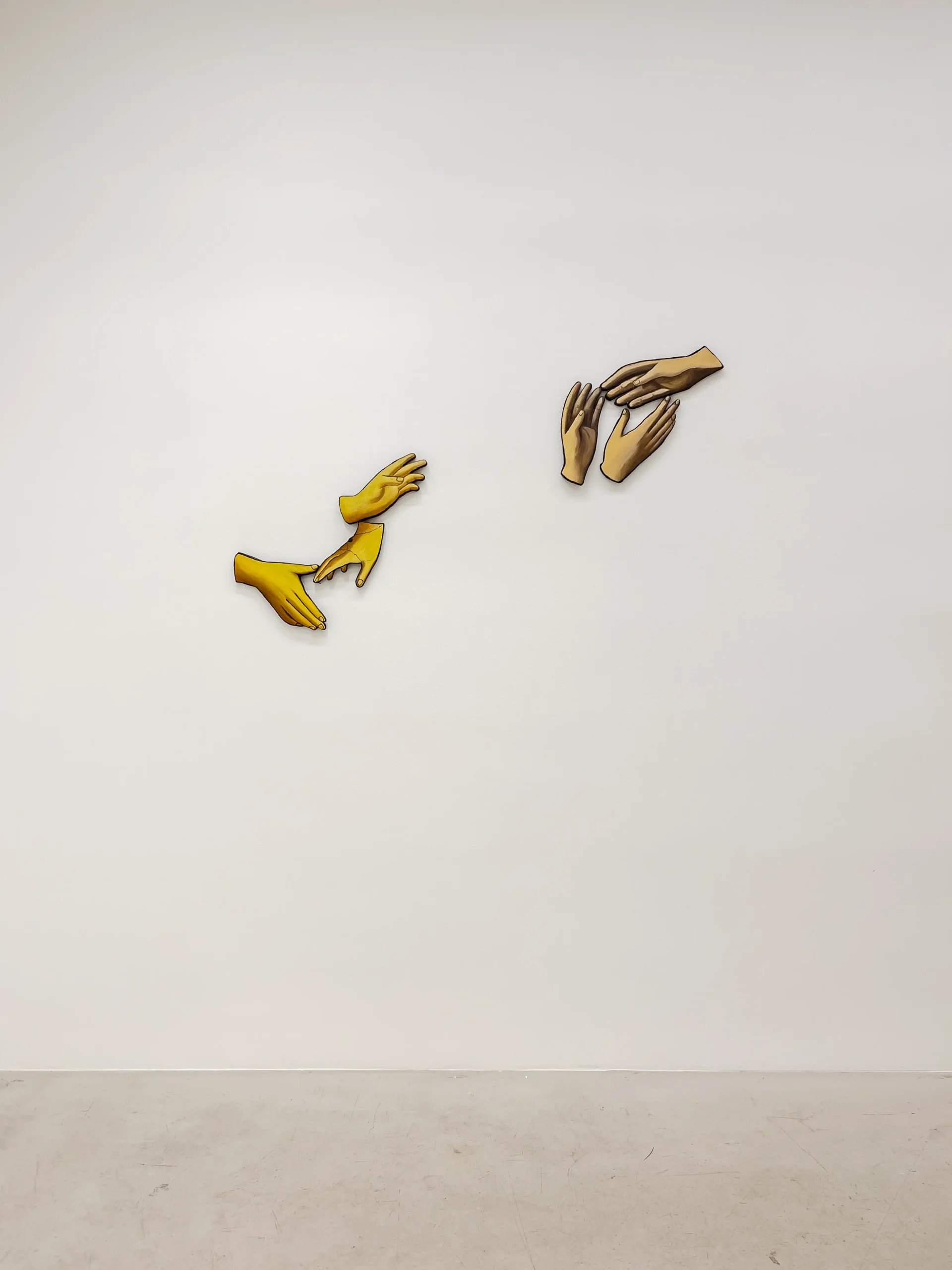
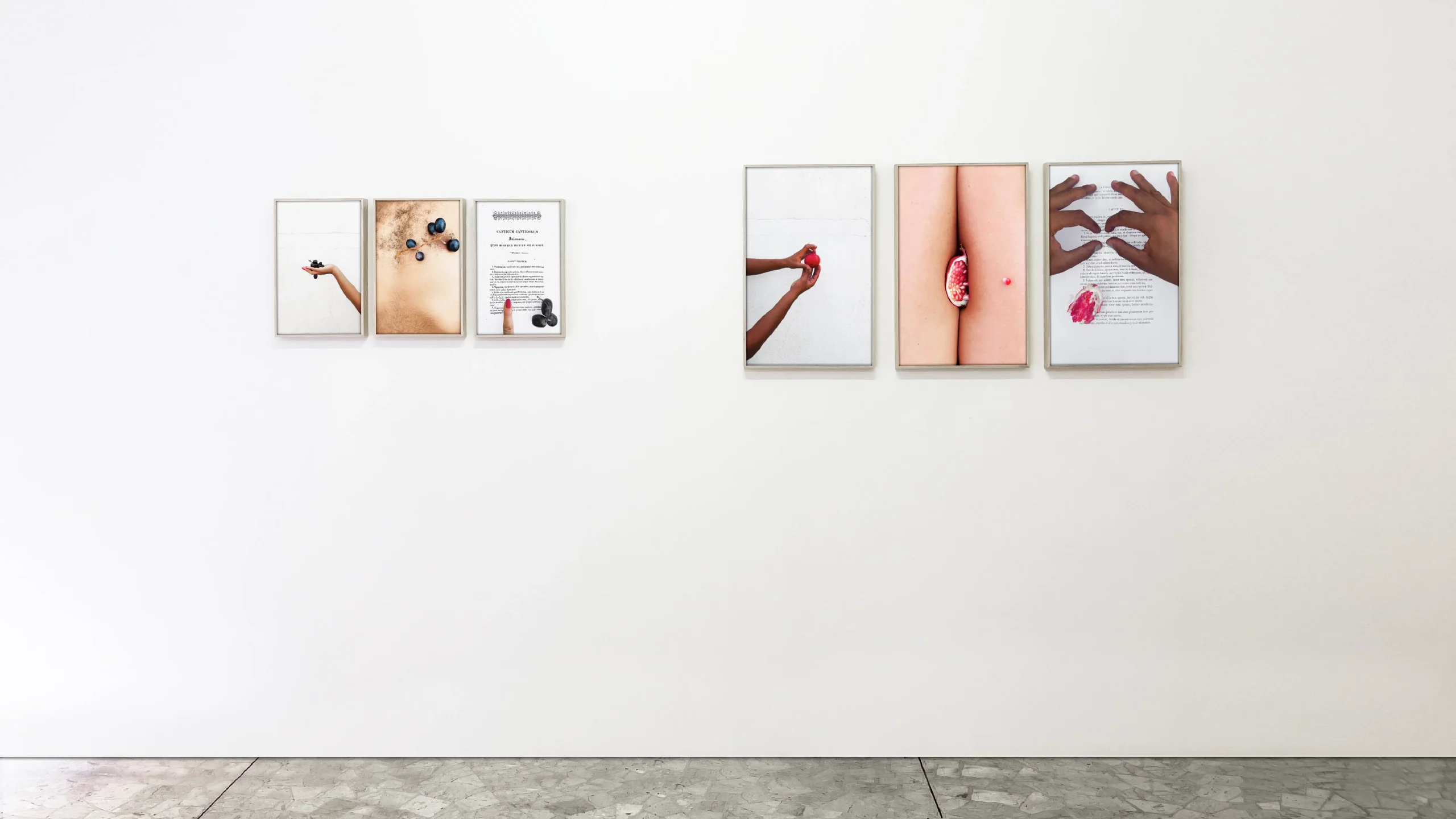
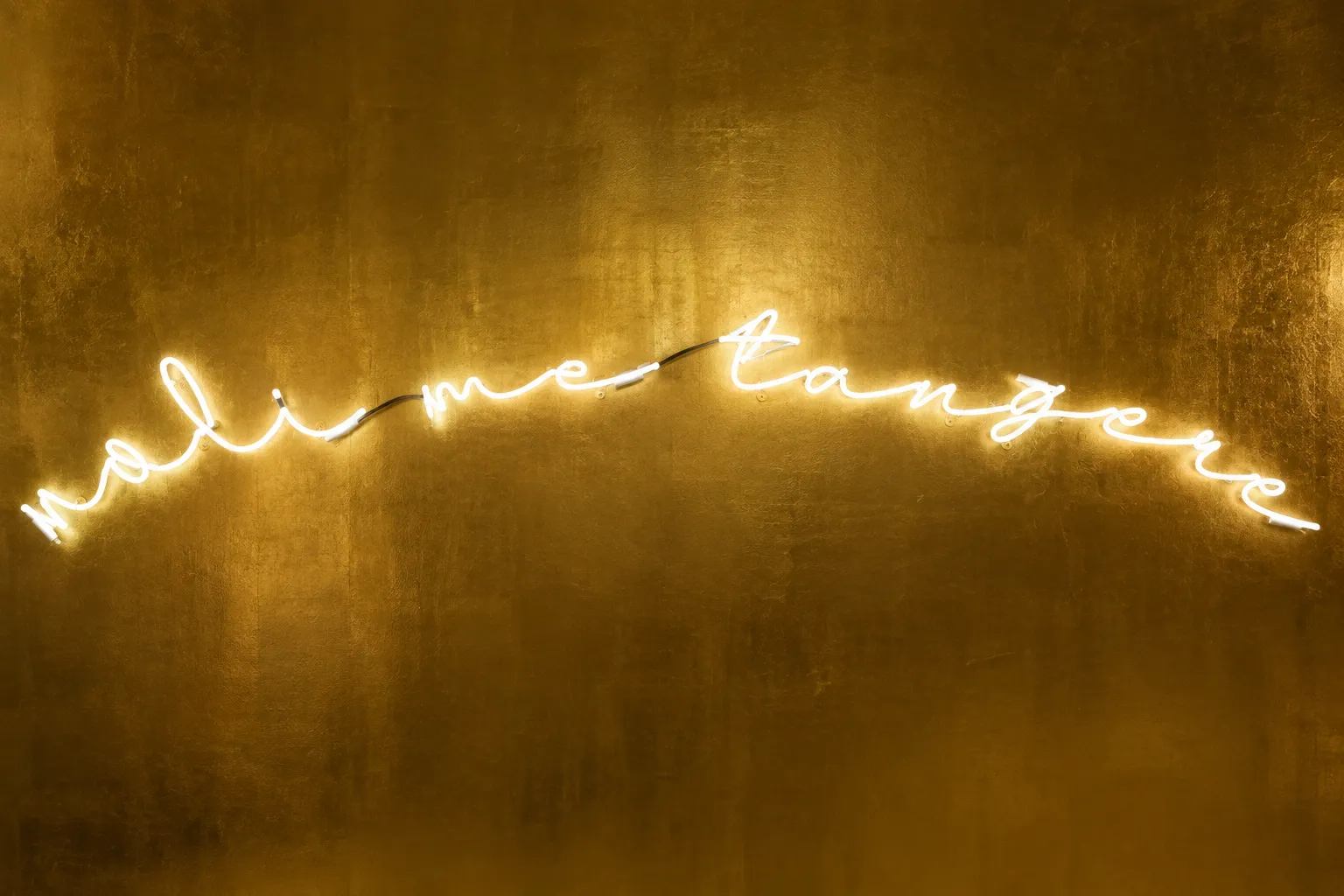
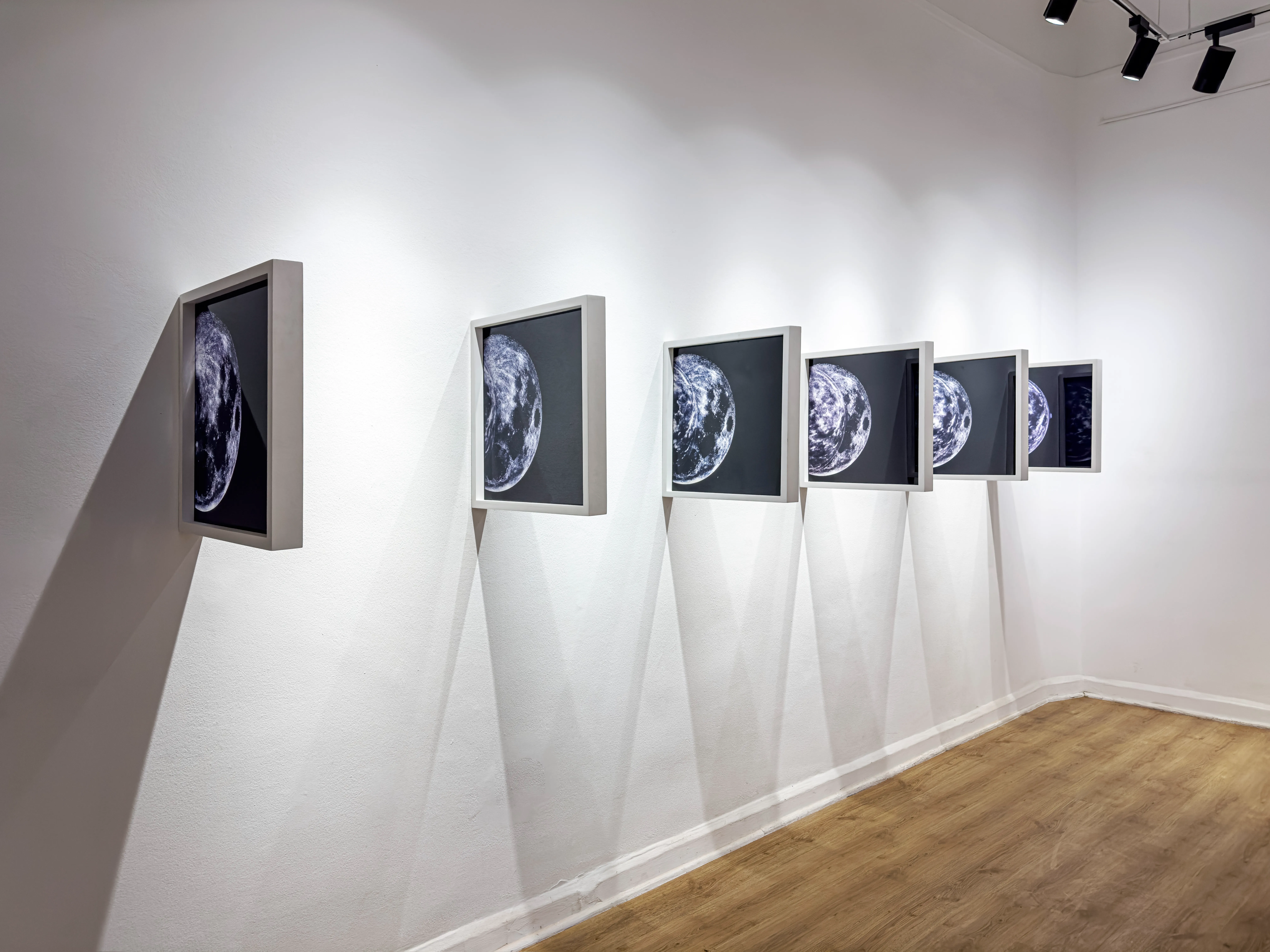
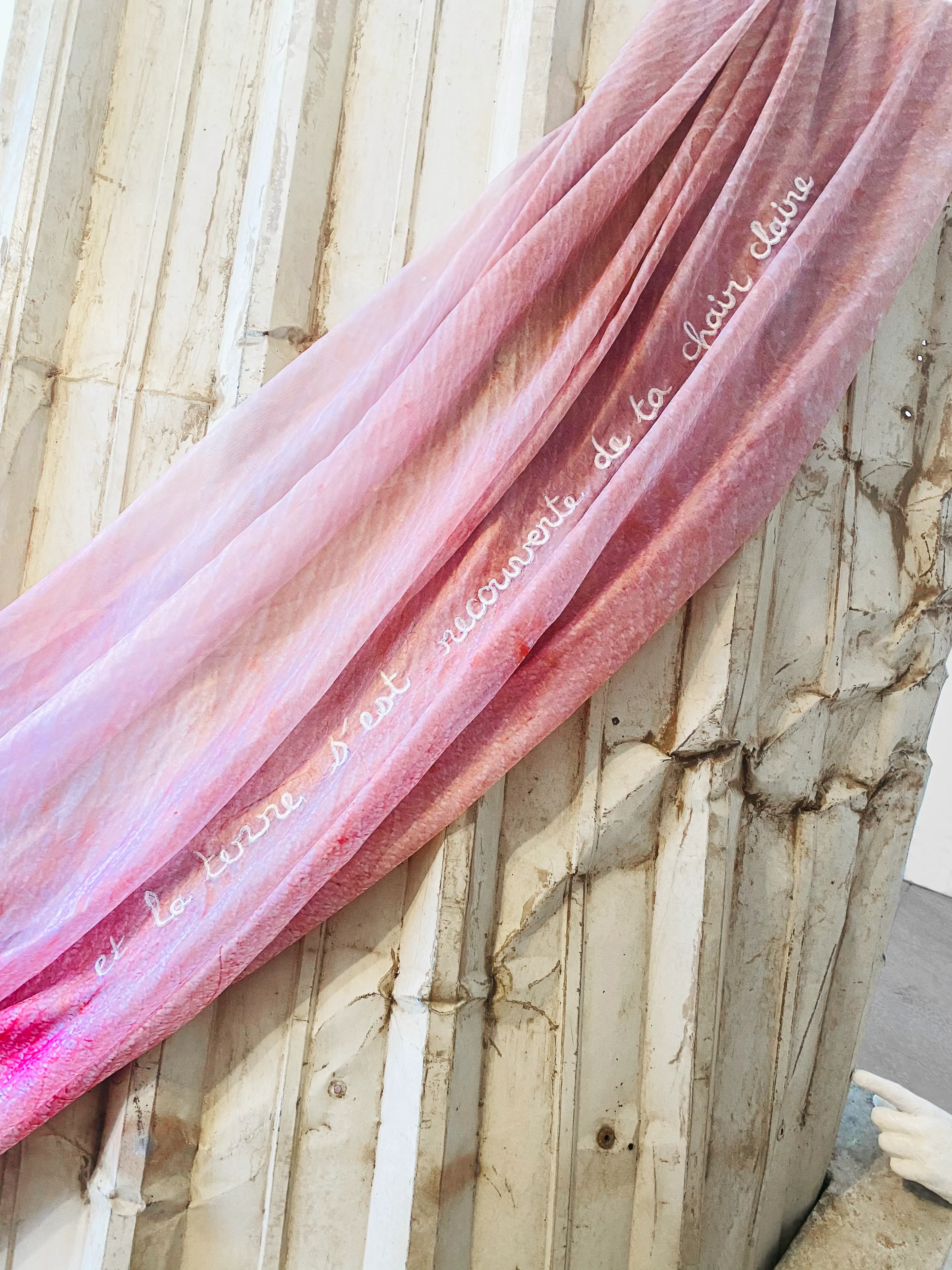
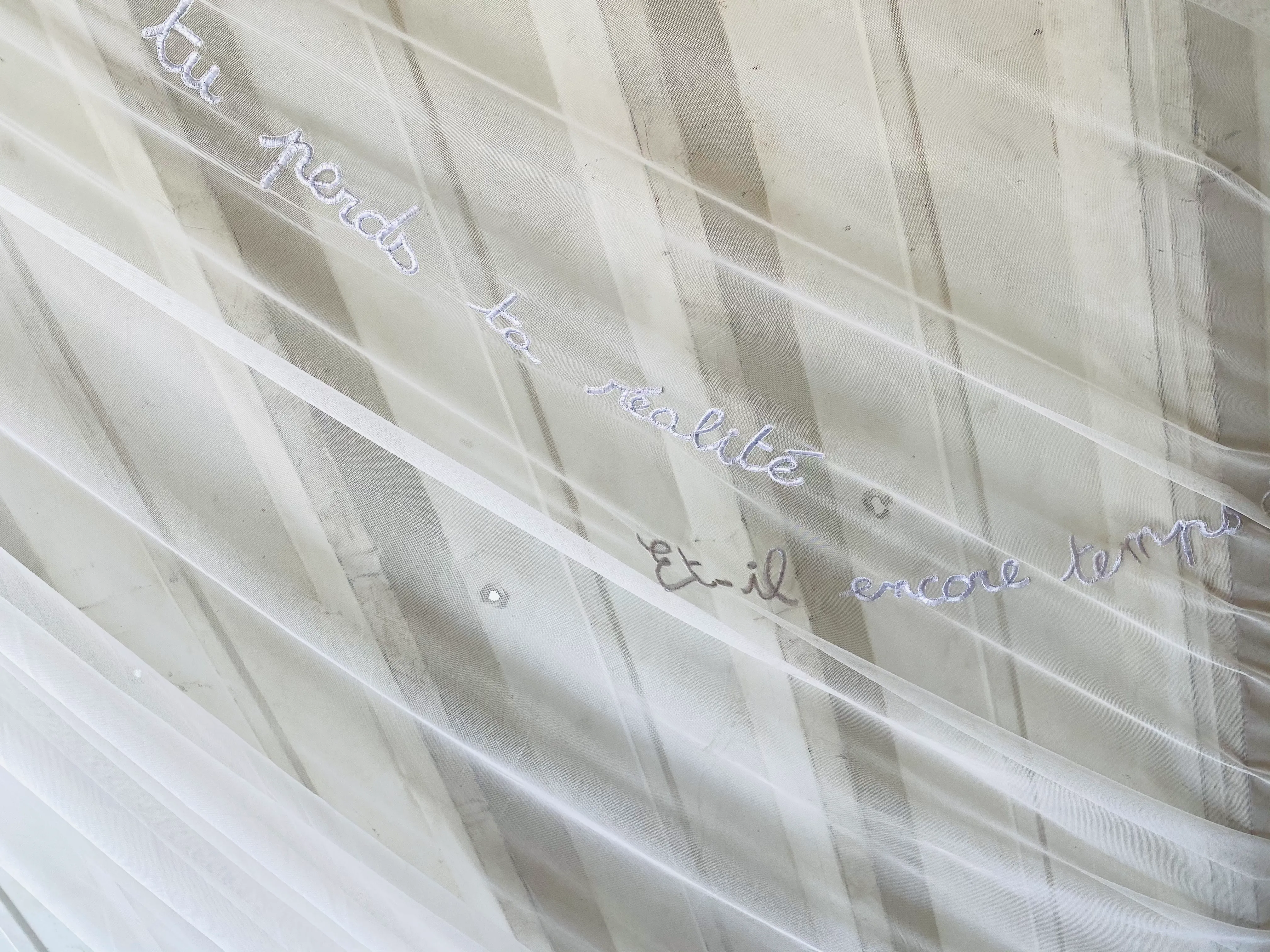
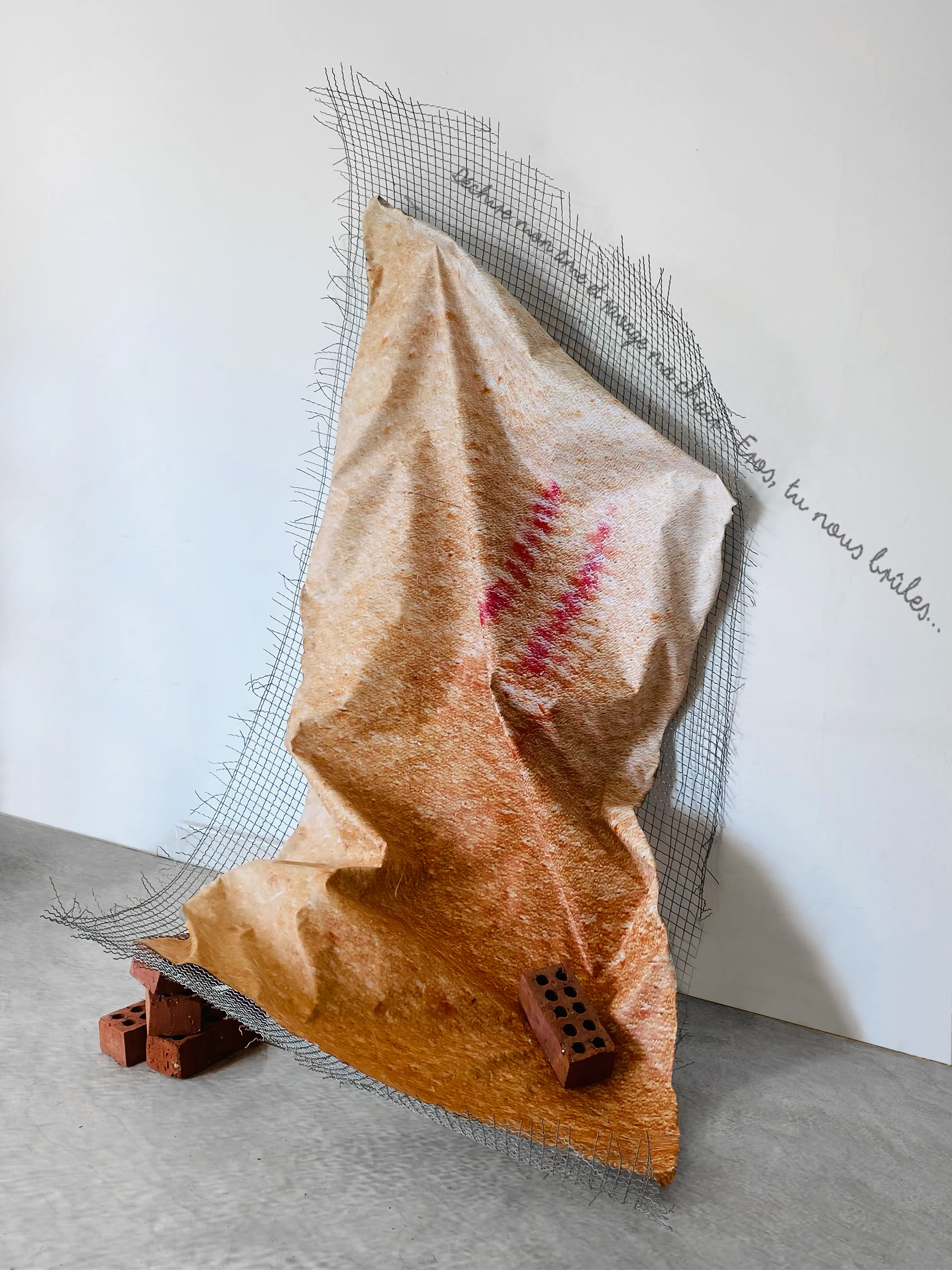
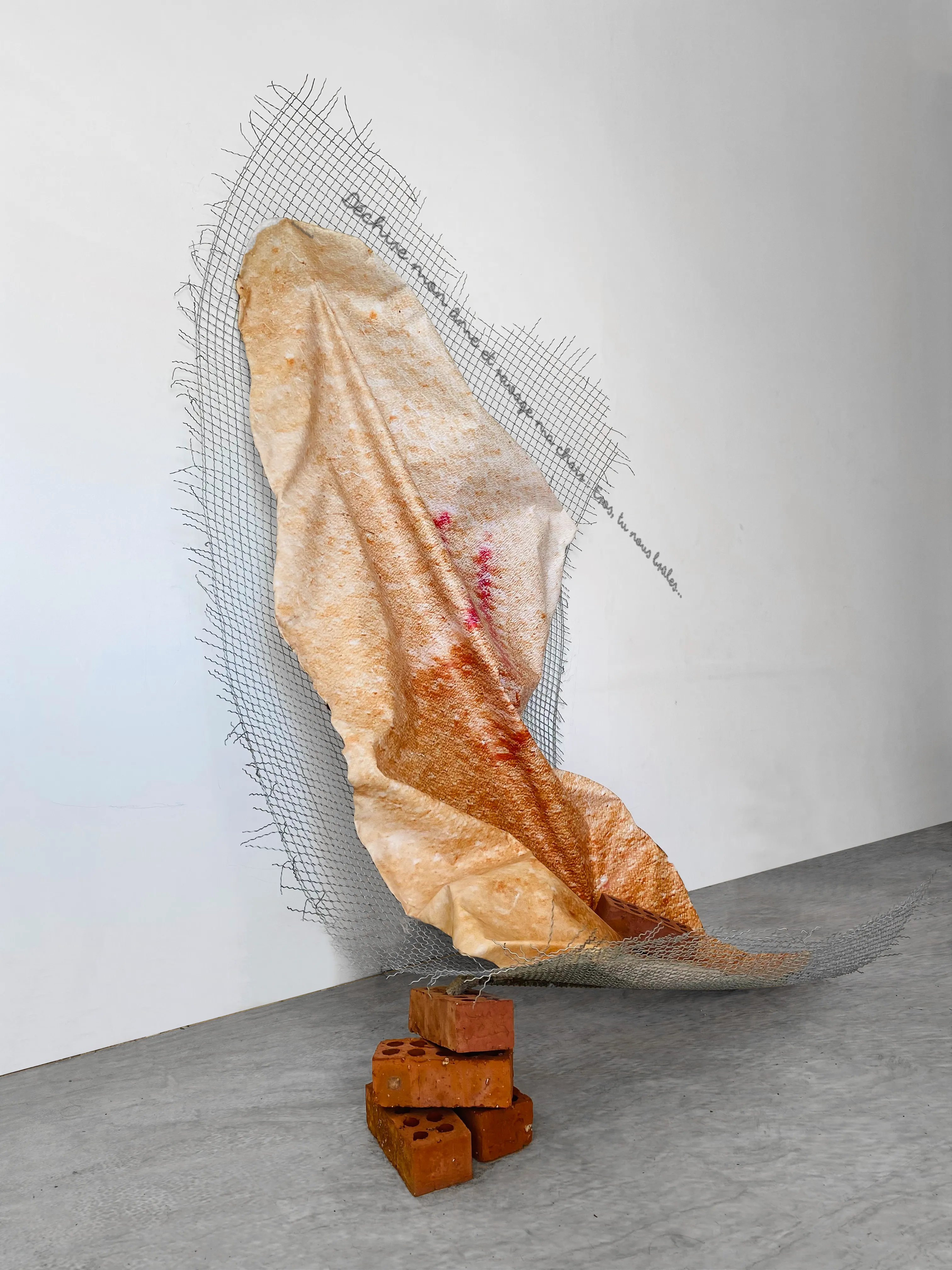
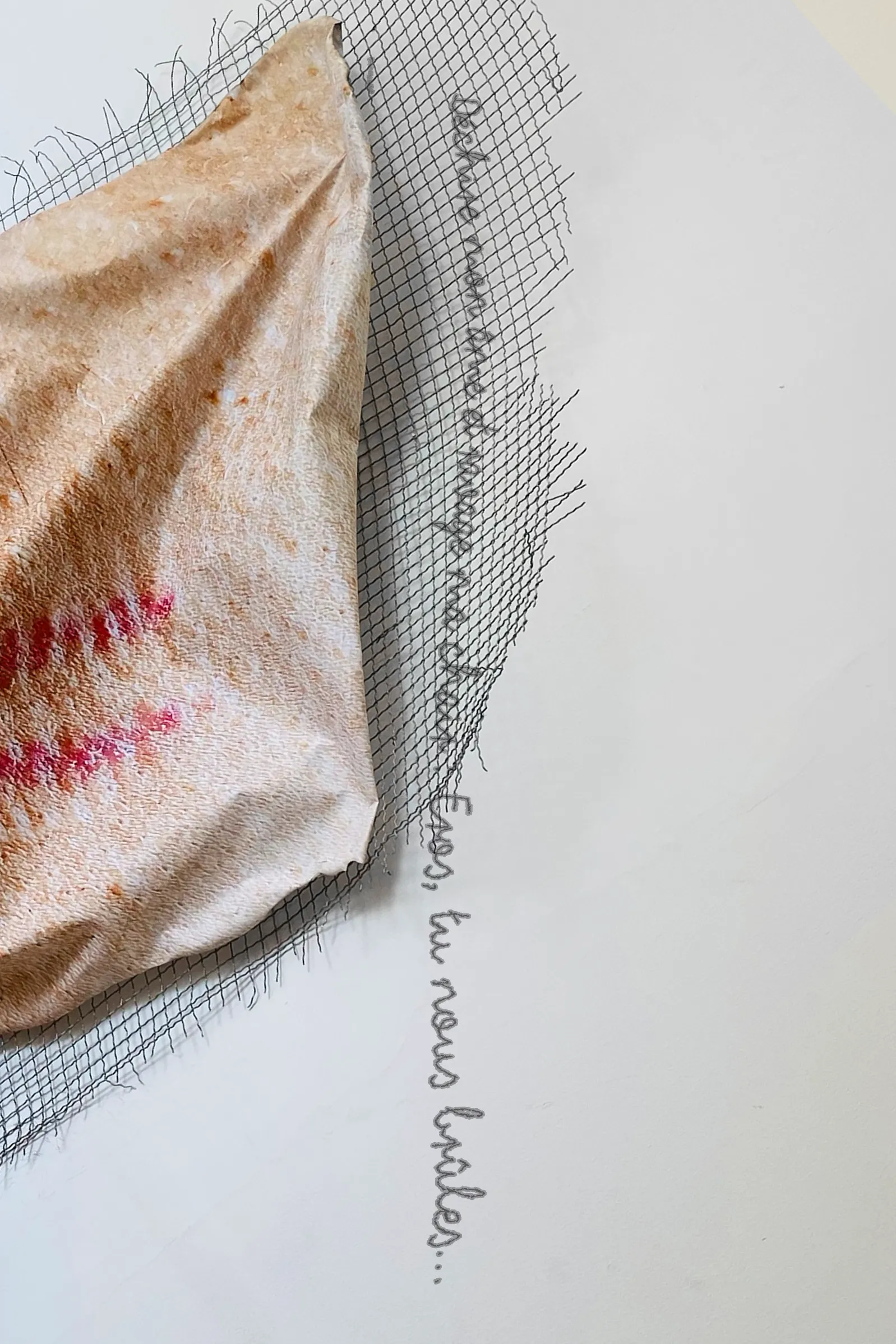
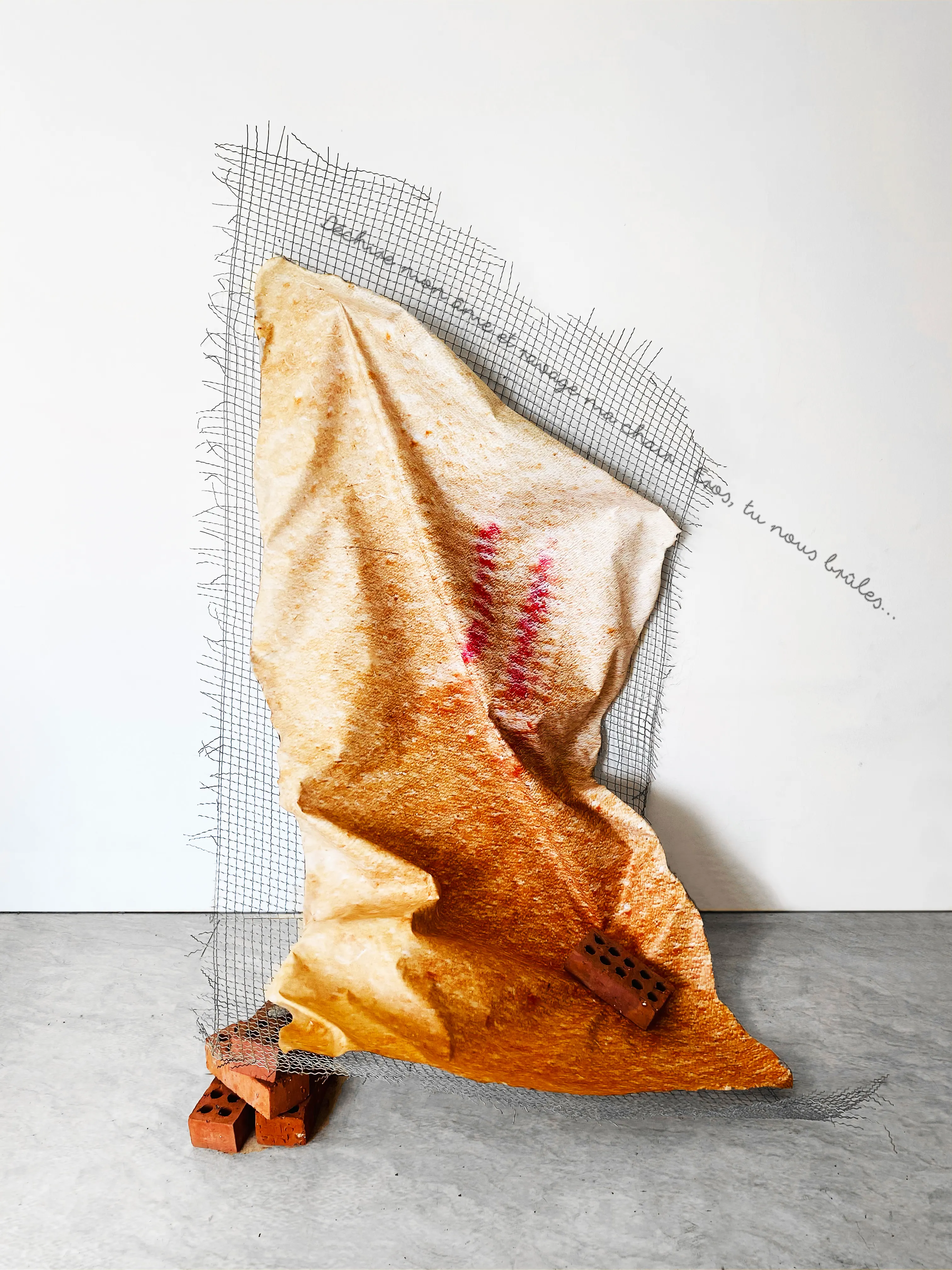
Inhabit Your Body begins with a tension between the way love is written and the way it is physically experienced. Poetry most often gives love the form of an inner state: desire, longing, absence, surrender or pain. Kosmatopoulos draws fragments from Louise Labé, Renée Vivien and Robert Desnos, and returns their language to the body from which it emerged.
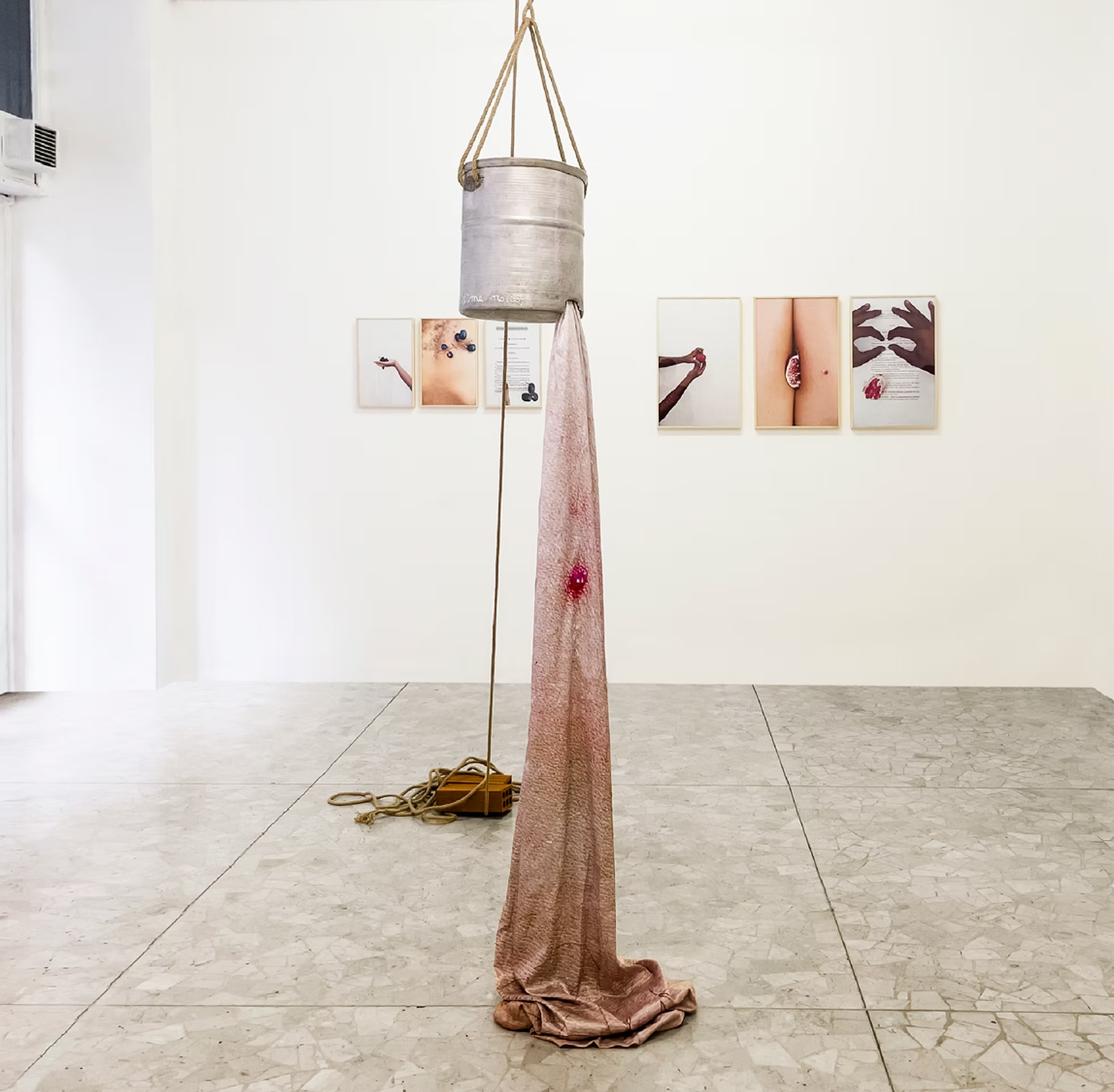
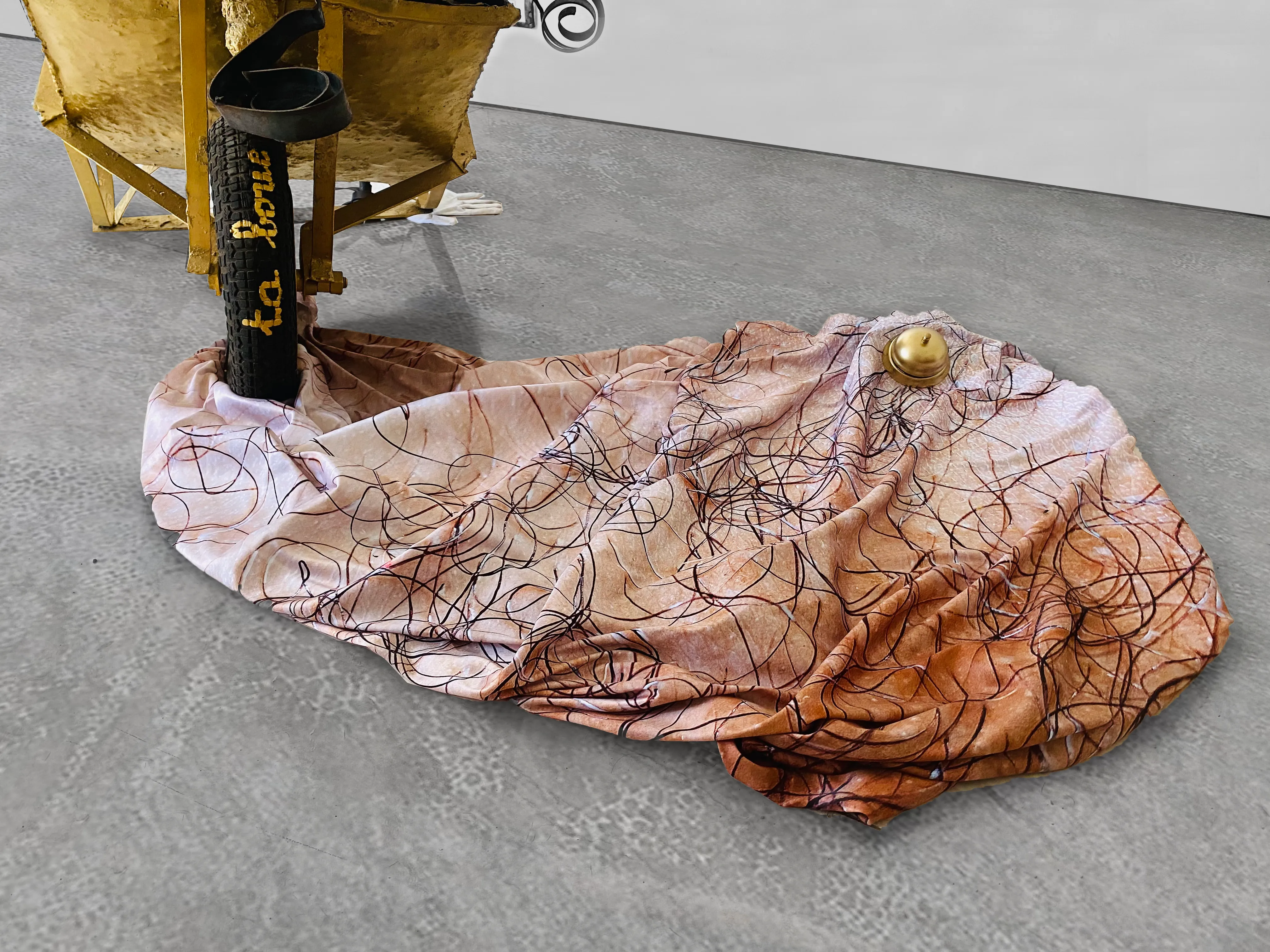
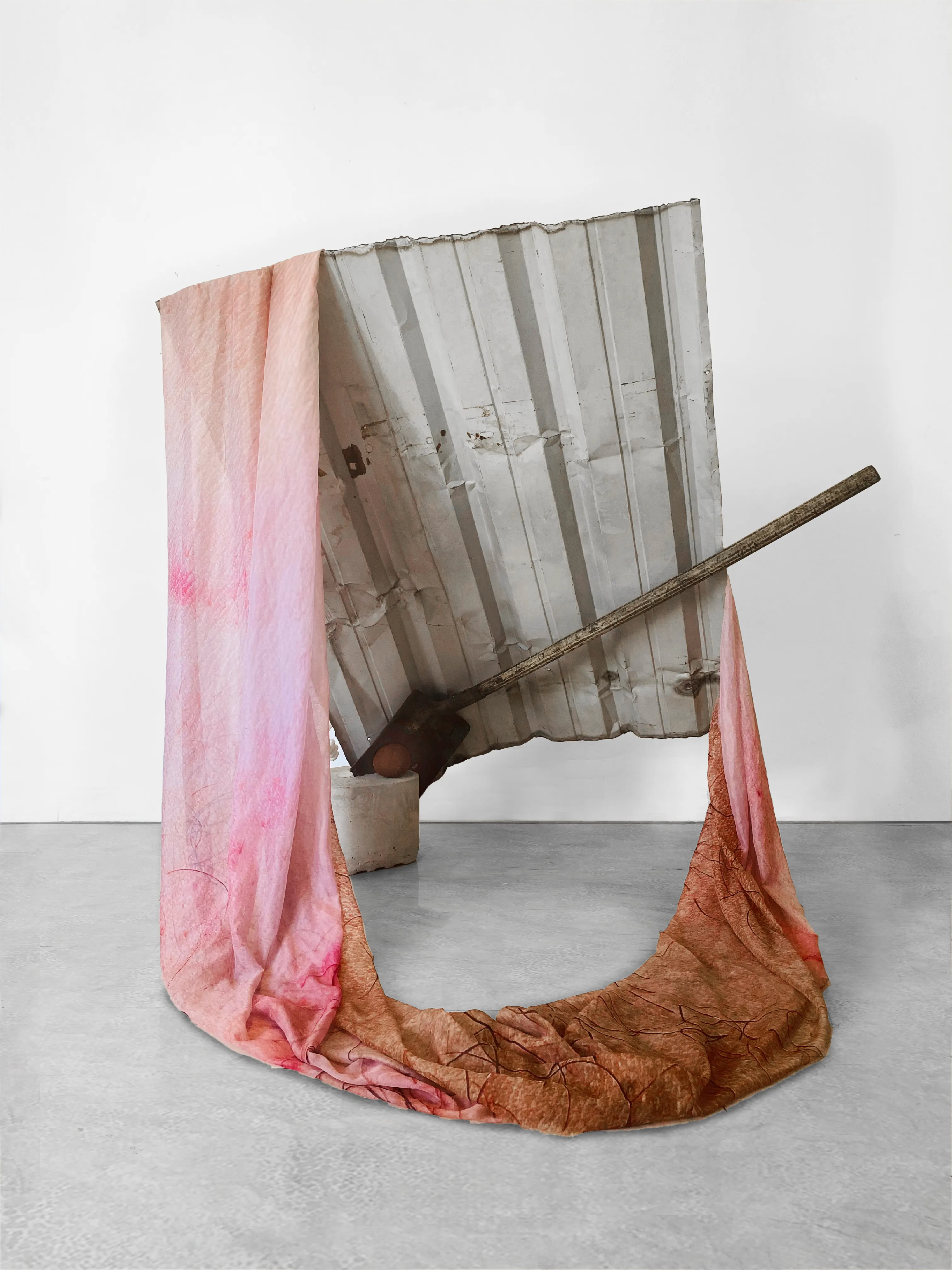
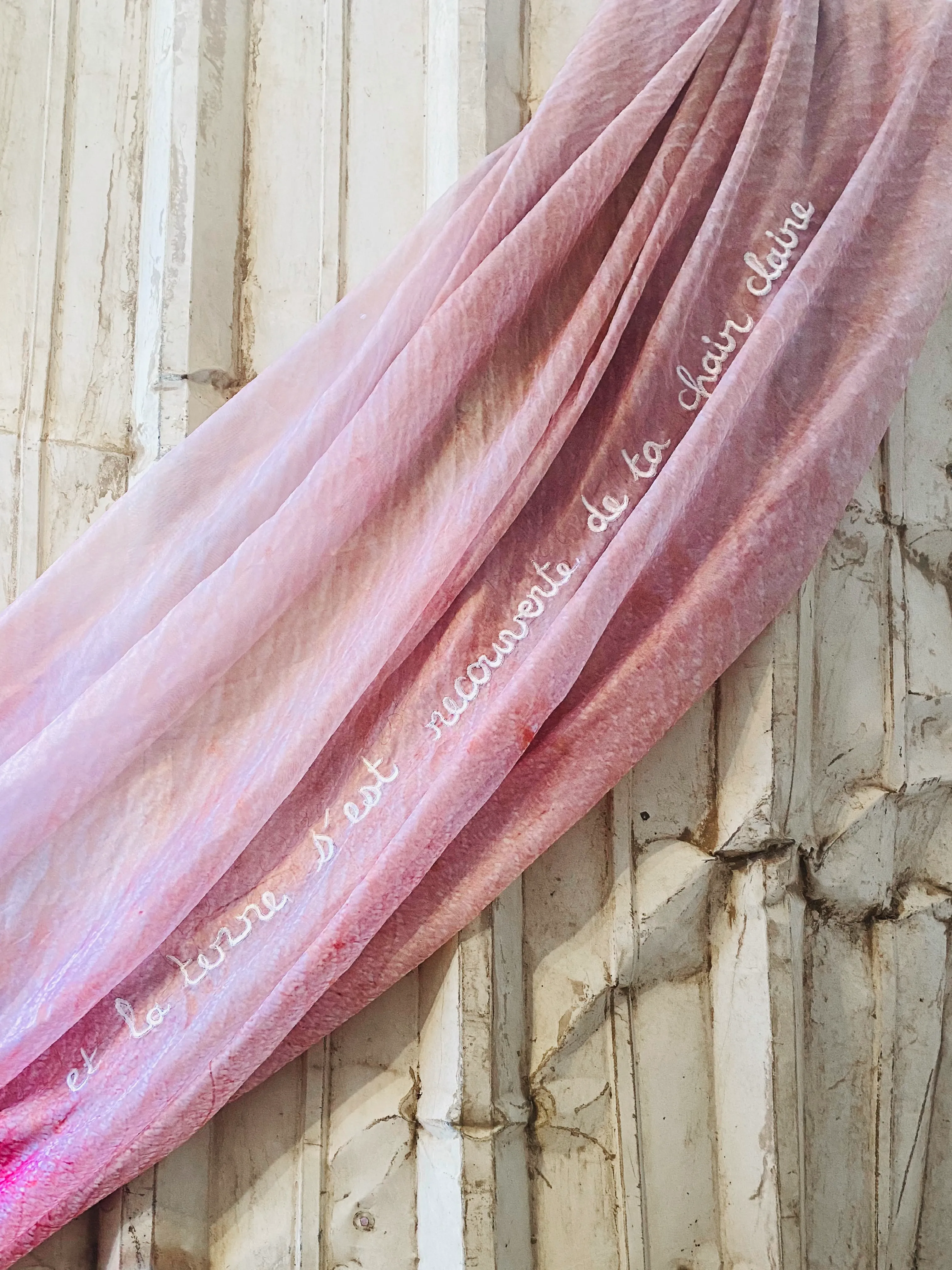
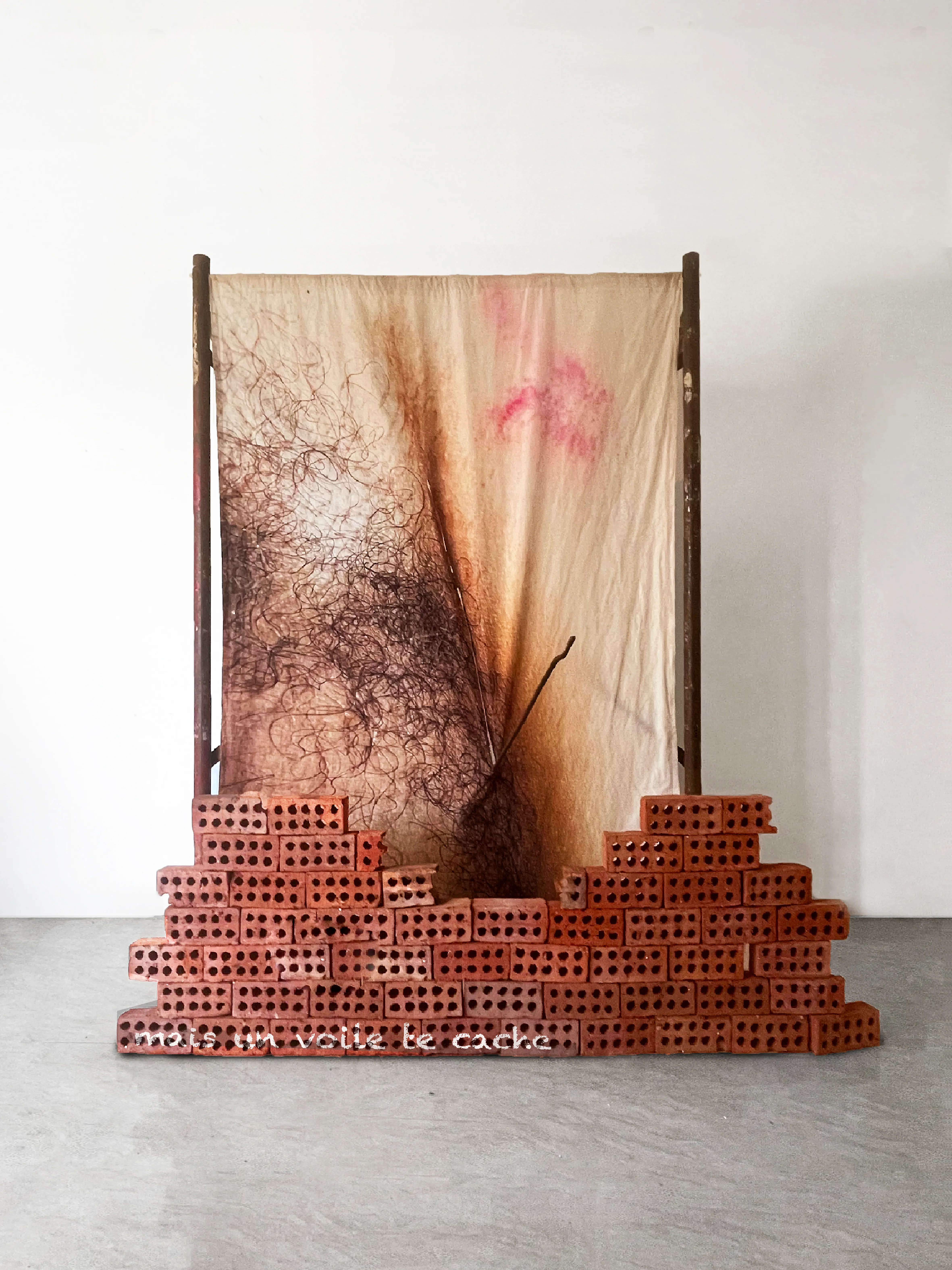
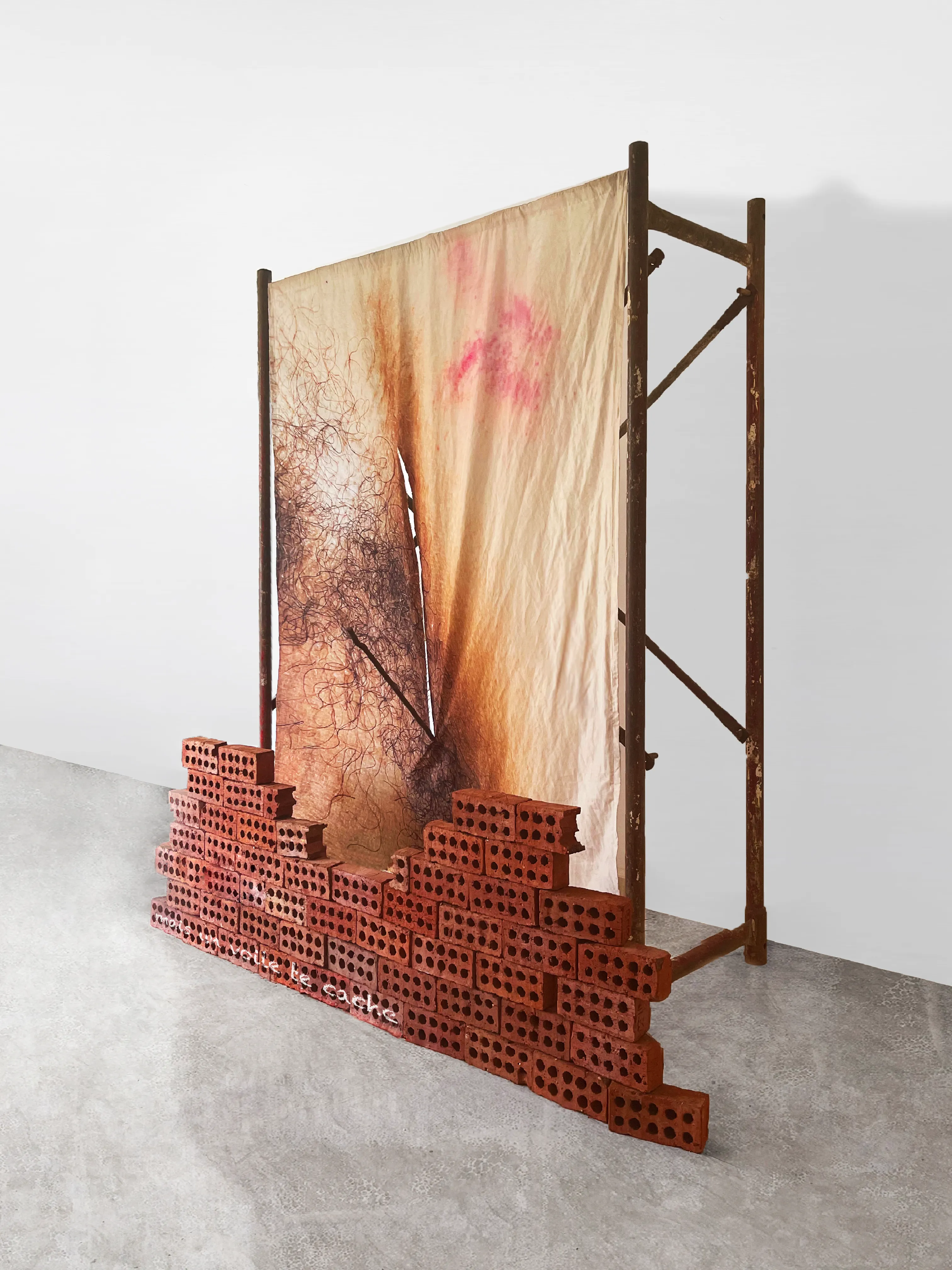
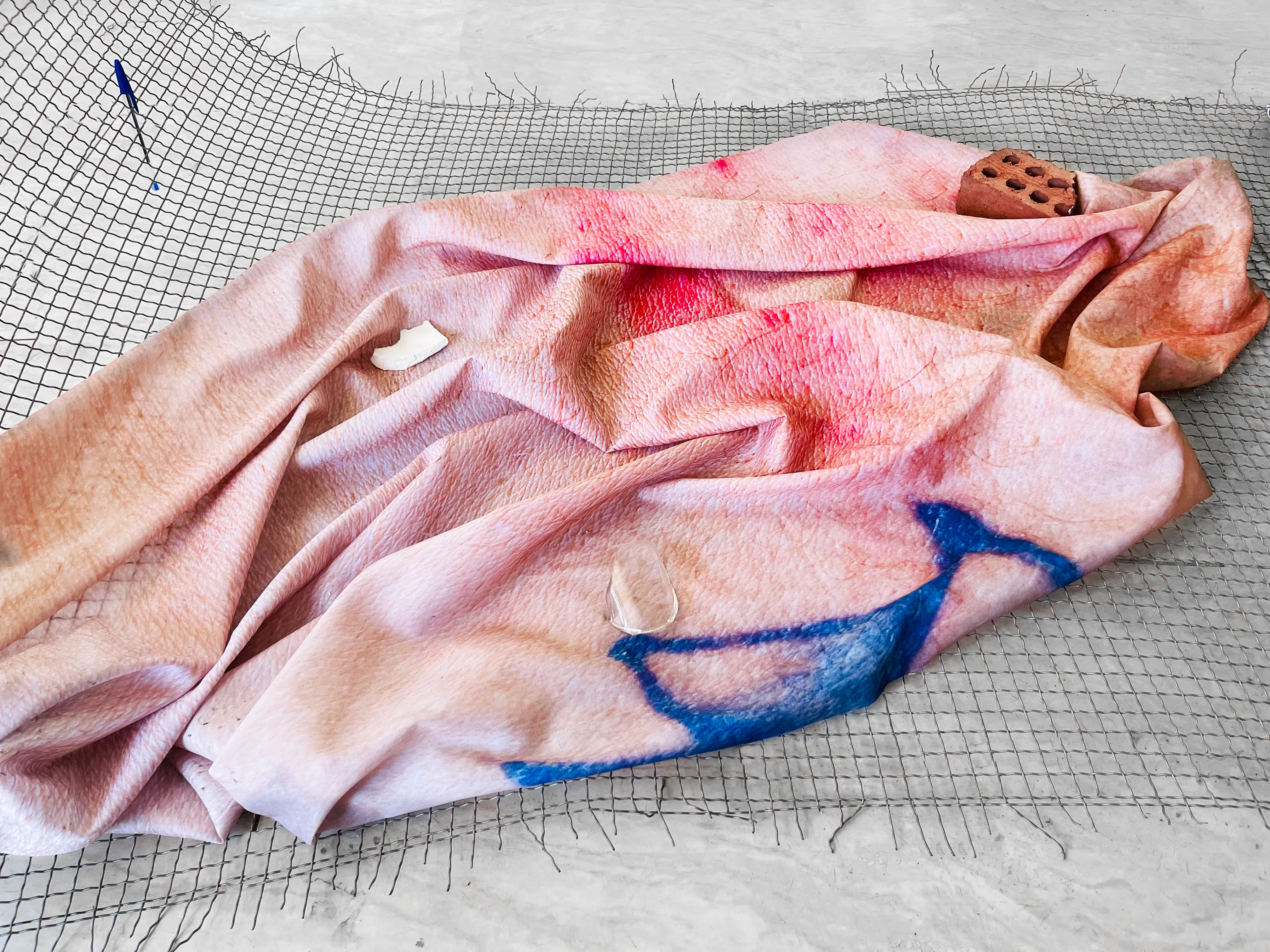
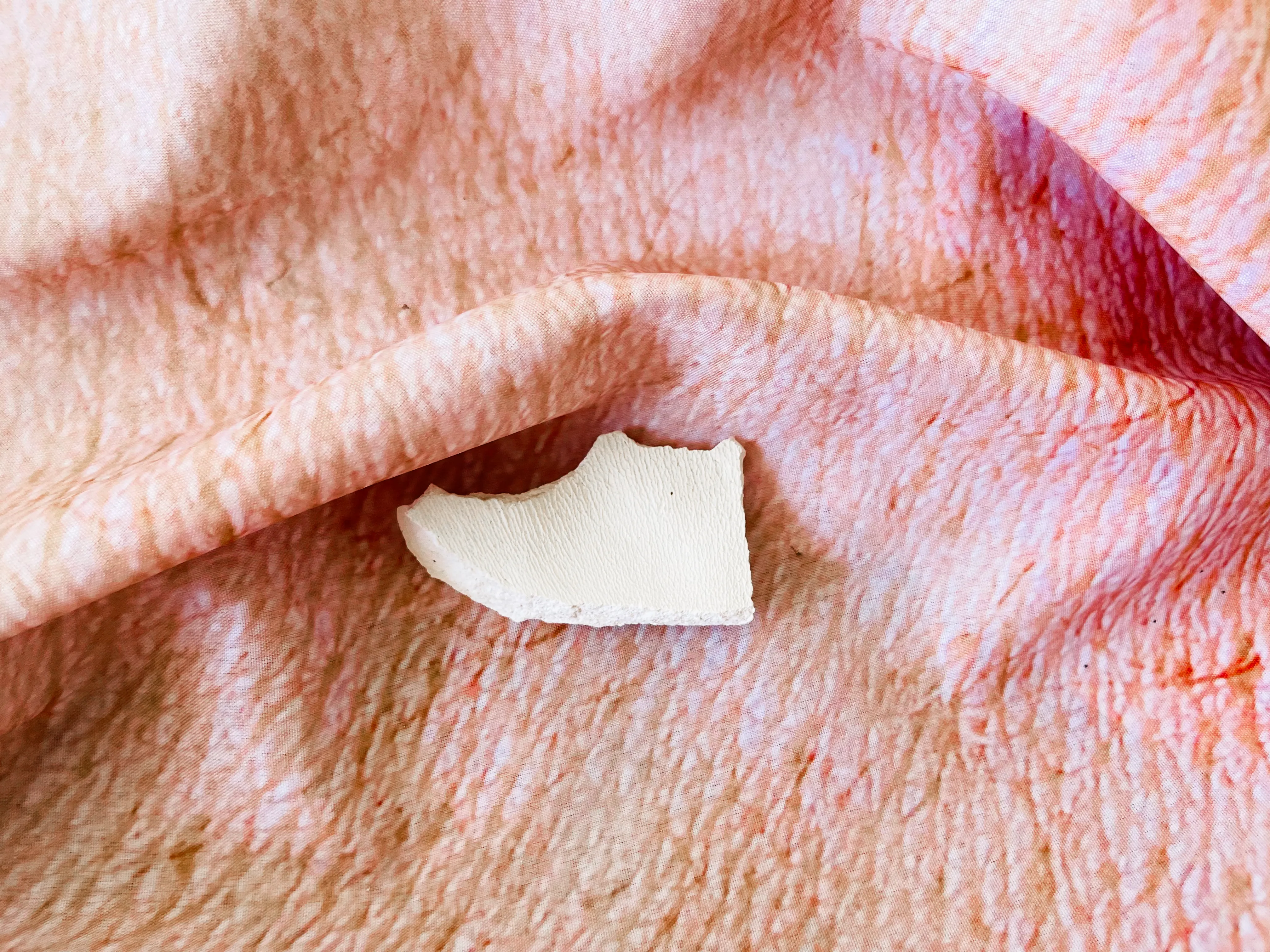
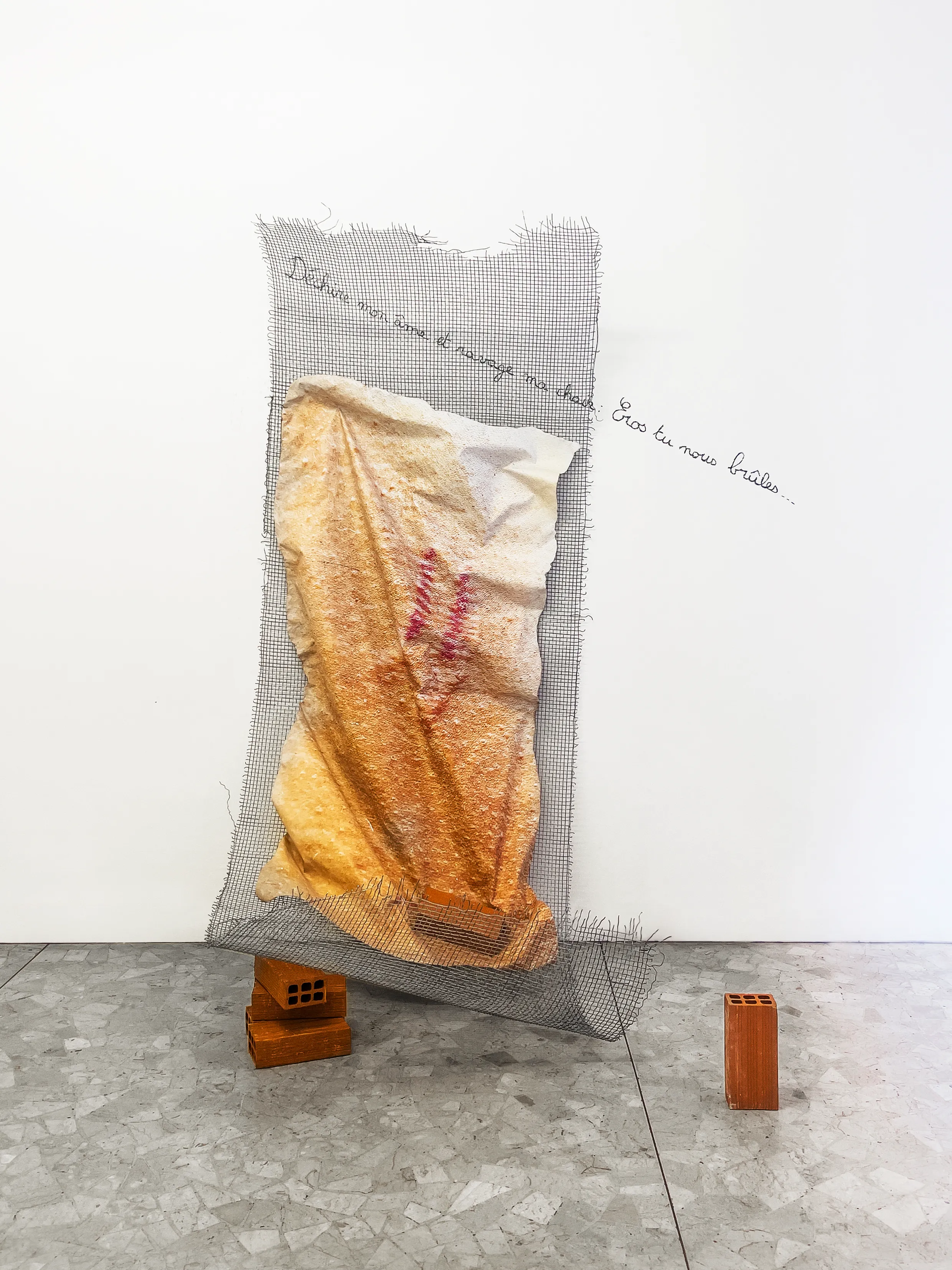
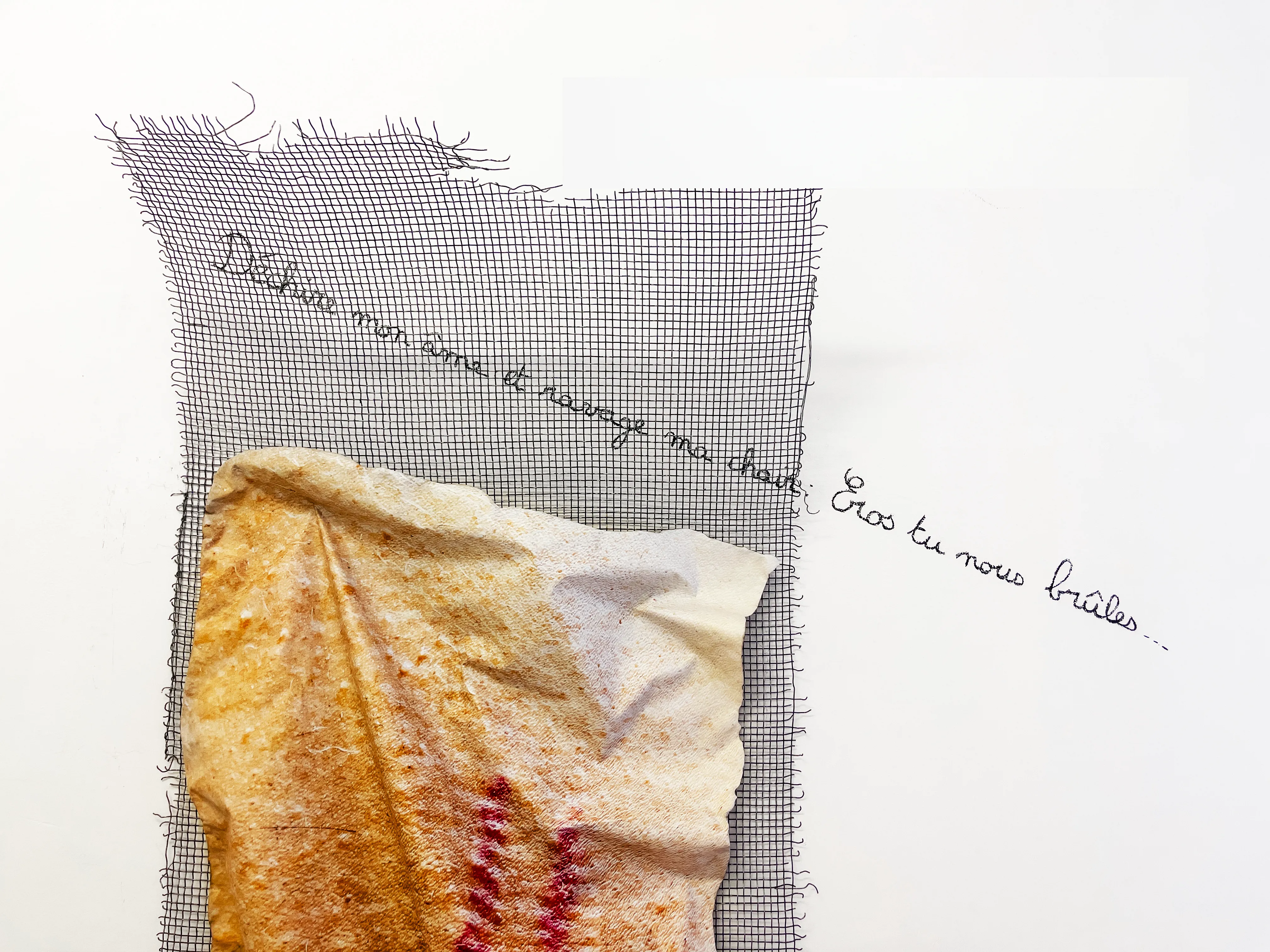
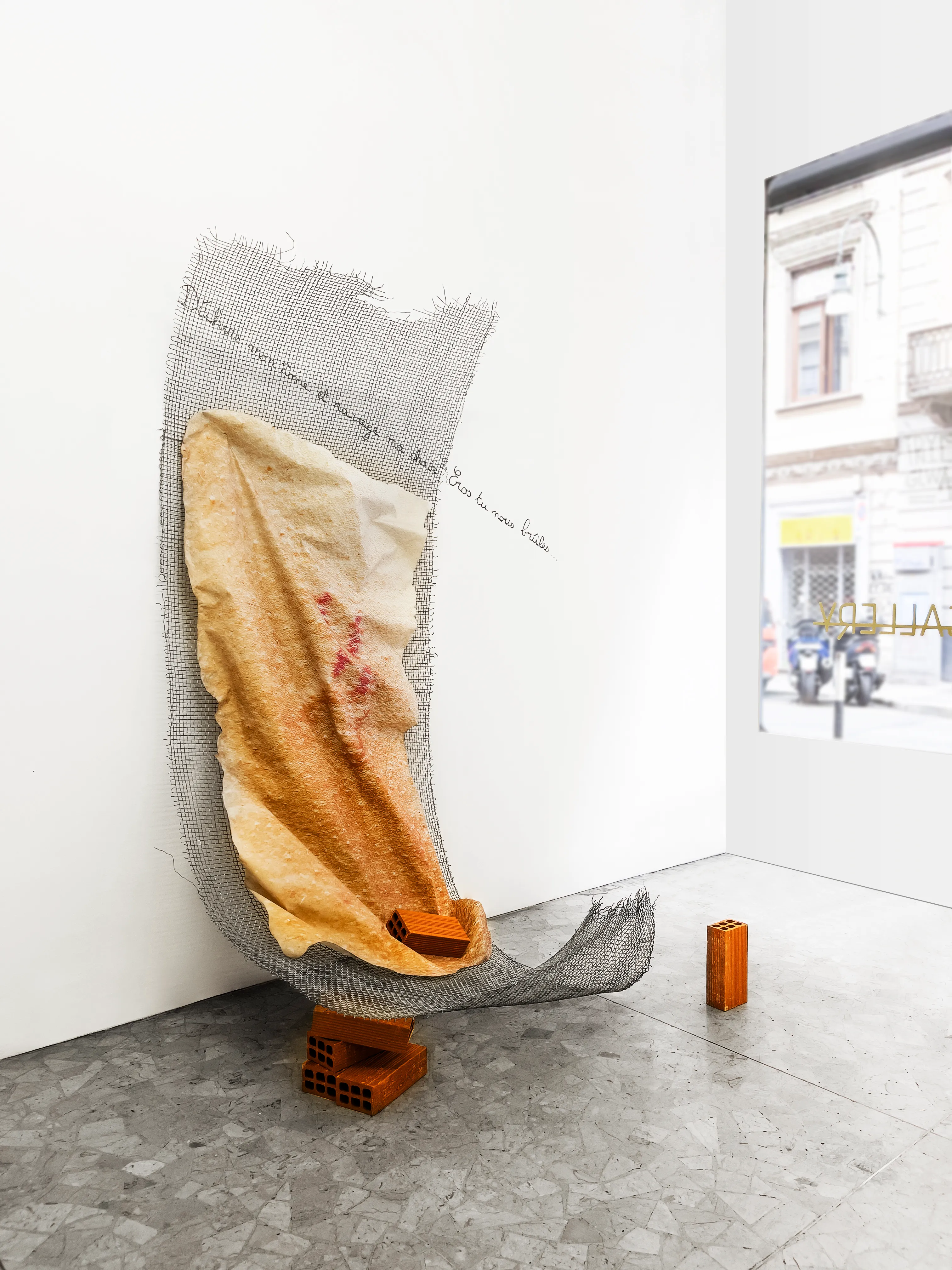
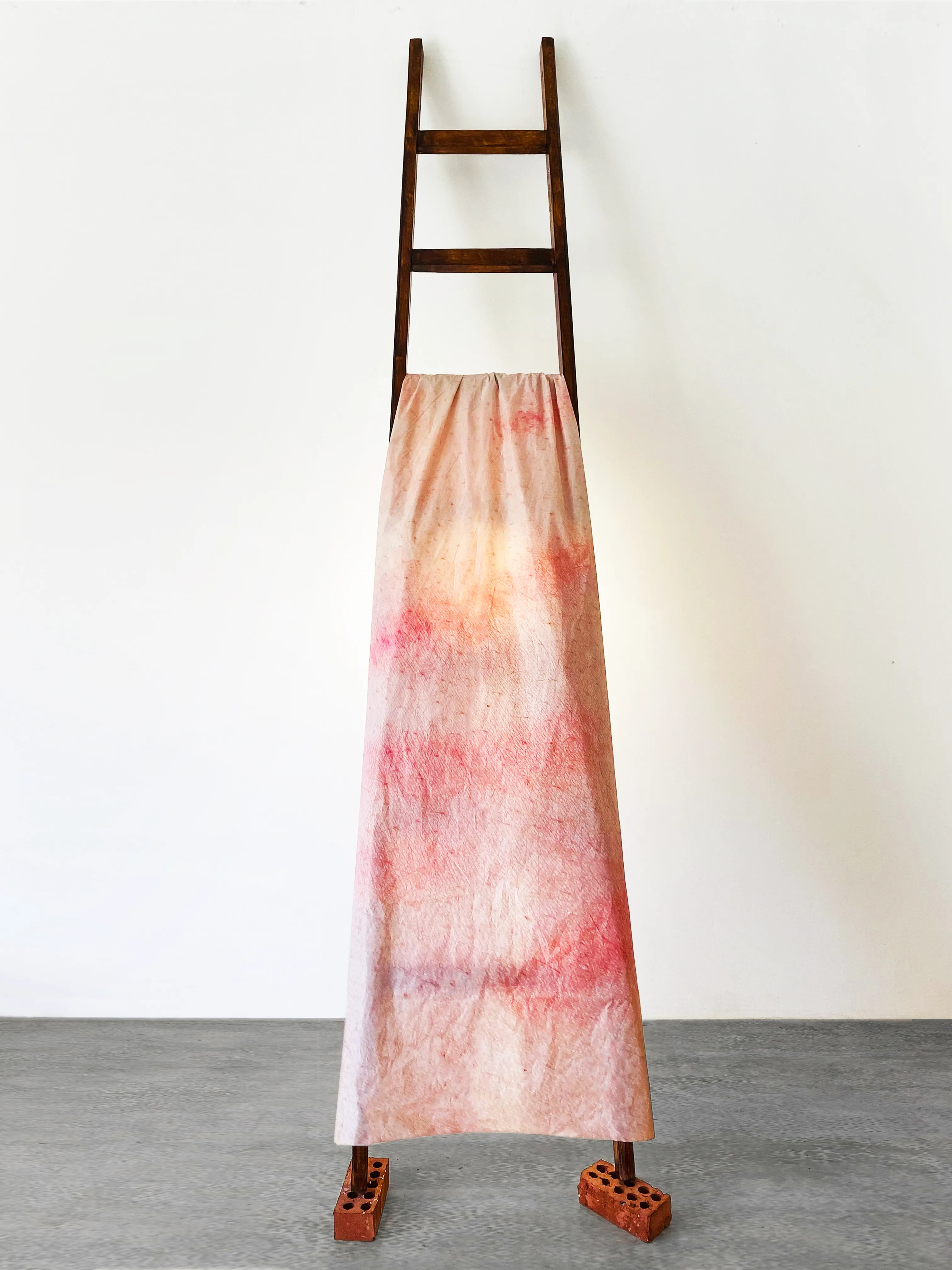
The photographs record marks left by the artist on her partner's skin during lovemaking. Enlarged until the body can no longer be recognised as a complete figure, these traces become landscapes of colour, pressure and abrasion. The lover disappears as an image, yet the physical evidence of the encounter remains: love is no longer represented as an emotion but inscribed as an event that has taken place upon the body.
The work centres on the profound ambiguity of skin. Skin is the organ through which a caress reaches us, allowing the presence of another body to penetrate sensation and affect our most intimate self. Yet it is also an envelope: the physical limit that distinguishes one being from another and prevents their complete fusion. The same surface that enables contact therefore maintains separation.
Erotic intimacy carries the desire to overcome that separation. To embrace, bite, scratch or press against another body is to test the boundary between two beings — as though one could pass through the other's skin, enter the body it encloses and abolish the distance between them. But the moment of greatest proximity is also the moment when the impossibility of becoming one is most intensely felt.
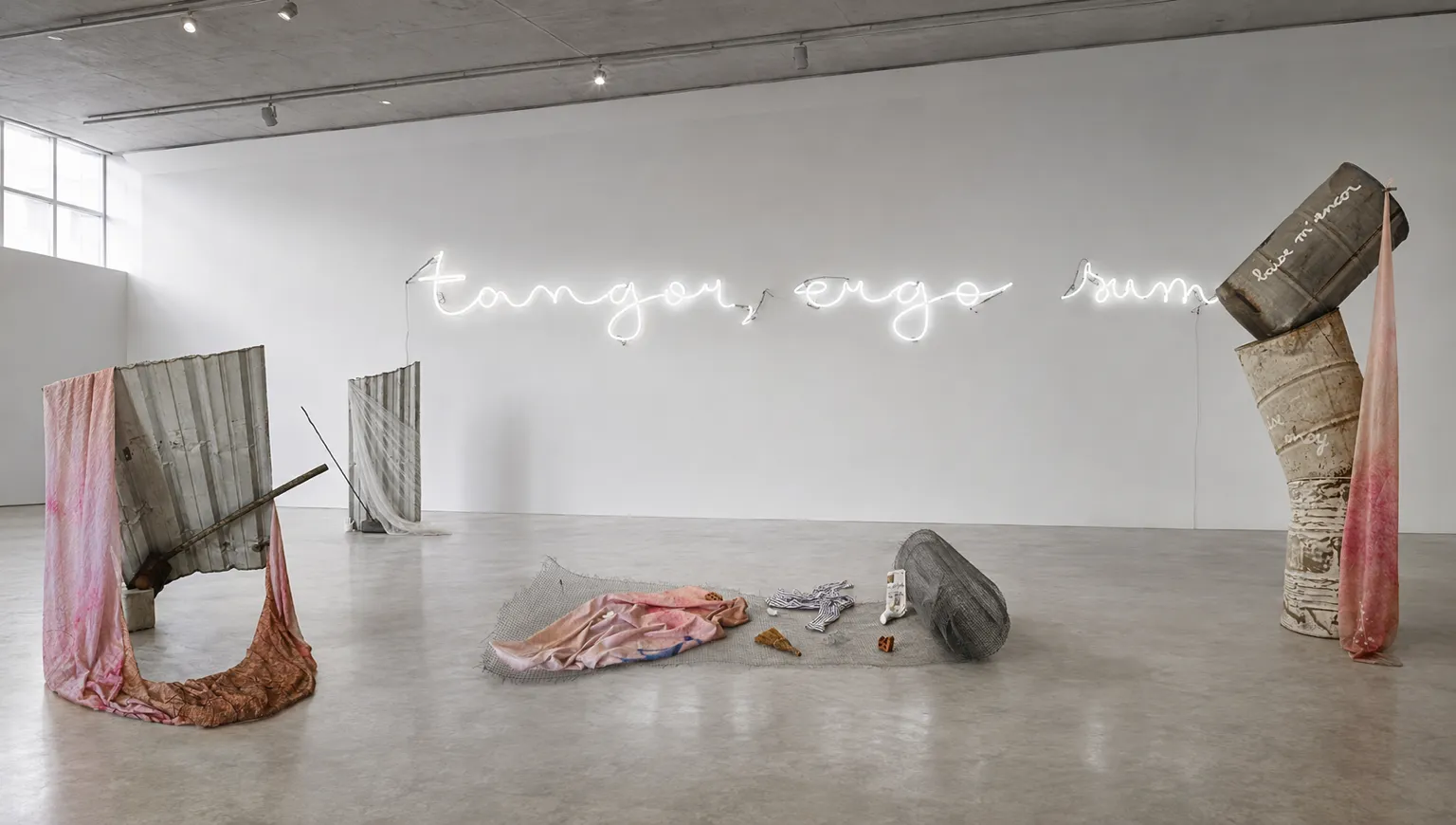
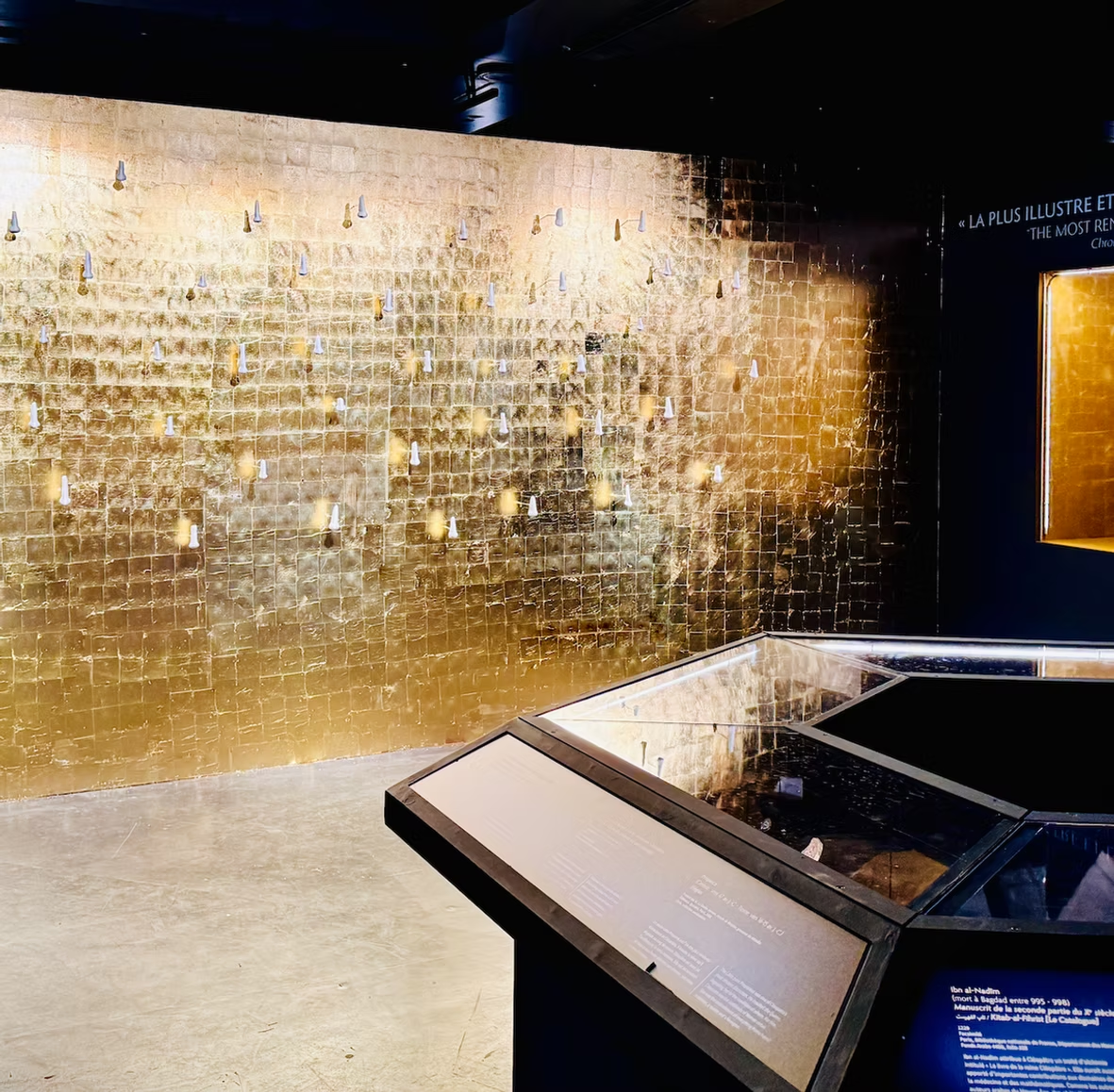
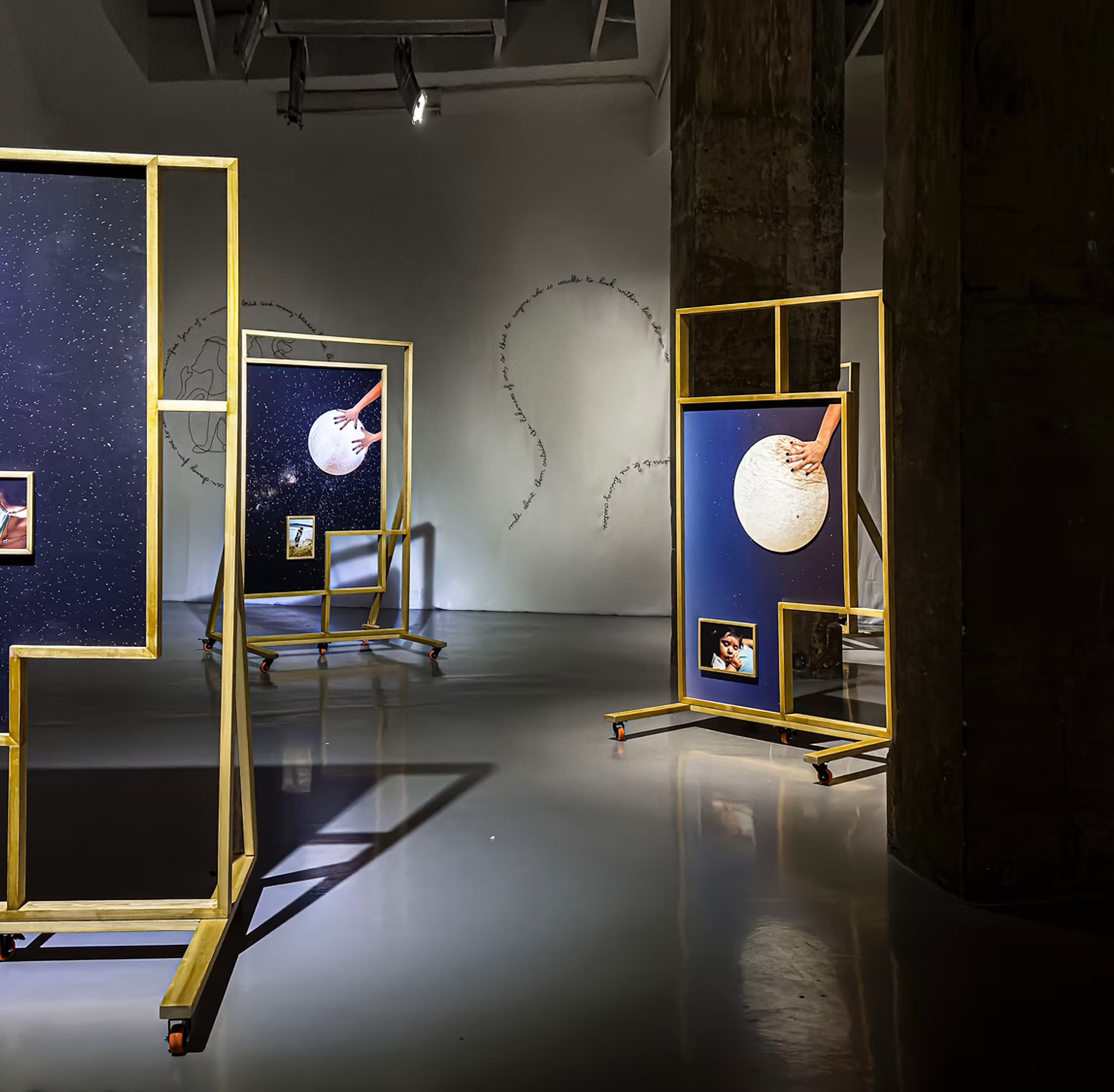
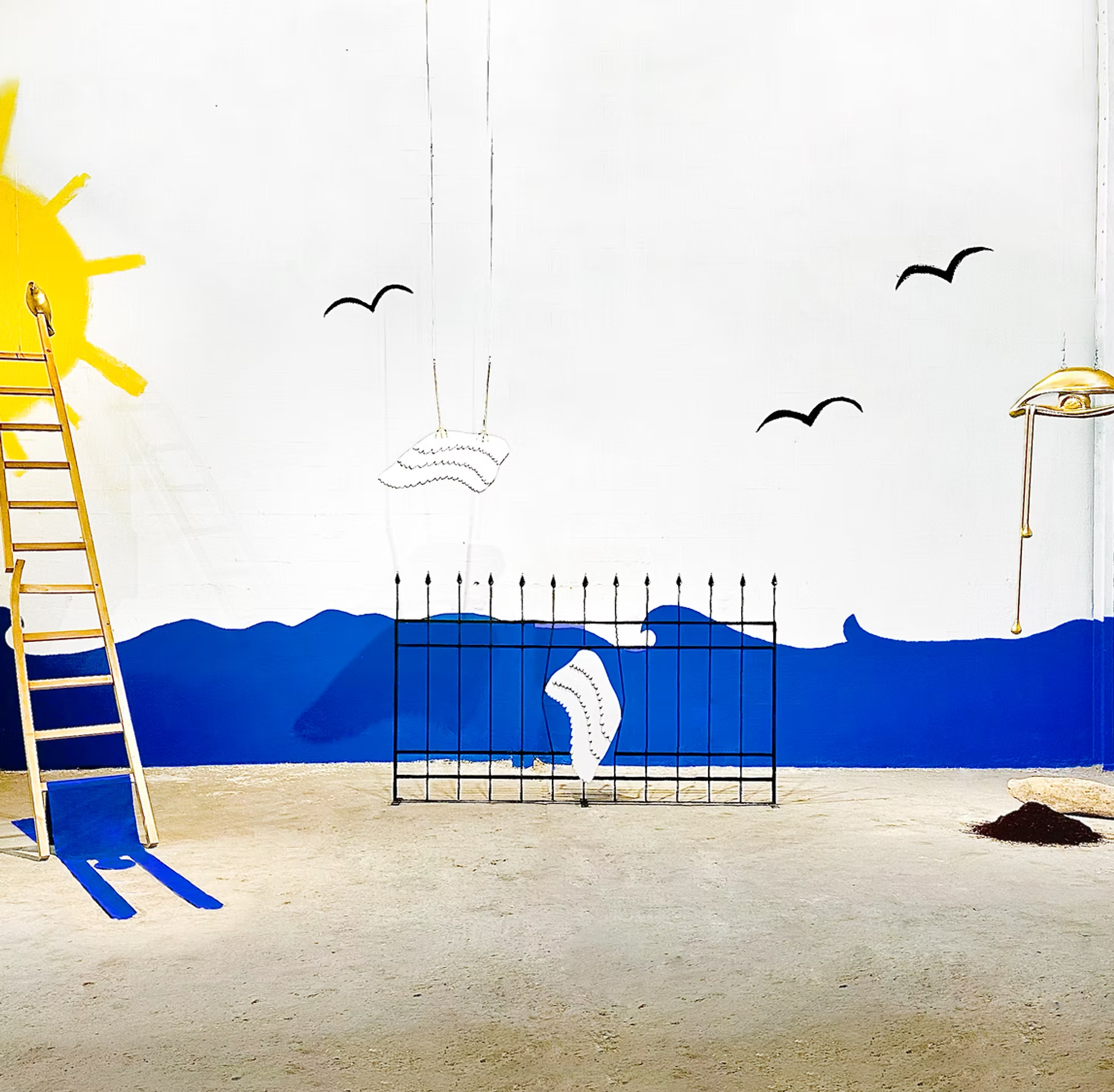
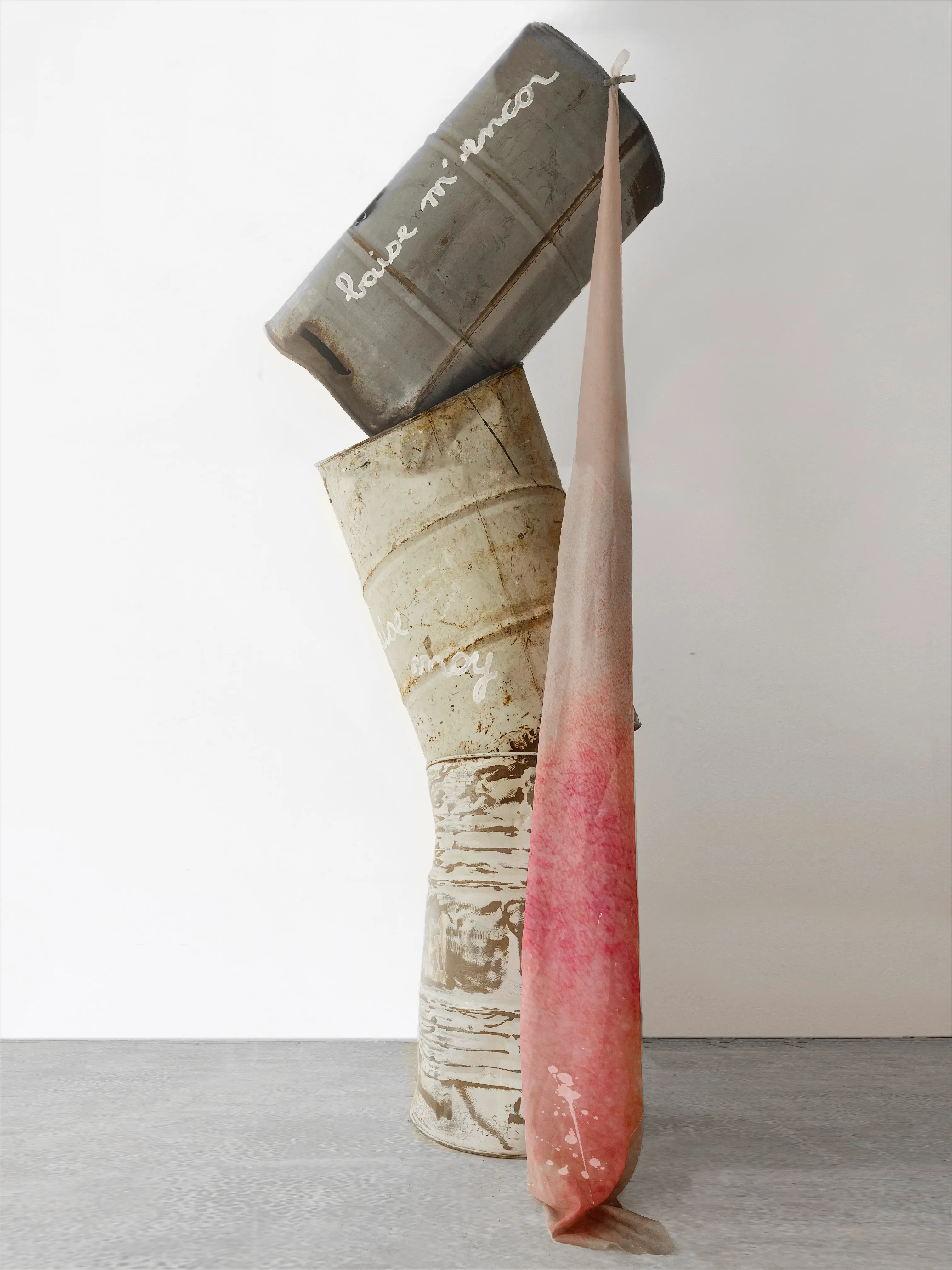
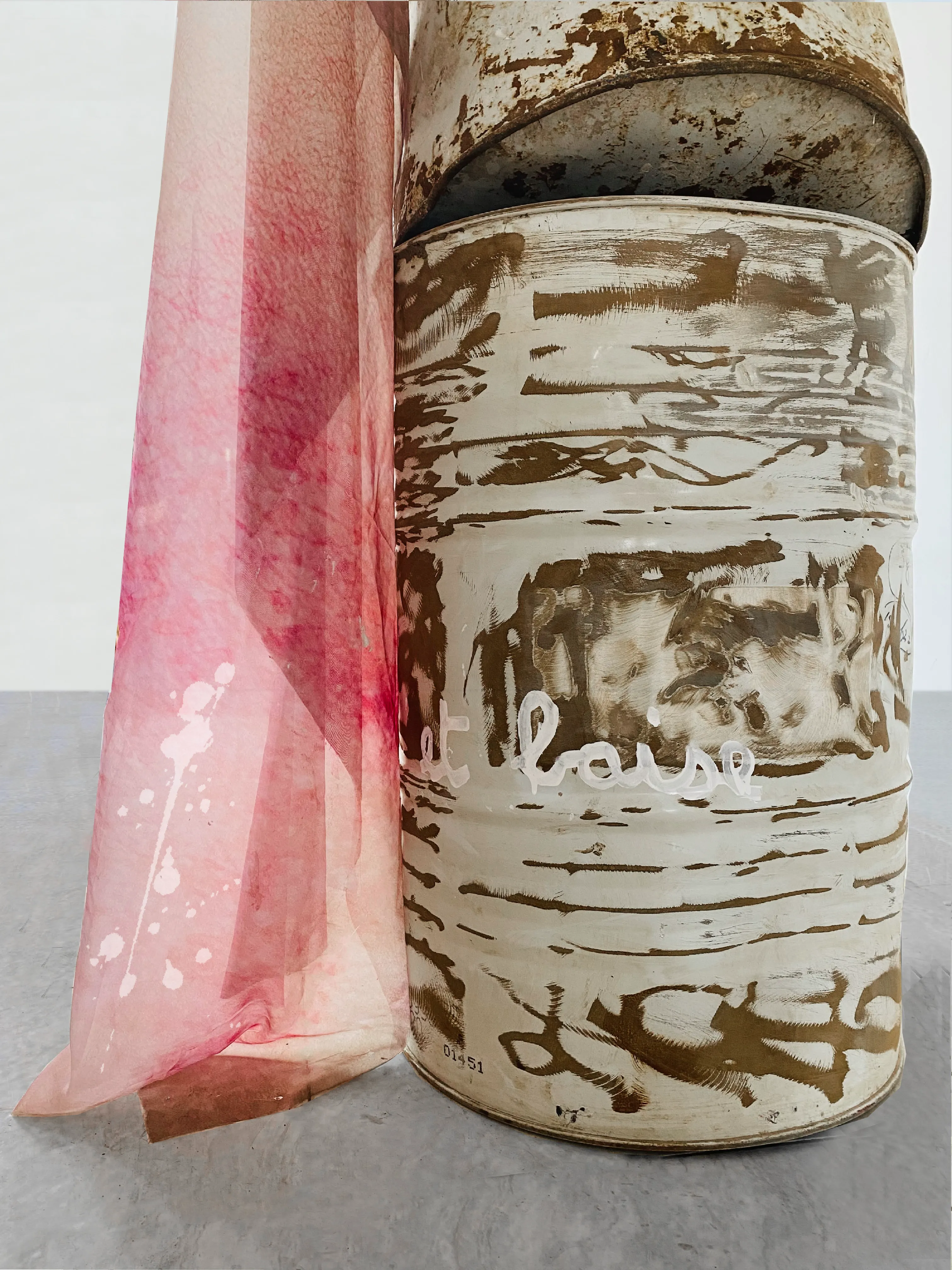
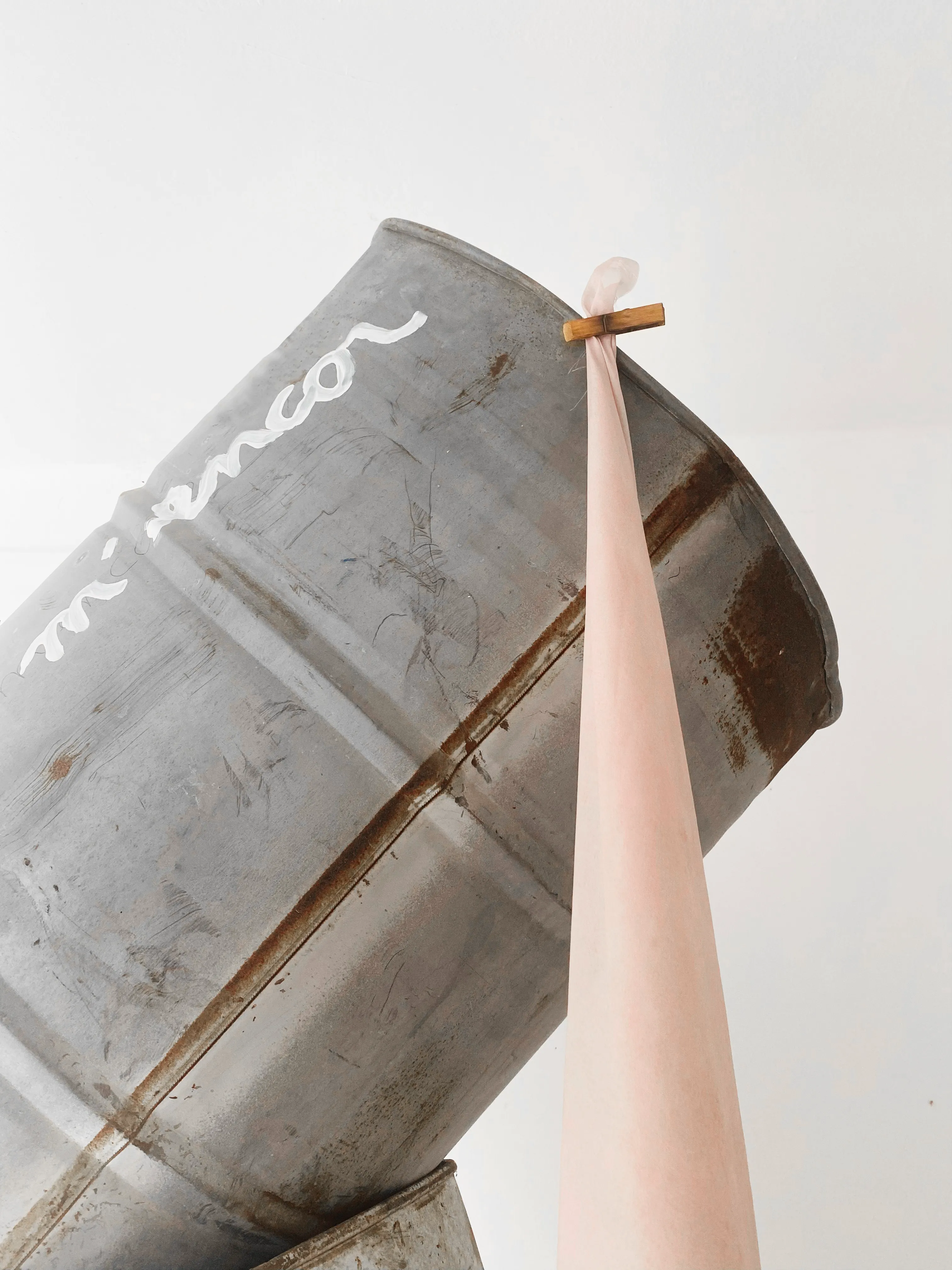
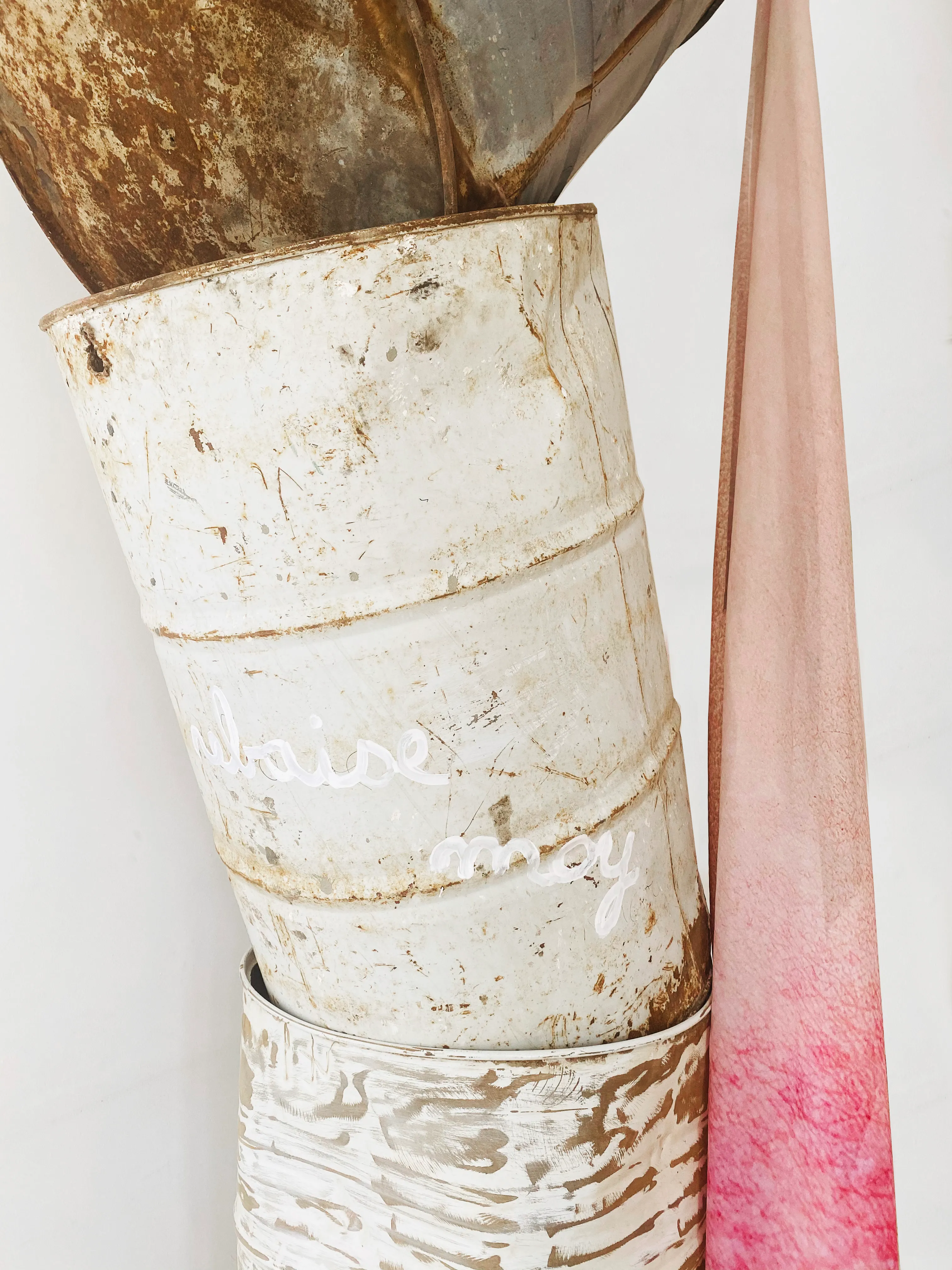
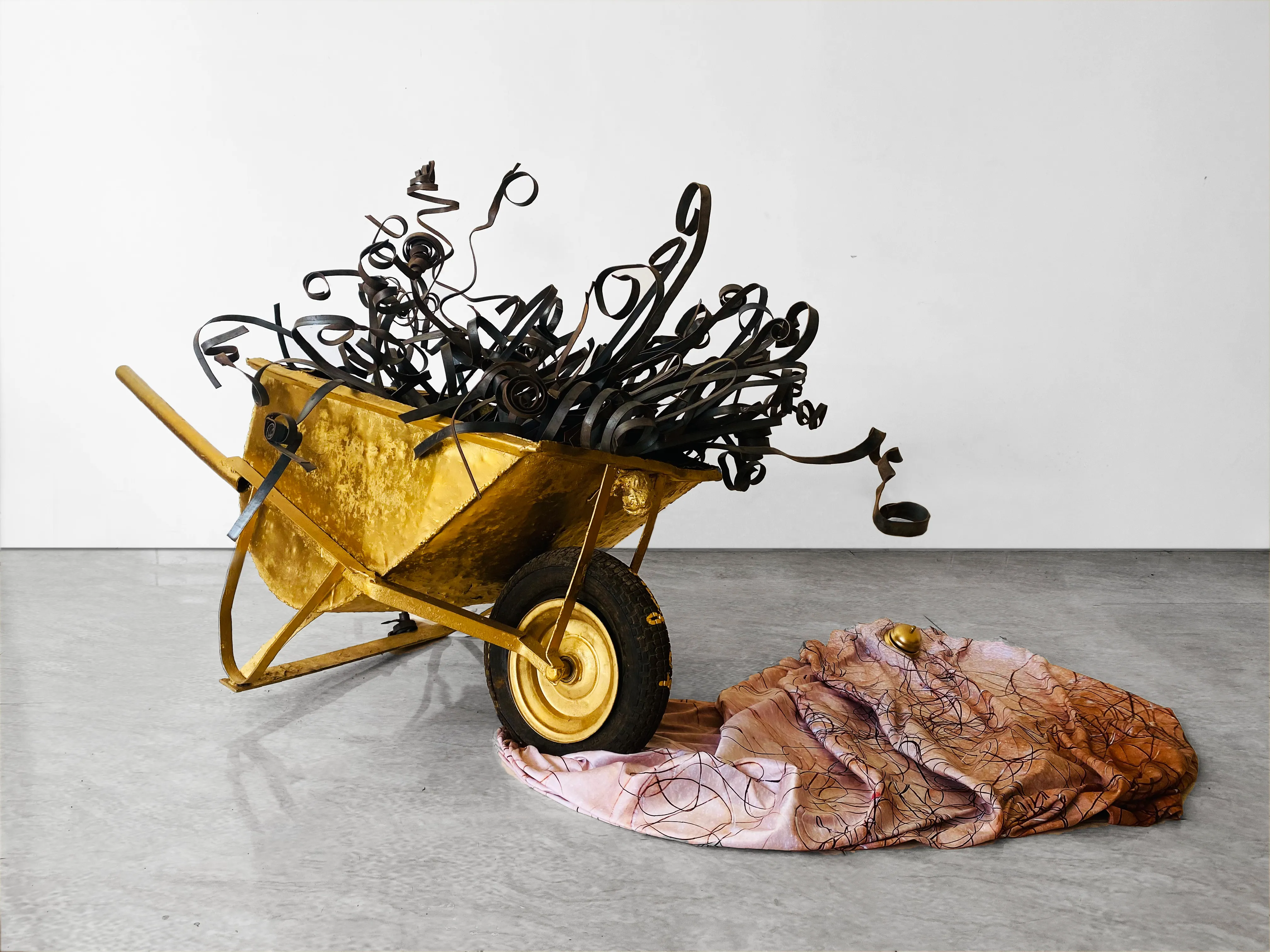
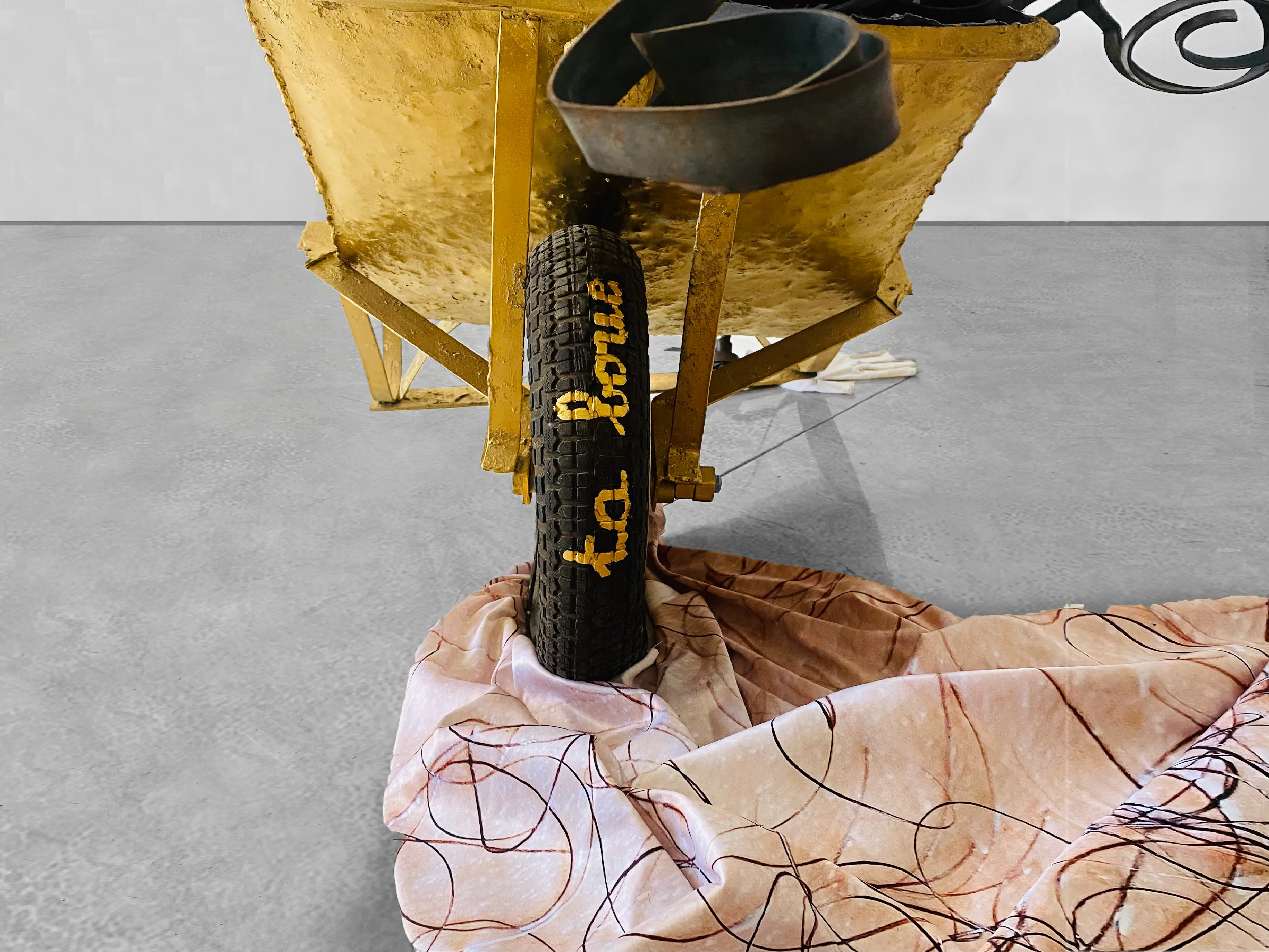
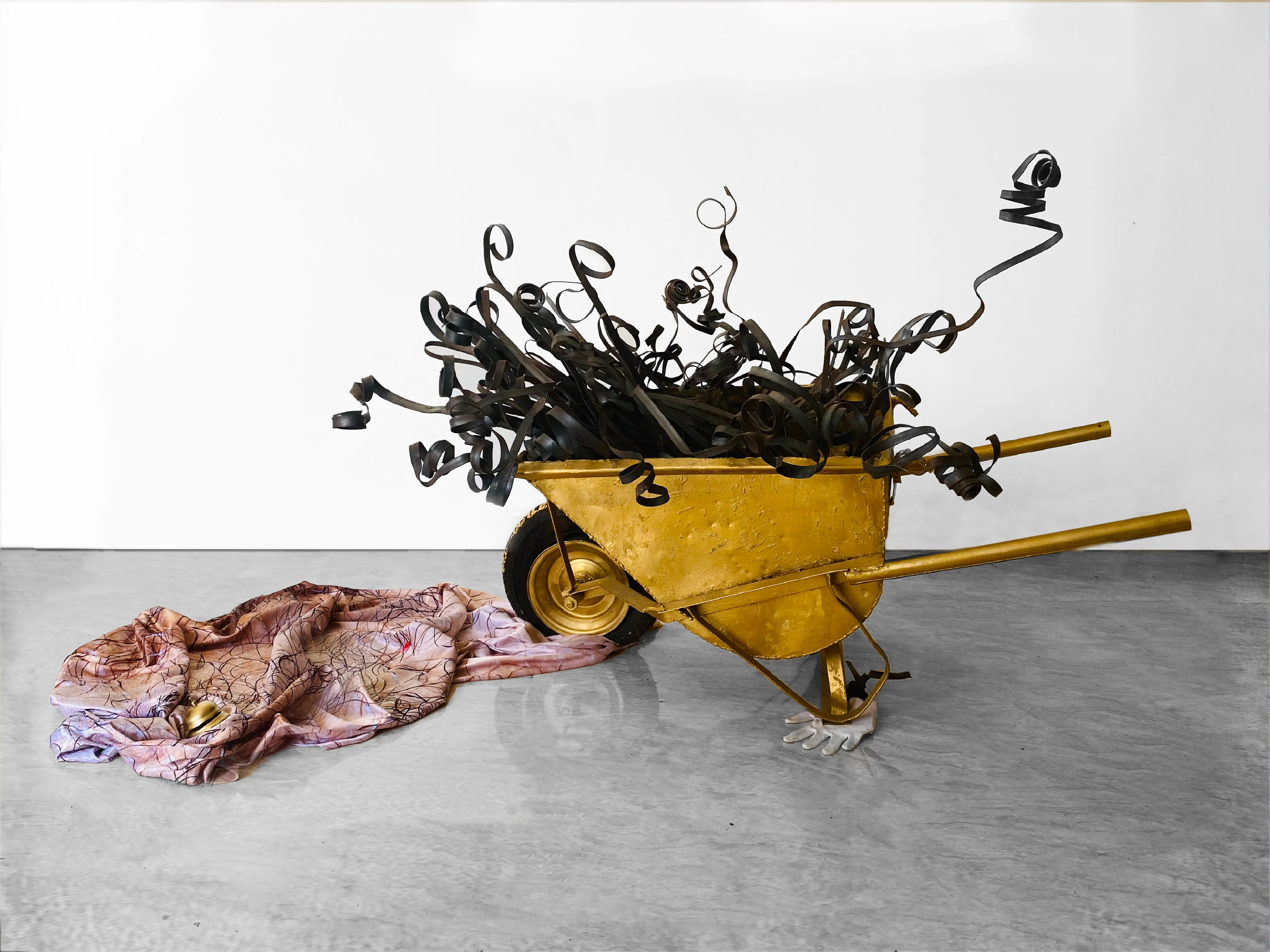
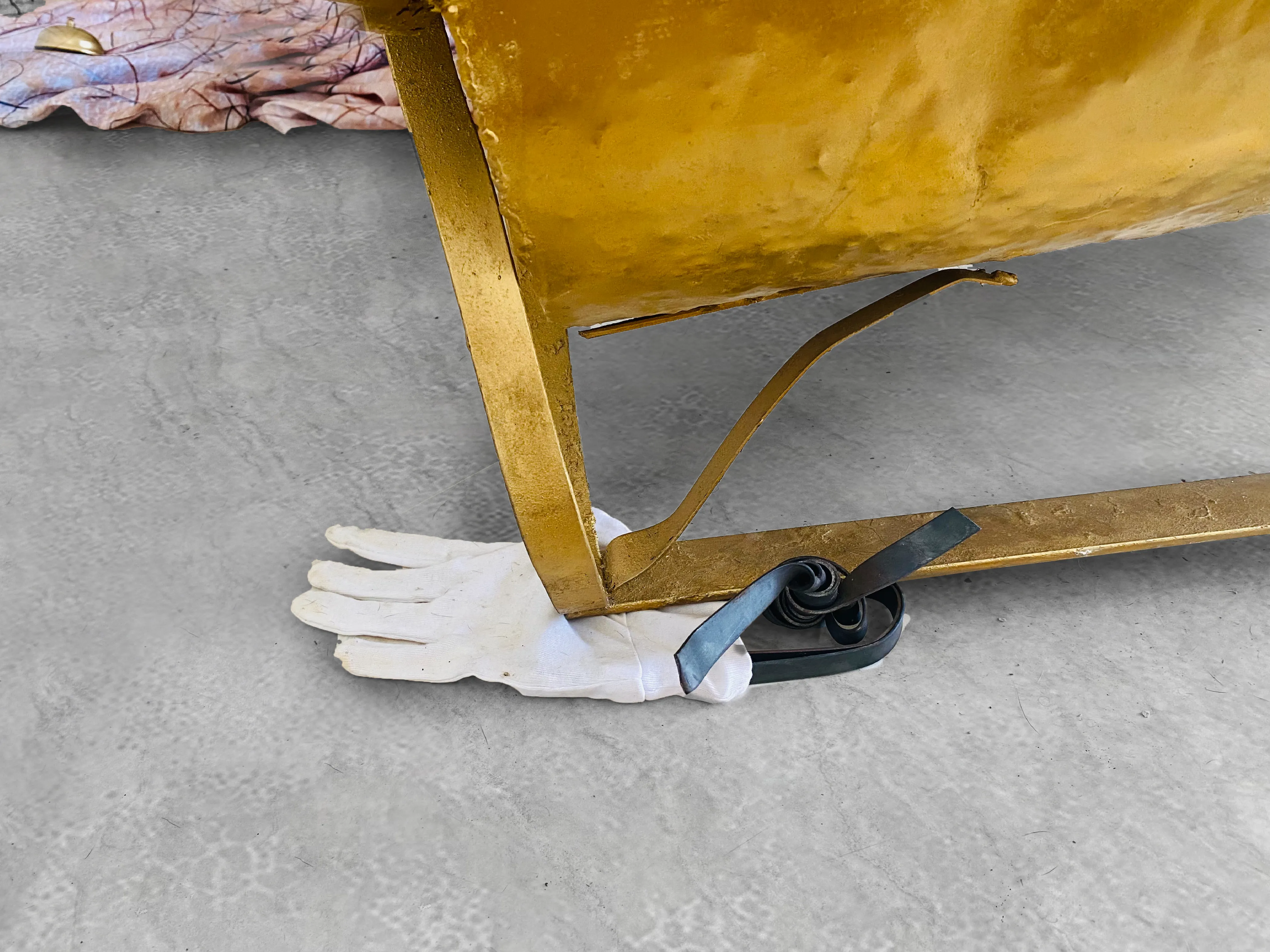
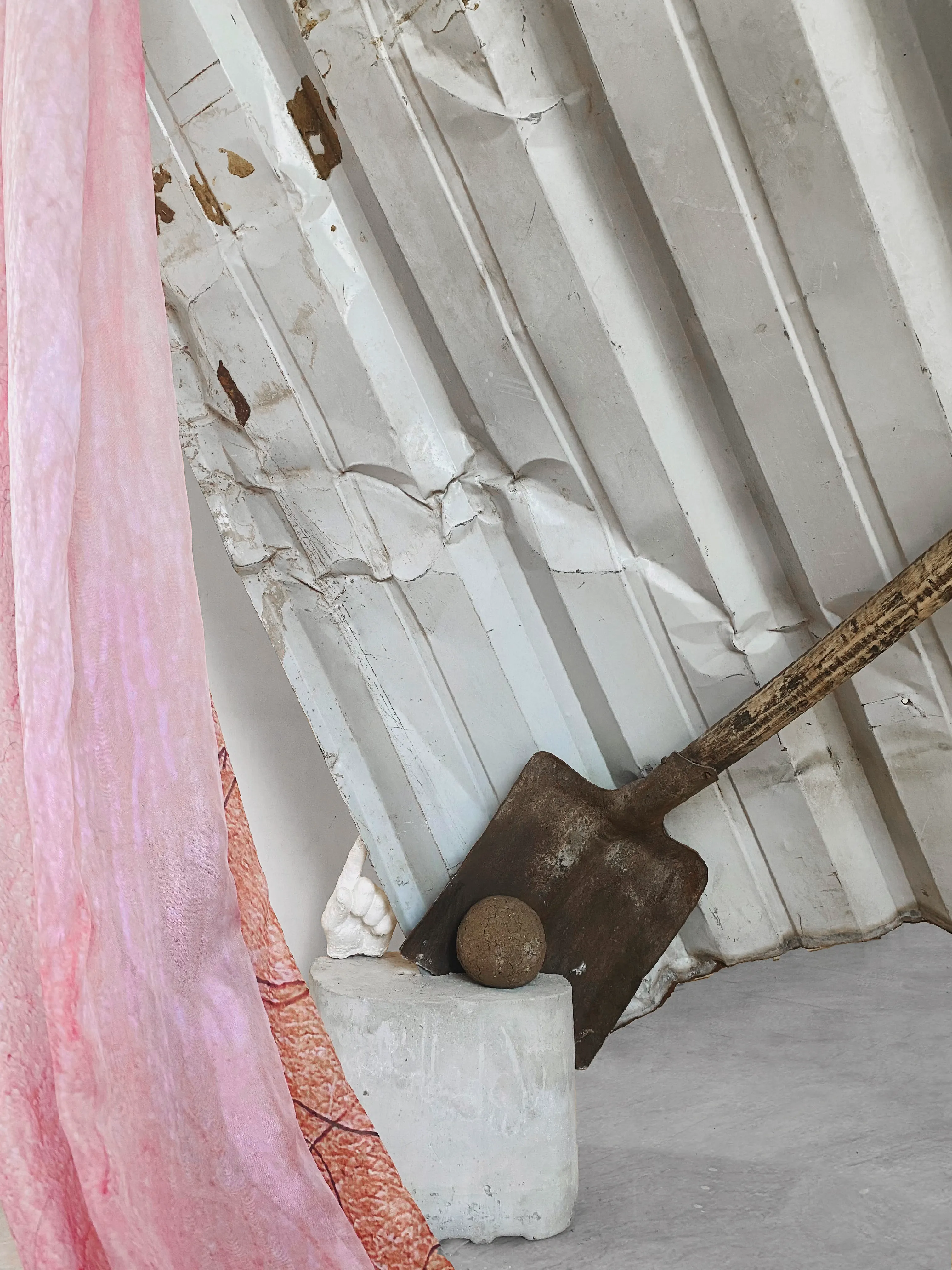
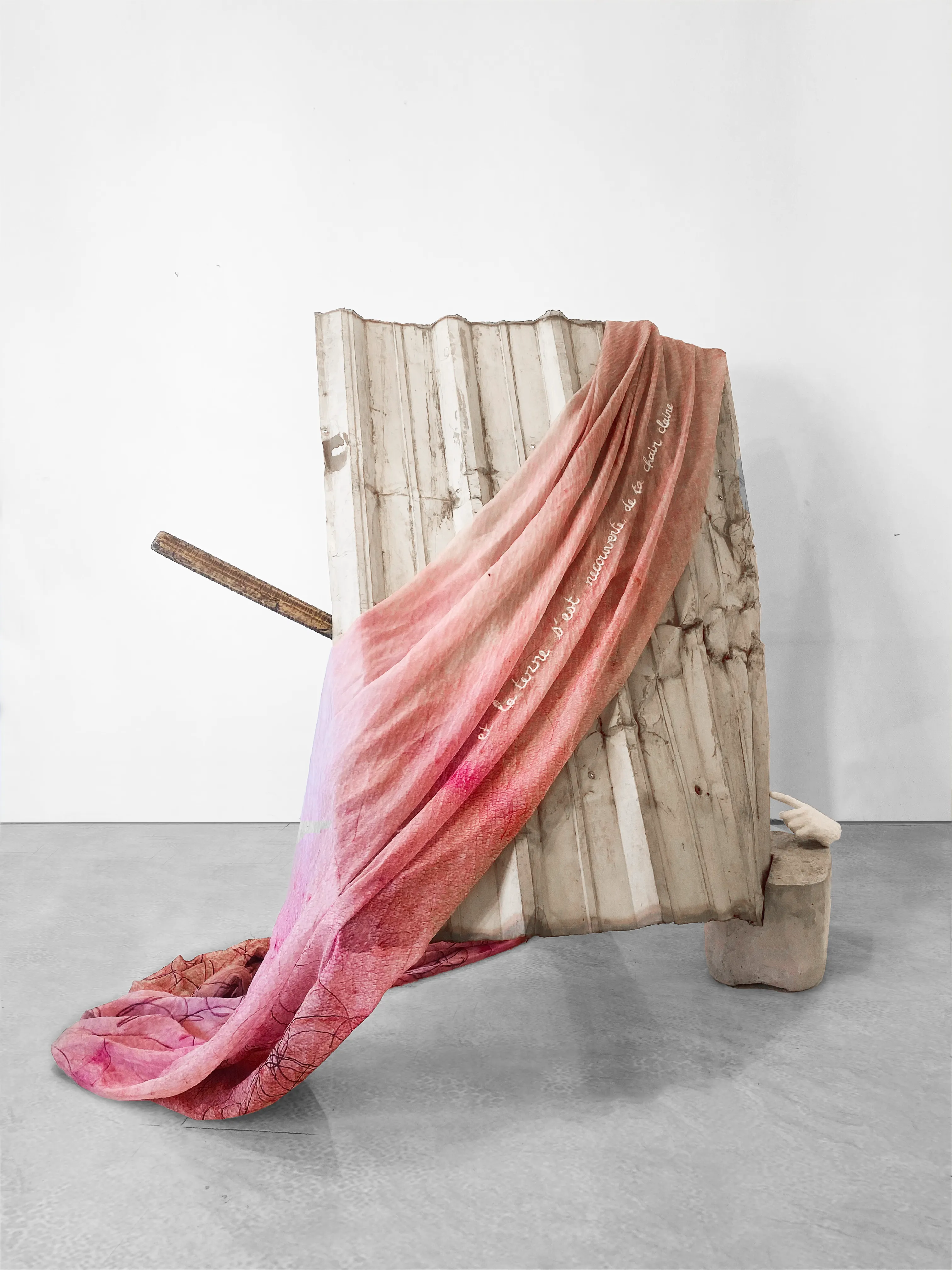
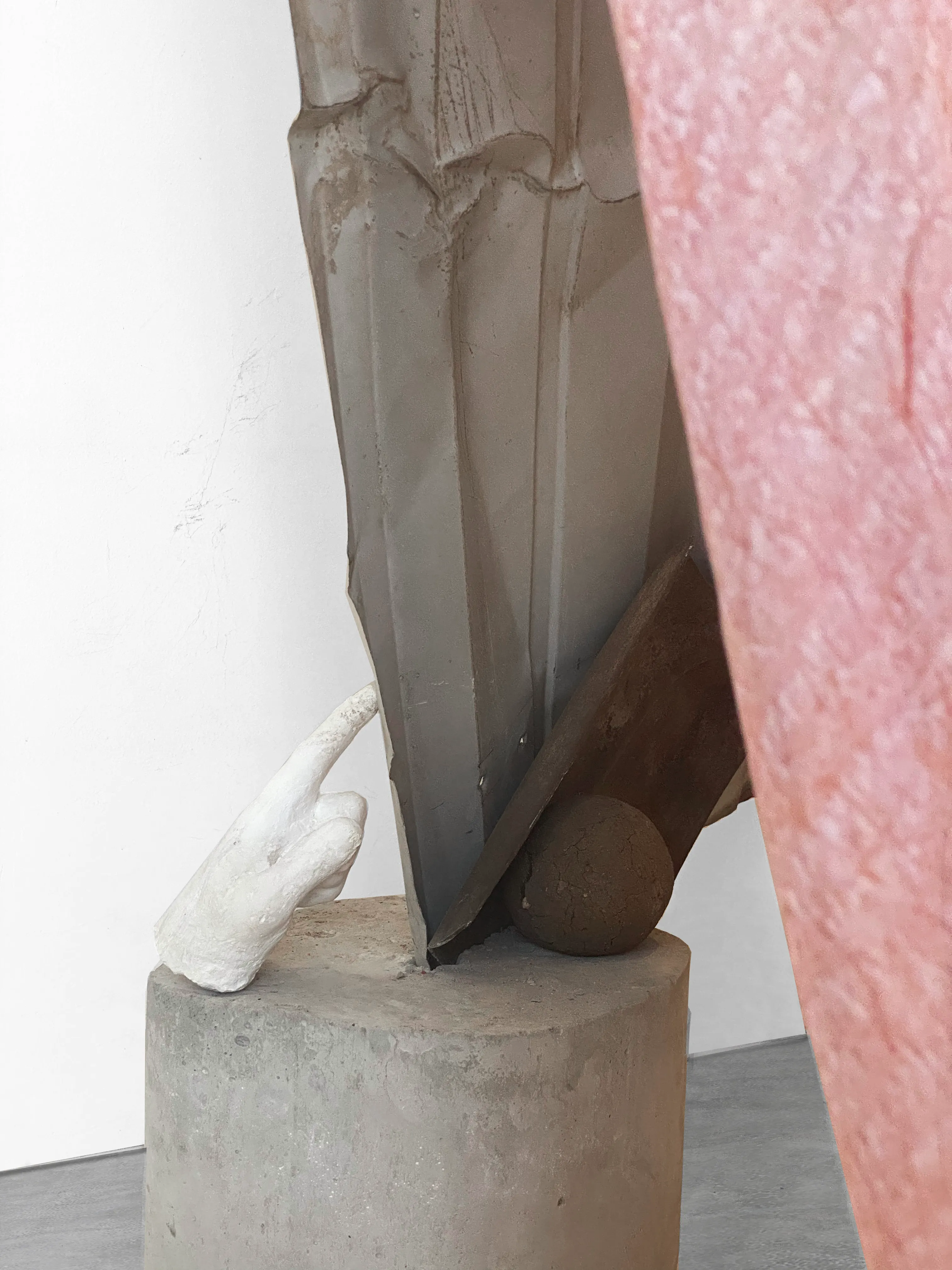
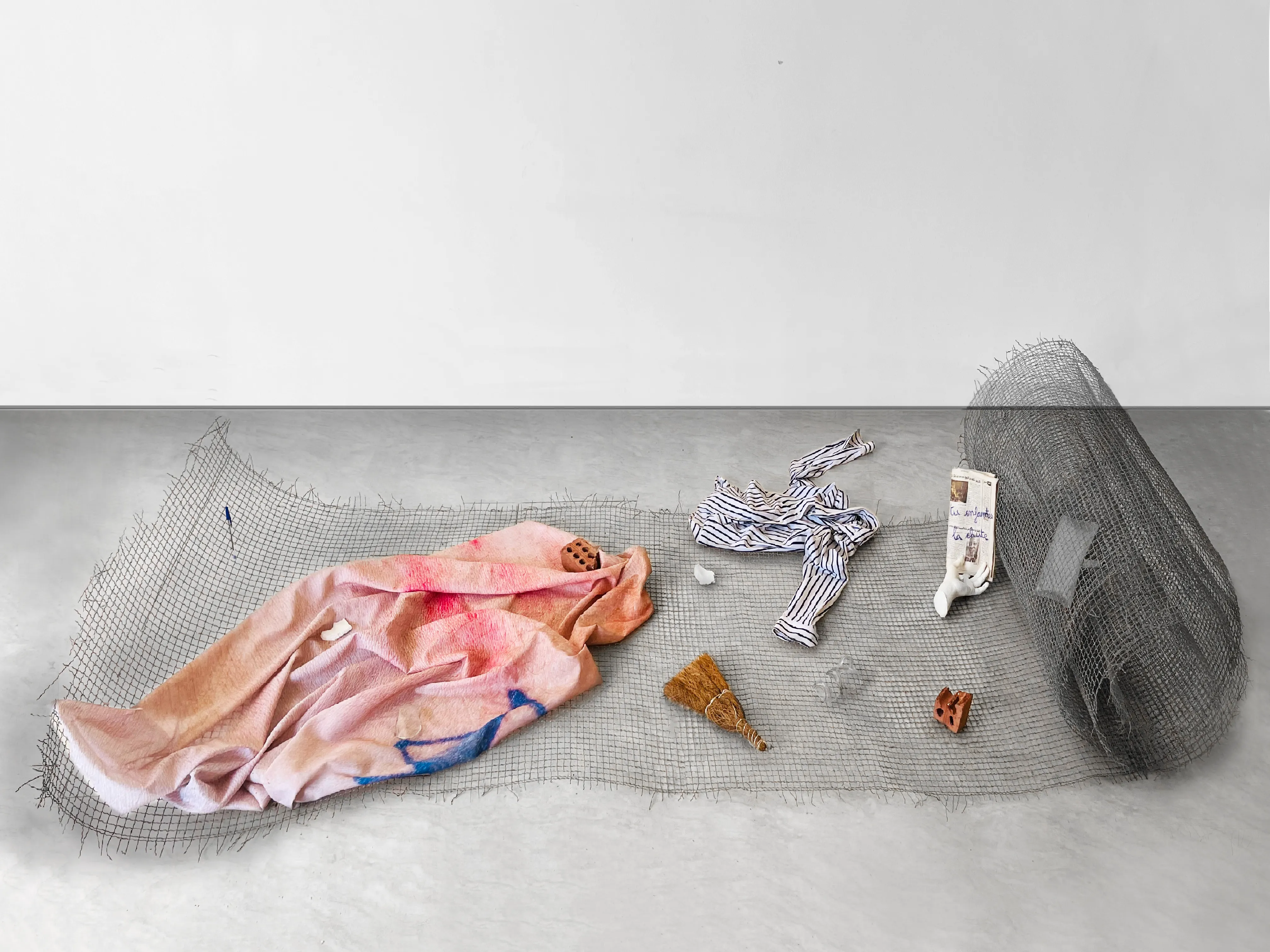
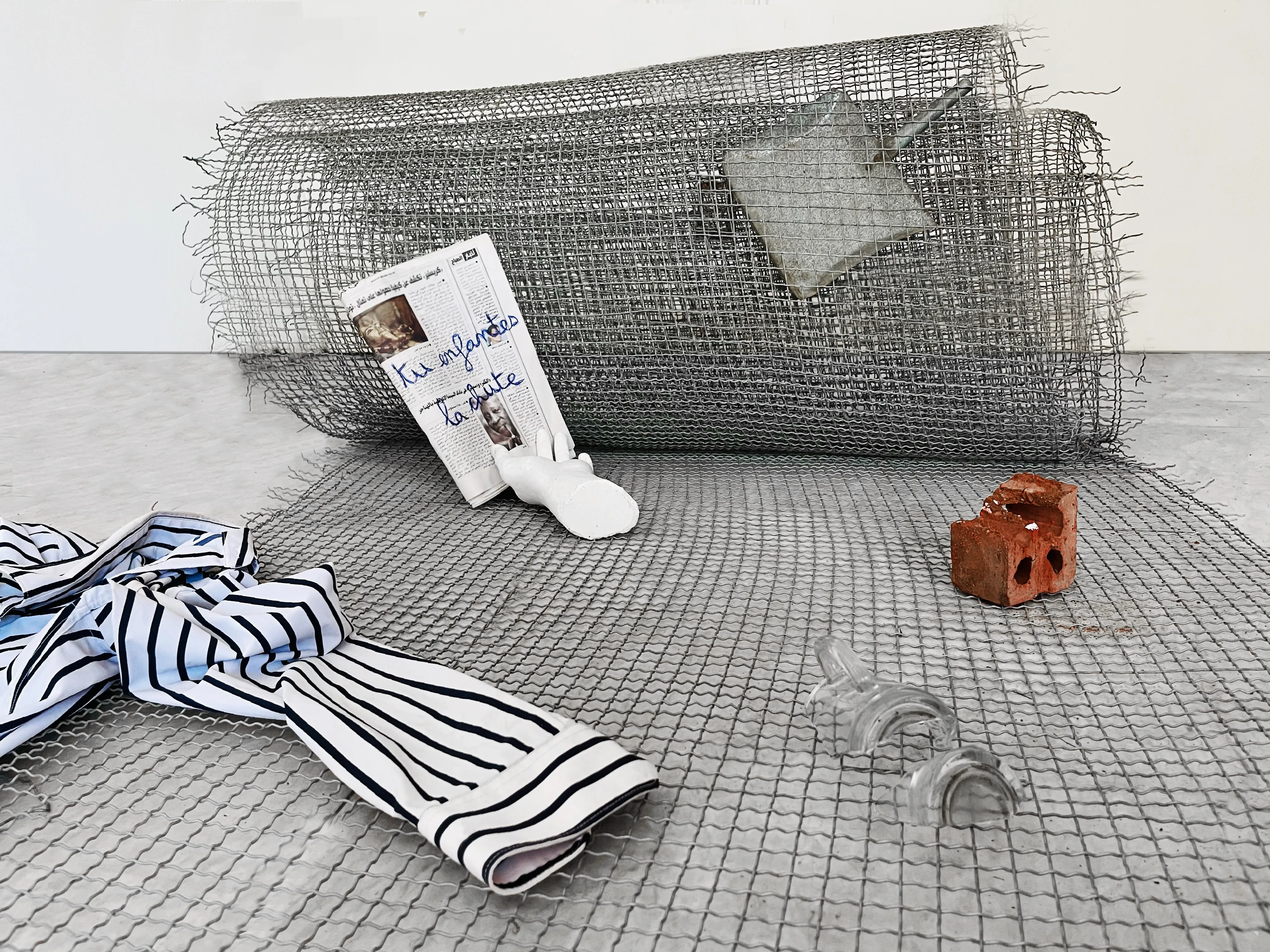
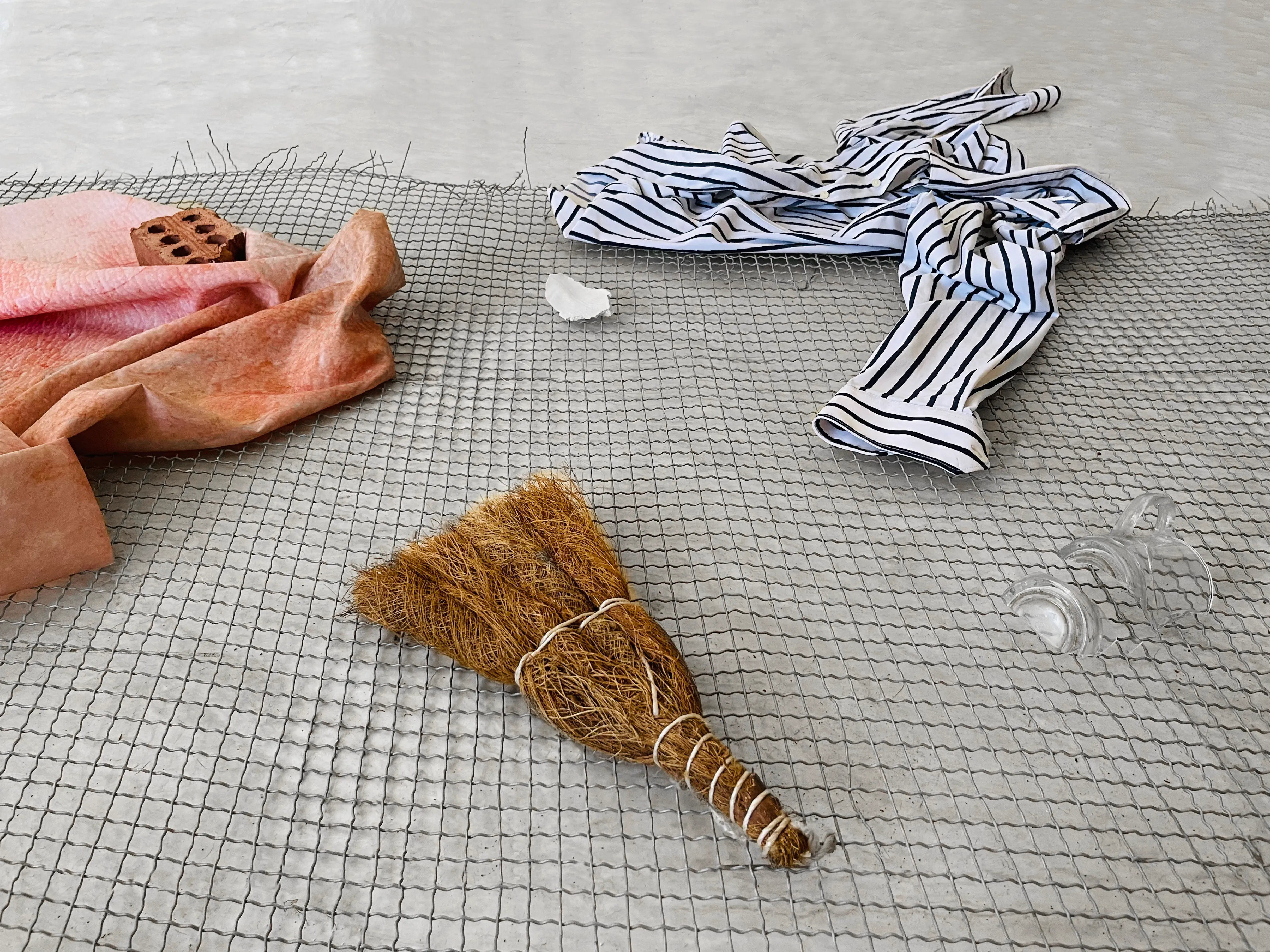
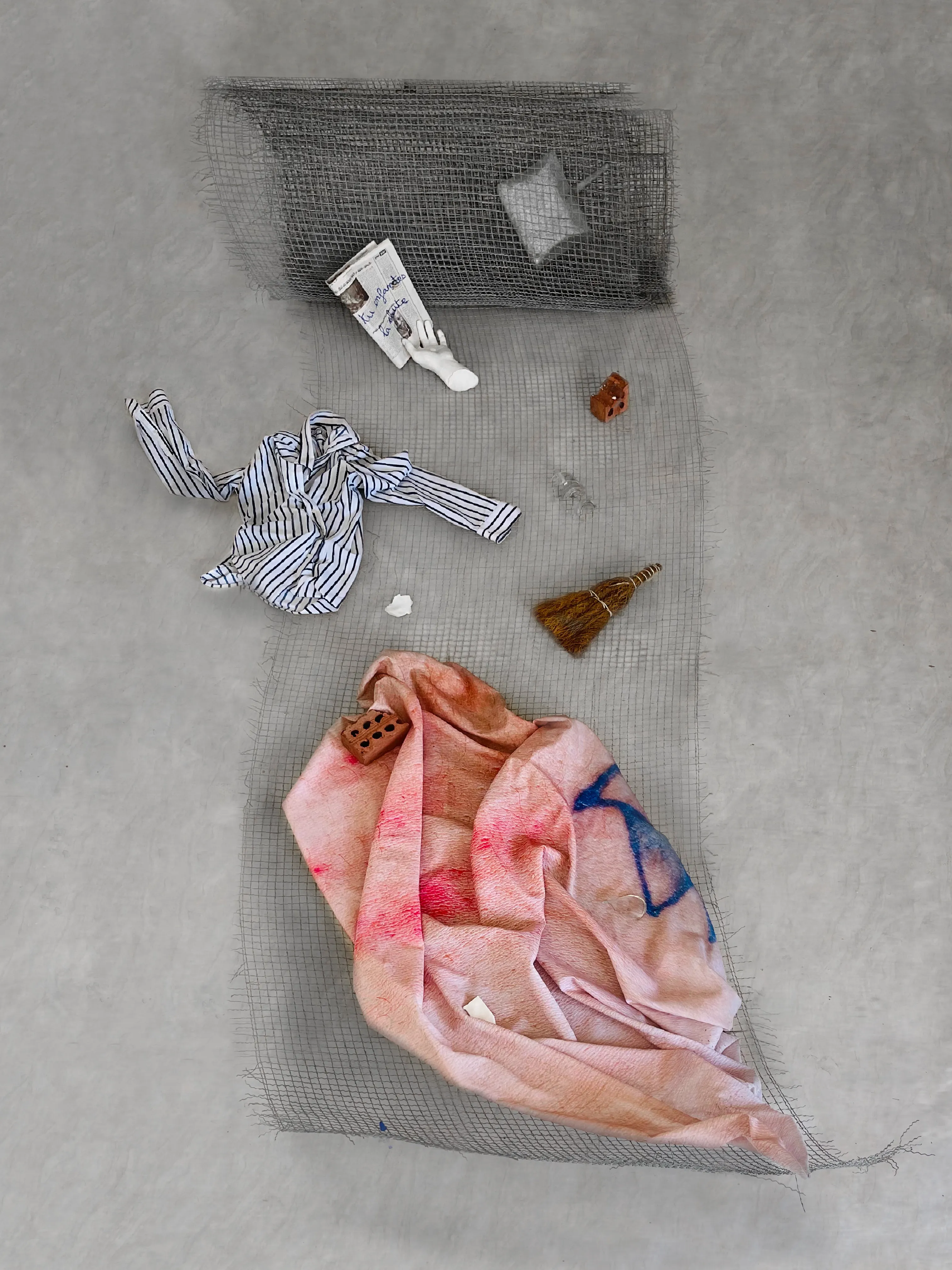
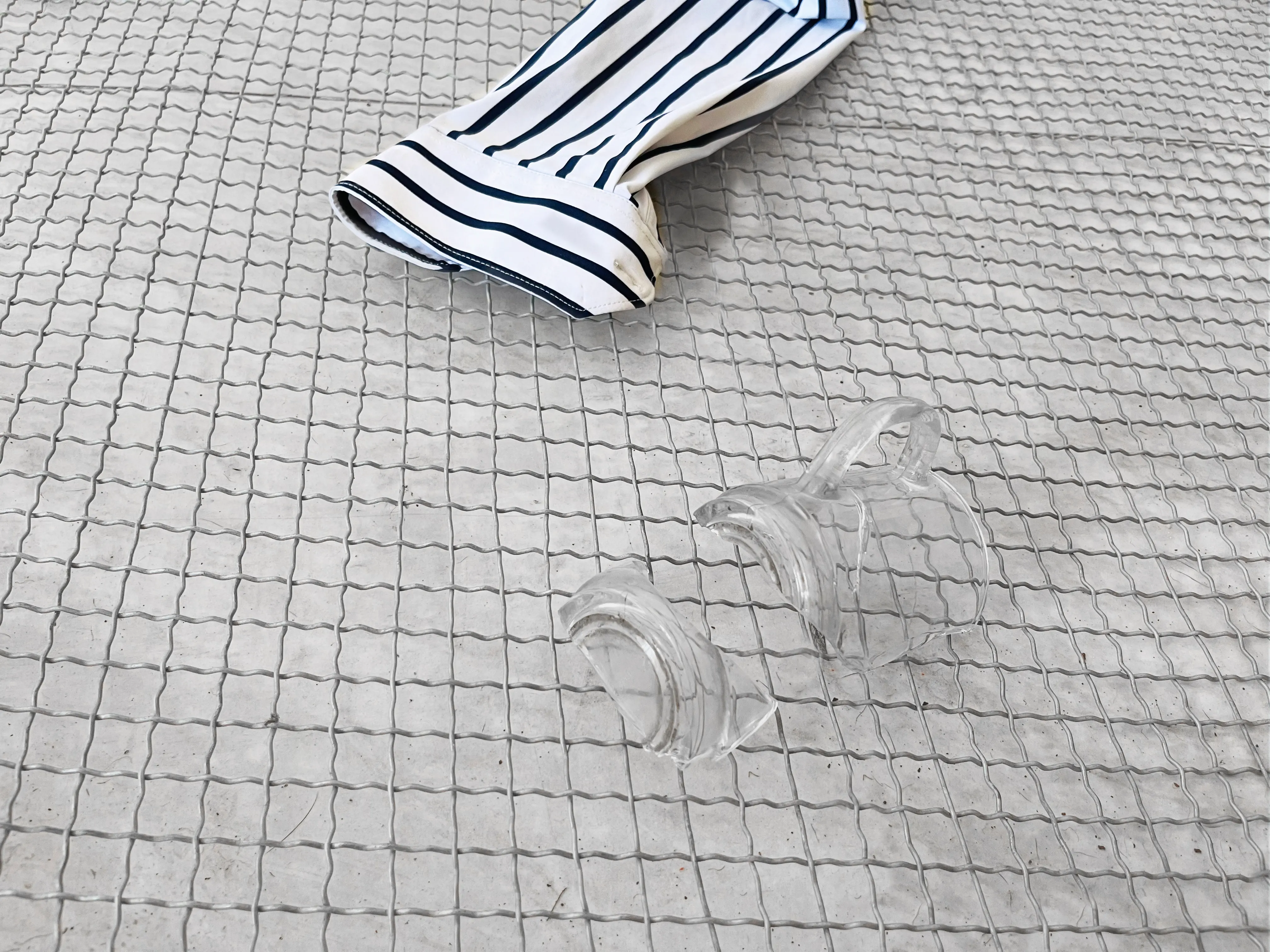
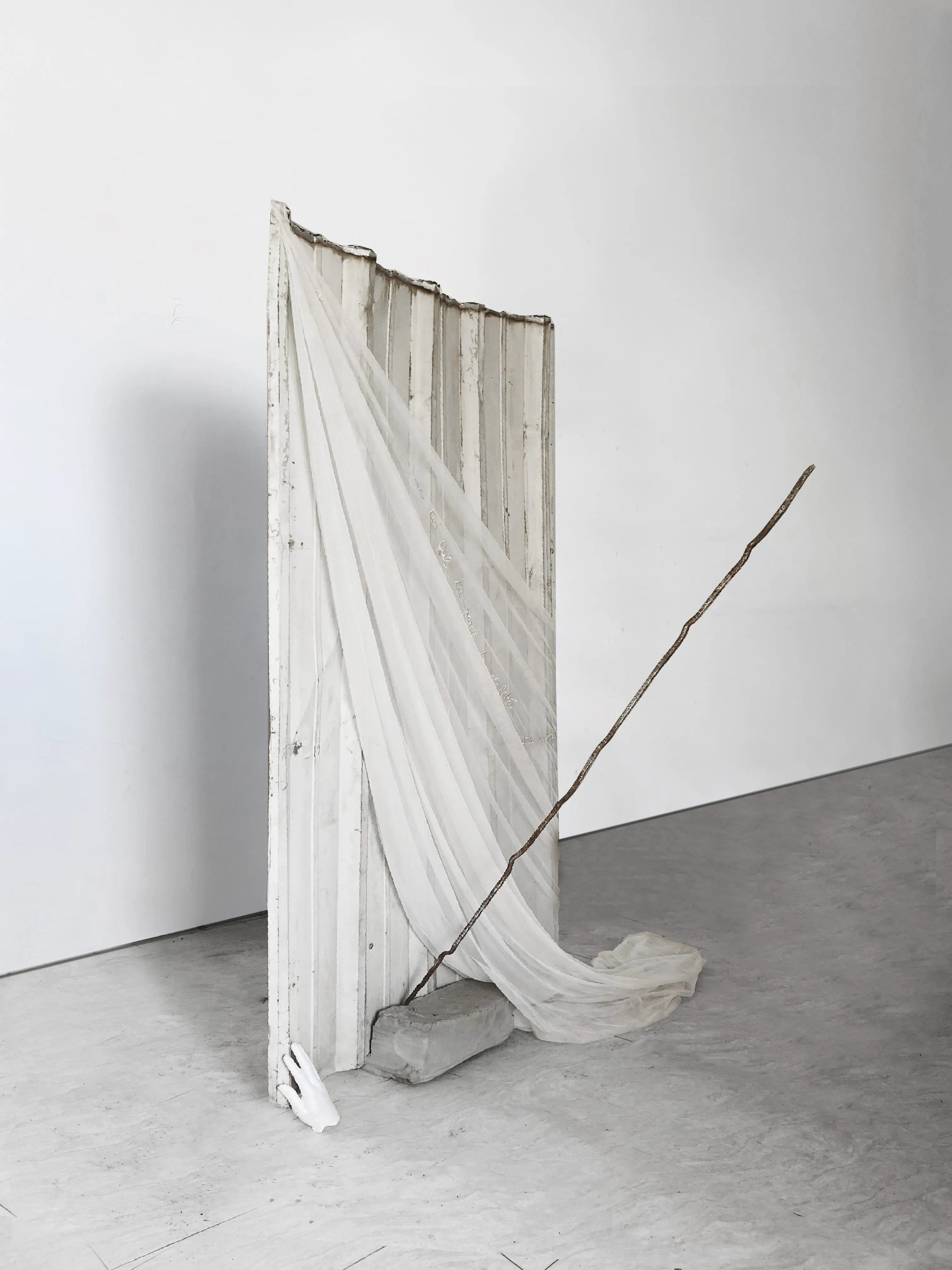
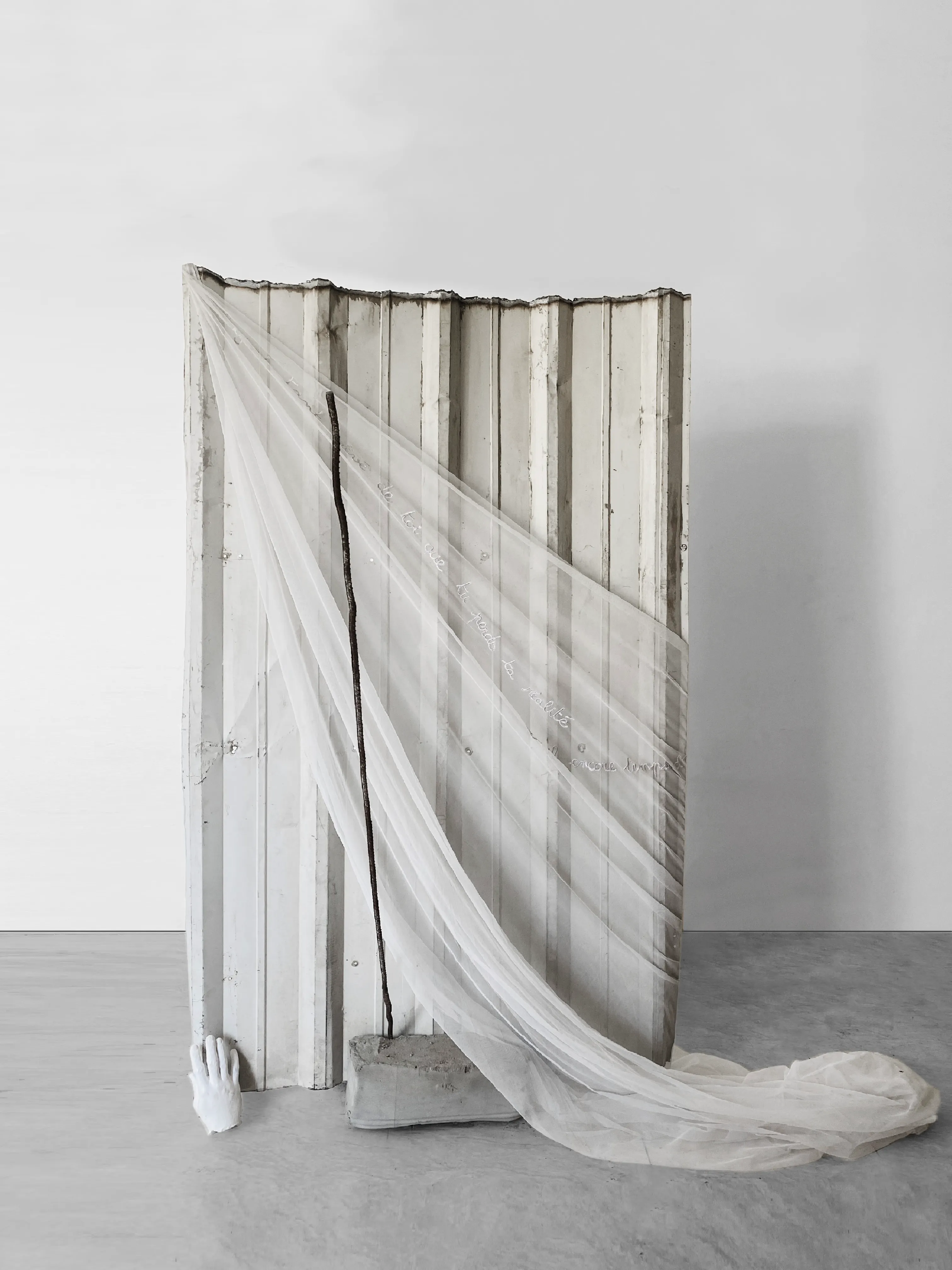
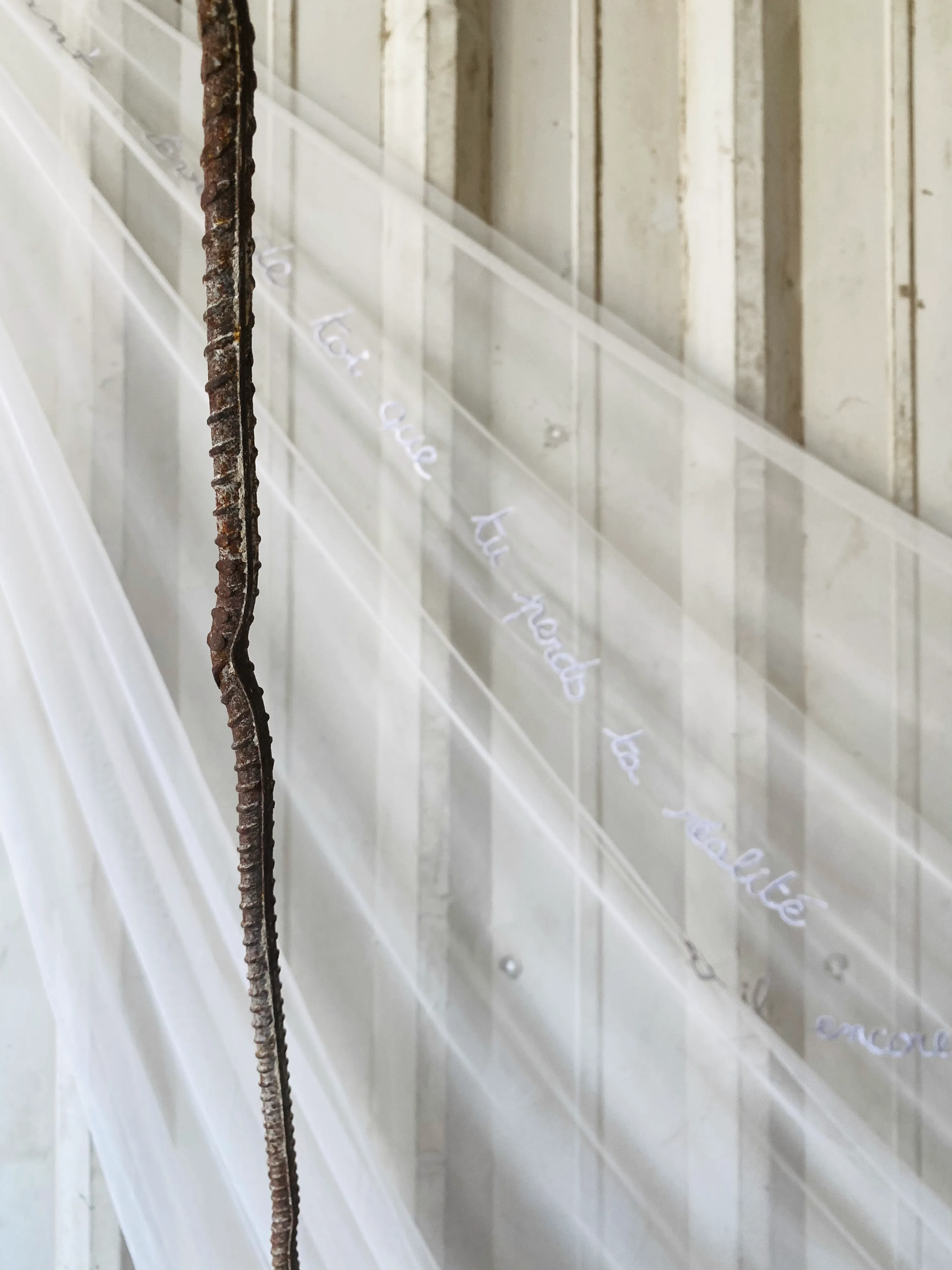
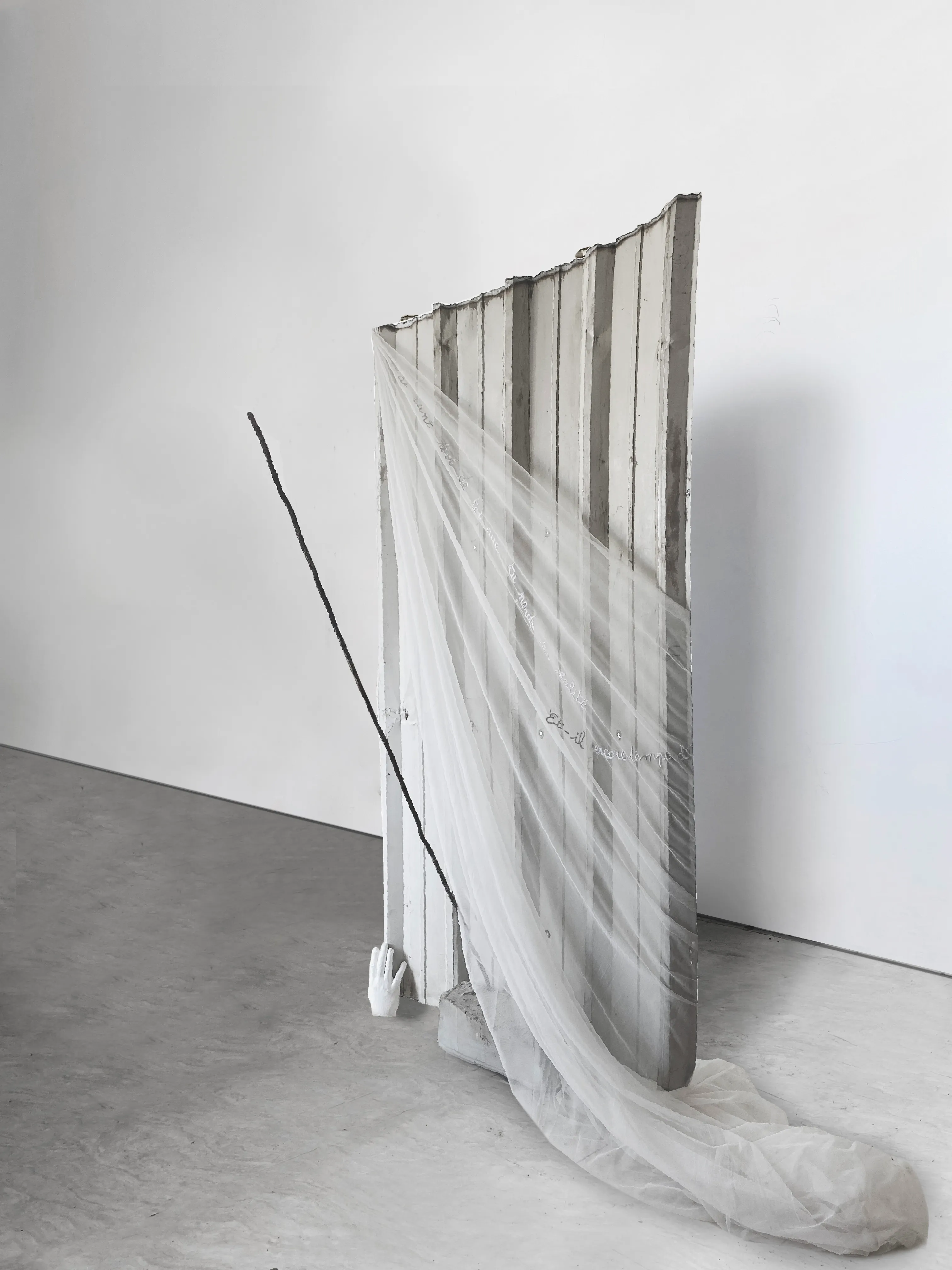
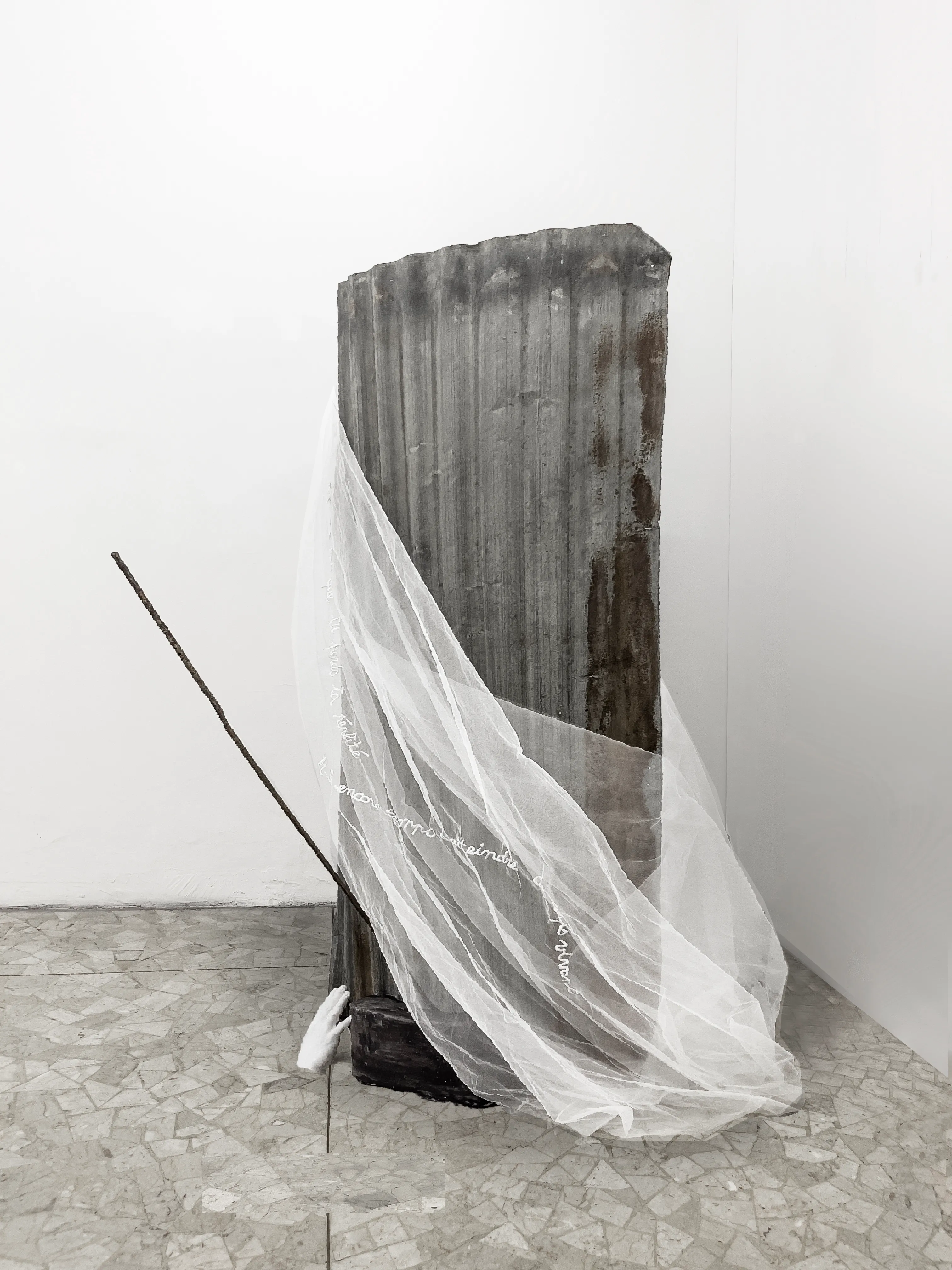
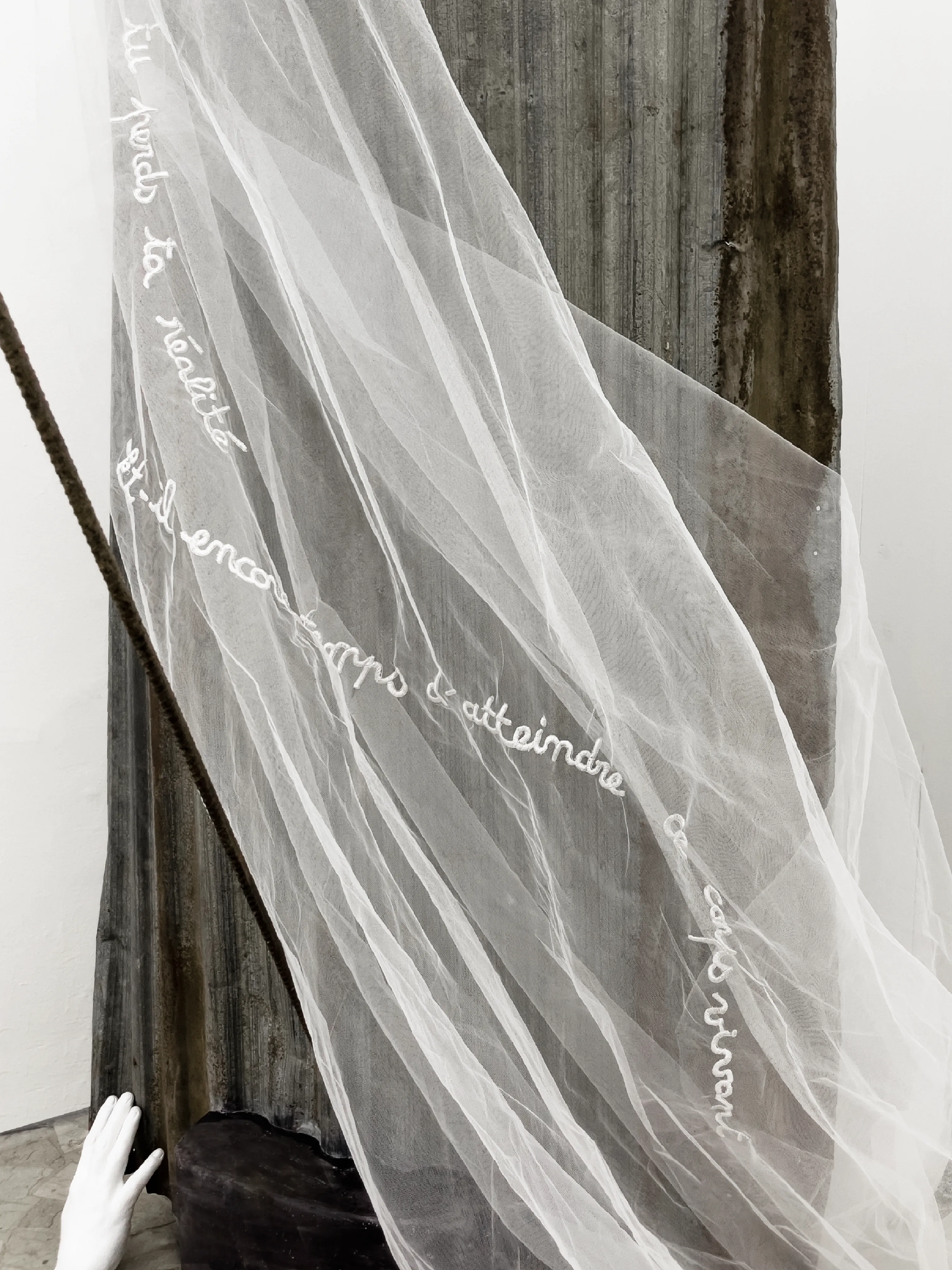
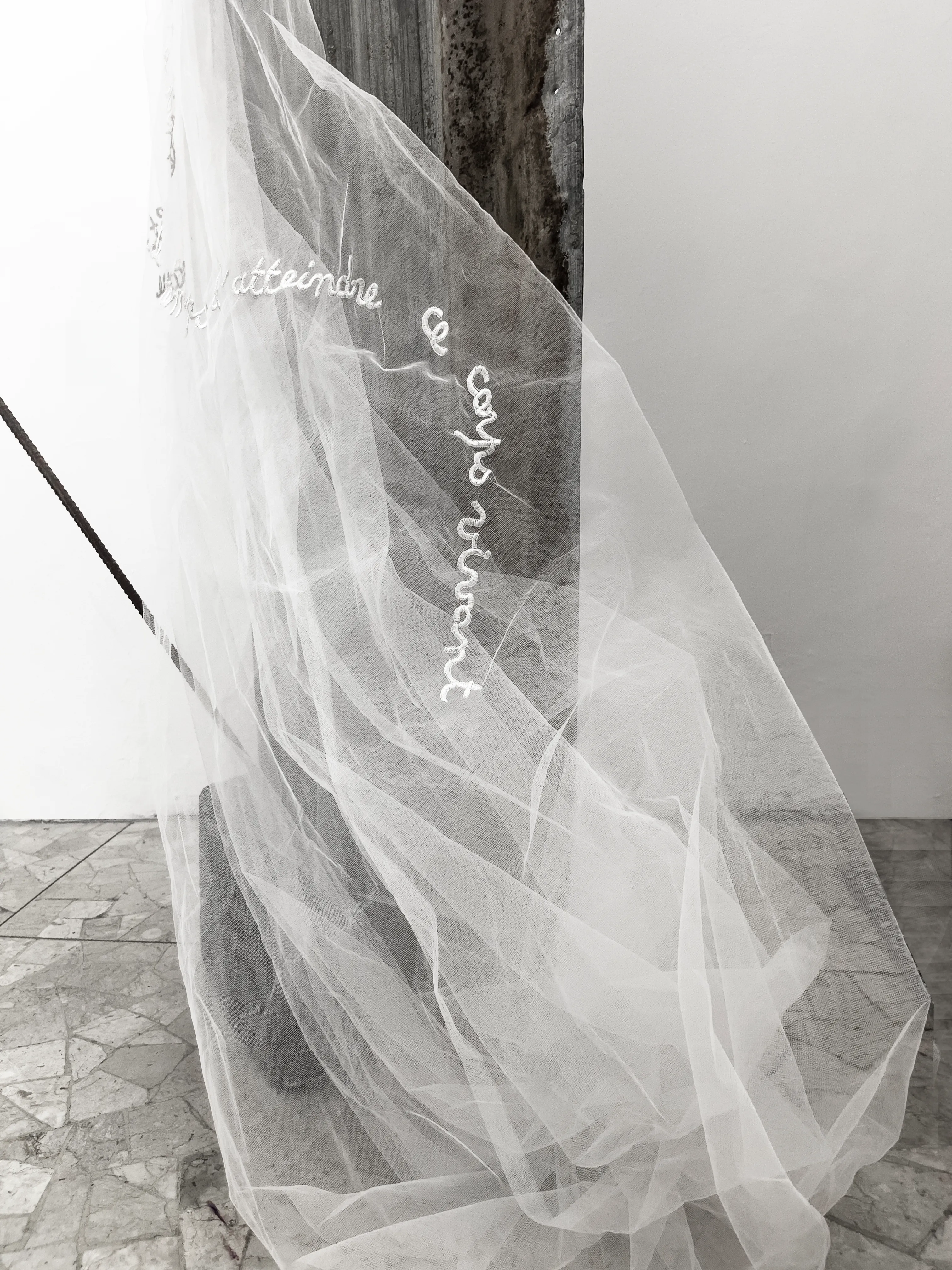
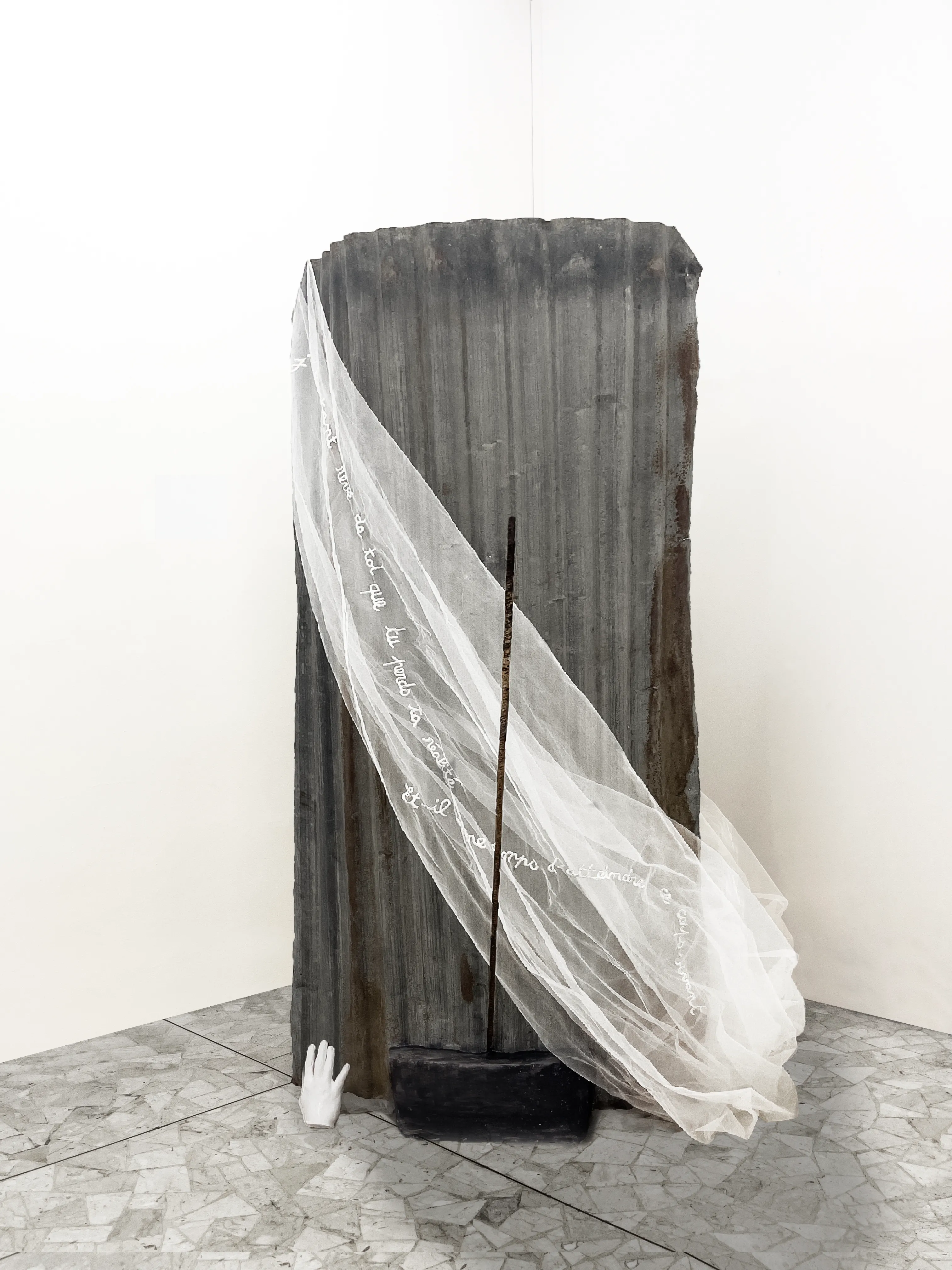
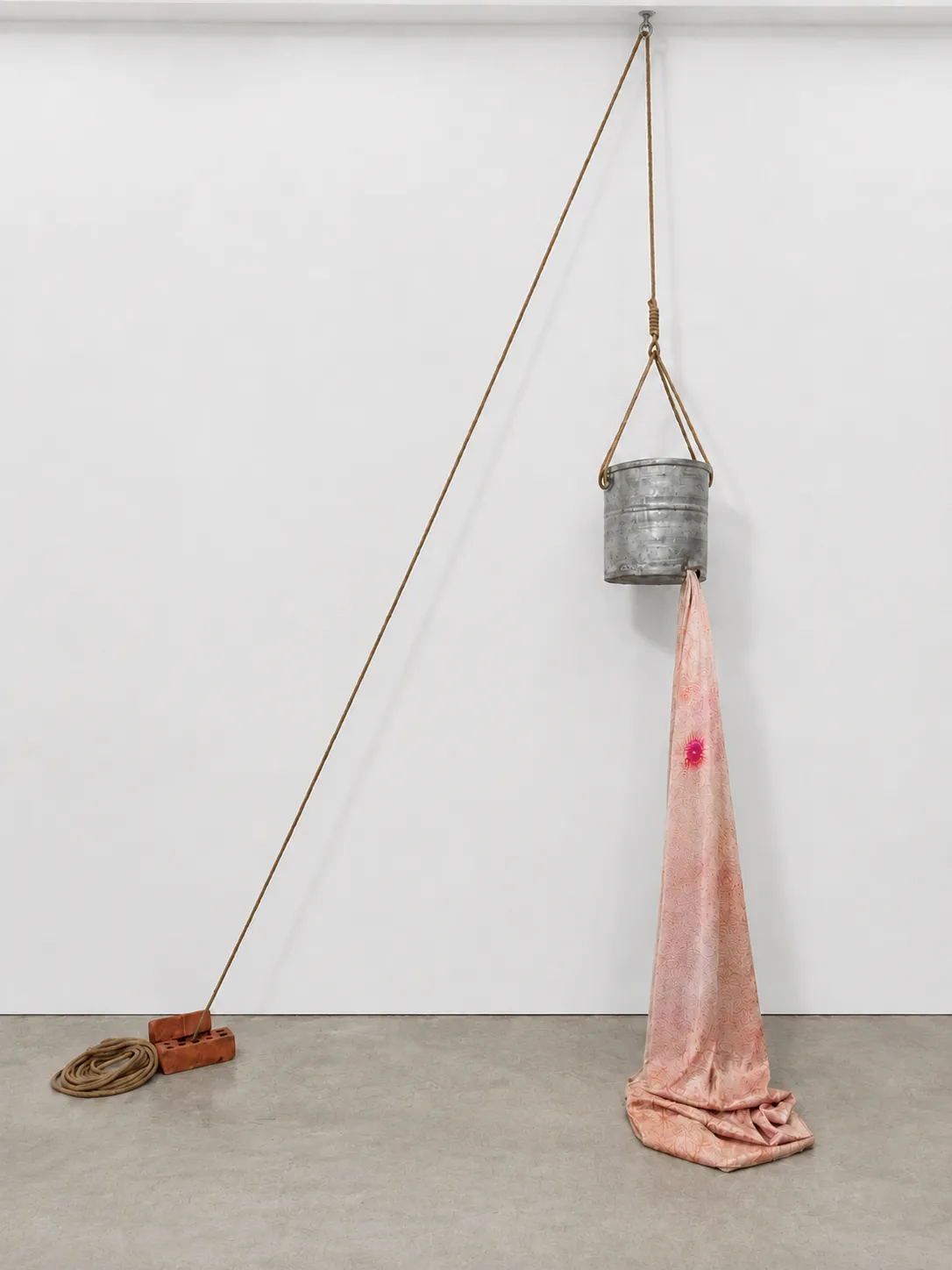
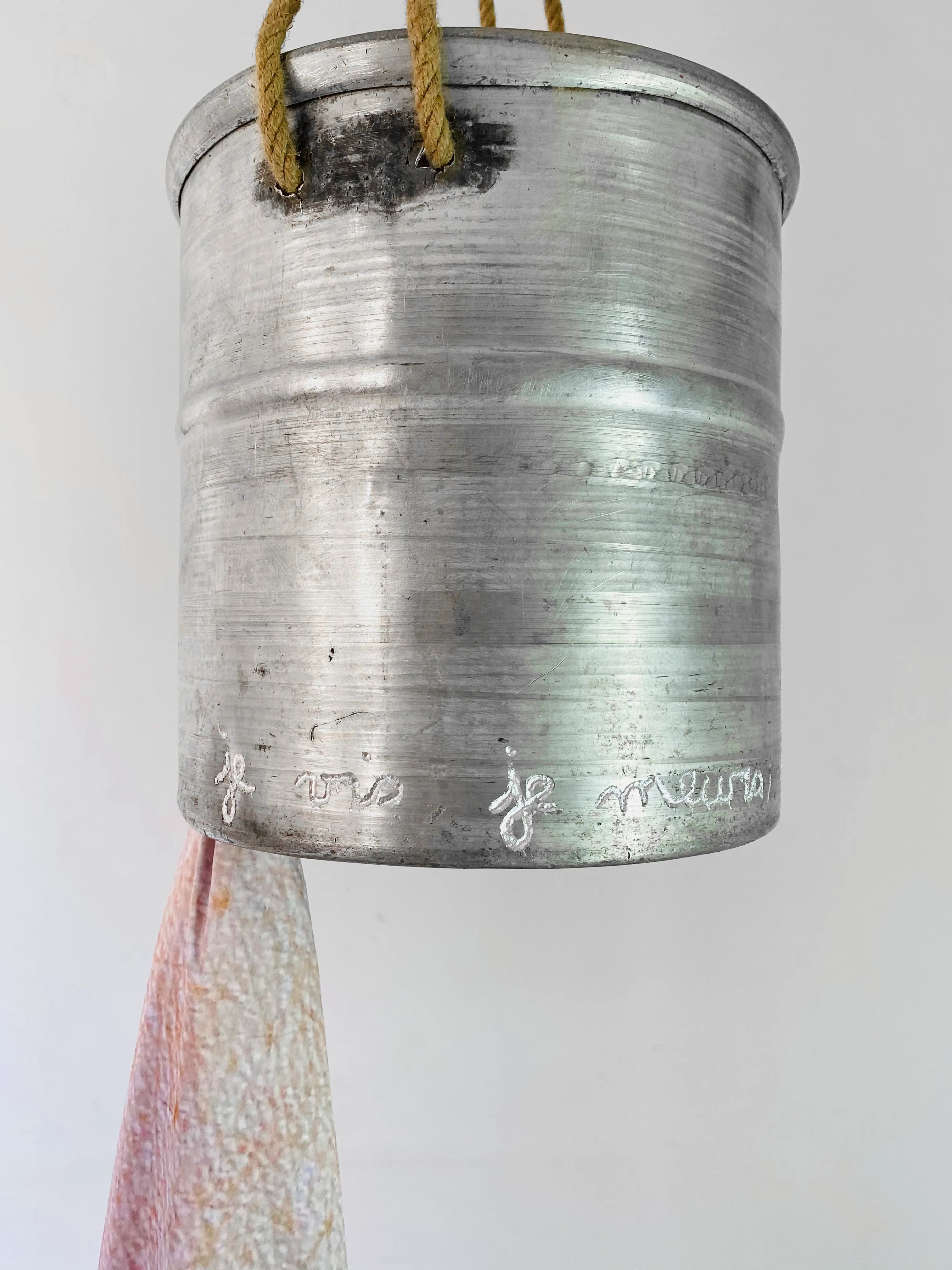
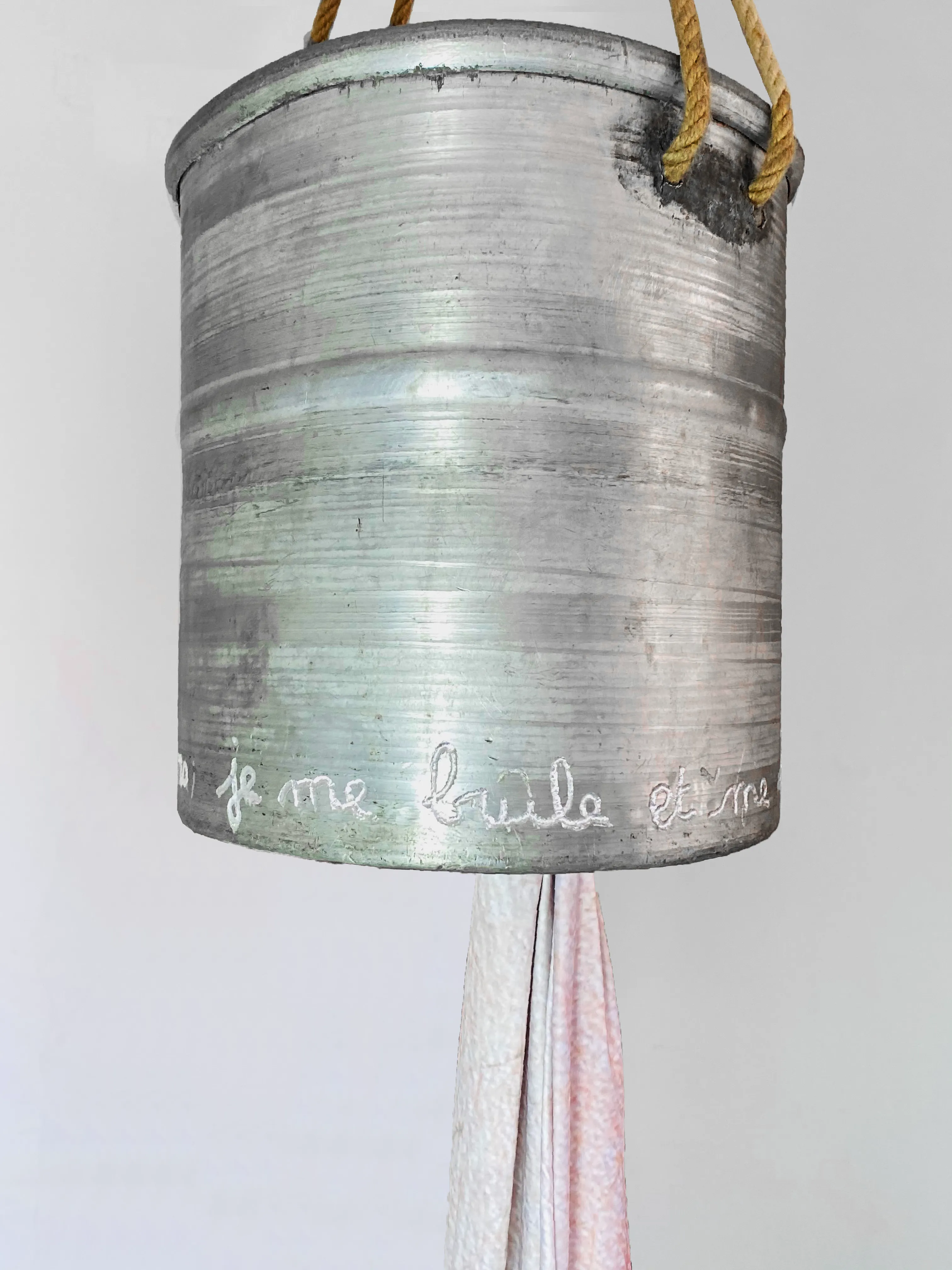
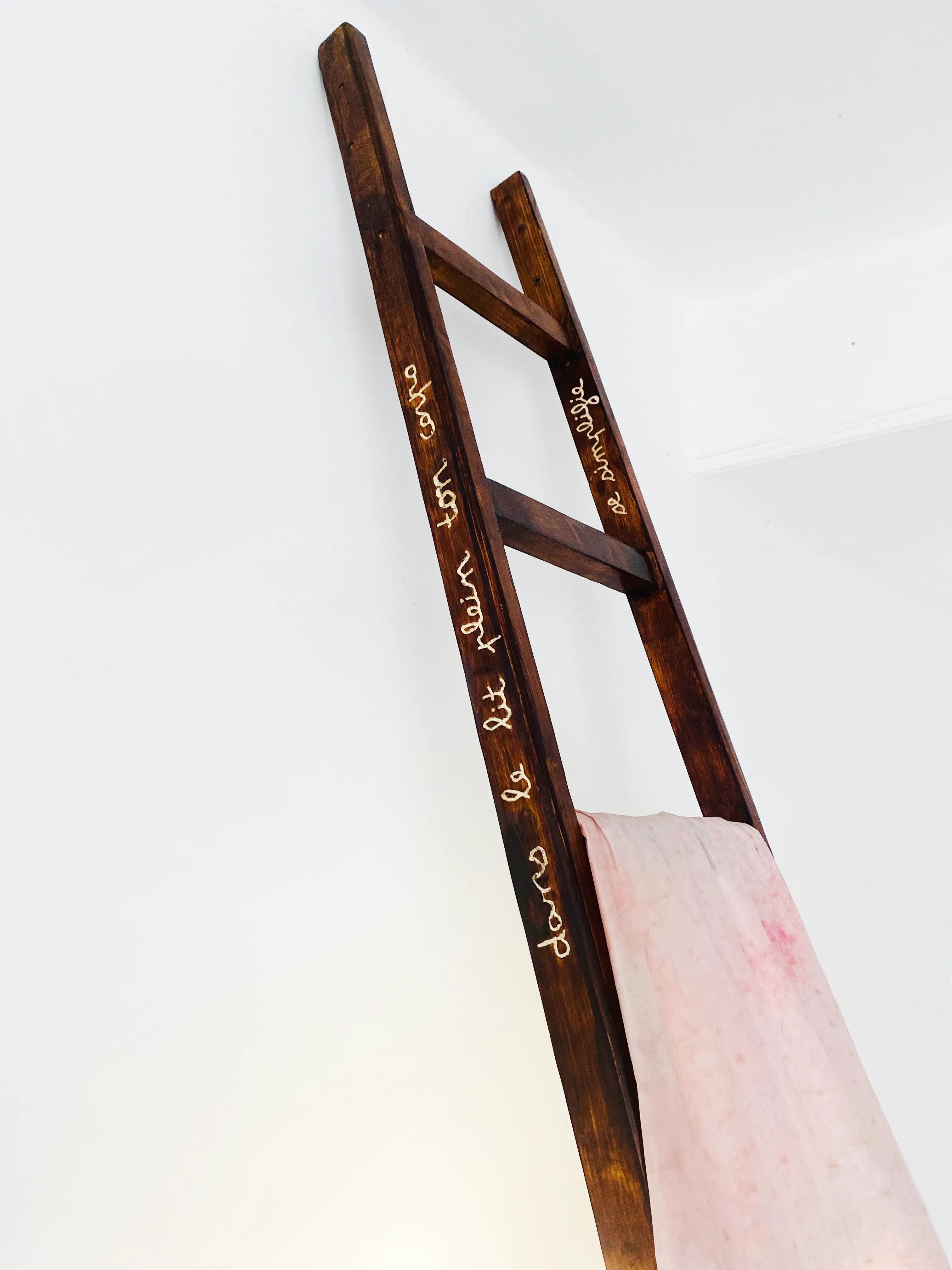
This tension extends into architecture. The enlarged photographs are assembled with bricks, corrugated metal, wire mesh, rods, fabric and objects recovered from building demolition sites. Flesh and construction begin to resemble one another. The body becomes a structure inhabited by the self; skin becomes its wall — protective, vulnerable and exposed to pressure, damage and repair.
The demolition materials introduce a more violent fantasy into the desire for intimacy: if the body is a house, reaching the person who inhabits it would require breaking through its walls. Yet destroying that enclosure would also threaten the being one wishes to reach. The desire to possess, absorb or become the beloved therefore encounters a fundamental contradiction: the boundary that keeps two lovers apart is also what allows each of them to exist.
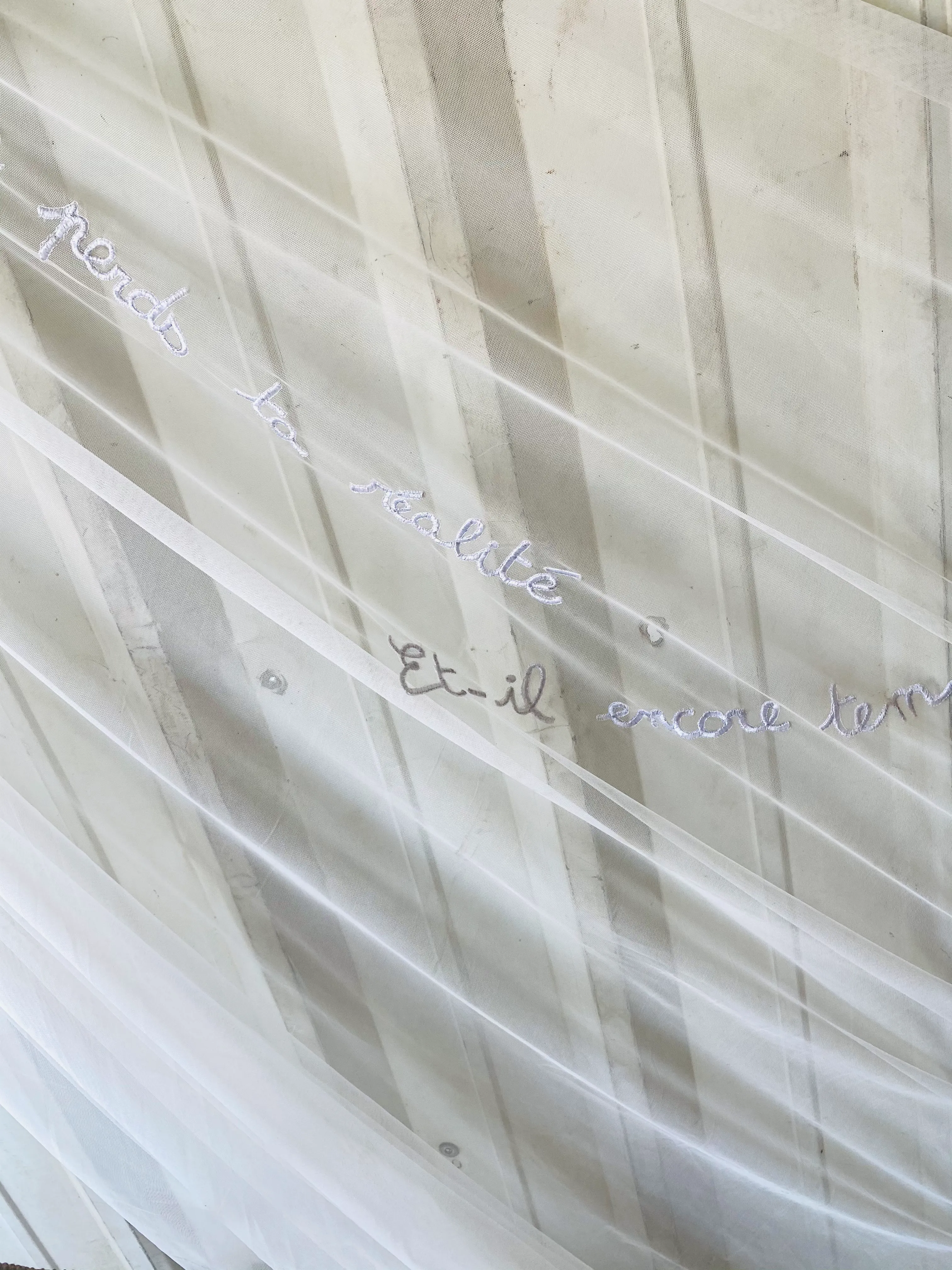
The poetic fragments no longer simply describe love. Written, stitched or placed across the assemblages, they come into contact with skin, rubble and fractured structures. Language becomes another material surface, while the photographed traces give bodily weight to sentiments that words can evoke but cannot contain.
Inhabit Your Body does not present separation as the failure of intimacy. It reveals separation as its necessary condition. Love may produce the desire to become one, but touch exists only because two bodies remain distinct. Skin is simultaneously the place of their encounter and the wall through which each continues to inhabit a body of their own.