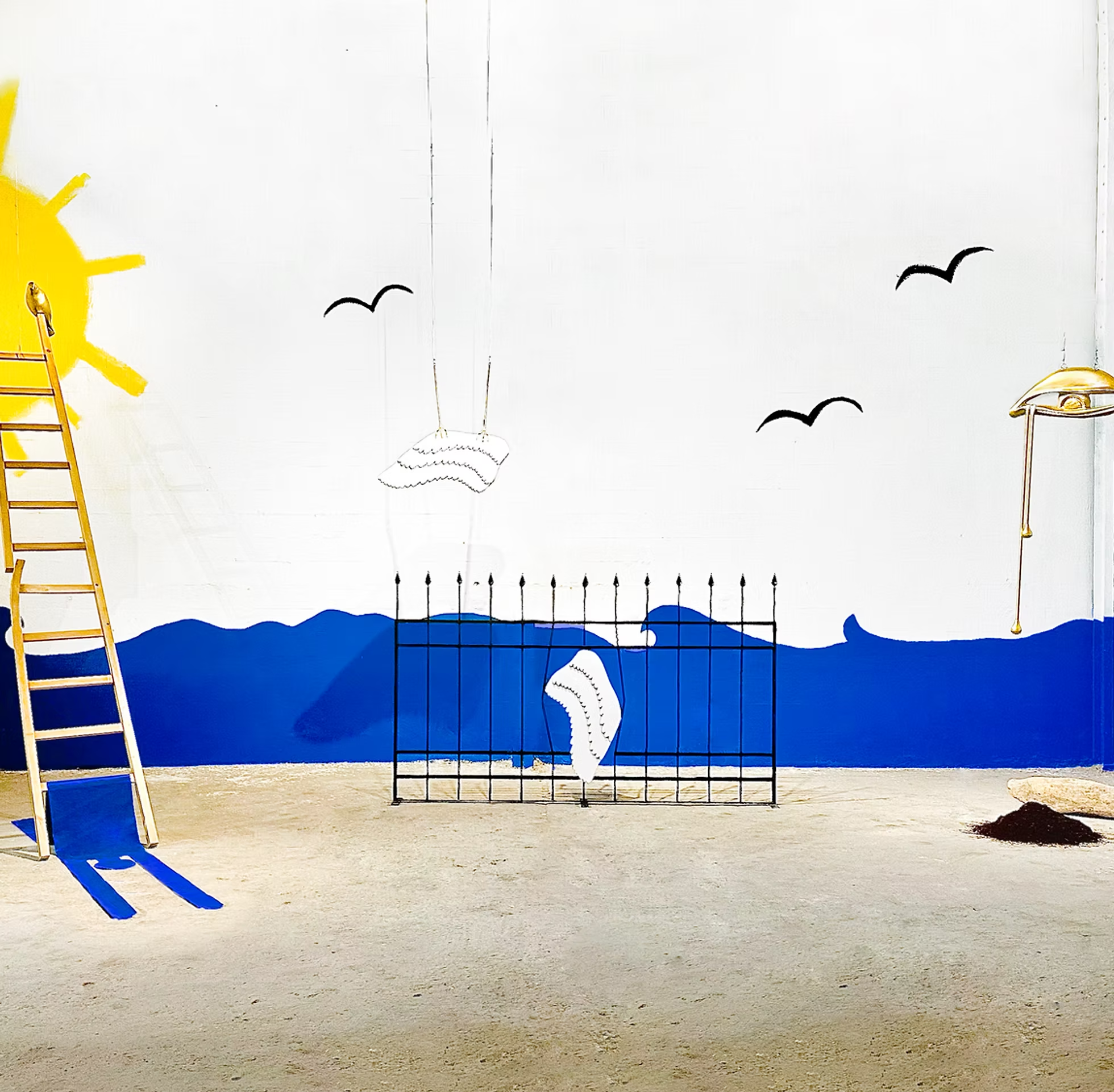
Why does the breast keep returning in my work? Long before it becomes a symbol, it is a volume in space, shaping how a body is perceived. Understanding why this form recurs across my sculptures, drawings and textiles has led me away from a single idea of femininity and towards a shape that remains recognisable precisely because it never stays fixed.
For a long time, I did not question why breasts appeared so frequently in my work. They seemed almost obvious to me. Whenever I wanted to evoke the feminine in its most direct or archetypal form, two rounded volumes were enough. They could be placed on a body, suggested within a face or detached from anatomy entirely, yet their presence immediately changed how the figure was read.
The breast is not hidden in the same way as the genitals. It enters the silhouette, projects from the body and becomes visible through clothing, movement and posture. From childhood, it is often one of the first forms through which the female body is distinguished from the male one. Before we understand sexuality, motherhood, gender or representation, we already recognise the shape.
I think I absorbed this visual grammar very early. The breast became a sign of womanhood before I had the language to question what womanhood meant. When it later entered my work, it did not arrive first as a political statement or a conscious feminist symbol. It appeared almost instinctively, as though the form had always been waiting within the visual vocabulary I used to construct a female body. Only afterwards did I begin to notice how unstable that apparently simple sign really is.
Two rounded forms may be enough to identify a figure as female, yet no two breasts are identical. They differ from one body to another and even from one side of the same body to the other. They change with age, weight, hormones, illness, pregnancy and time. They move, fall, swell, soften and lose volume. They are among the most recognisable forms of the body and among the least fixed. This contradiction interests me deeply. The breast is used as an almost universal sign of femininity, while its actual form constantly escapes the ideal through which it is represented.
Marble Versus Gravity
Growing up in Greece, many of my first encounters with the female body came through sculpture. Marble goddesses and idealised women offered a remarkably stable image of the breast: round, symmetrical, lifted and barely affected by gravity. These bodies became part of my visual education before I understood that they were not neutral representations of women, but forms imagined and carved largely by men. The breasts of these sculptures seemed to belong less to living bodies than to an idea of the female body. They were perfected volumes, held permanently in place by stone. Marble transformed softness into solidity and instability into an image of eternal balance.
Real bodies contradicted that image everywhere. The more I observed them, the more strange the sculpted ideal became. Living breasts are rarely perfectly symmetrical. They do not remain suspended outside time. Their relationship to gravity is not a flaw introduced into the form but part of the form itself. They carry the history of the body.
This may be one reason the breast has returned so insistently across my practice. I am not interested in reproducing an ideal breast. I am interested in a volume that can be recognised immediately and still refuse to settle into one definitive shape.
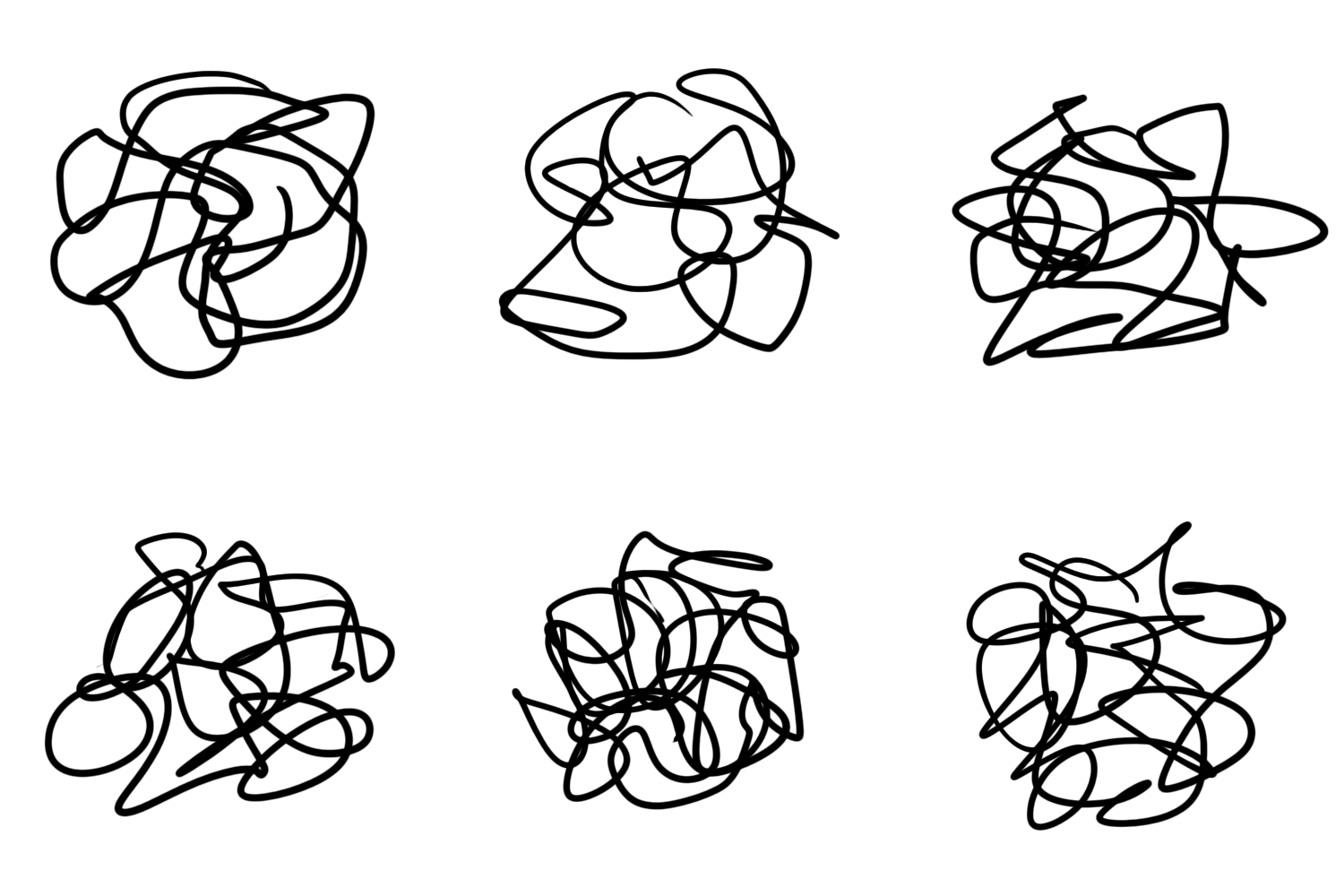
The breast enters my work both as anatomy and as abstraction. Sometimes it belongs clearly to a female body. Elsewhere, it appears as a rounded shape that may also resemble an eye, a mountain, a fruit, a stone, a swelling or a wound. I often avoid adding a nipple because the nipple closes the image too quickly: it tells the viewer exactly what the volume is and how it should be read. Without it, the form remains available. It can suggest the breast without being confined to it, and carry femininity while continuing to belong to another body, another object or another landscape. The form stays suspended between recognition and uncertainty.
Where Does the Eye End and the Breast Begin?
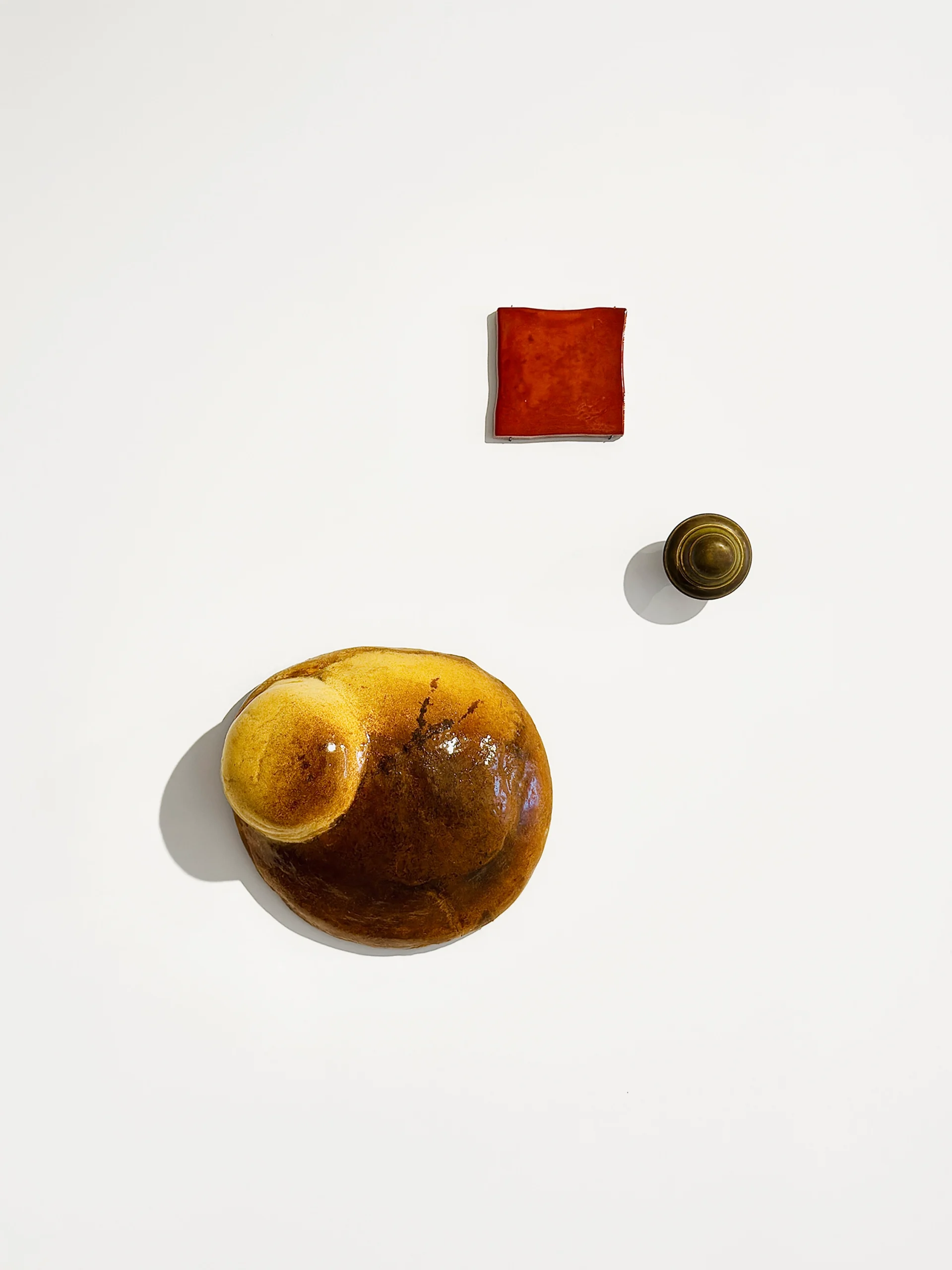
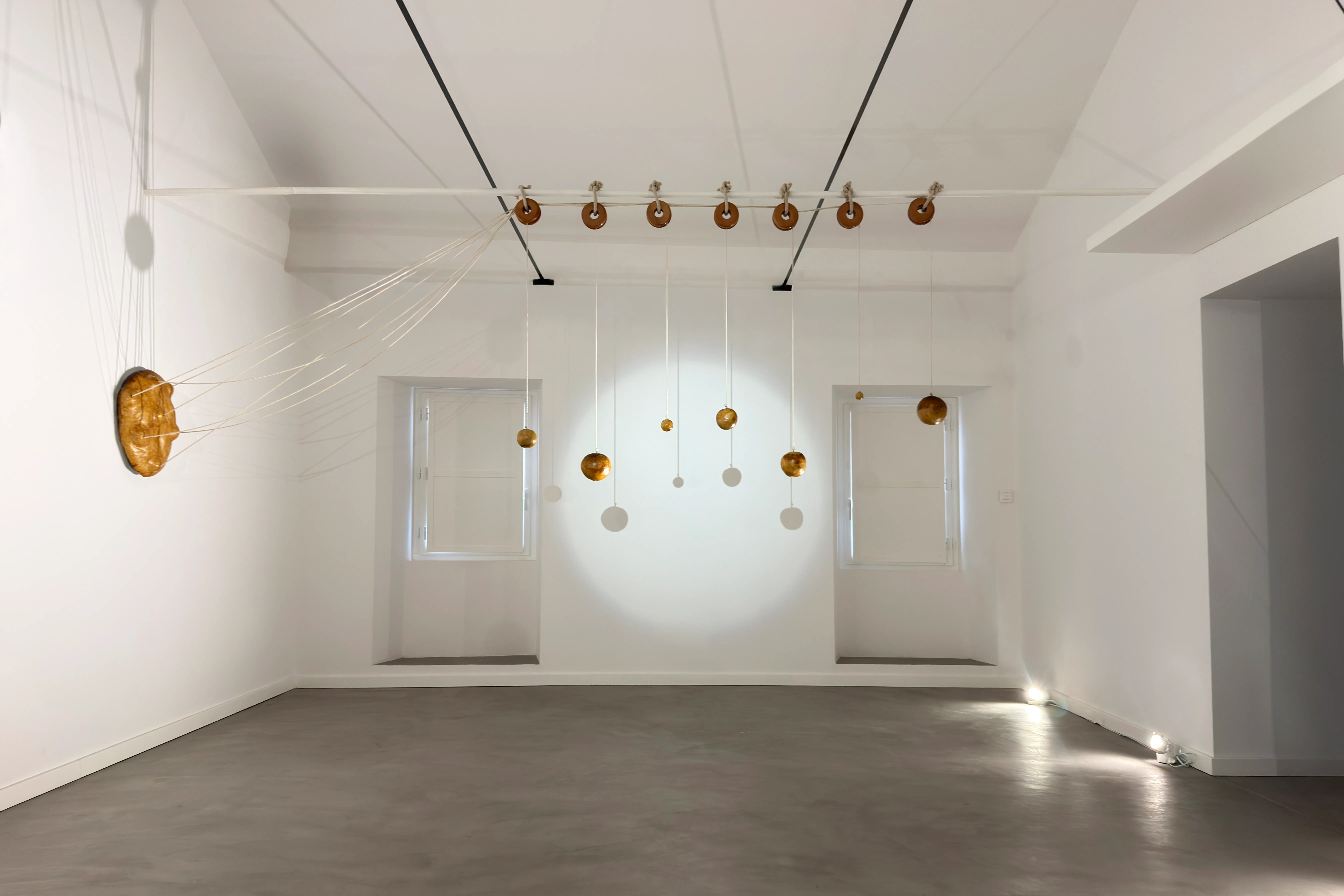
This happens very directly in the bread masks. I begin with a face marked by crying. The eyes are swollen, and as I shape the dough, they often become increasingly round and heavy. Visitors sometimes tell me they see breasts where I believed I had made eyes. I no longer think this is a misunderstanding: the face is already moving towards the body, the eye becomes a breast, the breast becomes a swelling, and the anatomical order through which we normally recognise a face begins to dissolve. The form passes from one part of the body to another without changing completely.
What interests me is precisely this moment when the viewer can no longer decide whether the rounded volume belongs to the face or to the torso. The image remains figurative, but its anatomy is unstable.
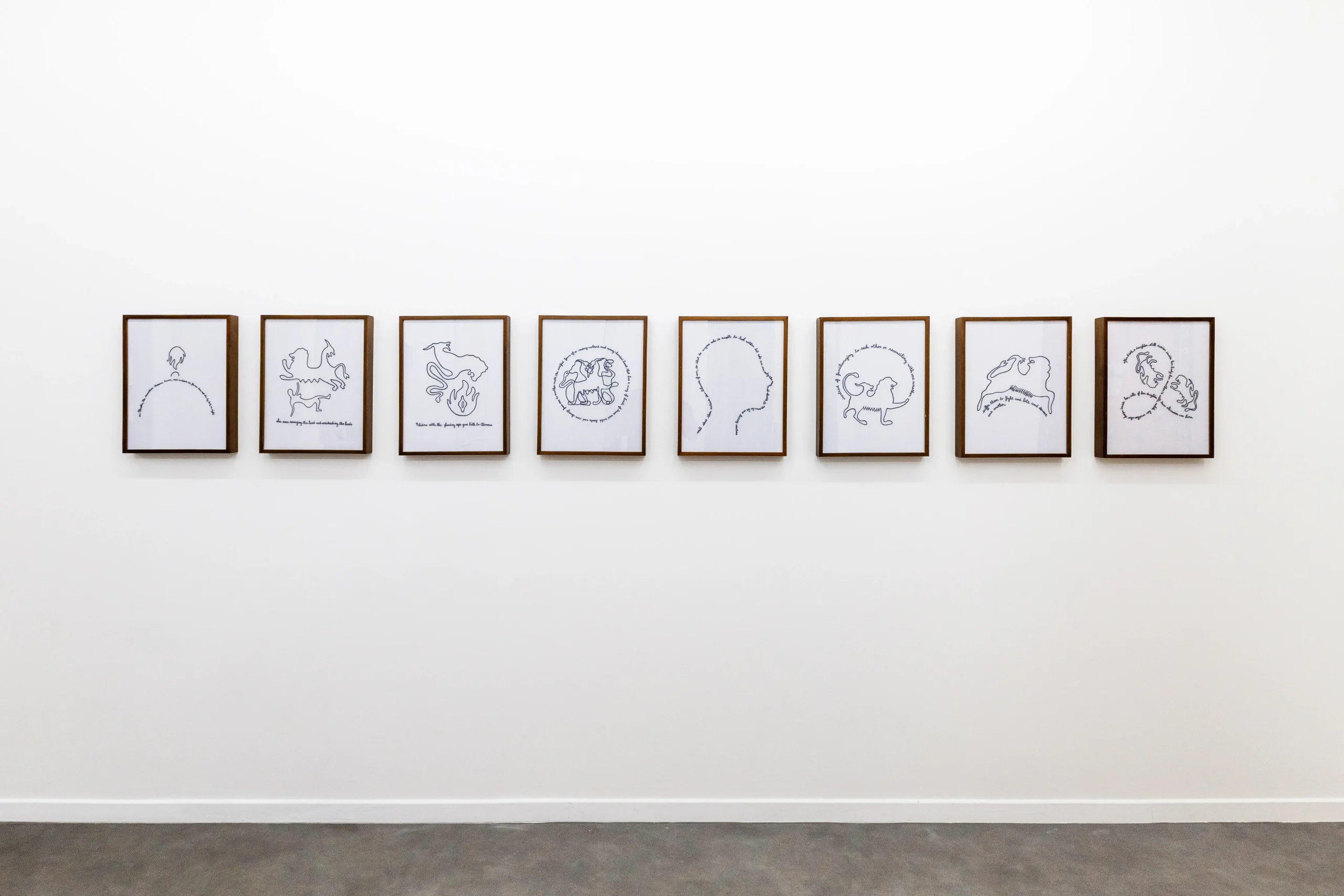
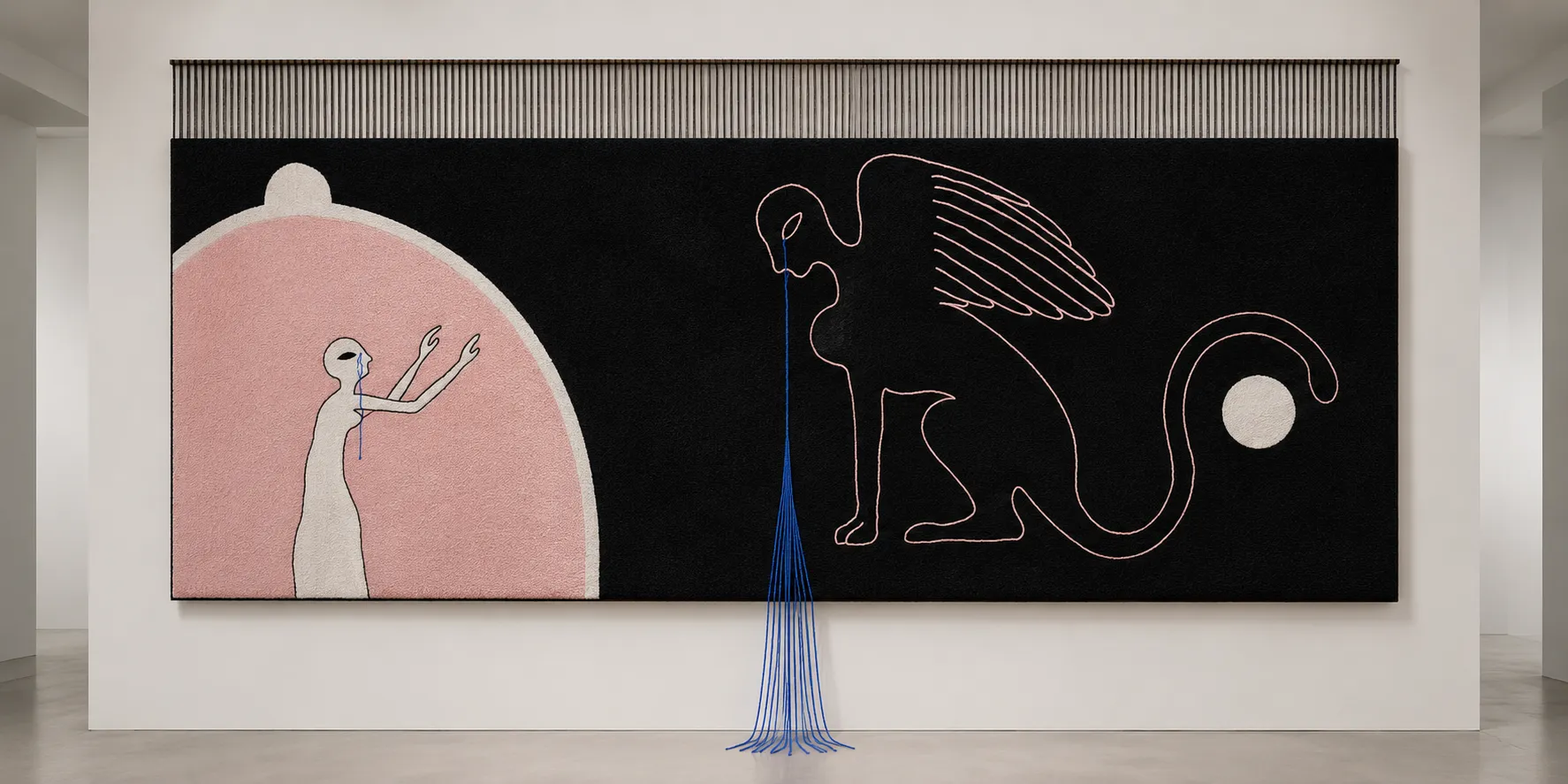
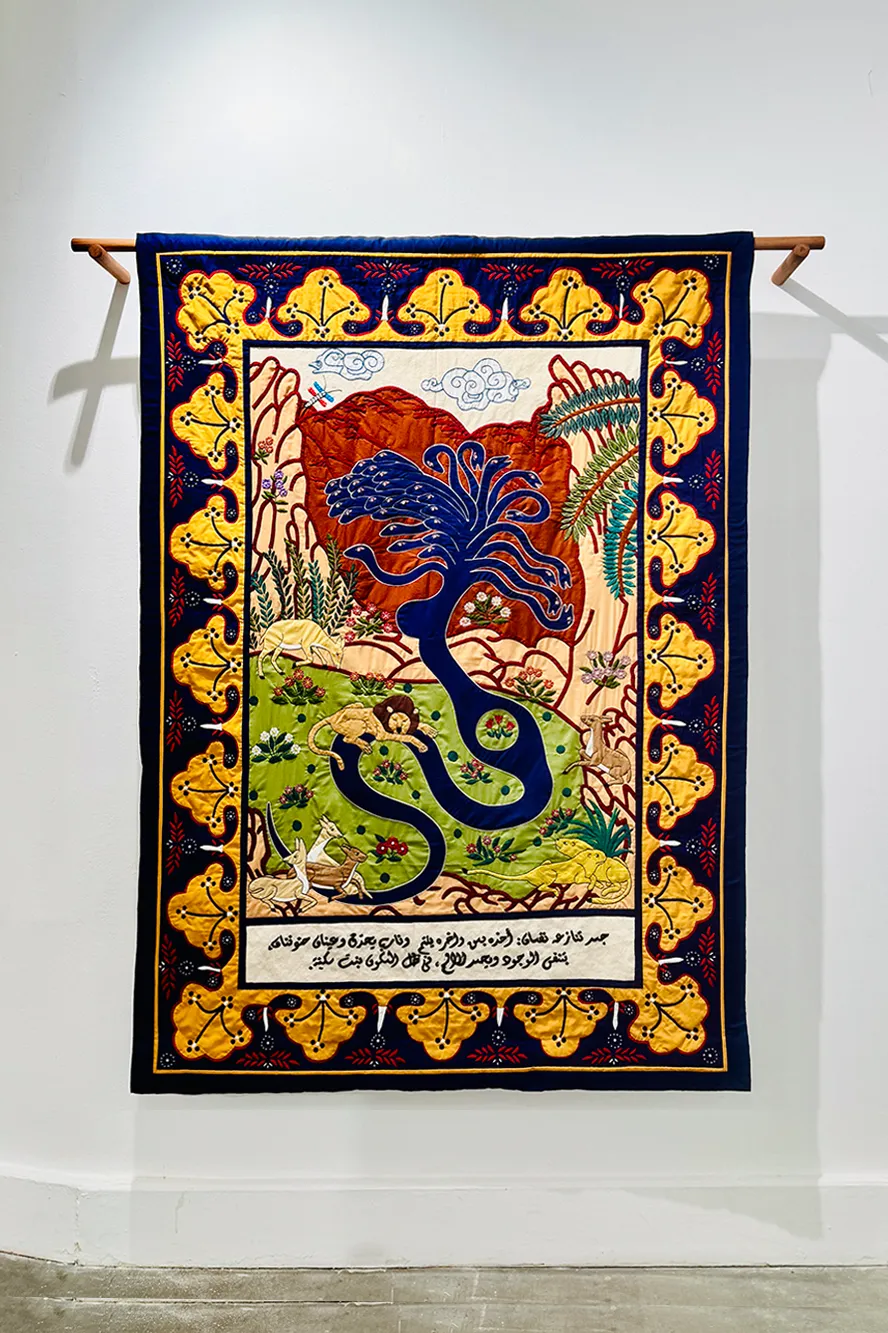
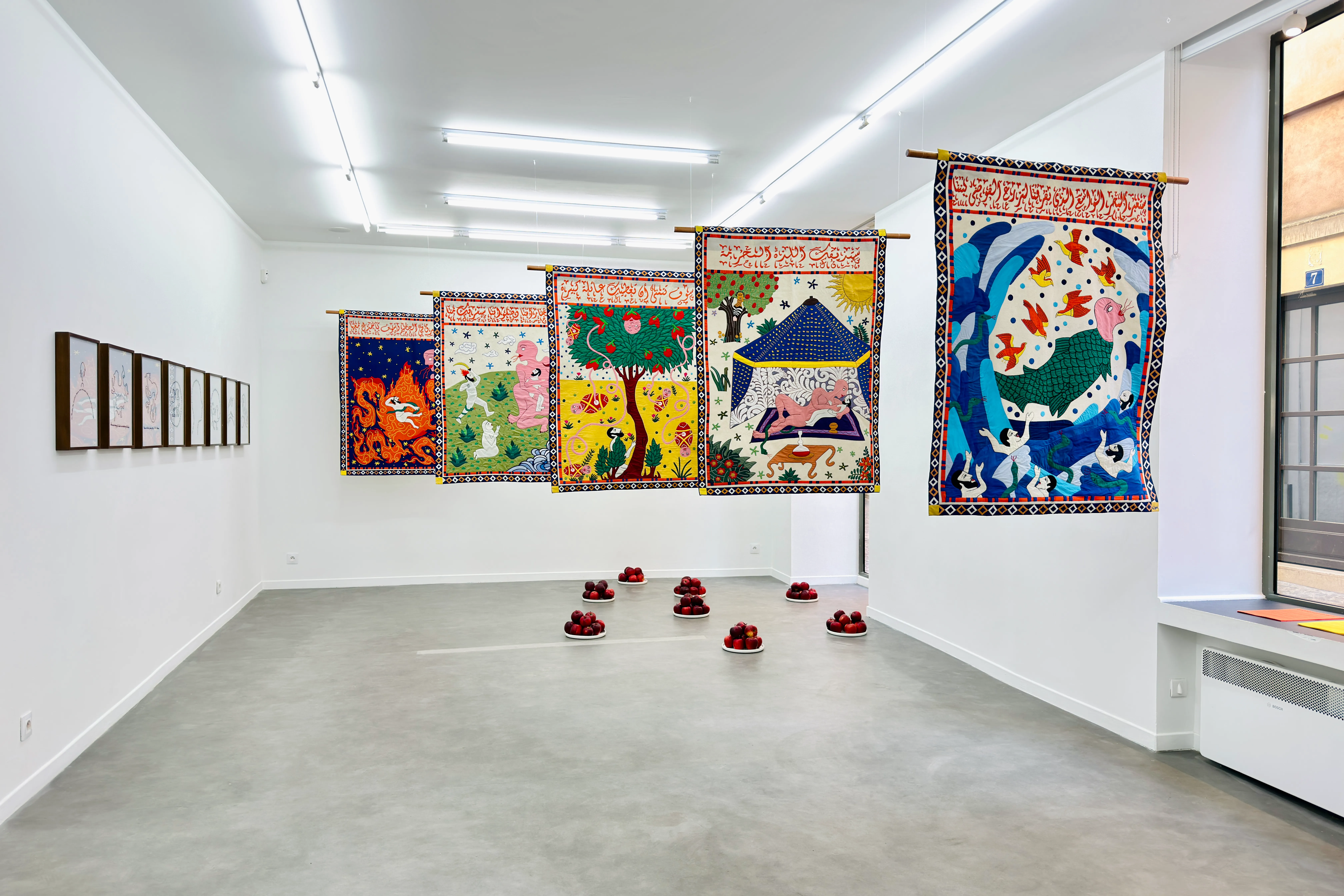
A similar movement appears in my drawings and textiles. A woman may become a serpent, a landscape or a hybrid creature, yet two rounded forms can still be enough to make the figure read as female. Even when the rest of the anatomy has transformed completely, the breast continues to carry an extraordinary power of identification. That power is both useful and troubling. The breast can make a body female almost instantaneously, even when there is no face, no genital anatomy and no other recognisable human feature. A single volume may determine the gender through which an entire creature is perceived.
The breast is never only a part of the body. It is also a sign placed upon the body and read from outside it. It can indicate maternity, sexuality, vulnerability, nourishment, illness, beauty or danger. It can be desired, covered, exposed, examined, removed, reconstructed or transformed. Few forms carry so many contradictory histories while remaining visually so simple.
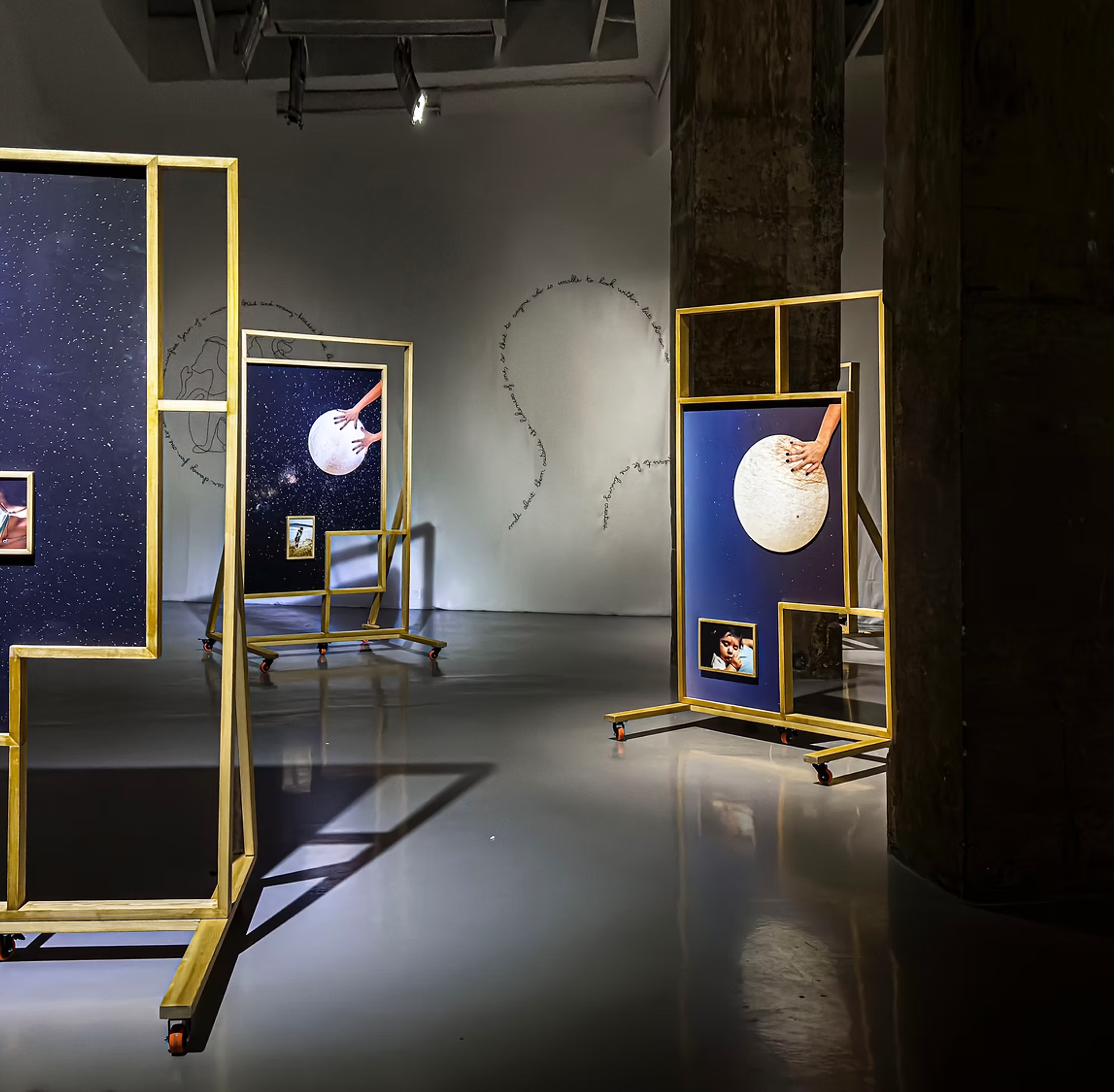
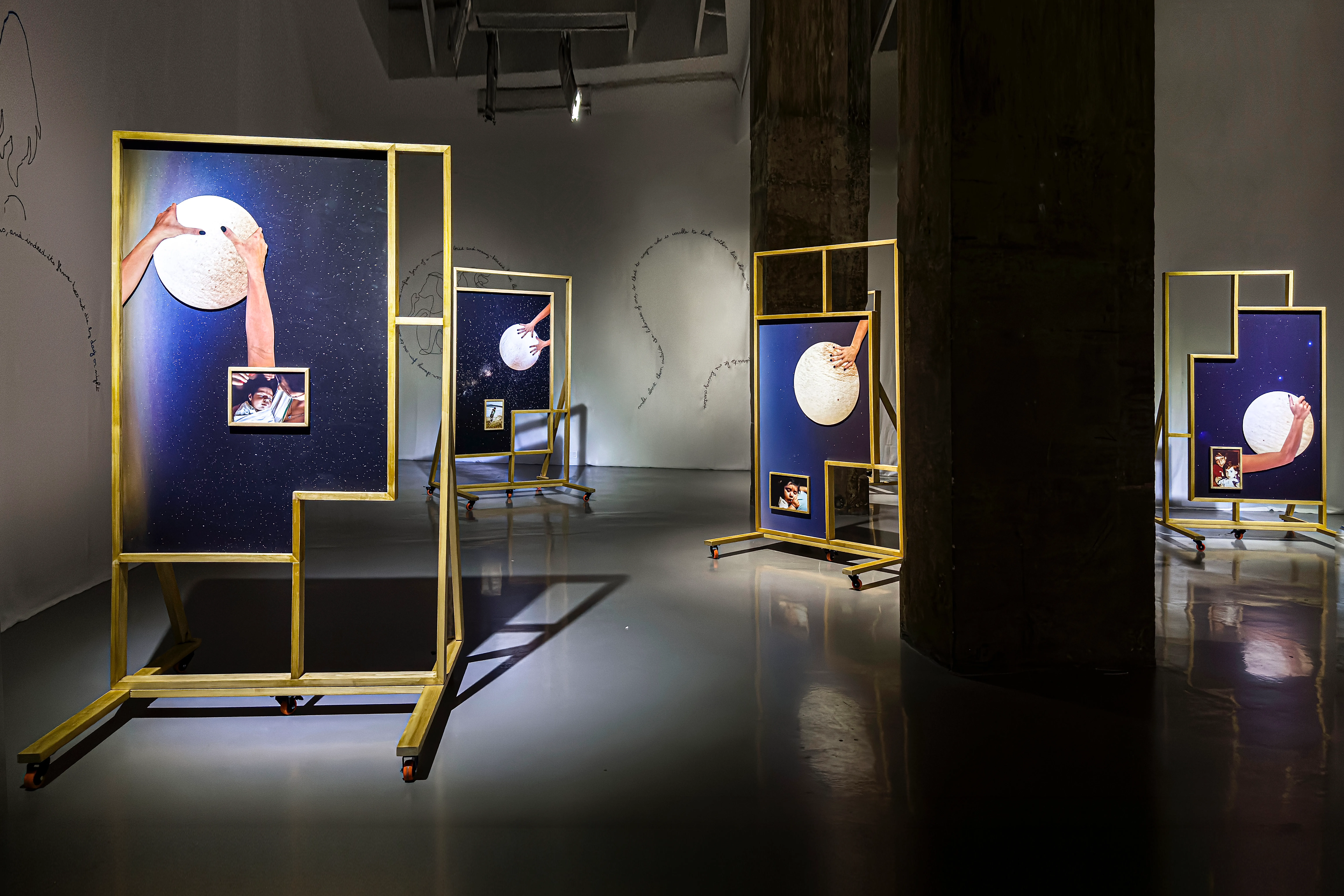
This tension appeared directly in MOTHER!, where a mammogram gradually eclipses the image of a full moon. The two images share a circular form, but they belong to radically different ways of looking. One appears distant, cosmic and complete. The other comes from inside the body and is read through the language of medicine, risk and diagnosis. Neither image fully replaces the other. The moon becomes breast-like, while the breast becomes a landscape or celestial body. The intimate and the cosmic move through the same shape. The work does not ask the viewer to choose between them but to experience how easily one rounded form can carry several incompatible meanings.
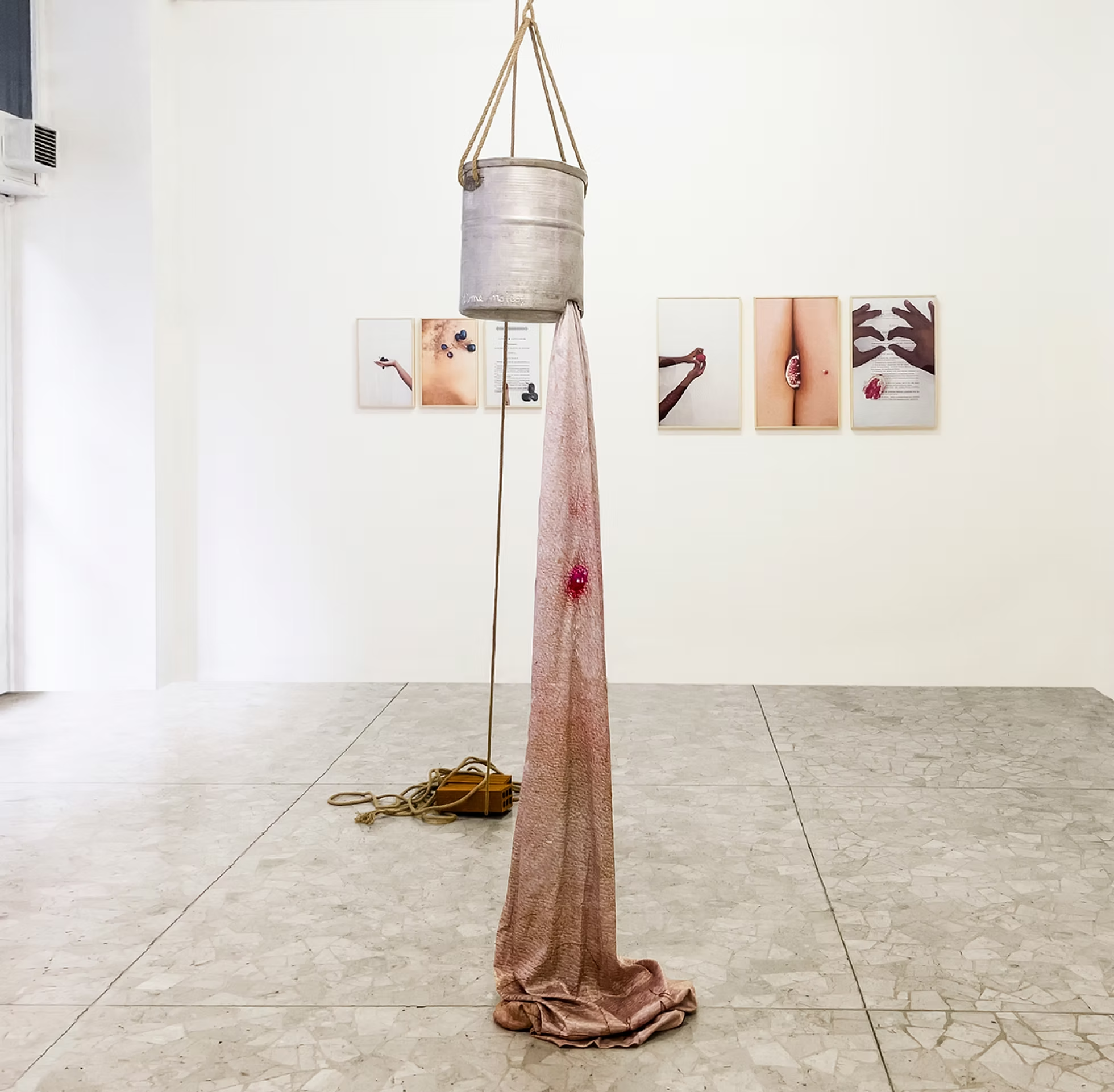
This multiplicity is central to the way the breast functions throughout my work. It is maternal and sexual, intimate and public, biological and sculptural. It can be a source of nourishment and a site of illness. It can be associated with softness, yet it can also become stone, bread or a sharply outlined textile form. Its meanings do not resolve one another. This is why I have never felt close to interpretations that reduce the breast to a single feminist symbol. It may speak about the female body and the way that body has been represented, controlled or idealised, but it also exceeds those readings. Before it becomes an argument, it remains a volume.
Entering a Room First
I often think of my own breasts as entering a room before I do. I do not mean that they are necessarily noticed or sexualised. I mean something more physical: they project forward and alter the way the body occupies space. They are part of the body’s architecture.
This sensation has shaped the way I understand them sculpturally. The breast is not simply an image placed on a surface. It is a form that emerges from another form. It changes a profile, creates weight and produces a relationship between positive and negative space. Its presence is spatial before it becomes symbolic.
Perhaps that is why I keep returning to it across such different materials. In drawing, it may be reduced to two curves. In textile, it can become a flat but immediately recognisable shape. In bread, it swells and deforms. In stone, it becomes weight and permanence. Each material changes the breast and reveals another aspect of it. The form is simple enough to survive every translation, but unstable enough never to repeat itself exactly.
The more I work with this form, the less interested I become in deciding what it represents. I am more interested in what it allows different materials, bodies and histories to do together. A breast can become an eye without completely ceasing to be a breast. It can become a mountain, a moon or a wound while carrying the trace of the female body within it. Its instability does not weaken the form — it is what keeps the form alive.
The breast first entered my work because it offered an immediate visual language for the feminine. It remained because it began to undo the simplicity of that language. It still seems, at first glance, like the most obvious sign of the female body — and it never stops proving that appearance wrong.
Related Series
Related Studio Notes