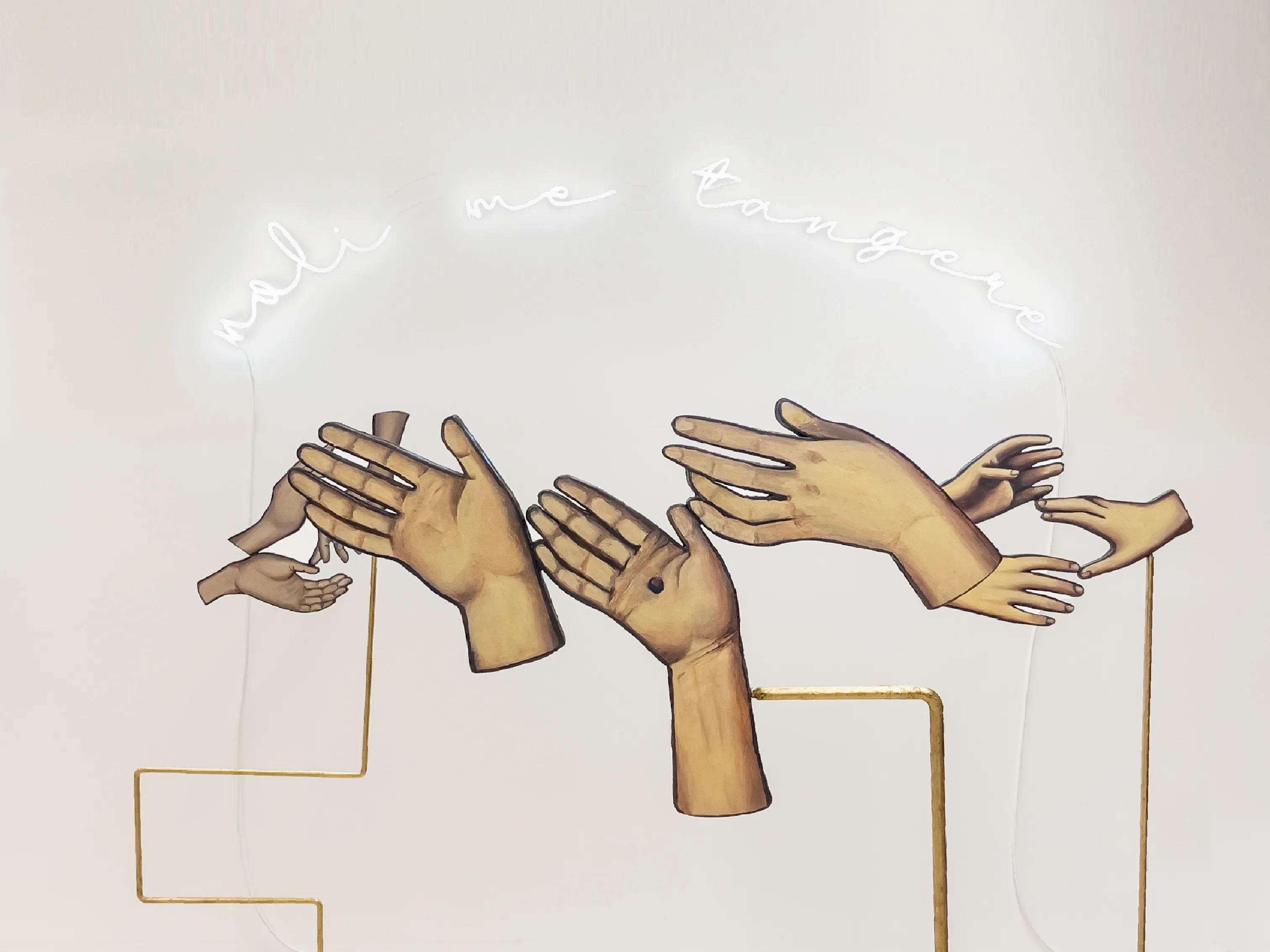
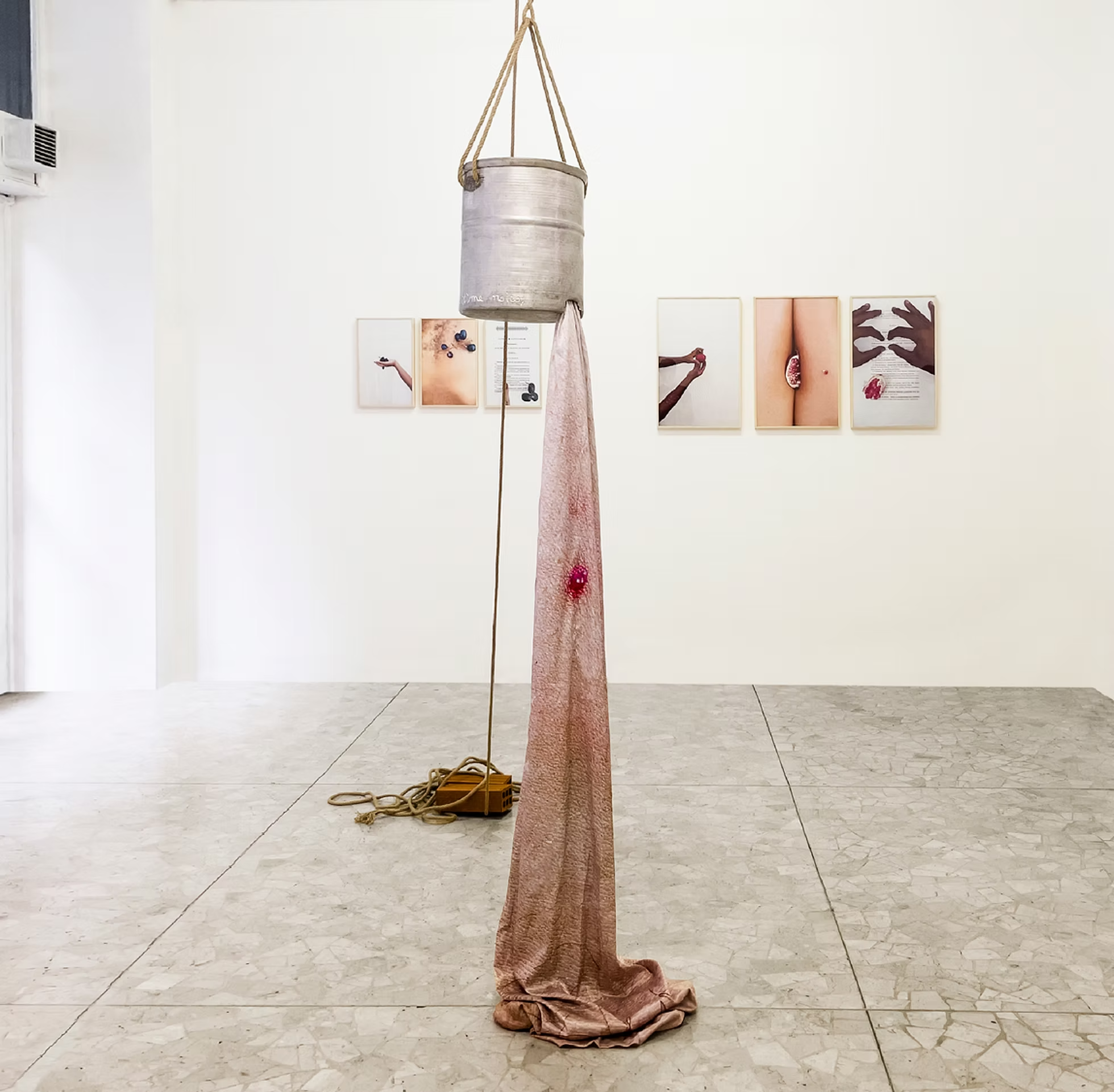
Toccati da belongs to Caressing Walls, a body of work exploring the skin as the boundary between self and world, image and matter, visibility and physical presence. The work returns to the Noli me tangere, one of the most frequently represented encounters following the Resurrection: Christ appears to Mary Magdalene, who recognises him and reaches towards him, but he forbids her to touch his body.
The scene is built around a paradox. Christ is visible, yet his physical presence remains uncertain. He has returned in bodily form, but the prohibition of touch holds him between apparition and incarnation. The distance separating their hands becomes the point at which representation stops and physical presence begins.
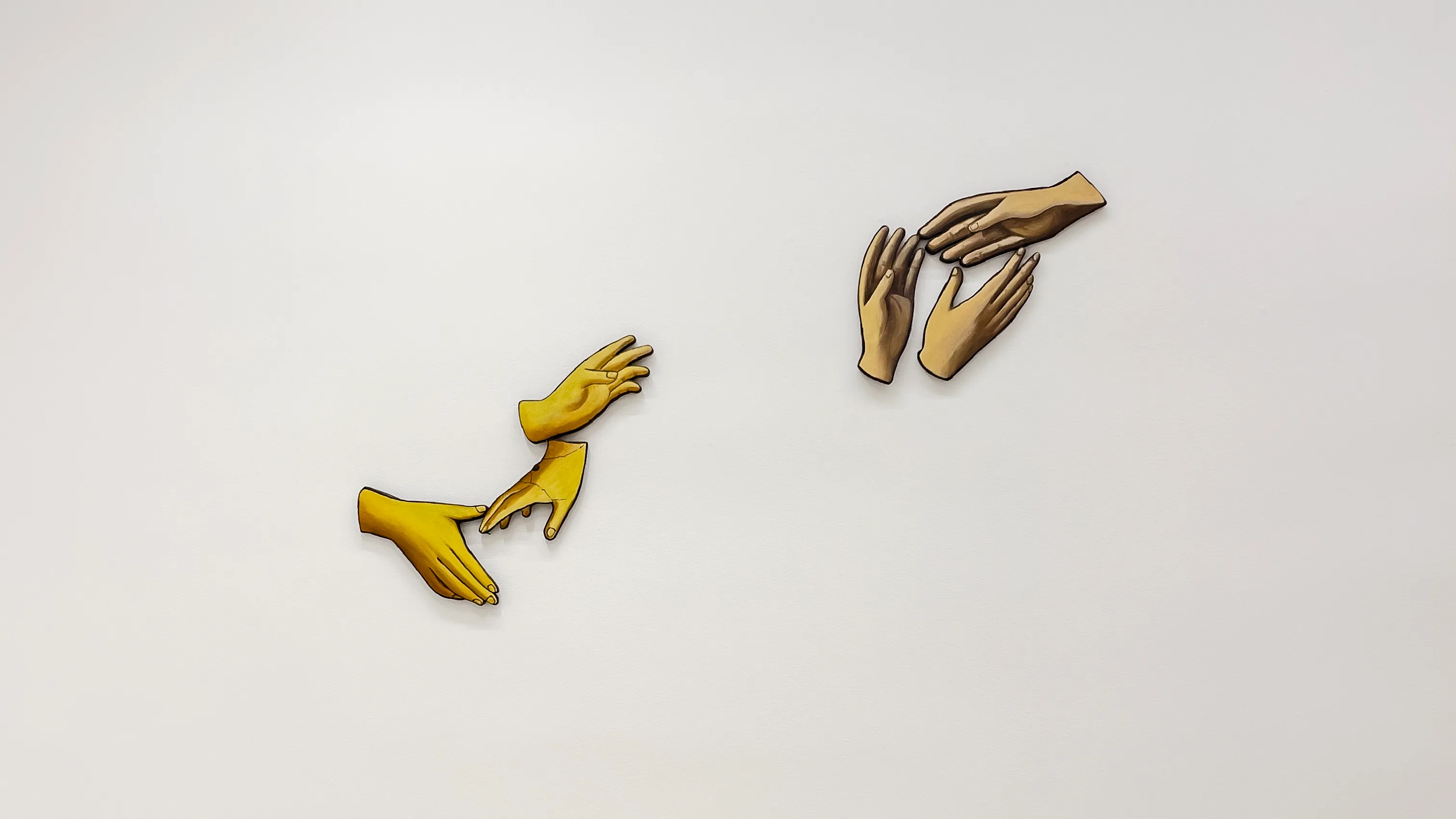
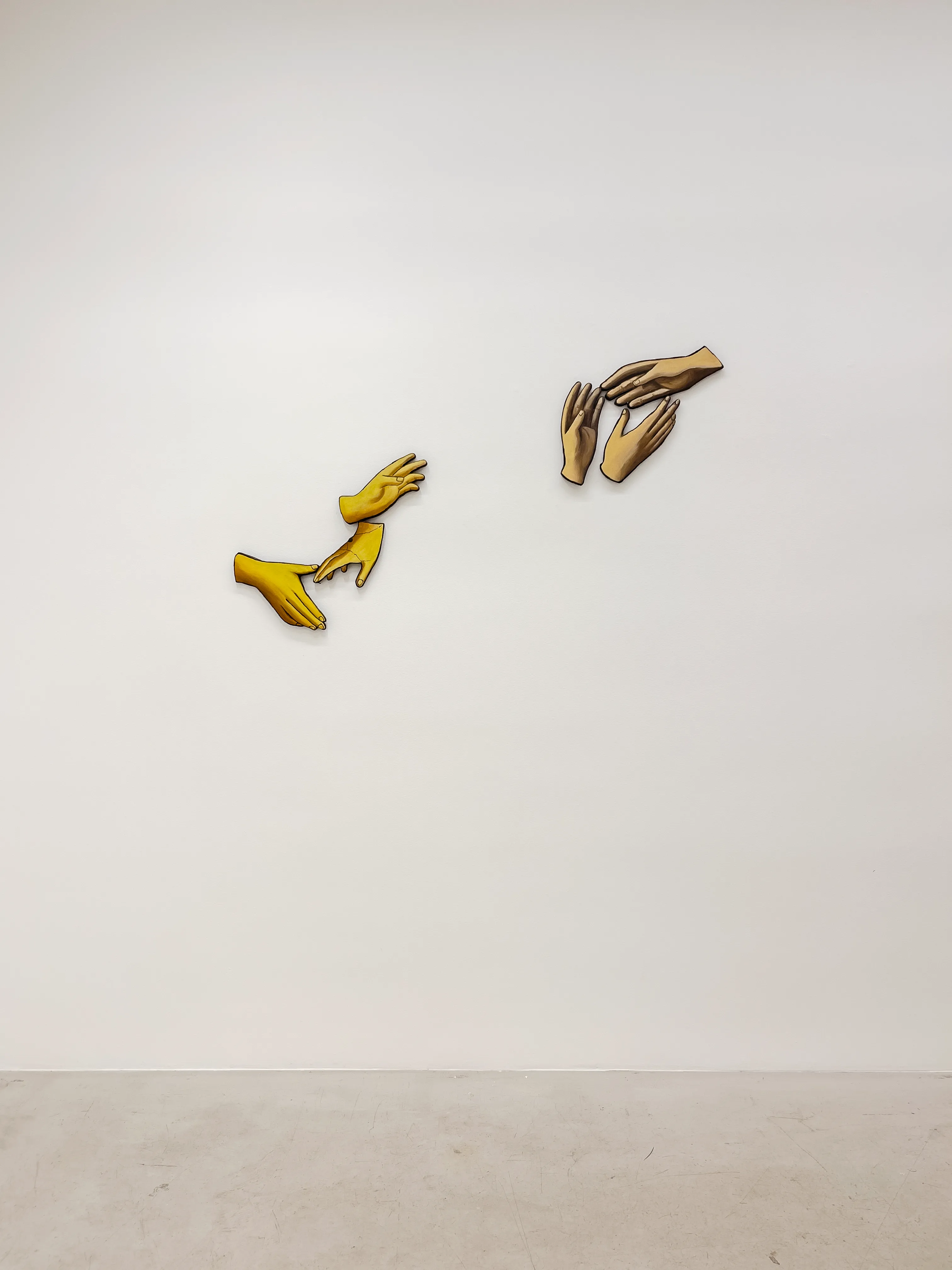
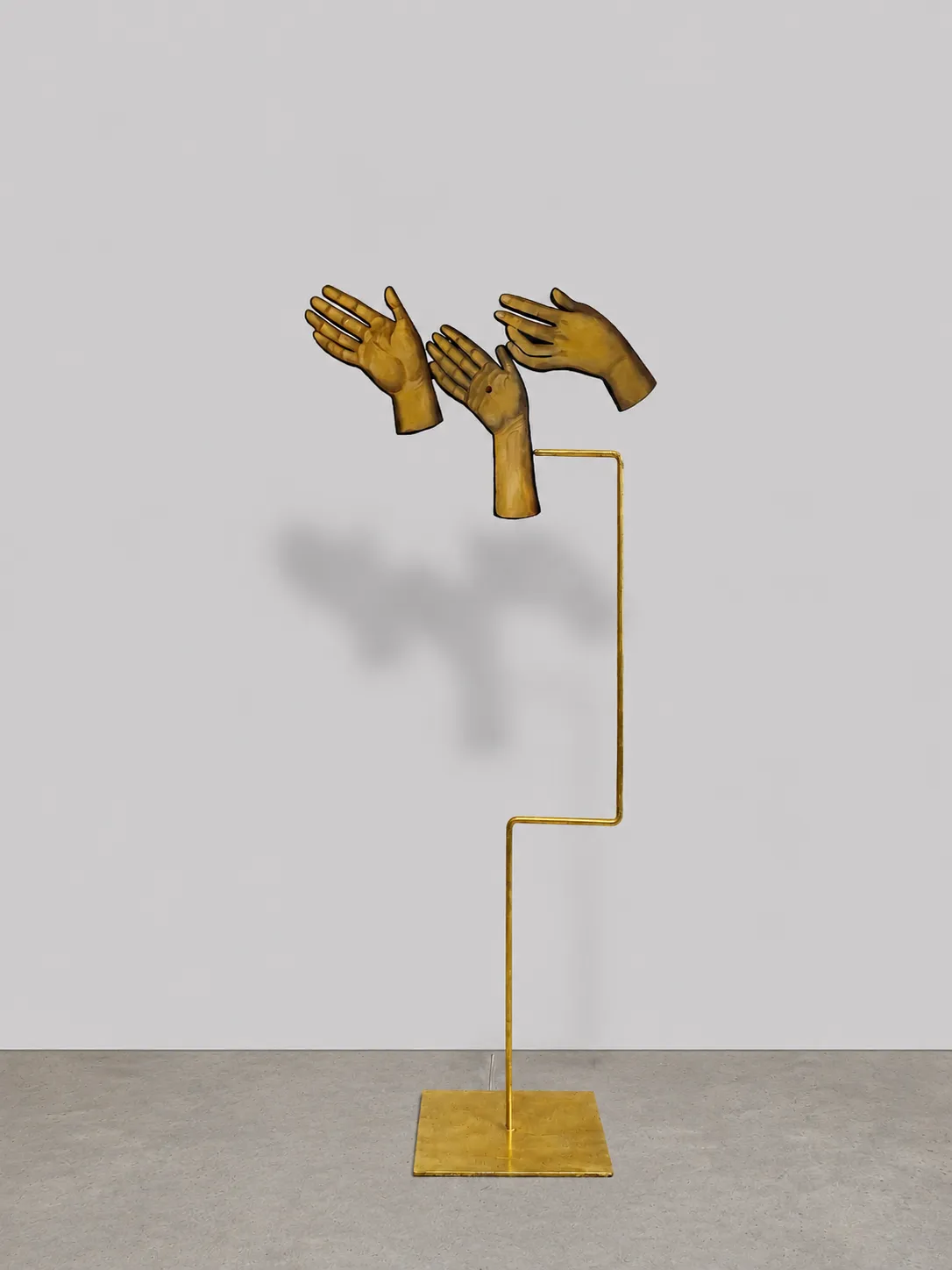
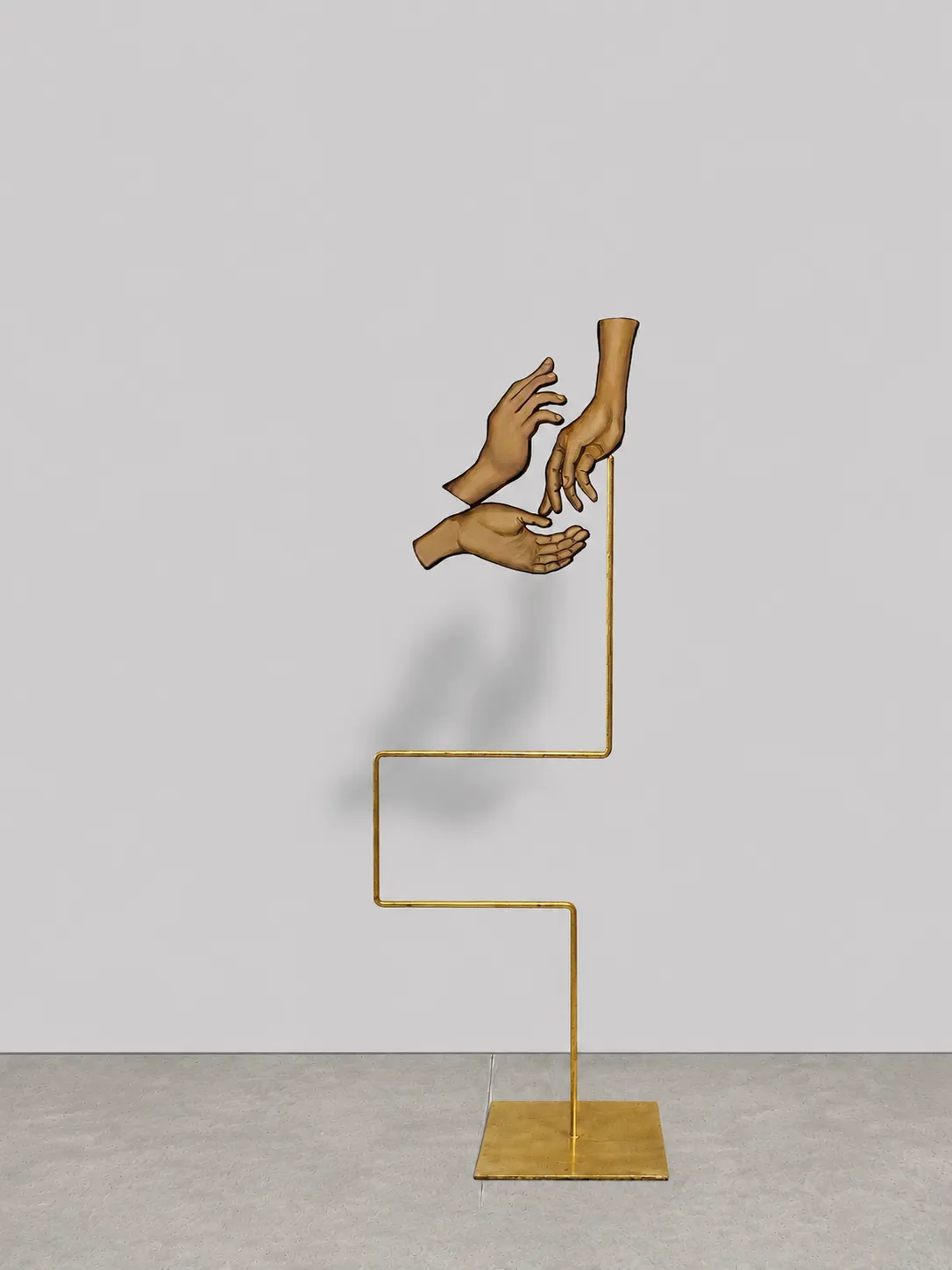
Kosmatopoulos selected six Italian interpretations of the scene associated with the Trecento and its aftermath, including paintings by Duccio di Buoninsegna, Jacopo di Cione, Cenni di Francesco di Ser Cenni and Fra Angelico. From each composition, she removed the landscape, the religious setting and the bodies of the two figures, retaining only their hands.
This removal concentrates the scene upon its unresolved gesture. Christ and Mary Magdalene no longer appear as complete figures within a narrative image. Their bodies are reduced to the parts through which contact could occur: one hand approaches, another withdraws, redirects or refuses. Detached from the figures to which they belonged, the hands cease to describe an event and become the event itself.
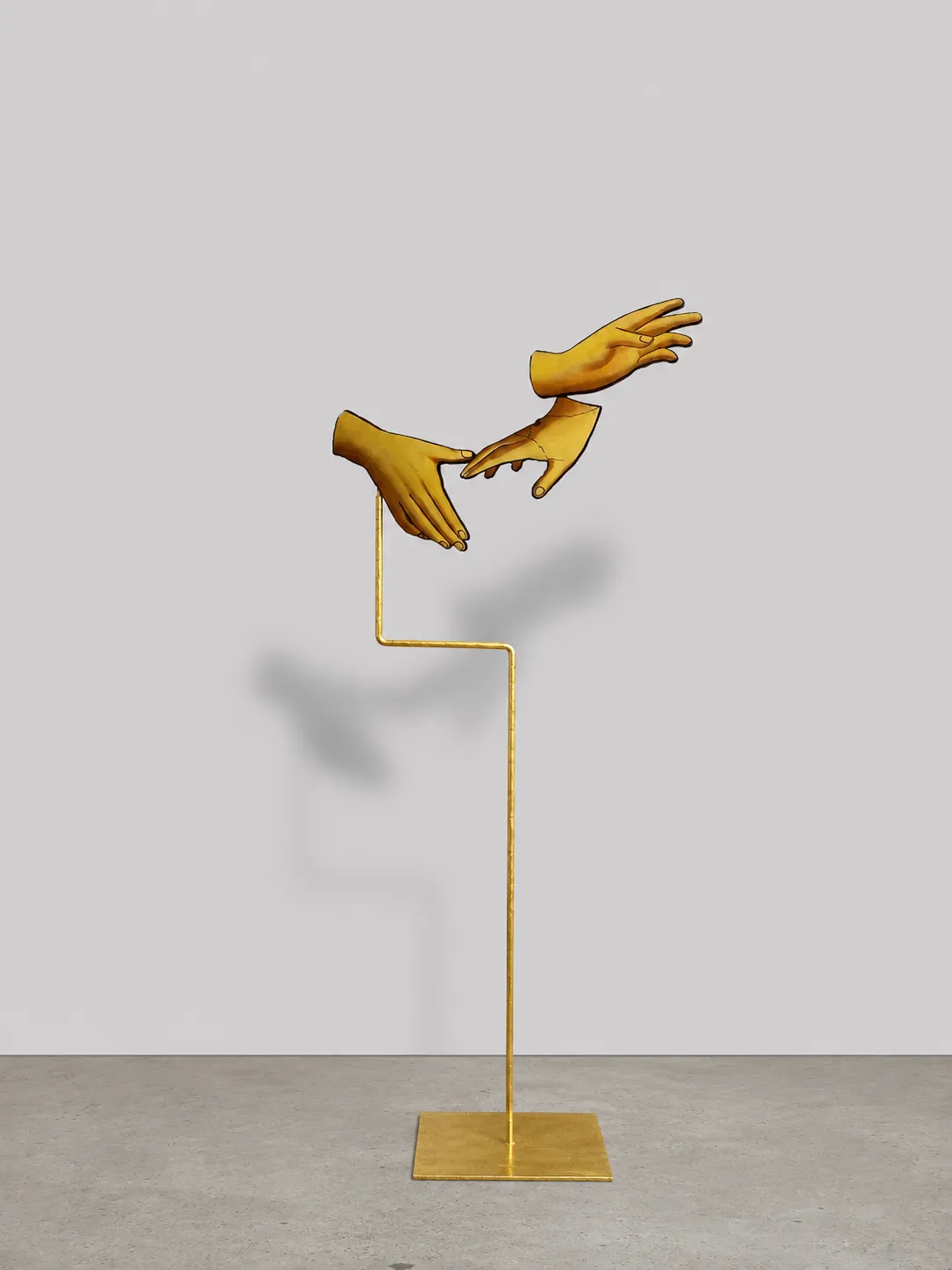
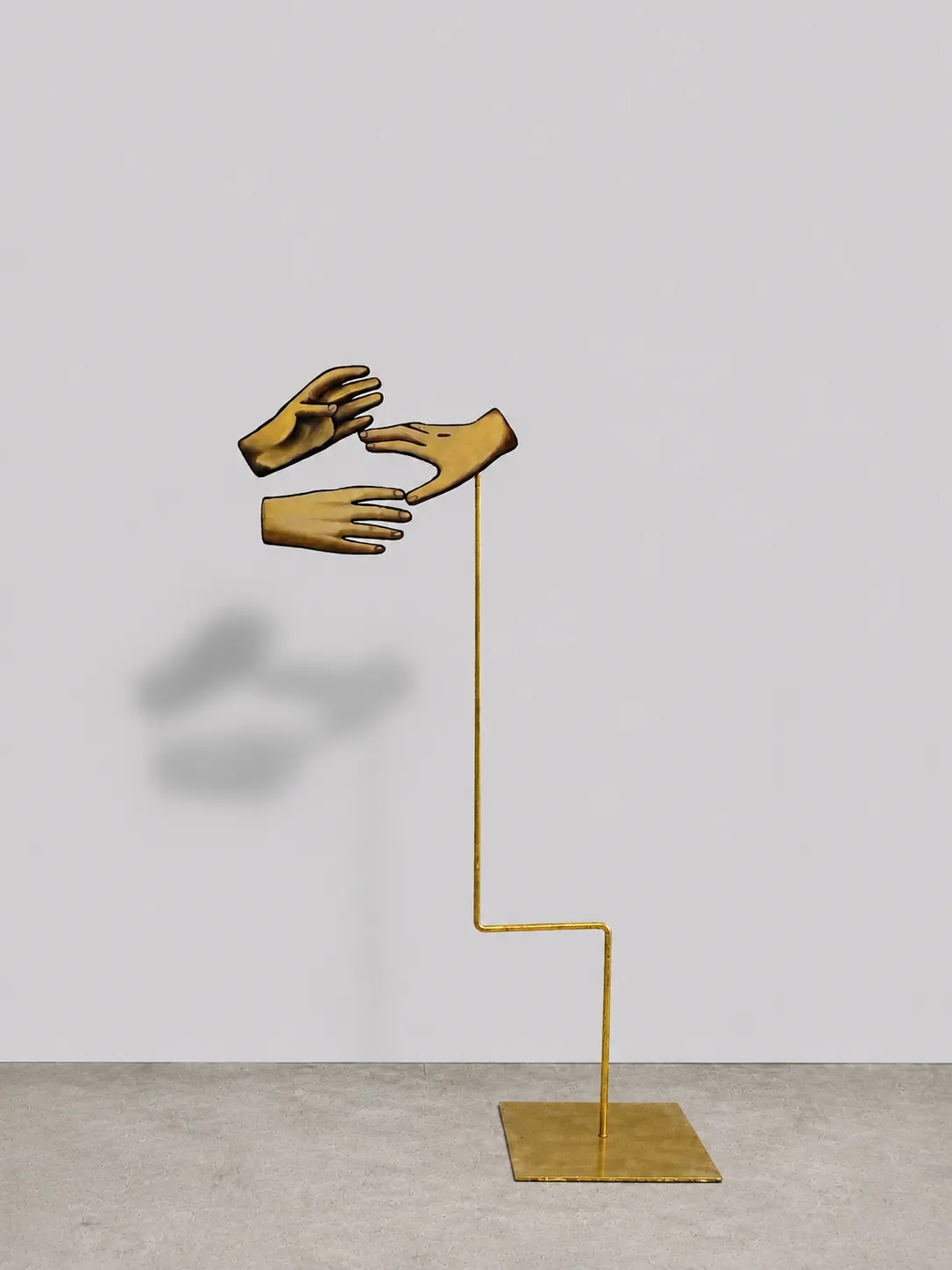
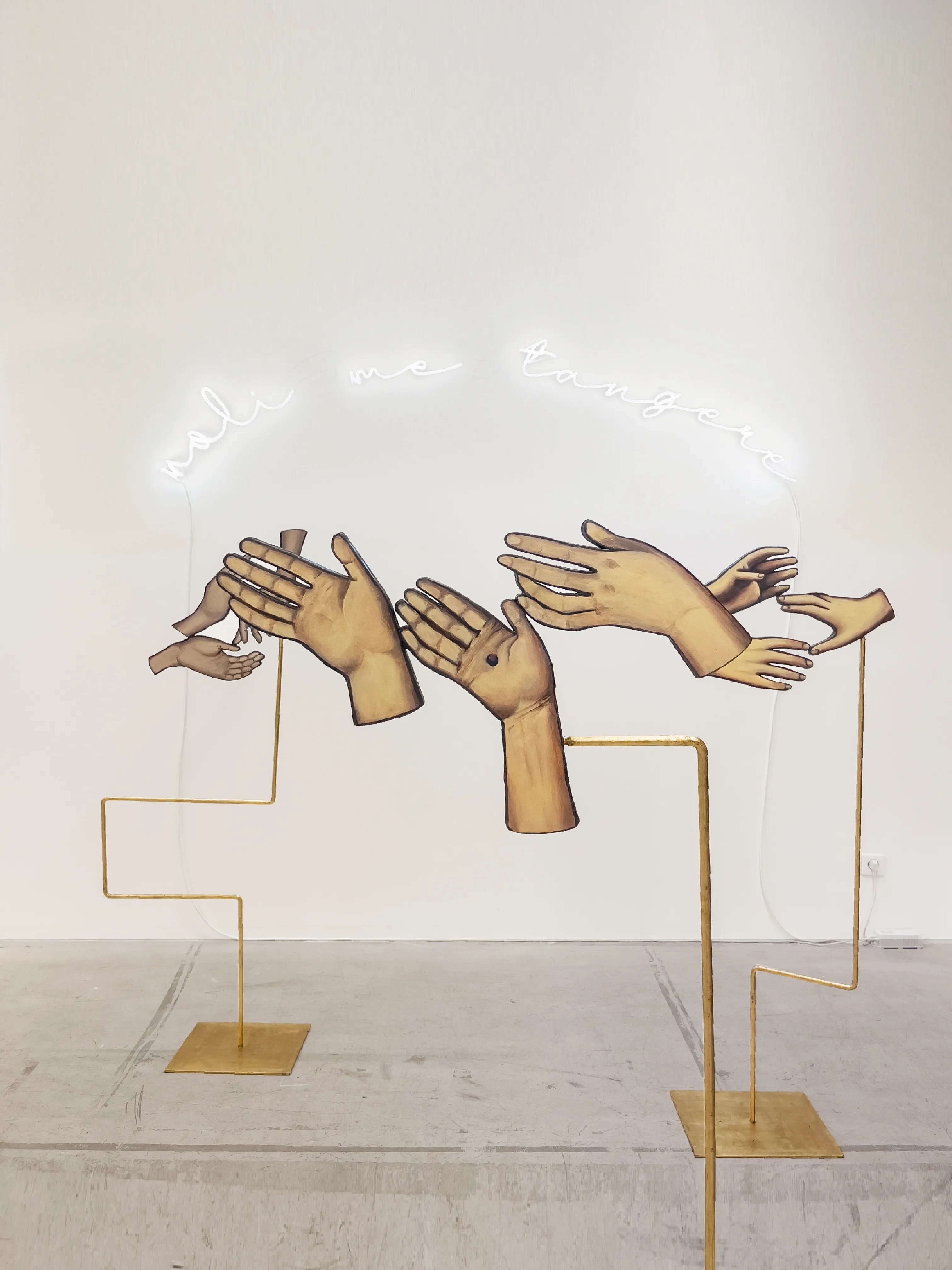
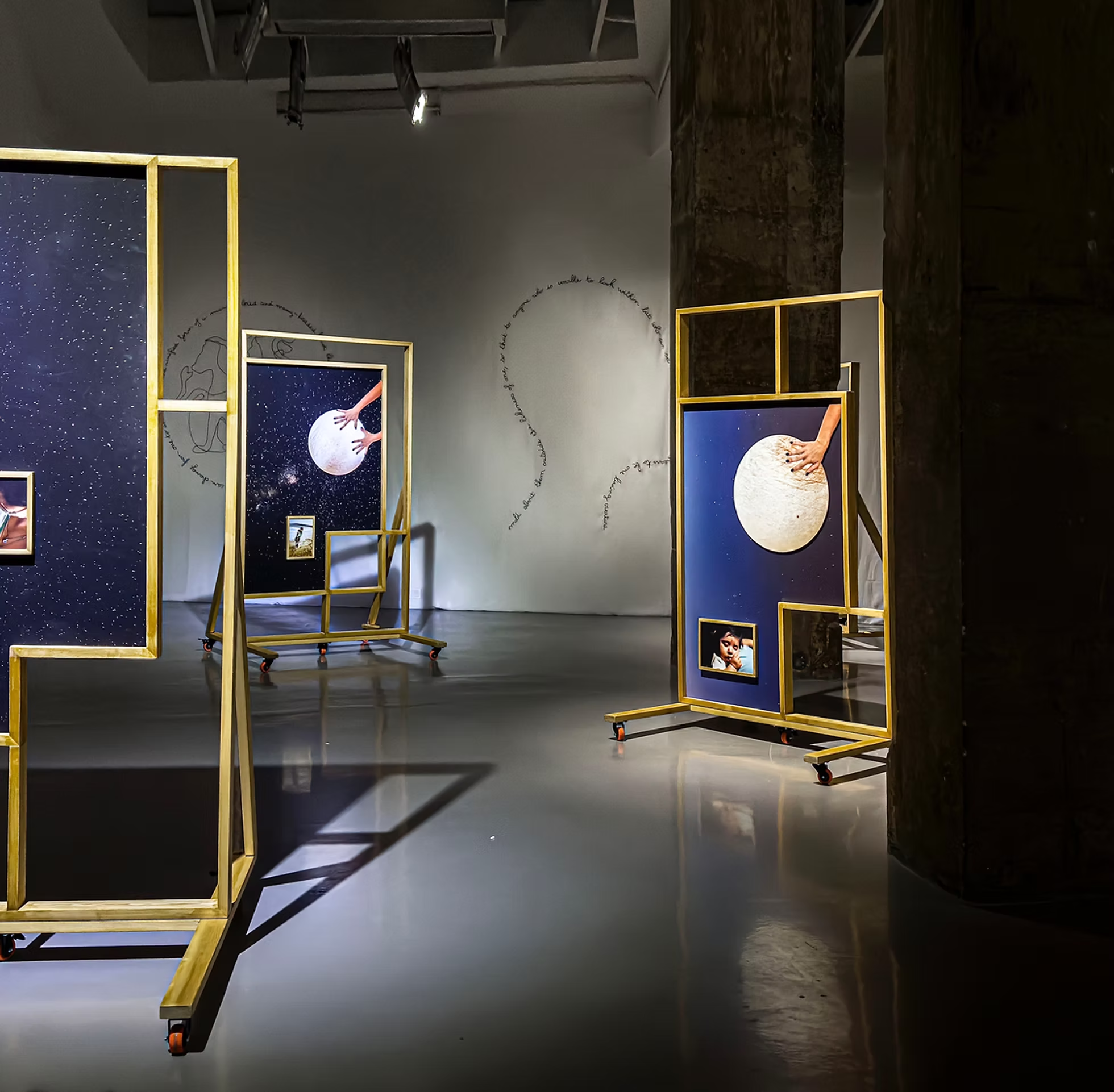
Their gestures remain faithful to those found in the original paintings, but their spatial relationship is changed. Kosmatopoulos moves the hands out of the pictorial plane and brings them together in three-dimensional space. She does not redraw the gestures or invent a different ending to the biblical story. She closes the interval maintained by the image until the two surfaces finally meet.
Through this displacement, Toccati da transforms a represented body into a body encountered through contact. An image can make a body visible while preserving its distance from the viewer. Touch requires something else: a surface, a material resistance and the presence of something external to oneself.
The contact between the hands also recalls Maurice Merleau-Ponty's notion of the touching-touched hand. A hand cannot touch without simultaneously becoming capable of being touched. The distinction between active and passive, subject and object, is destabilised at the point of contact.
This relationship between image and body acquires renewed significance at a time when images can generate increasingly convincing figures without any physical body having existed before them — figures that can be seen and circulated, yet possess neither surface nor weight. Toccati da asks what distinguishes the appearance of a body from its material existence.
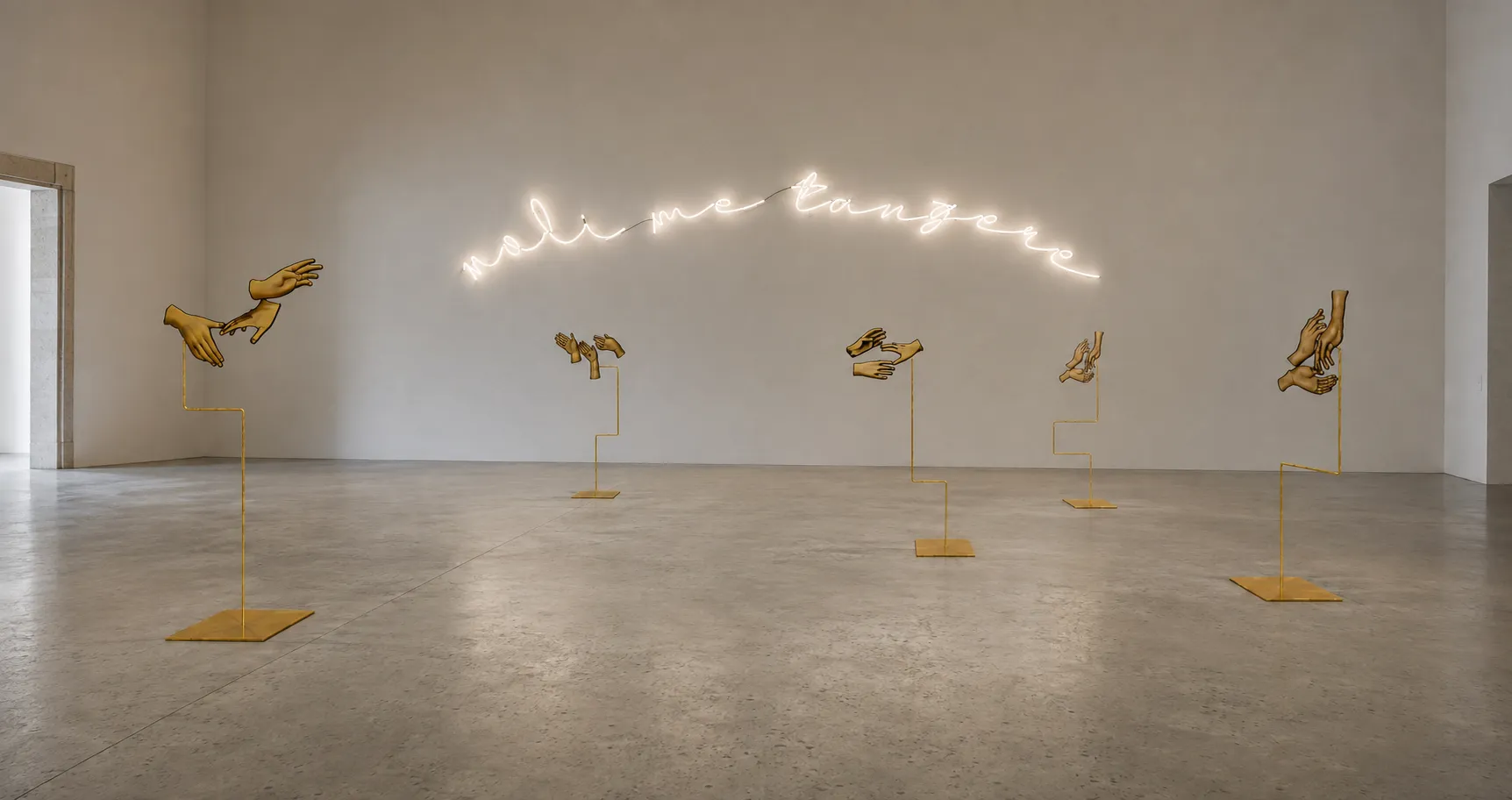
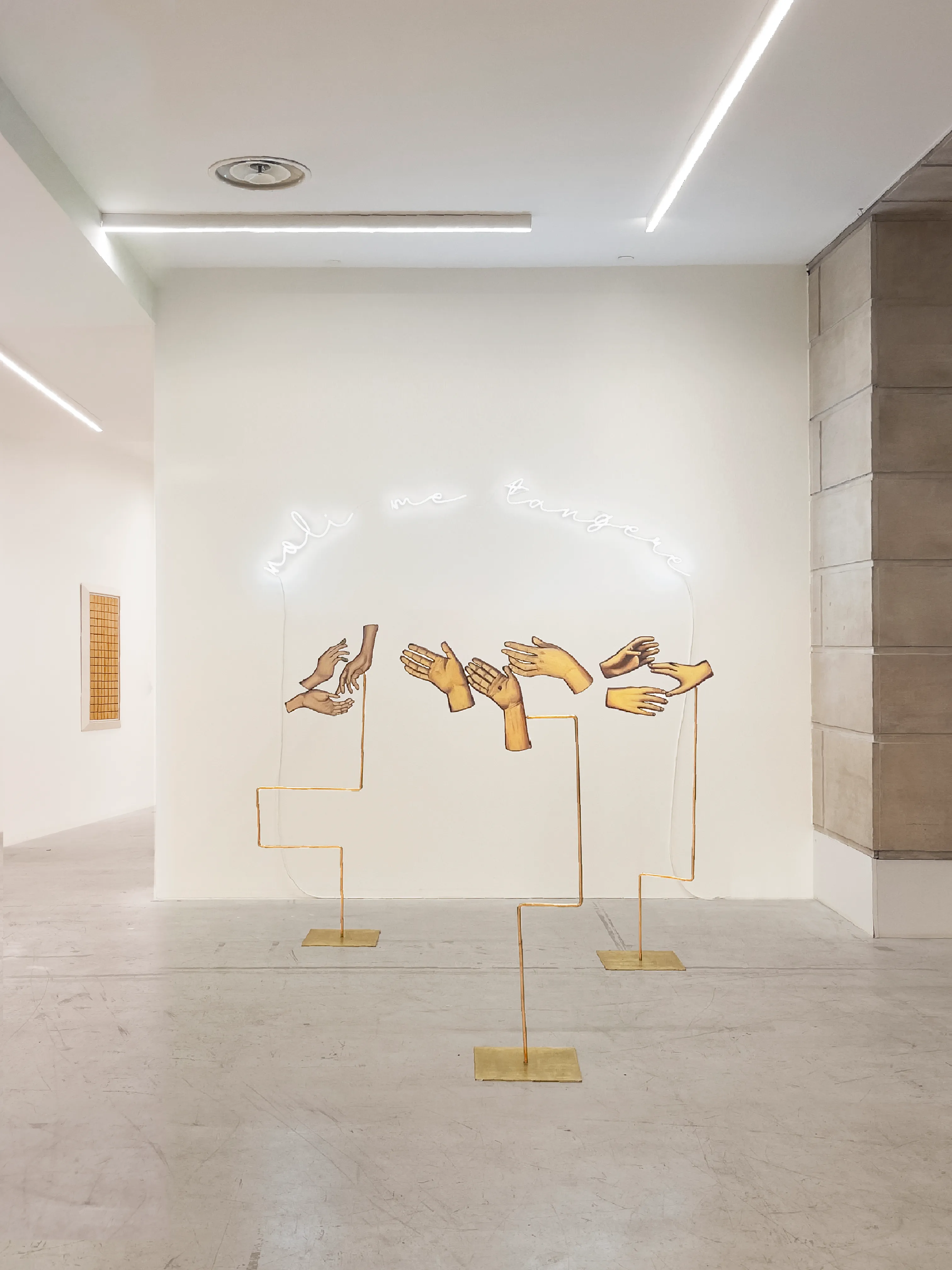
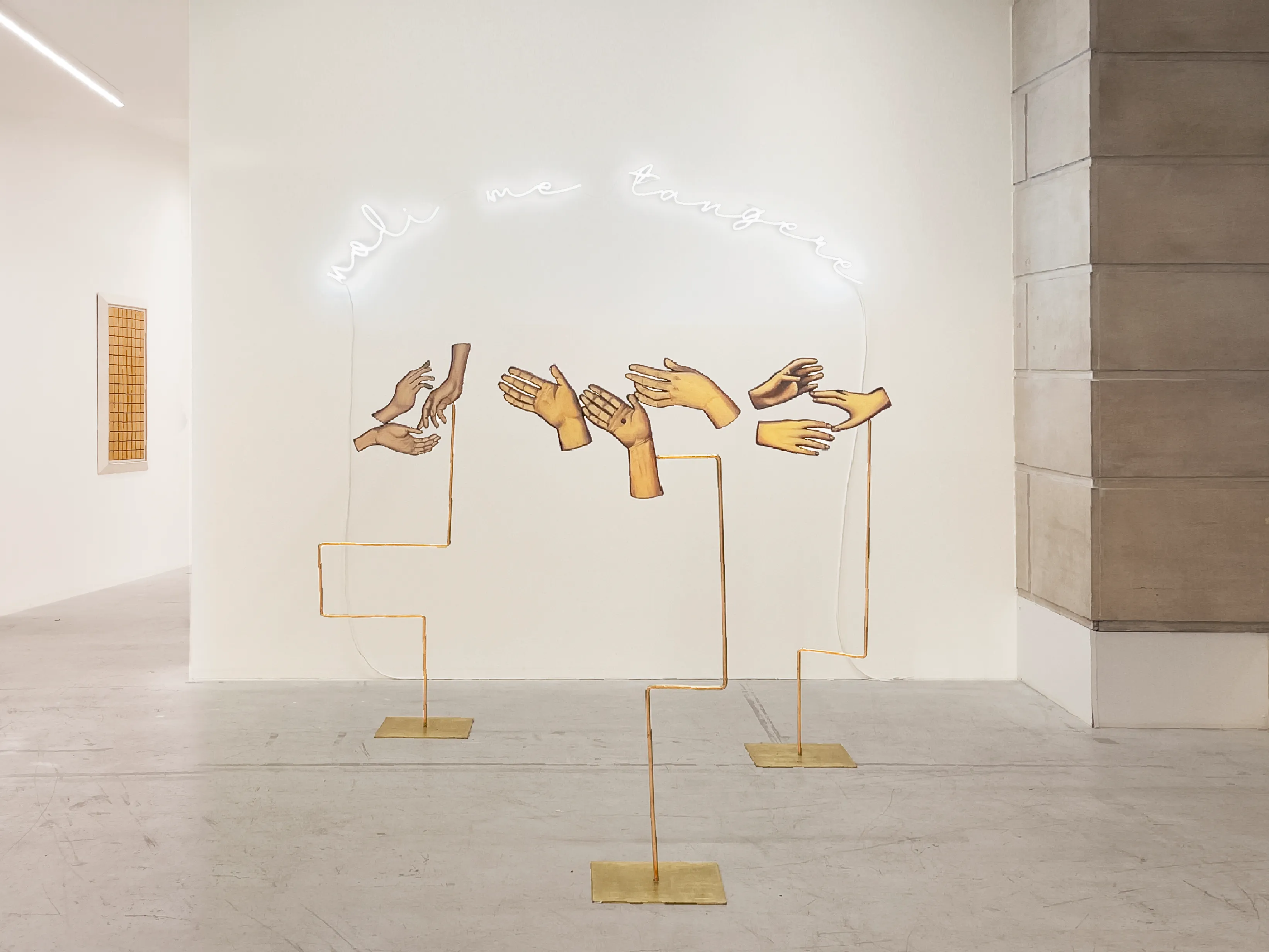
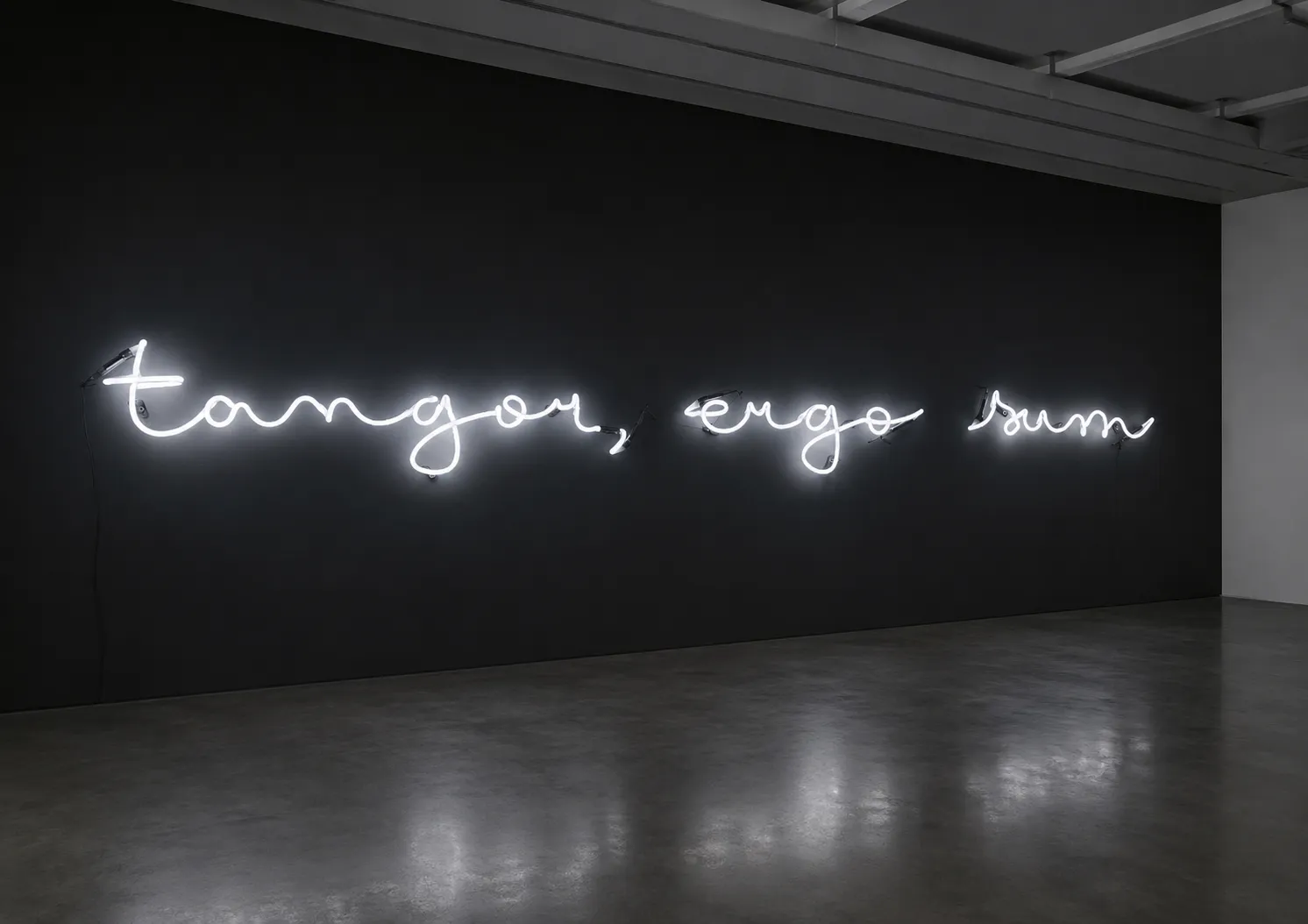
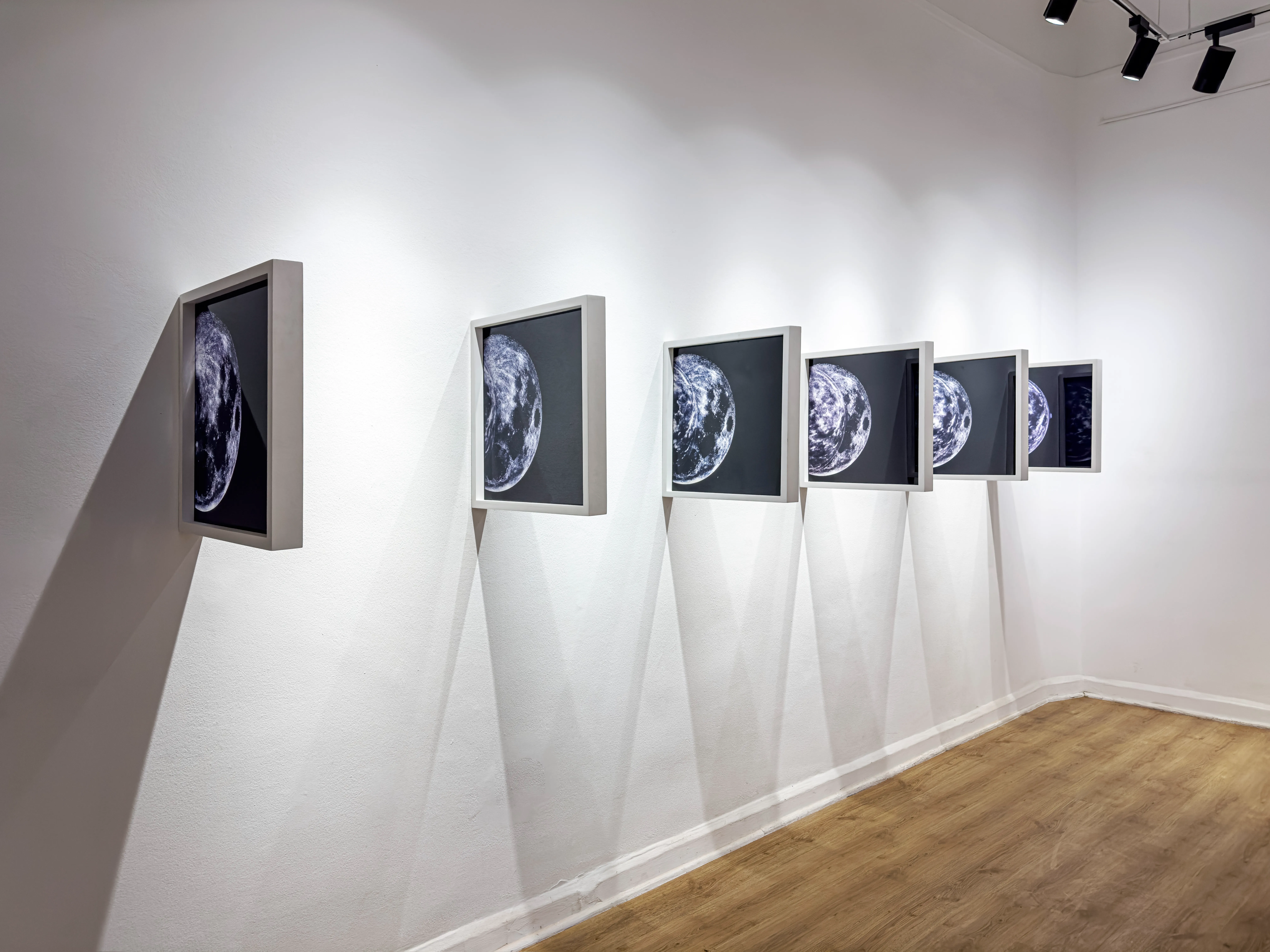
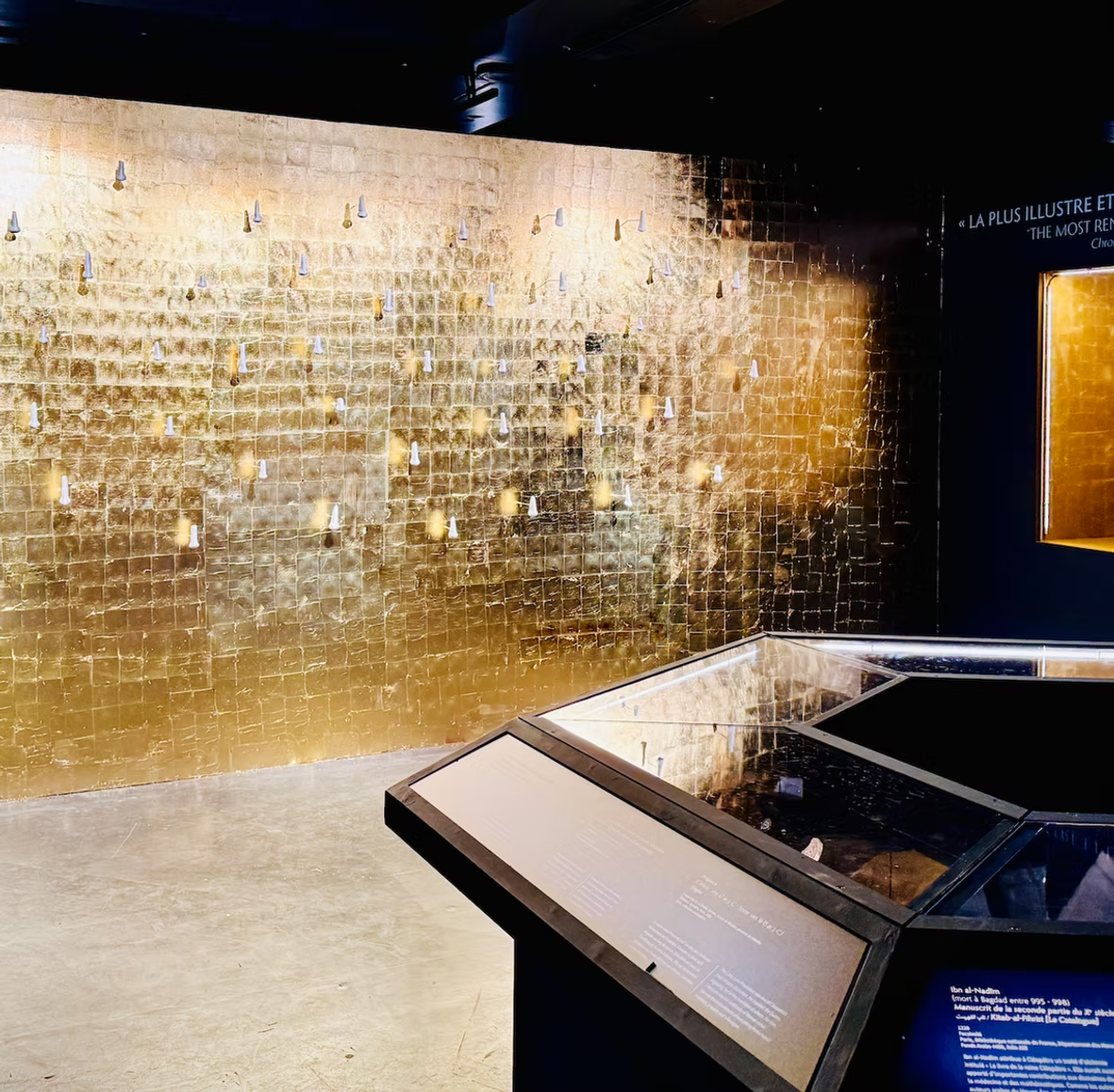
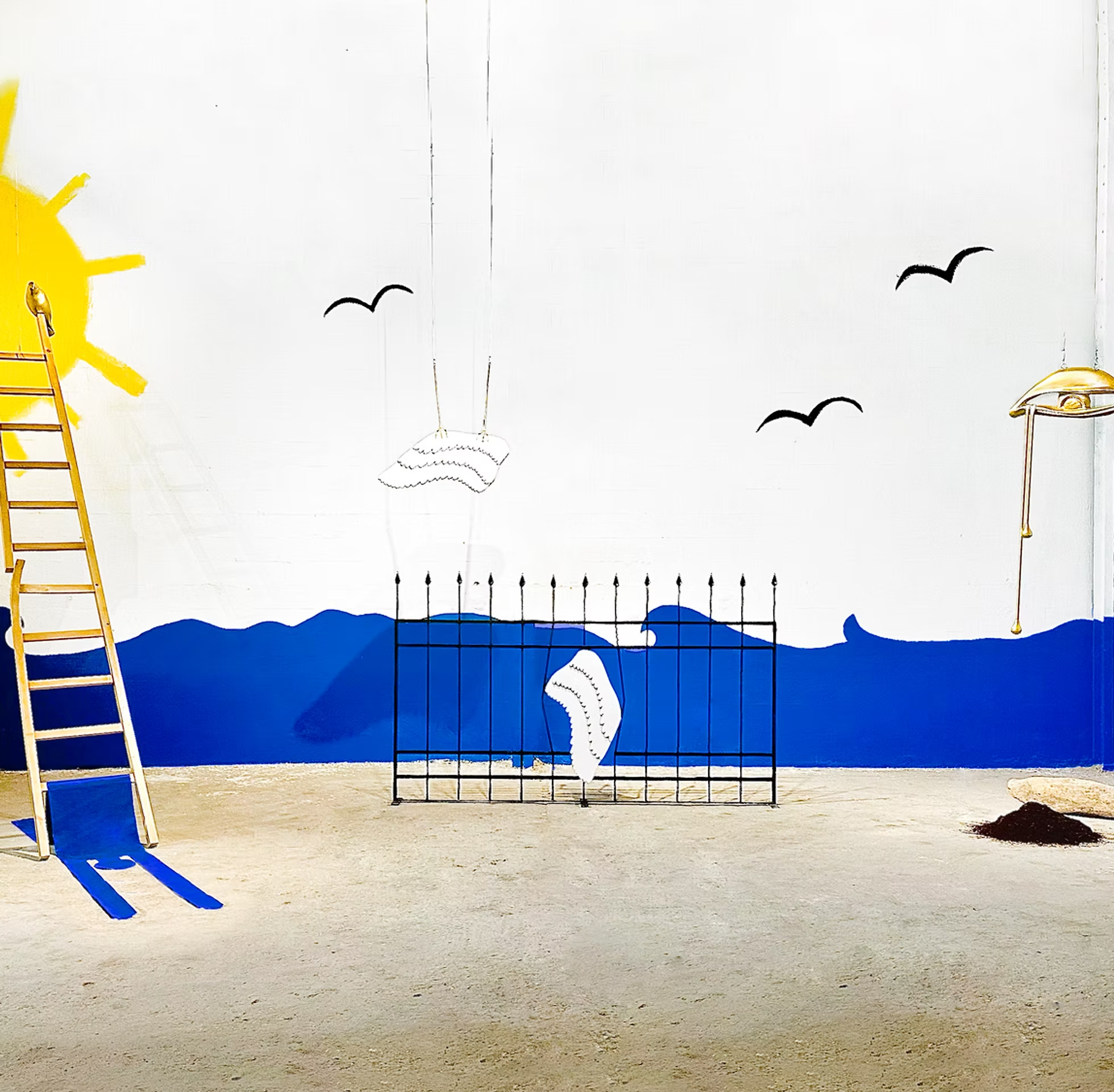
Installed together, the six sculptural encounters remain autonomous. Raised on thin, angular metal supports and distributed through the room, they appear as gestures suspended at the instant of contact. Above them, the words noli me tangere remain illuminated. The prohibition has not disappeared, but the sculptures repeatedly contradict it: what the image kept apart, the installation brings into physical relation.
Toccati da begins with bodies that can be seen but not touched, and ends with hands whose contact makes their presence real.