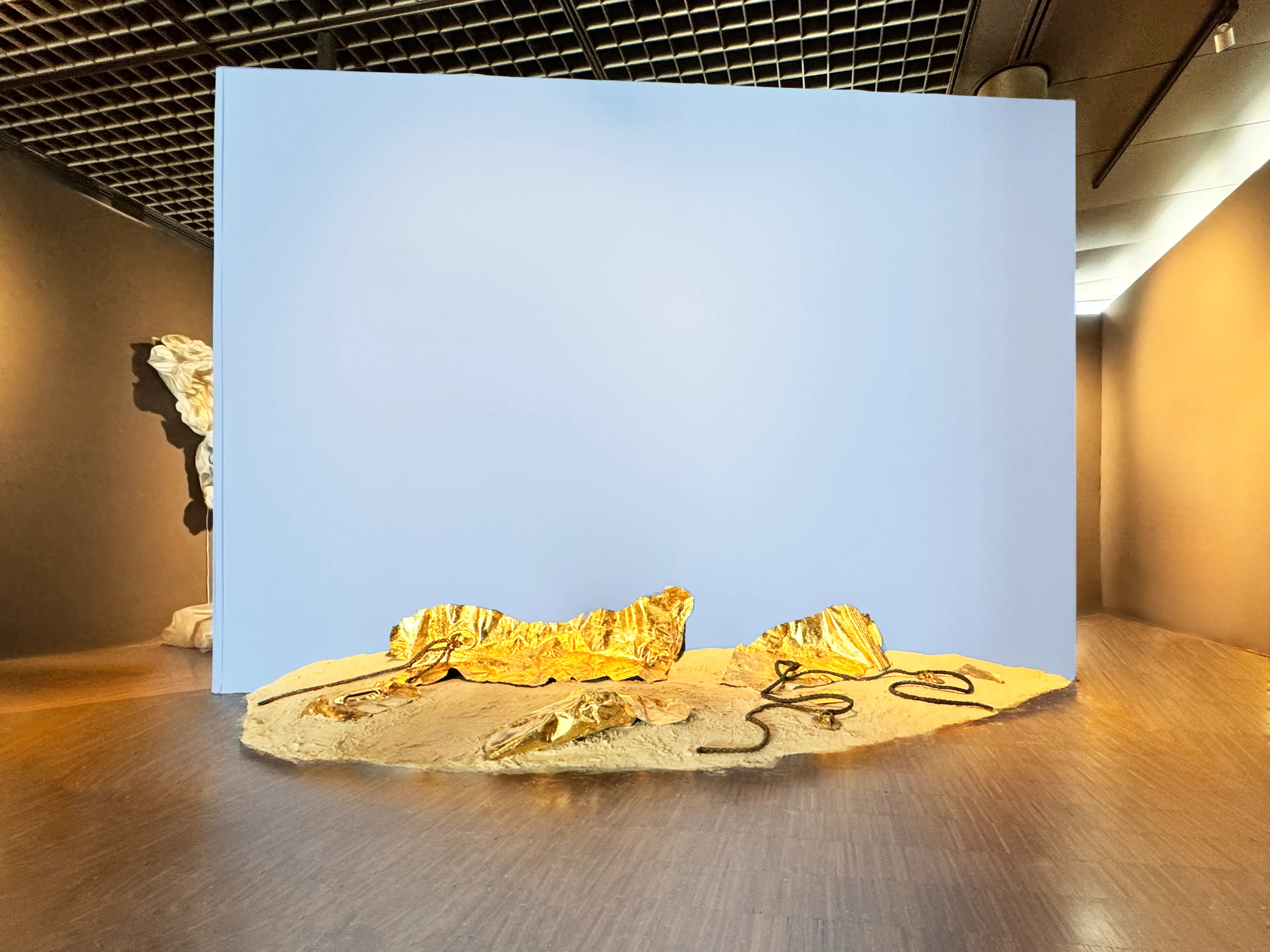
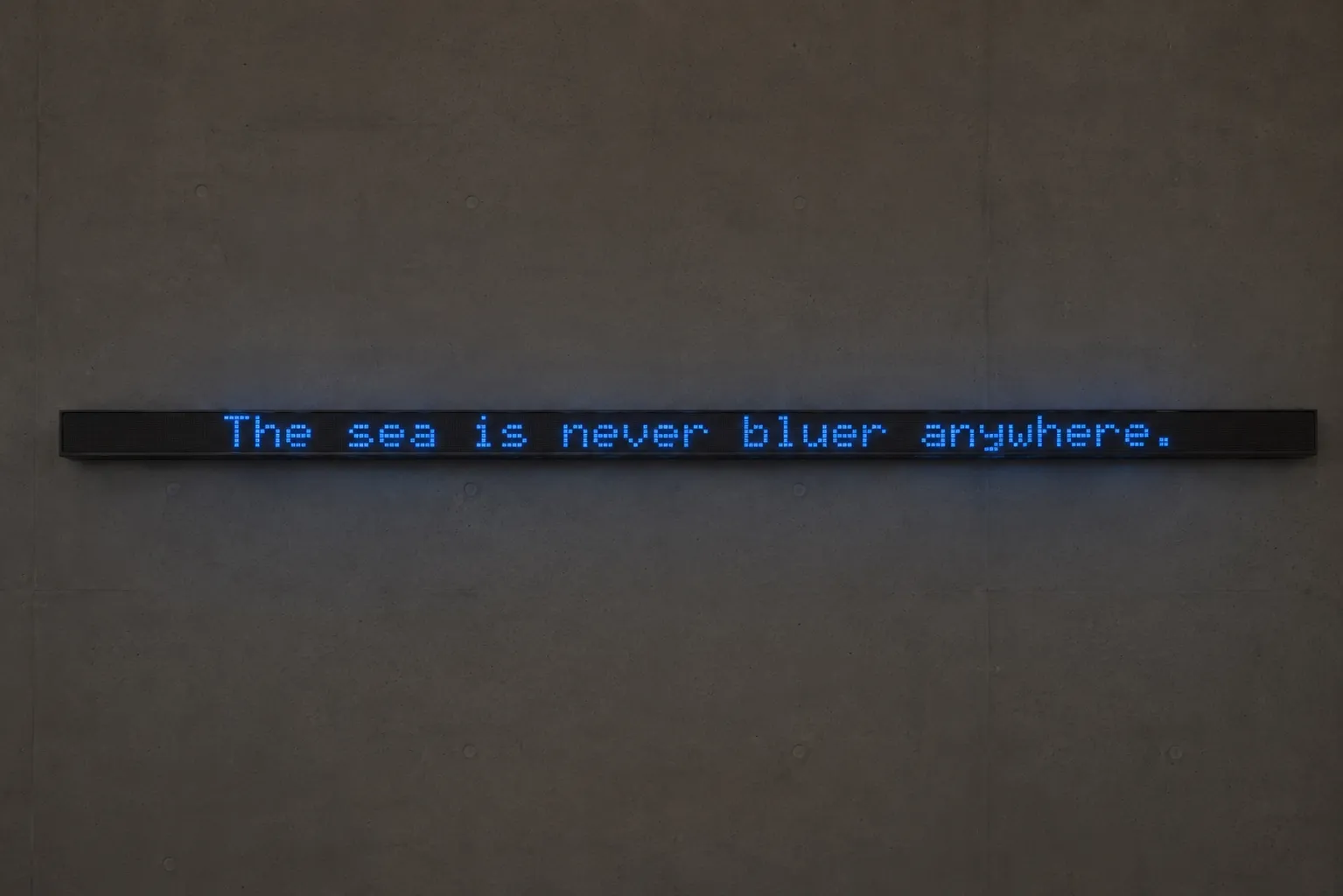
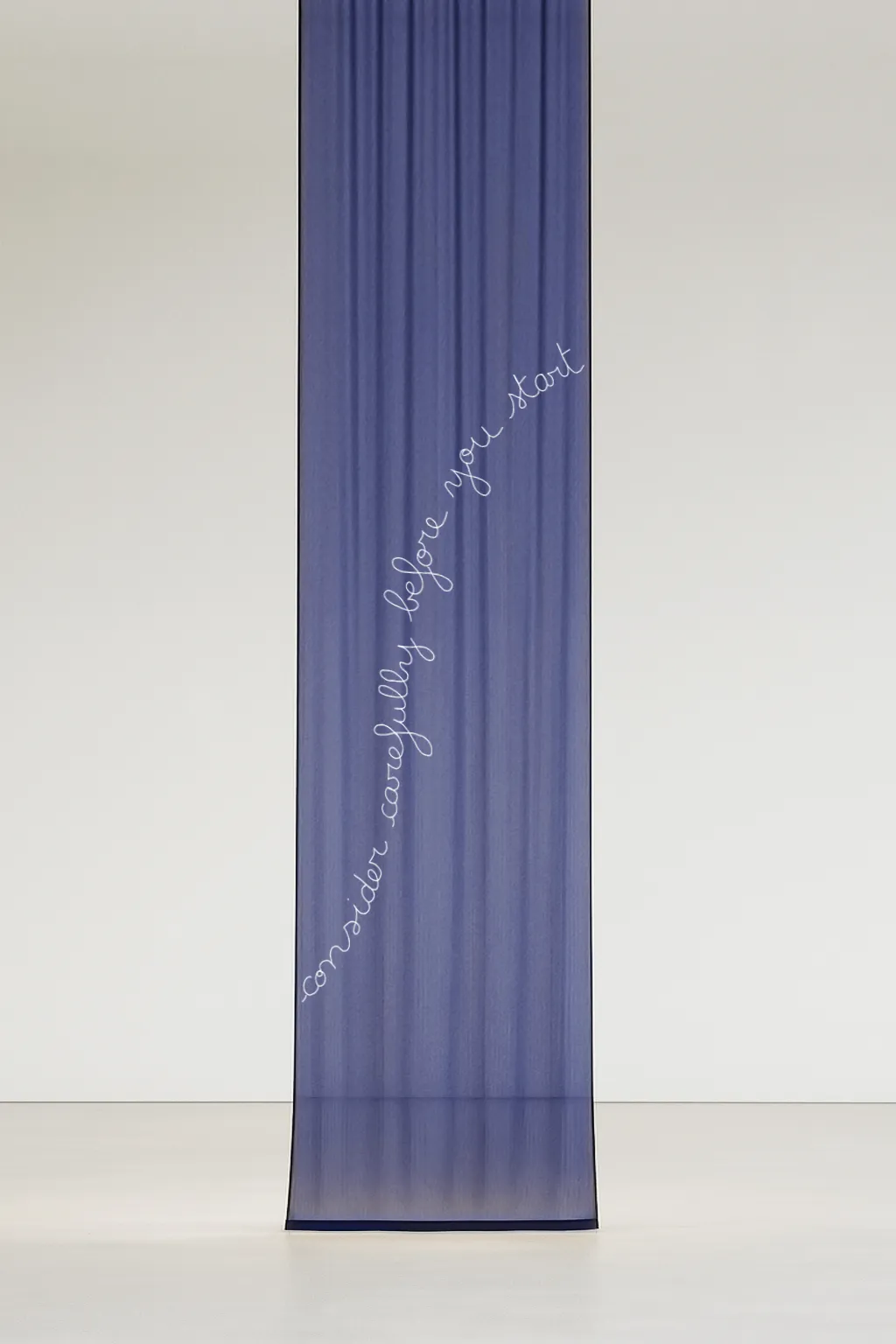
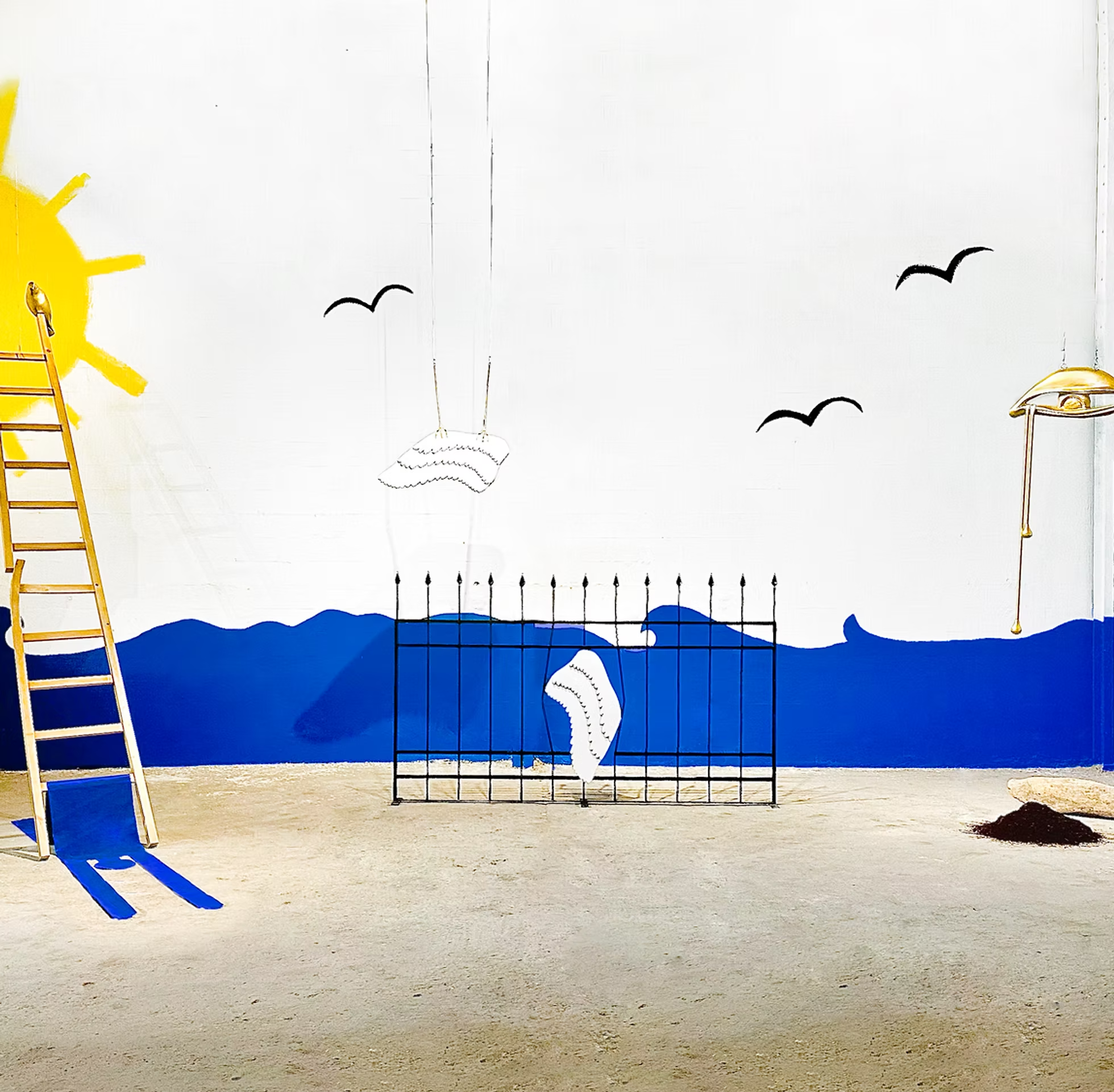
La morale de l'histoire belongs to It Is Always Summer Somewhere, and gives the project's mythology of exile its most direct fable form.
The work draws on Aesop's fable of the shipwrecked man cast ashore, who blames the sea for his misfortune — only for the sea to reply, in the voice of a woman, that the winds are the true cause of its fury, and that blame has been placed on the wrong party.
Having spent the summer of 2018 immersed in Lesbos's own tangled community — residents, tourists, migrants and European border patrols, a sea of actors each experiencing the same shore differently — Kosmatopoulos found the fable resonating with her own attempt to locate responsibility within the crisis unfolding around her.
In an attempt to "blame the wind" rather than "the sea," she recites, in a flat and monotonous voice, the daily wind report for every day of that July — a bureaucratic, almost meteorological register standing in for the fable's moral argument.
The moral of the story, in the end, is that blame rarely settles where it is placed.