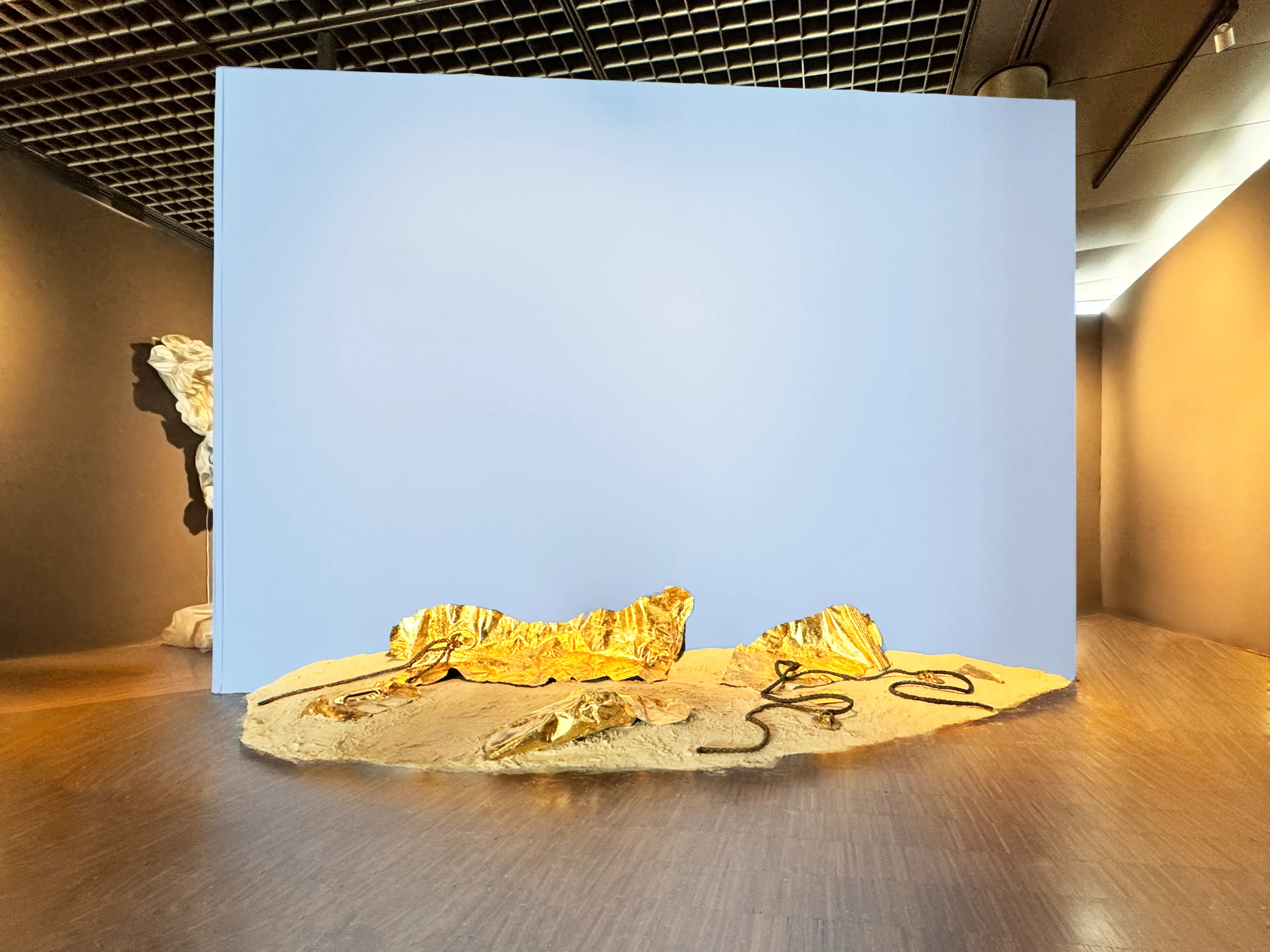
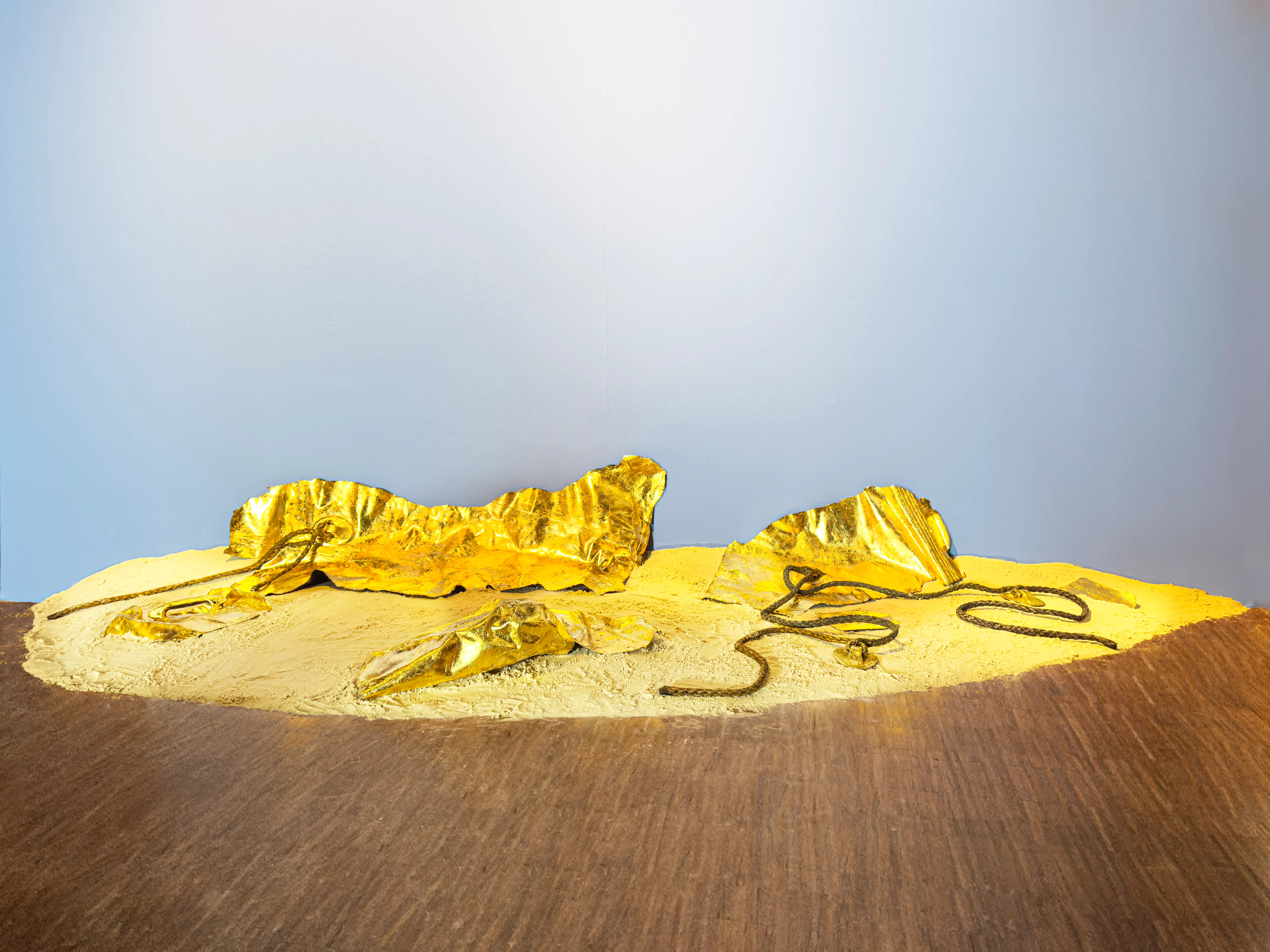
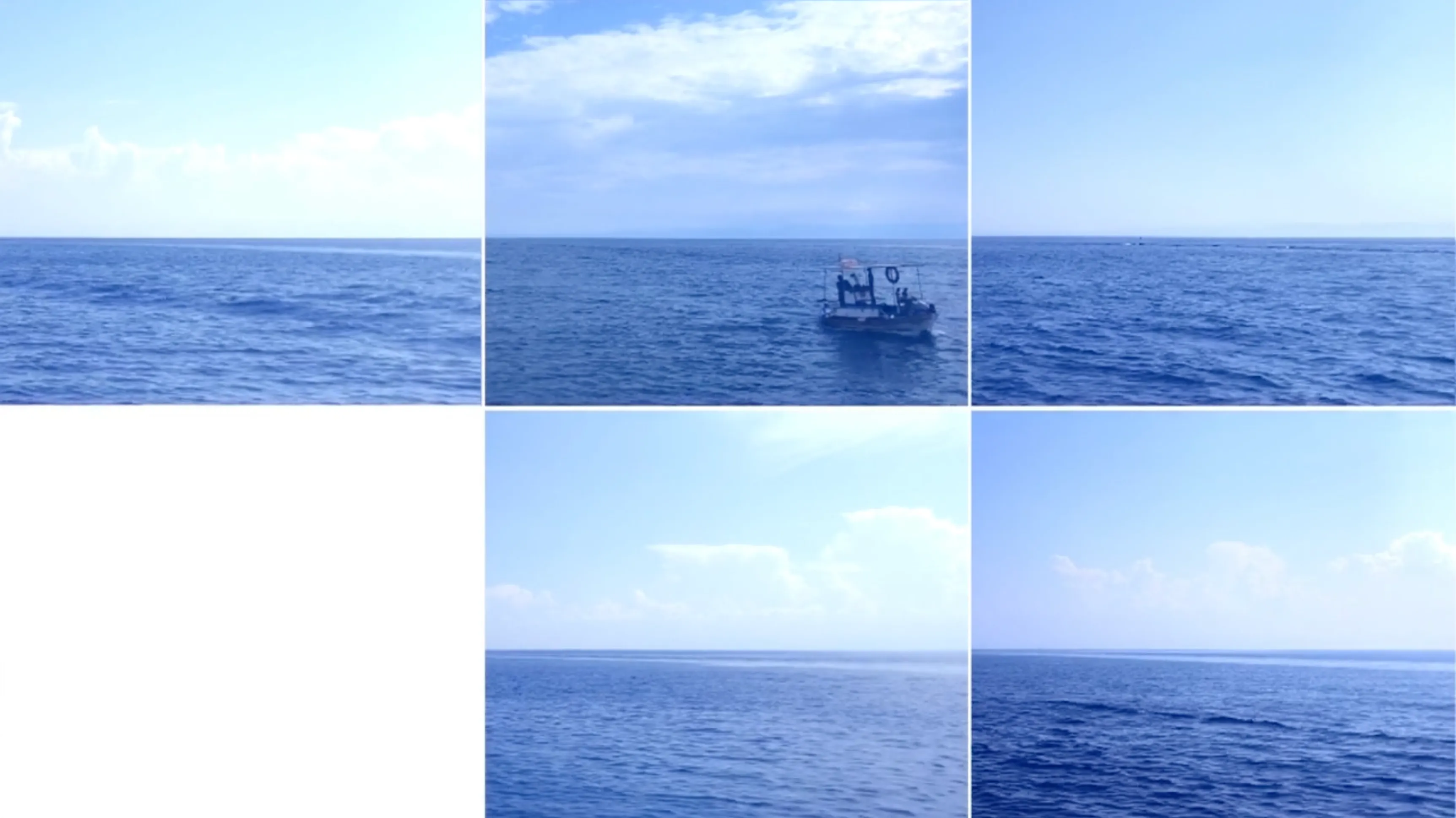
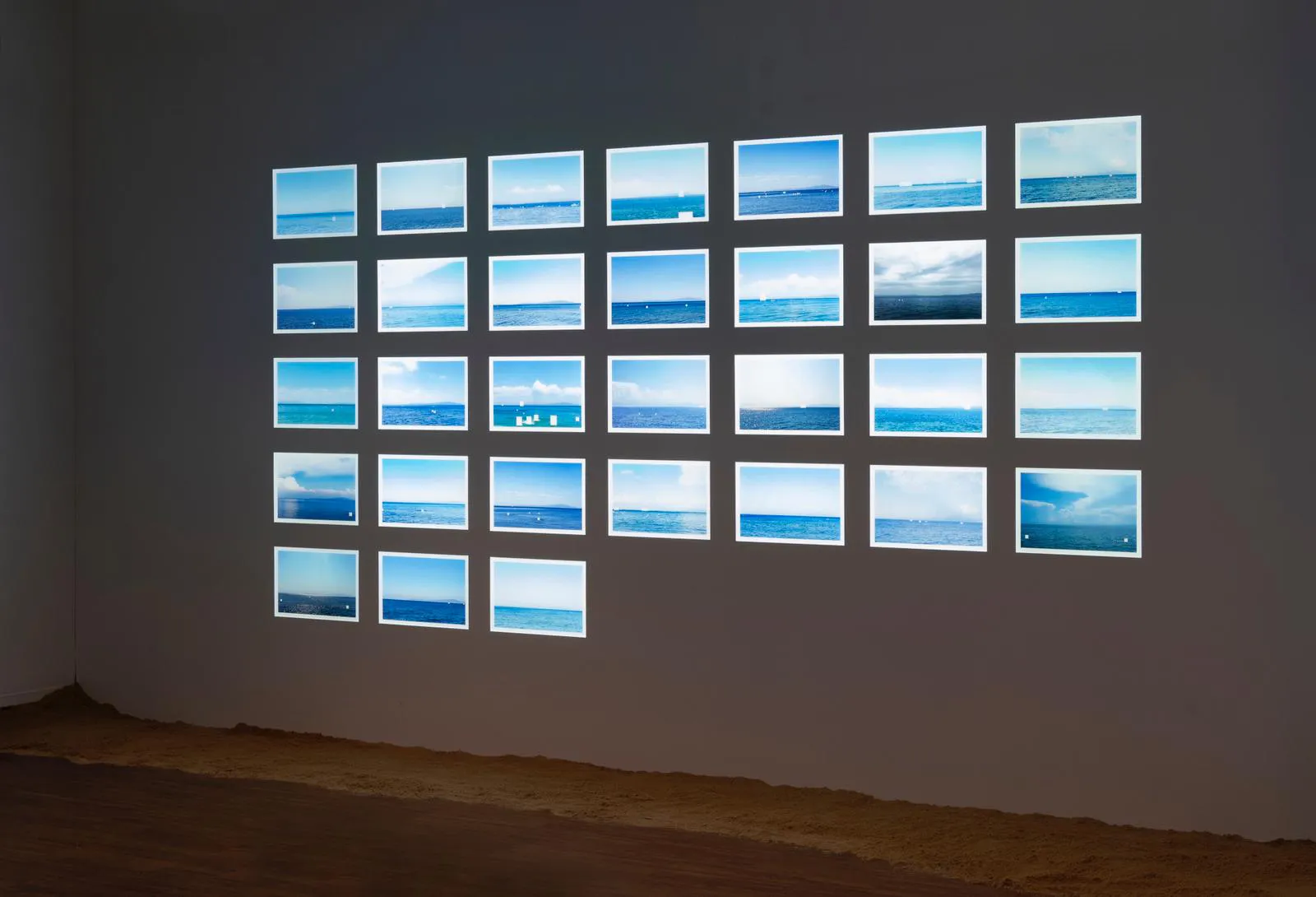
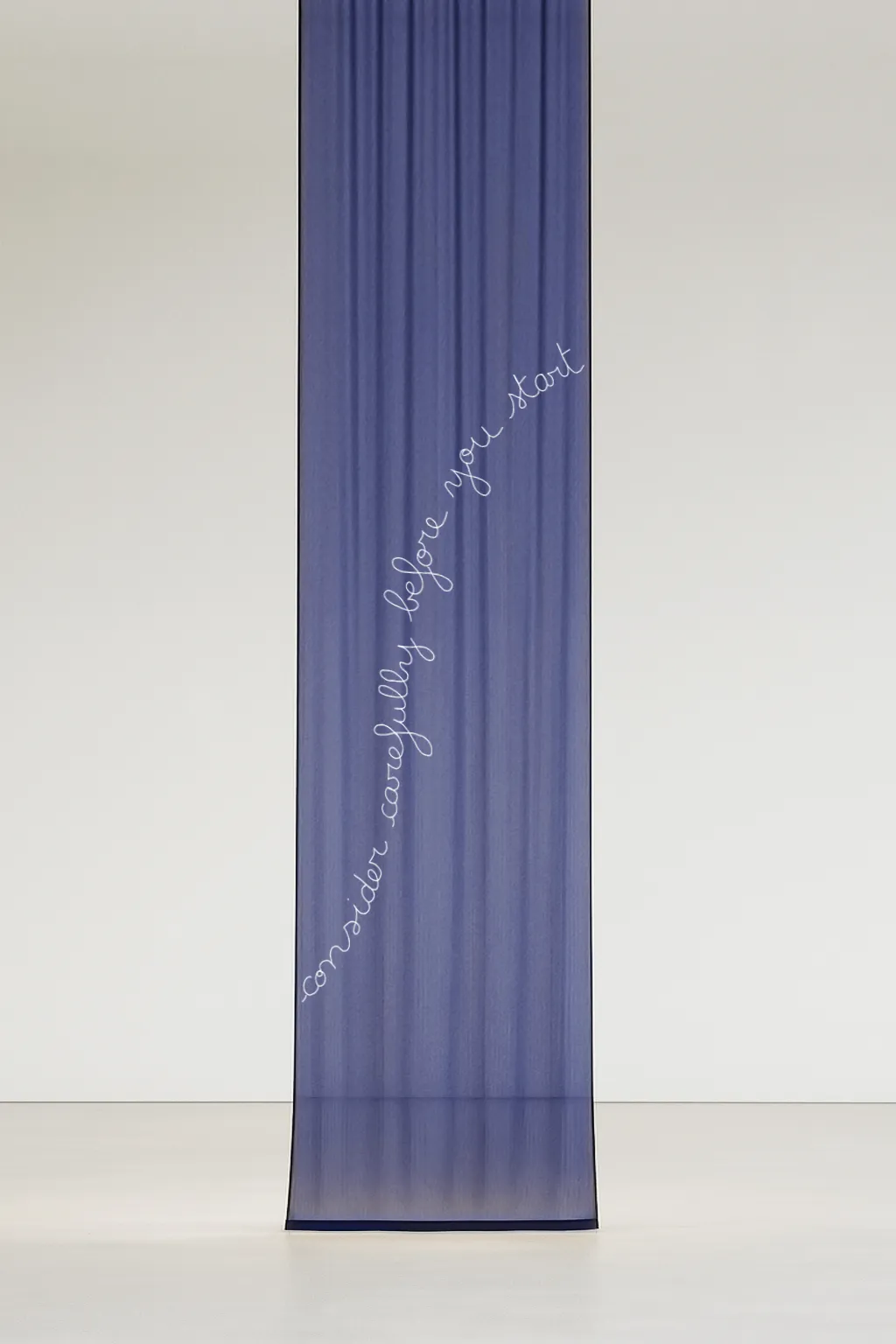
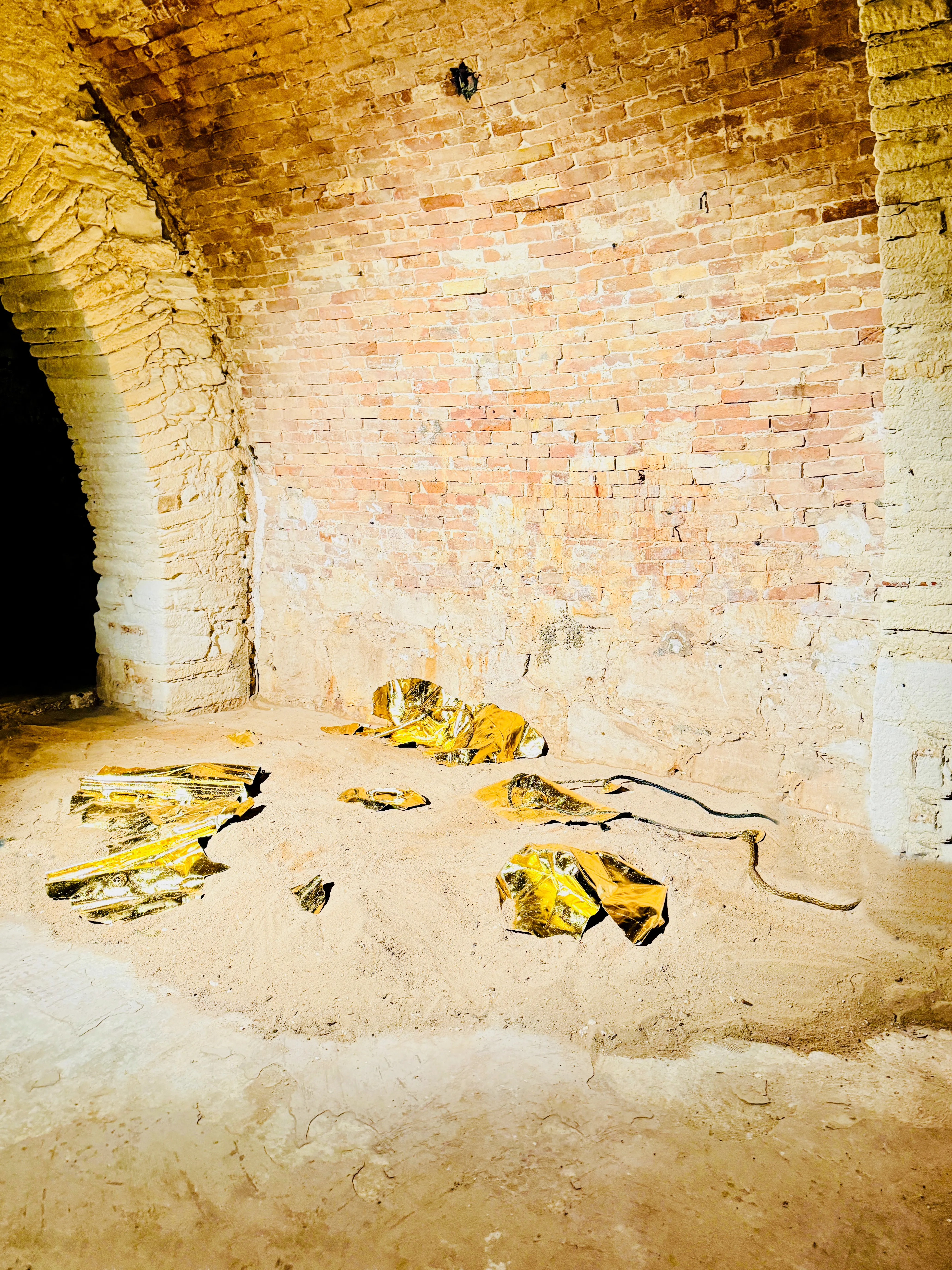
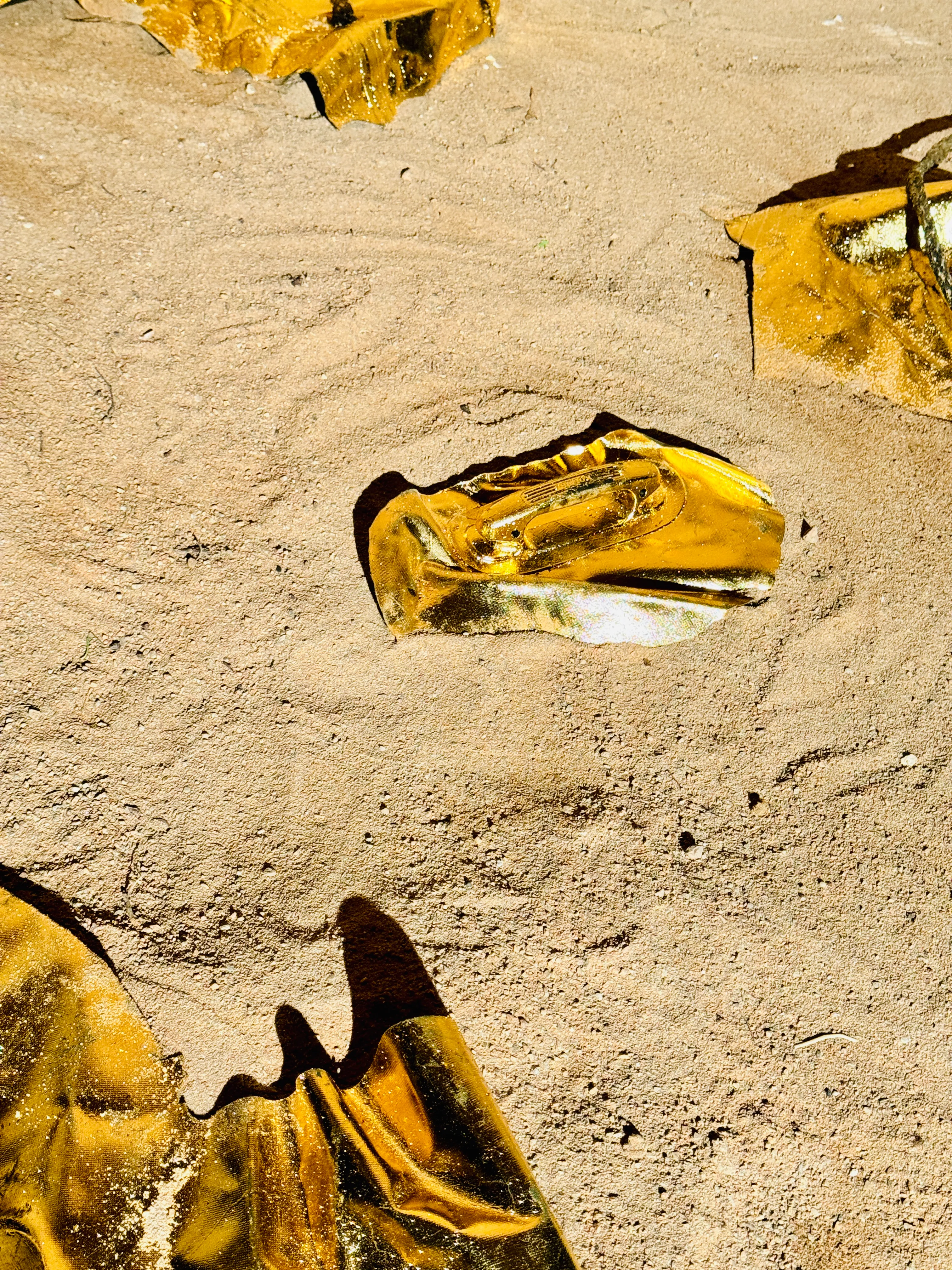
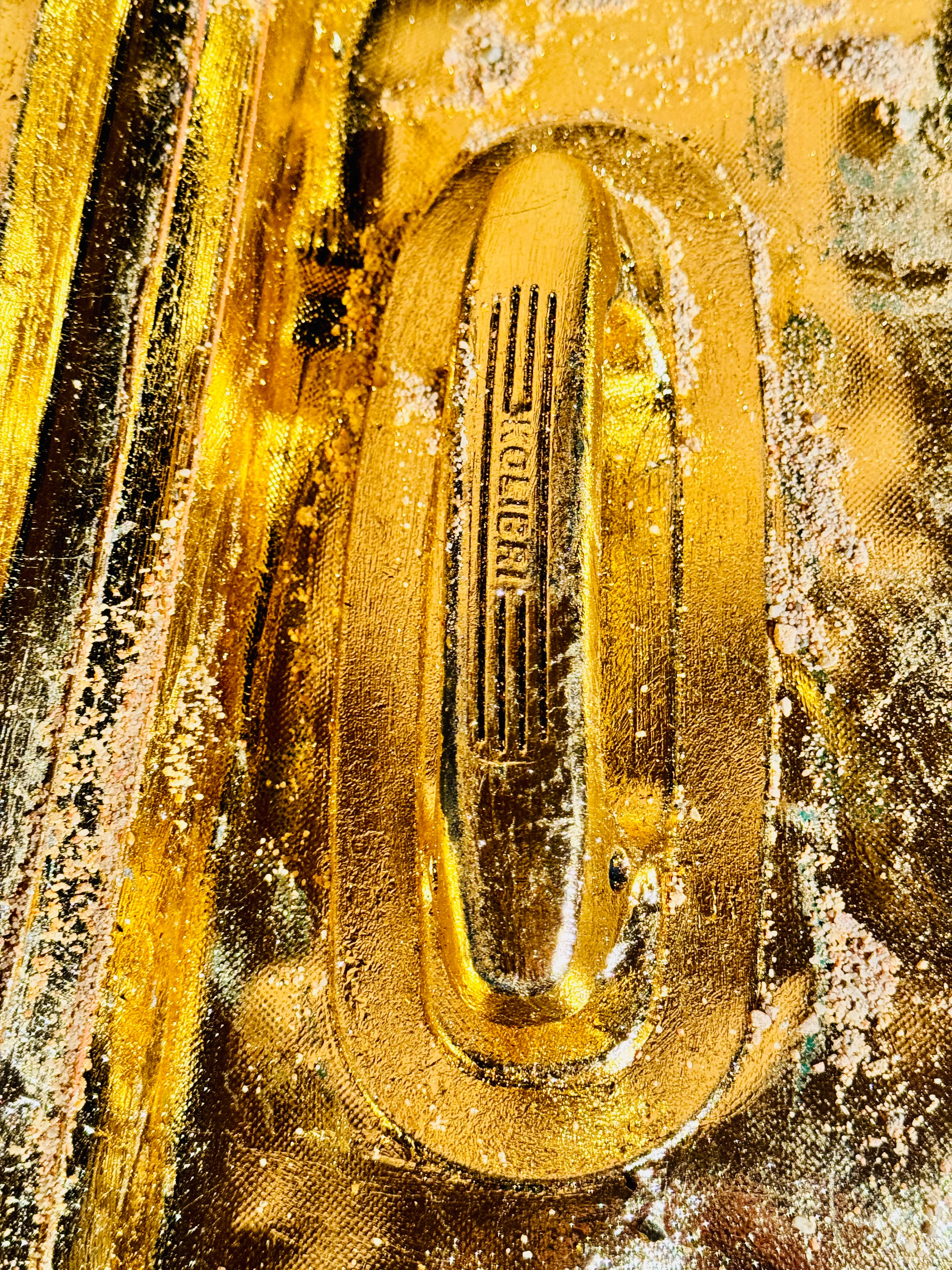
Tout ce qui brille n'est pas de l'or belongs to It Is Always Summer Somewhere, born from two months the artist spent on Lesbos in the summer of 2018. The same stretch of coastline held very different lives at once: a beach for sunbathing, a border under watch, a livelihood, a point of arrival whose outcome was never certain. Nothing on the surface separated these realities from one another.
While walking along a public beach frequented by residents and tourists, the artist stepped onto the remains of an inflatable boat half-buried in the sand. The boat had been used by migrants to cross from the Turkish coast to Lesbos and abandoned after reaching the island. Its passengers were gone and the circumstances of their journey could no longer be recovered. Only the torn rubber remained.
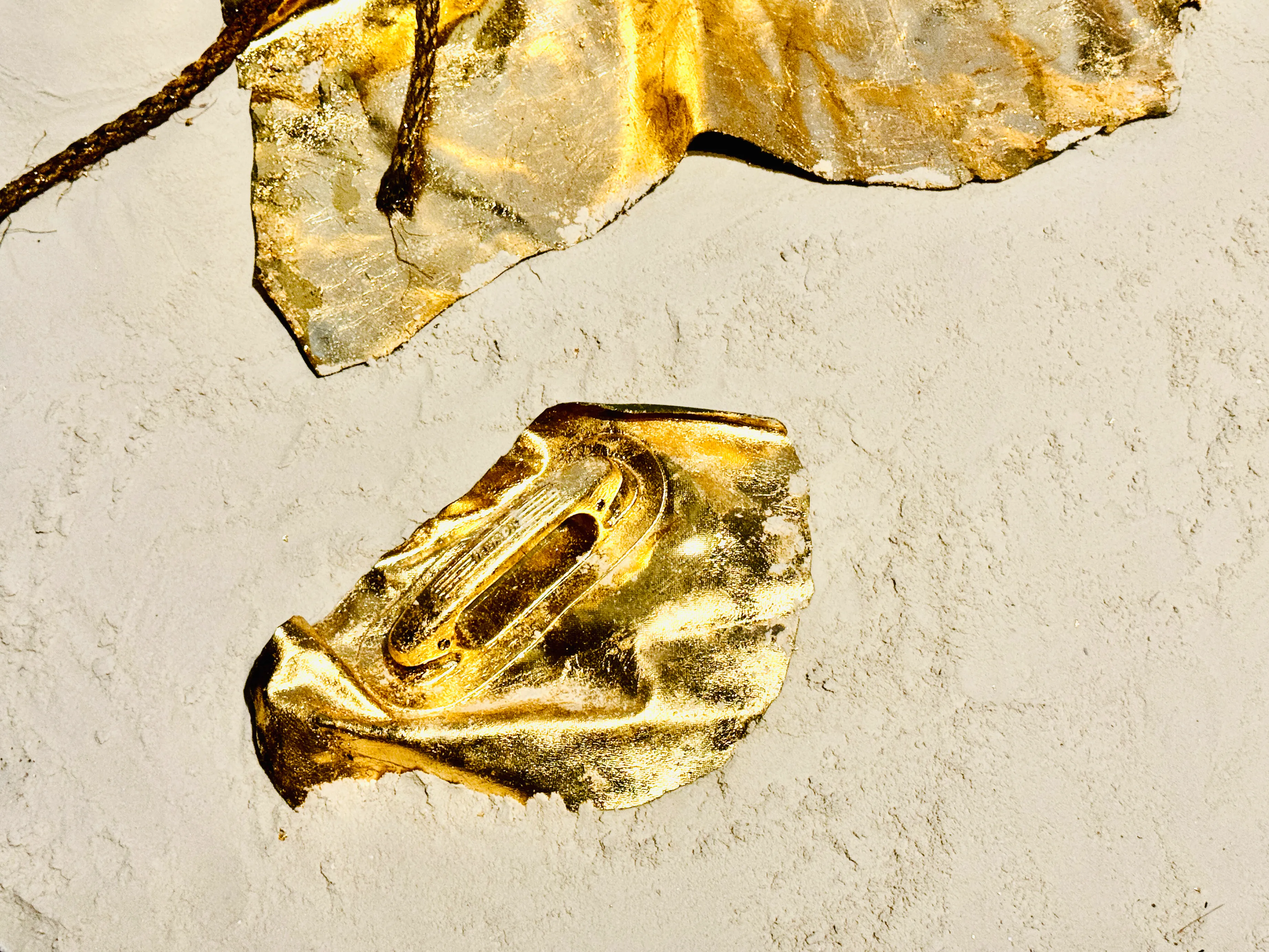
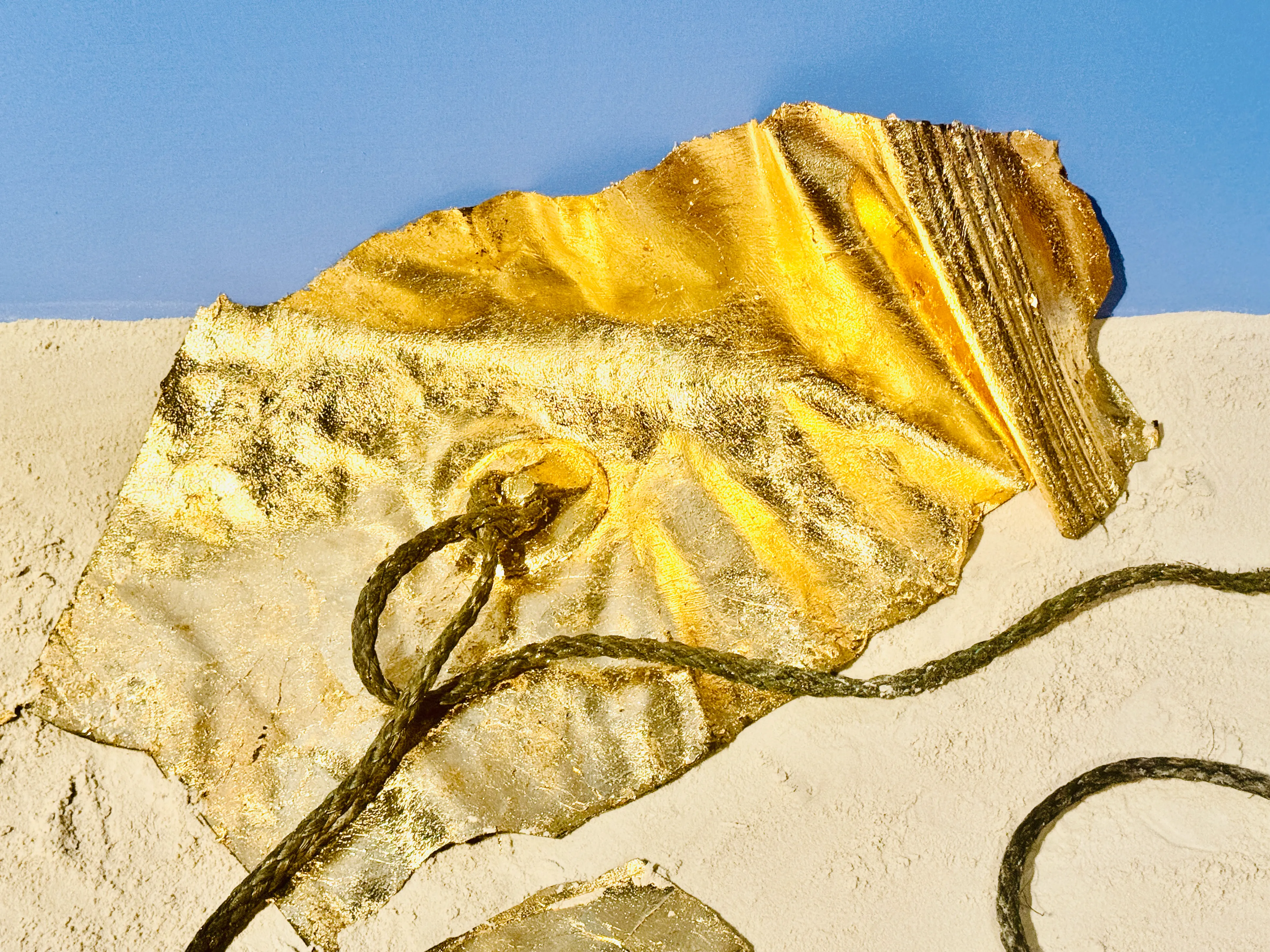
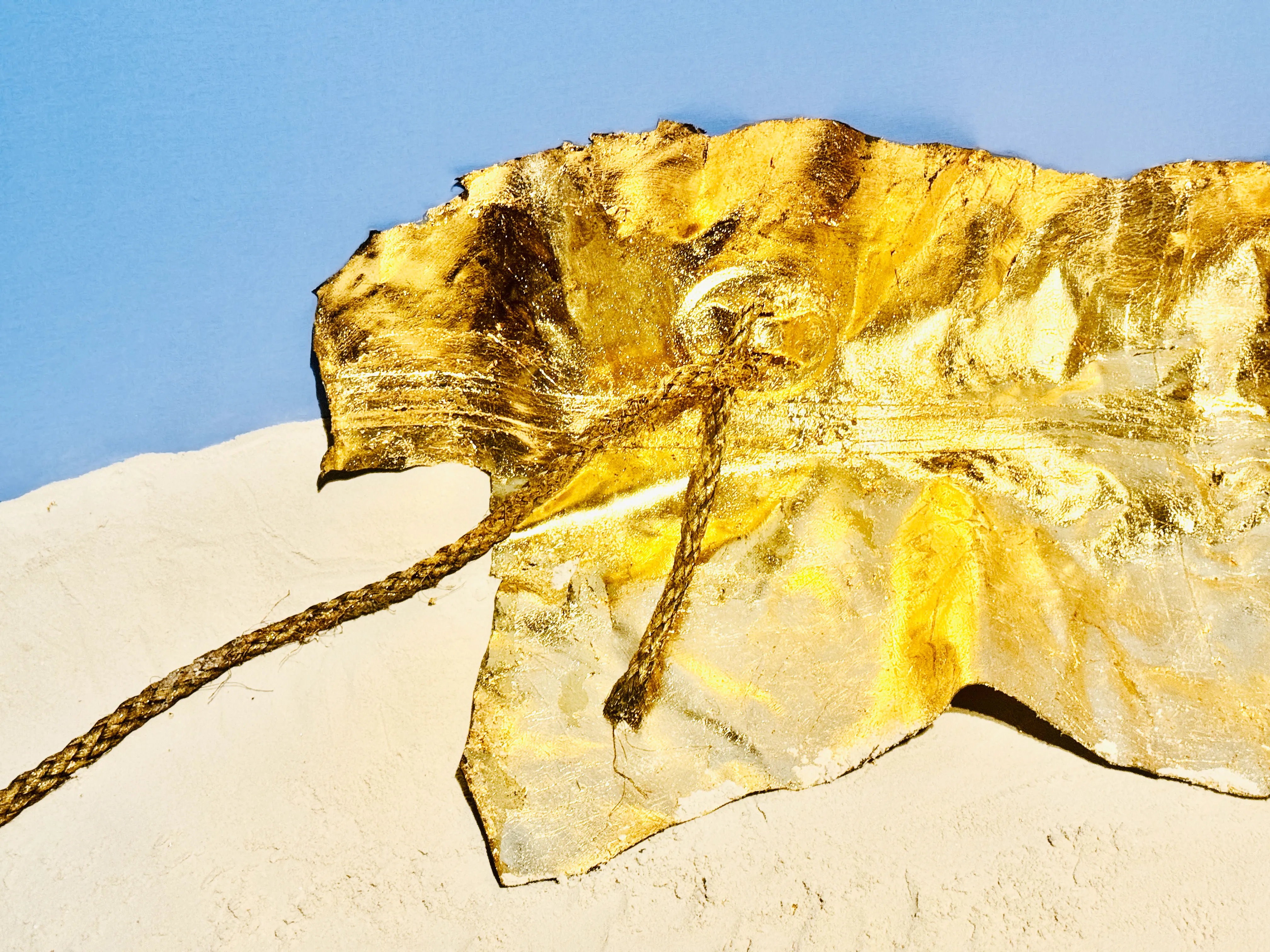
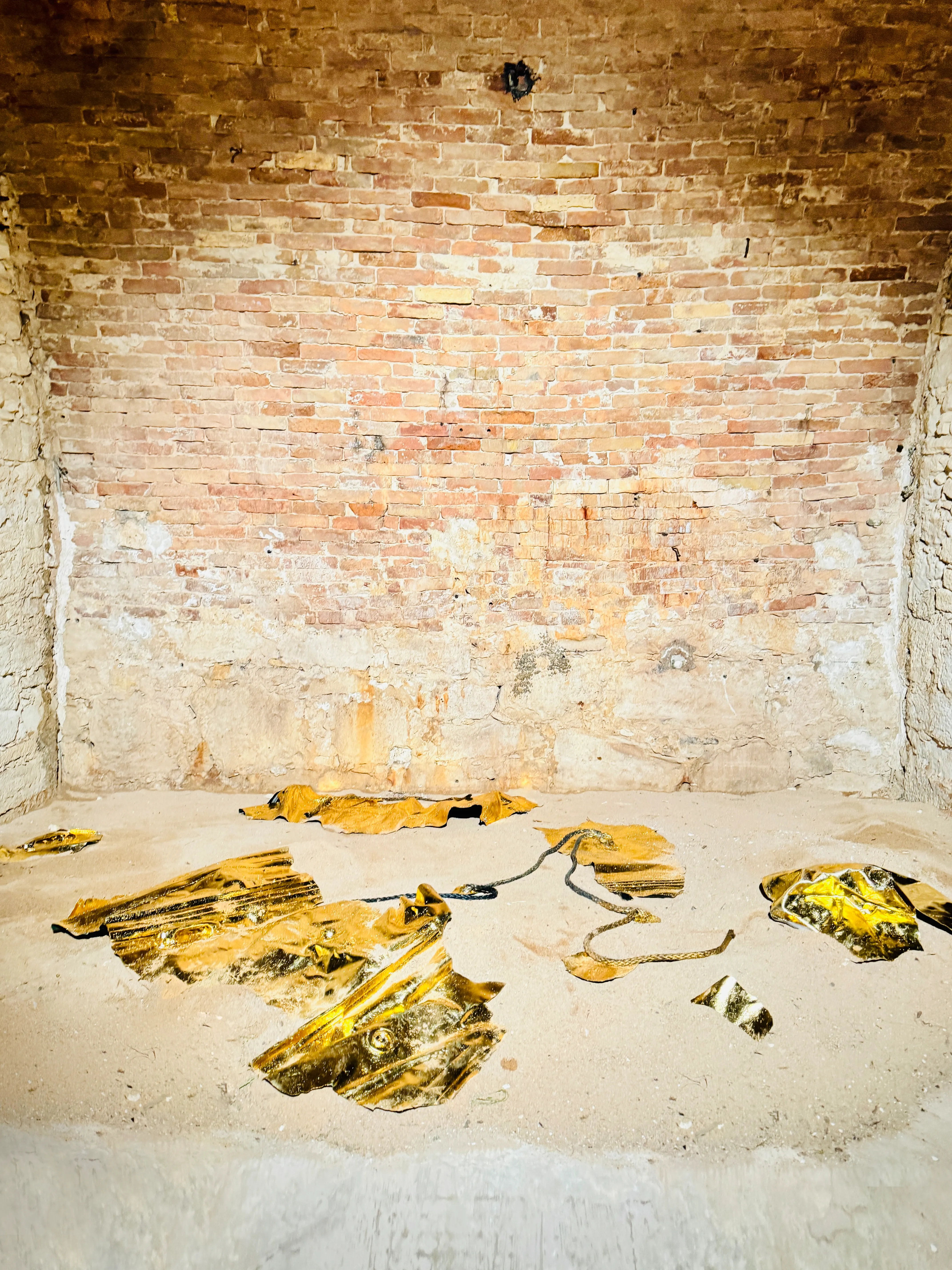
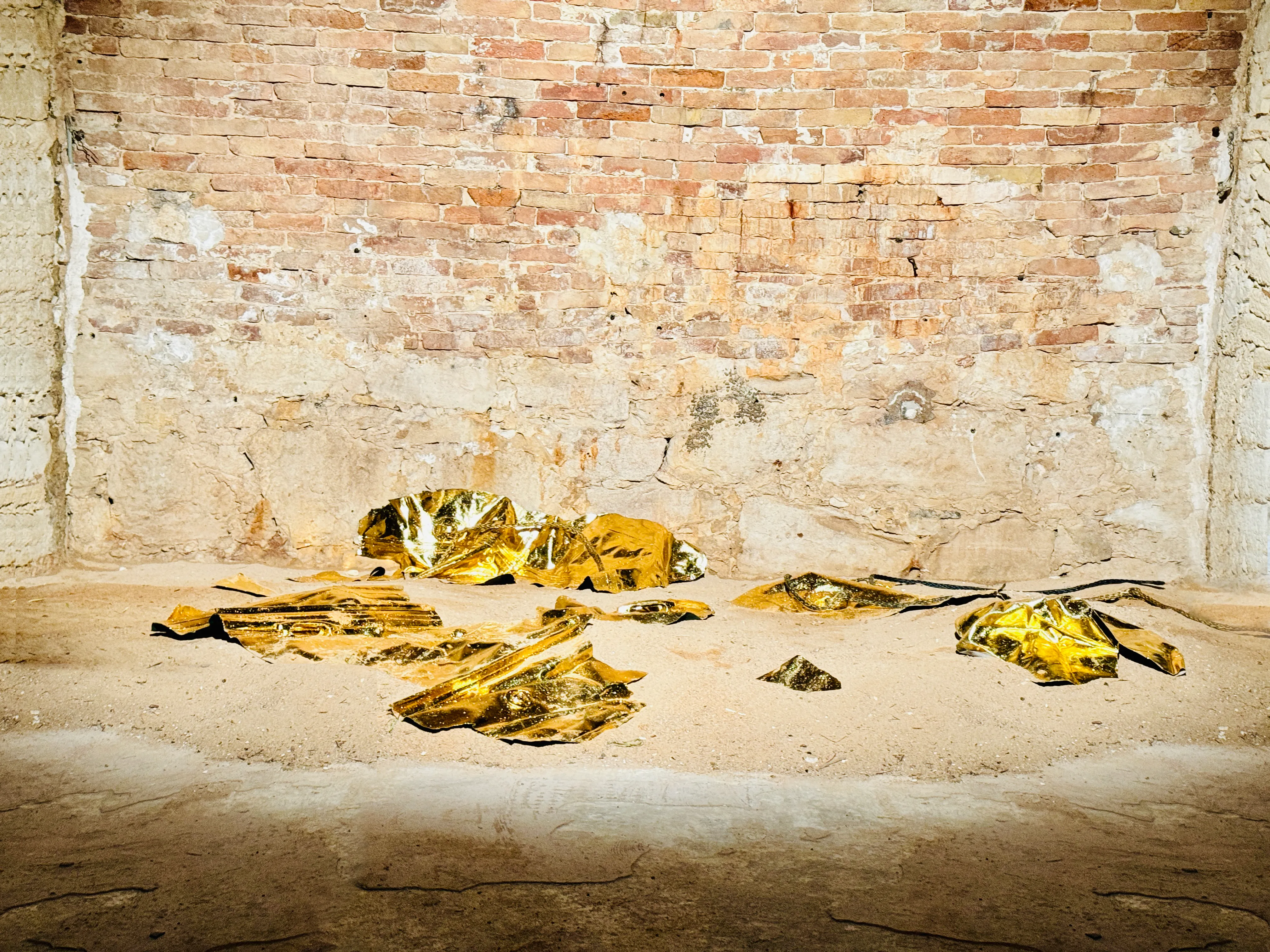
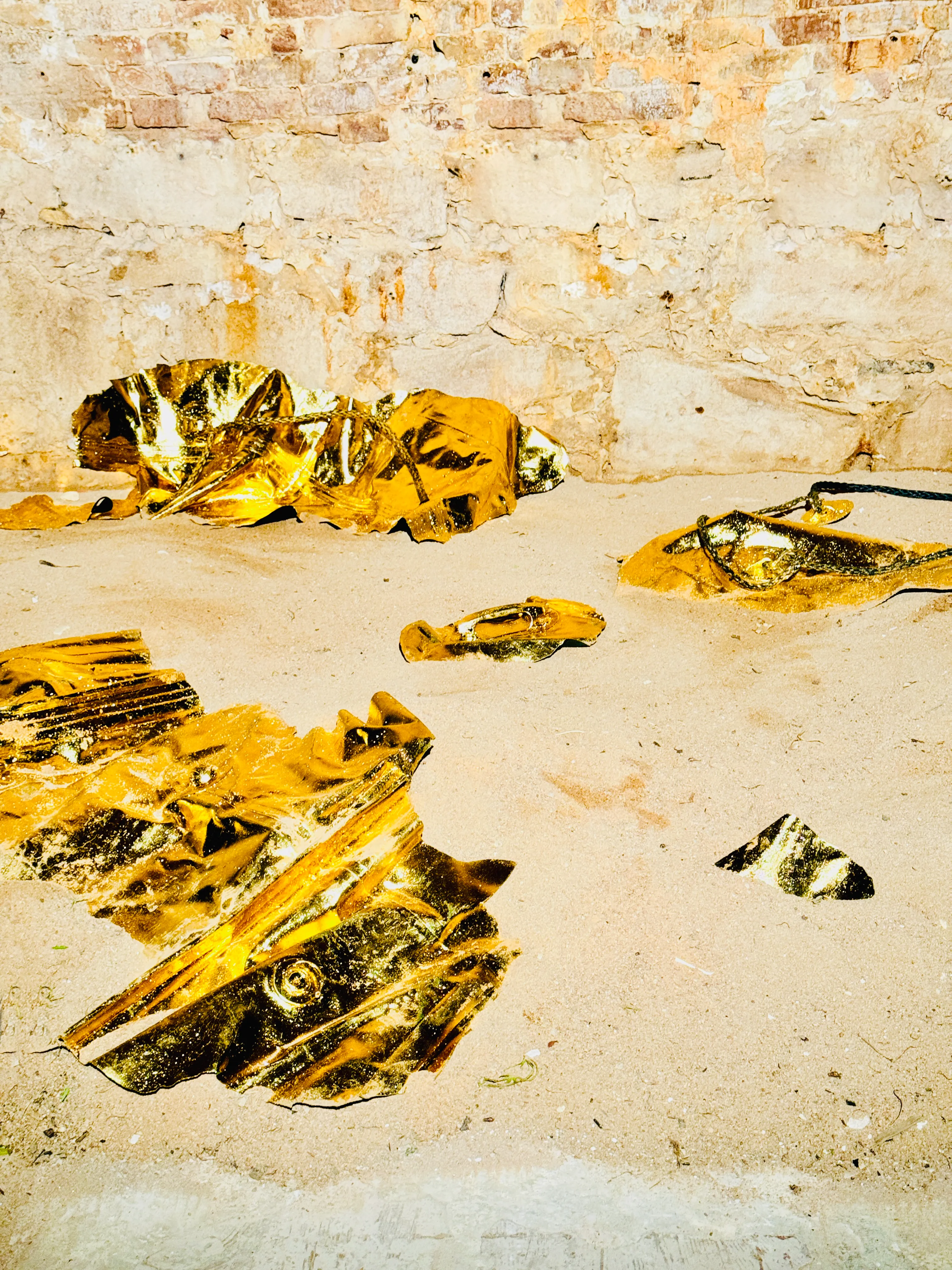
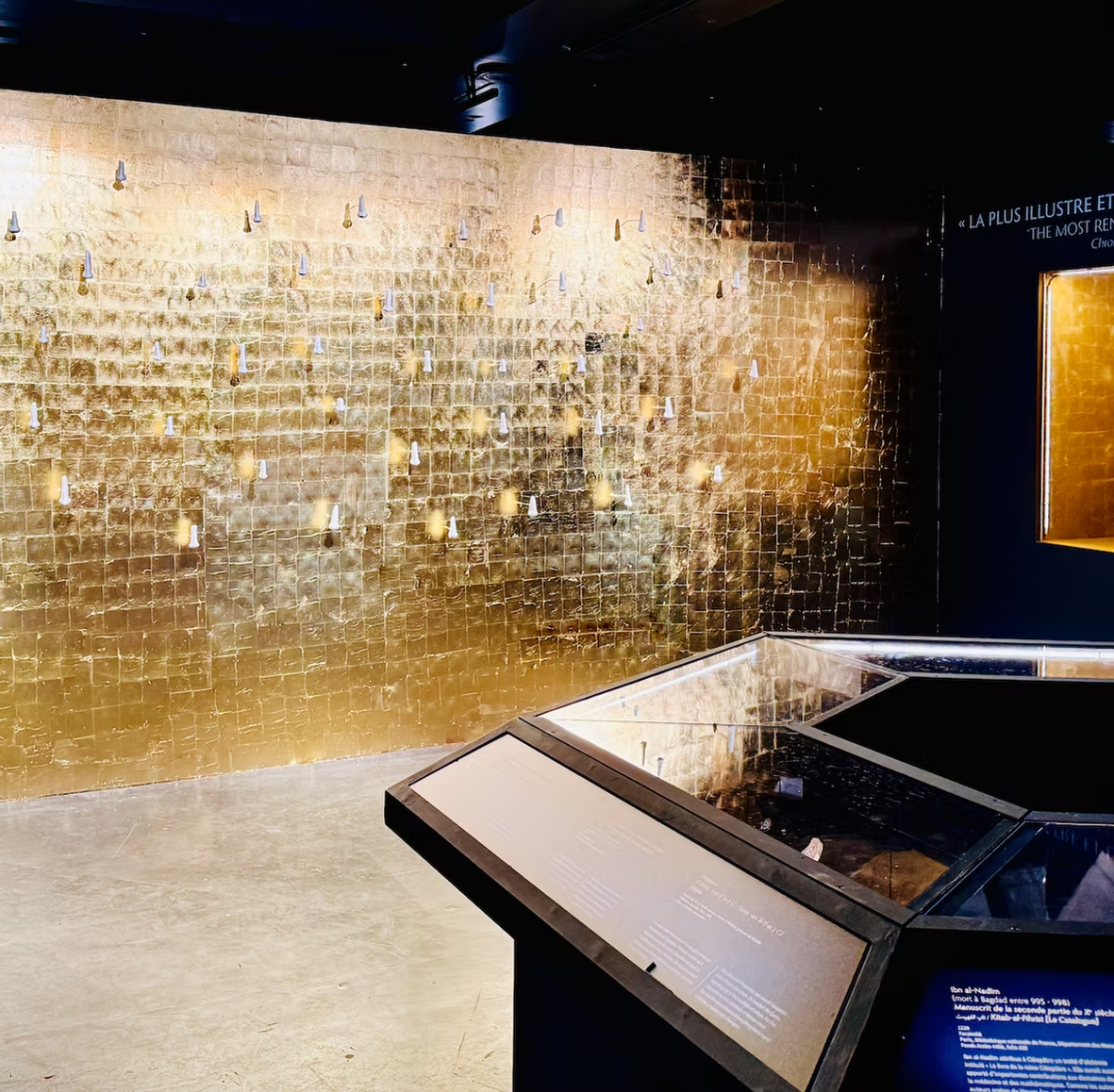
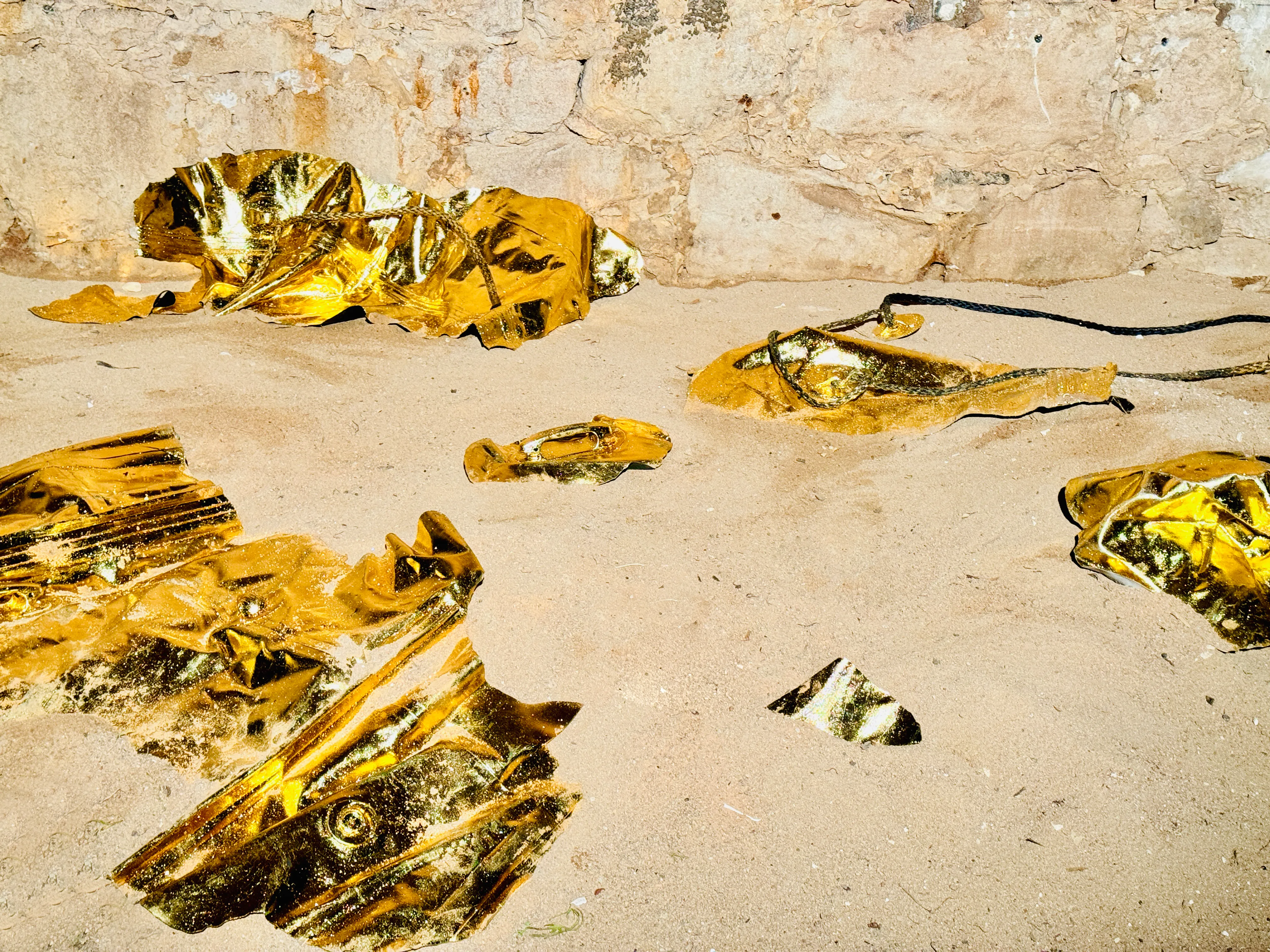
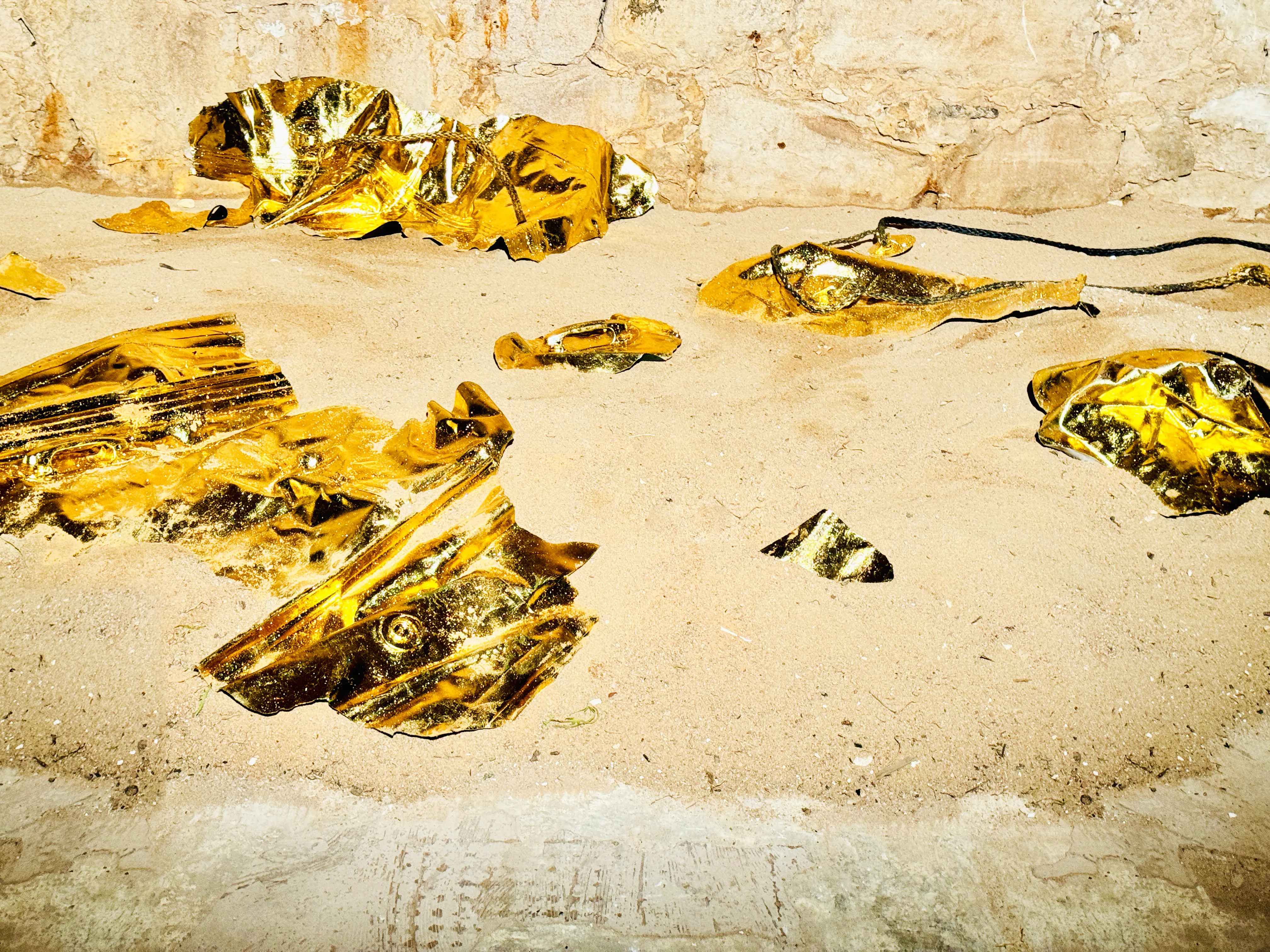
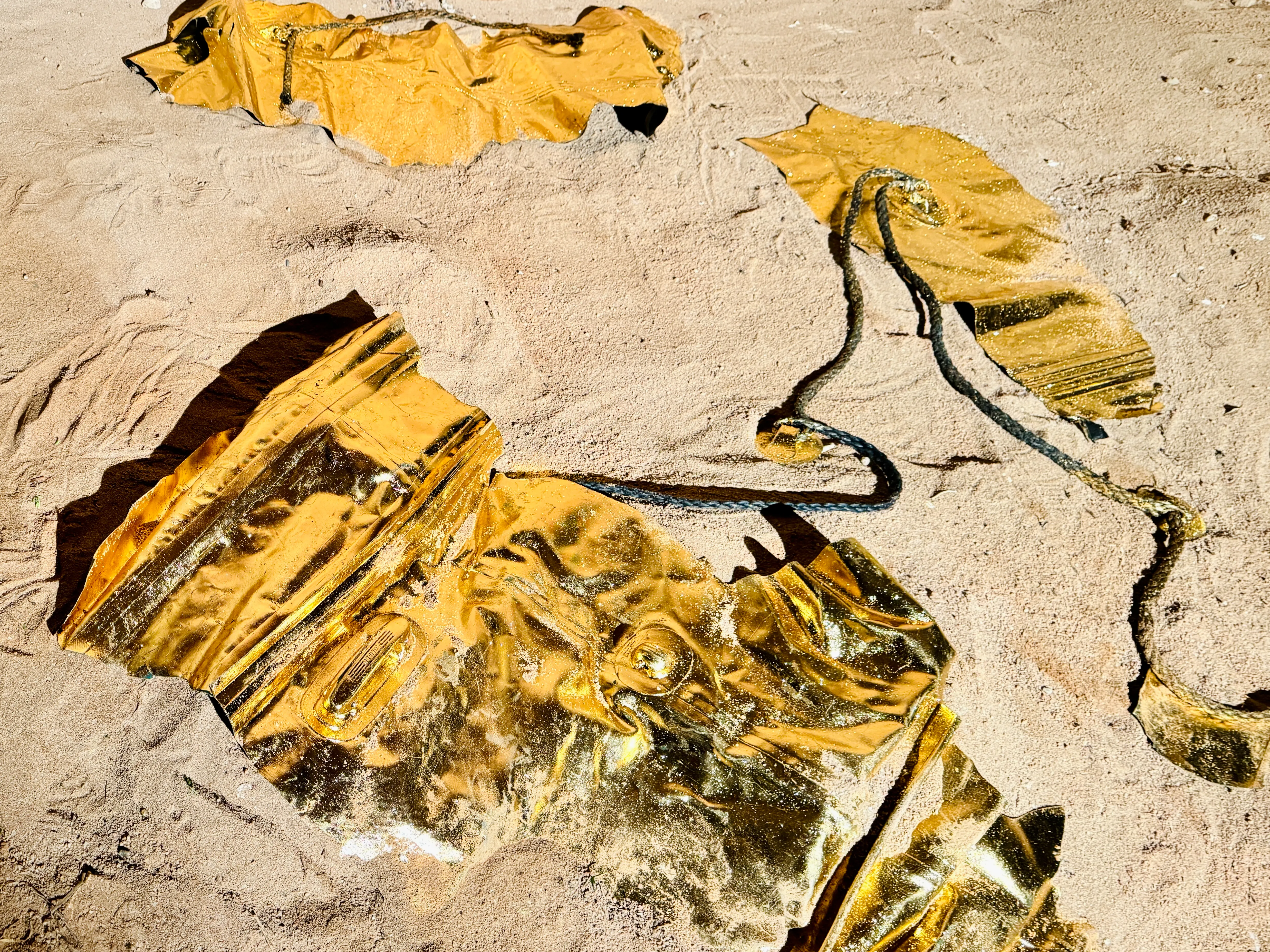
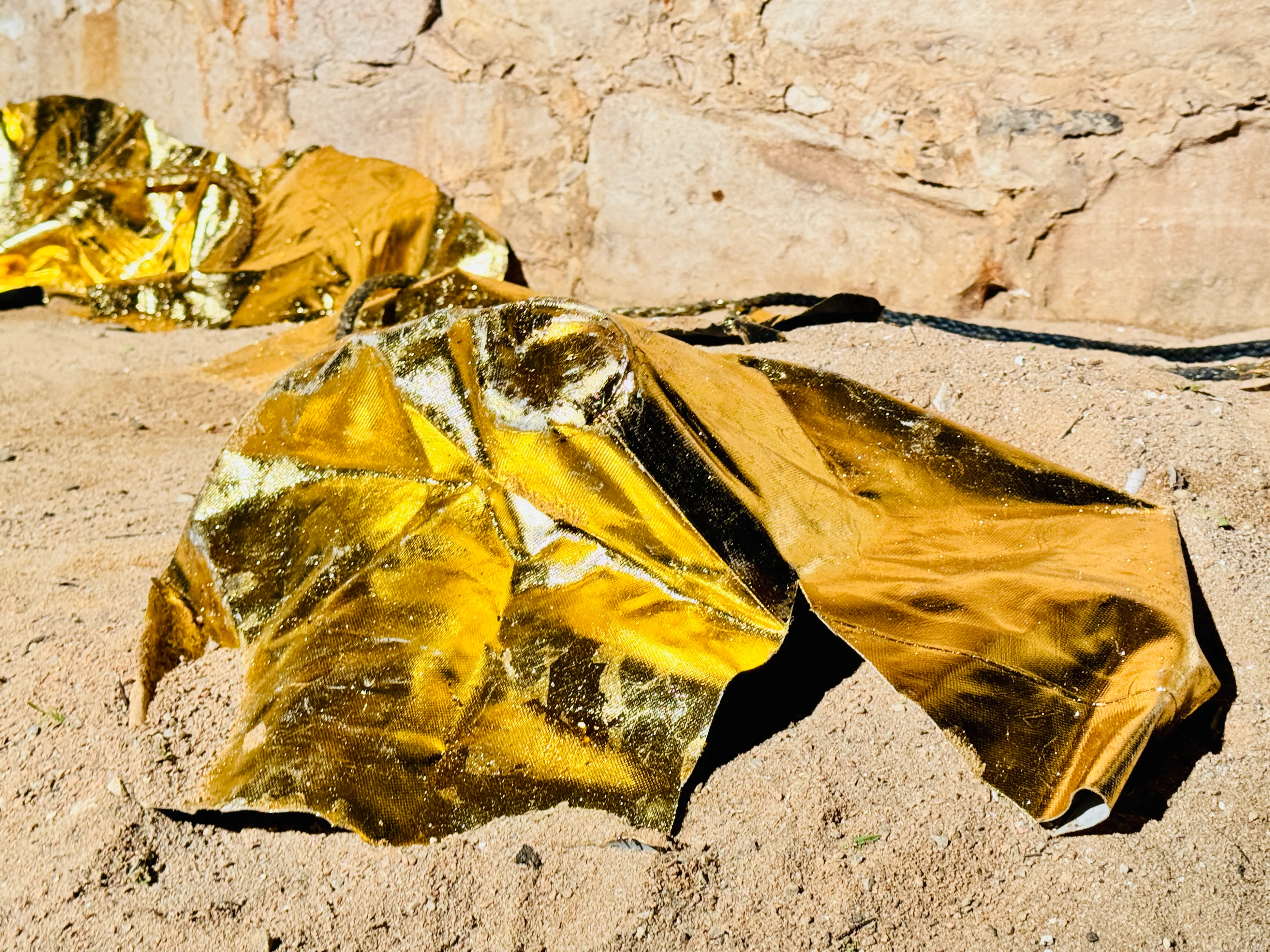
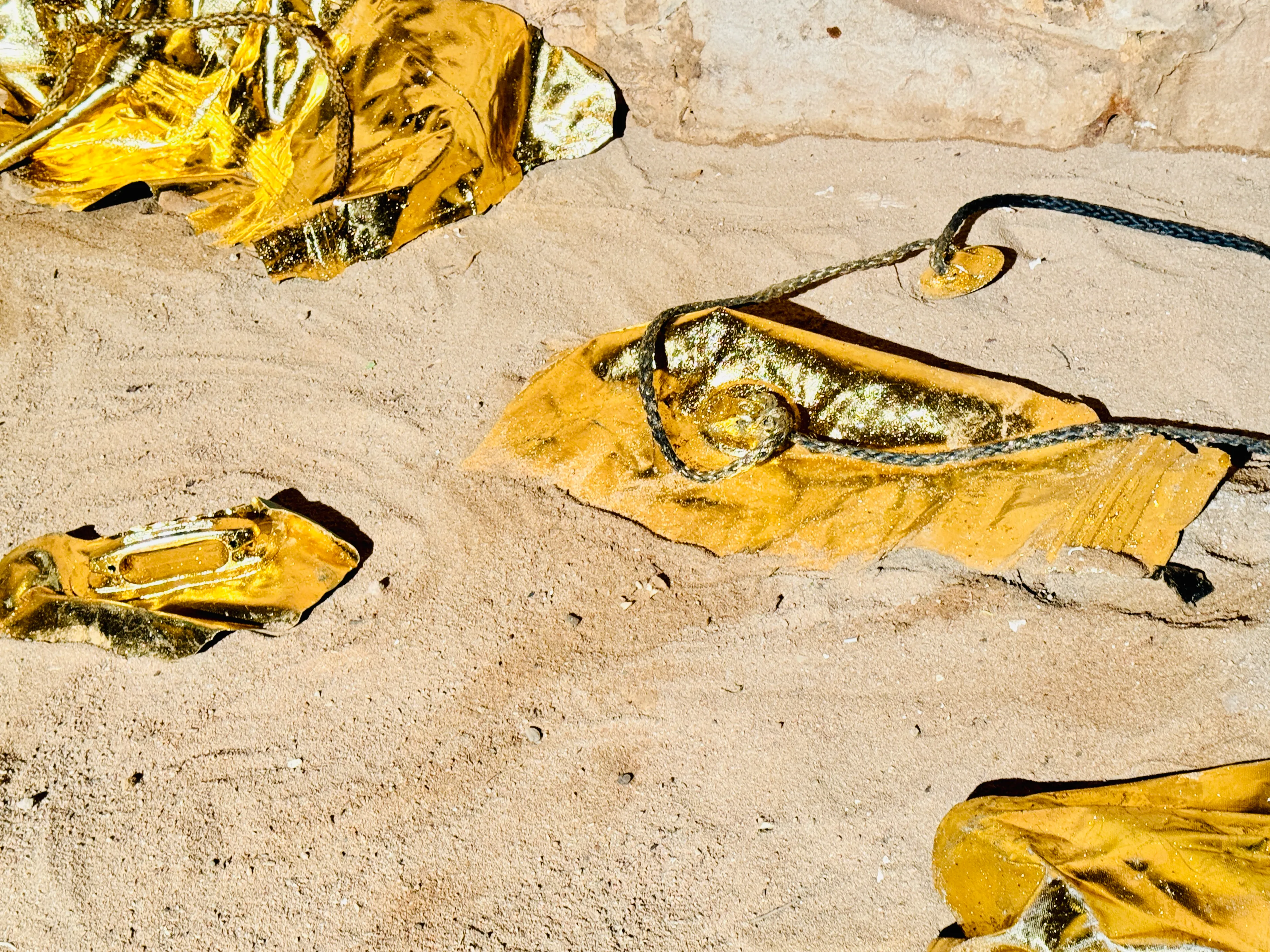
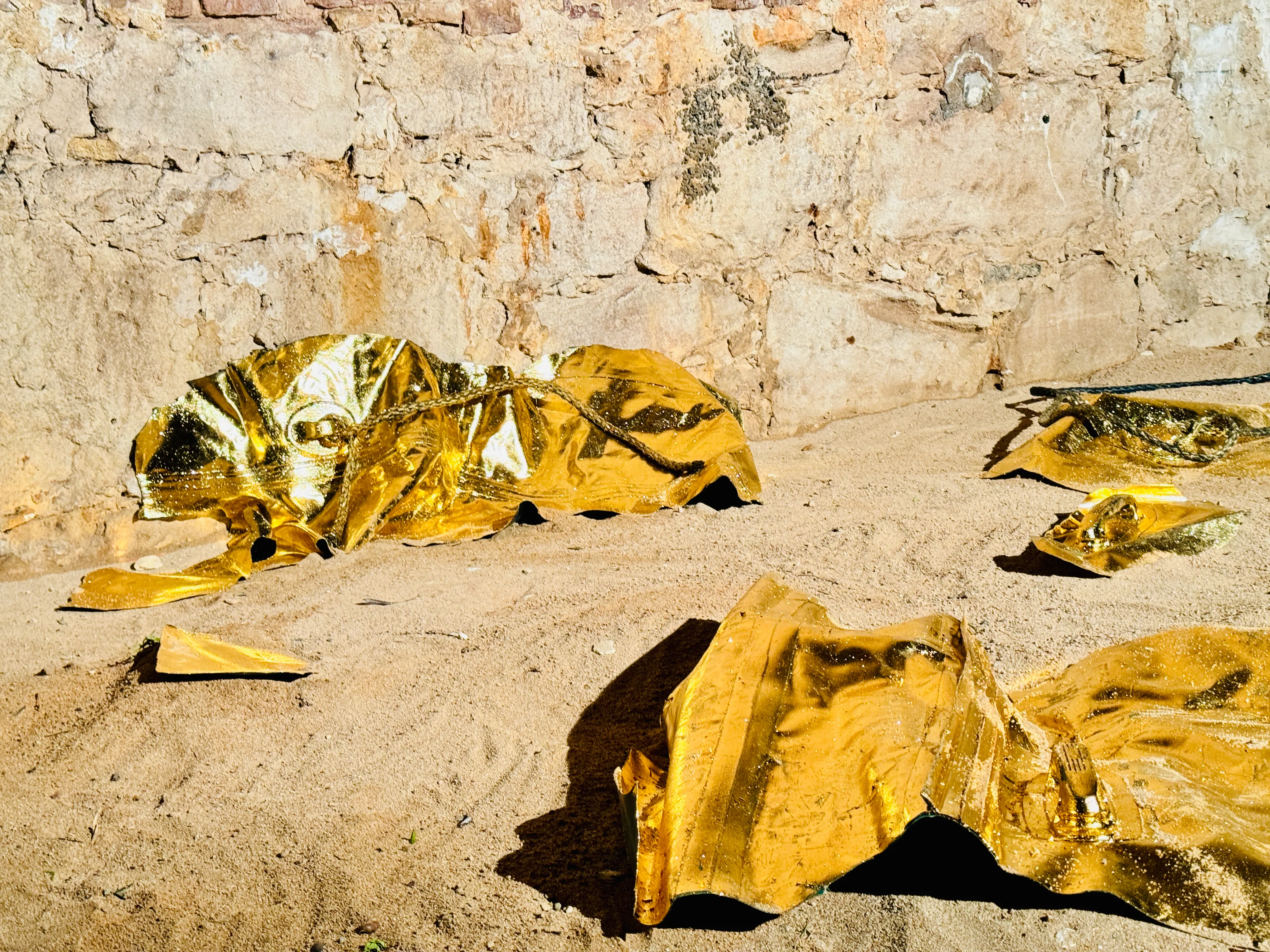
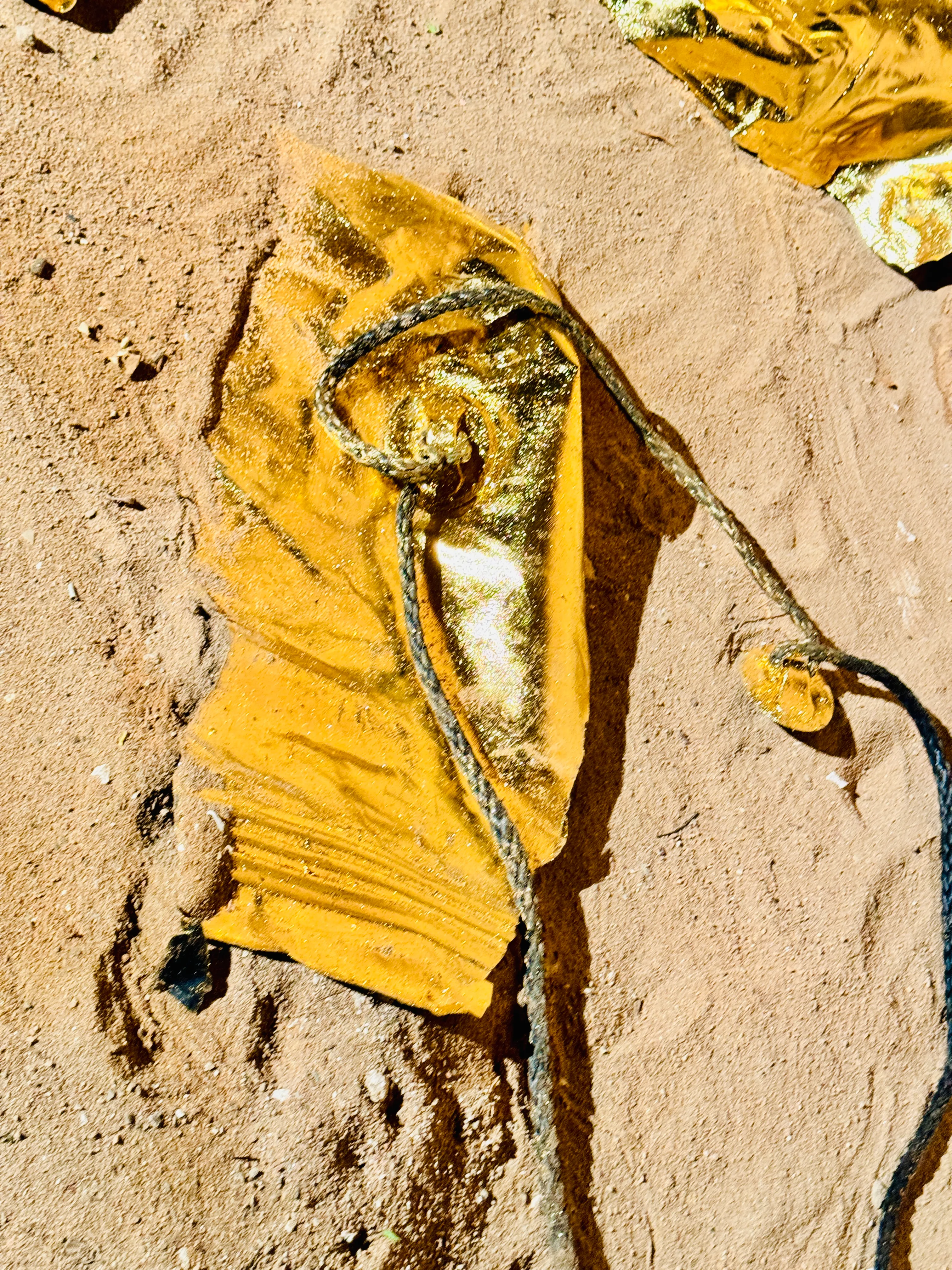
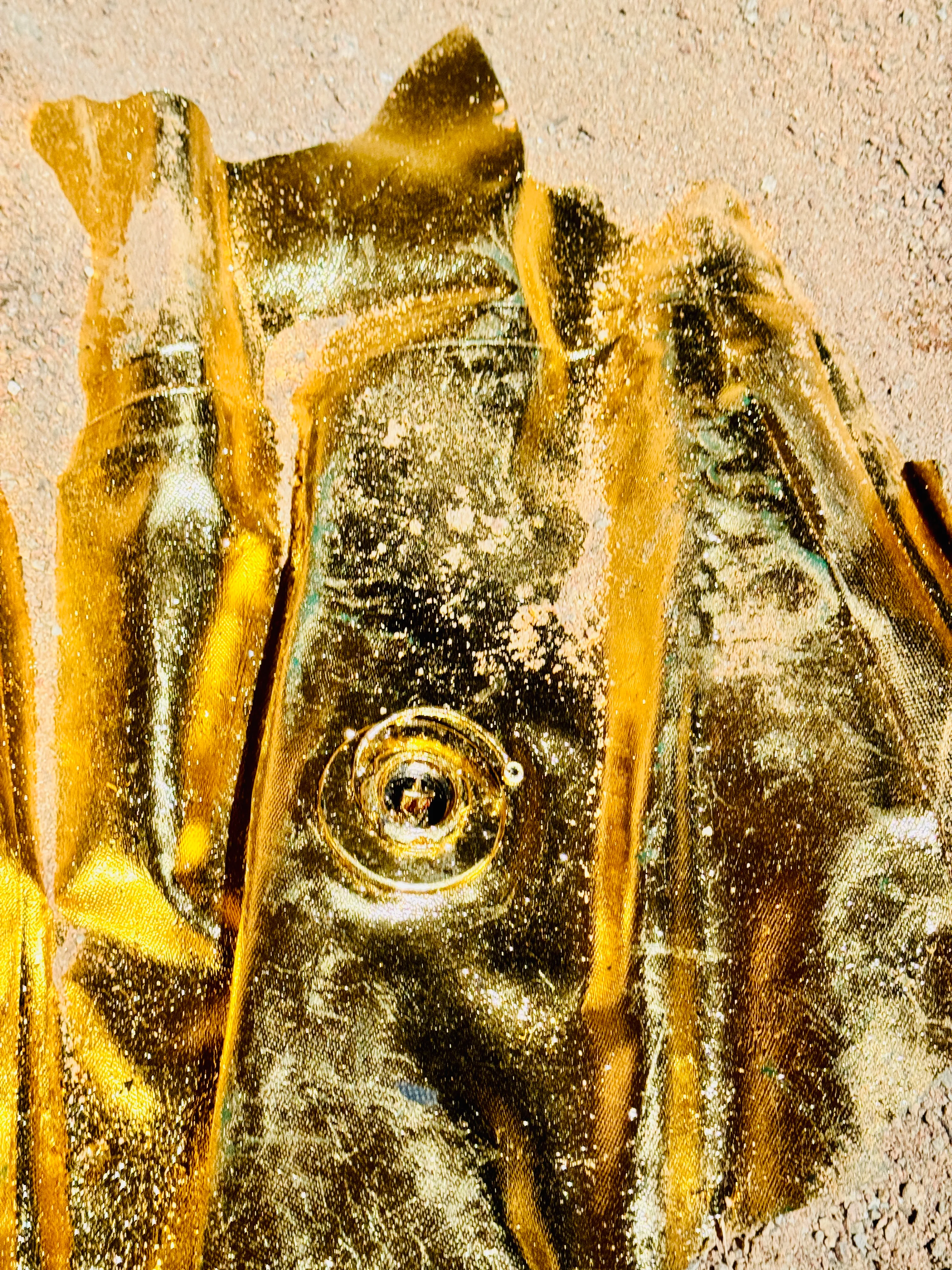
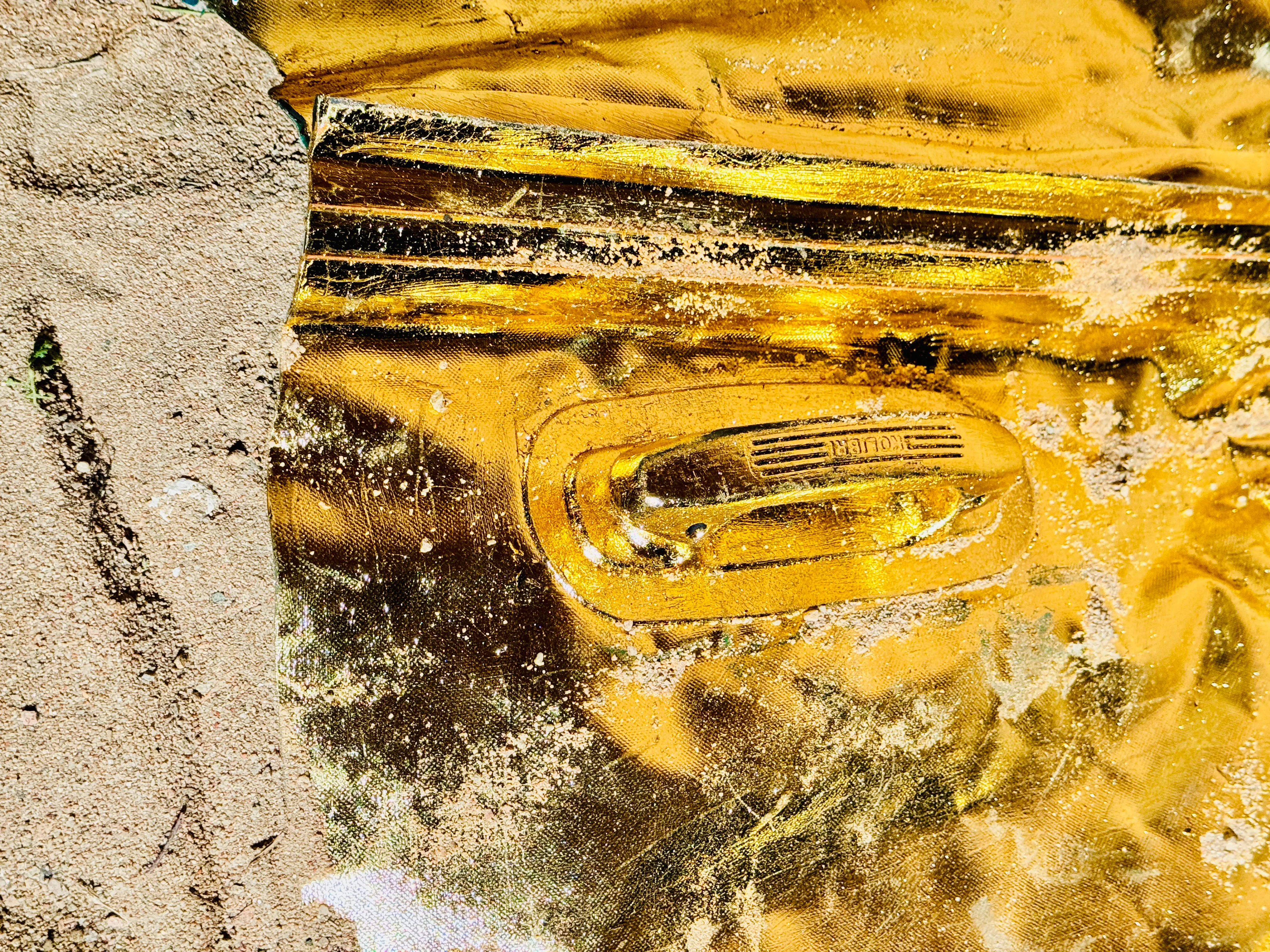
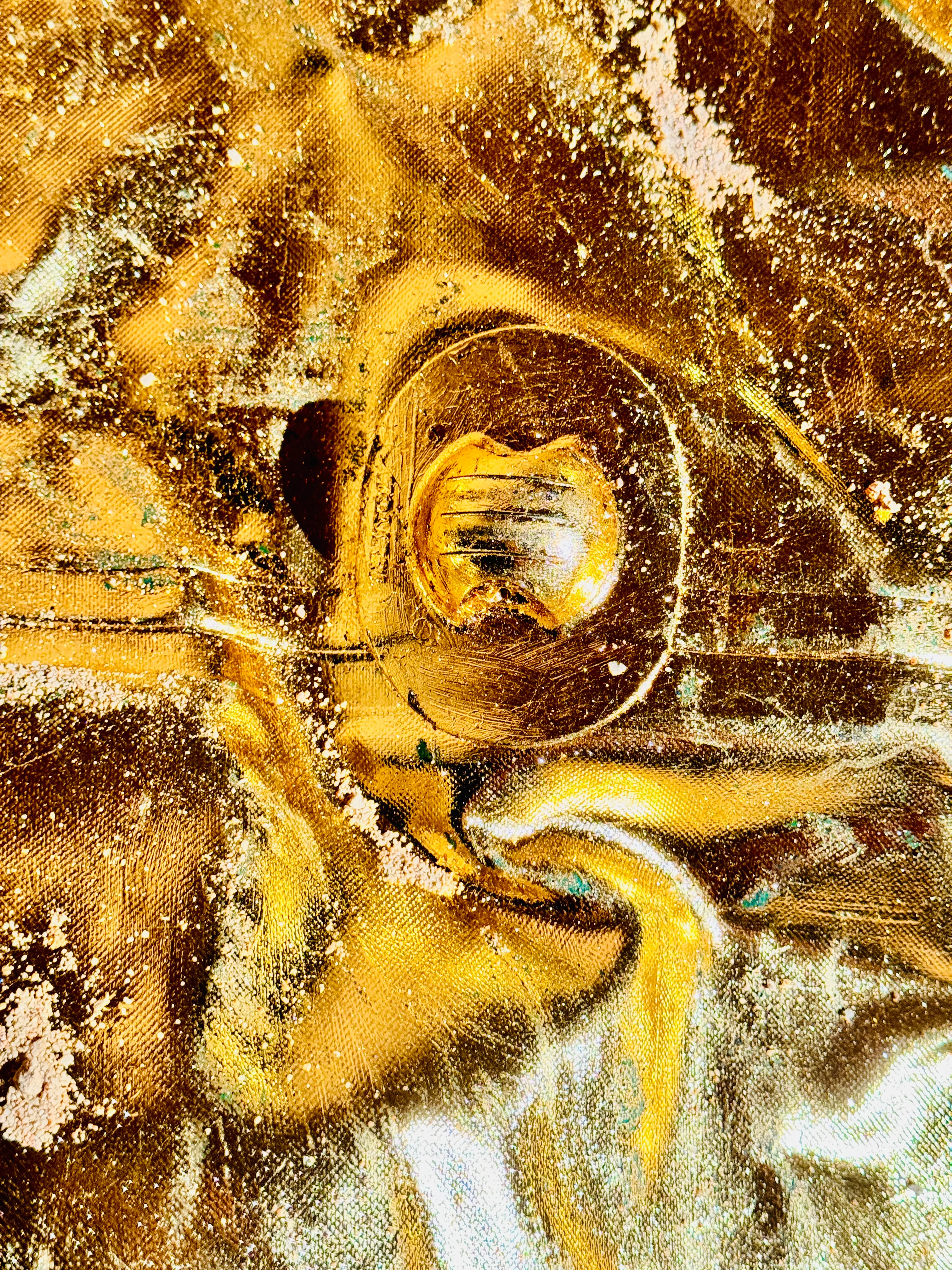
The artist gathered fragments of the boat, covered their surfaces with gold leaf and placed them on sand. She did not attempt to reconstruct the vessel or restore its original shape. Each piece remains separate, retaining the tears, deformations and irregular edges produced by the crossing and its abandonment.
The work appropriates the familiar imagery of treasure buried in the sand and applies it to an object for which that imagery was never intended. What appears to have been unearthed is not a legendary treasure, but the material remains of a migrant passage. Through the addition of gold, an object left as debris acquires the presence of something precious, mysterious and worthy of preservation.
This transformation also changes the fragment's relationship to time. Half-buried, broken and gilded, it seems excavated rather than recently abandoned. It might be a contemporary piece of wreckage, an ancient relic or an archaeological object through which a future viewer attempts to reconstruct the present.
The boat fragment is therefore both the final trace of one journey and the point of departure for another, imaginary one. It cannot reveal who travelled in the boat or what occurred during the crossing. Instead, it opens a space in which the absent story can be reconstructed backwards, beginning with what was found after its ending.
From this fragment, the passage acquires the structure of a myth: an unknown journey, absent protagonists and a surviving object through which their story continues to be told. The vestige does not document the crossing in full. It allows the crossing to persist beyond the moment in which it took place.
Yet the gold never completely transforms what lies beneath it. Applied as a thin and fragile surface, the leaf cracks across the damaged rubber, allowing its darkness and irregularities to reappear. From a distance, the fragments seem luminous and precious. Seen closely, the surface breaks and the material reality of the boat returns.
The contrast quietly evokes the imagined elsewhere that can accompany exile: the hope of another shore and a different future. Like an Eldorado, that future may appear golden from a distance, while the reality encountered after the crossing proves far more fractured. The work does not illustrate that disillusionment directly; it allows it to emerge through the material tension between the brilliance of the surface and what remains visible underneath.
The gold makes the fragments visible without repairing them. It gives the remains the appearance of treasure while preserving the damage that contradicts that appearance.
Tout ce qui brille n'est pas de l'or begins with a treasure discovered in the sand and gradually reveals the wreckage within it. The journey has ended, but the vestige continues to carry its promise, its fracture and its story.