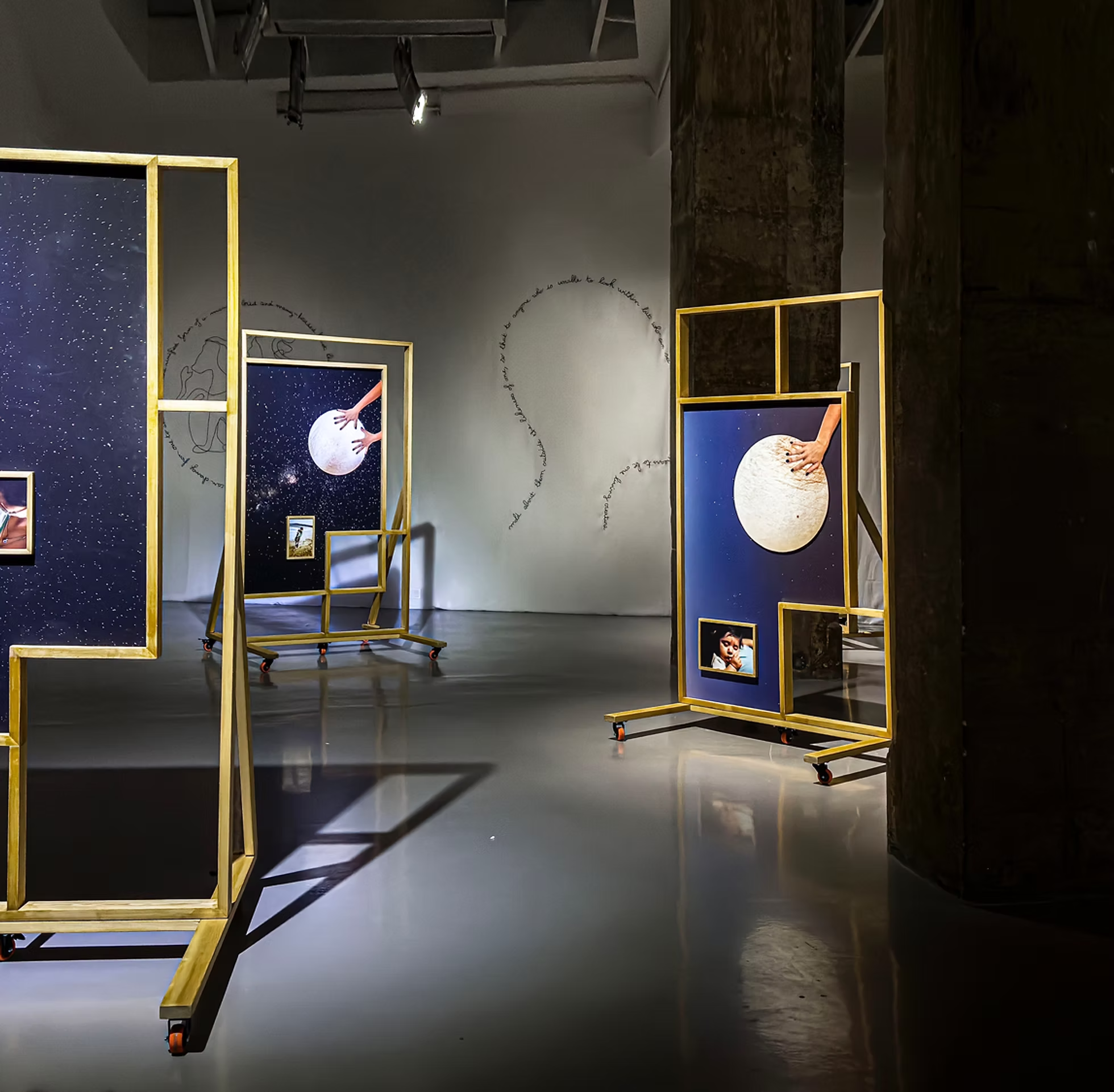
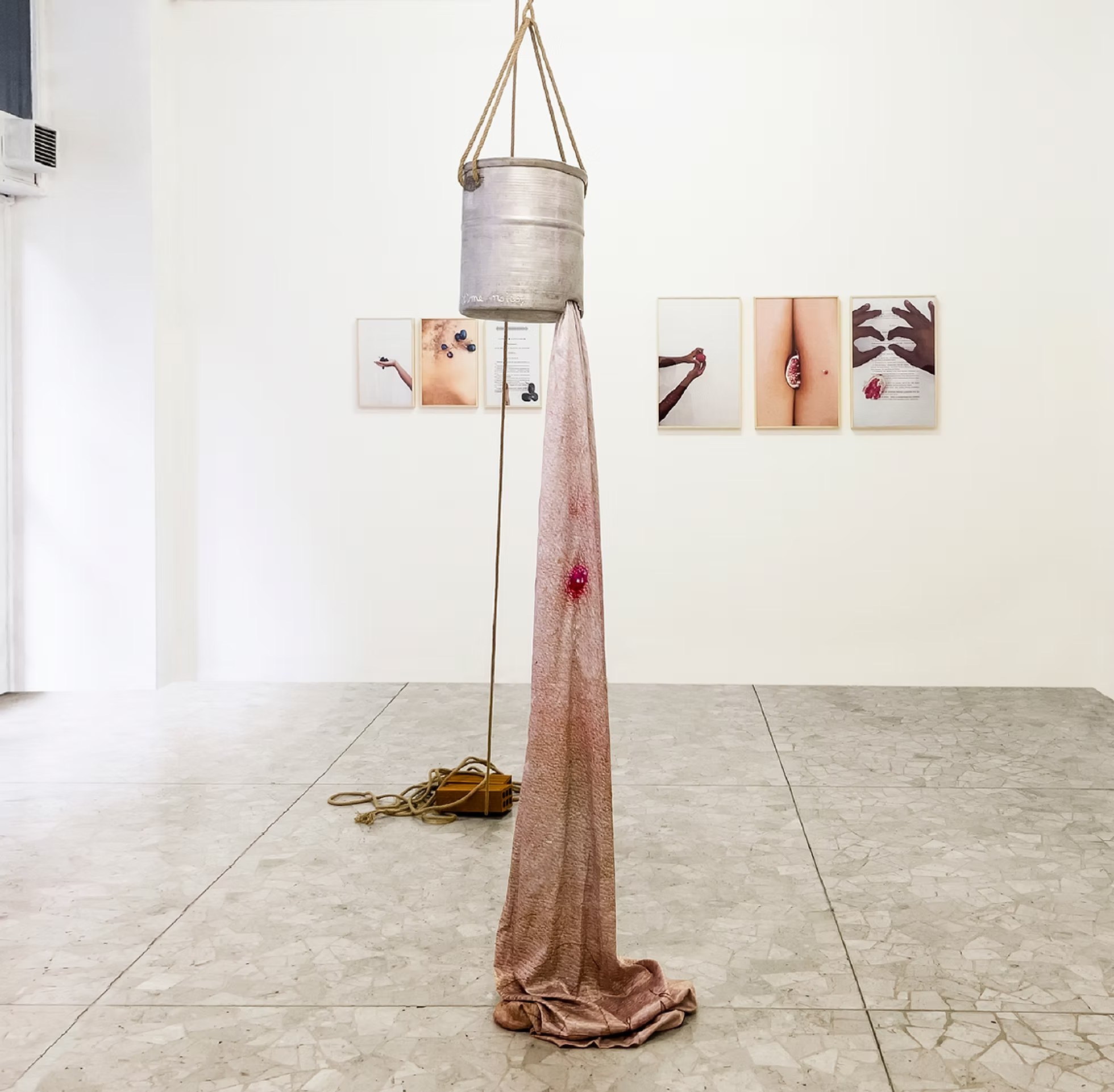
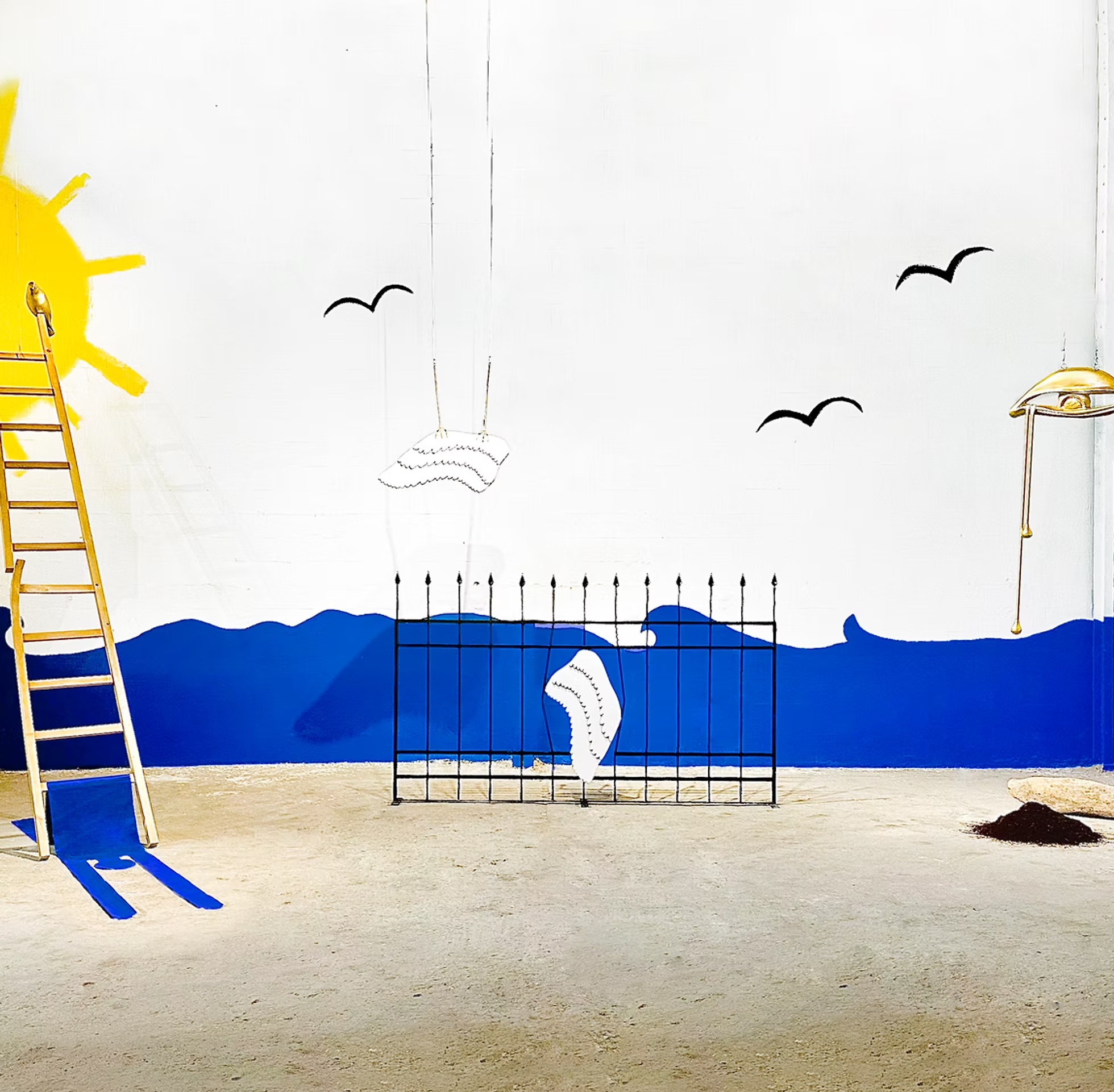
Les Juilletistes belongs to It Is Always Summer Somewhere, a multimedia project that began during two months spent by the artist on the island of Lesbos in the summer of 2018. Residents, tourists, migrants and European border patrols occupied the same island while experiencing radically different relationships to its shores and surrounding sea.
For some, the Mediterranean appeared as a holiday landscape or a source of livelihood. For others, it was a route towards Europe, a border under surveillance or a dangerous passage whose arrival could never be guaranteed. These realities coexisted within the same landscape without necessarily being visible to one another.
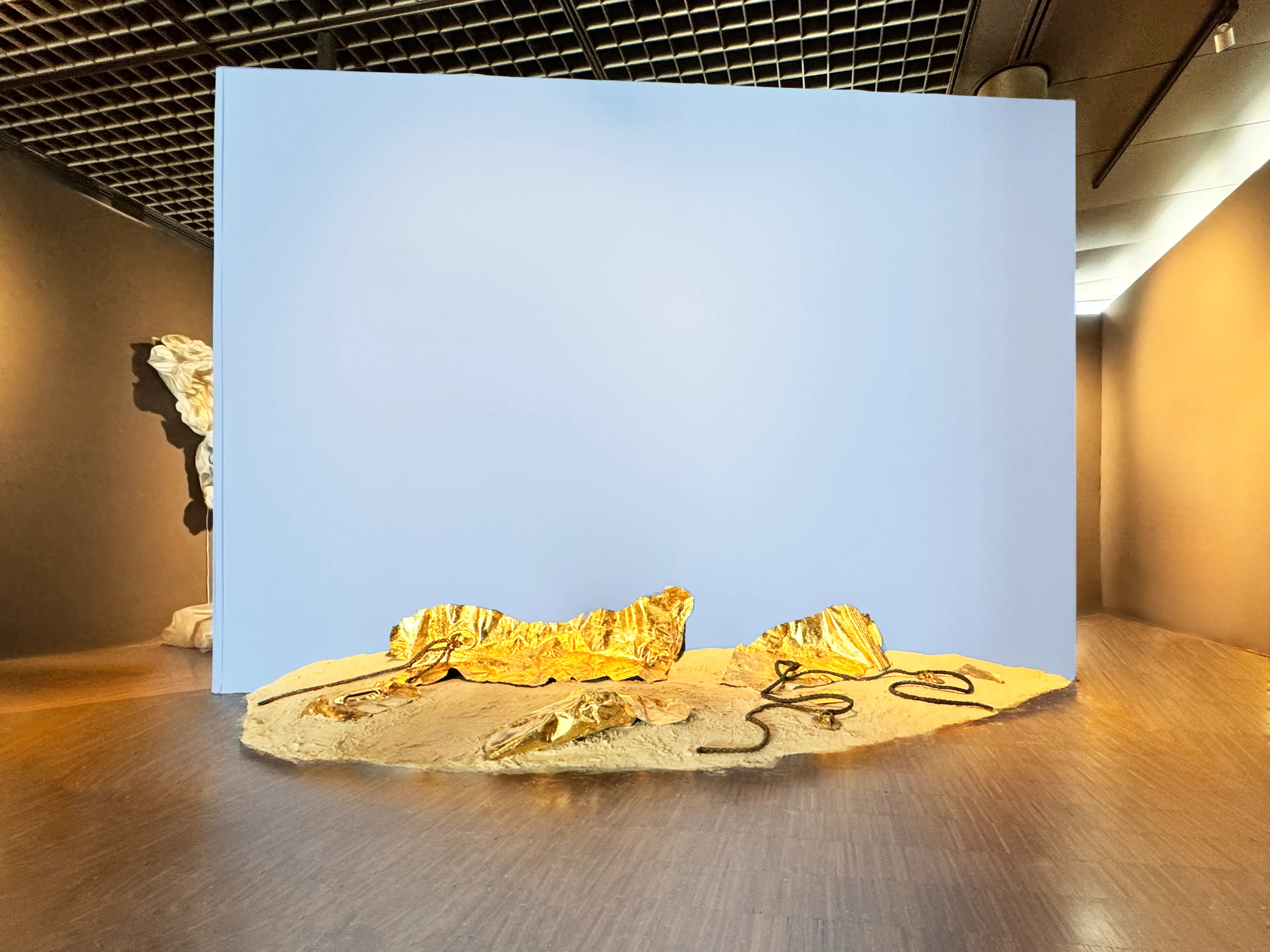
While walking along a public beach frequented by residents and tourists, the artist stepped onto the remains of an inflatable boat half-buried in the sand. The boat had been used by migrants to cross from the Turkish coast to Lesbos and had been abandoned after reaching the island. Forgotten on the beach and not removed by the local authorities, it remained among the bathers as the material trace of a passage whose passengers and circumstances were no longer visible.
Starting from what remained at the end of the crossing, the artist began trying to imagine the journey that had preceded it. The boat could not reveal who had travelled in it, what had happened at sea or what became of its passengers after their arrival. It marked the conclusion of an unknown story while becoming the point from which that story could begin to be reconstructed.
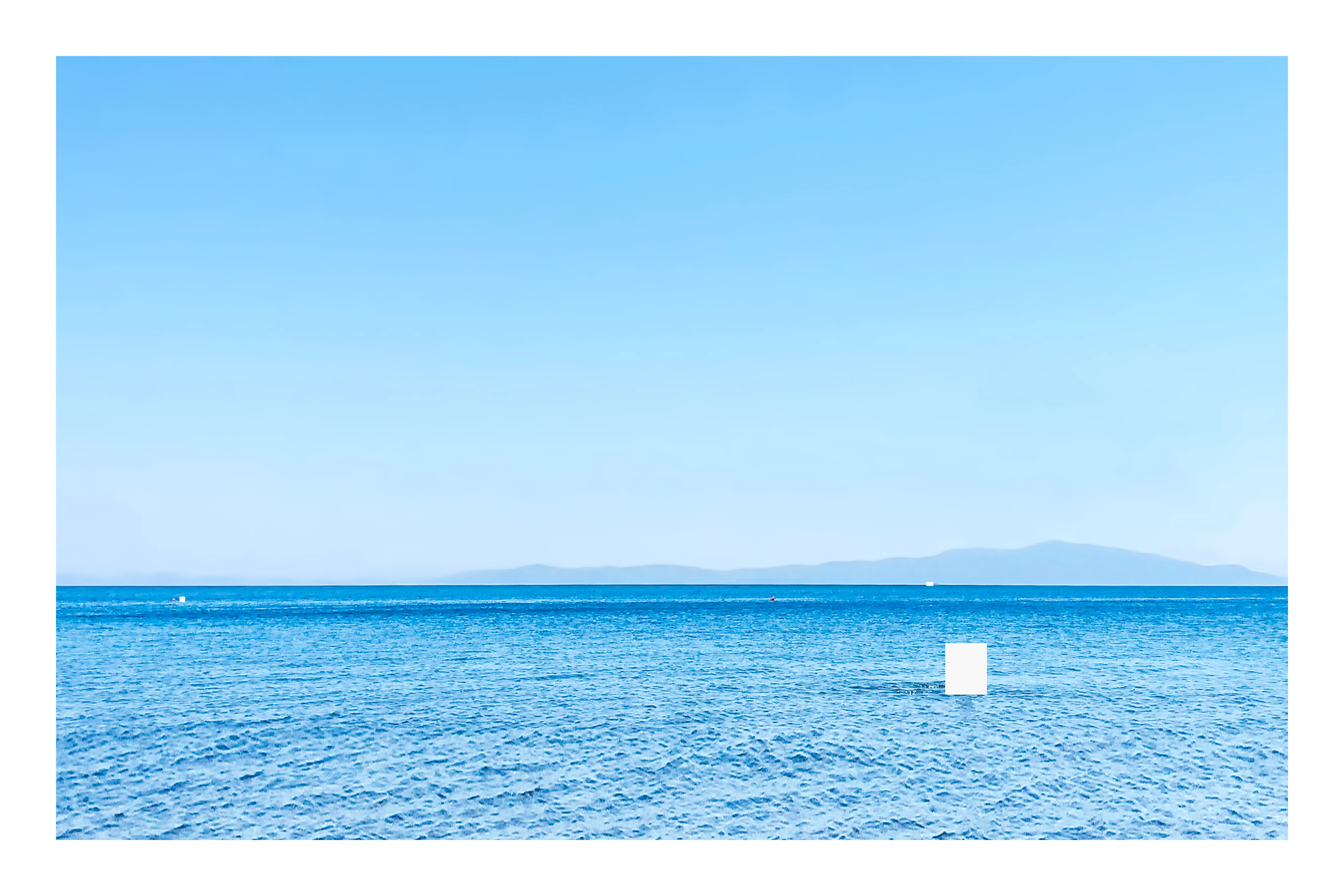
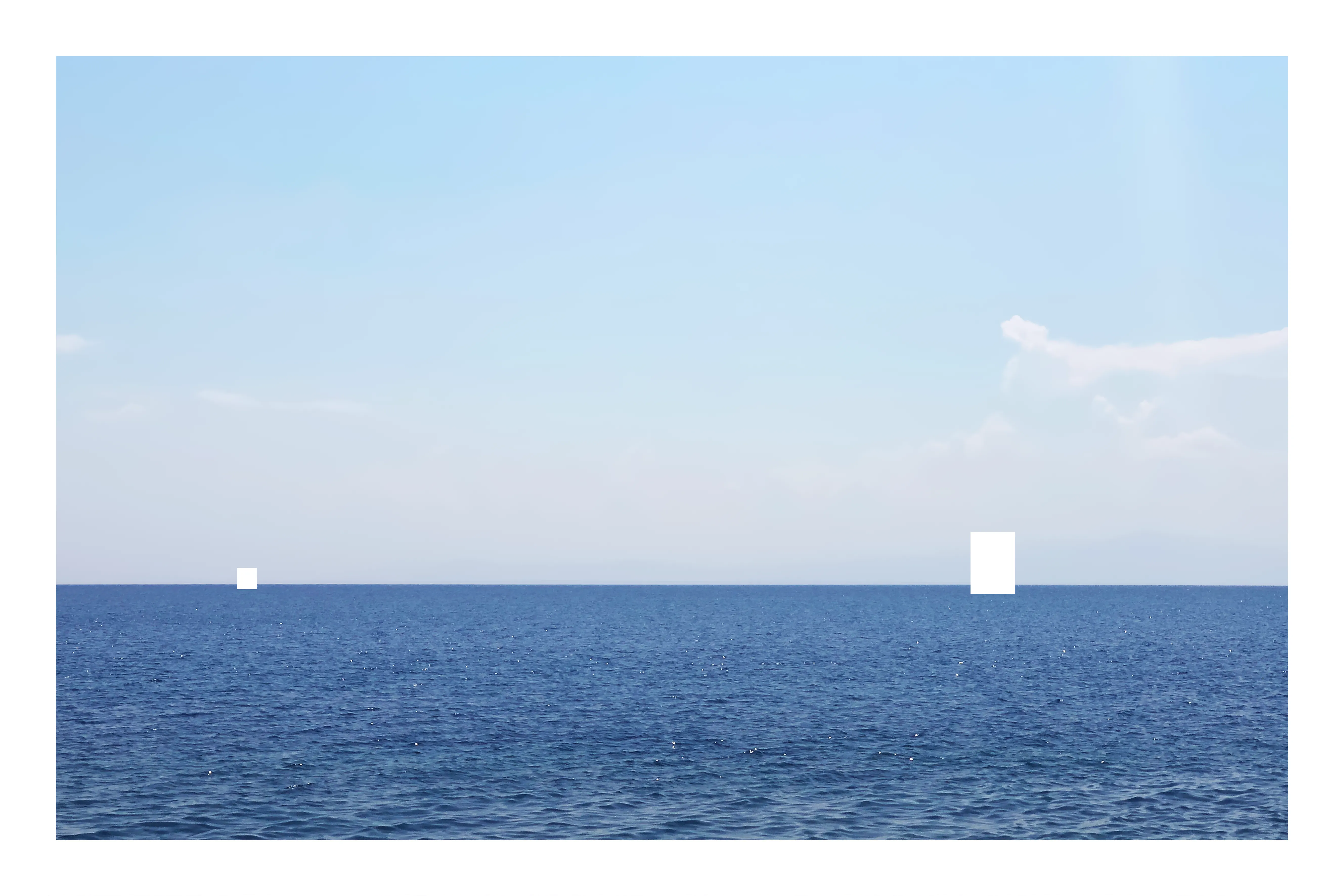
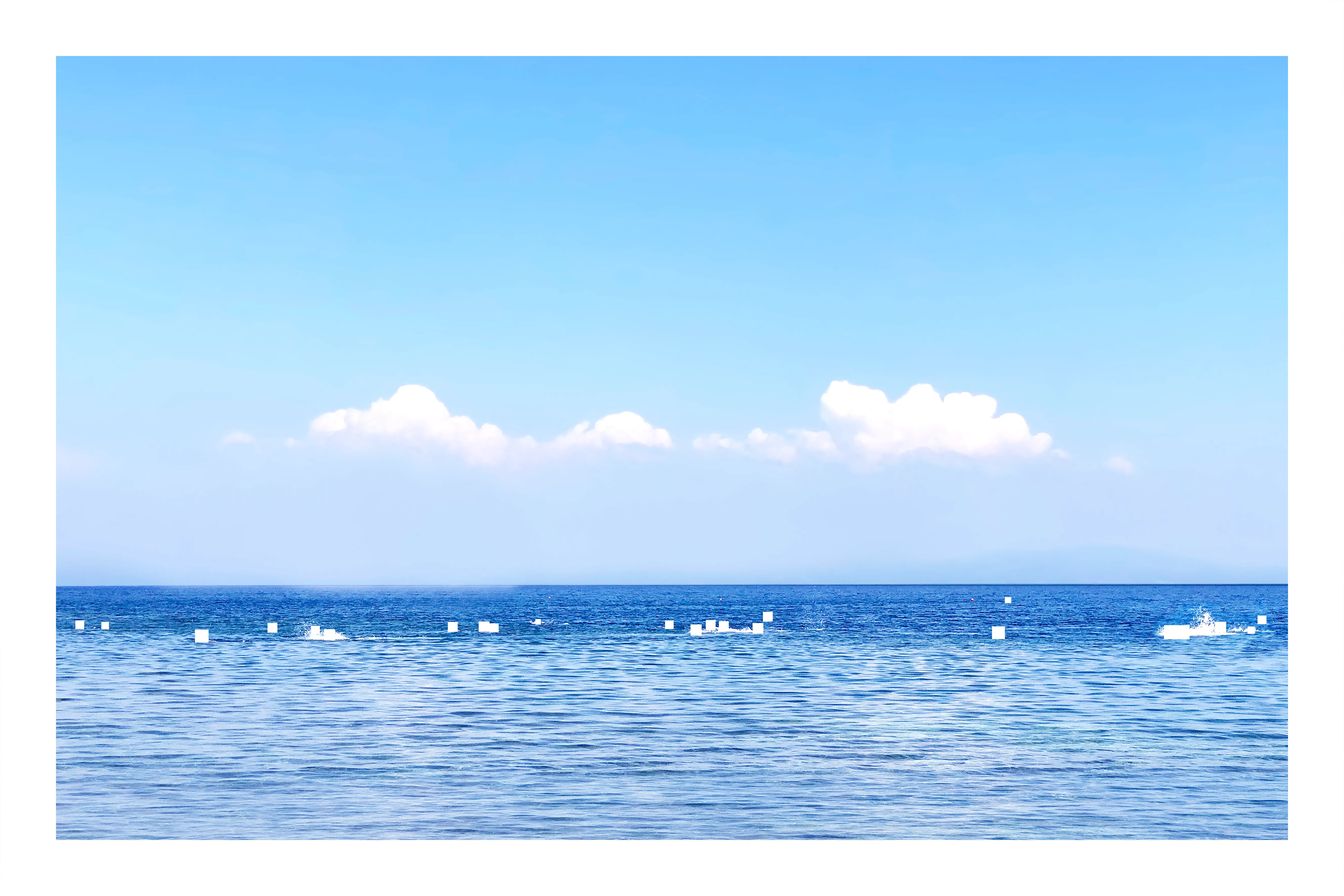
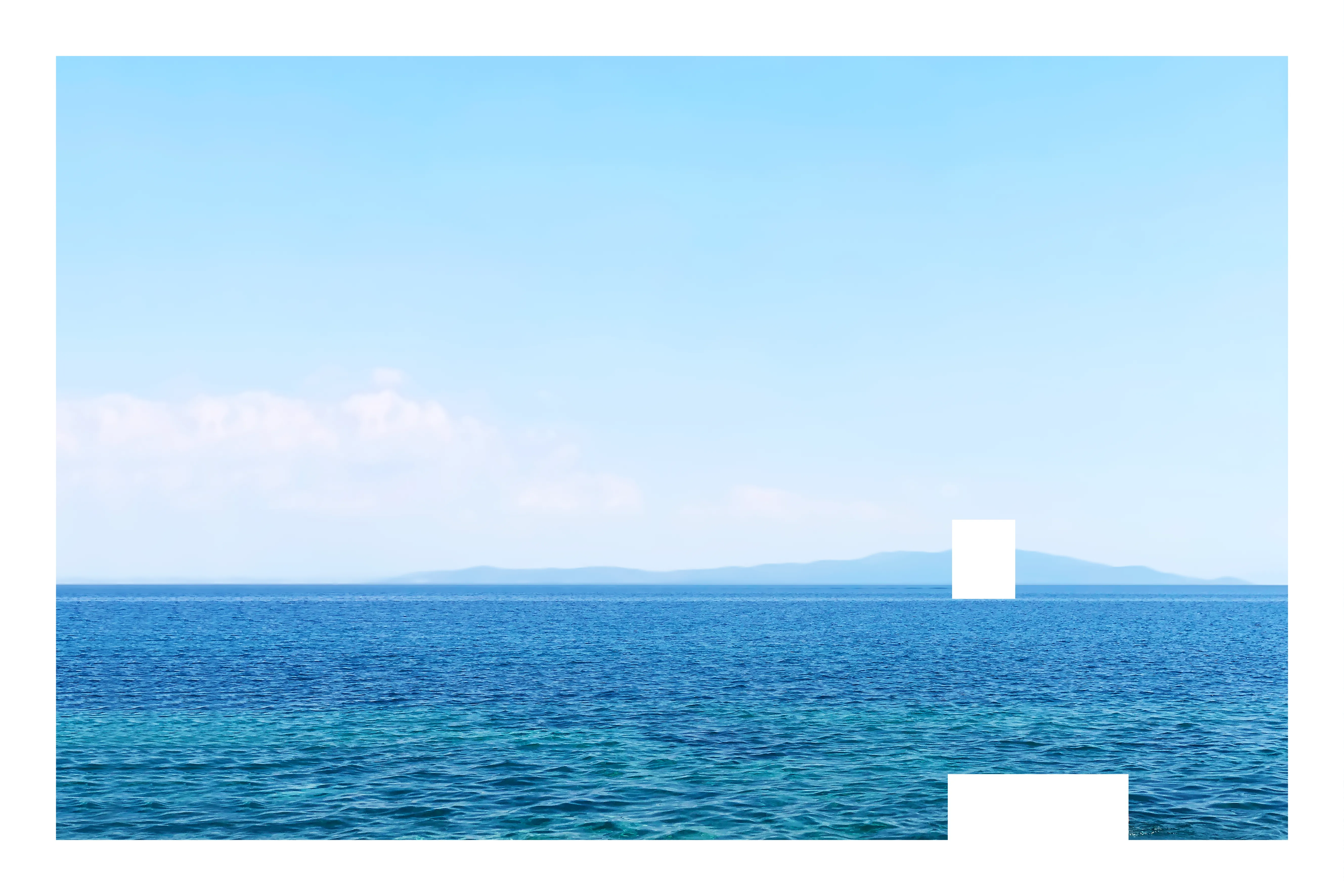
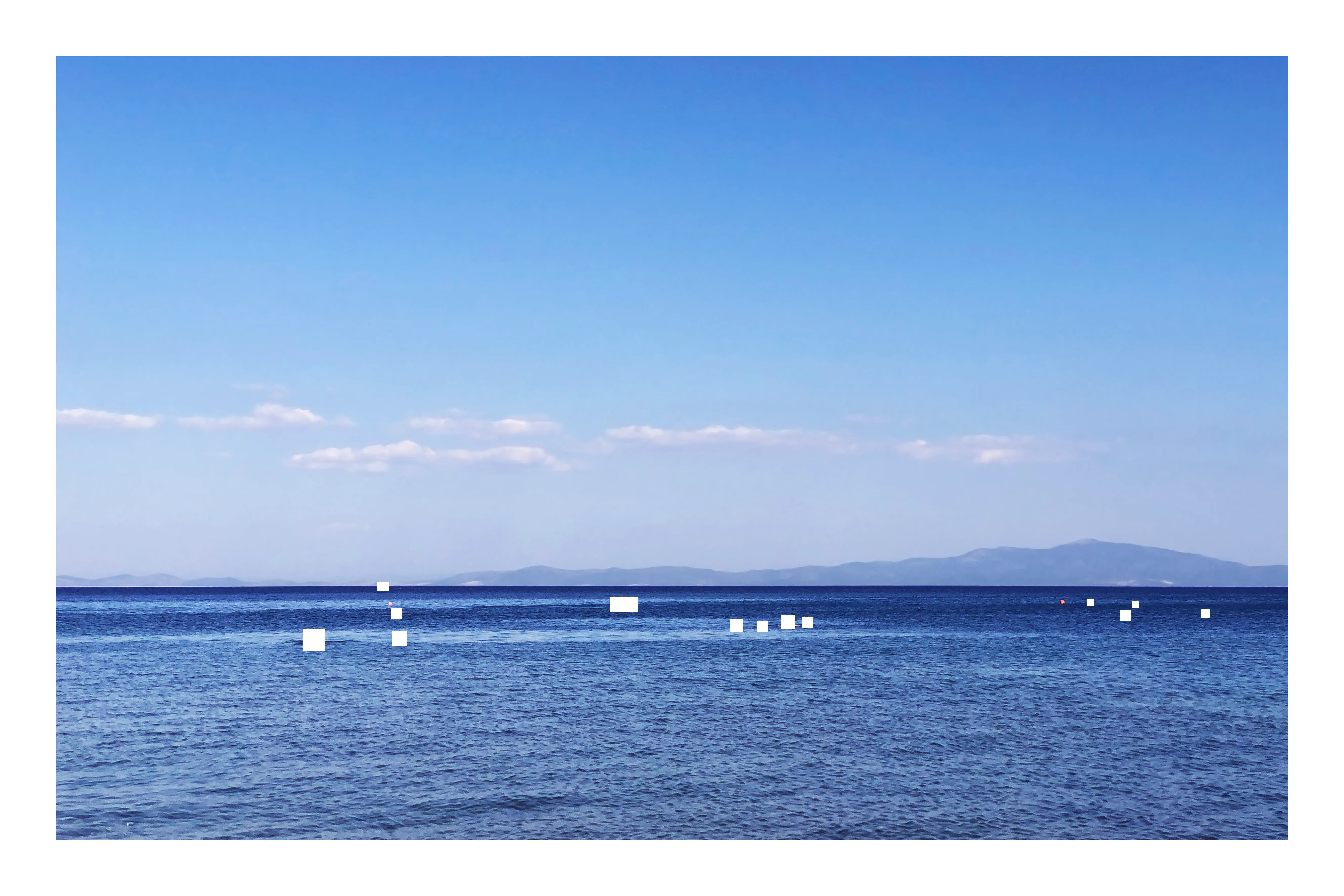
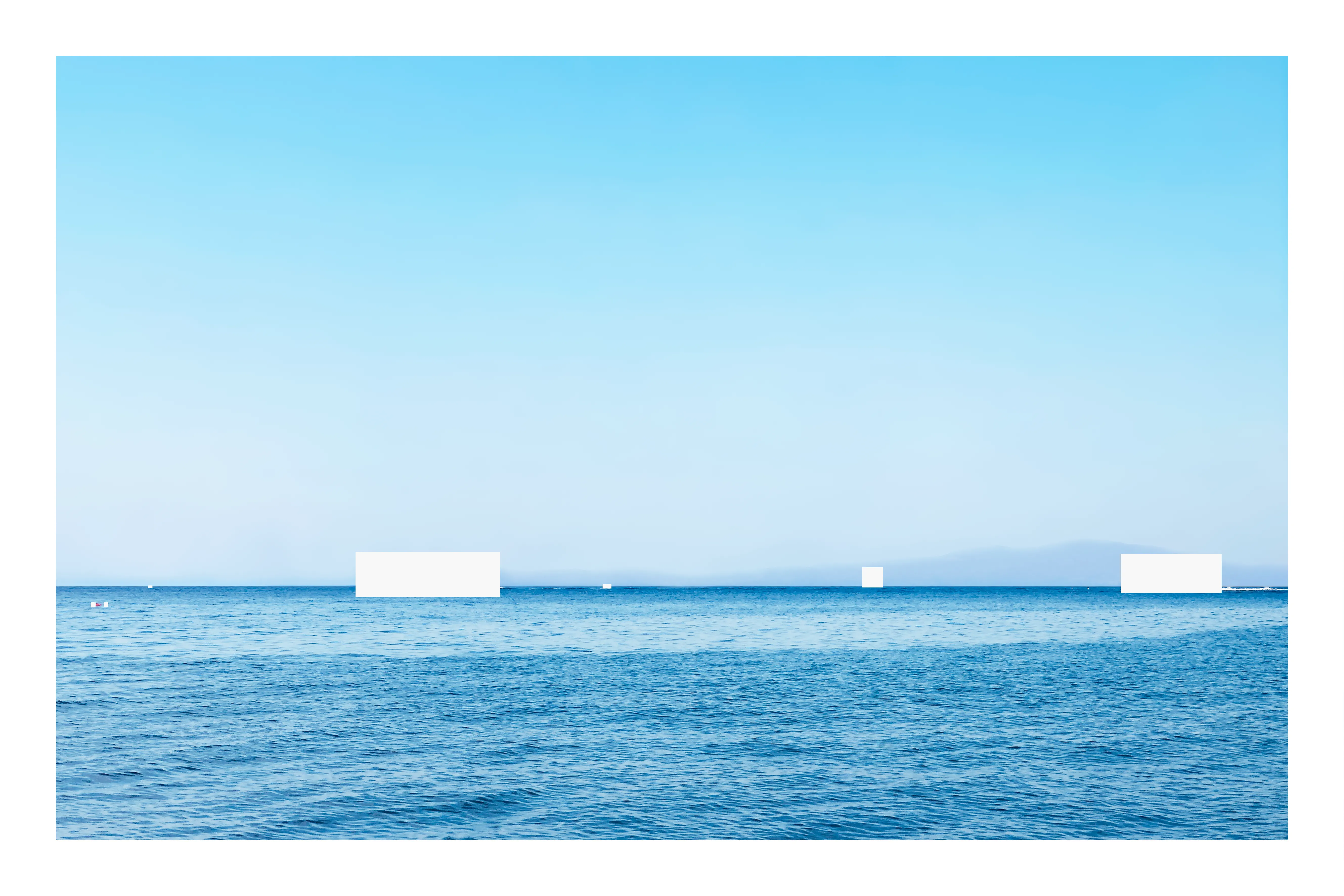
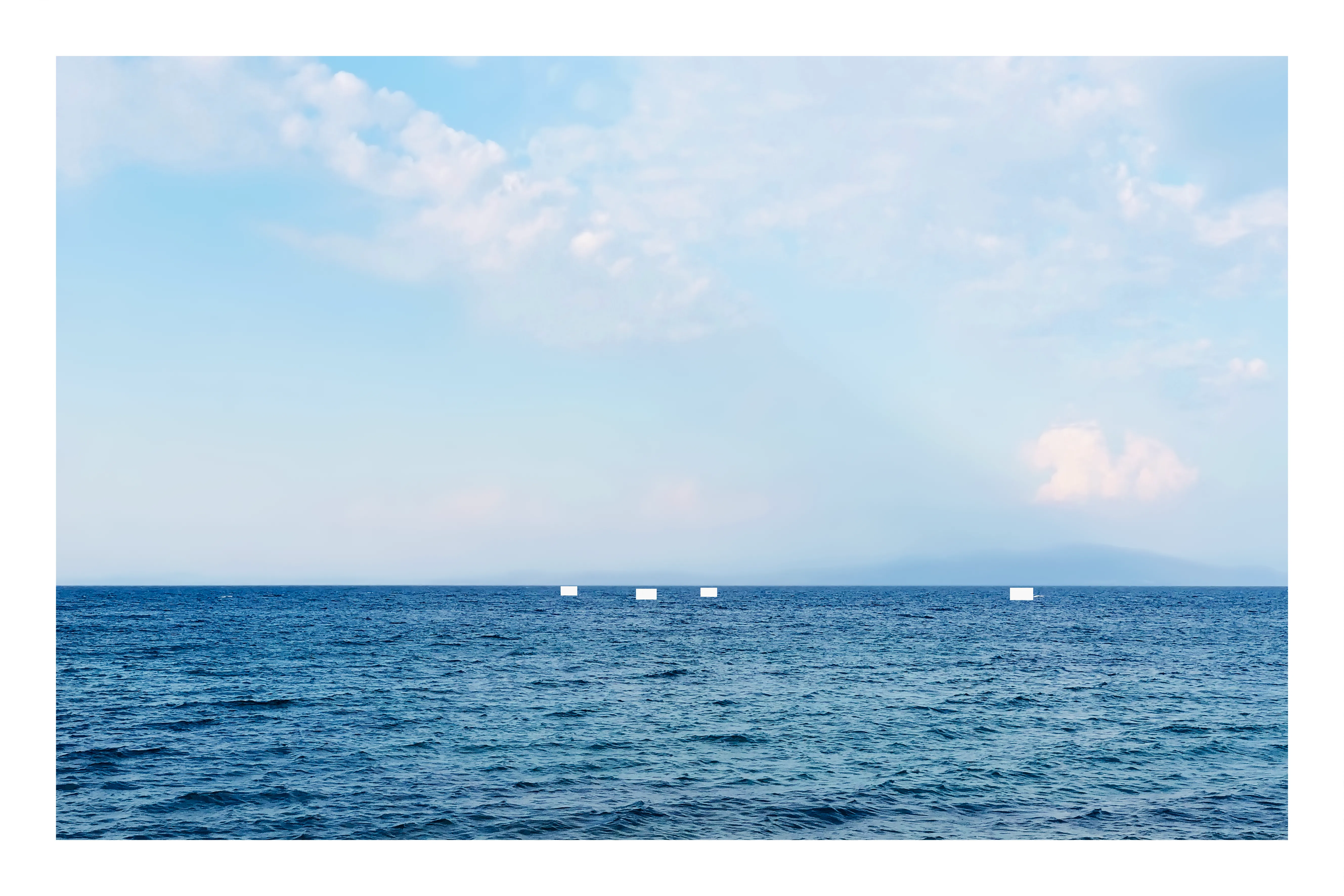
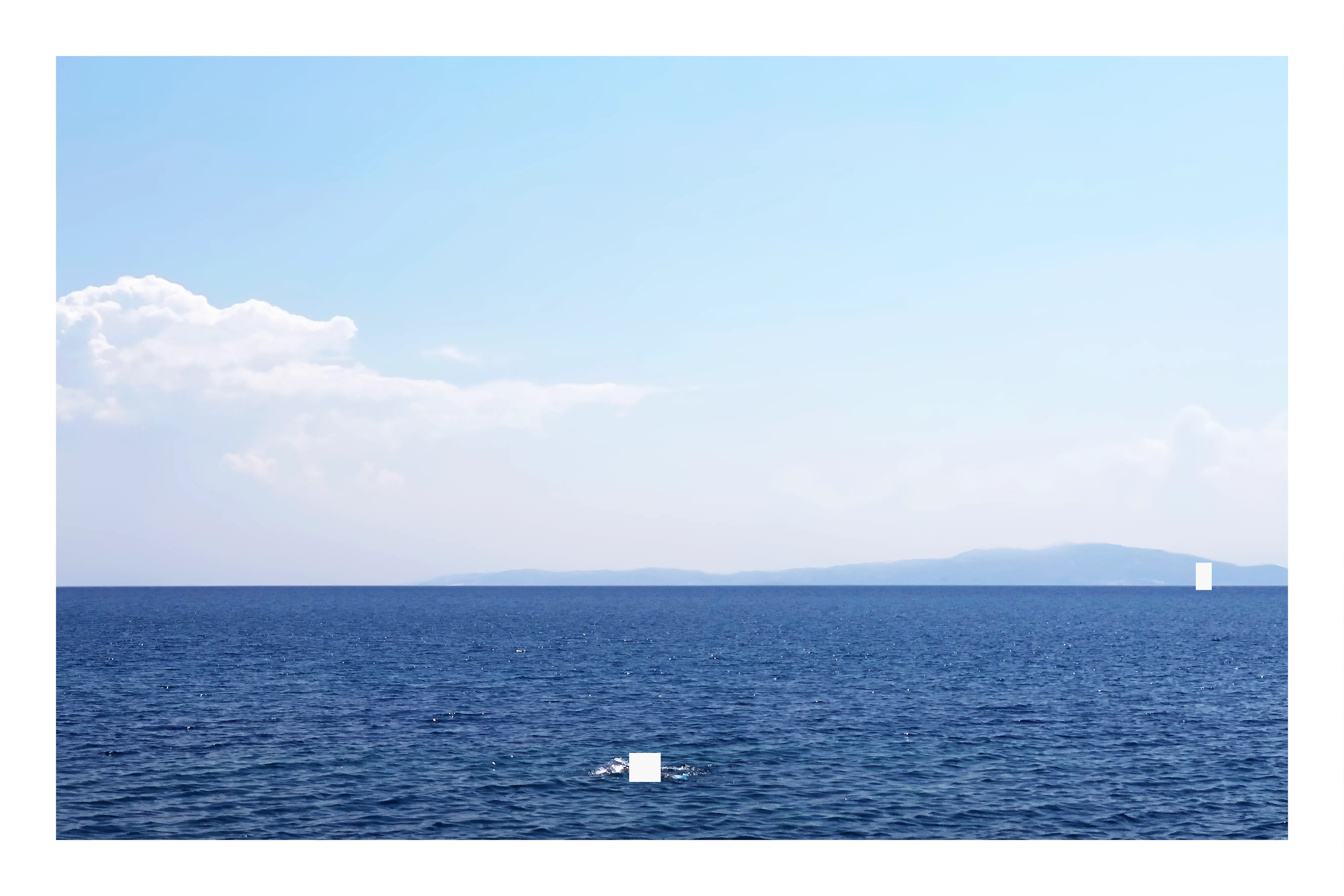
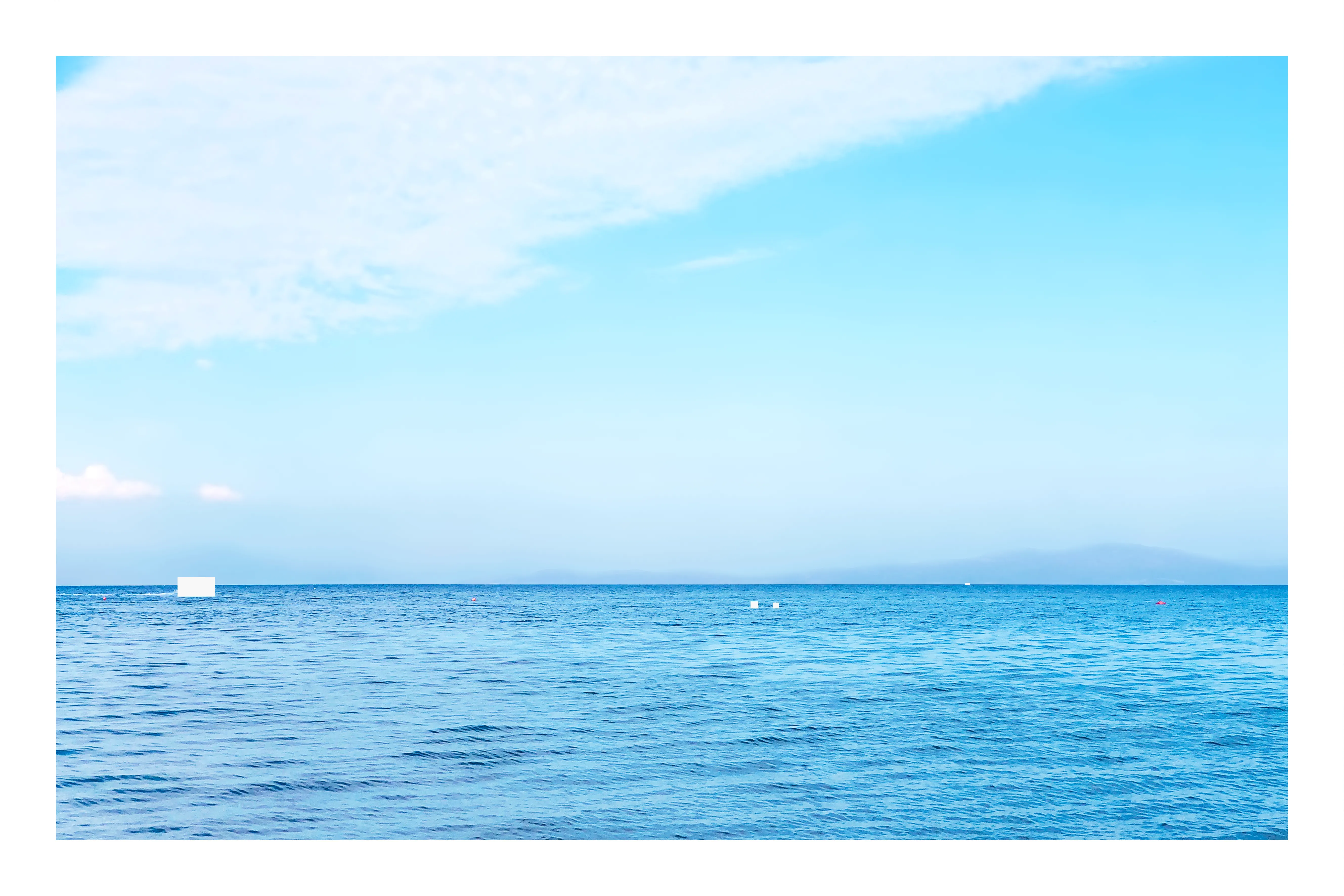
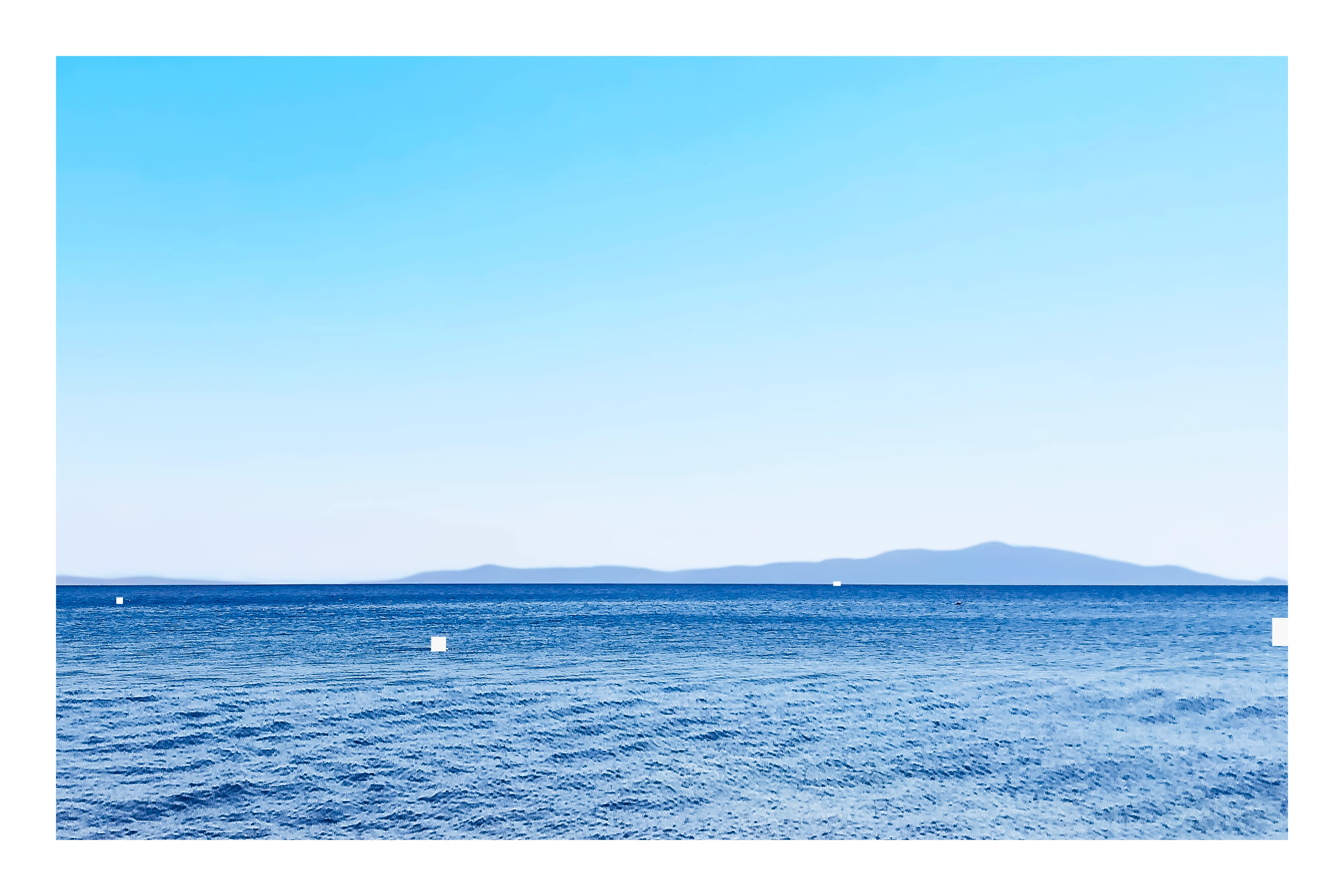
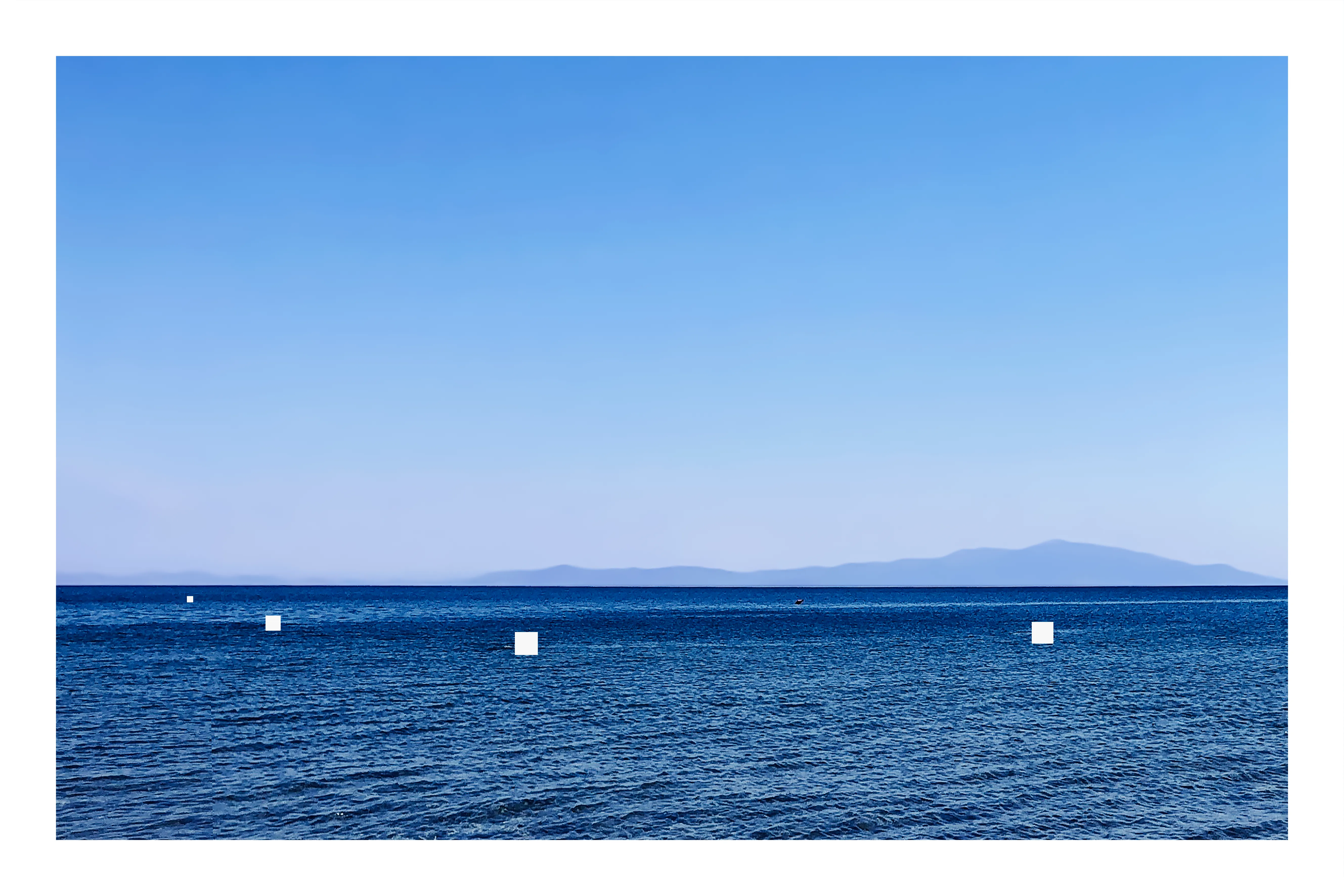
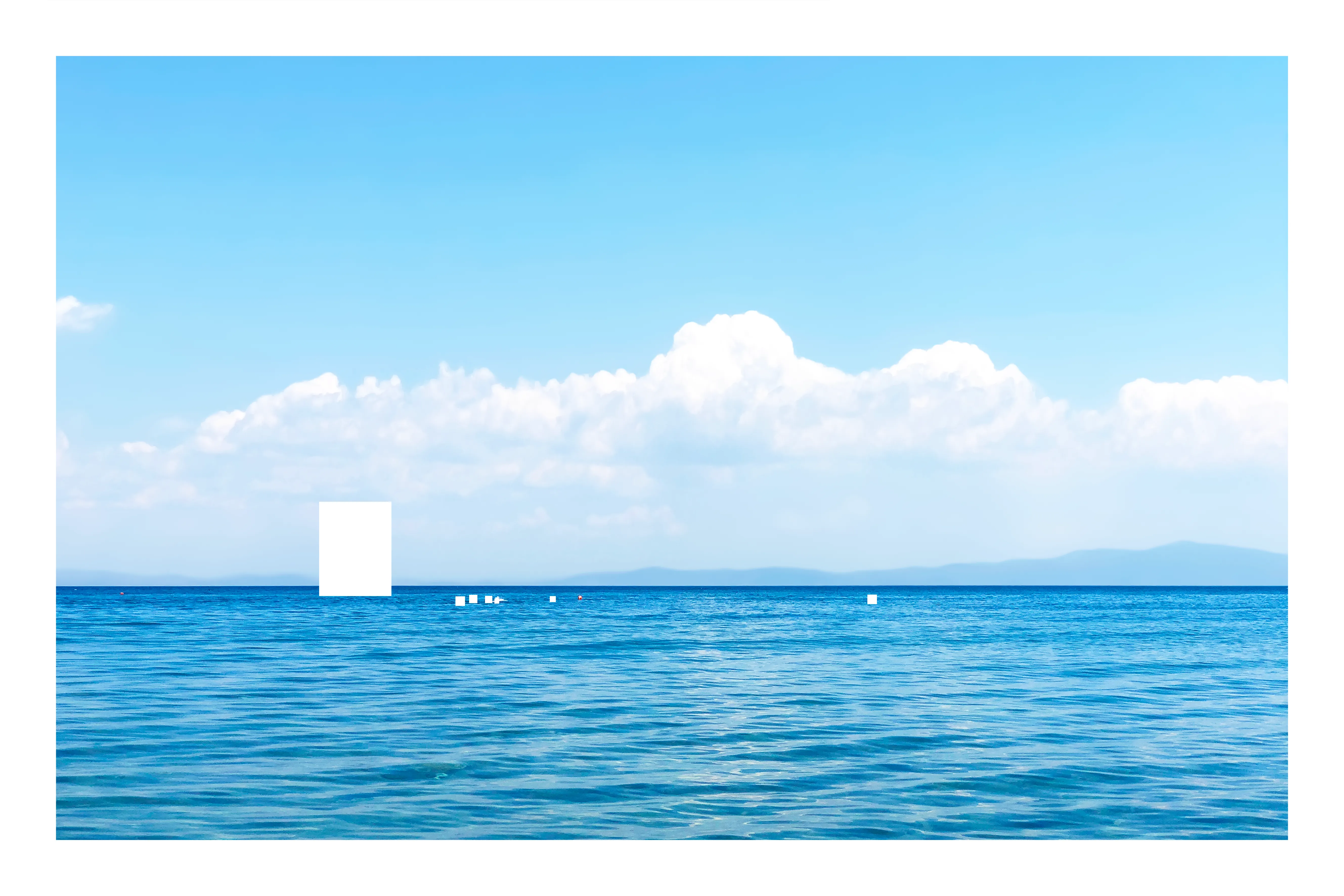
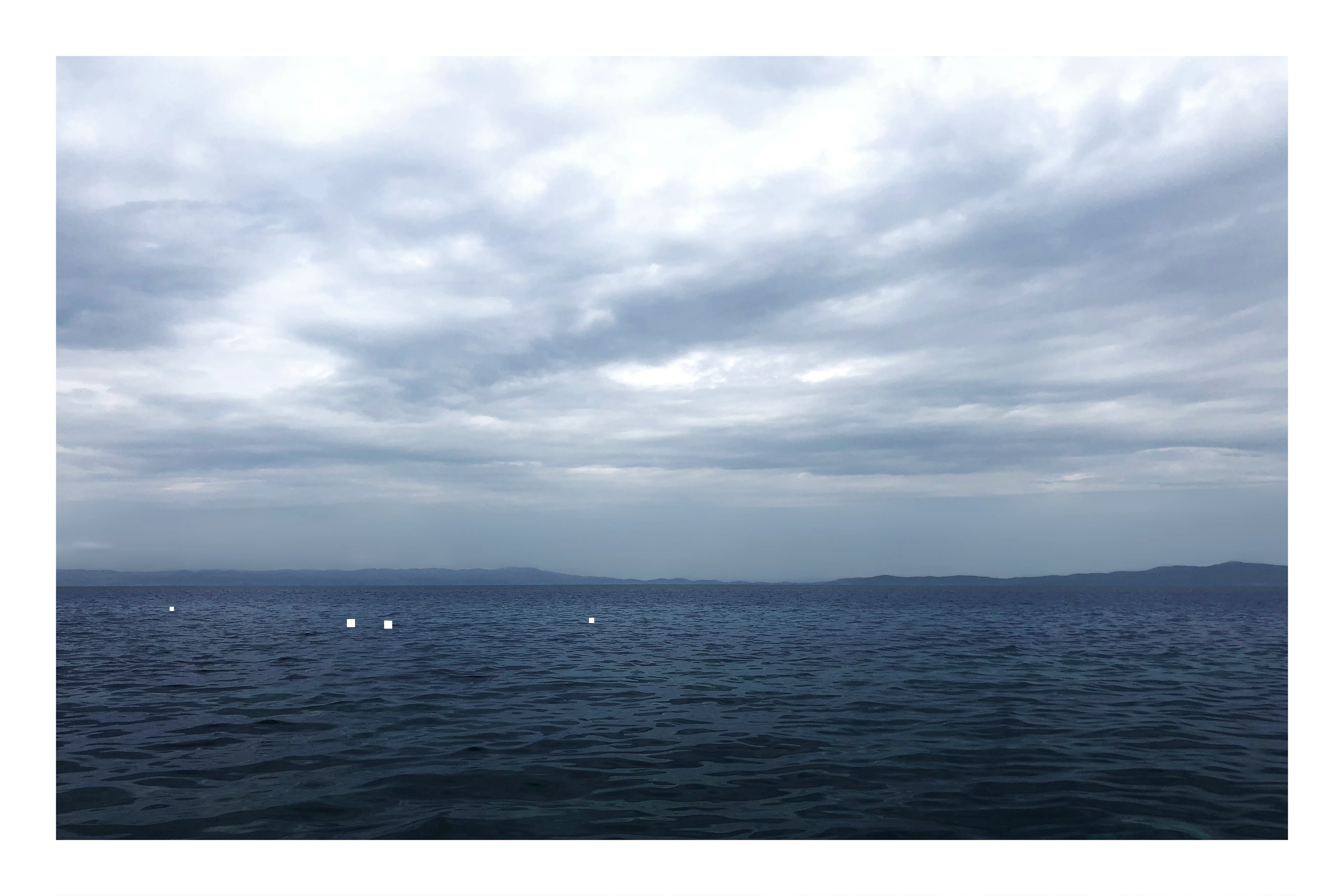
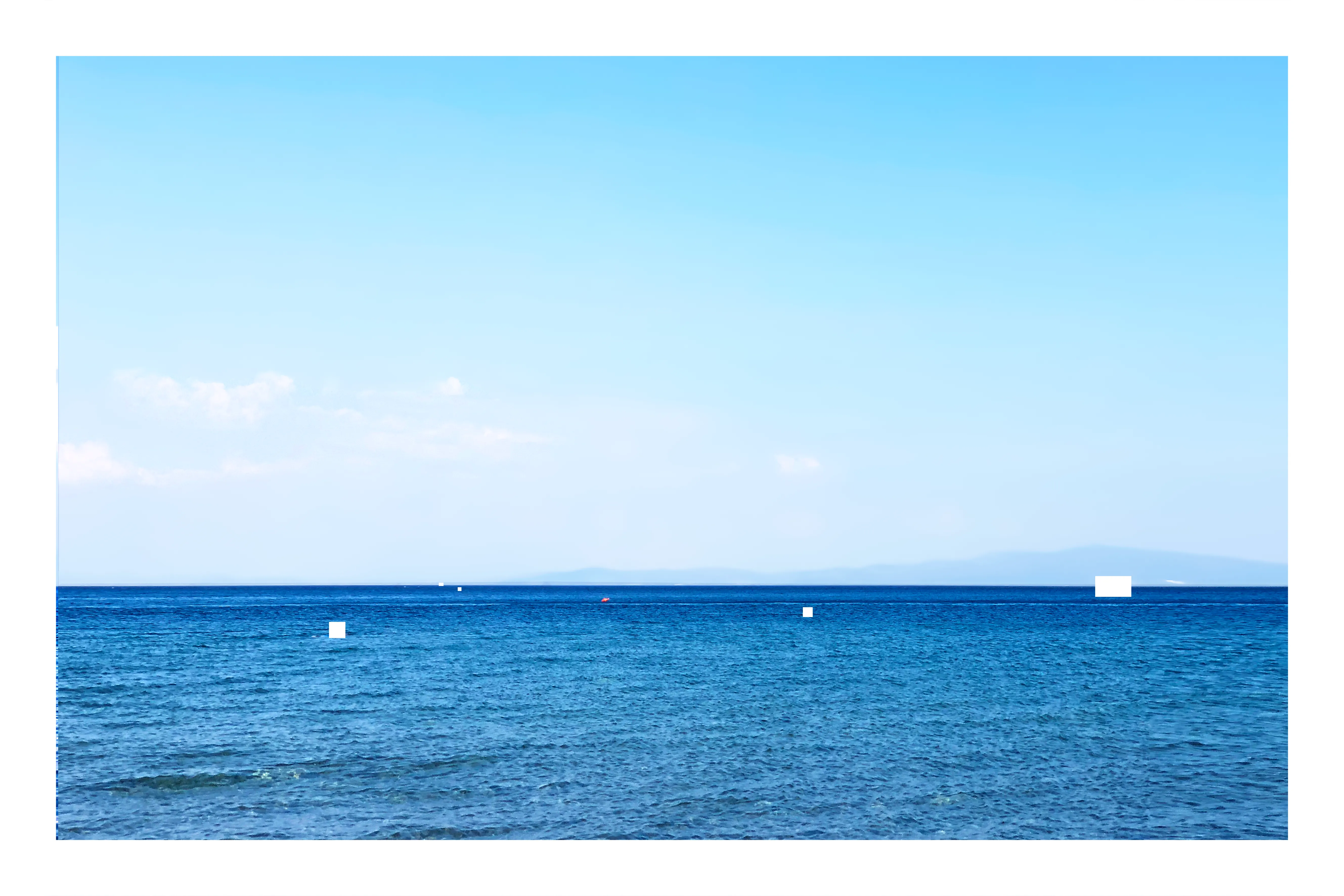
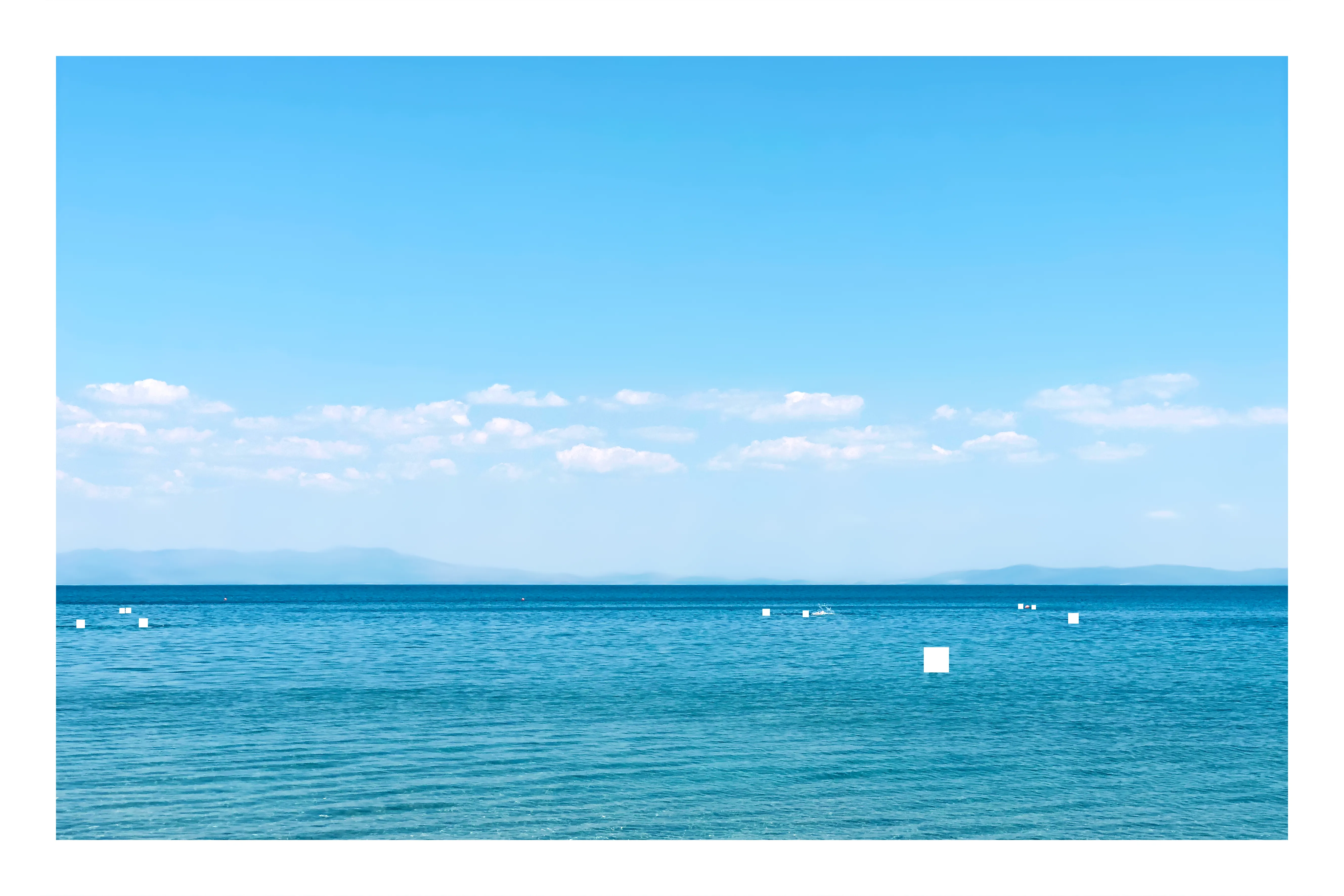
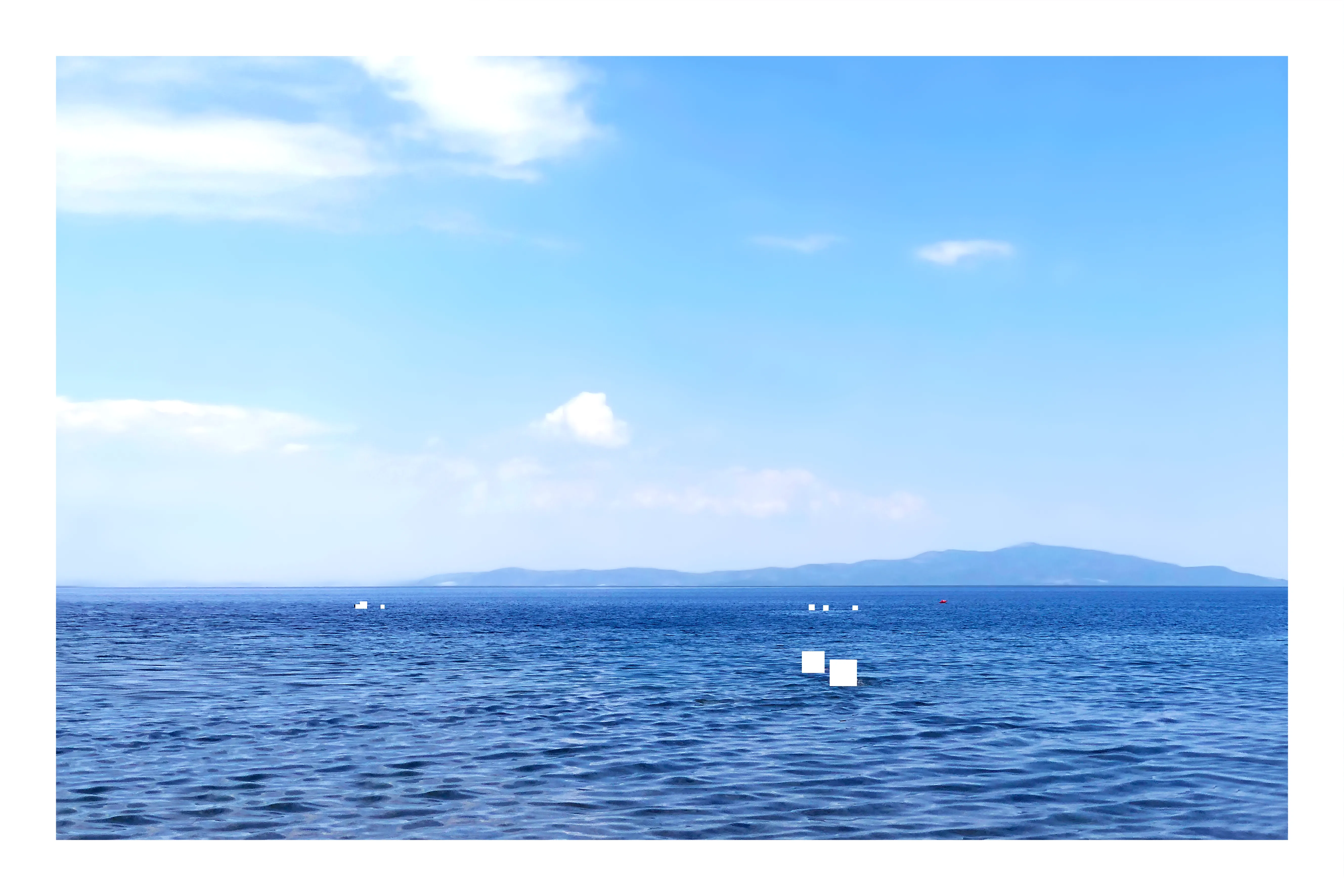
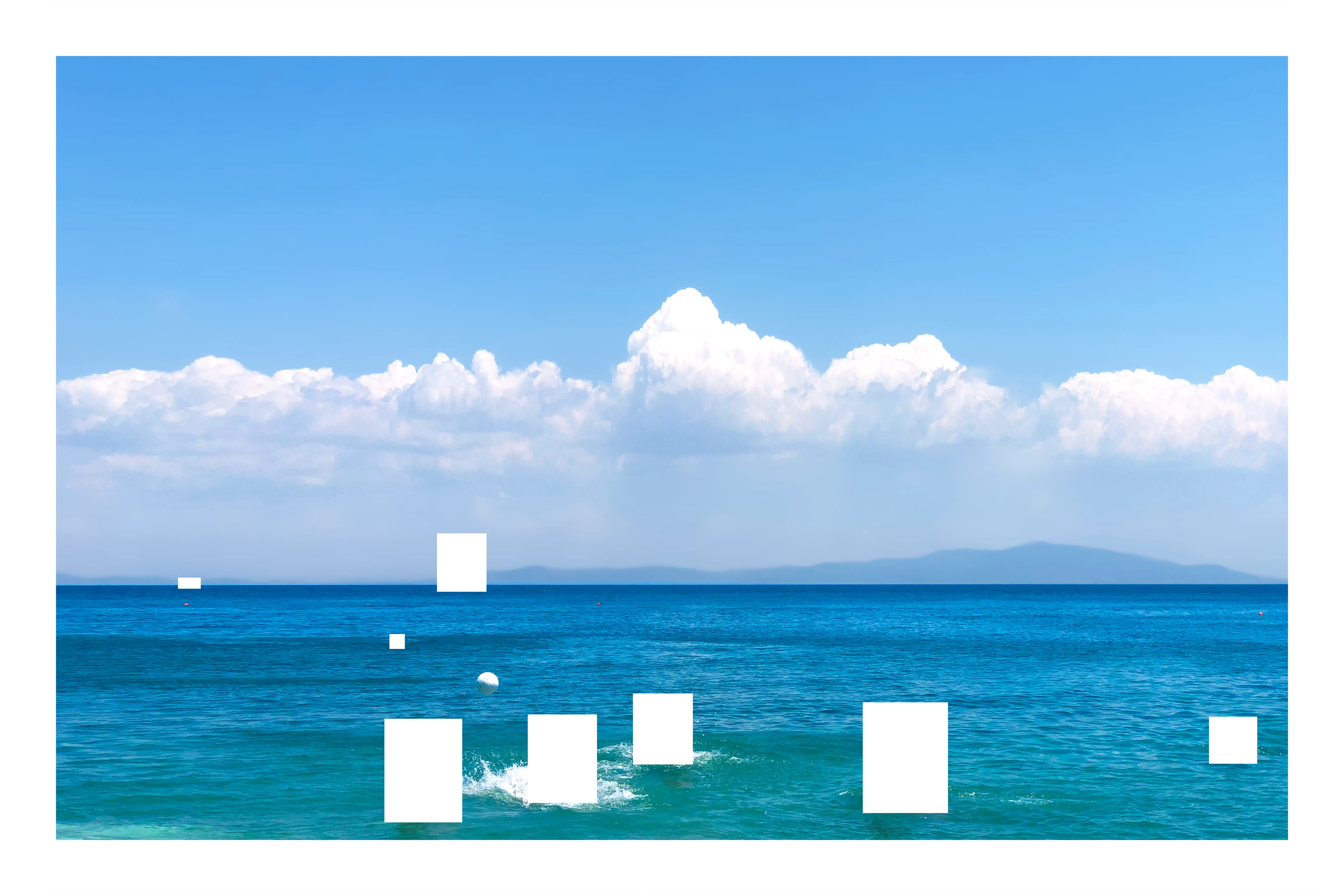
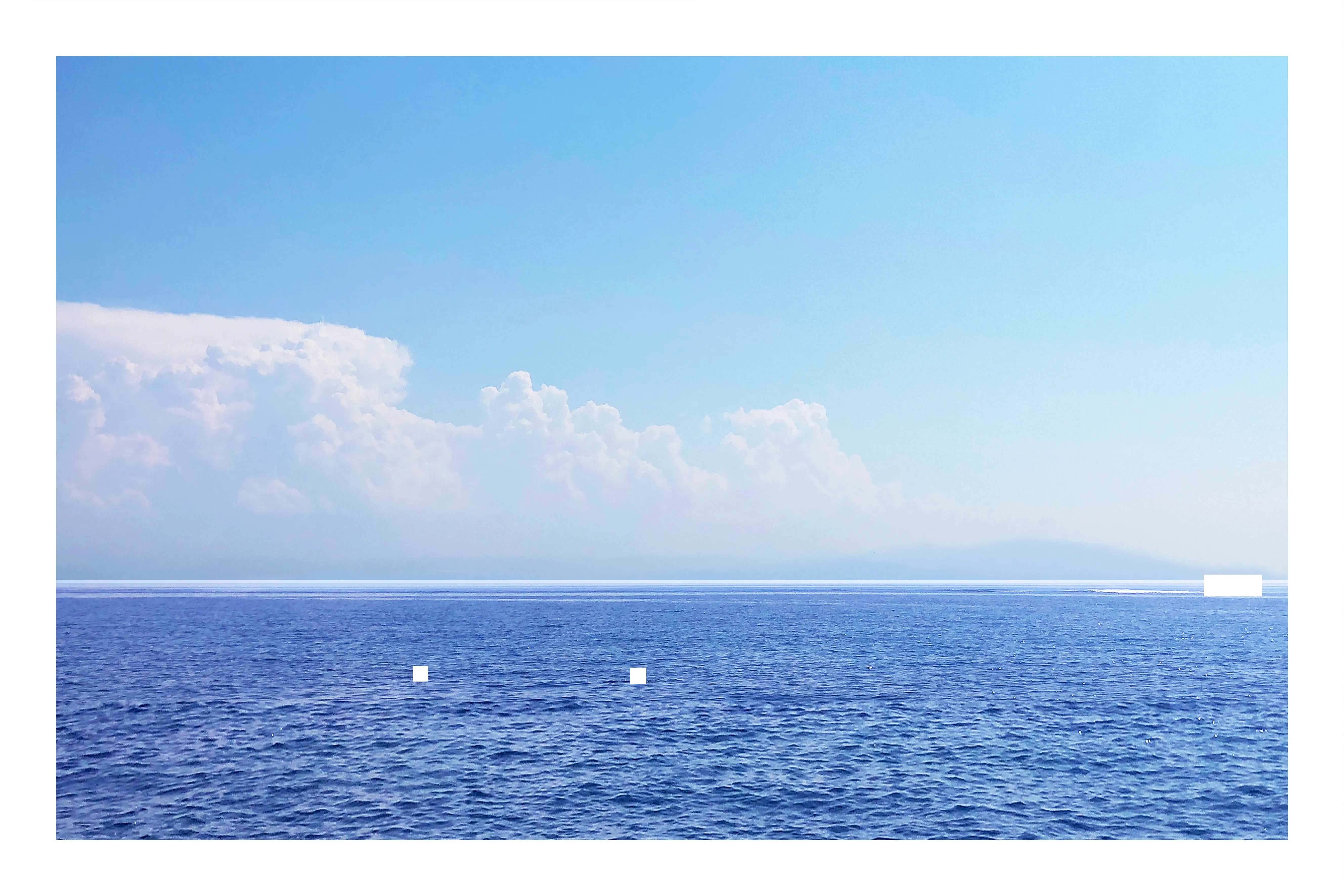
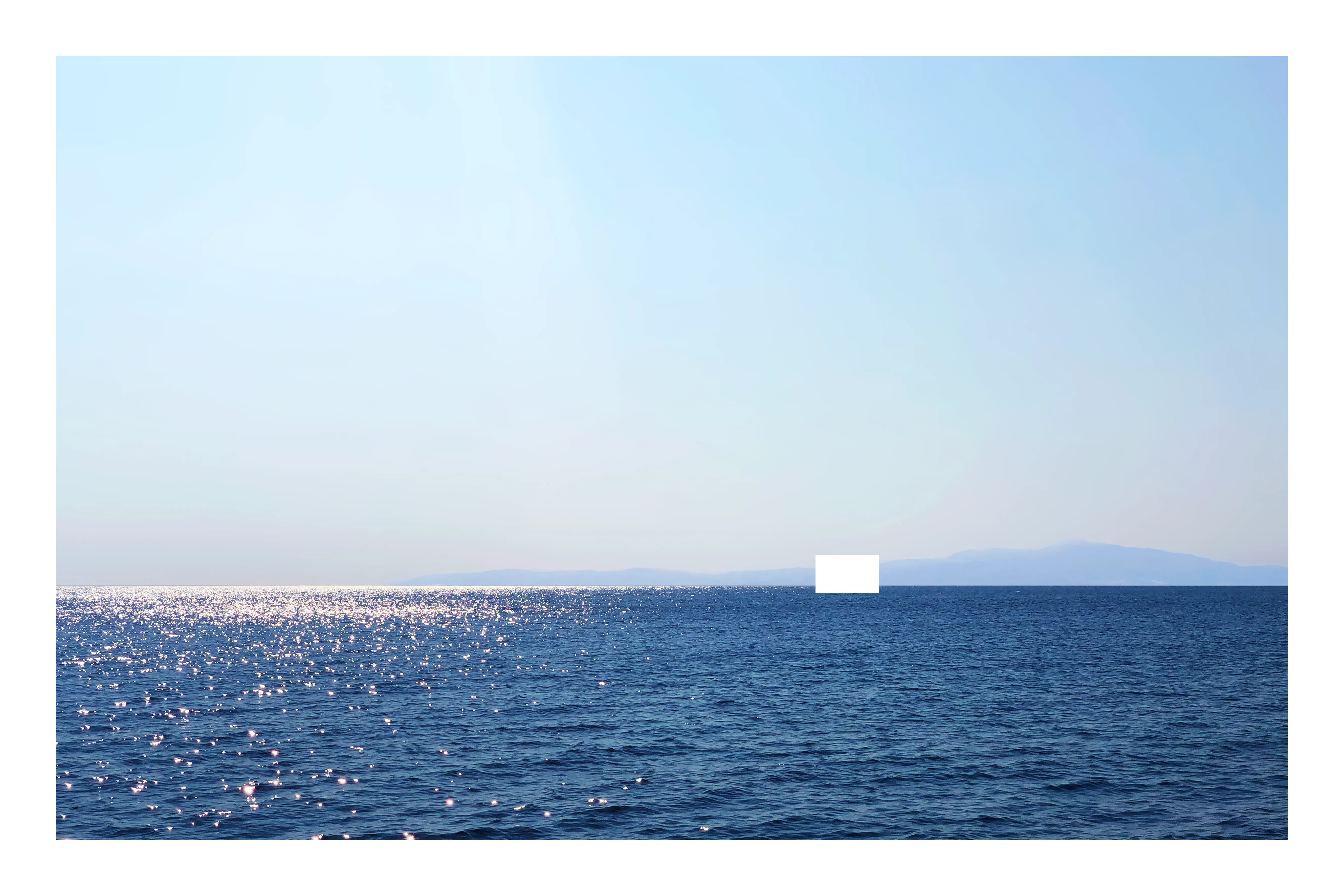
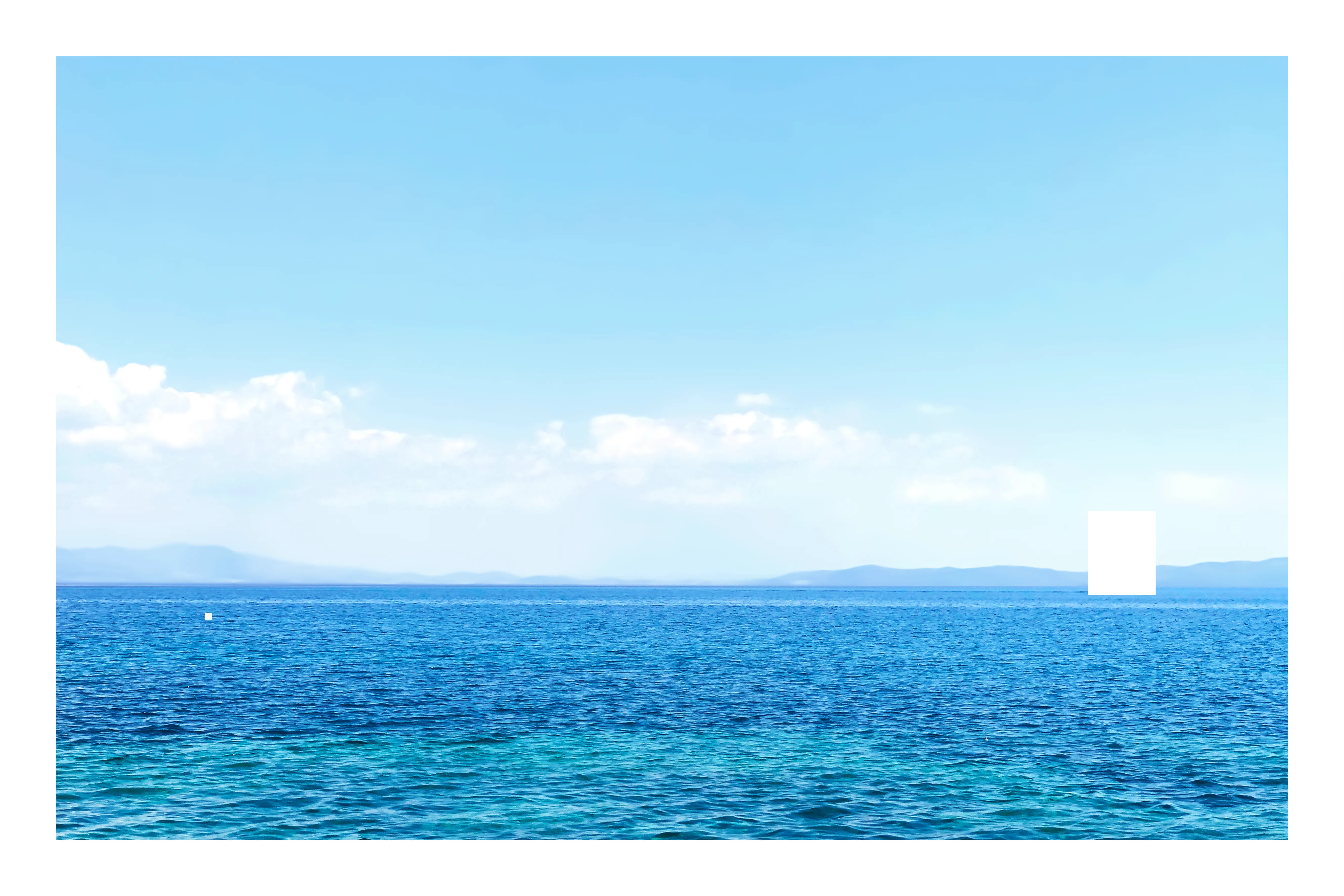
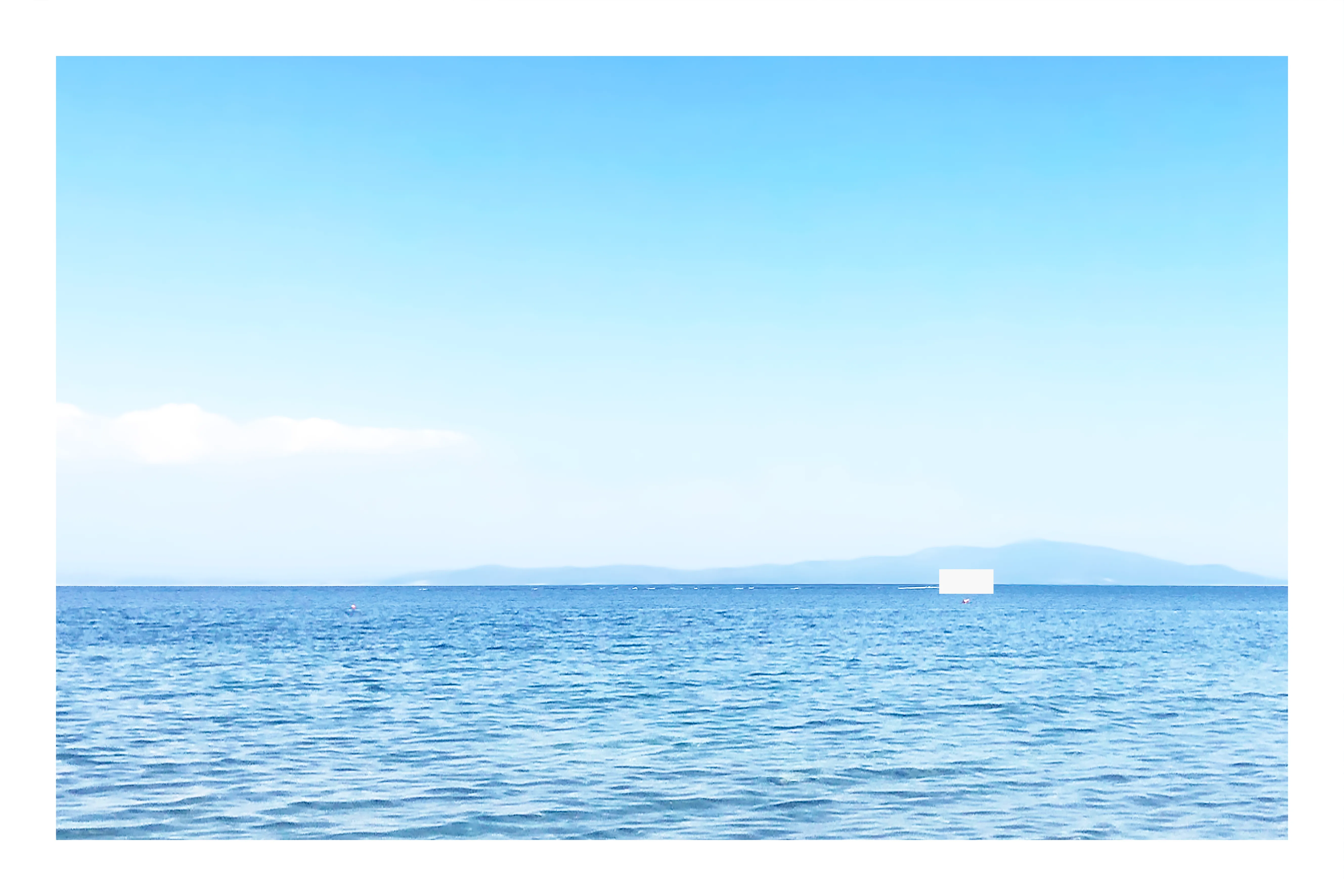
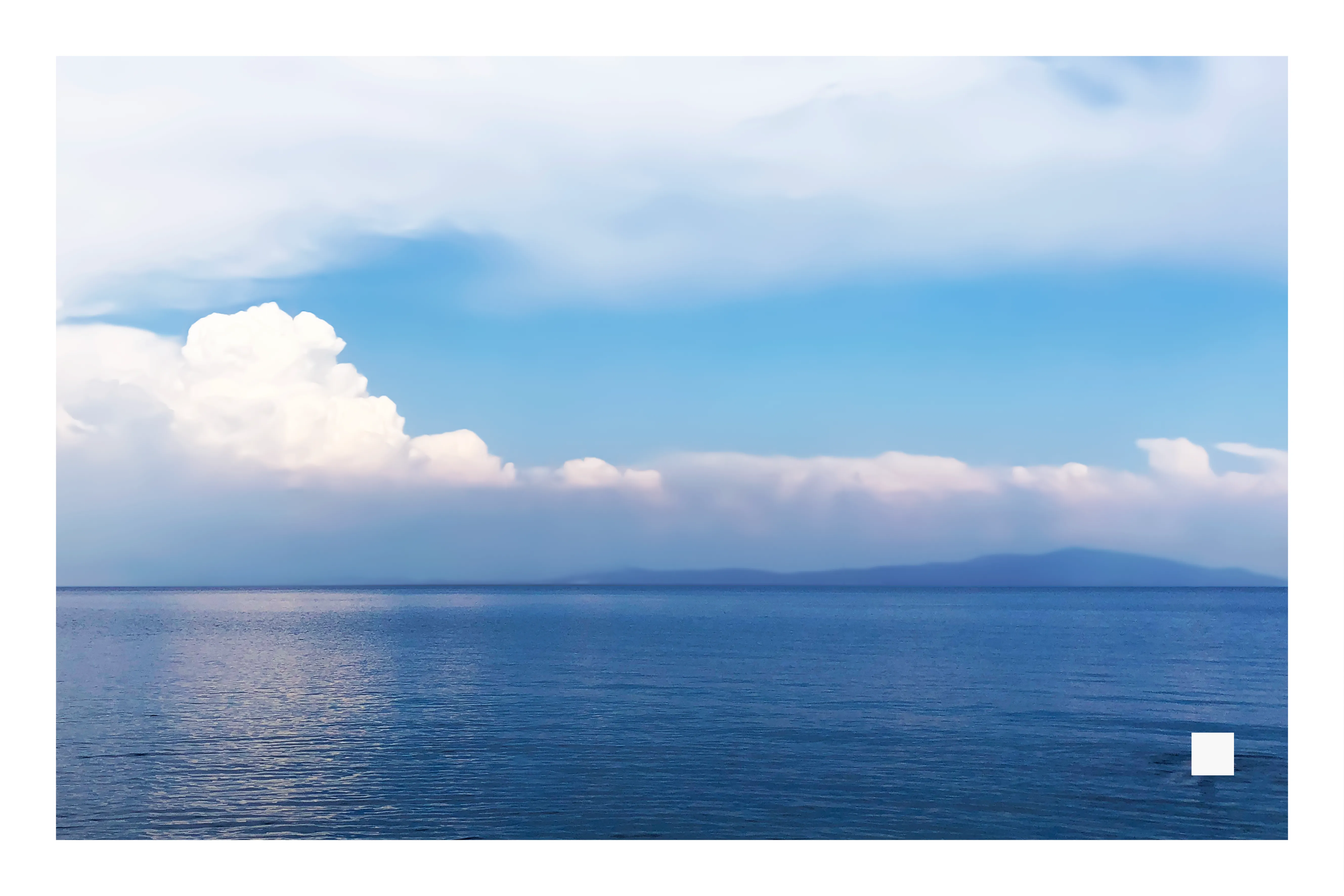
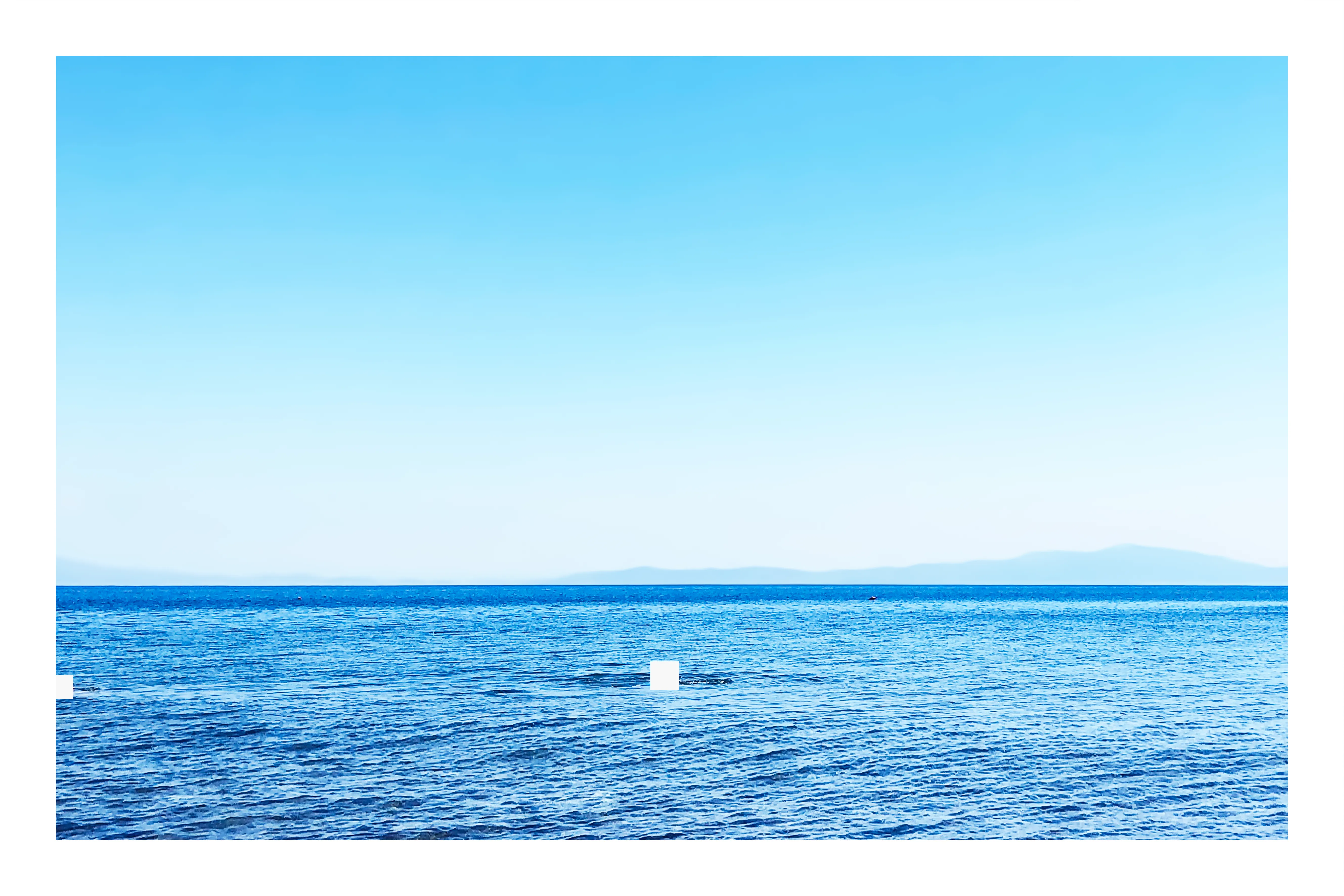
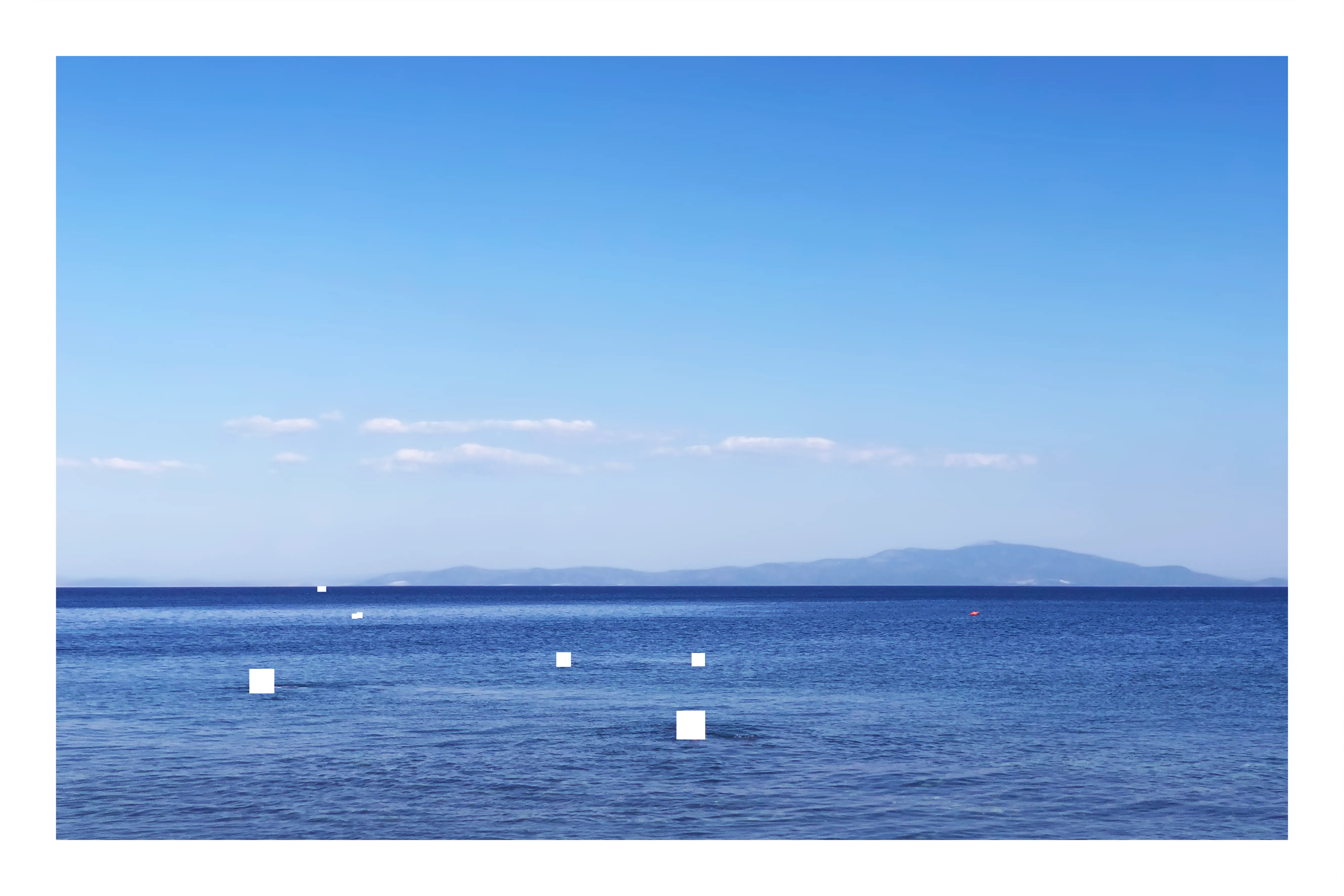
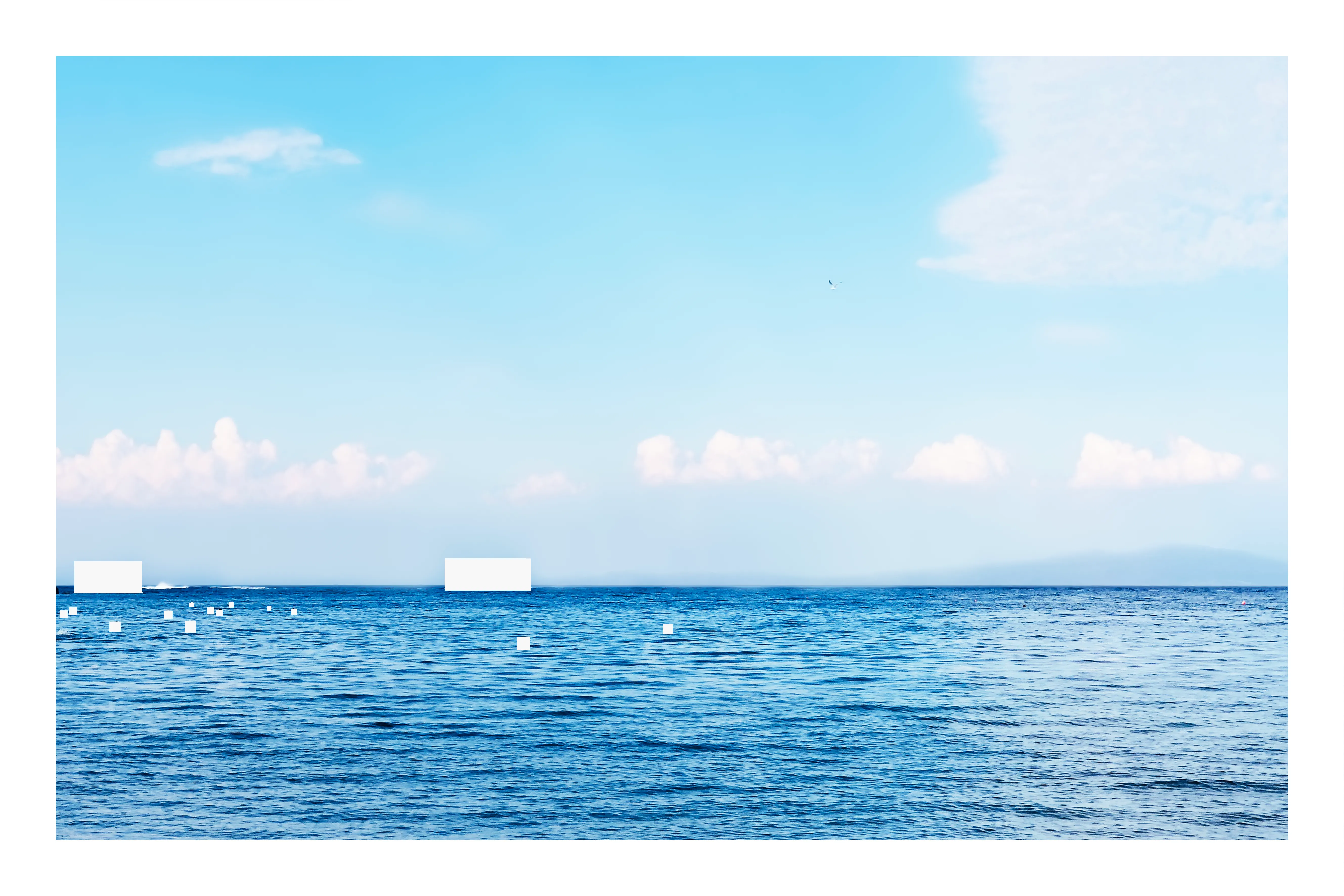
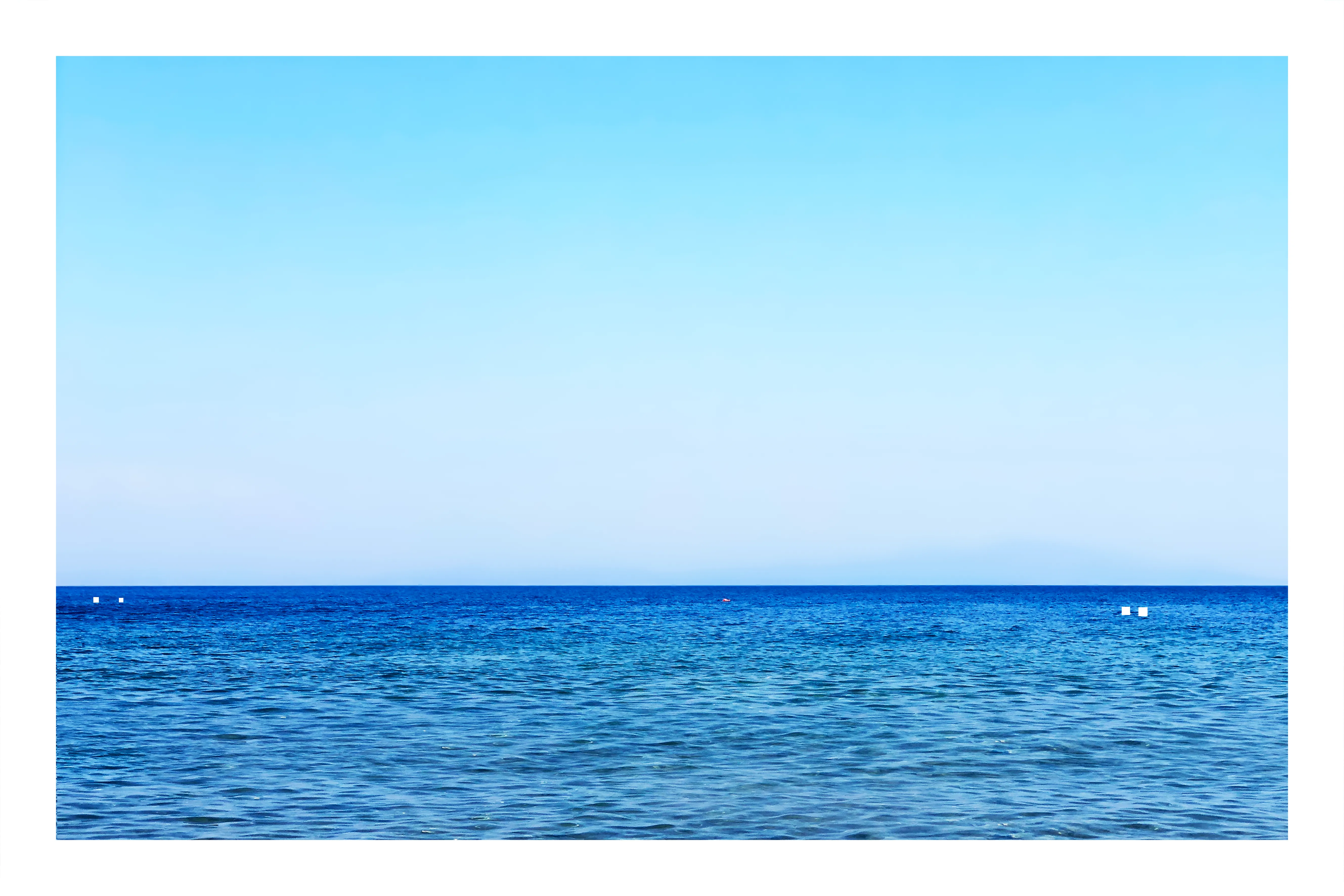
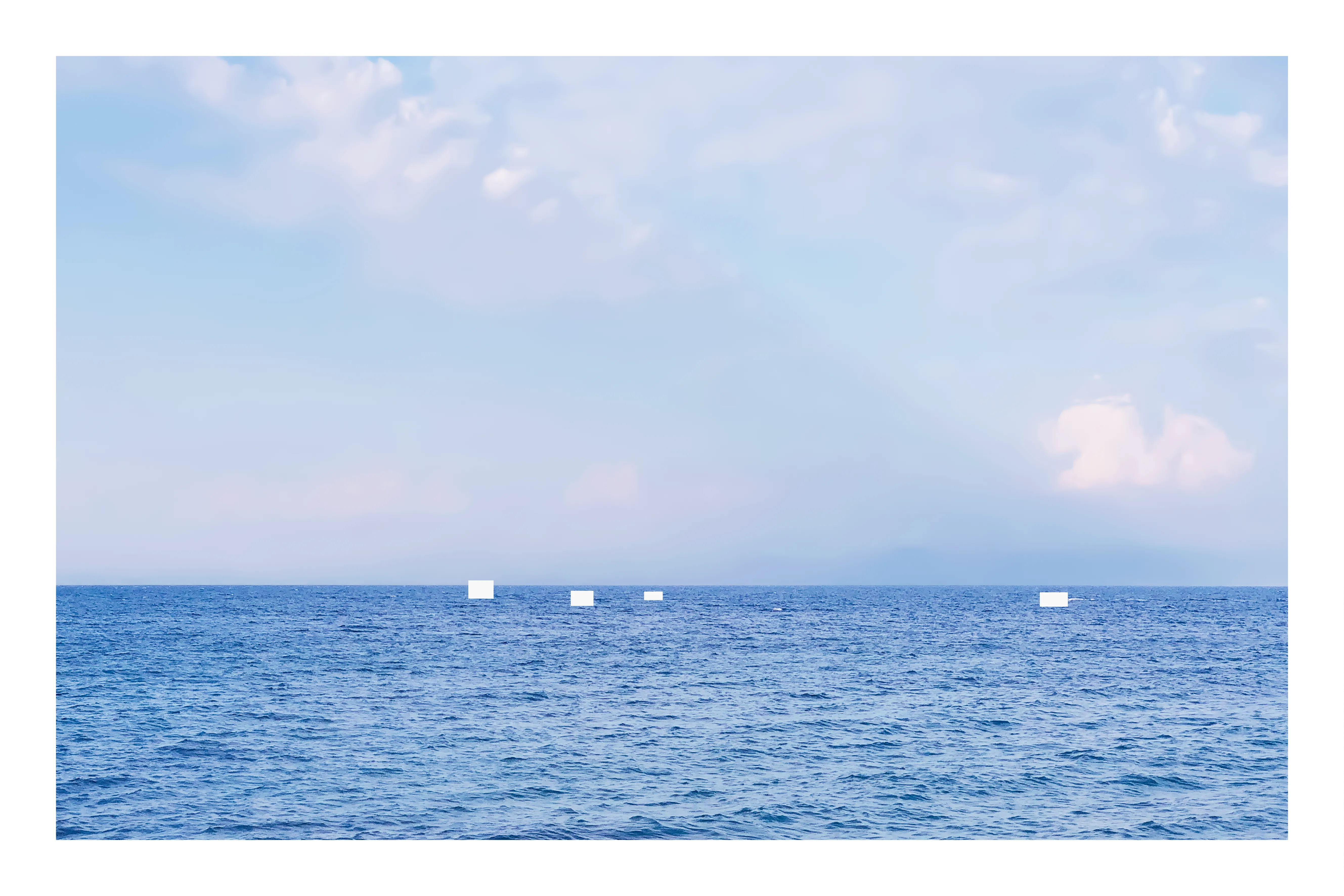
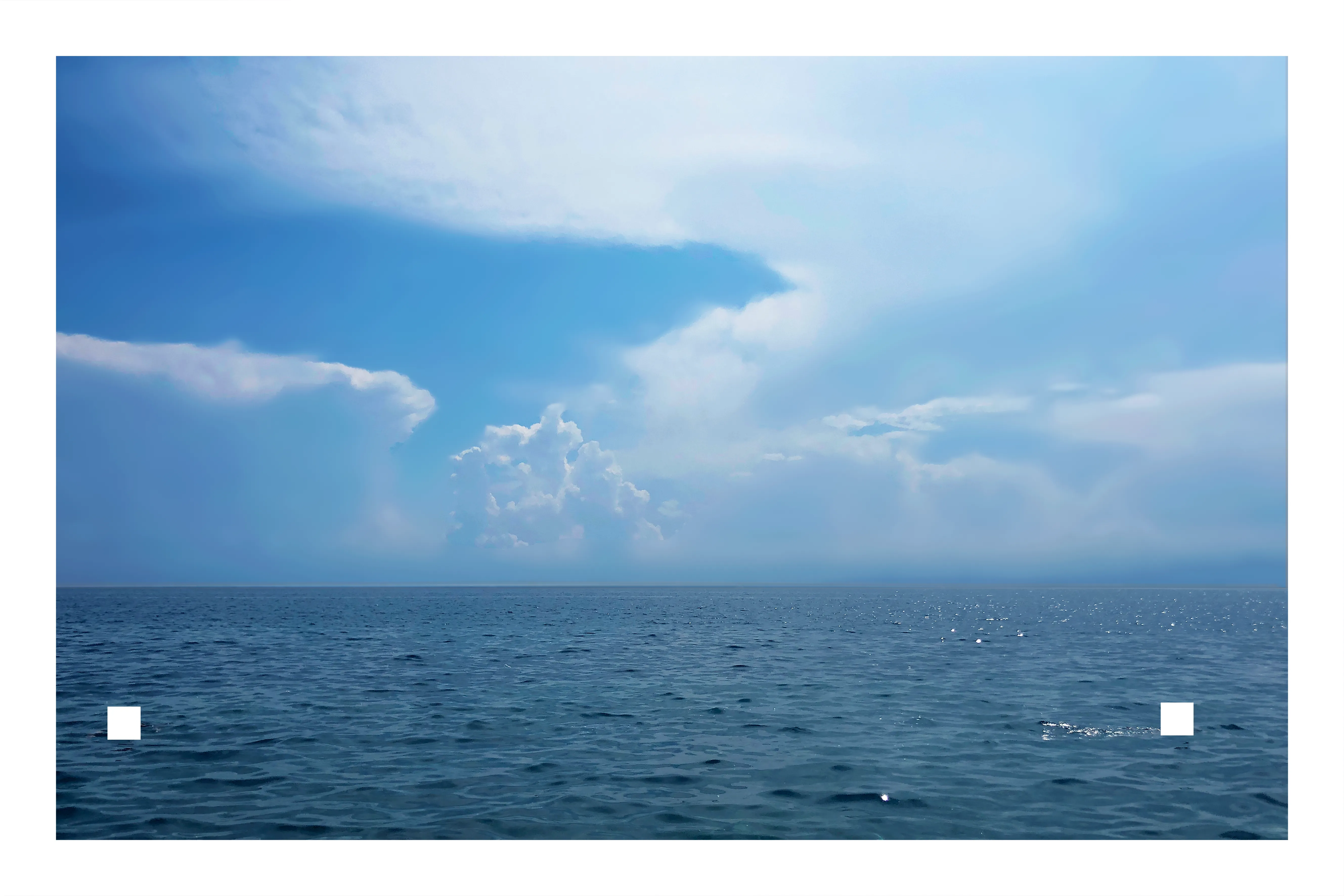
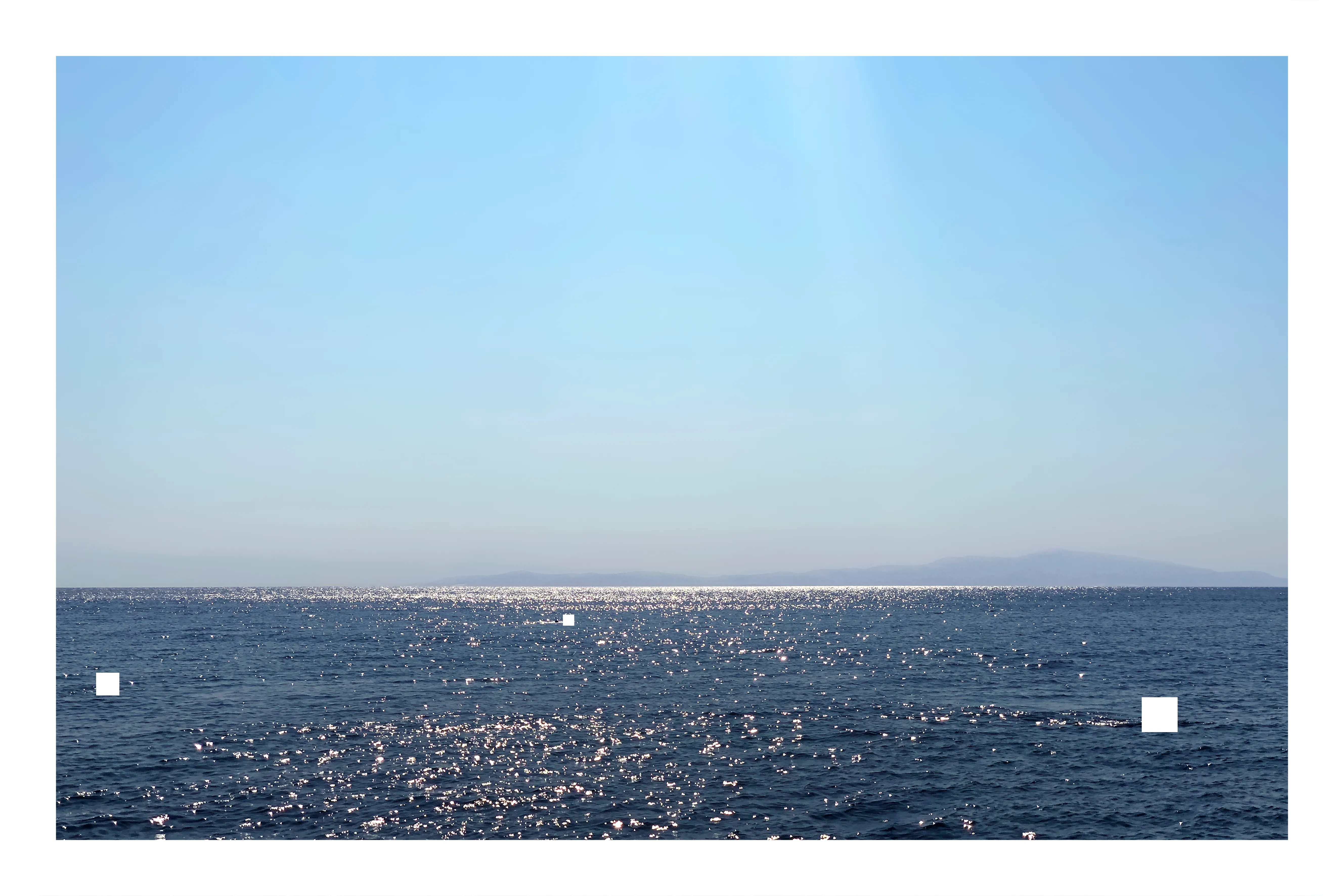
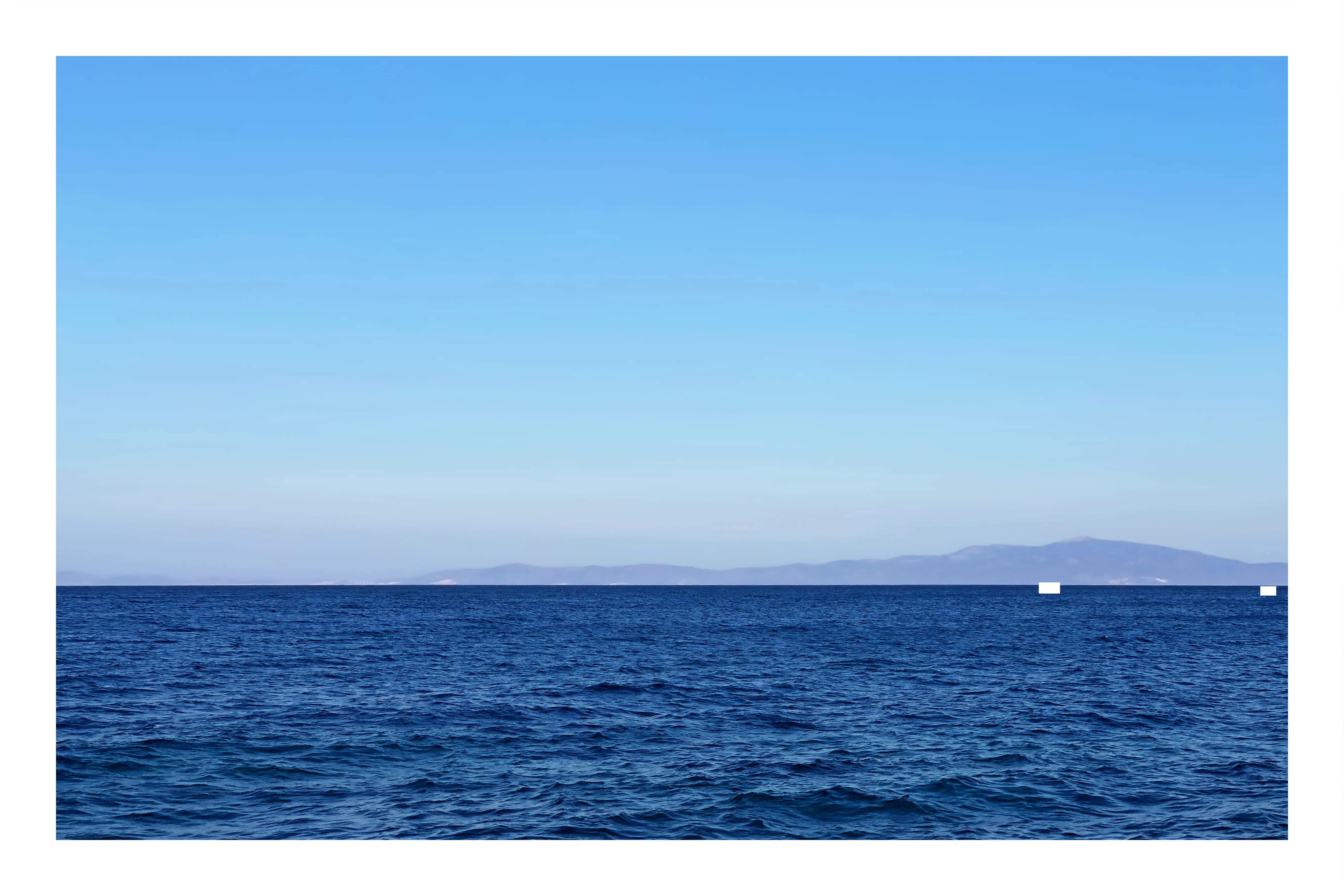
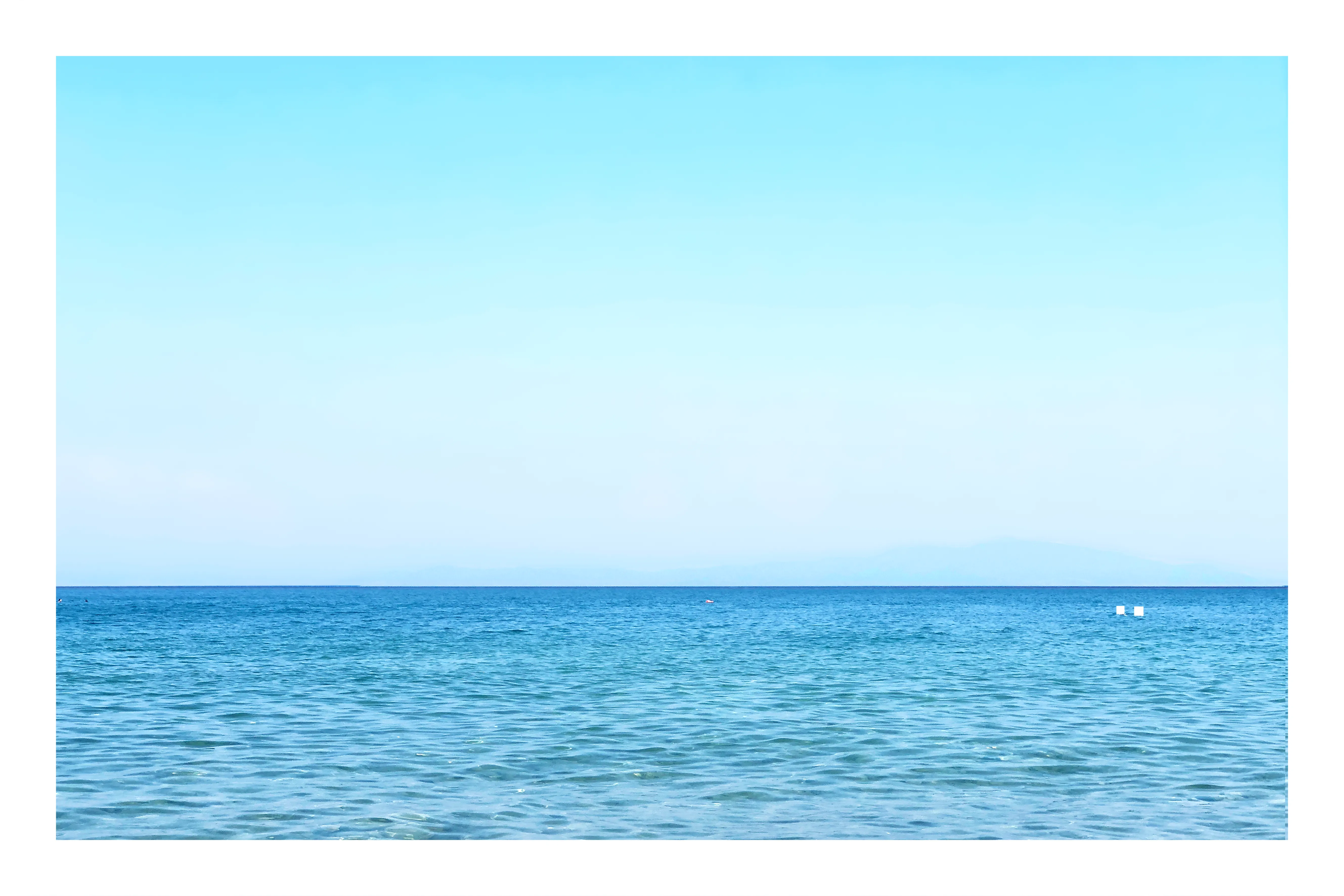
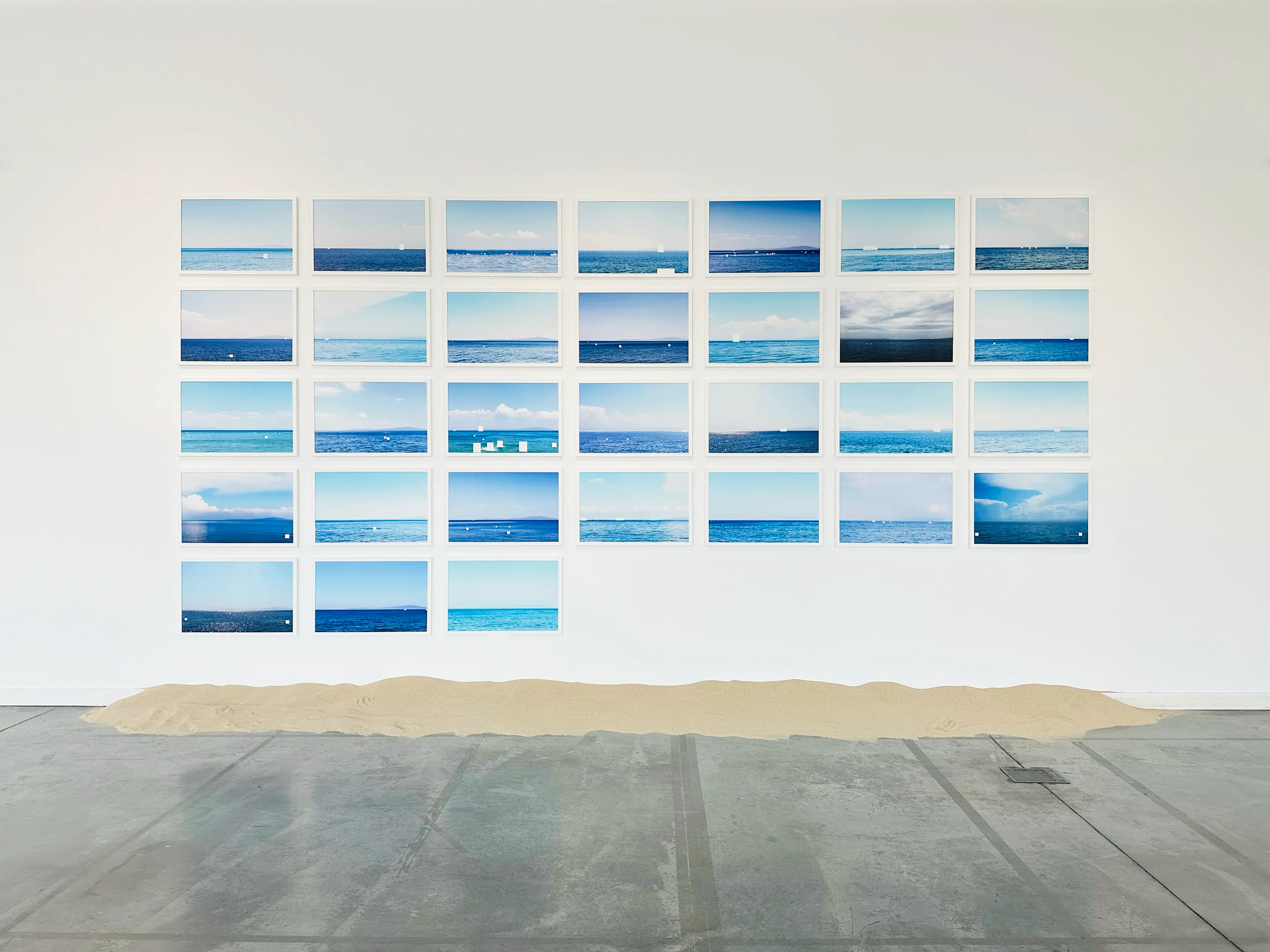
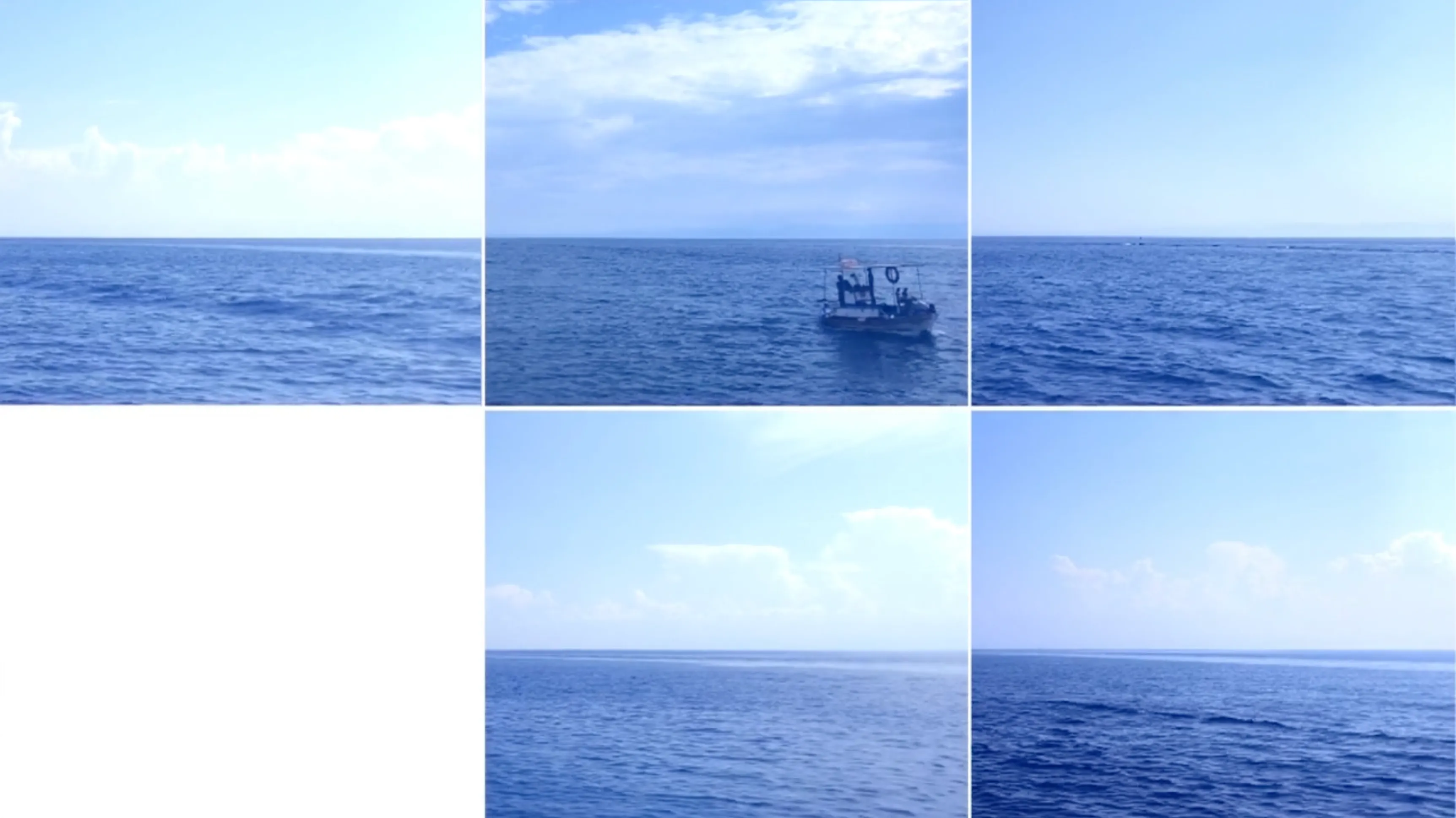
Throughout July 2018, the artist returned every day to the same place on the beach. She watched the horizon and photographed the same view of the sea, as though looking back towards the moment before the boat had reached the shore. Instead of following the crossing from departure towards arrival, the work begins with the trace left at its end and turns back across the water towards an inaccessible beginning.
Her repeated presence on the shore recalls the familiar image of sailors' wives watching the horizon and waiting for a boat to return. Here, however, the waiting is disordered: the boat has already arrived and has been abandoned on the beach. The artist watches for a sign of what happened during the missing crossing, but also for a sign of the next boat that may appear. The horizon holds the passage that has already taken place and the possibility of another yet to come. Past and future are awaited simultaneously from the same shore.
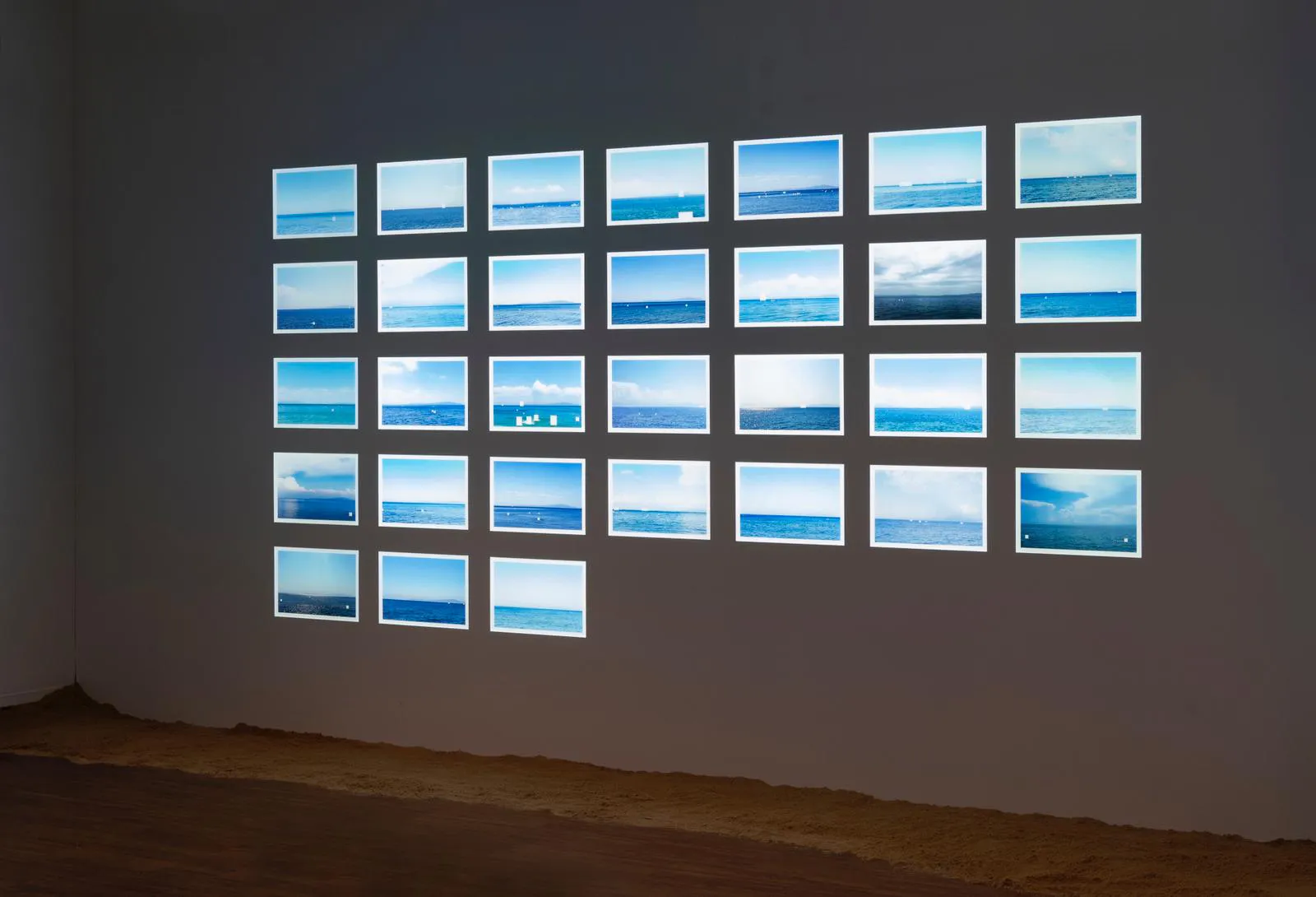
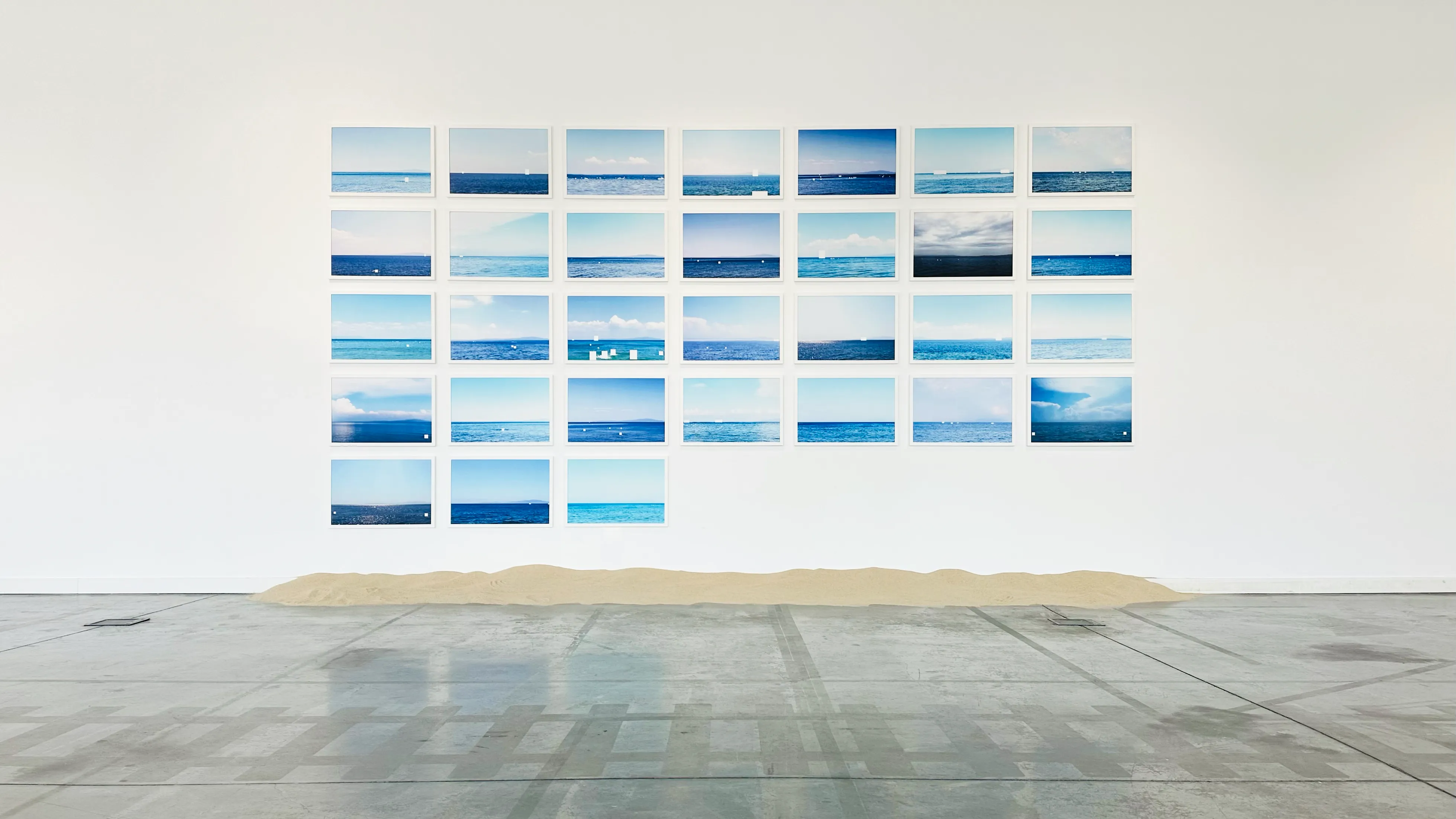
The resulting 31 photographs are arranged as an oversized visual calendar, with one image corresponding to each day of July. The title refers to the French word juilletistes, used to describe holidaymakers who take their annual vacation in July. It places the work within the regulated rhythm of summer tourism: the scheduled departure, the month at the beach and the expectation of returning home once the holiday is over.
After taking the photographs, the artist removed every bather and every boat from the images. She did not reconstruct the background to conceal the intervention. Each removed form was replaced by a plain white rectangle, making the alteration deliberately visible.
A rectangle might cover a tourist, a resident, a fishing boat, a ferry or another vessel crossing the same water. Once reduced to the same blank form, these presences can no longer be assigned securely to one identity, direction or reason for travelling. The viewer knows that something occupied the image but cannot determine who or what it was.
The alteration therefore gives absence a visible form. Across the calendar, the rectangles accumulate until the familiar image of the Mediterranean summer becomes inhabited by everything it no longer shows. The sea, light and horizon remain, while the bodies and boats survive only as interruptions within the landscape.
Time moves in several directions throughout Les Juilletistes. The calendar measures it linearly, one day following another. The discovery of the abandoned boat reverses it, reconstructing a crossing from the fragment found at its end. History makes it circular: contemporary arrivals on Lesbos enter into relation with earlier displacements across the same sea, including the forced population exchange between Greece and Turkey in 1923.
These crossings are not presented as equivalent. Their recurrence reveals how the same geography can repeatedly become a site of exile, with the directions of departure and arrival changing across generations while the horizon appears unchanged.
Les Juilletistes looks towards the sea for a story the landscape cannot fully return. Each image searches for the trace of what has already passed and the sign of what may still arrive.
The calendar advances. History returns. The horizon remains.