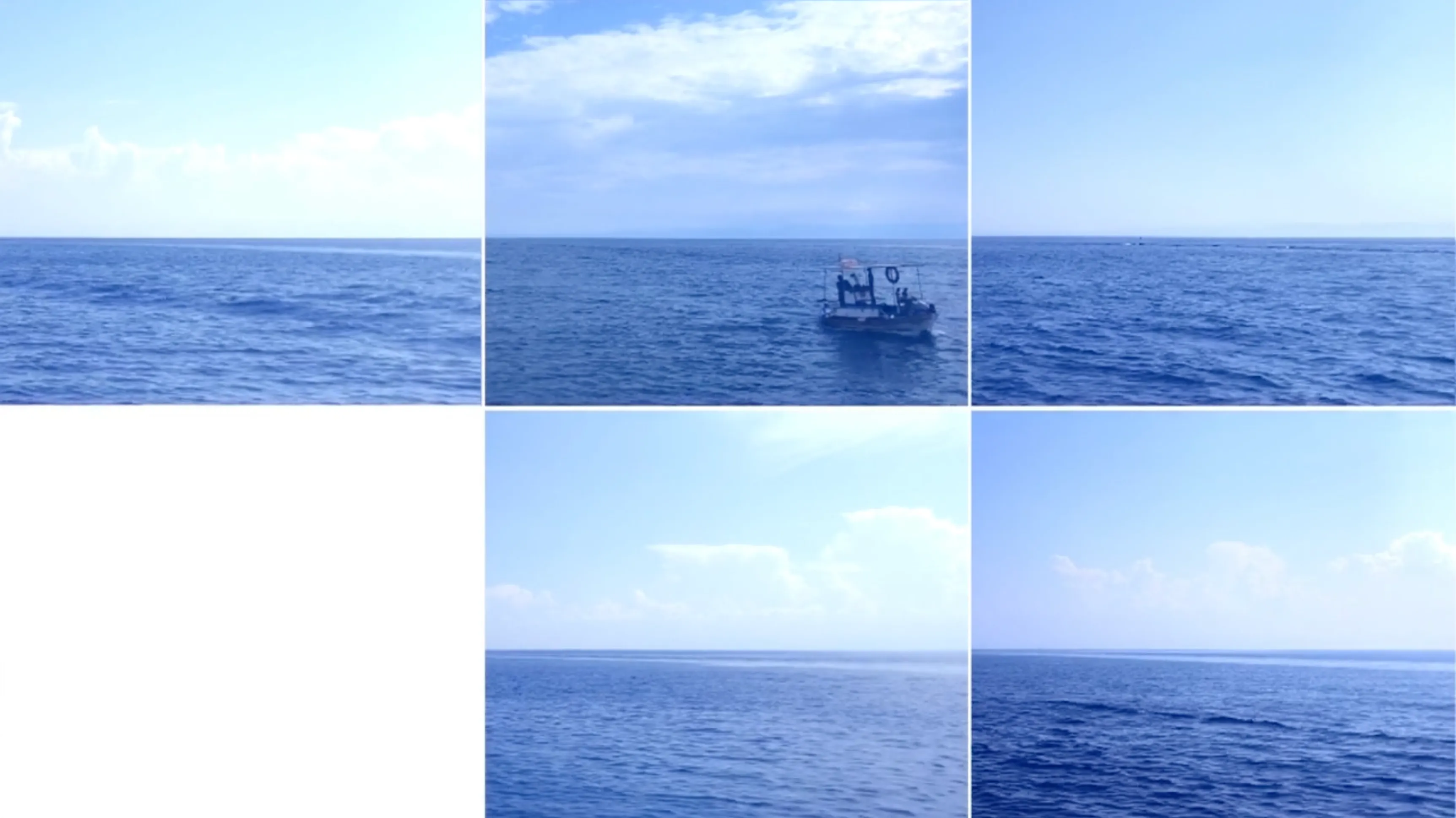
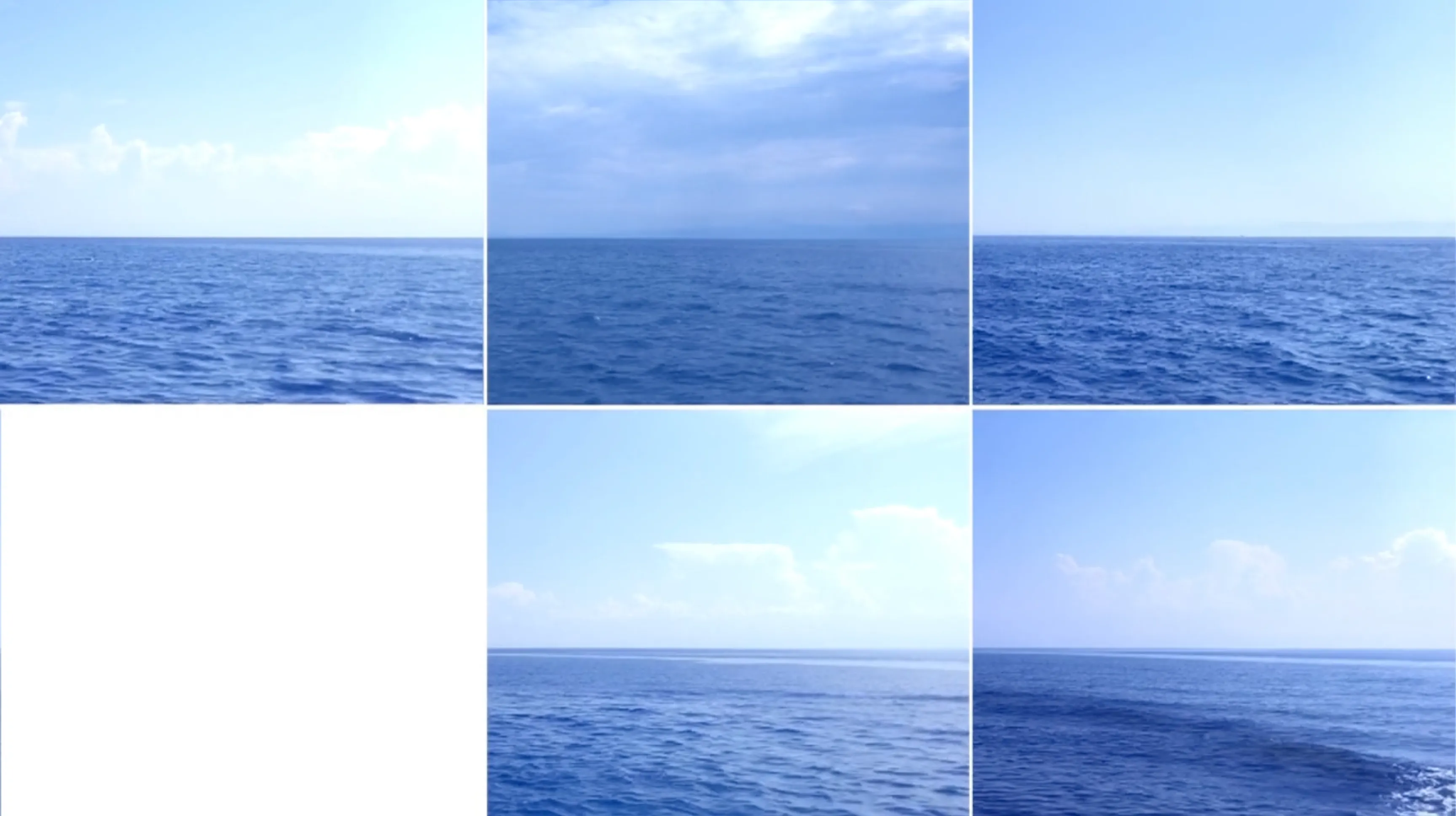
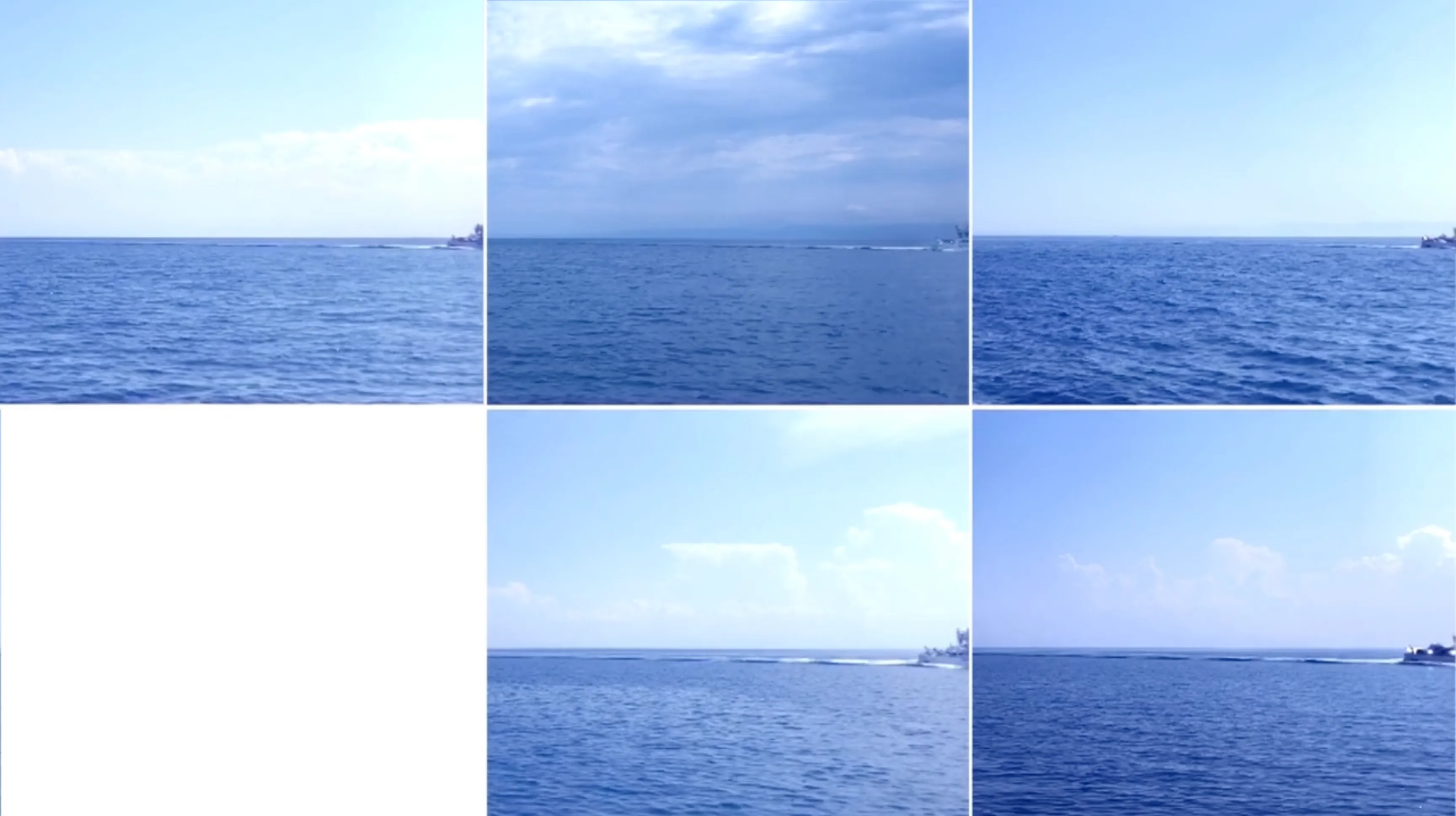
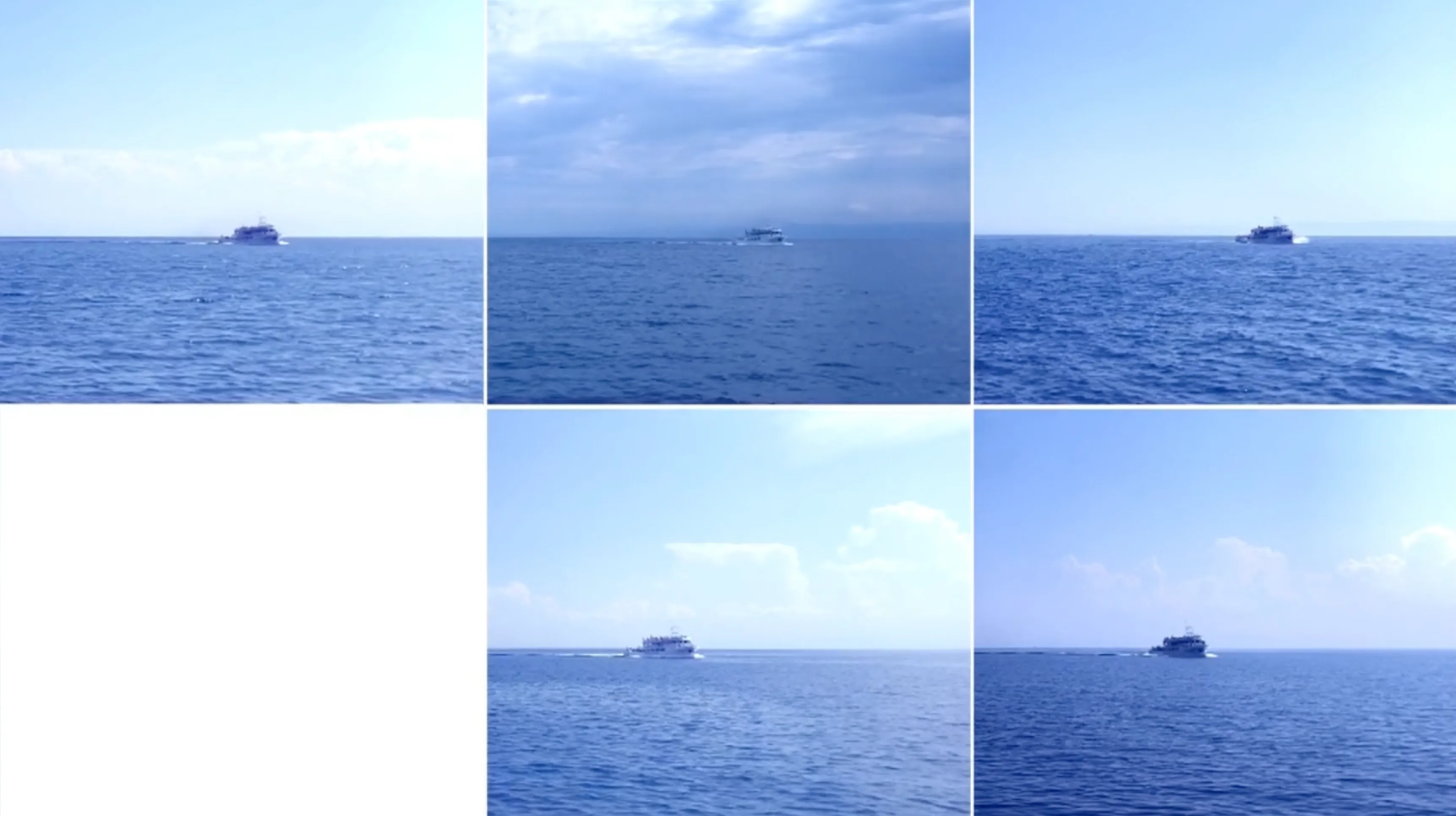
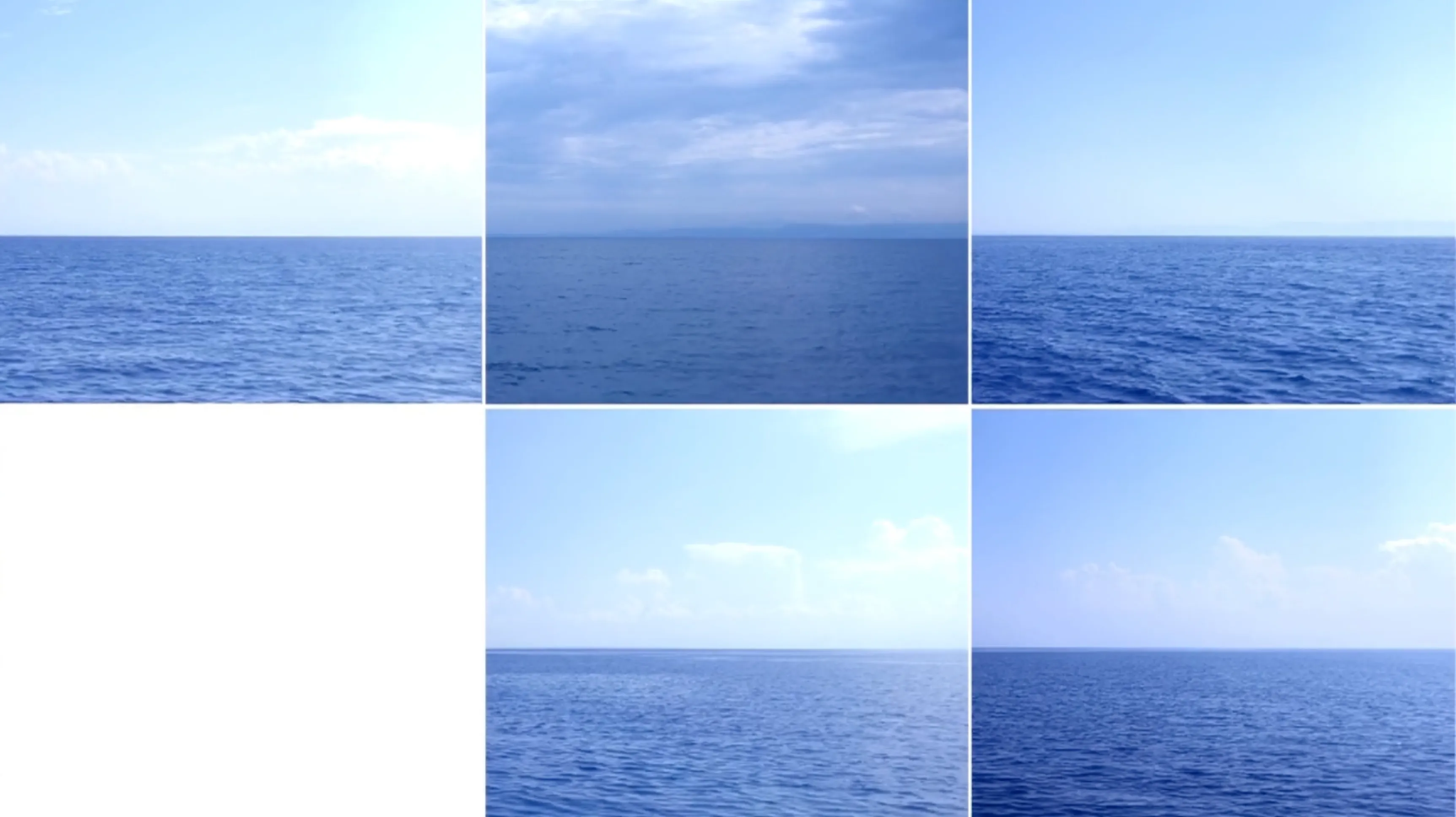
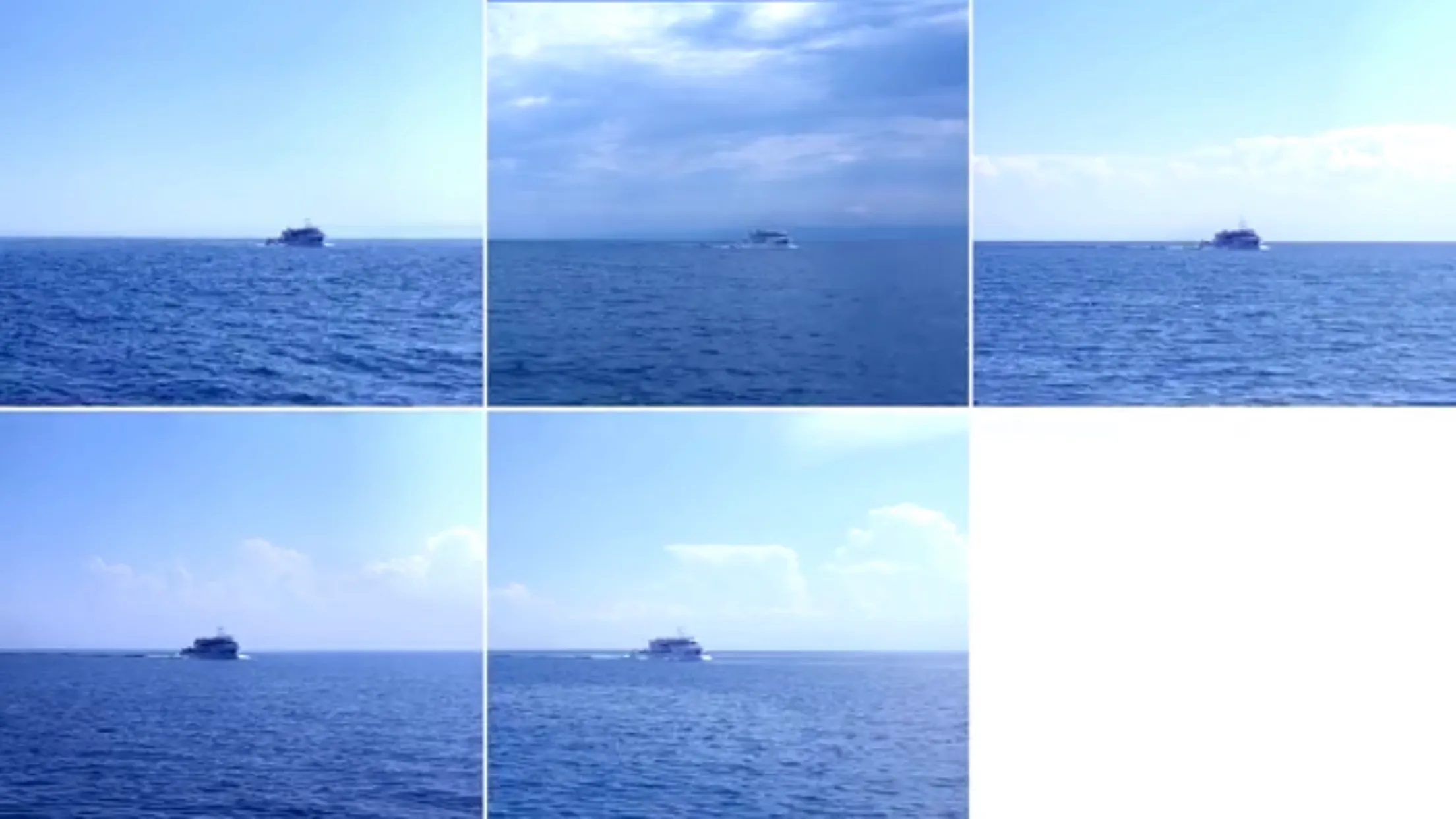
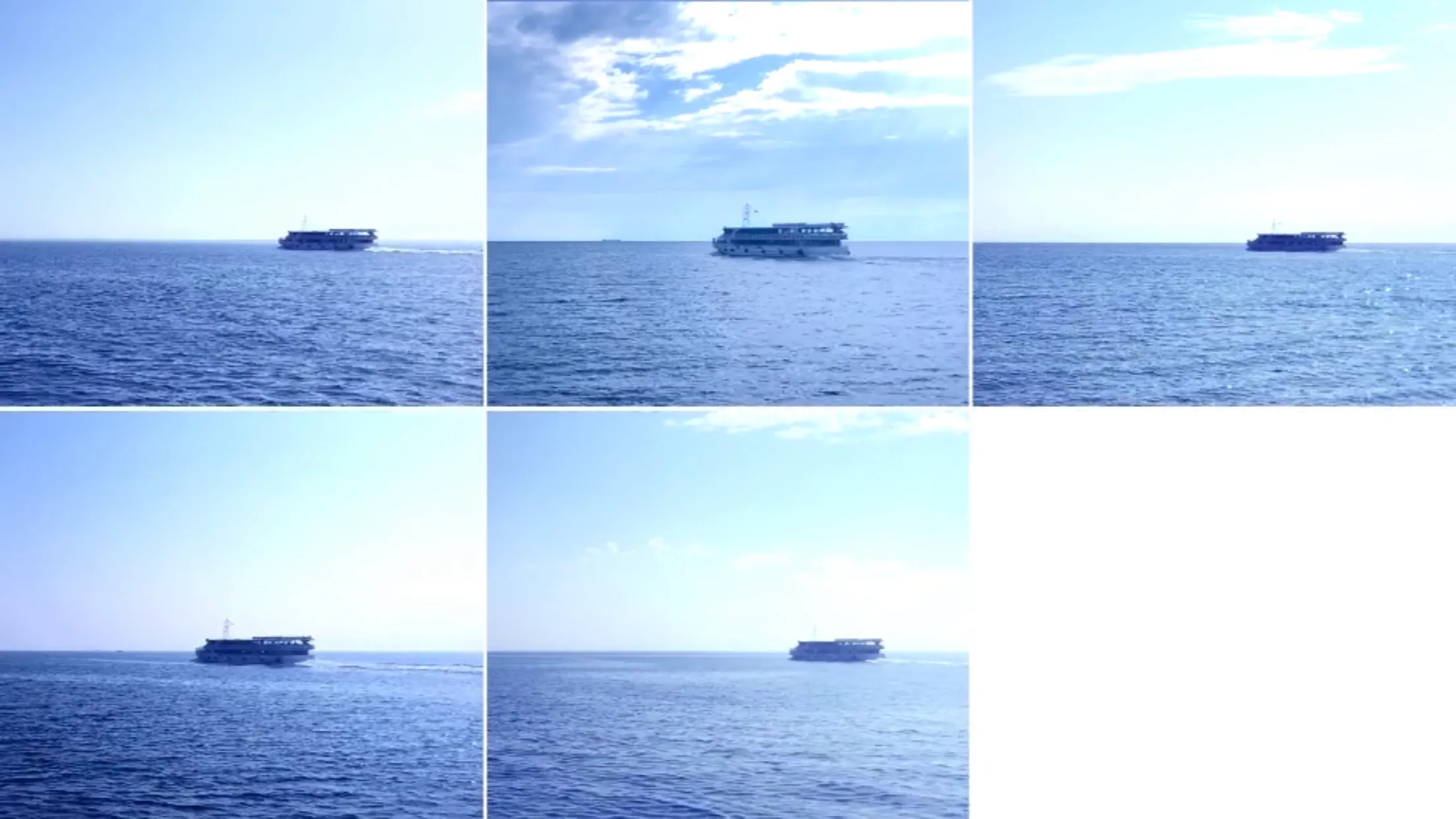
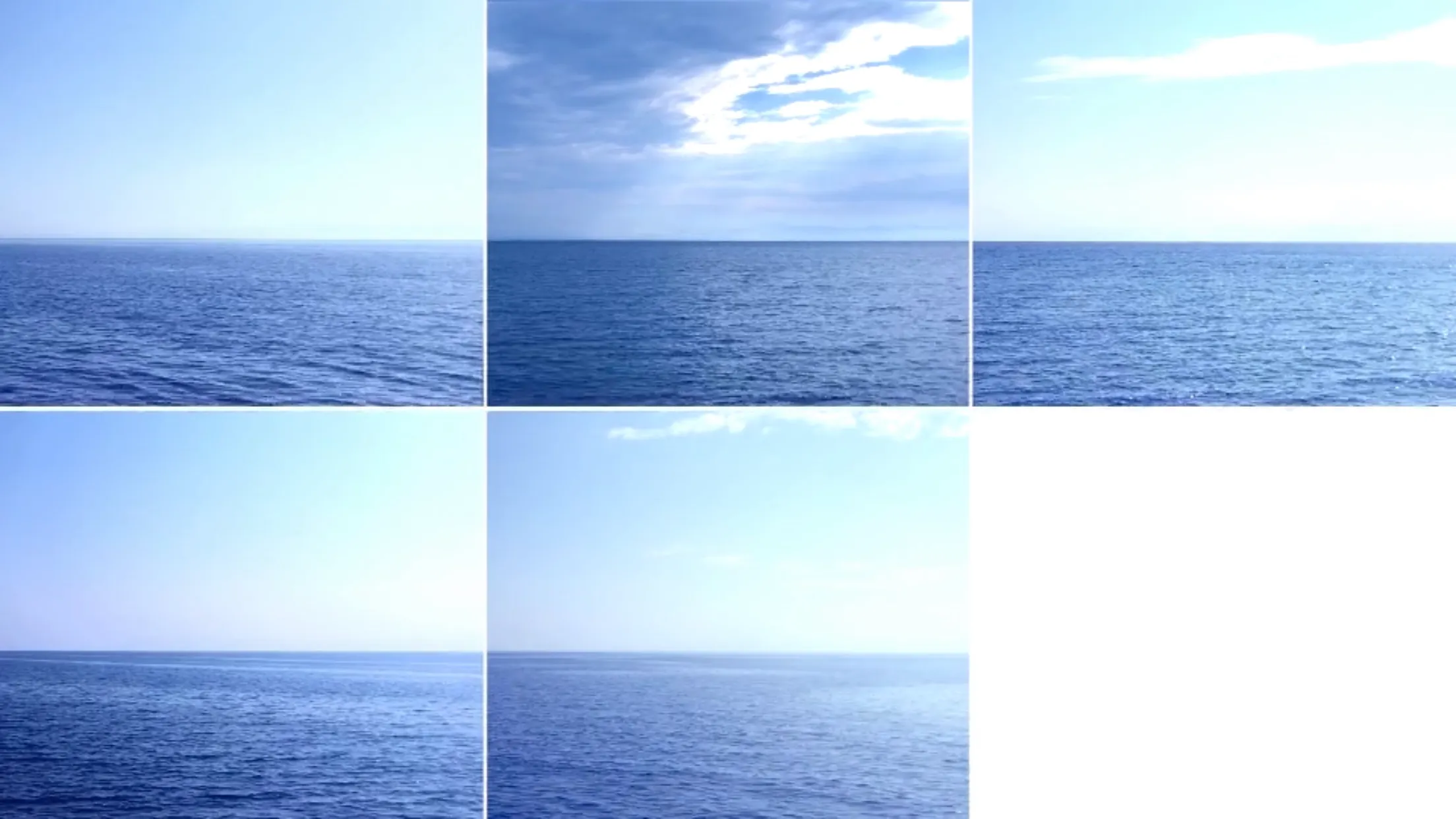
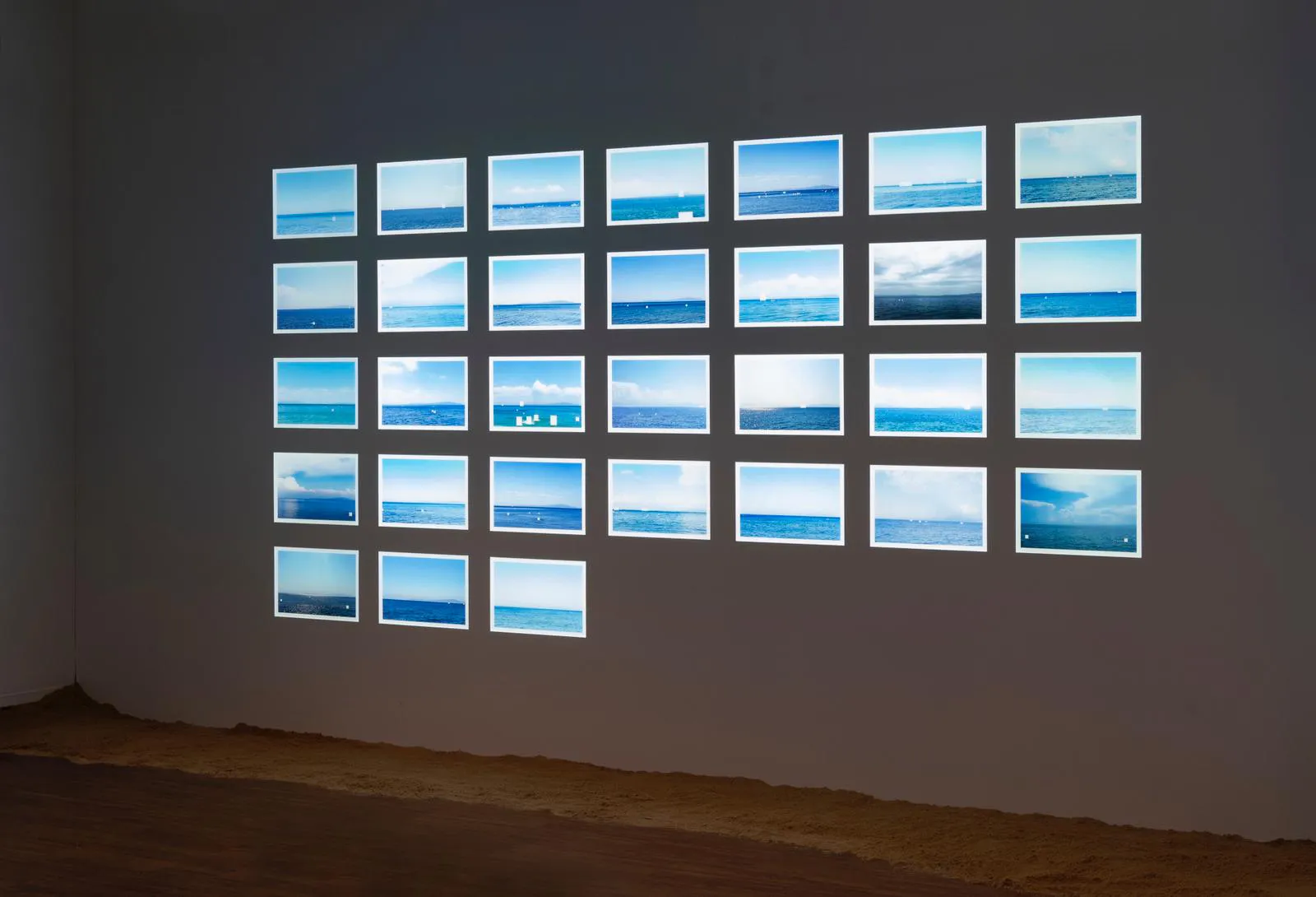
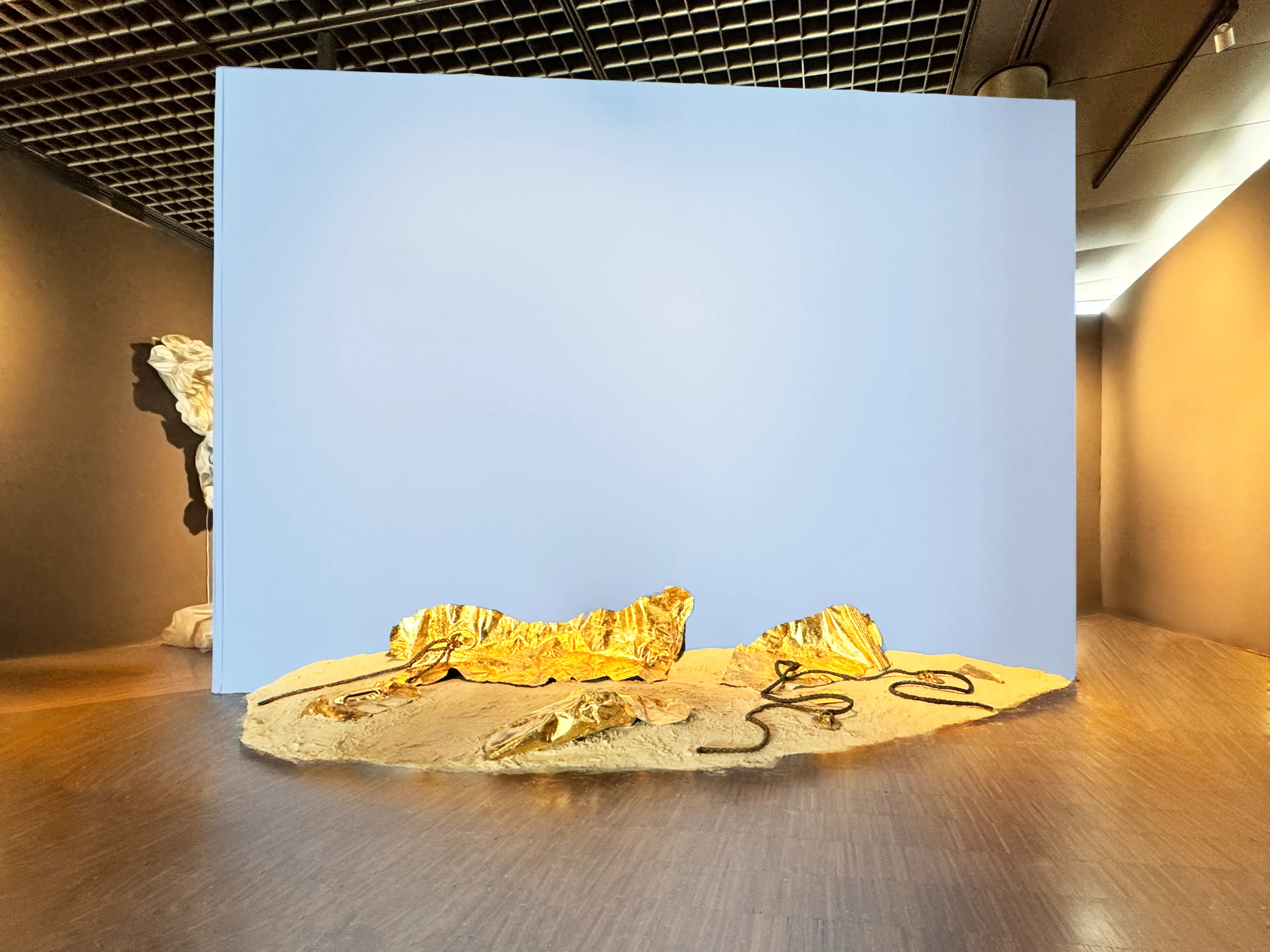
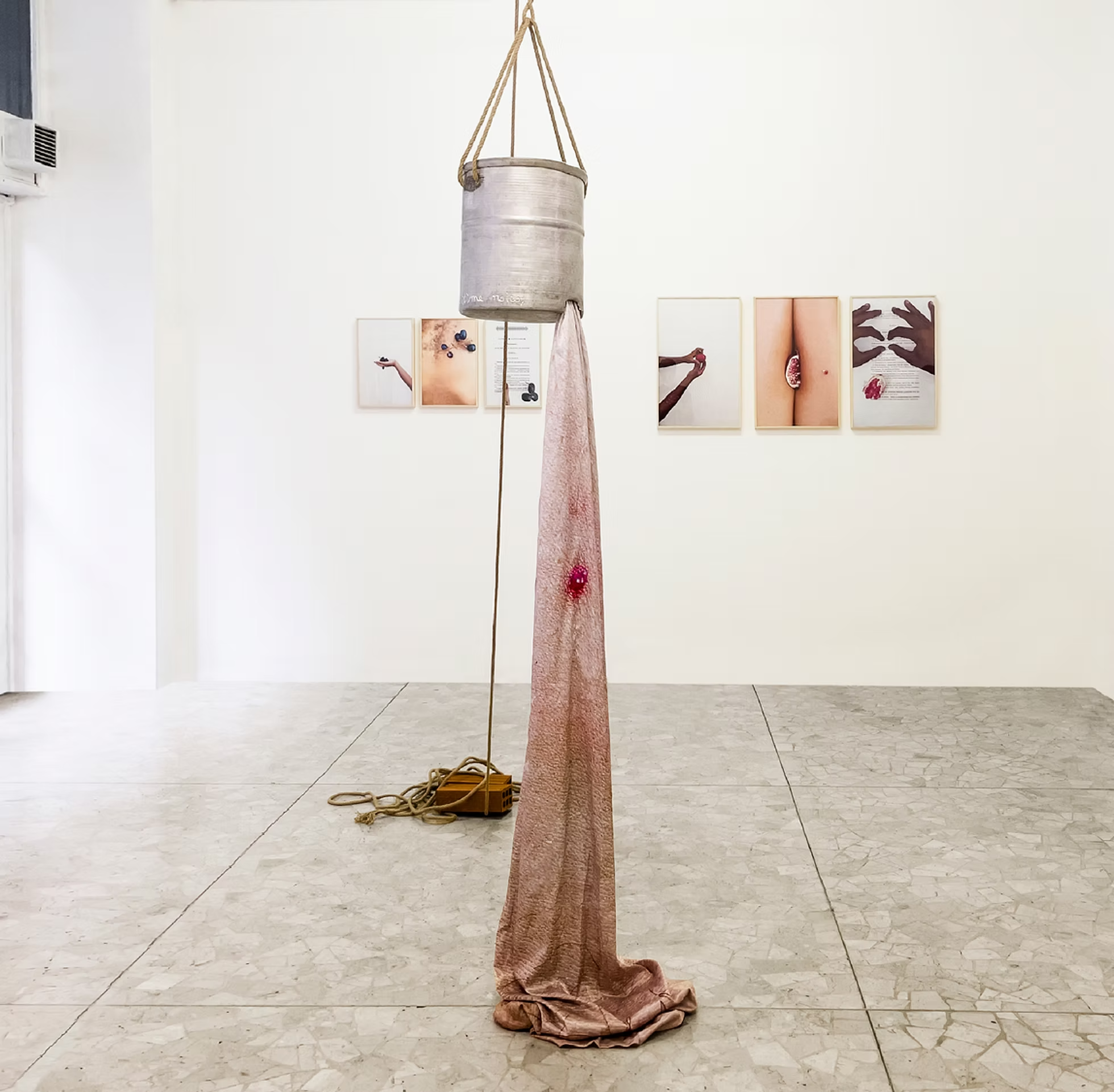
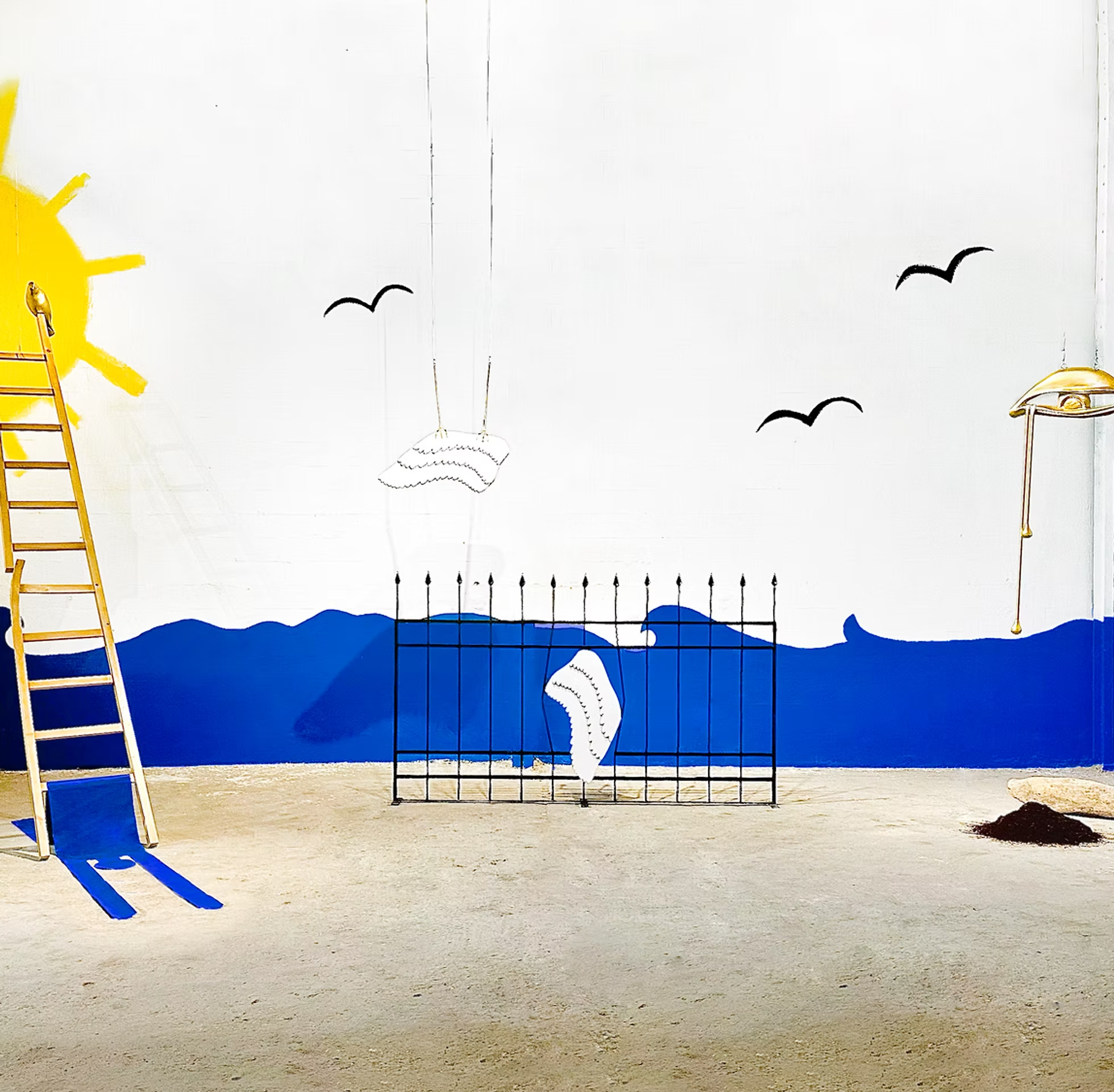
Monday-Friday, 9:00am–6:00pm belongs to It Is Always Summer Somewhere, a multimedia project developed during two months spent by the artist on the island of Lesbos in the summer of 2018. The Mediterranean does not carry a single meaning here. It is a route between islands and a route out of danger, a holiday itinerary and an uncertain passage — the same water pulled in entirely different directions depending on who was crossing it.
Within the tourist imagination, the Mediterranean is a landscape of islands, holidays and discovery. It promises an elsewhere that can be visited without being lost: a departure towards new horizons followed by an expected return.
The same sea can represent exile. Its opposite shore may still hold the promise of another life, but reaching it requires leaving one's home, roots and former identity behind. The water itself has not changed. What changes is the future projected onto the horizon and the conditions under which it can be pursued.
Monday-Friday, 9:00am–6:00pm brings these two visions together along the route connecting Mytilene, on Lesbos, with Ayvalık on the Turkish coast. The two cities face one another across a narrow stretch of the Aegean, linked by a passage repeatedly travelled in both directions.
During the compulsory population exchange between Greece and Turkey in 1923, thousands of Greeks were forced to leave Ayvalık and cross towards Mytilene. At the same time, Muslim inhabitants of Lesbos were compelled to make the reverse journey towards Ayvalık. Within a few weeks, the same maritime route carried two populations away from their homes in opposite directions.
Since 2015, refugees travelling from the Turkish coast towards Lesbos have followed this passage once again. Their journeys are not equivalent to those of 1923, but they enter the same geography of departure and arrival: the same route, the same sea and another projection of what might exist on the opposite shore.
Today, daily tourist ferries connect Mytilene and Ayvalık. At 9am, a boat leaves Mytilene carrying Greek tourists towards Turkey and returns at 6pm. A similar-looking ferry departs from Ayvalık, bringing Turkish visitors to Lesbos for a day trip. The two boats cross one another in the middle of the sea before returning their passengers to their respective countries.
These ferries do not merely travel across waters marked by earlier migrations. They physically retrace the same routes. The ferry from Ayvalık to Mytilene follows the direction taken by Greeks expelled from Turkey in 1923 and by refugees arriving on Lesbos since 2015. The boat travelling from Mytilene to Ayvalık repeats the reverse journey made by the Muslim inhabitants forced to leave the island during the population exchange.
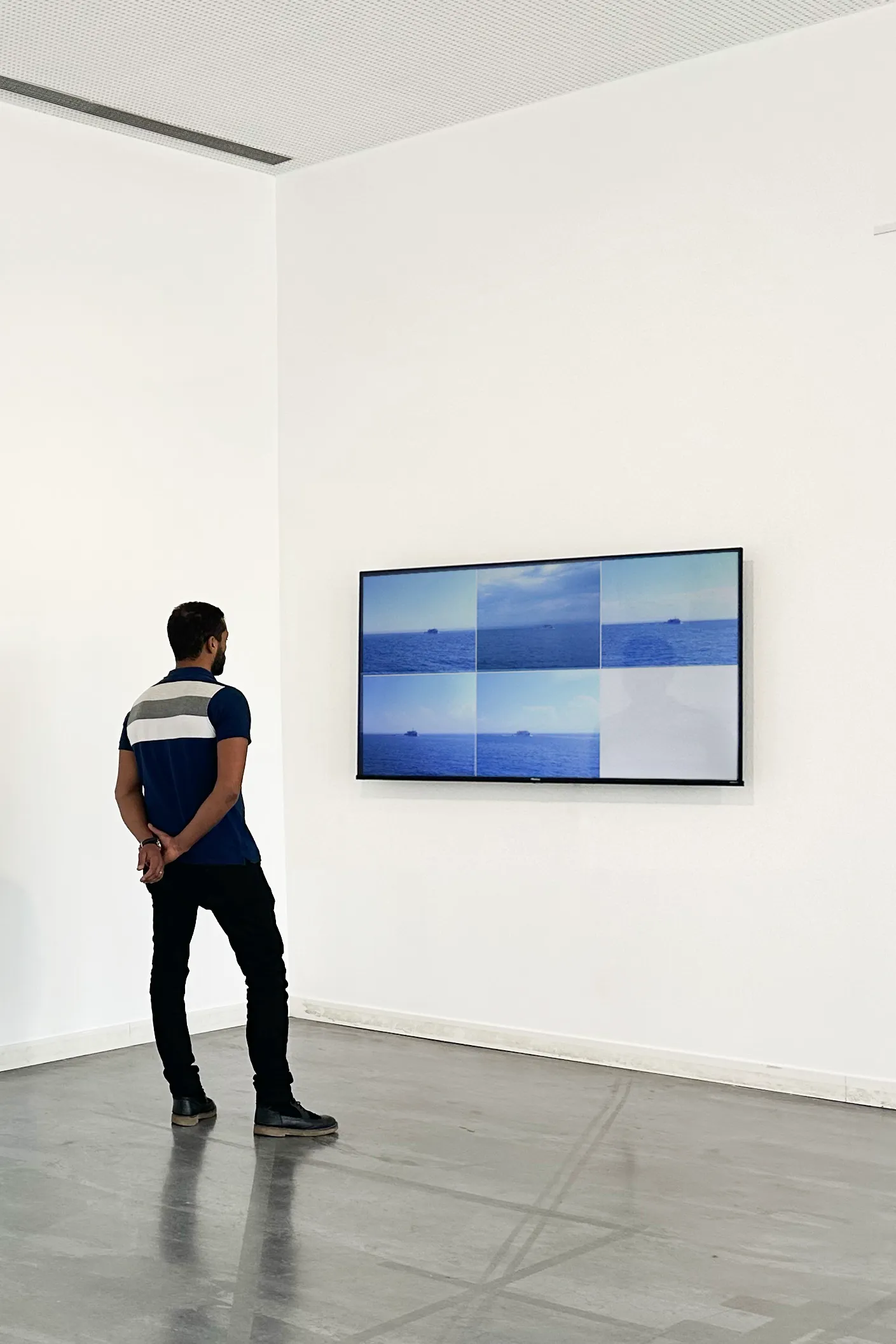
Struck by the historical irony of this contemporary tourist exchange, the artist filmed the ferries over the course of one week from the port of Mytilene. One video records the departure of the boat carrying Greek tourists towards Ayvalık; the other follows the arrival of the similar-looking ferry bringing Turkish visitors to Lesbos.
Presented across two channels, the vessels become mirrored figures. One leaves as the other approaches. Because the boats resemble one another, their identities are determined primarily by their direction: where they come from, where they are going and which shore their passengers expect to reach.
The former routes of forced displacement have become the itinerary of a day trip. The same geographical movement is repeated in both directions, but its meaning has changed. The tourists travel with tickets, schedules and the certainty of returning a few hours later. The opposite shore is a temporary destination rather than a point of irreversible separation.
The title gives the crossing a circular structure. From Monday to Friday, the same timetable begins again: departure at 9am, return at 6pm, followed by another departure the next morning. Days repeat within the week, weeks repeat across the tourist season, and the ferries continually retrace the same route in opposite directions. Within this regulated cycle, every departure already contains the promise of return.
Exile introduces a different experience of time. For the displaced person, the crossing divides life into a before and an after that cannot simply be reversed. Yet across generations, history itself becomes circular: the same passage reappears, carrying other people towards another projected future. The daily repetition of the ferries therefore echoes a larger historical recurrence — journeys that are individually irreversible but collectively repeated.
The soundtrack introduces the same ambiguity through Tou Mikrou Voria, a song composed by Mikis Theodorakis from a poem by Odysseas Elytis. Its melody evokes Greek islands, summer and familiar holiday journeys, while its words move towards separation: lost summers, a boat sailing away and the shoreline gradually disappearing from view.
What first sounds like the accompaniment to a tourist crossing becomes a song of departure and loss. The broader political resonance carried by Theodorakis's music further unsettles the apparent lightness of the images. Sound and image both begin within the familiar universe of Greek summer tourism before revealing another history beneath it.
The work does not claim that tourism, the population exchange of 1923 and contemporary refugee journeys are the same. It shows that different futures can be projected onto the same route. The water remains unchanged; for one traveller, the opposite shore is a holiday destination, while for another it carries the possibility of another life and the loss of the one left behind.
The water and the route remain unchanged. Days repeat, ferries return and history brings other travellers back to the same crossing. What changes is the horizon projected onto it.
The same route. The same sea. Another departure begins.