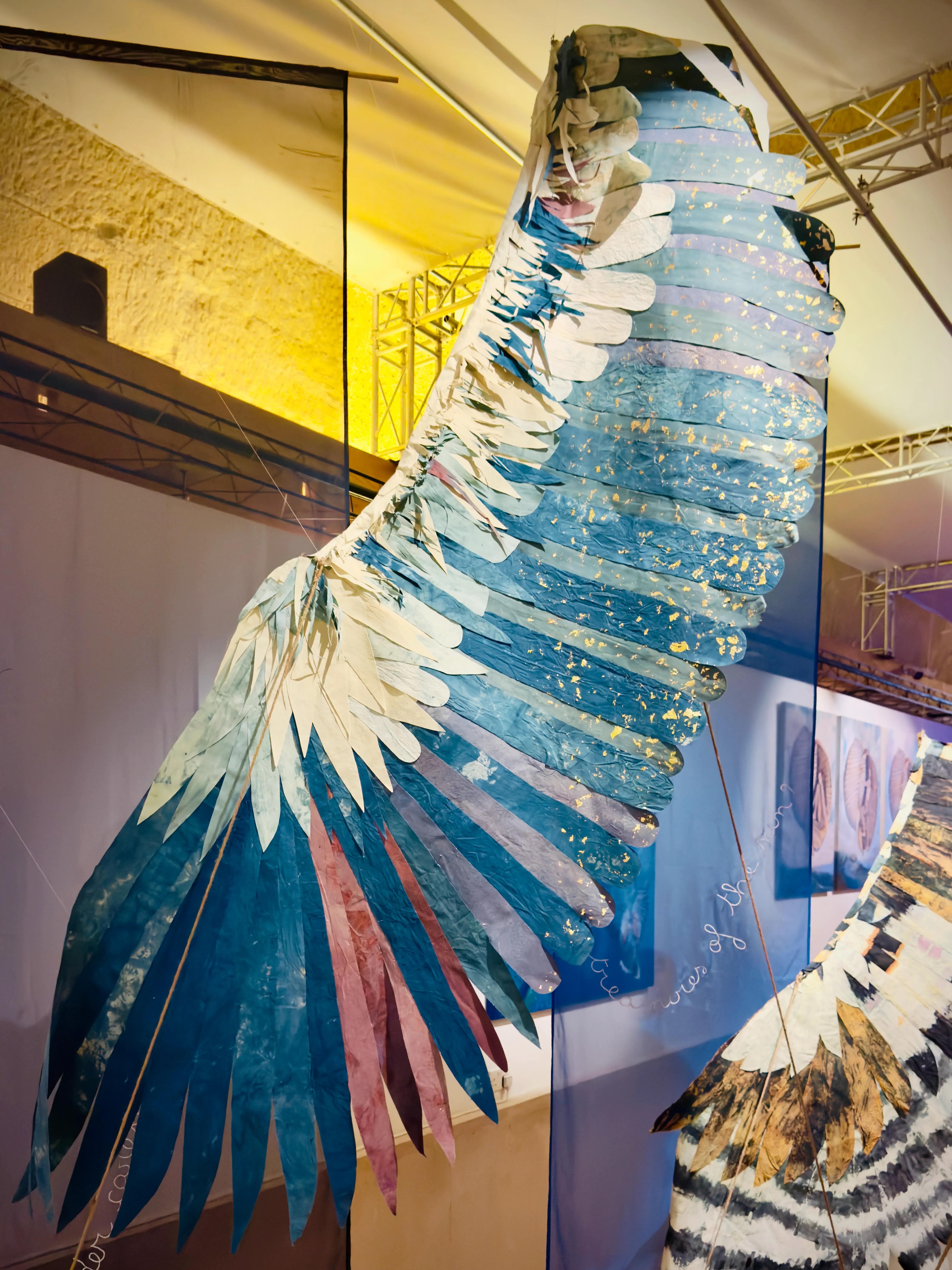
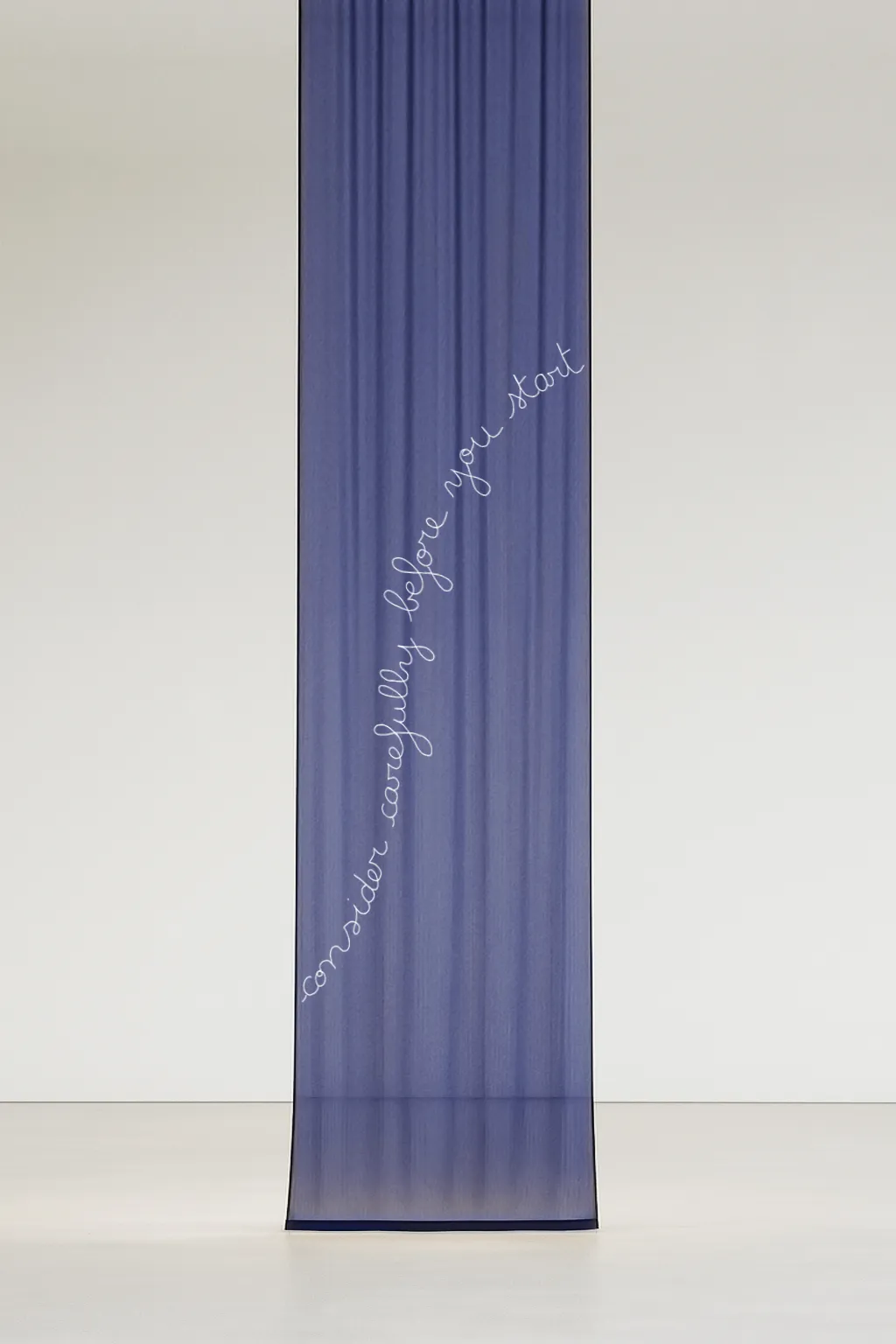
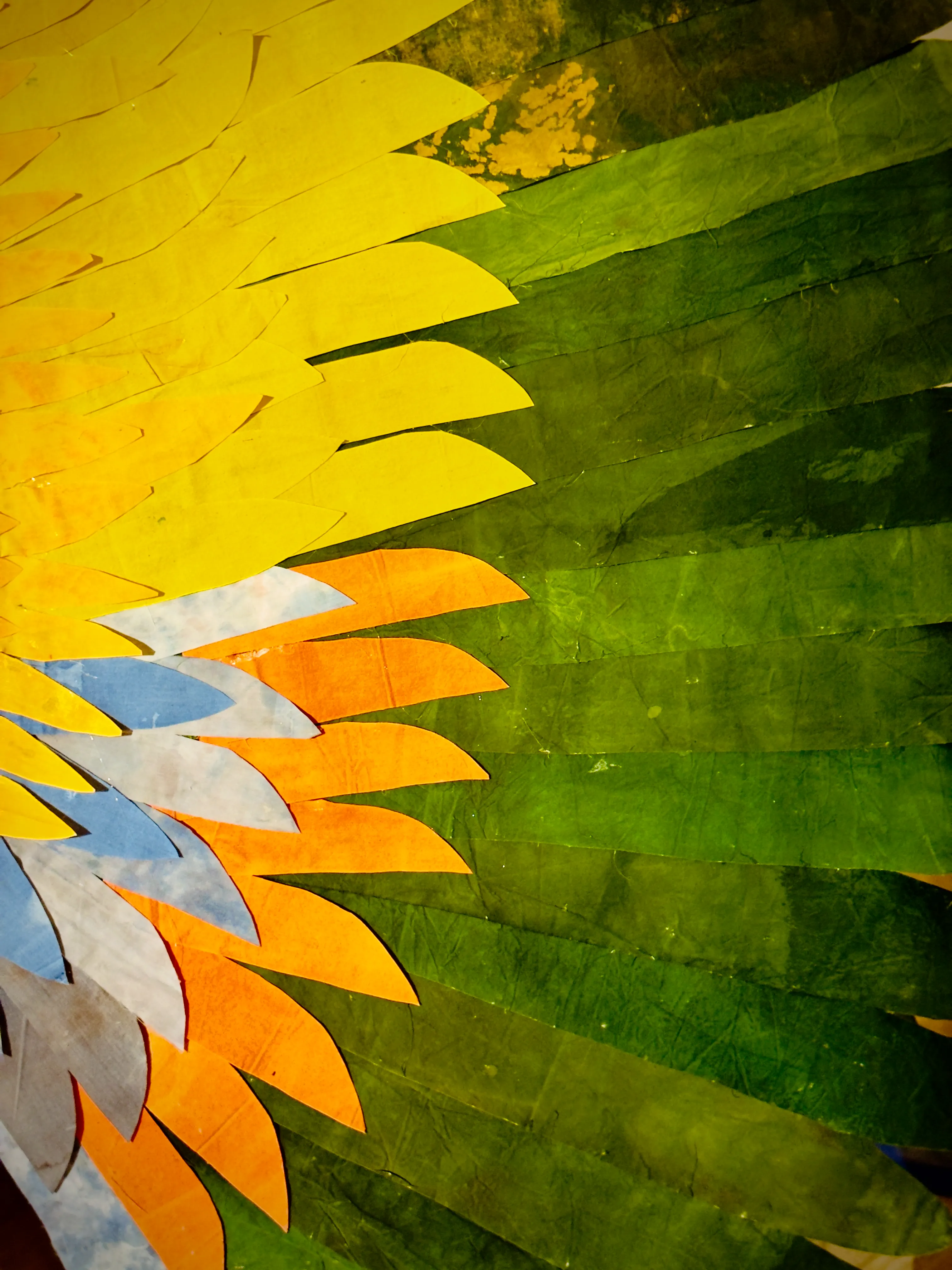
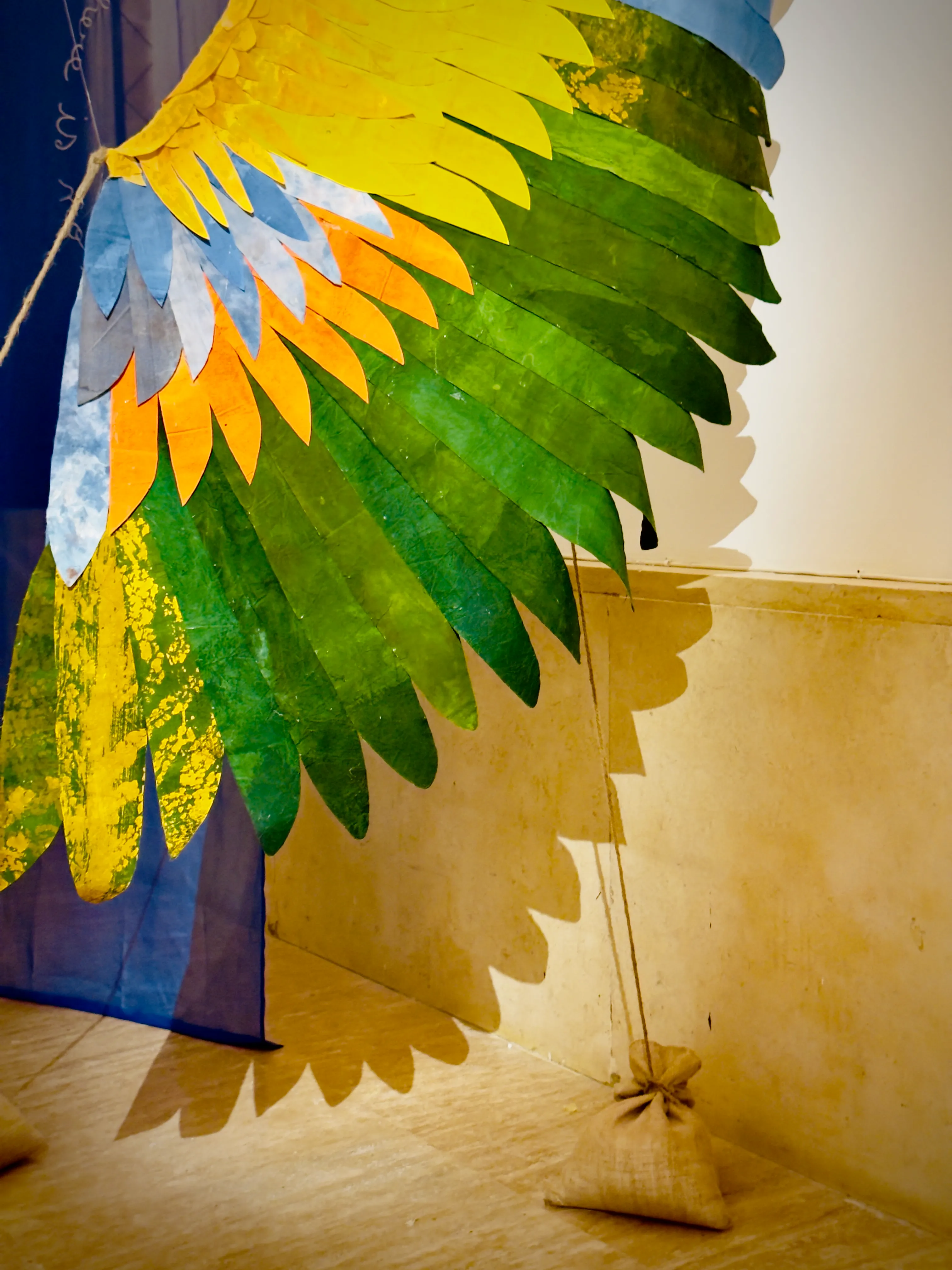
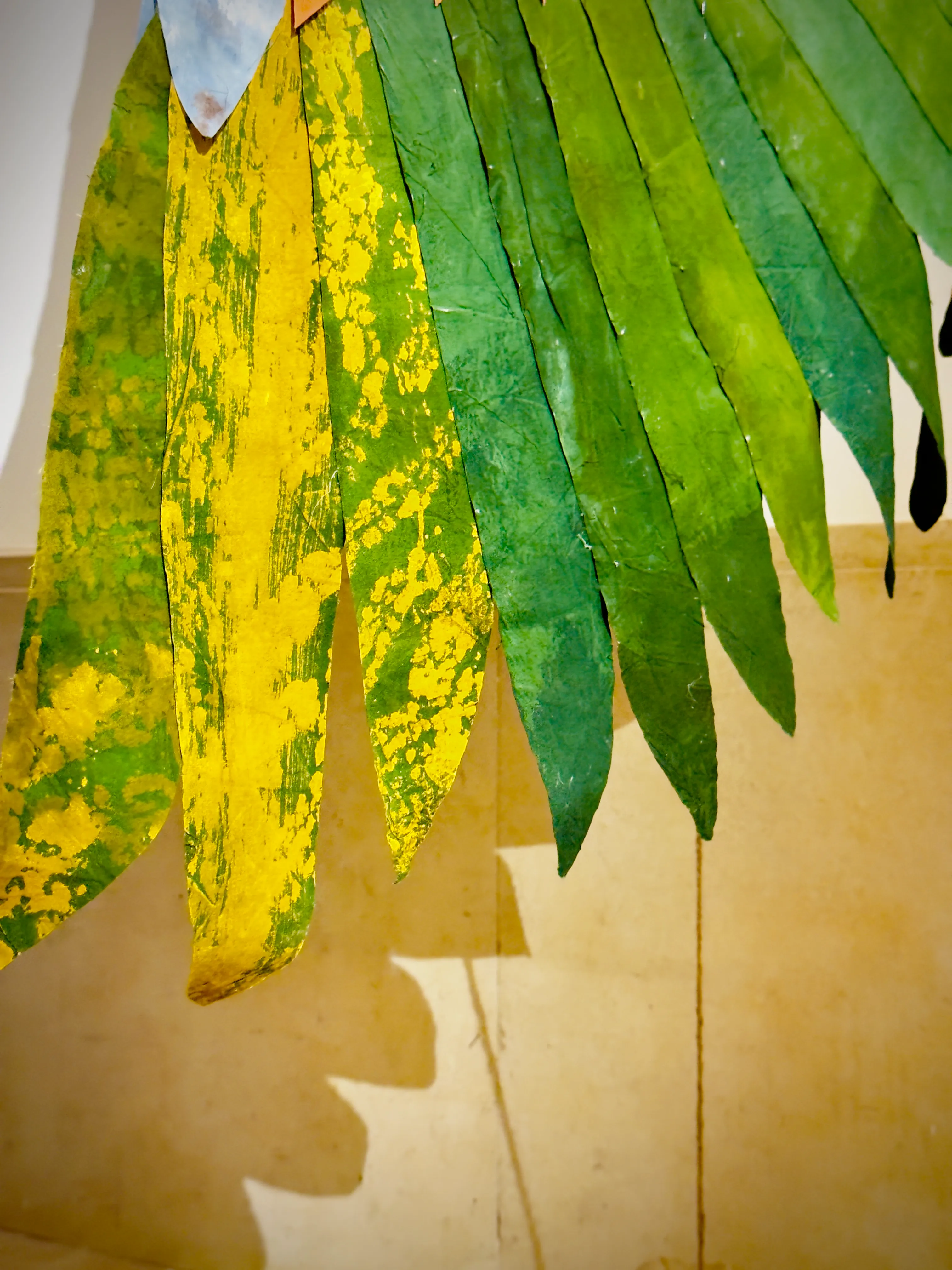
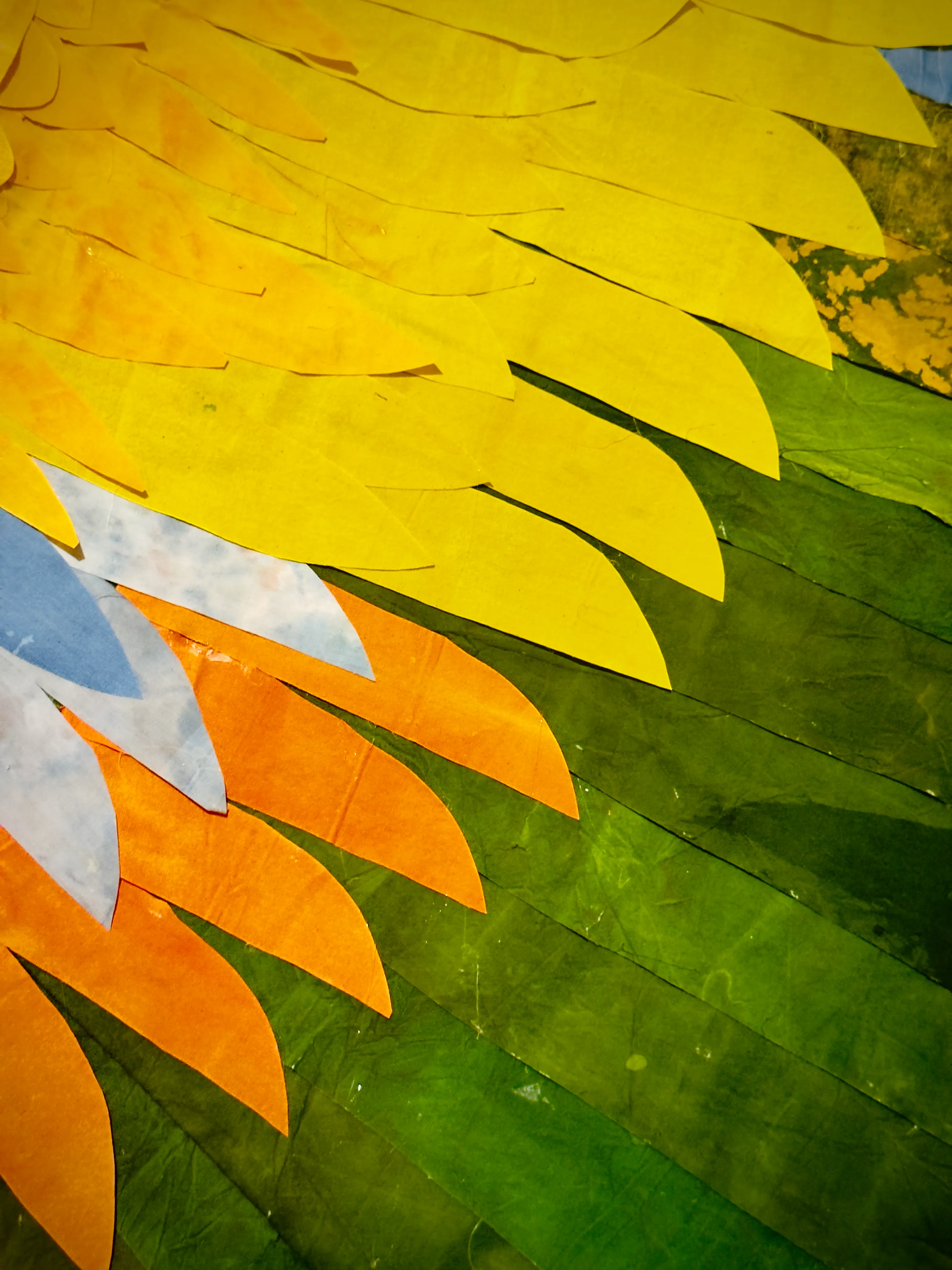
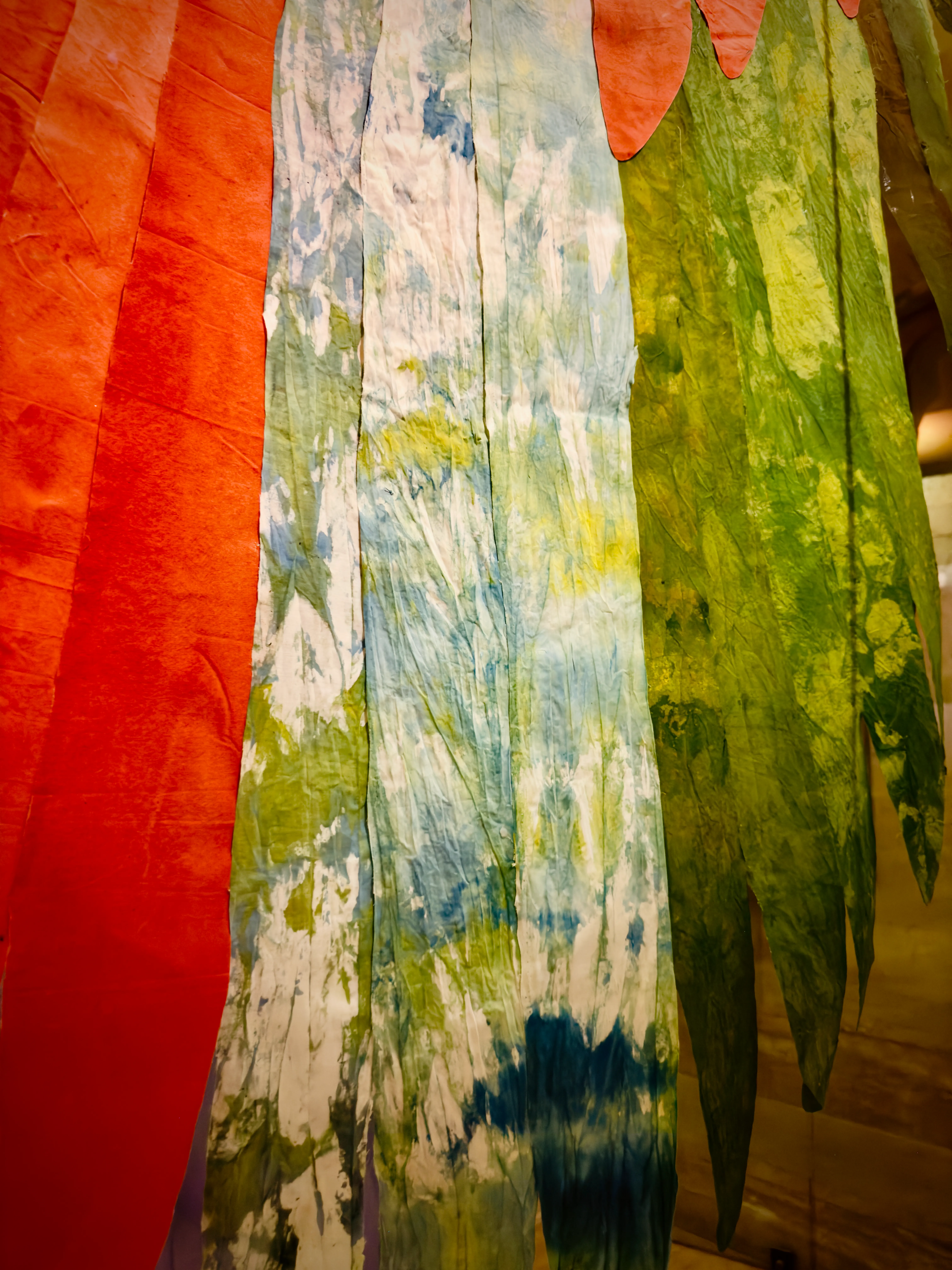
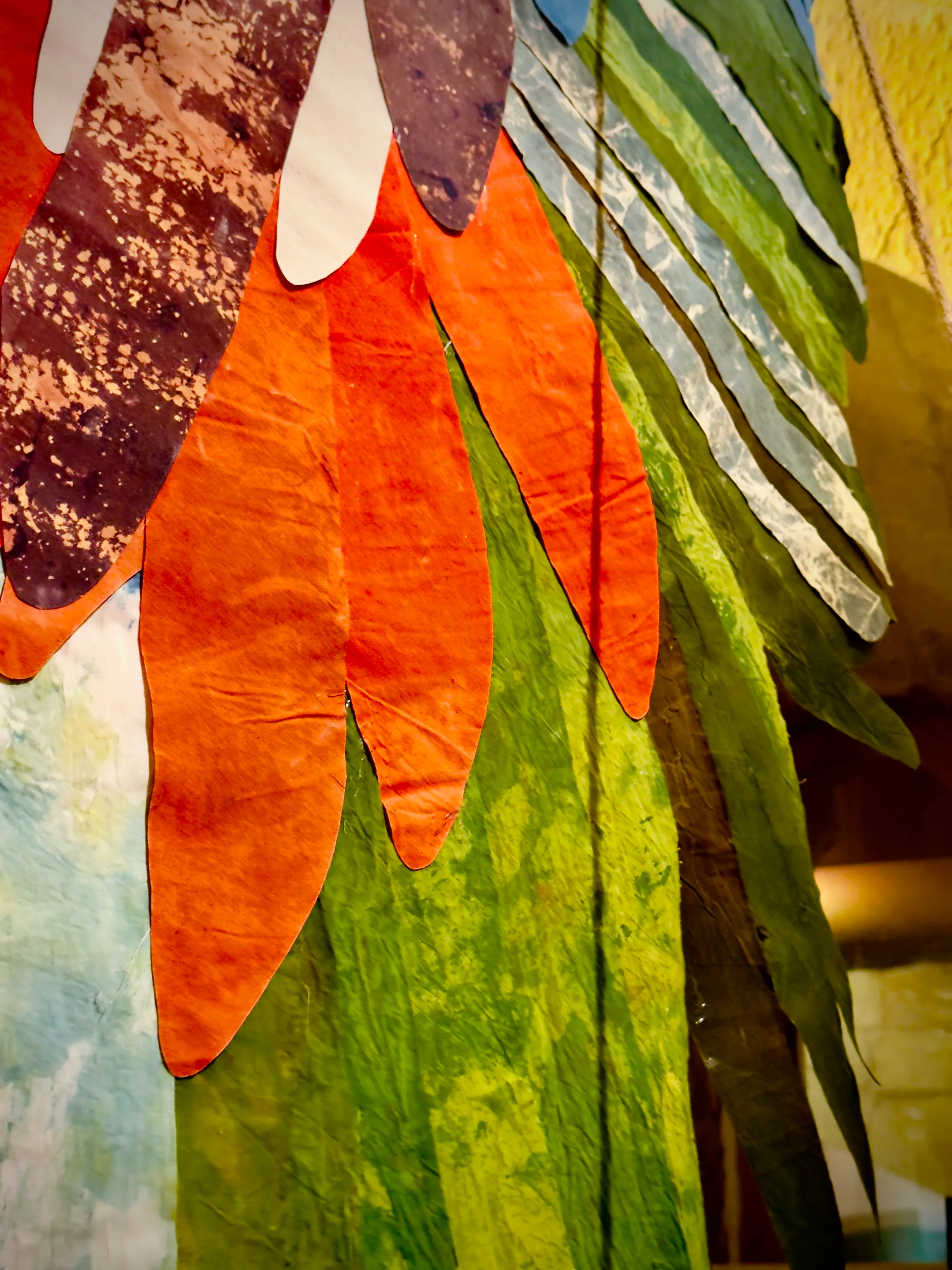
Wings (after Attâr) belongs to The Bird, the Thread, and the Open Sea, in which Kosmatopoulos translates Attâr's Sufi poem Conference of the Birds — an allegory of the soul's search for self-knowledge — from narrative into space. This series extracts what precedes the birds' departure: the forces of hesitation, orientation and tension that make an inner flight conceivable before any bird has moved.
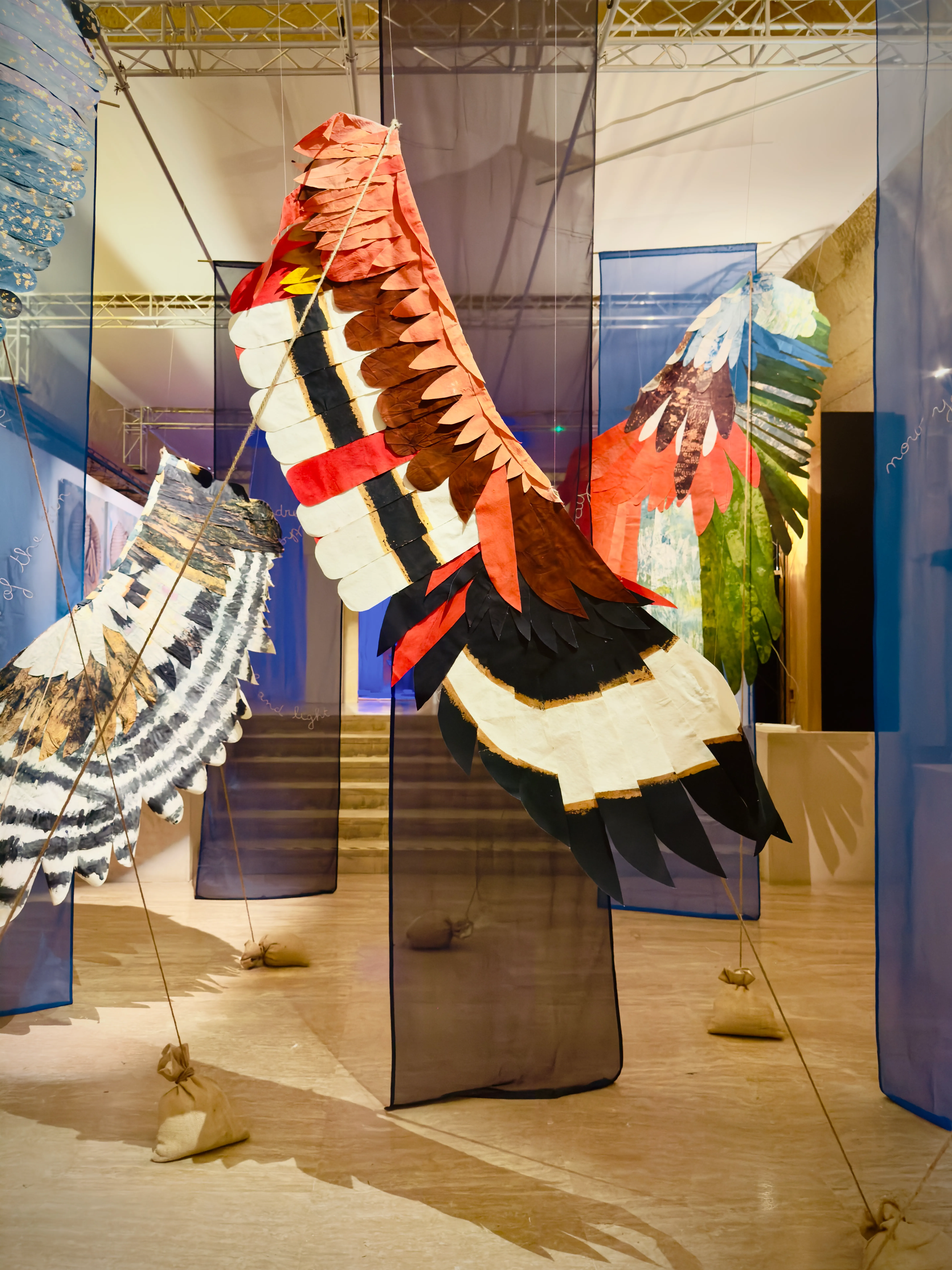
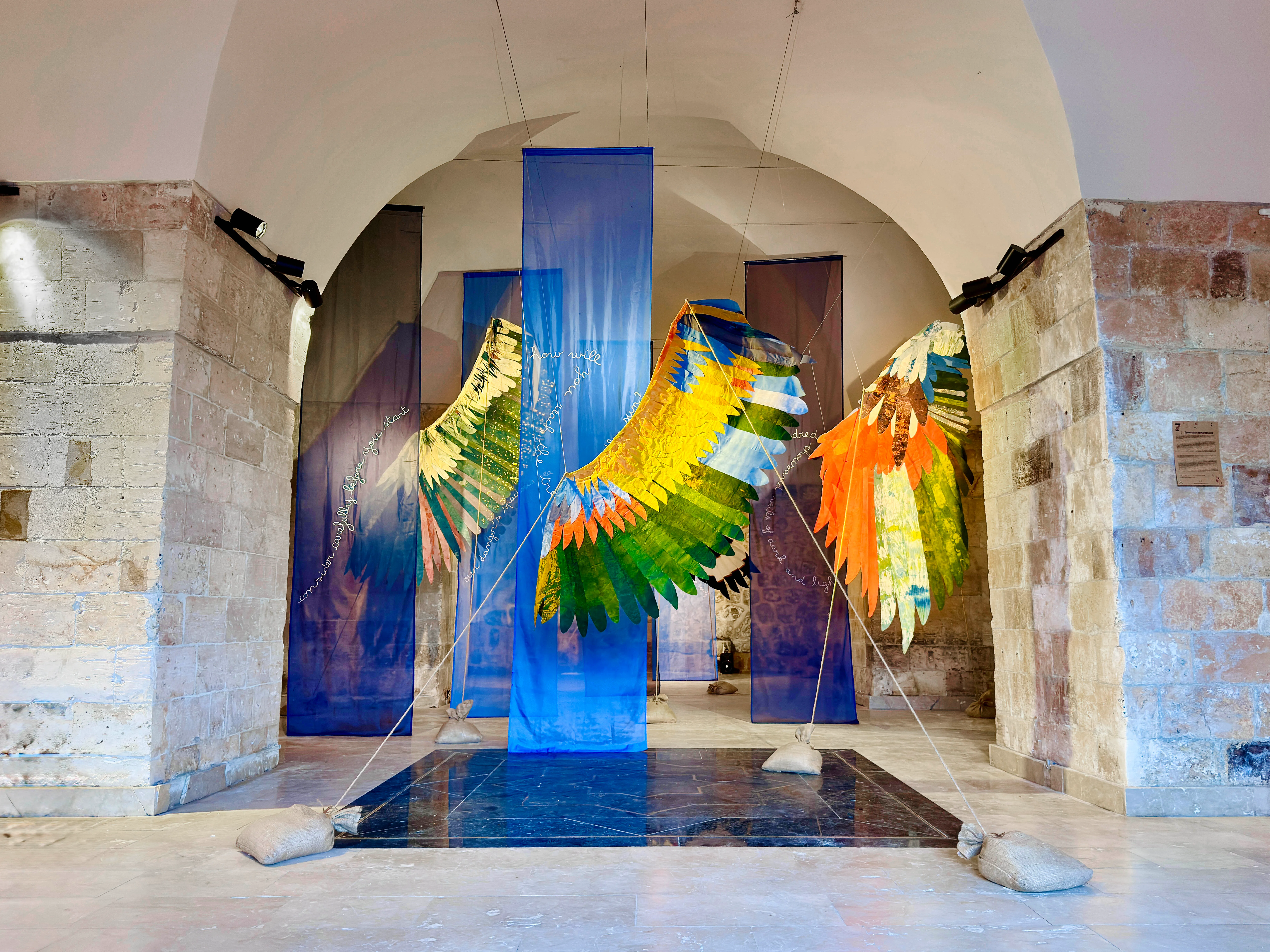
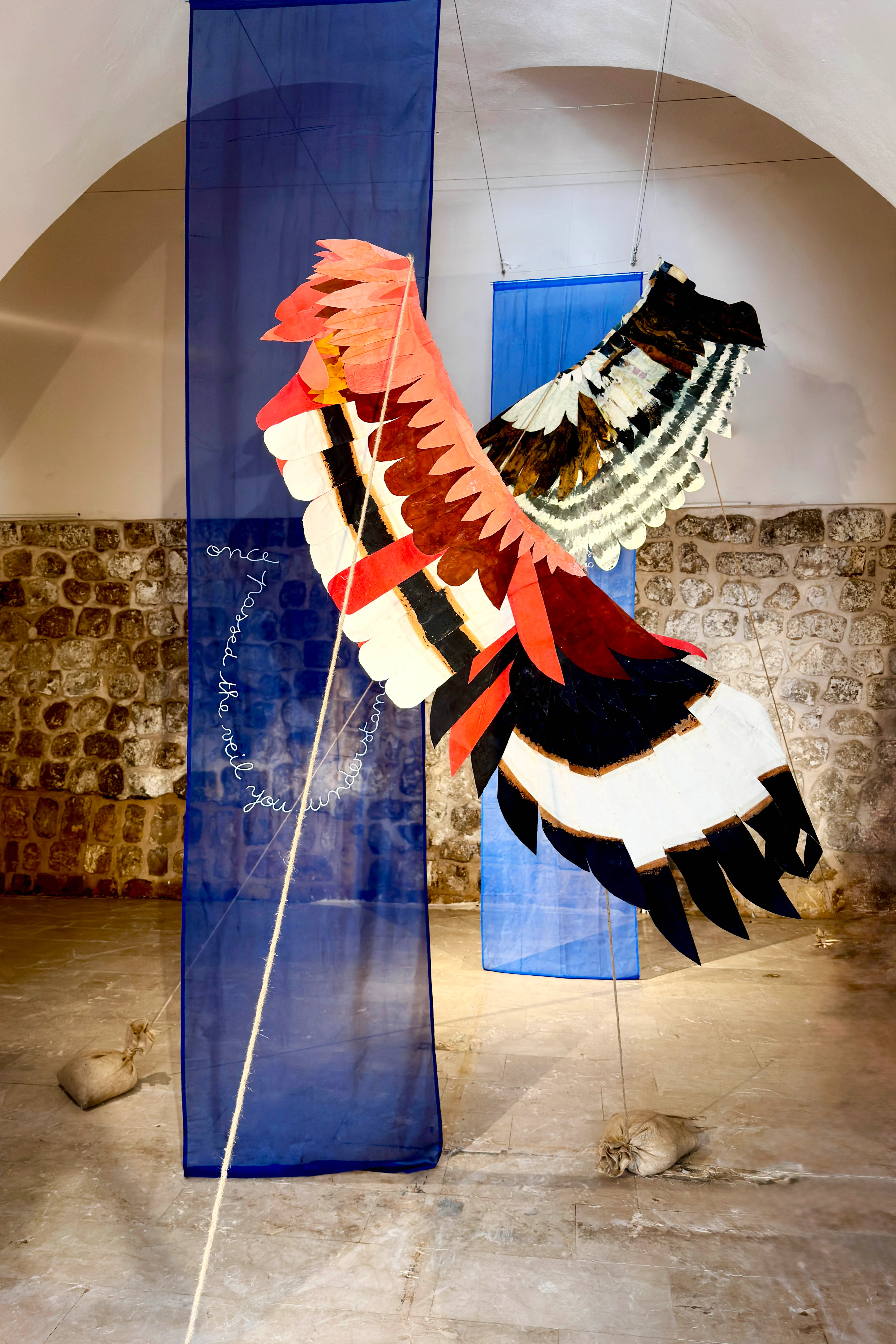
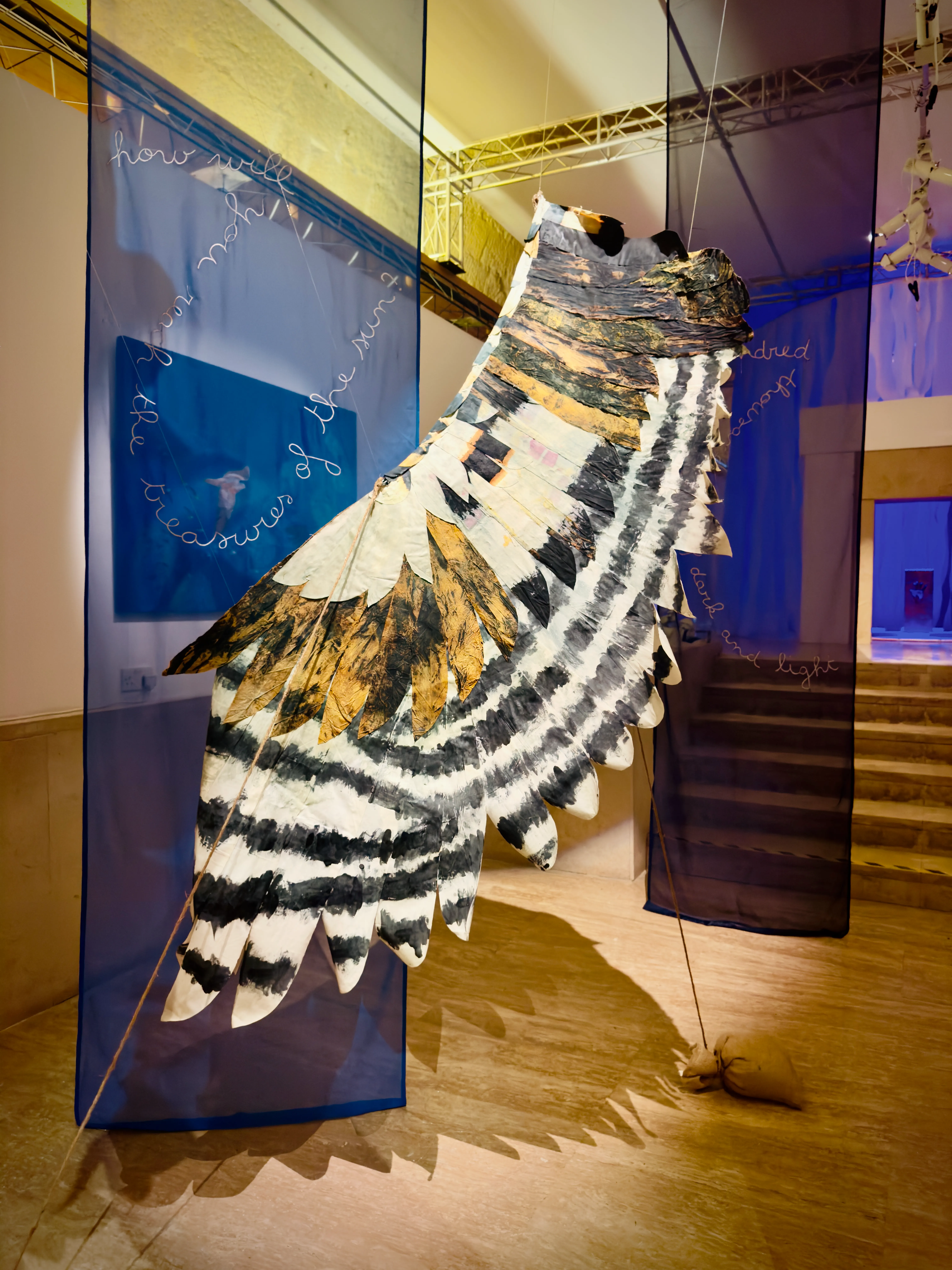
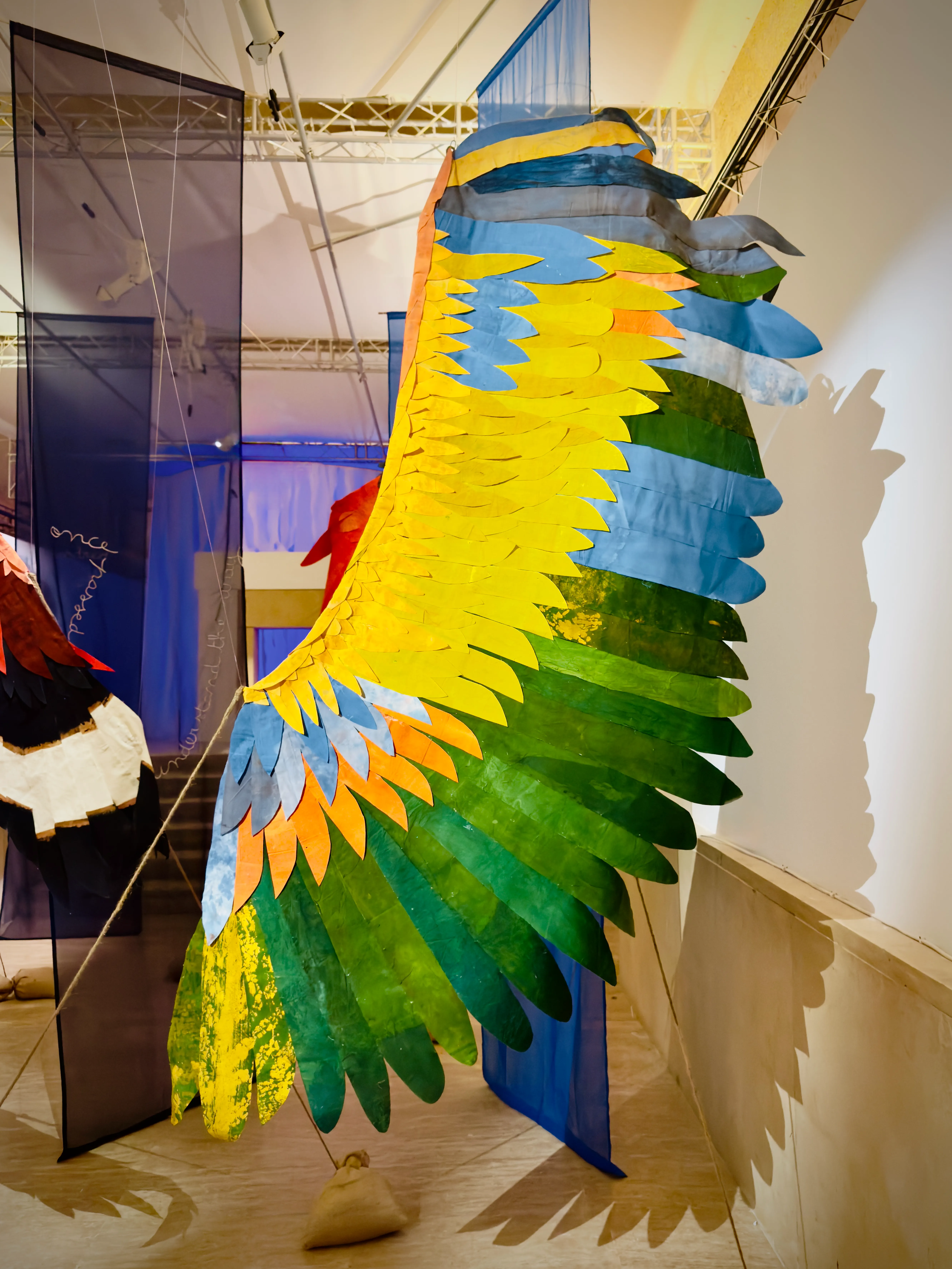
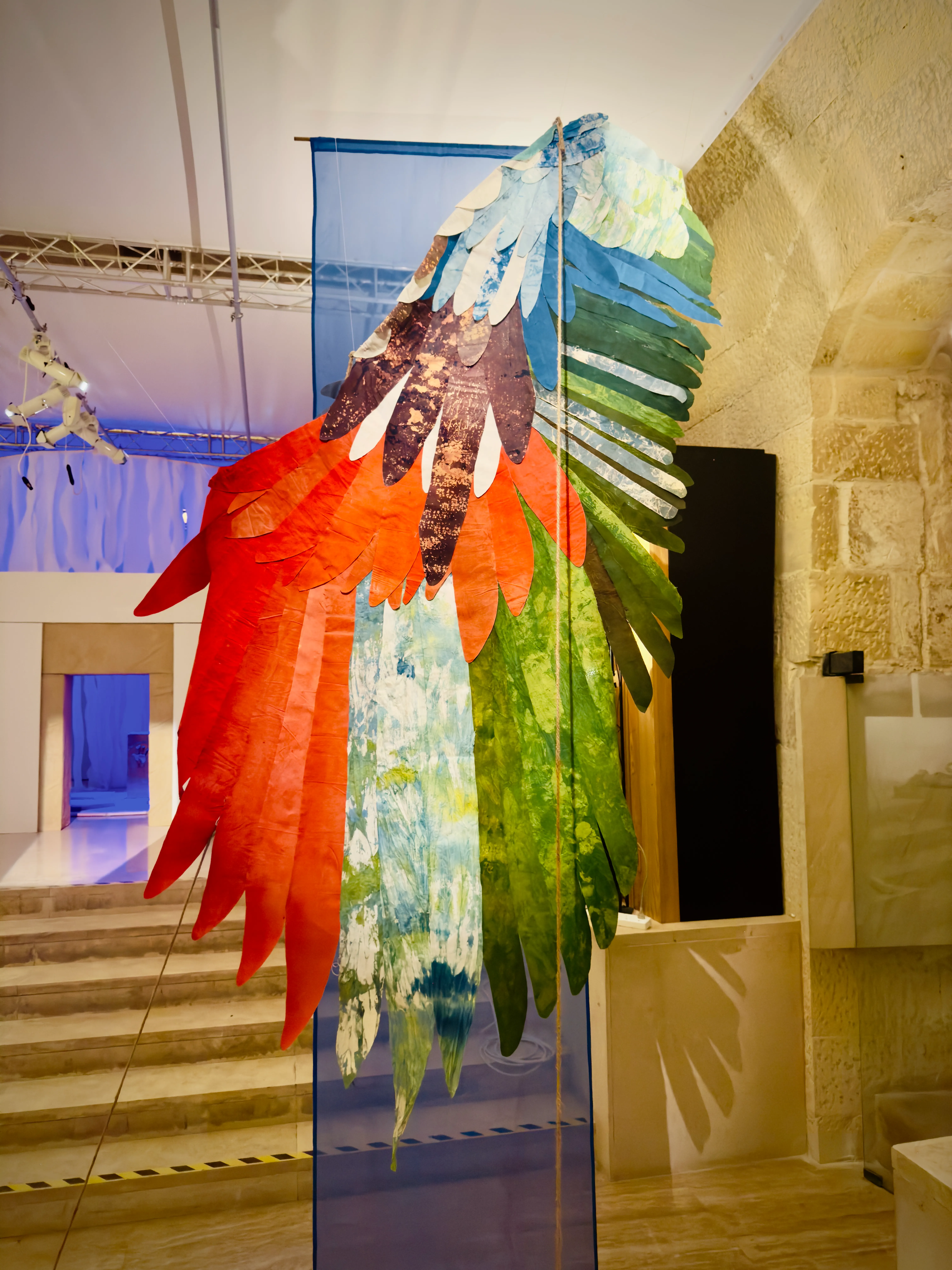
Each of the five works takes its point of departure from a different bird in the poem, but body, plumage and narrative identity are removed until only an oversized wing remains. Measuring between 1.80 and 2.40 metres, it no longer belongs to a recognisable species. Its scale and invented colour give it the physical presence of an imaginary bird without representing the animal itself. Detached from the body, the wing shifts from noun to verb: no longer a creature, but a direction held in suspension, an impulse rather than a character.
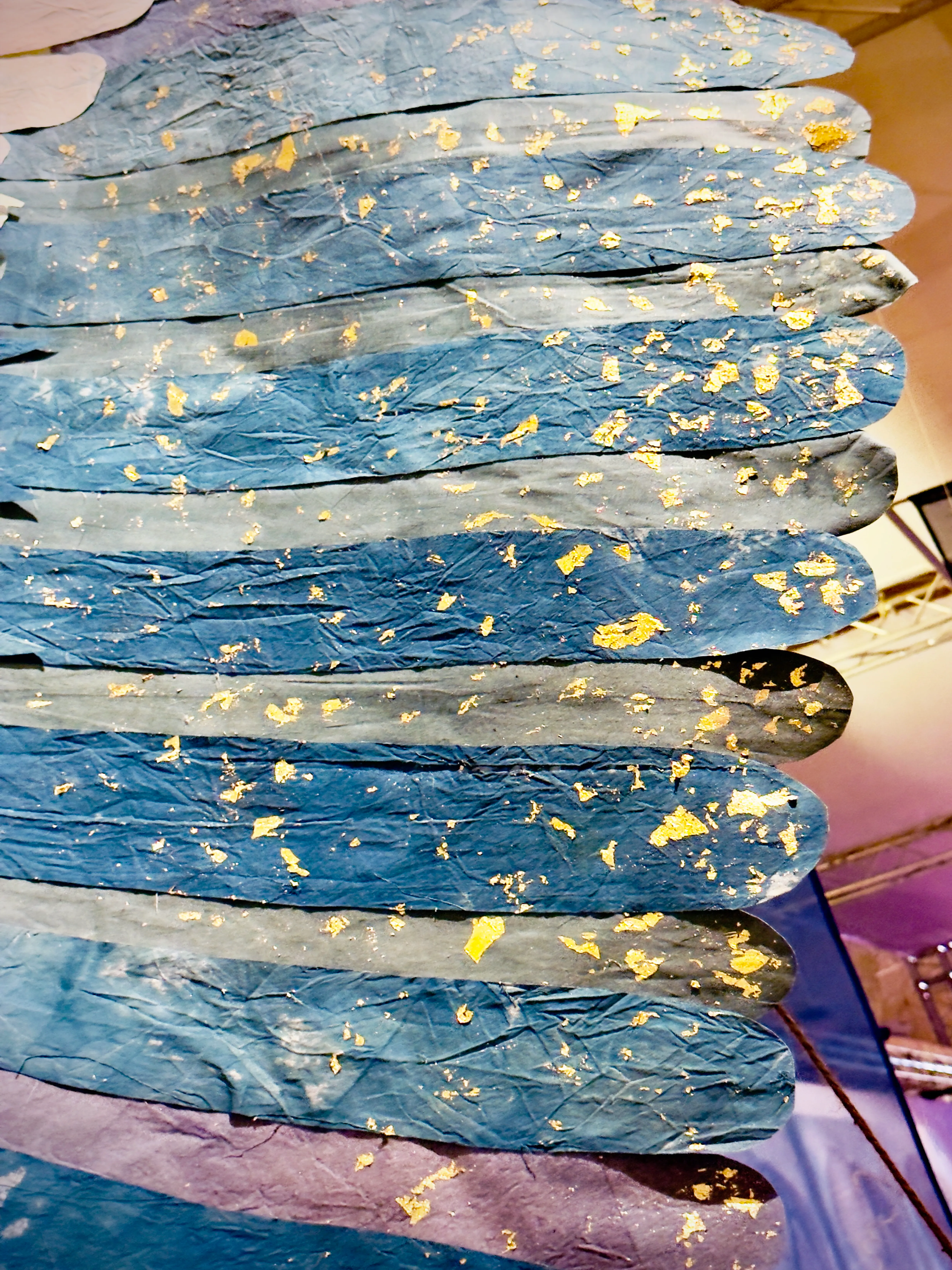
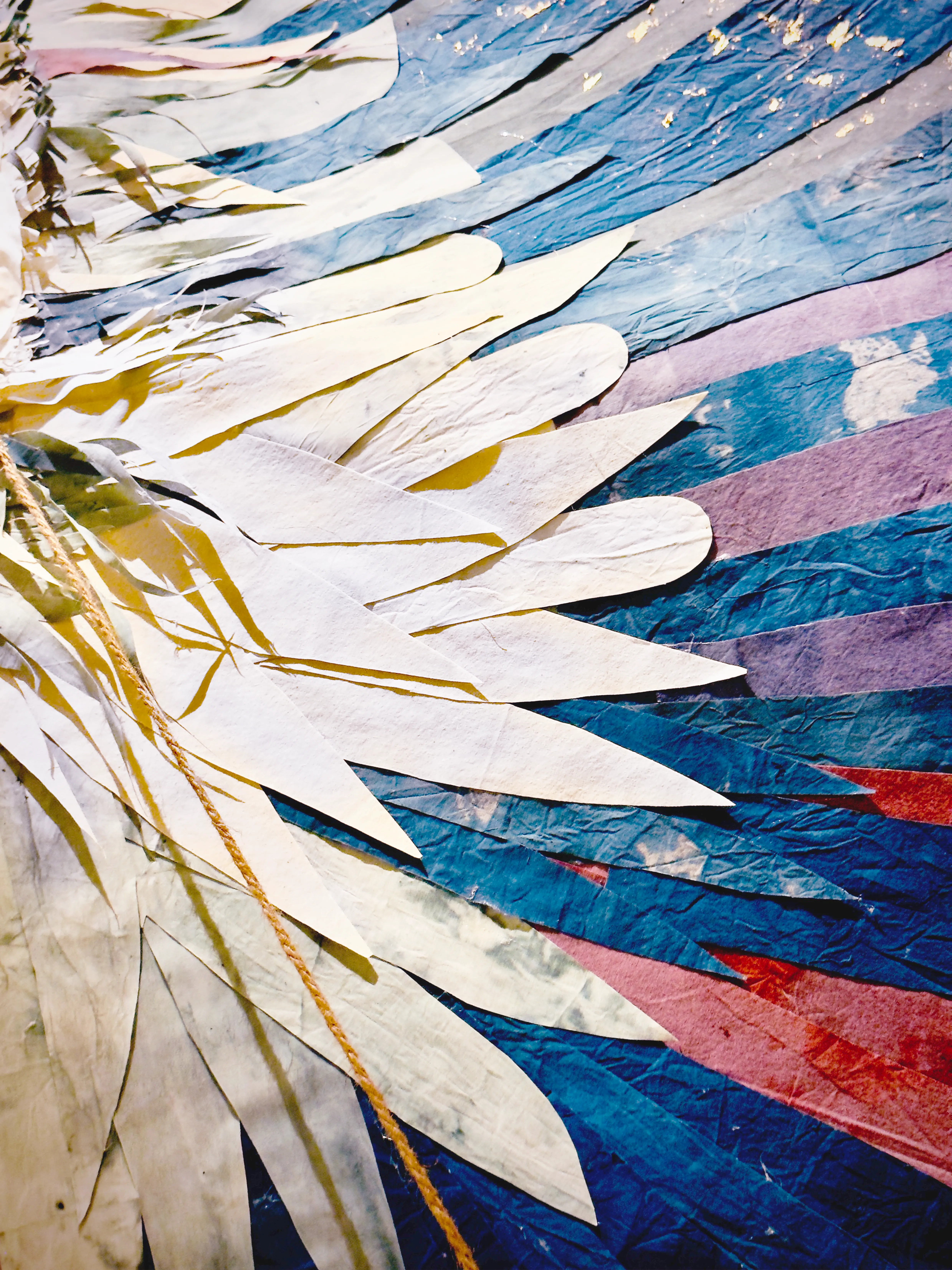
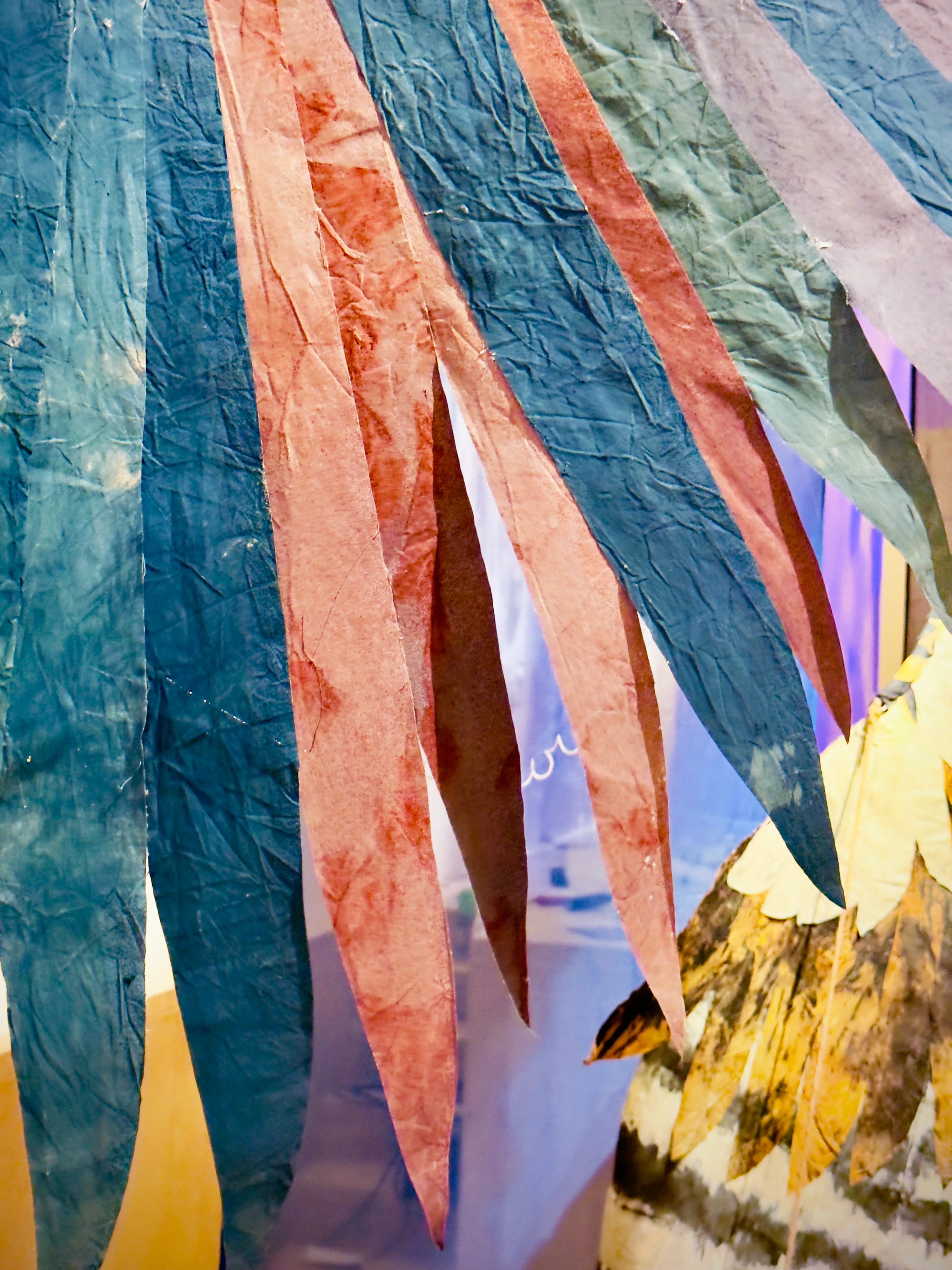
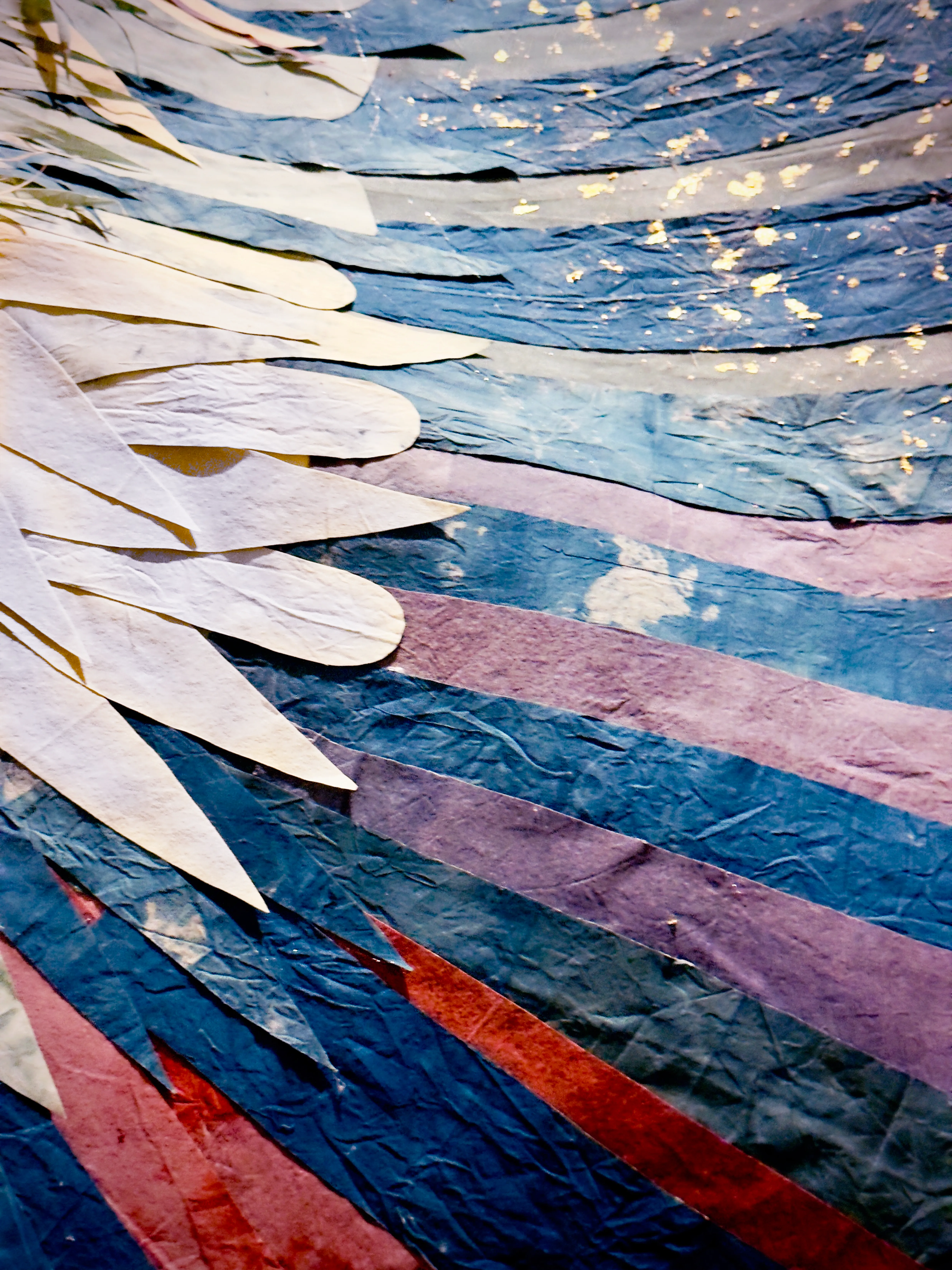
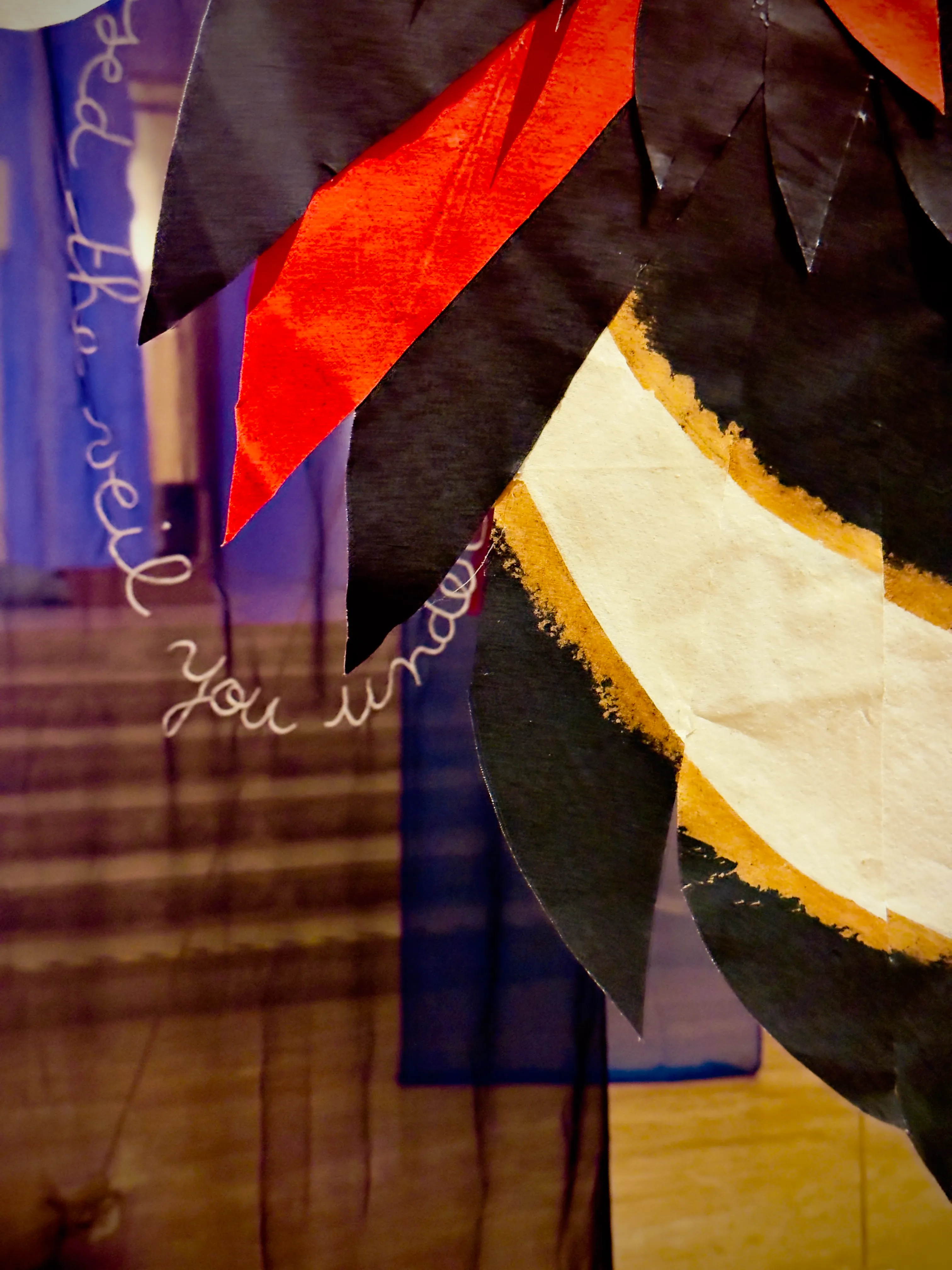
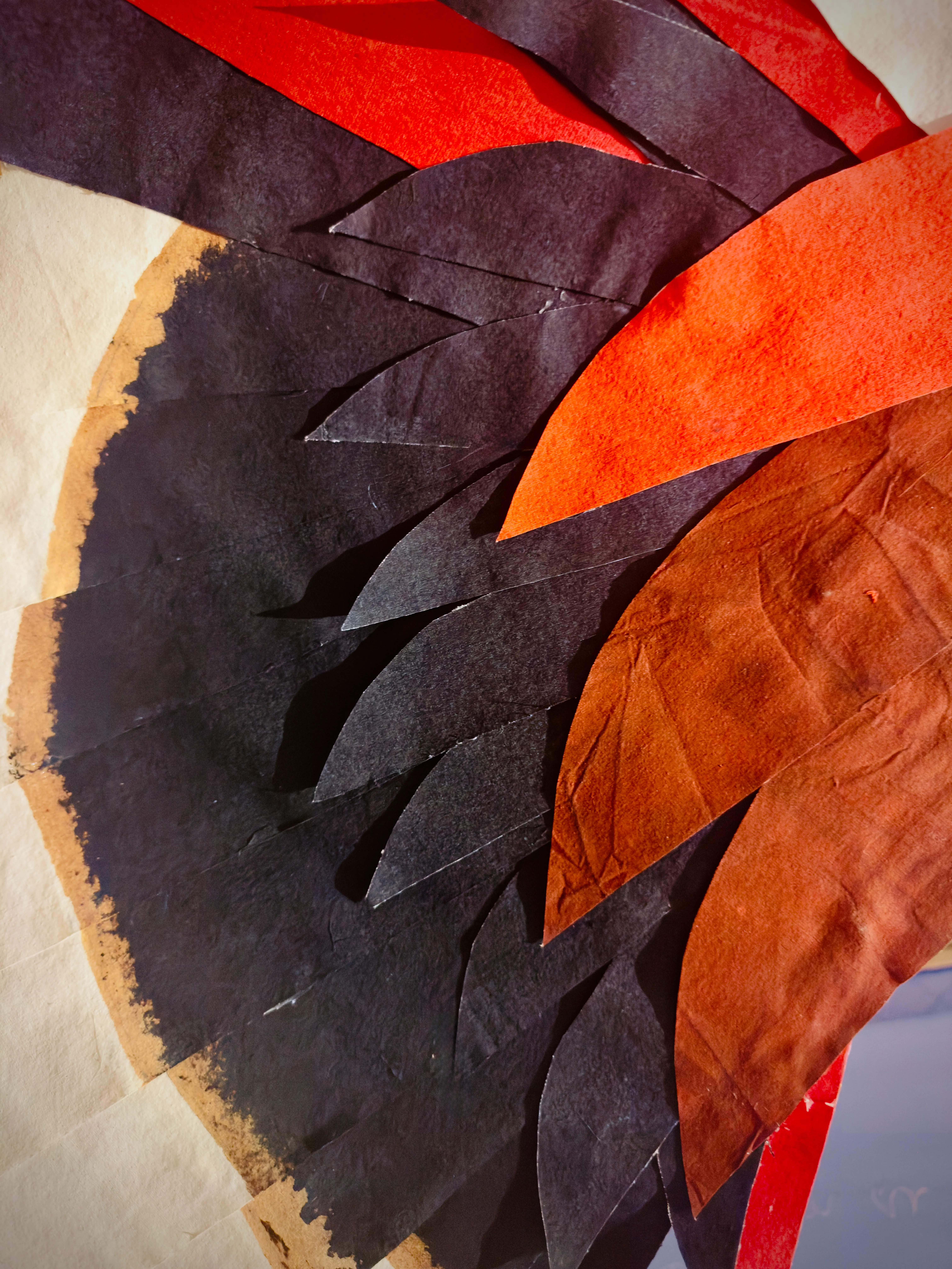
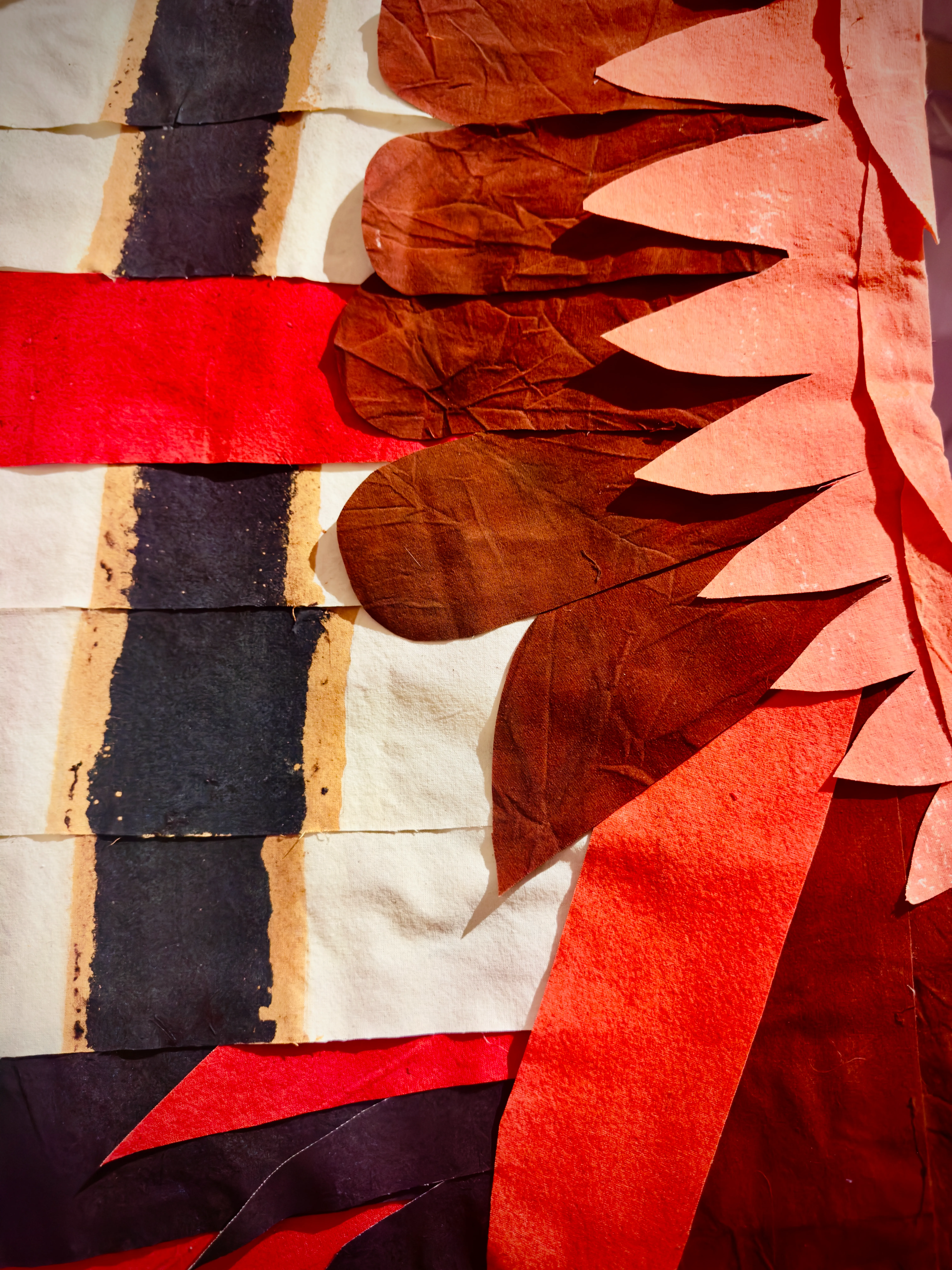
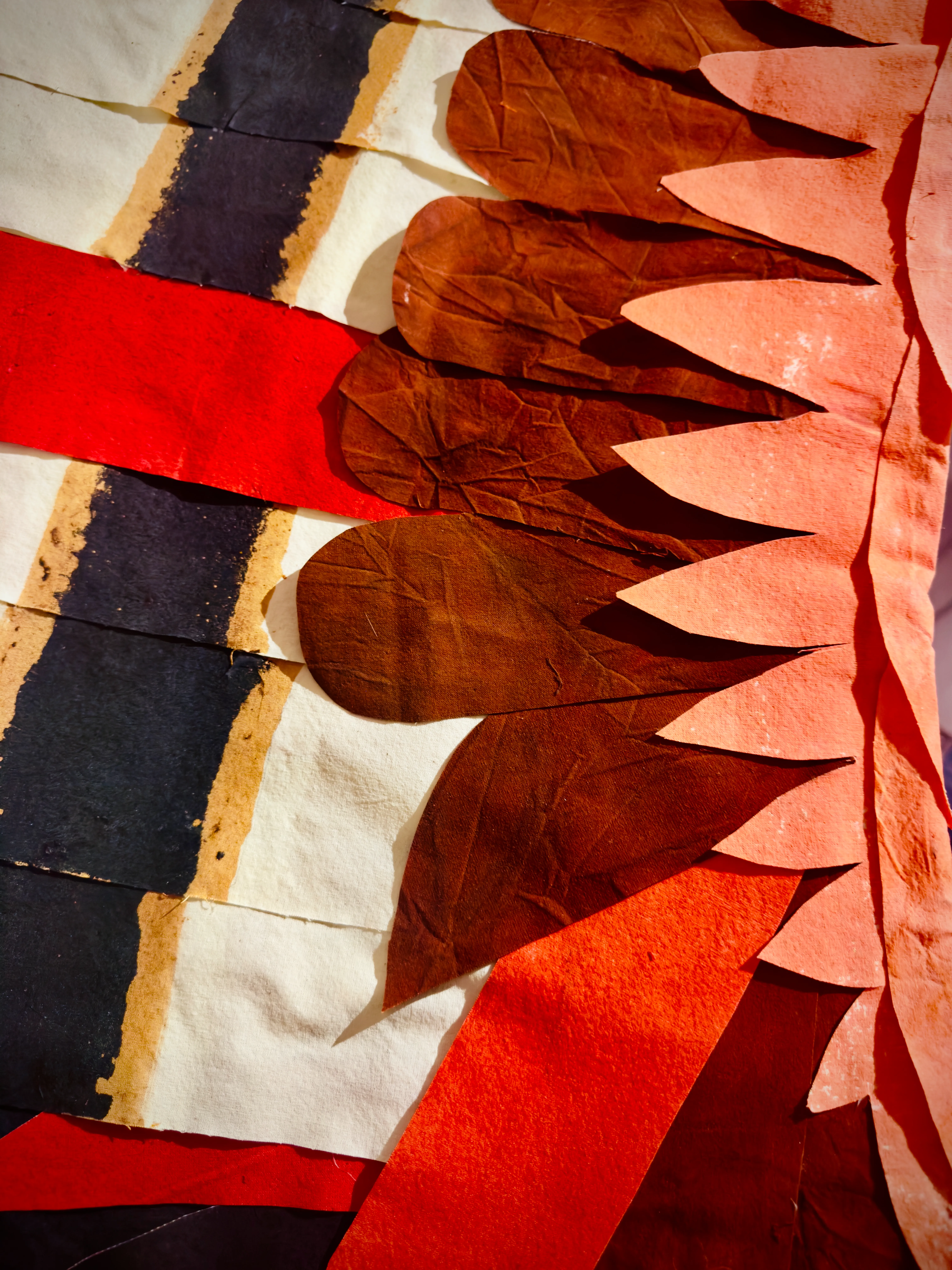
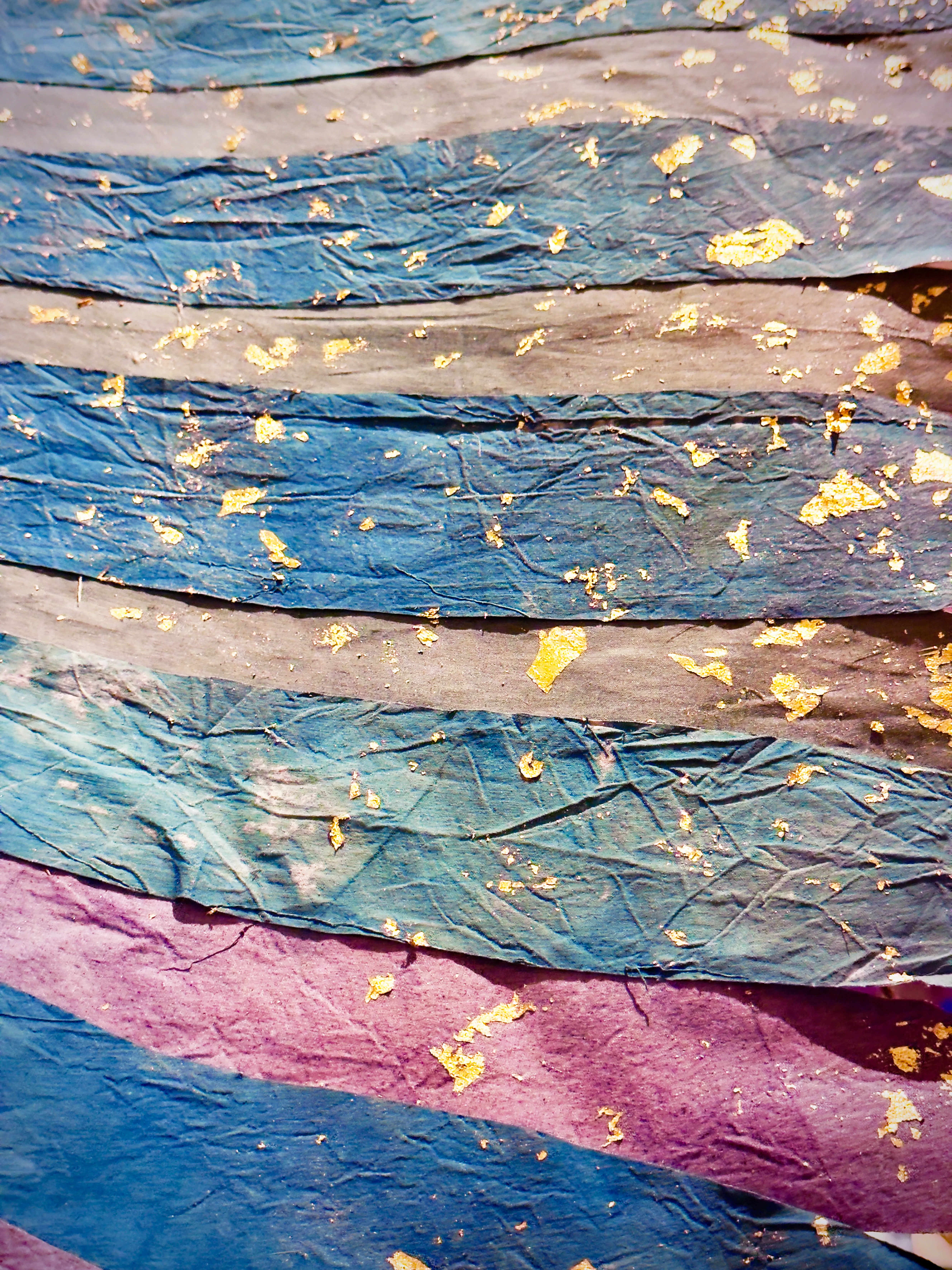
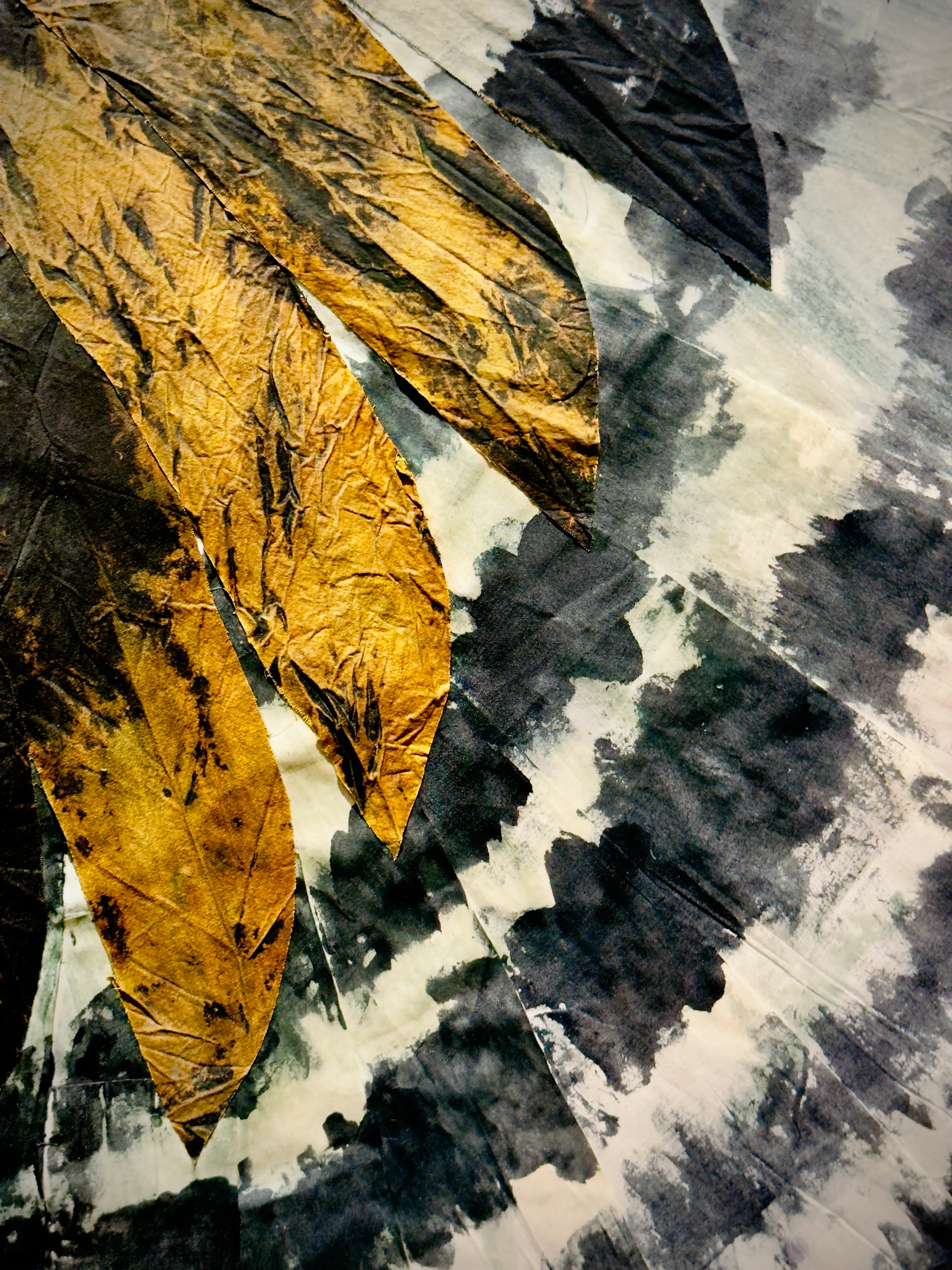
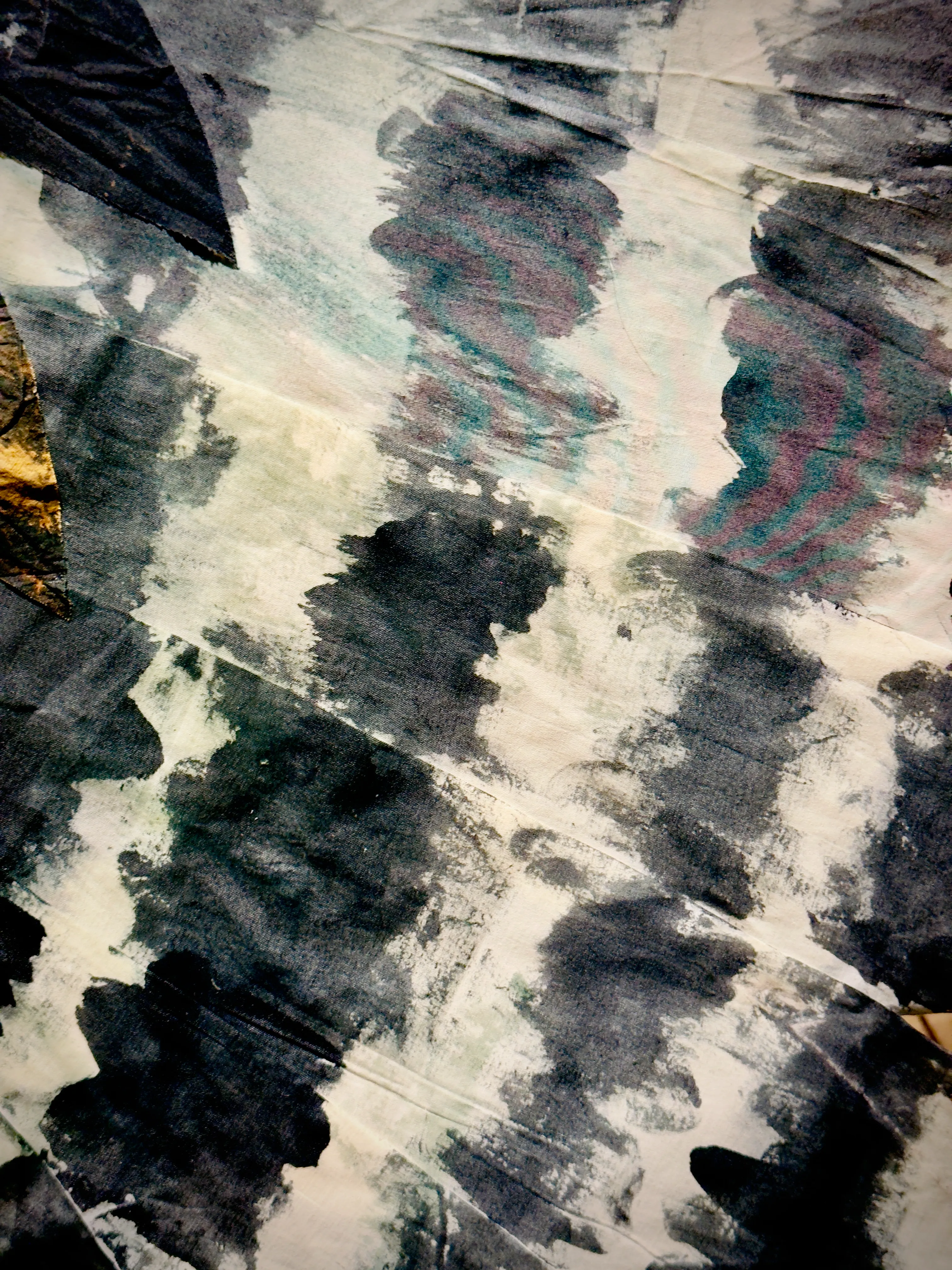
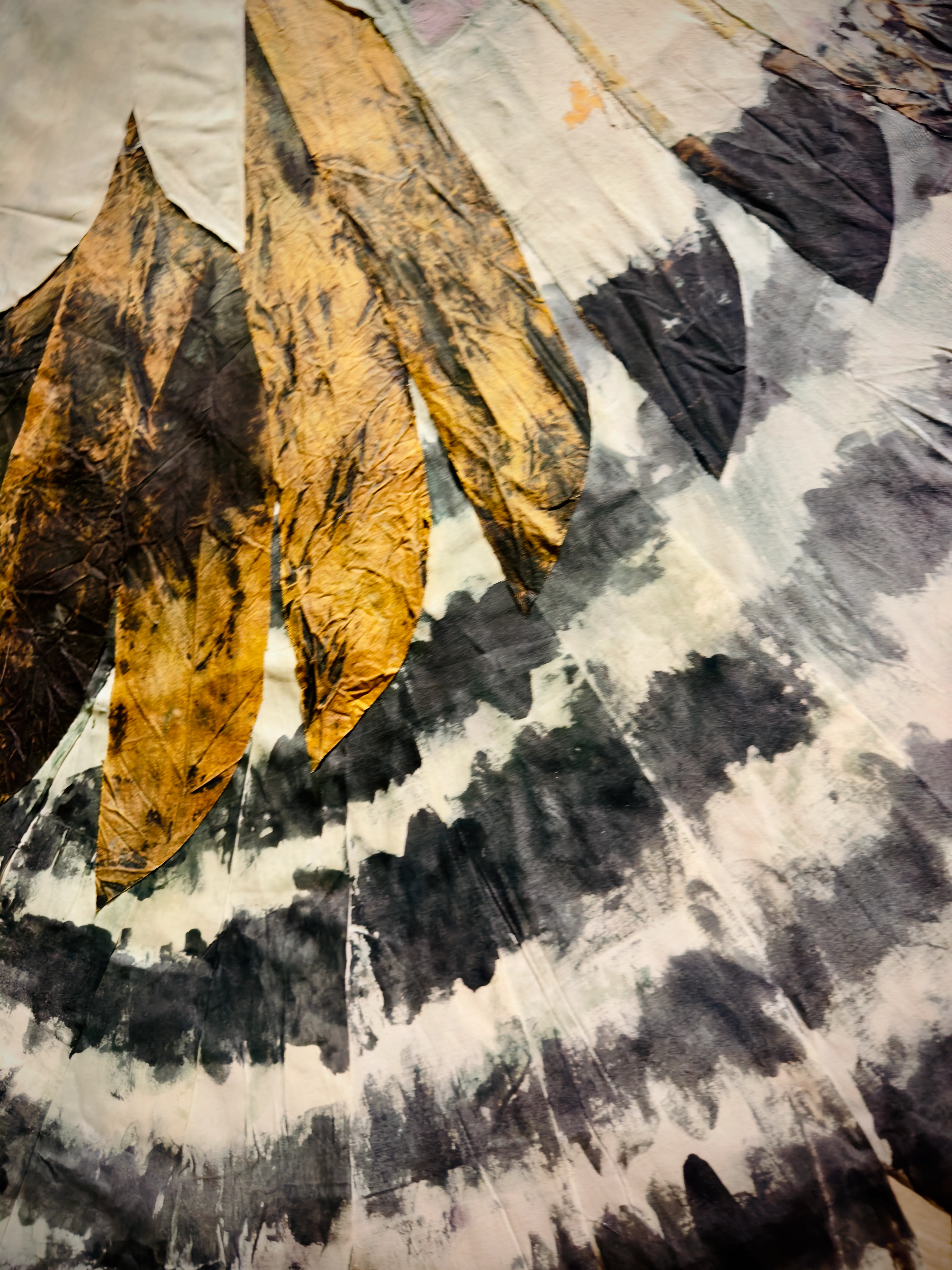
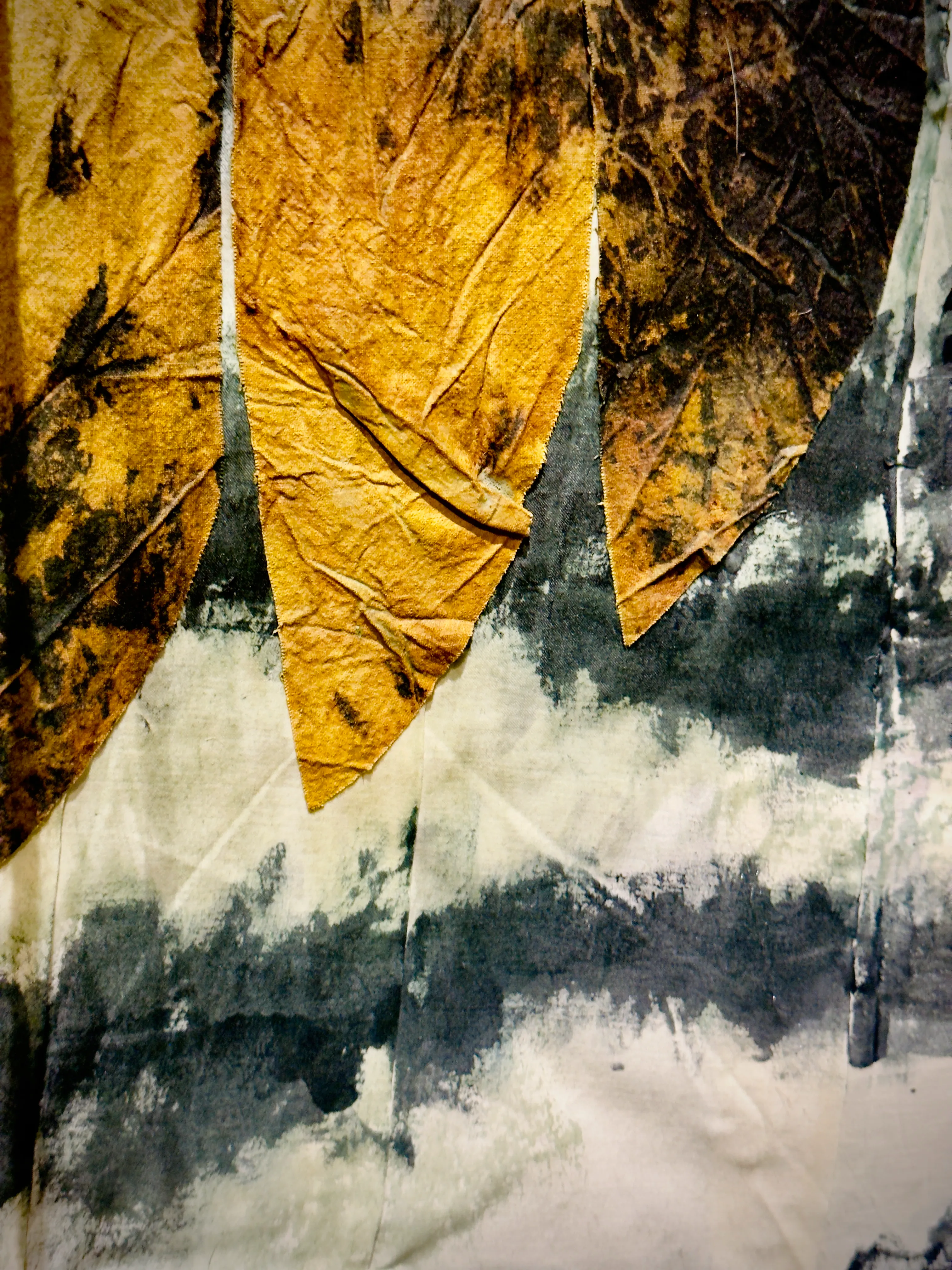
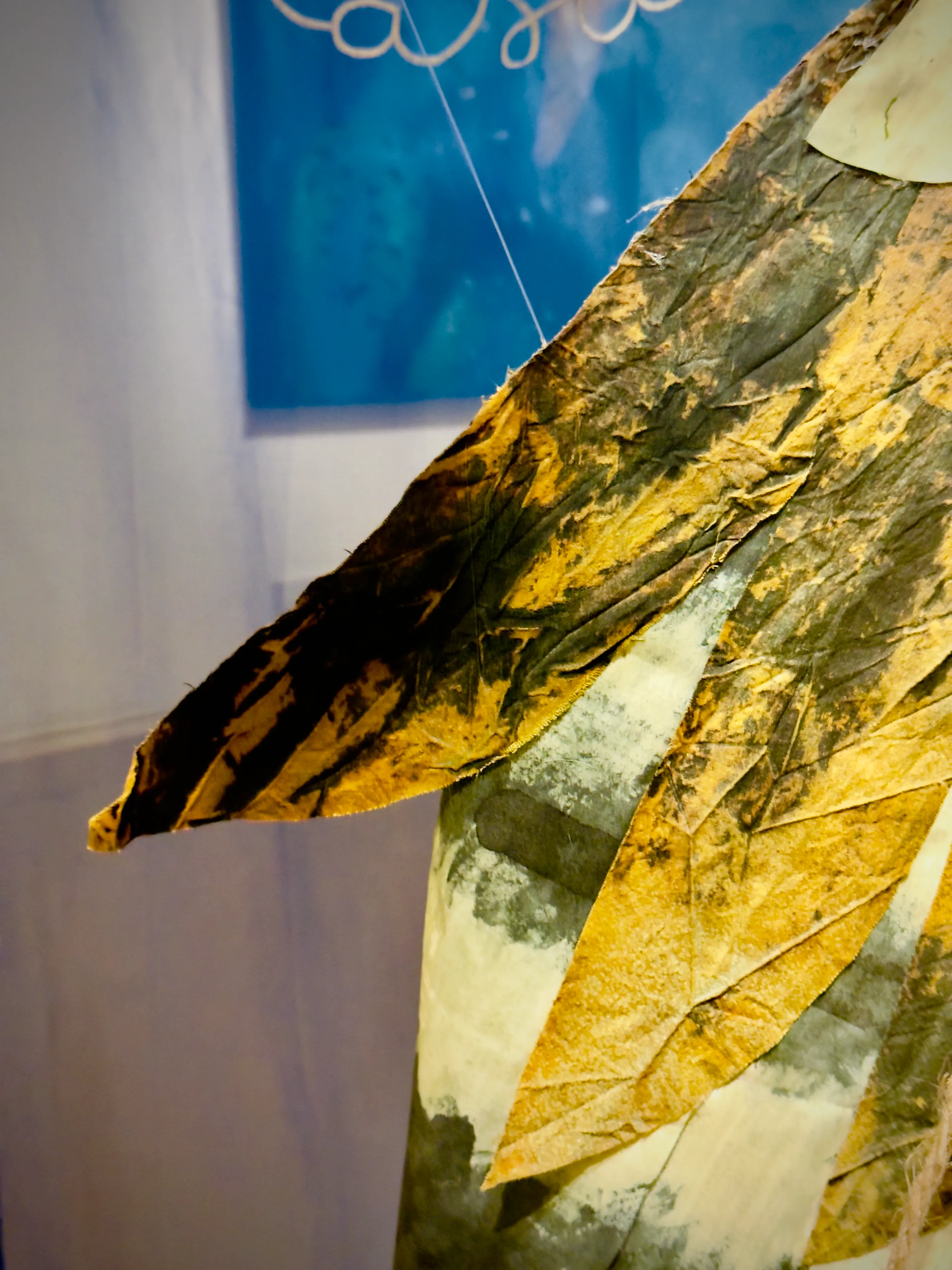
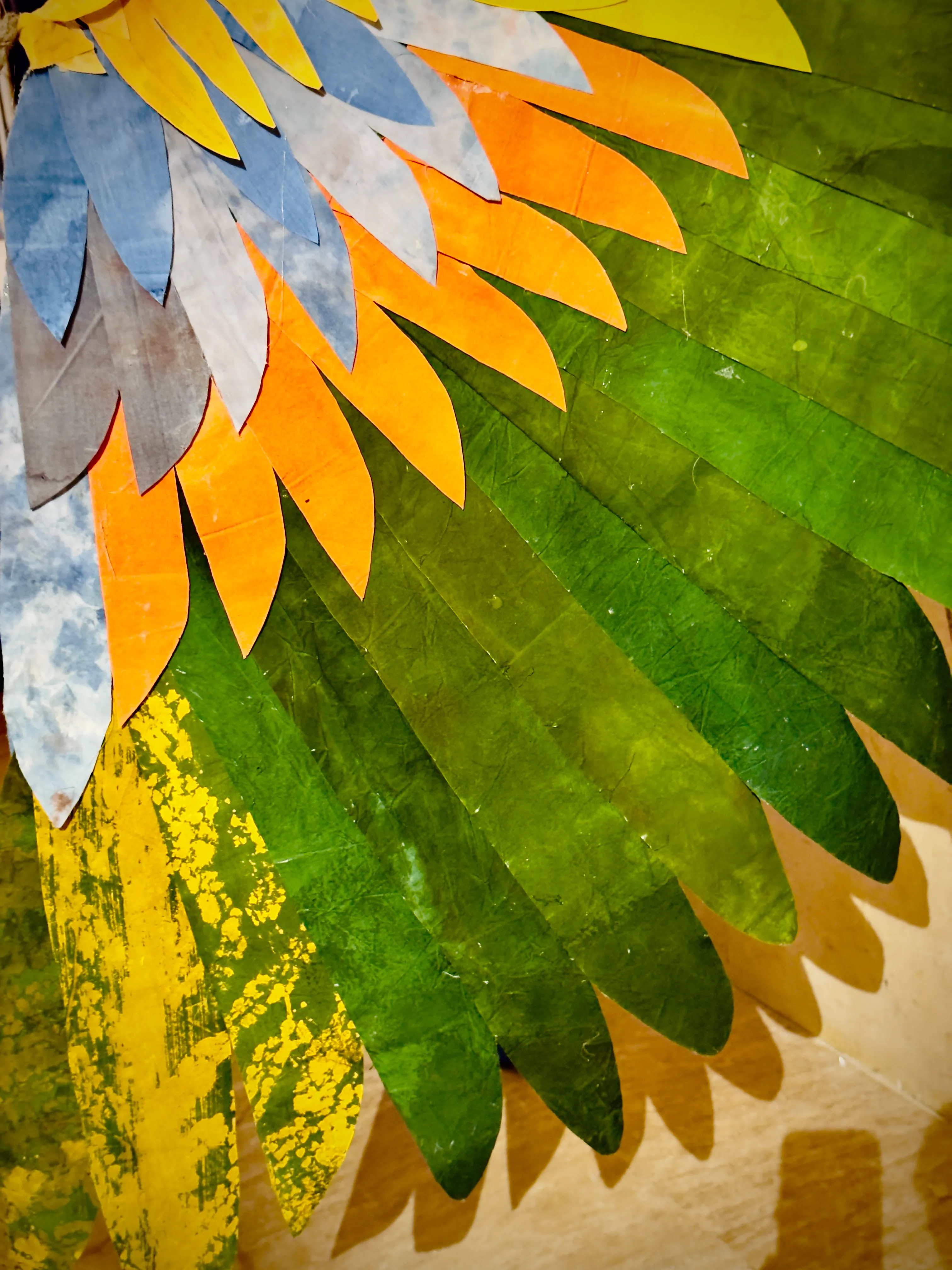
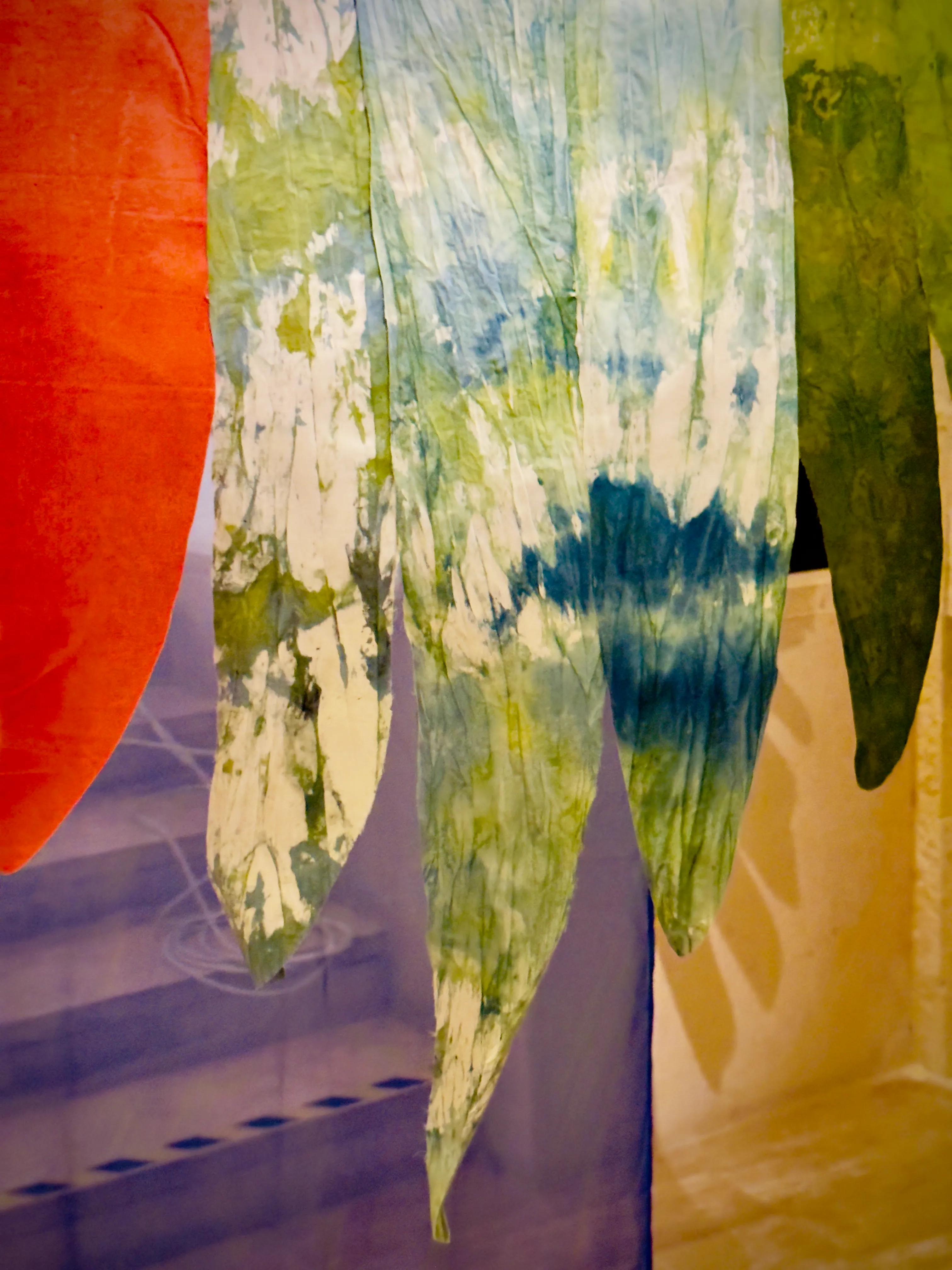
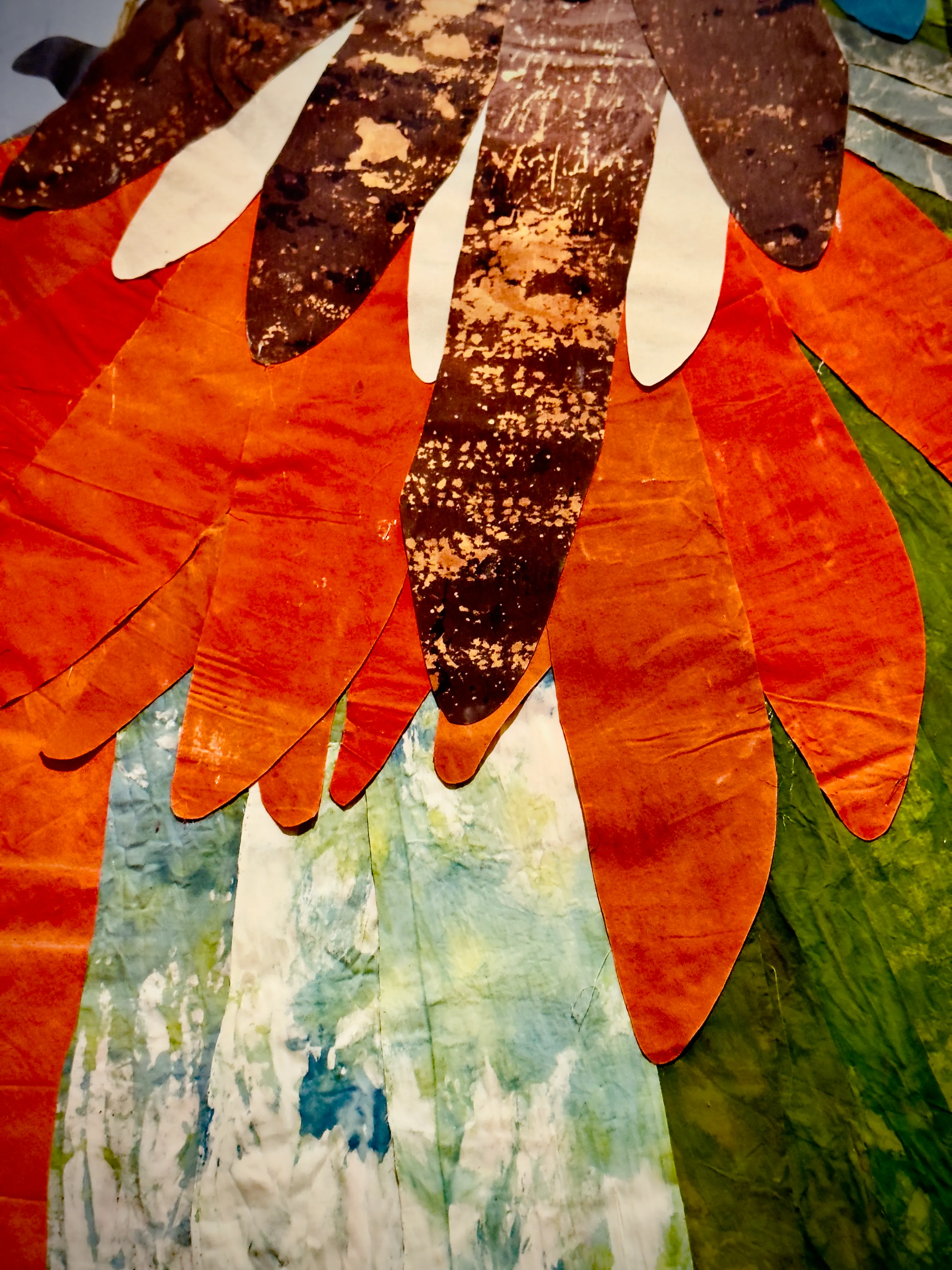
Each wing is built from layers of hand-dyed canvas worked through successive applications of pigment. Bands of colour, varying in tone and intensity, accumulate across the surface in distinct strata. The colour does not describe the plumage of a real bird; it constructs the shifting surface of an imaginary wing. These layers retain the time and repetition of the colouring process, embedding transformation in the canvas rather than depicting movement.
None of the five wings floats freely. Each is held by two cords anchored to sandbags resting on the floor. The sand acts as ballast, the cords draw visible lines of force, and gravity supplies the resistance against which orientation becomes legible. Nothing departs — every element simply remains turned towards movement, shifting the wing from something aerial towards something maritime: an inner sail stretched between earth and sky, built to receive direction without changing position.
Each wing is conceived as an independent sculpture, with its own scale, orientation and system of tension. It does not need the other four to form a complete work. Seen together, the five do not compose a flock or a single body; they remain five distinct propositions for how flight can be imagined without representing a bird in motion.
Wings (after Attâr) does not represent flight. It constructs the conditions through which flight can be imagined.
Nothing moves, yet every form is already becoming.