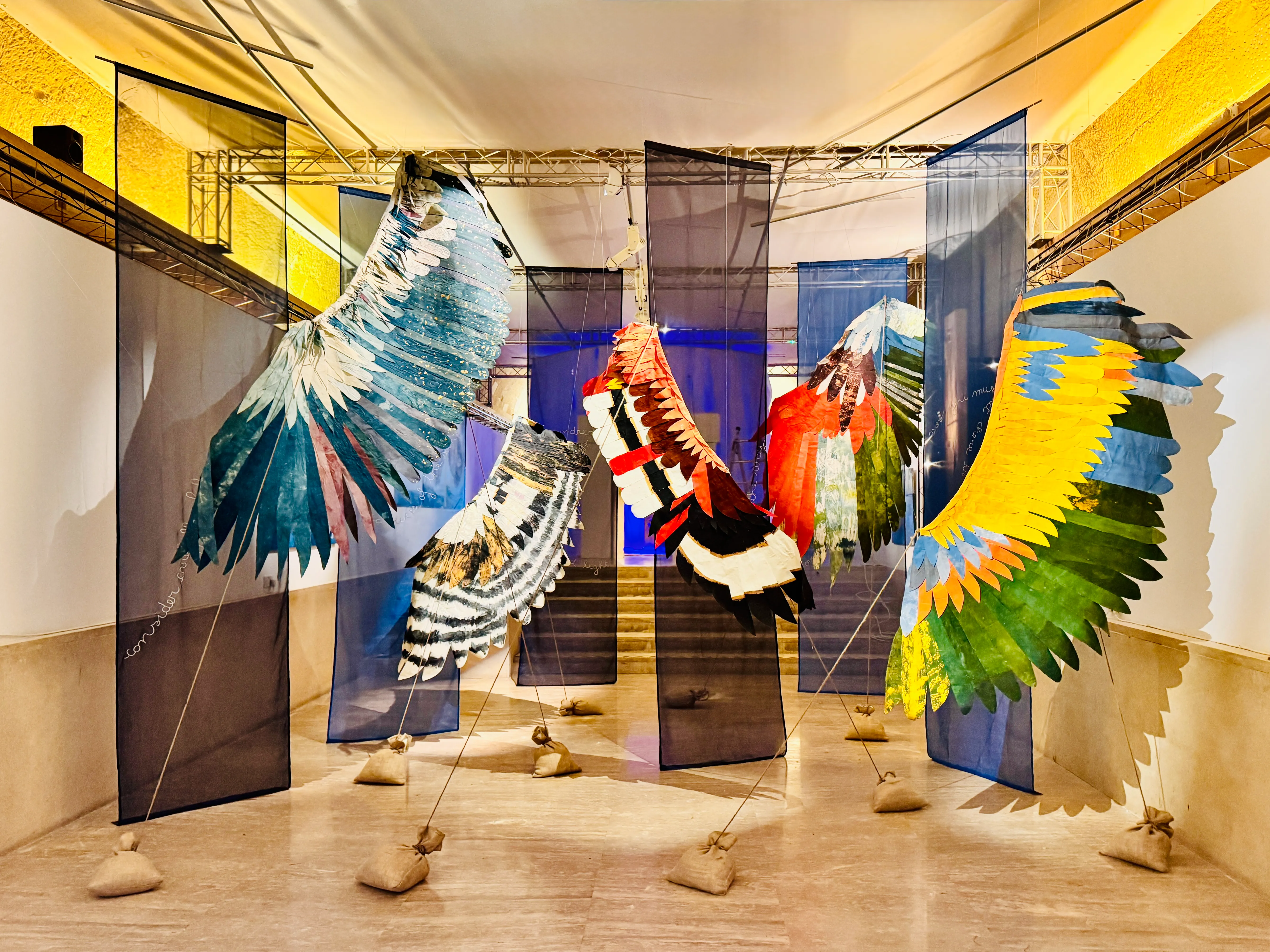
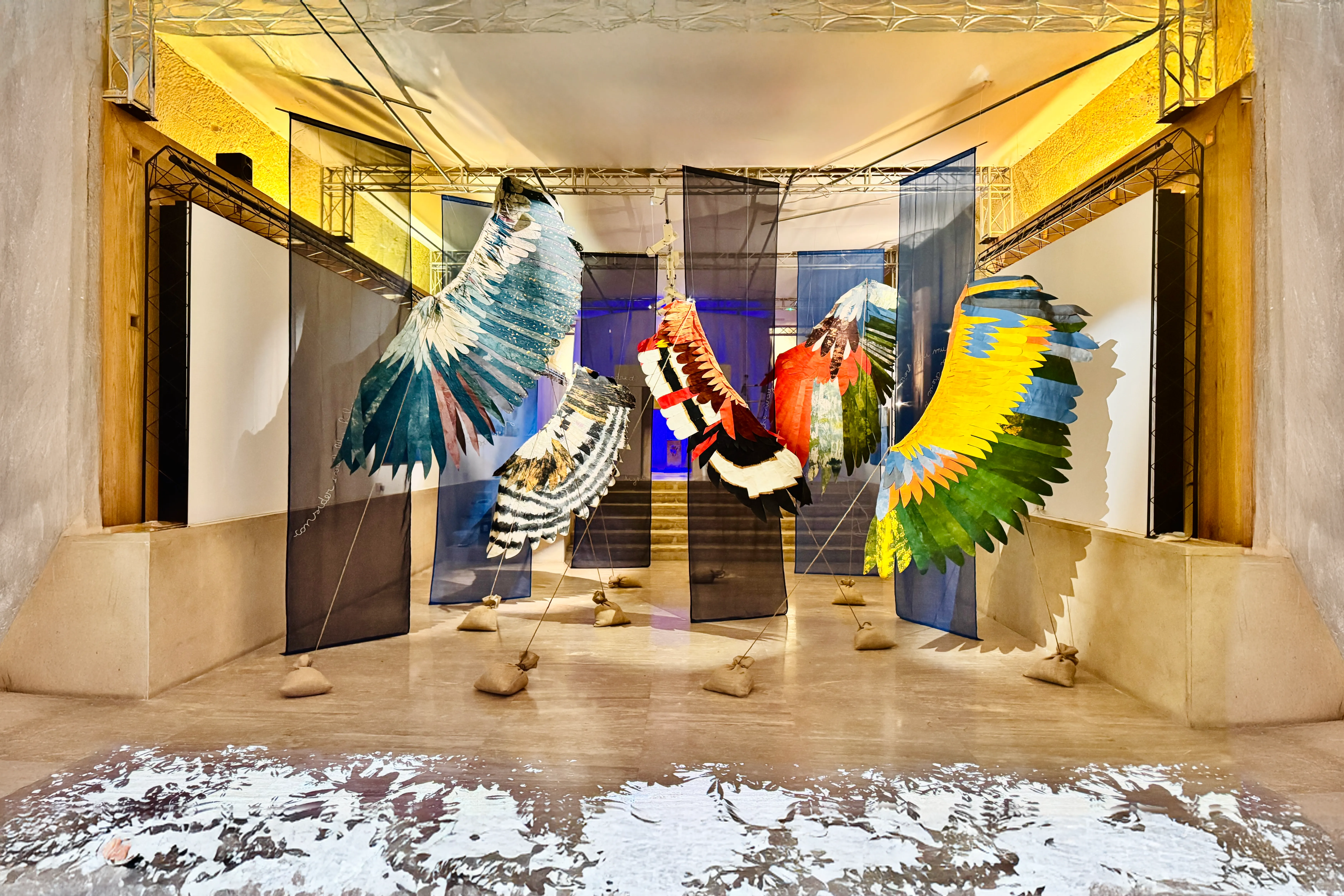
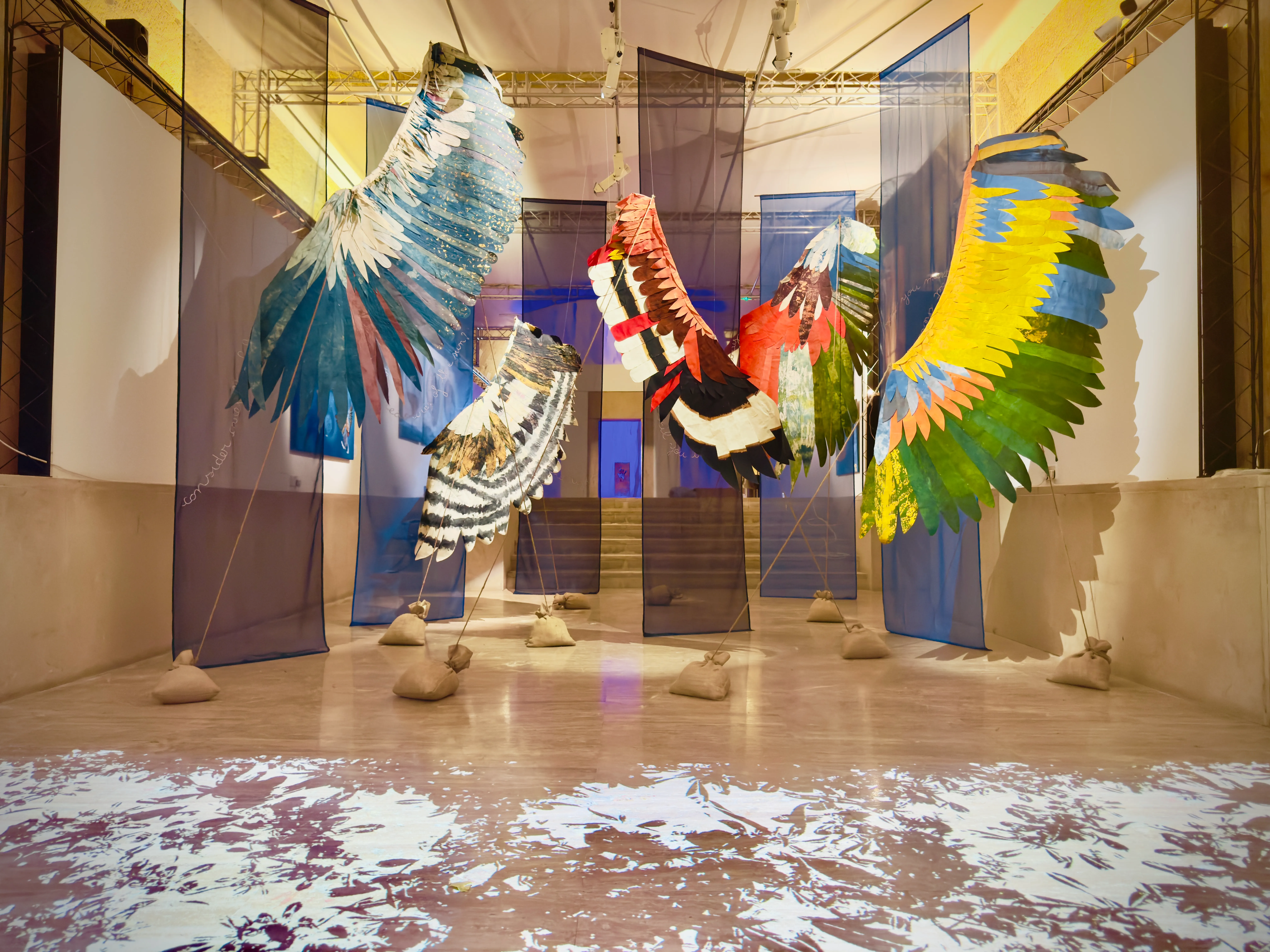
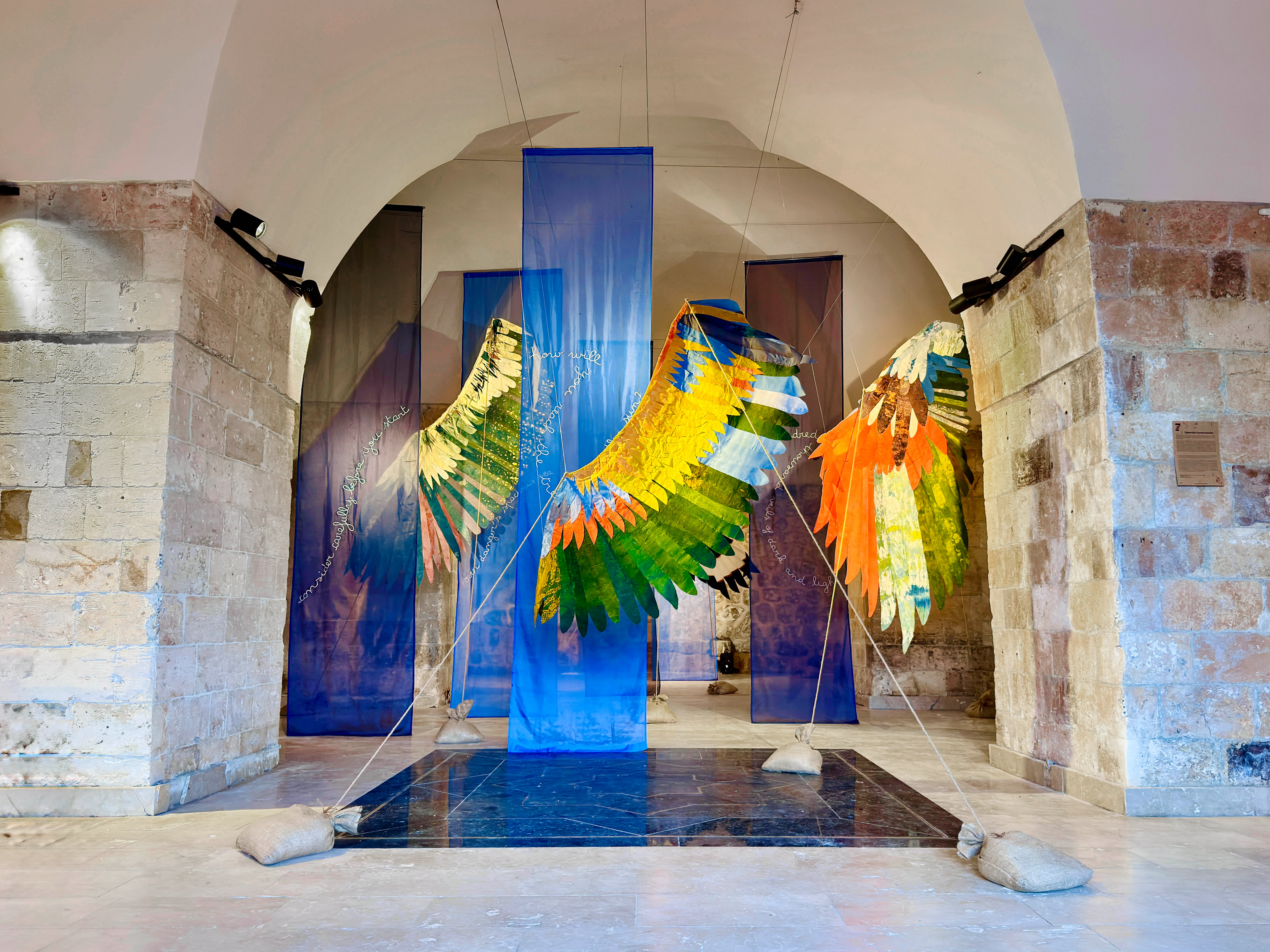
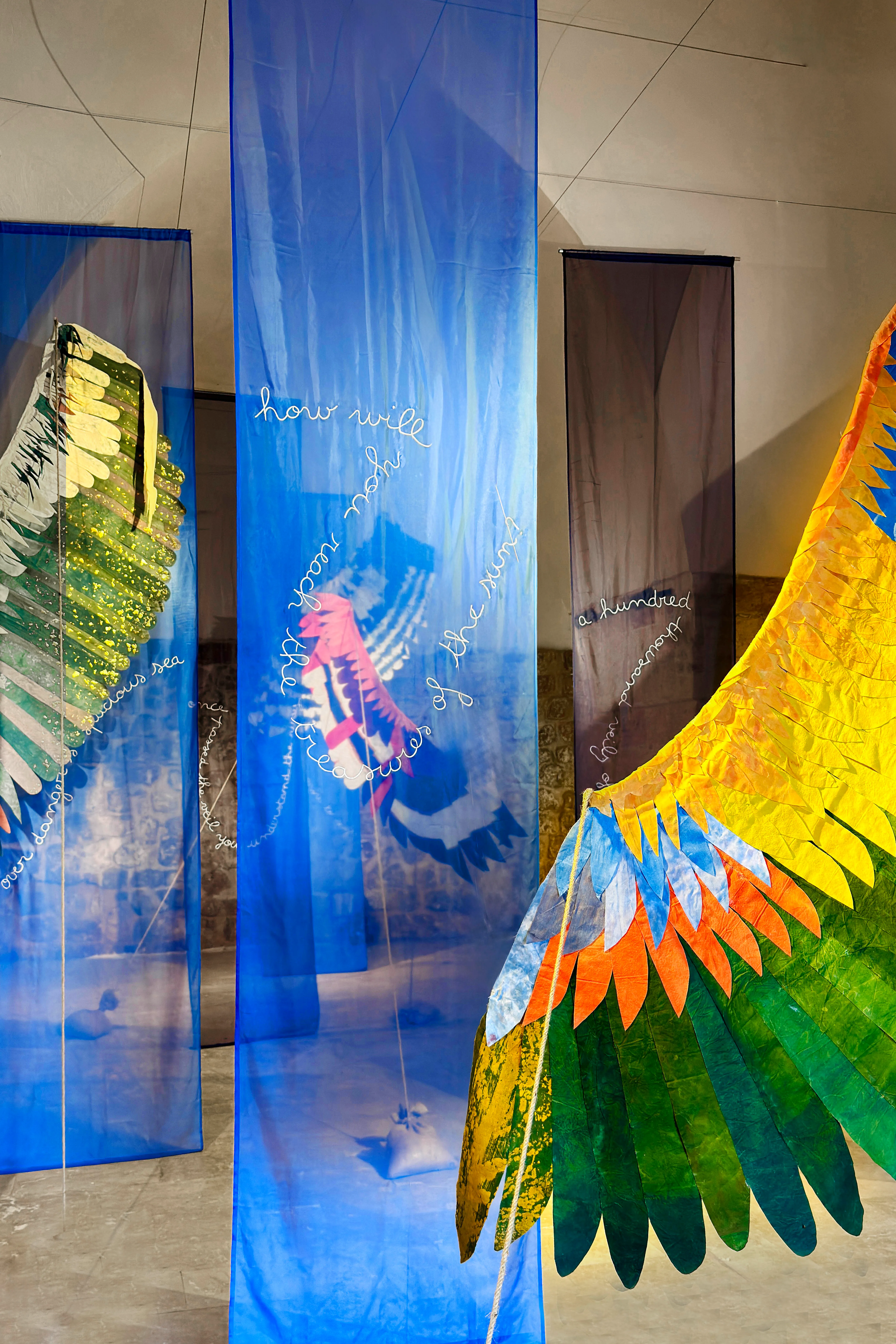
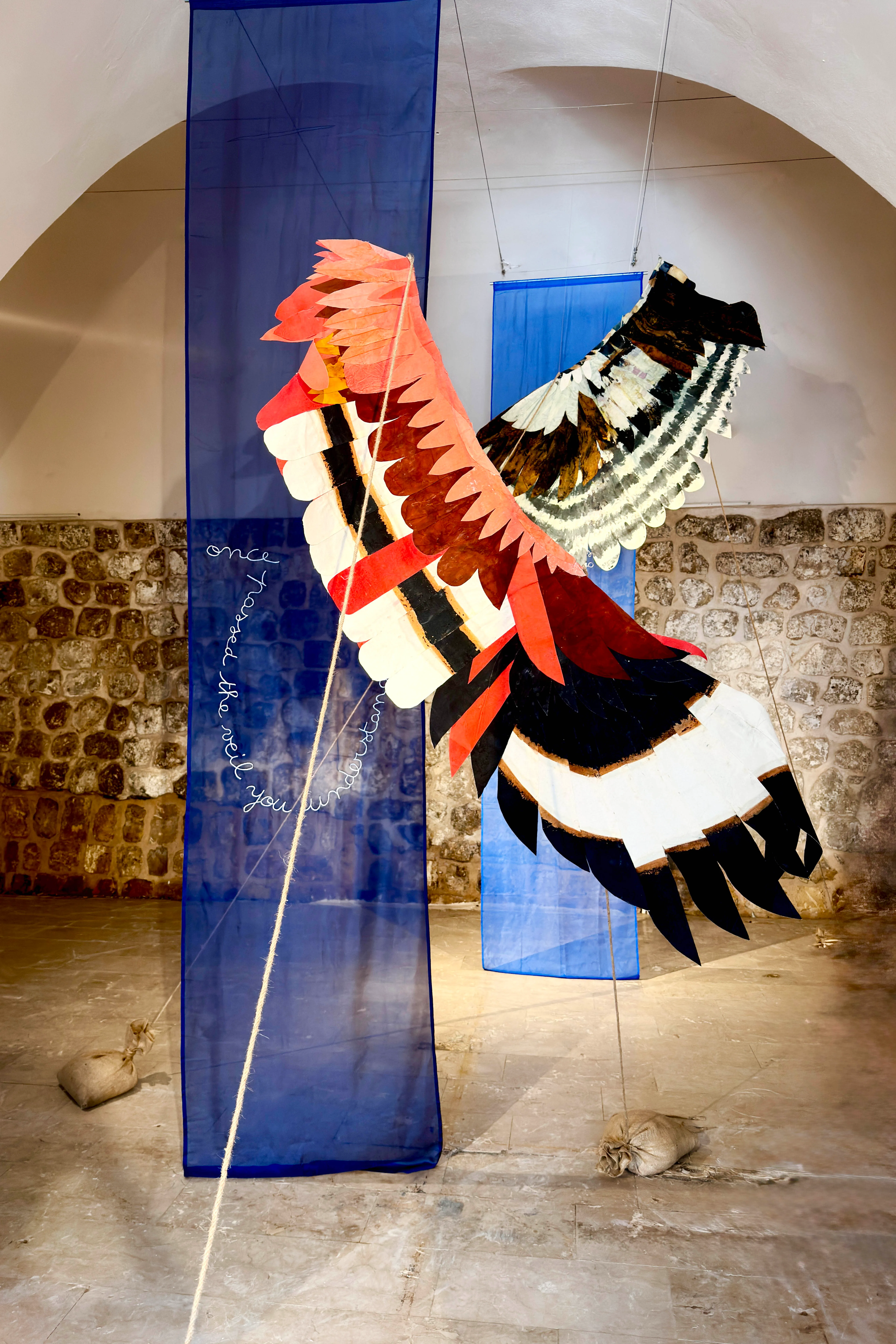
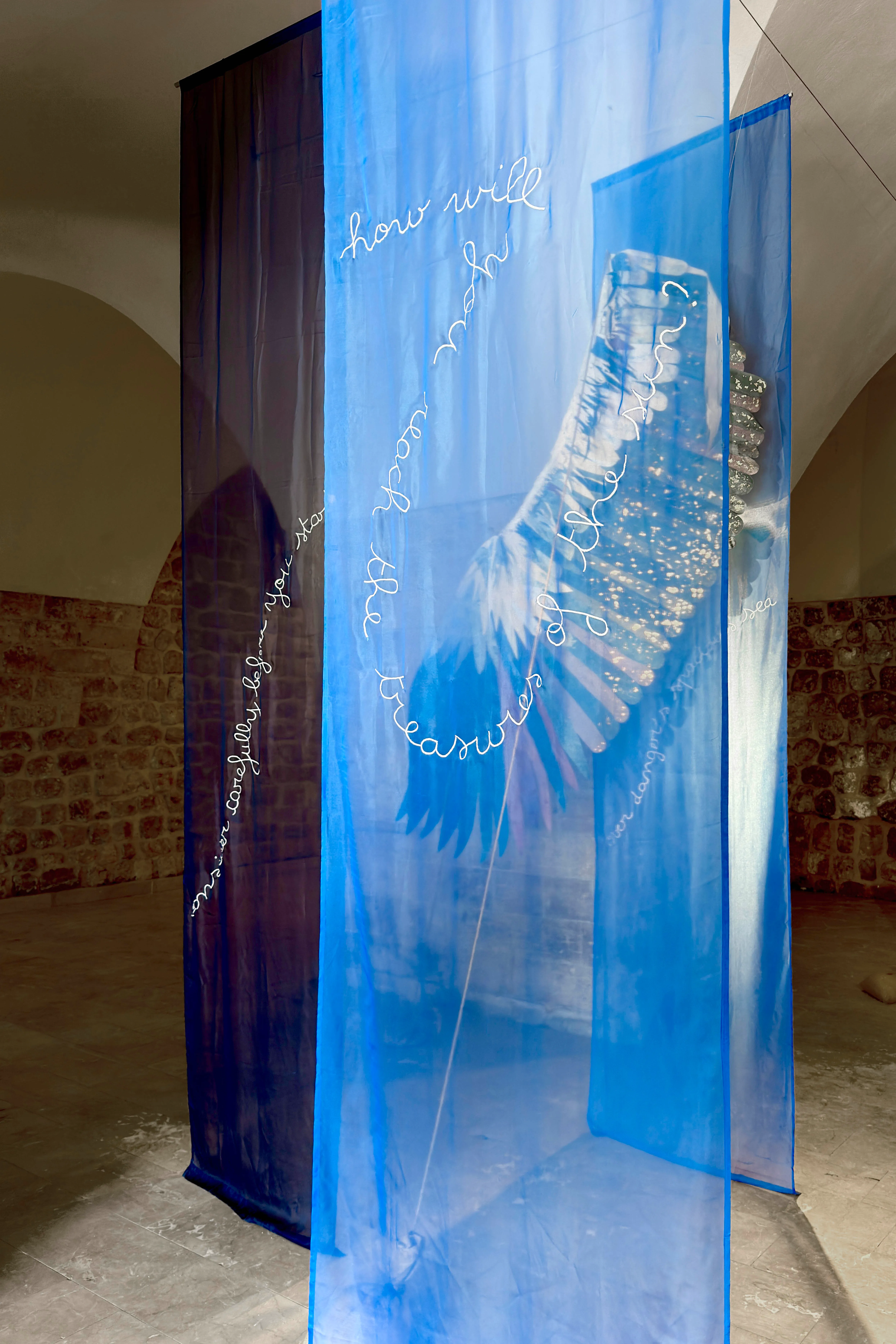
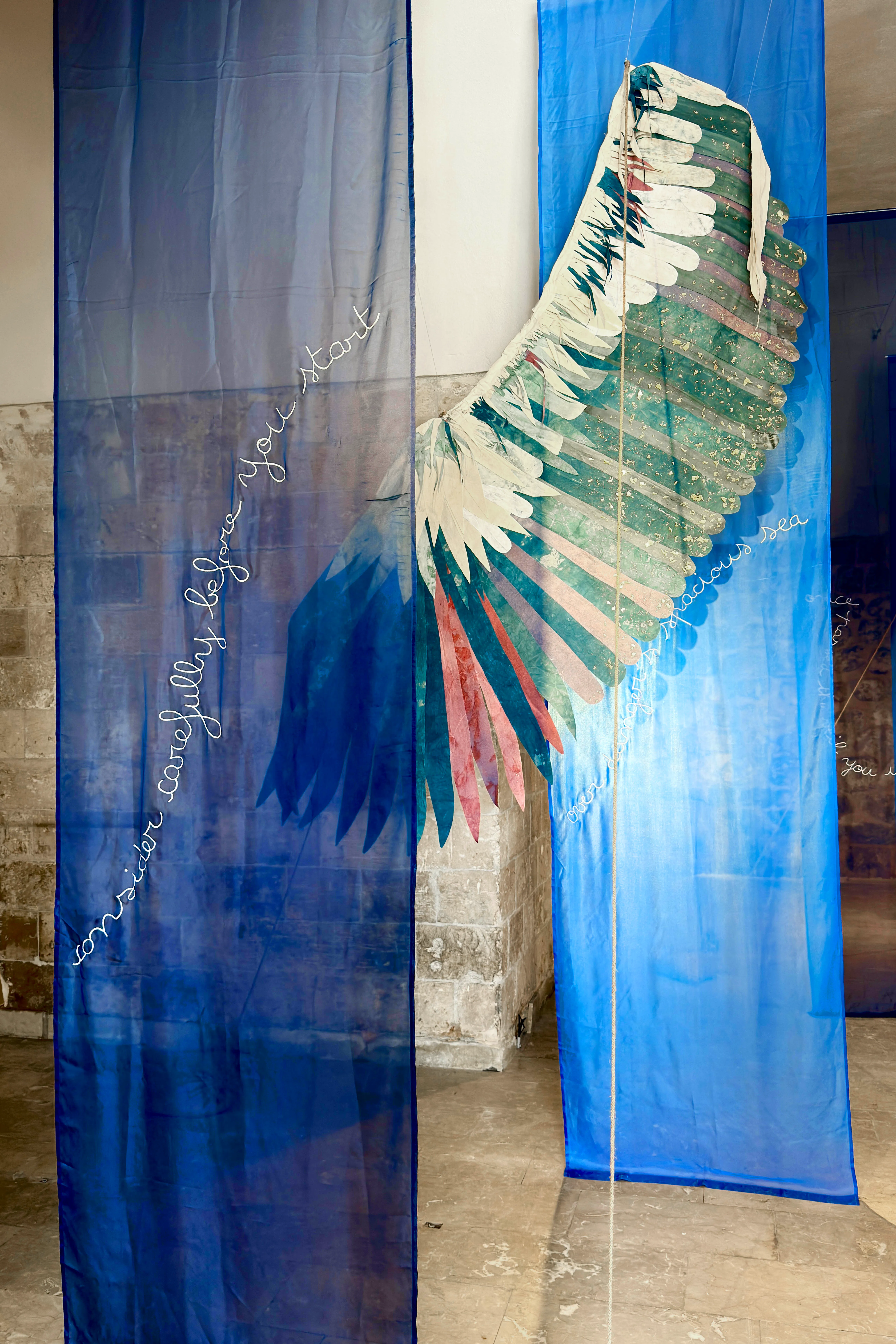
The Bird, the Thread, and the Open Sea is a multidisciplinary art series by Esmeralda Kosmatopoulos that reimagines Farid al-Din Attâr's Conference of the Birds by shifting the poem from narrative time into navigable space. It asks how a journey can take place without departure, how identity might surface through fragments, and how space can stand in for narrative as the site of transformation.
MEDIUM
Installation
MATERIALS
Canvas
START YEAR
2025
END YEAR
2026
About
The Bird, the Thread, and the Open Sea reimagines Farid al-Din Attâr's Conference of the Birds as an experience of orientation rather than a story to be followed. The project asks how a journey can begin before departure, and how fragments of myth can become coordinates for an inner passage.
The series unfolds through three interconnected chapters: Wings (after Attâr), archipeLogos and Thirty Birds. Each translates a different aspect of the poem into material, spatial or sonic form, progressively displacing the journey from narrative time into navigable space.
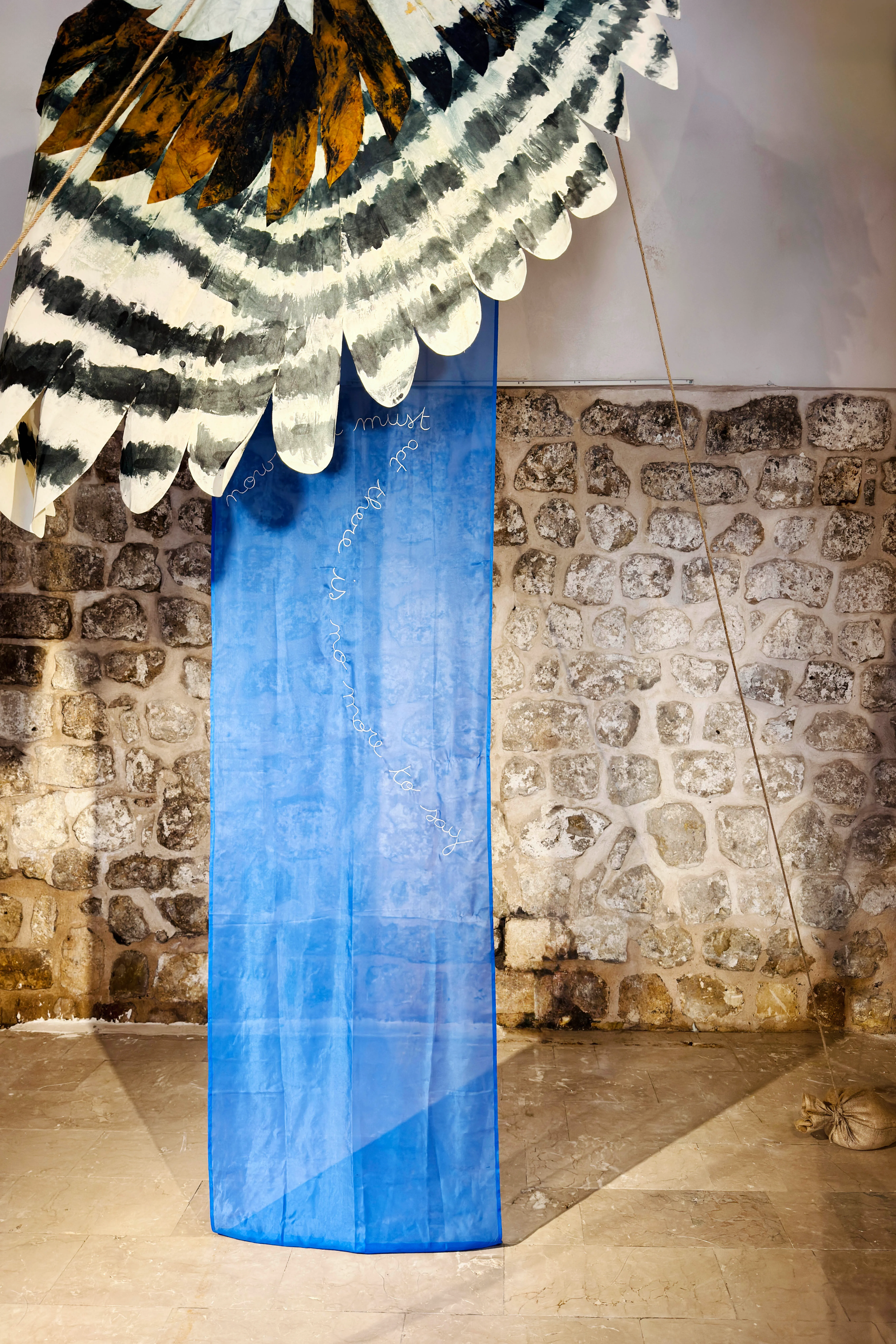
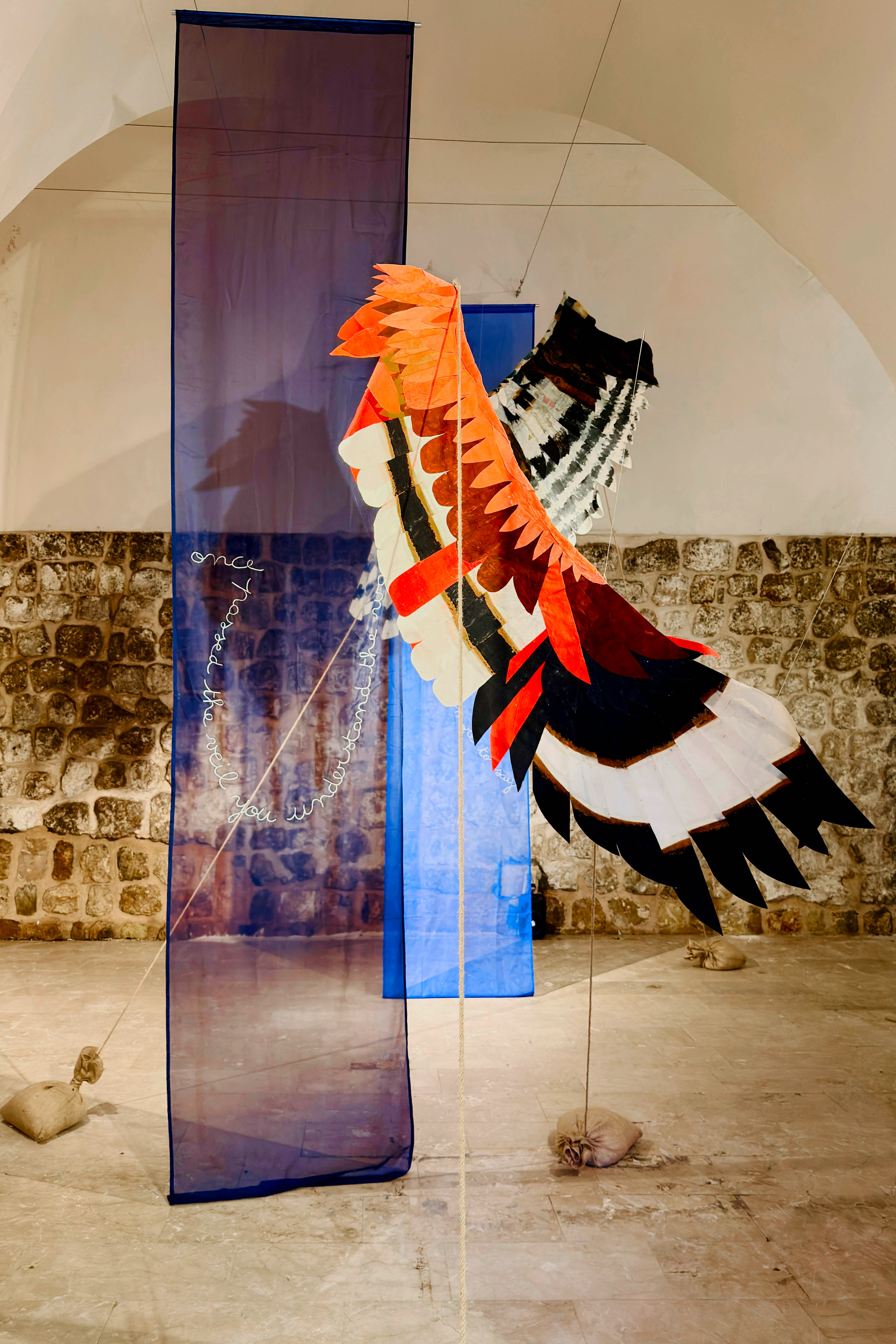
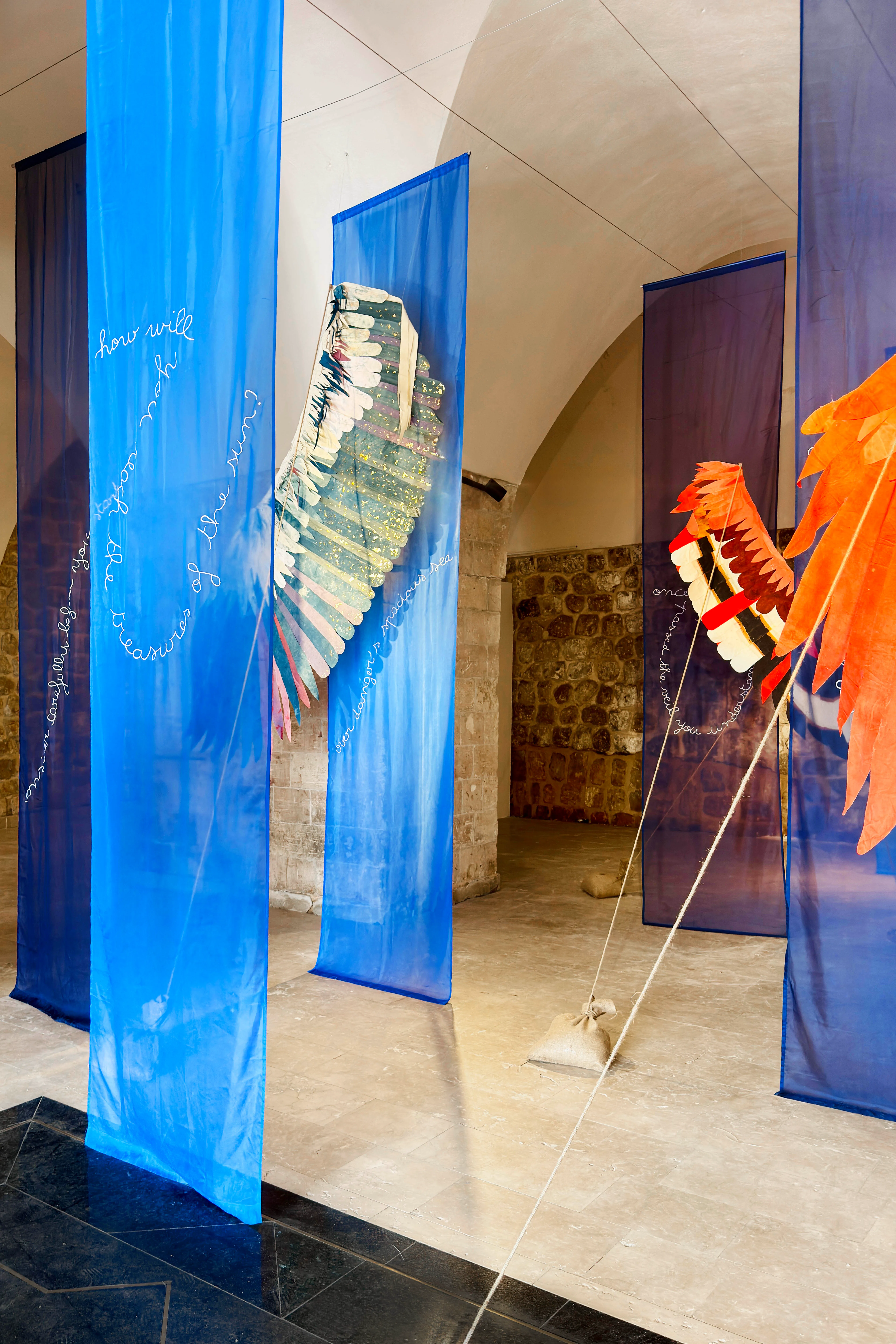
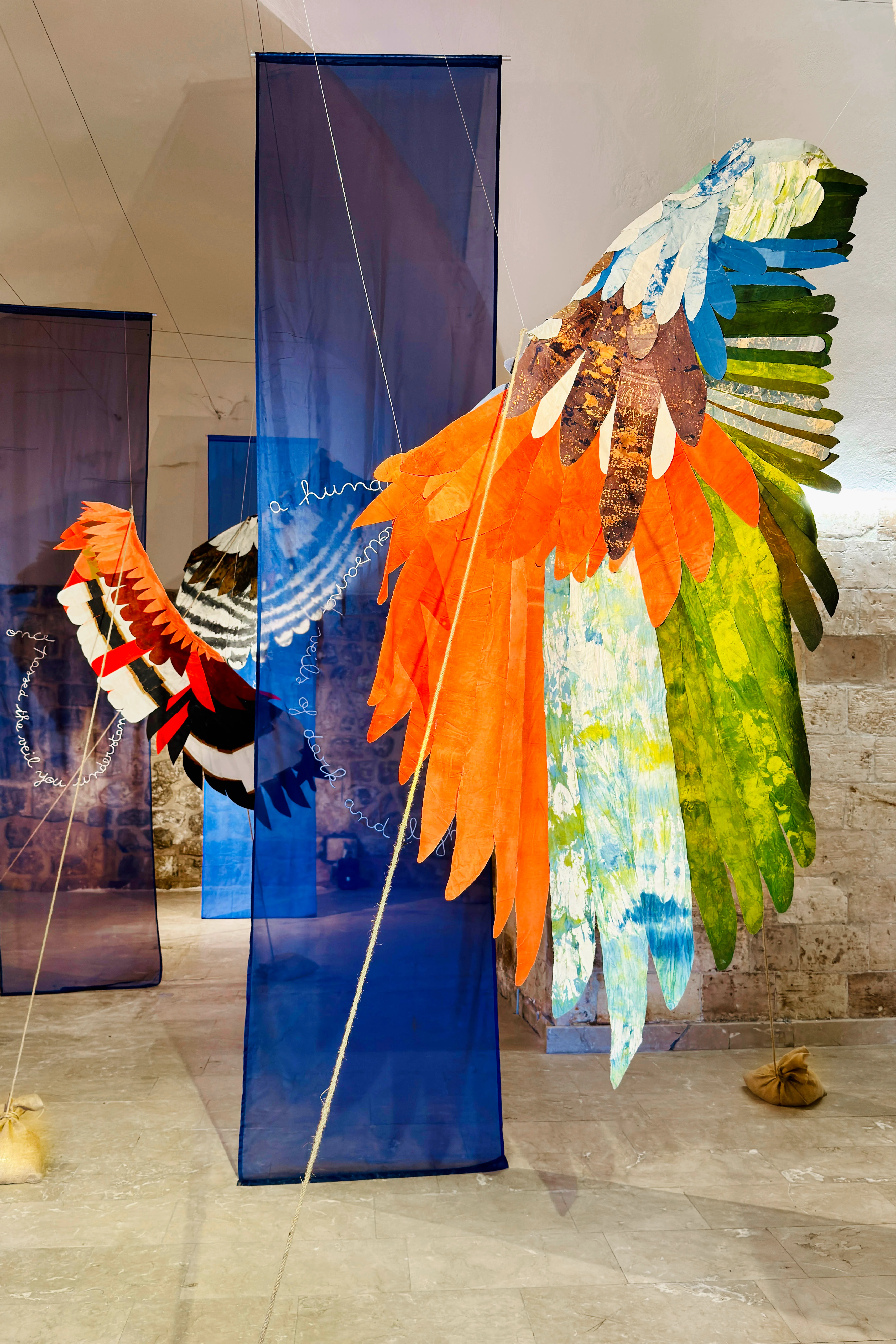
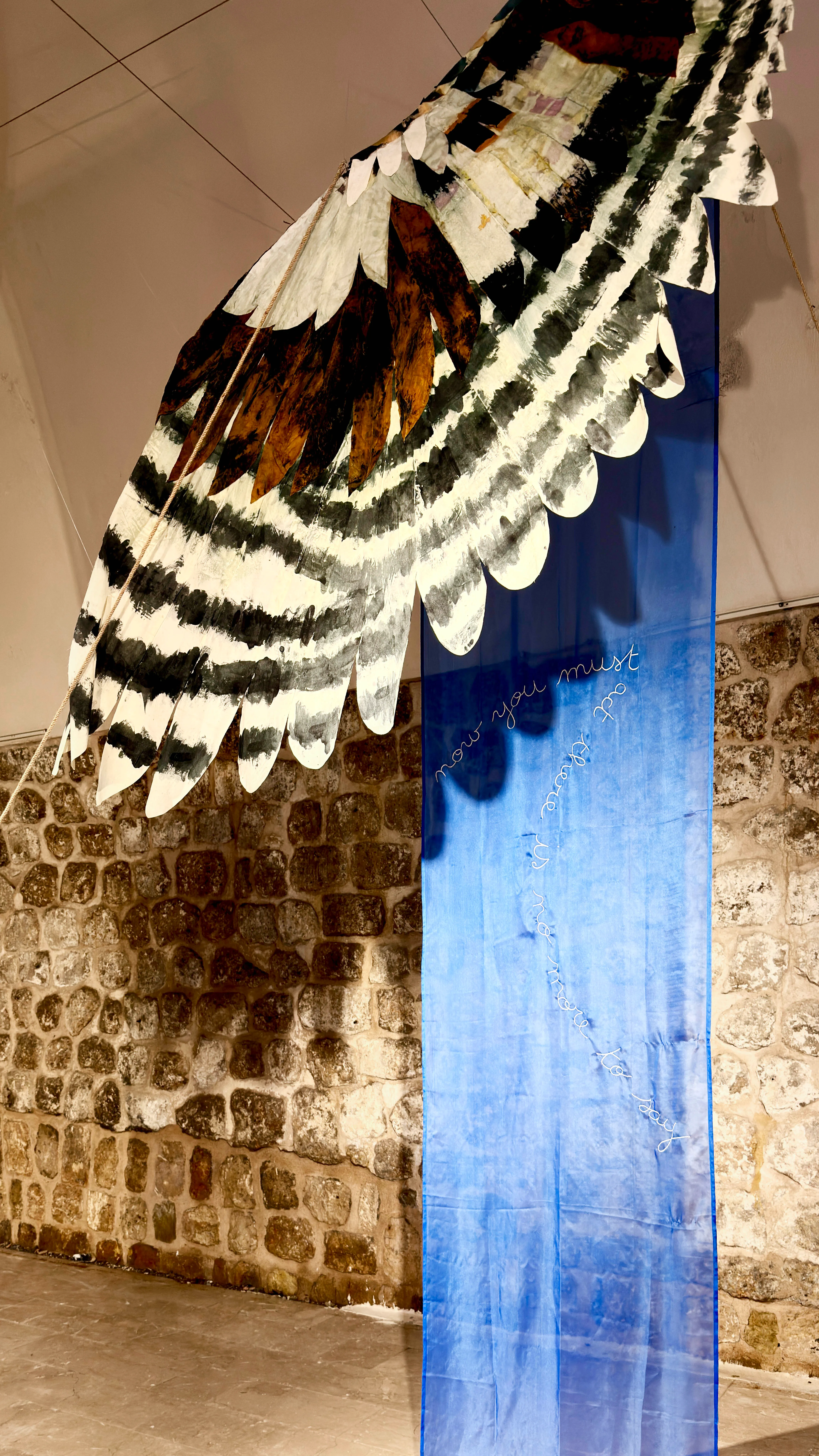
At the centre of the project, Wings (after Attâr) brings together five monumental textile wings suspended in space. Inspired by birds from Attâr's poem, they are detached from any body and held in tension by cords anchored to sandbags on the floor. The wings remain caught between gravity and ascent, while their visible supports transform them into forms suspended somewhere between anatomical fragments and sails. Nothing flies, yet the possibility of departure is held within the work.
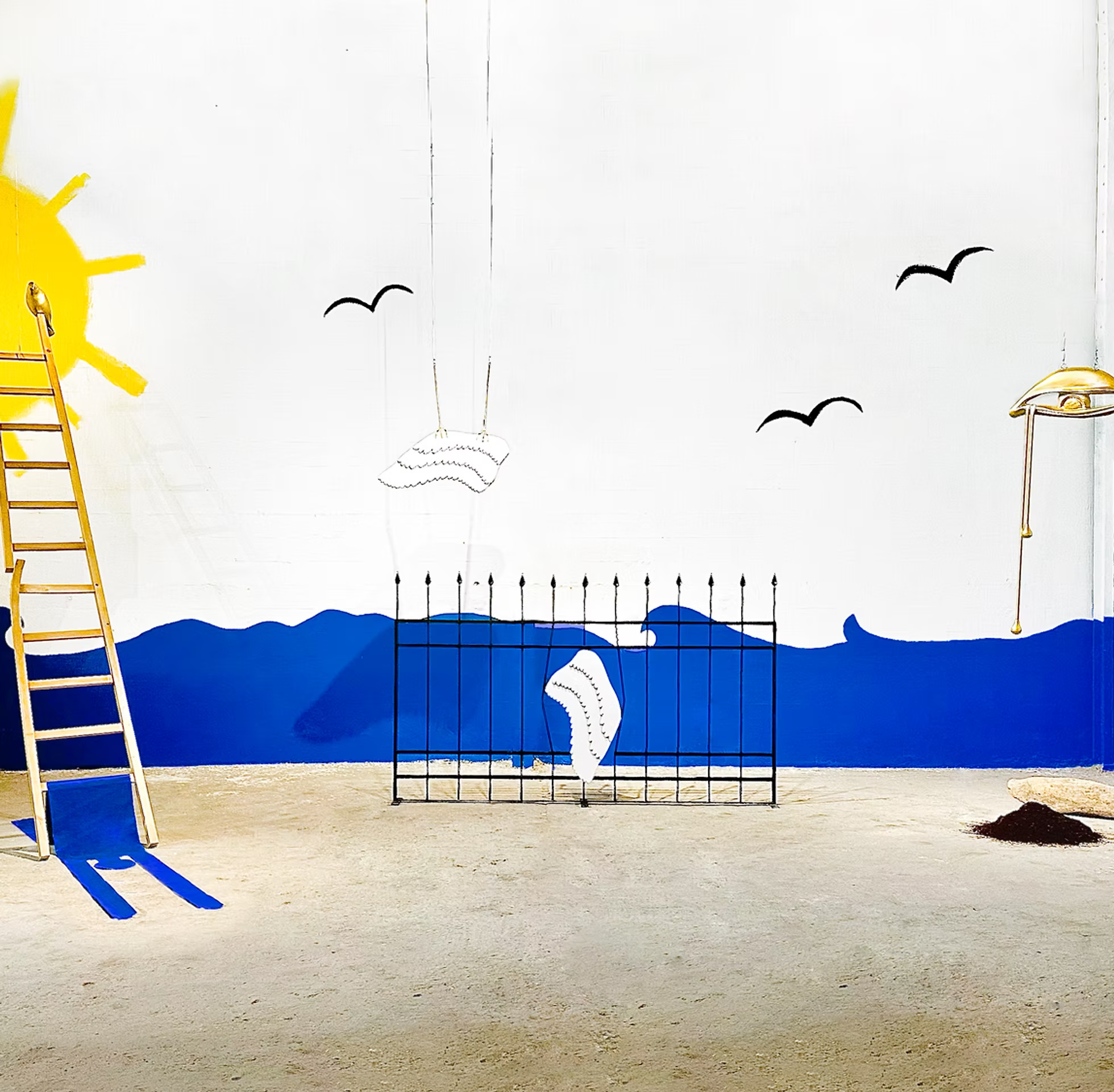
The cords trace lines of force, while the sand acts as ballast, shifting the work from an aerial image towards a maritime one. Opposing forces hold one another in place: weight and lift, anchoring and departure, earth and sky. Nothing physically moves, but every element remains oriented towards movement. The wings occupy the unstable threshold before passage, when a journey has not yet begun but has already become imaginable.
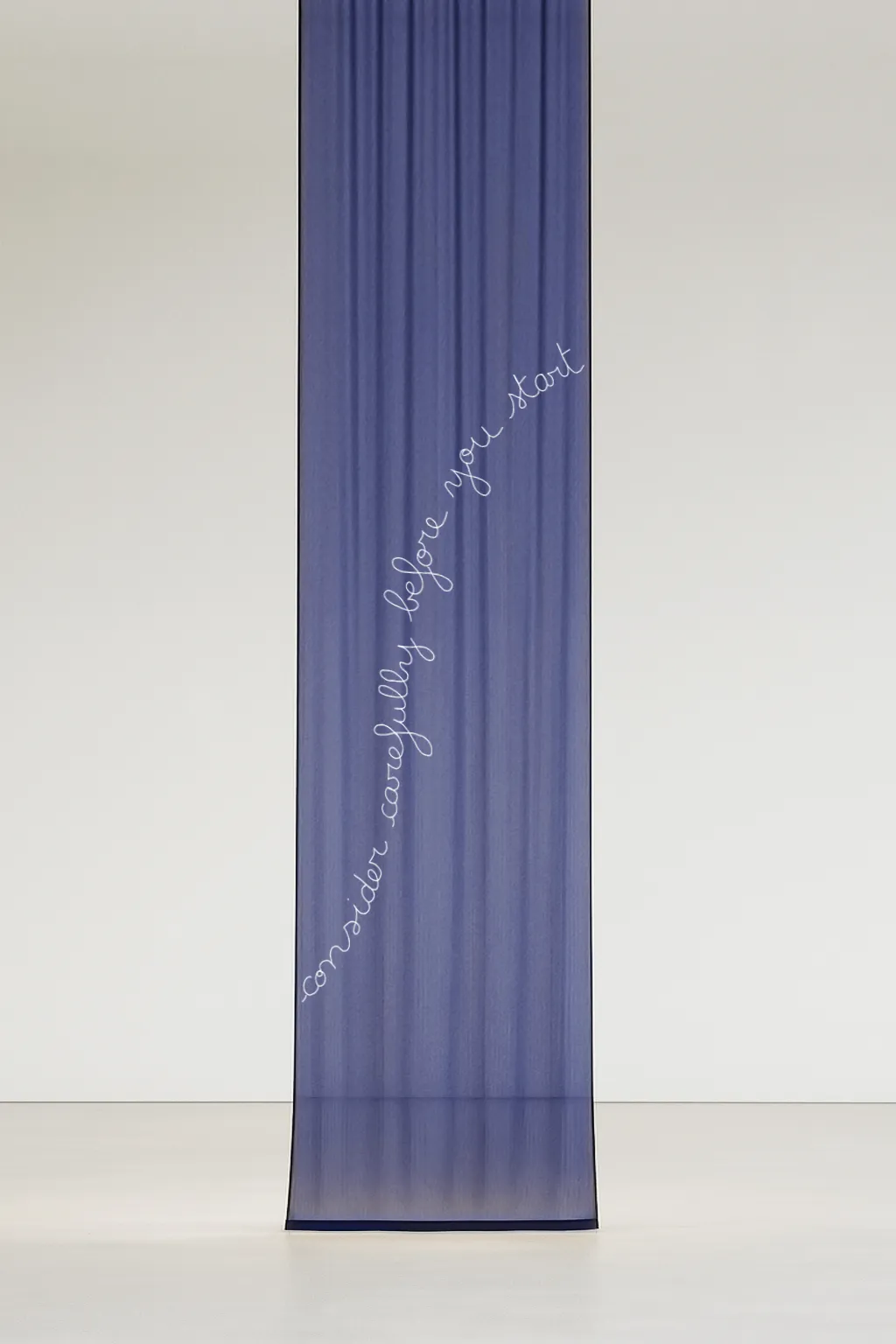
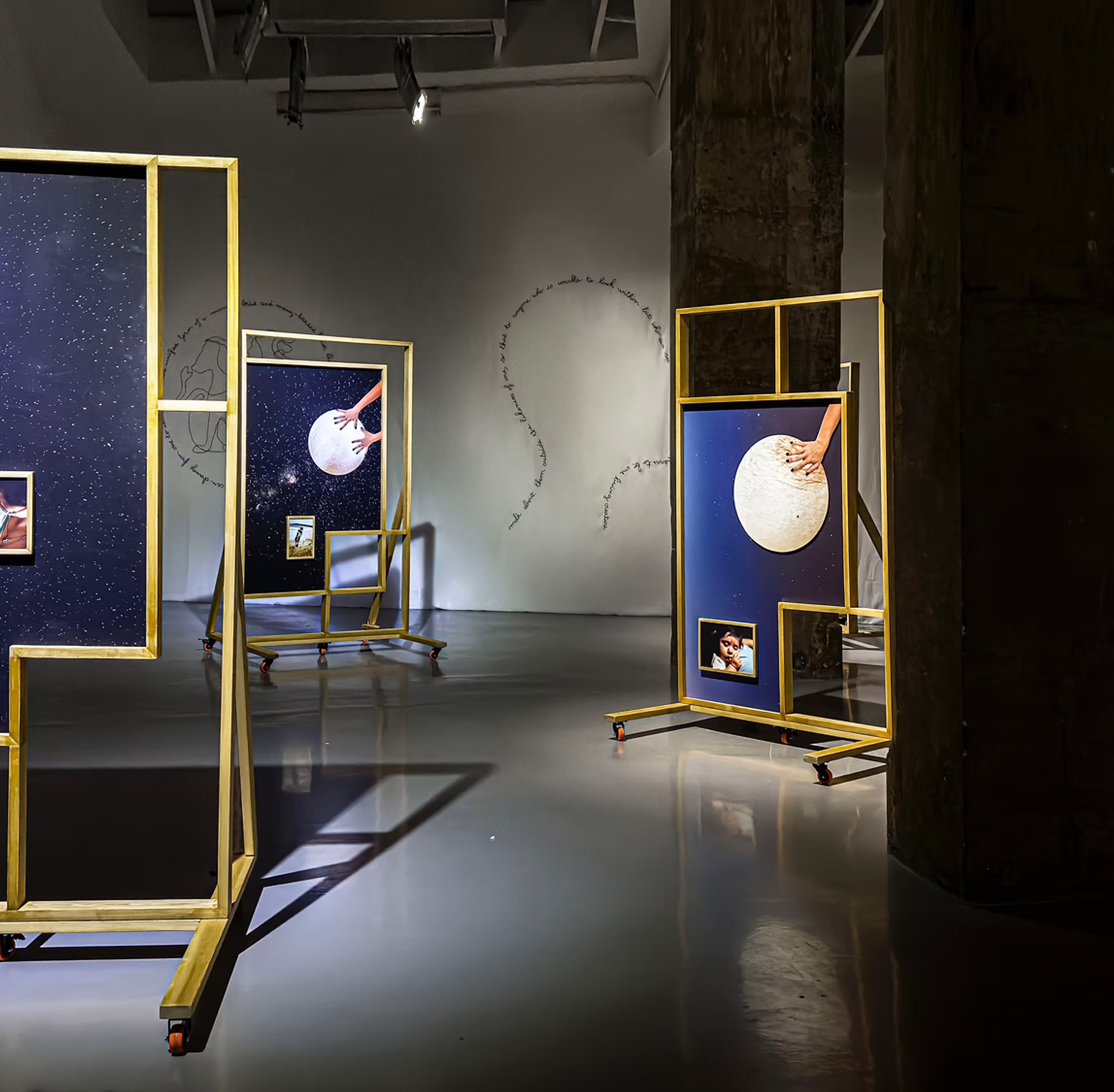
In archipeLogos, long translucent blue textiles embroidered by hand carry fragments of Attâr's poem in English. Distributed throughout the space, the text can no longer be read in a linear sequence. The poem is broken apart and recomposed as a fragmented geography through which the visitor must move, connecting distant passages and constructing temporary routes between them. Narrative is no longer contained on the page; it becomes landscape.
Thirty Birds extends this displacement into sound. Recordings of birds gathered during a journey through Mesopotamia are combined with whispered fragments of Attâr's poem spoken in the artist's voice. Words emerge, hesitate, return and dissolve into silence. The written poem becomes voice, rhythm and atmosphere, surrounding the visitor without imposing a single direction of listening.
The installation cannot be grasped at once. Its wings, cords, shadows, sounds and shifting surfaces form a porous labyrinth that must be entered rather than observed. The visitor walks through a fable that has become geography, tracing correspondences and reconstructing a dispersed myth.
Their path becomes the kinetic dimension of a body of work that remains physically still — an interior navigation within an environment held in suspension. The voyage no longer resides in the birds, but in the experience of passage: an internal displacement made tangible through matter. Stillness becomes a medium rather than an absence, allowing a form of navigation without physical displacement.
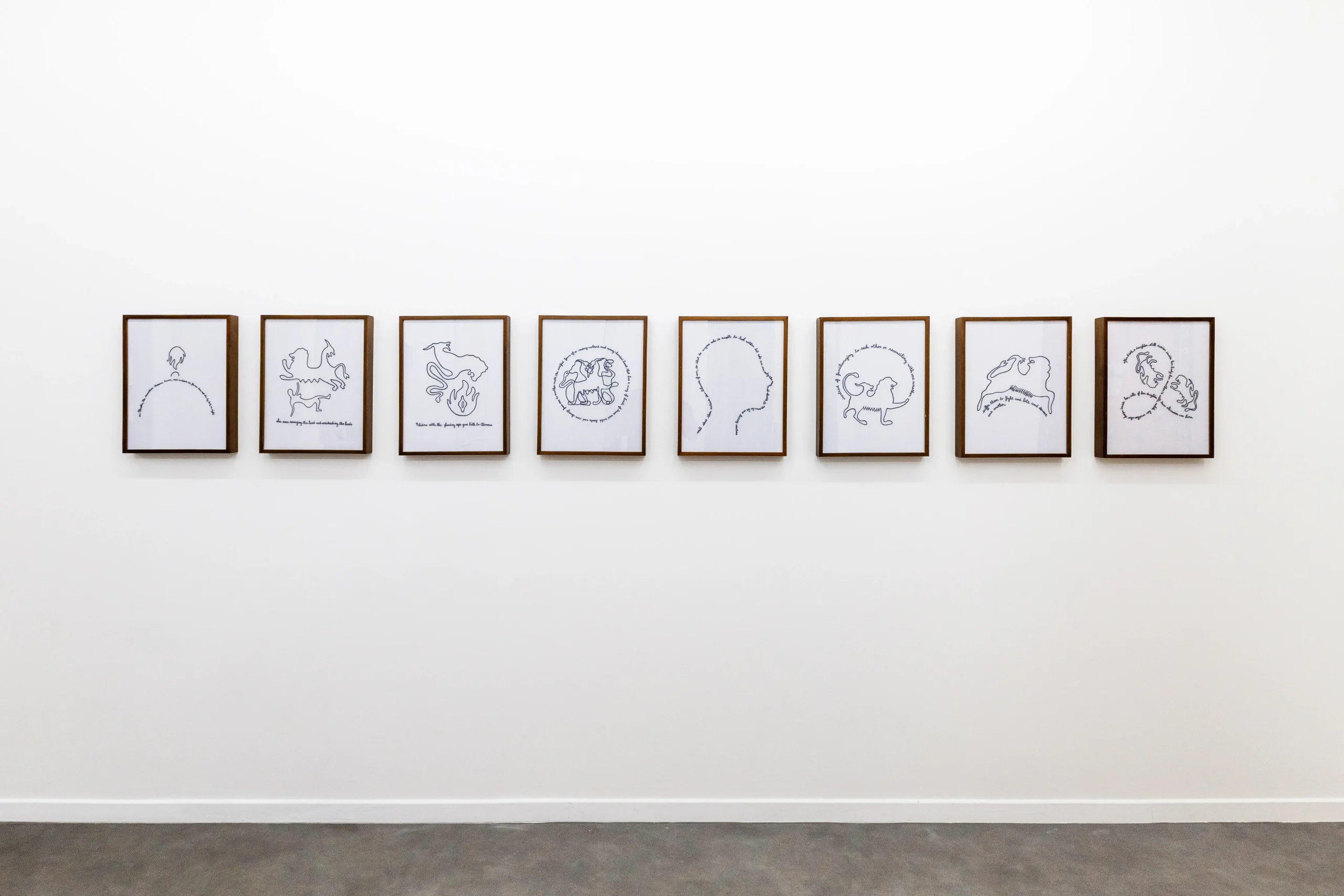
The Bird, the Thread, and the Open Sea uses the fragment as a way of approaching the intimate. Existing elements — myths, verses and images — are recomposed into an interior narrative. In this shift, the birds are no longer characters but internal coordinates: not psychological portraits, but directional axes through which an inner cartography takes shape.
They do not appear as naturalistic animals, but as carriers of human interiority — mediators for what remains instinctive, unstable or difficult to articulate. What is explored is not a fixed identity, but a multiplicity of possible orientations: parts that must be assembled rather than expressions of a stable essence. Fable and animal are not detours, but methods for approaching what moves within us even when the body remains still.
Nothing moves, and yet a journey takes place.
The poem becomes space.
Space becomes passage.
The passage becomes interpretation.
What unfolds is not flight—but a way of inhabiting the immobile.