The title comes from Amin Maalouf, whose libretto turns on a love that can only survive at a distance: seen from afar, the sun is light; up close, it burns. Exile works in a similar way. The home left behind does not disappear; it continues to exist in memory, where it is protected from change, slowly polished by longing, and gradually becomes something other than the place it once was. Returning to a country does not mean returning to the world one remembers.
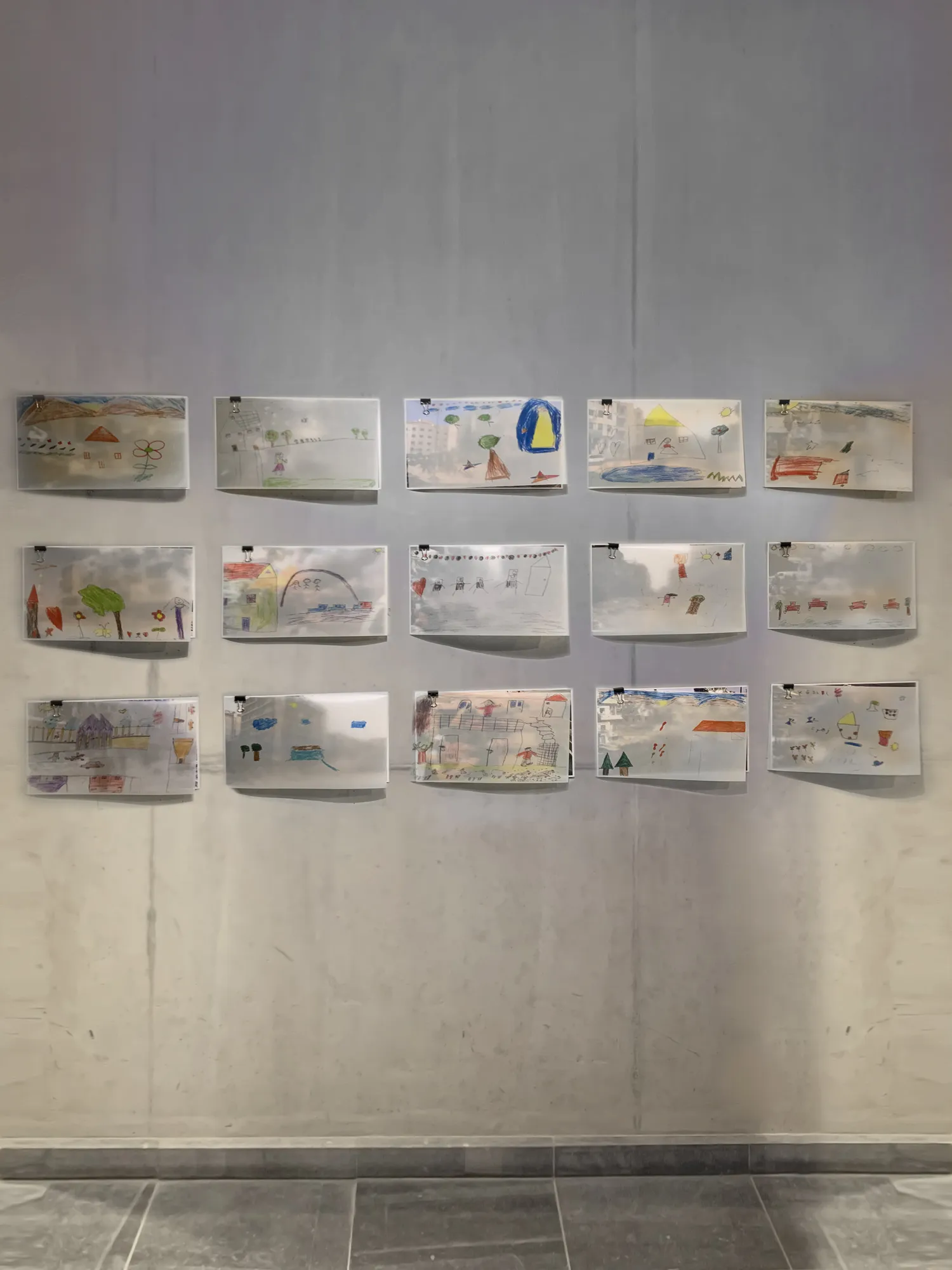
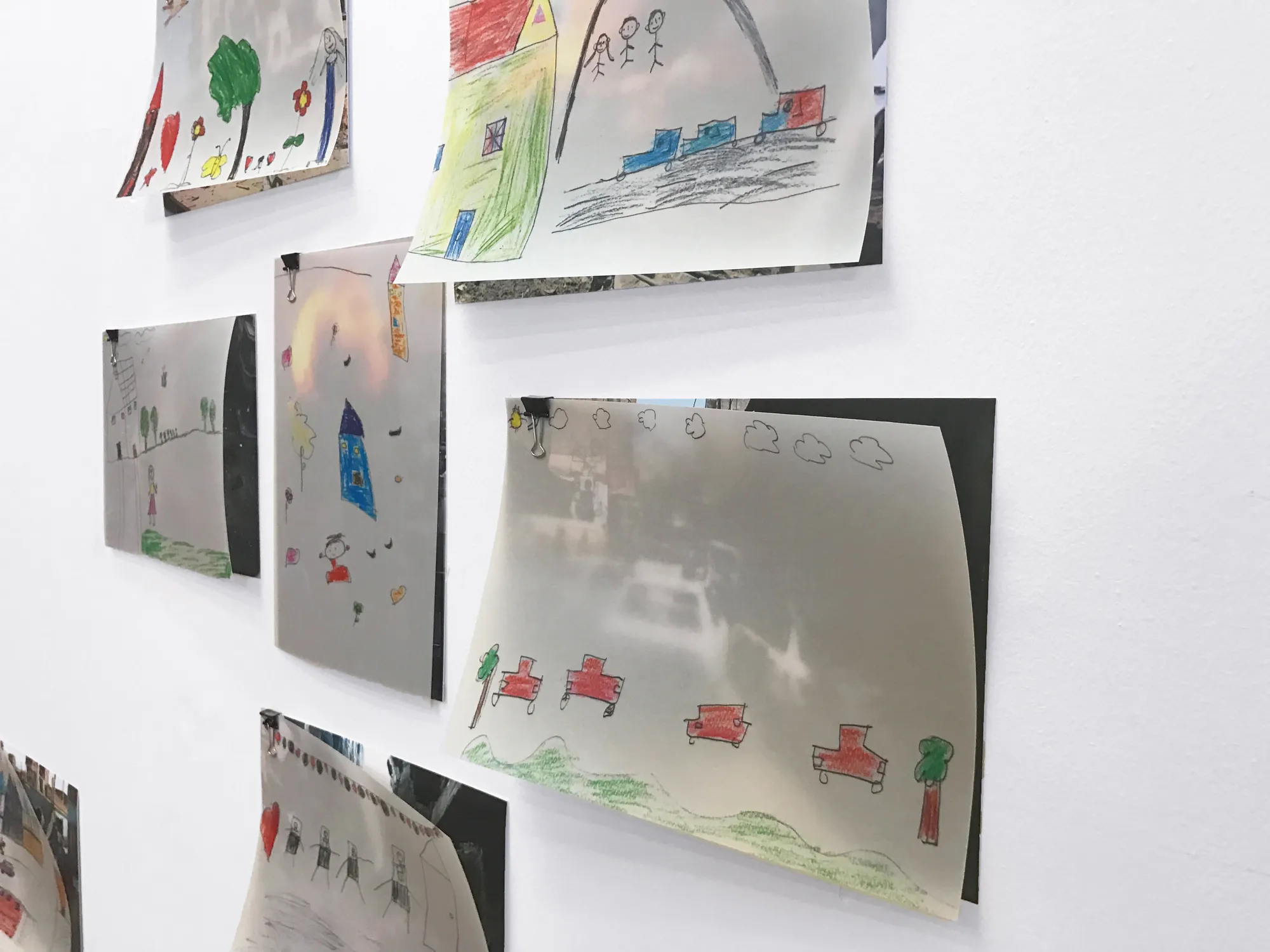
The project began in 2017 during a residency at the Beirut Art Residency (BAR) in Lebanon. For three months, Esmeralda Kosmatopoulos worked with NGOs in refugee camps in the Bekaa Valley, near the Syrian border, among them the Kayany Foundation, creating art activities with children around the memory of home, nostalgia and the desire to return. Pieces of these daily interactions became the first material of the work. She then brought them into dialogue with two other traditions of exile: the Homeric epic and the poetry born of the Lebanese civil war.
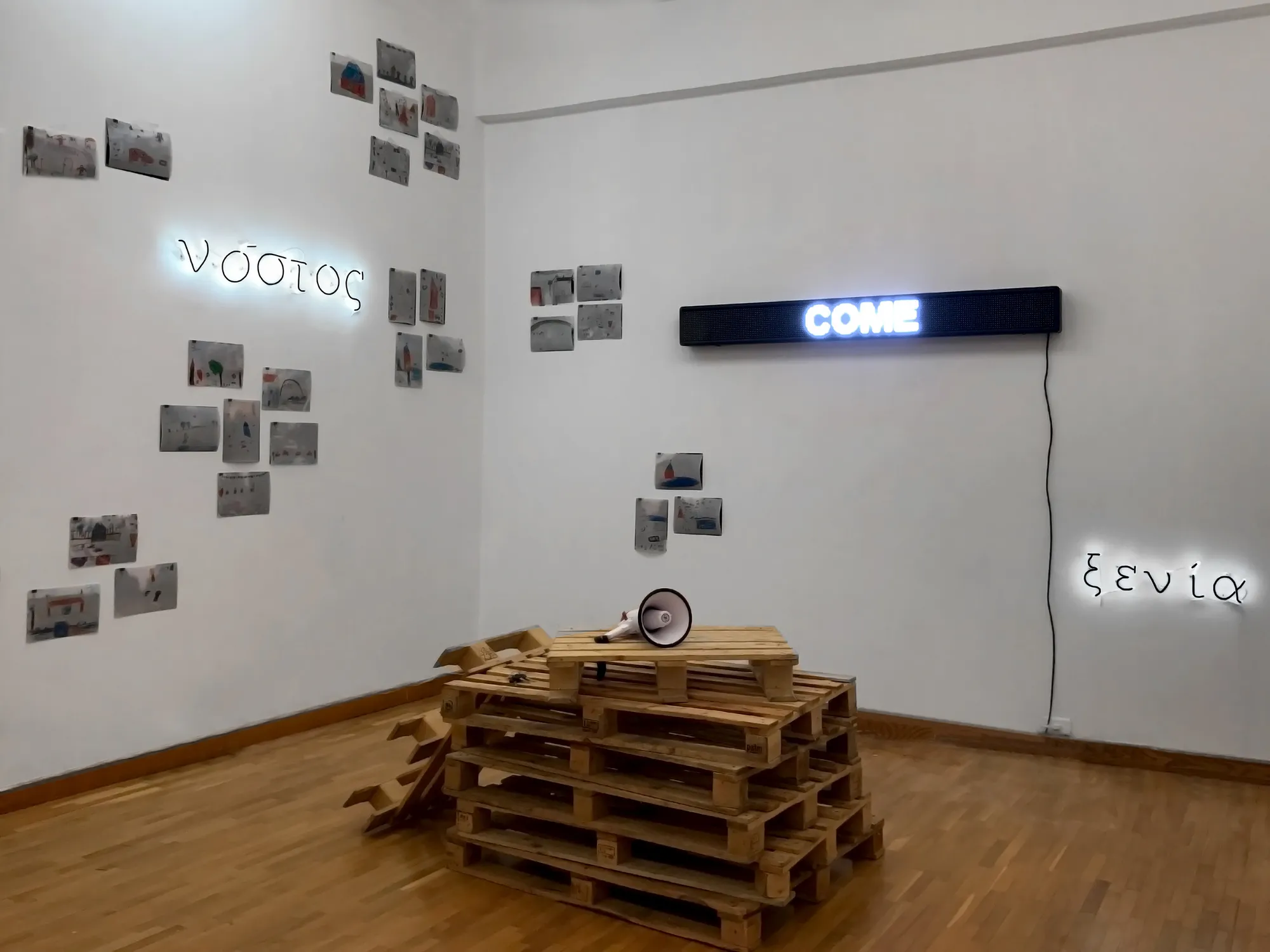
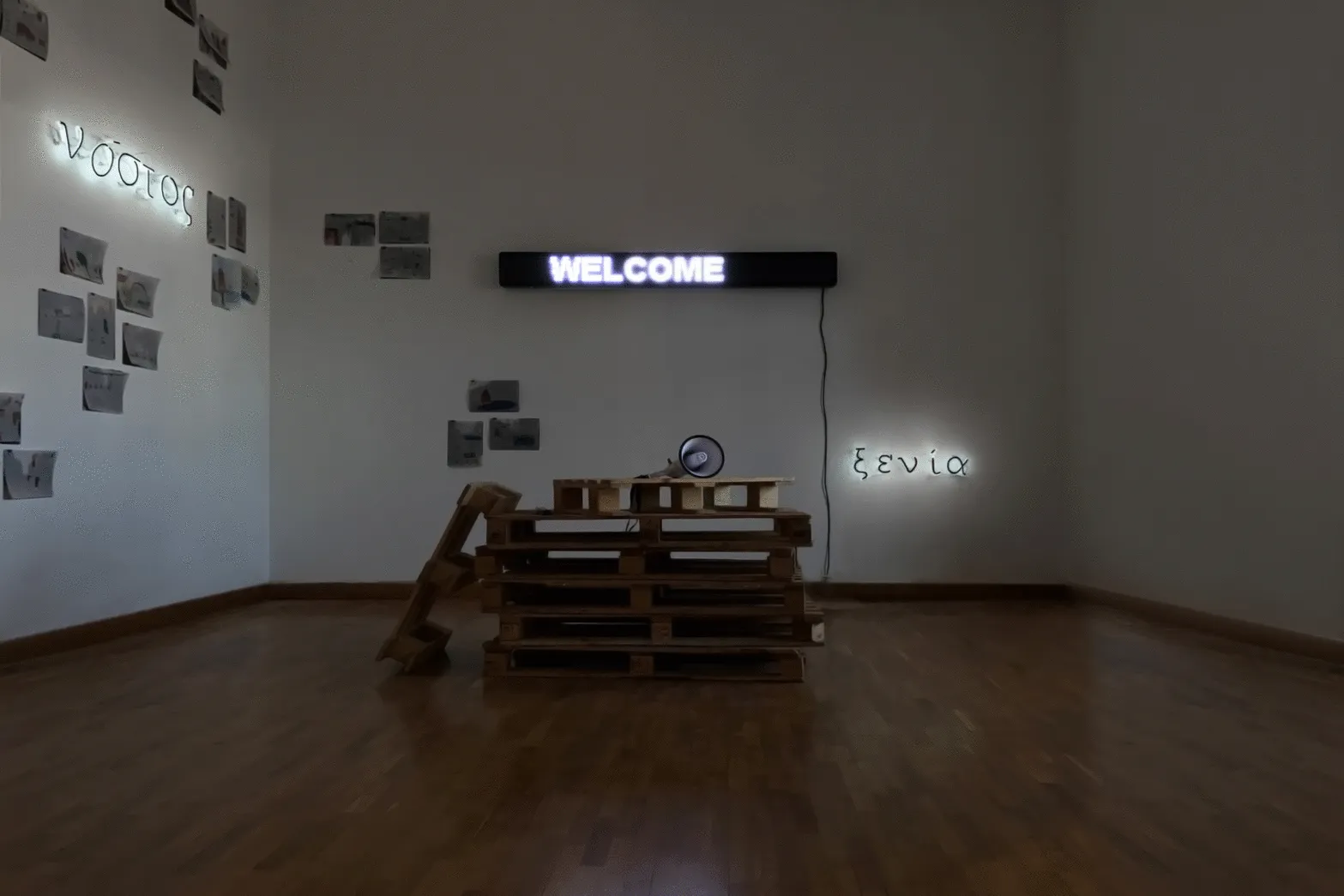
At the centre lies the Greek word νόστος, nostos, the return home. In the Odyssey, Odysseus spends ten years trying to reach Ithaca, yet the journey changes him as much as time changes the island that waits for him. Homecoming is never simply a matter of crossing a sea. The same question runs through Arabic literature, shaped by the long history of war and displacement across the region, where lost places often survive in language long after they have become unreachable.
Edward Said, in Reflections on Exile, describes exile as an unhealable rift between a person and their native place, and observes that the exile lives in two worlds at once: the present, and another place carried within. Memory does not keep that other place intact. It selects, holds some moments with painful precision and lets others blur, and slowly reshapes the lost home, sometimes into an ideal. What is remembered becomes neither invented nor true, but reconstructed by the very impossibility of living there.
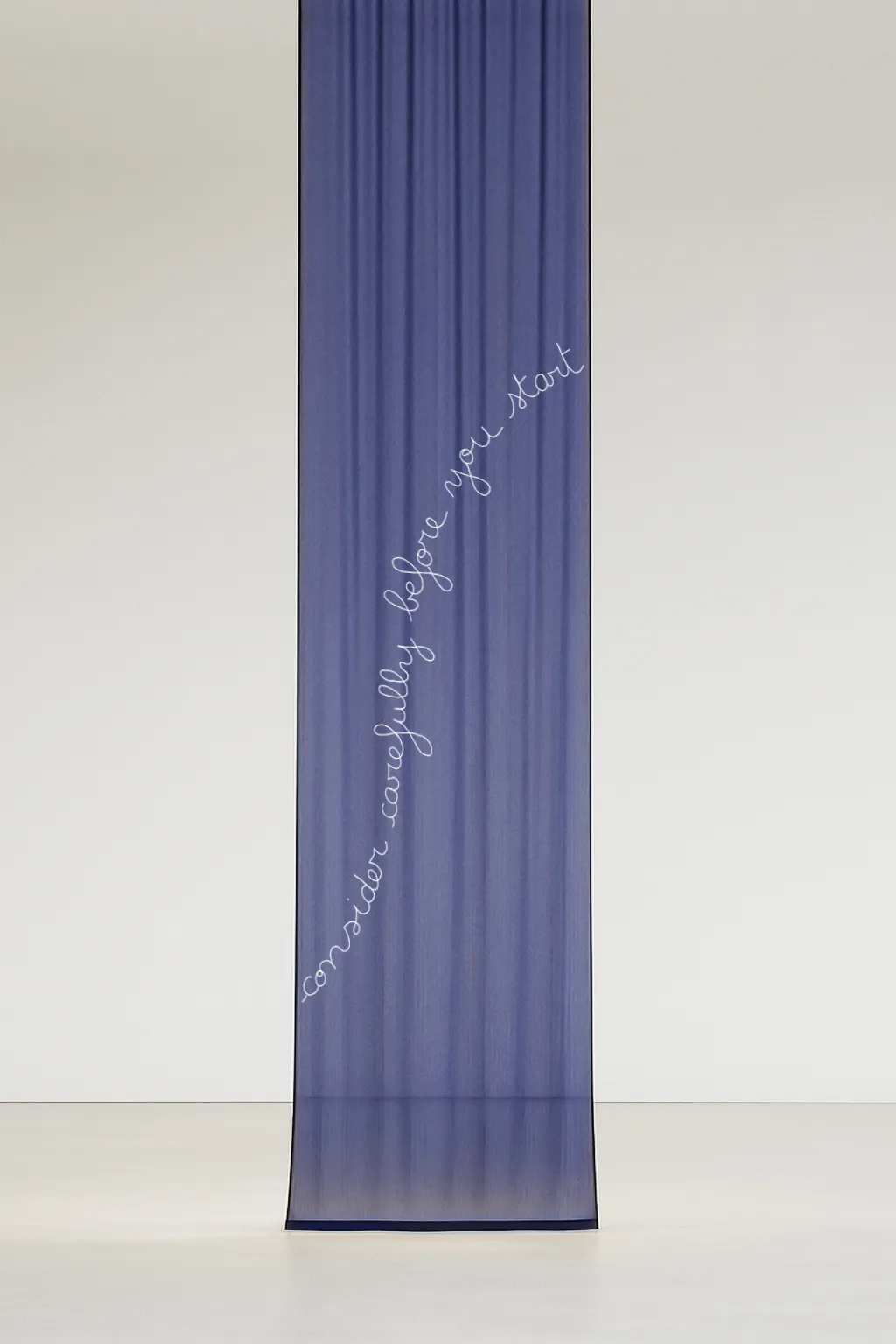
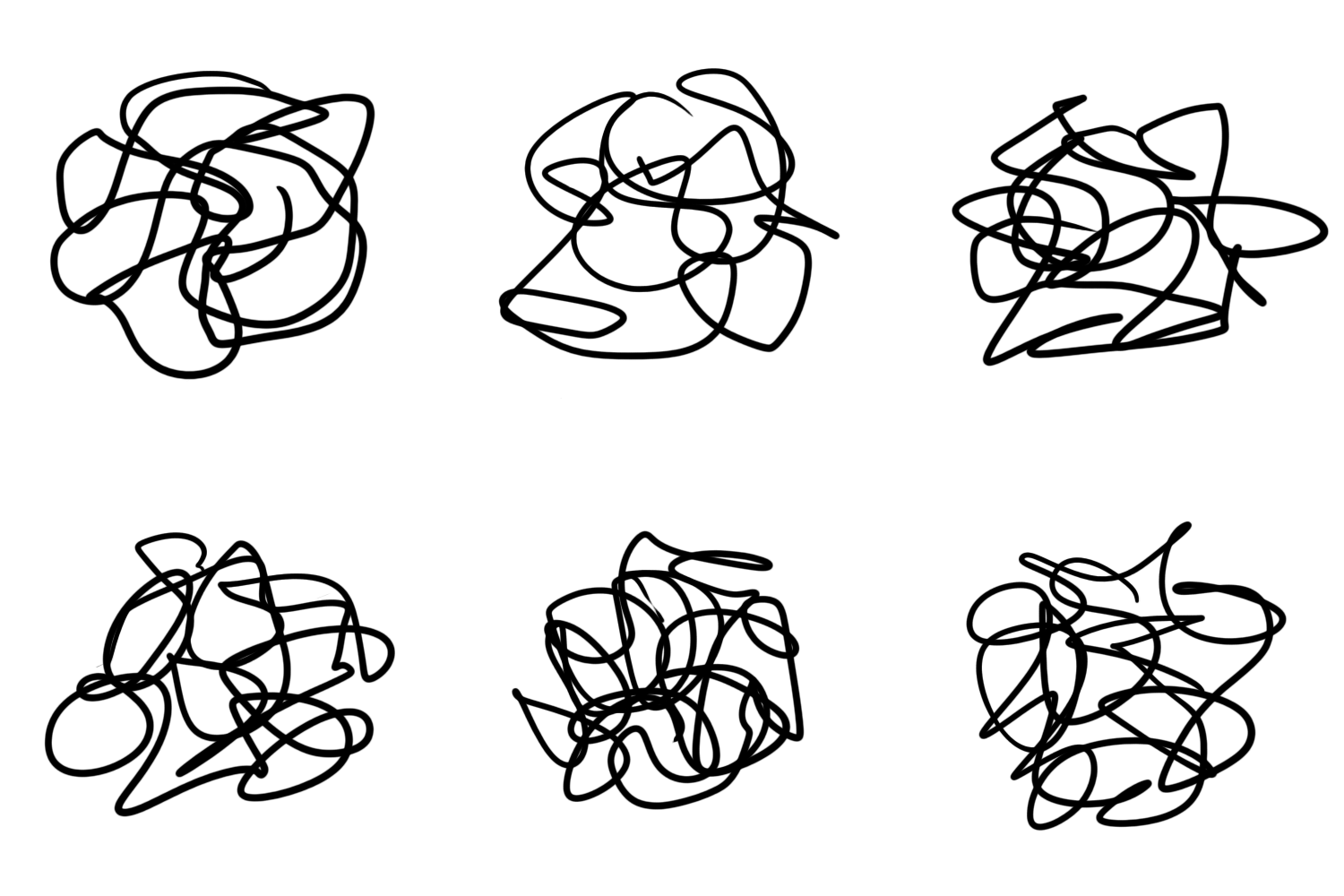
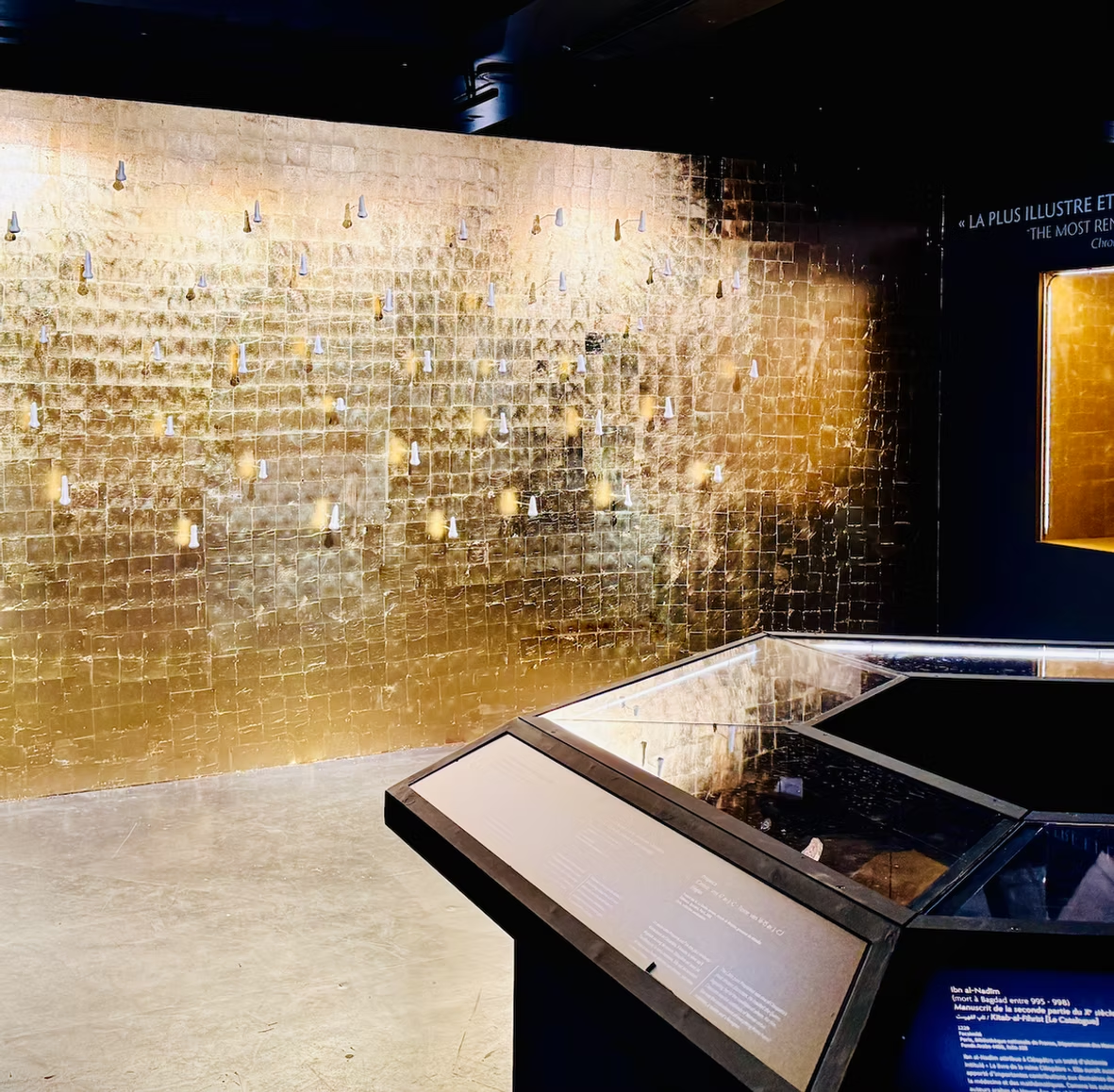
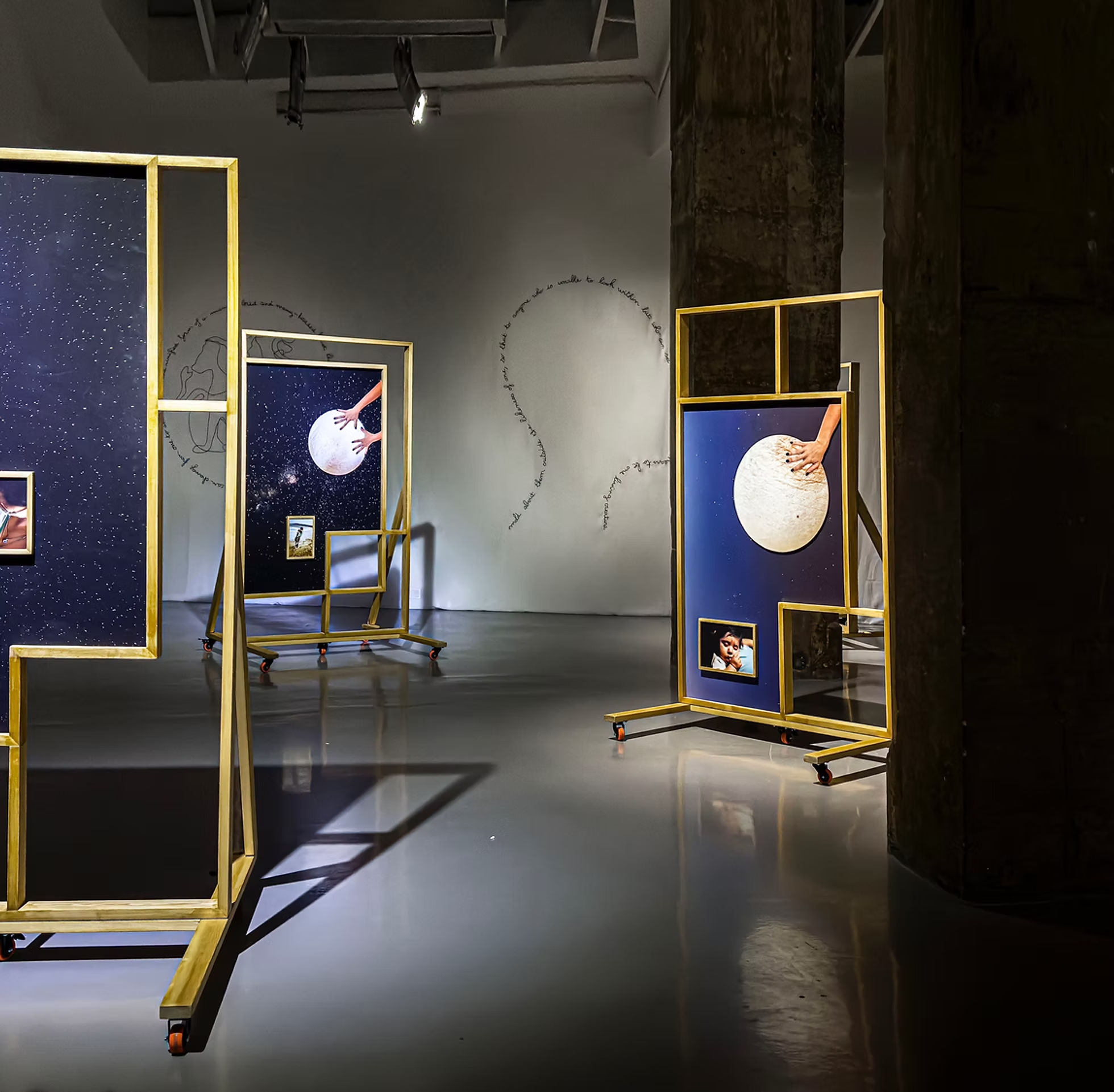
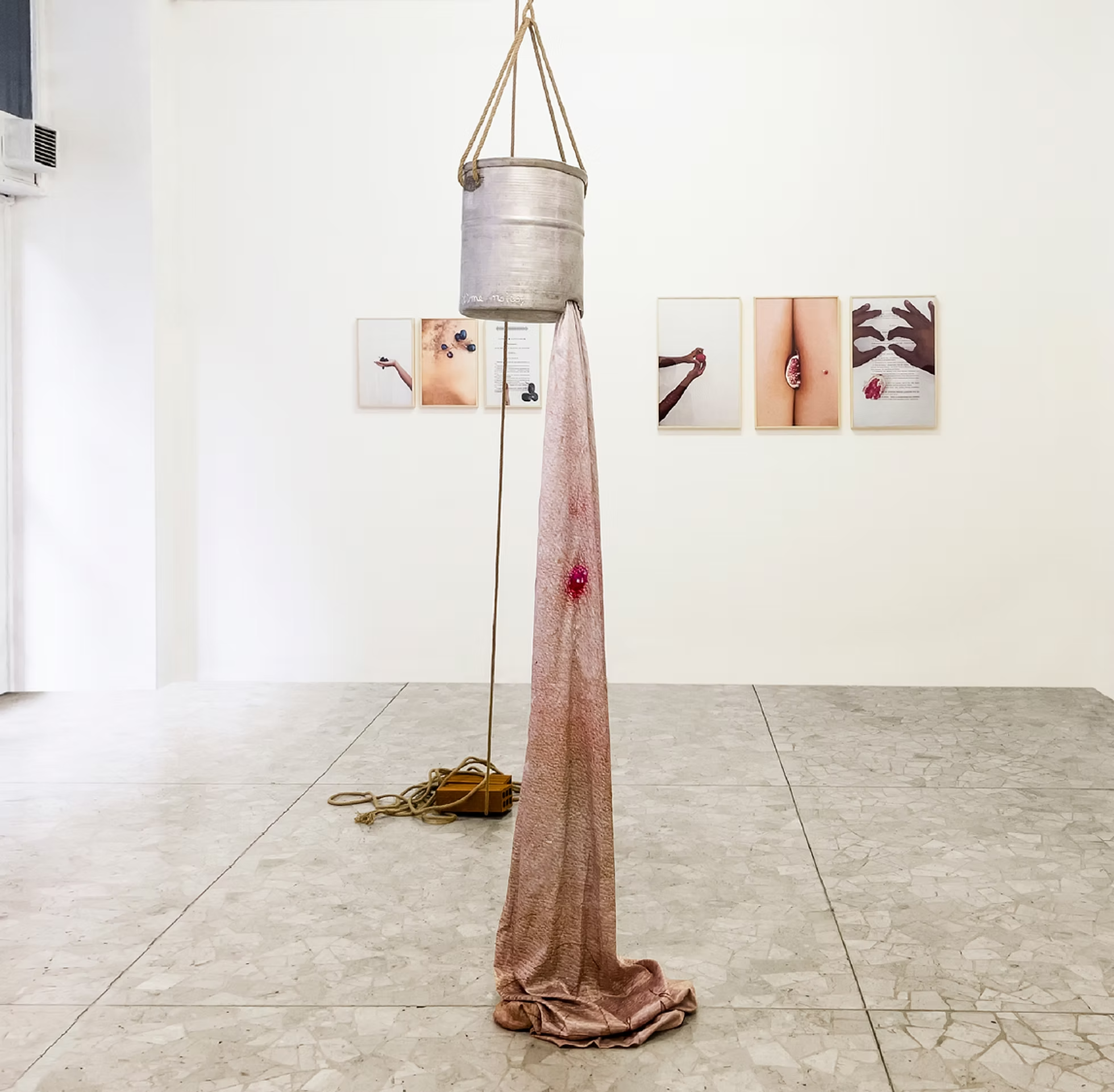
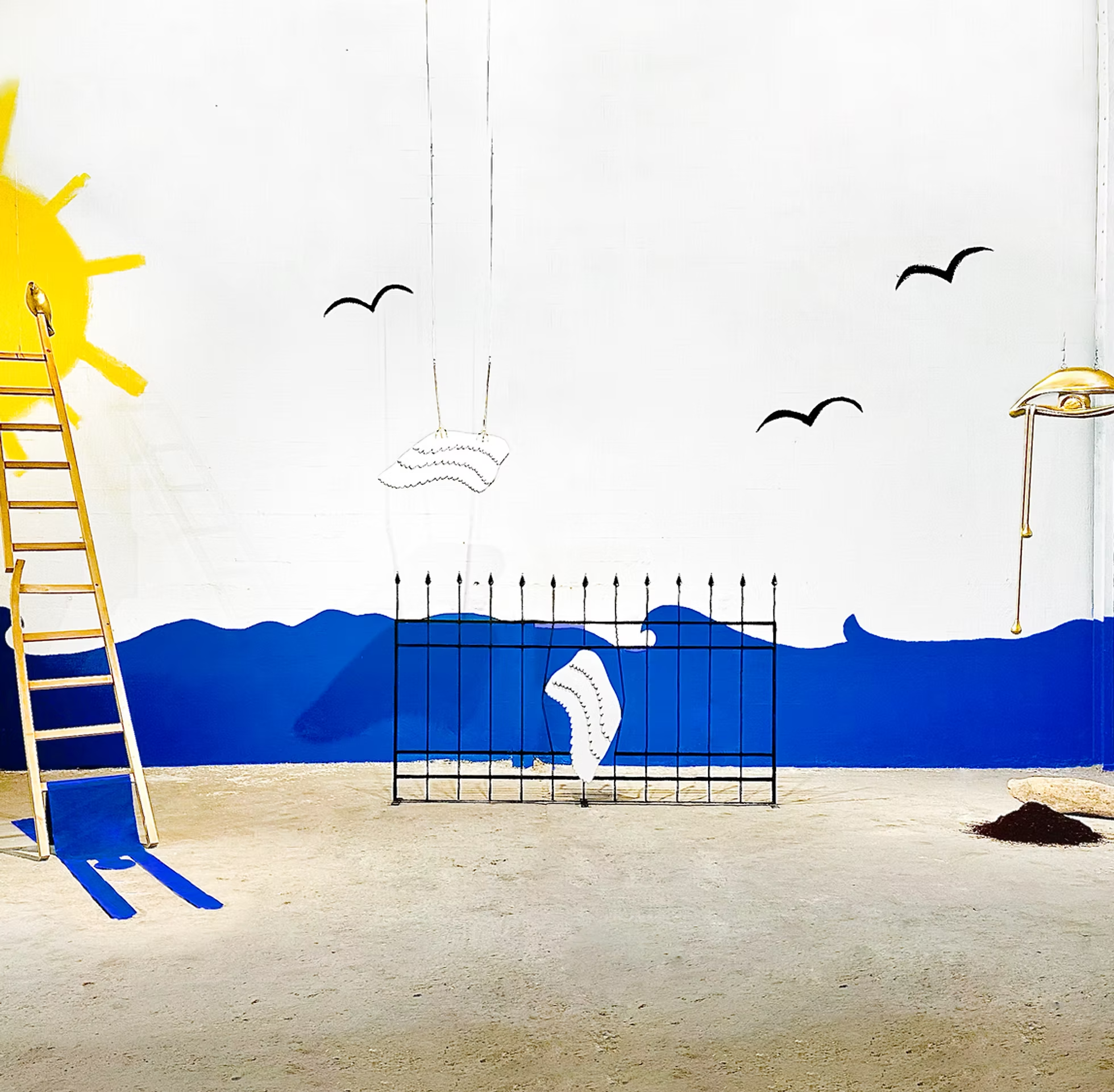
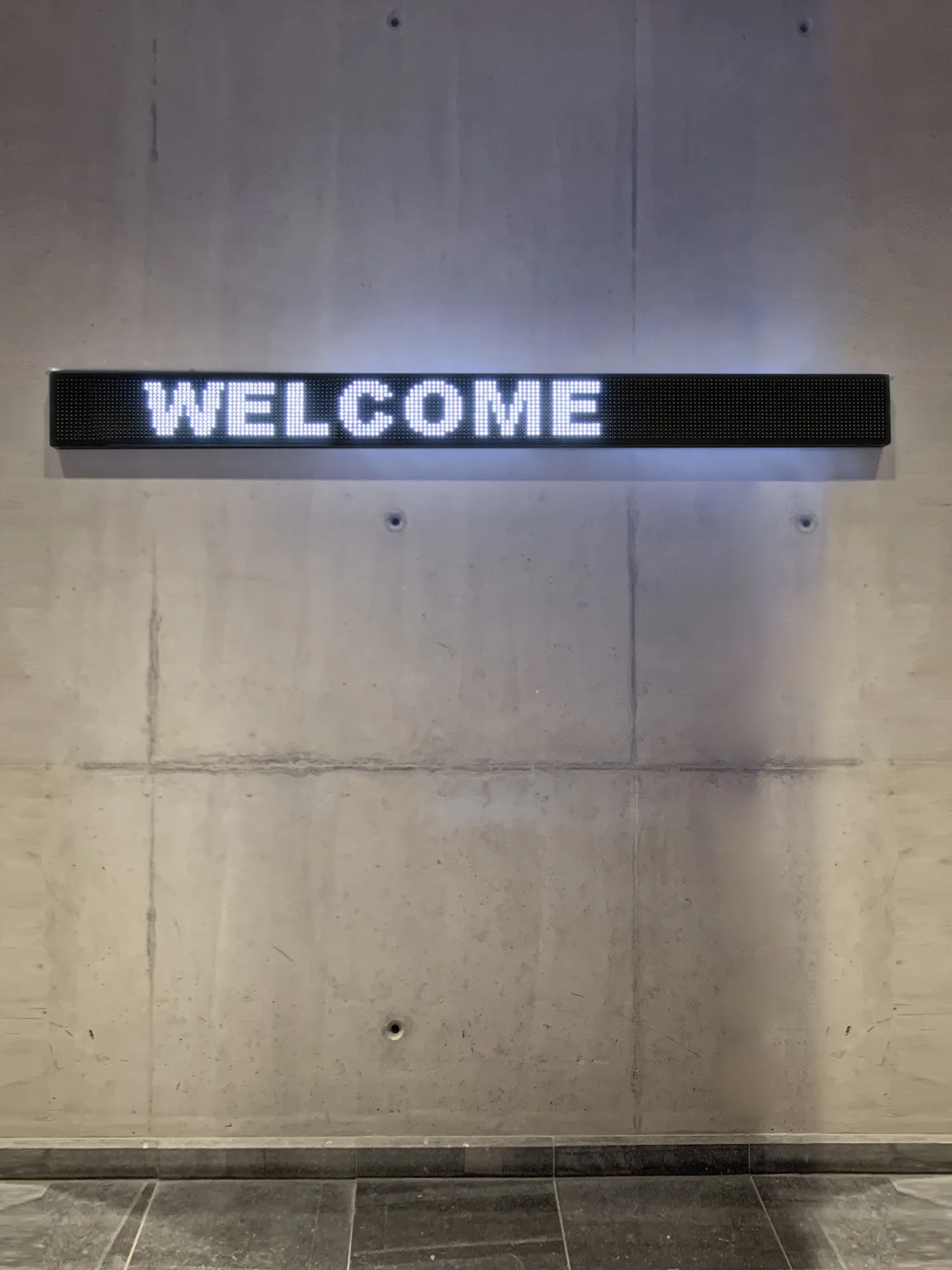
The works follow this double distance, in space and in time, through the things that bind people to places. Mémoire voilée layers drawings on tracing paper over photographic prints; dilemma is written in LED; Home in Pieces is a series of photographs taken by the children; Call back brings together video and neon; On My Way is a sound work set in a megaphone on a wooden structure; and Memory Digest brings together six videos in which the handwritten word MEMORY is erased, darkened, washed, crumpled, gilded or photographed. Each one treats memory, speech or possessions as a way of staying attached to a place, and as a way of changing it.
In L’amour de loin, homecoming remains open. The desire to return endures, but the home held in memory keeps moving alongside the person who remembers it, between a past that cannot be recovered and a present that cannot quite replace it. The distance can be crossed; the years in between cannot.