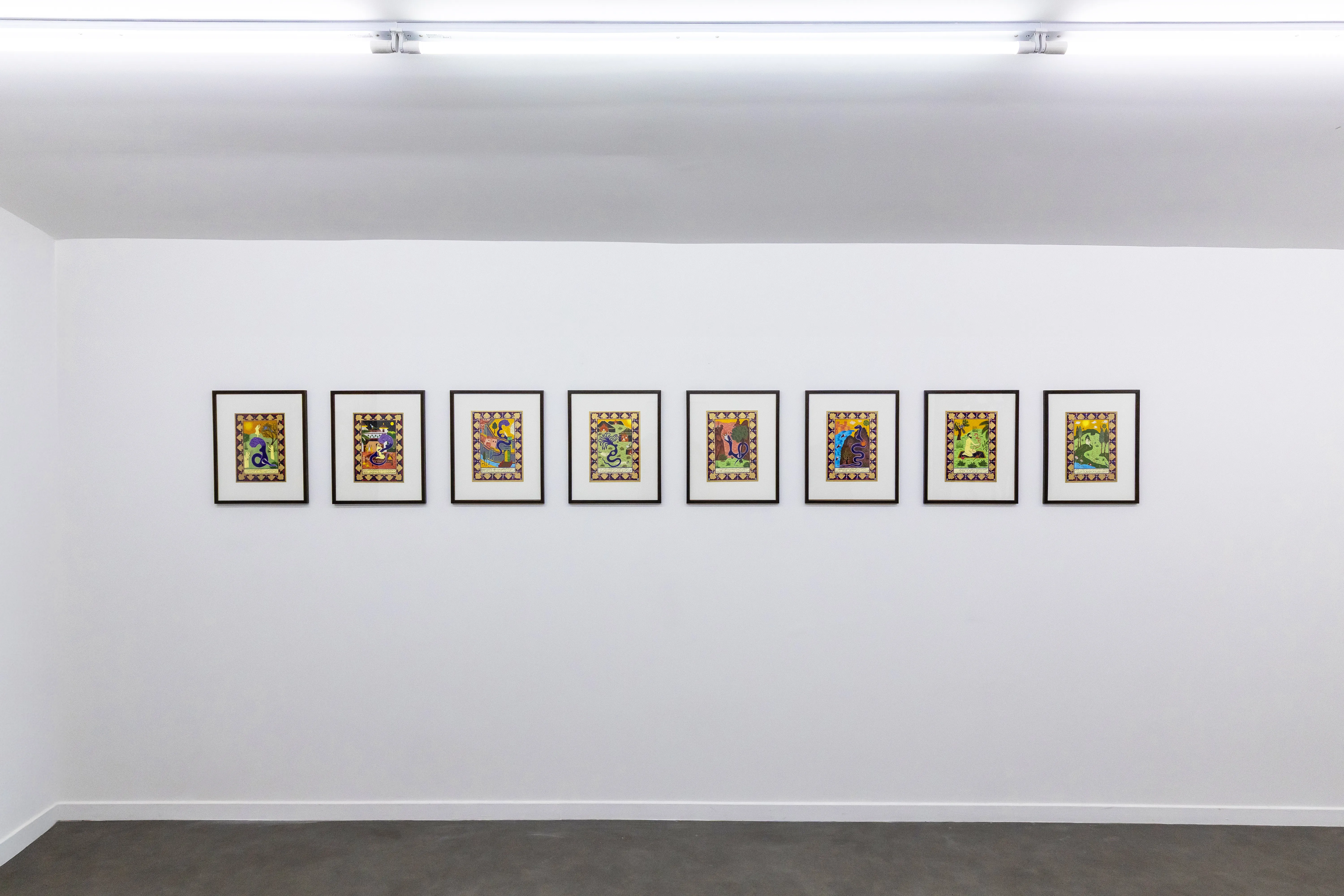
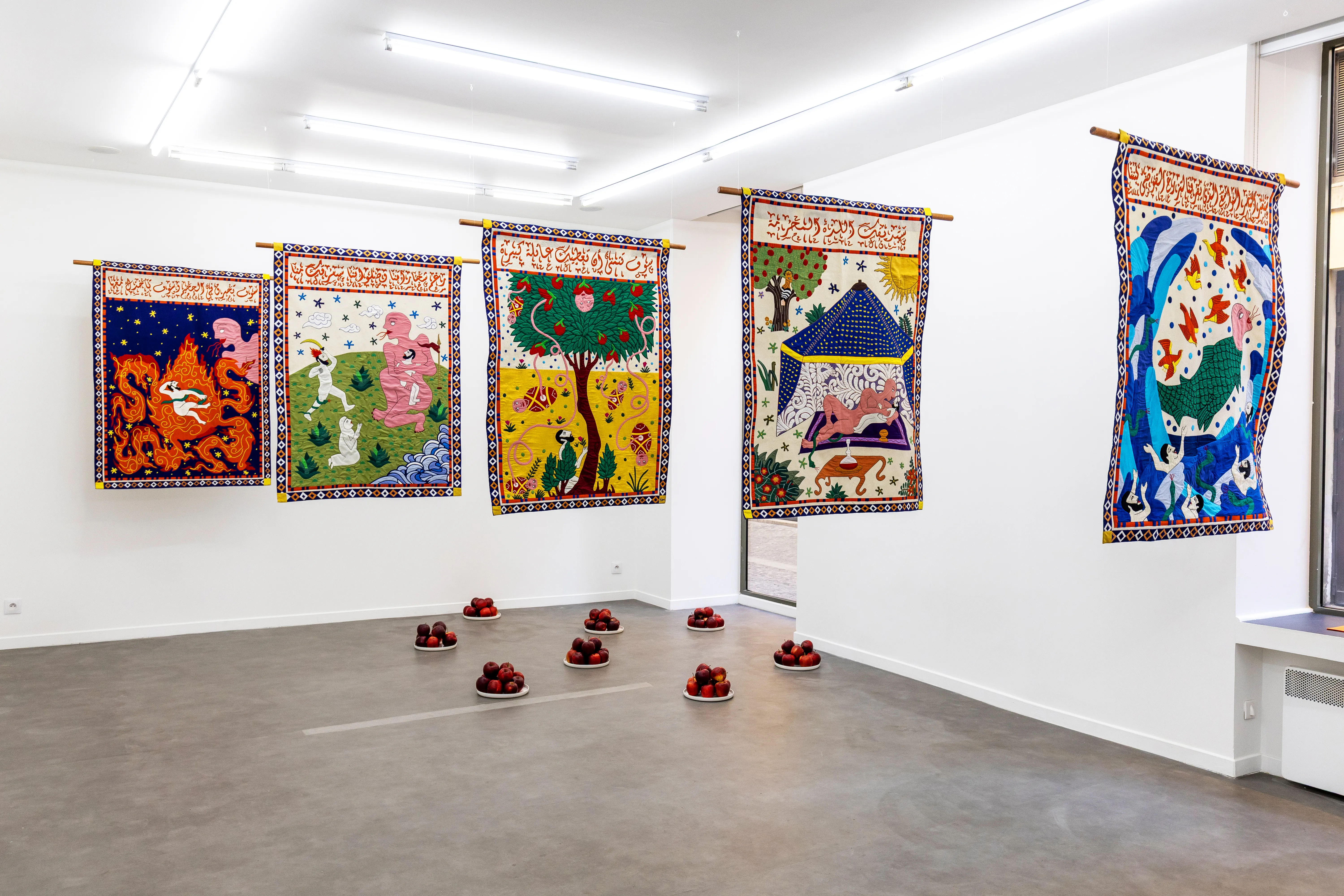
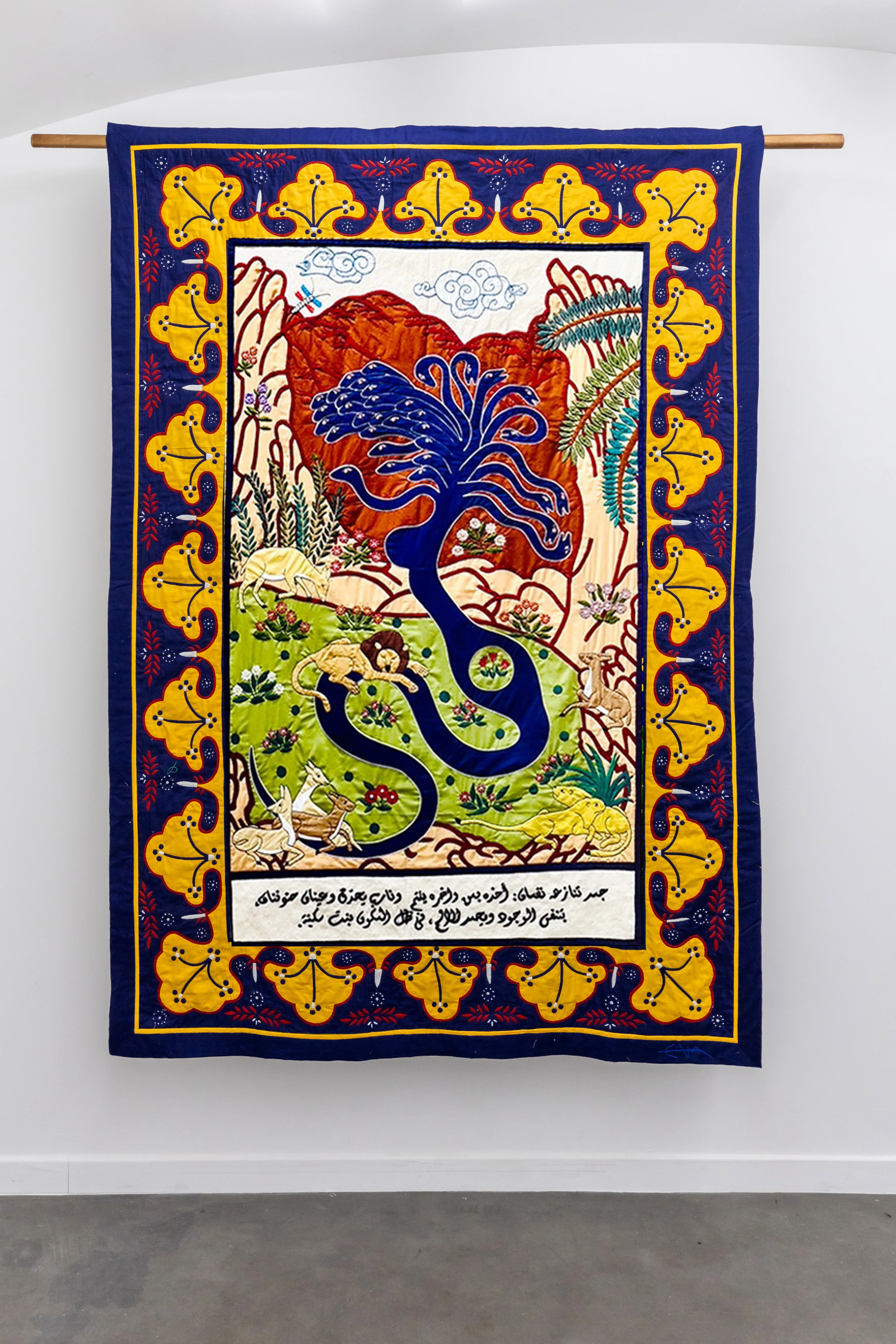
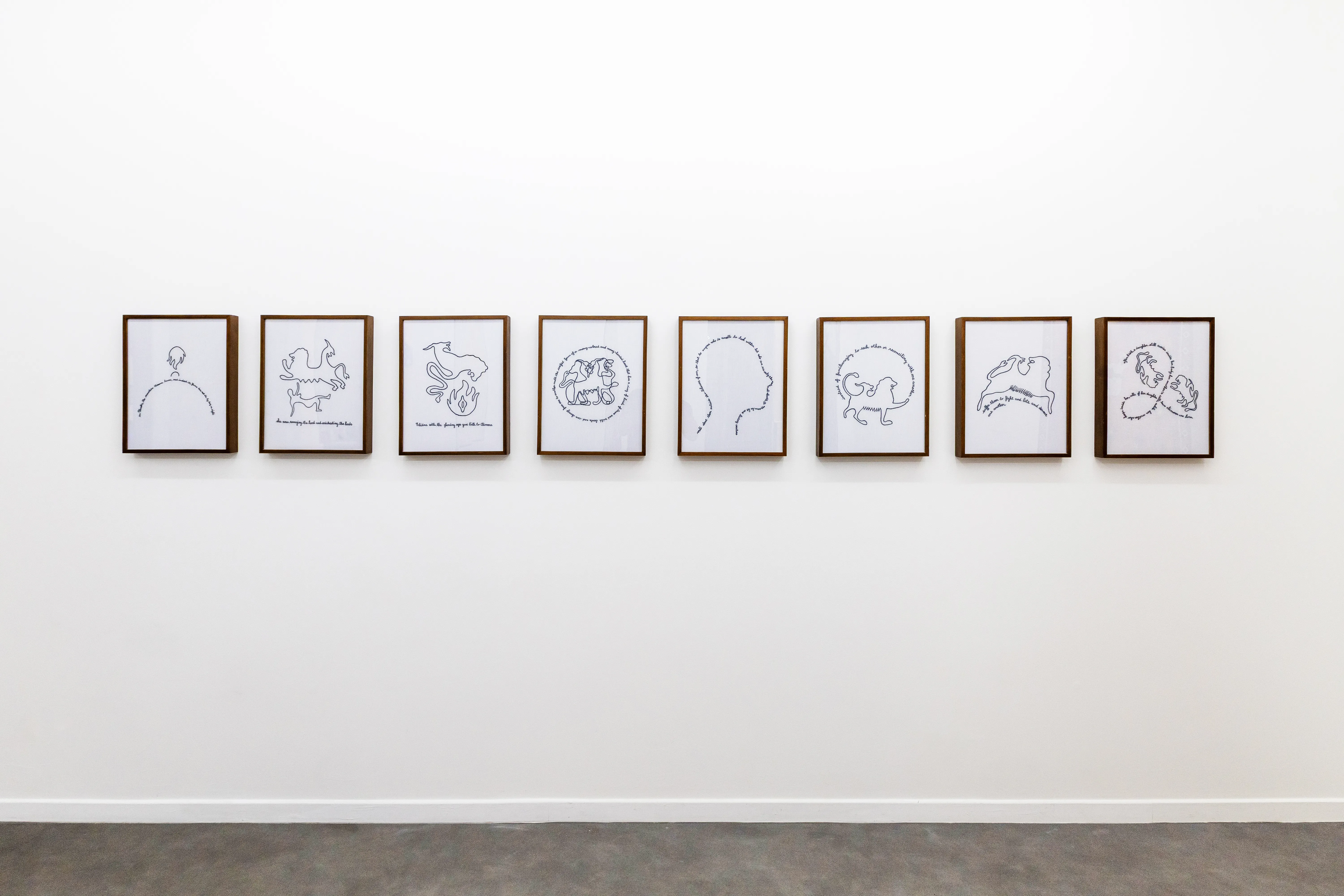
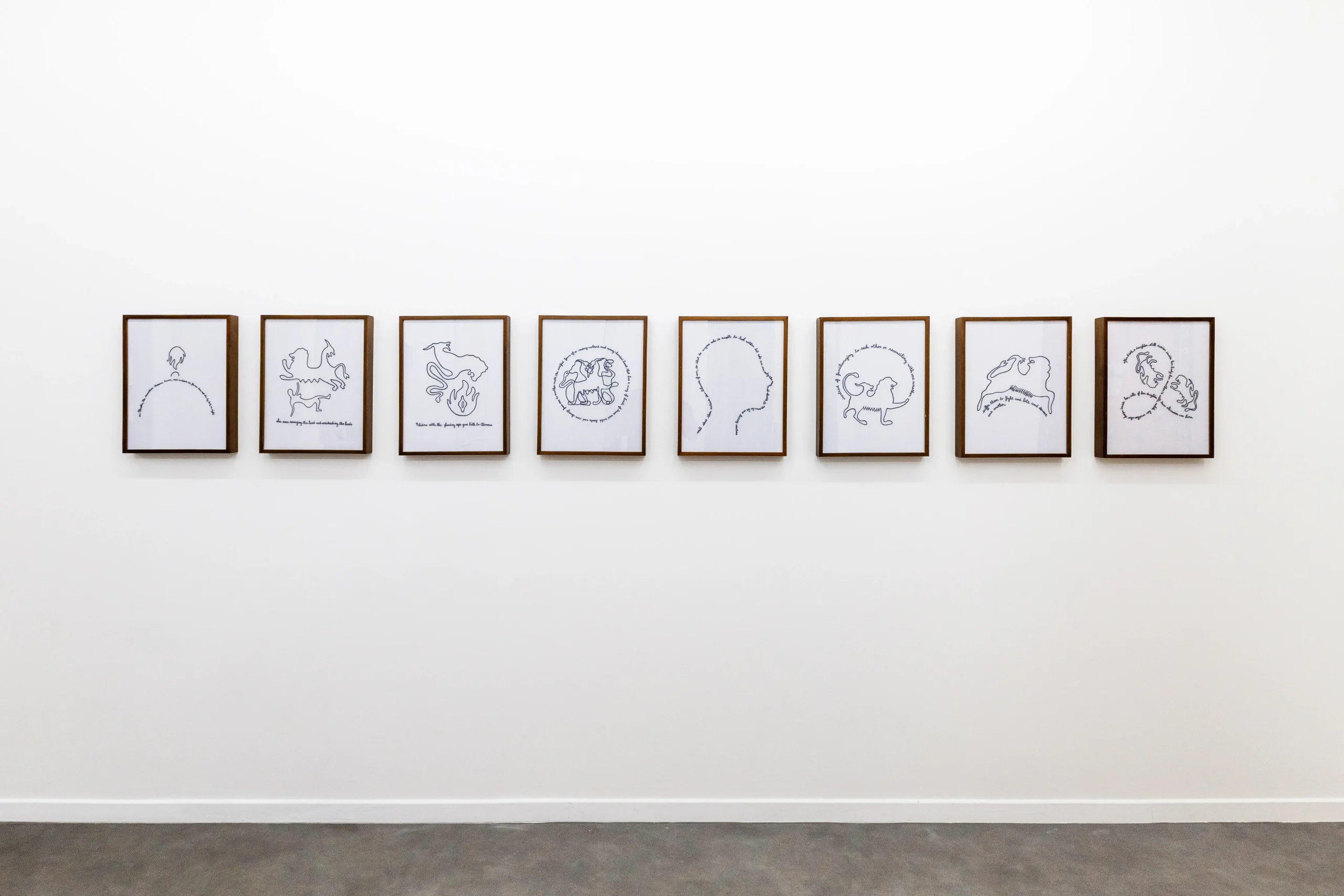
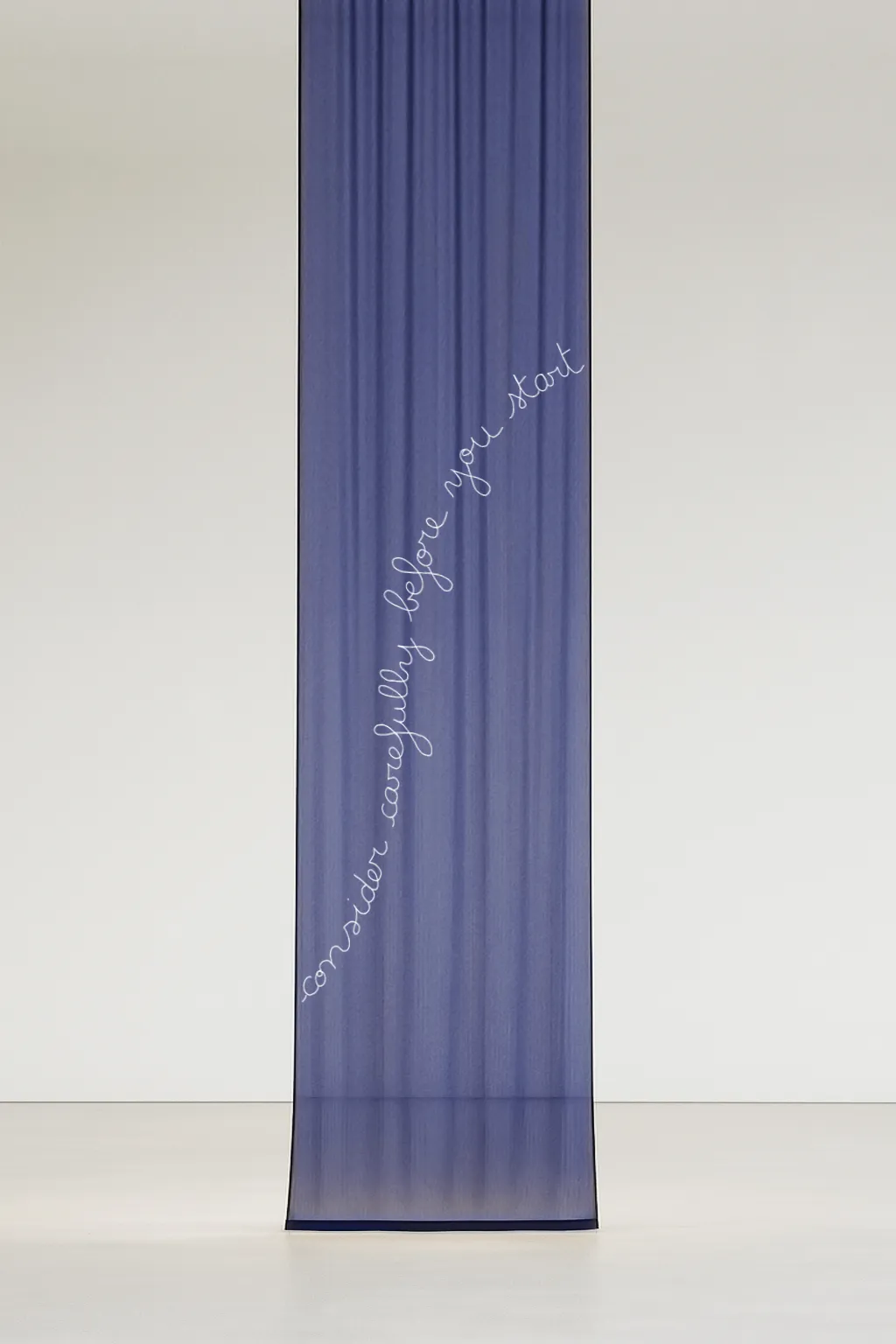
Hayāt al-Hayāt — The Book belongs to Serpents, Genies, Chimeras and Other Wonders, and follows directly from the khayamiya series Hayāt al-Hayāt. The same myth — a serpent-woman refusing the reproductive destiny assigned to her — is fictionalised a second time here, carried into another material, another scale and another mode of attention.
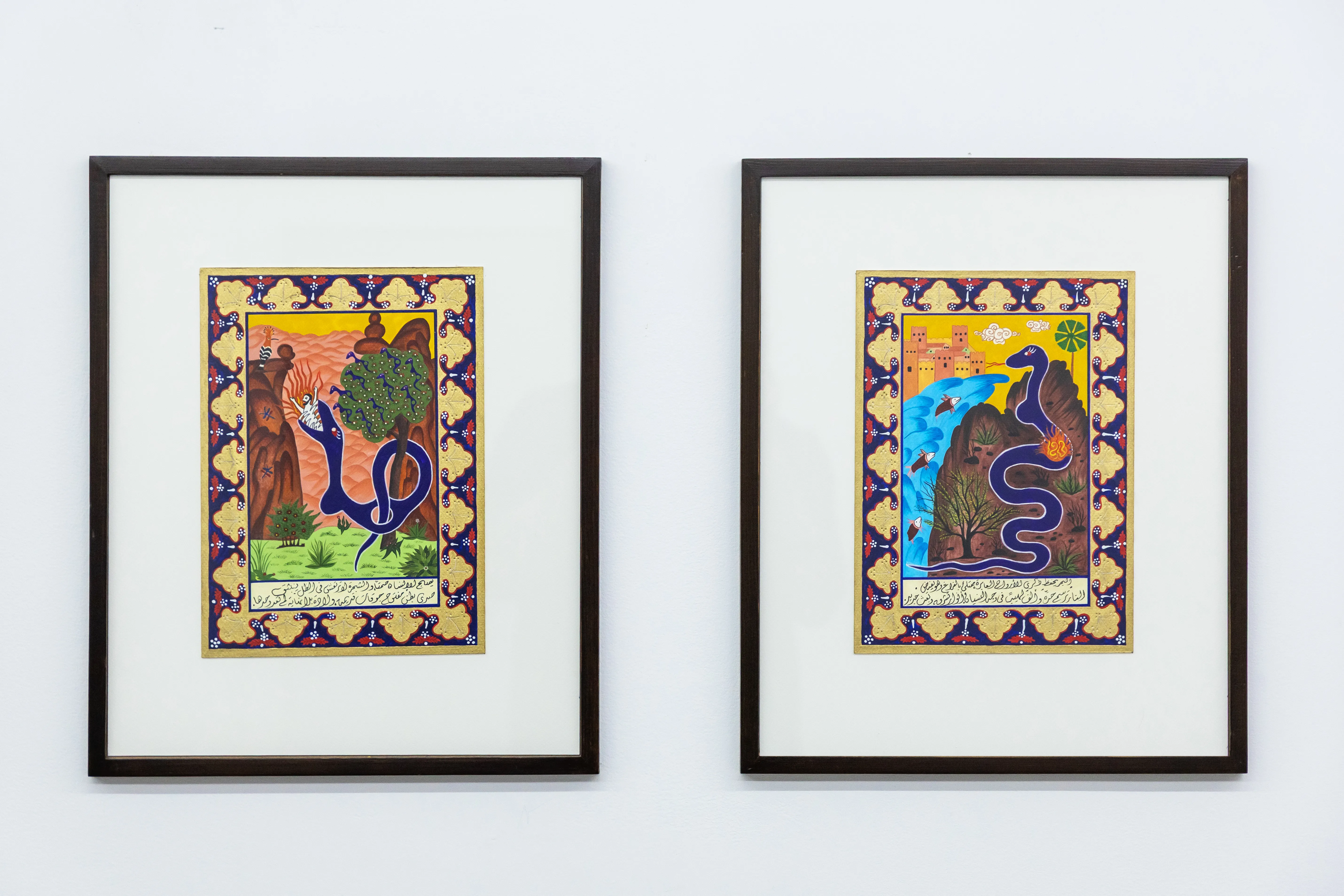
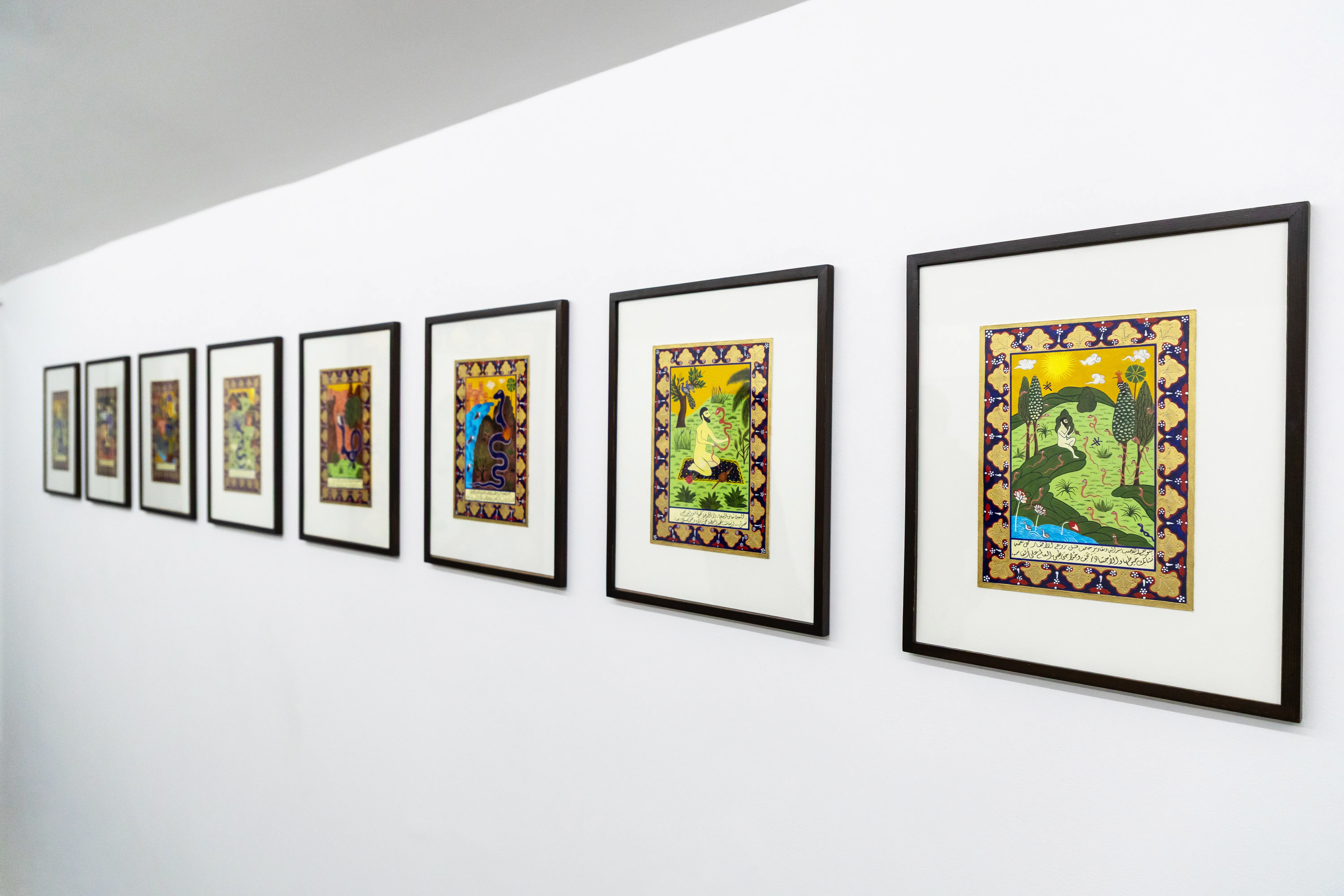
The twenty miniatures follow the same progression as the textile works: the serpent-woman escapes the charmer, slips beyond the limits imposed on her body, withdraws into the abyss and receives fire — a rage that carries its own metamorphosis, burning the inherited narrative and opening a space in which another form of life can emerge. Across the sequence, the pierced womb changes register without changing meaning: what was encountered in the khayamiya panels through physical movement and spatial immersion is here approached through proximity, concentration and close looking, at the scale of a single page.
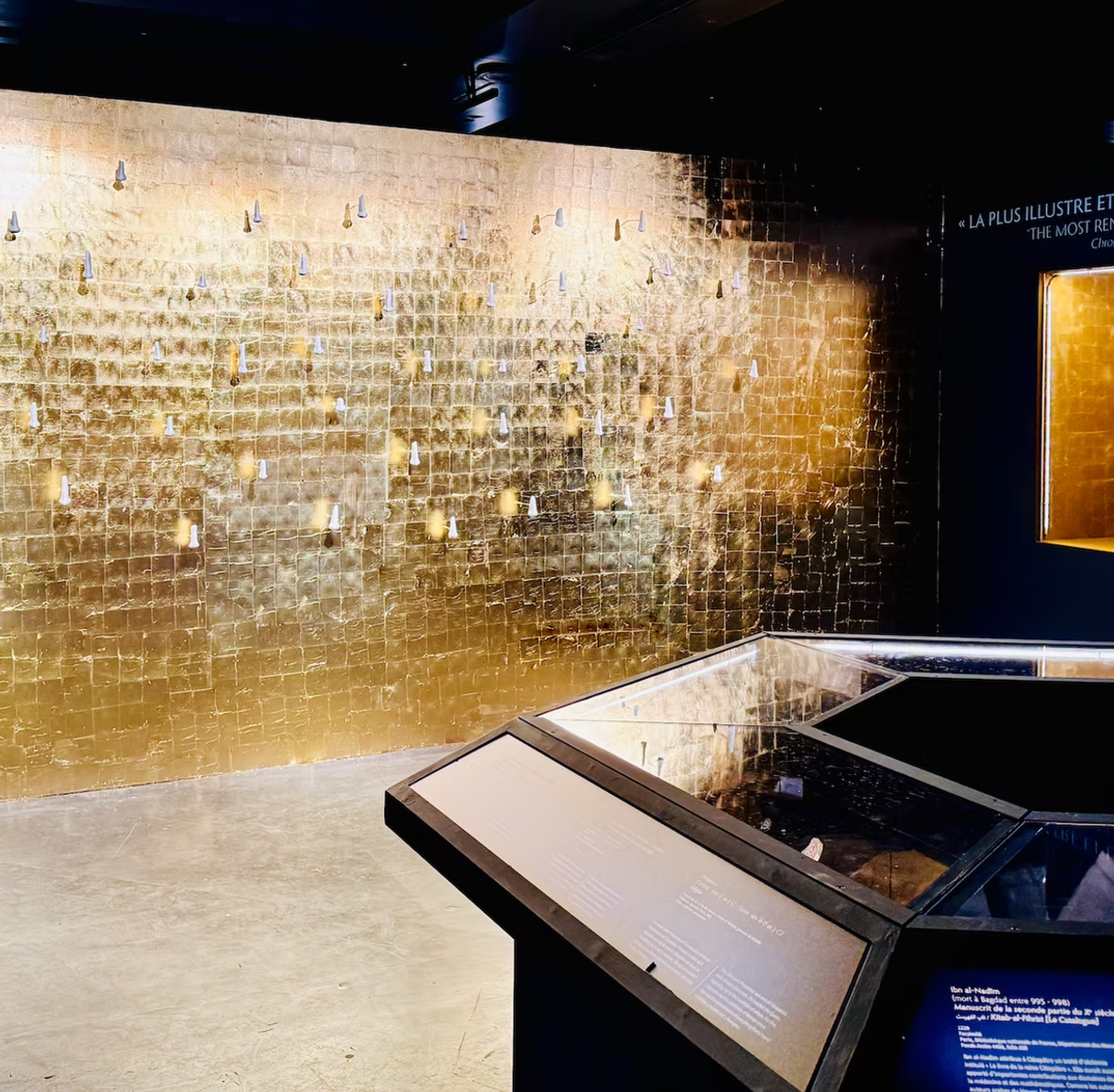
The shift from textile to miniature is not simply a change of size. Pigments bound in gum arabic form luminous, matte fields of colour, while gold leaf shifts with the light and the viewer's position. Arabic calligraphy enters the image as composition rather than caption. Text, figure, ornament and surface participate together in the construction of the serpent-woman's mythology. The change from appliqué to pigment and gold also changes the way the story is read: what unfolds across the spatial sequence of the textiles is condensed into twenty separate images, each autonomous yet connected to the same continuous account.
The works draw on the visual language of Ottoman manuscript painting, a tradition situated within the Eastern Mediterranean world to which Kosmatopoulos's own Greek background is historically connected — a proximity of geography and history rather than a direct inheritance. Rather than reproducing the technical precision or codified conventions of historical manuscripts, she reappropriates their frontal compositions, flattened perspective, saturated colour and close relationship between text and image, translating them through her own deliberately direct, almost naïve visual language.
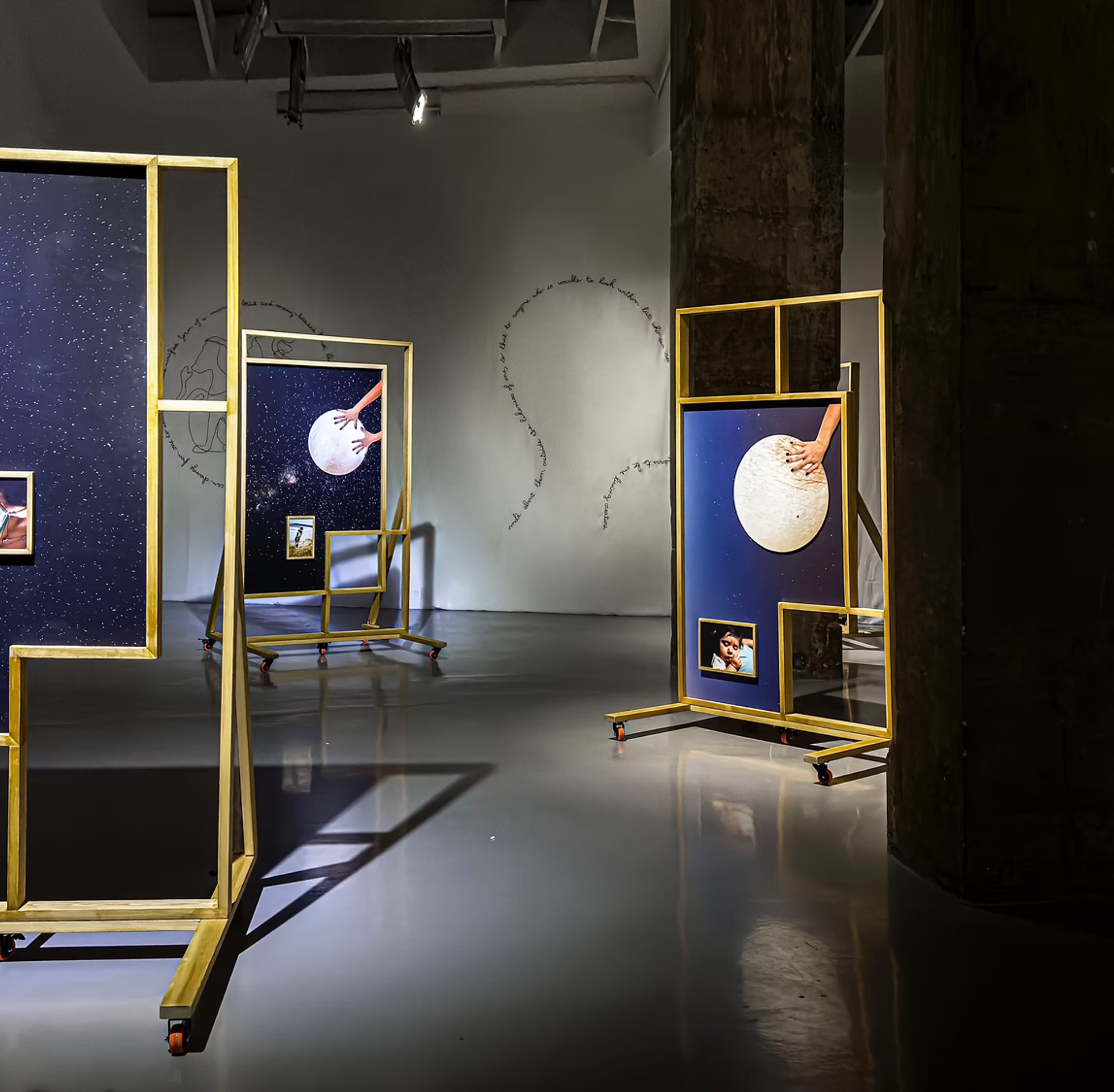
The twenty works are therefore neither reduced copies of the khayamiya panels nor imitations of existing miniatures. They are new translations of the same scenes: the change of medium alters the rhythm, intimacy and visual density of the narrative while preserving its emotional and symbolic structure. Where the khayamiya panels are encountered through physical movement and spatial immersion, the miniatures ask for the opposite: stillness, proximity, a single sustained look. Scenes that occupied a full wall in fabric are here condensed into a surface small enough to hold in two hands — nothing in the story changes, but the scale changes what the story asks of whoever is looking at it.
The title does not name a bound volume. It names the complete sequence formed by twenty separate miniatures, autonomous yet legible as one continuous account, whether viewed side by side or dispersed across a room.
The story remains, but its language changes form.