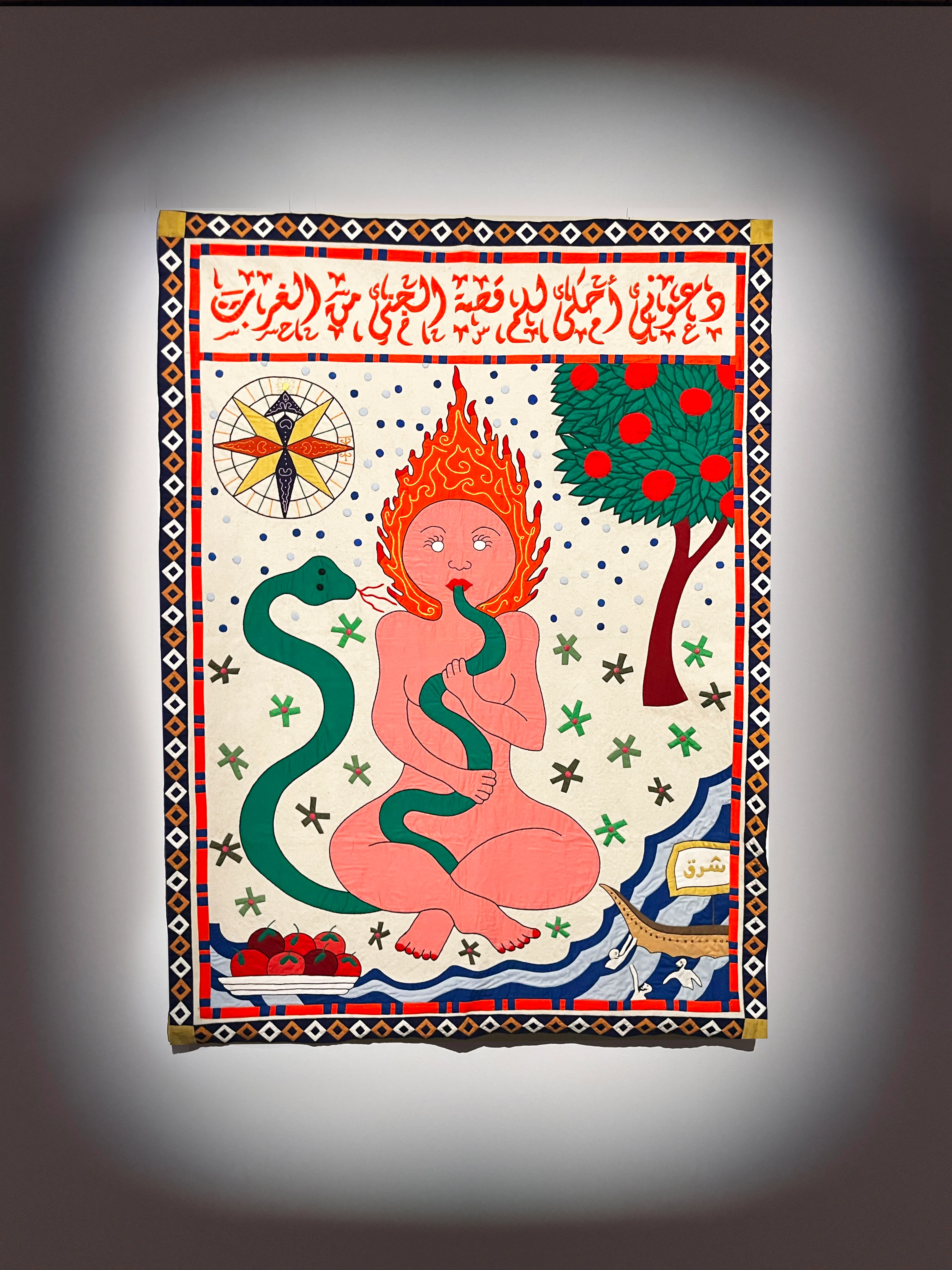
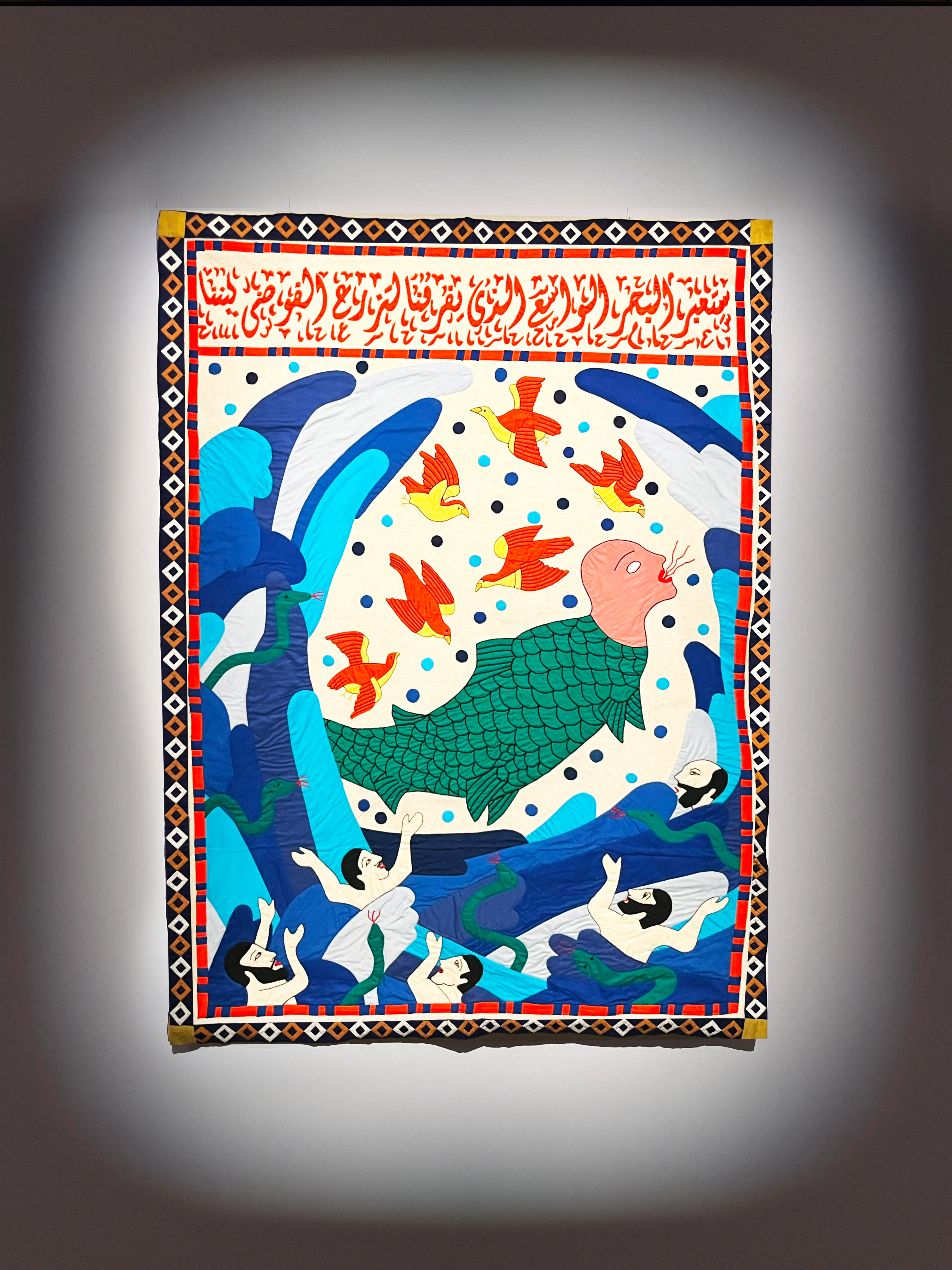
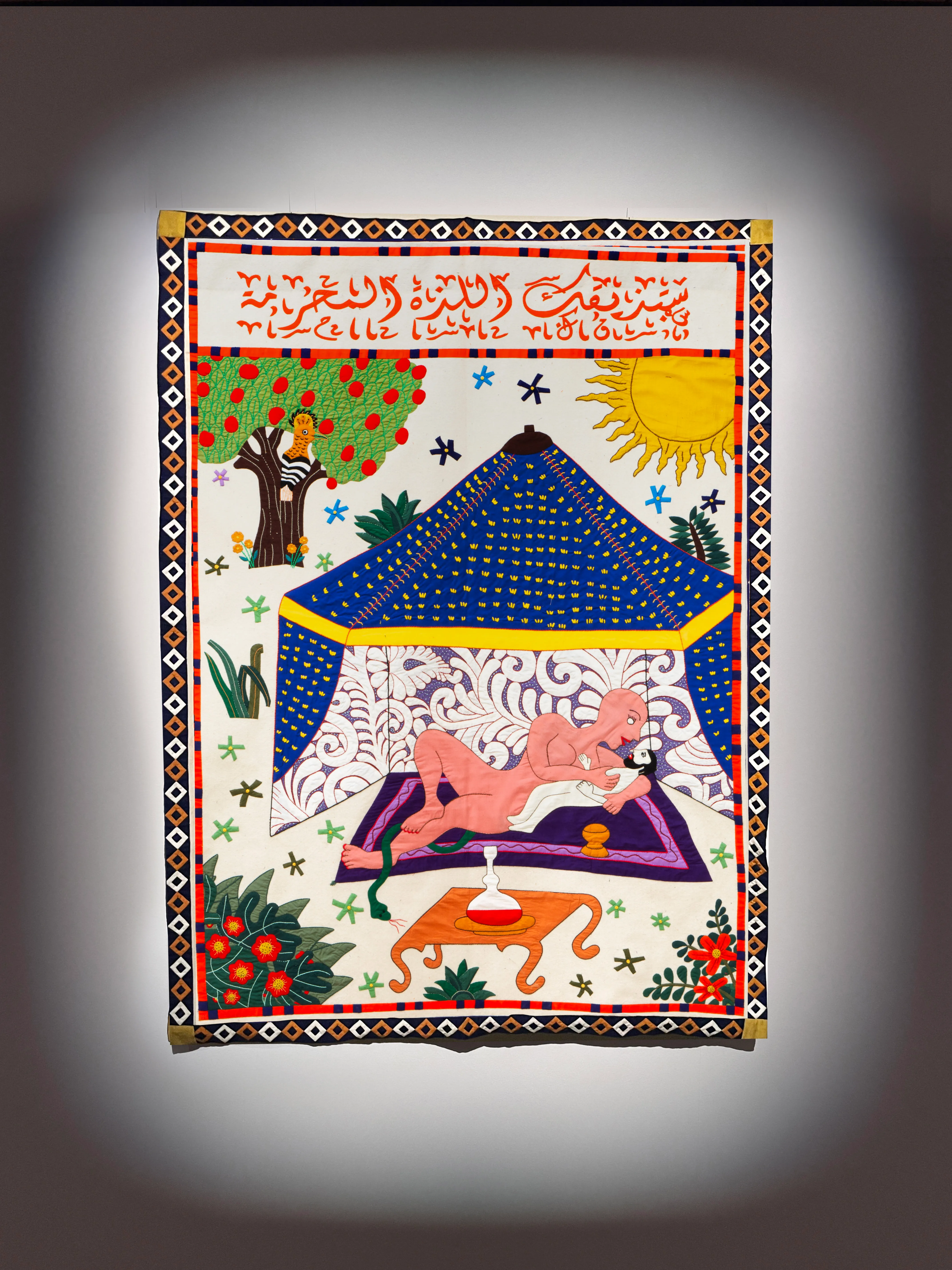
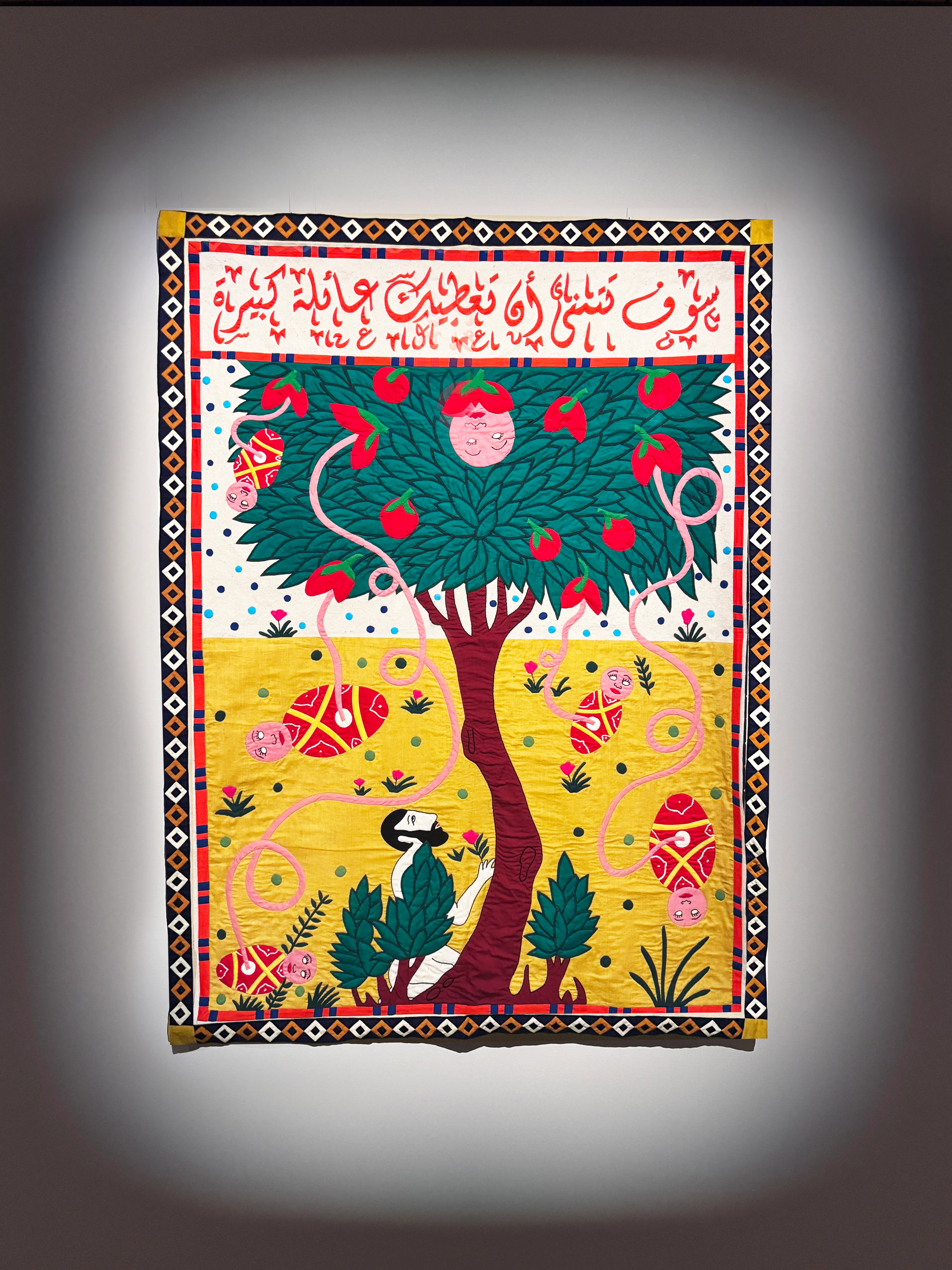
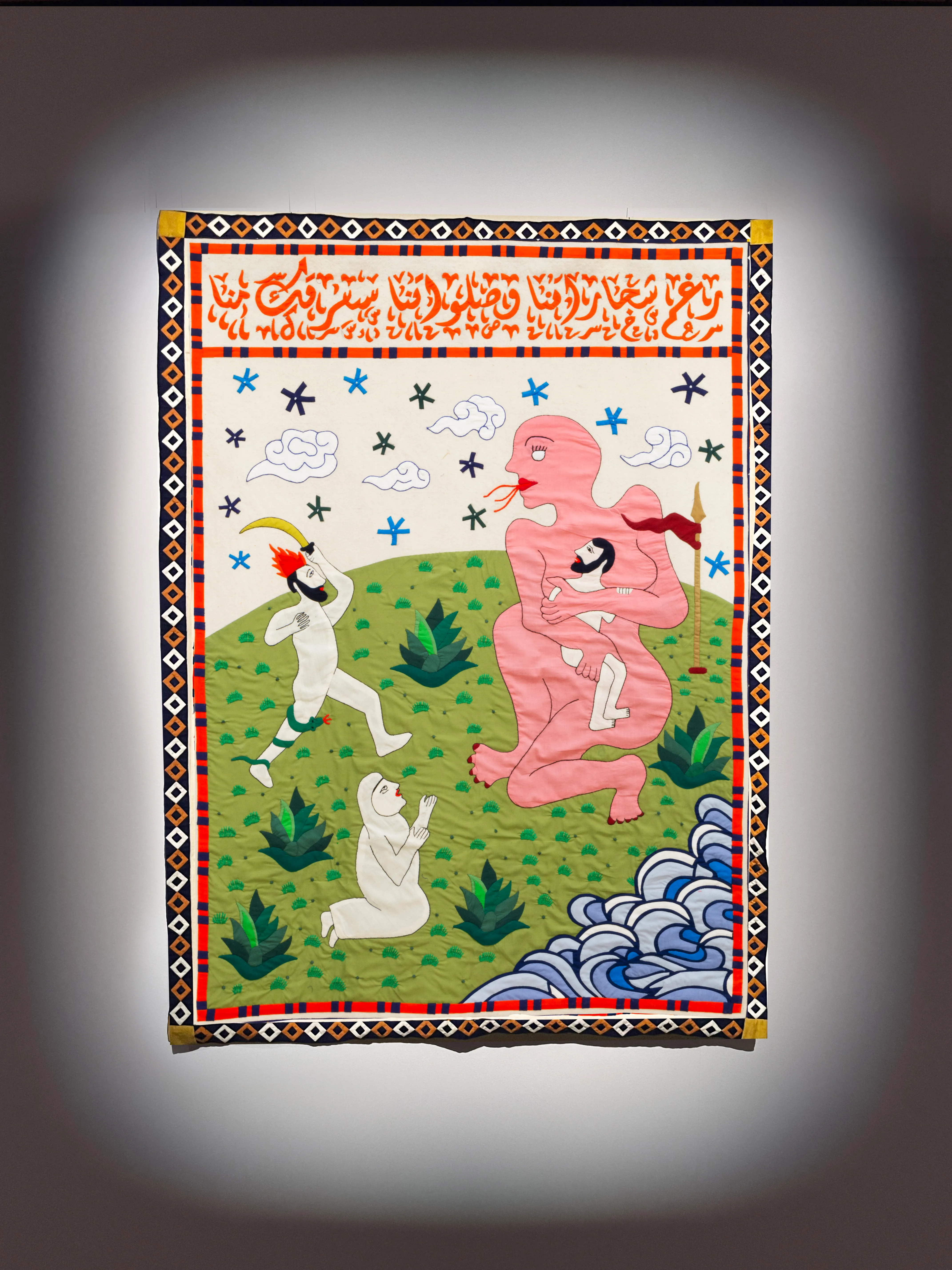
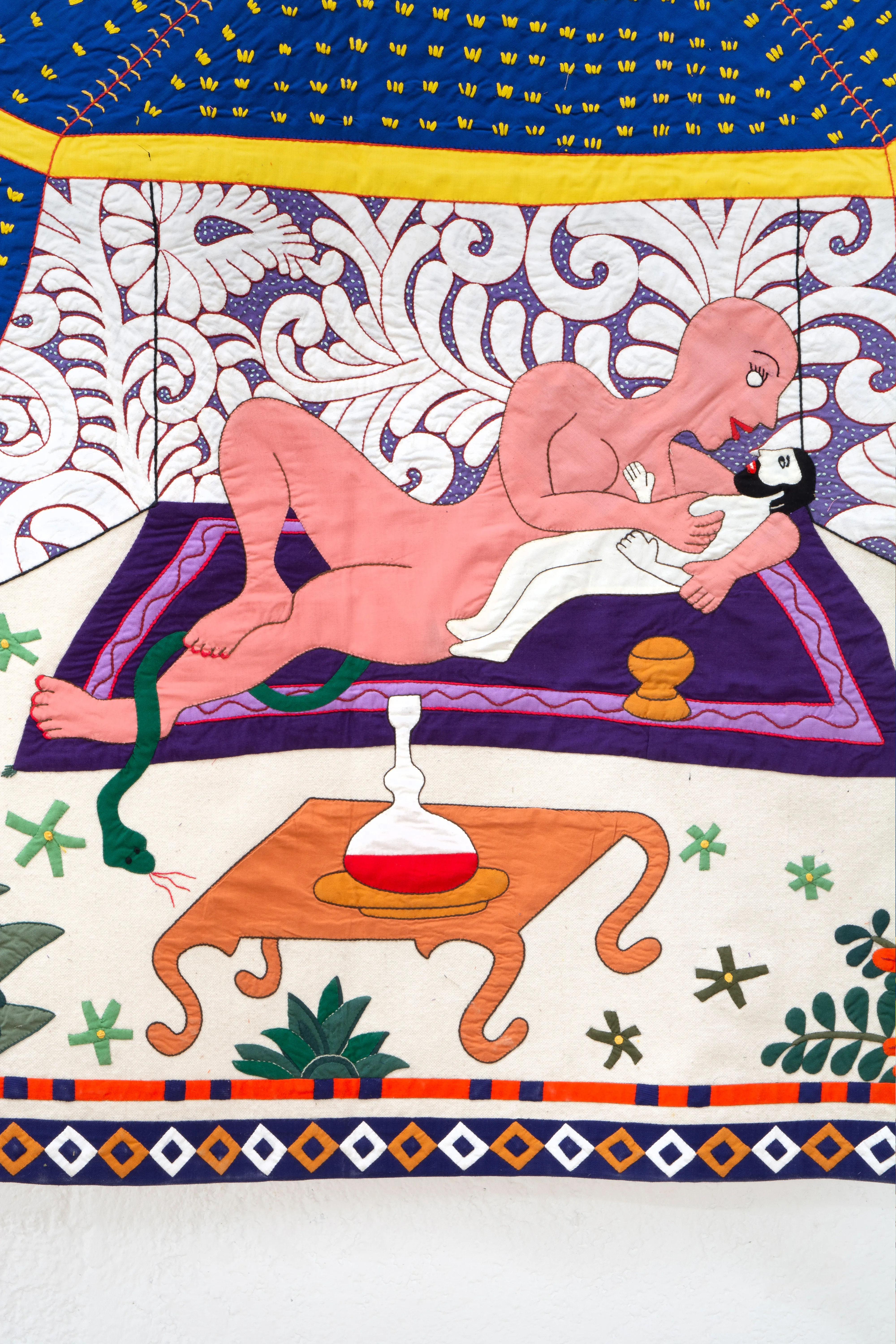
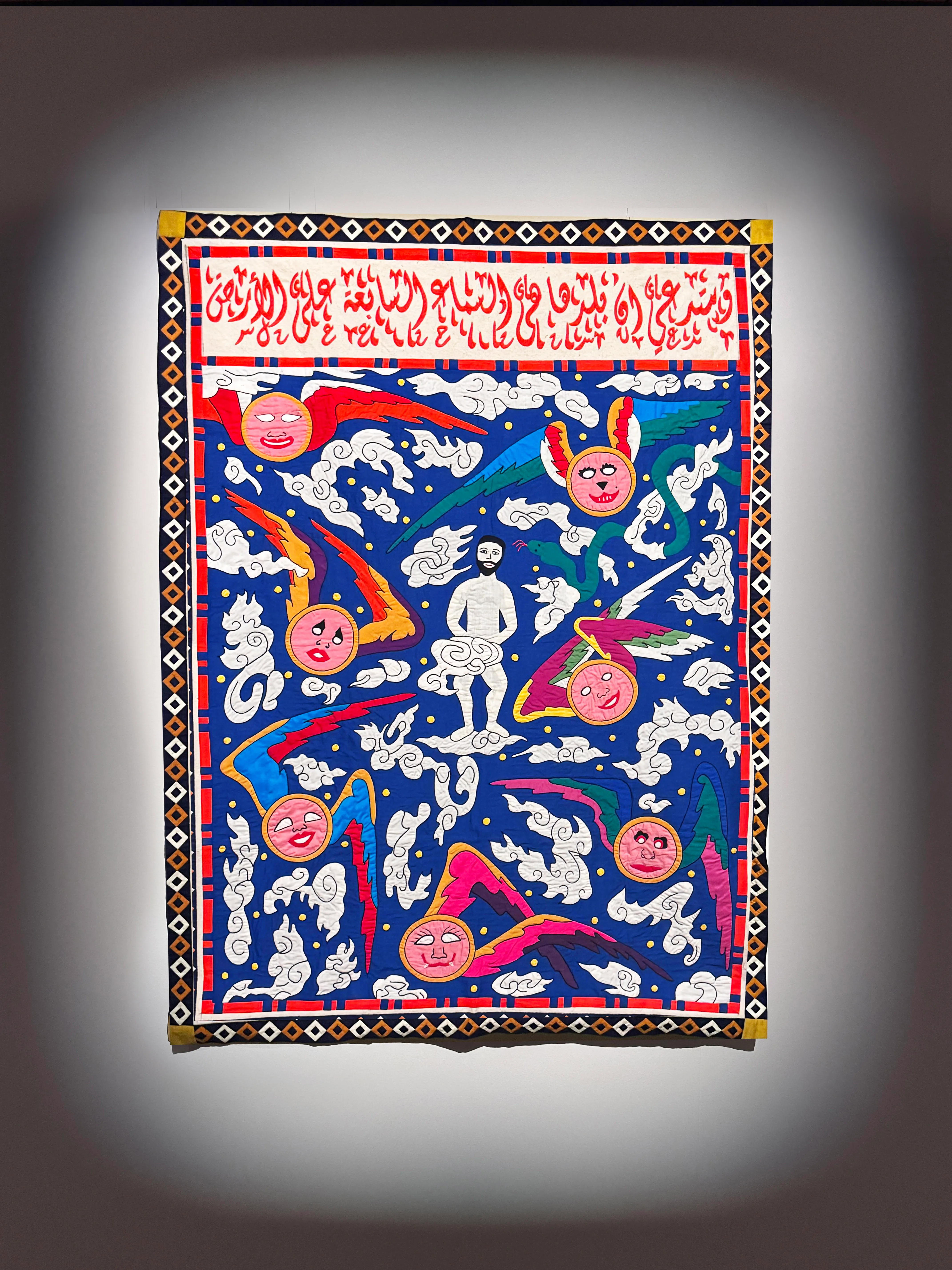
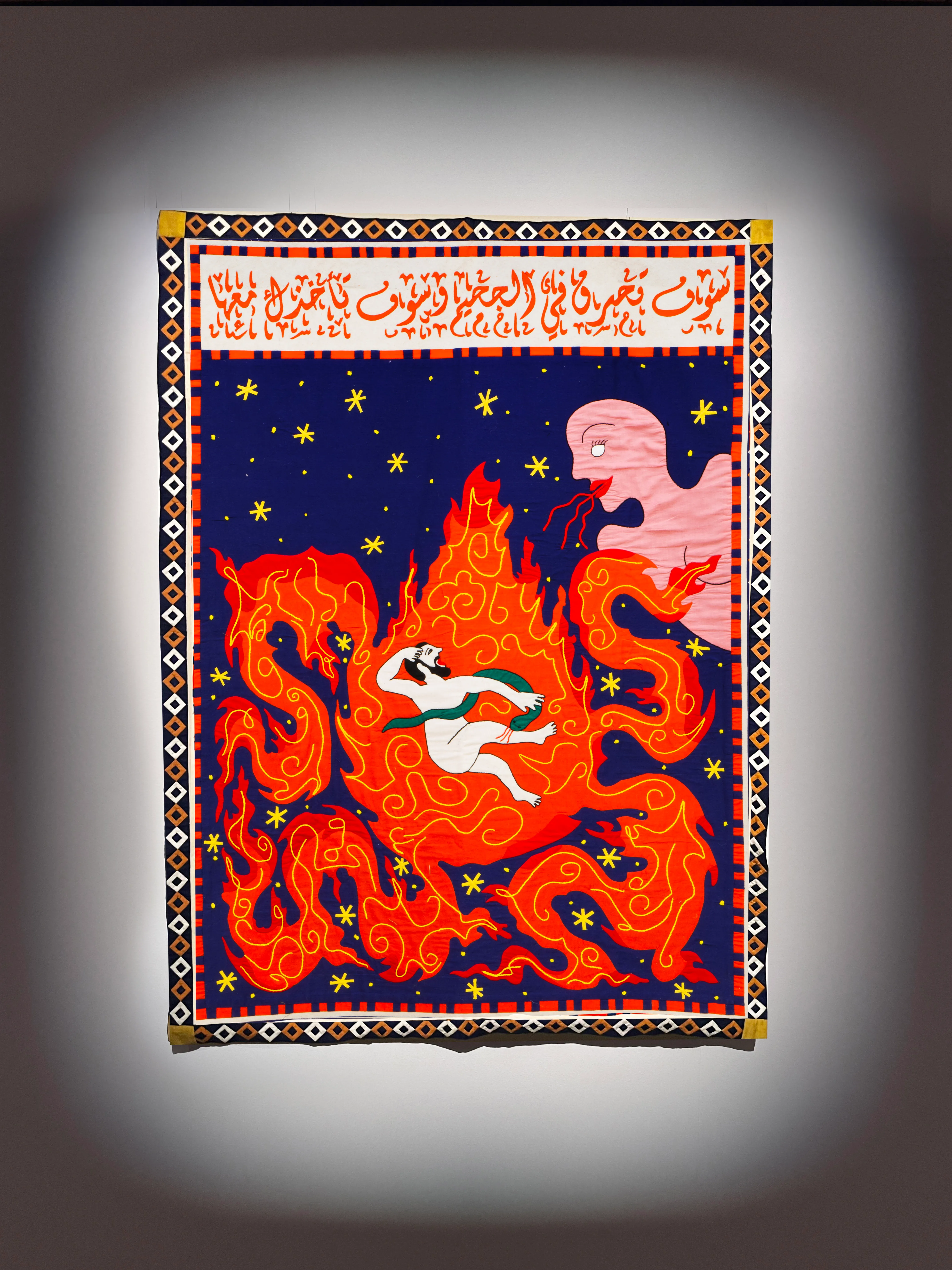
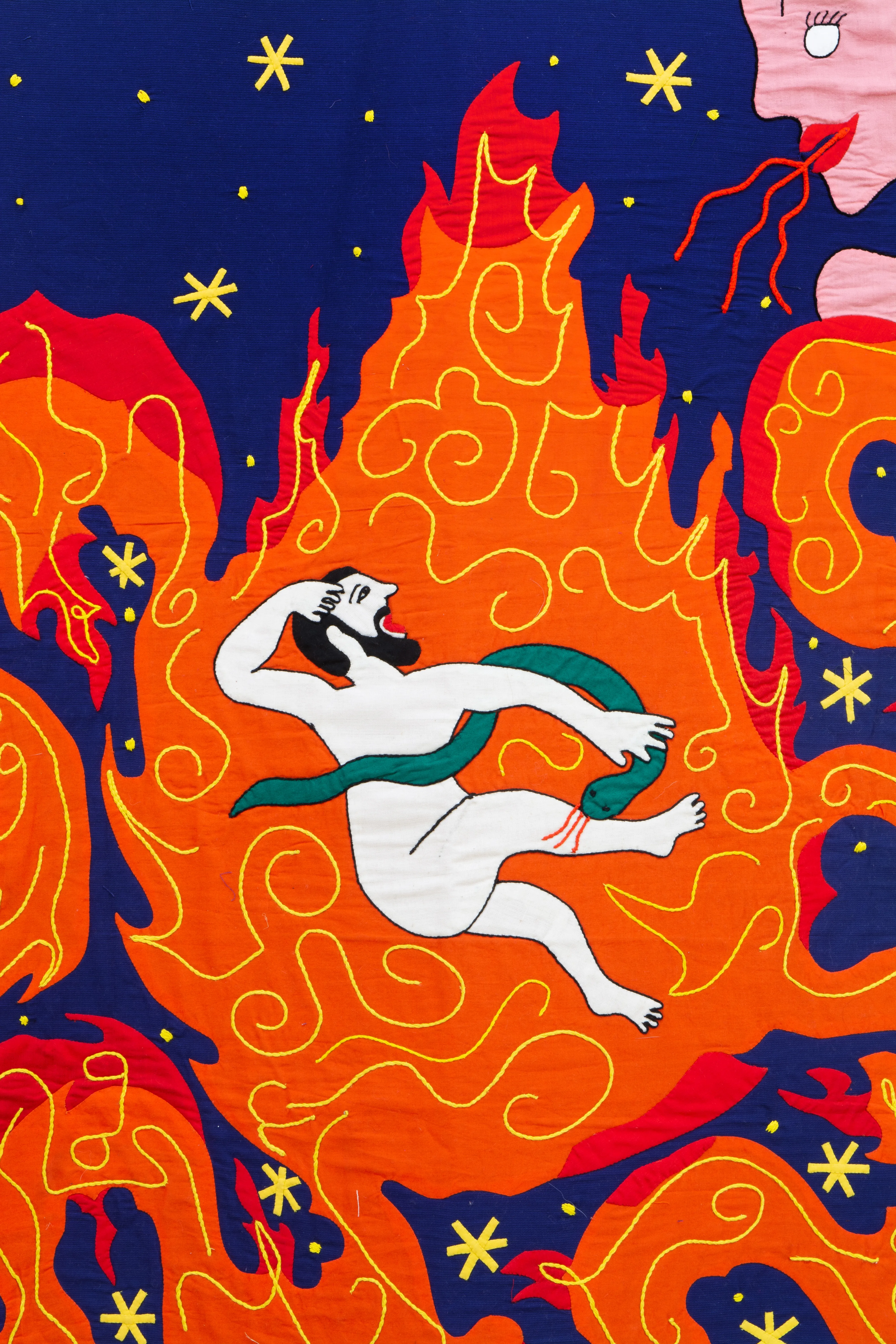
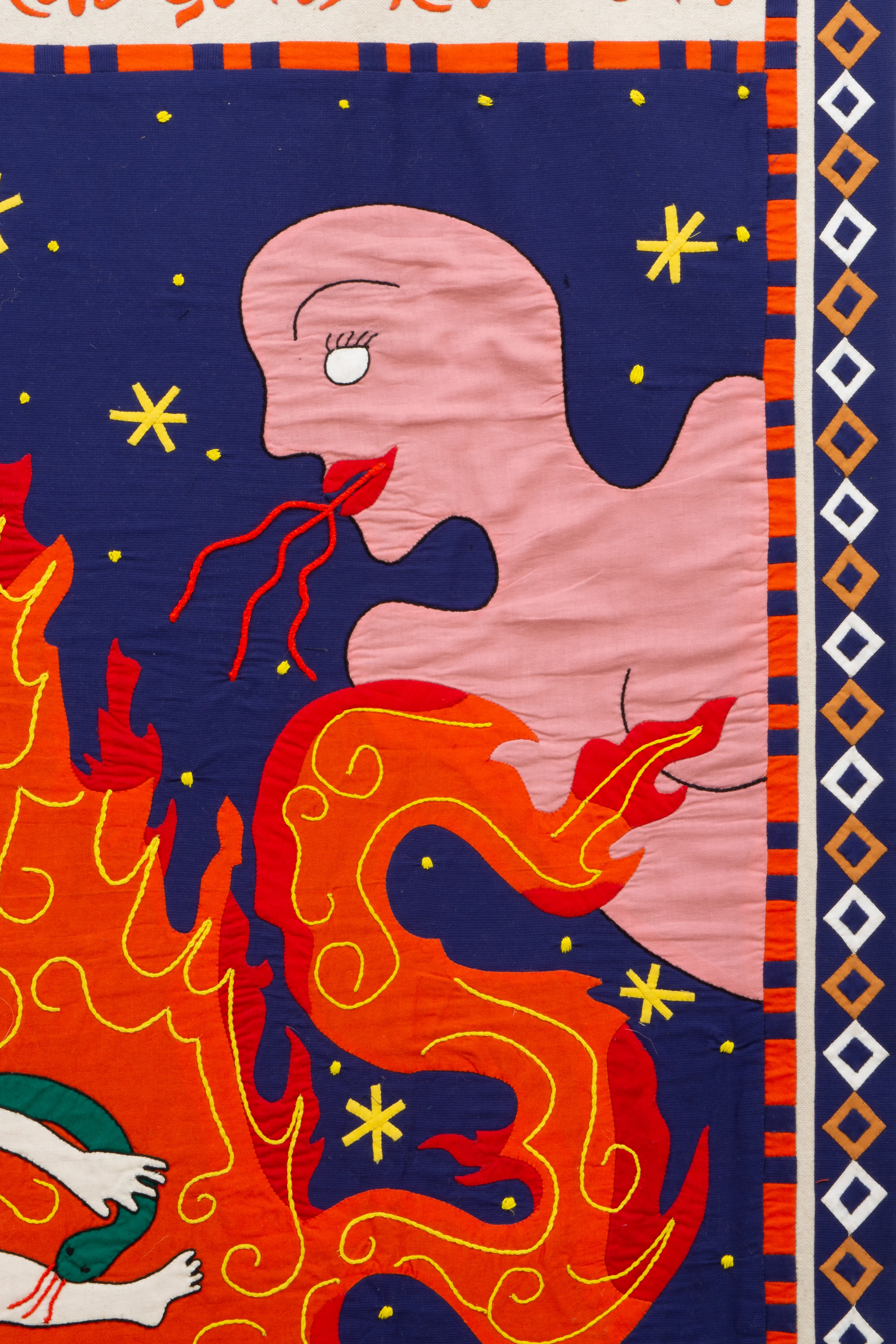
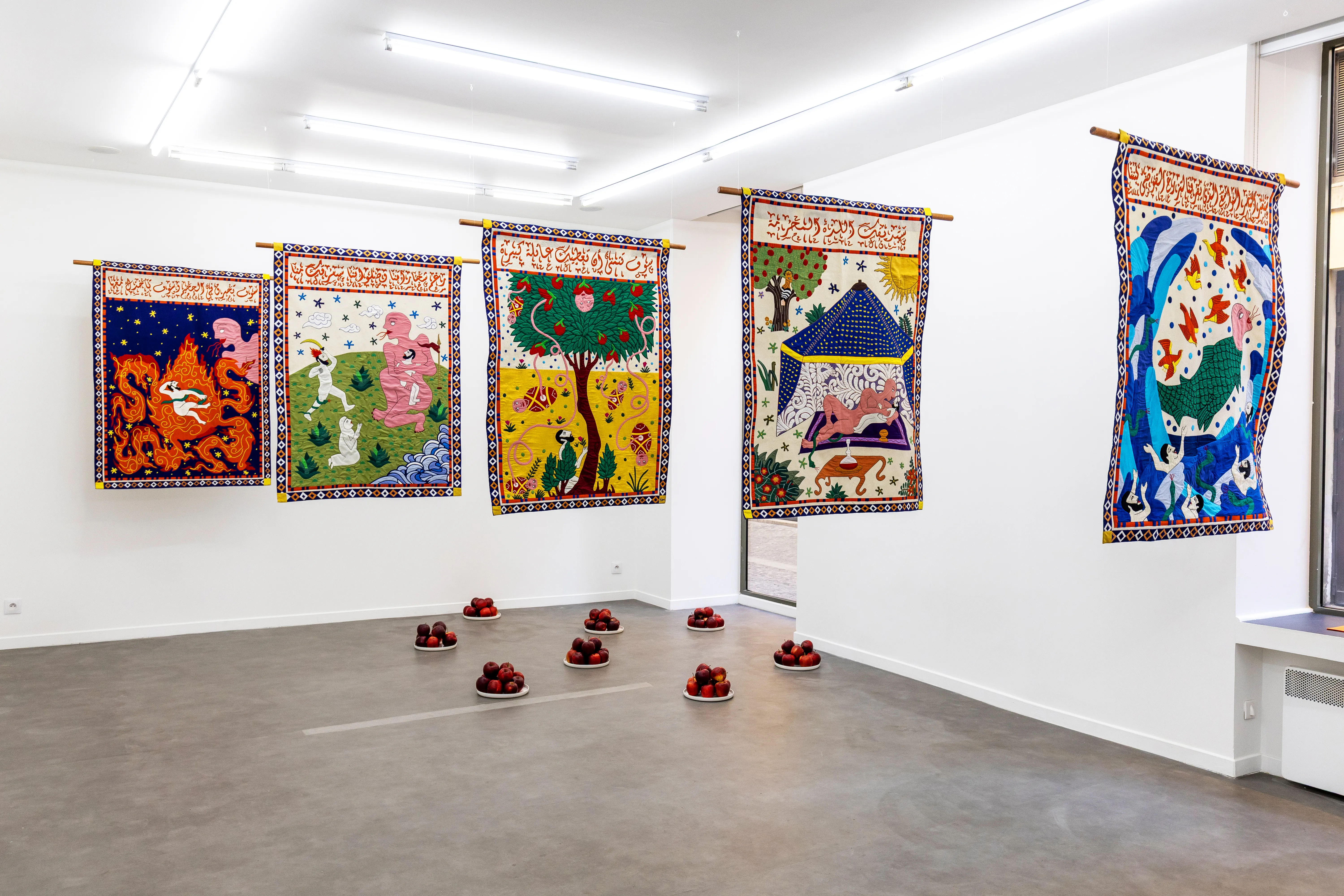
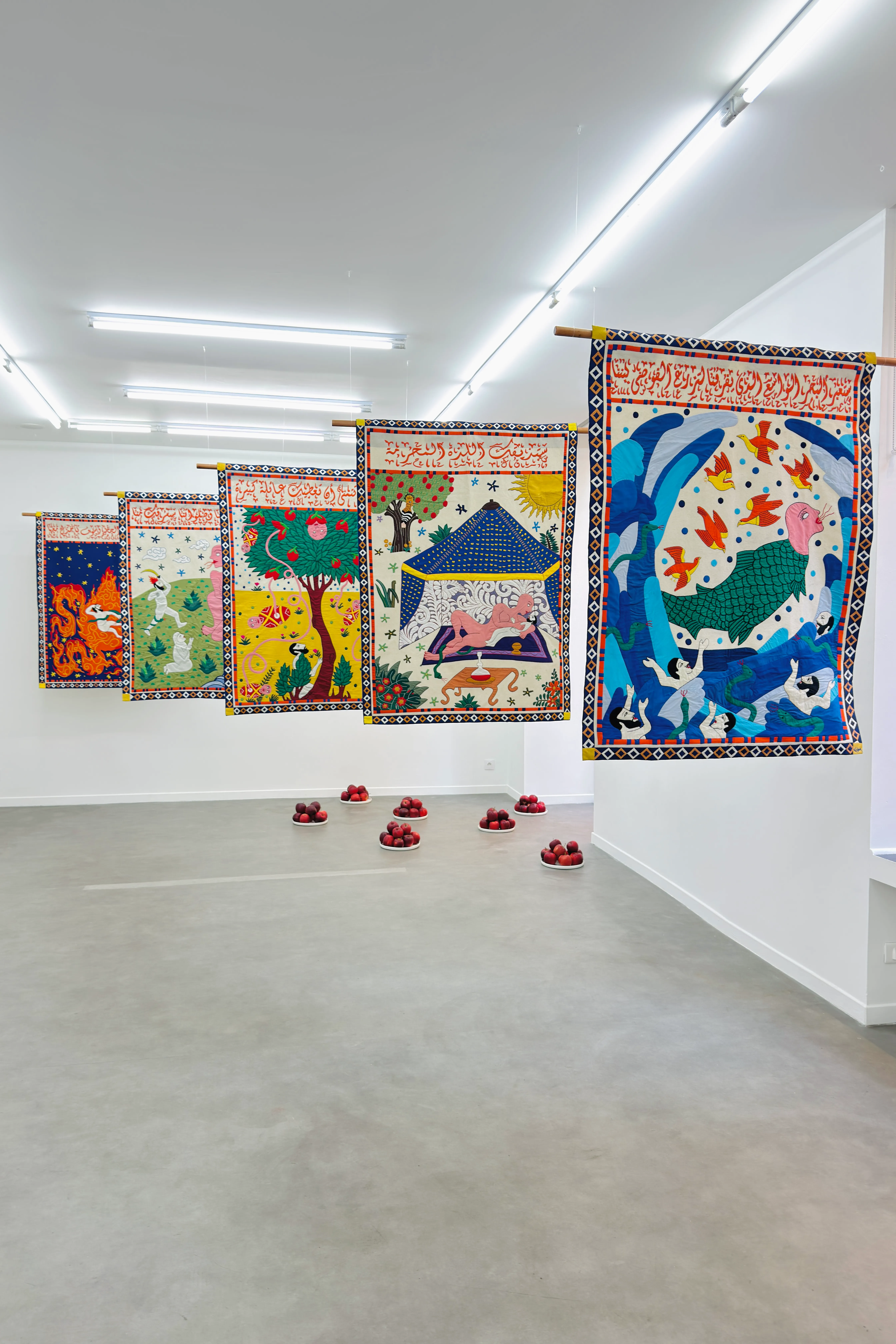
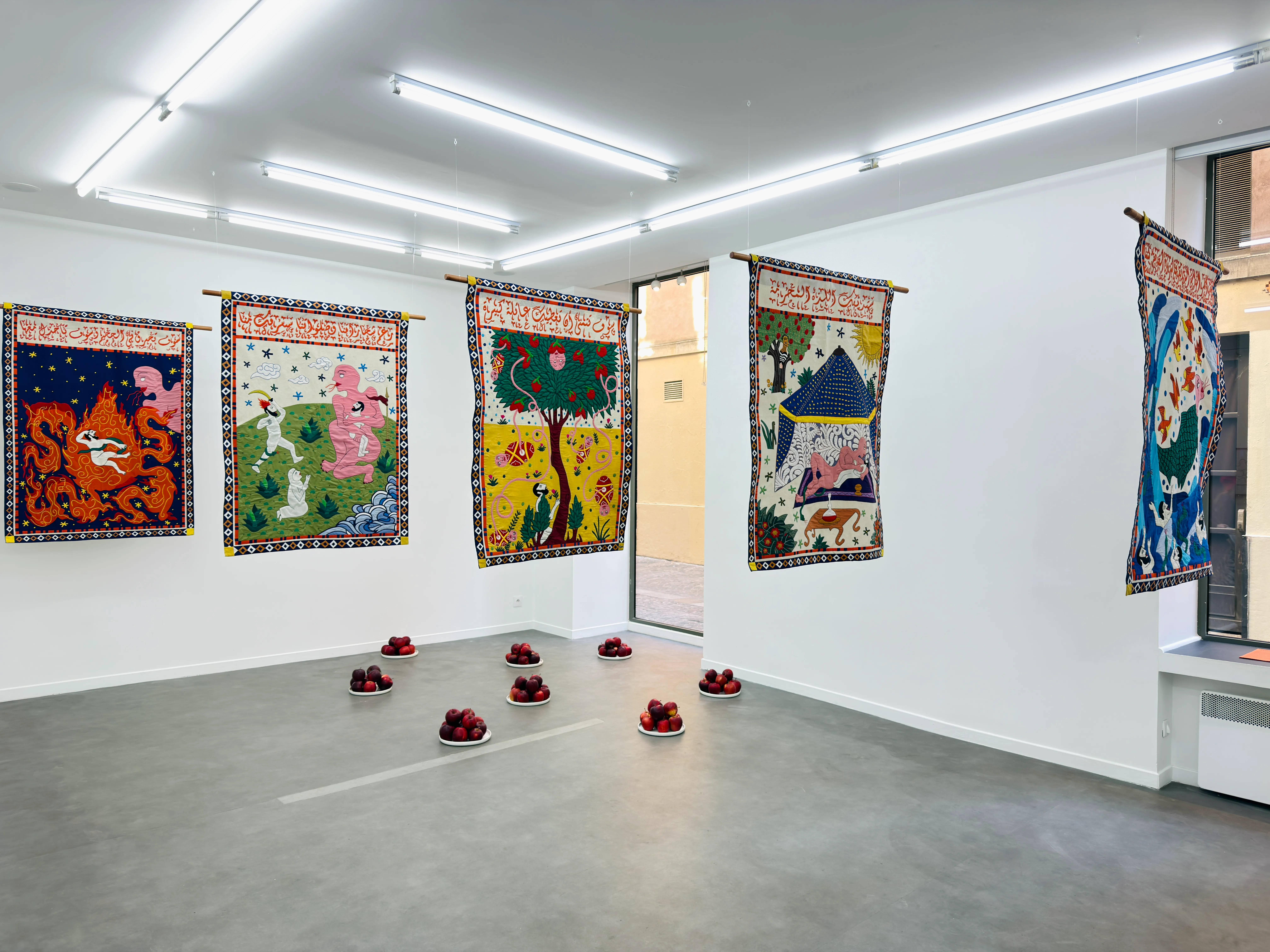
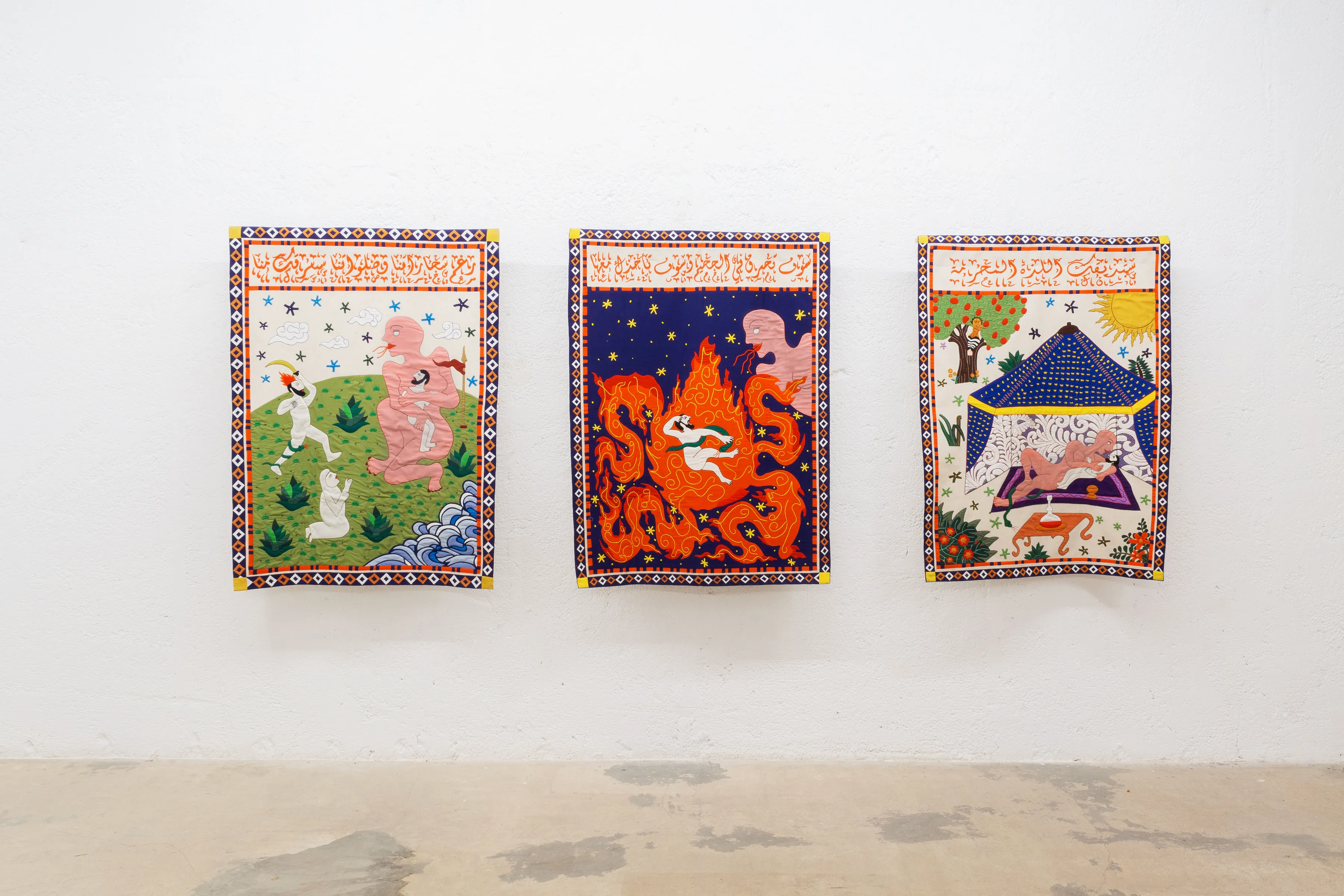
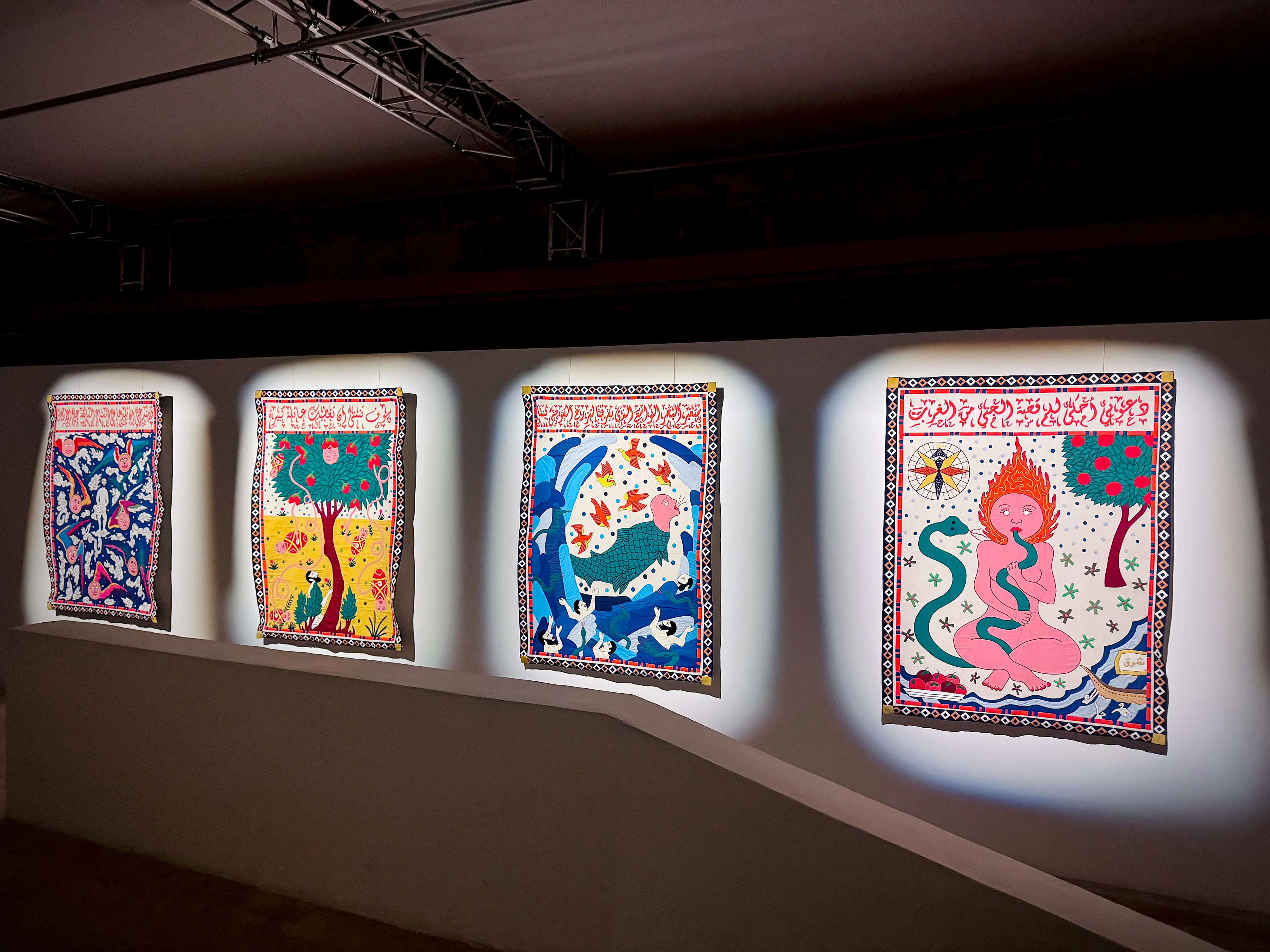
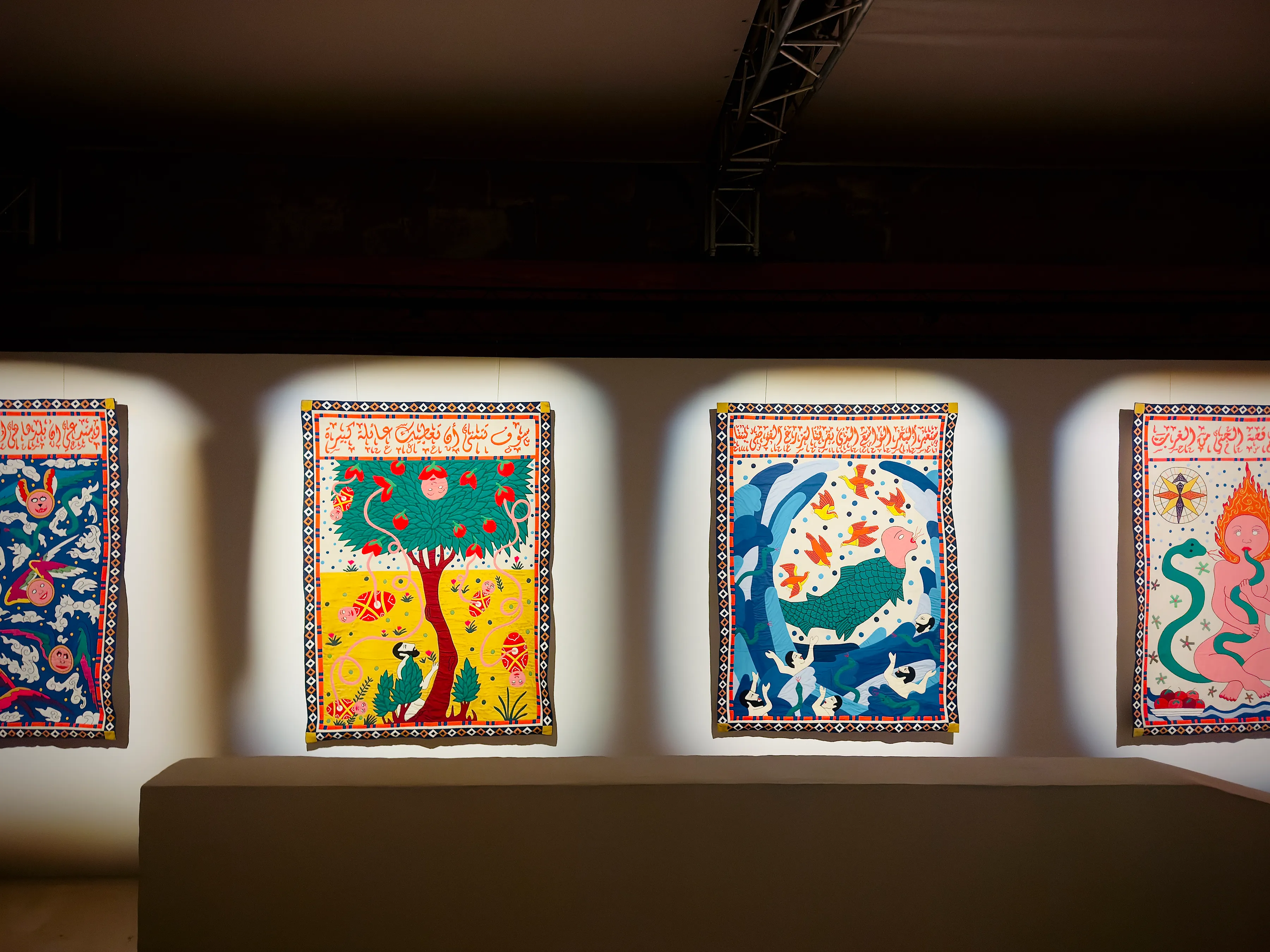
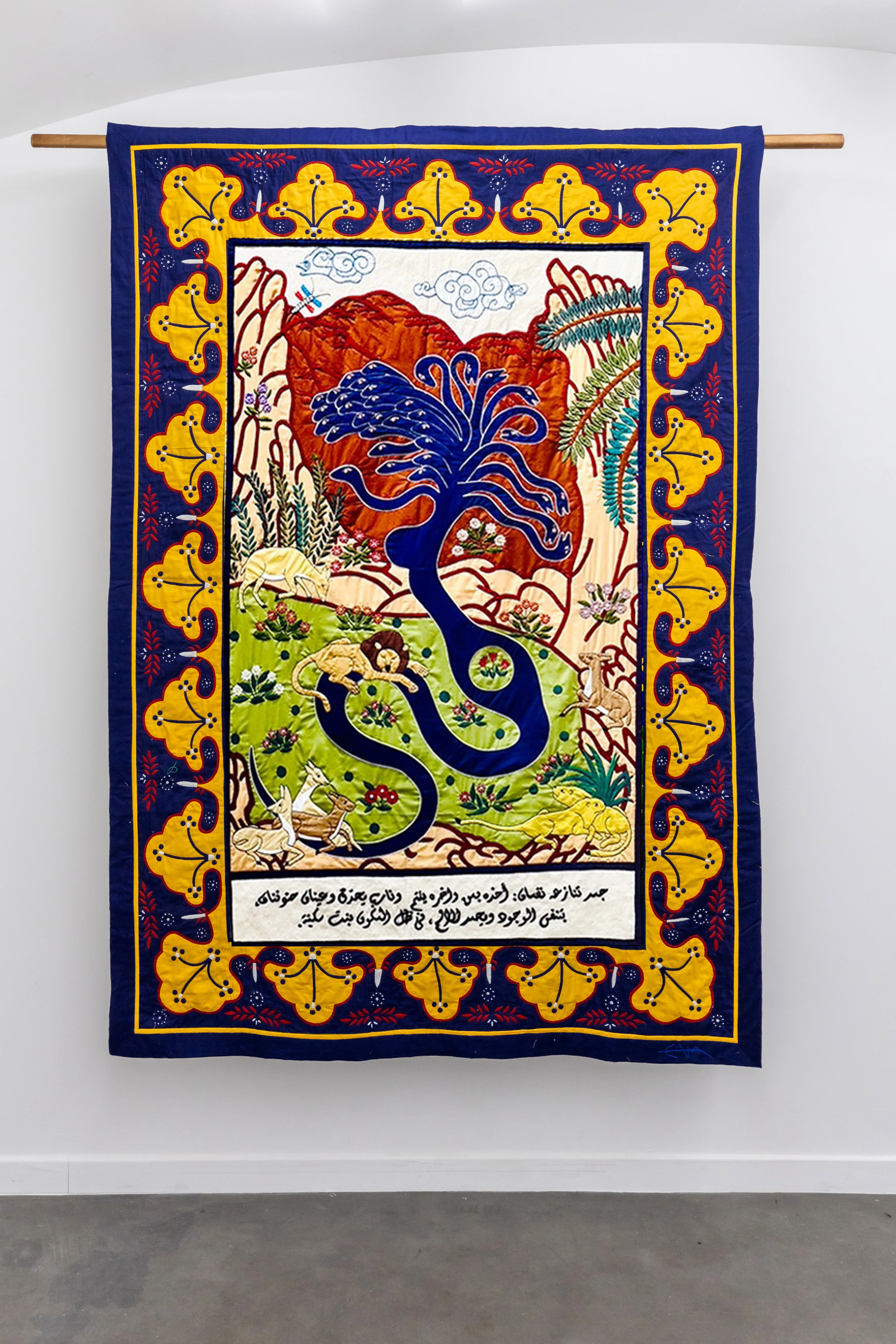
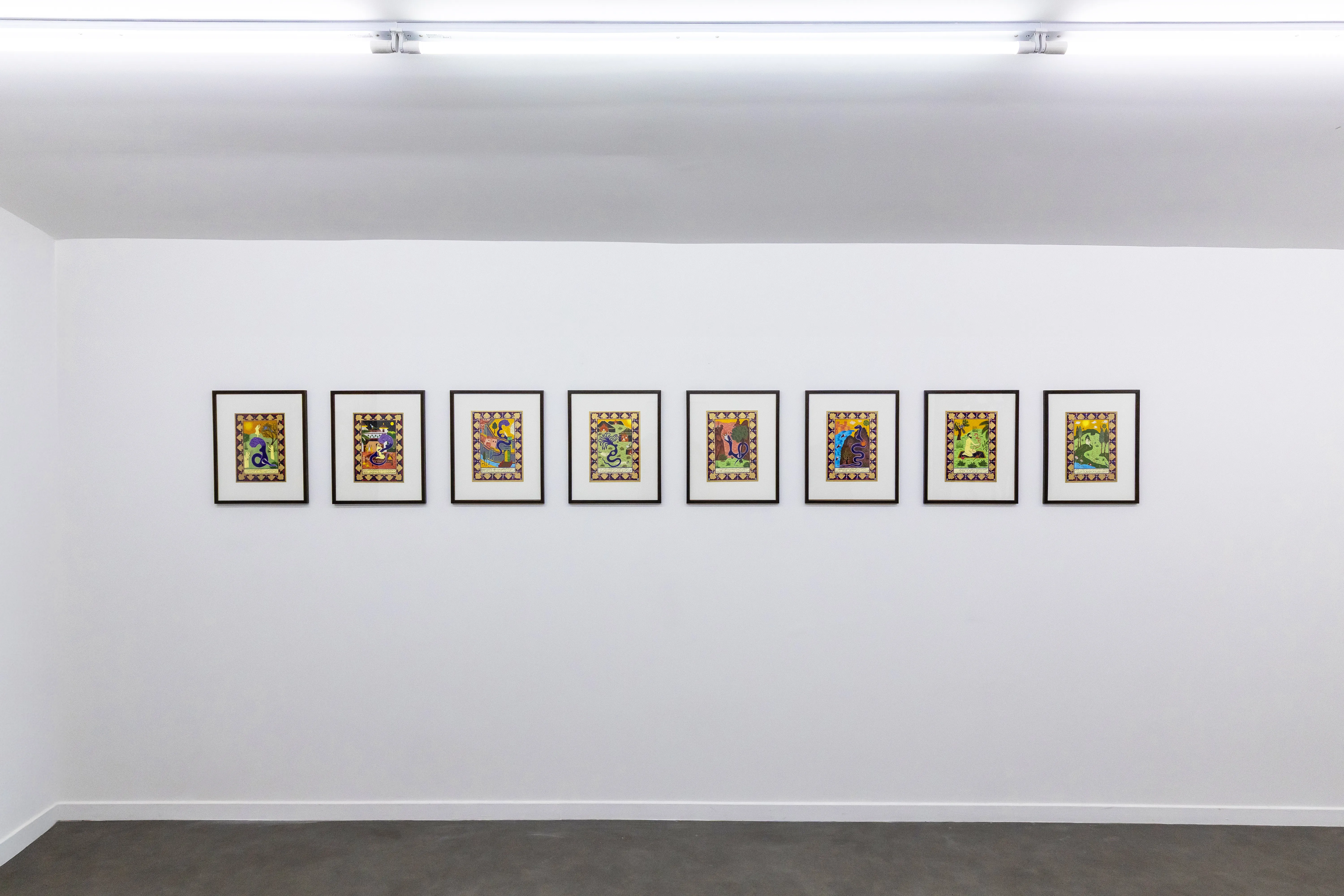
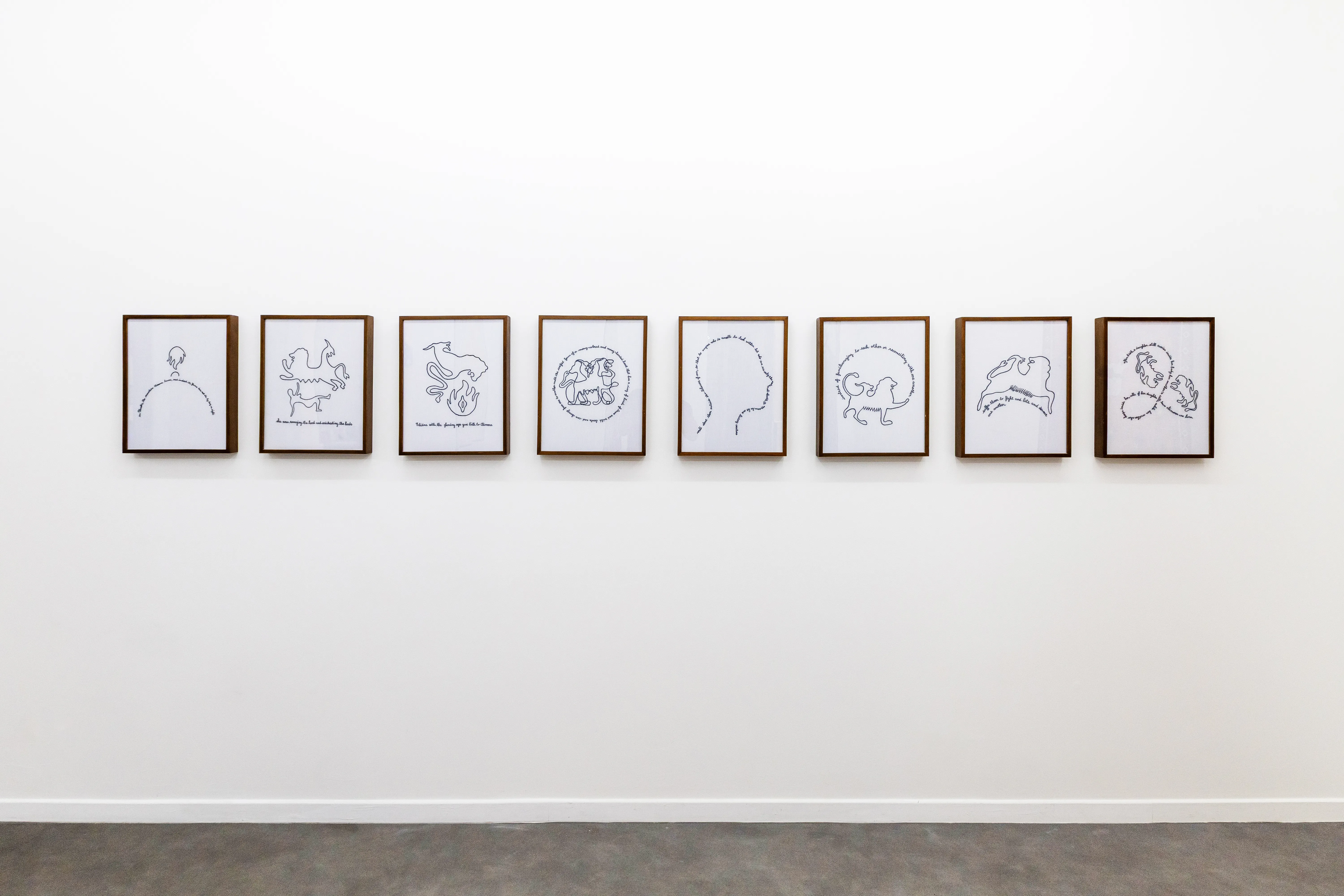
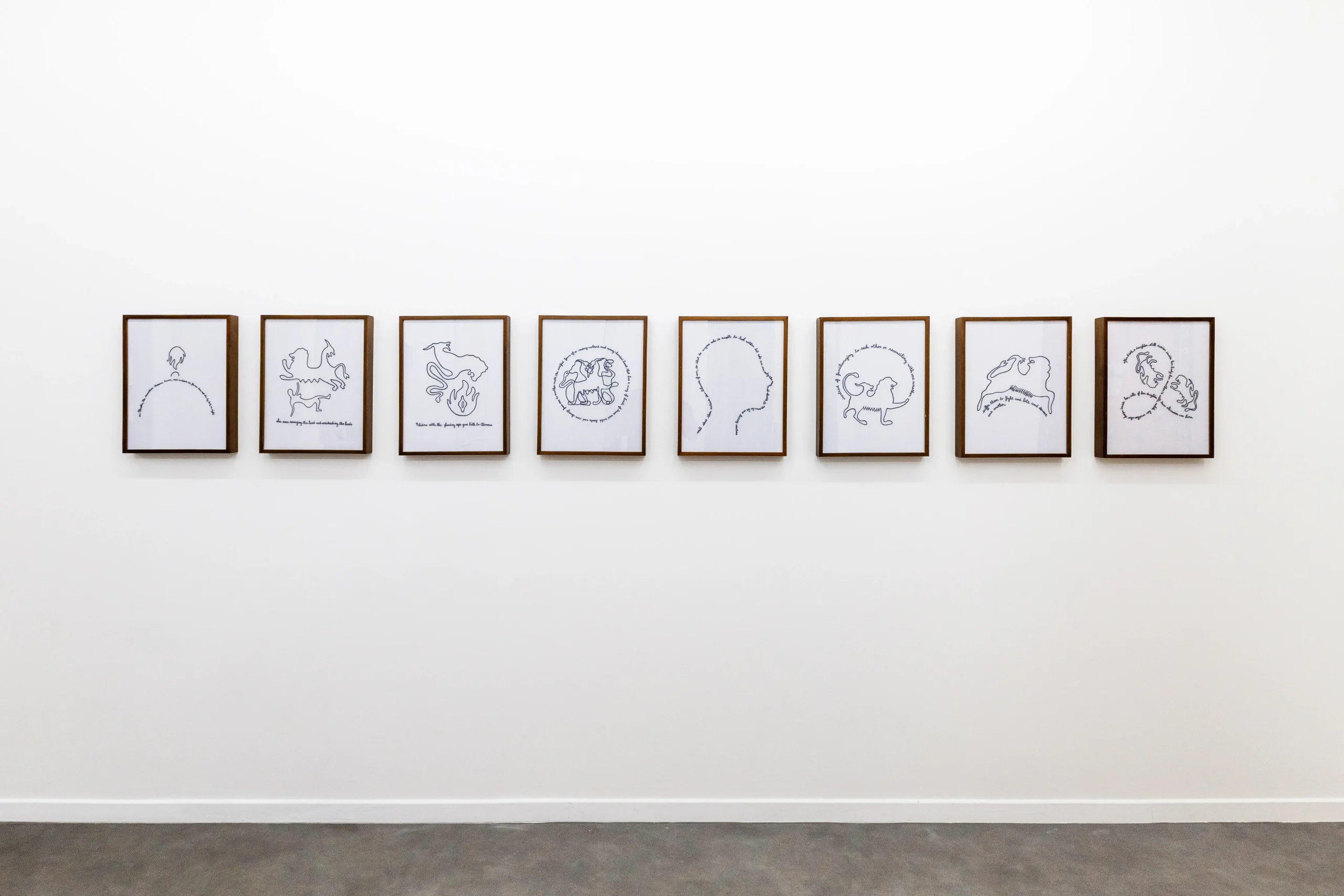
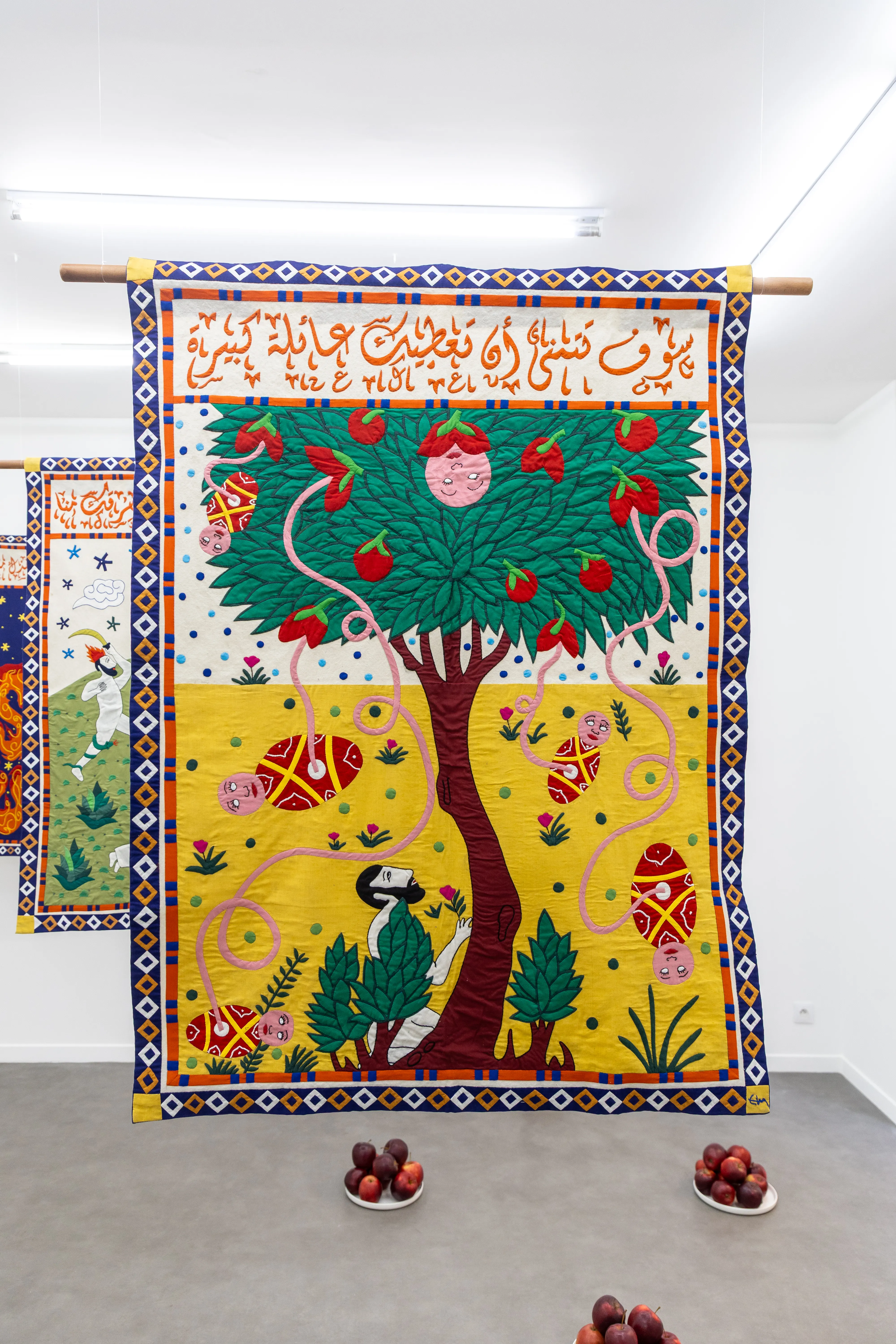
The Jinn from the West belongs to Serpents, Genies, Chimeras and Other Wonders, in which Kosmatopoulos fictionalises three inherited female roles — daughter, wife and mother — through contemporary fables inhabited by hybrid creatures. Here, the role in question is that of the wife: specifically, the foreign wife, and everything projected onto her from outside. The work begins in lived experience, but fiction allows that experience to move beyond direct autobiography and become a shared narrative about desire, otherness and social judgement.
The work begins with the unsolicited warnings repeatedly addressed to the artist's Egyptian husband since the start of their relationship: that Western women are sexually available, wealthy, useful for a European visa; that they cannot become devoted wives or mothers; that they will destabilise the family and take the children away. None of these statements describe a particular woman. Repeated often enough, they construct an imagined being out of inherited fears, gossip and collective fantasy — a figure who exists before any real woman arrives to be measured against her.
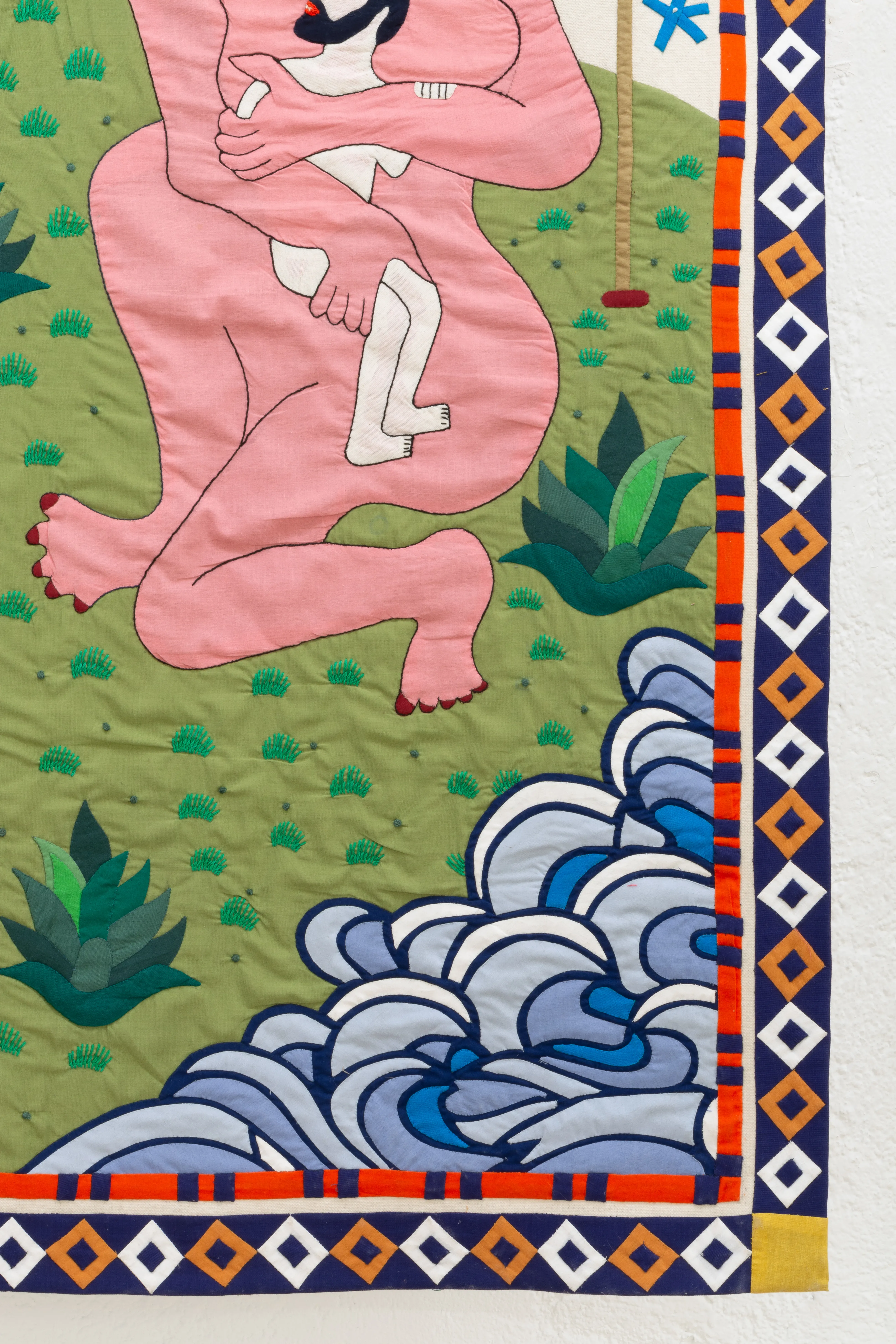
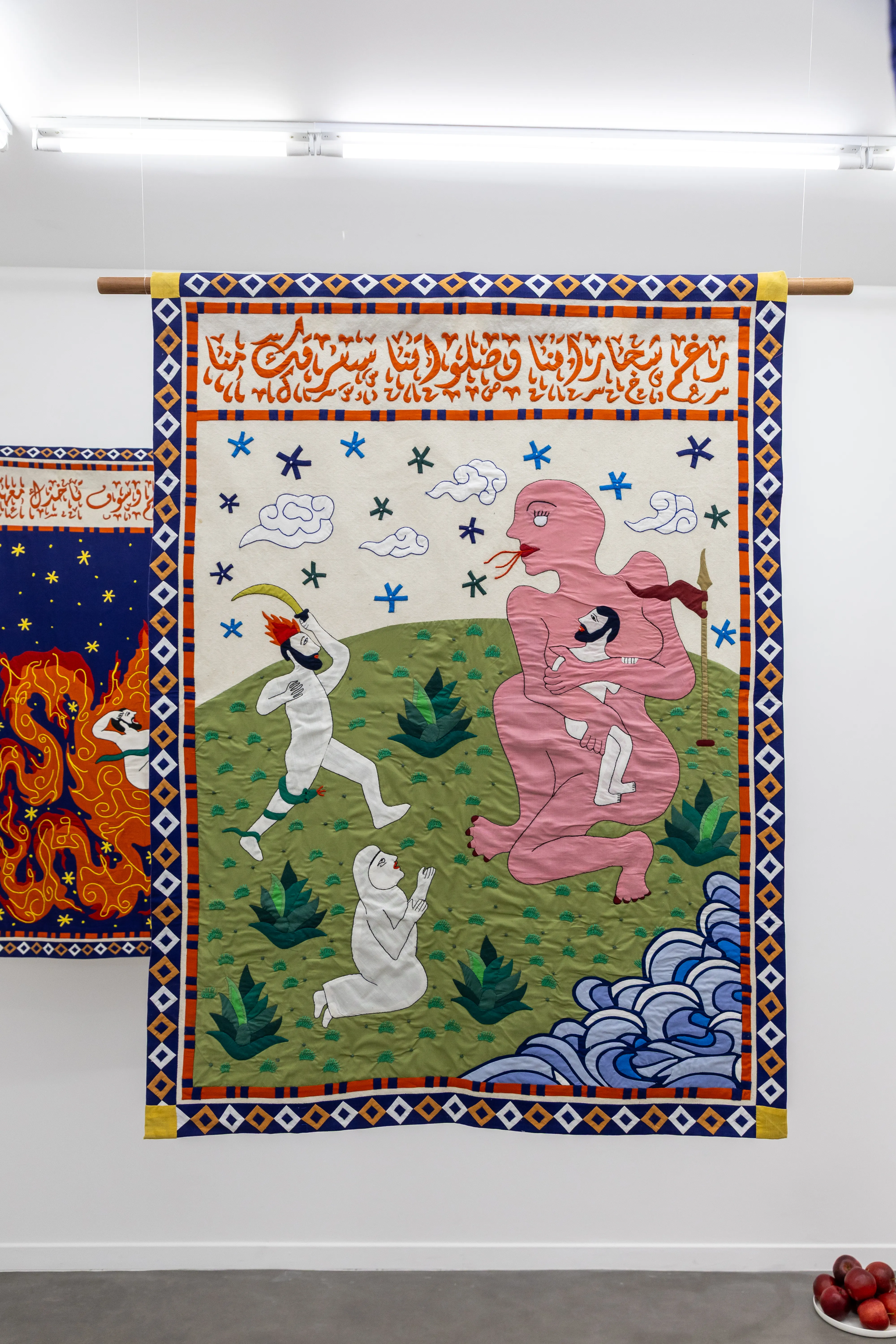
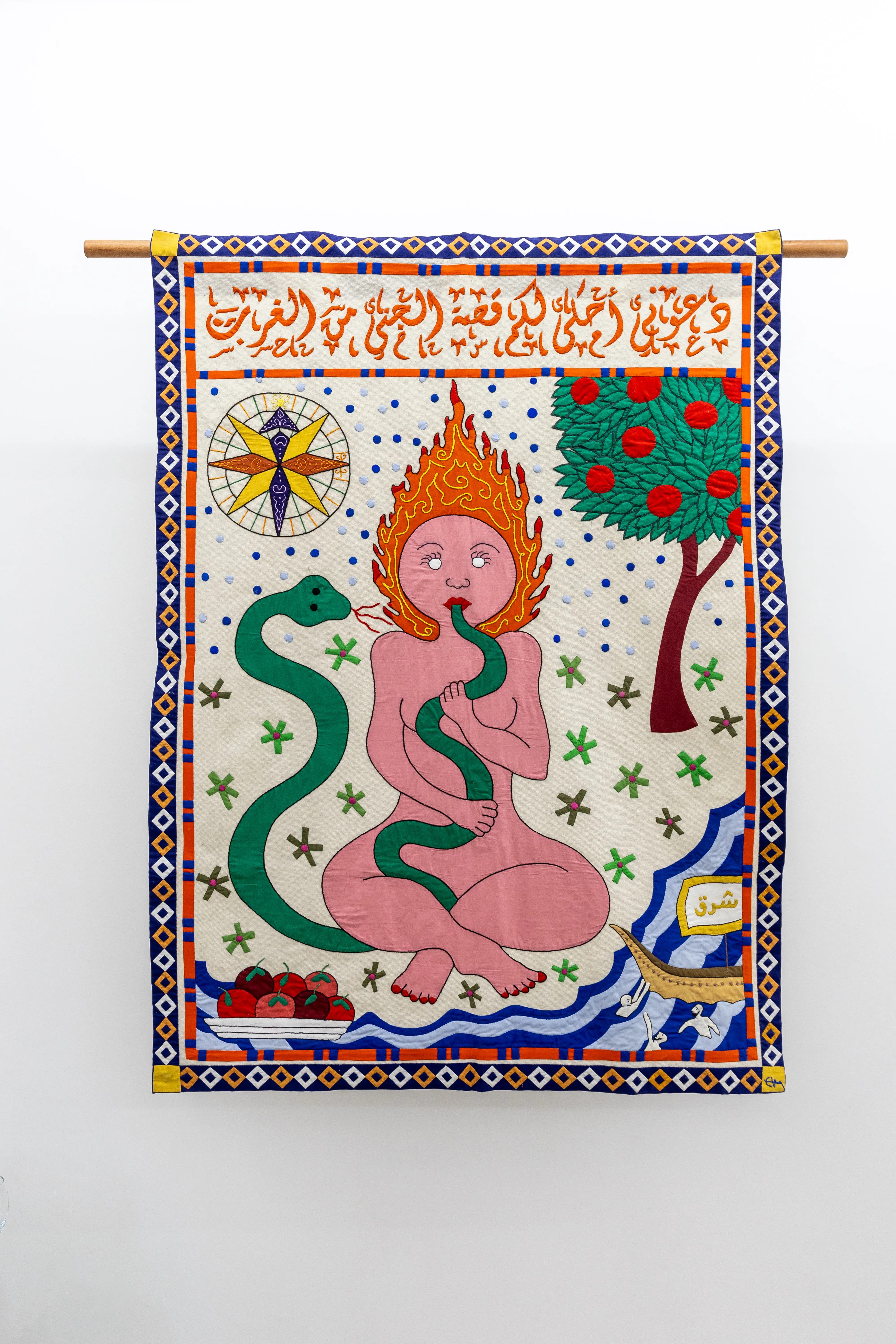
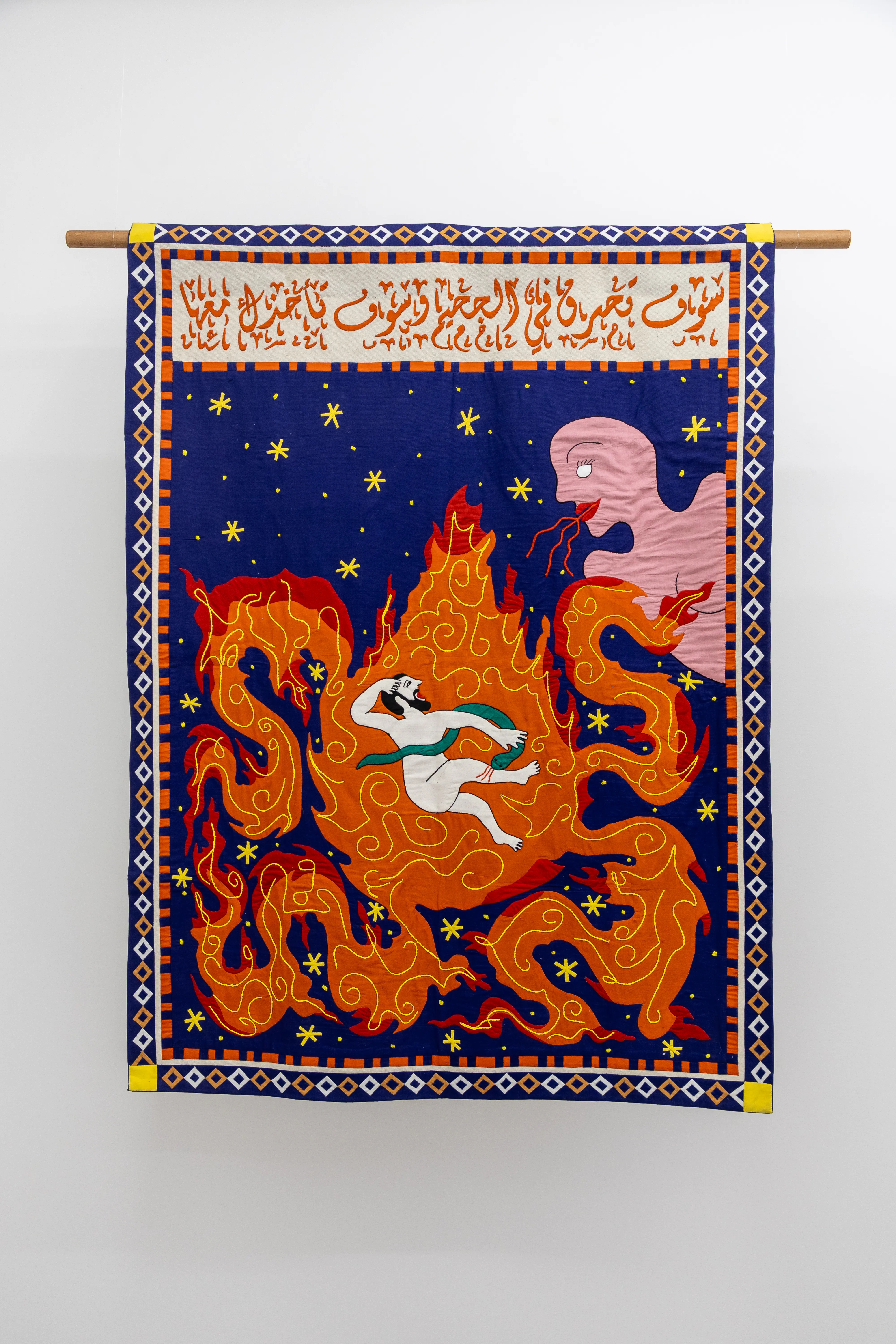
The Jinn from the West gives that imagined figure a body. Fictionalising the prejudice means refusing to argue against it directly — instead, the accusation is taken at face value and pushed until it becomes myth. The foreign woman, the agnabeya, becomes a supernatural creature whose powers mirror exactly what she is accused of: a promise of sexual freedom, financial independence and passage to the West, and simultaneously a threat to marriage, family and belonging. Desired as a figure of modernity, she is feared as an agent of instability — the fable does not resolve this contradiction, it dramatises it.
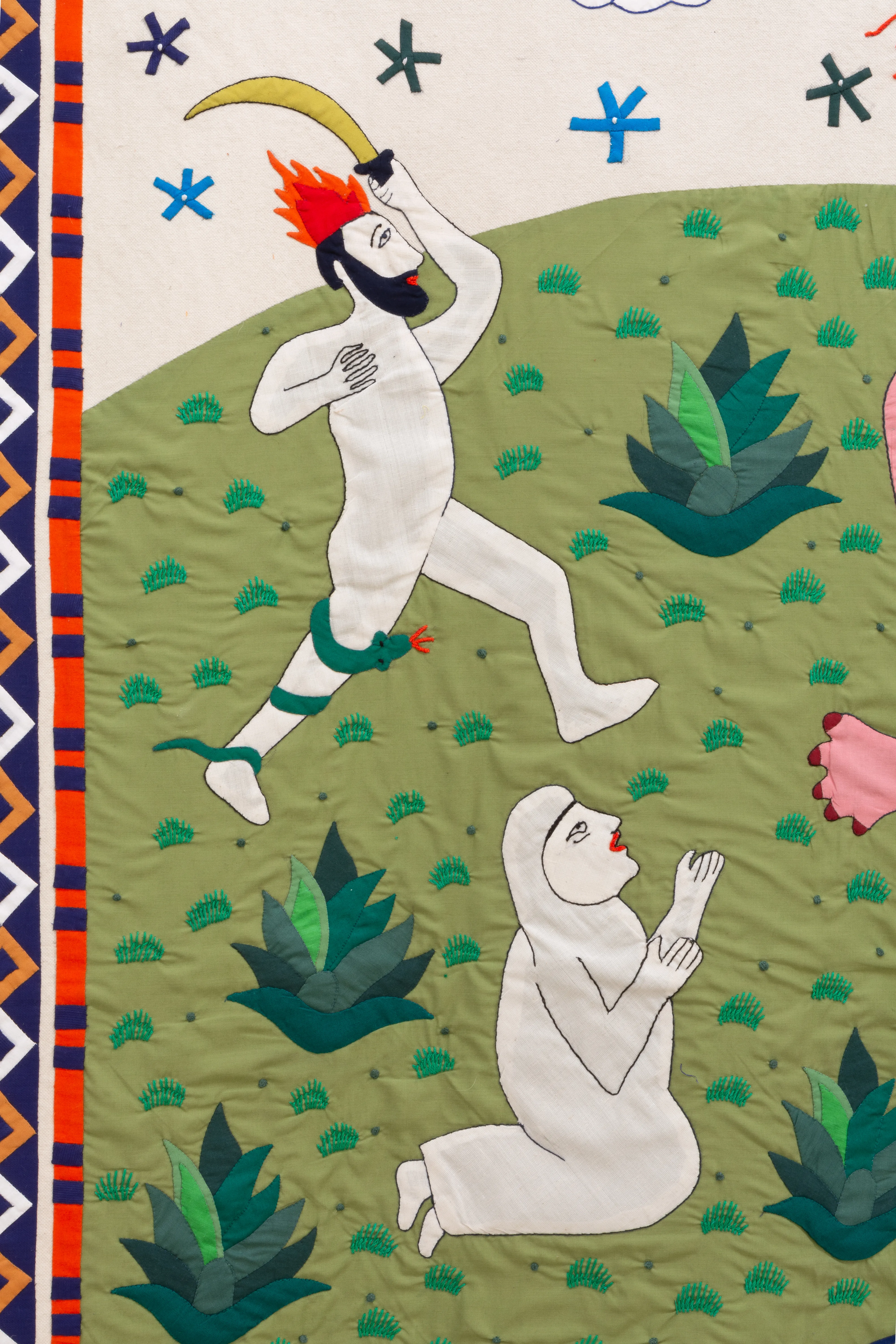
Everyday comments become episodes in the adventures of a mischievous Western jinn and the Eastern man believed to have fallen under her spell. Their relationship unfolds between enchantment and suspicion, intimacy and social judgement, personal desire and the voices that continually attempt to define it from outside.
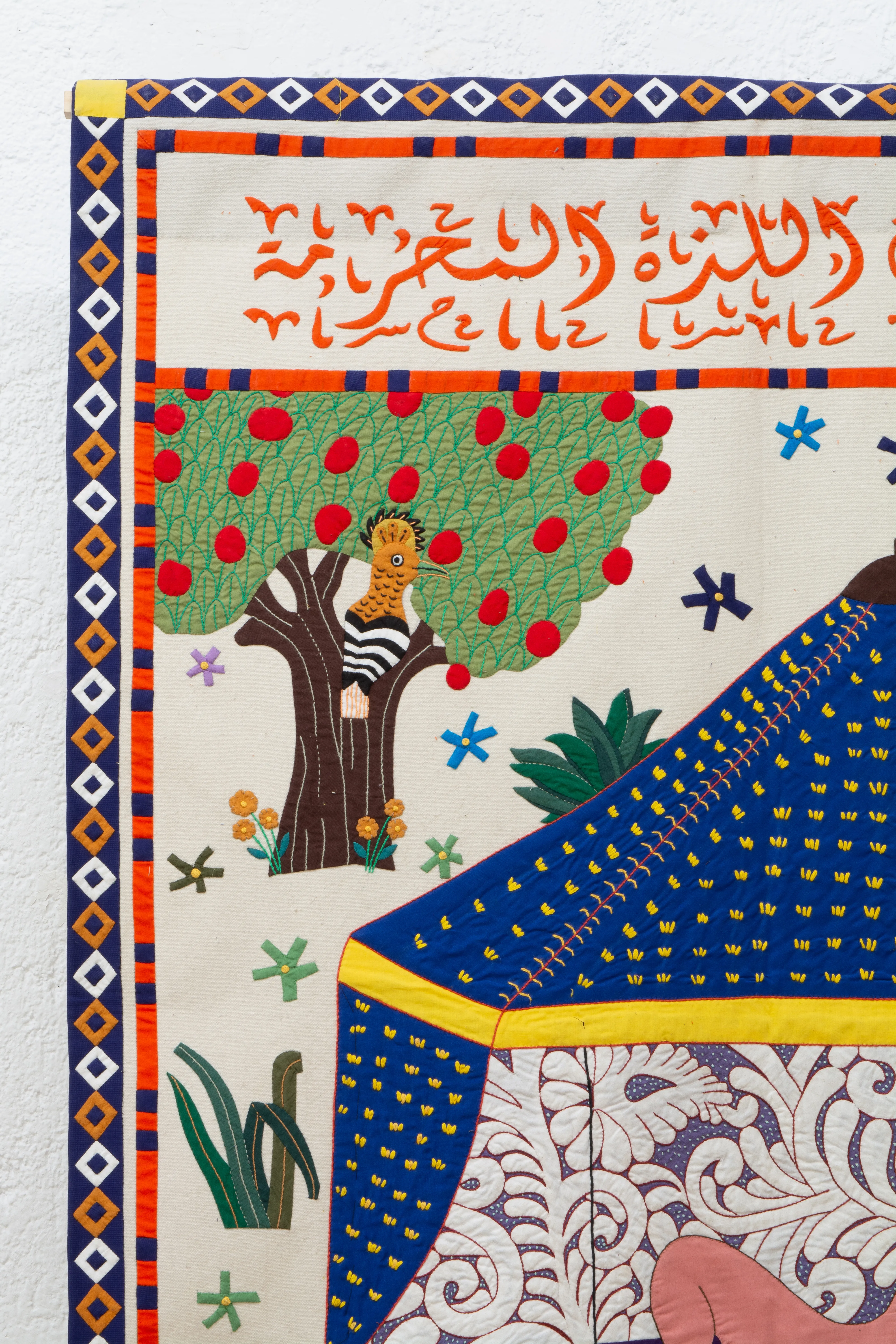
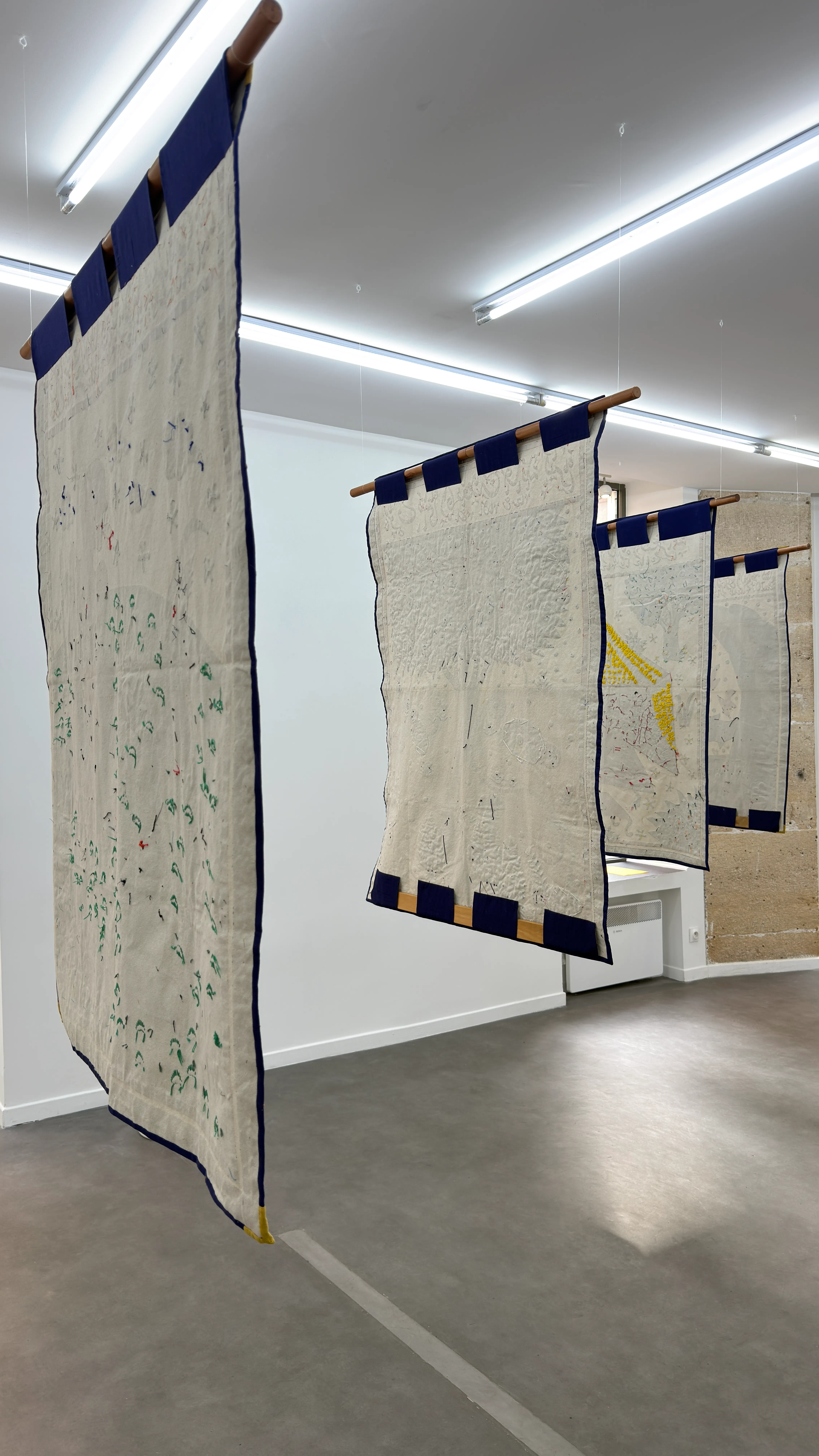
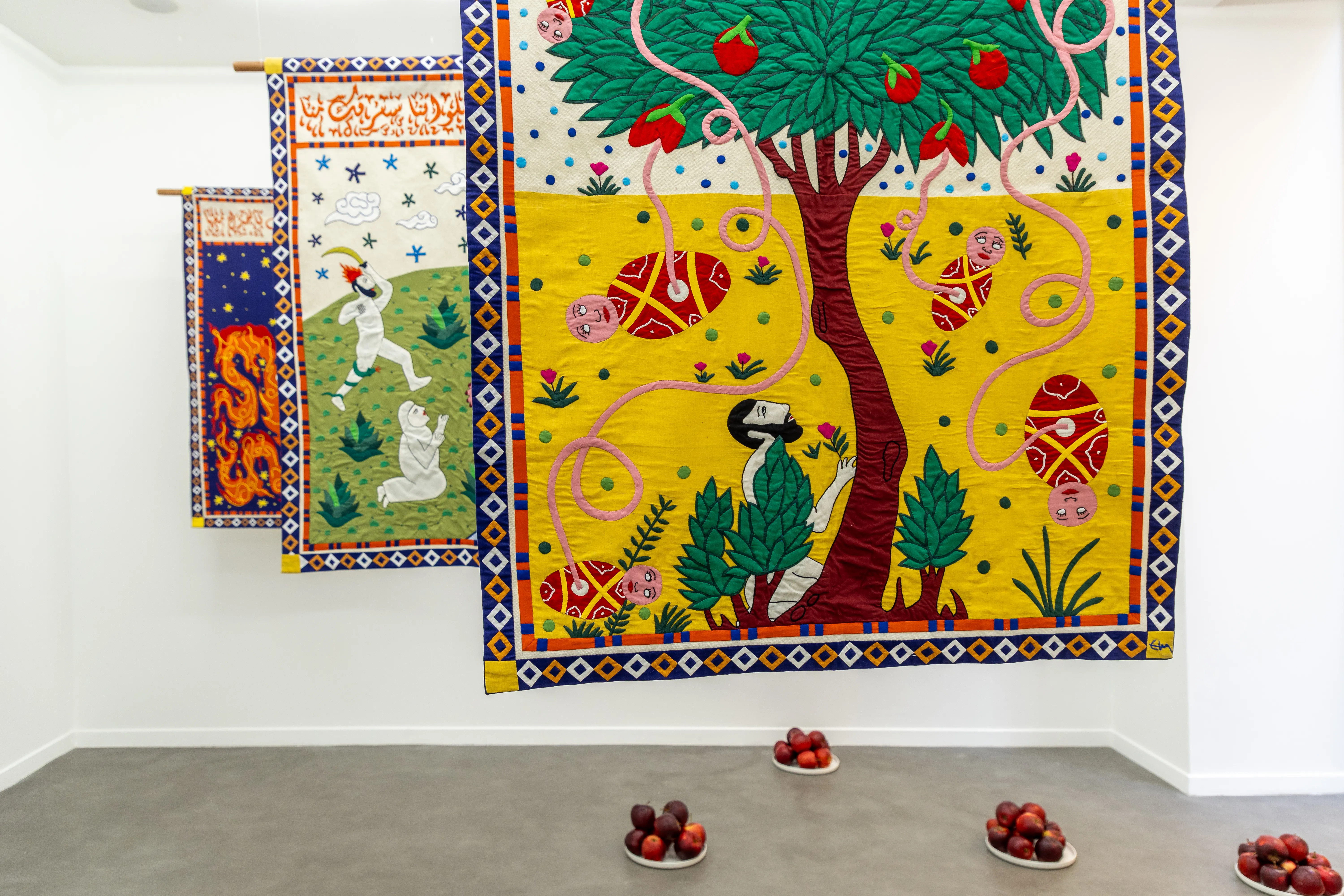
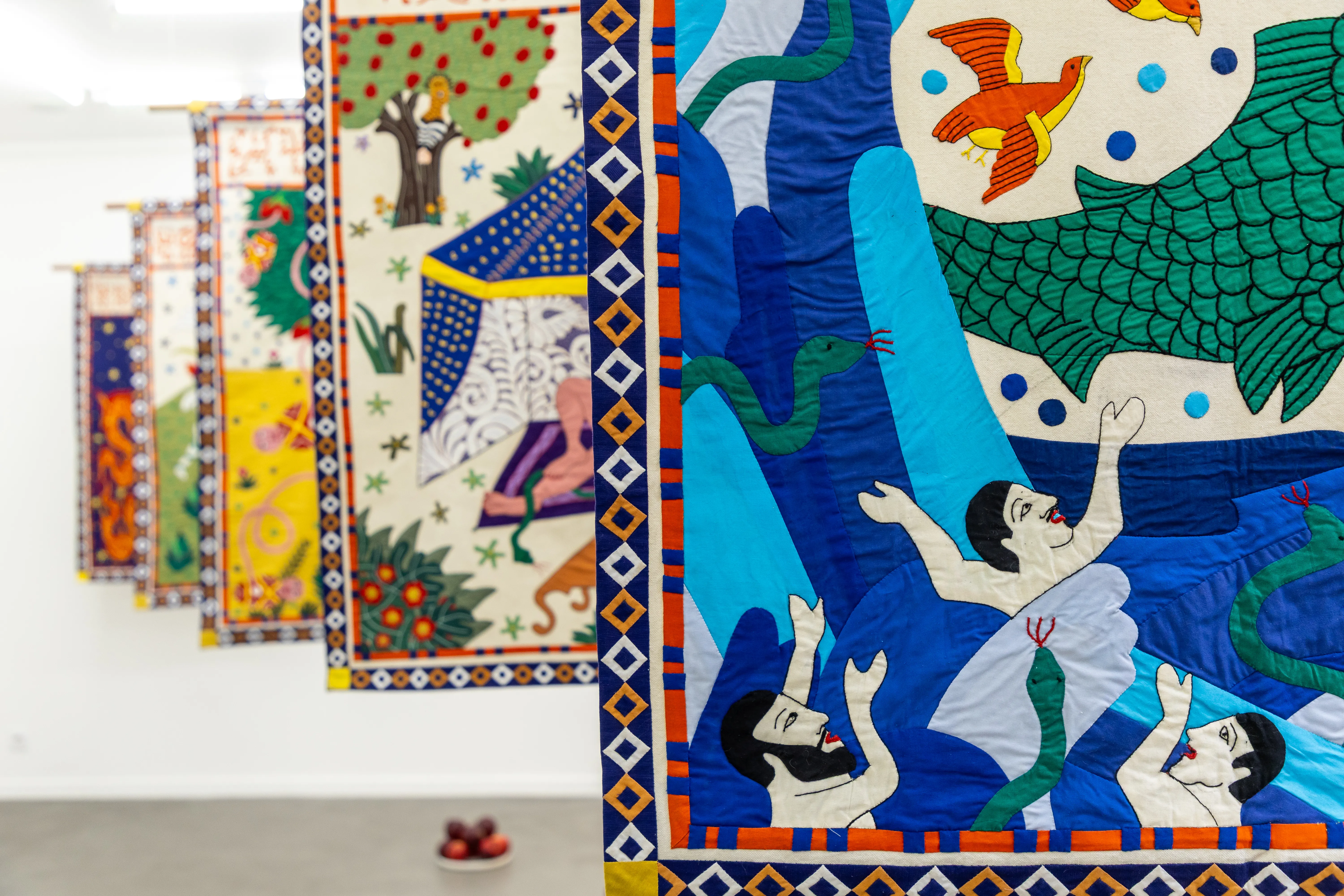
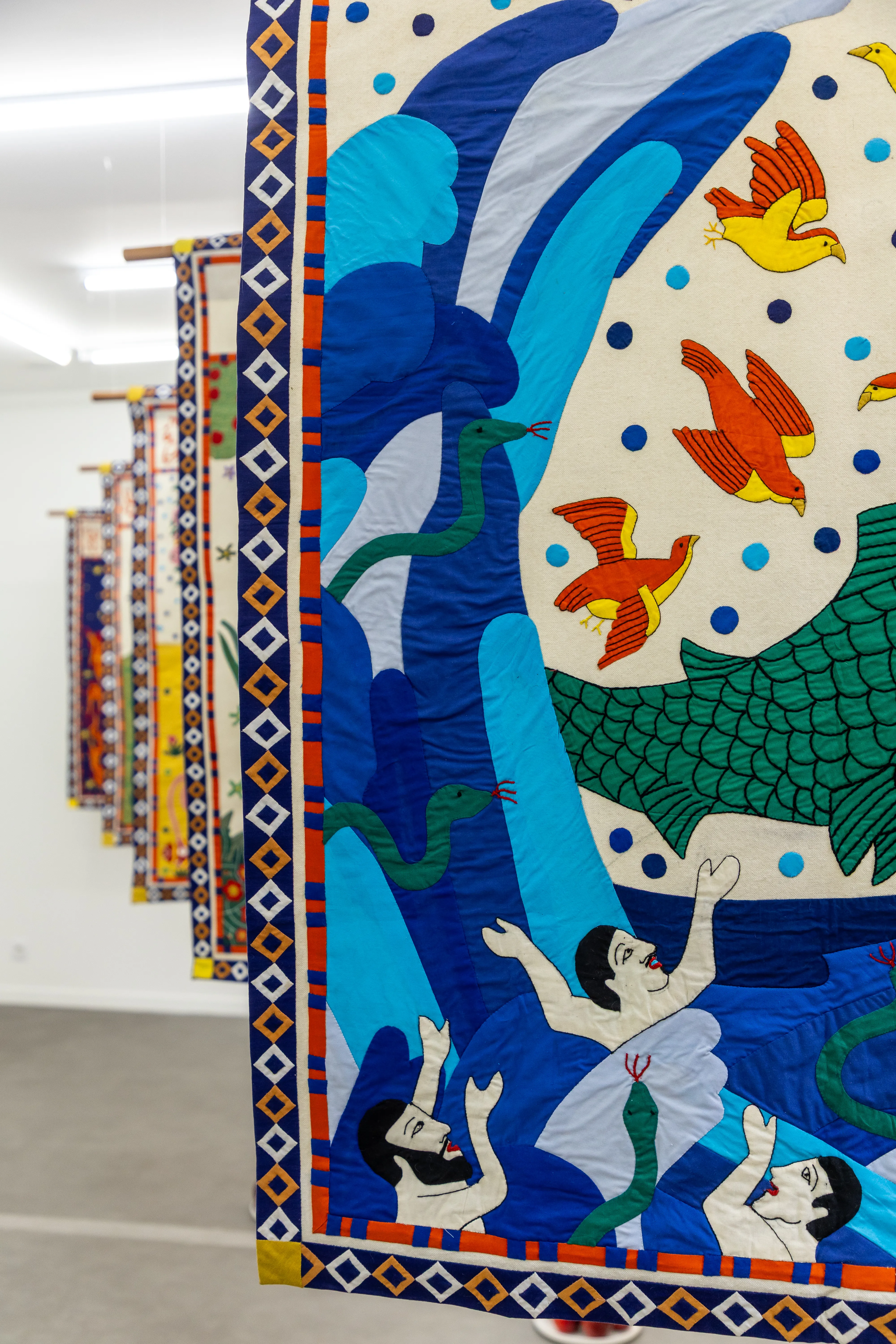
The ten panels are made using khayamiya: shapes are cut by hand from dyed Egyptian cotton, layered onto a base canvas and hand-stitched into place, panel by panel, until the surface reads as a single continuous scene. Historically produced by male tentmakers along Cairo's Sharia Khayamiya to decorate the temporary tents raised for weddings and public celebrations, the technique is bound to marriage and festivity by trade as much as by tradition — a material inheritance the series turns back on itself, using the very craft of union to expose the fears, fantasies and contradictions surrounding one particular union. Flat fields of colour, frontal figures and simplified narrative scenes draw on illustrated manuscripts such as the Shahnameh and the Kitāb al-Bulhān, translating contemporary stereotypes into a visual language that appears to belong to an older cosmology.
Discussions of femininity in the Arab world often focus on Arab women and the restrictions imposed upon them within their own societies. The Jinn from the West turns instead towards the Western woman living in an Eastern society, whose apparent freedom does not prevent her from being confined within another set of expectations. Seen through cultural difference, she becomes less an individual than a screen onto which conflicting ideas of sexuality, wealth, mobility, marriage and motherhood are projected.
The series does not ask whether these fantasies are true. It asks what they reveal about the society that produces them.
In The Jinn from the West, the foreign woman becomes supernatural precisely because she is denied the possibility of remaining ordinary.