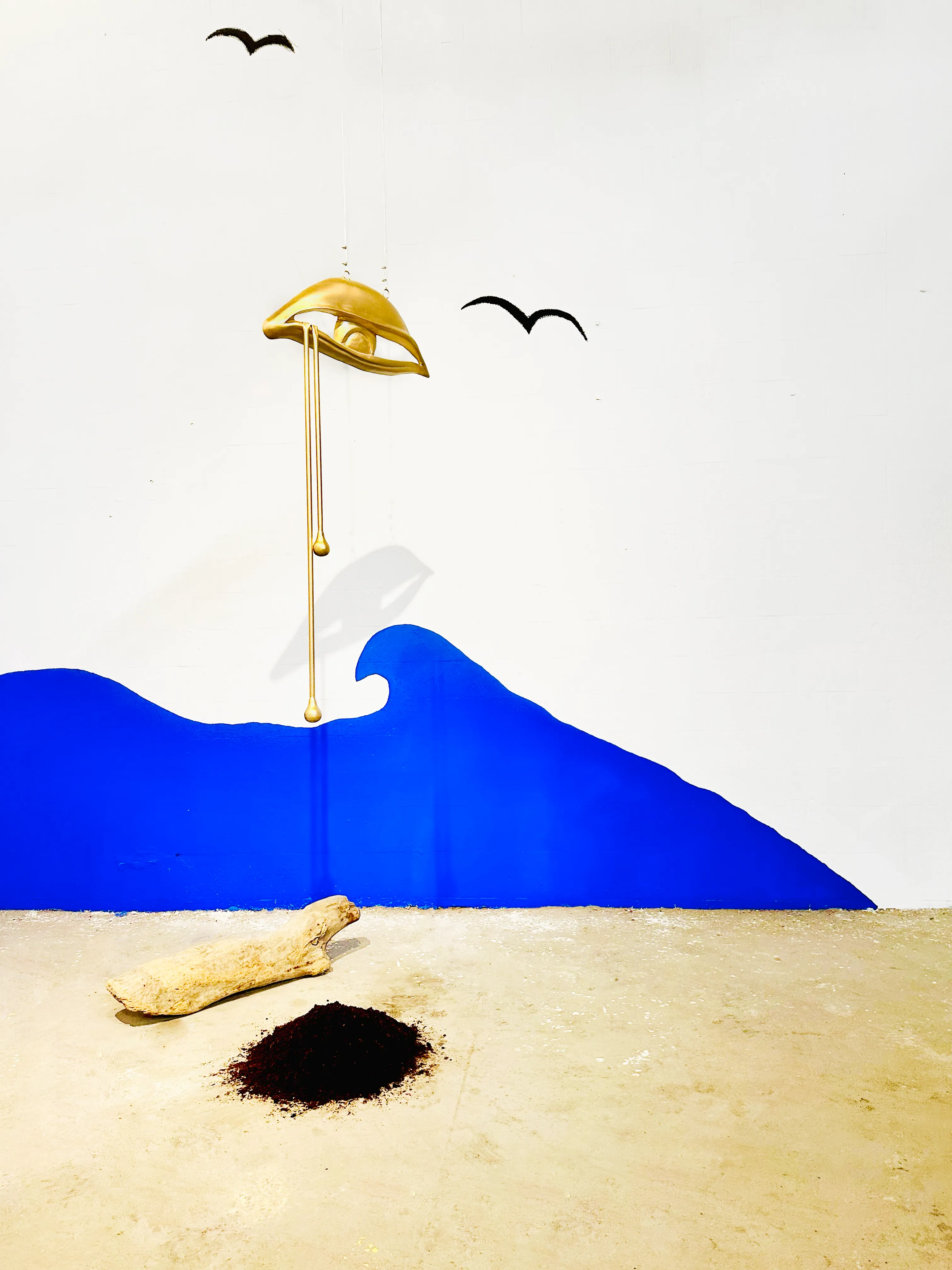
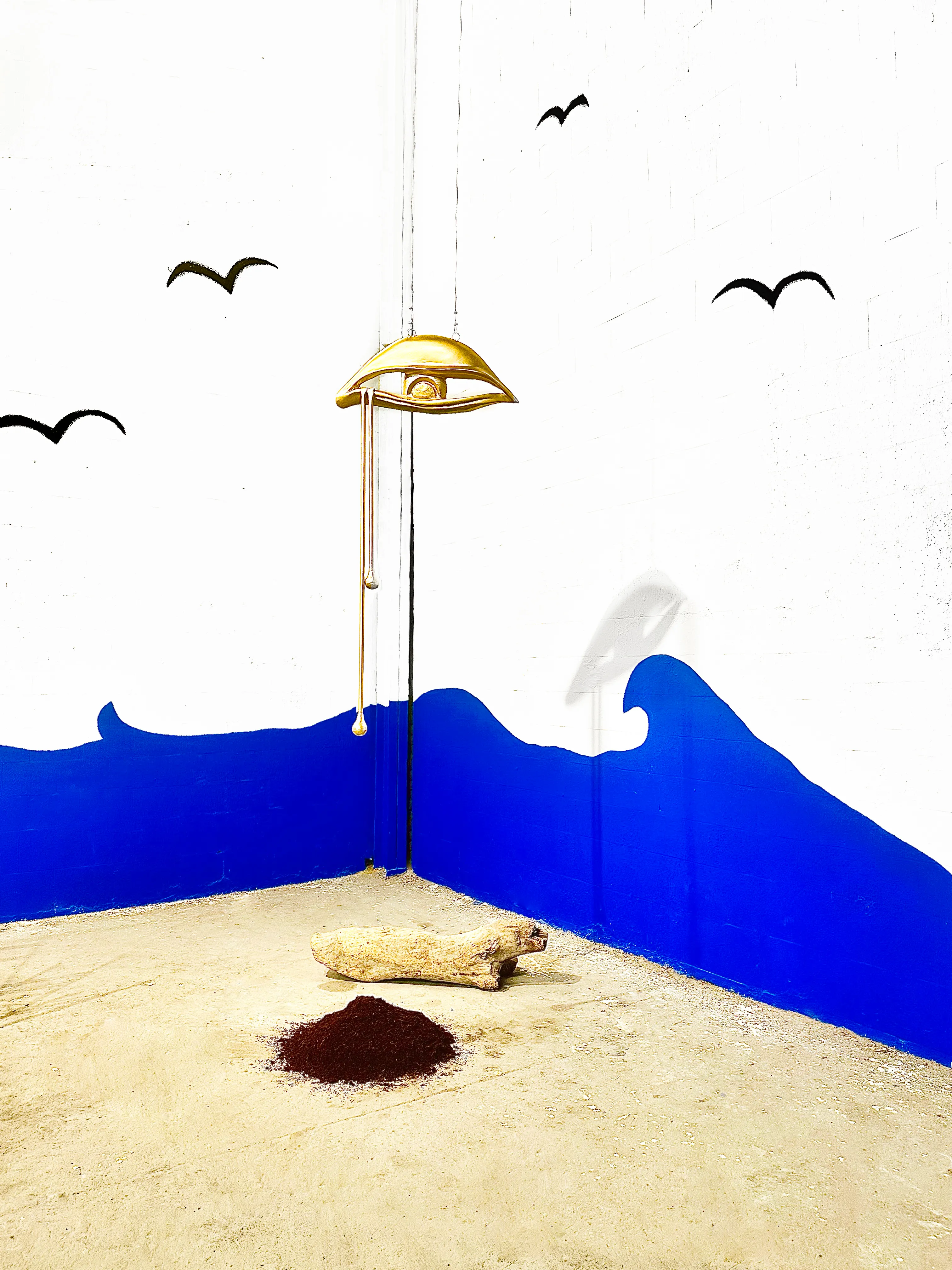
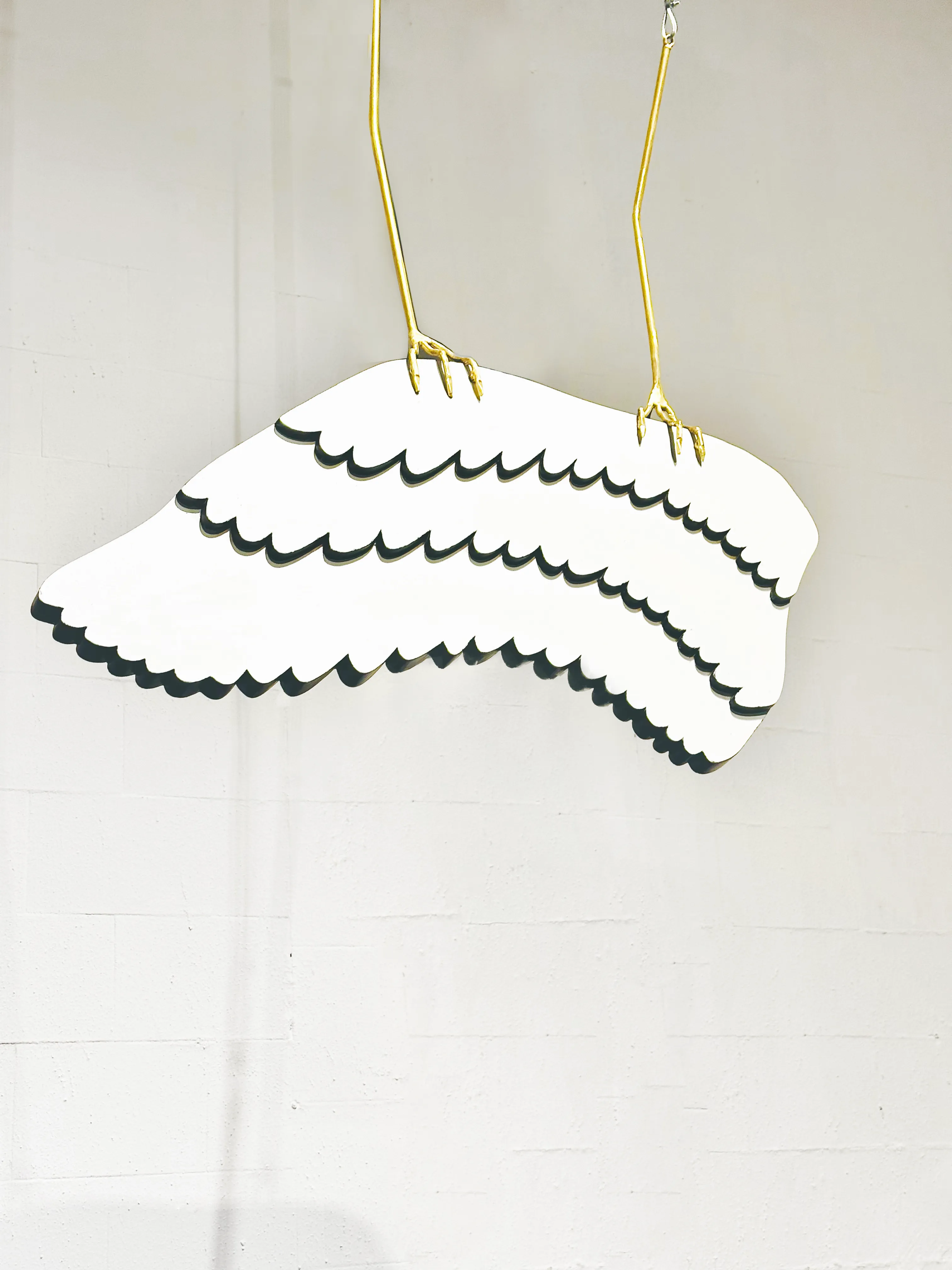
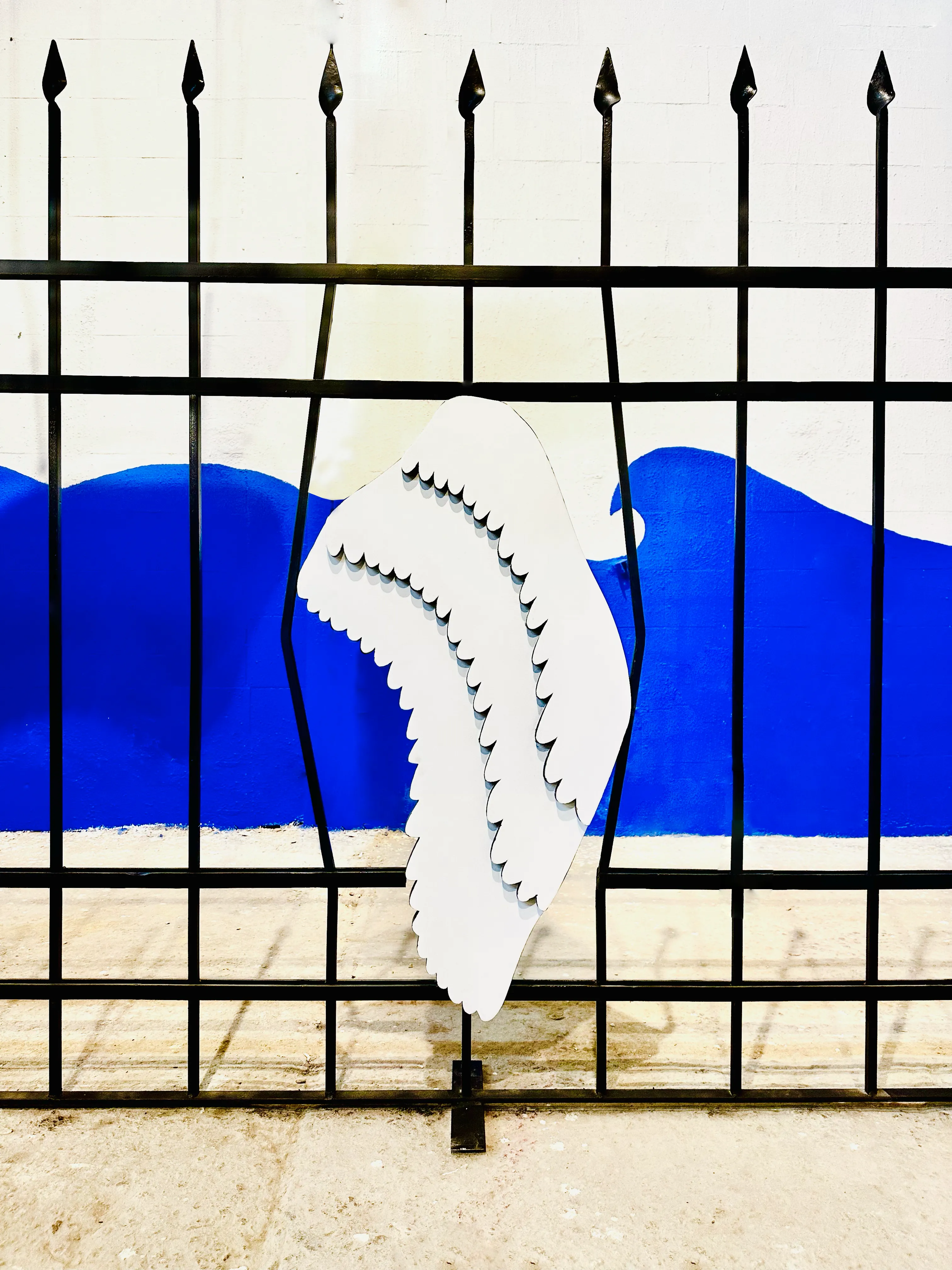
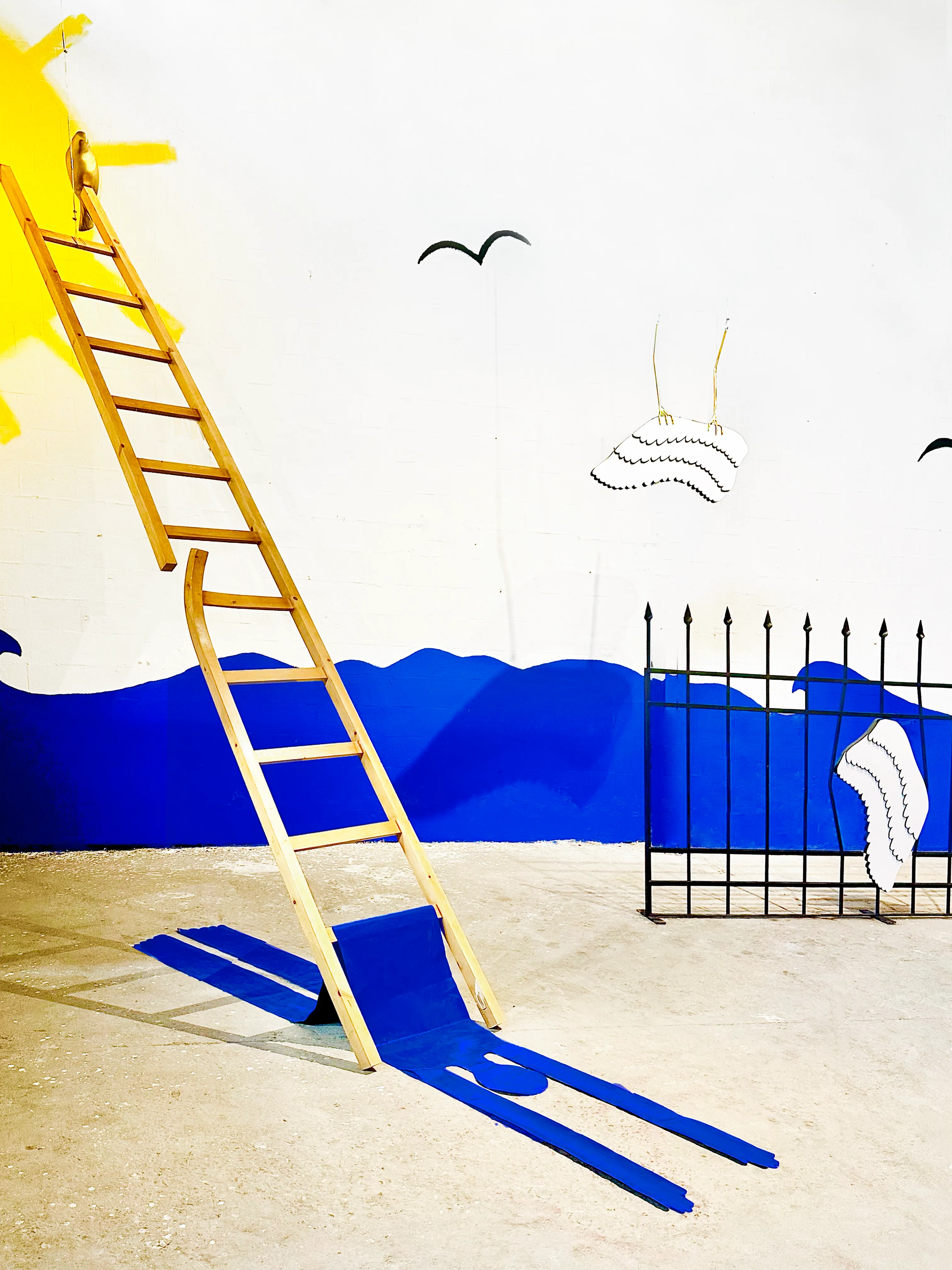
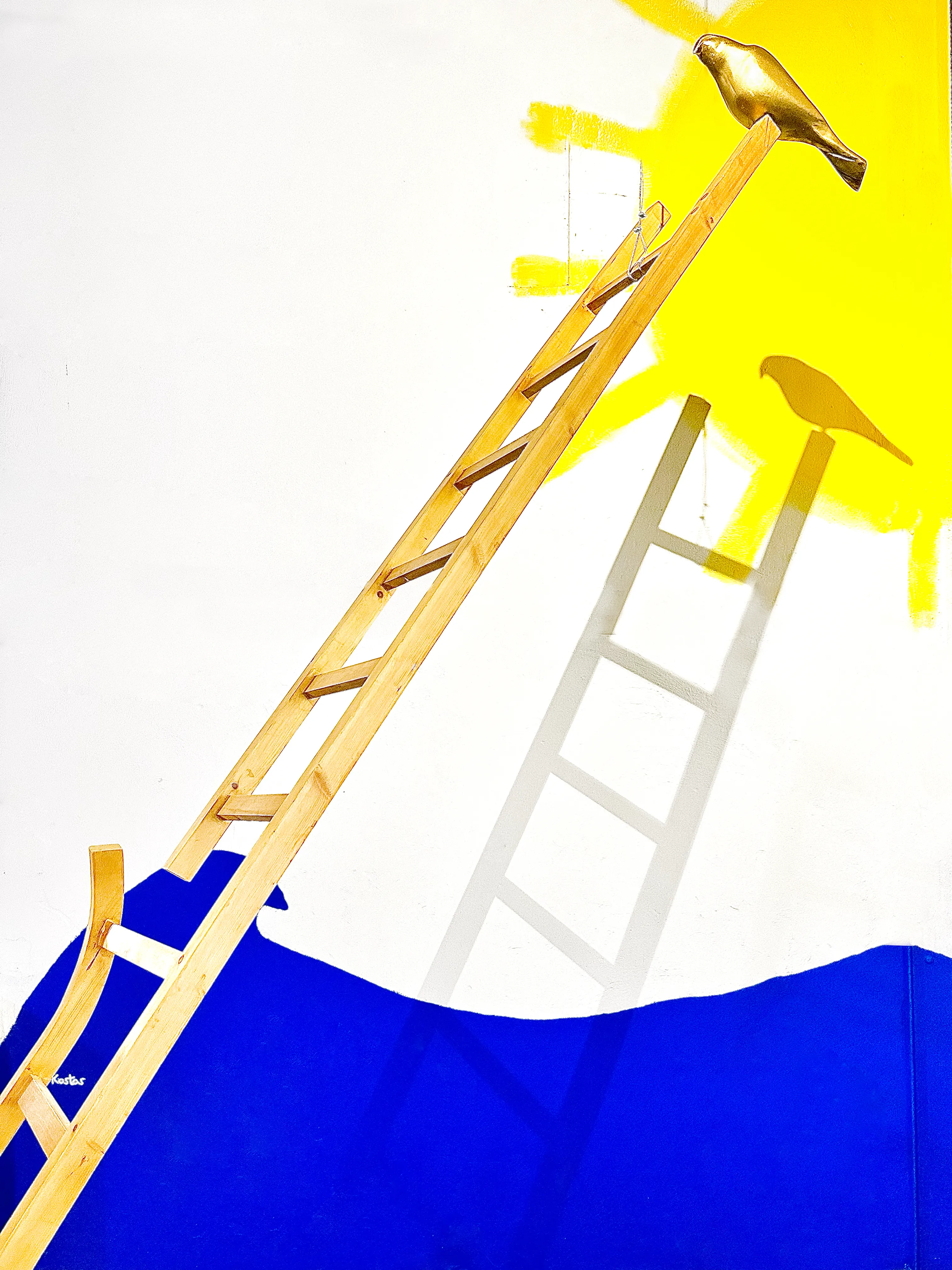
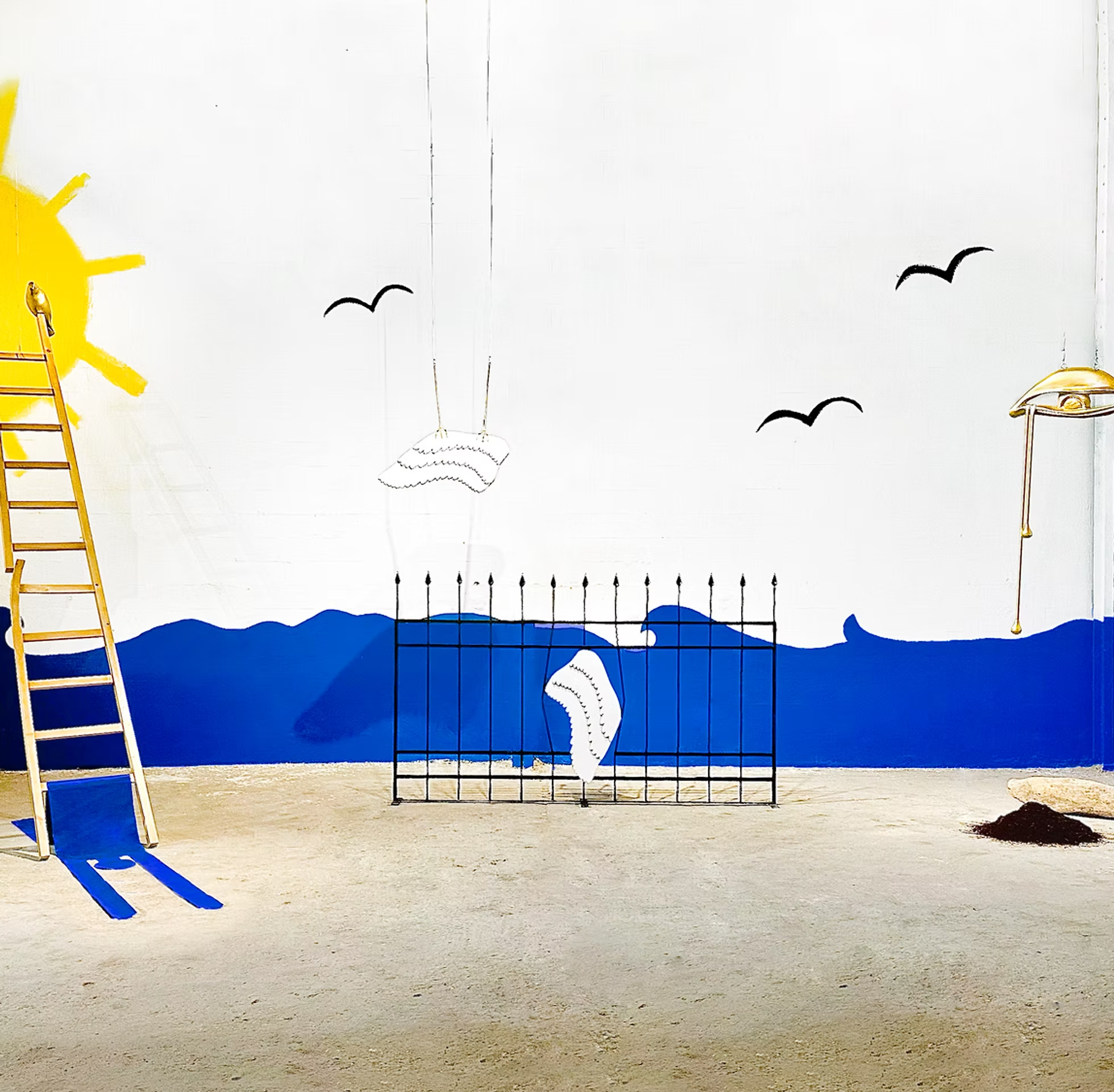
Act I opens the fable with an act of extraction. Icarus dreams of entering the celestial kingdom of Horus. To build the wings that will carry him beyond the human condition, he cuts down the trees surrounding him, transforming the living world into material for his ascent.
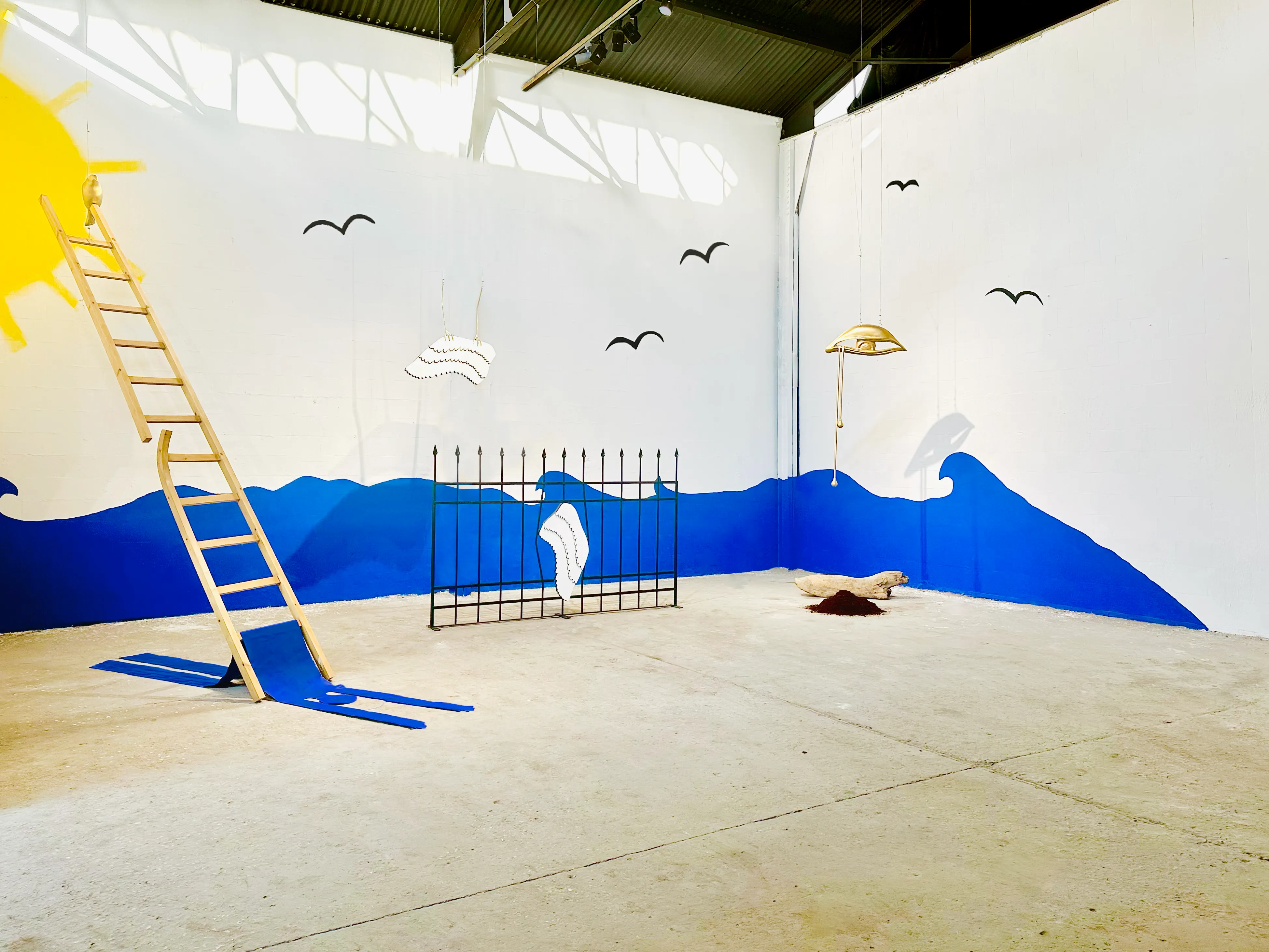
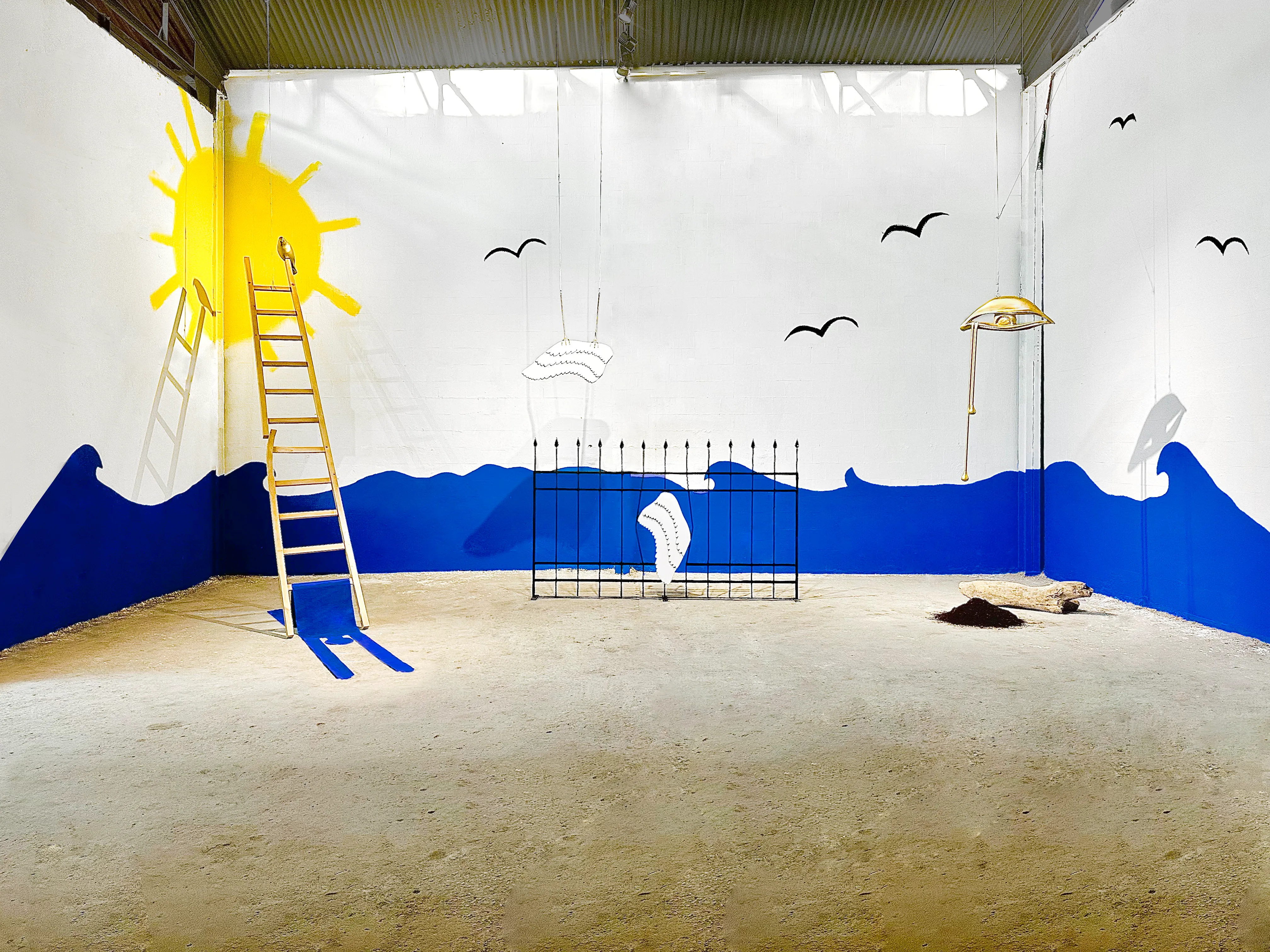
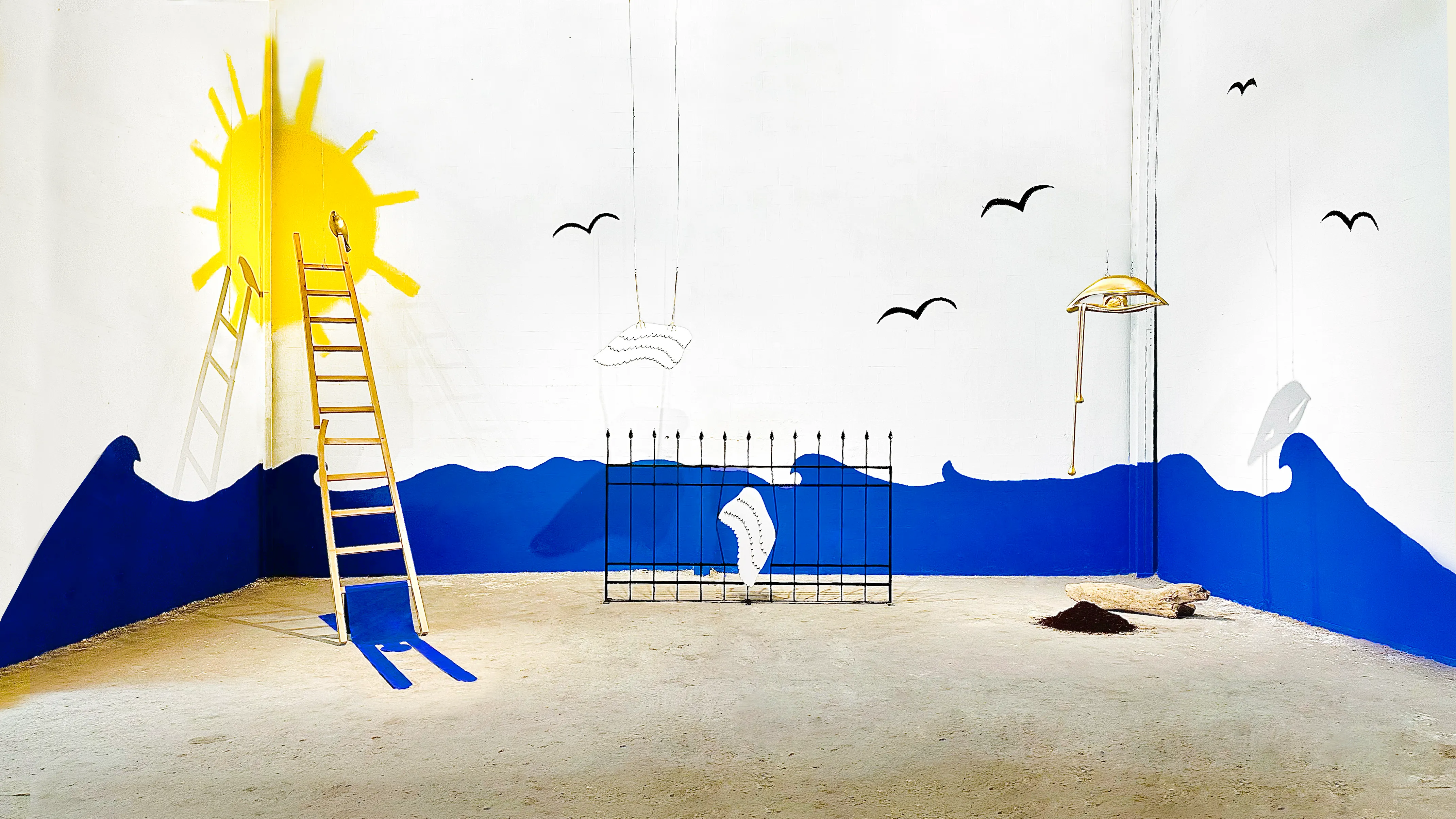
Yet Icarus never appears in the installation. His presence is reconstructed entirely through the consequences of his actions: a broken trunk, dry soil and the remains of a depleted landscape. Nature has been reduced to fragments after being consumed by the human project.
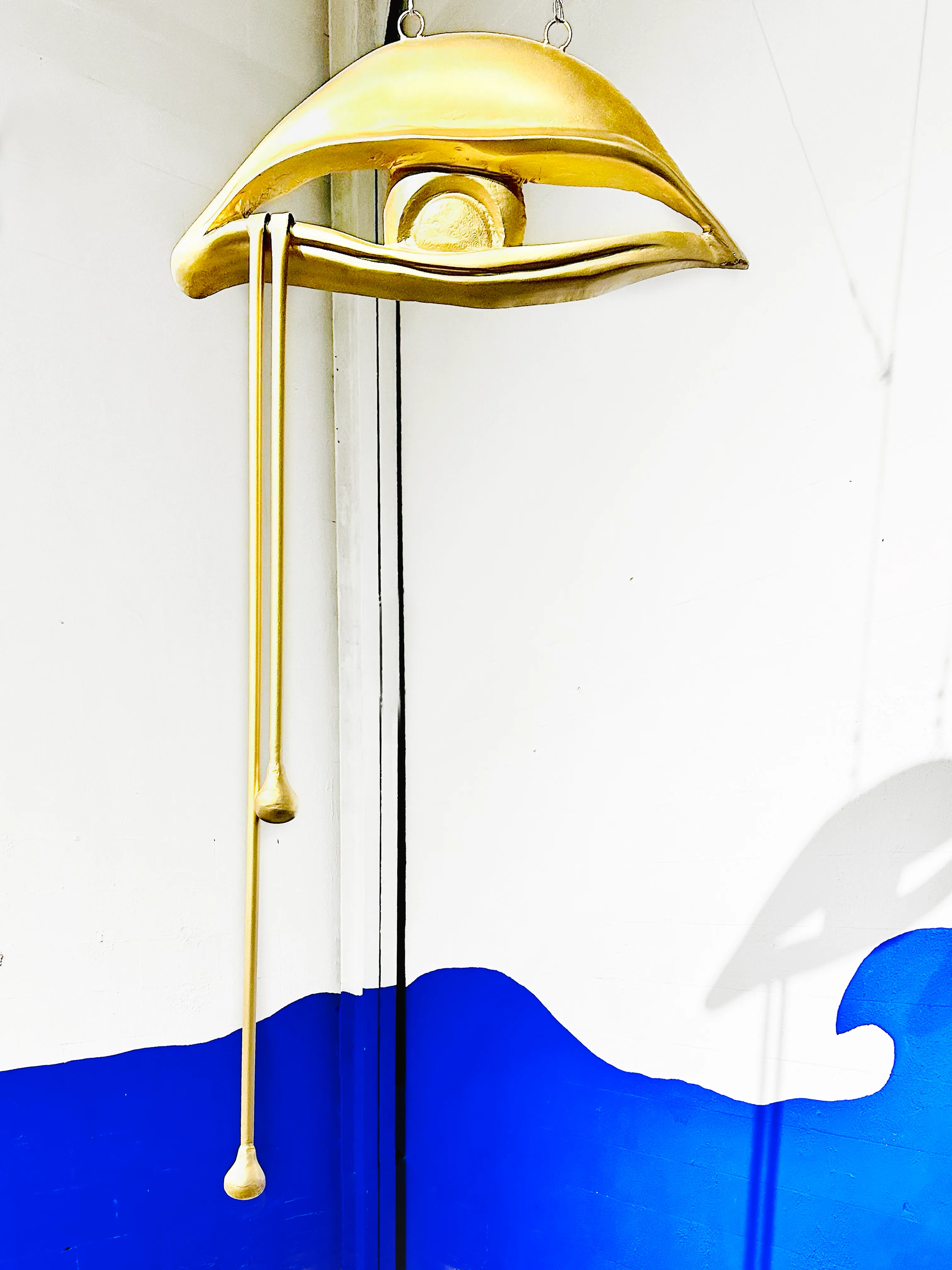
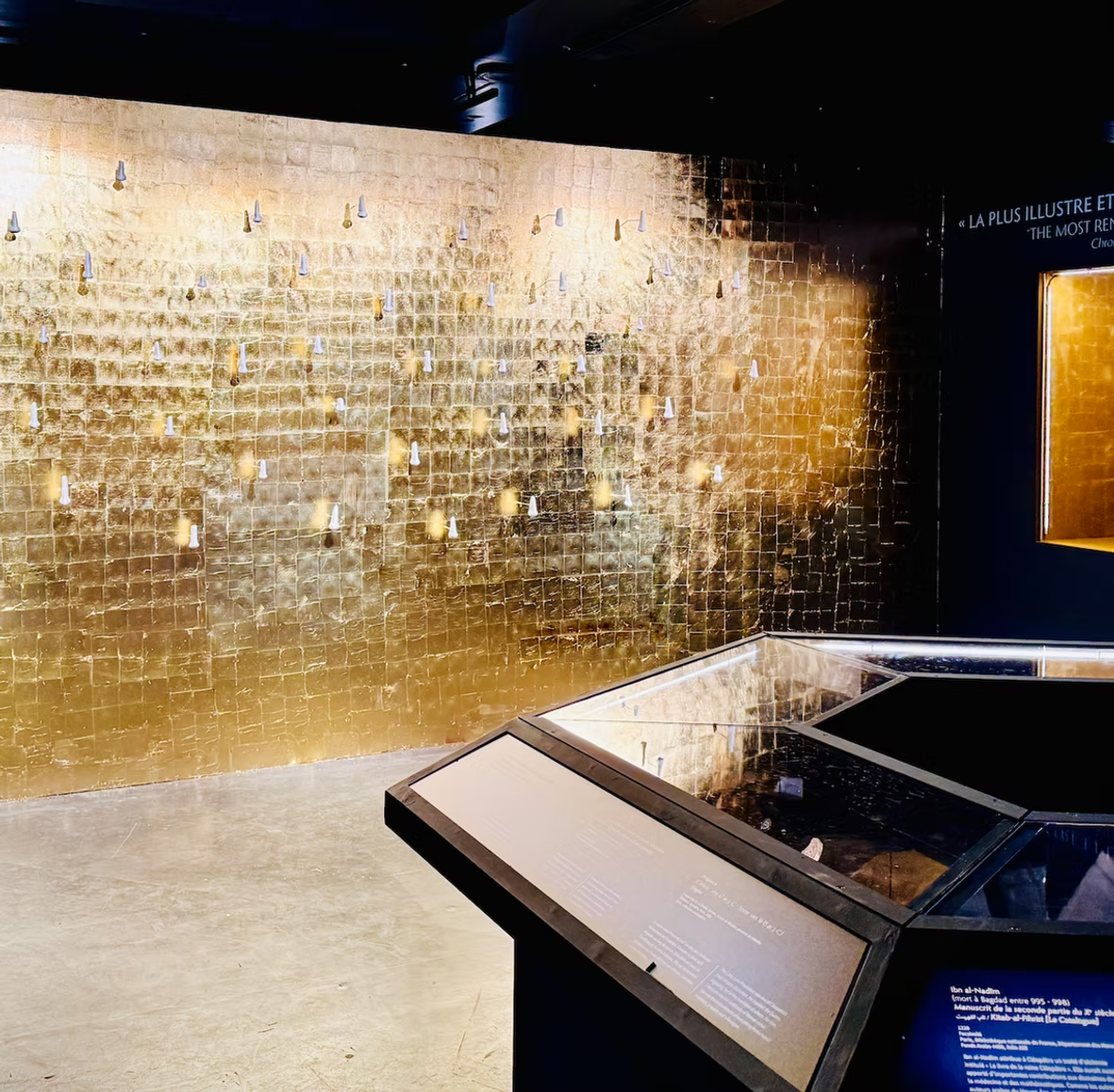
Above this desolate ground, the monumental golden eye of Horus watches and weeps. Horus sees what Icarus, absorbed by his ambition, is unable or unwilling to recognise. His tears introduce grief before warning or retaliation. He does not yet intervene; he witnesses the destruction and mourns the world being consumed.
The scene holds this action in suspension. Horus remains caught in the act of looking and weeping, while the damaged landscape preserves the action of the absent Icarus. The forest is no longer being cut, yet its destruction has not settled into the past. Cause and consequence remain physically present within the same frozen moment.
By removing Icarus from the scene, the installation shifts attention away from the heroic figure traditionally placed at the centre of the myth. The wounded landscape and the god who contemplates it become the protagonists. Human ambition is represented through what it extracts and leaves behind rather than through the person who performs it.
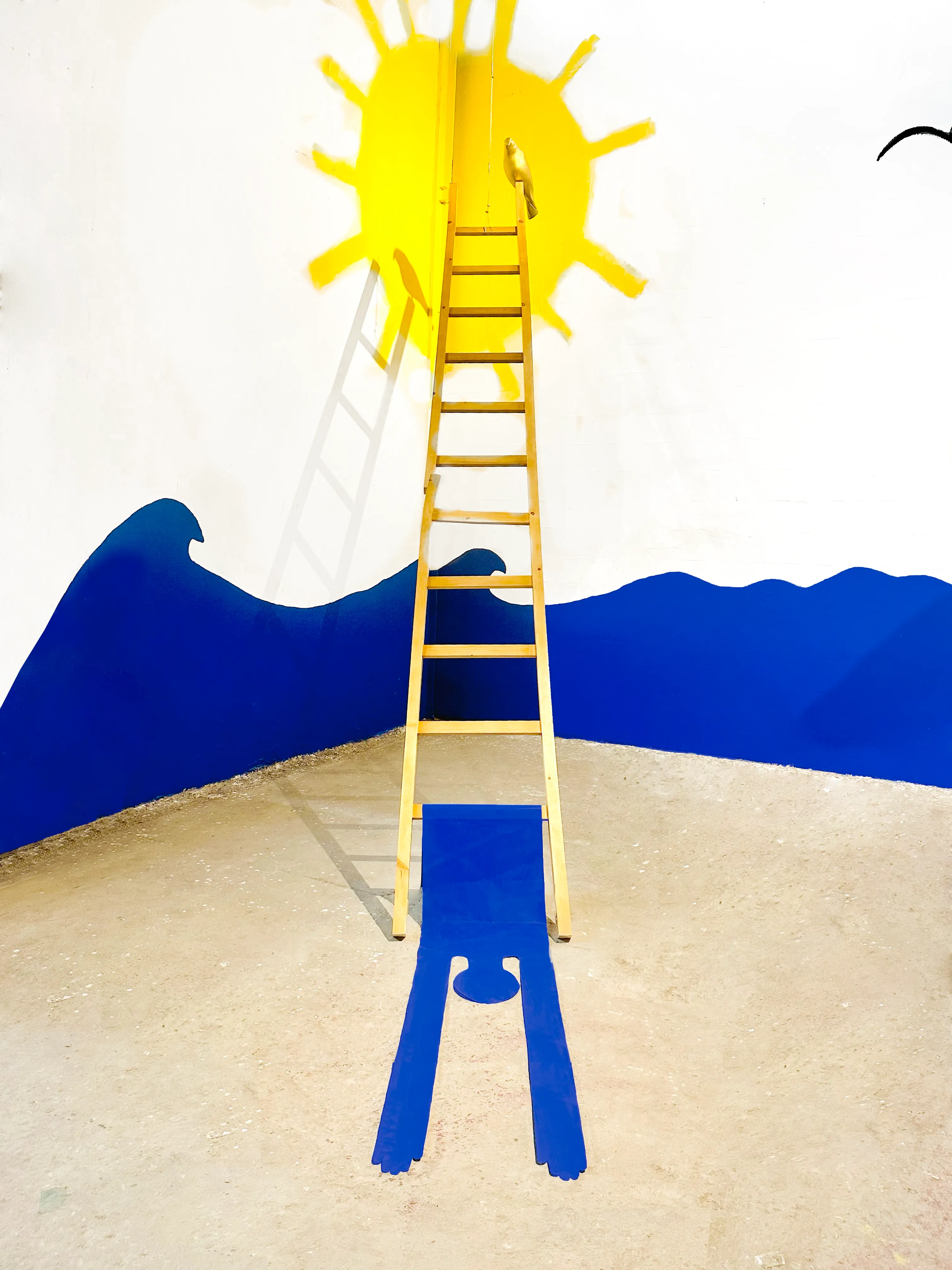
Act I resembles a fragment of a stage set into which the visitor can enter. Its broken trunk, suspended eye and barren ground form a spatial fable whose relationships must be reconstructed through movement. An almost childlike directness and underlying absurdity give the scene the apparent simplicity of a cautionary tale, while its emptiness reveals the violence beneath it.
Act I marks the beginning of the cycle: nature is consumed in the pursuit of elevation, while the human remains absent from the damage he has produced.
The instrument of ascent begins with an act of destruction.