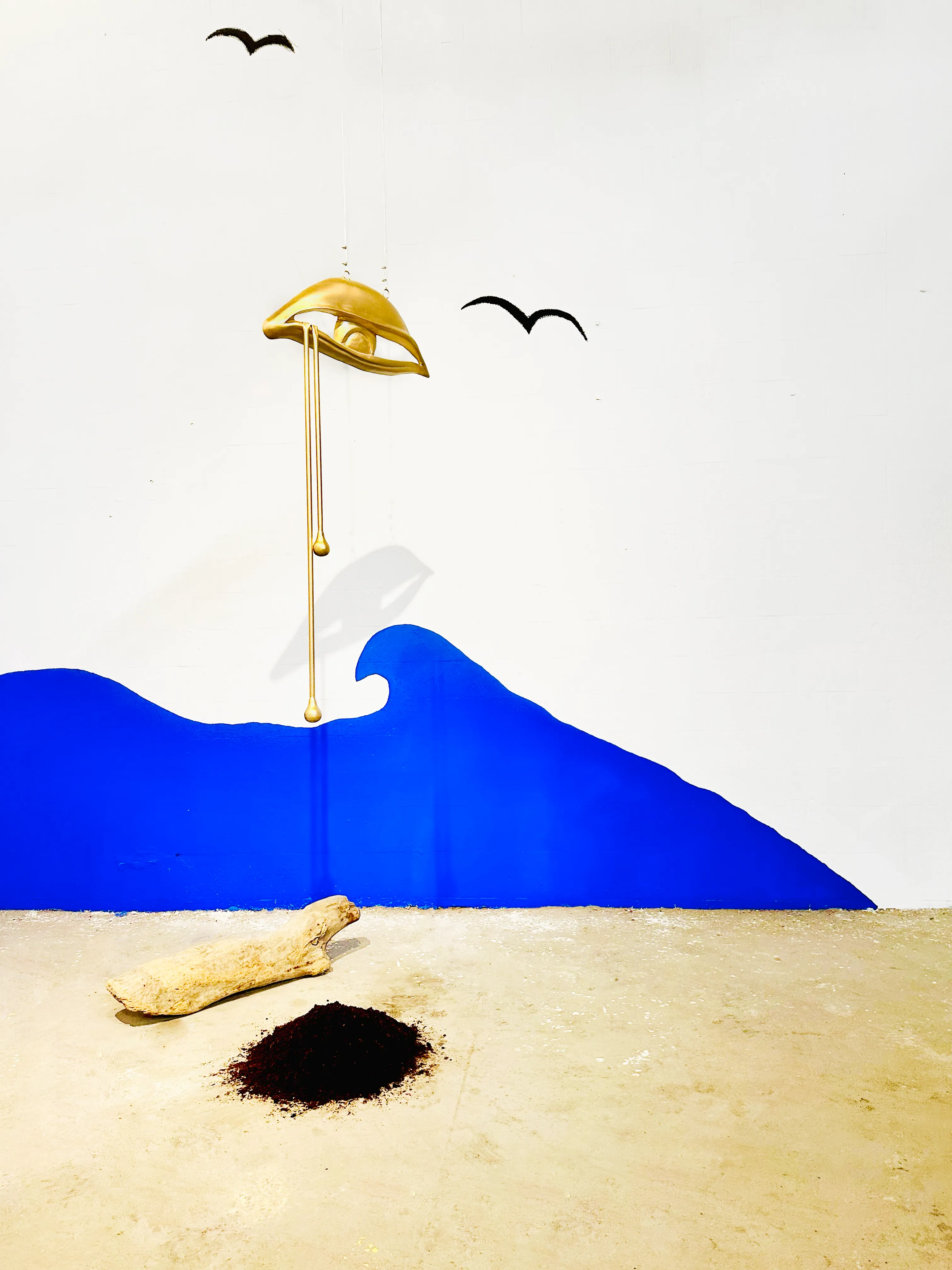
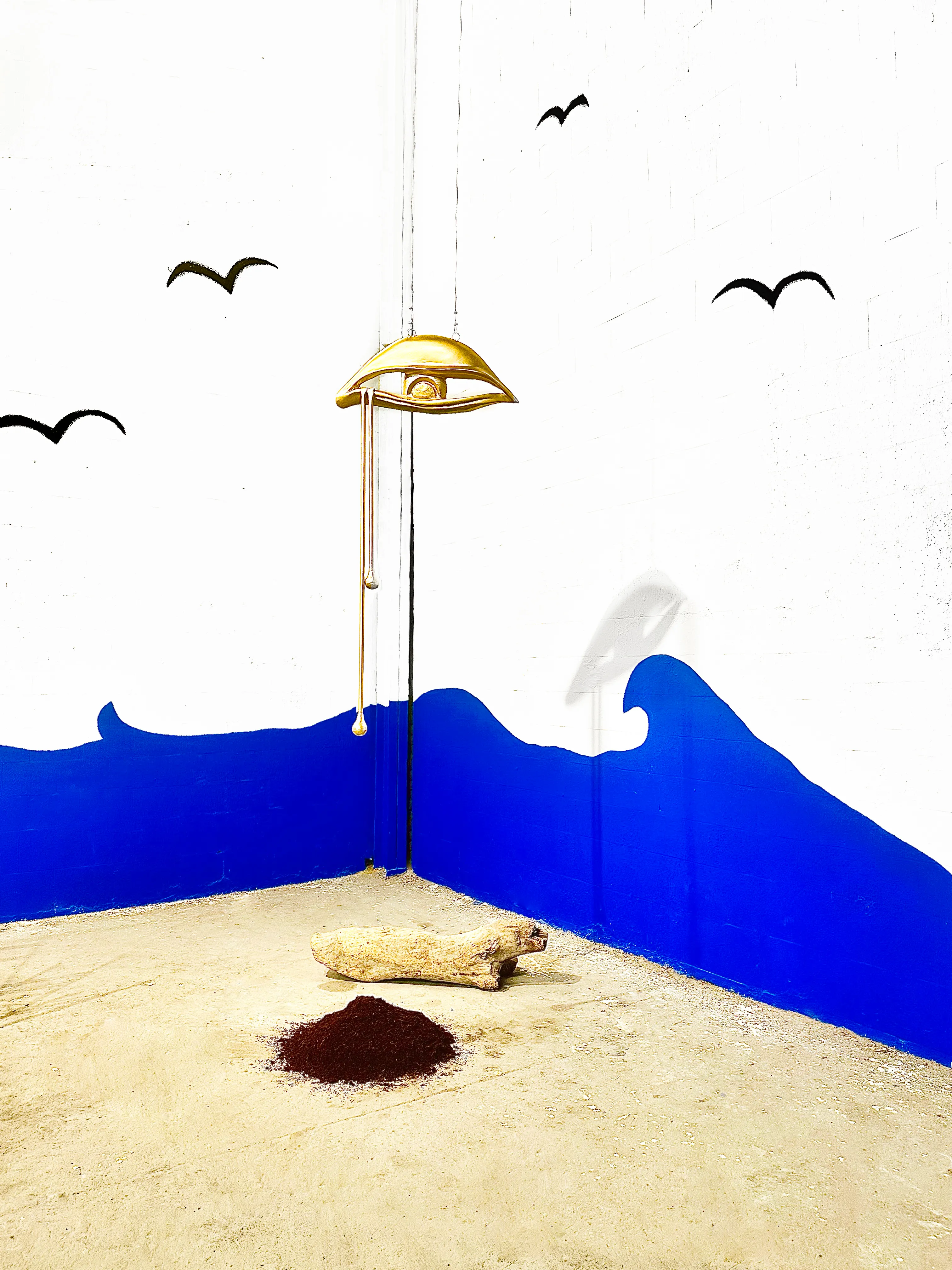
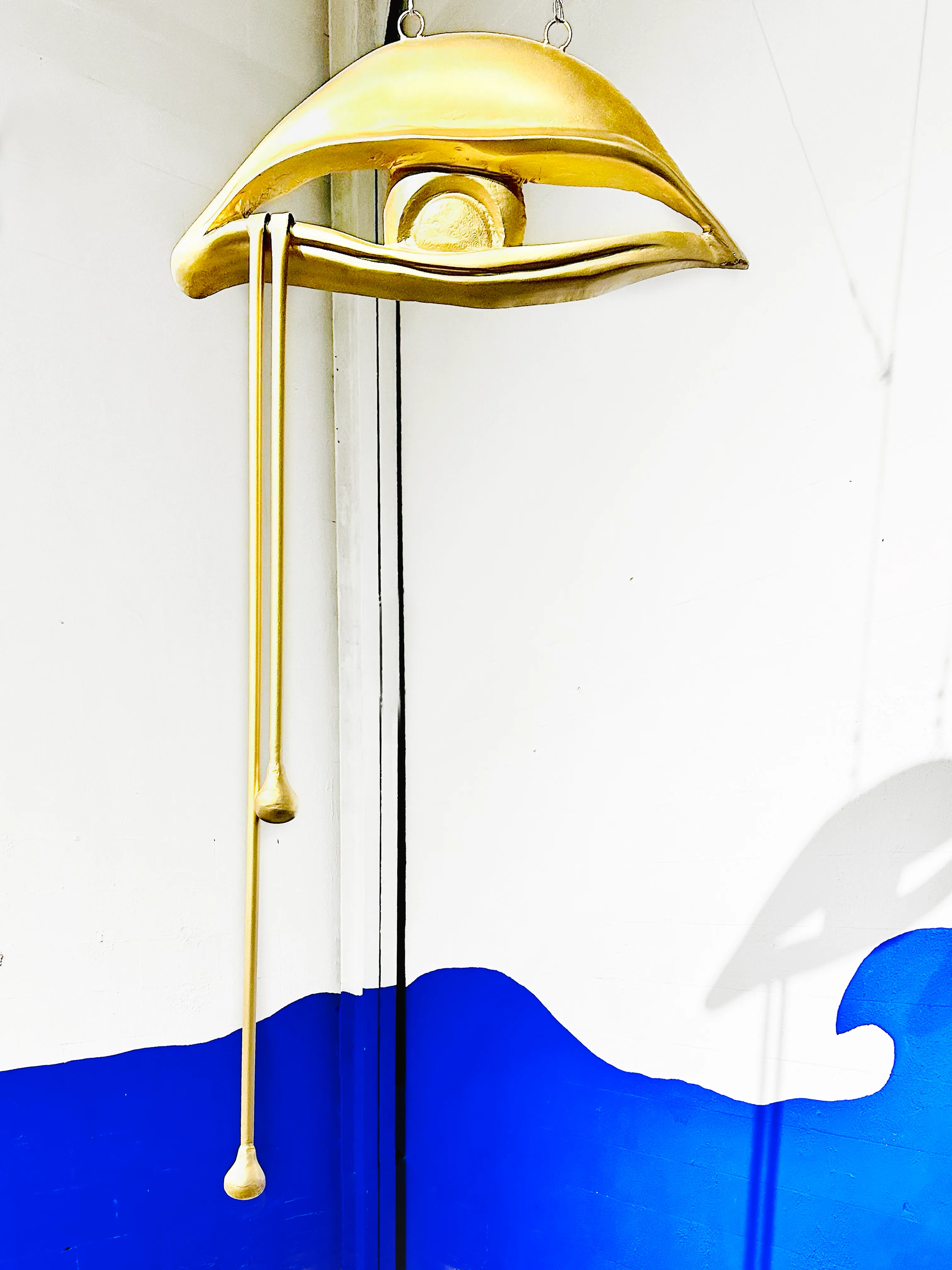
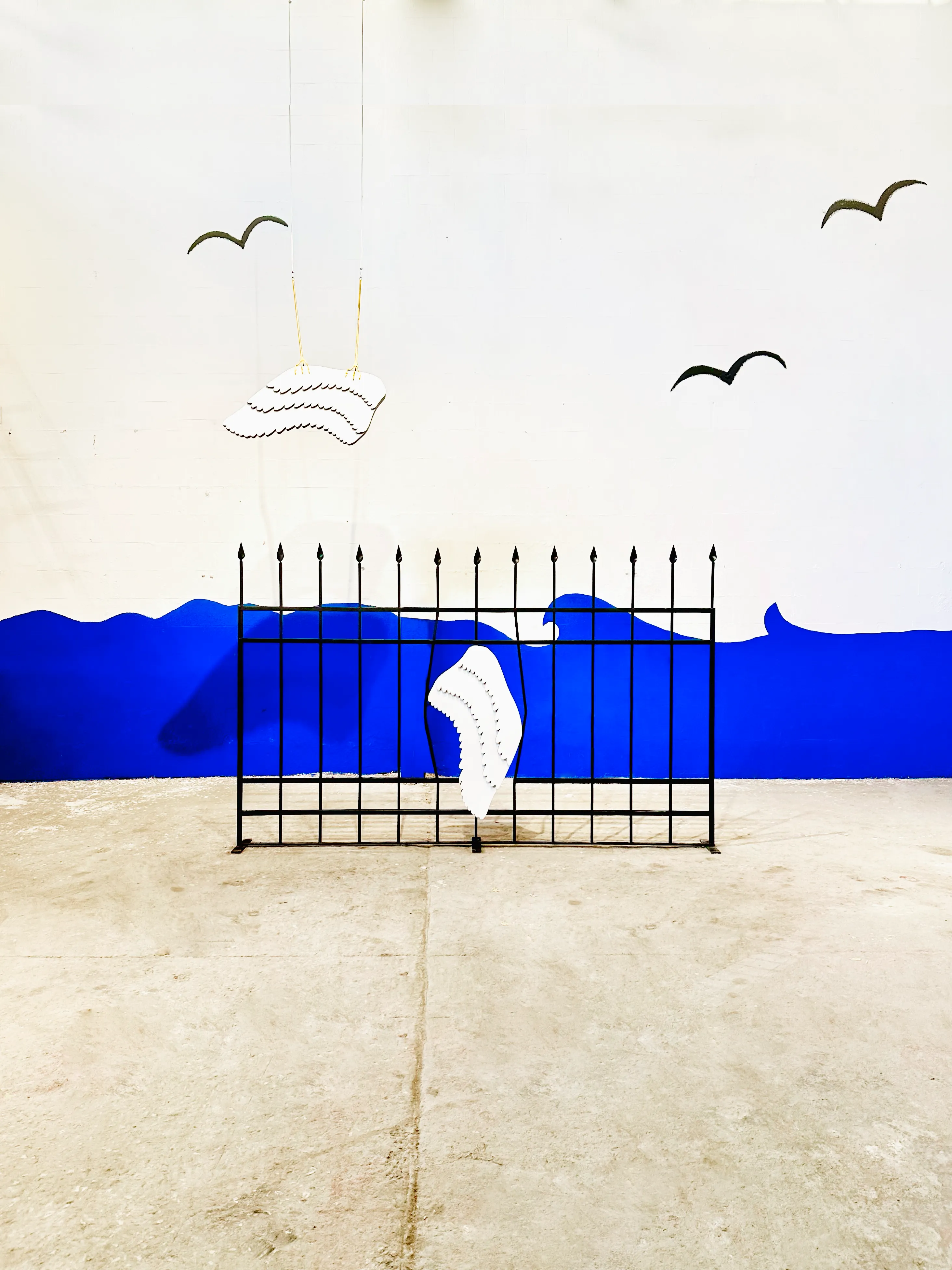
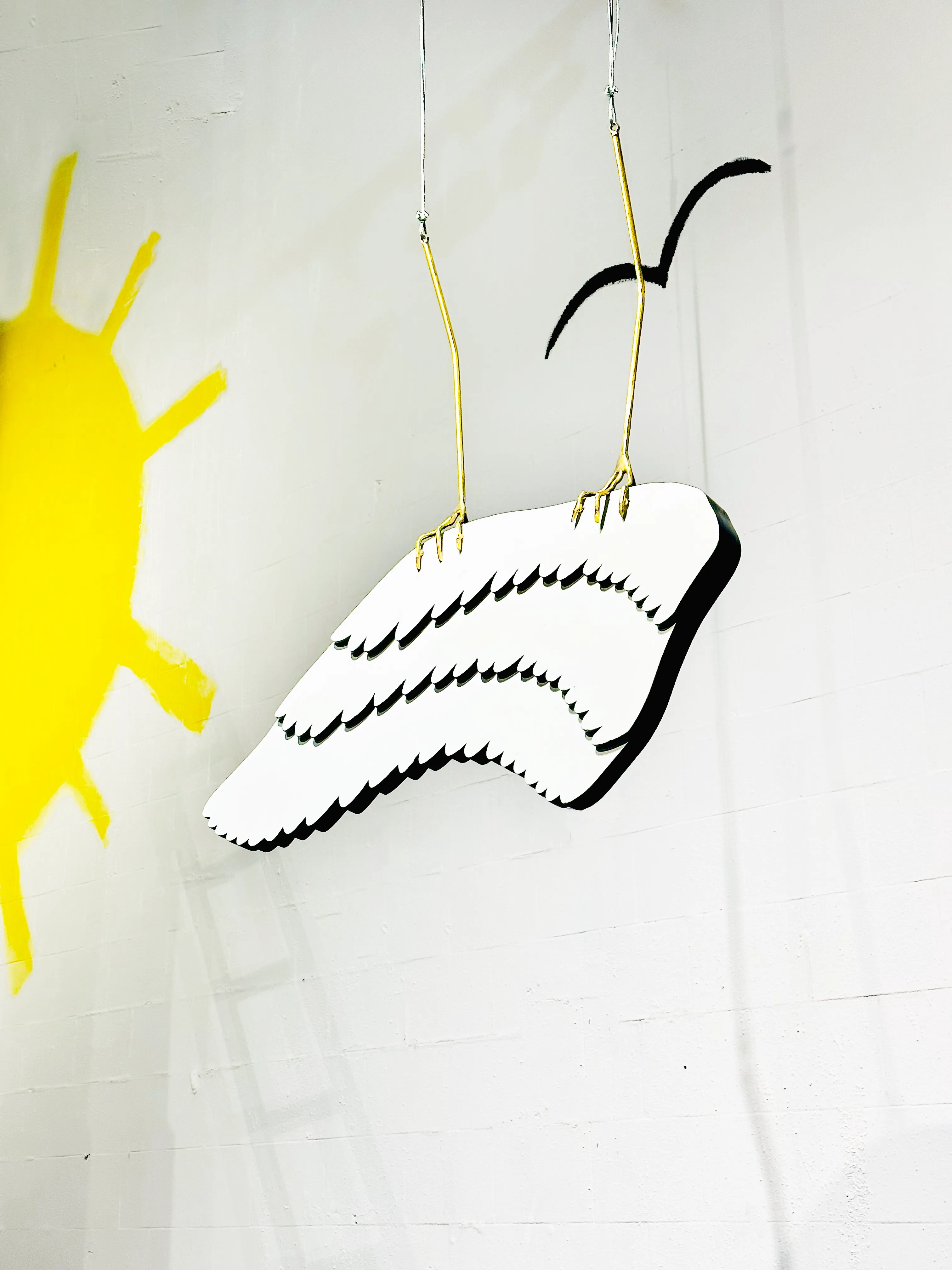
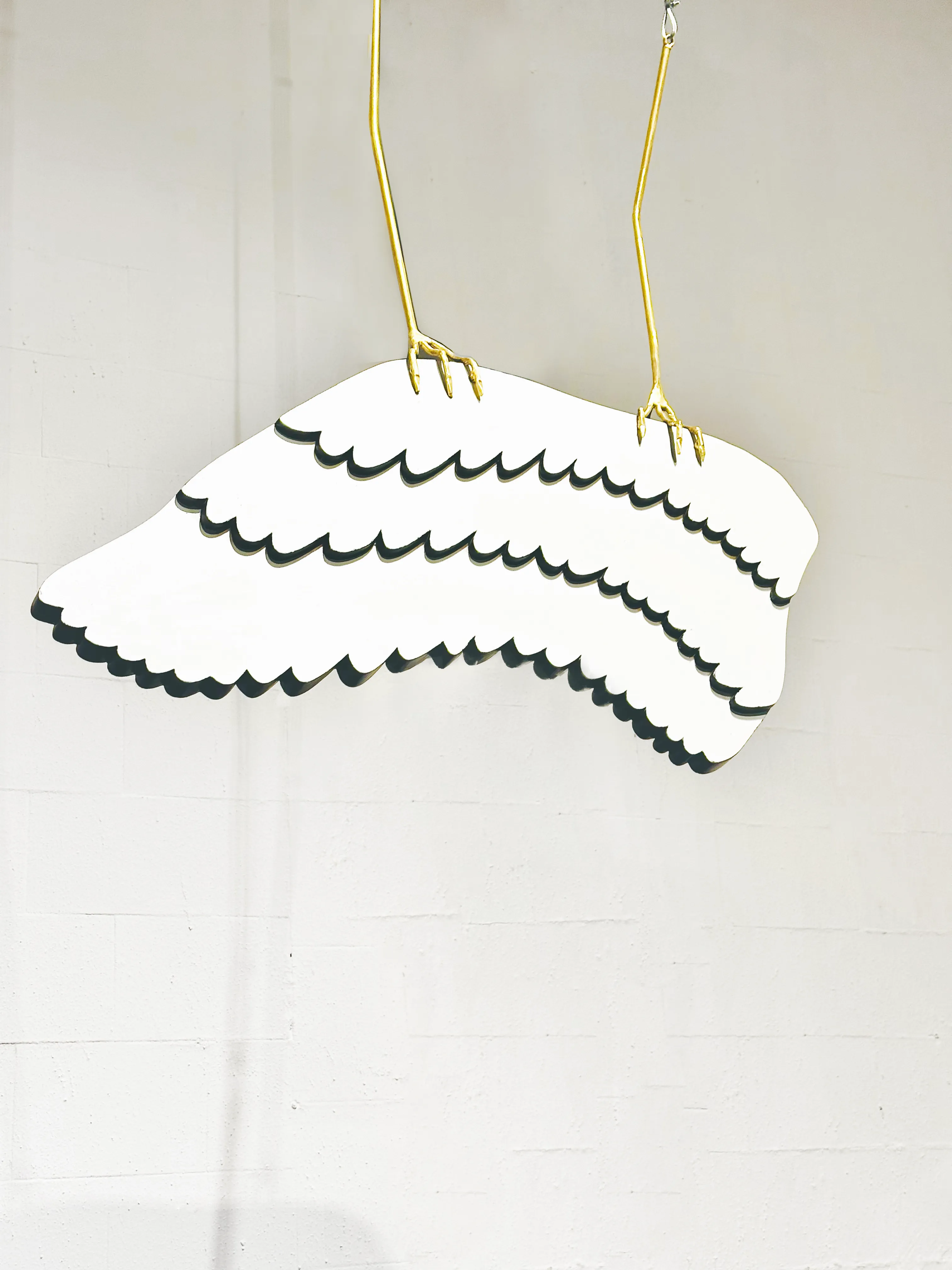
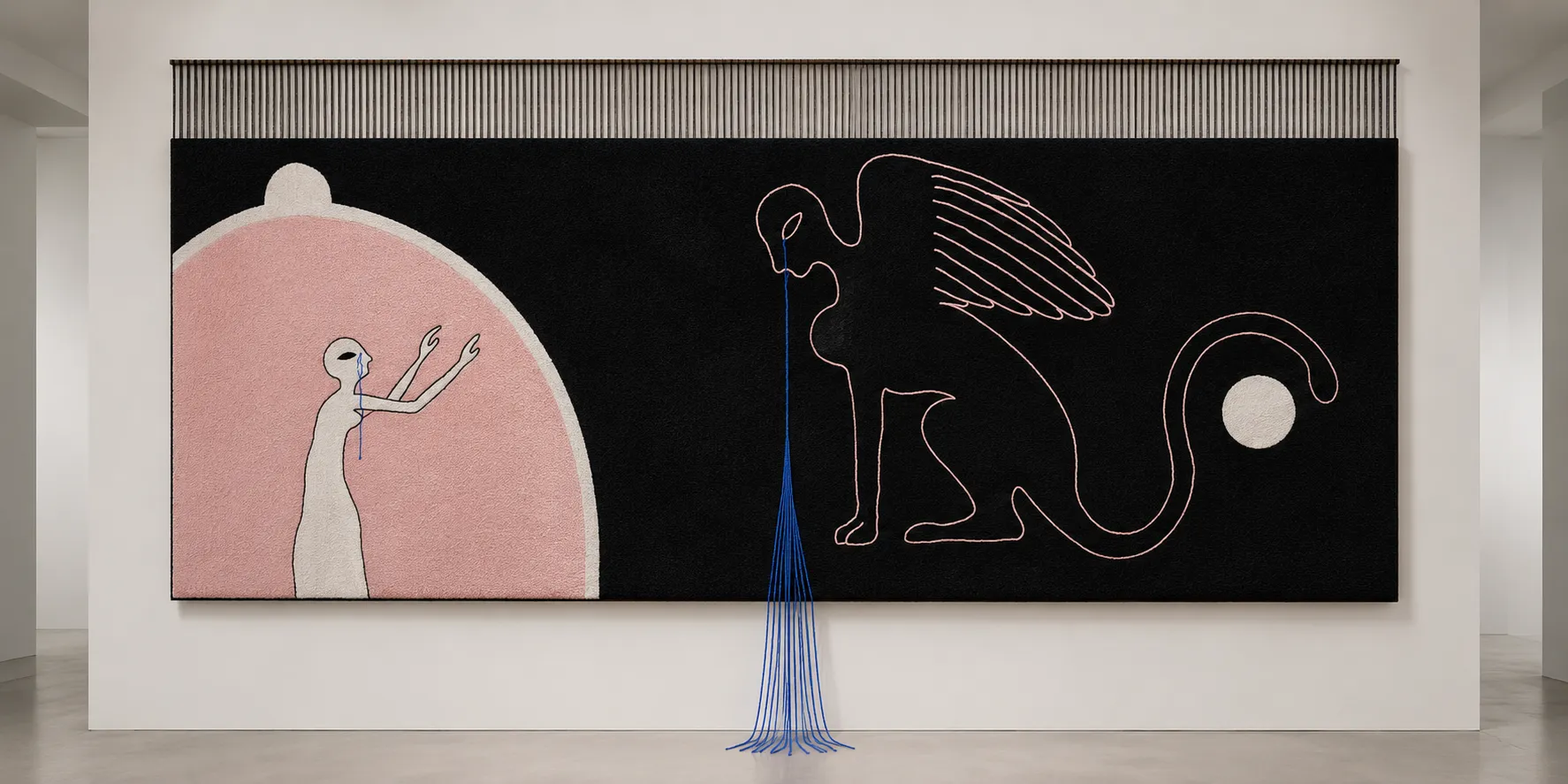
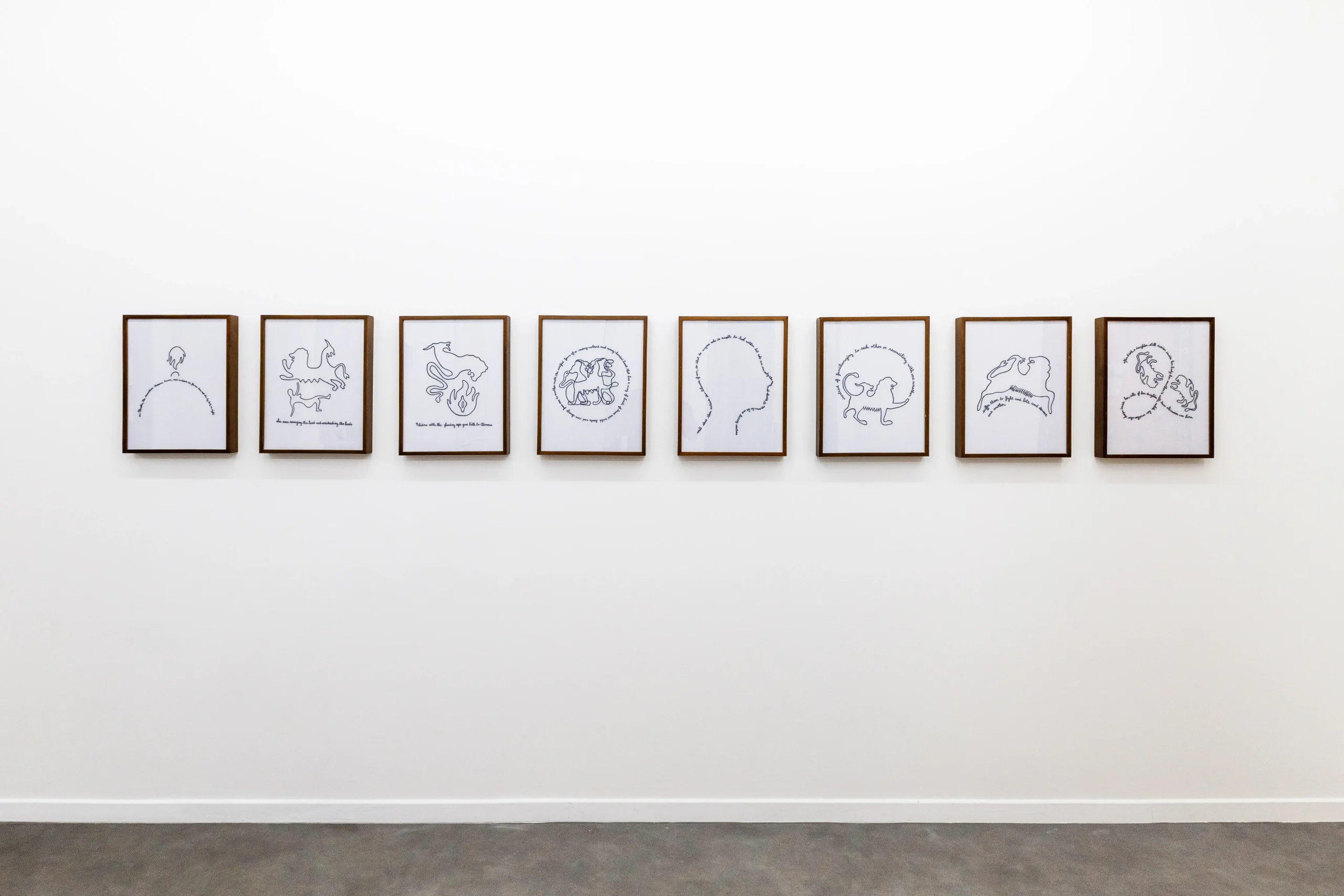
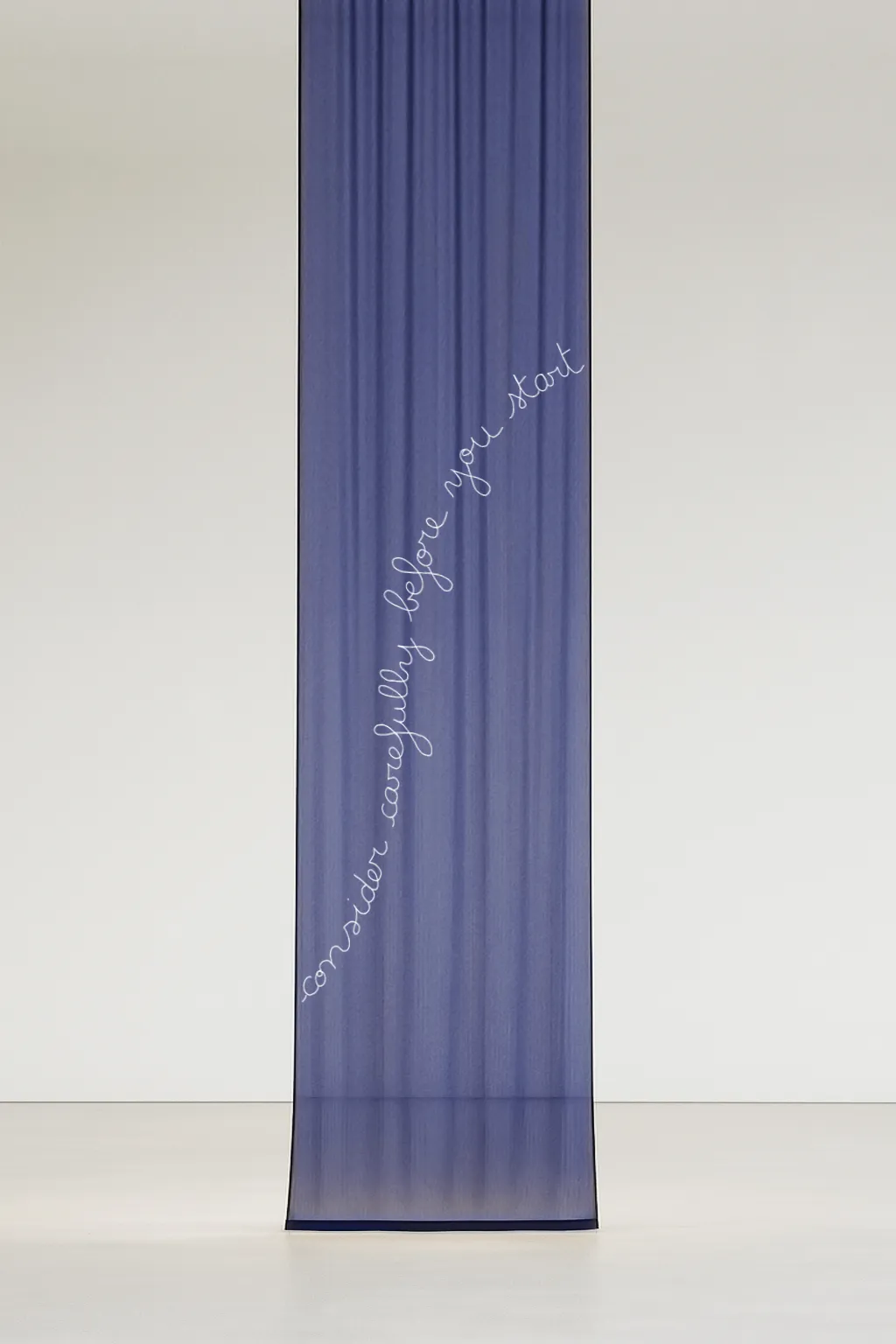
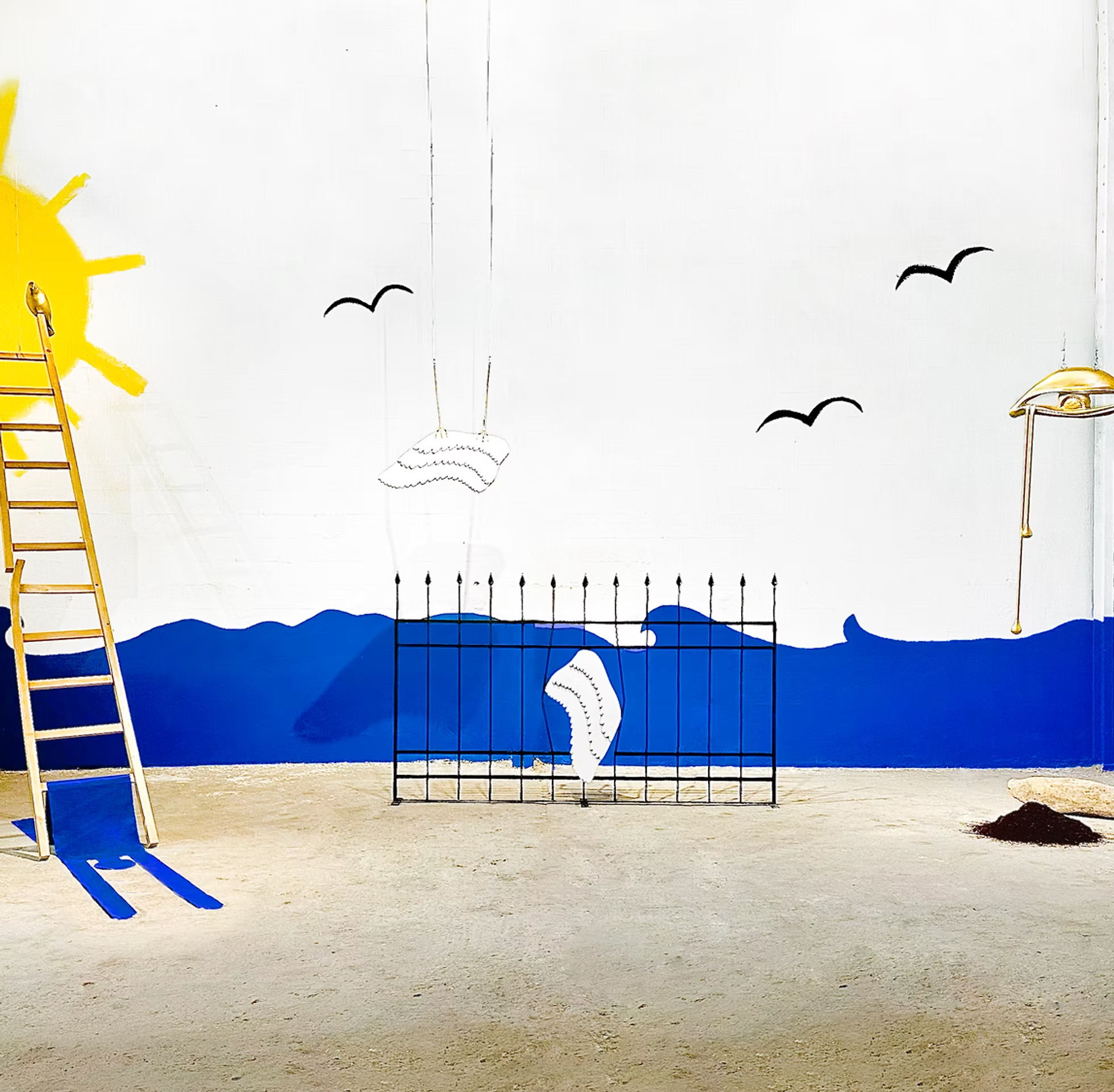
After witnessing the destruction caused by Icarus, Horus leaves his celestial position and attempts to interrupt the human enterprise. He takes possession of the wings made from the destroyed forest, removing the instrument through which Icarus intended to conquer the sky.
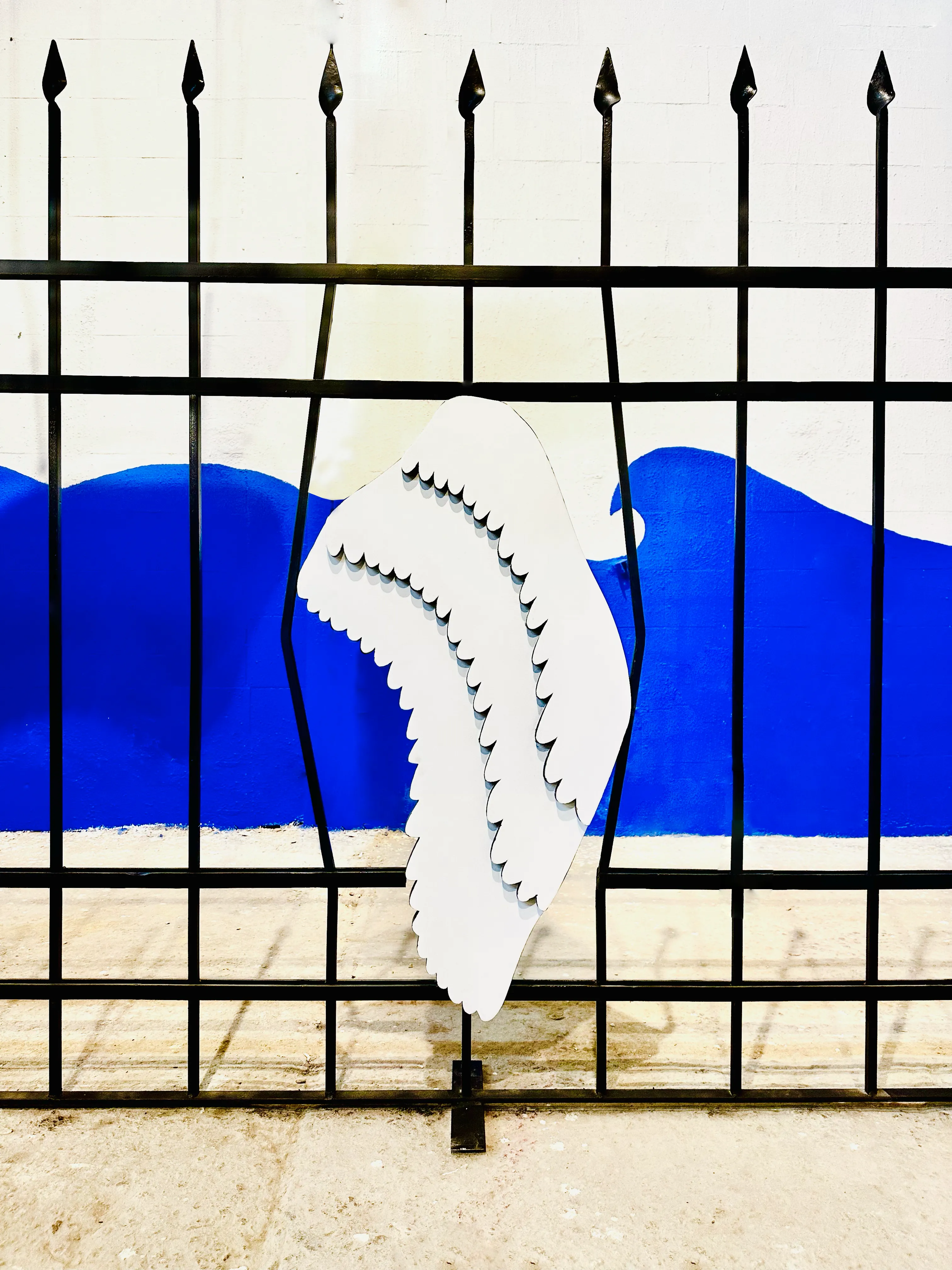
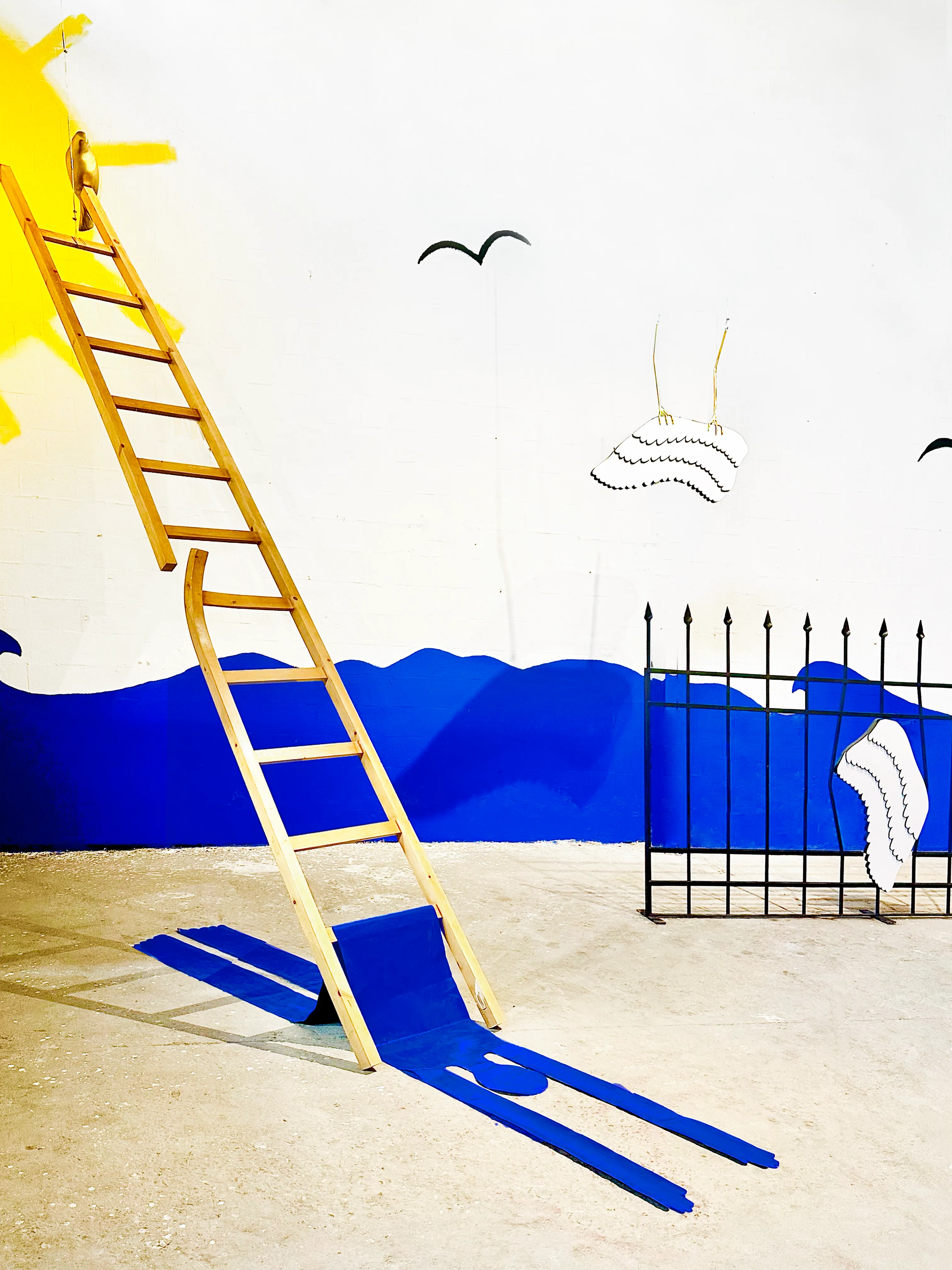
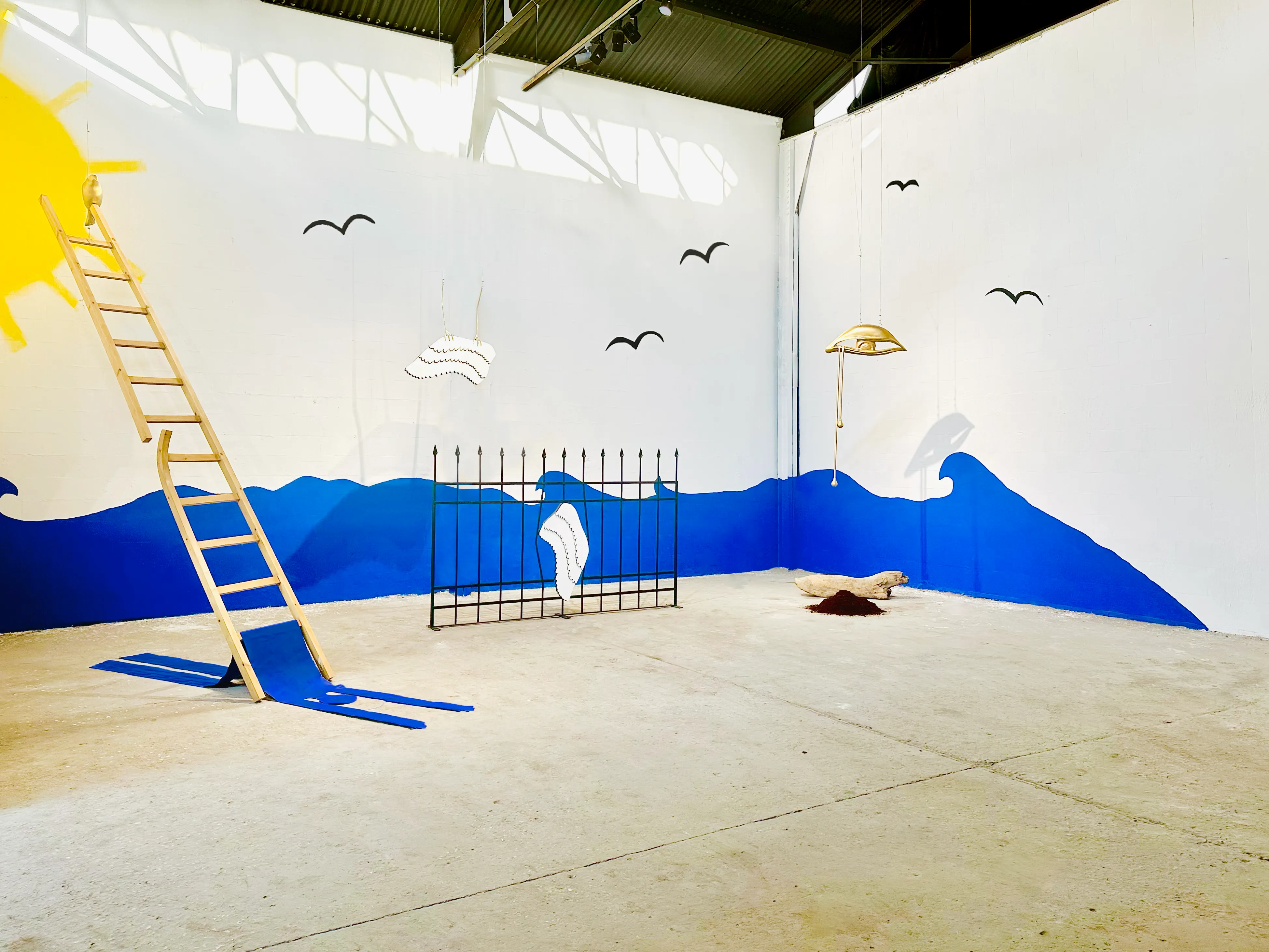
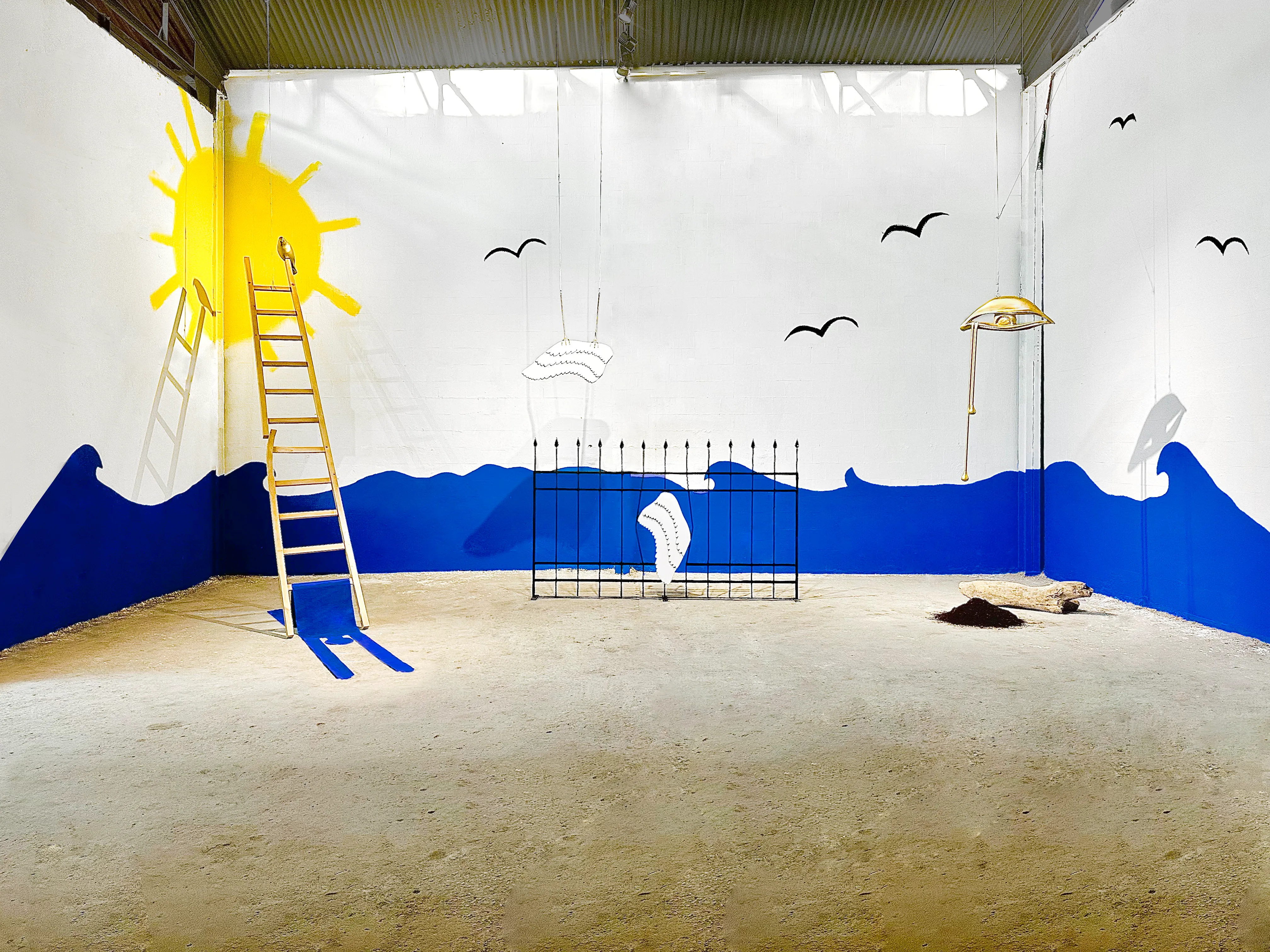
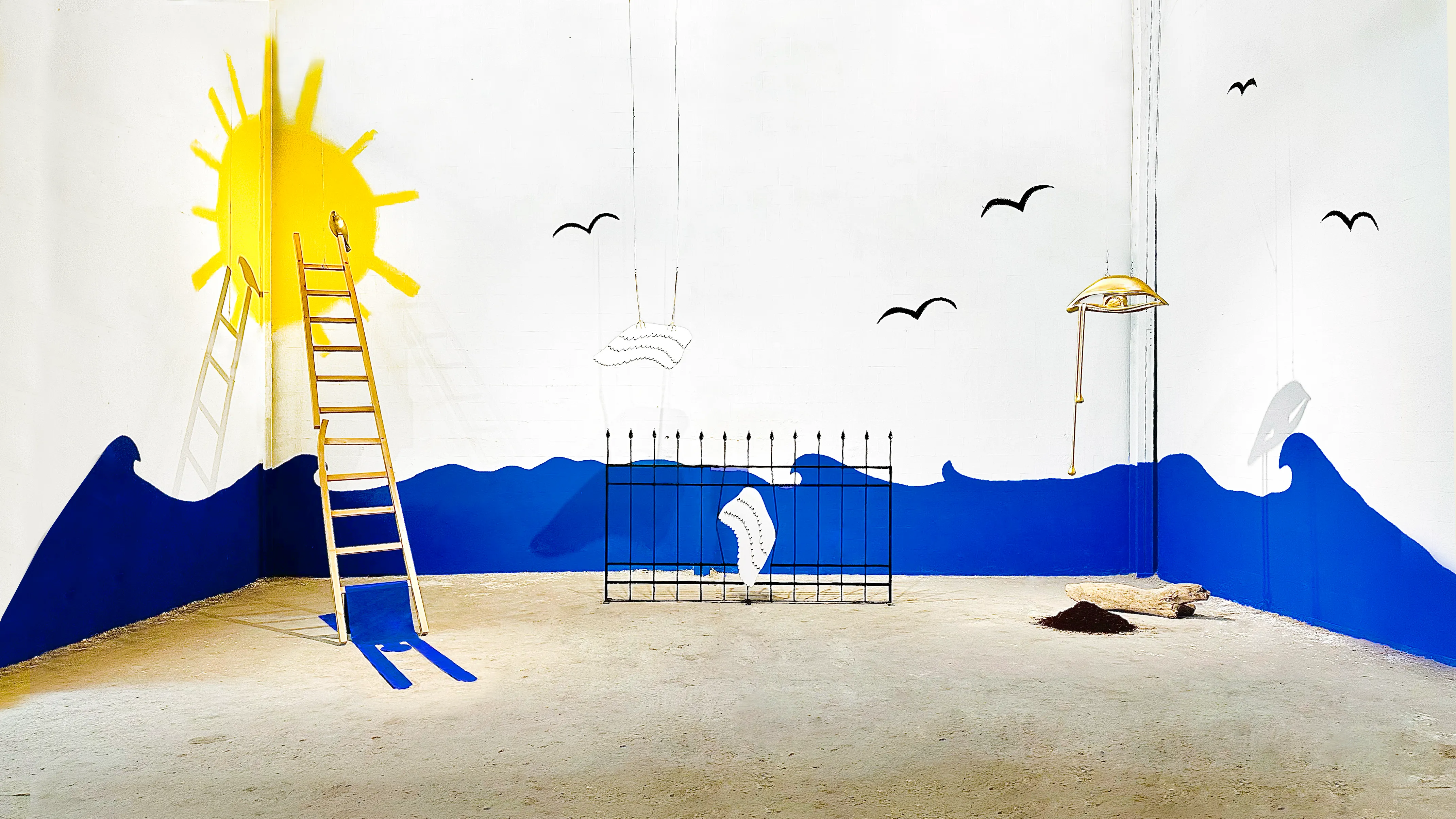
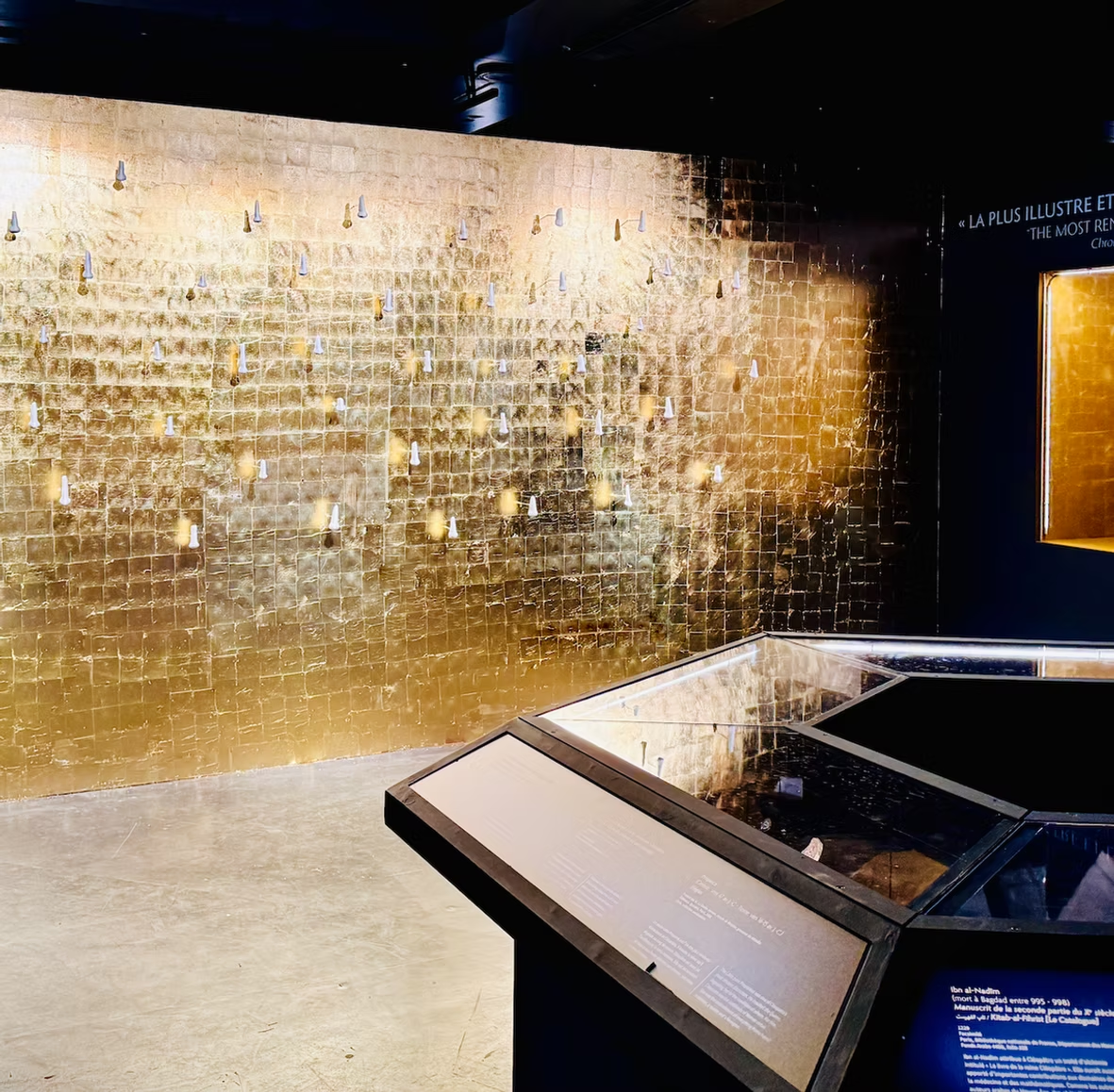
In the installation, the wooden wings appear suspended above a rigid metal structure. They are no longer attached to the absent Icarus, but they have not returned to the forest from which they were extracted. Held beyond his reach, they remain caught between confiscation, protection and captivity.
Act II freezes Horus in the act of removing the wings. The gesture has begun but never reaches a final resolution: the wings remain permanently suspended, the route remains blocked and the warning continues to be issued. The installation occupies the interval in which catastrophe could still be avoided.
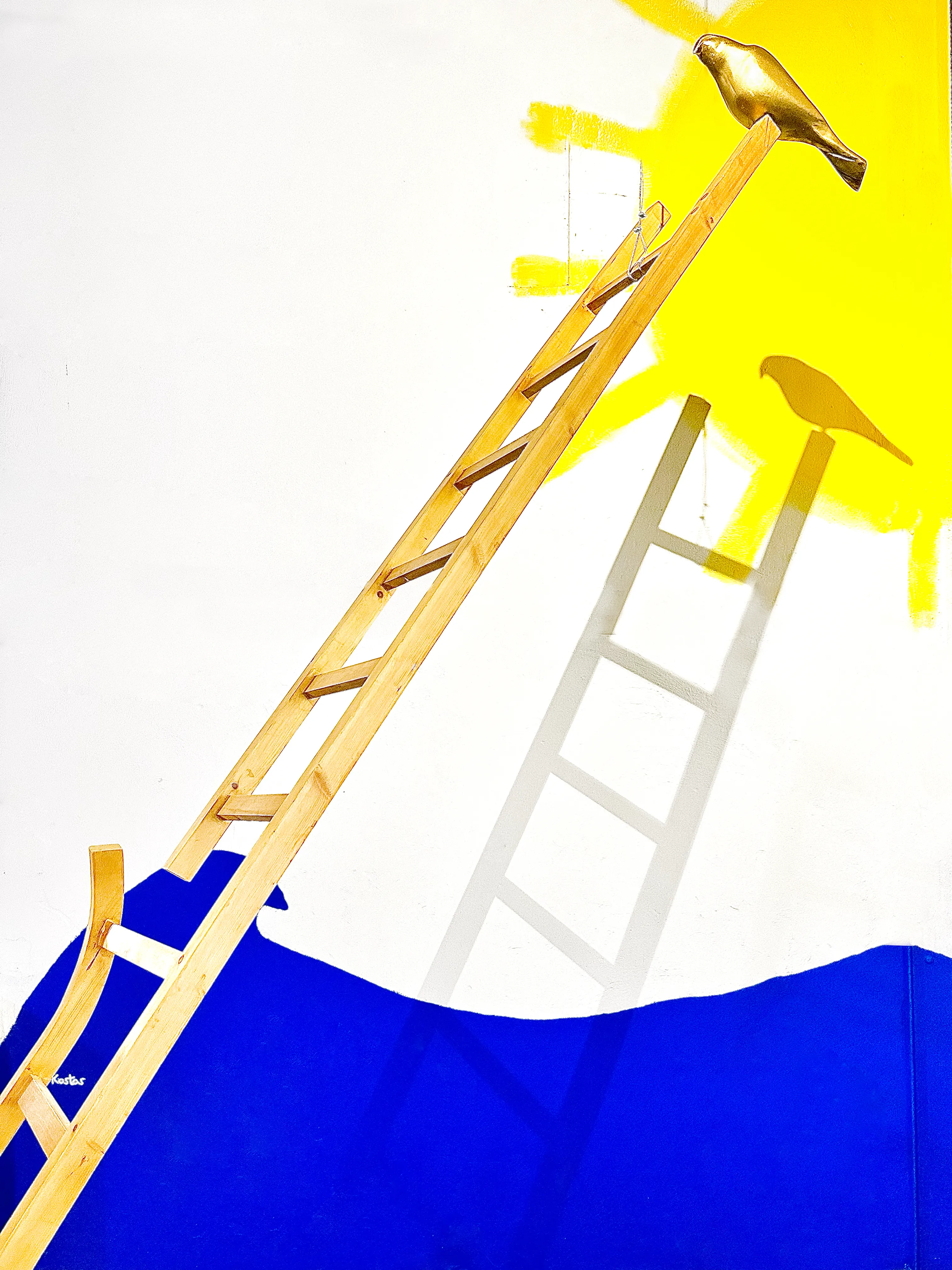
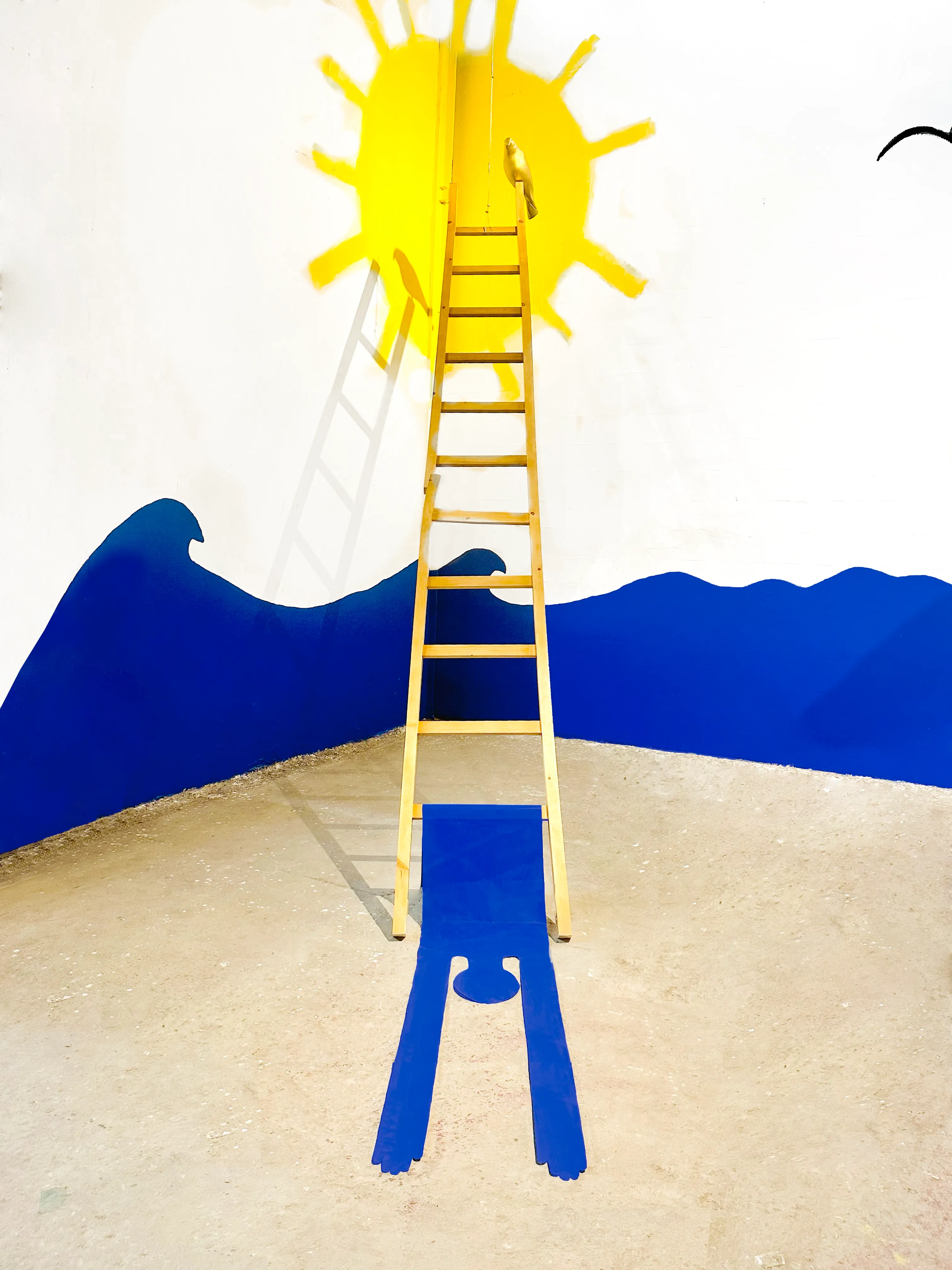
Icarus is once again absent. He is reconstructed through his refusal to stop. Rather than reconsidering his desire, he turns away from the warning, returns to the remaining forest and cuts down the last trees to build a ladder. The instrument changes, but the direction remains unchanged.
This refusal connects the fable to the contemporary ecological condition. Environmental warnings are no longer invisible: exhausted resources, disappearing species, fires, floods and increasingly uninhabitable landscapes make the consequences of human expansion visible. The problem is not simply that the warning has gone unnoticed, but that it is recognised and then treated as another obstacle to overcome.
The scene does not illustrate the entire action. It holds one decisive gesture in space: Horus removing the instrument of ascent before the human project can reach its consequence. The invisible Icarus is present through his stubborn trajectory, while Horus is understood through the limit he attempts to impose.
Act II distinguishes between a warning that goes unseen and one that is deliberately ignored.
The warning is not missed. It is refused.