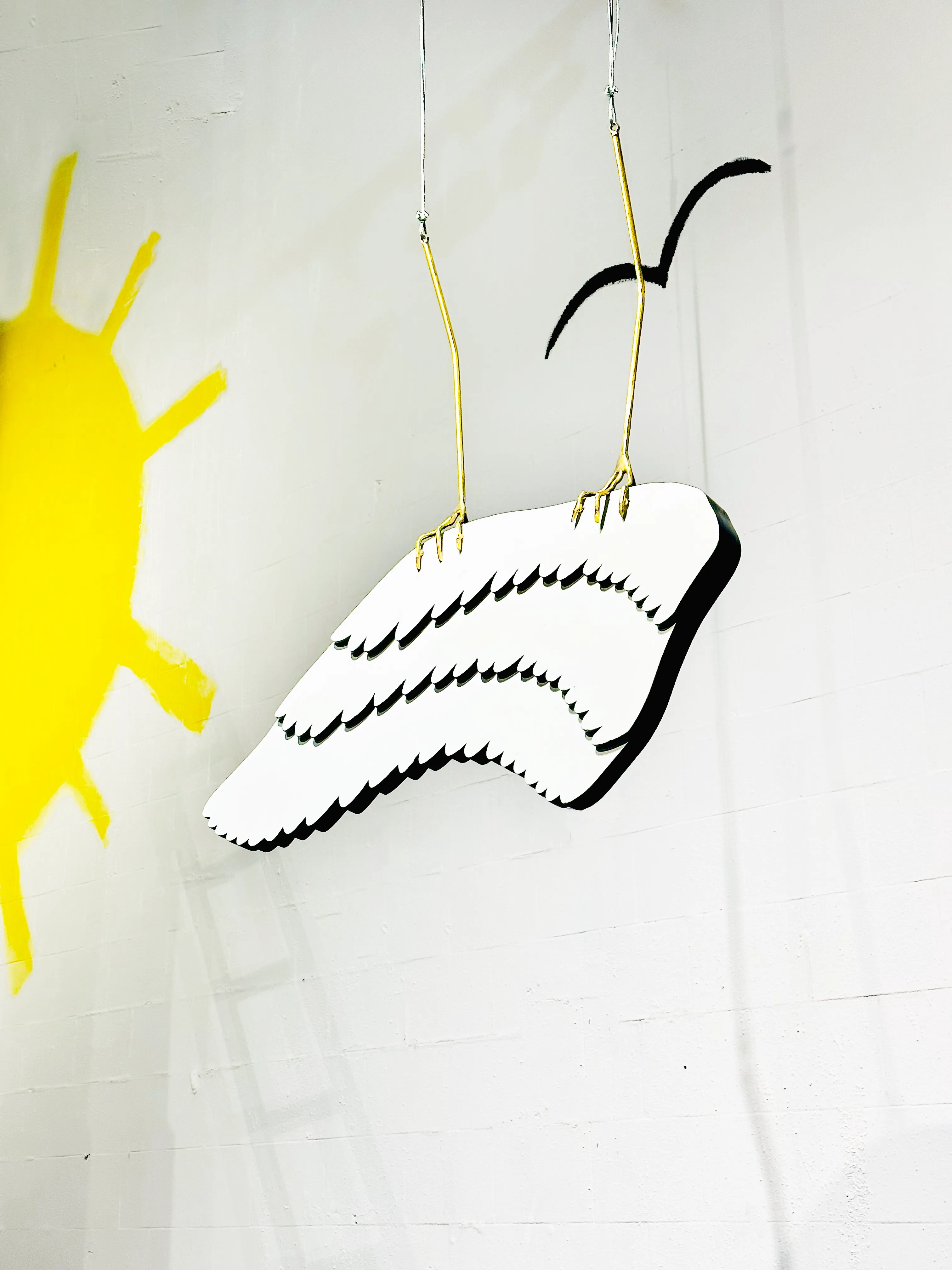
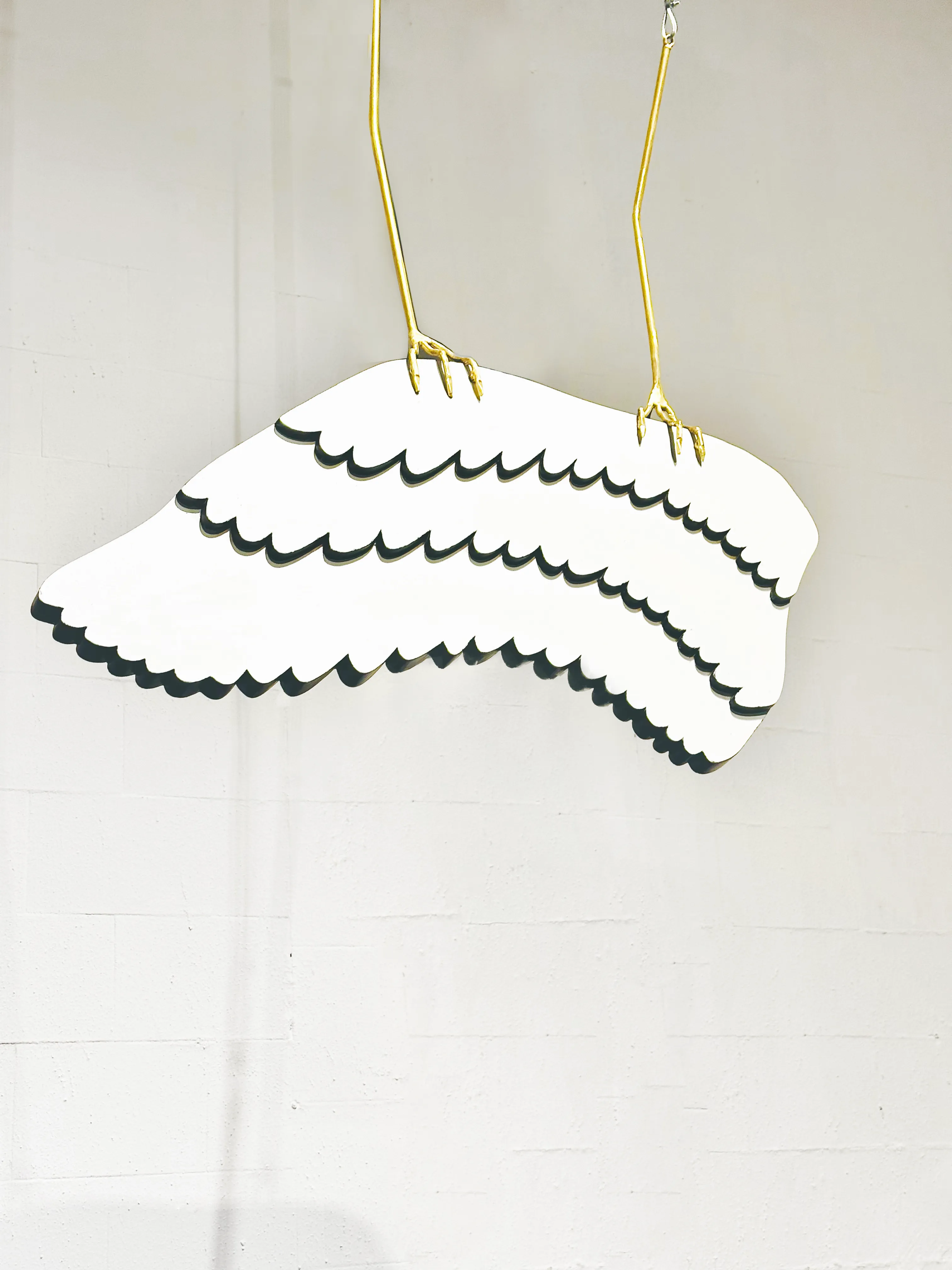
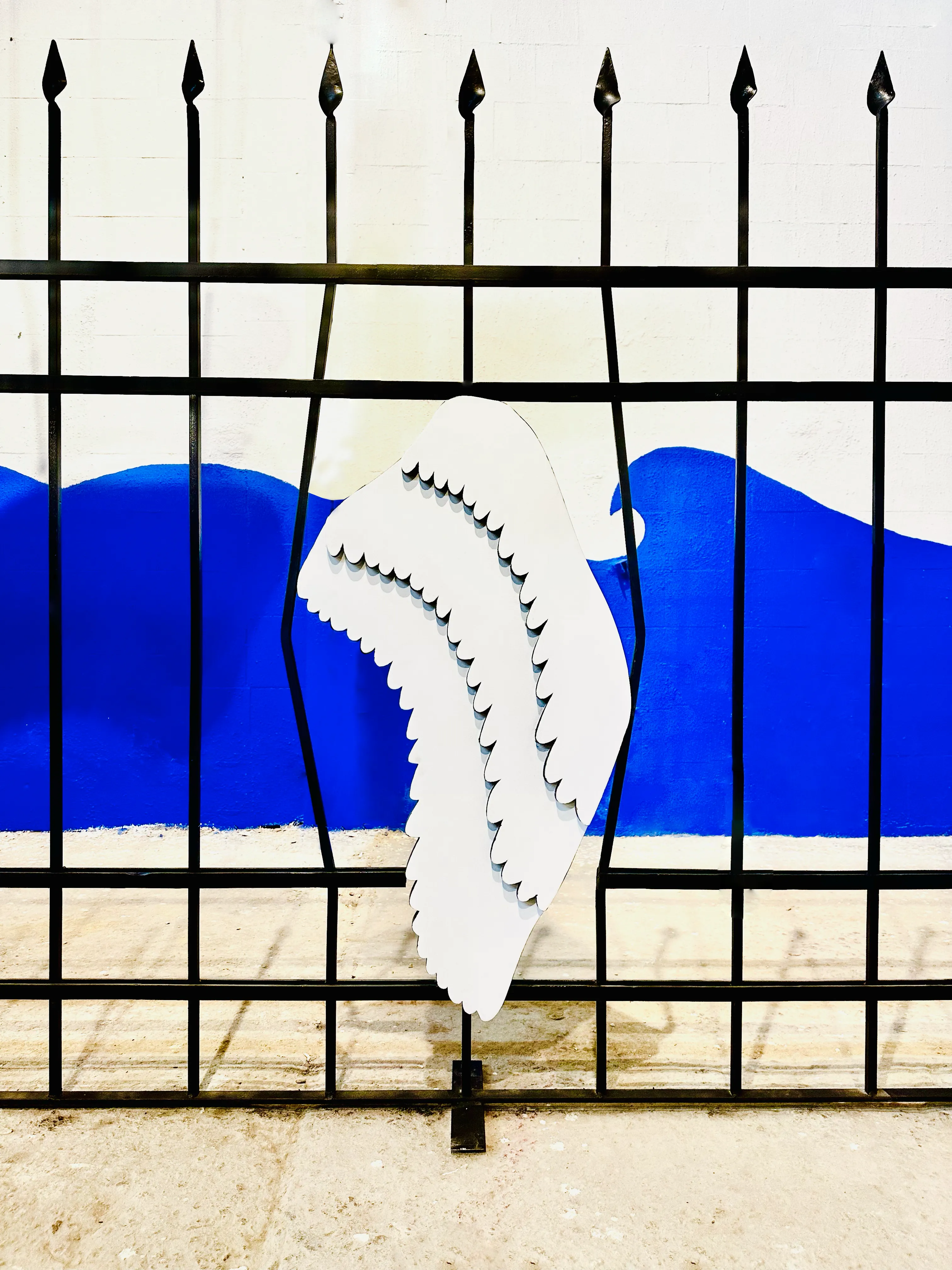
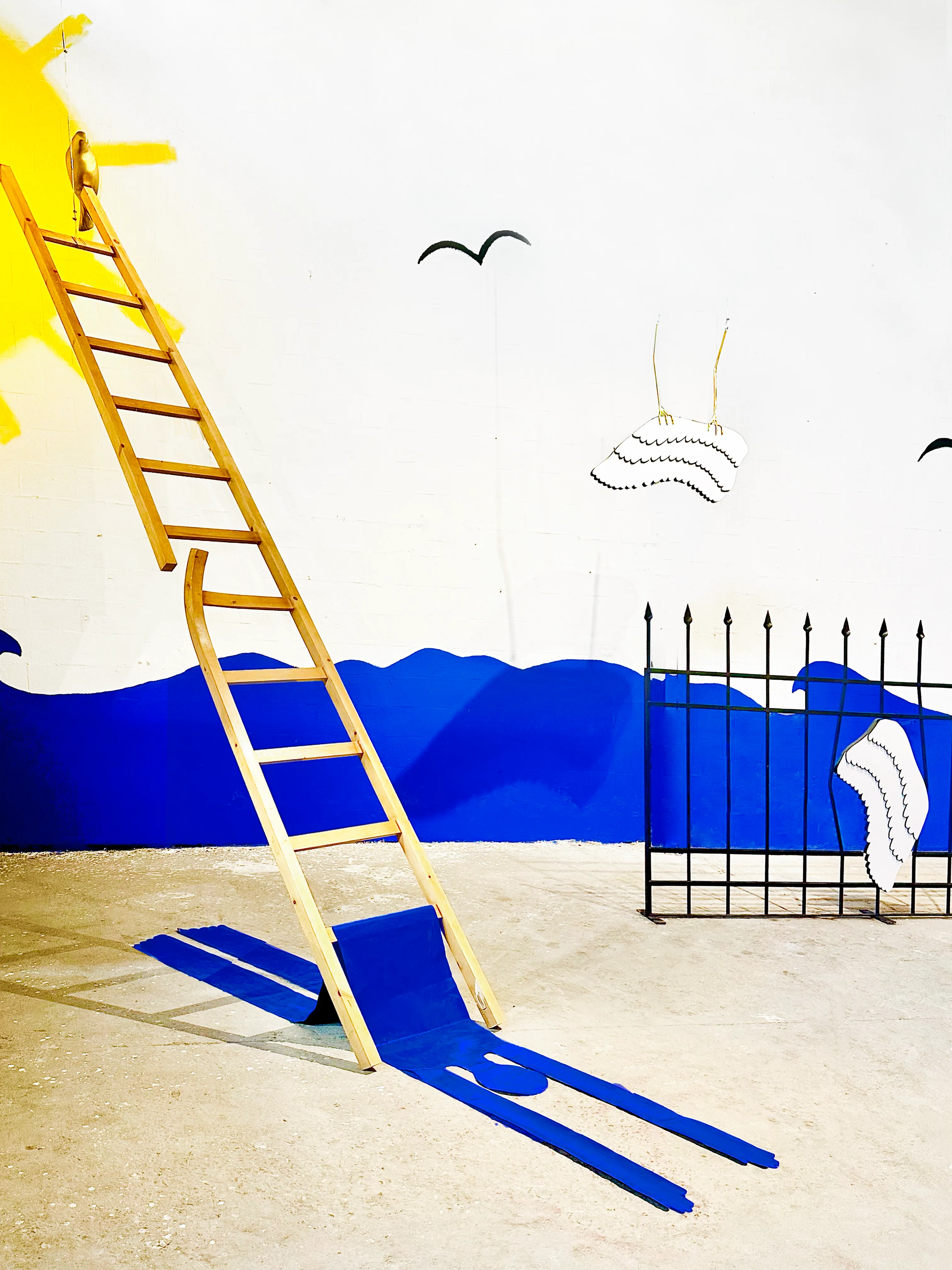
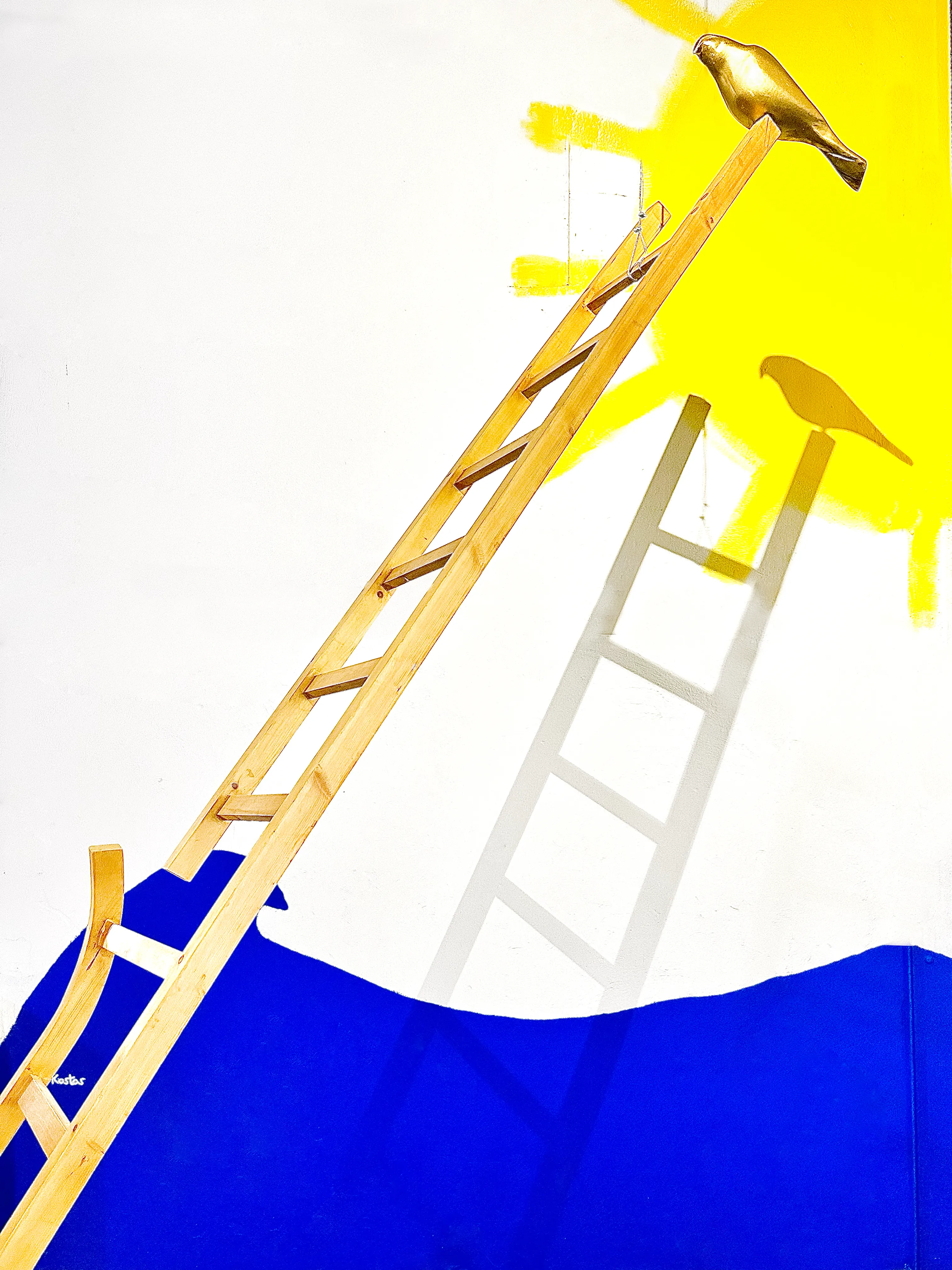
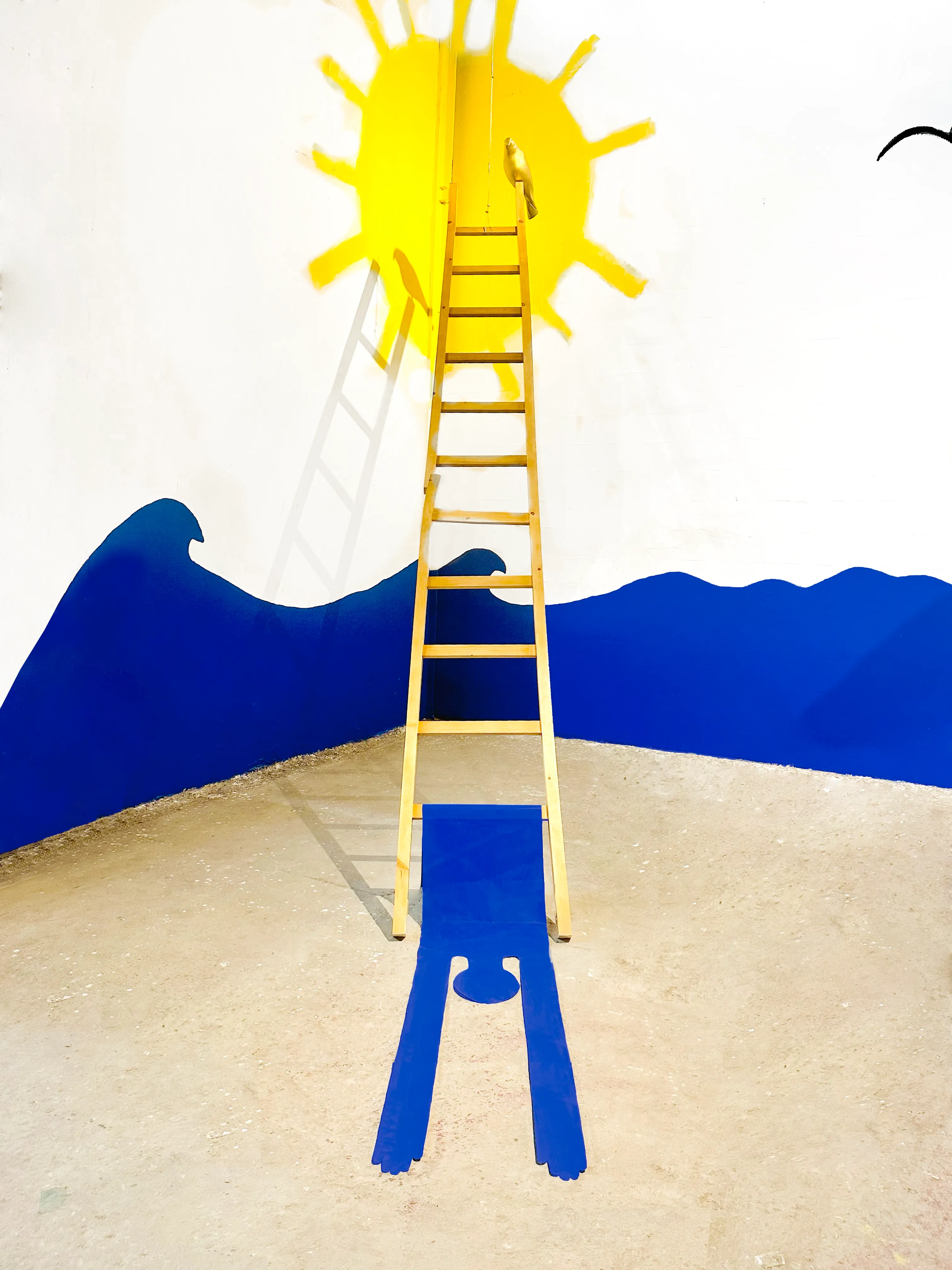
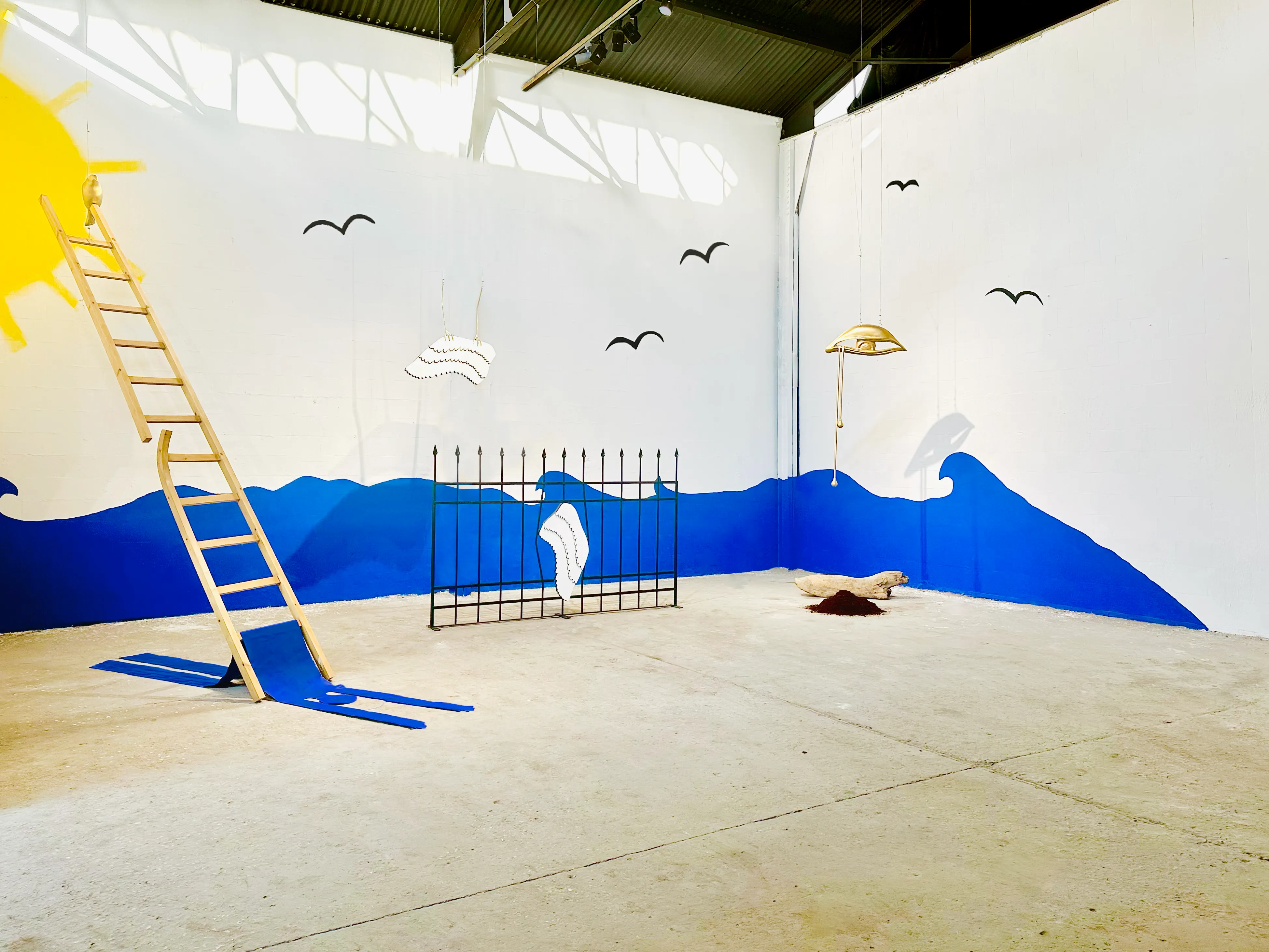
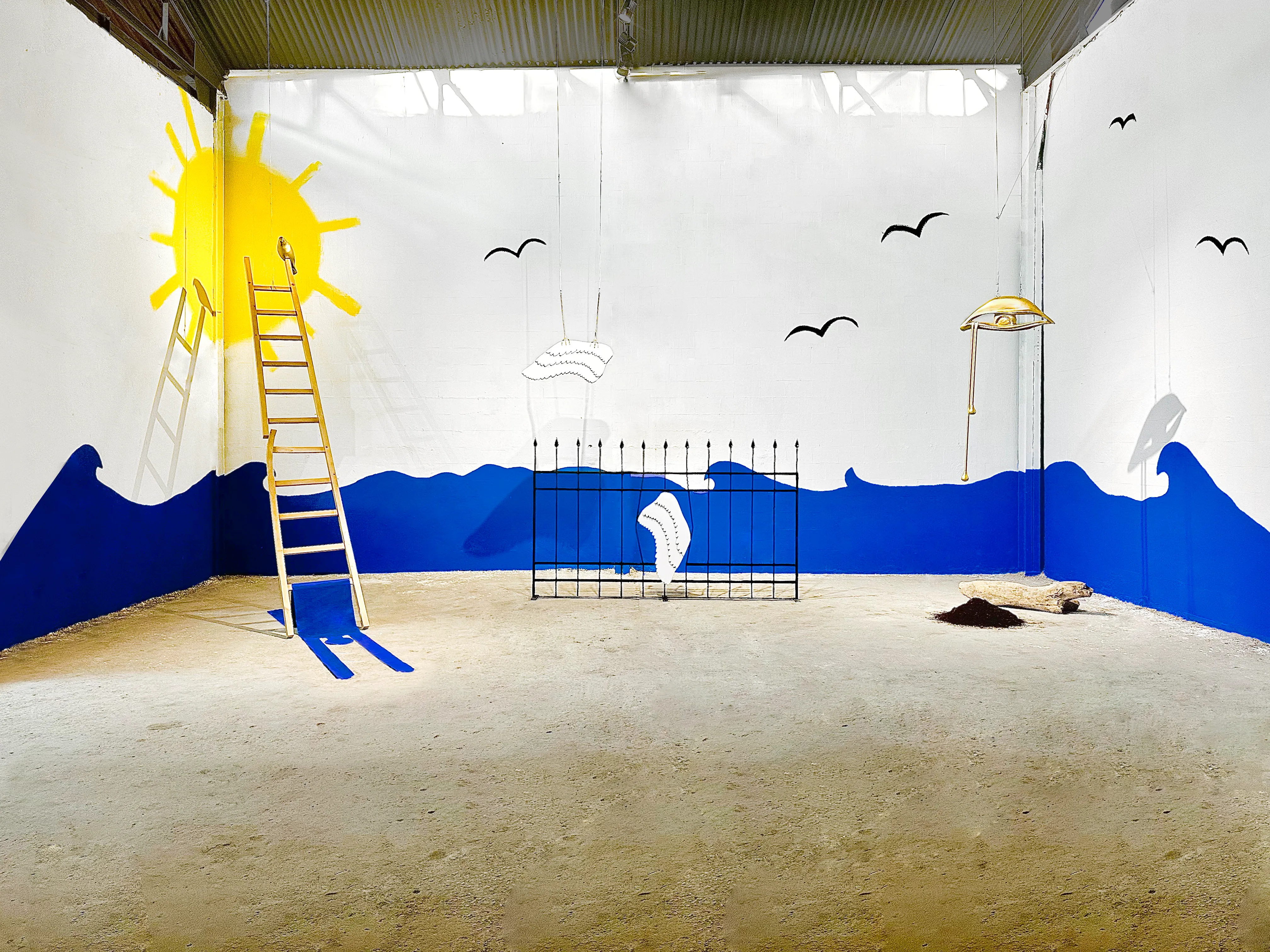
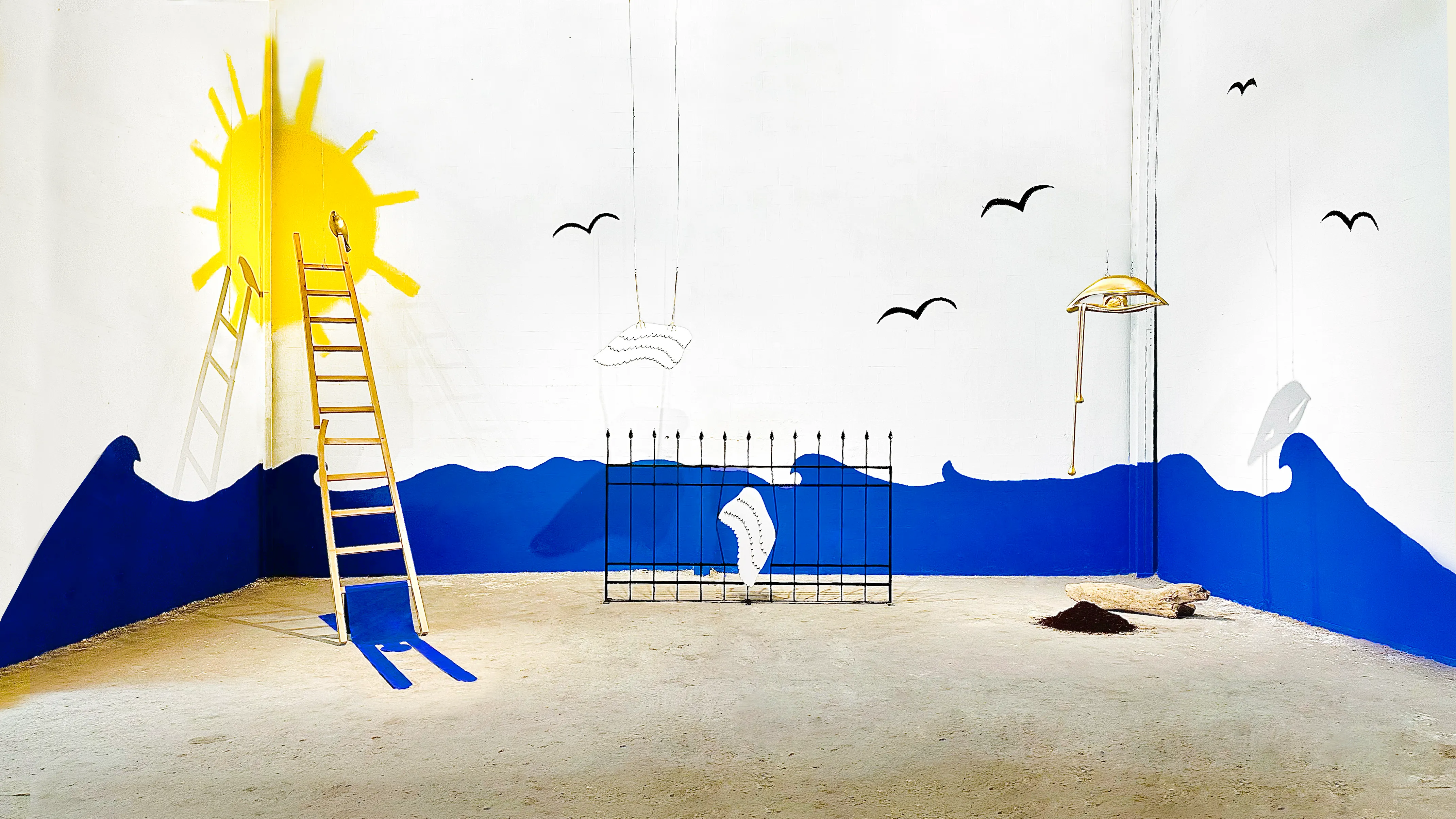
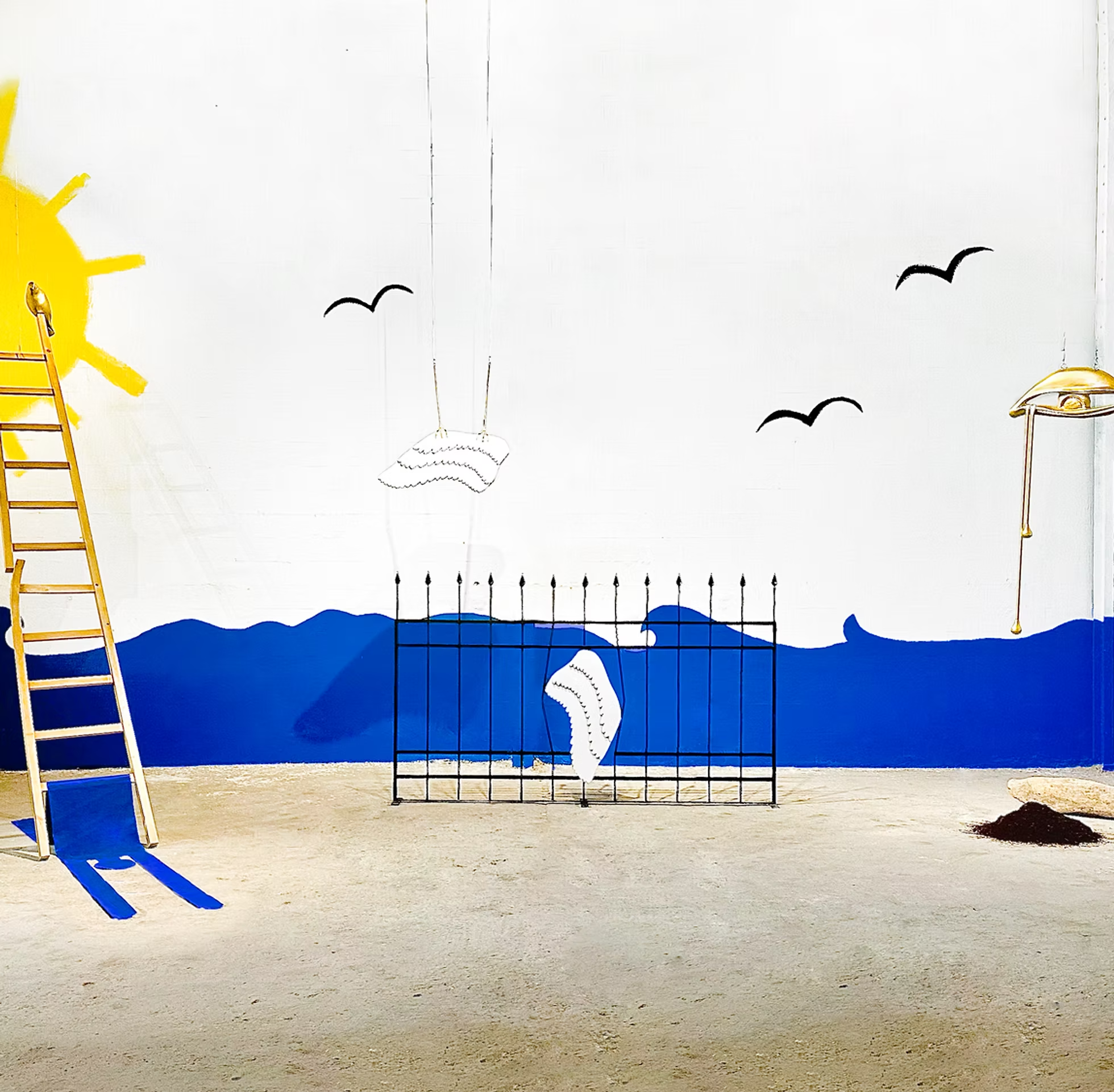
After Horus removes the wings, Icarus refuses to abandon his ascent. He cuts down the remaining trees and constructs a ladder approximately five metres high, determined to enter the celestial kingdom by another route. Having watched his warning go unheeded, Horus directs the force of the sun towards the structure. A step breaks, and Icarus falls.
The installation does not show the fall itself. It freezes the immediate aftermath. Icarus has just crashed to the ground and Horus looks down at his flattened body.
For the first time across the three acts, Icarus becomes physically visible — but only after his defeat. His fallen figure extends across the floor at an exaggerated scale of approximately three metres. Monumental in size but made from flat vinyl, the human body has lost its volume, verticality and power. The man who sought to rise beyond the human condition has been reduced to an image pressed against the earth.
Above him, a small bronze Horus watches in silence. The disproportion reverses the expected hierarchy. Icarus is enormous but weightless and flattened; Horus is physically small but dense, durable and elevated. The god does not require monumentality to dominate the scene.
The broken ladder retains the excessive scale of the ambition that produced it, but now stands as an architecture of collapse. Like the fallen body, it holds the consequence in place. The ascent has ended, but its damage remains physically present.
Act III therefore suspends a moment after the action rather than during it. The fall is over, yet the scene has not become history. Horus is still looking. Icarus has only just struck the ground. The installation prolongs the instant in which ambition becomes defeat and vertical aspiration is converted into horizontal matter.
Nature's response is not an arbitrary punishment imposed without warning. It is the return of consequences that were repeatedly announced and deliberately ignored.
Icarus attempted to enlarge himself beyond the human condition, but he becomes visible only at the moment of his disappearance. Horus remains. The earth remains. Nature, even wounded and depleted, outlives the person who believed he could dominate it.
The human enlarges himself until he disappears.
Nature remains.