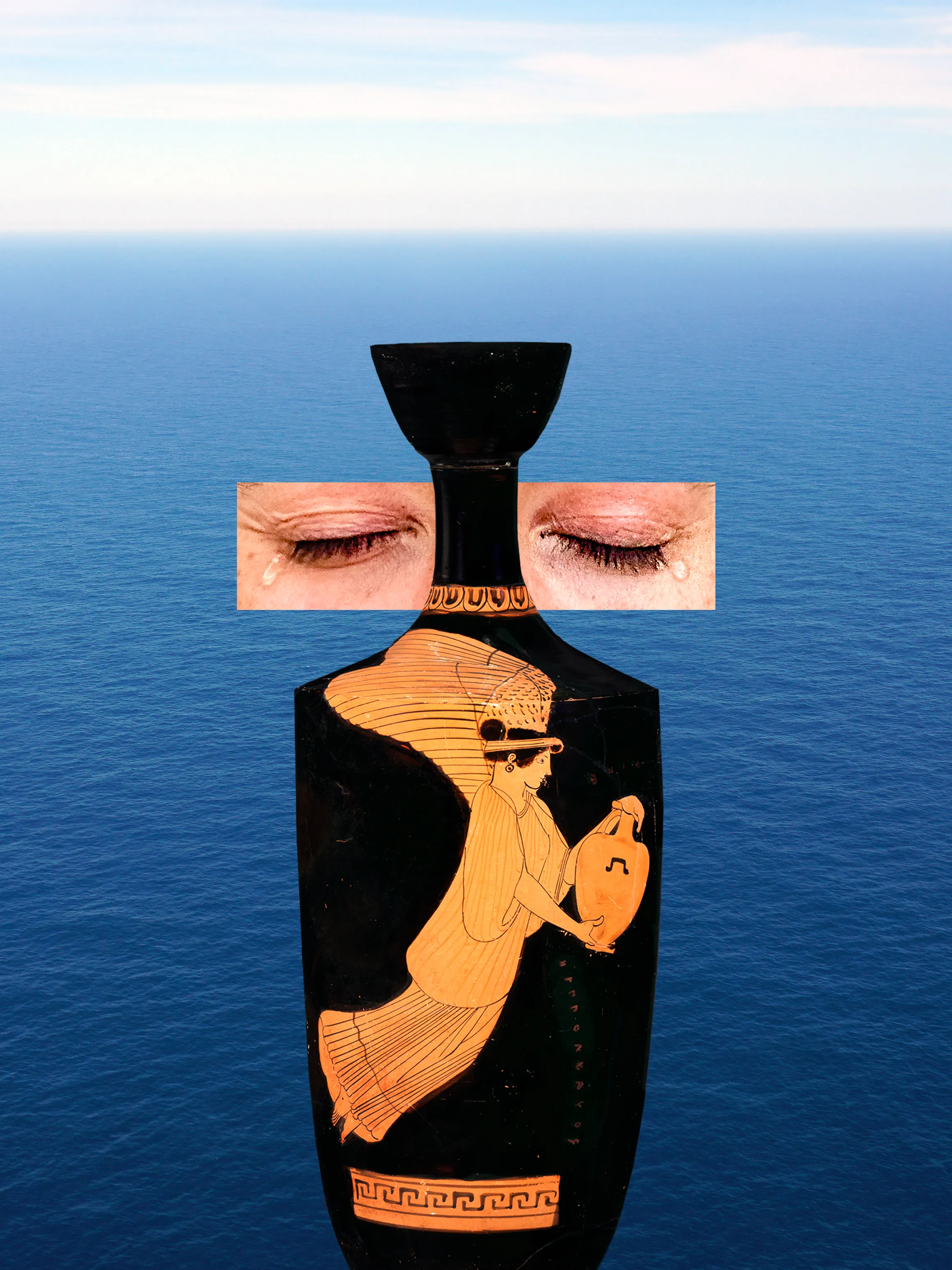
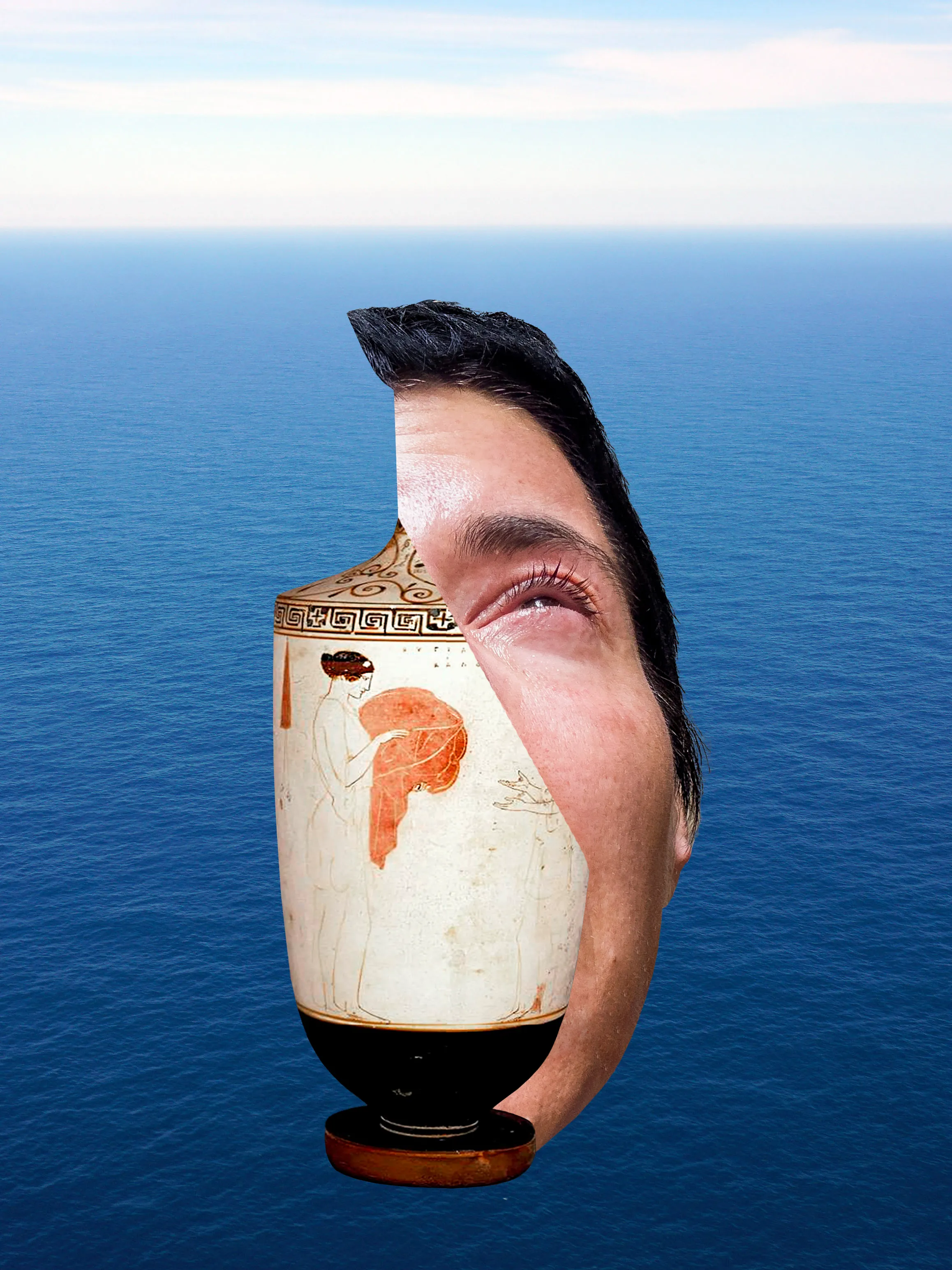
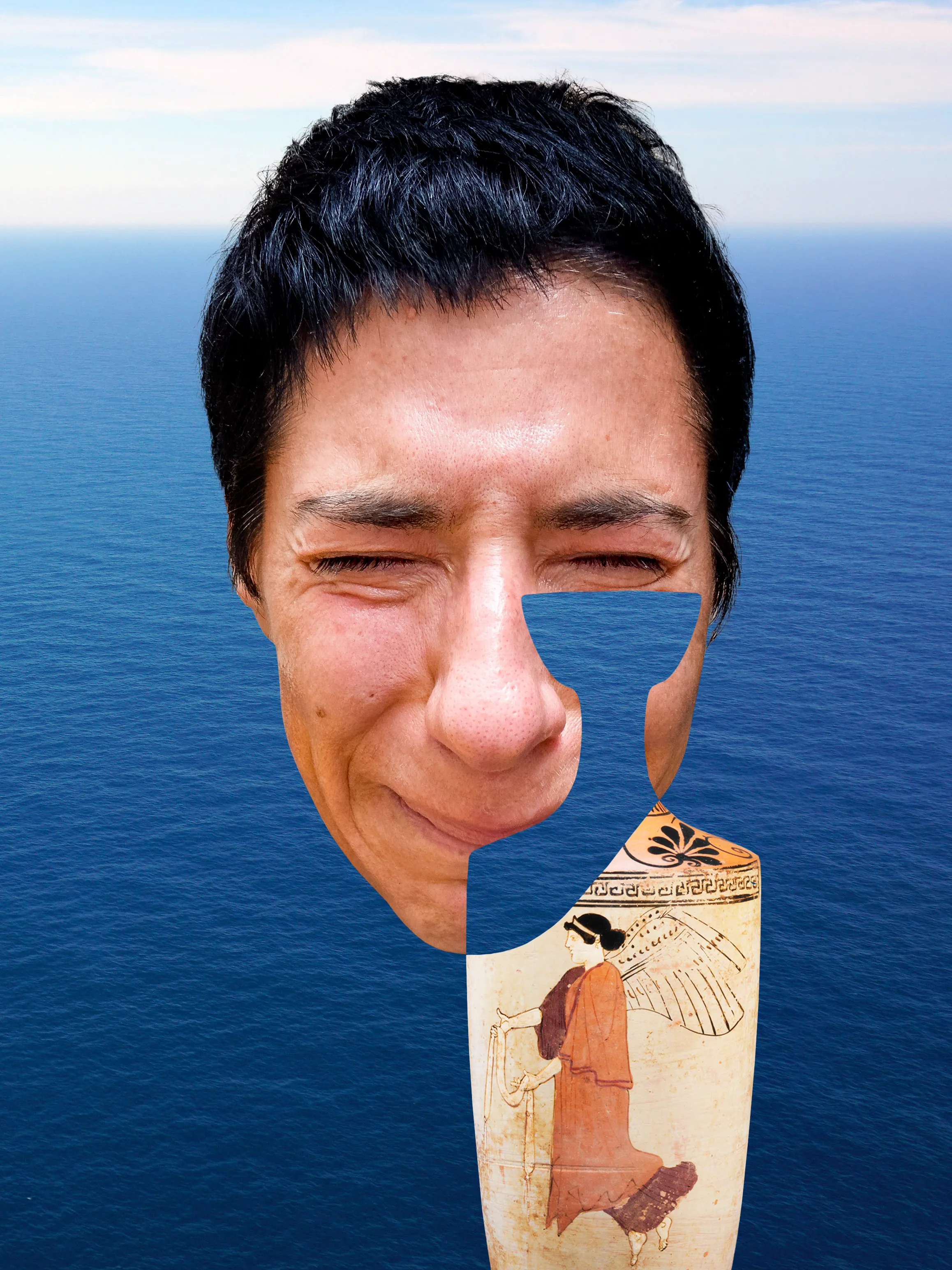
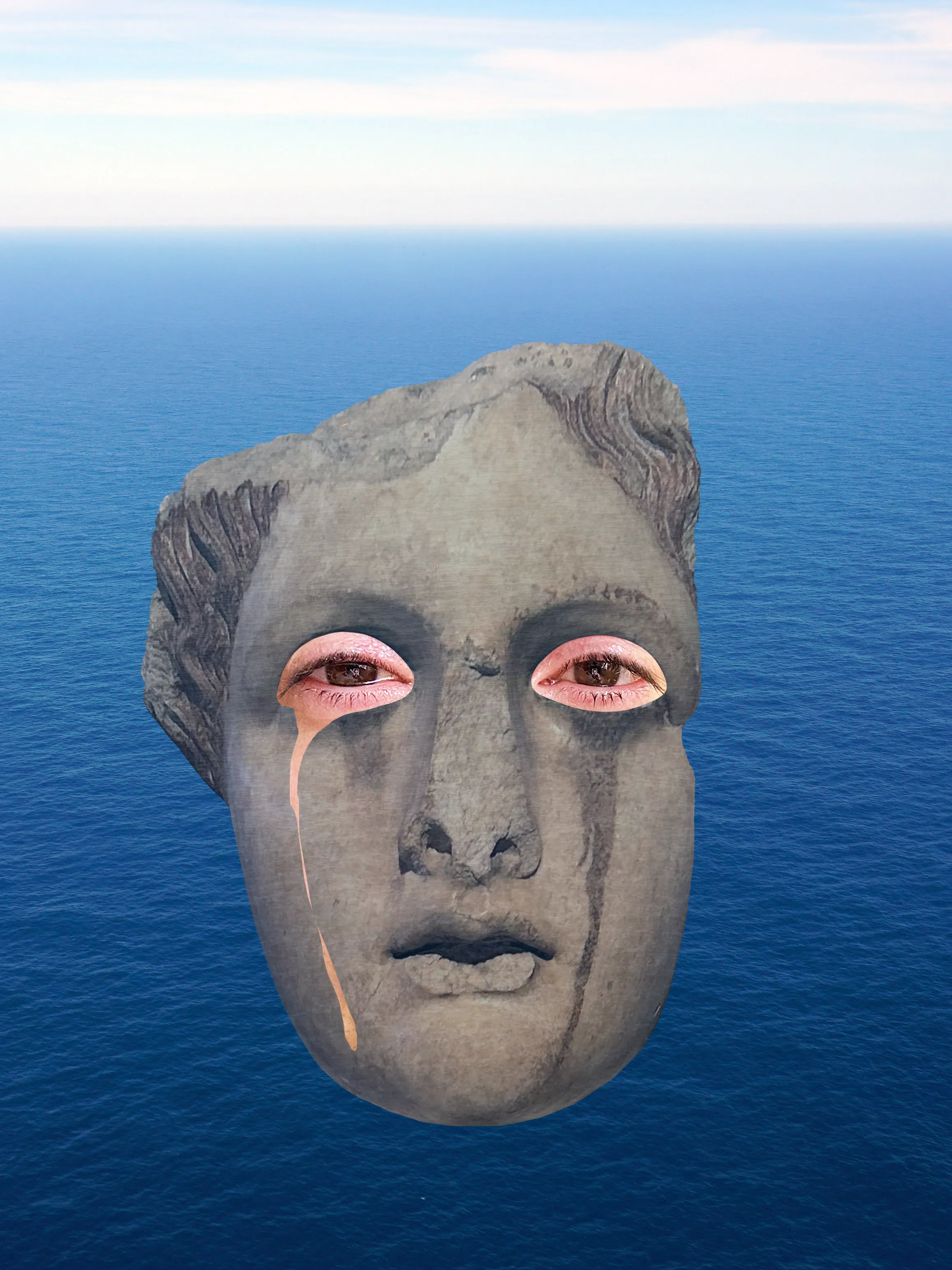
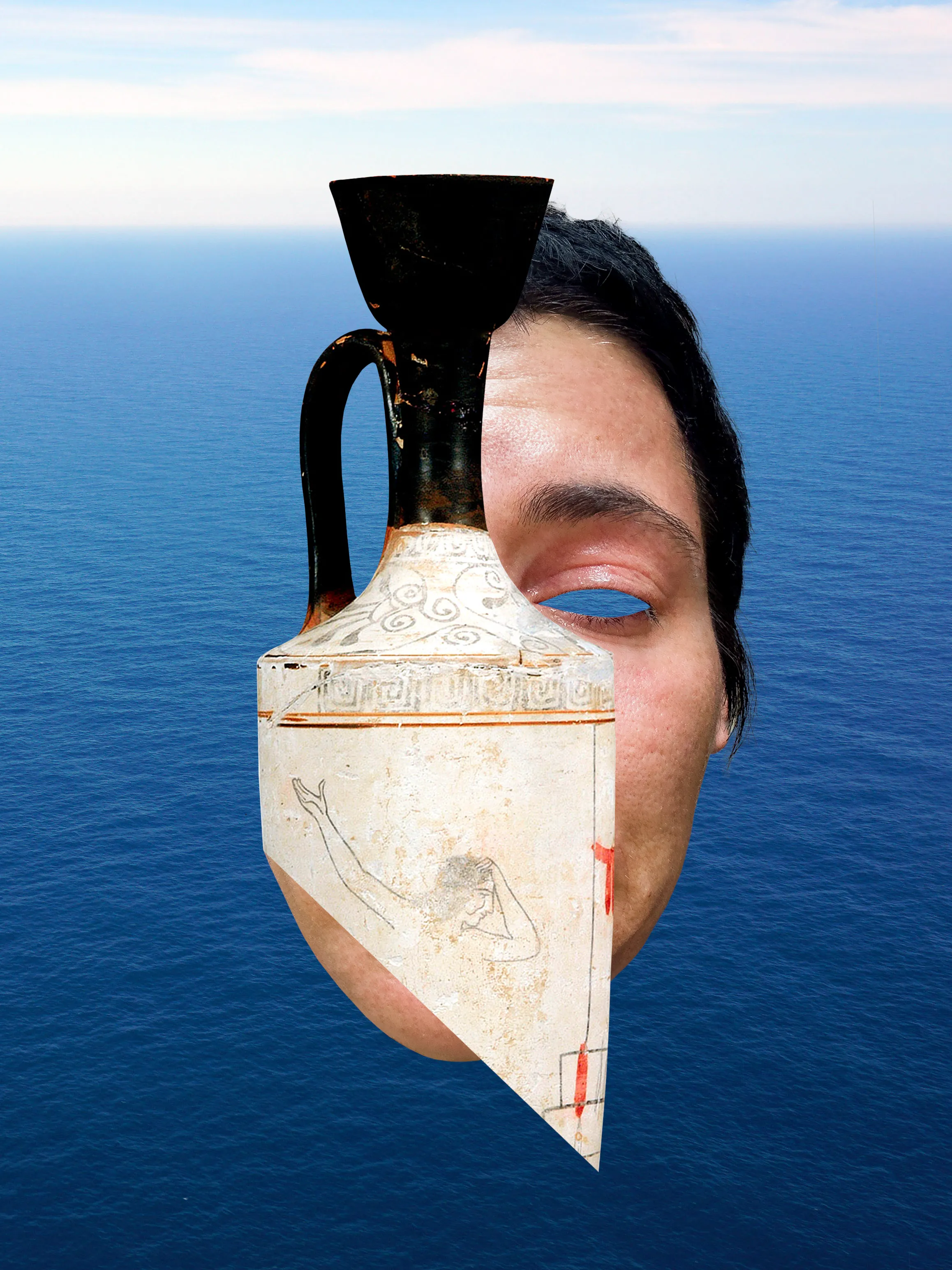
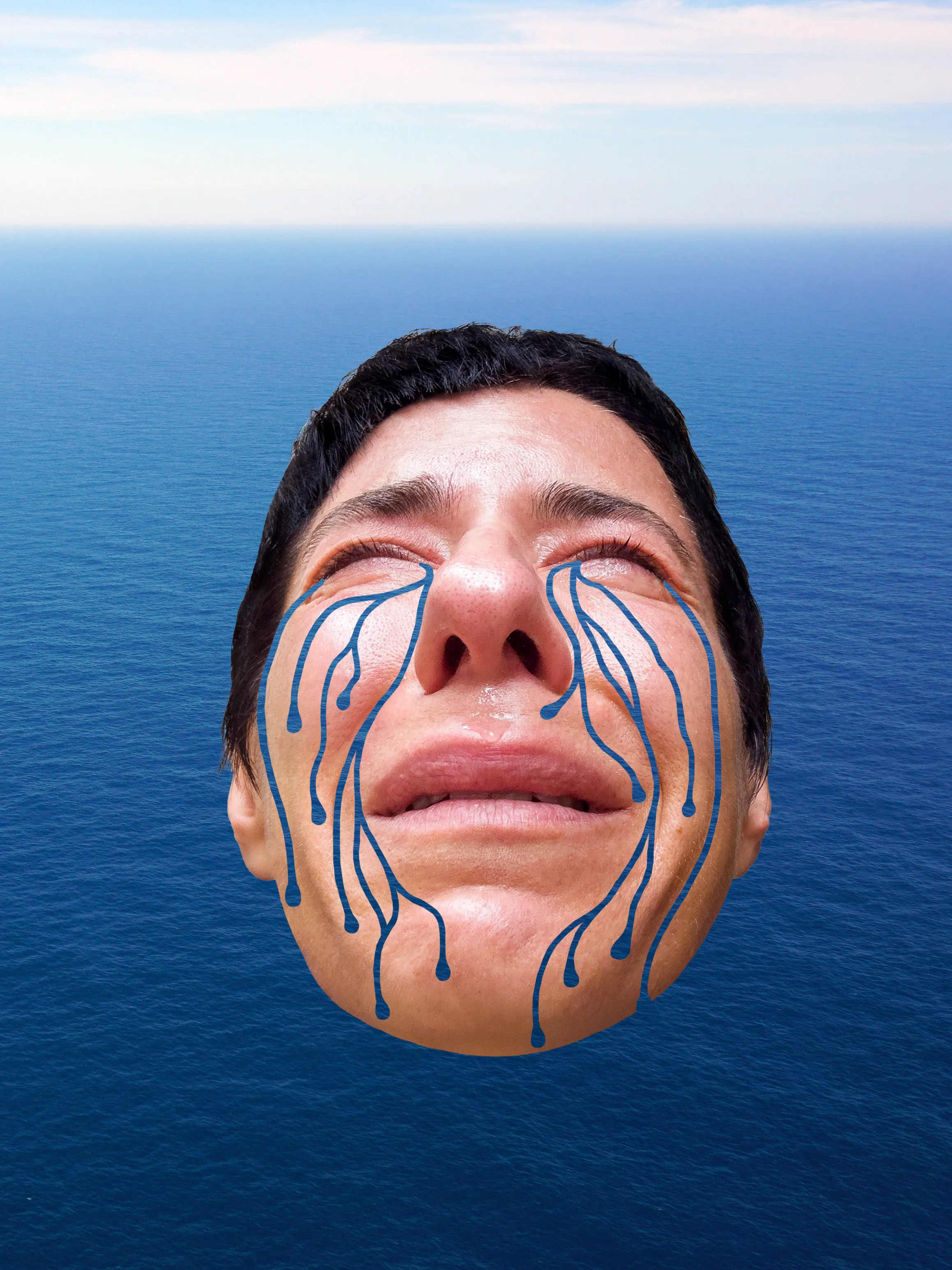
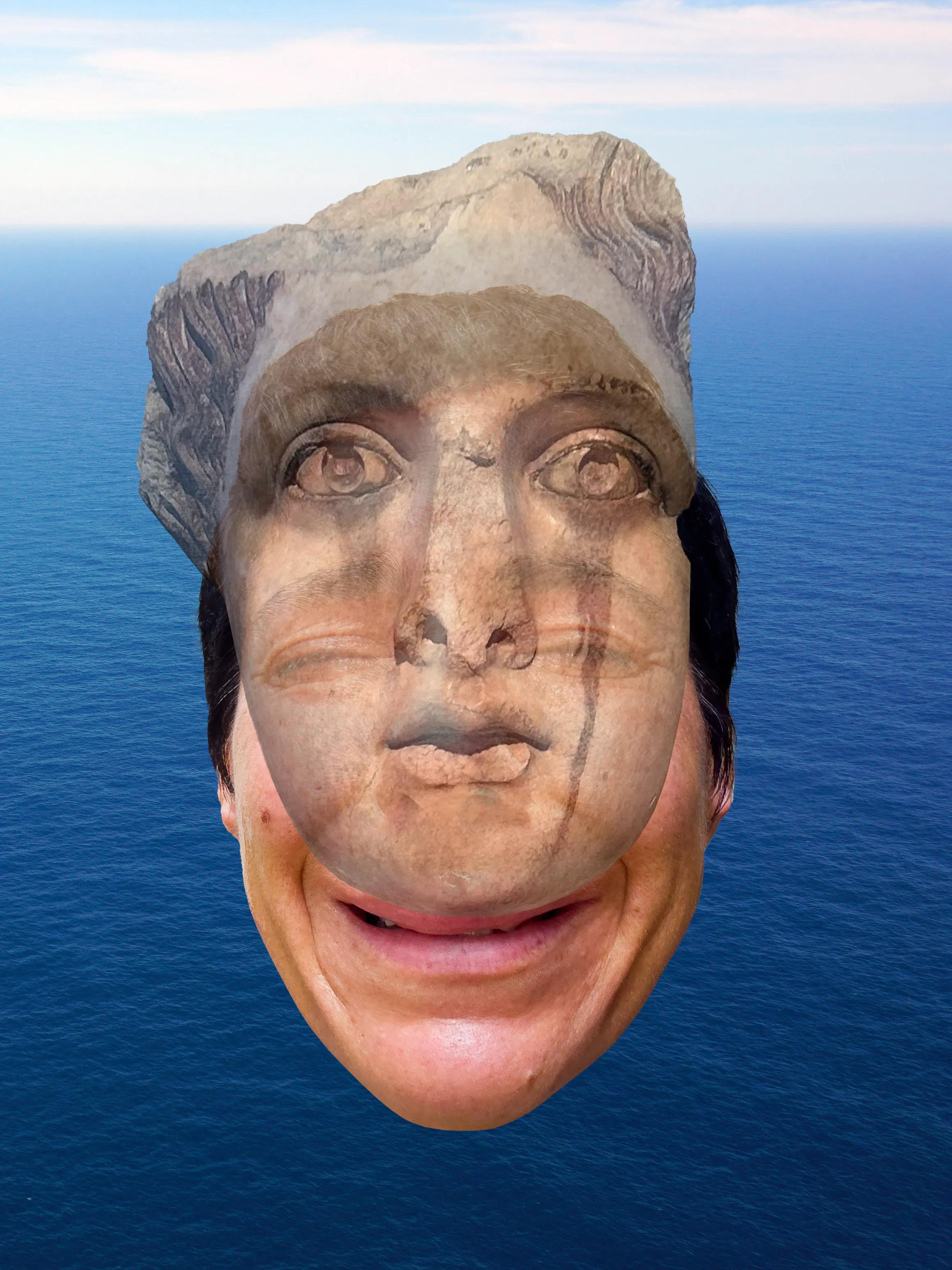
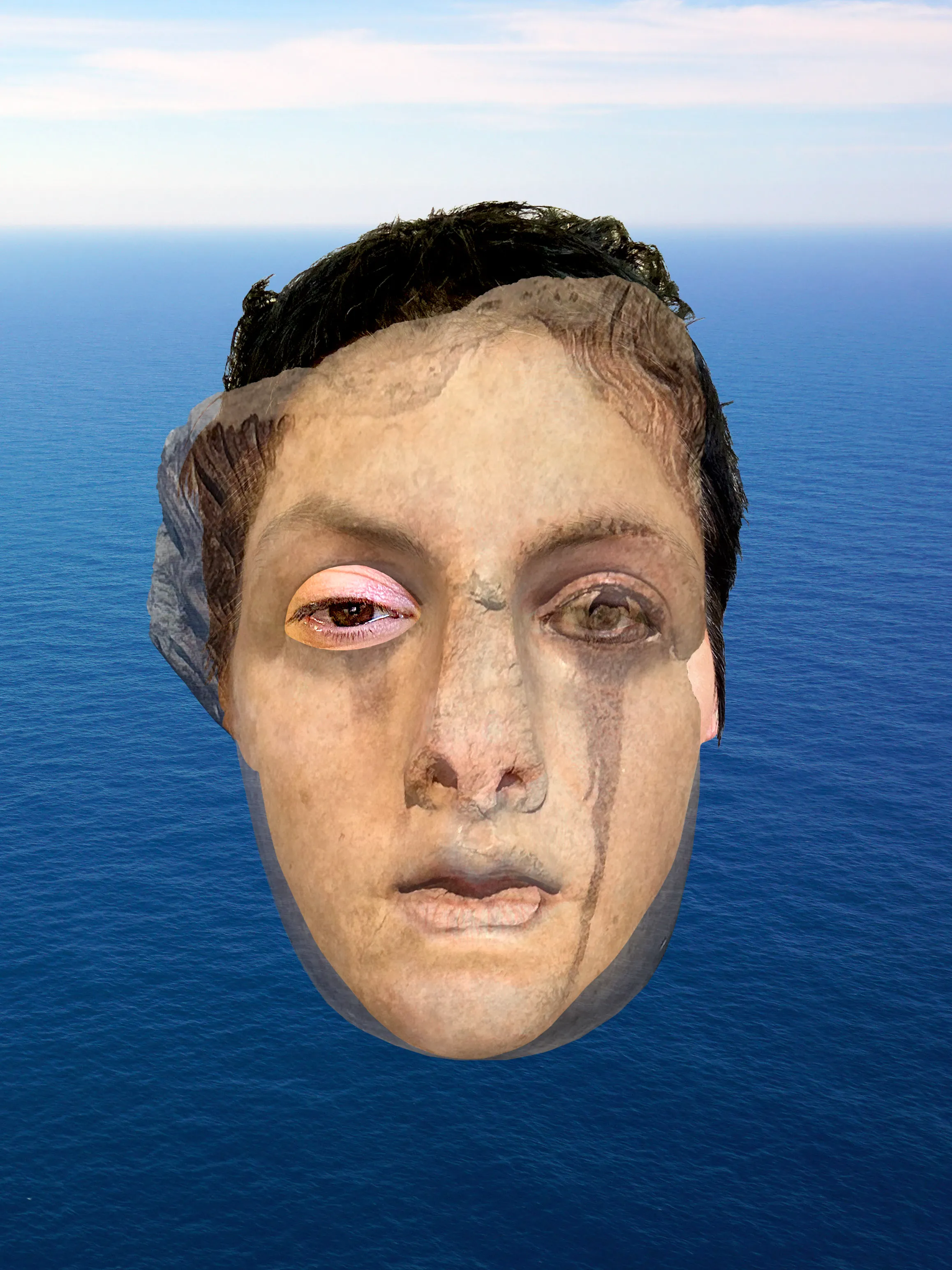
Autoportrait de moi en larmes belongs to Γόον μοι ἔννεπε, Μοῦσα and begins with a personal loss. After the death of her father, Kosmatopoulos photographed herself crying during repeated visits to his grave, over more than a year. Each image records a different state of the same grief. Tears cloud vision, distort features and interrupt the gaze on oneself that self-portraiture depends on: the camera holds what her own eyes could no longer hold steady.
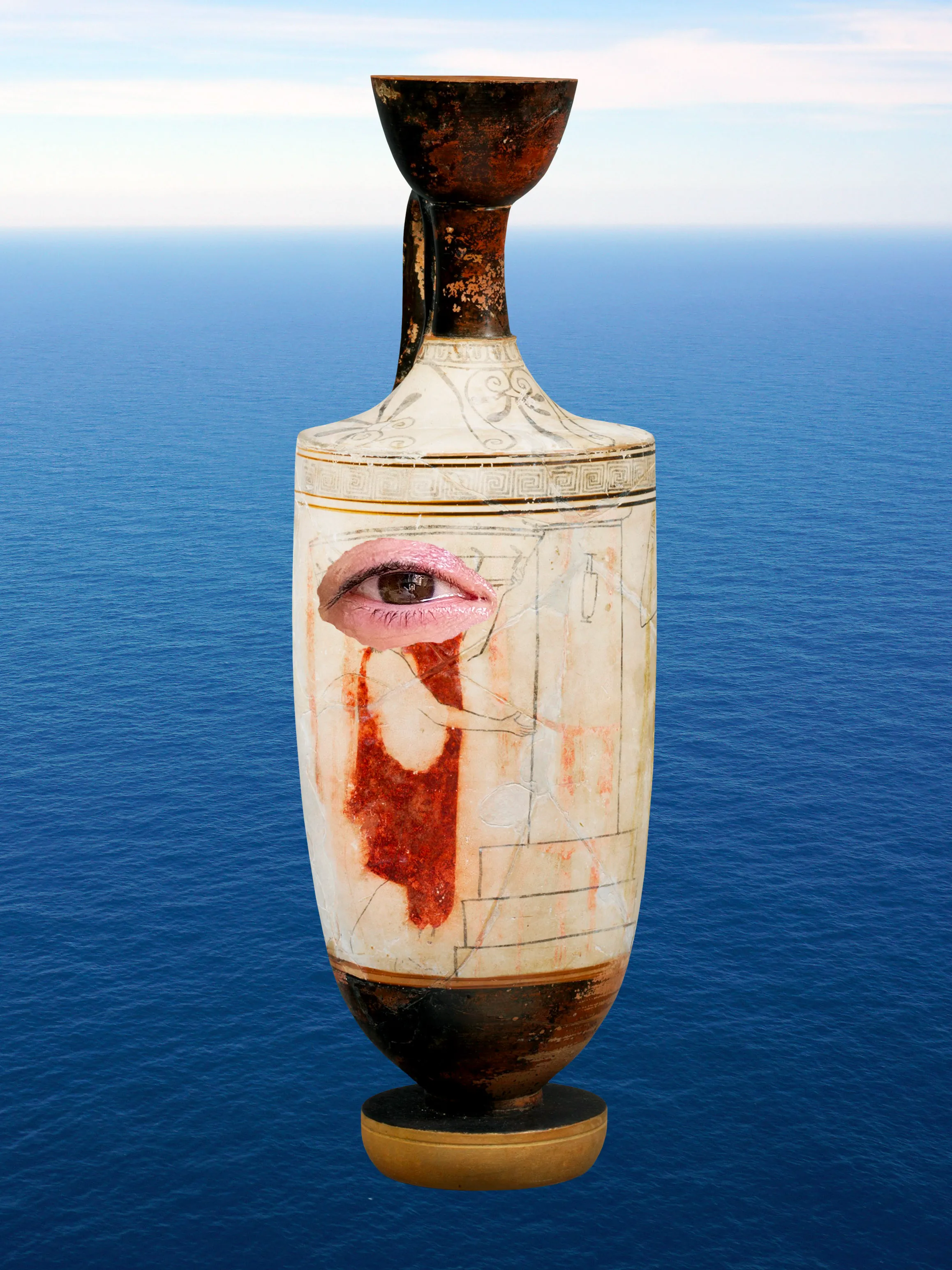
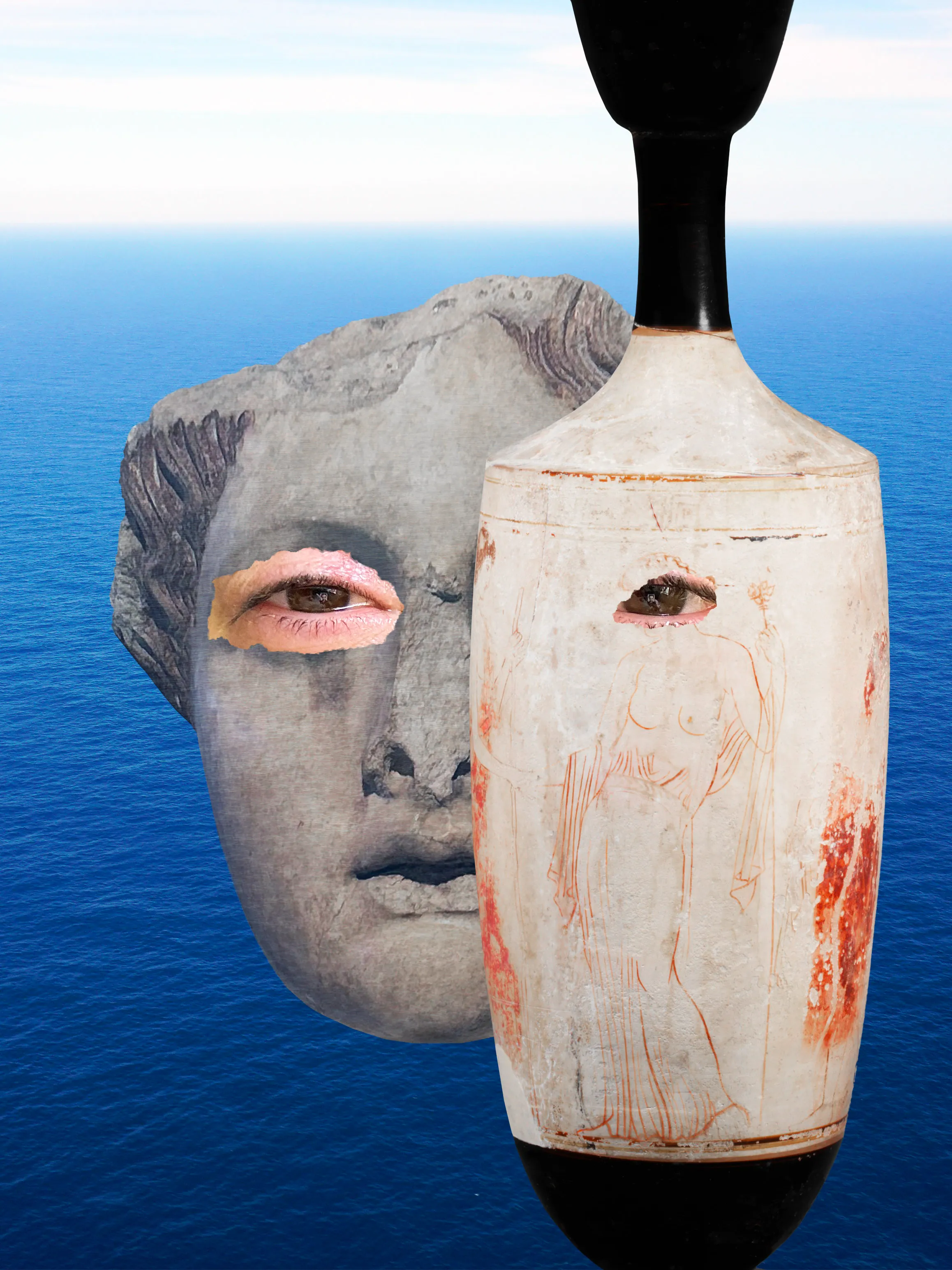
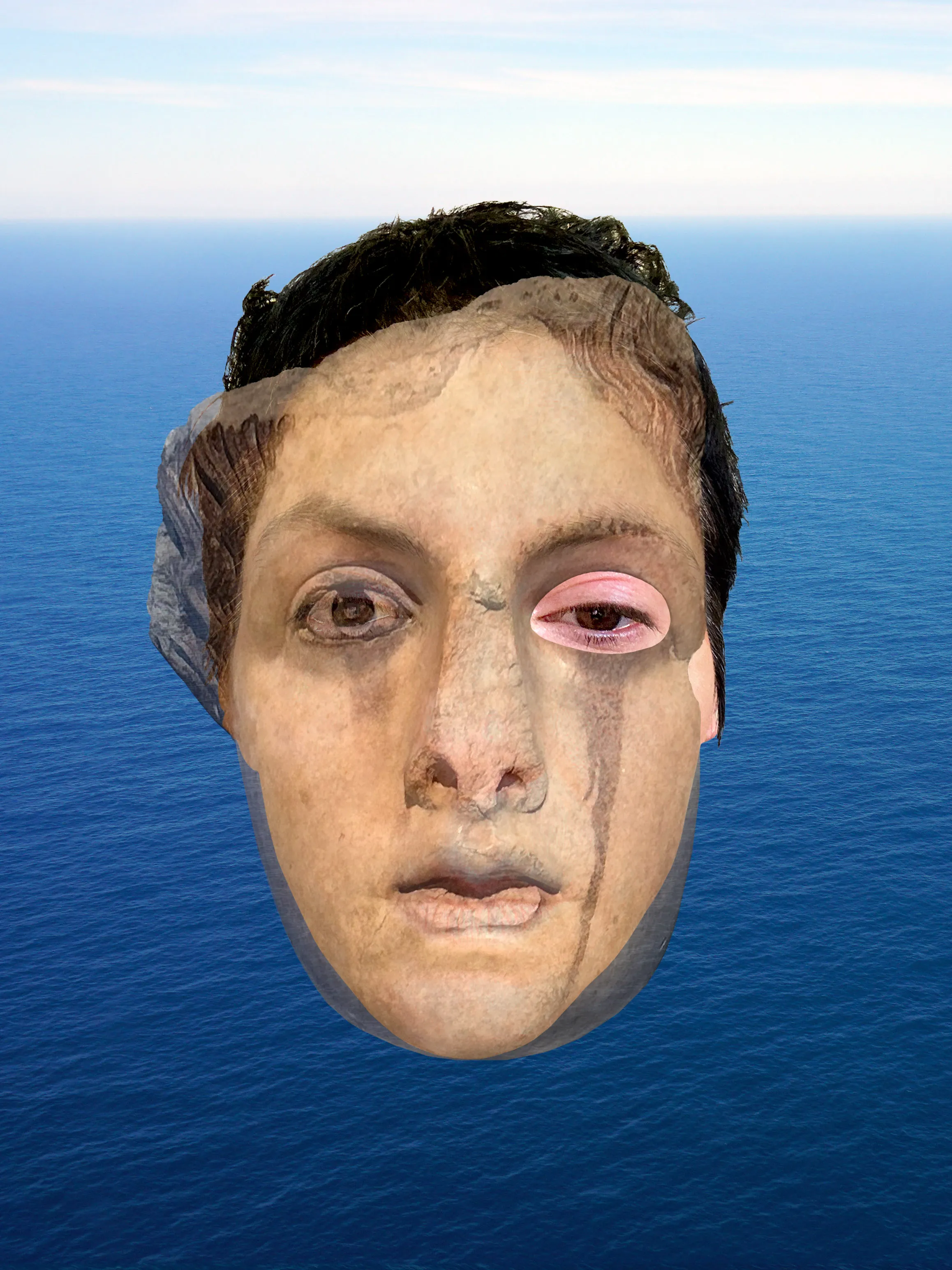
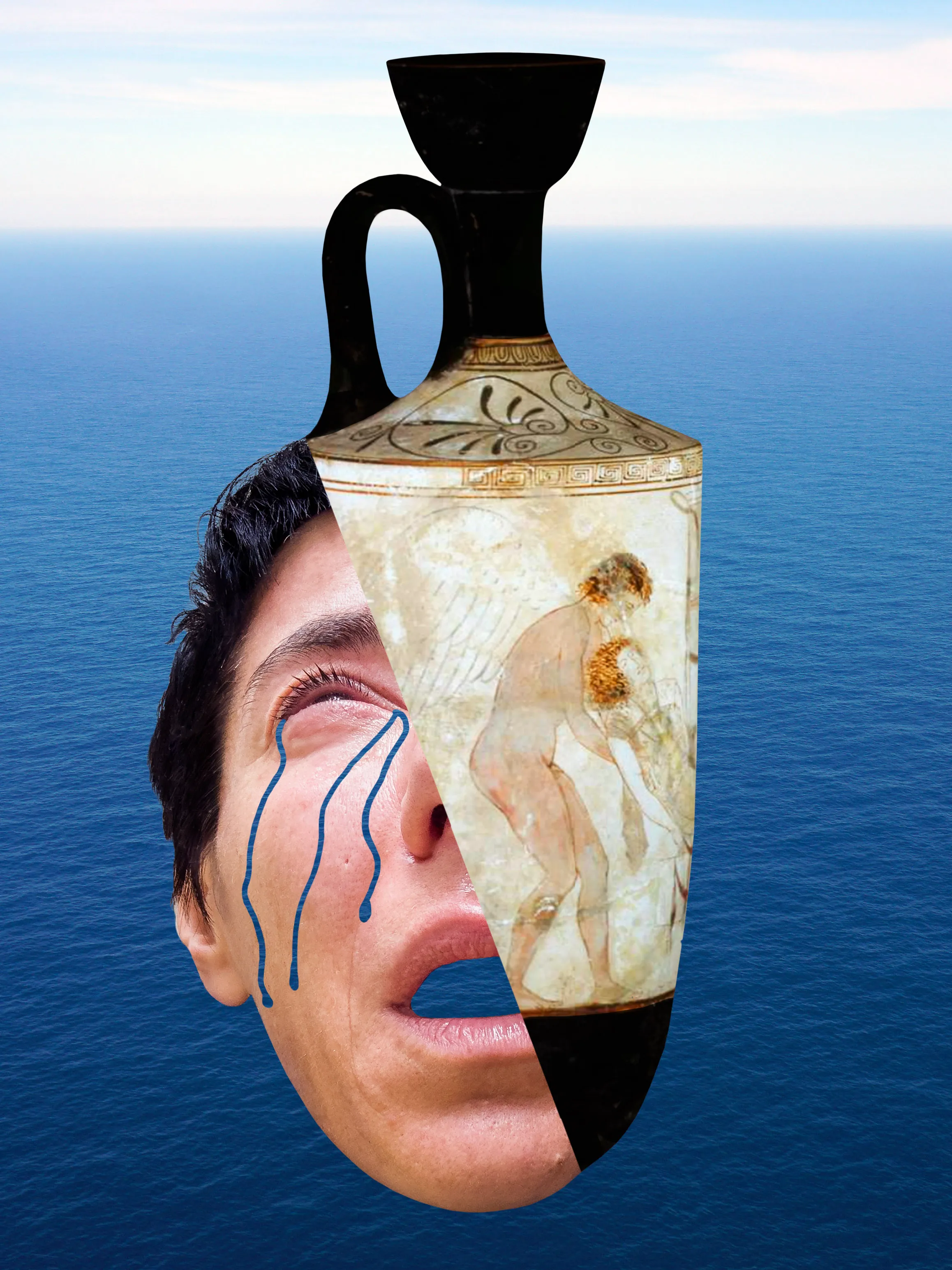
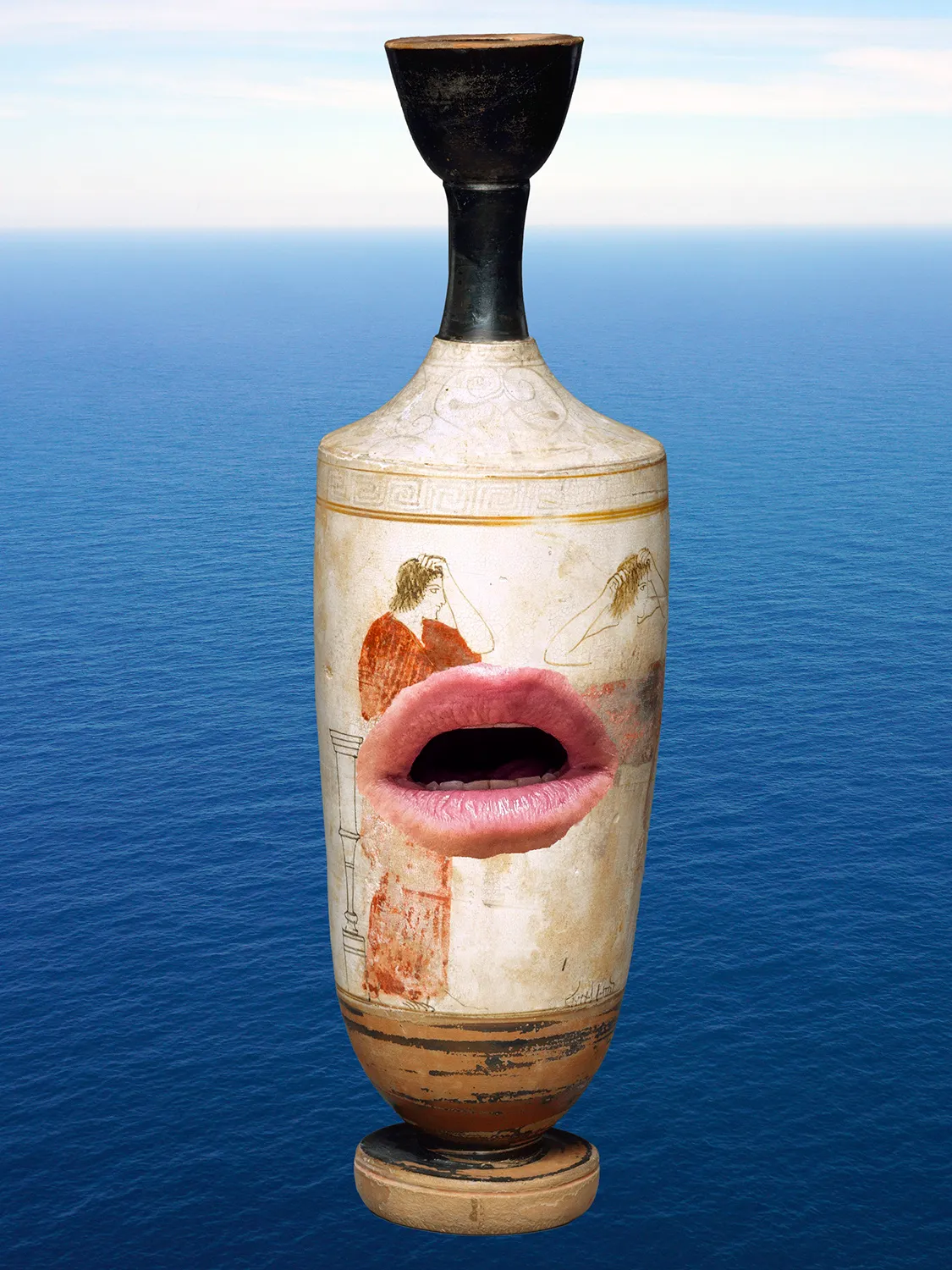
She then fragmented these photographs and recomposed them digitally with white-ground lekythoi — the Greek funerary vessels of the fifth century BC that were placed on tombs — and with the acrolithic head of Aphrodite at the Acropolis Museum, whose oxidised bronze eyelashes have left stains running down the marble like tears. On one of the lekythoi, a woman in mourning raises her hand to her head before a grave stele: an ancient mourner, whom the artist’s face comes to join. On another, Sleep and Death carry away the body of a fallen warrior. The historical images do not explain the face; they enter it. An intimate loss thus joins a longer history of lamentation, that of the women who, since antiquity, have given mourning a shared form.
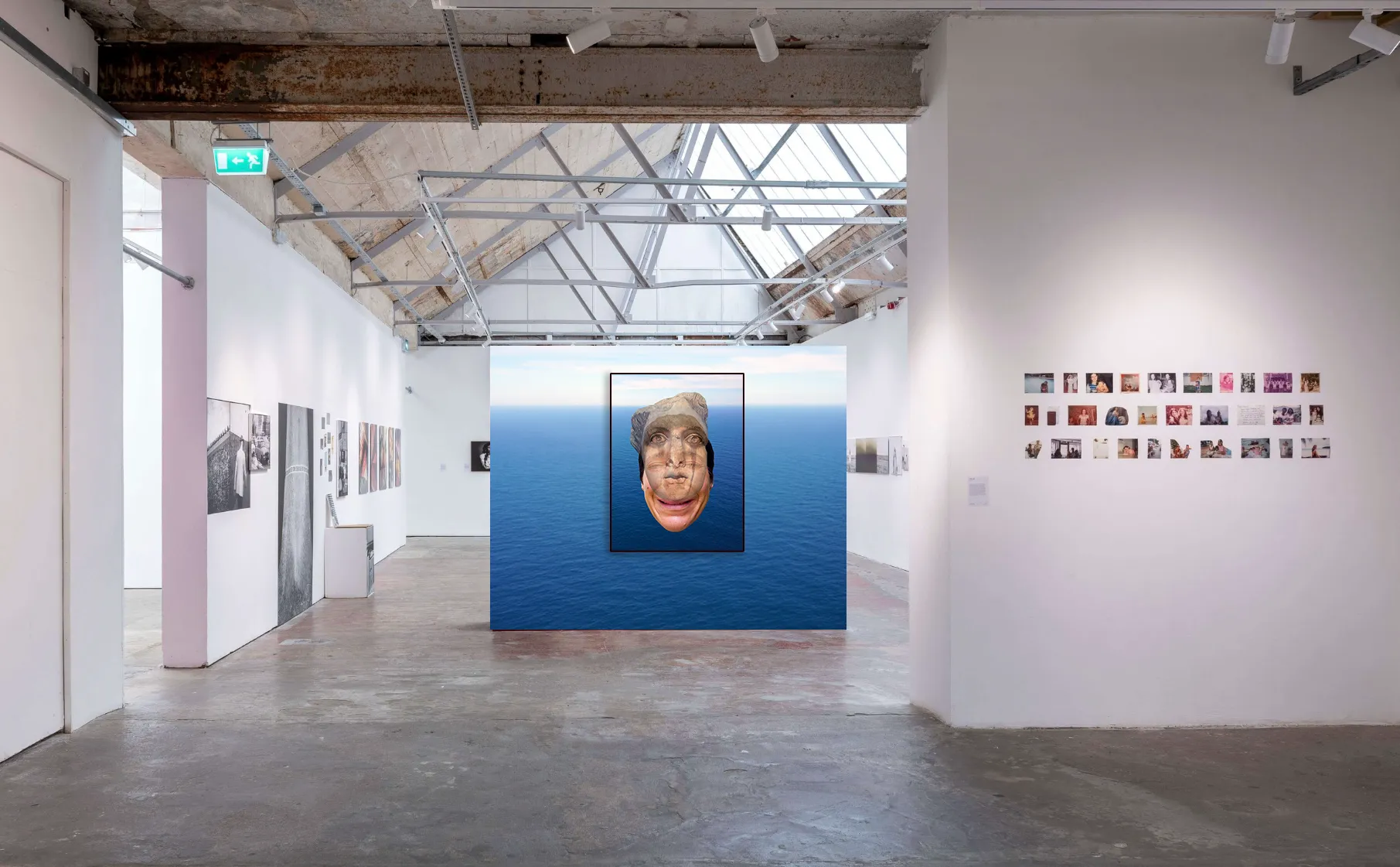
The sea fills the background of every image. It gives tears their scale: what begins as moisture held by the eye extends beyond the limits of the portrait. Where the eye or the mouth opens, the sea appears, as if water passed through the face. The face seems at once submerged by grief and enlarged by it.
The images work as a chorus. From one to the next, the same face moves from silence to cry, from closed eyes to tears. Like the mourners, these figures do not tell a story: they give form to the moment when speech withdraws and the face becomes the place where loss is written.
The work carries tears out of an intimate moment and into public space. Crying at a grave is among the most private of experiences; enlarged and exhibited, the same tears are offered to the gaze of strangers. Kosmatopoulos does not hide what is usually kept out of sight, and in doing so she questions the display of pain itself: who is allowed to show grief, where, and in front of whom. Like the ancient mourners who wept in public so that loss could be shared, she makes her sorrow visible rather than holding it back. The gesture is also cathartic: showing grief becomes a way of passing through it. The tears remain her own, rooted in a specific loss, but the image no longer belongs only to the moment in which it was made. She takes her place among the mourners whose gestures have carried grief across the centuries. A tear has a shape. Grief does not. The sea gives scale to what the face can no longer contain.