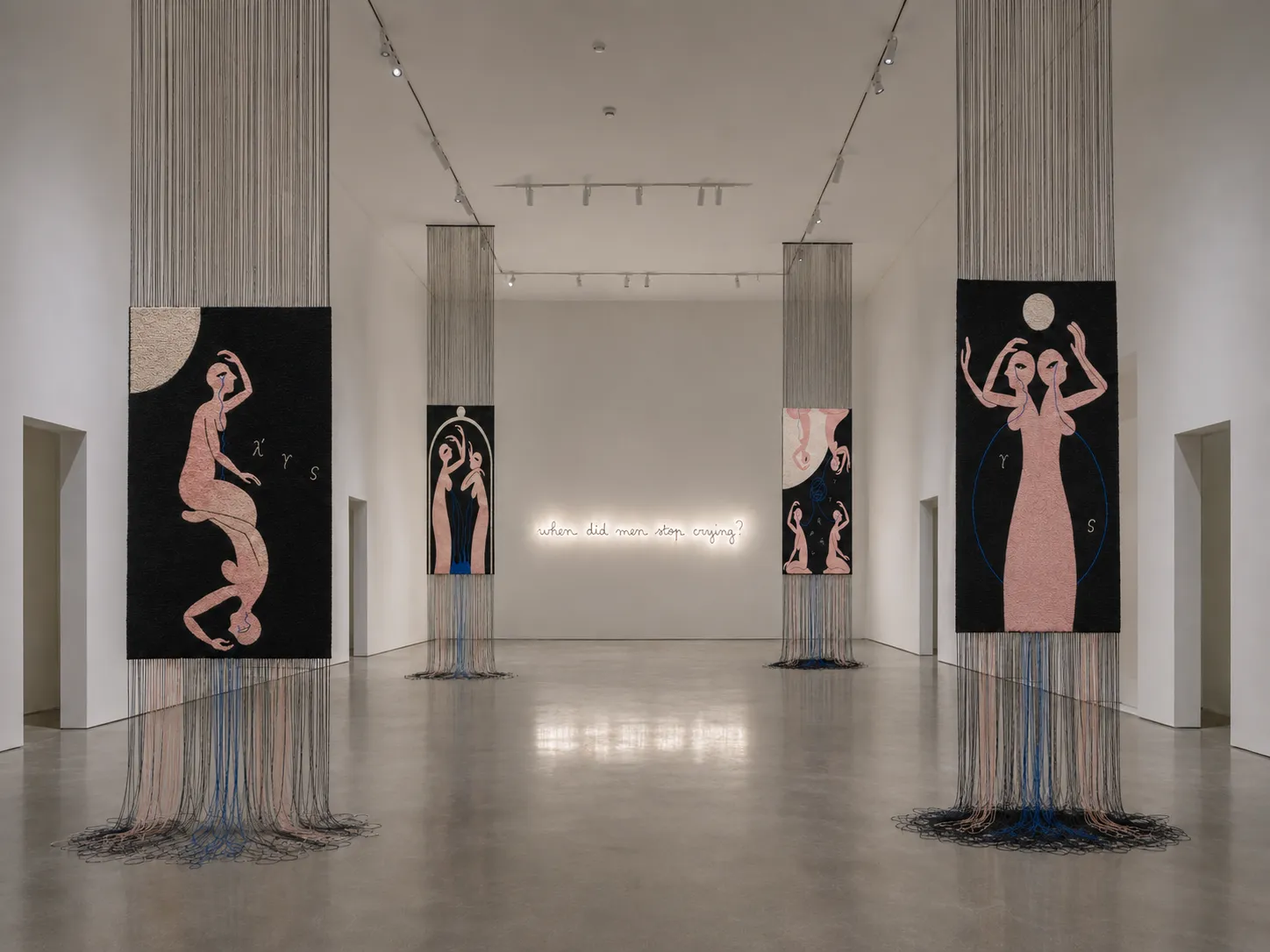
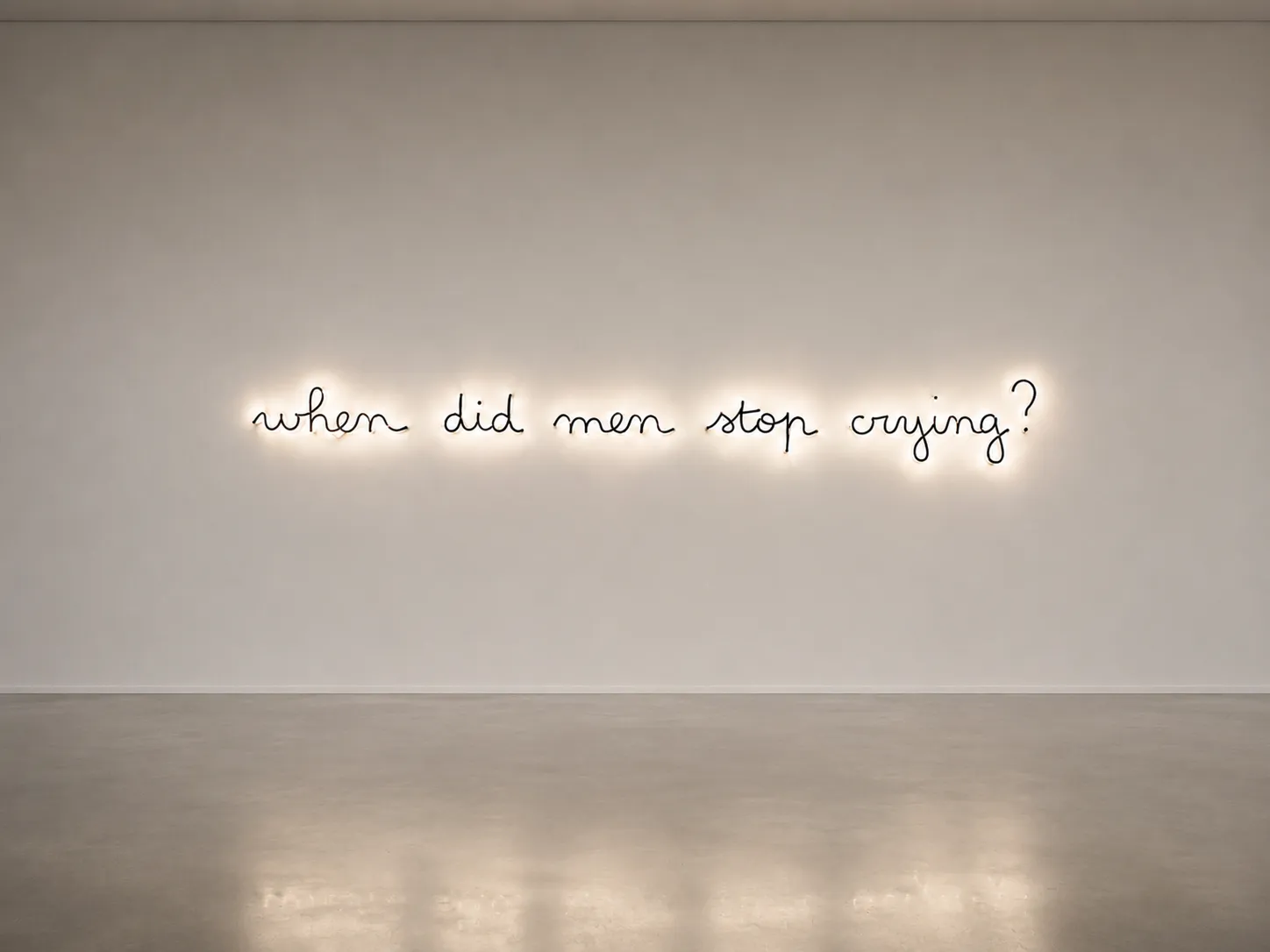
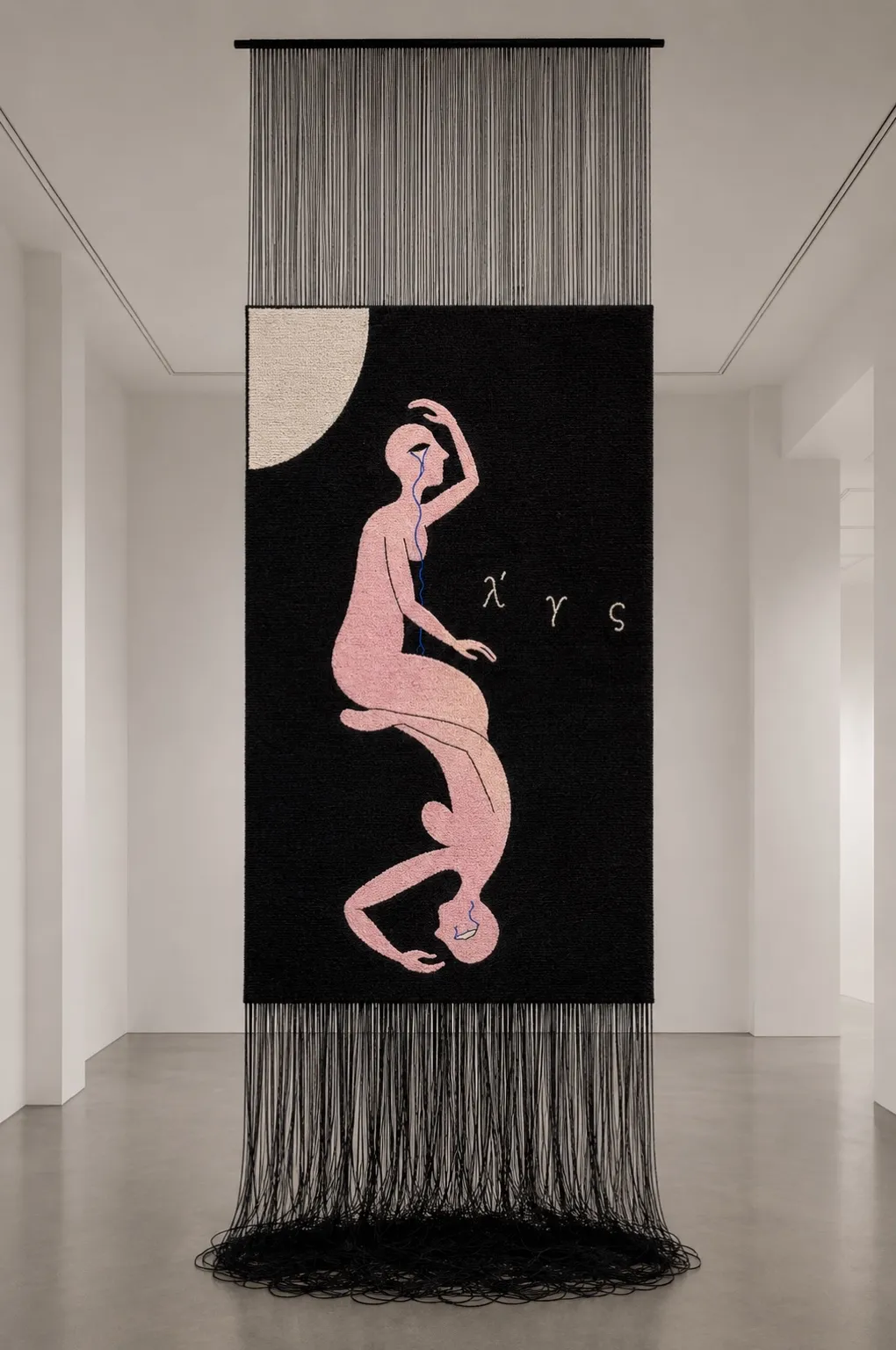
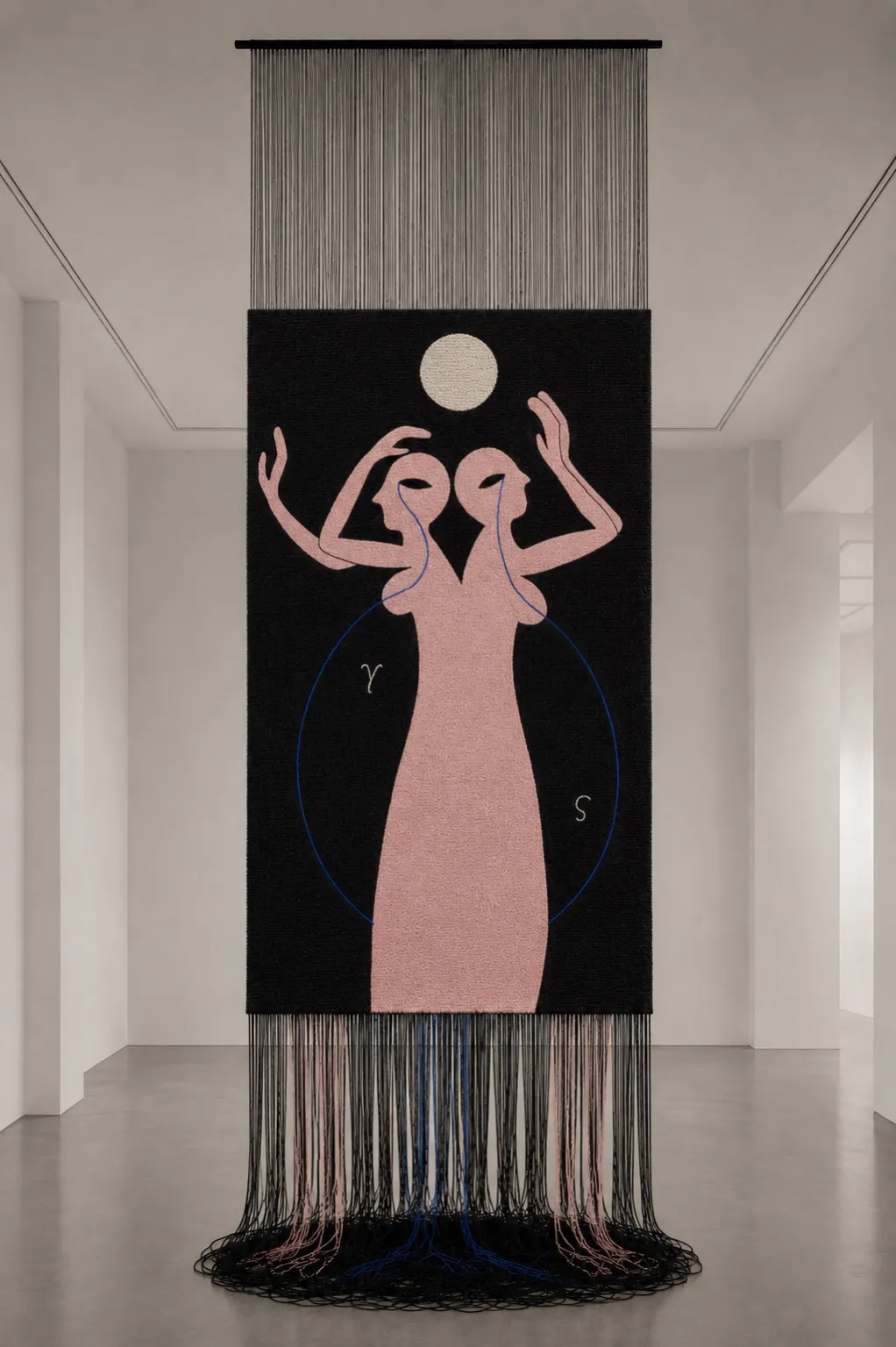
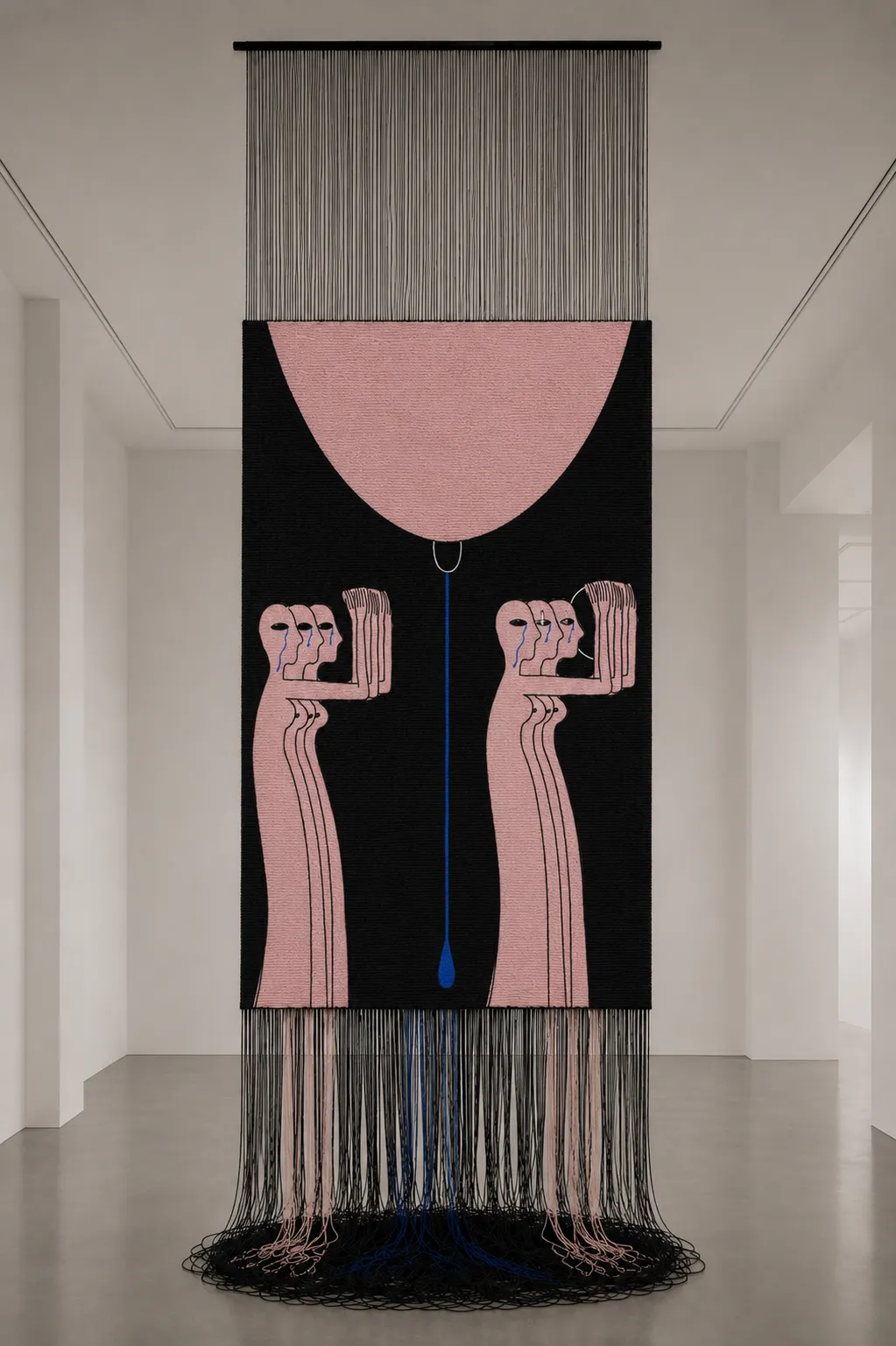
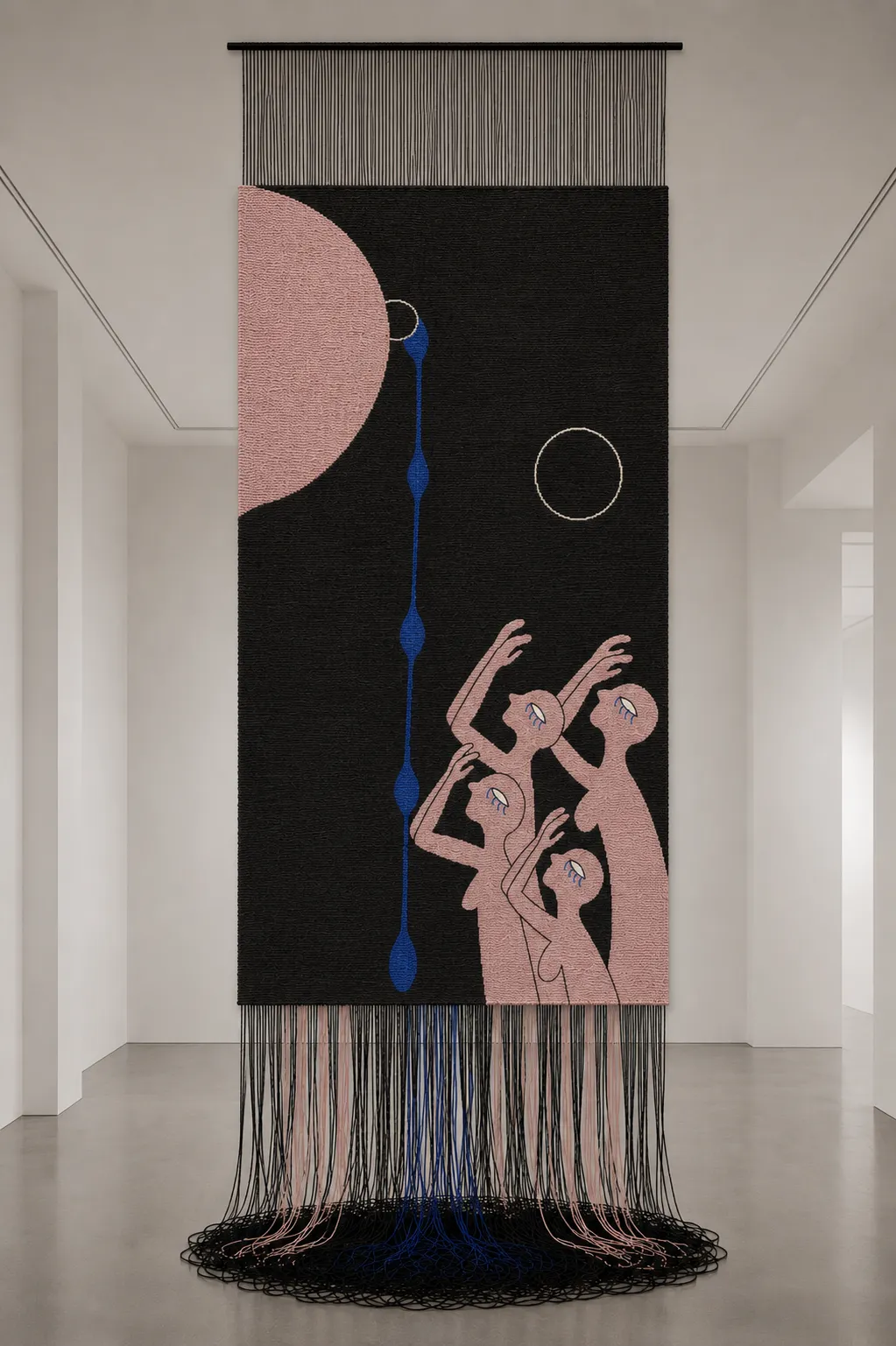
Toutes les larmes de mon corps belongs to Γόον μοι ἔννεπε, Μοῦσα, a body of work in which Kosmatopoulos examines how private sorrow becomes visible, ritualised and collectively carried. The series grew out of a research she has pursued for three years, since the death of her father, on grief, tears and the female body. From this intimate experience, she asks how pain takes shape in the body, becomes visible and can be carried by others.
In her experience of mourning, loss was felt physically before it could be understood or put into words. The throat tightens, the chest contracts, the breath stops, the face distorts. When pain exceeds words, tears take over. They express what escapes articulate language, what the logos can no longer contain. The body gives form to what thought cannot yet grasp.
This experience led her to the professional mourners of ancient Greece and Egypt. Their lament involved cries, prayers, loosened hair, bared breasts and hands striking the chest. Through their voices and gestures, these women carried an individual loss into public space. They gave grief a presence around which a community could gather. They wept for others and with them.
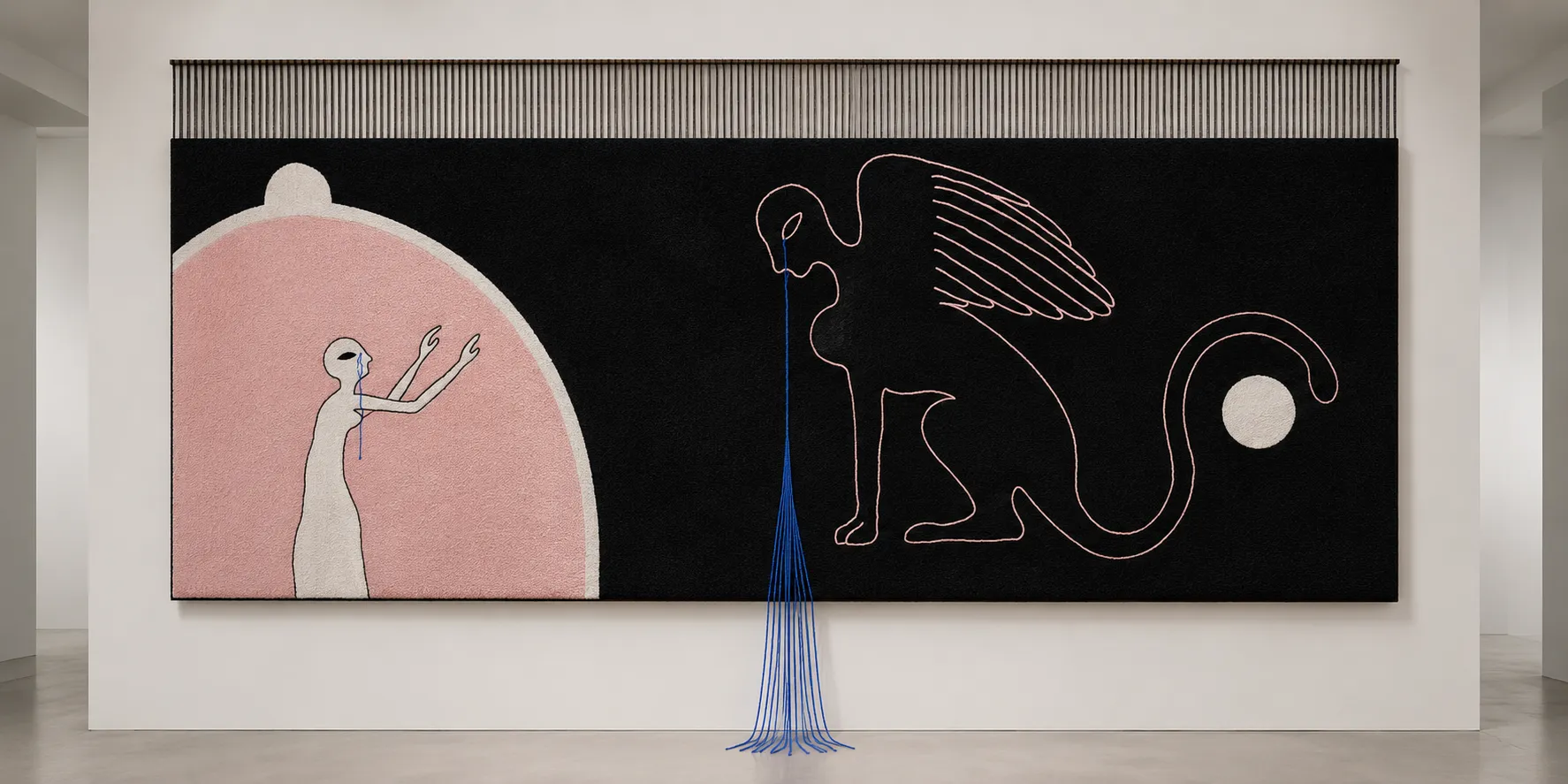
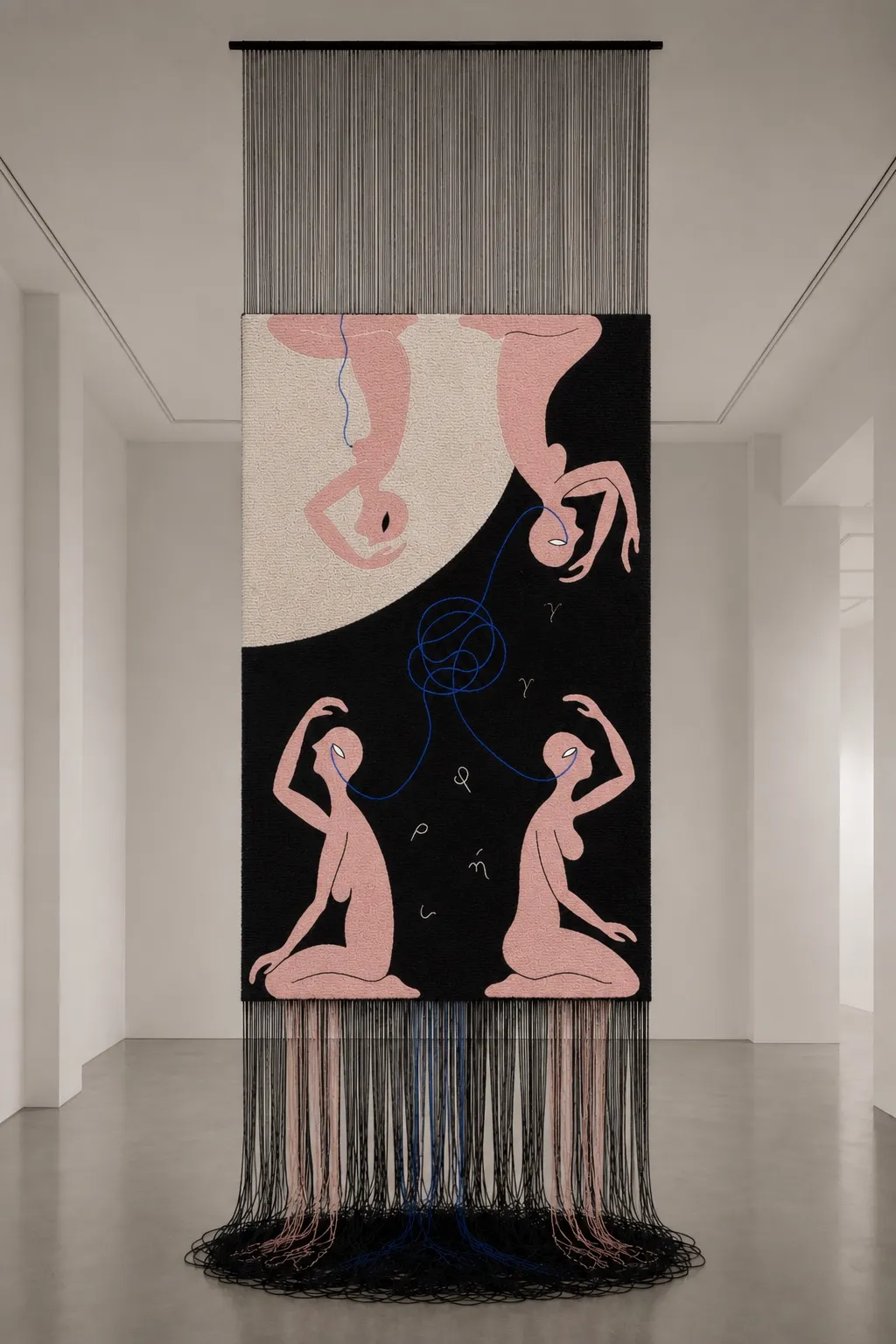
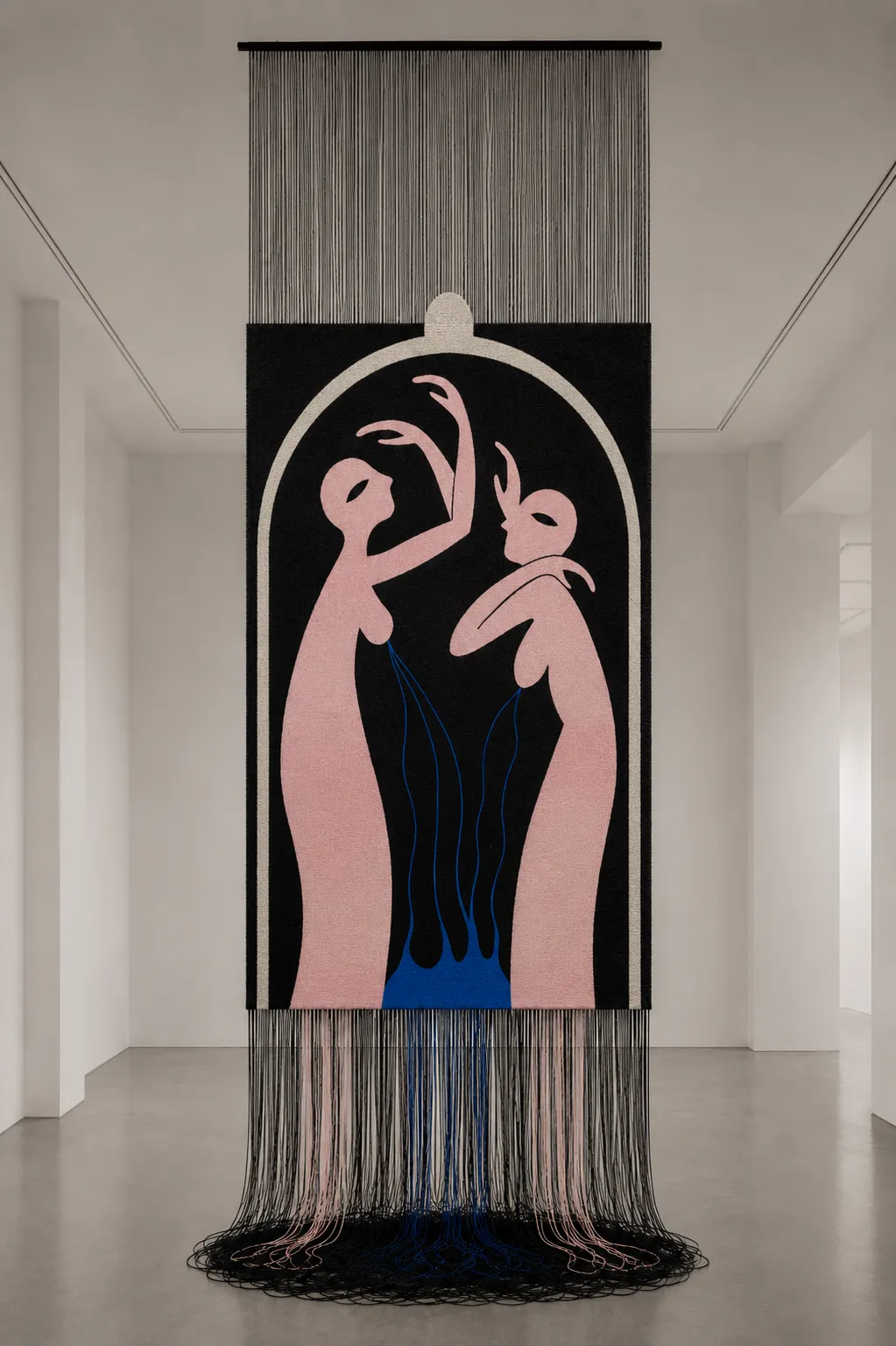
In the tapestries, tears often spring from the breasts. This displacement takes the French expression pleurer toutes les larmes de son corps — to cry all the tears of one’s body — literally. It returns weeping to the chest, where breath breaks and where the mourners struck themselves. The breasts become organs of lamentation, giving visible form to a pain that runs through the flesh. The female body appears as a place where grief is received, carried and passed on. Kosmatopoulos is interested in the mourner’s function as much as in what it reveals about the place assigned to women. What does it mean to have so often expected them to give a voice and a body to everyone’s pain? To display what others learn to hold back?
The eight tapestries take up this iconography without reconstructing a historical scene. The figures pass through different states of lamentation; their gestures, bodies and flows form a shared vocabulary. From one tapestry to the next, they form a chorus, and pain circulates between the figures, between parts of the body, between image and material. Water gives form to this circulation. Flowing from each body, it can join that of others and become a common expanse. In Mer de larmes, the fifth tapestry, two women face each other and weep; their tears mingle until they form a single sea, where it is no longer possible to tell what comes from one or the other.
Thread also carries this link. It recalls the Greek myth of the Moirai, who spin, measure and cut human life. In Kosmatopoulos’s tapestries, where life is interrupted, the thread the Moirai cut continues in the form of tears. Knotted by hand, knot after knot, each tapestry gives resistance and duration to a fluid, fleeting substance. The repeated gesture of making echoes the gestures of lament passed from one mourner to the next. Shown on their reverse side, the tapestries reveal their knots, the variations of colour and the traces of labour. Above the knotted surface, the warp threads remain visible; below, they fall to the floor, where they settle and tangle.
In Toutes les larmes de mon corps, tears remain attached to the bodies that shed them. They become thread, line and matter, and come to occupy the same space as the viewer. Through them, the series asks how a pain can become shared without ceasing to be singular, and how the body can carry loss beyond itself.