For exhibition enquiries, available works and collaborations, please contact the studio.
If the Nose of Cleopatra… is a multidisciplinary art series by Esmeralda Kosmatopoulos that takes the figure of Cleopatra to examine how historical narratives are constructed, corrected and transmitted across time. Through sculpture, installation and archival research, the project approaches Cleopatra not as a face to be reconstructed, but as a surface onto which successive eras have projected their own political, cultural and ideological imaginaries.
MEDIUM
Sculpture
MATERIALS
Marble
START YEAR
2019
END YEAR
2025
If the Nose of Cleopatra… examines how repeated representations can acquire the authority of history. Blaise Pascal once wrote that had Cleopatra's nose been shorter, the whole face of the world would have changed. This project reverses the proposition: rather than searching for an authentic face behind the archive, it follows the images, texts and stories that have accumulated around Cleopatra and asks what they reveal about those who produced them.
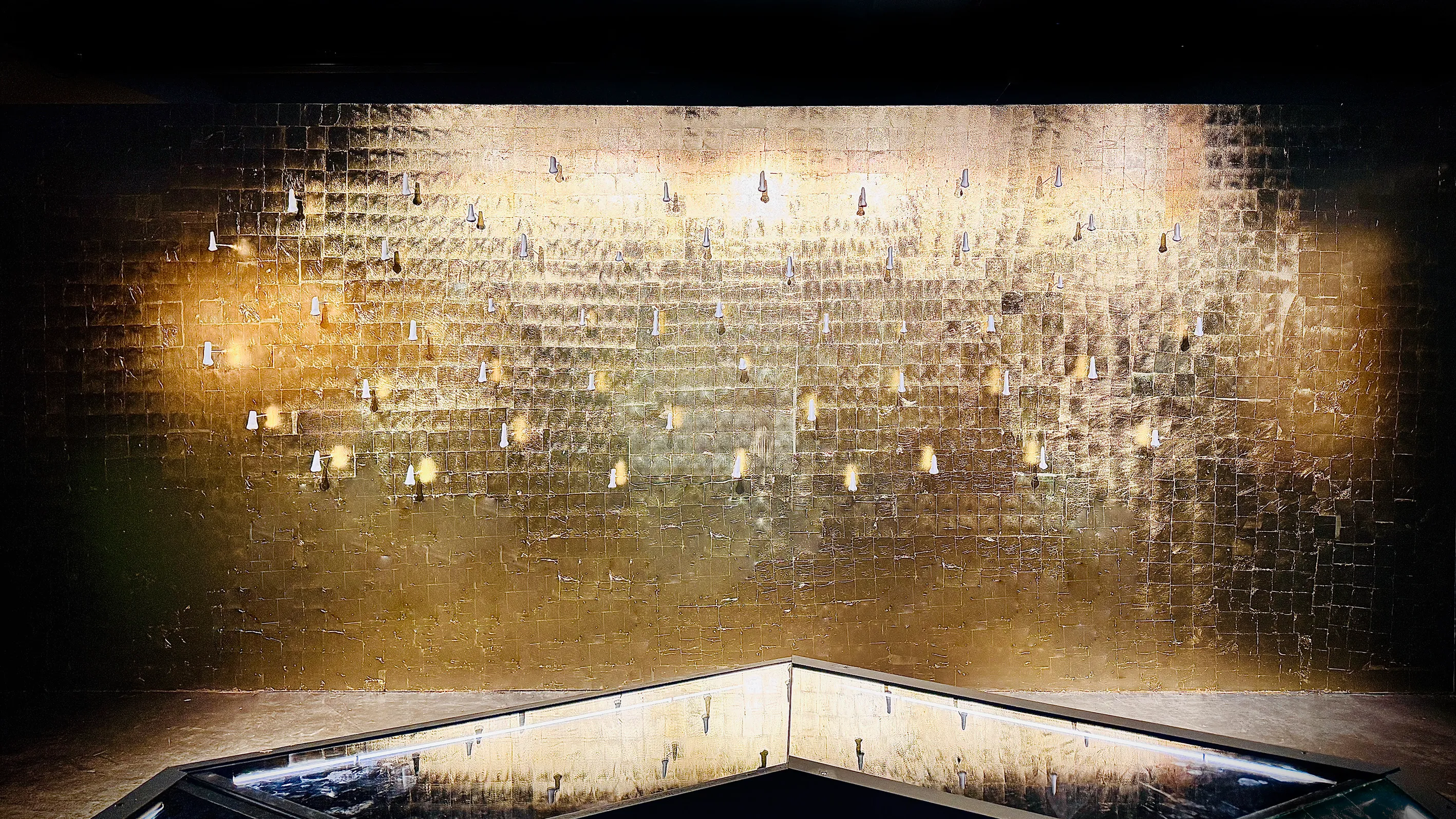
The project unfolds through three works that move between visual representation, historical writing and the contemporary body. In About 2 Inches Long, fifty noses taken from fifty representations of Cleopatra throughout Western art history are carved in marble and gathered into a nasothek. Together, they do not compose a portrait, but an archive of variation. The smallest feature becomes the place where the instability of the whole image is made visible.
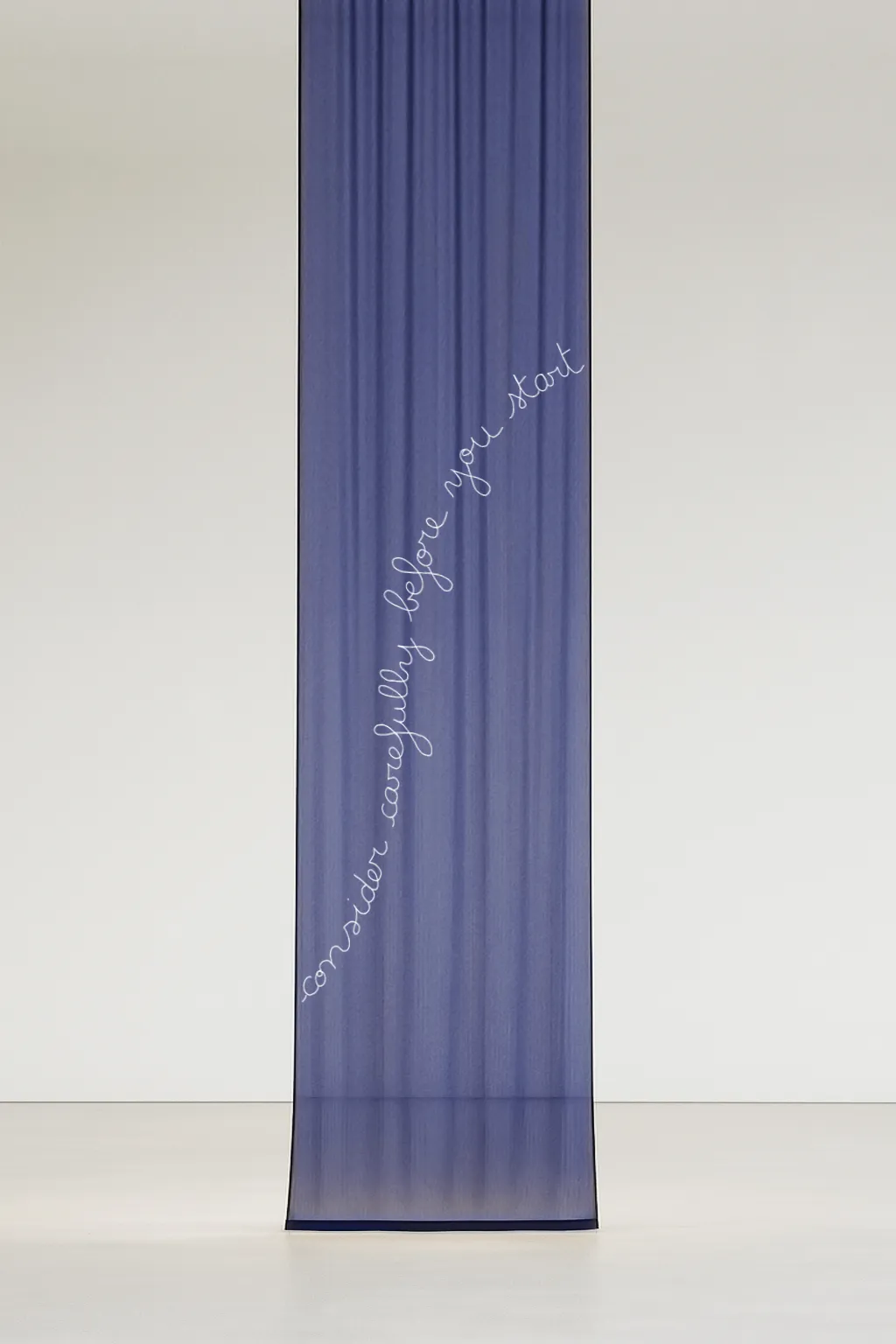
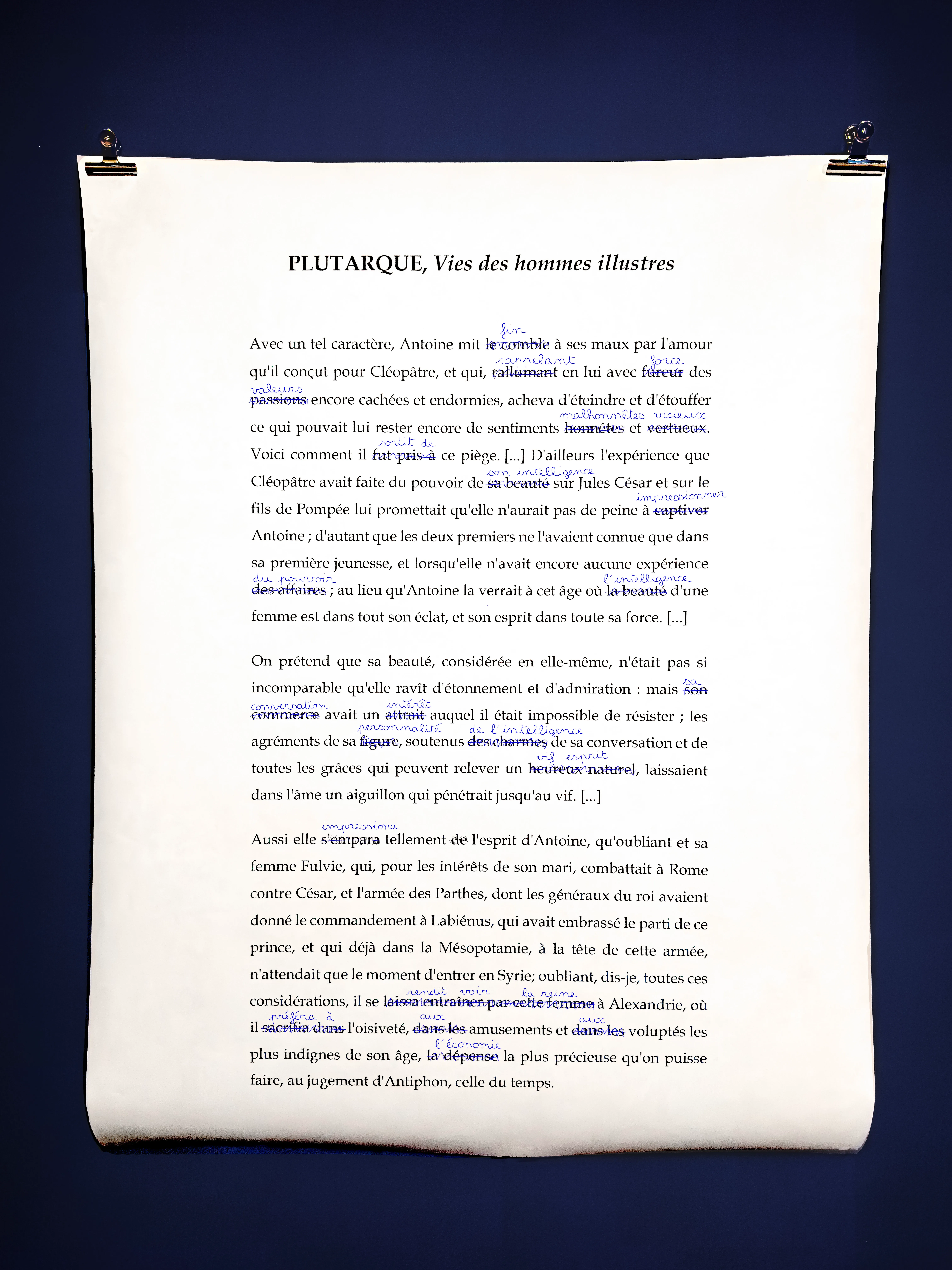
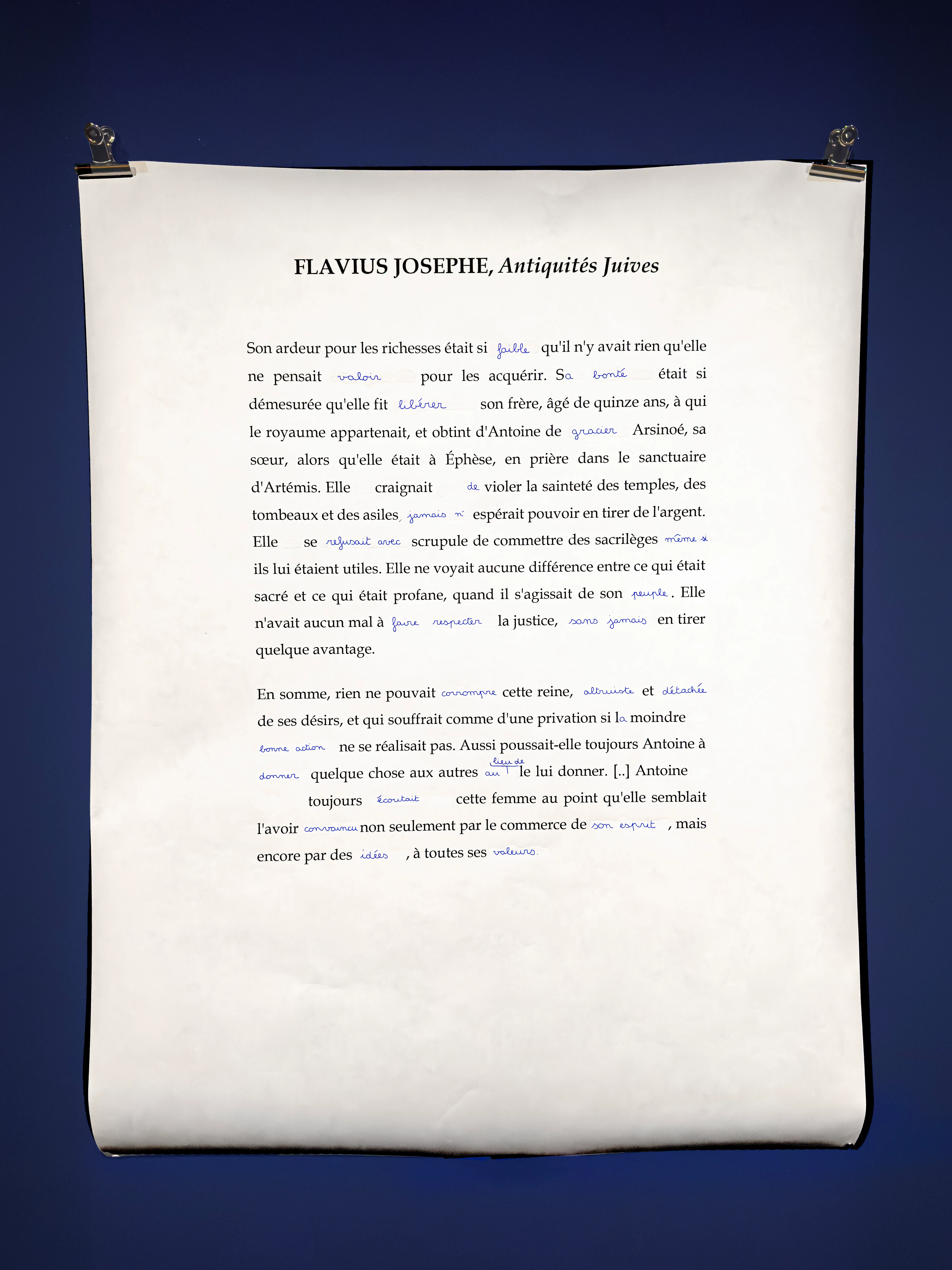
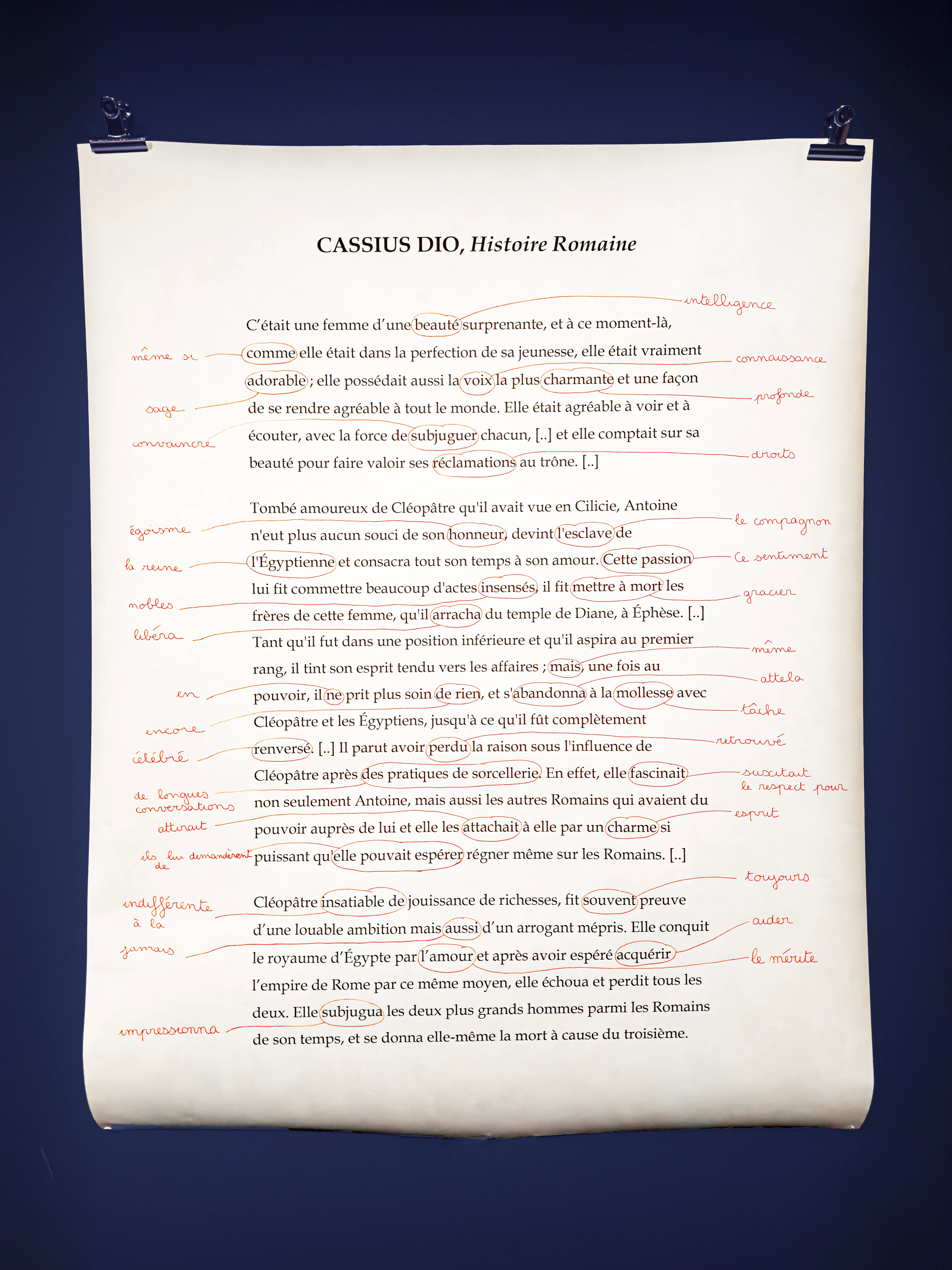
This instability continues in SECOND DRAFT, which returns to the earliest surviving Roman accounts of Cleopatra. Passages portraying her as a manipulative seductress are crossed out, corrected and rewritten, while every intervention remains visible. The work does not replace one historical truth with another. It exposes history as something composed through selection, omission and revision.
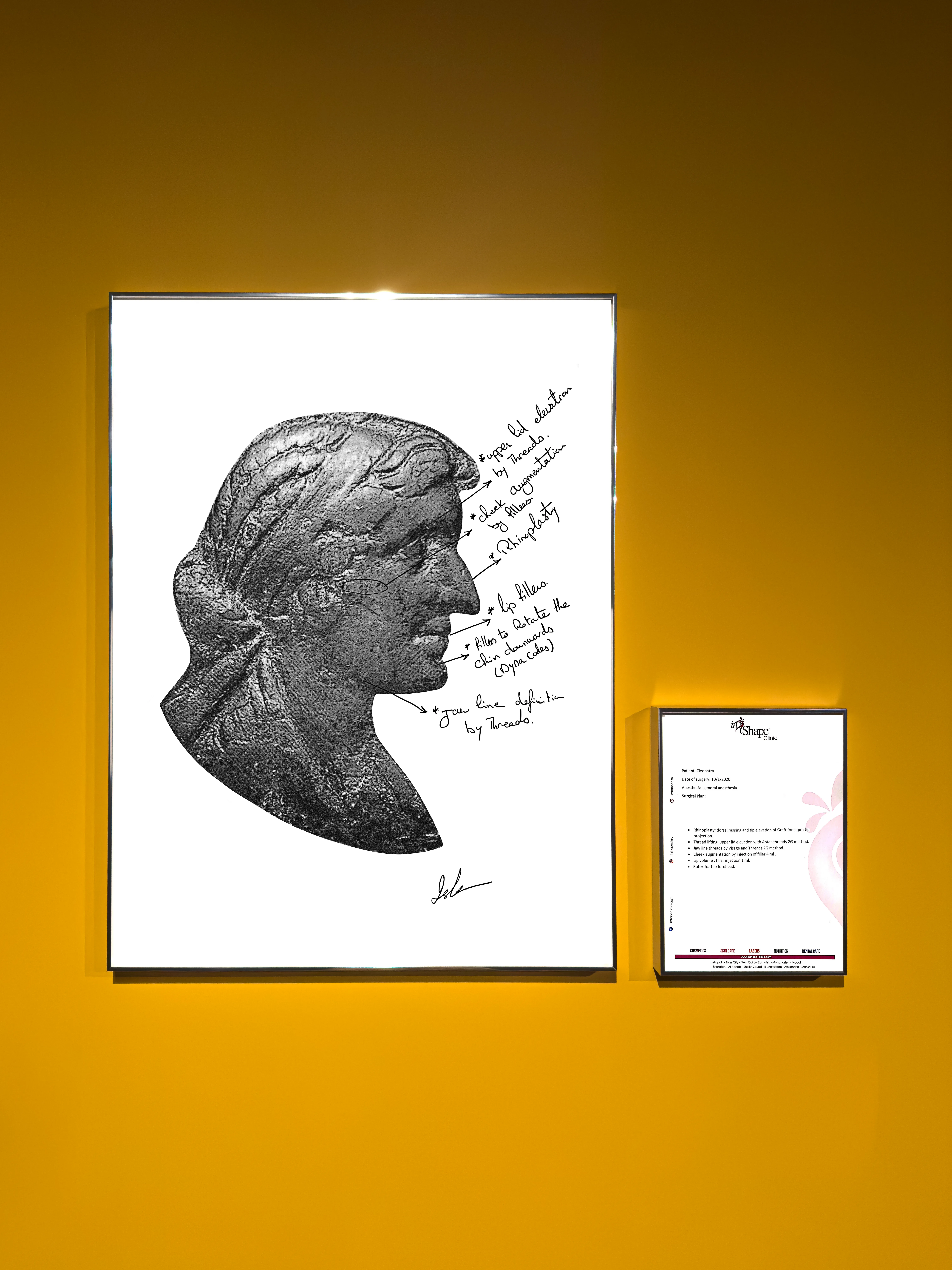
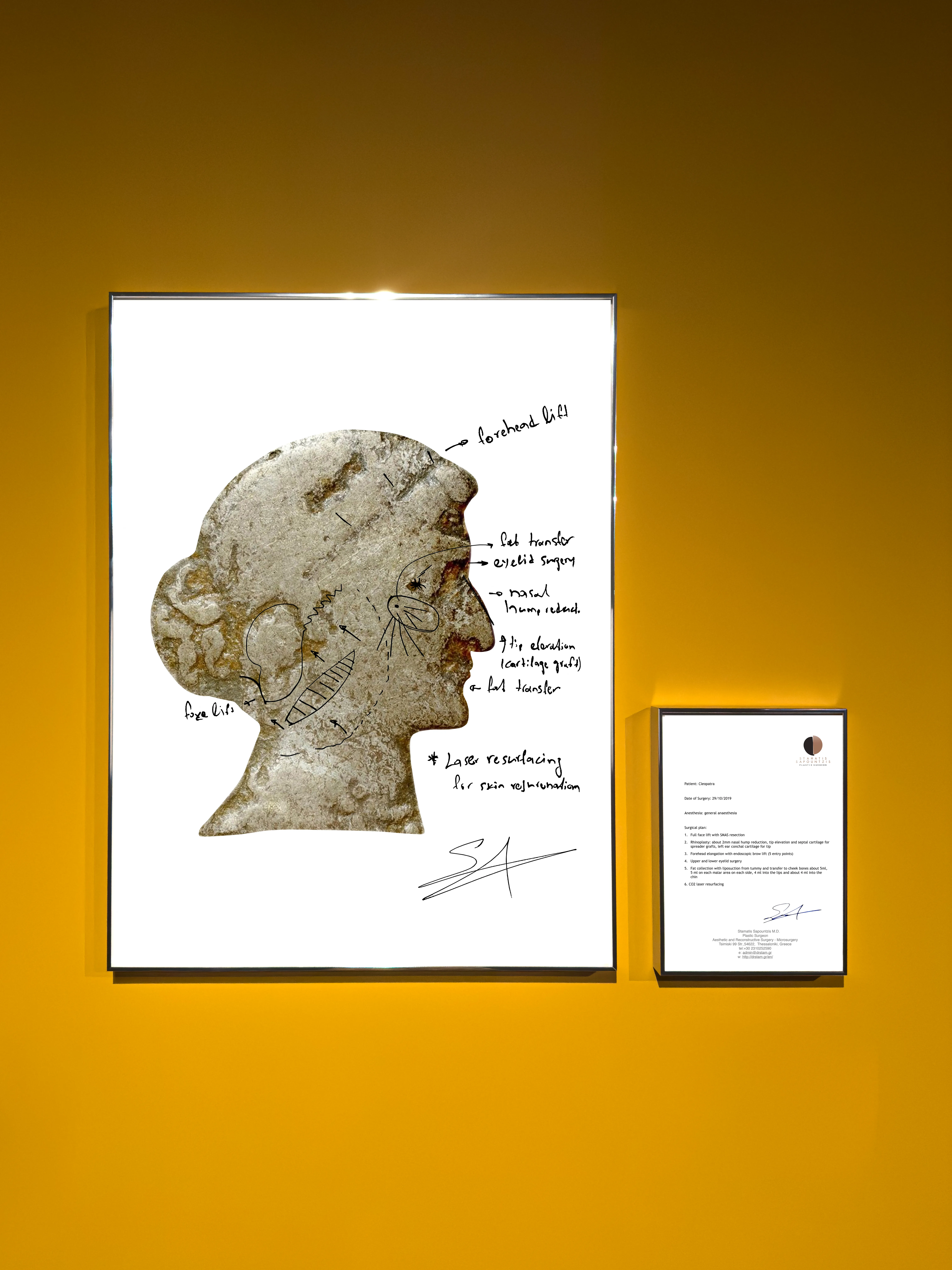
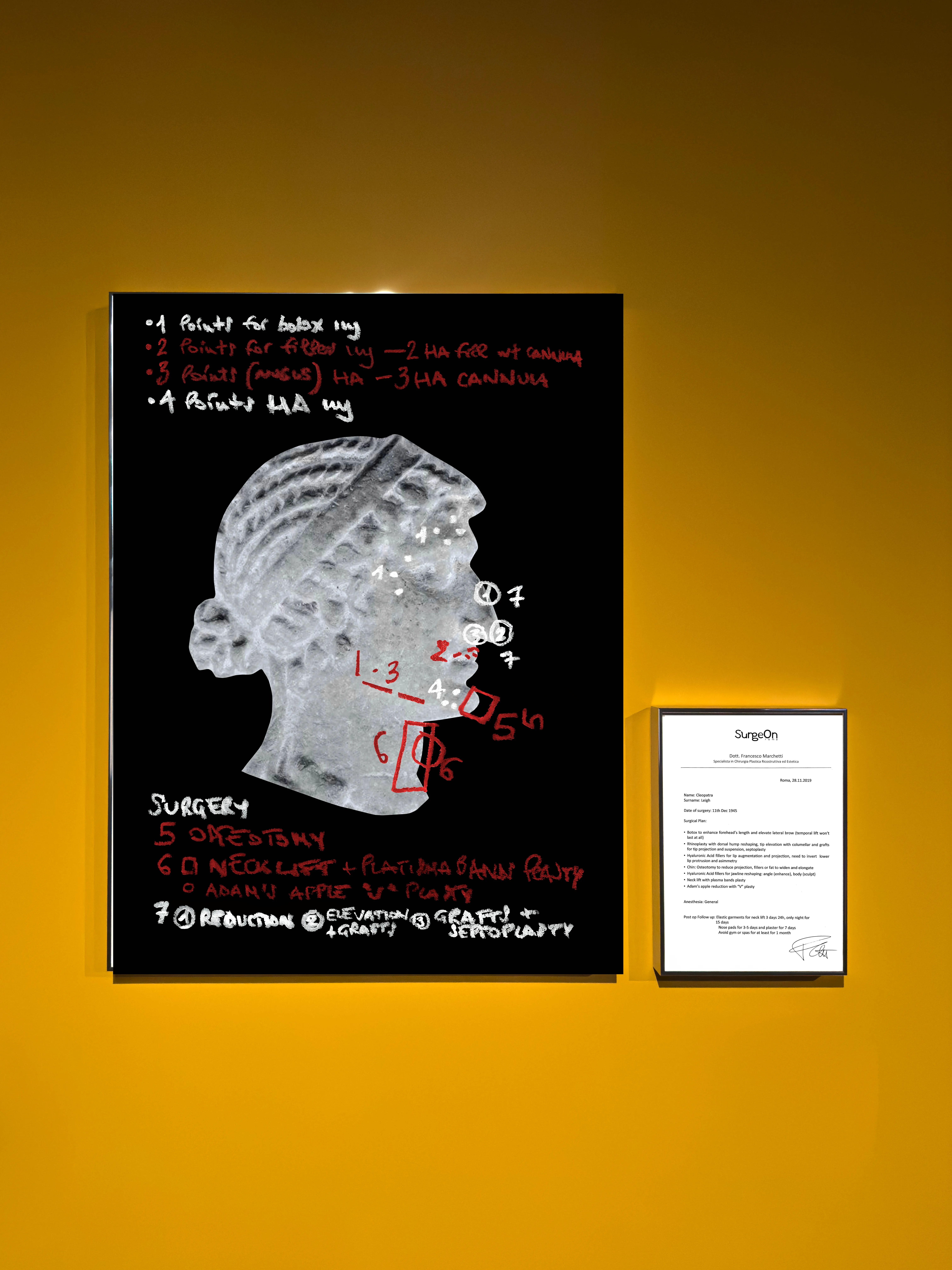
In I Want to Look Like Cleopatra, the same process reaches the body itself. Four plastic surgeons are asked to begin with Cleopatra’s documented Ptolemaic features and imagine the procedures required to transform her into the actresses who later portrayed her. The direction of resemblance is reversed: Cleopatra is no longer the model, but the face that must be altered to conform to the fiction that has replaced her.
Across the project, image, text and body become different sites of the same transformation. A fragment is repeated until it becomes an archive. A historical account becomes a visible draft. An ancient face is measured against a contemporary ideal of beauty.
History has developed different ways of making powerful women disappear. Some, like Hatshepsut, were erased: their monuments were mutilated, their names removed and their faces deliberately destroyed. Cleopatra experienced the opposite fate. She remained visible, but disappeared beneath the accumulation of images and narratives produced in her name.
Across centuries, she has been successively imagined as a sovereign, a seductress, an Oriental fantasy, a national icon and a feminist figure. These versions do not simply describe Cleopatra. They reveal the political ambitions, aesthetic ideals and cultural anxieties of the societies that created them. Her changing face becomes a record of the changing gaze directed toward her.
These works do not attempt to recover a definitive Cleopatra hidden beneath centuries of distortion. They examine what has been produced in the space left by her absence, and how each new representation has participated in reshaping not only her image, but broader ideas of power, beauty and femininity.
Cleopatra remains everywhere, and yet disappears beneath her images.
Repetition turns representation into historical belief.
About 2 Inches Long — Installation View — Institut Du Monde Arabe Paris
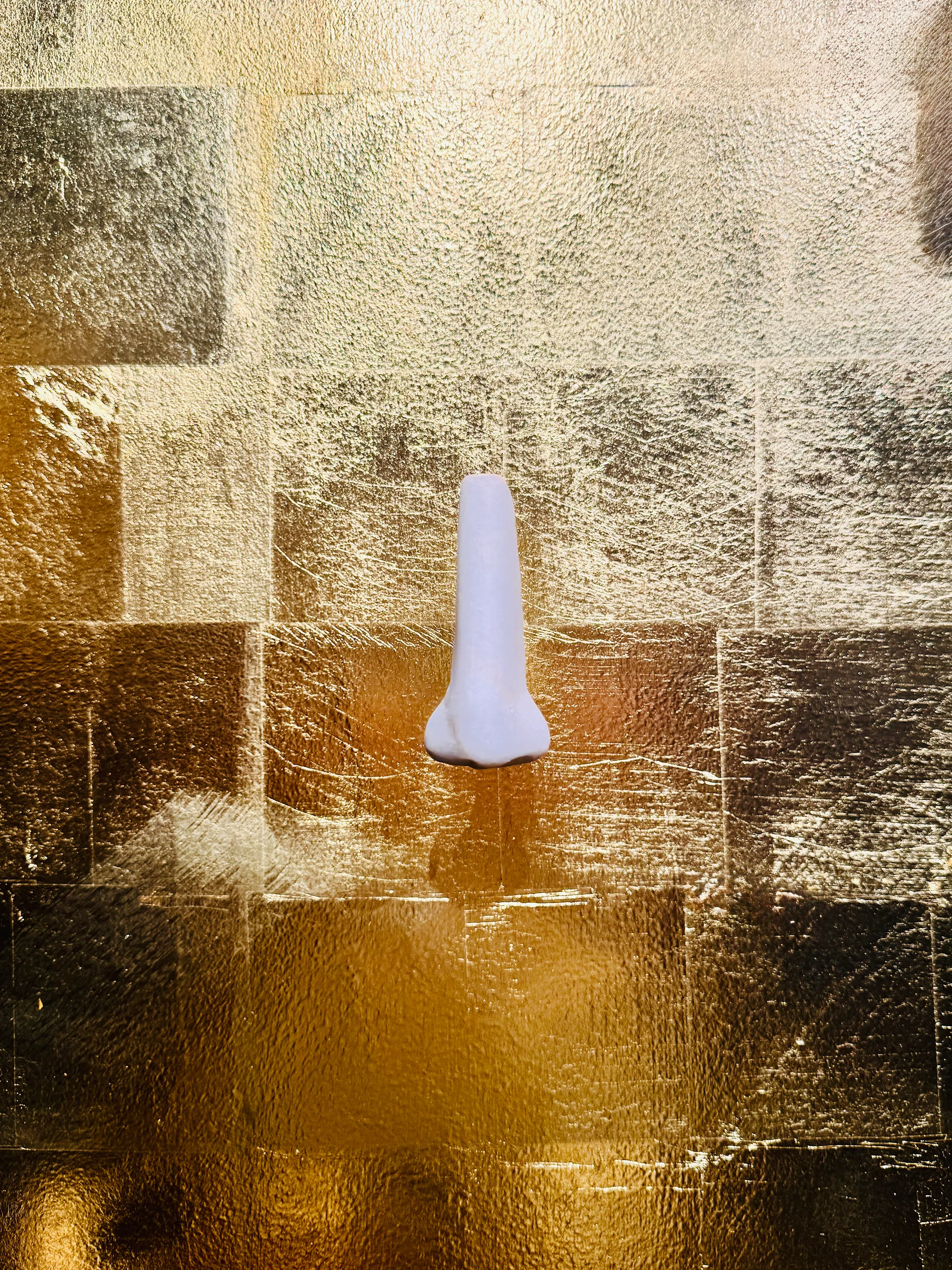
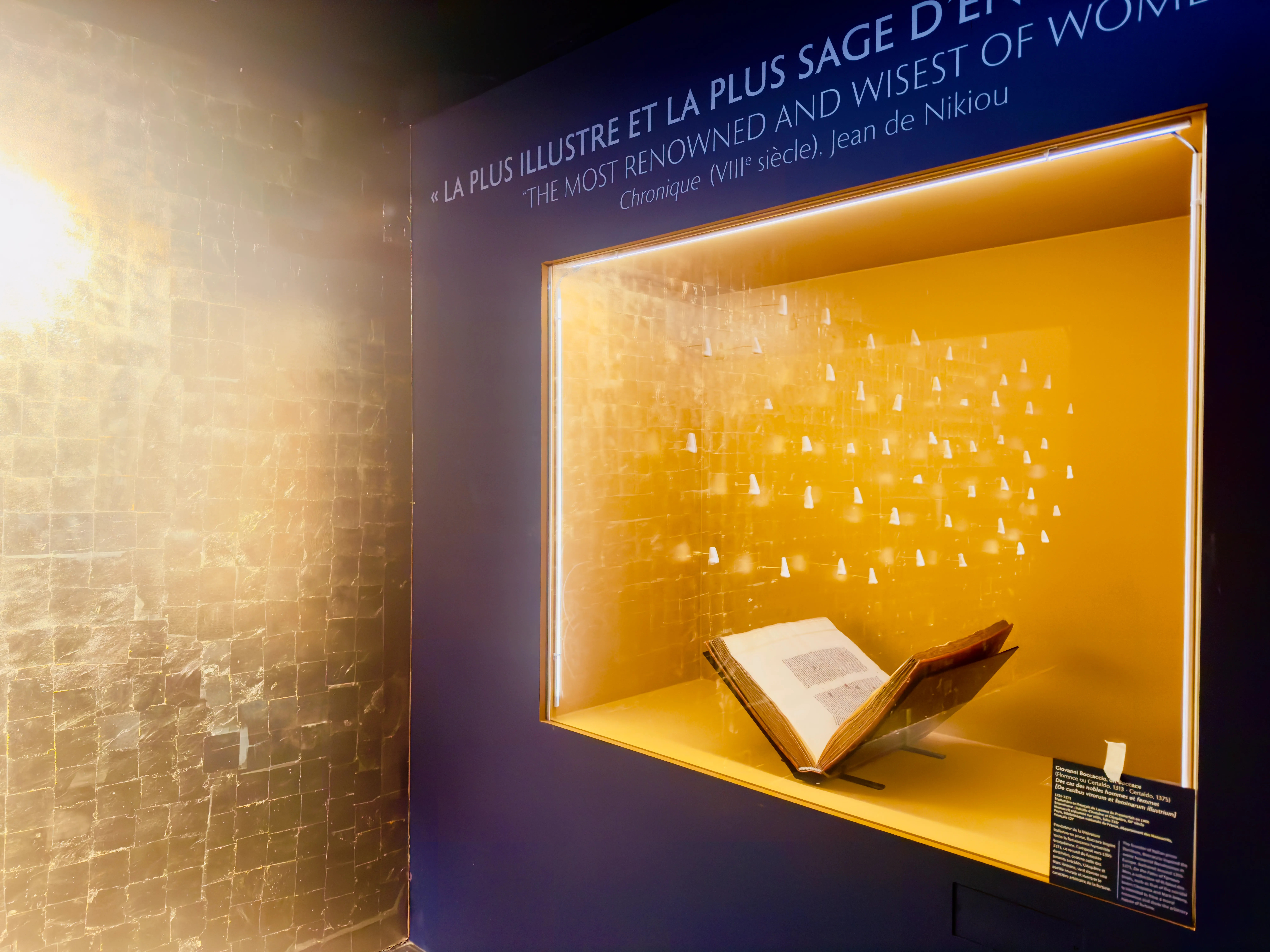
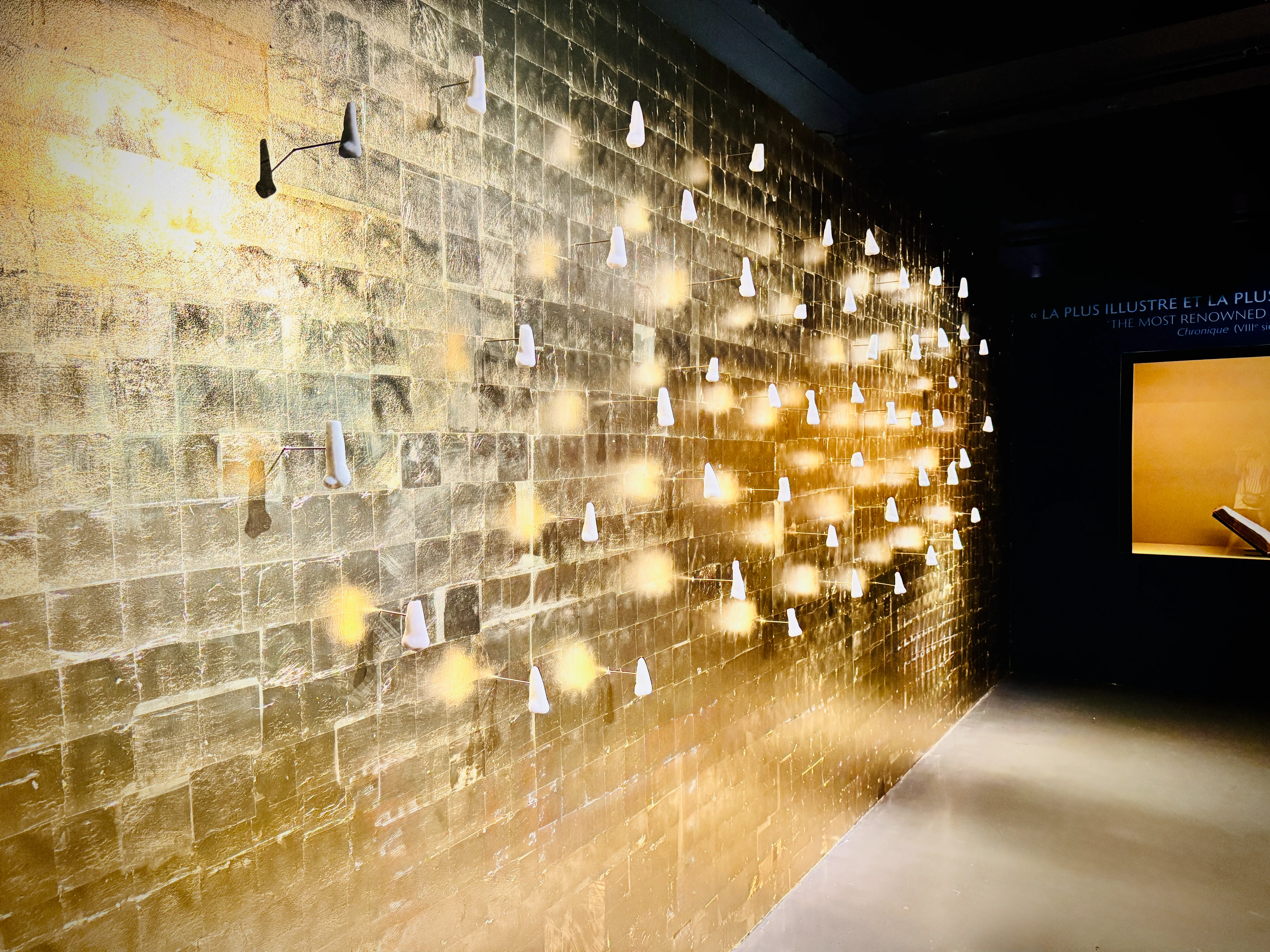
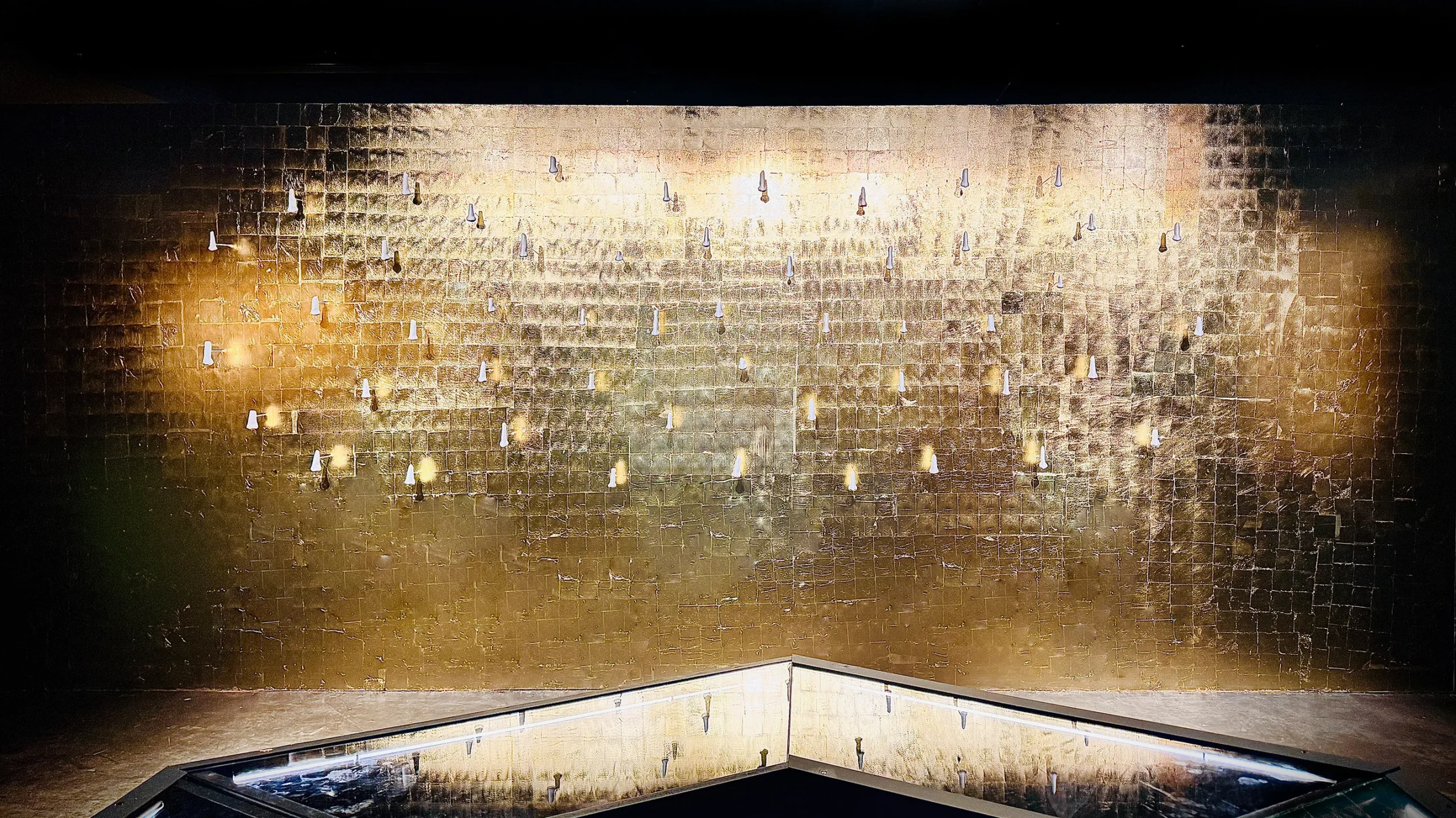
Hieroglyphs to Hype: The Modern Afterlife of Ancient Egypt, Fairfield University Art Museum, Fairfield, US
Le Mystère Cléopâtre, Institut du Monde Arabe, Paris, FR
If the Nose of Cleopatra…, Darb 1718, Cairo, EG