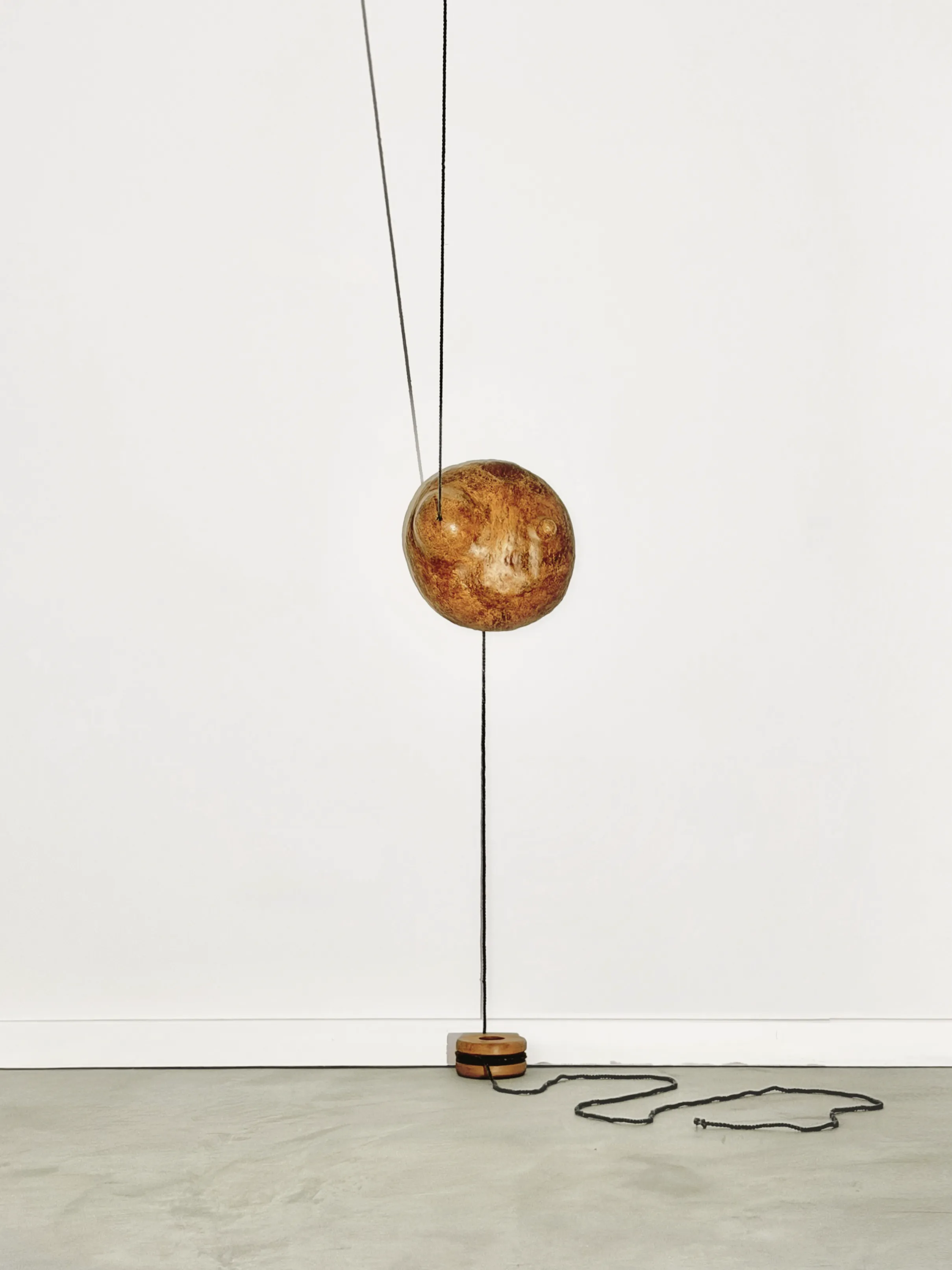
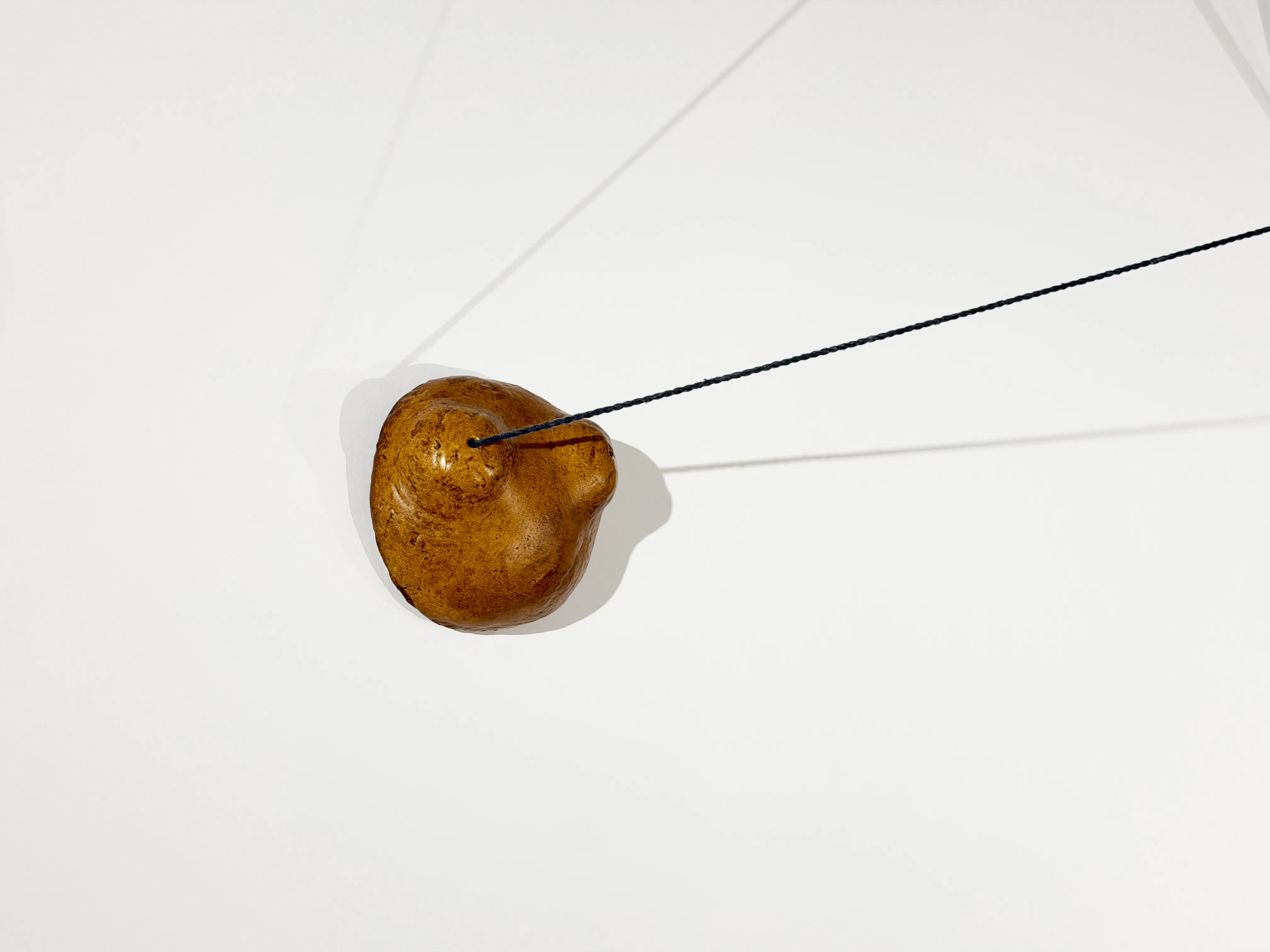
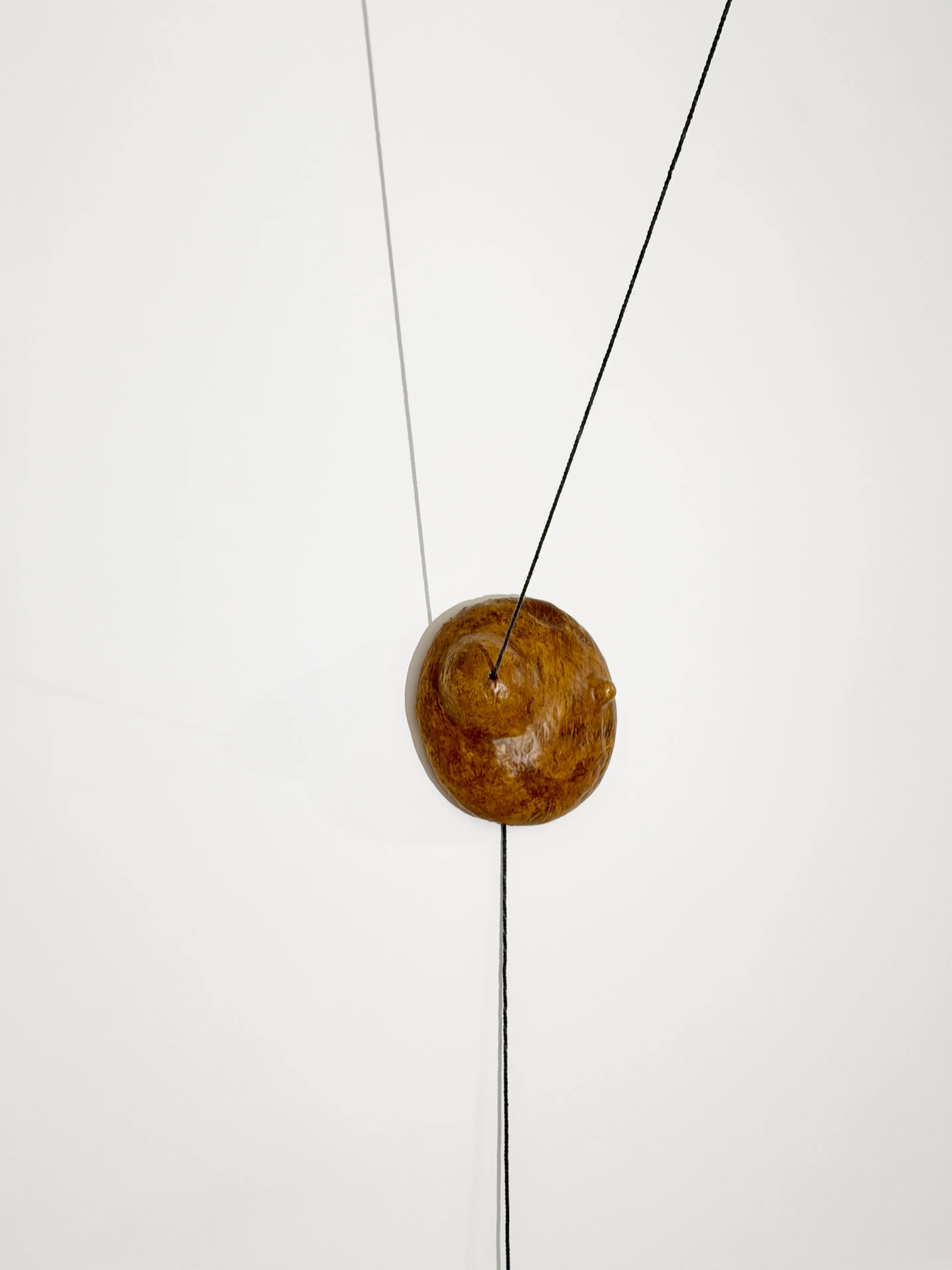
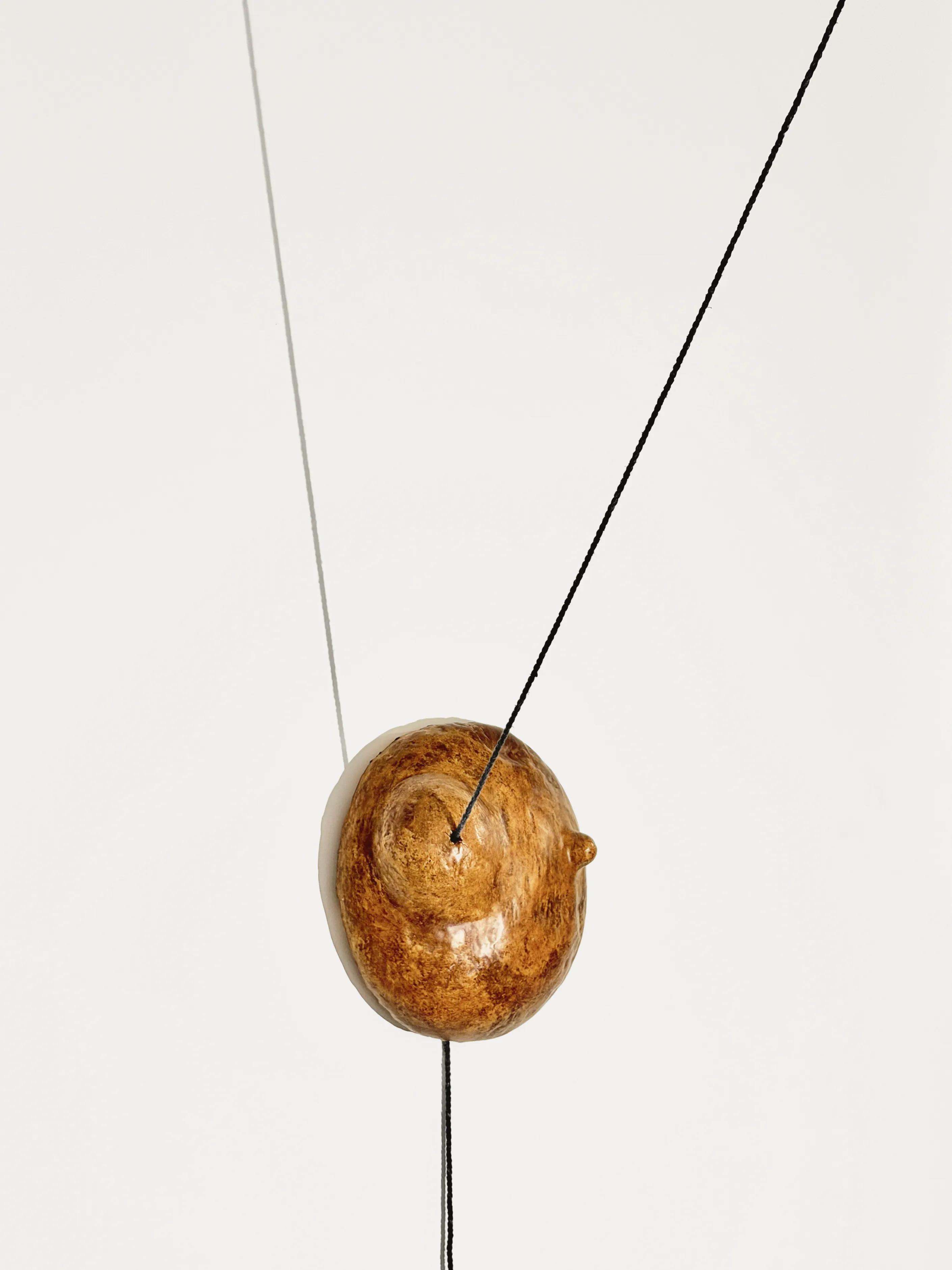
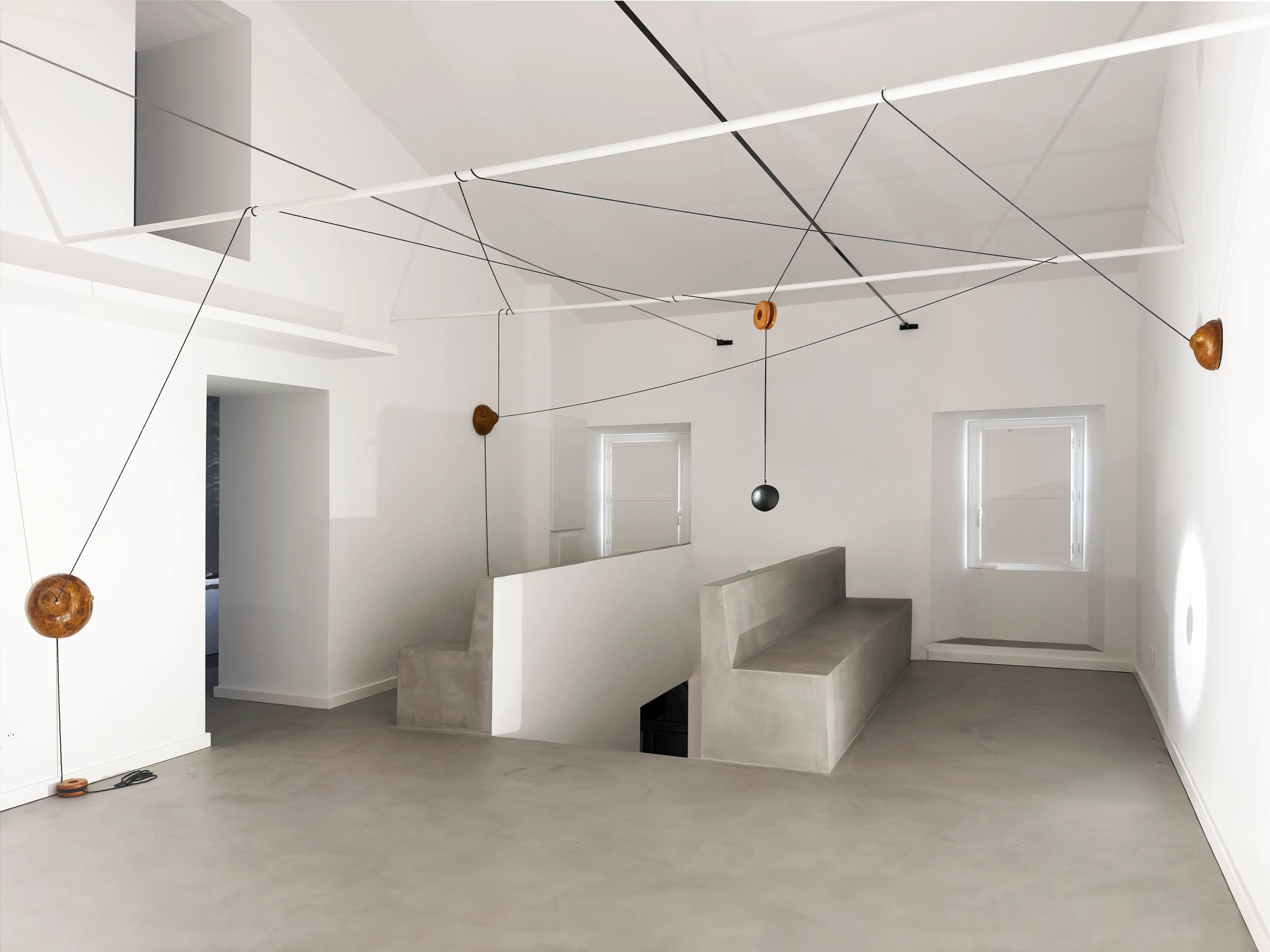
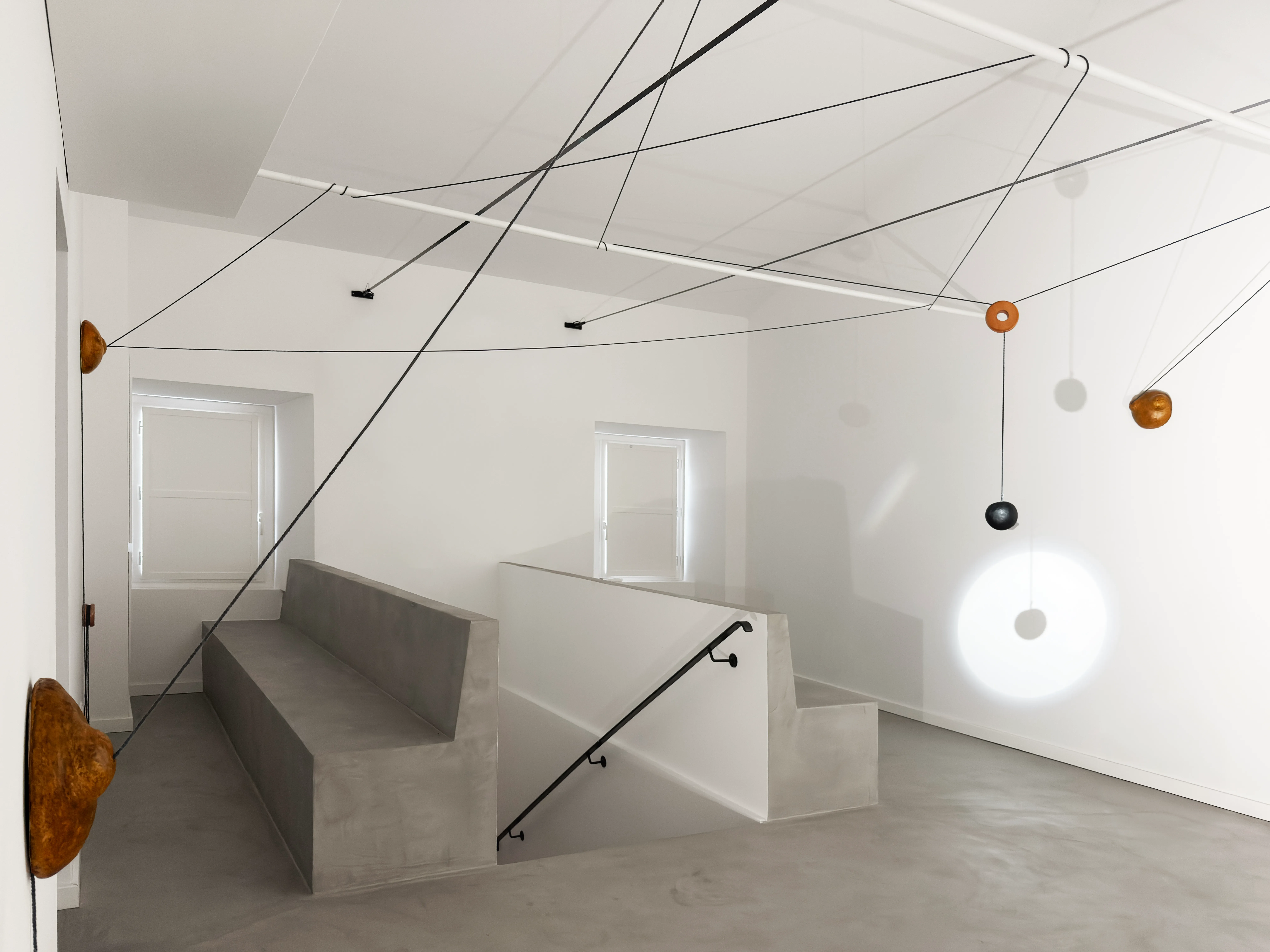
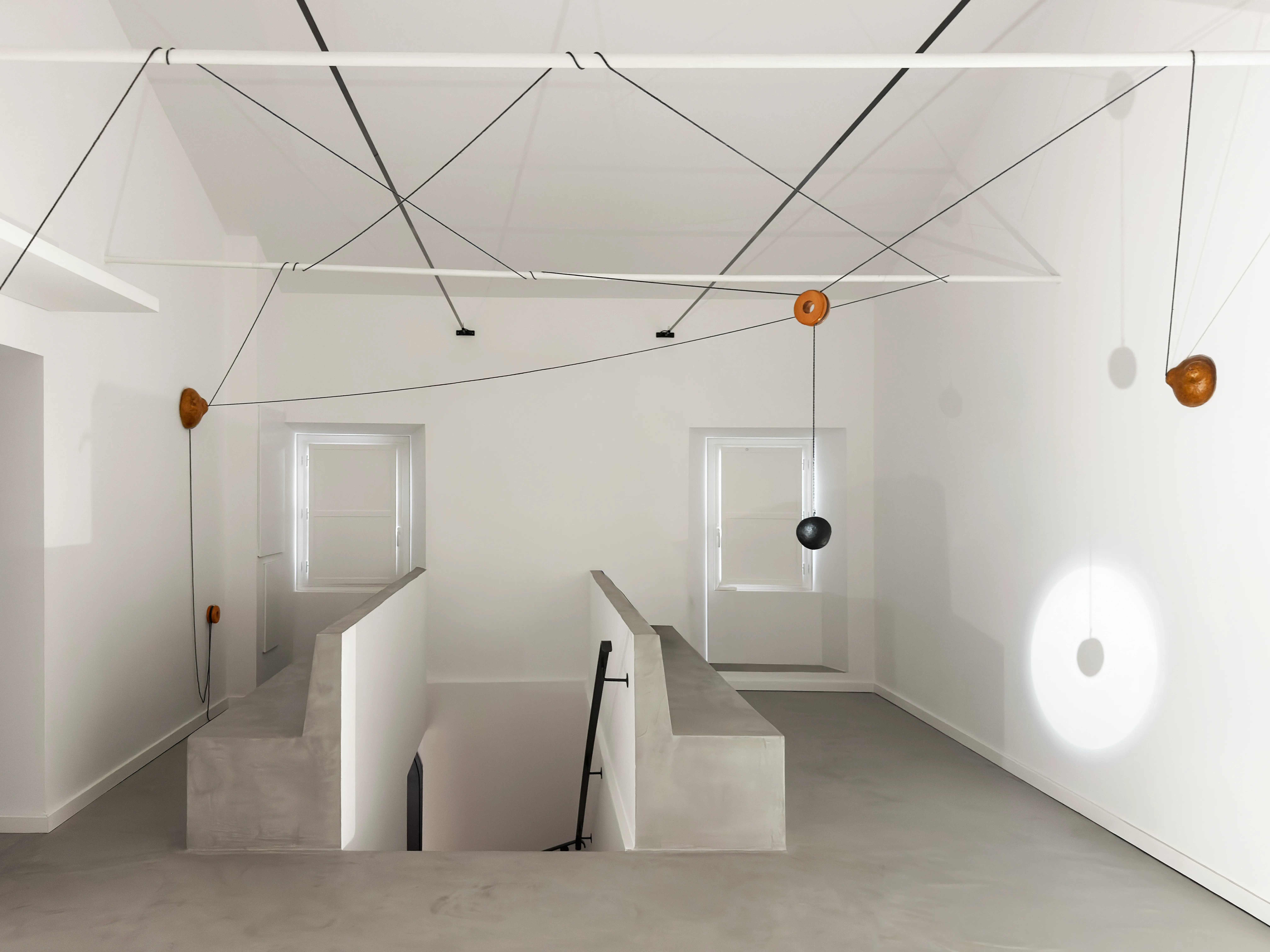
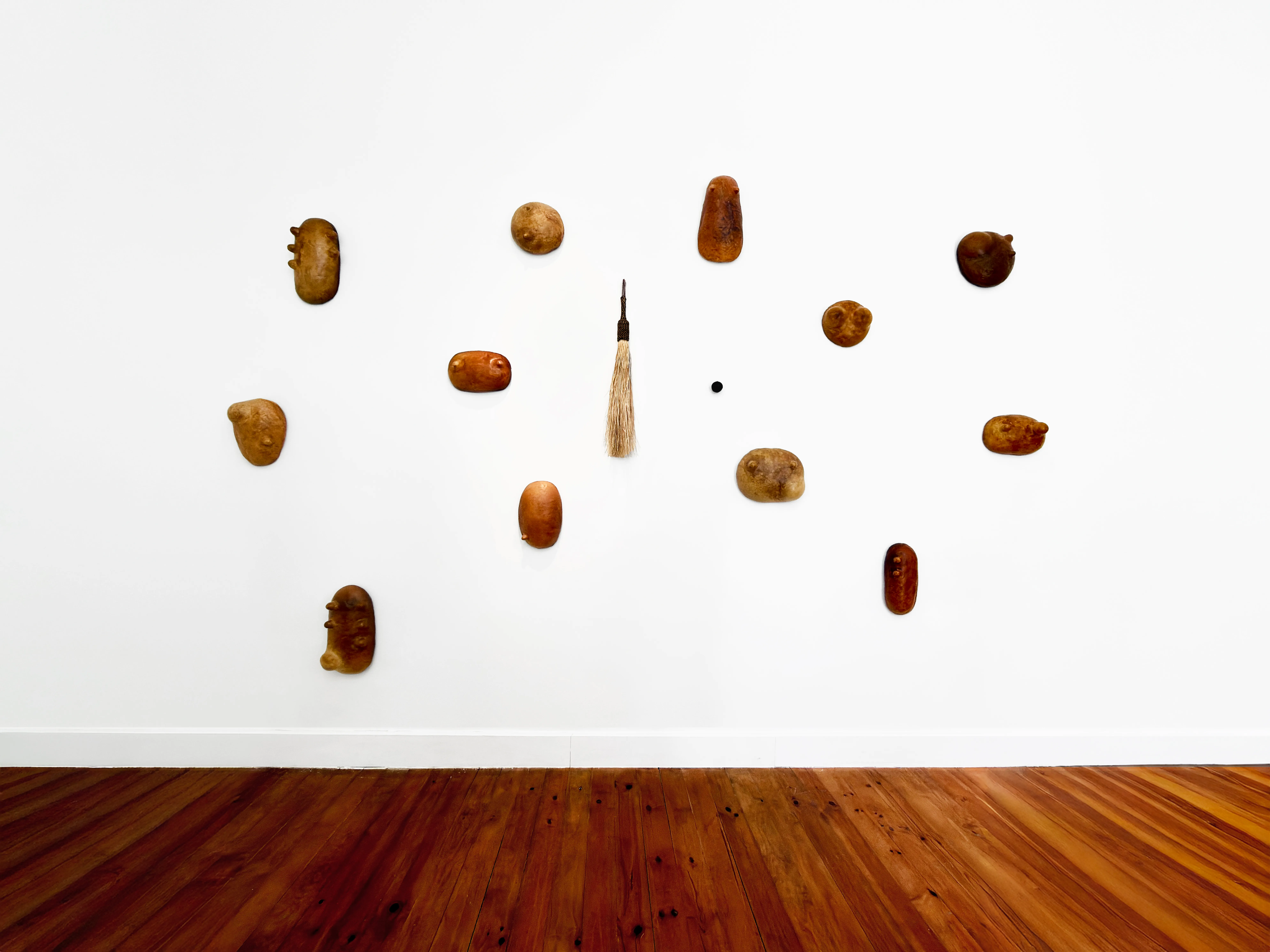
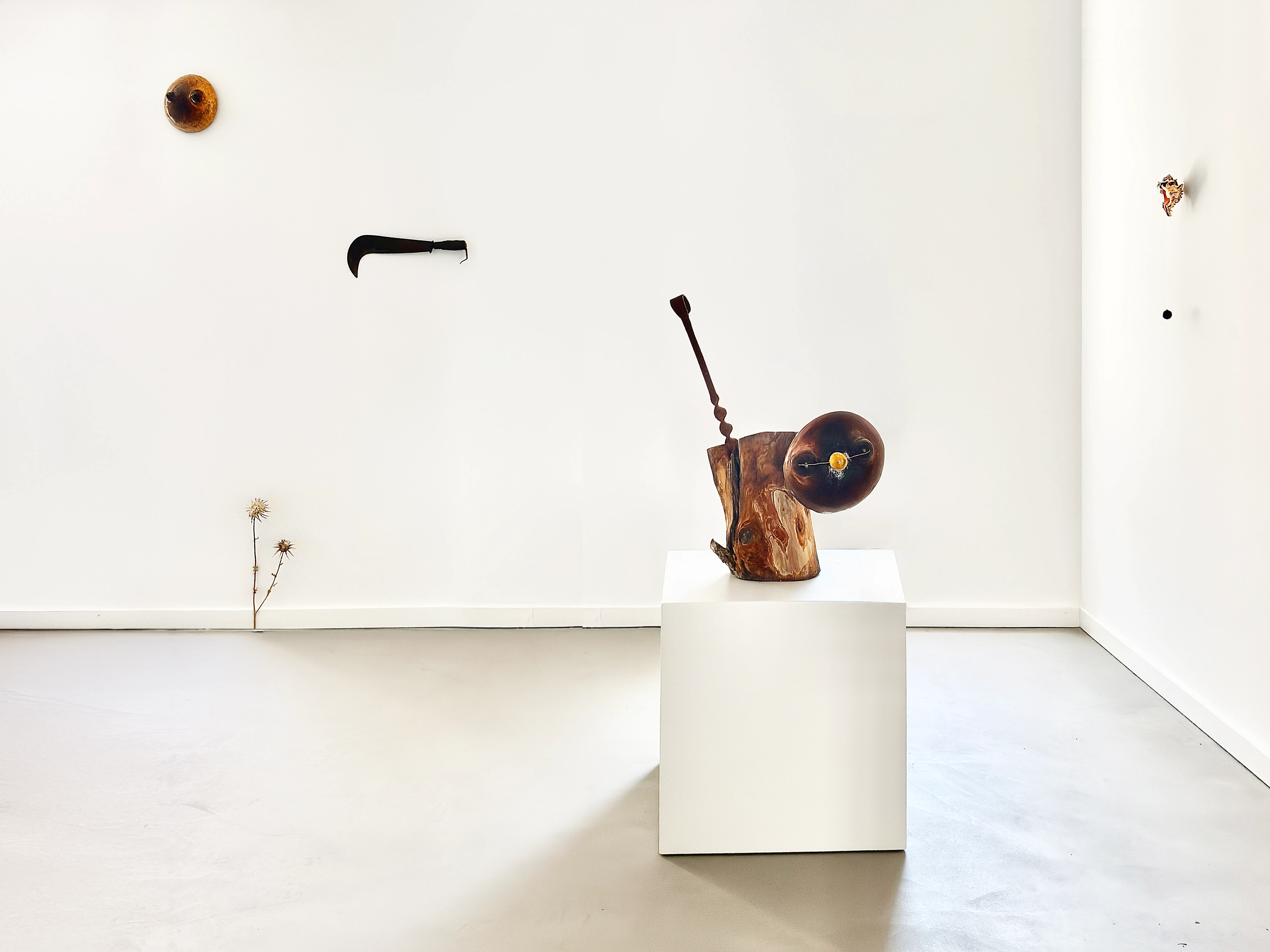
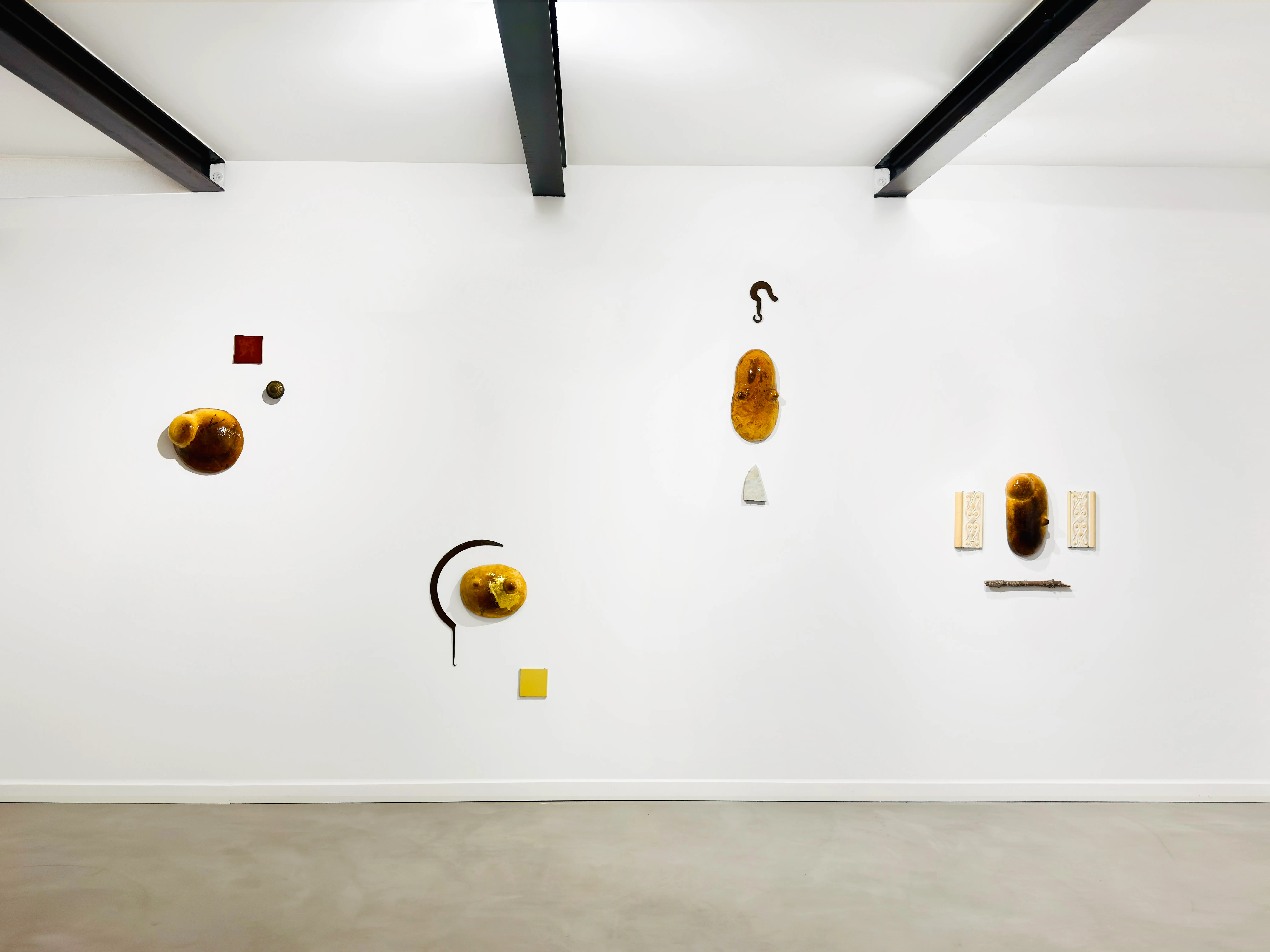
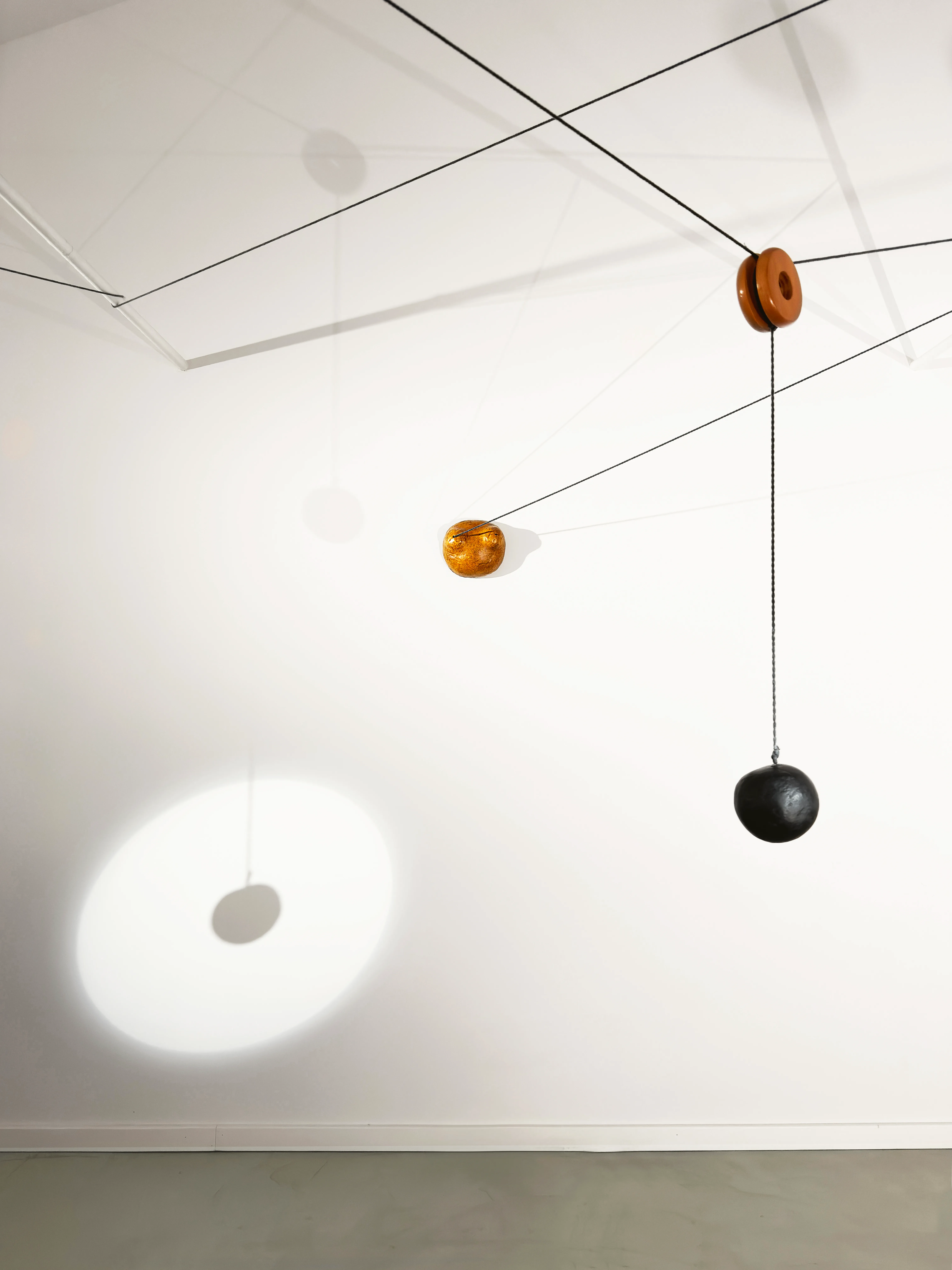
Lacrimal Architecture belongs to Bake Your Pain, a project Kosmatopoulos began in 2023 after the sudden death of her father: after every wave of intense grief, she kneads bread dough into a mask, giving material form to a moment of pain that would otherwise vanish as the tears dry. Here, that intimate gesture is multiplied and moved into space.
The installation investigates the invisible forces through which mourning is sustained and asks whether grief can be understood as a physical architecture: a system of tensions, balances and connections through which weight is continually transmitted and redistributed rather than resolved.
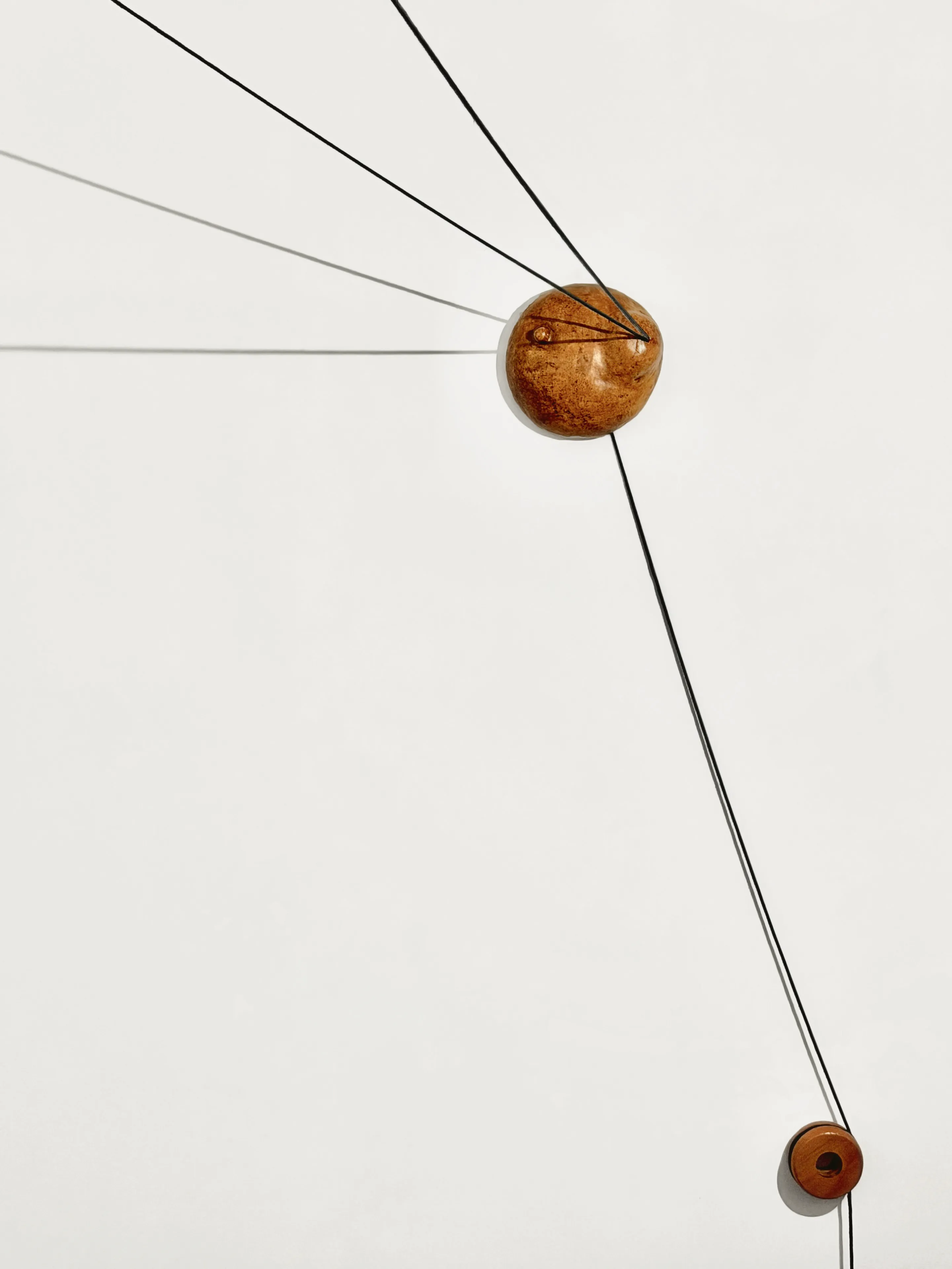
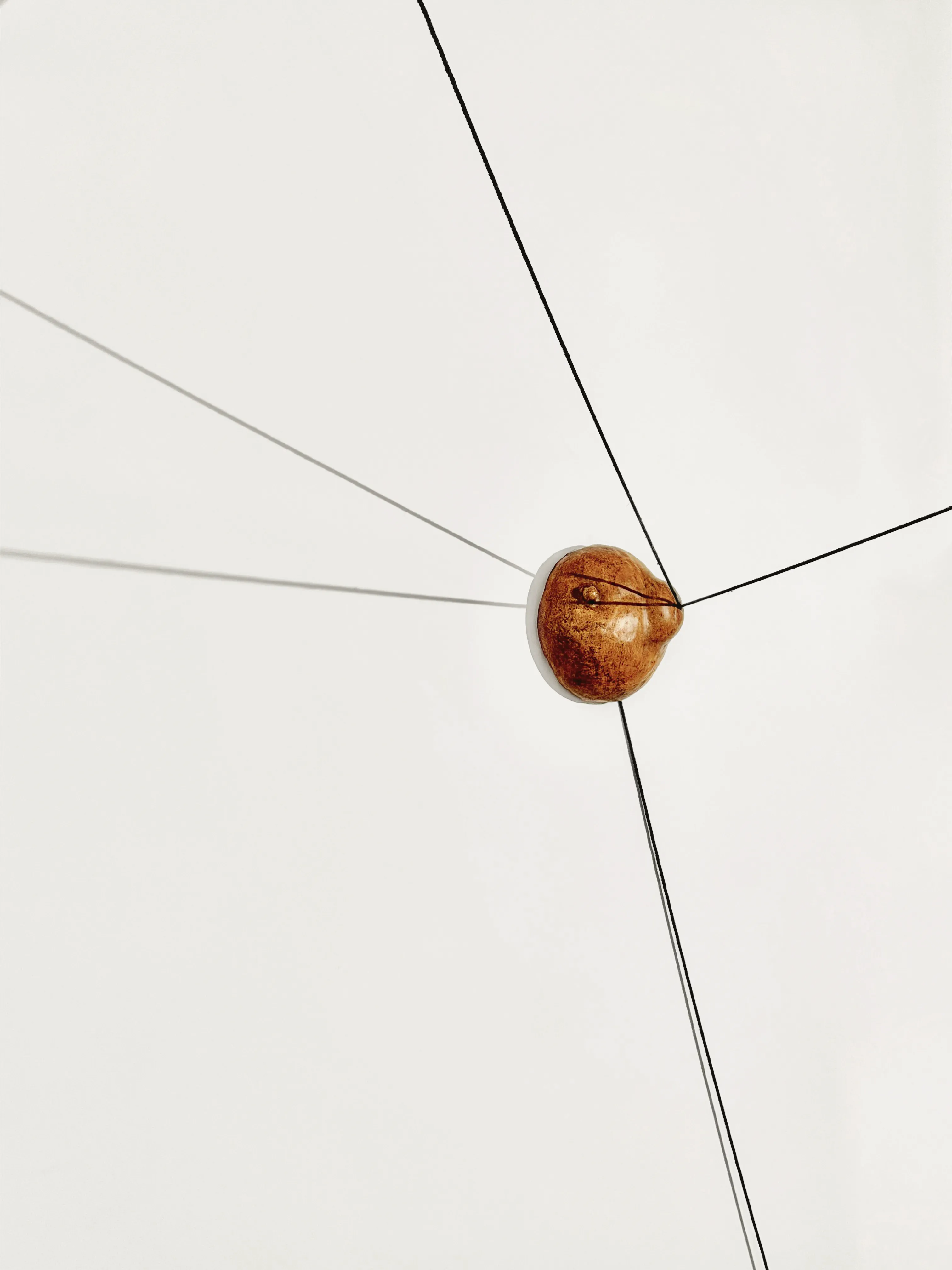
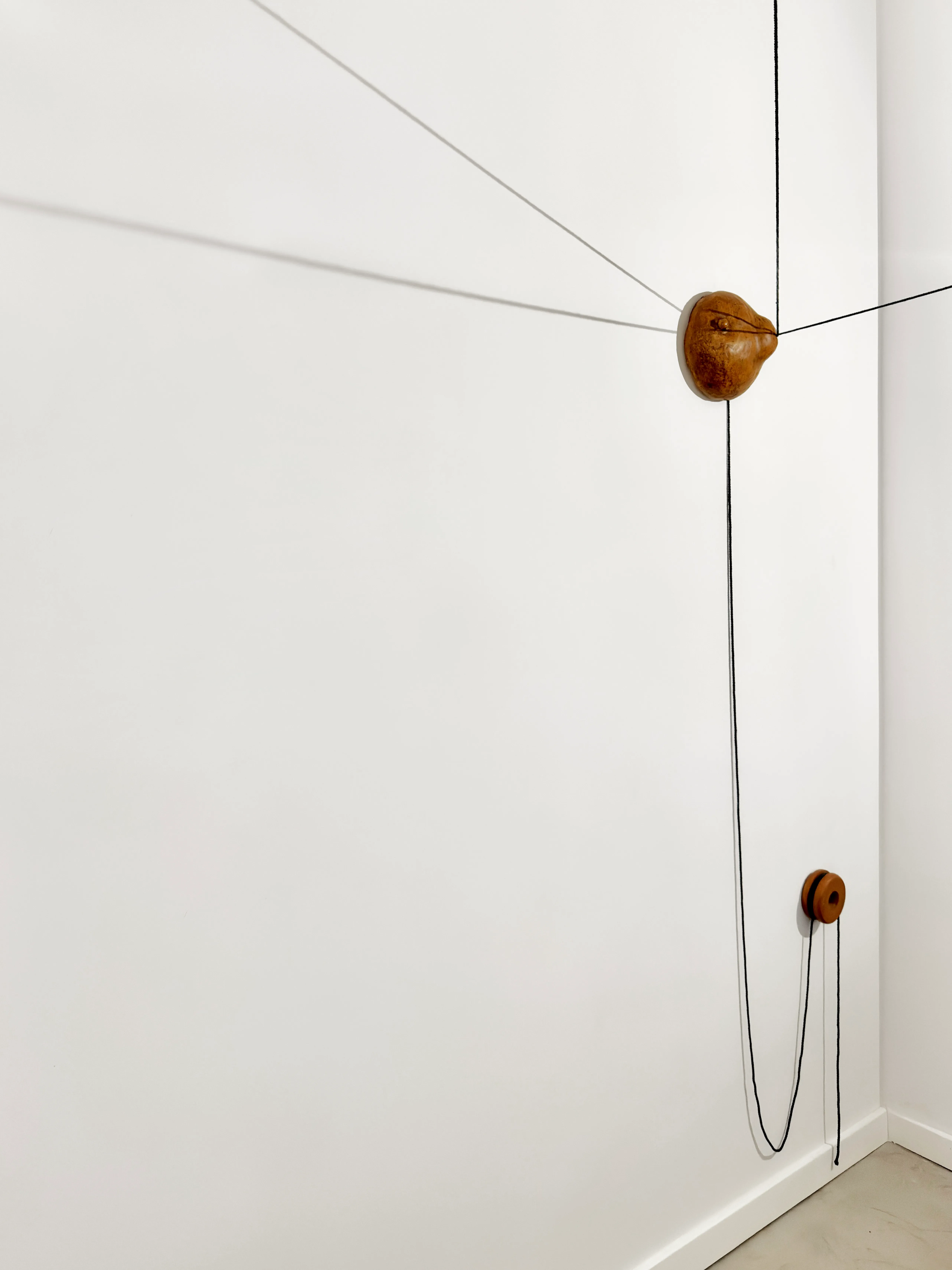
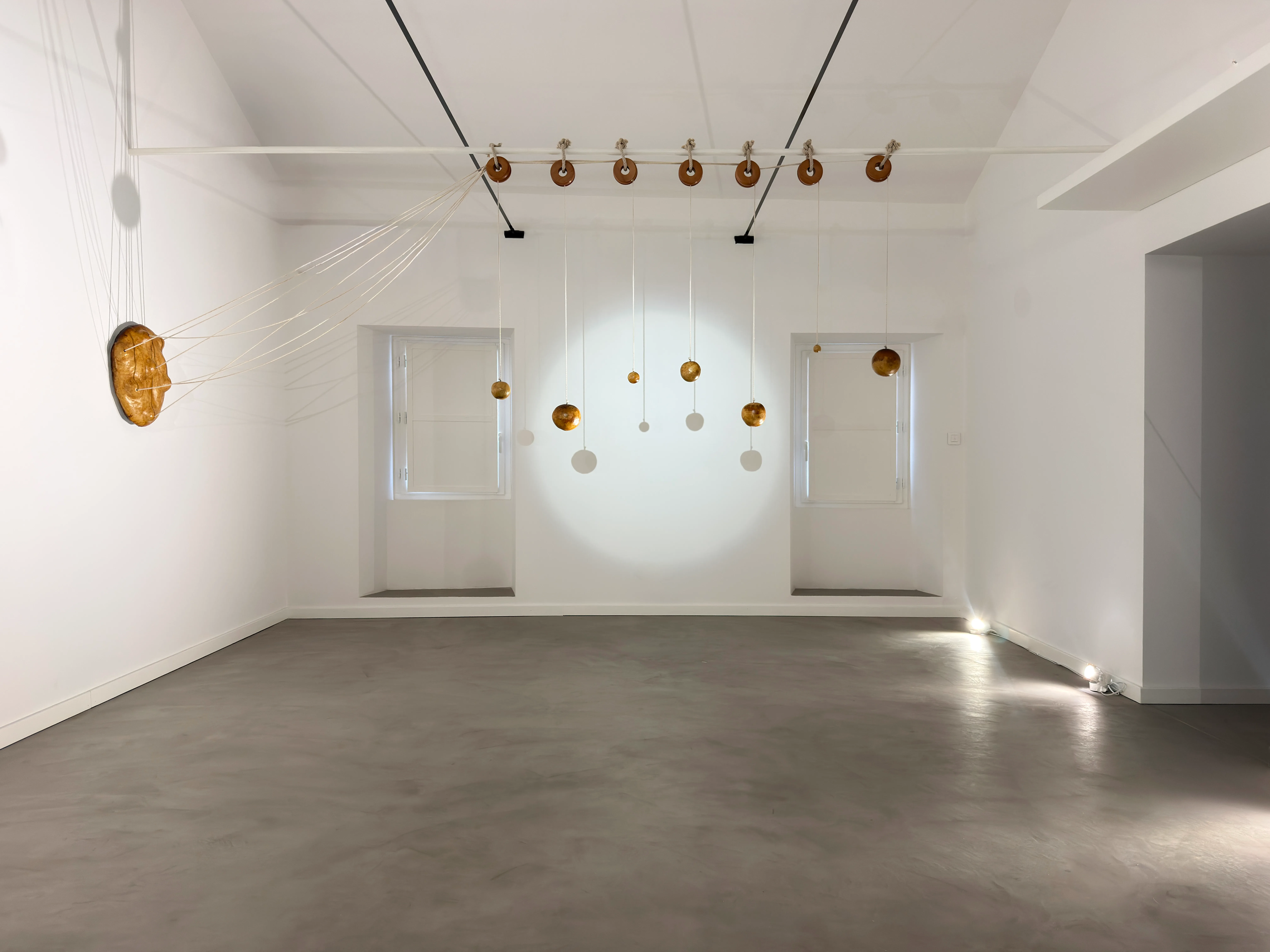
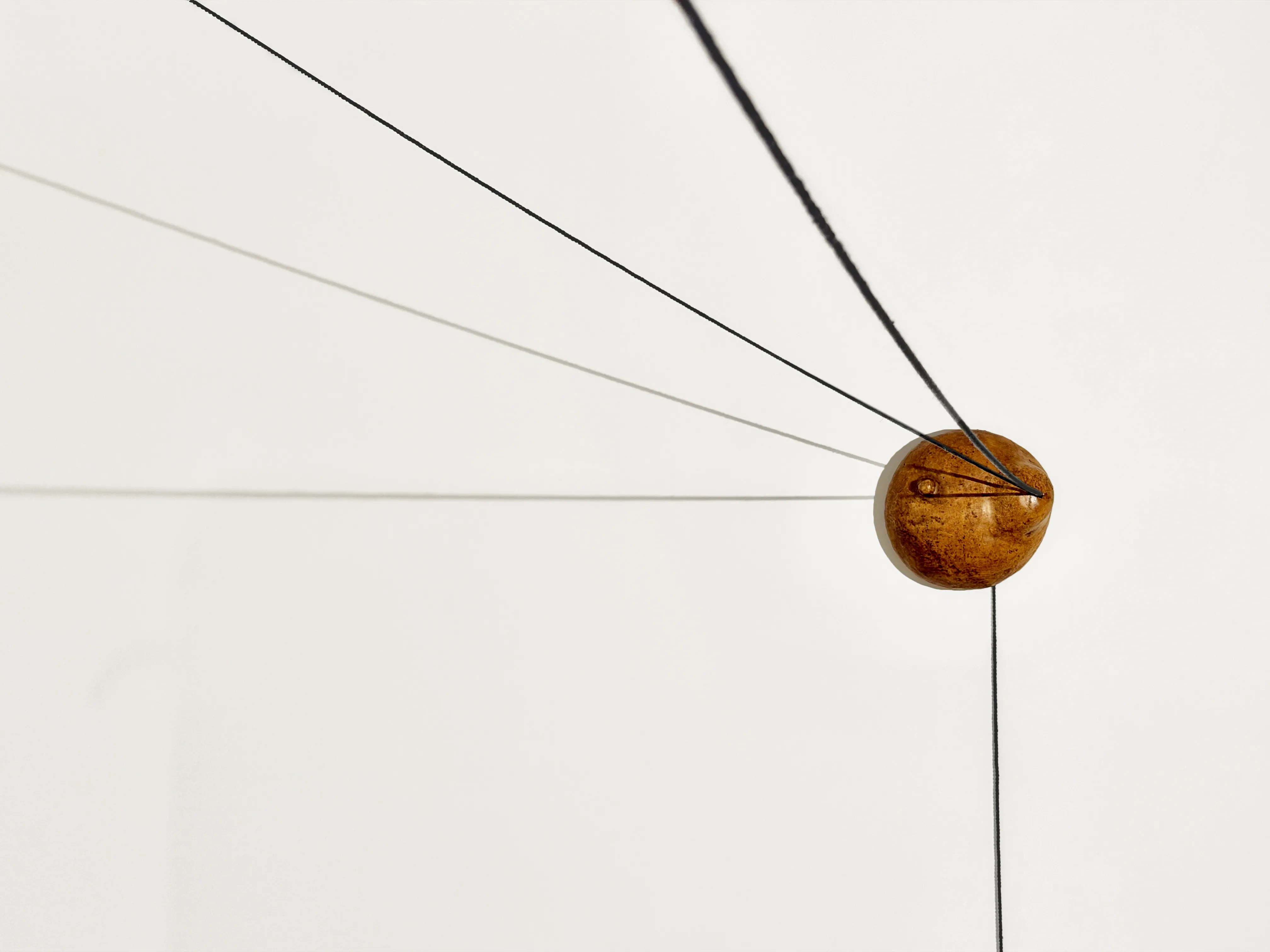
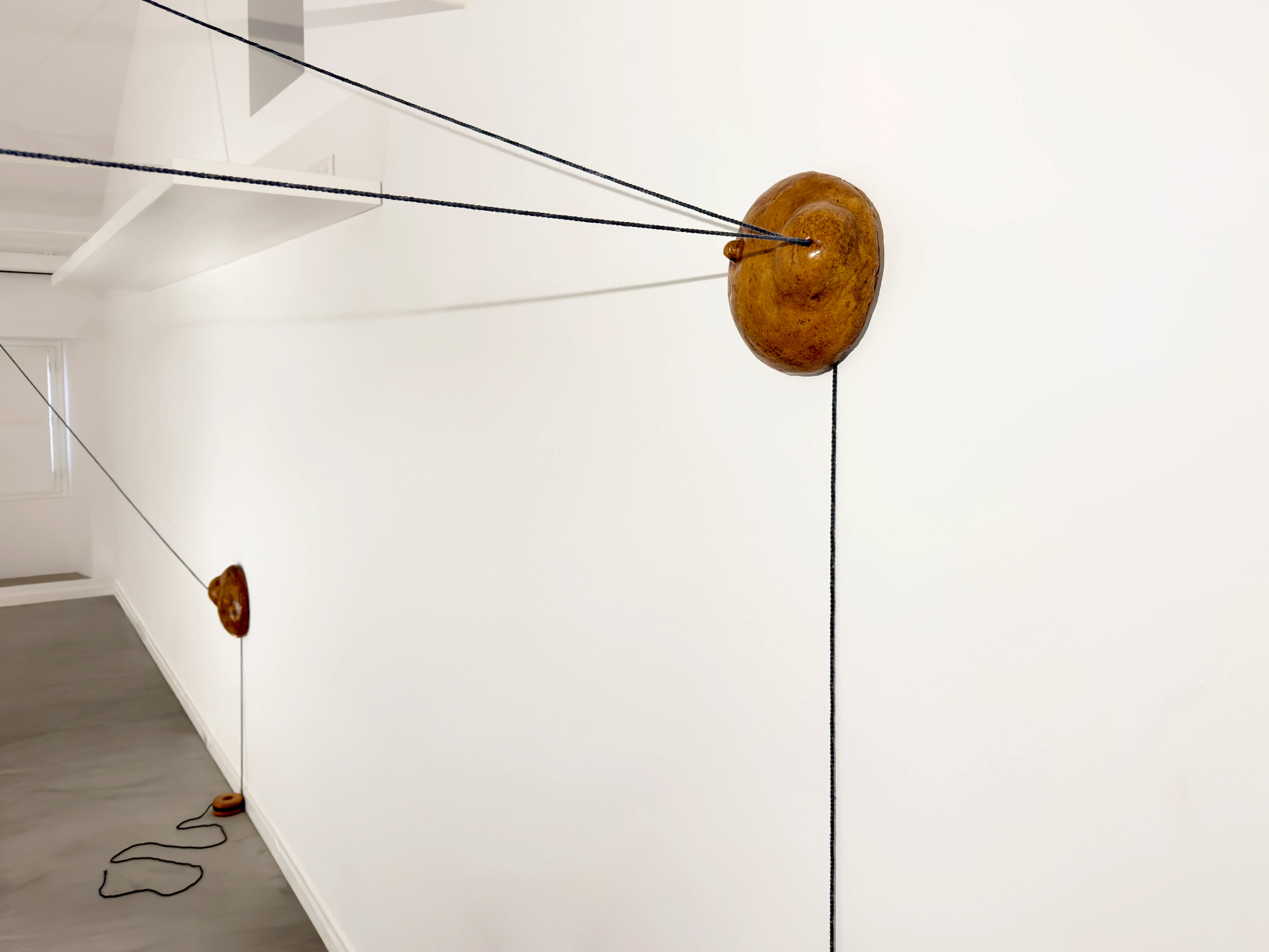
Three masks made of bread occupy the space like a group of pleureuses. The swollen forms from which the cords emerge remain deliberately ambiguous: they can be read as eyes, but also as breasts, udders or wounds. This instability draws mourning away from the face alone and back into the body. Across traditions of female lamentation, grief was carried physically — through tears and voice, but also through the chest, gestures and the body as a whole. Here, that bodily history becomes structural. The cords emerge from forms that are simultaneously eyes and breasts, as if crying and carrying were part of the same act.
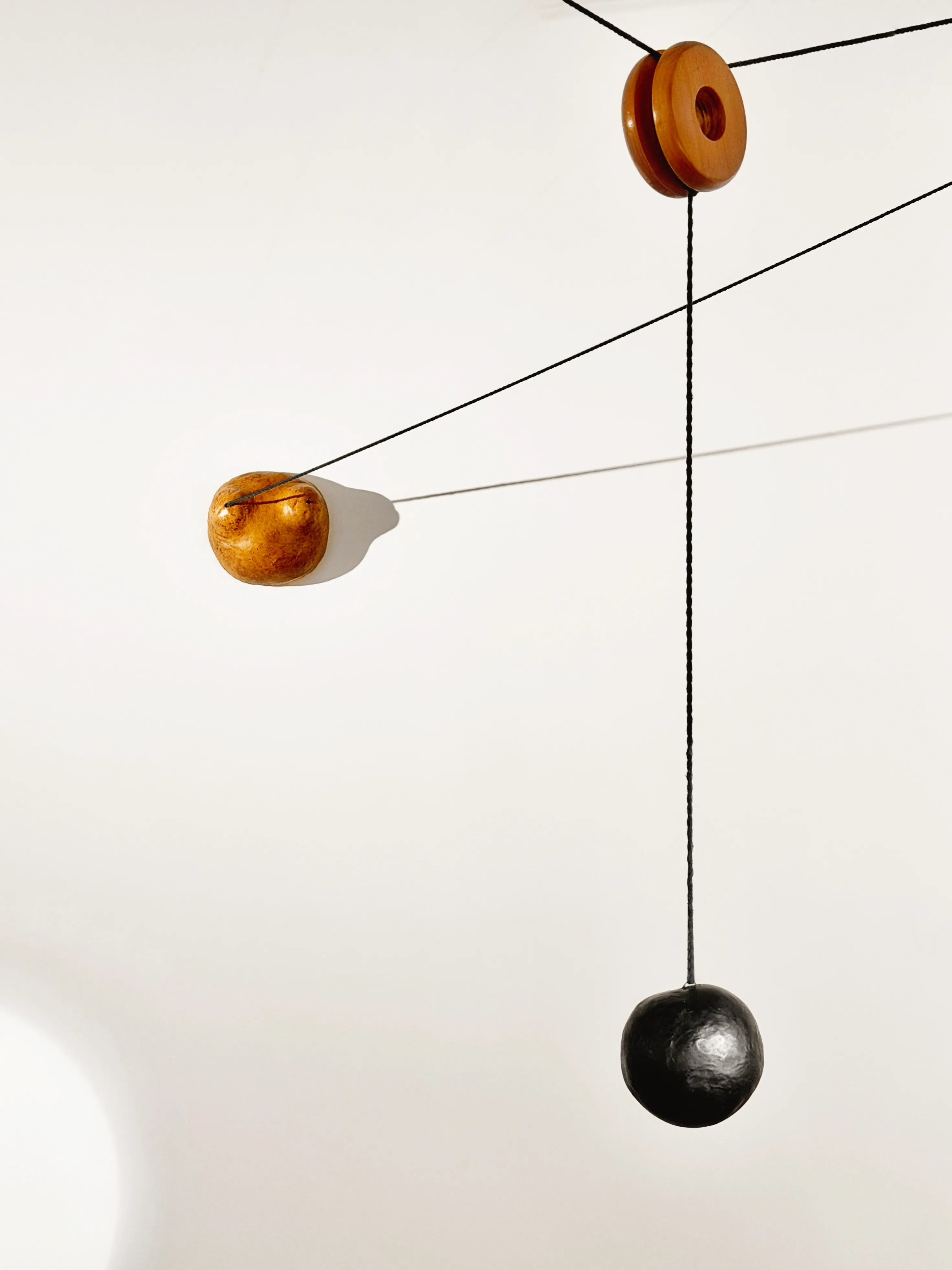
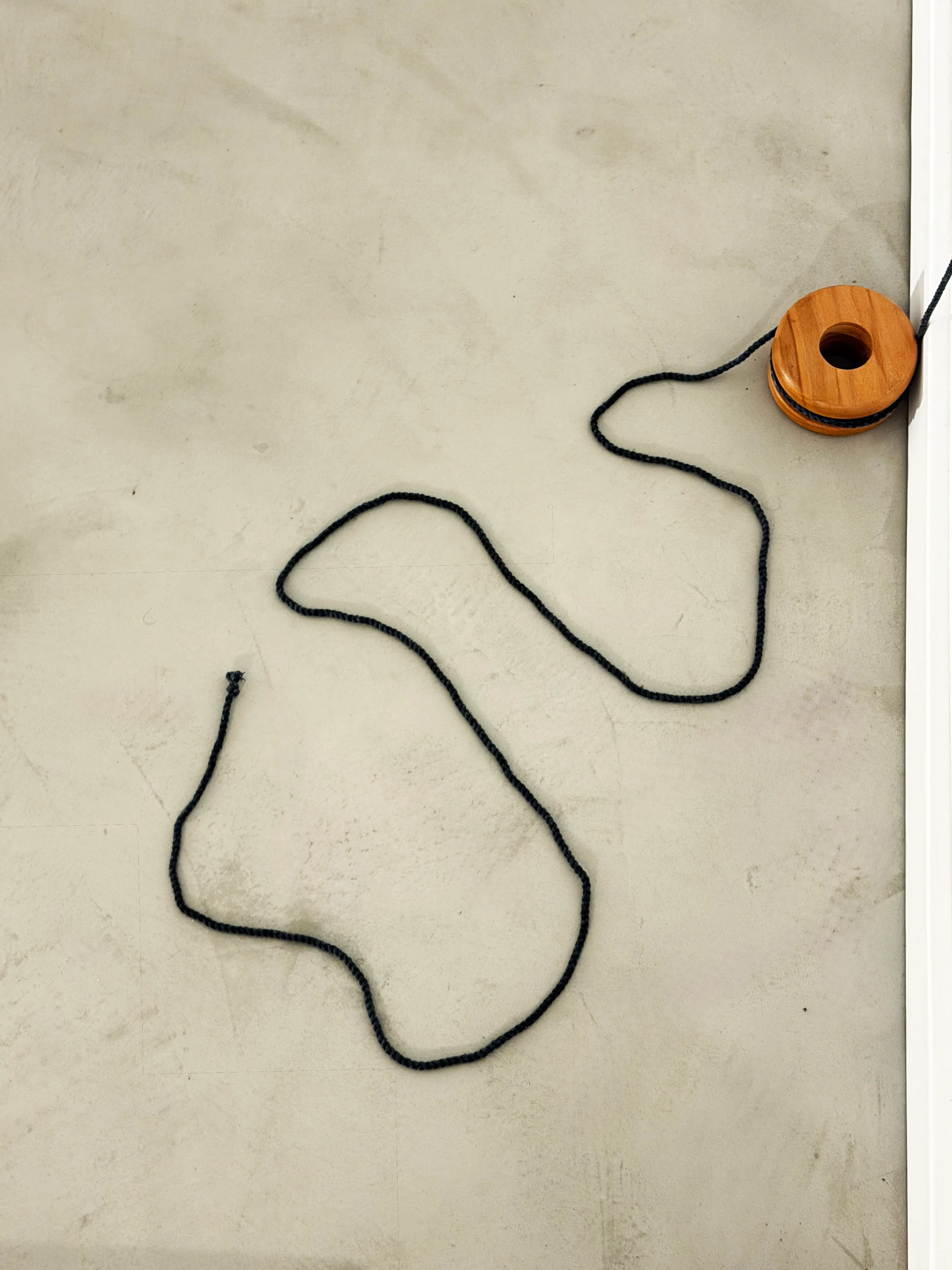
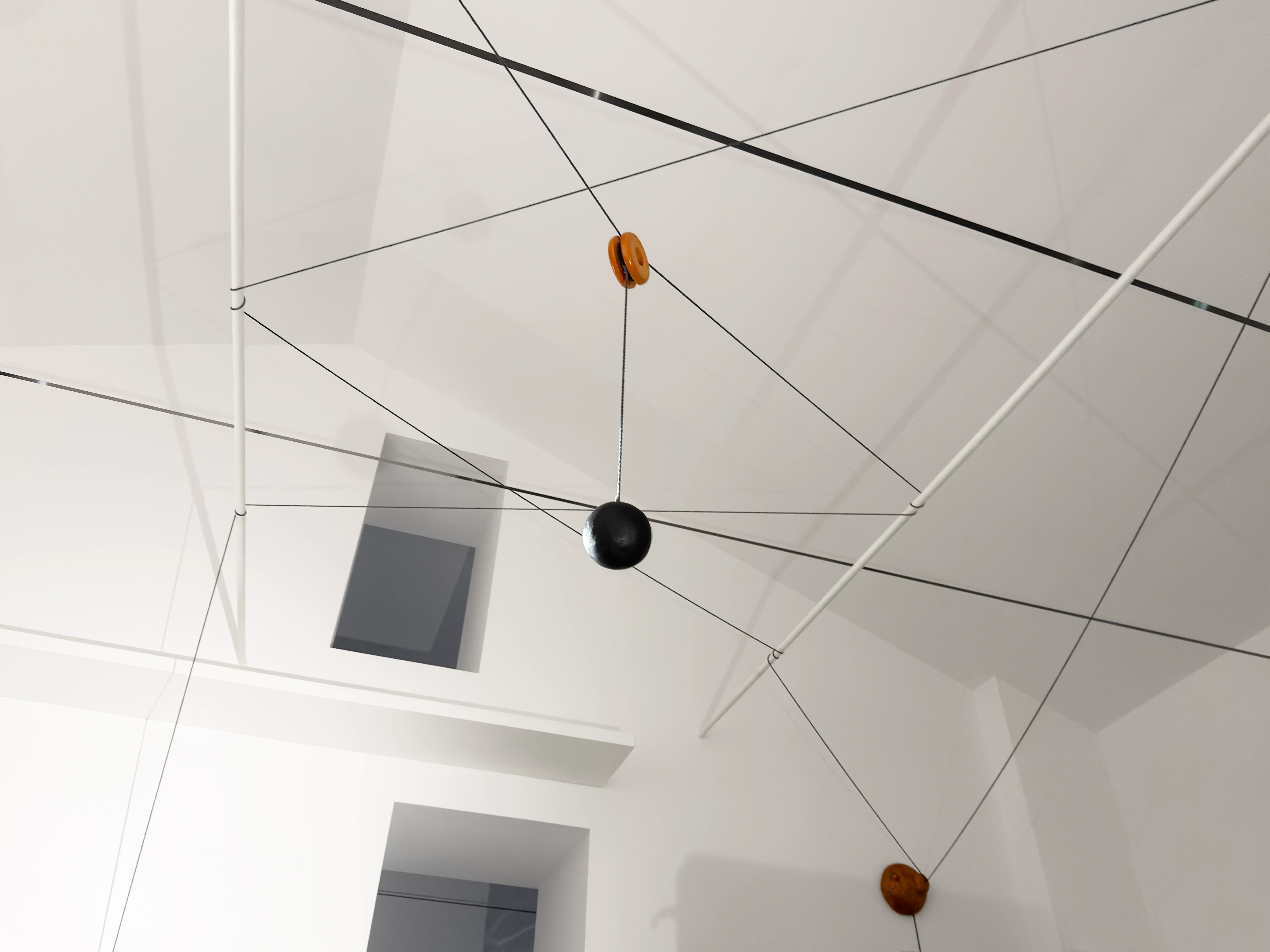
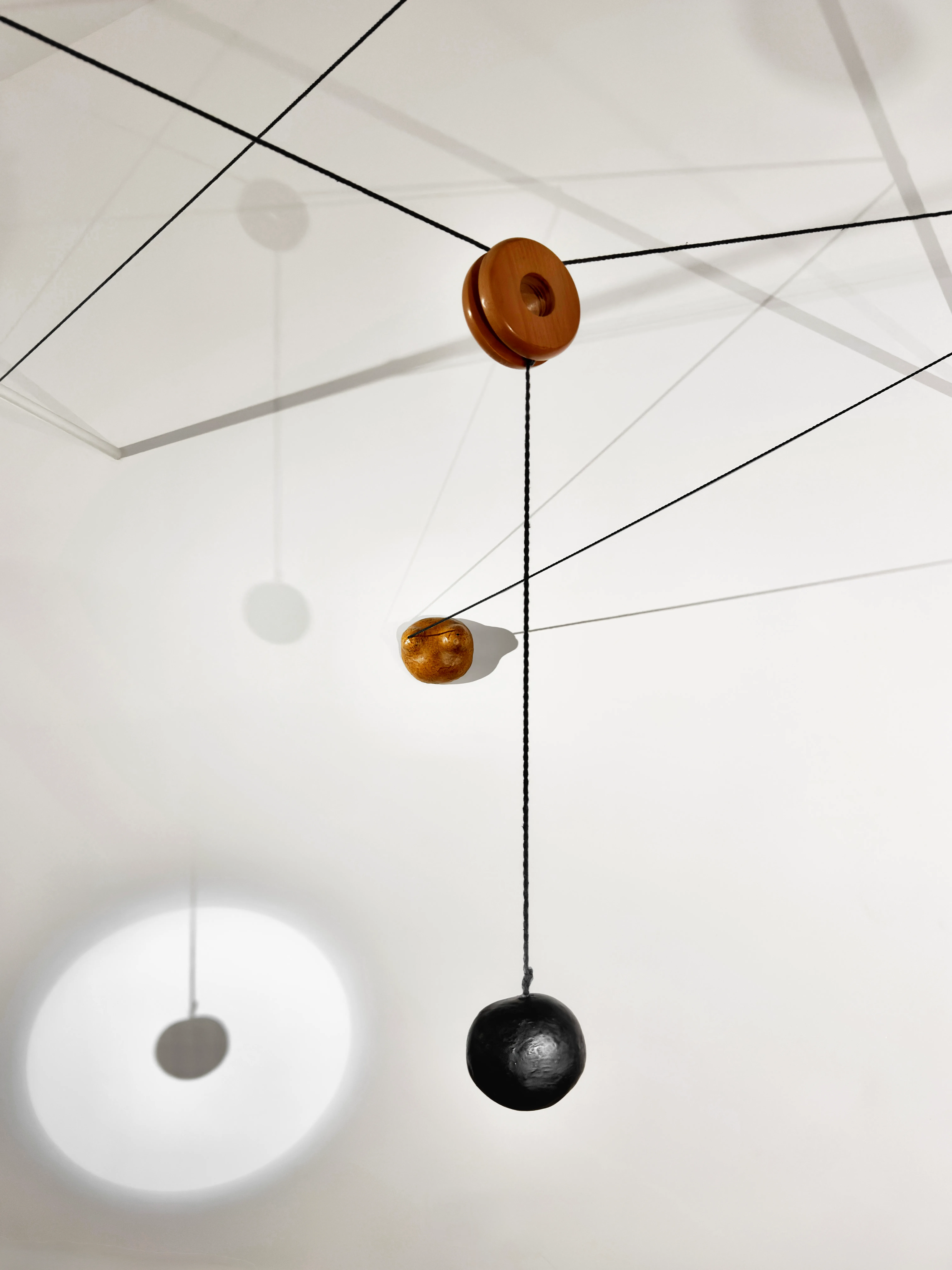
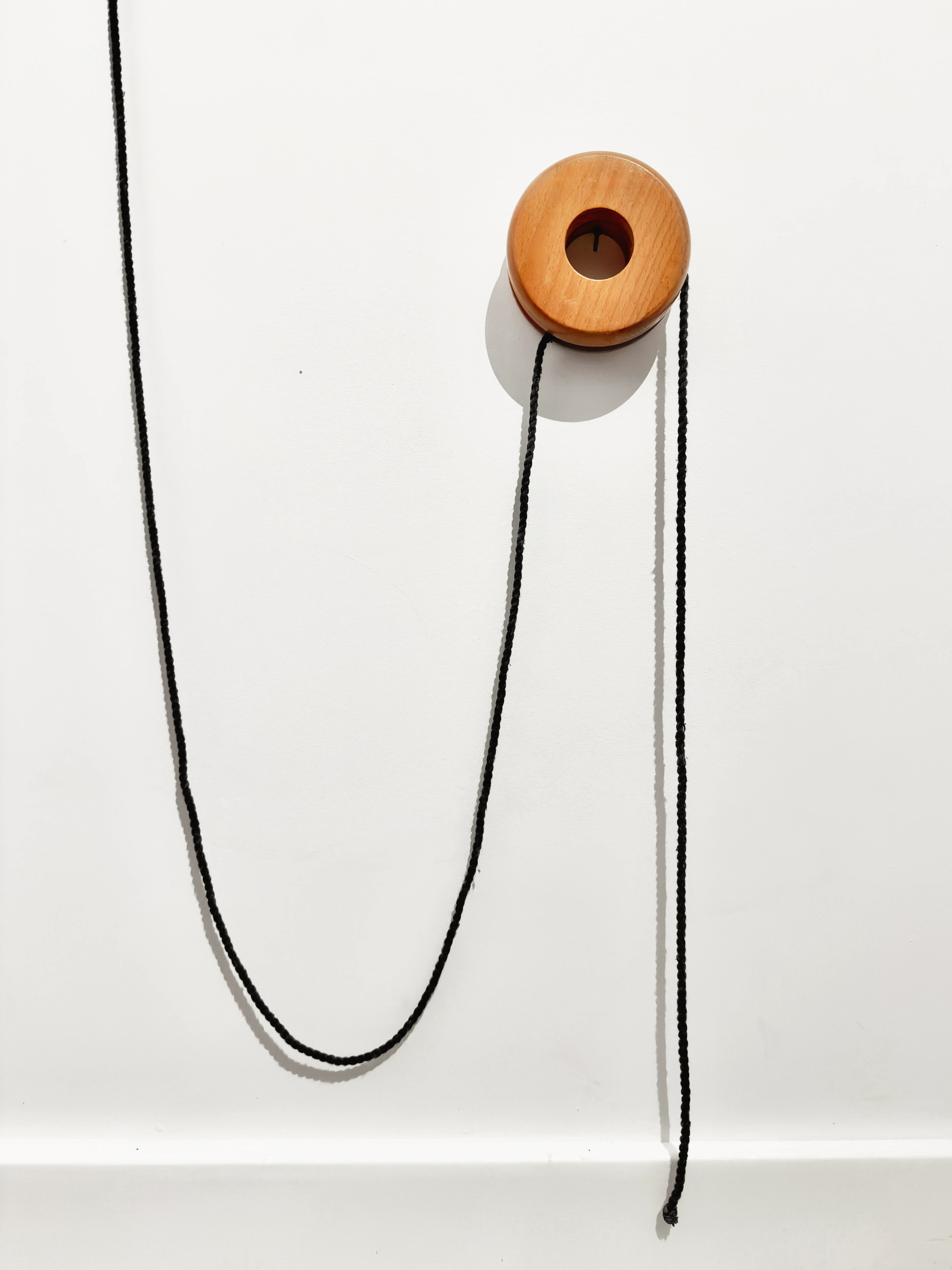
From these points, the cords travel through the space along different trajectories. Some pass from one mourner to another, creating a zigzagging network of transmission; others change direction through pulleys and continue toward different points of support. Together, these interconnected paths sustain a suspended black sphere that condenses both the presence of death and the weight of mourning.
Nothing in the mechanism is concealed. Cords, pulleys, knots and points of suspension remain visible. Yet what the structure reveals is not the functioning of a machine, but the presence of forces that usually remain imperceptible. A pulley does not eliminate weight; it changes the way that weight is carried. The installation follows the same principle. Mourning is not erased or reduced. Its weight is displaced, redirected, transmitted and shared.
No mourner carries that weight alone. It circulates between them through a system of tension, resistance and support. Each pleureuse becomes both a bearer of sorrow and a structural point upon which the others depend. The suspended black sphere remains held because the burden is collective. Nothing falls.
This collective structure does not produce a perfect or final equilibrium. Emotional weight cannot be quantified with the precision of physical mass. It accumulates, shifts, returns and settles elsewhere. Mourning does not follow a linear progression toward resolution. It persists through continual adjustments between bodies, forces and points of support.
The installation does not imagine grief disappearing with time. It gives form to the way it endures collectively: carried, transmitted and held in suspension.