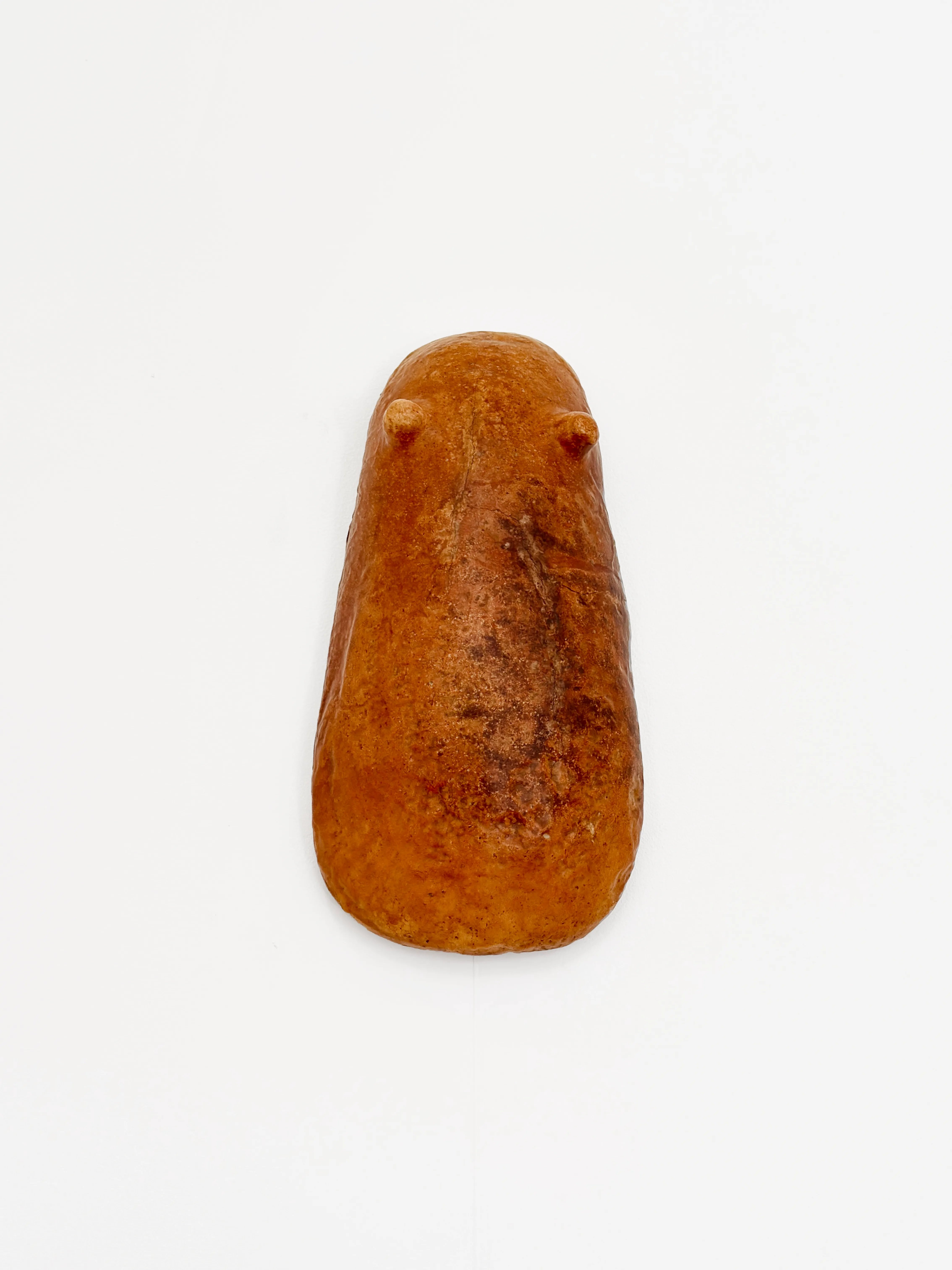
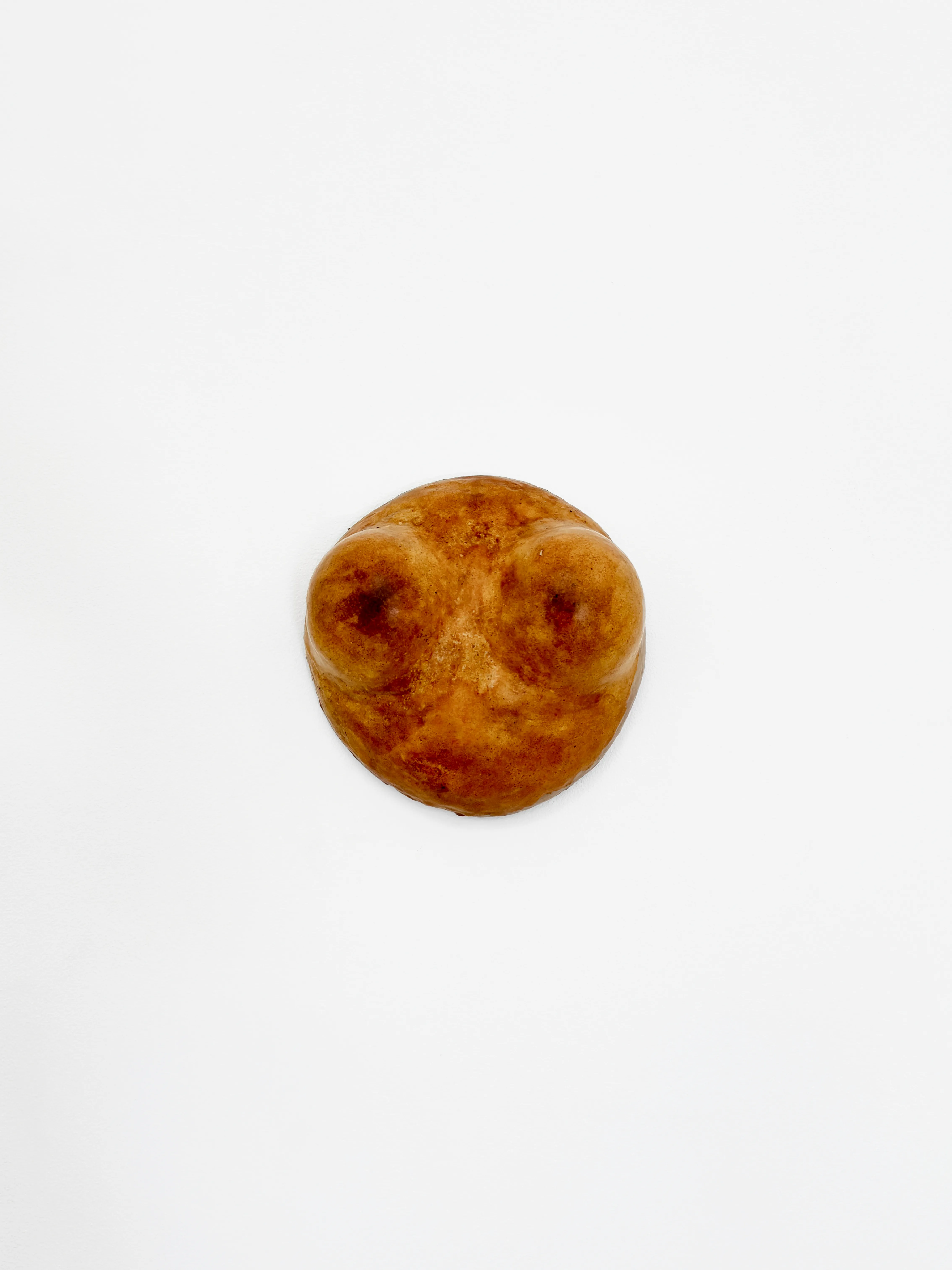
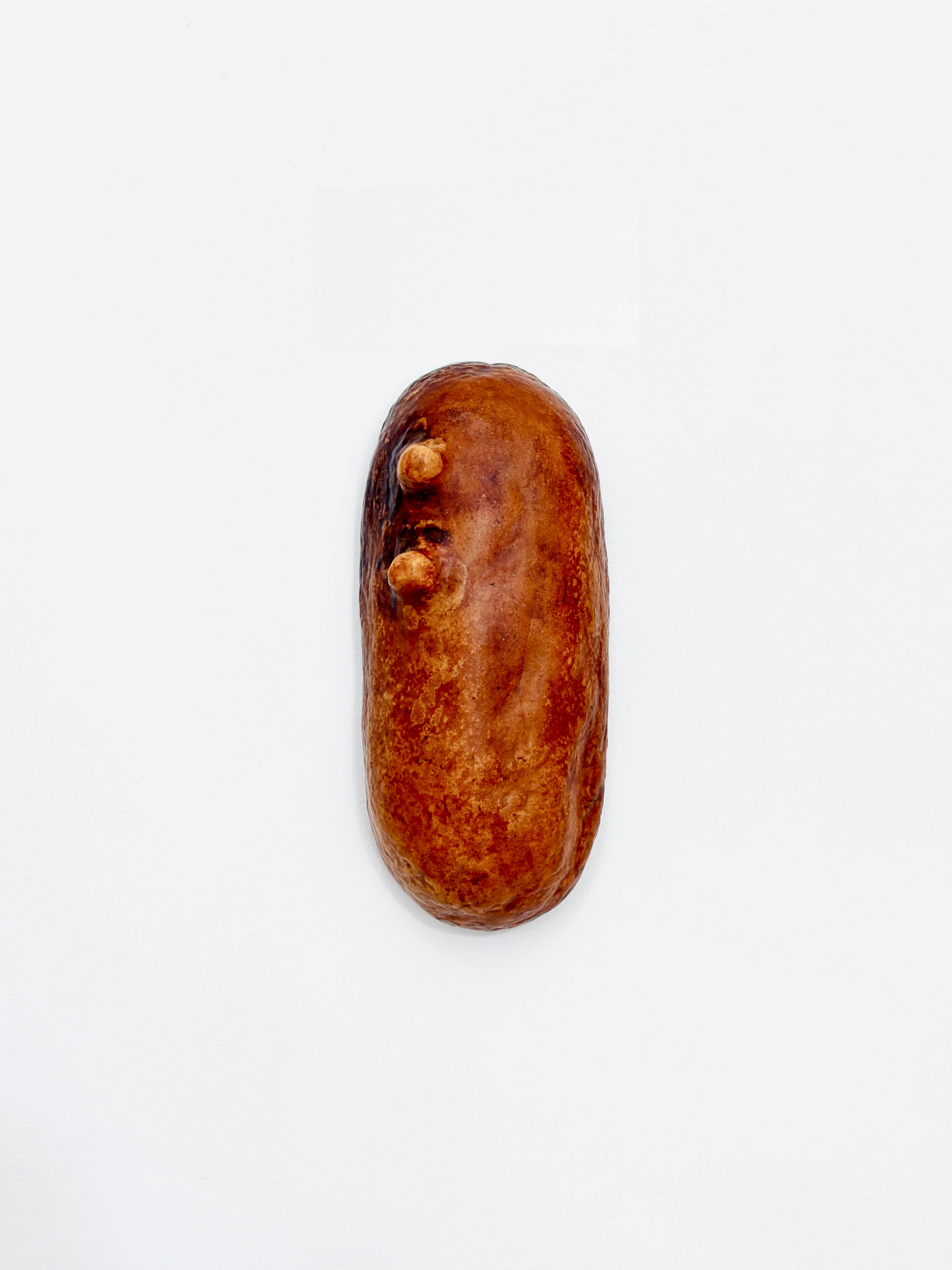
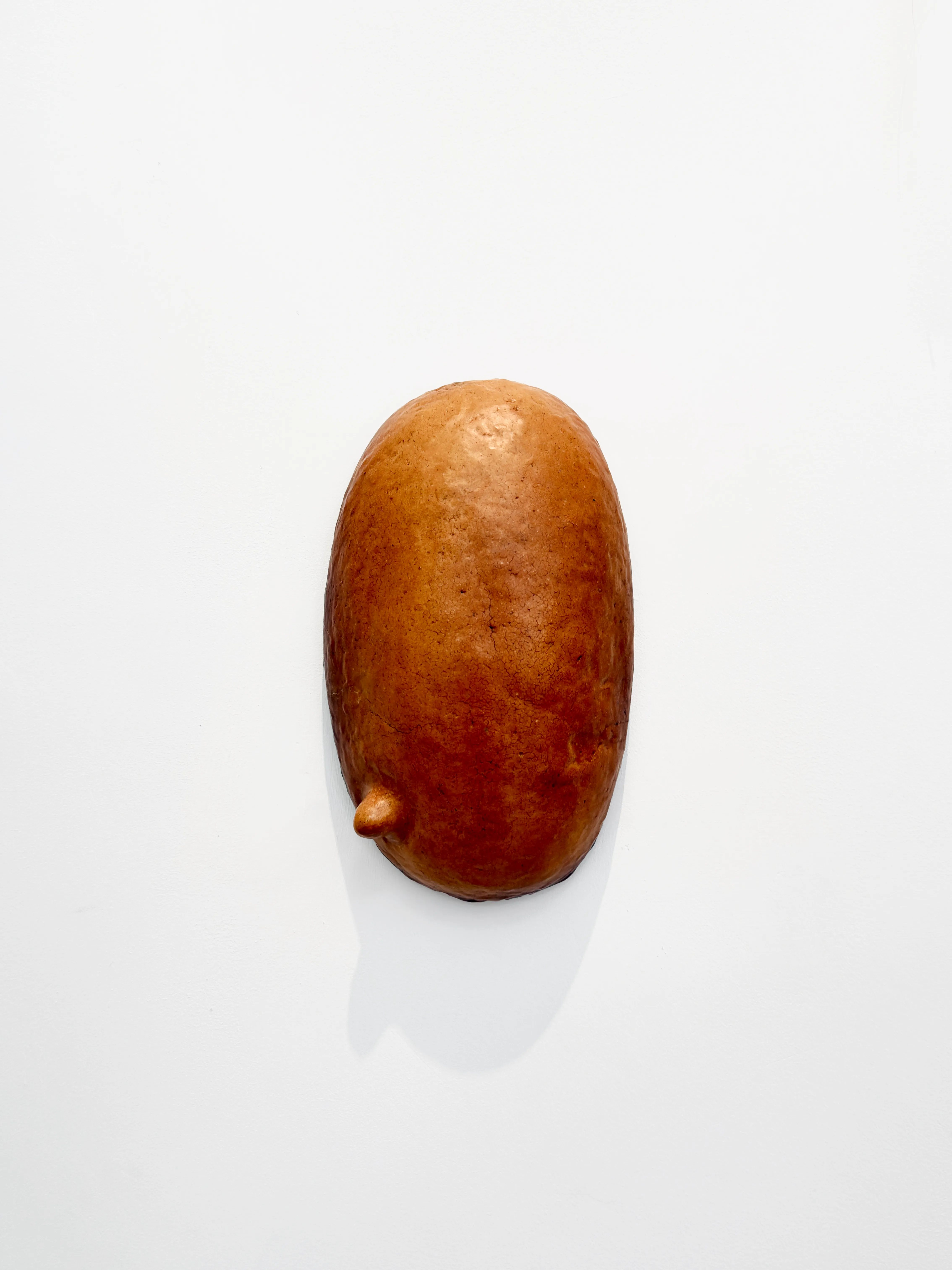
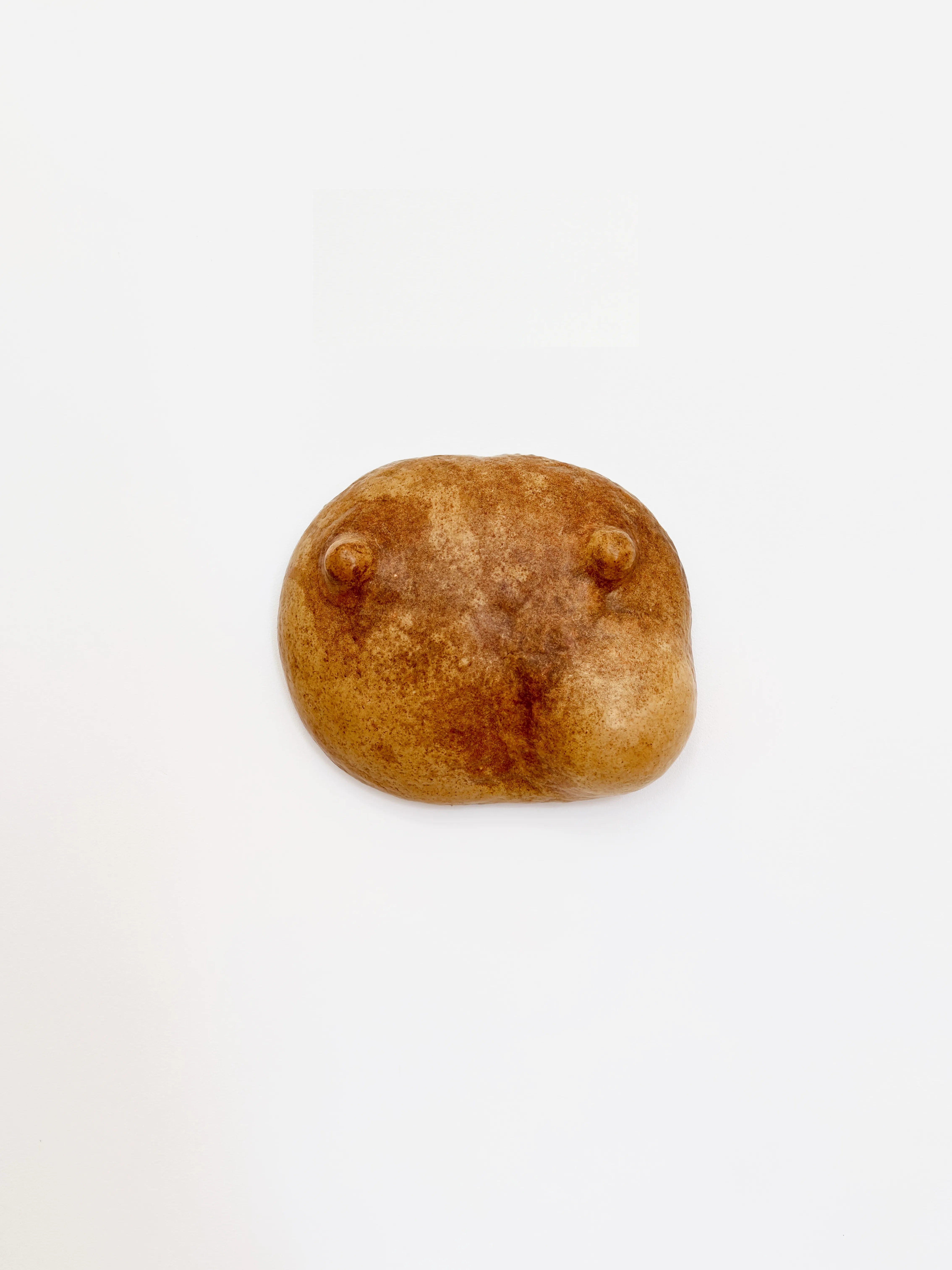
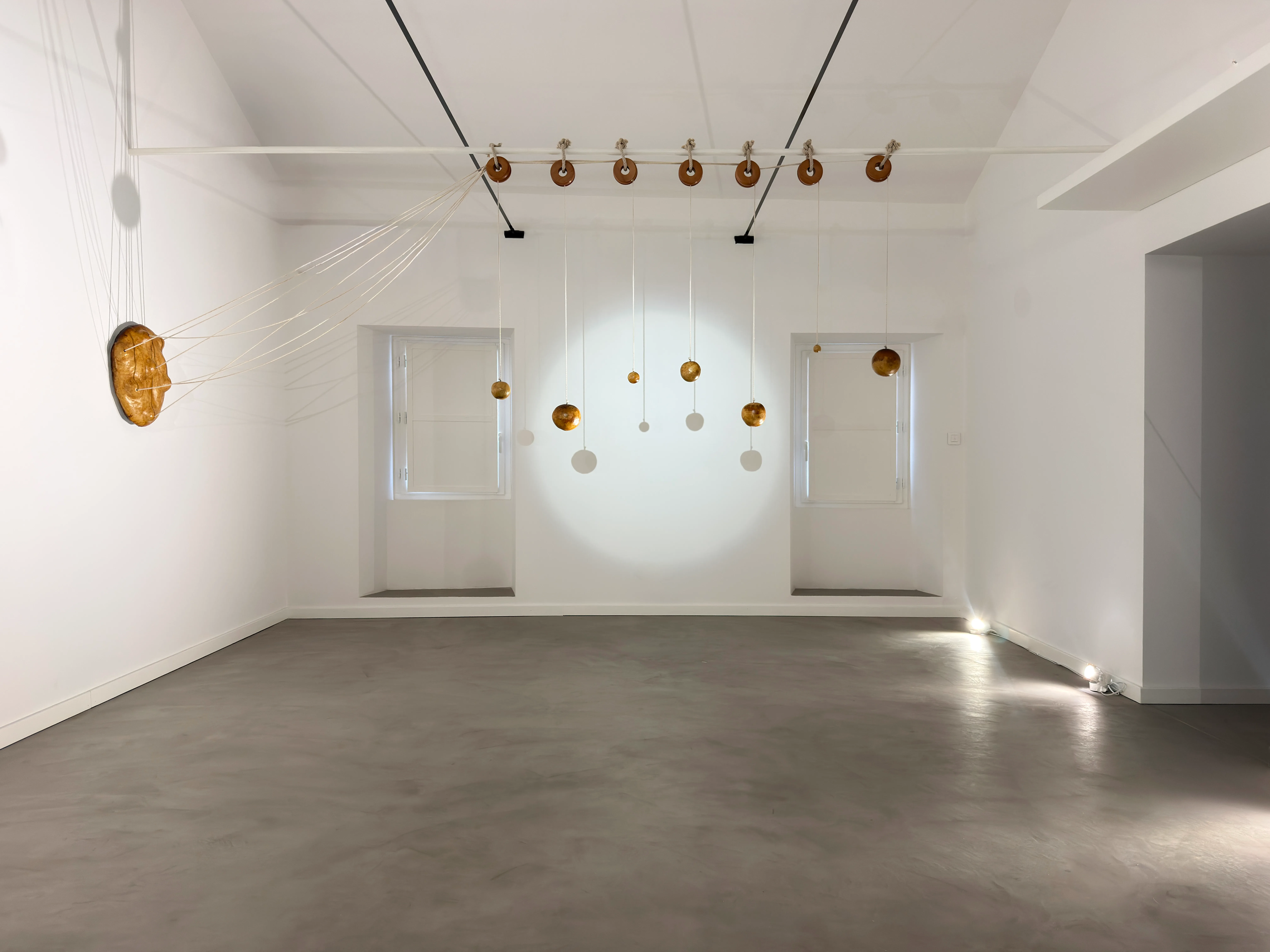
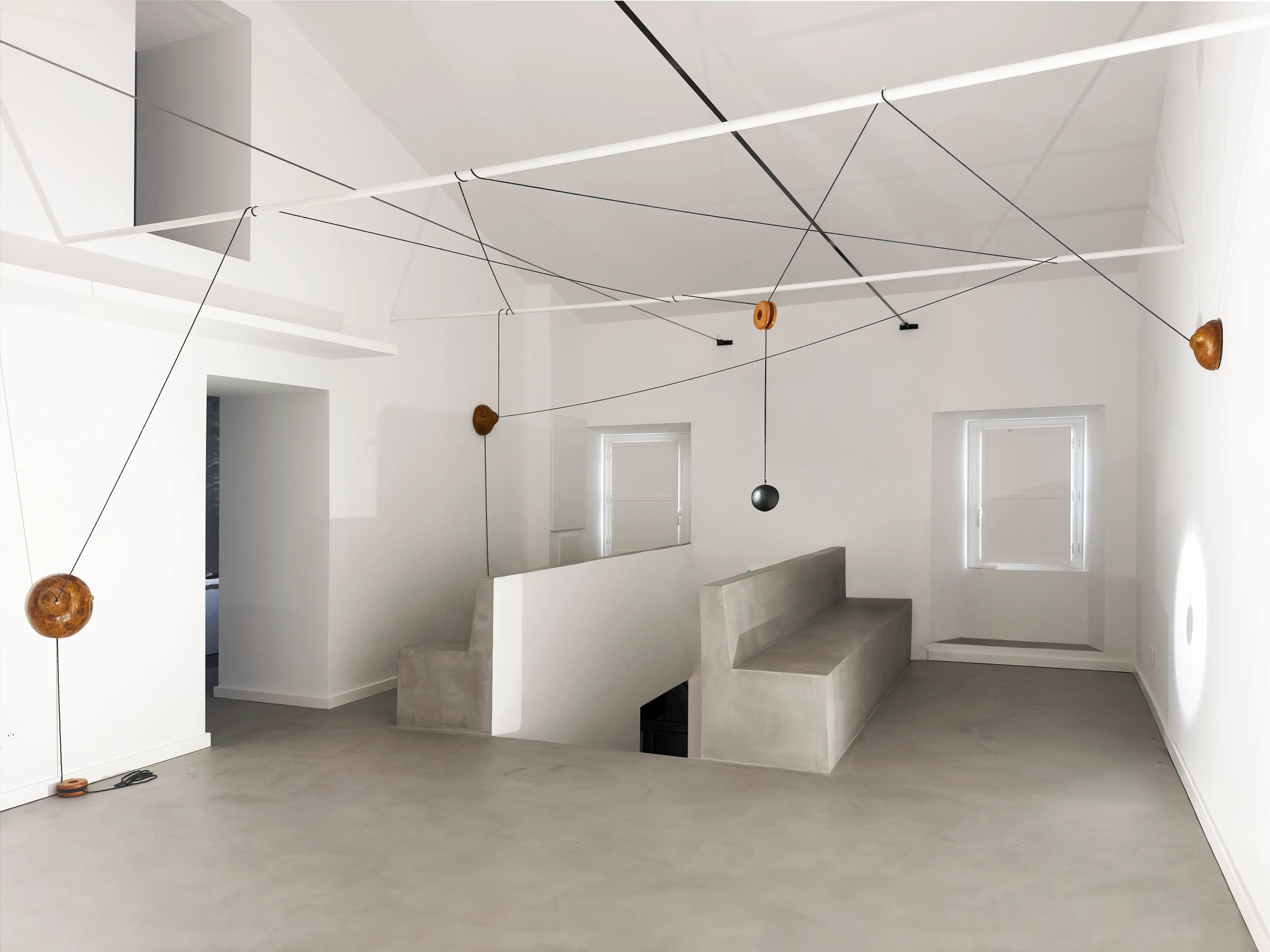
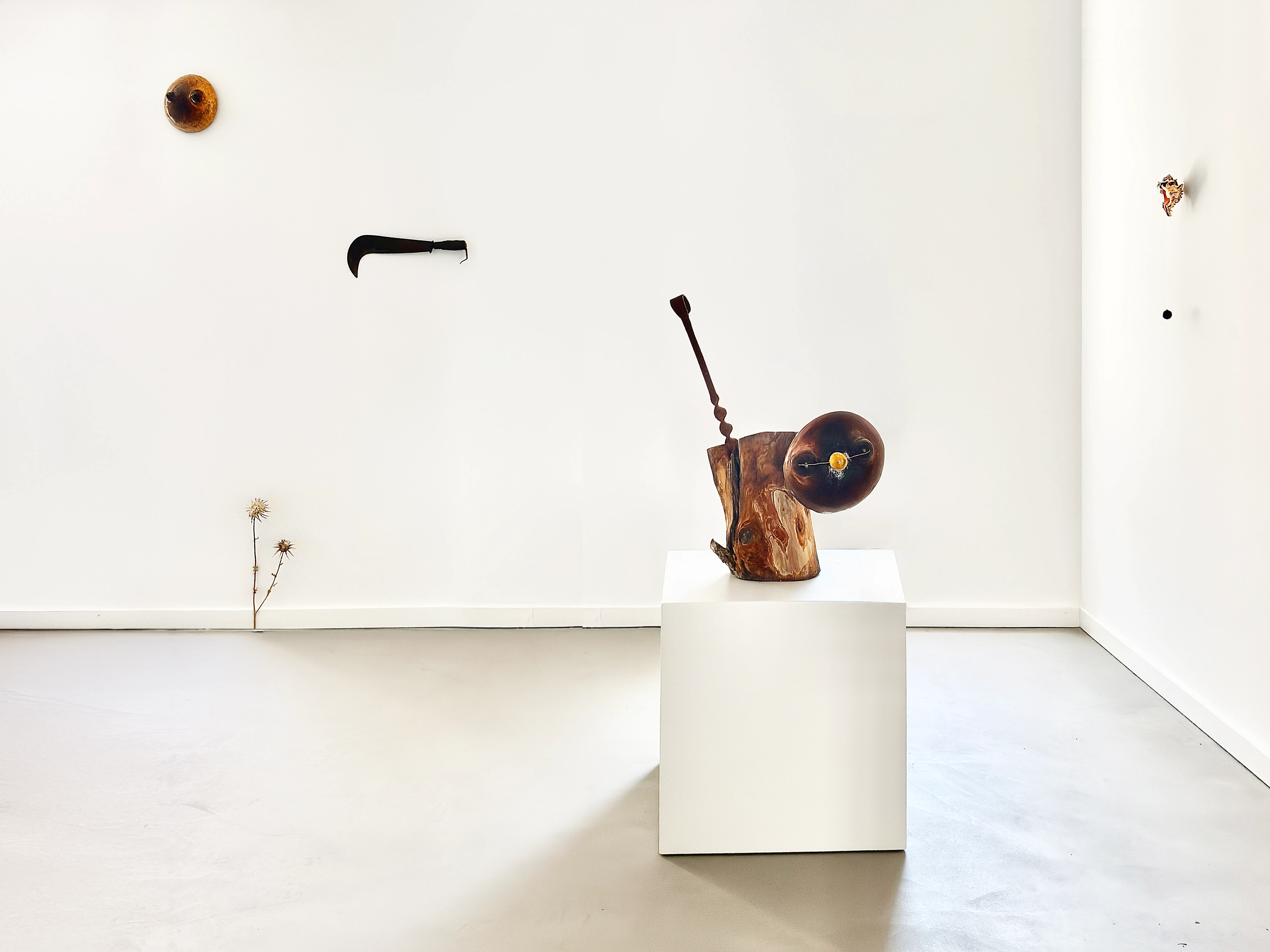
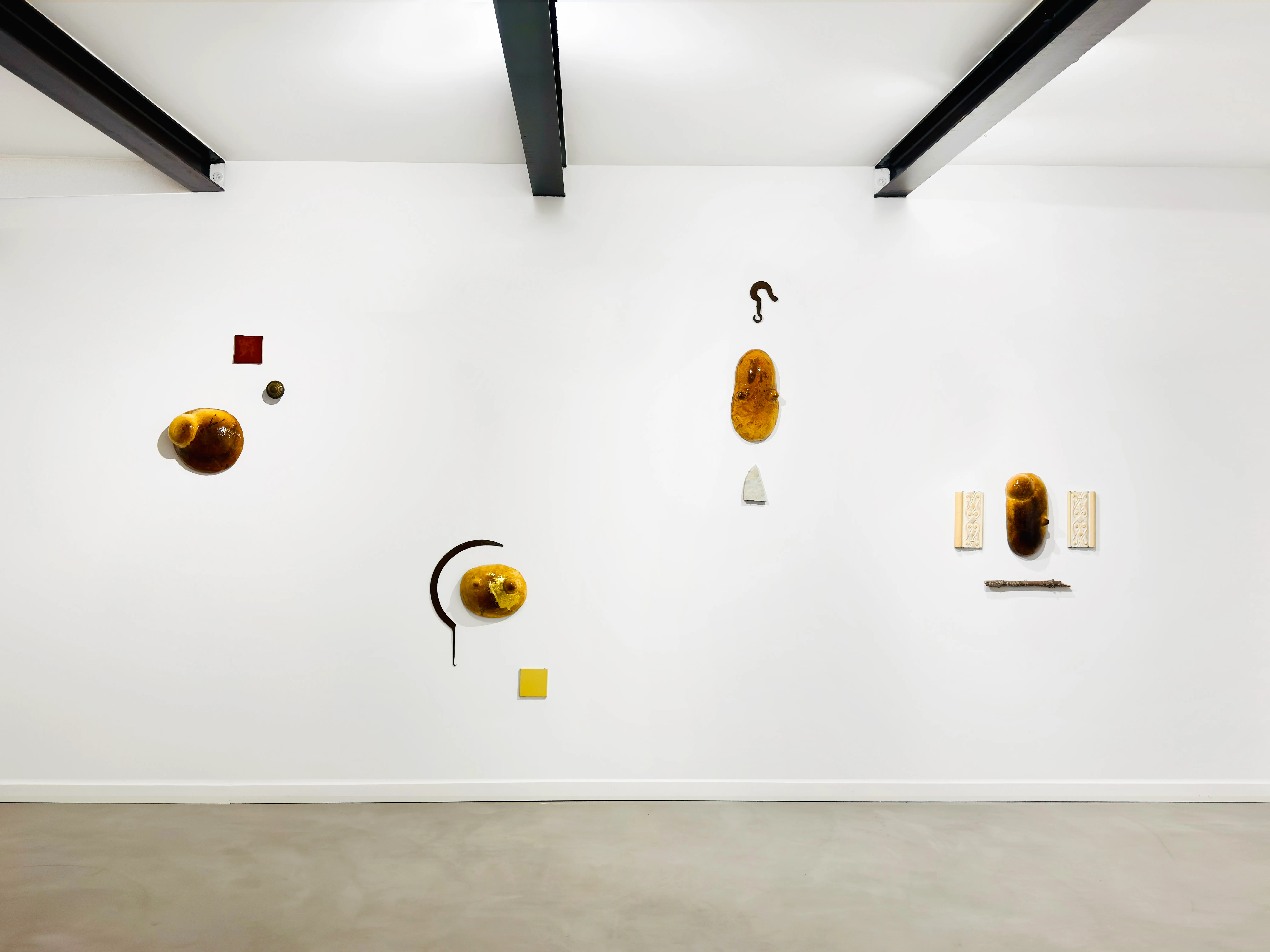
To Each Day Its Pain belongs to Bake Your Pain, a project initiated by Kosmatopoulos in 2023 following the sudden death of her father. In moments of deep sorrow, she kneads bread dough and shapes a mask — a self-portrait, though not of her likeness. Portraiture usually fixes a face; here, the face is what disappears. What remains are two swollen forms where the eyes should be — still readable as eyes, but just as easily as breasts, udders or tumours. The mask no longer describes a person. It describes a state the body passed through.
This confusion between face and body connects to something older. Across many Mediterranean cultures, mourning was carried through the entire body, not only through tears. Women beat their chests, exposed their breasts, tore their hair — turning grief into a physical, visible language that exceeded what words could hold. In the masks, that history resurfaces literally: the eyes that could be breasts pull the act of crying back down into the chest, as if the whole body were doing the work usually left to the face alone.
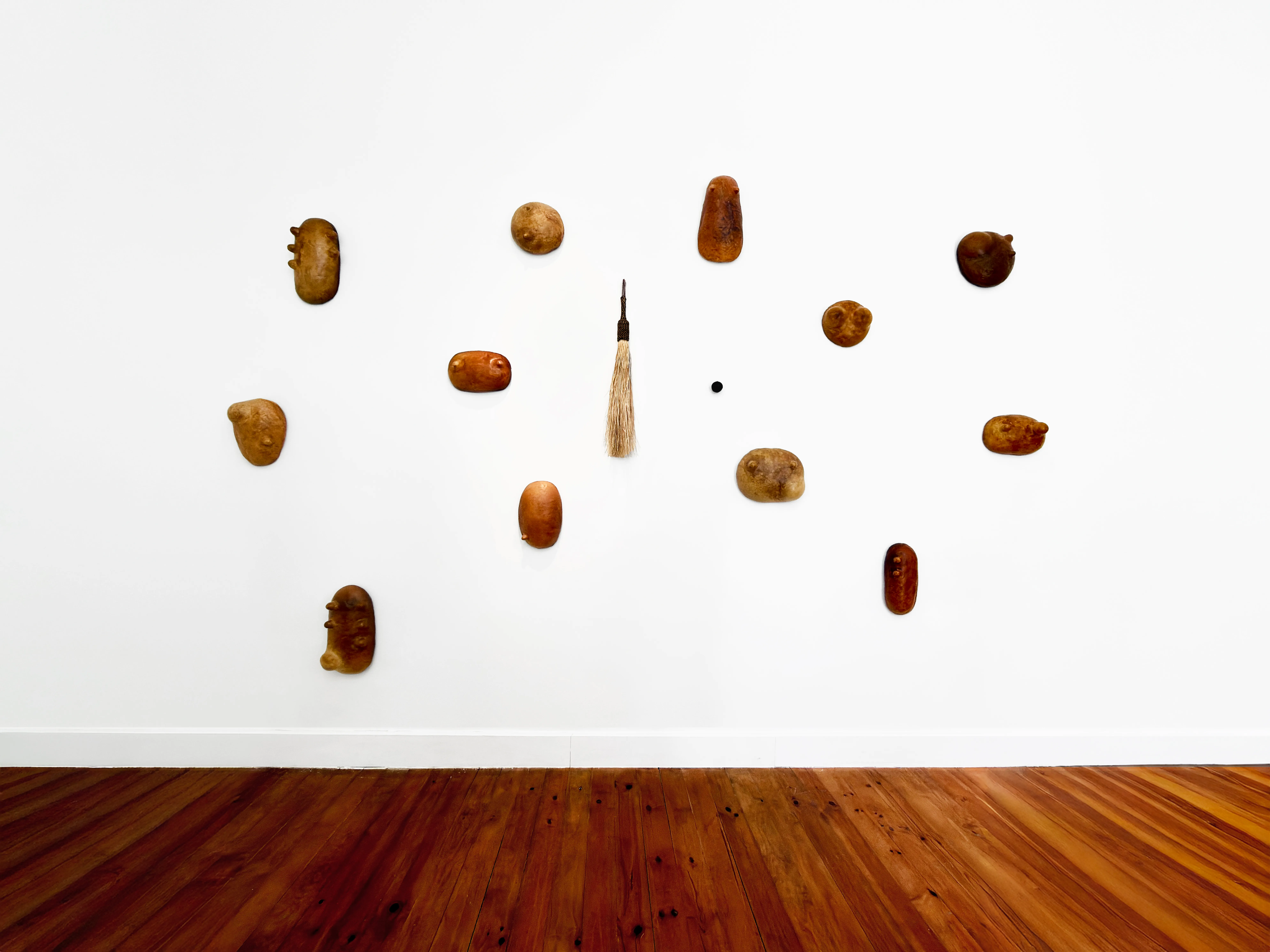
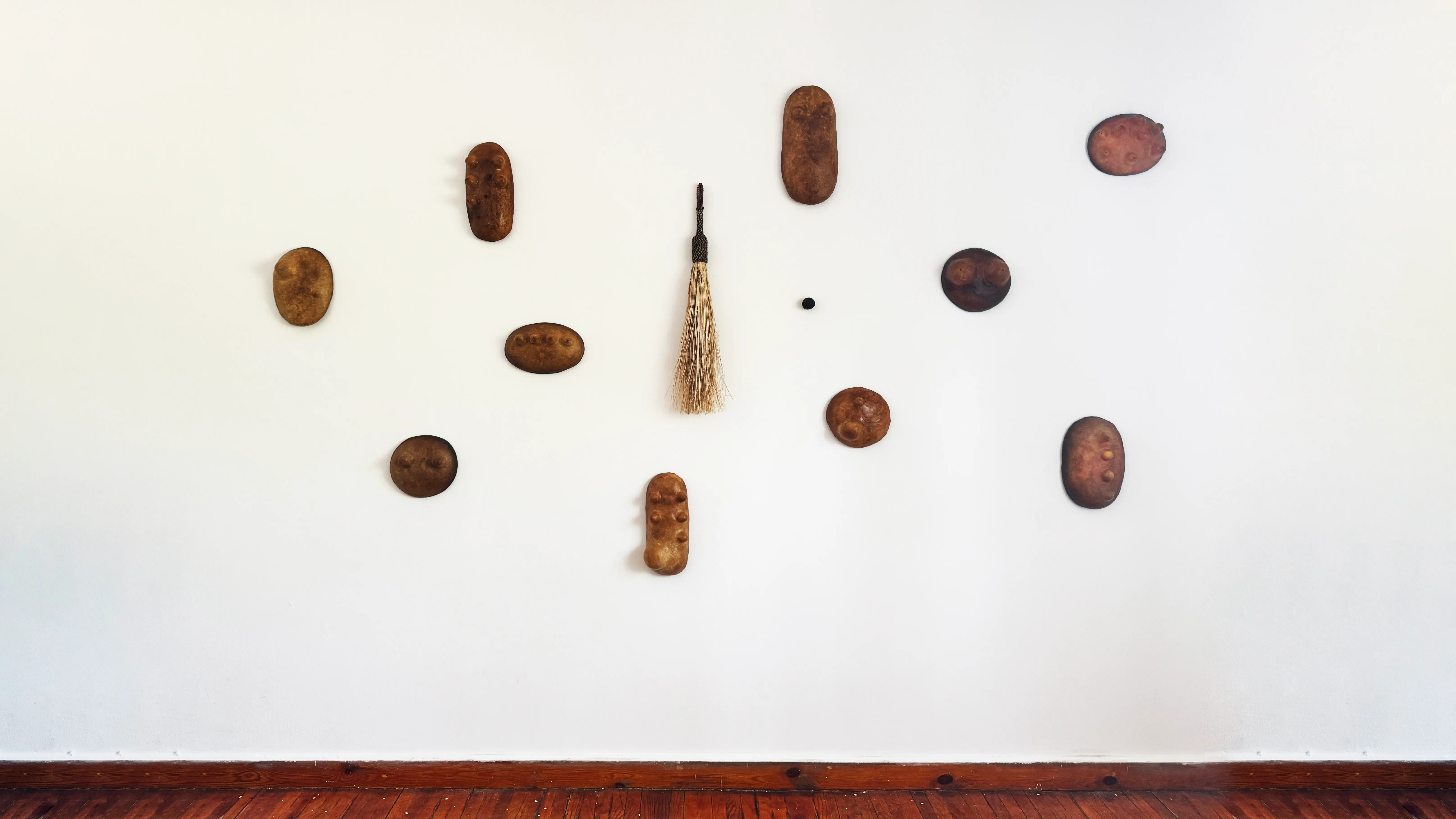
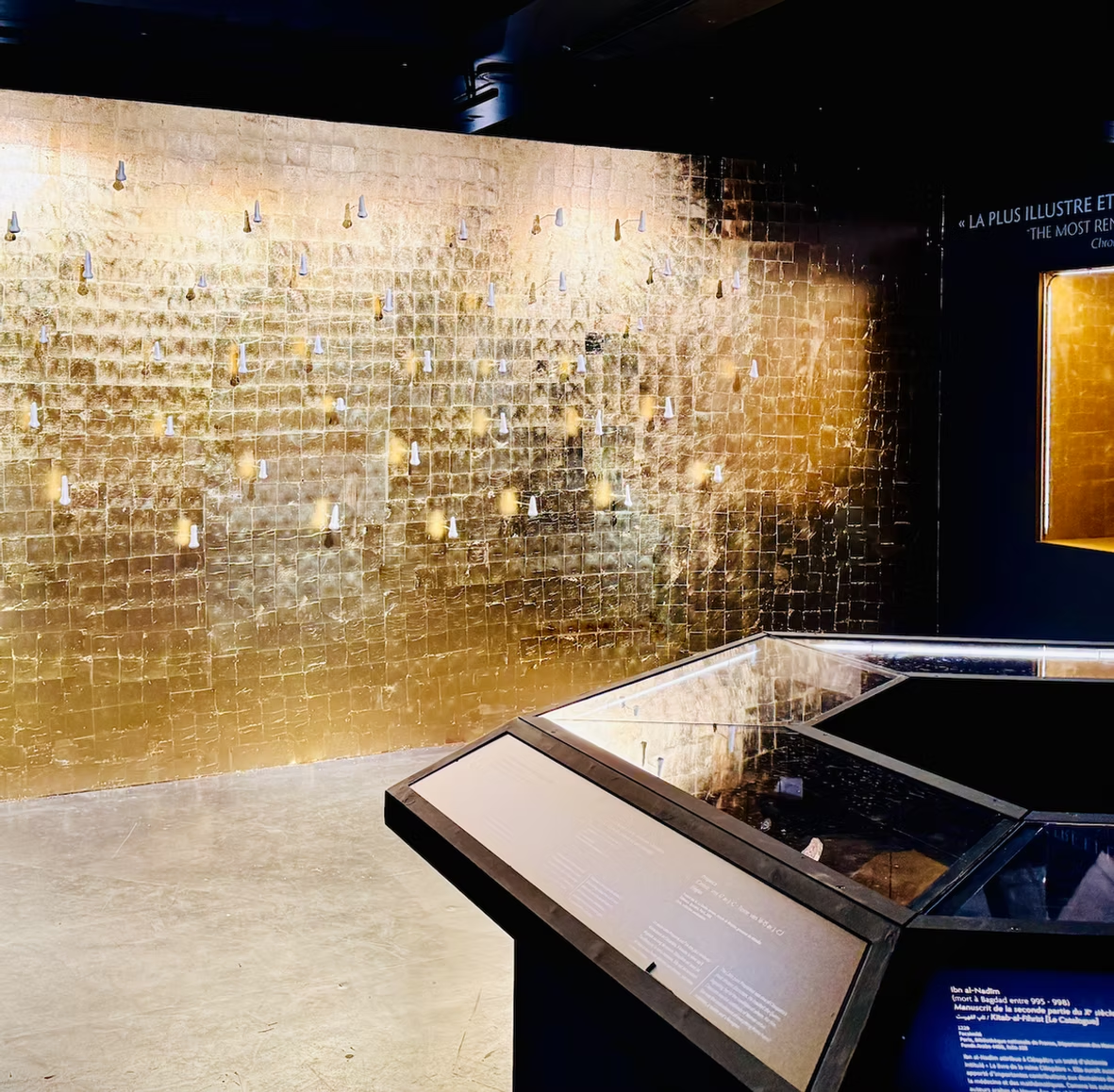
To Each Day Its Pain takes this logic and multiplies it. Several masks made during the same stretch of time are brought together into a single wall-mounted composition — the same woman, altered differently by each moment of sorrow. Seen side by side, the repeated faces recall an ancient chorus of pleureuses, women whose voices, bodies and gestures gave collective form to mourning. Except here there is no group. Every mourner in the chorus is the same person. One woman becomes many through the accumulation of her own grief over time.
Their arrangement on the wall builds its own rhythm. Proximity, distance, density and empty space organise the composition — masks clustering tightly in some areas, standing isolated in others. The wall starts to resemble a musical score or a code waiting to be read, where repetition, silence and intensity stand in for notation.
The calendar does not measure grief. It makes its rhythm visible — how sorrow intensifies, withdraws, returns and changes shape, without ever settling into a predictable curve.
What passes disappears. What remains on the wall is its trace.