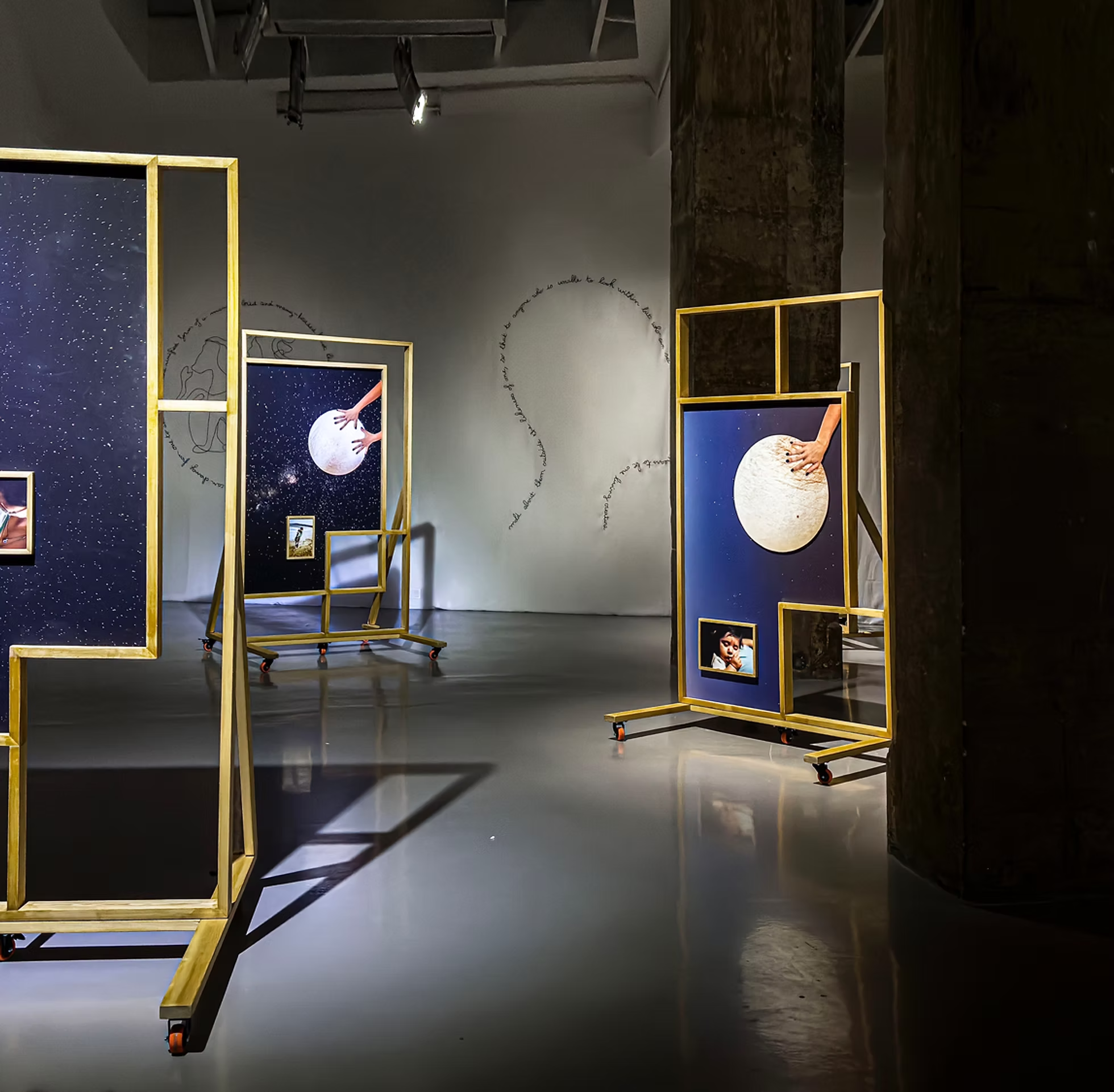
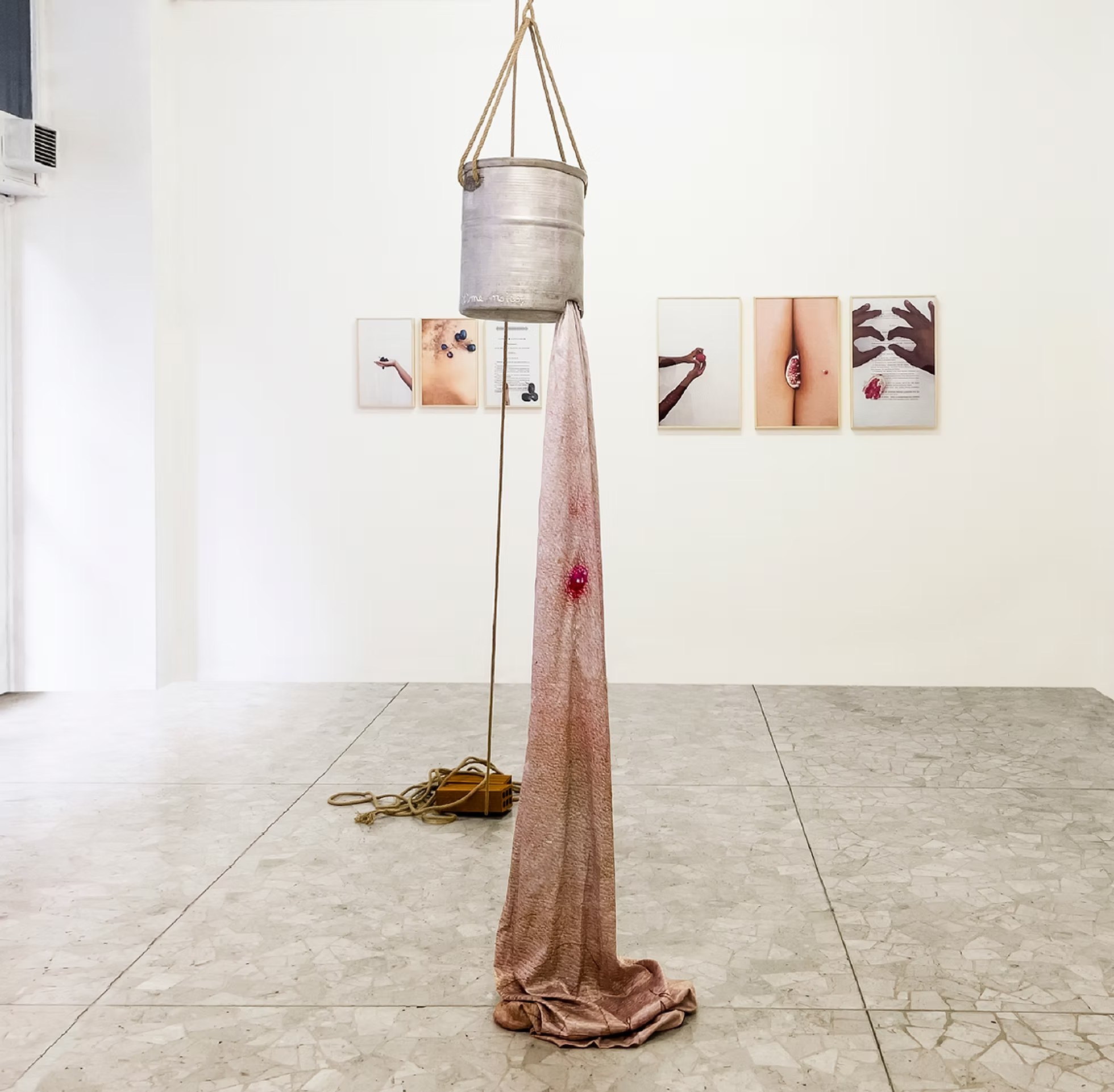
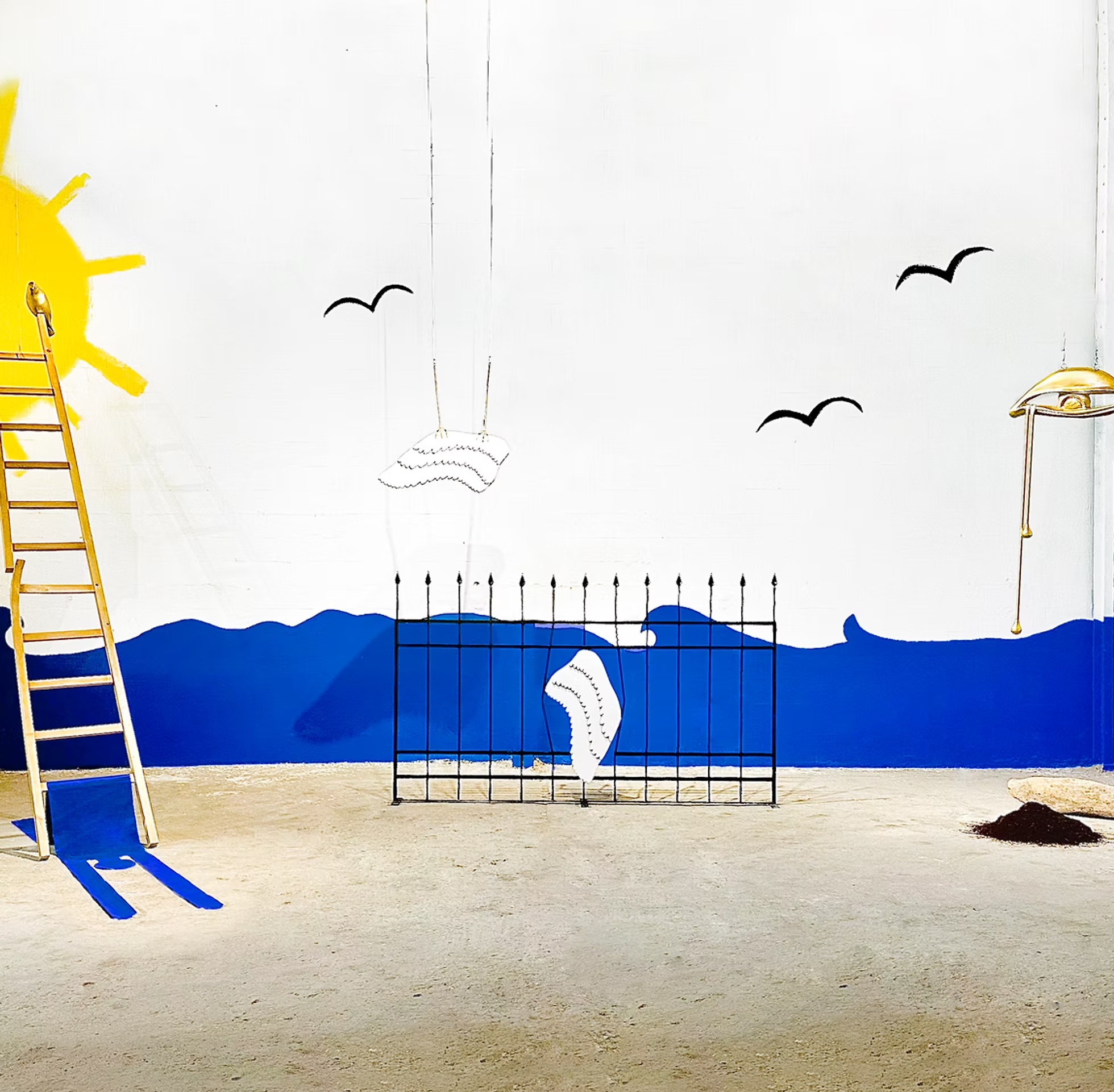
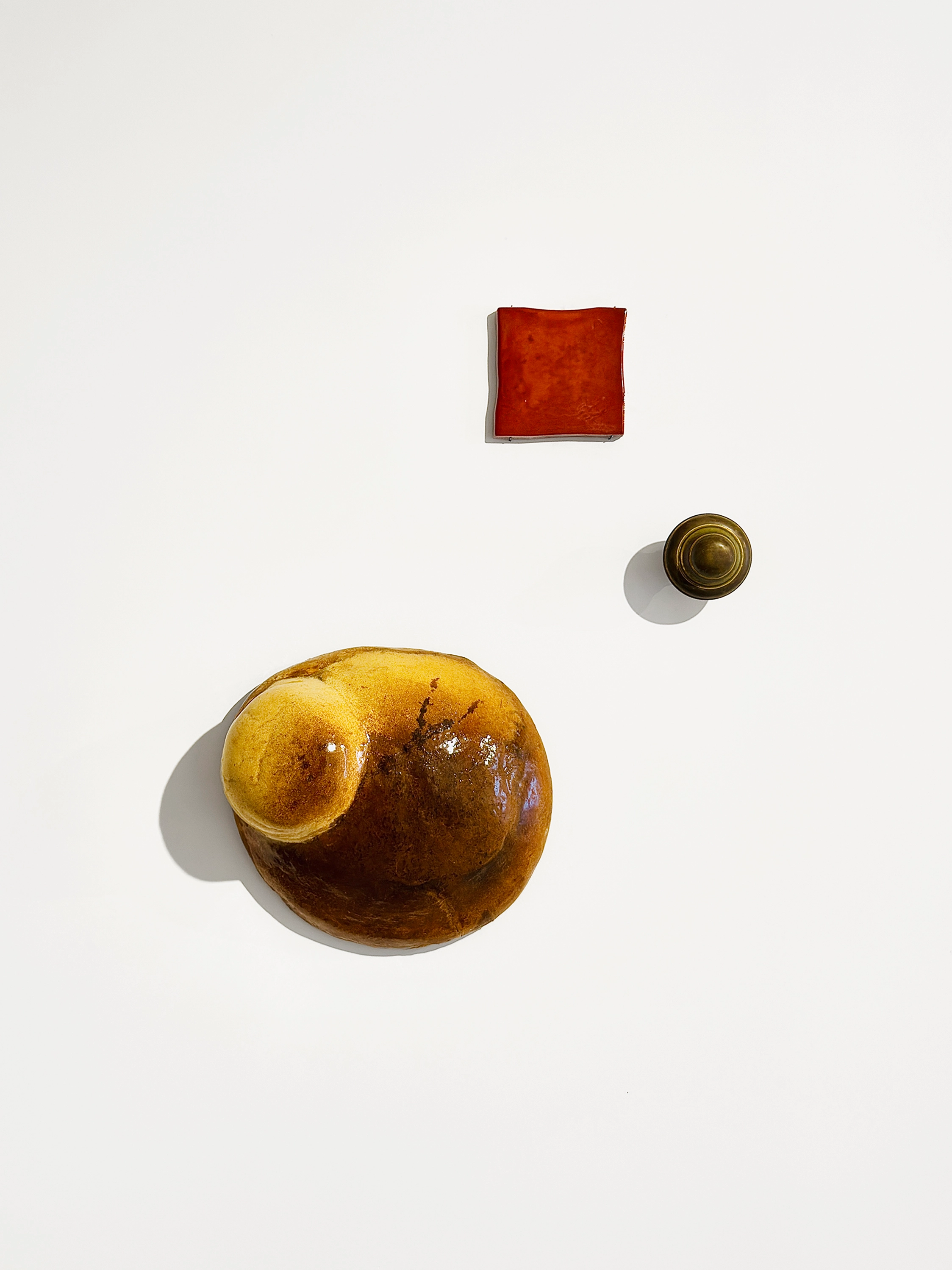
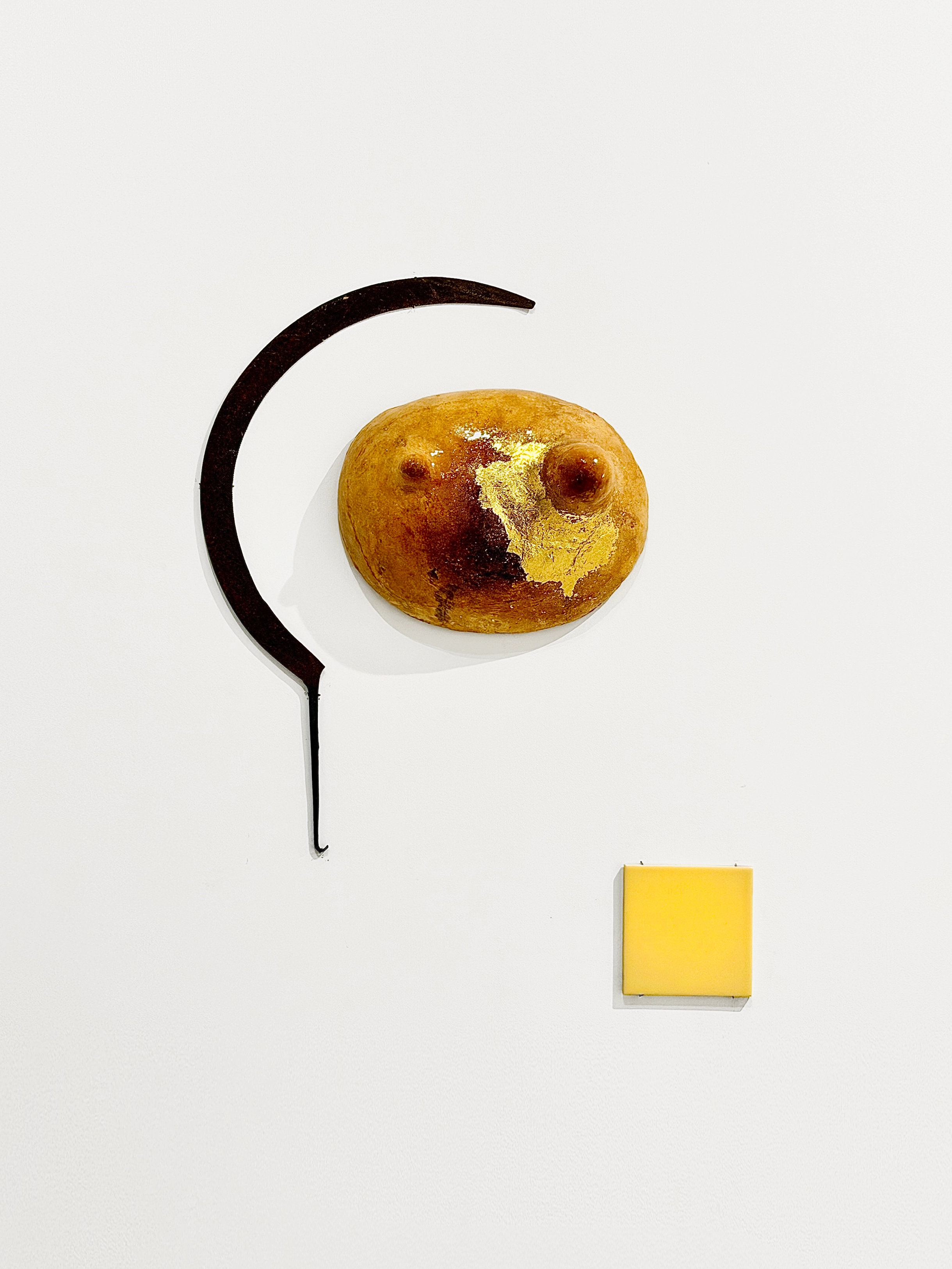
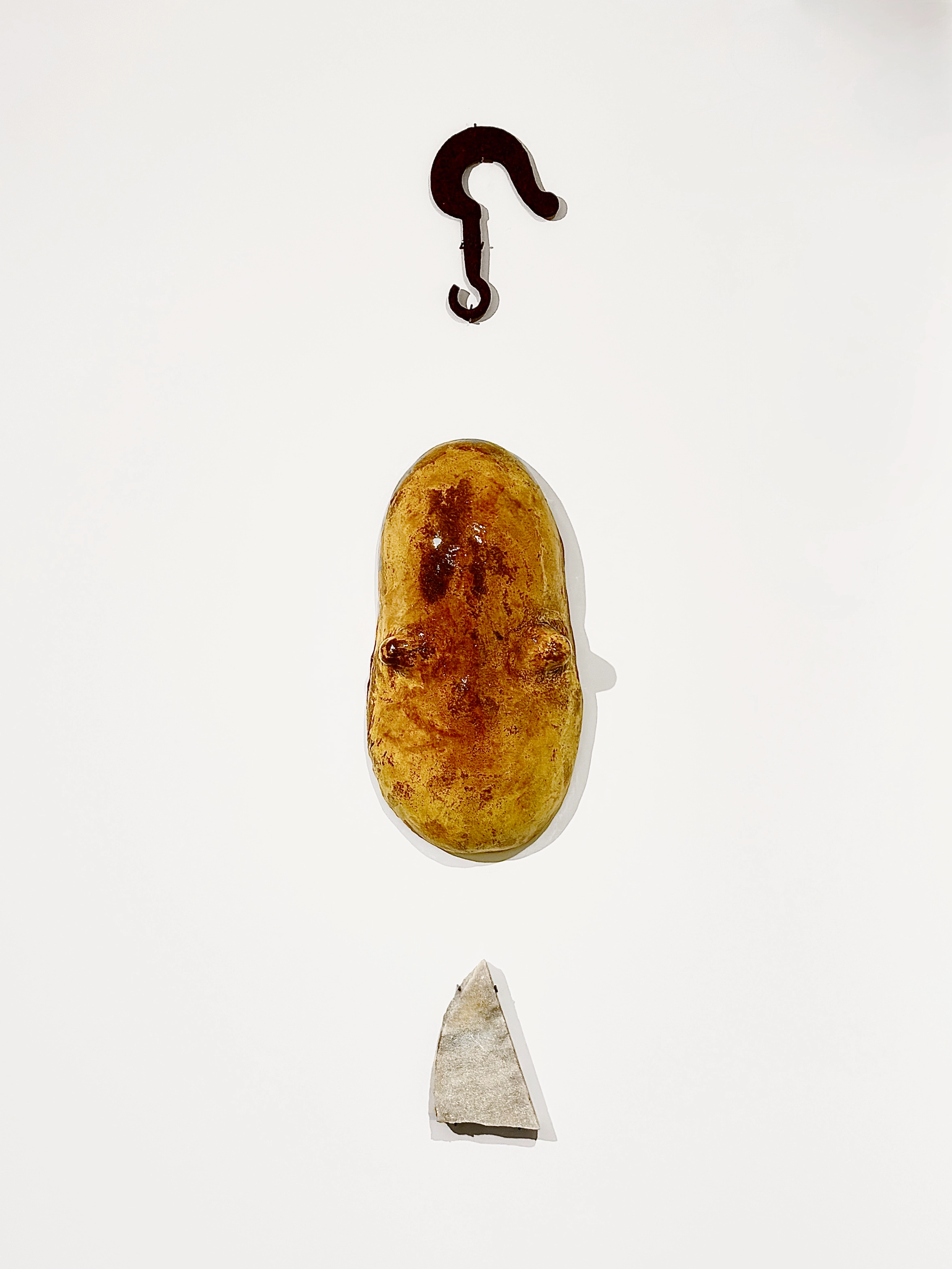
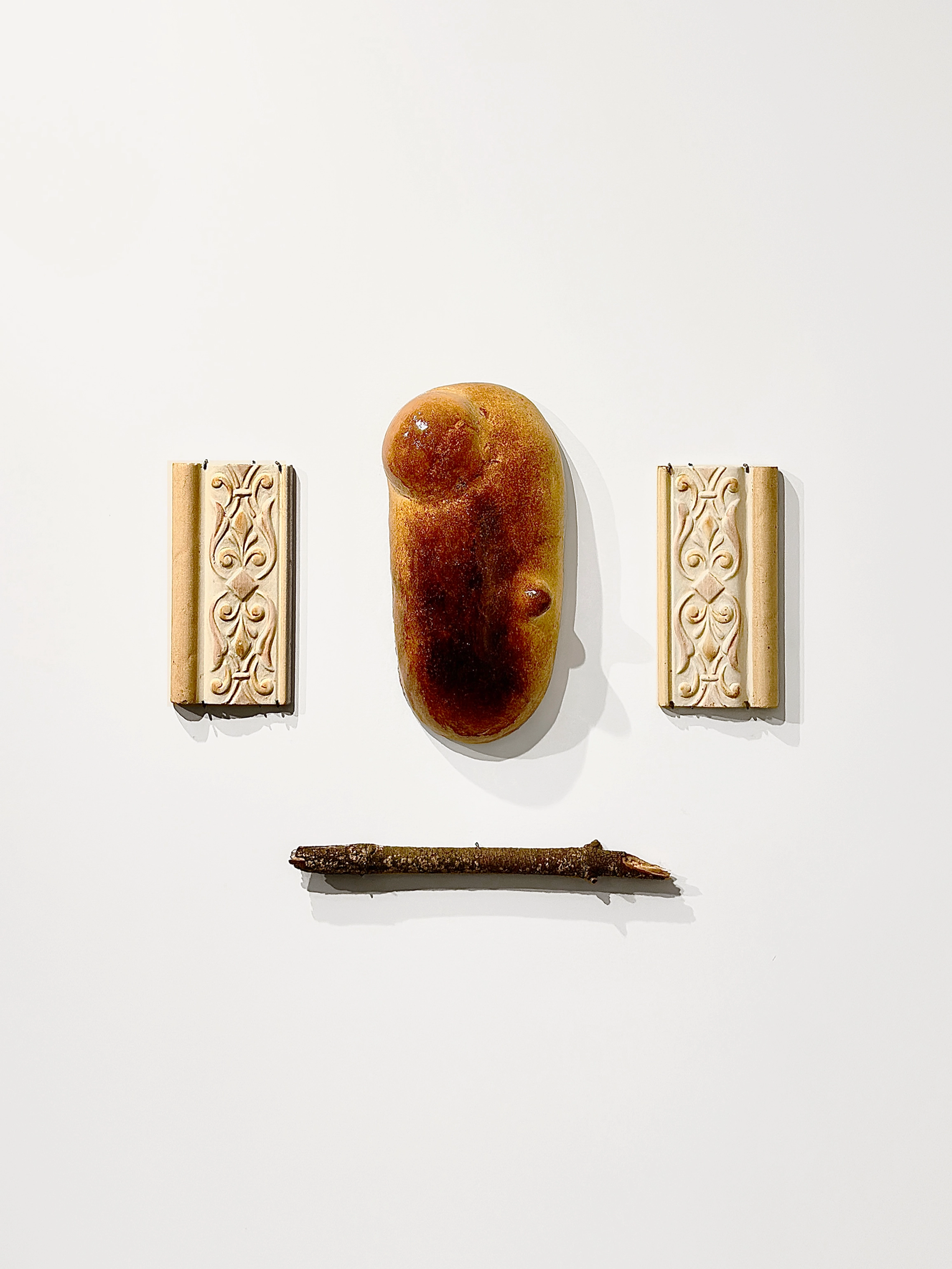
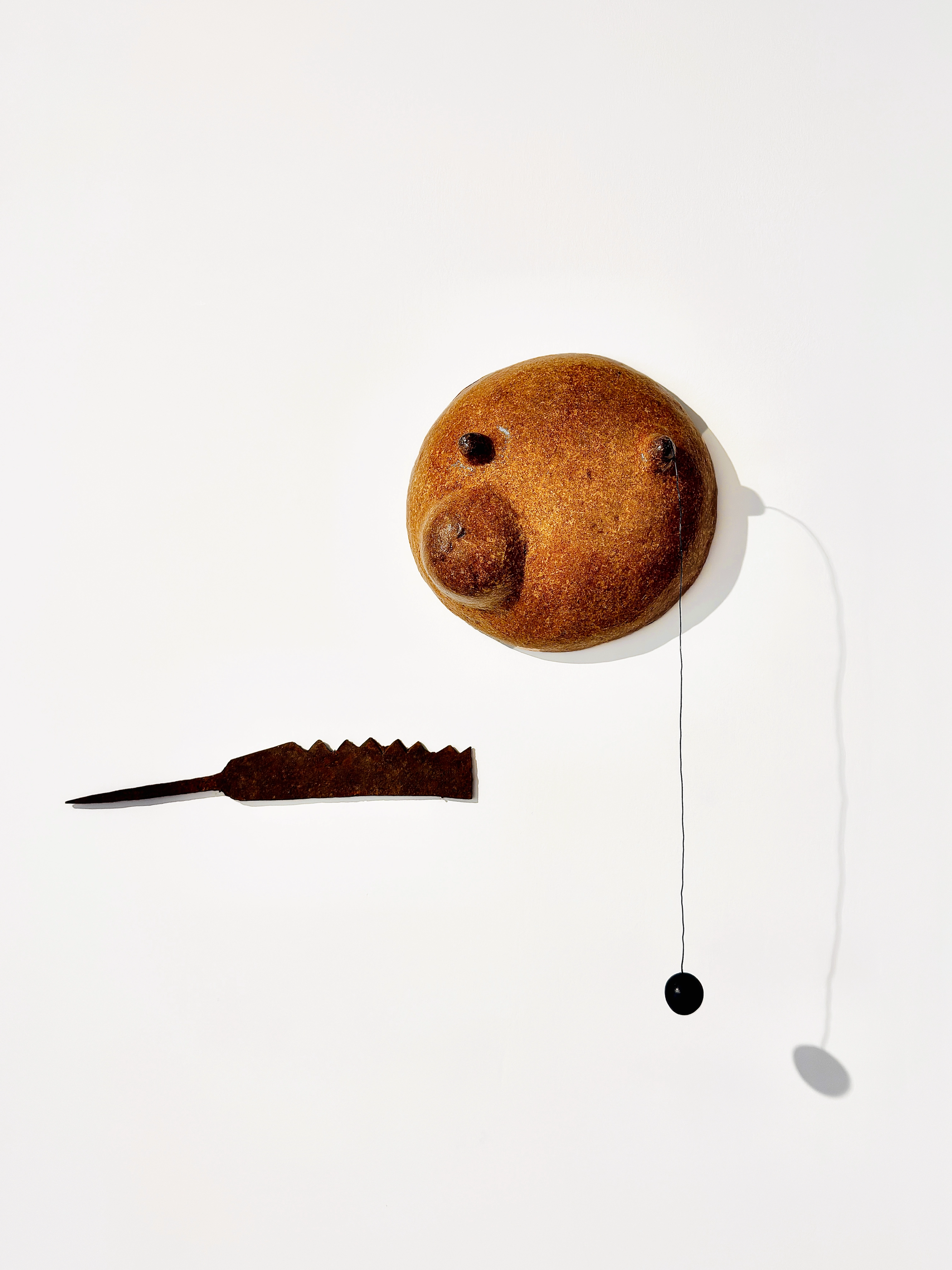
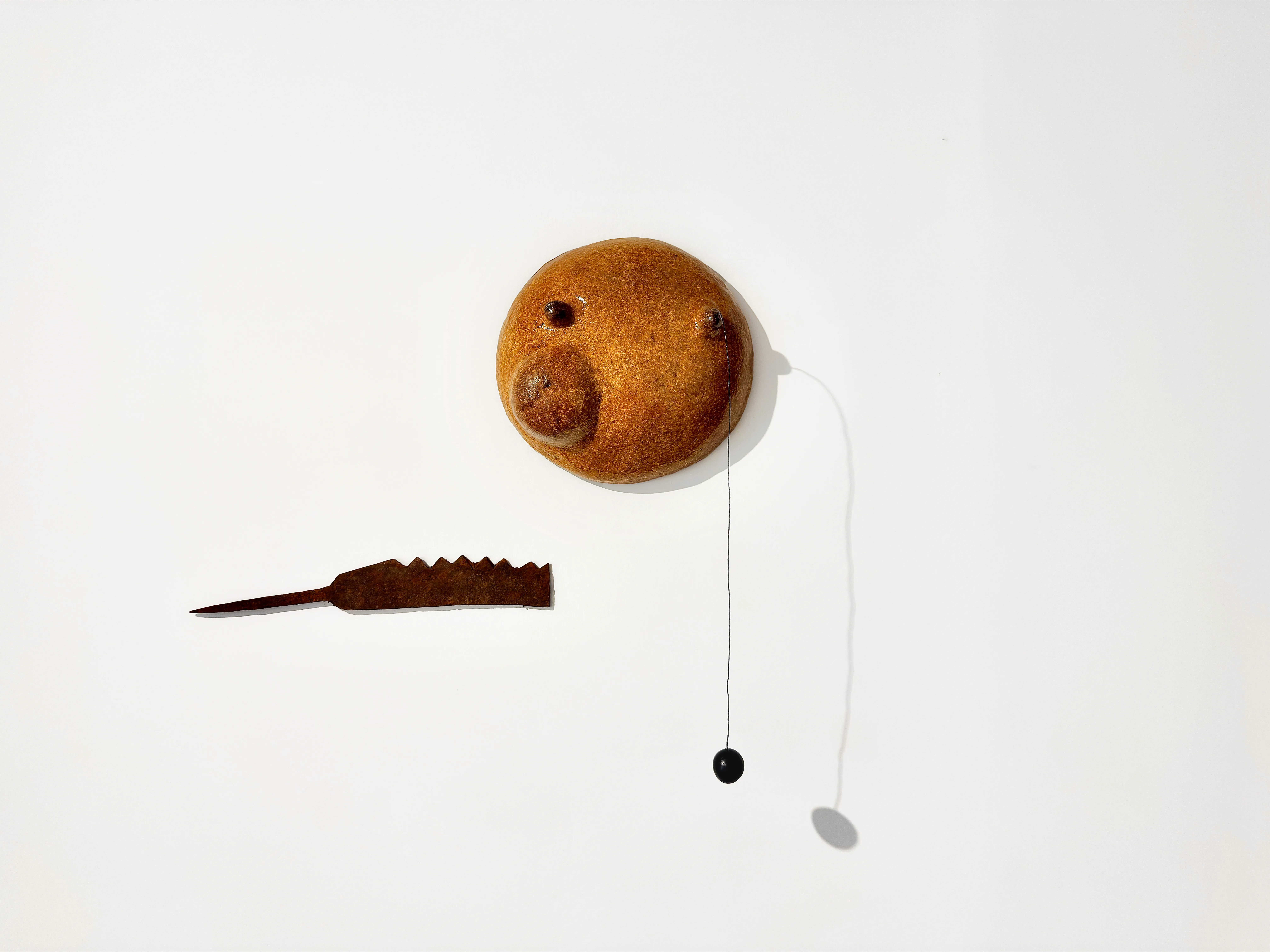
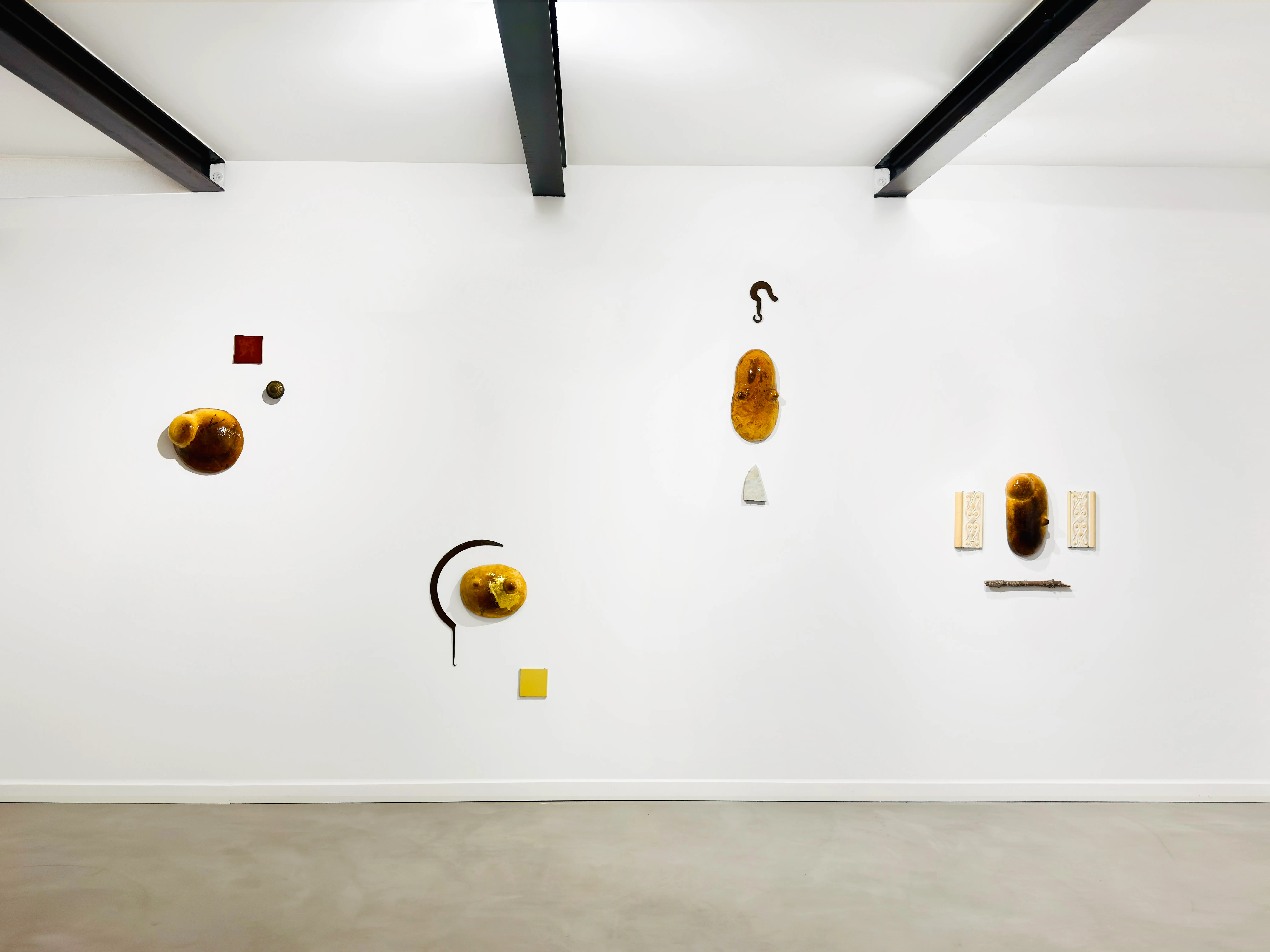
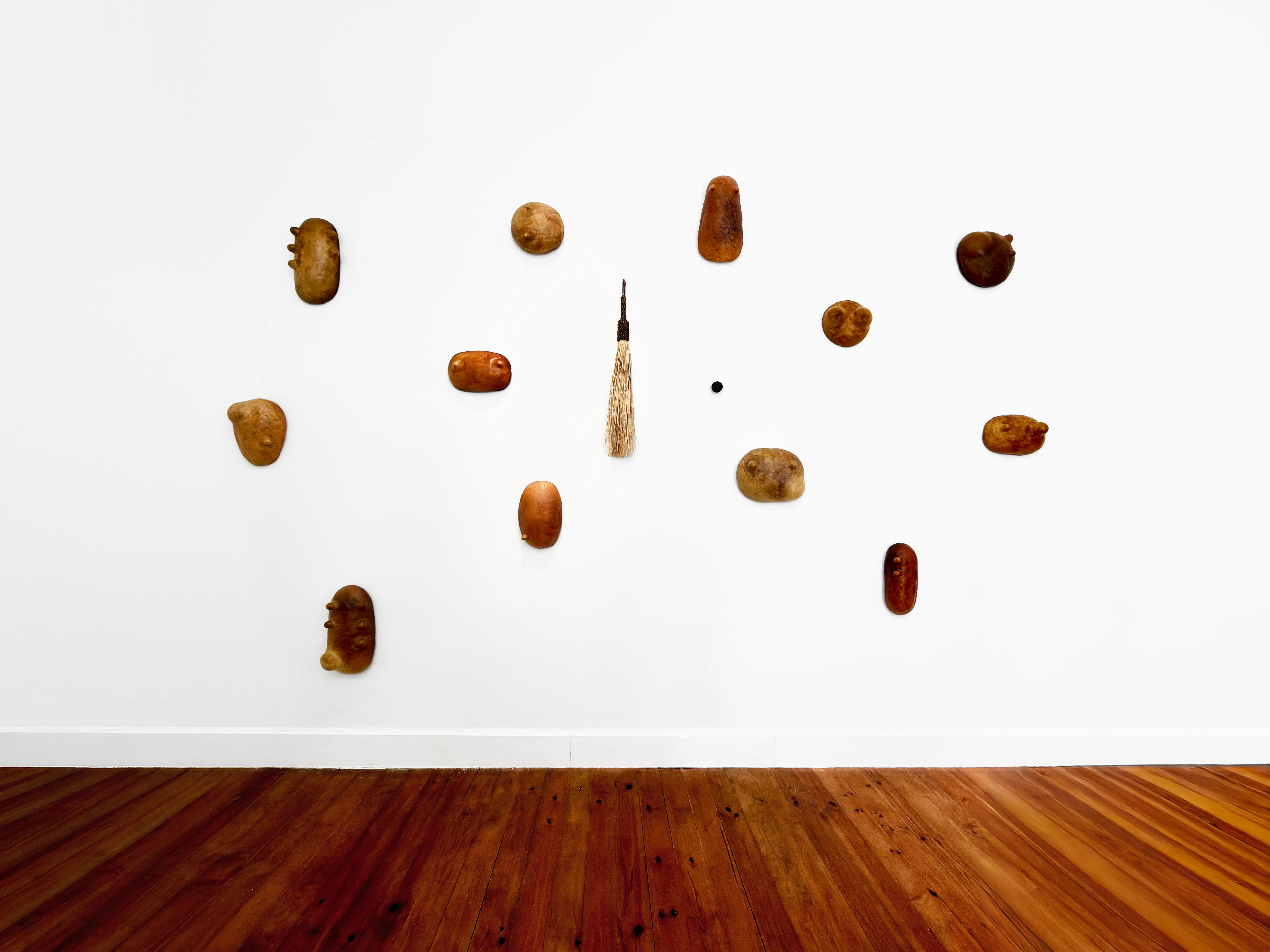
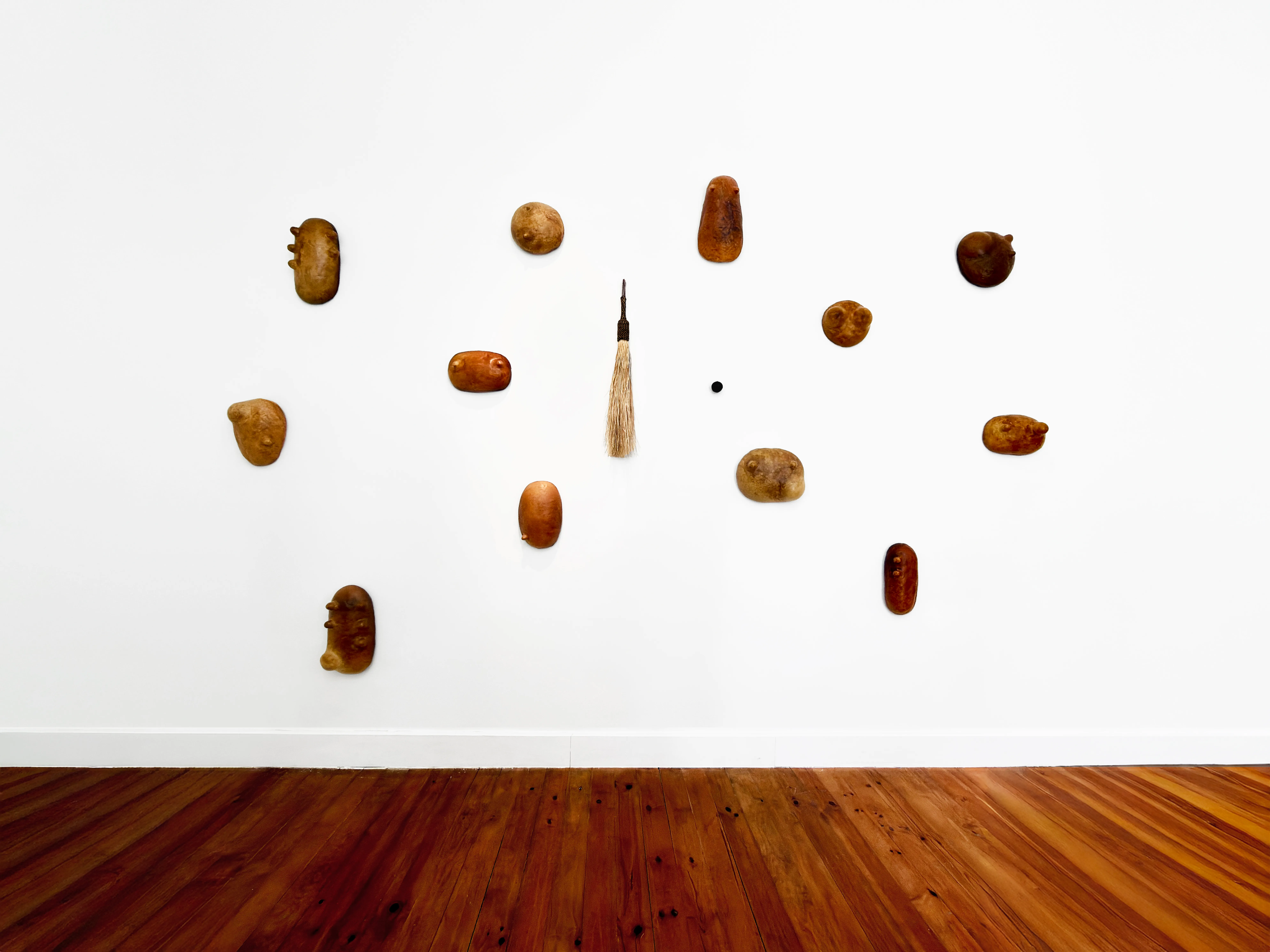
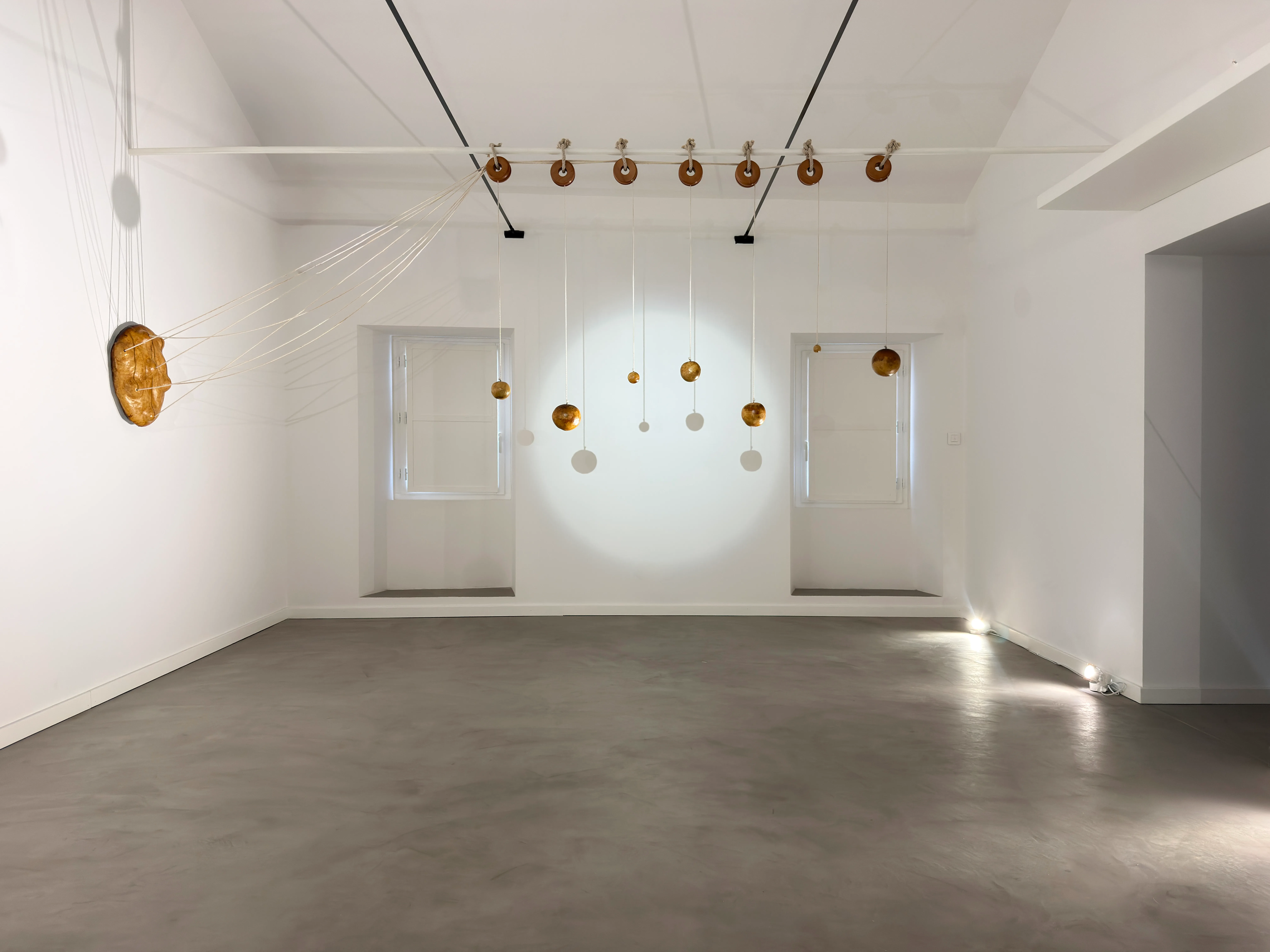
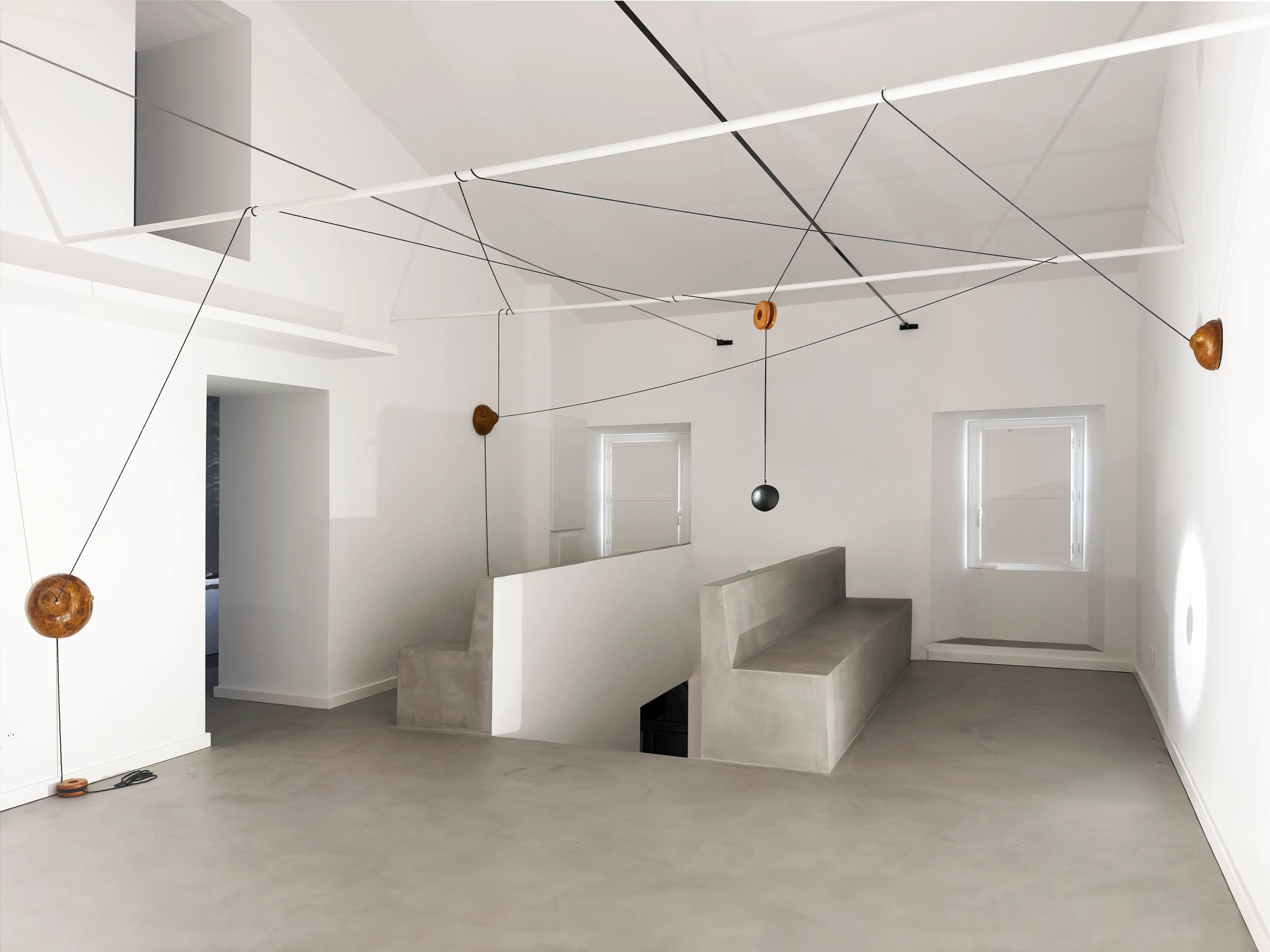
Life After Death belongs to Bake Your Pain, a project initiated by Kosmatopoulos in 2023 following the sudden death of her father. In moments of deep sorrow, she kneads bread dough and shapes a mask — a self-portrait, though not of her likeness — giving material form to grief and tears that would otherwise disappear as they dry.
The chapter begins with a question: what happens to the material world after a disappearance?
Life After Death does not seek to represent grief itself. Rather, it explores the subtle transformations that loss produces within the world of those who remain. Death does not simply remove a person; it alters the relationships that once connected bodies, gestures, objects and space. The world continues, yet its internal logic has shifted.
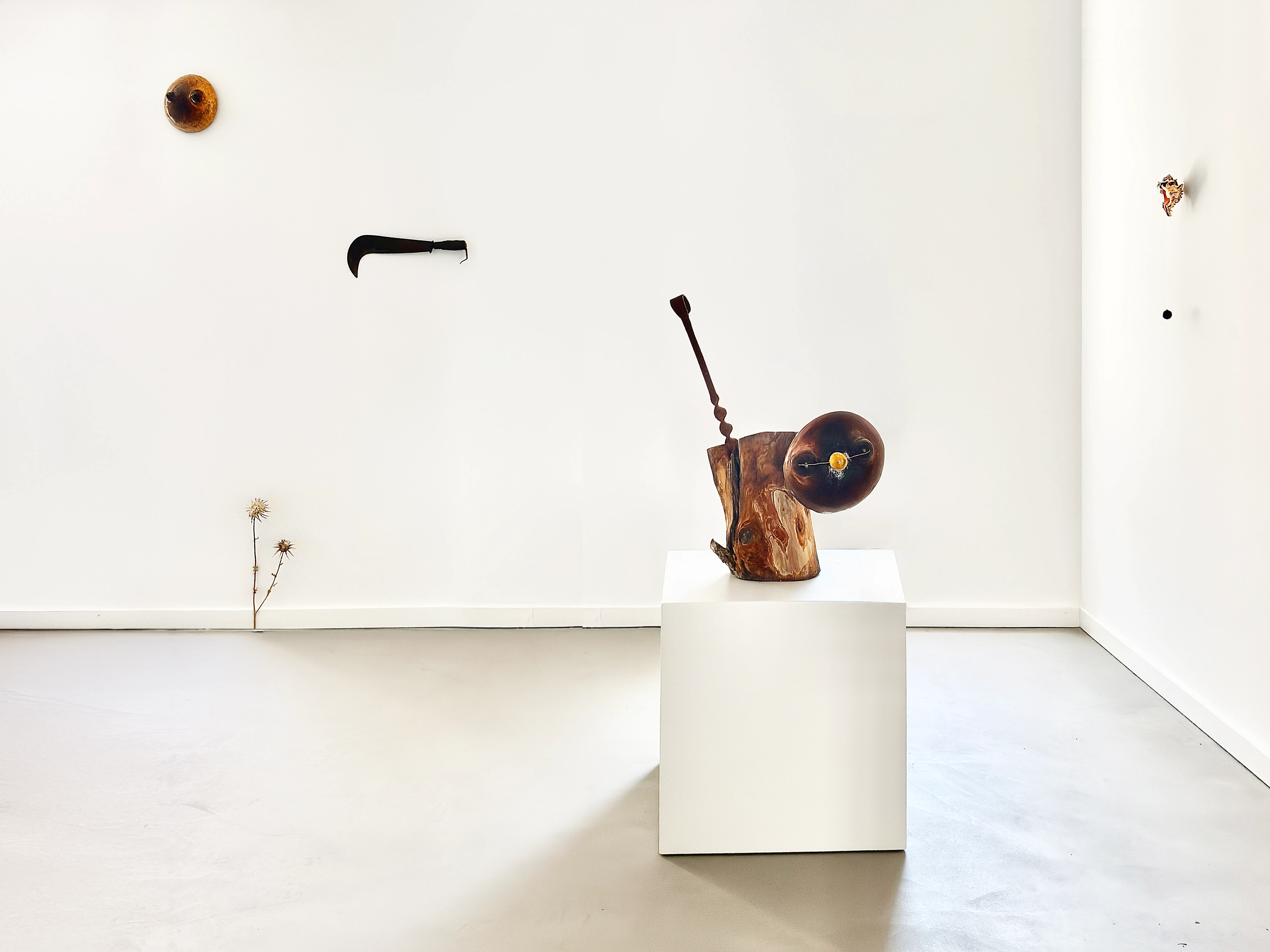
Unlike many works dealing with mourning, these sculptures are not composed from the belongings of the deceased. The objects belong to the world of the living: discarded materials drawn from domestic life, work and everyday use. They are ordinary things through which life continues to unfold.
After a disappearance, however, familiarity no longer guarantees stability. An object may retain its function while losing the certainty of its place. Gestures continue, habits persist, rooms remain inhabited, yet the relationships between them have been altered. Something has shifted without necessarily changing appearance.
Removed from their original contexts, these fragments enter into unfamiliar associations. Objects that were never meant to meet are brought into proximity; others remain separated by deliberate distances. They no longer obey the functional logic that once organised them. Contact, suspension, imbalance and emptiness become part of a new order.
A grammar gradually emerges from the fragments of the old one.
The masks belong to this same condition of displacement. They are not portraits, but imagined physiognomies of grief. Familiar facial features dissolve into swollen forms that oscillate between eyes and wounds, face and torso, body and anonymous flesh. Like the objects surrounding them, they resist stable identity, as though mourning had unsettled the certainty of form itself.
This is where the notion of survivance becomes central. The materials have not disappeared. They endure. Marked by use, erosion, fracture, rust, drying or transformation, they persist in altered states. Their survival is not a restoration of what they were. It is a continuation under different conditions.
Each sculpture functions almost like a sentence. An object, a mask, a distance, a fracture or a point of contact becomes a sign within a larger language. No single work defines grief completely; instead, each articulates one relation within it.
Together, the sculptures compose a grammar of grief: a material language through which loss reorganises what remains.
Nothing has disappeared from the material world. And yet nothing occupies exactly the same place.