Bake Your Pain

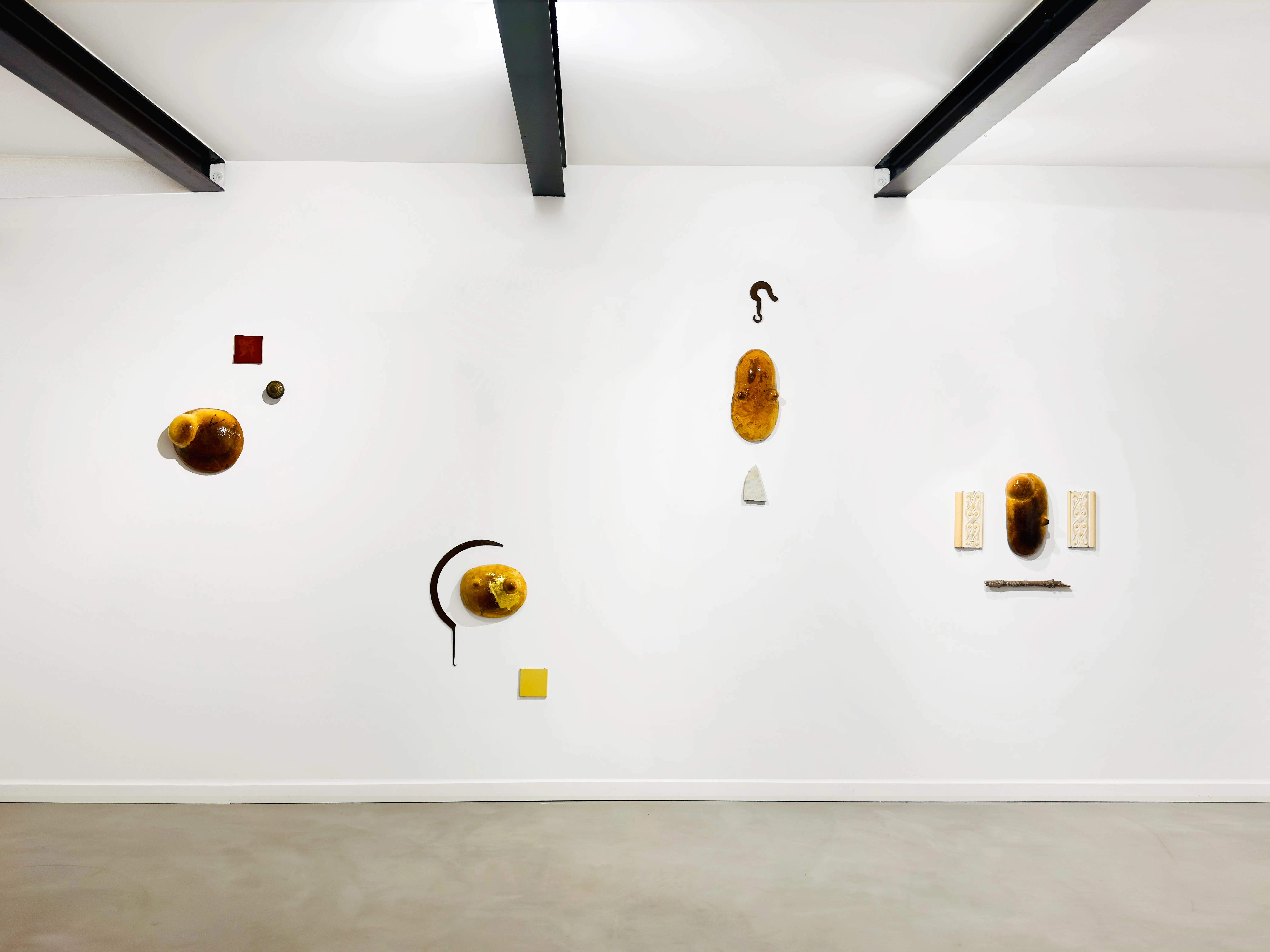
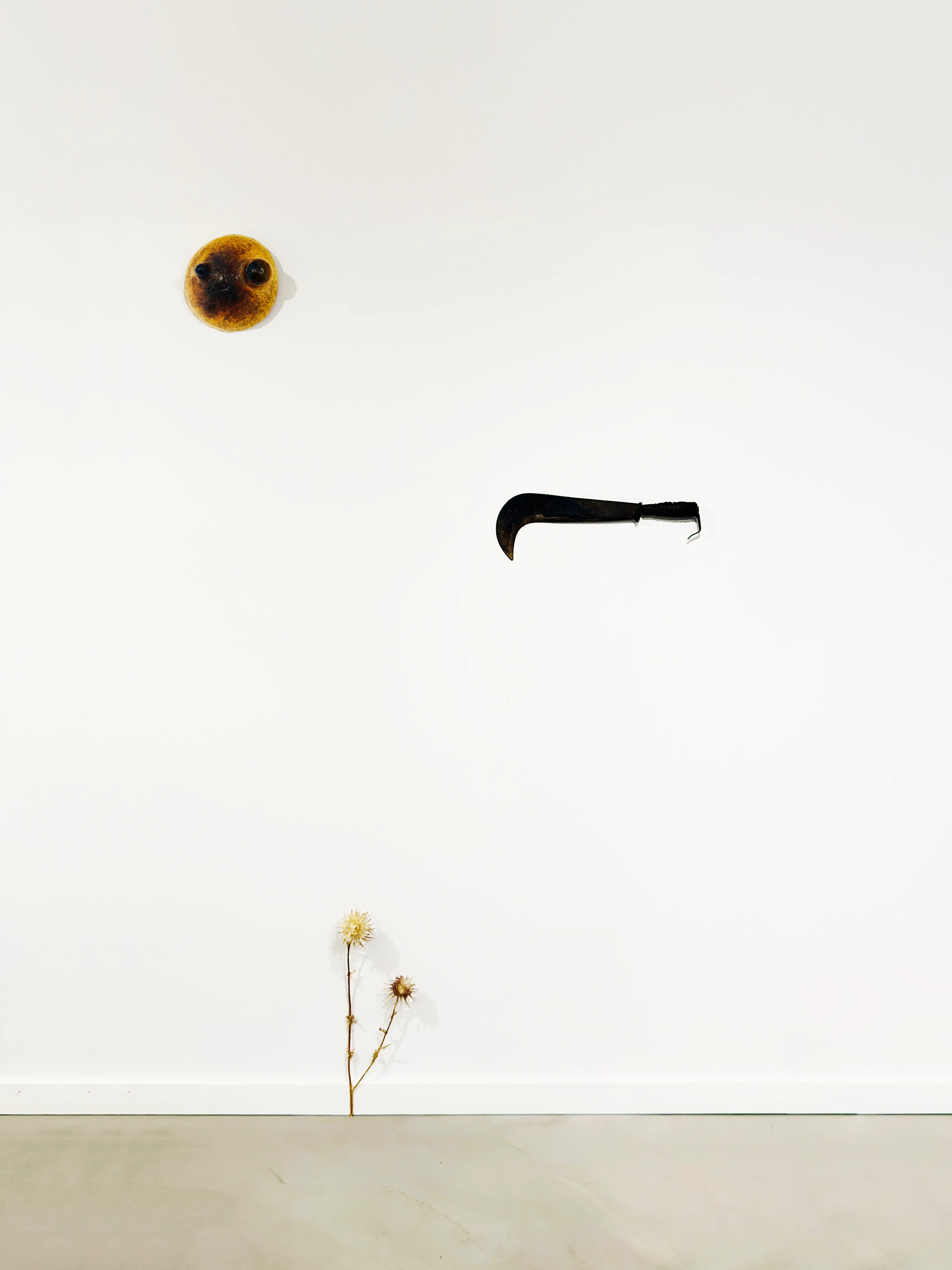
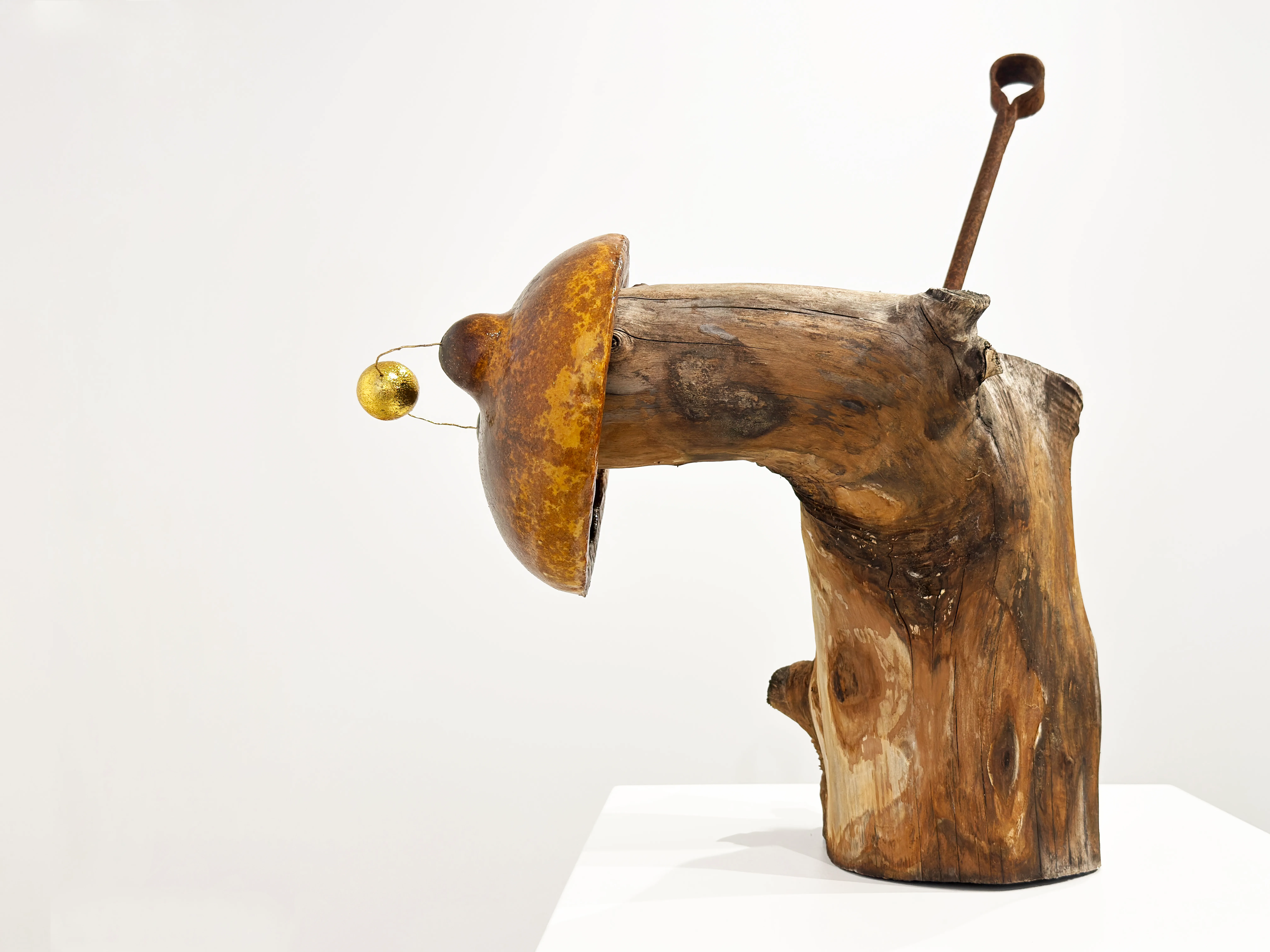
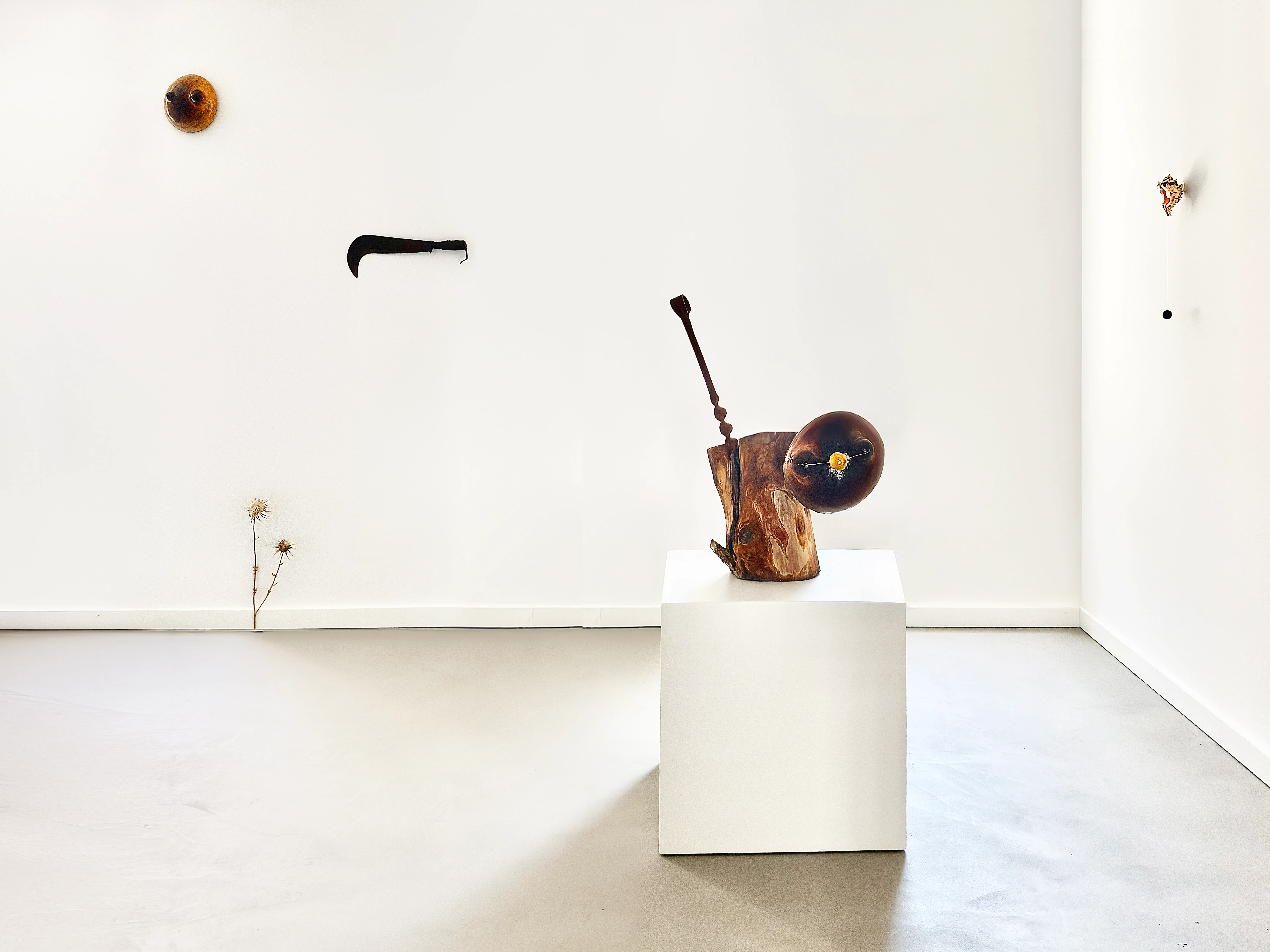
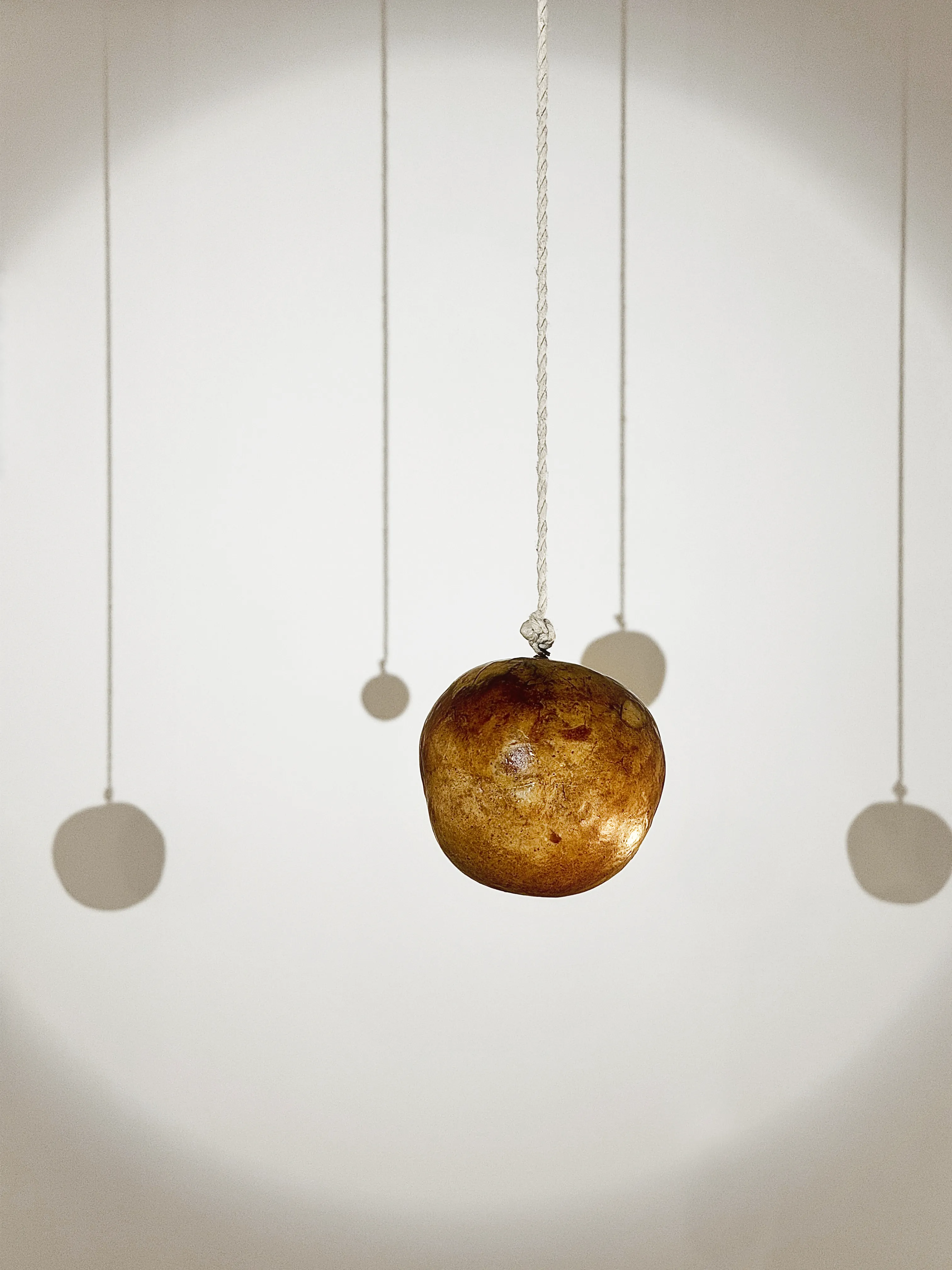
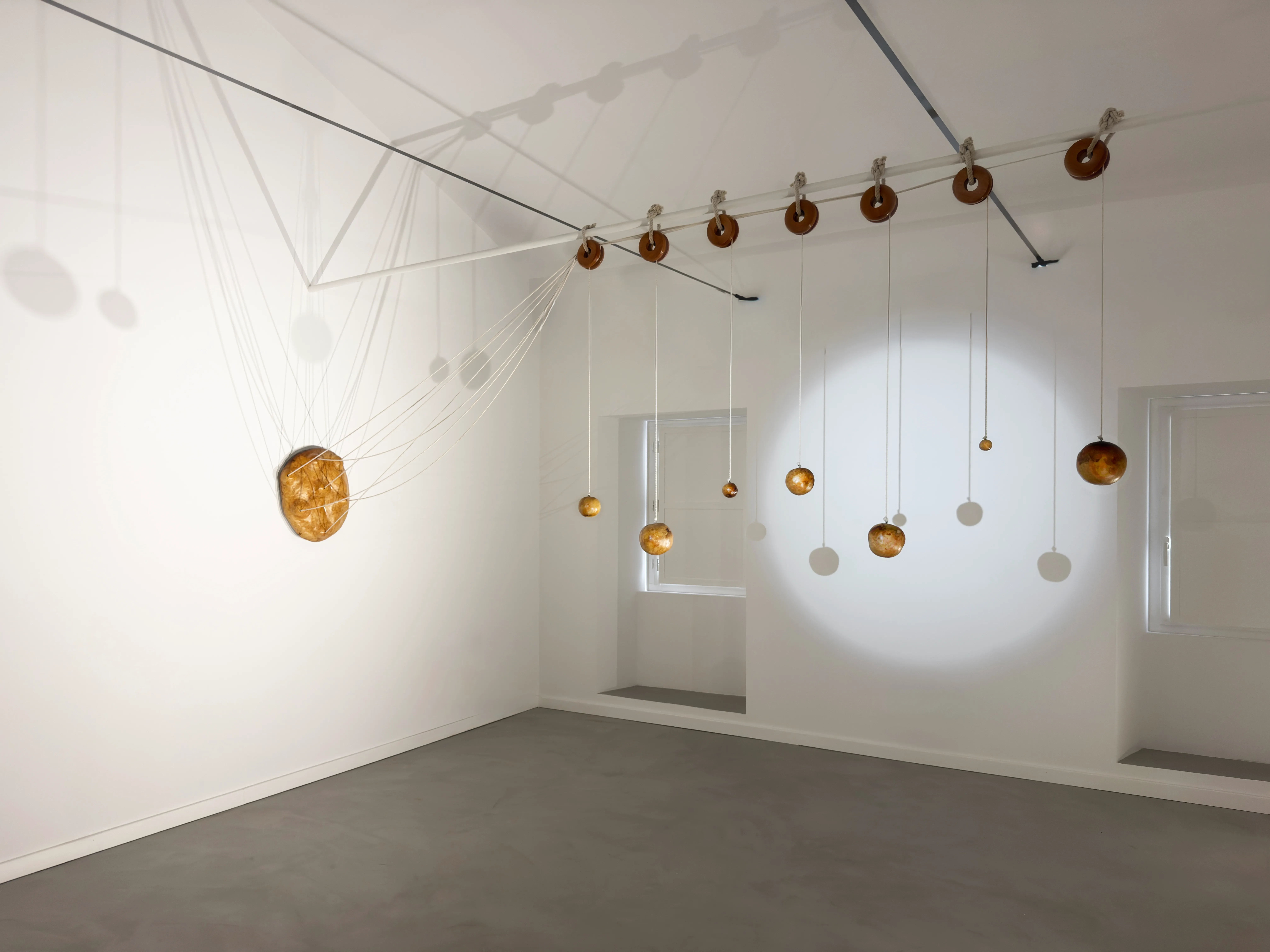
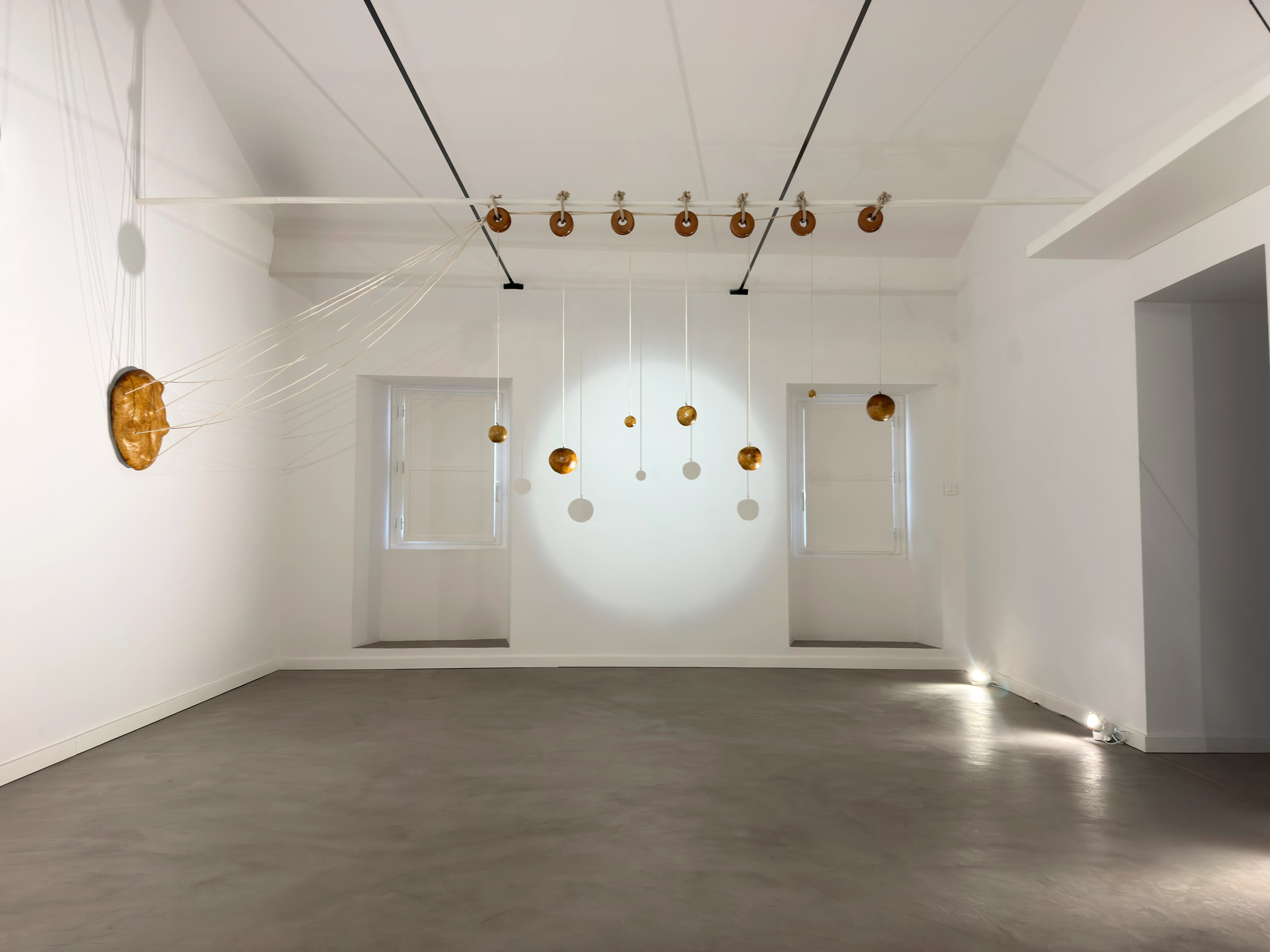
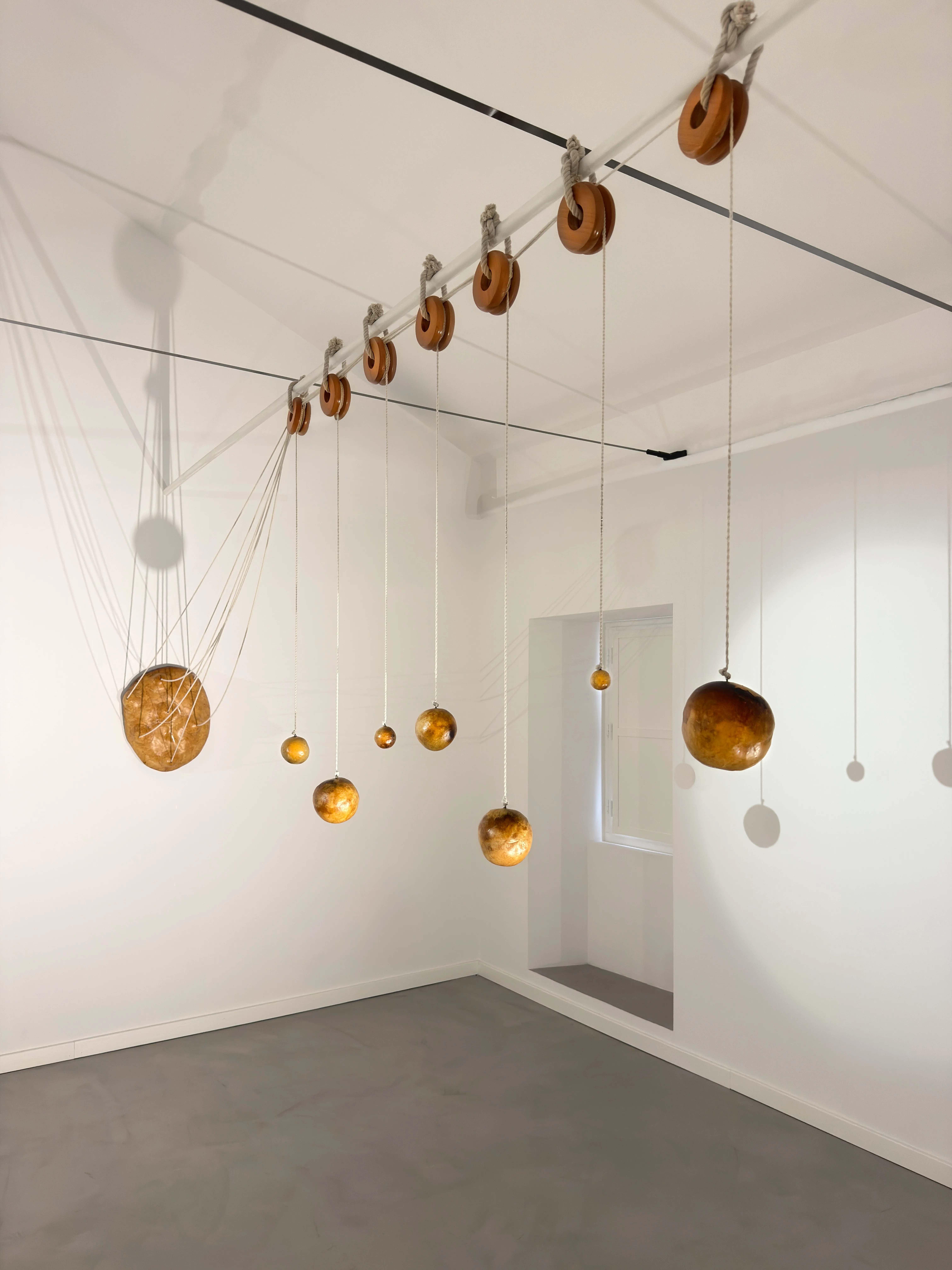
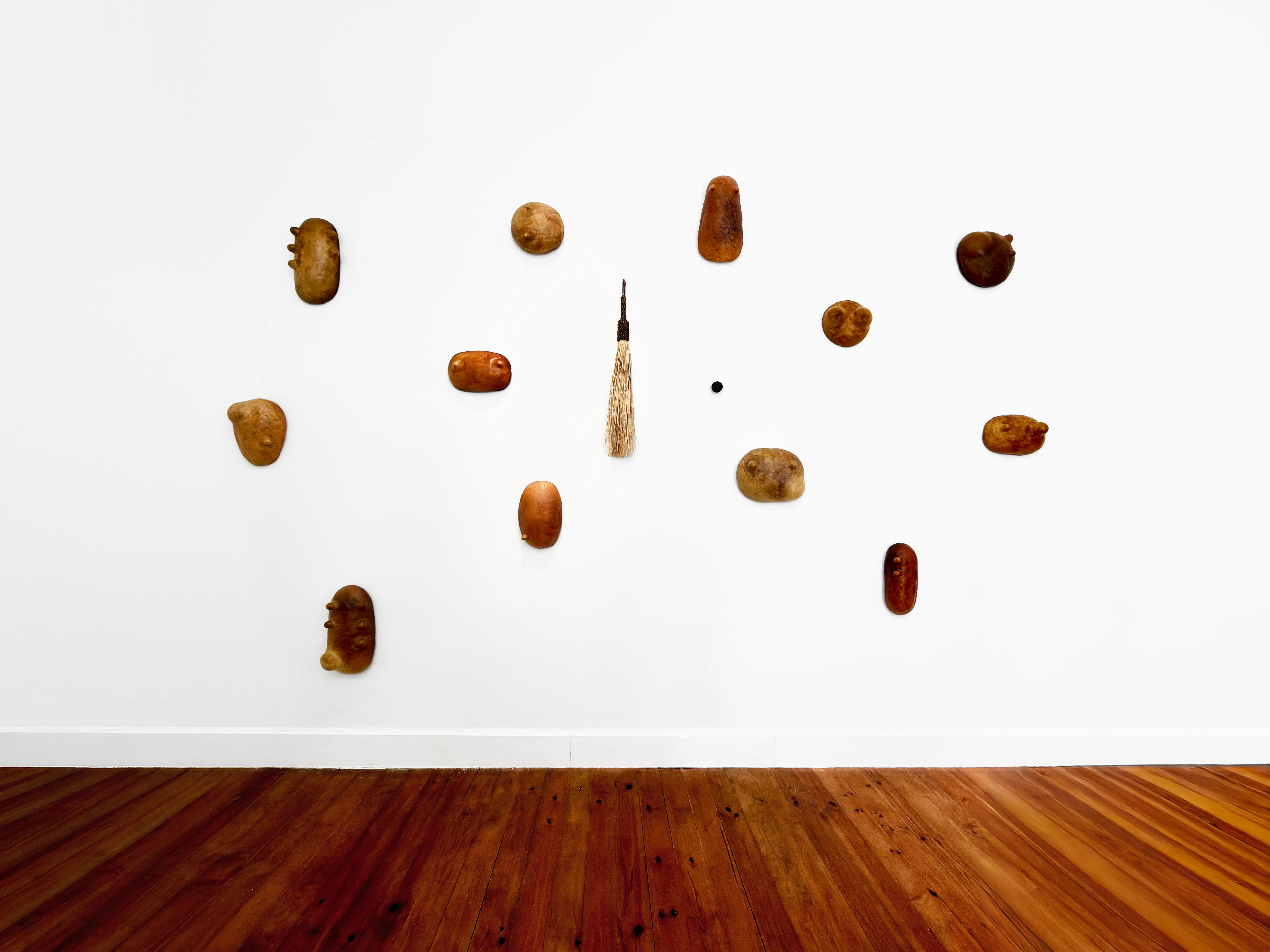
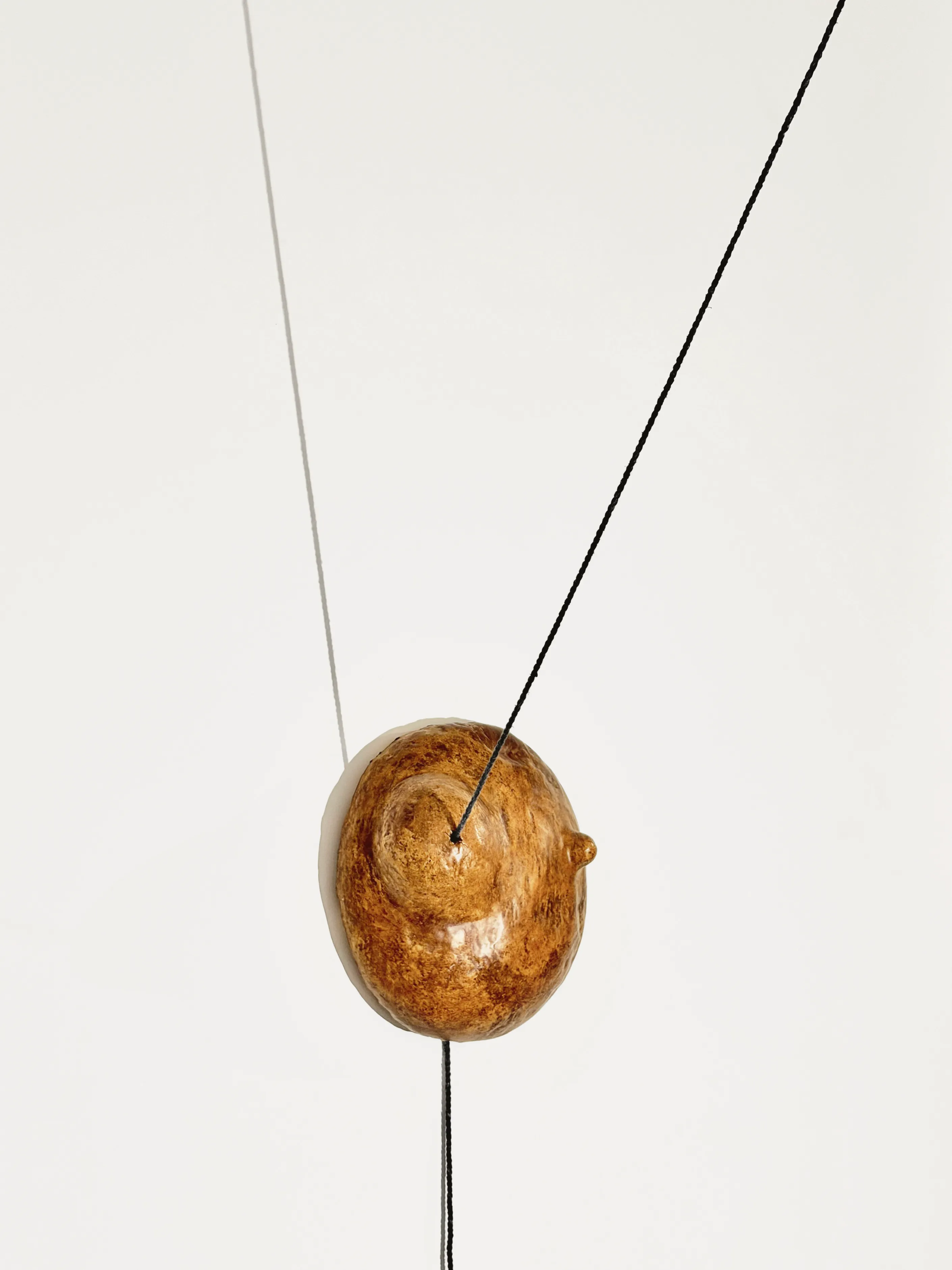
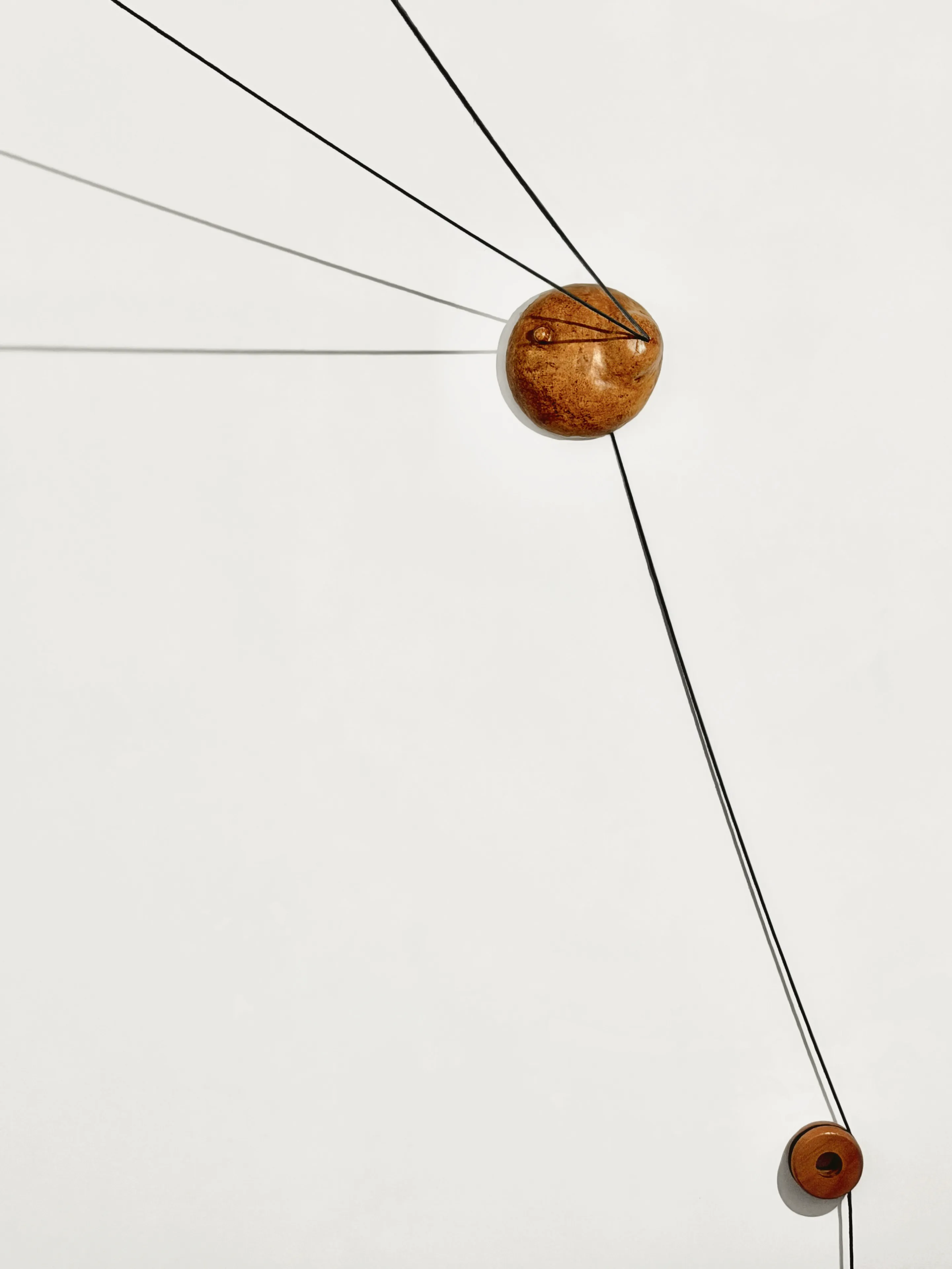
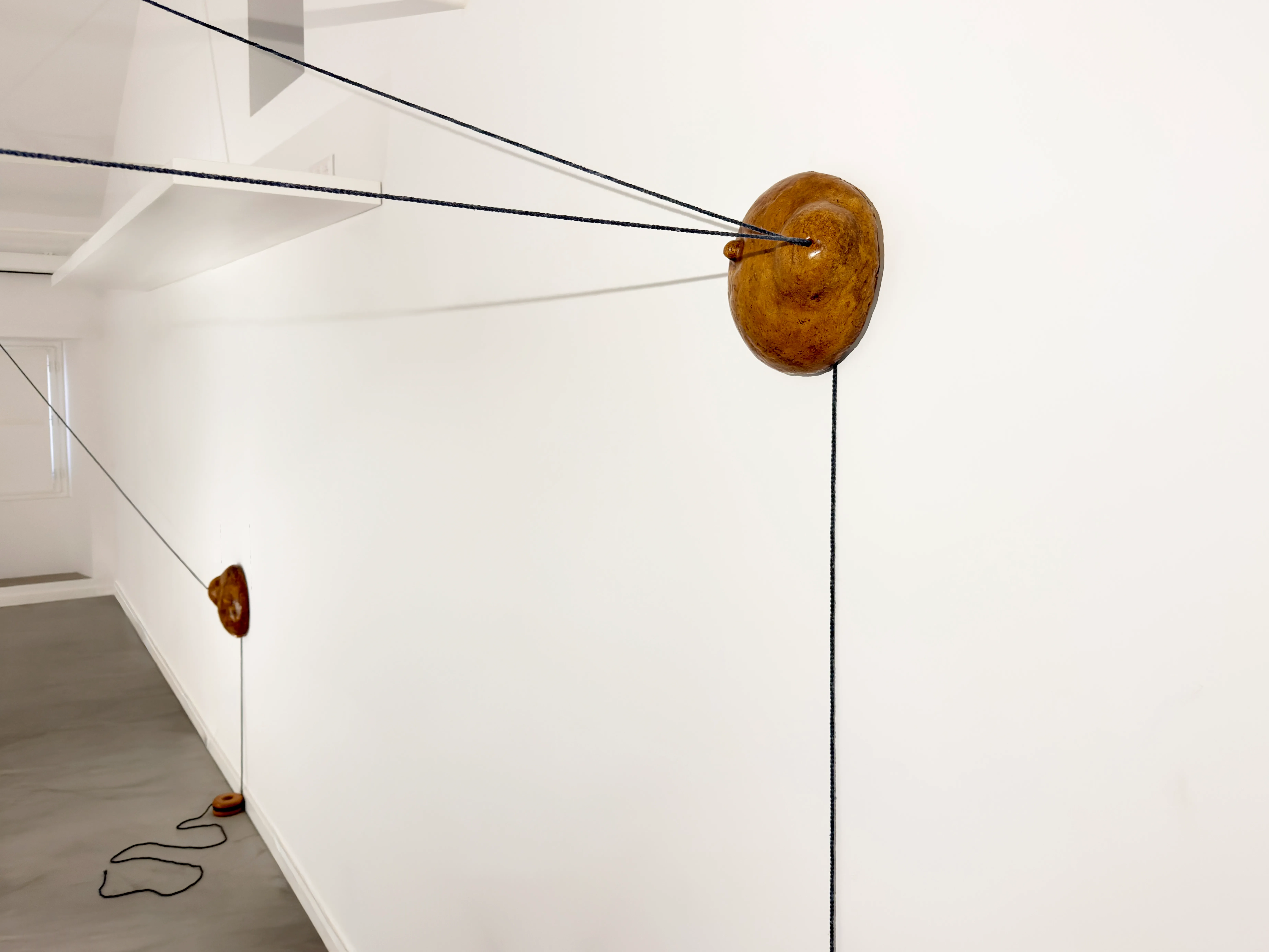
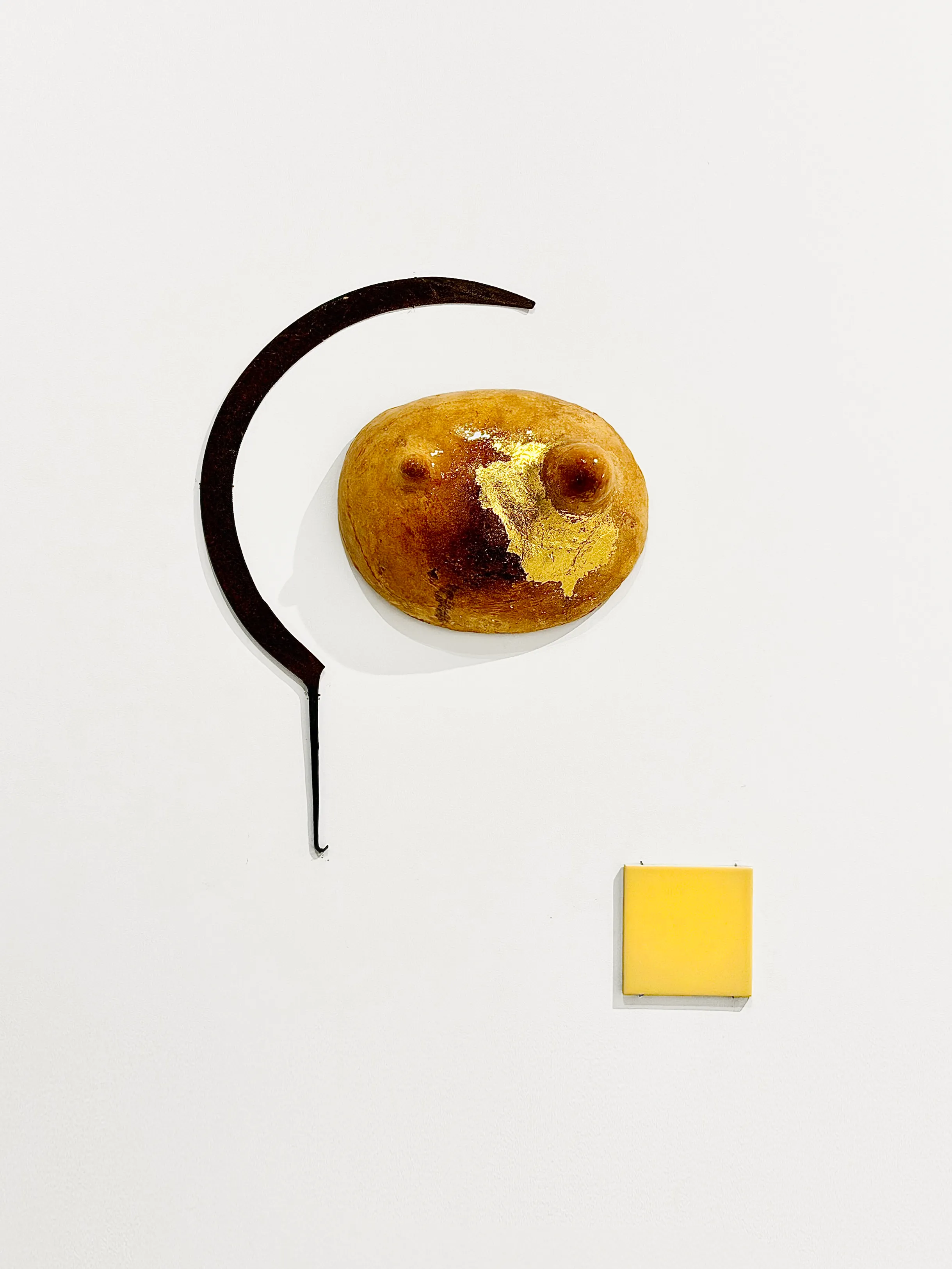
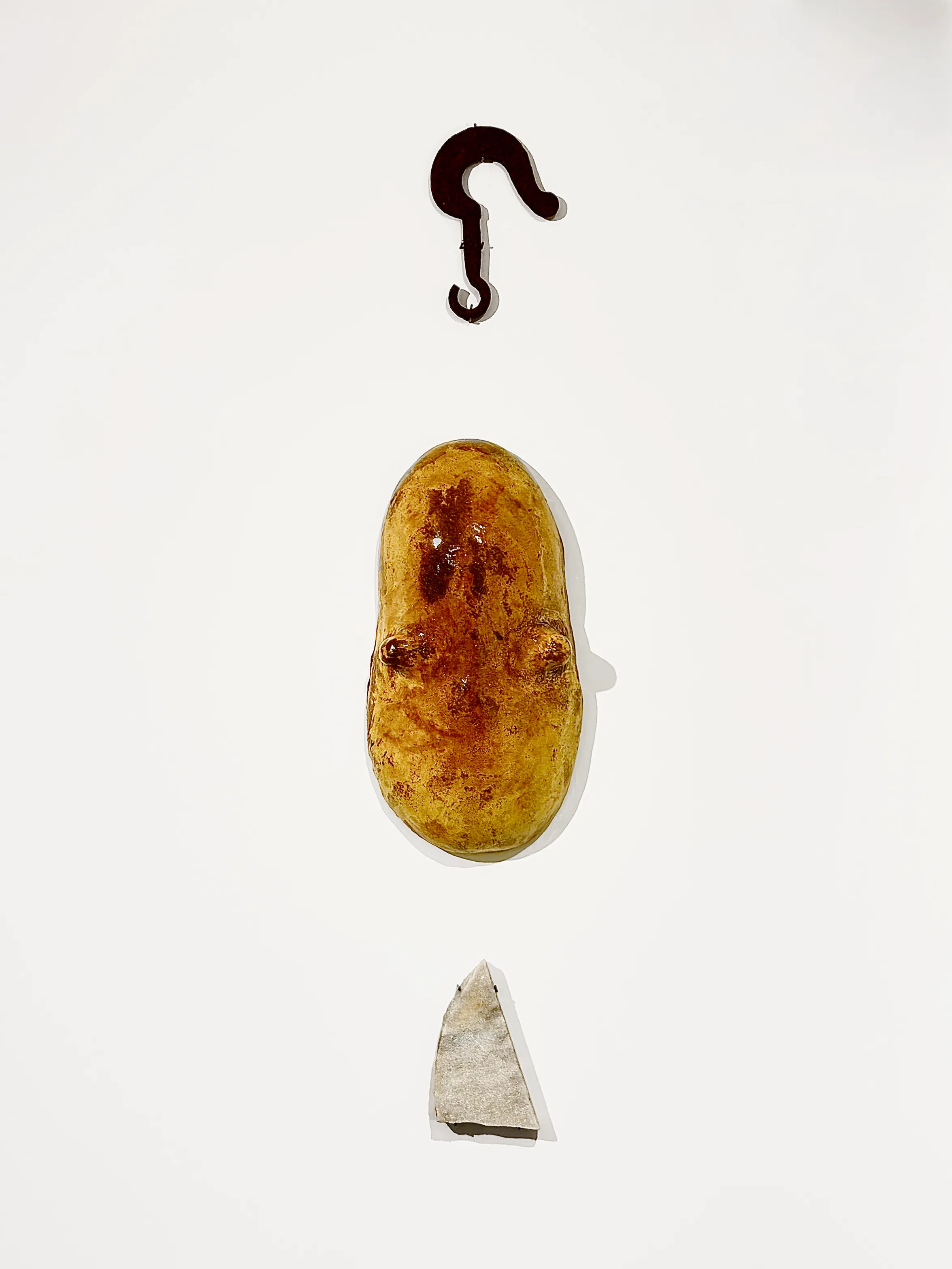
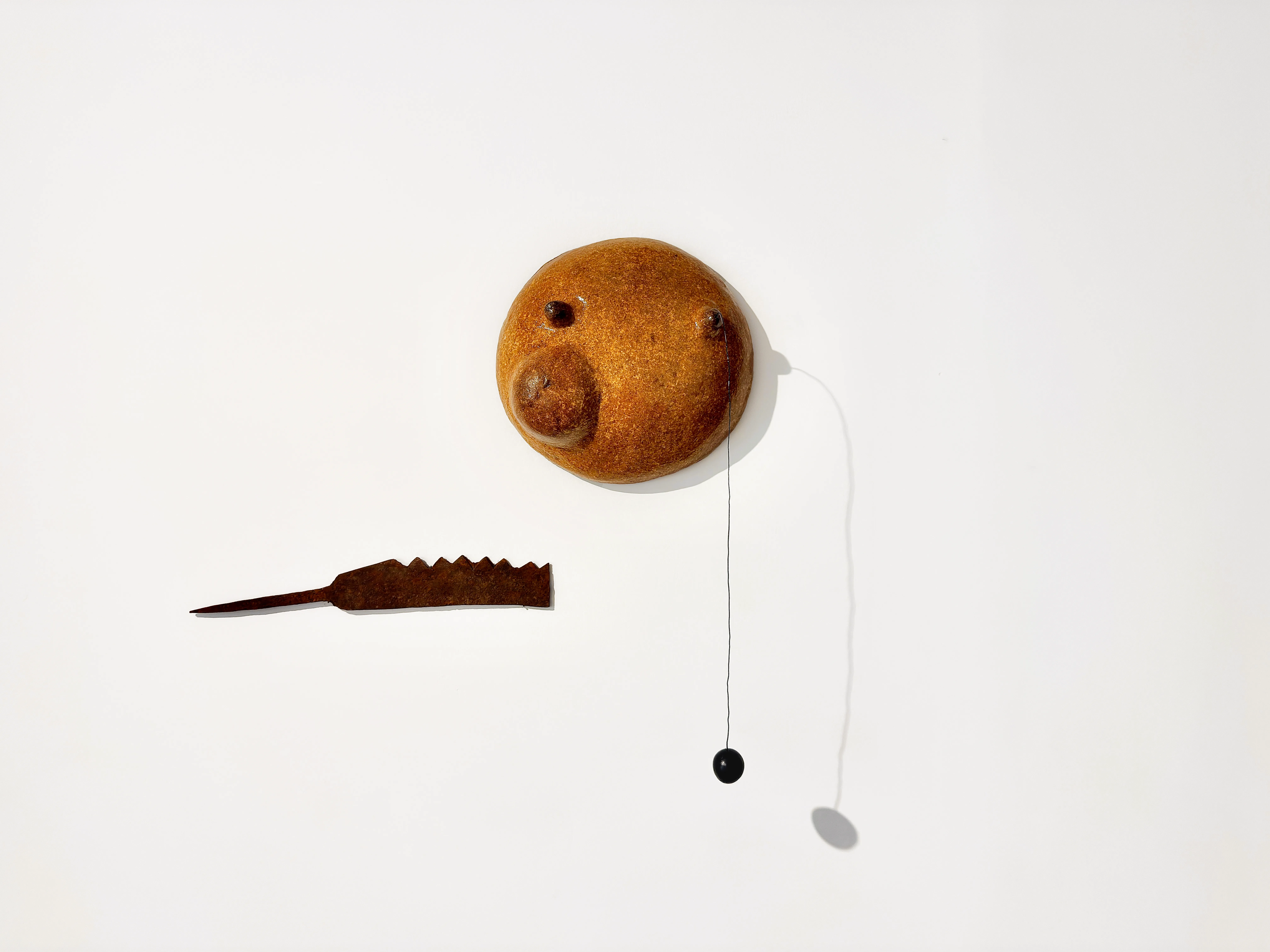
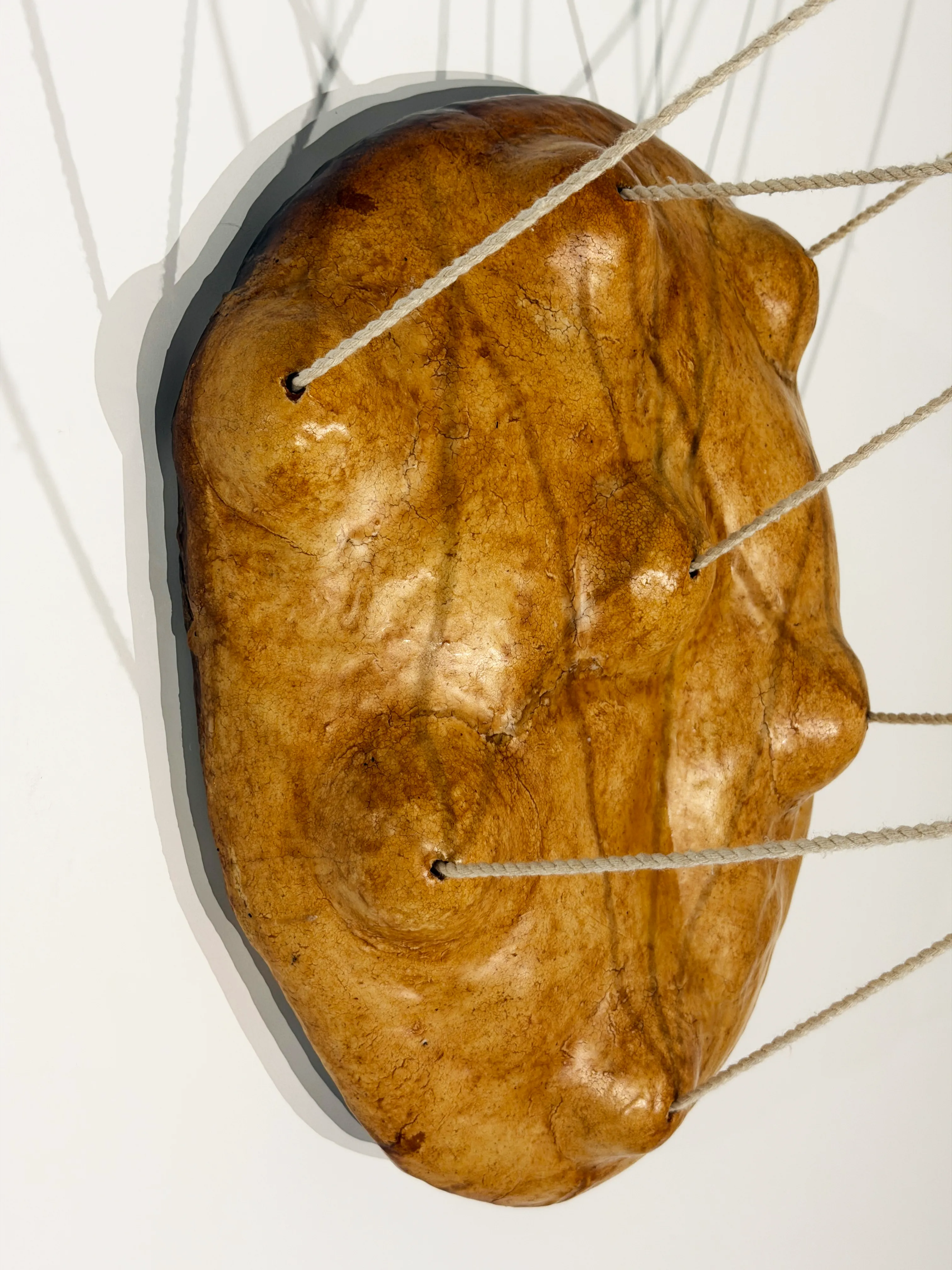
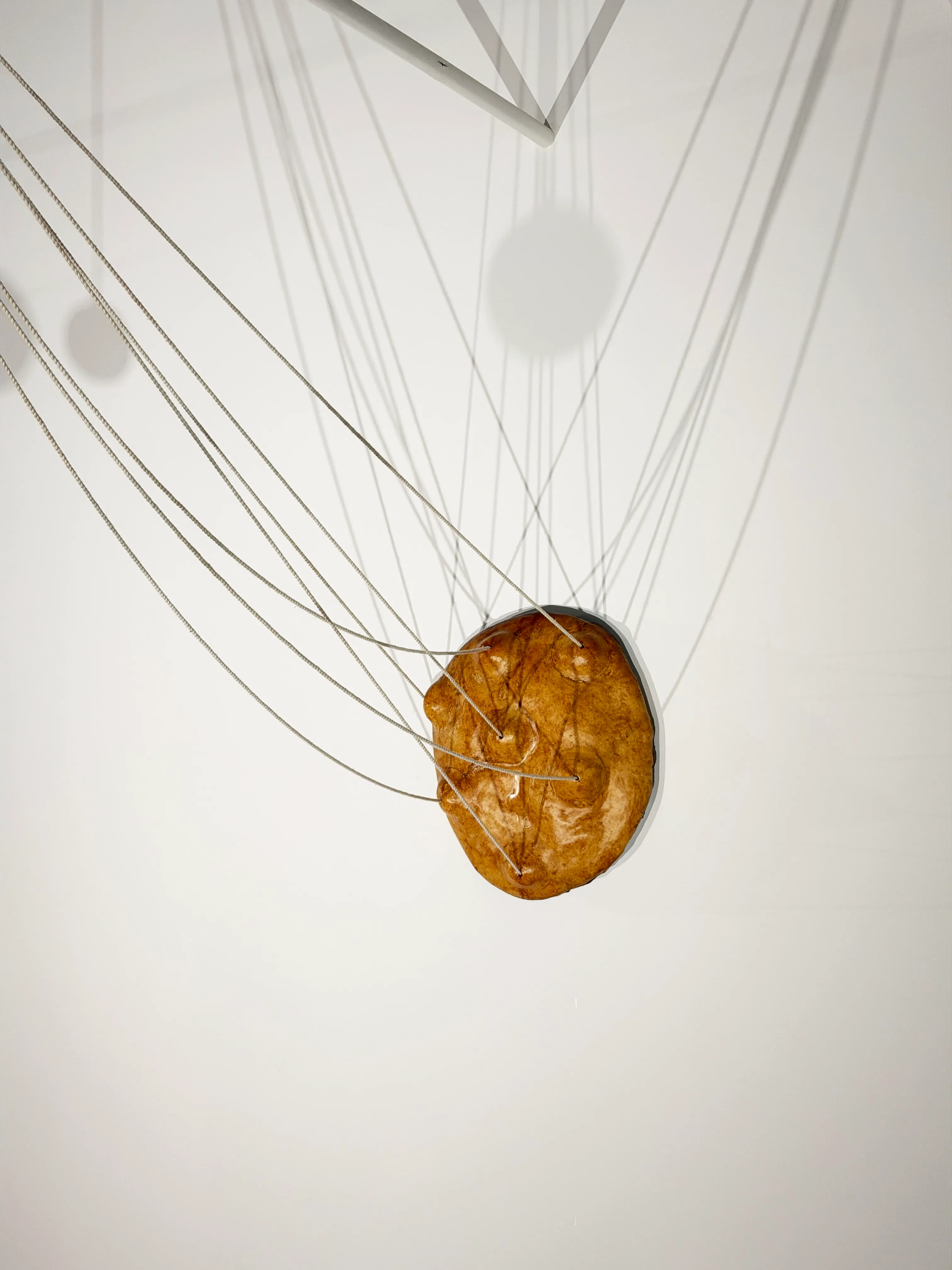
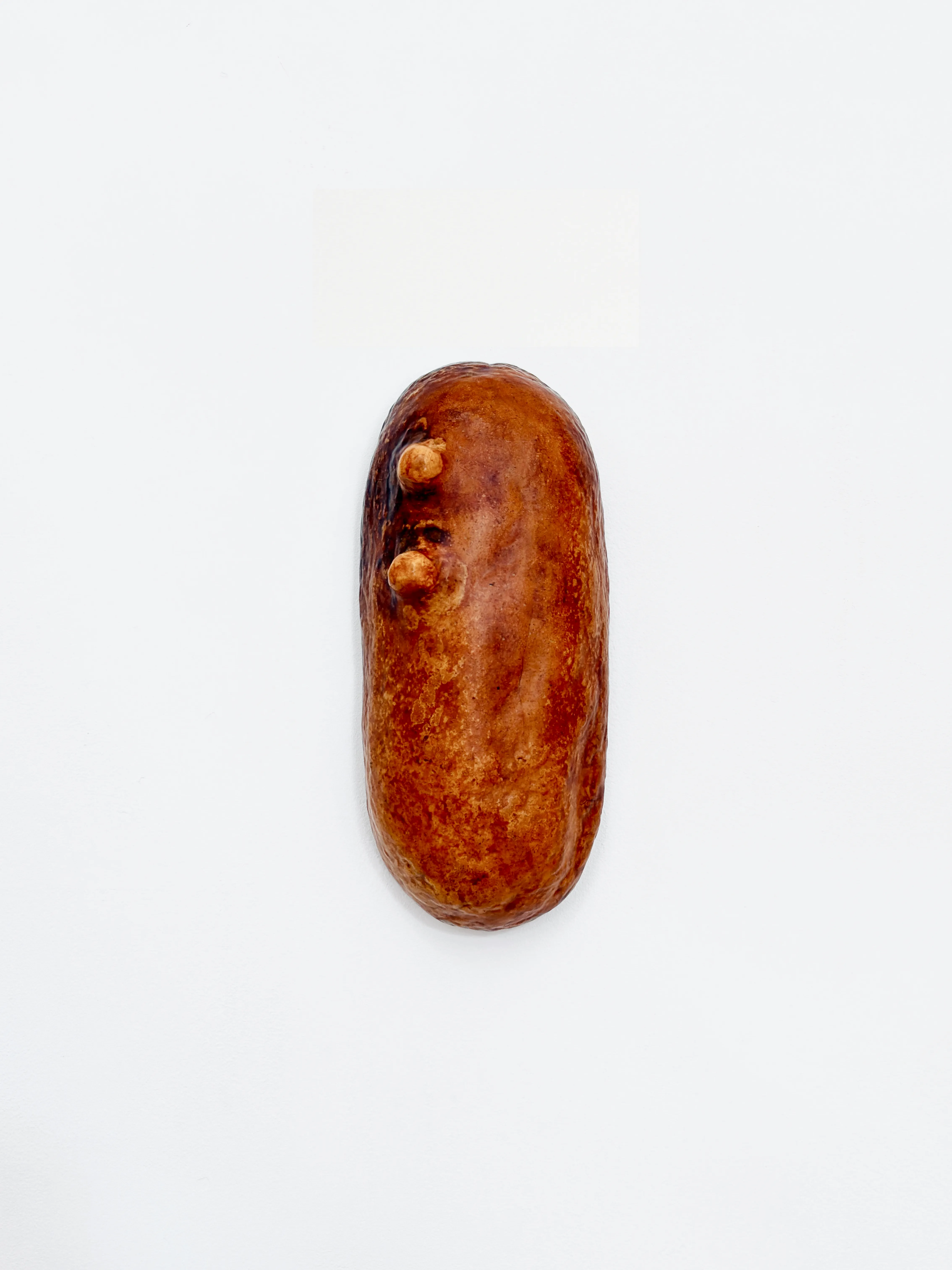
Initiated by Esmeralda Kosmatopoulos after the sudden death of her father in 2023, Bake Your Pain is an ongoing body of sculptural work that materialises grief and tears into masks made of bread through a repeated ritual of kneading, shaping and baking. Each sculpture gives lasting material form to a fleeting emotional state, gradually building an expanding archive of mourning.

MEDIUM

Sculpture

MATERIALS

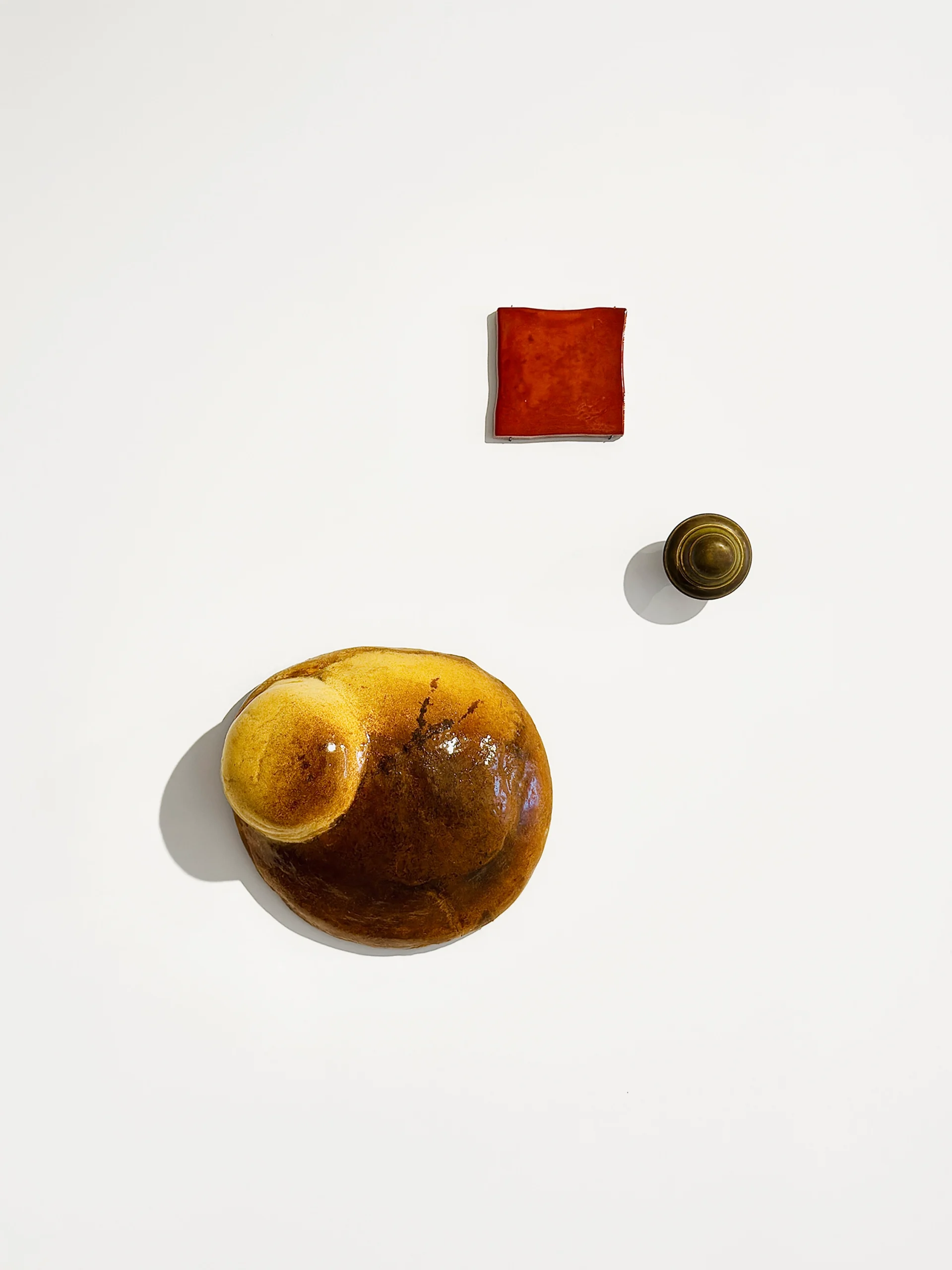
Bread dough, WoodRusted steel, Ceramic, Cord and other mixed media

START YEAR

2023

END YEAR

2026

About

Bake Your Pain examines how grief can acquire a lasting form without becoming fixed. Each mask preserves one moment of sorrow while joining an archive that continues to change as mourning itself changes.

The project began after the sudden death of the artist's father in 2023. When pain could no longer be contained by words, tears became another form of language. Yet however intense and visible they were, they vanished almost immediately. Once they had dried, very little remained of what had taken place.

This contradiction became the starting point of the work: how could sorrow be given a shape?

Whenever grief exceeds what can be spoken, Kosmatopoulos kneads bread dough and shapes a mask. Pain becomes tears; tears become gesture; the gesture enters the dough; and baking transforms that fleeting moment into sculpture. The process functions both as a form of catharsis and as a way of documenting an emotional state that would otherwise leave no material trace.

Each sculpture originates in one singular moment and functions as a self-portrait — not a portrait of the artist's physical likeness, but of her pain. The face appears as a face-landscape whose familiar lines and contours have been erased by tears, leaving only the eyes with which to cry.

Yet these eyes are reduced to two swollen forms. They may still be read as eyes, but they can equally resemble breasts, udders or tumours. The face remains present, while also evoking a chest or an indeterminate fragment of the body.

This ambiguity gives the sculptures their particular corporeality. Grief is not represented as an intellectual or disembodied experience, but as something that passes through the flesh, disturbs the organisation of the face and makes the boundaries between face and body unstable.

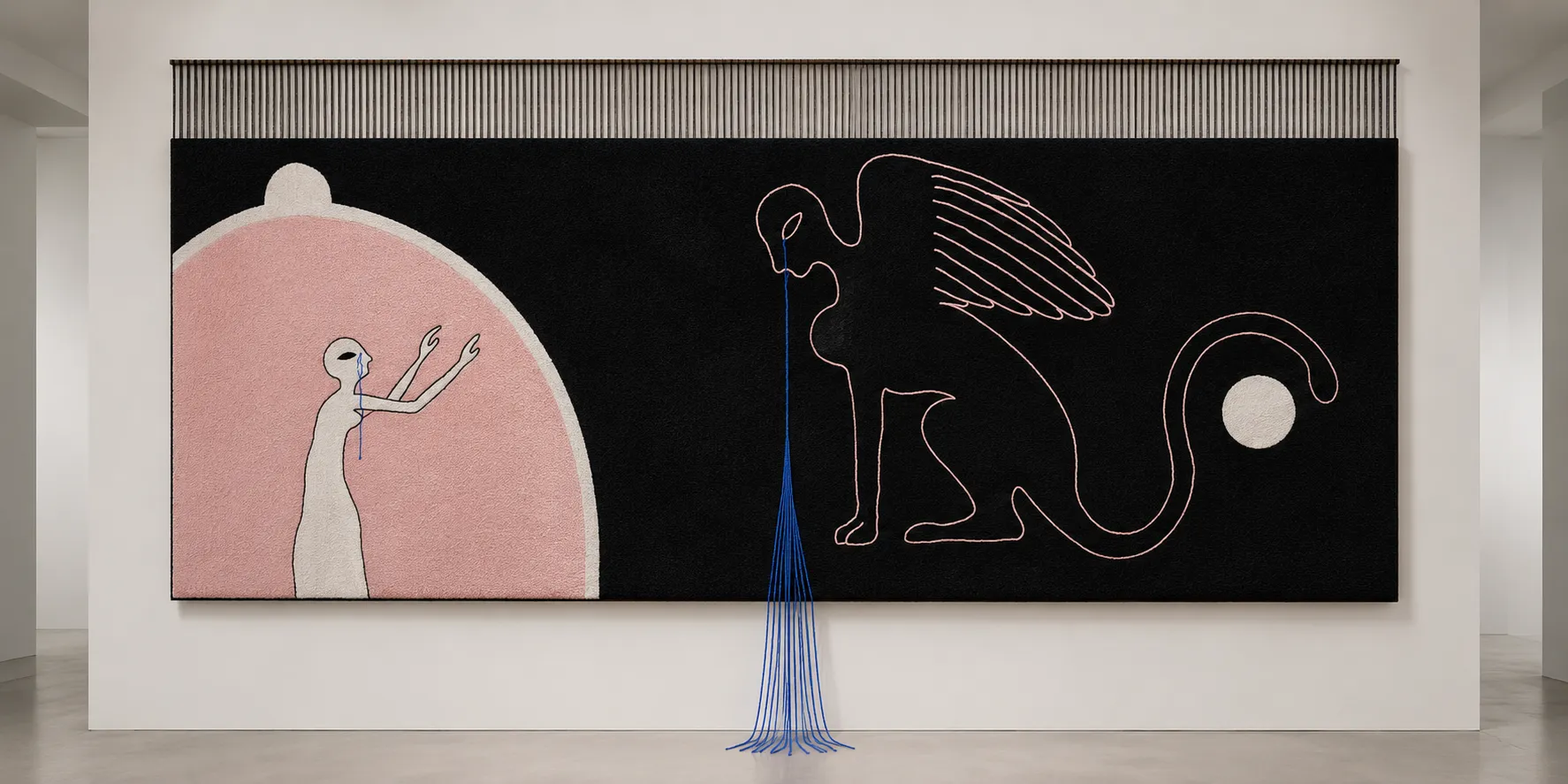
It is precisely here that the works enter into dialogue with ancient traditions of female lamentation. Across Greek, Egyptian and other Mediterranean cultures, women mourned the dead not only through their voices and tears, but through their entire bodies. They struck their chests, pulled their hair and transformed private sorrow into a visible, physical and collective language. In the masks, the swollen eyes that also evoke breasts reconnect the act of crying with the chest — the body becoming the place where grief is carried, expressed and made visible.

The material itself participates in this transformation. Dough receives the pressure of the artist's hands, but it also rises, contracts, cracks and hardens. Kosmatopoulos may begin by shaping a face, yet the bread continues to alter the form through baking and drying. The final sculpture records both the gesture of the hand and the transformations produced by the material beyond the artist's control.

As the masks accumulate over time, they form an expanding archive whose changing forms accompany the evolution of mourning itself. This archive does not follow a linear chronology or predefined stages of grief. Sorrow recedes, returns, changes intensity and takes on new forms. Each sculpture preserves one moment without attempting to represent grief as a whole. Together, they reveal mourning as an experience shaped by repetition, but never by sameness.

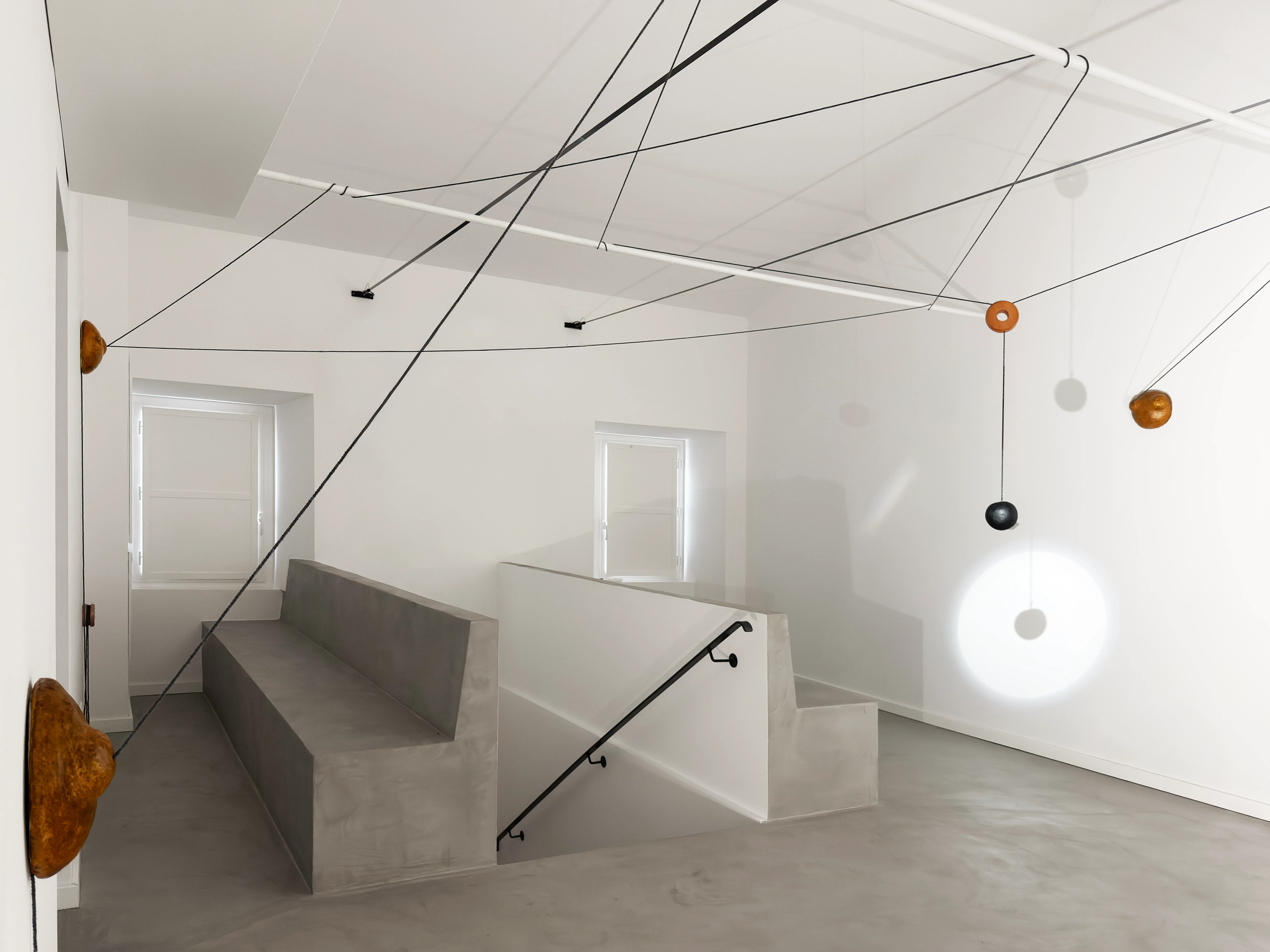
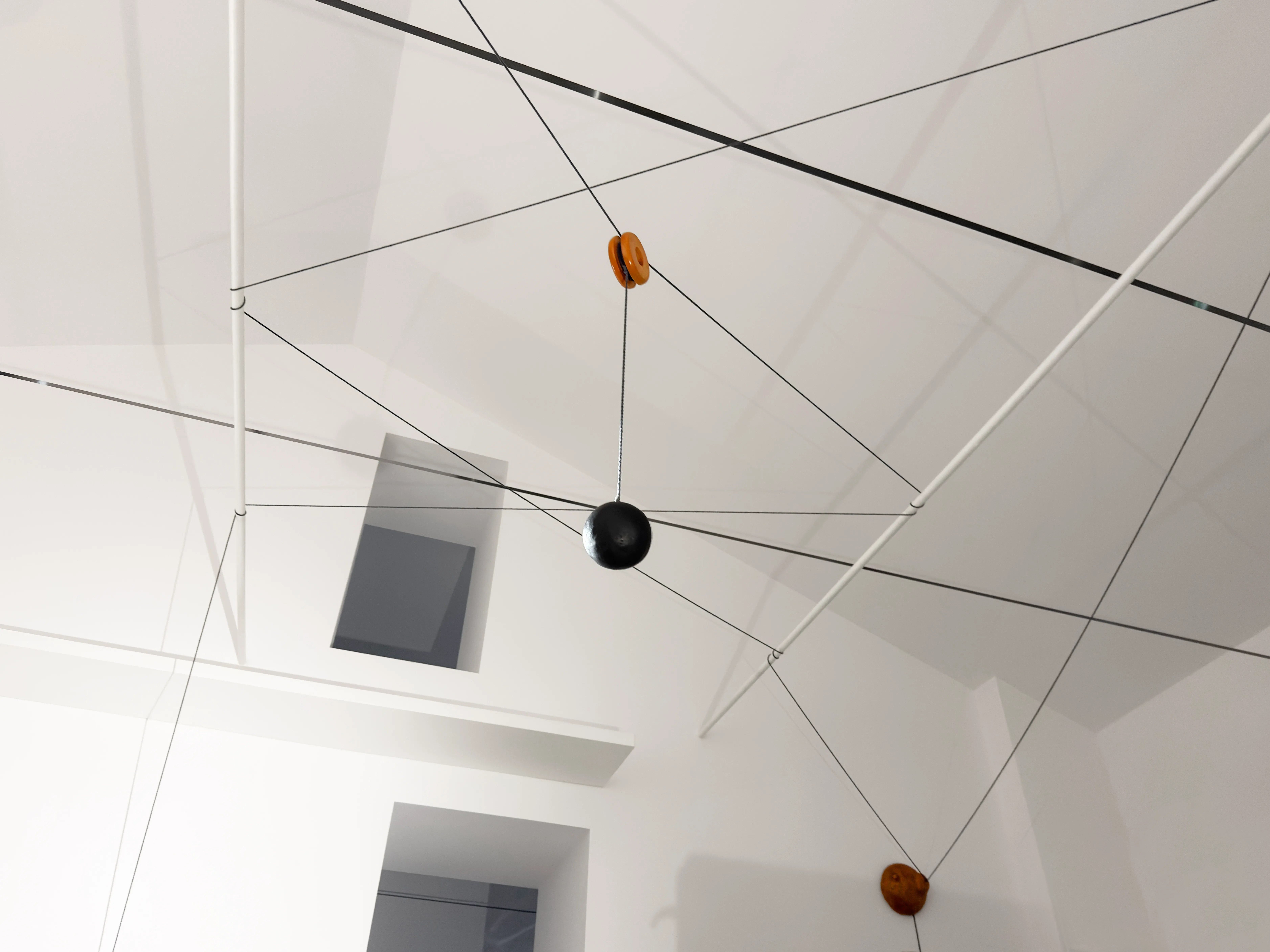
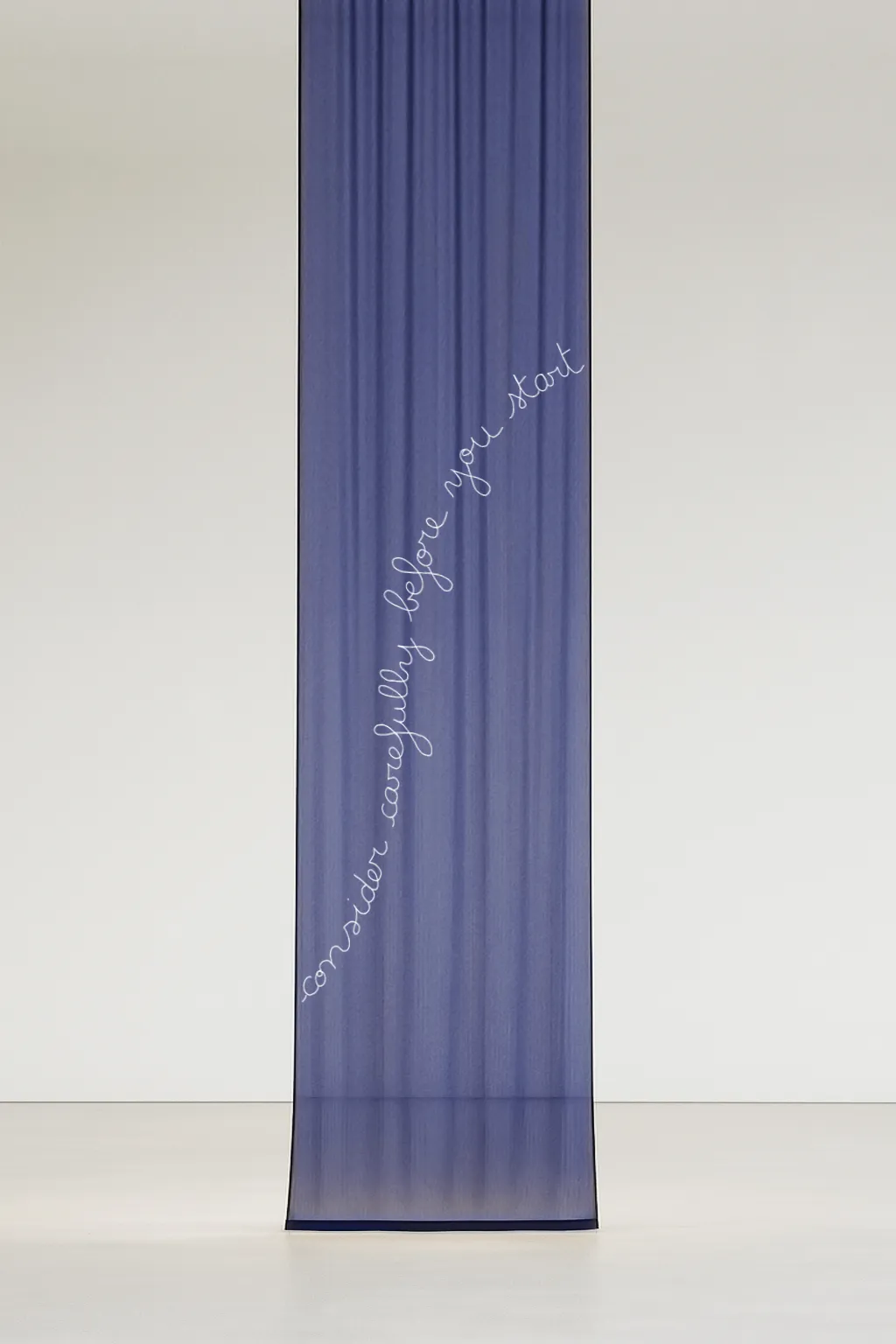
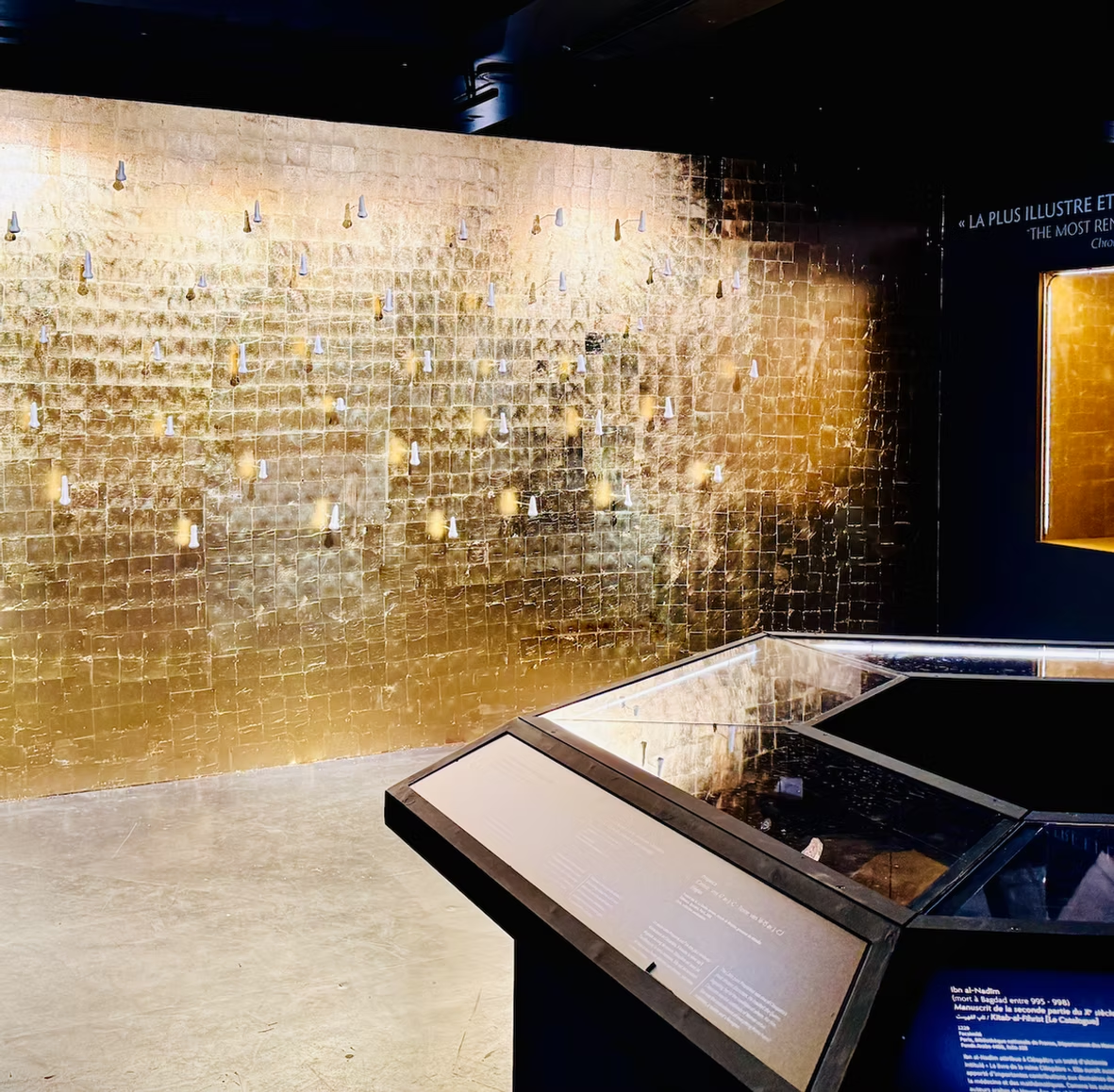
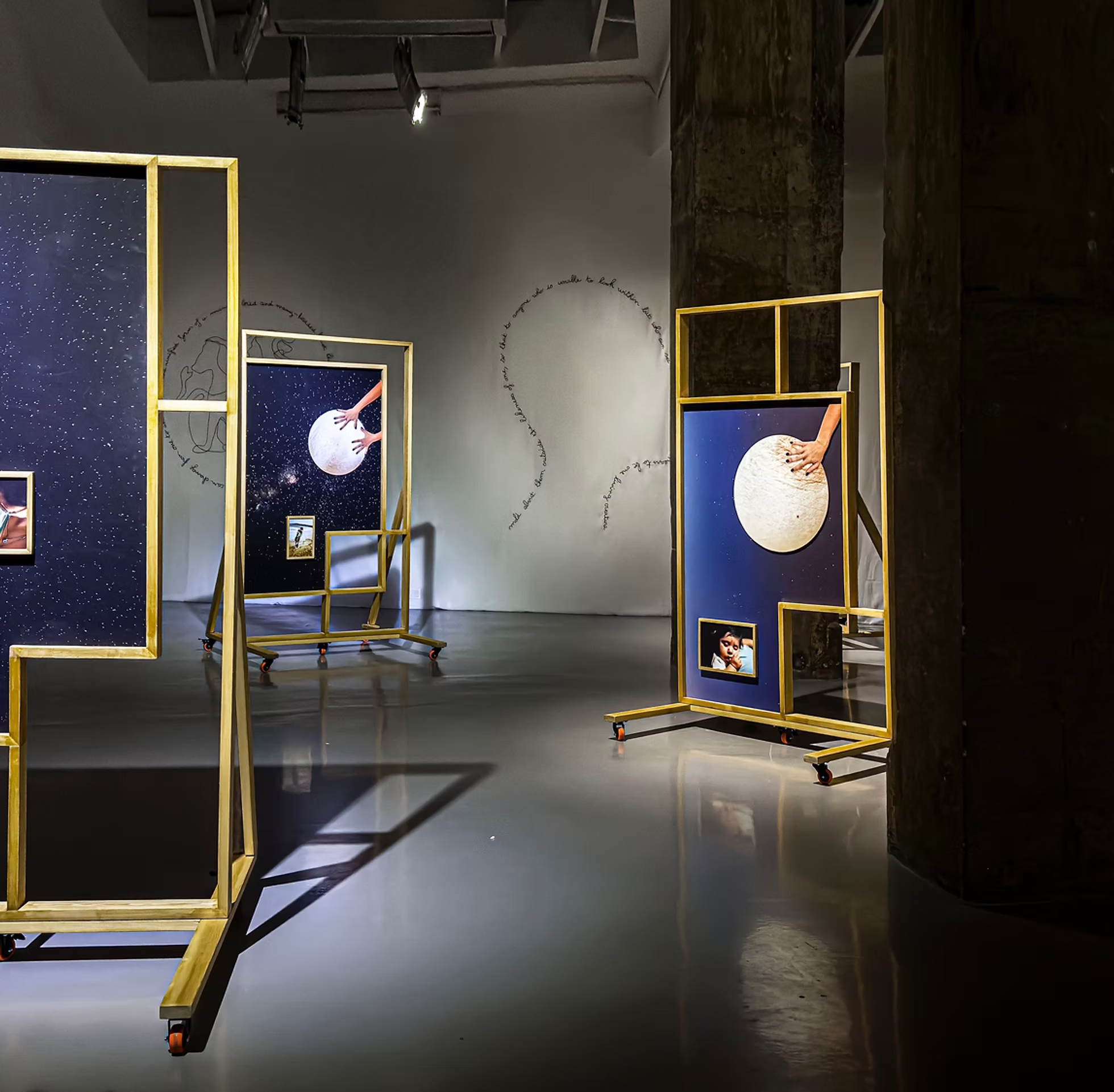
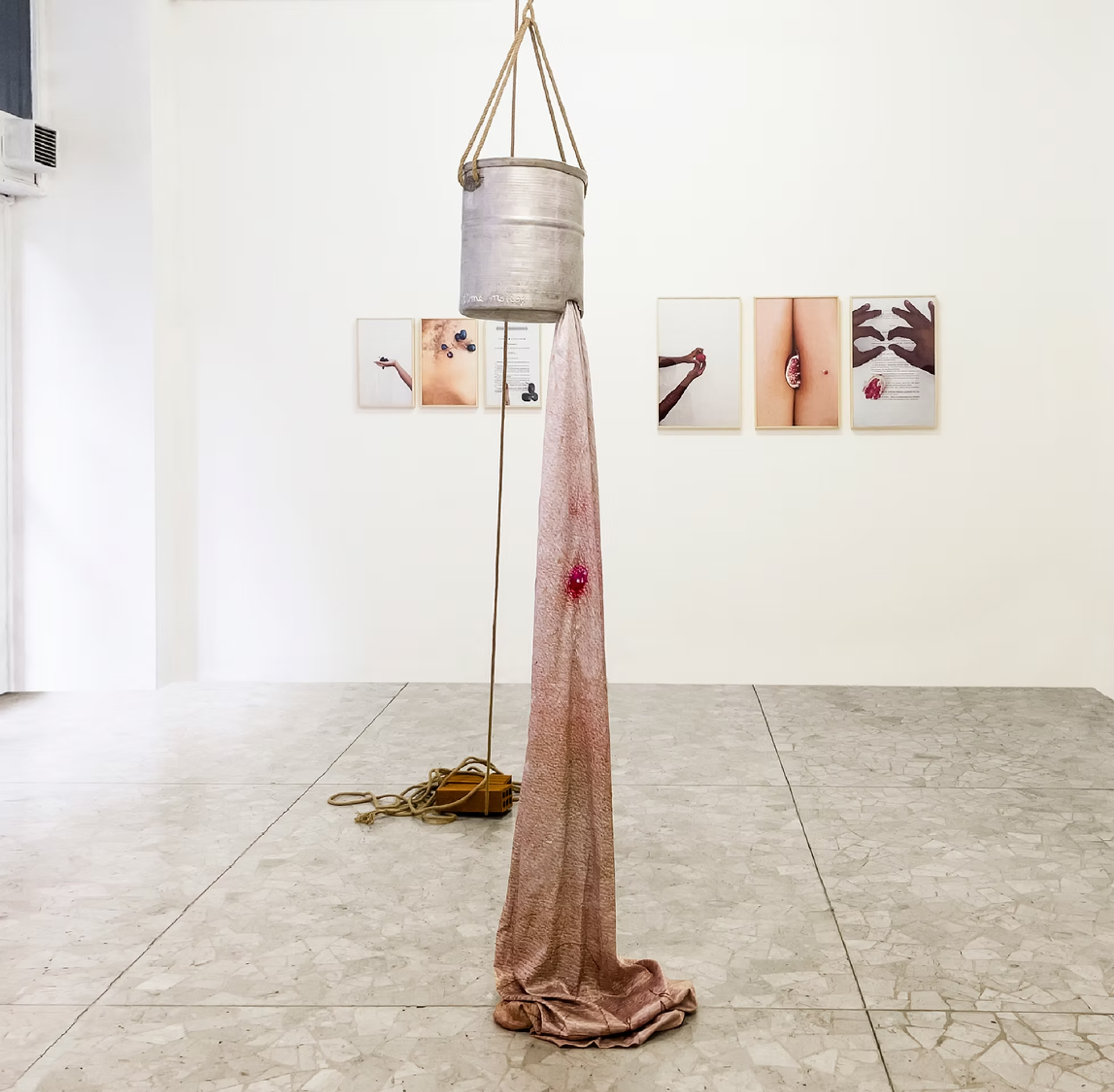
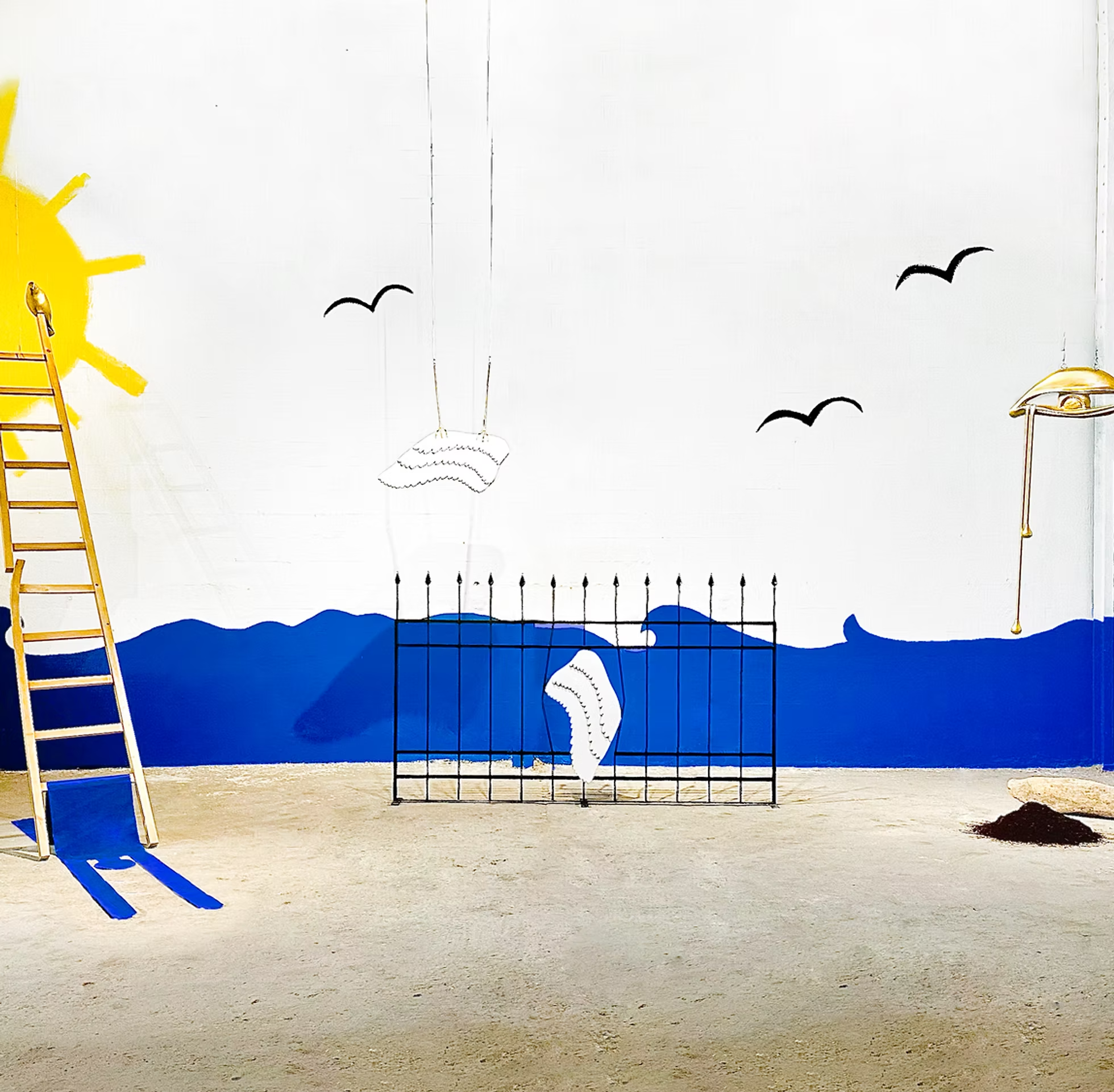
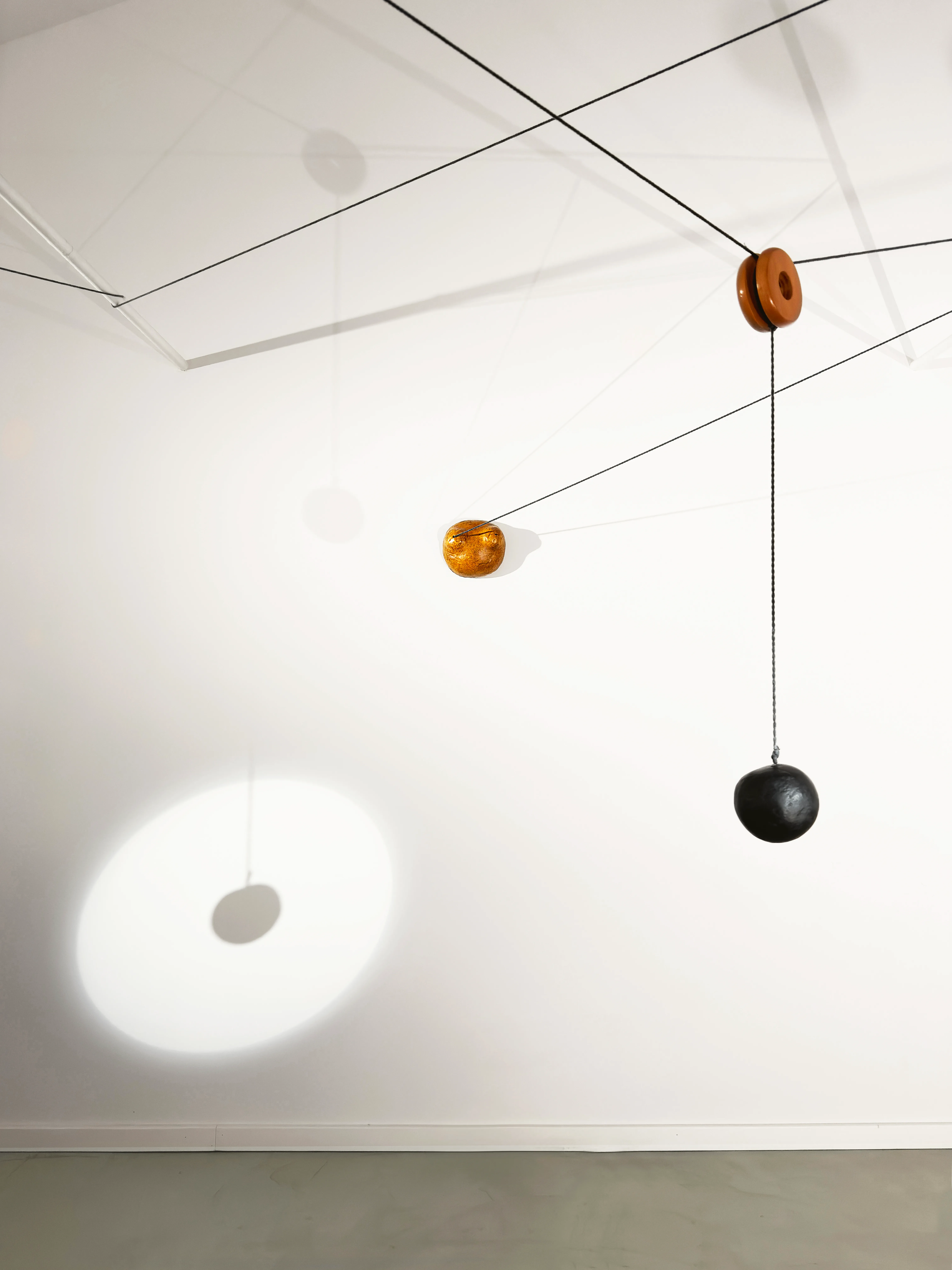
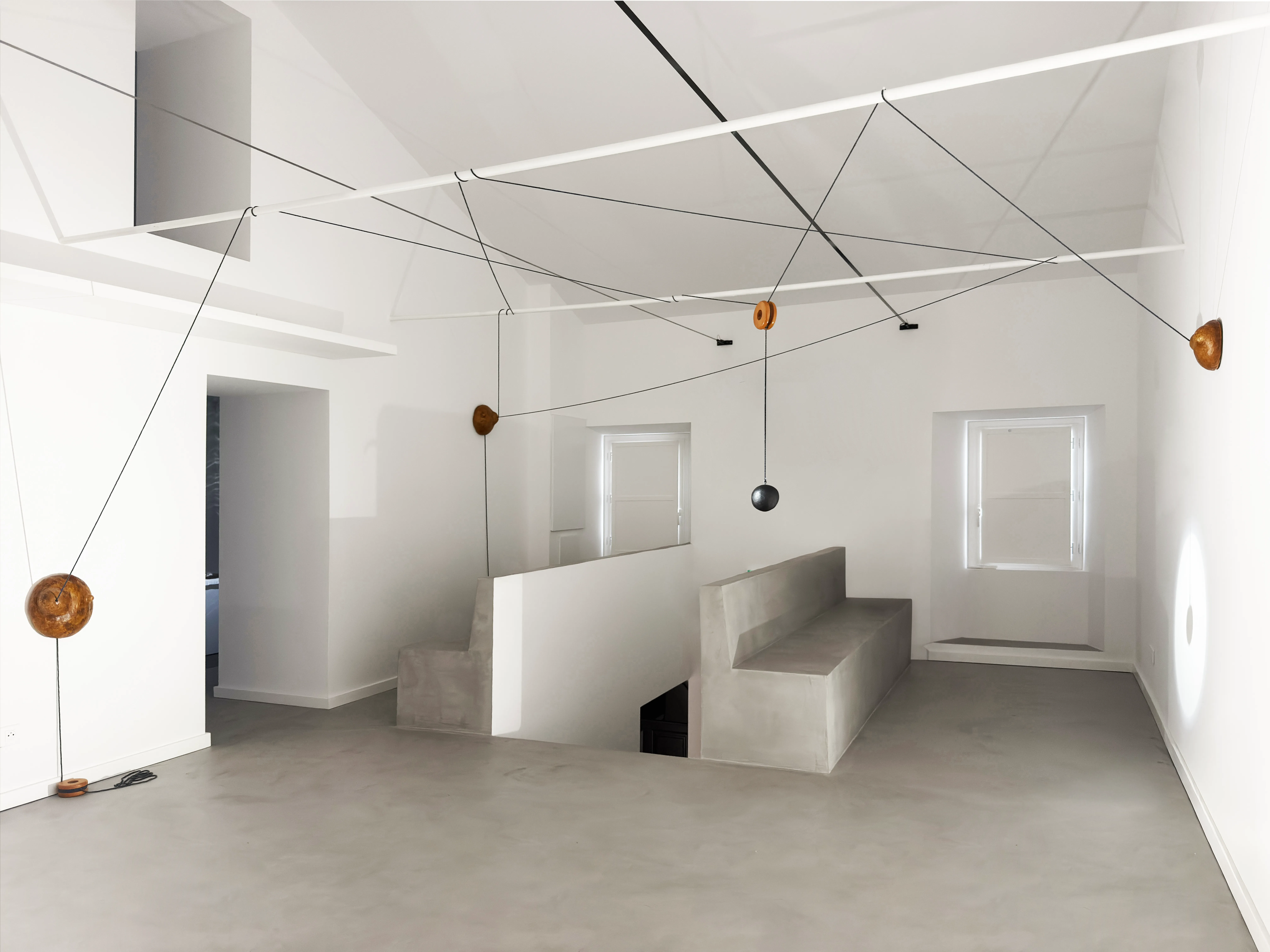
The title brings two languages together. In French, pain means bread; in English, it names suffering. This connection gives the project its initial articulation, but the work moves beyond wordplay. Through kneading, shaping and baking, an internal and ephemeral experience passes into matter and acquires a lasting sculptural presence. Over time, the masks became the generative centre of a wider constellation of sculptures and installations. Combined with cords, pulleys, weights, ceramics, wood and textiles, they extend the initial ritual from the intimate scale of the hand to that of the exhibition space. Each chapter approaches another aspect of mourning: its weight, its repetition, its transmission and the forms through which life continues after loss. Bake Your Pain does not seek to resolve grief or give it a final image. It allows moments in which pain exceeds language to acquire a form, endure and join those that came before them.

Rather than seeking to resolve grief, Bake Your Pain accepts it as a condition that continually transforms the landscape of the living. Each new chapter returns to that same landscape—not to repeat it, but to discover how it has changed, and how we change with it.

Grief becomes matter.

But matter remains in motion.

Chapters

To Each Day Its Pain

2023 - 2026

Θρῆνος

2026 - 2026

Lacrimal Architecture

2026 - 2026

Ὀδύσσεια

2023 - 2026

Life After Death

2023 - 2026

Exhibitions

Méditerranée, Odyssées contemporaines, curator: Stéphane Baumet, Fondation Villa Datris, L'Isle-sur-la-Sorgue, FR (catalogue)

2026

Histoire de Je, Galerie Dix9, Paris, FR

2025

Veille sur Elles, Casa Donna di a Serra, Corsica, FR (catalogue)

2026

Related Studio Notes